News

Looking Back to Move Forward

A Black History Month conversation about memory, legacy, and faith.

Christianity Today February 14, 2022

God teaches many things through the stories of those who have gone before us, and the history of Black Americans is filled with lessons of courage, perseverance, and faith. Recently, contributing writers from the new devotional booklet On the Shoulders of Giants: 28 Reflections on Faith Through Black History convened virtually to celebrate the legacy of faithful Black leaders from the past and discuss the importance of a faithful remembering of history for our present divided times.

This special CT webinar was presented in partnership with Our Daily Bread Ministries. Download sample devotions from On the Shoulders of Giants to read selections from the webinar panelists.

Our Panelists

Noel Hutchinson Jr.

Dr. Noel G. L. Hutchinson Jr. is the mission director for the Progressive National Baptist Convention (PNBC). He is also the organizer and founder of a new ministry, Greater Works Fellowship, and was the pastor of First Baptist Church Lauderdale in Memphis, Tennessee, for 22 years. A native of The Bronx, New York, he earned his BA degree from Brandeis University in the areas of sociology and American studies, a Master of Divinity cum laude from Drew Theological School, and a Doctor of Ministry degree from United Theological Seminary in Trotwood, Ohio.

Roslyn Yilpet

Dr. Roslyn R. Yilpet is a writer and the director of Open Door of Special Education Center in Jos, Nigeria. She loves teaching, writing, and traveling. God fulfilled her passions by calling her to Nigeria in 1978 as a missionary teacher. Her writing testifies of God’s love and faithfulness in her life.

Ekemini Uwan

Ekemini Uwan (pronounced Eh-keh-mi-knee Oo-wan) is a public theologian who received her Master of Divinity degree from Westminster Theological Seminary in Philadelphia. She is co-host of the award-winning Truth’s Table podcast. In 2018, Christianity Today named her among “10 New or Lesser-Known Female Theologians Worth Knowing.” In 2021, she earned the IMPACT Award from The Institute for the Study of the Black Christian Experience. In April, Convergent releases Truth’s Table: Black Women’s Musings on Life, Love, and Liberation, a book by Ekemini and her podcast co-hosts, Christina Edmondson and Michelle Higgins.

CJ Rhodes

Dr. CJ Rhodes is the pastor of Mount Helm Baptist Church in Jackson, Mississippi, the youngest pastor to serve Jackson’s oldest Black congregation. He’s also the director of religious and spiritual Life at Alcorn State University and the host of The CJ Rhodes Show airing on WRBJ 97.7 FM. A sought-after thought leader, Dr. Rhodes is founder and president of Clergy for Prison Reform and Public Theologian in Residence for The AND Campaign. He received his BA in Philosophy from The University of Mississippi. In 2009, he received his MDiv from Duke University’s Divinity School and earned his DMin from Wesley Biblical Seminary in 2018.

Rasool Berry (moderator)

Rasool Berry serves as teaching pastor at The Bridge Church in Brooklyn, New York. He also is the director of partnerships and content development with Our Daily Bread Ministries and host of the podcast Where Ya From?, which is part of the CT network of podcasts. Rasool graduated from the University of Pennsylvania with a bachelor’s degree in Africana studies and sociology.

Relationships Don’t Just Happen. They Take Training.

We disciple our young people to love God and to work hard. But relational formation is important, too.

Christianity Today February 14, 2022
Illustration by Mallory Rentsch / Source Images: AlexLMX / clu / Getty

A recent conversation between New York Times columnist David Brooks and American Enterprise Institute senior fellow Leon Kass piqued my interest as I listened to these men—Brooks in his 60s, Kass in his 80s—share concerns for the college students they teach. (Brooks was a student of Kass at the University of Chicago in the 1980s.)

These students, they agreed, were singularly preoccupied with career questions: What work would prove satisfying? How would they find their professional calling? They showed far less interest in competencies needed for life’s most important relationships. They didn’t ask what it took to sustain committed marriages or a healthy family life.

I wondered: Was this conversation another iteration of kids these days? Or do Brooks and Kass have their finger on a more pressing cultural problem—our glaring contemporary neglect of relational formation?

The conversation made me reconsider what kind of relational formation my children have received. My five children—two college students and three teenagers—have learned to navigate life (and leftovers) in a crowd. They’ve grown up in a church pew, understanding Christian faith as team sport. But perhaps we have mistakenly assumed that the skills and even appetite for relationships have required less formal education.

We’ve tried teaching our children to honor God, to love the church, to obey the Scriptures, to serve the least, to work hard, to stay curious, to be honest. But how much have we taught them—explicitly and systematically—about suffering interruptions, about sacrificing time for others, about staying patient and hopeful in misunderstanding and offense? What curriculum have we engaged for forming relationships across differences?

Belonging isn’t like breathing. There is nothing automatic about it, especially given the changing conditions of modern life. The skills for relationships can’t simply be caught today. Habits of belonging must be taught.

In many ways, Christians are advantaged in terms of relational formation. Given the corporate images of Christian identity in the Bible—the vine, the household, the family, the temple, the body—we know belonging isn’t an optional part of human life. We must be vitally connected to other people and mutually dependent. The Christian life is a together life. God is a God who sets the solitary in families; he husbands the widow and fathers the orphan. Who need be alone in the kingdom of God?

The skills for relationships can’t simply be caught today. Habits of belonging must be taught.

Christians (and Jews) also have an entire genre of the Bible dedicated to teaching us about the practical affairs of everyday life, including human relationships. Our books of wisdom literature, especially the Book of Proverbs, instruct us in the virtues necessary for living well with others: discretion, self-control, humility, generosity, honesty, slowness to anger. Wisdom literature assumes that the mode of human life is inherently social—and that skills are required for navigating the complexities of human relationships.

Ancient Israel, explains Ellen Davis in Getting Involved with God, had little interest in abstract knowledge. They didn’t invest, as their Egyptian and Mesopotamian counterparts, in fields like astronomy, architecture, engineering, medicine, and the fine arts.

“Israel was not interested in any form of knowledge that is abstracted from the concrete problem of how we may live in kindness and fidelity with our neighbors, live humbly and faithfully in the presence of God,” Davis writes. Wisdom literature is a practical curriculum on how to be a life partner, a parent, a friend, a neighbor. We love God as we love others well.

But despite these advantages we enjoy as God’s people, kids these days are facing new realities, such as socializing within a world of social media and pandemic restrictions. Loneliness was a public health crisis before March 2020, and though born-again Christians were faring better a year into the pandemic, many of us have continued to substitute virtual connection for physical togetherness.

It’s safe to assume that all of us have grown less relationally capable over the last couple of years. As one friend recently lamented to me, it’s harder these days to invest energy in our relationships, which feel more effortful than they did two years ago. Our relational skills are rusty, and they will need to be deliberately re-oiled.

Aside from pandemic conditions, much of our built environment doesn’t naturally support relational connection. I’m not simply thinking of suburban neighborhoods, minivans disappearing behind garage doors. Trends in college housing, as a more pertinent example, show an increasing demand for student privacy. “Students want to choose how and when they socialize,” writes Peter Aranyi of the global design firm Clark Nexsen. Mimicking their experience of the socially mediated world, students count on opting in and out of relational connection at will.

Social media is easily blamed for our relational ineptitude, but it’s also true that social media peddles a lot of relationship advice. “I remember when I used to be a people-pleaser,” one popular therapist and New York Times best-selling author admits on Instagram. She posts a list of concessions she used to make in her relationships, such as “Not speak up for myself” or “Pretend to agree with people.”

It represented the insistence I see in social spaces on self-trust, self-care, self-expression, and self-affirmation more than the wisdom of “greater love has no one than this: to lay down one’s life for one’s friends” (John 15:13).

We often lament the conditions of a technological society, that we’re losing the capacity for face-to-face communication in a digital environment. But there may be something more subtly dangerous about our digital world, in that we’ve come to expect easy, effortless goods.

Relationships are not easy or effortless. They involve burdens. Having friends, being a good neighbor, choosing to marry, raising children: To sign up for any of these relational commitments ensures we can no longer protect our lives from interruption and contingency.

To belong isn’t simply to benefit from human connection. It’s to take responsibility for it. It’s even to suffer for it.

Kids these days need this realism—and they need older generations to talk about why it’s worthwhile to interrupt the carefully constructed self-project for enduring relationships.

For a college student, belonging might mean sharing a dorm room rather than opting for a single. For a young professional, belonging might suggest geographical stability rather than mobility for the purpose of career advancement. For older adults, belonging might urge us toward invisible seasons of caregiving, for children or an aging parent. For each of us, belonging requires all kinds of ordinary virtues: admitting fault, swallowing grievance, risking honesty, staying put.

If anything seems true these days, conflict is endemic, and we need practical skills for the love that bears all things, believes all things, hopes all things, endures all things (1 Cor. 13:7).

As families, as churches, we must understand habits of belonging require as much formation—which is to say education and practice—as any other aspect of our lives. As the nature of wisdom suggests, this will be a lifelong enterprise.

Jen Pollock Michel is a writer, podcast host, and speaker based in Toronto. She’s the author of four books and is working on a fifth: In Good Time: 8 Habits for Reimagining Productivity, Resisting Hurry, and Practicing Peace (Baker Books, 2022).

Books
Excerpt

The Bible Has a Clear and Consistent ‘Party Theology’

We’re called not only to attend them, but also to throw them ourselves.

Illustration by Rick Szuecs / Source images: Envato Elements

Quick, what does God have in common with the Beastie Boys? Back in 1986, the Beastie Boys told everyone to fight for their right to party. Back in Leviticus 23, God told everyone to party or he would kill them.

One at a Time: The Unexpected Way God Wants to Use You to Change the World

I know you’re skeptical, but stick with me. In the Old Testament, God set up a series of annual festivals for his people. They were designed to be commemorative and anticipatory, celebrating what he had done and what he would do next.

In the New Testament, we repeatedly see Jesus at parties. So much so that it led to an accusation the religious leaders made against him: “Here is a glutton and a drunkard, a friend of tax collectors and sinners” (Matt. 11:19). Jesus also compared God’s kingdom to a party and, in a famous trilogy of stories, taught that when someone turns to God, a party breaks out in heaven (Luke 15).

In the Bible, there’s a clear and consistent party theology. Missiologist Alan Hirsch says, “Party is sacrament.” Could it be we have lost something vital God wants for his people?

It turns out that throwing a party is a great way to reach people one at a time. In fact, one year our church made it an emphasis. We asked our people to throw parties in a way that would allow them to love and serve others in Jesus’ name and to help those who had rejected Jesus to get a new picture of him and his followers.

After all, Jesus’ followers don’t just dutifully go to parties when invited—they throw parties. In Luke 5, Jesus was walking along when he “saw a tax collector by the name of Levi sitting at his tax booth. ‘Follow me,’ Jesus said to him, and Levi got up, left everything and followed him” (vv. 27–28).

Levi (better known as Matthew) was at the top of everyone’s most-despised list. The religious leaders wouldn’t allow him into the temple. Yet Jesus invited him to be his disciple. If you’re Levi, what do you do next? “Then Levi held a great banquet for Jesus at his house, and a large crowd of tax collectors and others were eating with them” (v. 29).

In other words, he threw a party. He invited a bunch of his friends who were far from God, and he invited Jesus. It was the perfect opportunity for his friends to get a real picture of who Jesus really was.

The Pharisees were aghast and demanded that Jesus answer their accusing question: “Why do you eat and drink with tax collectors and sinners?” (v. 30). Jesus answered, “It is not the healthy who need a doctor, but the sick. I have not come to call the righteous, but sinners to repentance” (vv. 31–32).

I love that. Jesus is basically saying, “Of course parties, of course sinners. What did you expect?”

Kyle Idleman, One at a Time, Baker, a division of Baker Publishing Group, © 2022. Used by permission of the publisher. www.bakerpublishinggroup.com.

New & Noteworthy Books

Compiled by Matt Reynolds.

I Forgive You: Finding Peace and Moving Forward When Life Really Hurts

Wendy Alsup (The Good Book Company)

Jesus’ command to practice persistent forgiveness—not just seven times, but 77!—ranks among the toughest in the Bible. For most of us, forgiving just once is hard enough. In I Forgive You, author and teacher Wendy Alsup blends personal stories with the Old Testament narrative of Joseph to hearten those fighting to extend or receive forgiveness. “I have experienced many kinds of conflicts and brokenness in my life,” she writes. “Some have seen resolution. Some haven’t, yet. Wherever you are in your own journey from brokenness to healing, this book is designed to encourage you to persevere in hope. God is for you.”

Apostolic Imagination: Recovering a Biblical Vision for the Church’s Mission Today

J. D. Payne (Baker Academic)

The world today is full of missionaries, missionary organizations, missionary conferences, and innumerable books and articles defining and analyzing mission work. Yet according to ministry professor J. D. Payne, a certain confusion reigns: We’re not sure which goals and tasks the term missions should encompass. Payne’s proposed solution, outlined in Apostolic Imagination, is a deliberate effort to reground our conception of missions in the biblical example of the first apostles. “While the Church has made missions a complicated matter,” he writes, “such was not the case in the first century. The movement of sending, preaching, teaching, planting, and training was unquestioned in the Scriptures.”

Literarily: How Understanding Bible Genres Transforms Bible Study

Kristie Anyabwile (Moody Publishers)

One of the great challenges in conducting a Bible study is getting everyone on the same page. What approach are we bringing to the passage at hand? What kinds of questions will guide us toward the right interpretation? In Literarily, writer and Bible study teacher Kristie Anyabwile offers a practical introduction to the various genres of biblical literature—law, history, wisdom, prophecy, and so on. “The Bible,” she writes, “is a feast! We need to know the intention behind the various courses and the ingredients that make up each ‘dish’ so we can enjoy a well-balanced, healthy meal each time we come to the text.”

Books
Review

When Billy Graham Took His Ministry Transatlantic

For all that separated America and Europe in the 1950s, their experience of the crusade leader was remarkably similar.

Illustration by Pete Ryan

Billy Graham was a born salesman, and he knew it. In the summer of 1936, after graduating from high school, he crisscrossed South Carolina selling Fuller brushes door to door. By the end, he had posted the best record in the state. The experience taught him a lesson he never forgot: If you have the best product in the world, then herald it with fervent conviction and the best marketing tools at hand.

Altar Call in Europe: Billy Graham, Mass Evangelism, and the Cold-War West

Altar Call in Europe: Billy Graham, Mass Evangelism, and the Cold-War West

Oxford University Press, USA

240 pages

$23.09

This background informs the story Uta A. Balbier tells in her new book, Altar Call in Europe: Billy Graham, Mass Evangelism, and the Cold-War West. Balbier, a senior professor of history at Oxford University, offers sparkling prose, razor-edged analysis, careful research in English and German primary sources, and the critical empathy of a self-identified Christian scholar. The result is one of the most important books about Graham published in the past few decades.

Balbier’s main argument is simple: Graham integrated evangelical Christianity with modernity in fresh and vibrant ways. He powerfully furthered what she calls “the seismographic shift in the religious landscape from a ‘culture of obligation and duty to a culture of consumption and choice.’” In the words of one journalist she quotes, “That old time religion has gone as modern as an atomic bomb.”

Altar Call in Europe focuses on Graham’s landmark crusades in London (1954), Berlin (also 1954), and New York City (1957) while glancing at crusades in other places. Balbier elaborates her thesis by examining five ropes that bound American, British, and German lives together in the 1950s, despite substantial cultural differences: Cold War fears, rampant consumerism, crusade experiences, Graham’s charisma, and the life-changing results of his ministry. In all these areas, Balbier stresses, Graham stepped into a set of cultural processes already well in motion.

Cold War fears

During the era Balbier chronicles, the twin menaces of secularization and militant communism loomed large. For Graham’s partisans on both sides of the Atlantic, the solution was re-Christianizing the West. In Graham’s 1949 Los Angeles crusade, he exclaimed, “If you would be a true patriot, then become a Christian.” Eight years later, Vice President Richard Nixon addressed the New York crusade and, not incidentally, brought personal greetings from President Dwight Eisenhower.

The coalescence of church and state was somewhat less conspicuous in Europe but was far from absent. Anglican Archbishop Geoffrey Fisher offered a benediction at the London crusade. Prime Minister Winston Churchill asked Graham to meet him at 10 Downing Street, his private residence. The following year, Graham preached in a private chapel for Queen Elizabeth and Prince Philip.

In Germany the drive for re-Christianization was more tempered, partly because German evangelicals feared antagonizing church leaders in East Germany. Still, Lutheran state church bishops endorsed him and his work, albeit with reservations.

In all three countries, Graham was criticized for wrapping the cross in the flag, but the doubters did not win much attention. The 1950s were not the 1960s.

Rampant consumerism

In the 1950s, the West idealized prosperity as much as freedom. The economic revolution of the times promised material abundance, technological marvels, and the pleasures of travel and leisure.

Graham embraced it all. The problem, he assured his audiences, was not the good life but a willingness to let it eclipse spiritual aims. It was a matter of balance. It was also a matter of human nature. The ability to choose one brand of soap over another was also the ability to choose Christ over a lesser good.

Balbier highlights not only Graham’s preached words but also the movies the Billy Graham Evangelistic Association produced. Consider, for example, Oiltown, U.S.A., released in 1952. It featured a hard-driving Texas oil man, Les Manning, who came to Christ under Graham’s ministry. Manning’s heart was changed—but not his consumer habits. As Balbier puts it, “Shiny cars drove past abundantly stocked shopwindows; thick steaks sizzled on the grill; ketchup bottles and milkshakes decorated the dining tables. God obviously blessed those who he loved.”

In Graham’s view, the Christian life was compatible with a (white) middle-class, suburban, nuclear-family lifestyle: Balbier writes of him “playing golf, relaxing in front of the fireplace, and enjoying the company of his family at the table, with Ruth serving dinner.” Europeans embraced these consumer aspirations as eagerly as Americans. Admittedly, a few resisted. To them it looked like Graham was selling salvation the same way Americans sold everything else.

Life-Changing Results

Graham’s crusades set countless statistical records. In New York, there were 2,397,400 attenders and 61,148 “inquirers” in 16 weeks. London recorded 2,047,333 attenders and 38,447 inquirers in 12 weeks. Berlin saw 88,000 attenders in a single night. As Balbier remarks, even for traditionally reserved Germans, unaccustomed to revivals, Graham’s “pulling-power was immense.”

None of this happened by accident. Massive orchestration preceded everything: meticulous planning, mass advertising, systematic media exposure, and innovative programs that encouraged crusade-goers to bring friends. Balbier emphasizes the prayer chains. Arranged months or even years beforehand, they ran in what Balbier calls a “business-like manner.” Cities were divided into grids of neighborhoods, and neighborhoods into blocks. Graham’s top lieutenants made sure everything ran by the book, but they delegated the actual operations to local workers.

Three features of the prayer chains stand out. First is the conspicuous involvement of women, which is no surprise, given that they formed a slight but consistent majority in crusade meetings and generally controlled the domestic spaces where house meetings took place. Second, the prayer chains stretched around the world, creating a global evangelical community sustained not only on virtual waves of prayer but also on actual waves of international postal and telephone services. Third, the prayer chains solidified the demographic that supported Graham, which in the 1950s was disproportionately white—overwhelmingly so in Britain and Germany.

Graham’s charisma

Graham’s ministry was celebrity focused. By all accounts, he was a man of exceptional personal humility, but he understood that he was the centerpiece. As did the press. Graham credited the Los Angeles newspaper mogul William Randolph Hearst as pivotal to his success.

Avid media interest in Graham comes as no mystery. He made good copy, and good copy sold papers. As Balbier puts it, this “young, handsome, American evangelist, dressed in a sharp business suit and with a distinct southern drawl” commanded attention on both sides of the Atlantic. He embodied “the American Way of Life.” Playing golf with various American presidents, often in front of cameras, only added to his media visibility.

Then, too, Graham’s sermons were artfully simple. He was a master of short words, short sentences, and short paragraphs. He laced his messages with illustrations drawn from daily life, including national and international political threats that ordinary people worried about. He never pretended to be a theologian. Rather, he focused on the evangelical essentials of God, Bible, sin, repentance, salvation, mission, and Christ’s second coming.

Critics accused Graham of naiveté. The German American theologian Paul Tillich admired his seriousness yet called his methods “primitive and superstitious.” But learned defenders appeared too. One Anglican dismissed the critics’ obsession with “the dry sawdust of theological correctitude.” German theologian Helmut Thielicke, once a sharp dissenter, visited a Graham meeting and publicly retracted his dissent. He wondered, in Balbier’s words, “what he and his colleagues lacked that made Graham’s mission necessary.”

Crusade Experiences

Relying on first-person testimonies, Balbier plows new territory by paying close attention to the array of sensations crusade visitors remembered. Before entering, for example, they registered the smells of hot dogs and roasting chestnuts from sidewalk vendors. In auditoriums they felt the press of bodies, and in stadiums they endured heat and humidity or cold and rain.

Sounds undoubtedly predominated. Visitors heard the scraping of chairs, the clatter of conversation, the “clink of coins dropped into the offering tins,” the singing of massed worshipers, and the swelling voices of the choir. They took in the reverent baritone of soloist George Beverly Shea, the laughter at Graham’s self-deprecating jokes, and the crisp cadence of his preaching.

And then the silence, the stunning silence that fell once Graham finished his sermon, stepped back, and called for inquirers to descend the steps or walk the long aisle to the front. As Balbier explains, the process “turned the secular arena into a sacred space.”

Taken together, such smells, sights, and sounds formed the memory bank that visitors drew on to make sense of their experience.

The world stage

My only reservation with Altar Call in Europe is actually a compliment: It’s too short! Balbier could have added a concluding chapter exploring how (or to what extent) the conditions that fostered Graham’s transatlantic ministry in the 1950s persisted into the later decades of his remarkably long career.

In a brief epilogue, Balbier argues that in 1960s America, Graham’s influence was sustained by a “loyal and large evangelical community of followers” but was compromised (my word) by its “quasi-civil … reputation.” In Europe, growing secularization and dismay with American foreign policy eroded his base of support.

Balbier’s story effectively ends here, at a moment when Graham increasingly fixed his eyes on the world stage. In the 1970s and 1980s, the evangelist launched a series of megaconferences bringing together white, Black, and brown leaders from around the world.

Graham also changed personally in ways that made his message more compelling to global audiences. He became more attuned to racial (though not gender) injustices, warier of partisan entanglements, and dramatically more worried about nuclear war. He said less and less about hell, and more and more about heaven. But the fundamental message of human sin and God’s redeeming love never changed.

Grant Wacker is the Gilbert T. Rowe Distinguished Professor Emeritus of Christian History at Duke Divinity School. He is the author of America’s Pastor: Billy Graham and the Shaping of a Nation.

Books
Review

Denmark Vesey’s Challenge to a Biblically Literate Nation

The architect of a foiled 19th-century slave revolt justified violence in terms he hoped Americans would understand.

Illustration by Rick Szuecs / Source Images: Wikimedia Commons

As Christians in America seek to think carefully and faithfully about racial issues in the culture and in their churches, good historical understanding must be a part of that process. Such understanding should include the reality of slavery, not just as a hypothetical institution but as a lived experience of image-bearers of God.

Denmark Vesey's Bible: The Thwarted Revolt That Put Slavery and Scripture on Trial

Denmark Vesey's Bible: The Thwarted Revolt That Put Slavery and Scripture on Trial

Princeton University Press

216 pages

$10.56

When I teach classes about slavery, I emphasize the existence of several large conspiracies against slavery, plots that give the lie to the myth of happy and contented slaves. The largest uprising, carried out in Virginia, was led by Nat Turner in 1831.

A decade prior, Denmark Vesey, a free African American in Charleston, South Carolina, laid the groundwork for his own slave revolt. This year marks the bicentennial of his eventual execution. Vesey first appears in the historical record as an enslaved teenager in Bermuda, although it’s possible he was born in West Africa, kidnapped, and brought to the Caribbean. A failed sale led the ship’s captain, Joseph Vesey, to bring the young man to Charleston. Vesey developed a trade in carpentry, and in 1799 he won a major lottery, allowing him to purchase his freedom.

Vesey could have continued plying his profession peacefully, but he rankled under the injustice of slavery, a burden he still felt as several of his children remained enslaved. He was also inspired by the American Revolution’s promise of equality, rooted in a divine creation of all. So he began plotting an uprising, enacted mostly by enslaved men, to set fire to Charleston, kill as many whites as resisted, and escape to Haiti.

When recruitment reached too far, however, the conspiracy was discovered. Vesey and the other plotters were arrested. After trials, they were executed in the summer of 1822. Then retribution expanded to others with any connection to the leaders. In all, 35 African Americans were executed, with one group of 22 hanged at the same time.

Through the drama of that year, the Bible loomed large. The place of the Bible for Vesey, for opponents of slavery, and for white Southerners who developed a proslavery Christianity is the central concern of Denmark Vesey’s Bible, a new book from religion professor Jeremy Schipper.

We know Vesey read from the Bible—by himself, in large groups, and when recruiting for the uprising. He was a class (small group) leader at the African Church, a congregation associated with what would become the African Methodist Episcopal Church. Vesey knew both the political and biblical arguments against slavery. He was particularly moved by the condemnation of “man stealing” in Exodus 21:16. Not only those who kidnapped slaves but those who purchased them came under God’s judgment.

Vesey thus believed and taught that violent uprising was a righteous cause. He and his followers would be reenacting the path of ancient Israel, both in desiring release from Egyptian bondage and in waging war against the Canaanites to gain a promised land.

In the wake of Vesey’s conspiracy, three prominent Christian leaders in Charleston published works advancing a proslavery biblical interpretation. Benjamin Morgan Palmer, a pastor and vice president of the Charleston Bible Society, drafted a public statement claiming Paul’s letter to Philemon endorsed slavery as part of the natural order. Richard Furman, a prominent Baptist pastor, portrayed slavery as a justifiable domestic institution. Emphasizing the positives of paternalism, he pictured slave owners as patriarchs with obligations to their slaves. Finally, Frederick Dalcho of St. Michael’s Episcopal Church advanced a contorted argument that the “curse of Ham” justified slavery. Meanwhile, he defended teaching religion to enslaved people but suggested they not have direct access to the Bible.

In tracing these arguments, Schipper tracks down the references, quotations, and biblical allusions that make sense of the internal logic of both antislavery and proslavery arguments. I was struck by how biblically literate the culture was—many writers assumed their readers or hearers would automatically understand references to Scripture.

At the same time, the book misses a real opportunity to speak to broader developments in American Christianity. Schipper provides close readings of the main documents growing out of the conspiracy, but these largely focus on a mere handful of interesting works. As a result, the book doesn’t give any sense of the larger impact these debates had on the country or its churches.

Fortunately, another work focused on the Bible and American culture has just come out: Every Leaf, Line, and Letter, an outstanding essay collection edited by Wheaton College professor Timothy Larsen. In this book—I’ve been reading it alongside Denmark Vesey’s Bible—Mark Noll traverses some of the same ground as Schipper, but he provides additional insights to understand Vesey, his use of the Bible, the context of the debates, and their larger impact.

Noll points to the window of 1820–1821 as a defining moment, when the controversy over Missouri statehood and Vesey’s revolt crystallized proslavery and antislavery logic for the next four decades. Noll shows how Vesey’s biblical interpretation drew on a broader antislavery argument, concluding that the biblical debate over slavery formed a crisis for the popular understanding of “sola scriptura.” How were Bible-believing Americans to react if Scripture was sufficient yet interpreters came up with diametrically opposed understandings of what it demanded? And if the appeal to Scripture was insufficient to resolve the nation’s knottiest issue, where did that leave the country?

Schipper and Noll, then, both place the problem of biblical interpretation—and its ties to race and slavery—front and center. Those who love the Bible should acknowledge the problem. There are, however, several correctives to a narrow, “my Bible and me” mentality.

First, let’s ensure we’re wrestling with Scripture as a whole, rather than cherry-picking passages to support a personal or cultural agenda. Second, our readings should happen in conversation with the Great Tradition of Christian interpretation, which means listening to voices from all periods and places to avoid getting trapped in our own interpretive bubbles. Finally, we need to emphasize letting Scripture read us, transforming our thoughts and behaviors.

These approaches can help us all better read the God’s Word without bias or distortion.

Jonathan Den Hartog is professor of history at Samford University in Birmingham. He is the author of Patriotism and Piety: Federalist Politics and Religious Struggle in the New American Nation.

Books

Religious Experiences Are Common. Which Ones Should We Trust?

Reports of divine encounters aren’t always legitimate, but they shouldn’t be lightly dismissed.

Illustration by Rick Szuecs / Source Images: Ali Arapoglu / Pexels / Alexander / Alexander Nachev /Unsplash

Many religious people report vivid or otherwise memorable religious experiences, which they regard as compelling reasons to believe. But why assume God is actually at the other end of the experience? Harold A. Netland, a professor of philosophy of religion and intercultural studies at Trinity Evangelical Divinity School, explores this question in his new book Religious Experience and the Knowledge of God: The Evidential Force of Divine Encounters. Travis Dickinson, professor of philosophy at Dallas Baptist University, spoke with Netland about religious experience and how divine encounters may justify our Christian beliefs.

Religious Experience and the Knowledge of God: The Evidential Force of Divine Encounters

You are a unique scholar because of your work in both philosophy and intercultural and religious studies. You also have a unique background. How do these things motivate and inform the book?

I grew up in Japan, where my parents were missionaries. So I had that cross-cultural experience early on. I eventually ended up doing doctoral studies at Claremont Graduate University with a scholar named John Hick, who by that time had completely rejected historic orthodox Christianity for pluralism. For Hick, justification of our religious convictions is based upon our experiences.

Then I spent 10 years as a missionary in Japan and became increasingly interested in Buddhism and its experiential component. And finally, as I spoke with fellow Christians, I came to see the significant role that personal experience plays in their commitments. There are important philosophical issues involved in basing our commitments on religious experiences, although not many evangelicals have been addressing these issues.

What makes an experience a religious experience?

My first two chapters try to unpack that question, because the concept of a religious experience is ambiguous. As I define it, a religious experience is an experience that someone takes to be religious or to have religious significance. But this of course pushes the question back, because we have to ask, “What is religion?”

The concepts of both religion and religious experience are modern concepts. People were religious prior to the modern era, but these concepts were shaped during the transformations of the past several centuries. In any case, we can understand a religious experience as an experience which is taken to be of powers, beings, spirits, or forces that transcend the space-time world. Or an experience that provokes someone to interpret things religiously or discern some form of spiritual significance. Some experiences are clearly religious, while others are more ambiguous. For example, at the birth of one’s first child, even very secular people can suddenly sound very spiritual. This can be understood as a religious experience.

Since religious experiences involve interpretation, many people caution against using them to confirm and support our religious beliefs. What do you say in response?

It’s clear to me that interpretation figures into our religious experiences, but there are degrees of interpretation. It’s important to understand that even with ordinary nonreligious experience, we interpret things in light of a wide array of prior beliefs, assumptions, values, and experiences. Determining whether a given experience is trustworthy will depend in part on the background beliefs one brings to it.

In the case of a more ambiguous experience, there is a weaker sense of rationality, such that one can reasonably believe it to be a genuine experience of God even though someone else, with different background beliefs, might reasonably conclude otherwise. So we cannot really address the authenticity of a particular experience without also examining the background beliefs that shape one’s judgment.

One important concept in your book is the critical-trust approach. Can you explain this concept?

On this approach, it’s reasonable to accept what appears to be the case unless there are compelling reasons not to do so. This is how we normally live. We take what appears to be the case as actually being the case unless there is reason not to. I’m arguing that we can adopt this general approach, which is widely used in ordinary life, and apply it to religious experience. I’m suggesting that it’s rational to accept what seems to be the case unless there is reason to think something else is going on.

Is it possible to arrive at Christian belief through religious experience alone?

Ultimately, of course, it is the Holy Spirit who brings about Christian commitments. Experience, all by itself, will not produce Christian belief. But I think there are cases in which a person who has a particular experience can be justified in believing certain things even without being able to provide compelling reasons.

I come back to the blind man healed by Jesus (John 9). It’s a beautiful story. The Pharisees are after him, saying, This man Jesus is a sinner. And the blind man comes back and says, Hey, whether he’s a sinner or not, I don’t know. All I know is that once I was blind, and now I see. And so, in certain circumstances it’s entirely appropriate for someone to say, “I don’t know about all of these philosophical issues. All I know is that I was a sinner. I was forgiven by Jesus, and he has given me peace. And I’m happy.”

Such a person may not lack adequate reasons for belief—only the ability to articulate them. But for most people, since experiences are often misleading, it is important to place the experience within a broader context, which provides reasons for accepting it as valid.

How common are religious experiences? Would you say that every Christian has them?

Not everyone has dramatic religious experiences. But if we understand the term more broadly, I think that many people—including those who are not explicitly religious—have experiences that can be seen as religious. And there are a surprising number of people, including the nonreligious, who report having experiences in which Jesus appears to them.

There are many objections raised about religious claims based on the vast disagreements among religious traditions. But you tend to place more weight on what those beliefs have in common. Why is this?

My argument here draws from the work of a philosopher named Linda Zagzebski, especially her discussion of what is called the consensus gentium argument for God’s existence. Briefly, this argument treats the fact that many people throughout history and in many cultures have had what they take to be experiences of God as providing some modest support for God’s existence. This is best seen not as a standalone argument but rather as a significant fact requiring explanation, which makes it an important part of a broader case for Christian theism. It’s not, by itself, decisive, but this consensus lends some positive evidential force to a given claim that God is really being experienced.

What is the value of religious experience for the church?

Experience of God is of course vital for spiritual growth and maturity. But that is not the focus of this book, which is mainly concerned with the evidential value of religious experiences. Even so, our experience of God can also have great value in our Christian witness. The realities of religious experience, and especially Christian theistic experience, are rich and provide fruitful potential for the broader justification of Christian beliefs and commitments. They are not the main thing, but they play an important role. Especially in today’s cultural climate, which places such high value on personal experience, we should take the claims of experience seriously.

News

Gleanings: March 2022

News from Christians around the world.

Jonas Ferlin / Pexels / Edits by Rick Szuecs

Evangelicals petition constitution committee

Evangelicals joined Catholics, Jews, and Muslims petitioning legislators to include the protection of the free exercise of religion in Chile’s new constitution, which will replace the constitution established under the dictatorship of Augusto Pinochet. In the fall presidential election, evangelicals mostly supported conservative José Antonio Kast, an opponent of the proposed constitution. The winner of the election, former student protest leader Gabriel Boric, reached out to evangelicals during the campaign—but not always successfully. He was widely mocked for telling one interviewer he had been turning to the Bible for wisdom, reading “the Gospel of St. Paul.”

Evangelical appointed to Supreme Court

Brazilian President Jair Bolsonaro delivered on a promise to appoint a “terribly evangelical” justice to the Supreme Court. André Mendonça, formerly an attorney general, was approved by a 47–32 senate vote after testifying for nine hours. Describing himself as “genuinely evangelical,” Mendonça assured legislators he would follow the constitution. “The constitution is and must be the foundation to any decision by a supreme court justice,” he said. “As to myself, I say: in my life, the Bible, and at the supreme court, the constitution.” Mendonça can sit on the court for 33 years.

Missionary hostages free

Seventeen Anabaptist missionaries returned safely to the US after months of prayer and international negotiation with Haitian kidnappers. The group, which included five children, was taken hostage in October. The gang demanded $1 million each in ransom. Two were released in November and three more in December, after they became ill. The remaining 12 escaped, sneaking out a back door and fleeing through a thicket of briars until they found a Christian who loaned them a cellphone to call for help. One of the missionaries, testifying in an Anabaptist church the Sunday after the escape, said there were times the captives wished someone would pay the money for their release, but they recognized that as a Satanic temptation.

Birthday outreach effort aims for 8 million

Nigerian evangelicals launched an effort to win eight million souls for Christ in 80 days in honor of the 80th birthday of the General Overseer of the Redeemed Christian Church of God (RCCG), Enoch Adeboye. They hope to get 100,000 people to commit to evangelizing one person per day. The evangelists will track their progress on a new smartphone app called iReach and direct converts to an internet chatbot to learn more about their newfound faith. Under Adeboye, a former math professor, the RCCG has grown to about five million members in Nigeria and has planted about 14,000 churches globally.

Churches celebrate post-communist growth

Thirty years after the end of communist rule, Albanian evangelicals celebrated the reevangelization of the country. In 1991, there were fewer than 20 evangelicals in Albania. Today, there are about 200 evangelical churches. The Evangelical Alliance has been recognized as an official organization and will take a leadership role in the Inter-Religious Council of Albania in 2022.

Court rules for house churches

An unprecedented ruling from the Iranian Supreme Court said Christian house churches are not a threat to national security. “Merely practicing Christianity … is not criminalized in law,” the court said. More than 100 Iranian believers have been imprisoned since 2012. The ruling comes in the case of nine ethnic Persian men in the northern city of Rasht who belong to the Church of Iran, a non-Trinitarian church. The men were facing five-year prison sentences. In another court, a prosecutor declined to bring charges against eight converts, rejecting the evidence brought by intelligence officials.

Last Christian prays alone in Idlib

Only one Christian remains in the Syrian city of Idlib. In 2012, the official government count included 10,000 Christians in the city of 165,000. Most fled by 2015, when Salafi jihadist militants took over the city and made it the de facto alternative capital of Syria. Michel Boutros chose to stay. He has no wife or children but raises pigeons he sometimes talks to. He prays at home surrounded by crosses and icons. “The Lord is our father and our brother,” he said, “and he is managing everyone’s affairs in this war.” Boutros will turn 92 this year.

Pastor convicted for rebuking COVID-19

A Christian was convicted and sentenced to two years in prison after he prayed against COVID-19 on a YouTube video that went viral in Nepal. “Hey corona, you go and die,” prayed pastor Keshav Raj Acharya of the Abundant Harvest Church in Pokhara, Nepal. “I rebuke you, corona, in the name of Lord Jesus Christ.” A criminal court deemed this a violation of the 2015 constitution, which prohibits proselytization and any religious actions that “disturb public law and order.”

Christian media restricted

New regulation will sharply restrict Chinese Christian content on social media. According to the new rules, put in place by the Ministries of Public and National Security and four other government bodies, even linking or forwarding religious content is forbidden without approval. Authorities have long restricted traditional Christian media but have ignored Christian channels on the messaging app WeChat for about 10 years. Most major channels were deleted without warning in 2021, followed by the new regulation. “These are the darkest days for China in decades in terms of freedom of religious expression,” Jerry An, a Chinese mission pastor in the US, told CT. The new measures take effect in March.

News

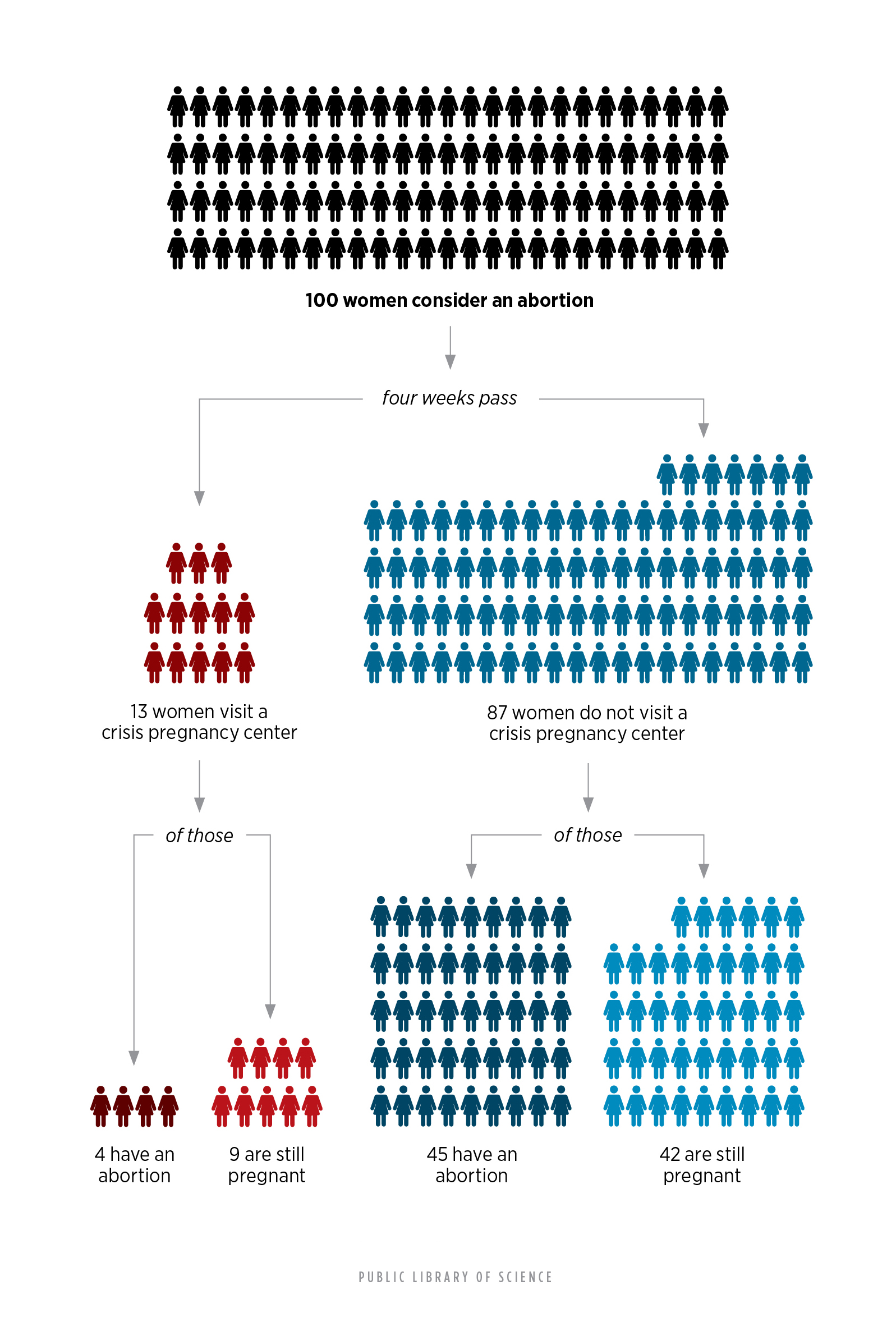
100 Women Consider Ending Their Pregnancies. How Many Get an Abortion?

The answer may depend on crisis pregnancy centers.

Illustration by Rick Szuecs / Source Image: Negative Space / Pexels

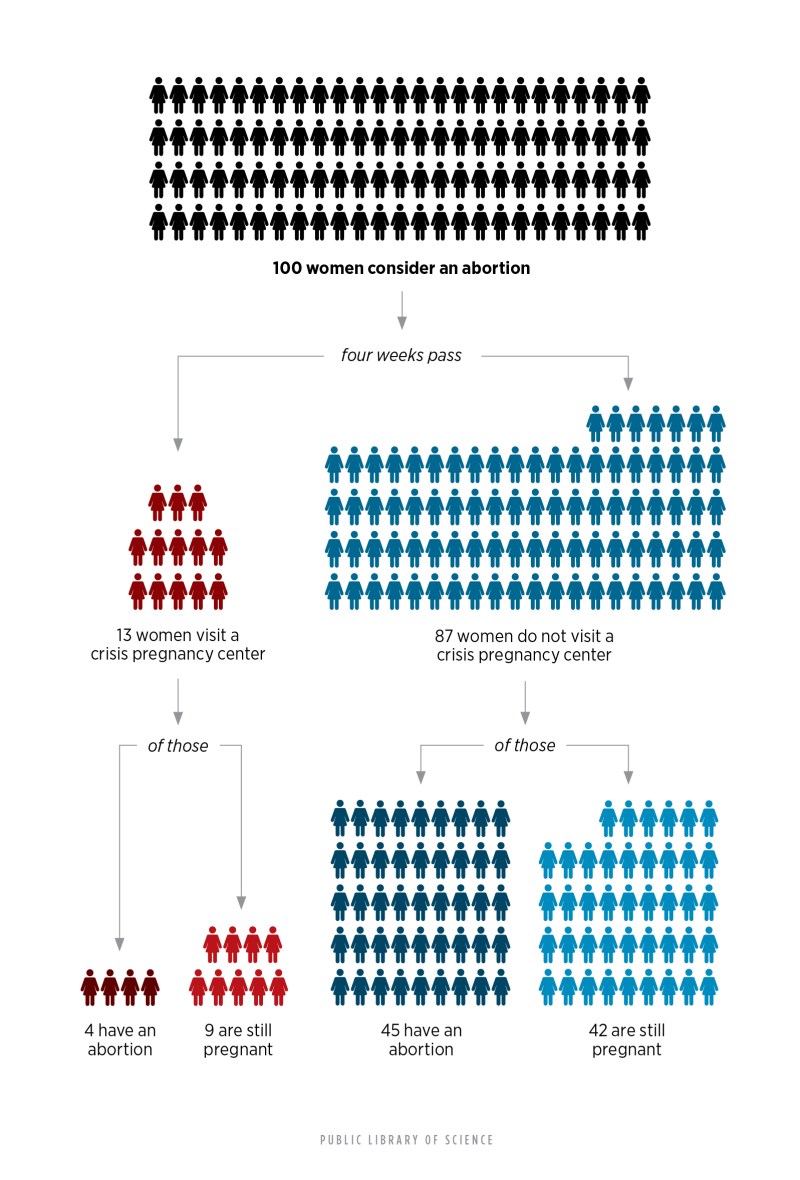
The impact of America’s more than 2,500 crisis pregnancy centers is difficult to measure. What role do they play in the steady national decline in abortion rates from 24 per 1,000 women in 1992 to 13.5 and falling in the most recent data?

A new study published by the Public Library of Science found a correlation. About half of women who consider an abortion get one within four weeks. Among those who encounter a crisis pregnancy center, however, the study found that about 30 percent have an abortion.

Whether or not crisis pregnancy centers cause women to change their mind about terminating a pregnancy, it’s clear the centers offer some an alternative.

News

An AI Aims to be First Christian Celebrity of the Metaverse

But for now, the gospel music algorithm still needs human help.

When Marquis Boone got a Dropbox file with the gospel song “Biblical Love” by J. C., he listened to it five times in a row.

This is crazy, he said to himself.

What amazed him was not the song, but the artist. The person singing “Biblical Love” was not a person at all.

J. C. is an artificial intelligence (AI) that Boone and his team created with computer algorithms. Boone’s company Marquis Boone Enterprises broke the news in November that, after working on the problem for more than a year, they had successfully created the first virtual, AI gospel artist.

The exact details of how the AI music is created is proprietary information, but Boone said the basic premise is to use software algorithms to recognize patterns, replicate them, and ultimately create new ones.

J. C., he and his team have boasted, will be a front-runner for top entertainer in the metaverse—a hypothesized future online experience where virtual reality and augmented reality are used to create an “embodied internet.” Facebook founder Mark Zuckerberg touted the idea that “the metaverse is the next chapter” of social media last fall, when he announced his company was changing its name to Meta.

Boone said his interest in creating a Christian AI musician began about two years before, when he started hearing about AI artists in the pop music genre.

“I really just started thinking this is where the world is going and I’m pretty sure that the gospel/Christian genre is going to be behind,” Boone told CT.

Christians, he said, are too slow to adopt new styles, new technologies, and new forms of entertainment—always looking like late imitators. For him, it would be an evangelistic failure not to create Christian AI music.

“If we don’t want to grow with technology or we don’t want to grow with this,” Boone said, “I think we’re going to miss a whole generation.”

Not everyone agrees.

Matt Brouwer, a Canadian Christian singer-songwriter with four original top-20 hits, said that when he first heard about it, the AI gospel singer sounded like a gimmick. Then, the more he thought about it, the more strongly he disliked the idea.

“If ever there was a desperate need for a human connection and a moment when the world is longing to unplug from technology, social media and Zoom calls, it’s now,” Brouwer said.

He has no doubt the technology exists to create catchy pop songs, but he believes Christian music is supposed to be something more than that.

“Christian music should be an invitation to join a faith journey, and that invitation means more when it comes from someone who’s already on that road,” he said. “The idea of record, radio, and retail executives spending time and money opting for a nonhuman machine to produce pop Christian hits instead of engaging with true worshiping hearts and young people who need support and encouragement to pursue what God is leading them to, well, the thought is pretty grim.”

Tyler Huckabee, senior editor for Relevant magazine, had a similar reaction. The AI seemed to him to be the digital manifestation of the worst impulses of an industry that too often misses the point of Christian music.

“So much of the modern Christian worship industrial complex is already fueled by market tested formulas that it’s probably no enormous loss to cut out the middle man and just let a slightly modified calculator do the work,” Huckabee wrote.

“All you’ve got is all the modern worshiptainment biz really needs: a pretty chorus, a few Bible-y buzzwords and a passably diverting emotional high.”

Boone has heard the criticisms, but he doesn’t take them too seriously. That’s just how Christians respond sometimes to things that are new, he said.

According to Leah Payne, evangelical historian and author of the forthcoming book The Rise and Fall of Contemporary Christian Music, he has a point: “Church people can definitely be leery of new trends,” she said. “In any institution, change often takes a while—and some attribute the newness to the influence of Satan. … That’s almost to be expected of a new invention in Christian worship.”

Christians may be more open to this kind of technological advancement than they have been in the past, though. COVID-19 pushed many to adapt to online platforms, such as Zoom, YouTube, and Facebook Live. It’s only one more step to having church in virtual, augmented reality, and a step beyond that to worshiping along with AI.

“It’s one thing to watch other flesh-and-bone worshipers on YouTube, though, and another thing to be led by AI,” Payne said. “I will be watching to see if J. C. can overcome the so-called ‘uncanny valley,’ wherein humans feel revulsion when artificial intelligence or other forms of technology are too similar to human beings.”

Boone says that’s something he and his team are working on. They want the sound to be as organic as possible. But ultimately, they don’t think it will matter whether the music algorithm sounds like a human artist.

“We really want people to get beyond ‘This is not a real person,’ to ‘This is a movement, this is where the world is going,’” he said.

Right now, though, AI gospel music is not a movement, and it’s not even 100 percent AI. There is still significant human involvement in the production of J. C., which is necessary to determine the quality of what the algorithms produce and decide what is worth keeping. The lyrics, for instance, were selected by a person.

Boone admits that approximately 65 percent of the final product is human, and only 35 percent the product of computer learning.

“We mixed the human knowledge with the computer process,” he explains. “It’s not something we can just do overnight. It took us some time to really feed the data and get the algorithm and all the information in the system.”

The virtual persona is also largely a human product based on data about common consumer preferences. Boone and his team looked at what artists tend to be most successful. Male artists do better in gospel, so they decided the AI would be male. Acoustic styles communicate authenticity, so the team decided J. C. would produce acoustic-style music. The name, hinting at a possible reference to Jesus Christ, was picked to get people talking.

The popular response has been decidedly mixed, according to Boone. But he’s undeterred. The metaverse is coming, he said, and J. C. will be a witness for God’s glory when it does.

“Even in this space, there is still a need to worship the ultimate Creator who is God,” he said. “God has given people who have created this space the ability to be innovative, the vision, and the purpose.”

Adam MacInnis is a reporter in Canada.

Apple PodcastsDown ArrowDown ArrowDown Arrowarrow_left_altLeft ArrowLeft ArrowRight ArrowRight ArrowRight Arrowarrow_up_altUp ArrowUp ArrowAvailable at Amazoncaret-downCloseCloseEmailEmailExpandExpandExternalExternalFacebookfacebook-squareGiftGiftGooglegoogleGoogle KeephamburgerInstagraminstagram-squareLinkLinklinkedin-squareListenListenListenChristianity TodayCT Creative Studio Logologo_orgMegaphoneMenuMenupausePinterestPlayPlayPocketPodcastRSSRSSSaveSaveSaveSearchSearchsearchSpotifyStitcherTelegramTable of ContentsTable of Contentstwitter-squareWhatsAppXYouTubeYouTube