News

Report: 26 Million Americans Stopped Reading the Bible Regularly During COVID-19

Sharp decline may be connected to drop in church attendance.

Christianity Today April 20, 2022
Dylan Ferreira / Unsplash

When researchers for the American Bible Society’s annual State of the Bible report saw this year’s survey statistics, they found it hard to believe the results. The data said roughly 26 million people had mostly or completely stopped reading the Bible in the last year.

“We reviewed our calculations. We double-checked our math and ran the numbers again … and again,” John Plake, lead researcher for the American Bible Society, wrote in the 2022 report. “What we discovered was startling, disheartening, and disruptive.”

In 2021, about 50 percent of Americans said they read the Bible on their own at least three or four times per year. That percentage had stayed more or less steady since 2011.

But in 2022, it dropped 11 points. Now only 39 percent say they read the Bible multiple times per year or more. It is the steepest, sharpest decline on record.

According to the 12th annual State of the Bible report, it wasn’t just the occasional Scripture readers who didn’t pick up their Bibles as much in 2022 either. More than 13 million of the most engaged Bible readers—measured by frequency, feelings of connection to God, and impact on day-to-day decisions—said they read God’s Word less.

Currently, only 10 percent of Americans report daily Bible reading. Before the pandemic, that number was at about 14 percent.

Plake thinks the dramatic change shows how closely Bible reading—even independent Bible reading—is connected to church attendance. When regular services were interrupted by the pandemic and related health mandates, it impacted not just the corporate bodies of believers but also individuals at home.

“The elephant in the room is COVID-19,” he told CT. “As we’ve been tracking and kind of digging into what really happened around Scripture engagement in 2022, we realized there were some big issues happening in the United States at the time that we were collecting the data.”

The State of the Bible survey collected data in January 2022 as the omicron variant of the coronavirus was surging.

Most churches remained open, with an additional online option. Only about 3 percent were not meeting in person at all, according to Lifeway Research. But the pandemic took a visible toll on church attendance. Pew Research Center found that nearly a third of regular churchgoers have not returned to church buildings. Some choose to participate online, but others have dropped out completely.

And at the same time, there was a sharp decline in Bible reading.

Don Whitney, professor of biblical spirituality at Southern Baptist Theological Seminary and author of Spiritual Disciplines for the Christian Life, thinks there is probably a causal connection. Isolation from other Christians has “lethal” impact on private Bible reading, he said. When people are not in church, they’re not reminded of the blessings of Scripture and its importance for their lives. And they aren’t encouraged by other Christians sharing about their own Bible reading.

Churches are also the main place that people learn how to read the Bible.

“That is clearly the responsibility of the local church,” Whitney said. “The church should teach them.”

It’s a challenging book, and even if people believe, in the abstract, that it would be good to read it, that doesn’t mean they know how to make sense of a particular passage or even where to start.

“They’ve never read one book in their life approaching the length of the Bible, and so since they’ve never done it before, they think they can’t now,” Whitney said. “You might as well say, ‘Flap your arms and fly to the moon.’ I think we have to show them the doability of it.”

Even people who do read the Bible often haven’t read very much of it, according to research by Lifeway. Only one out of every five Americans has read the whole Bible, while one of four has never read more than a few sentences.

“For most people, it’s almost more of a reference book,” said Scott McConnell, executive director of Lifeway Research. “They’re looking up something when they need it or someone else needs it. Or they’re flipping it open and reading wherever they happen to land.”

He also believes that Christian community is critical for Bible reading.

“Jesus Christ invited us to follow him, and that’s a decision we must make individually. But he designed for us to follow him in community with other believers,” he said. “A lot of people [are] missing that reinforcement from others that can take place on a weekly basis.”

But even as Bible reading dropped dramatically in 2022, there is still a lot of continued interest in the Bible, from those who never, rarely, or seldom read it. According to the State of the Bible report, a third of those who never read the Bible say they are very or extremely curious about it.

Many of those, Plake says, will turn to the Scripture in a moment of need.

“What we find is that many people when they come to a difficult spot, they wonder, ‘Does the Bible have something for me? Can it help me through the issue I’m facing?’” he said. “They start curiously looking around and exploring Scripture. That opens up a whole new world of God’s Word to them and relationship with God and God’s people.”

There is evidence this is still happening, even in 2022. The number of people downloading Bible apps is growing, and new apps are entering the market, some with promises to help users develop a daily worship habit. Two Bible podcasts topped Apple’s charts at the start of the year.

And print Bibles still remain a popular option.

“Sales of all of our Bible translations are up this year,” said Melinda Bouma, VP and publisher of Bibles for Zondervan. “We have experienced sales increases across all editions.”

This includes everything from Bibles used for personal study and devotions to gift Bibles, education Bibles, and outreach Bibles. But the Bible market has increasingly developed products specifically for people who don’t read the Bible as much as they’d like to.

“We have learned that ultimately our job is to create Bibles that make it easier to get into God’s Word,” Bouma said. “We believe that offering various options [is] what equips readers to overcome the challenge of making time to read the Bible.”

Christians may find the results of the State of the Bible report discouraging, Plake said. But the decline in Bible reading isn’t inevitable or irreversible. And if it’s connected to church attendance and connection with Christian community, then those who care about connecting people with Scripture can focus their efforts there.

“Everything is not okay. But when it’s not okay, how do we respond? That’s the critical issue for the church,” Plake said.

“I’m confident we’re going to be able to turn the tide on Scripture engagement … but that only happens when we come together and we say we’re going to serve our communities with the hope we find in God’s Word.”

Theology

No, Western Christians Are Not In Exile

But the church will live under occupation until the return of our King.

Christianity Today April 20, 2022
Edits by Christianity Today / Source Image: Matheo / Unsplash

If you attend a mostly white, evangelical church in the 2020s, you have probably been told by your pastor that you are an “exile.” This is not by accident. He or she has been taught to imagine himself, his flock, and the church in our country as exiles from our worldly culture.

At its heart, this modernized exilic framework grieves secular shifts in Western culture and laments the loss of place the Christian church once had in our society. It equates our situation with what the people of Judah experienced and suffered after being exiled from Israel—while living in Babylonian captivity after the destruction of Jerusalem and their temple in 586 B.C.

This comparison largely began in the ’90s, drawing from the work of German-American theologian Walter Brueggemann and those building upon him. In The Church in Exile: Living in Hope After Christendom, Canadian Christian and Missionary Alliance theologian Lee Beach summarizes this exilic mindset as “the experience of knowing that one is an alien, and perhaps even in a hostile environment where the dominant values run counter to one’s own.” Beach contends that Christians should think of themselves as exiles in all times and places.

As evidence of evangelicals’ exilic status today, Beach points out the difference between Canada’s centennial celebration in 1967, which featured a Christian worship service, and Canada’s memorial service after 9/11, which did not. He notes, “If such national gatherings provide insight into the ethos of the nation, then in thirty-four years Canada had moved from a nation in which the church played a major role to one in which it was no longer included at all.”

The problem today with labeling North American evangelicals as exiles is that it becomes a form of cultural appropriation that minimizes the suffering of real exiles—and misrepresents the original Jewish exile. Moreover, it does not reflect the past or present status of the Western church and is therefore not a fitting, factual, or biblical metaphor for modern-day ministry.

In the 2000s, the rate at which mostly white, male, classically trained, evangelical theologians and pastors in the West embraced and preached the exile motif in their churches was outpaced by the rate at which millions of refugees and asylum-seekers faced real exile around the world.

Yet living in what Beach describes as “perhaps even a hostile environment” (emphasis added)—or moving from a “major role” in a nation to no role “at all”—is not what real exiles experience. Refugees drowning in the Mediterranean because their dinghy capsized did not move from a “major role” in society to no role “at all,” but rather from clinging to life to no life at all.

Think of the Uyghur, Syrian, Afghan and soon-to-arrive Ukrainian refugees in our churches and neighborhoods. Are we using rubber rafts to escape our country or throwing our children over barbed wire fences to avoid industrial-scale “re-education”? Are we sending our women and children to the border while the men stay behind to fight off invaders?

I regularly preach to the English ministry of a Toronto-based Mandarin church. Some of its elders were hidden by parents in caves as children to be saved from Communist purges before fleeing to safety here in North America. How does our use of “exile” language strike those living among us who have experienced real exile?

Evangelical advocates of “exile” are at best tone-deaf when they claim the status of exile on account of Christianity “slowly moving from the center of culture to a more peripheral role.” Using exile as a metaphor for ministry today misrepresents what the church in the West is currently experiencing—compared to, for example, the hundreds of thousands of asylum-seekers who are still trapped at the southern border of the United States.

Using exile to describe our cultural situation is a bit like using the word holocaust to refer to anything other than “the Holocaust.” Equating our declining social status, cultural clout, or political power with what real exiles endure does an injustice to their suffering.

Instead, I would argue that the reality—which is found both in the New Testament and in the Western church today—is one of occupation rather than exile. Occupation has many advantages over exile as an organizing metaphor for ministry, but I will enumerate only two.

First, occupation aligns more faithfully with the circumstances of the Western church than the diaspora event from which the Old Testament concept of exile originated.

Things are bad for Christians in the West, but they are not “exile-bad”; they are “occupation-bad.” To be clear, my concern is not that the Western church cannot relate to the exile metaphor, but that we relate too well to it! Many pastors I know preach “exile” to their congregation—and yet this framework overstates our “outsider” status in society.

Our modern, Westernized conception of exile—in which Christians move from a major to a marginal role in society—is not what Judah’s exiles faced in 586 B.C. when they were displaced by Babylon’s war in Israel.

The Jewish people lost their homeland, their liberty, their place of worship, and their way of life. Many lost their lives, their names, their food (Dan. 1:6-8), their political autonomy (2 Kings 16:6), their human dignity (Ps. 137:3-4)—the whole of which does not compare to the past or present situation of the Western church.

The second advantage occupation has over exile is that it is a more biblically sound metaphor for the backdrop of ministry that is found both in the New Testament and today.

Occupation, not exile, is the situation faced by Jesus and the early church both spiritually and politically. It is the theological context for the concept of seeking the heavenly kingdom of God on earth (Rom. 13:4)—as well as the root idea behind the church’s first creed that Jesus is Lord (Rom. 10:9). Salvation itself involves confessing that there exists a higher king than Caesar.

Occupation, not exile, is the backdrop of the nativity story. Herod was appointed “King of the Jews” by Rome—prompting him to order genocide out of fear that a baby born into that title might challenge his rule (Matt. 2). In fact, “King of the Jews” was the very title written on the sign nailed above Jesus to mock him as he hung on the cross (John 19:19).

The events of Holy Week, Pentecost, and the early church era do not make sense outside the political intrigue, social schemes, and religious nuances of occupation—unlike the simplicity of exile.

Occupation, not exile, is the setting for evangelism. The disciples were called to conduct themselves in a way that is above reproach, knowing that the political and religious authorities were looking for any excuse to persecute them (Matt. 10:16); and Satan is seen falling from heaven as the disciples carry out their mission in occupied spiritual territory (Luke 10:18).

Thus occupation, not exile, should be our underlying theological framework for ministry today. God placed the world under our stewardship in the Garden (Gen. 1:28), and it is becoming God’s again through Christ’s reign (Matt. 28:18-20). Meanwhile, Satan, sin, and death remain as occupying powers in this land (Heb. 2:14-17), hostile to believers (1 Pet. 5:8) and to the work of the church (2 Cor. 4:4), and bent on usurping God’s authority on earth (Matt. 4:8-9).

Christians are operating in enemy-occupied territory, and yet we are called to seek the kingdom of God. In doing so, we will continue to encounter resistance from various social forces, political establishments, and religious institutions not under God’s rule.

For example, in Canada, the governing Liberal party was elected in late 2021 on the campaign promise of revoking the charitable status of crisis pregnancy centers and anti-abortion organizations for providing “dishonest counselling to pregnant women.”

As a Canadian, it is harder to find evidence for occupation, let alone exile, when it comes to the American church—where evangelicals have a degree of influence in the sphere of education, politics, and culture that Canadian, British, and European evangelicals could only dream of.

However, I could point not just to the 2015 US Supreme Court’s decision to strike down bans on gay marriage—but also to the fact that it took only 11 years for that to happen once the state of Massachusetts allowed it to show how Christian political influence is waning in the country.

In other words, we are reminded of the reality of occupation whenever the laws and practices of our homeland are at odds with our own biblical standards of living.

But what is our task as Christians today?

Instead of clinging to our modern, Westernized conception of an exiled church, let us embrace a more biblical, less offensive, and evidence-based metaphor of occupation.

Peter’s advice to believers living as “foreigners and exiles” was addressed to a church under occupation. He was not content for them to simply settle down and plant gardens (Jer. 29:4-7) or “sing the songs of Zion” (Ps. 137:3-4) until Cyrus’s liberating decree—much like those waiting on a sweet chariot to carry them home to heaven. Rather we are called to be on mission and “live such good lives among the pagans that … they may see your good deeds and glorify God on the day he visits us” (1 Pet. 2:11-25).

Instead of pining for a return from exile, we are called to bear witness to the return of our King Jesus here and now. Christ is coming back to bring a new heaven and earth with him, which will reoccupy this territory (Rev. 21:1). That means it’s up to Jesus to end the era of occupation—and it’s up to us to live as witnesses to his lordship while making our way in Caesar’s world.

Our job this side of eternity is to preach and live in such a way that those around us will be prepared—not for our escape from earthly exile, but for the return of our once-reviled King.

Jacob Birch is an ordained member of The Alliance Canada with 29 years of pastoral experience across Eastern Canada in both evangelical and mainline churches. He is also a long-term part-time graduate student at Tyndale Seminary in Toronto.

News

Parsing Pacifism: Ukraine’s Mennonite Heritage Shapes Evangelical Responses to Russia

Anabaptists shaped the Slavic revival. The Sermon on the Mount encouraged endurance under Soviet persecution. But how does nonviolence work in a war?

A military instructor teaches civilians holding wooden replicas of Kalashnikov rifles, during a training session in the Ukrainian capital of Kyiv on January 30, 2022.

A military instructor teaches civilians holding wooden replicas of Kalashnikov rifles, during a training session in the Ukrainian capital of Kyiv on January 30, 2022.

Christianity Today April 20, 2022
Sergei Supinsky / Contributor / Getty

Ukrainian Baptists were once practical pacifists.

Now locked in a vicious war of survival with invading Russian forces, many are on the front lines of battle. Leading voices call for NATO to enforce a no-fly zone. Pastors pray for soldiers; churches offer bread.

What happened?

It is not as straightforward as simple self-defense. But neither was their nonviolence, practiced by most Slavic evangelicals, a clear convictional principle. Forged in the fires of the Soviet Union, the then-second-largest Baptist community in the world developed along a very different path from their denominational brethren in the United States.

Just ask Roman Rakhuba, who was raised Baptist.

“I never would have called myself a Mennonite,” said the head of the Association of Mennonite Brethren Churches of Ukraine (AMBCU). “Later I discovered I was following their principles all along.”

Known as the “Bible Belt” of Eastern Europe, Ukraine’s evangelical faith was greatly influenced by the Anabaptist tradition. Rakhuba grew up in Zaporizhzhia, 350 miles southeast of Kyiv, near the old oak tree associated with the Chortitza colony of Mennonites, founded in 1789.

His grandfather was saved through one of their preachers.

But as a Baptist child, Rakhuba was raised without toy guns, instructed to never return evil with evil. Forbidden from playing war, his relatives refused to fight in the Soviet army. He remembers Mennonites hosted at his grandfather’s home, learning of the 1763 decree by Catherine the Great to invite German settlers to develop the Russian hinterland.

They were joined by Lutherans and Catholics, dissidents and rebels, offered lands, self-governance, and—vital for the pacifists—exemption from military service. Over the next century, Mennonite communities thrived in Ukraine, developing infrastructure for agriculture and industry. But increasing prosperity challenged their social and spiritual life, and drunkenness and dancing became common.

Then came pietism.

In the mid-19th century, German missionaries, such as the Lutheran Edward Wuest, found a reception with the Mennonites. Their emphasis on a regenerated Christian life through personal conversion, prayer, and Bible study appealed to colonists dissatisfied with the traditional church. The community ruptured, and in 1860 a parallel Mennonite Brethren denomination was born, sending missionaries as far as Siberia and India.

The still-German speakers lived largely separate lives from their Slavic neighbors, until two events intervened to spark an evangelical revival. In 1858, Emperor Alexander II authorized the translation and printing of the Bible in Russian. Three years later, he abolished serfdom.

“For the first time, peasants were no longer tied to the land,” said Mary Raber, a church history instructor at Odessa Theological Seminary. “Where better to find a job than on the farm of a successful colony?”

Slavs, now with a New Testament to read, started joining their Bible studies.

Mennonites were not the only revivalist movement in the Russian empire. German Baptists planted churches in the Caucasus Mountains. An English missionary won converts among the St. Petersburg elite. Neither of these groups adopted pacifism as a rule, and even some Mennonites organized self-defense units to ward off bandits in the chaos of World War I.

But none were prepared for the rise of the Bolsheviks, communist revolutionaries who solidified power in 1923.

Not counting converts, in 1911 there were over 100,000 German-speaking Mennonites in Ukraine. But their population had already taken a hit in the 1870s, when military exemption was revoked and belatedly replaced with alternative service. One-third left for the central plains of North America.

Civil war and famine ravaged the community after World War I, and the Mennonite Central Committee (MCC), created in 1920 to assist brethren in Ukraine, provided relief. But though 25,000 daily meals saved many—an estimated 9,000 lives—another exodus led an additional 20,000 to join previous emigrants in Canada.

Soviet agricultural collectivization contributed to the Holodomor, a man-made famine a decade later, killing millions of Ukrainians. And like other Christians, Mennonites suffered arrest, execution, and exile to Siberia. World War II brought the deportation of thousands to Central Asia. Numbers continued to dwindle, and most of those remaining went west with the retreating German army.

When Joseph Stalin pandered to Western allies and created the Union of Evangelical Christians-Baptists in 1944 (later adding Pentecostals), Mennonites mostly just dissolved therein.

The persecution of Soviet Christians is a well-known story. Officially tolerated as international window dressing, they were marginalized in society with churches infiltrated by KGB agents. Evangelizing quietly at great risk, their biblical practice emphasized submission to authorities—even autocratic ones—in political affairs.

But like their Mennonite forerunners, they refused military service.

“It wasn’t exactly pacifism, it was nonparticipation,” said Michael Cherenkov, now pastor of Revival Baptist Church in Vancouver, Washington. “Maybe it was wise, but it was not theological—it was the experienced path of survival.”

Cherenkov grew up in the underground churches of Soviet Ukraine, and in the 1960s his Russian-born father was jailed for pacifism. His family grew up praying not only for spiritual revival, but also for the collapse of the USSR. It was a “theology of liberation,” he said, and in some ways represented a seed for the eventual support of armed resistance to Russia today. (In the hospital near the eastern frontlines of the war, his mother recently asked prayer only for the Ukrainian army.)

The family’s political prayers were answered in 1991 with Ukraine’s independence, and believers suddenly found themselves in a completely new reality. Christianity became an integral part of the new republic, Cherenkov said, and believers found freedom to shape public life and share the gospel.

But met with corruption, nominal faith, and lingering Soviet mentalities, they needed a new apologetic skill.

“We felt responsibility for the transformation of society,” he said. “Over time, we learned to defend.”

A second input to the process was the post-independence development of evangelical seminaries, largely funded and staffed from the West. Sergey Rakhuba, a non-Mennonite uncle of Roman and director of the pan-evangelical Mission Eurasia, said they were surprised to see the widespread pacifism of Ukrainian believers. Professors did not focus on it, he said, but new debates proliferated on all topics of theological dispute. Alongside Calvinism versus Arminianism and the Lordship of Christ, discussions emerged about the legitimacy of military service.

But doubts about nonviolence were already in bloom.

Valentin Siniy, president of the interdenominational Tavriski Christian Institute, downplays the role of seminaries in the development away from pacifism. He also believes the famous novelist Leo Tolstoy was more influential than the Anabaptists in its promotion.

But his own story illustrates the evangelical shift.

Experiencing a childhood similar to the Rakhuba and Cherenkov families, Siniy’s Baptist grandfather lost his job under Soviet persecution; his parents lost their home. Lessons were given about humility and nonresistance to evil. But in his young mind, it failed to compute.

God is on the side of the powerful, he concluded in resignation.

The seeming impotence of pacifism was driven home at age 14, when on his way home from church he witnessed a drunken man try to rape a young woman. Siniy was paralyzed, but the commotion stirred neighbors across the street and the assailant ran away.

Five years later, he joined in the defense of another would-be victim. Now a theologian amid a devastating war, he has discovered the power of biblical anathema: ‘Curse Meroz,’ said the angel of the Lord. ‘Curse its people bitterly, because they did not come to help the Lord … against the mighty’ (Judges 5:32).

Americans played a vital role, Siniy said, in setting fledgling Ukrainian efforts at evangelical theological education on a solid foundation. But the financial crisis of 2007–08 dried up much financial support, and local staff assumed positions of leadership. In the years since, foreign professors, far fewer in number, have been welcomed as partners.

Mennonite thought remained among older Ukrainians, Siniy said, as did the lingering Soviet conditioning away from political participation. But as younger seminarians challenged these notions theologically, tensions with Russia shook what had been a semi-deference to the “big brother” in evangelical relations. Their seminaries crafted joint programs to keep the peace between them, stimulated by stalwart Mennonite and Anabaptist-leaning leaders of the older generation.

And alongside these developments was a new commitment to social service.

“Our role as Christians is not only to fulfill the mission of God through salvation of souls,” said Siniy, “but also to strive to actively return this world to the divine plan, to the extent that we can.”

This includes participation in the armed defense of the nation, he said.

But applying differently a similar conviction, Mennonites also were serving society as foreign support contributed to the renewal of their theological heritage in Ukraine.

Emphasizing peacebuilding and development, MCC opened an office in Russia in 1992, and in cooperation with the Baptist Union of Ukraine relocated to historic Zaporizhzhia a few years later. Meanwhile, Multiply, the mission agency for the Mennonite Brethren, dedicated efforts to return to the lands from which they once fled famine.

John Wiens, 35 years a pastor in Canada, came to Ukraine in 2008. Building upon Mennonite work since the early 1990s, he planted new churches and social centers to unite a denominational family of faith. Serving especially the margins of society, his holistic ministry attracted new converts and other evangelicals, while memory of the Anabaptist tradition legitimized the movement locally.

“We were taught to respond to people in pain,” said Roman Rakhuba, who was elected conference moderator of the AMBCU in 2014. “The church should be useful in society.”

Almost all members in their two dozen churches are younger than 40 years old, or those who joined from other evangelical denominations. But the year 2014 marked a turning point for the Mennonite Brethren—and in fact, all of Ukraine.

Wiens succumbed to cancer in January. In February, the pro-Europe “Revolution of Dignity” removed a pro-Russian president and in return Russia occupied Crimea. And in March, Russia annexed the peninsula while Moscow-backed separatists seized control of the eastern Donbas region.

Ukraine was aflame, in hybrid—but very real—war.

MCC, which in the early 2000s refocused its peacebuilding work to the Balkans, scrambled to renew it again in Ukraine.

The relief agency organized conferences for Croatian, Bosnian, and Serbian experts to share insights on peace, justice, and reconciliation. They partnered with the Quaker Alternatives to Violence project to spark group reflection and personal transformation. And MCC supported a network of churches divided by the demarcation line in the Donbas, whose leadership expressed pacifism and a commitment to maintain unity.

The AMBCU didn’t know what to do.

“When we evangelize, the conviction of nonviolence is not our first priority,” said Johann Matthies, Multiply’s regional team leader for Europe and Central Asia. “We invite people to follow Jesus, not Menno Simons, and the idea of costly discipleship comes later.”

But despite bearing the classic Anabaptist name, some said that Mennonites were now virtually indistinguishable from Baptists in the question of armed defense. Wiens had died, two AMBCU members were drafted into the army, and Matthies stepped into the leadership void.

For their annual leadership conference in Dnipro, near Zaporizhzhia, he suggested consulting the Sermon on the Mount rather than recruiting some eloquent speaker. Participants read aloud the words of Jesus, each one sharing what the Holy Spirit brought to mind.

“For the first time, it was not an academic question,” Matthies said. “The enemy was at the gate.”

At a similar conference in Kyiv, Baptists were ready to fight. Three dozen pastors gathered in the capital to discuss events, and an elder leader stood up and said, “We are pacifists,” counseling that Ukraine could not stand up to such an evil superpower.

It did not go over well.

“Where the older generation was still traumatized, young leaders wanted to proactively address this aggression,” said Cherenkov, who spoke on behalf of an armed resistance. “Within a few months, sentiment shifted entirely.”

And without a context of oppression, said Sergey Rakhuba, there was little to reinforce a pulpit-driven message of nonviolence within the church. He draws the point of origin back to the 2004 Orange Revolution, when Ukrainians demonstrated in the thousands to protest a fraudulent election. And though this action divided evangelicals—submit to the authorities, many said—the plea to act as faithful citizens resonated among the youth.

But the Donbas made the difference.

“In 2014 they said, ‘If we don’t defend our country, who will?’” said Rakhuba. “That’s when pacifism began to crumble.”

Eight years later, Russian President Vladimir Putin recognized the independence of the two southeastern breakaway “republics.” Three days later, he launched a war.

Oleg Magdich, a 44-year-old nondenominational pastor, leads morning prayer for a territorial defense team of 80 civilians—only 10 of which have seen active combat. As Russian soldiers approached Kyiv, the Ukrainian volunteers spent their days building barricades of sand and cement blocks and attached explosives to the city bridges. They are now preparing to redeploy south.

Oleg Mironenko chose a different path, eventually. One of the two Mennonite Brethren conscripts in 2014, he first enrolled in the defense of the Donbas. The other requested alternative service. The church supported them both.

God spared him direct combat, as he was assigned as a driver for an artillery unit. Though traumatized from the war, he also witnessed how soldiers turned to Jesus and needed spiritual care.

He re-enlisted, as a chaplain. Another Mennonite Brethren believer has since joined him, and the denomination counts many veterans among its members.

“Most people in our churches will not pick up a gun, but we will not condemn a soldier,” said Maxym Oliferovski, an AMBCU pastor and director of the New Hope Center in Zaporizhzhia. “I have read about pacifism, but this is probably not my conviction.”

Since Day One of the war, like Baptists and many others, Oliferovski has been active in housing the displaced, providing relief, and facilitating evacuations. But near the frontlines of the Donbas conflict, his center also has experience with mental health—and Mennonite convictions.

“Soon we will become a society full of angry, traumatized people,” he said. “As salt and light in the community, we have to help them forgive their enemies.”

It is not an easy task; but if possible, evangelicals will be well placed. Churches across the country have won plaudits for staying behind and helping the vulnerable, including soldiers. And Sergey Rakhuba said Protestants probably have more chaplains in the Ukrainian military than all the Orthodox combined.

In some ways, it is a vestige of the Anabaptist heritage. Since independence, though decreasing since 2014, sources estimated more than 4 out of 5 Ukrainian evangelicals request alternative service or other exemptions at the time of obligatory military training. In this way, they contribute to their nation without weapons, even as it requires an extra year.

The percentage against national resistance altogether is miniscule. But as all adult males between 18–60 years old were legally barred from evacuation abroad, sources estimated that the great majority of evangelicals are contributing through humanitarian help rather than armed combat.

Yet some sources said they would be ready, if necessary.

Early in the war, Metropolitan Epiphanius gave Orthodox license.

“To defend and to kill the enemy is not a sin,” stated the head of the Orthodox Church in Ukraine. “The one who has come to our home with a sword will also die by that sword.”
Protestants lack a central authority to issue a similar proclamation, but evangelical sources have not disputed the stance. However, international Mennonites—expressing their outrage at war—have held to their Anabaptist convictions.

“When Peter pulled out a sword,” wrote the president of the Mennonite World Conference in an open letter to Russian Orthodox Patriarch Kirill, “Jesus told him to put it away.”

But he also addressed “both sides” of this fratricidal confrontation.

“Will we give allegiance to God’s kingdom,” he asked, “instead of bowing to the gods of nation, empire, and war?”

MCC was more specific in its advocacy and wider in its address.

“All of us are complicit in systems of violence and oppression,” wrote the executive directors for the US and Canada. “Nonviolent approaches [are] available to prevent war, and to work for peace during war.”

Matthies agrees, but emphasizes that while followers of Jesus must not use weapons, this does not apply to governments. The church must preach nonviolence before war, and reconciliation always. But once begun, it would be naïve to call for disarmament in the face of genocide, he said. Armed conflict represents the failure of the global church, and calls all believers to repentance for their share in failing to prevent it.

As for his denomination, it is still learning the Anabaptist way, with many members socialized in other churches.

“The current Ukrainian Mennonite Brethren church may not yet be stewards of our historic treasure,” Matthies said. “But as they serve courageously and stand against evil, we are learning with them.”

Similarly proud is Andrew Geddert, MCC’s country representative in Ukraine from 2017–2020.

“They may be less theologically mature in some ways but more mature in others, because they are working it out through lived experience,” said Geddert, who began the rebuilding of peace work in 2015. “It is much different than doing it in academic institutions.”

And Mennonites, like Baptists, are firmly assisting the national cause.

State-run medical centers have requested their help in supplying food to patients. Funds are used to buy shoes, gloves, and protective gear for soldiers. And in the days to come, there will be an overwhelming need for psychological rehabilitation.

Their numbers may stay small. Evangelicals may have moved on from their early Anabaptist ethos. But in reviving their own Anabaptist heritage, Mennonites believe they are helping revive Ukraine.

“We should do as we did in the beginning,” said Roman Rakhuba. “Plant farms, heal souls, and offer spiritual strength to the world.”

Follow CT’s Russia-Ukraine war coverage on Telegram: @ctmagazine (also available in Chinese and Russian).

Select articles are offered in Russian and Ukrainian.

Books
Review

When Song of Songs Uses a Word, It Doesn’t Always Mean What We Think It Means

Aimee Byrd is correct that the book diagnoses flawed understandings of human sexuality, but her interpretative choices are open to question.

Christianity Today April 20, 2022
Illustration by Mallory Rentsch / Source Images: TiffanyStewartPhotography / Getty / Anderson Rian / Ben Tofan / Unsplash

Standing outside a Coptic church in Cairo, I saw a mosaic that sent me back to a college hermeneutics class. In the image’s foreground, a man lay slumbering as an angel hovered over him, pointing. I followed the finger to a horizon dotted with pyramids. And I recognized the Bible’s second “Joseph and Egypt” story, which recounts the holy family’s flight from Herod’s persecution.

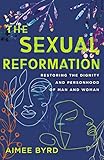
The Sexual Reformation: Restoring the Dignity and Personhood of Man and Woman

The image reminded me of how I’d wrestled with a passage from Matthew’s Gospel: “Out of Egypt I called my son” (2:15). The passage was suggesting that when the toddler Jesus returned from the land of pyramids, he had “fulfilled,” in Matthew’s words, a vision from the prophet Hosea: “When Israel was a child, I loved him, and out of Egypt I called my son” (11:1). Yet Hosea, for his part, wasn’t issuing a prediction about the coming Messiah. He was thinking back to an event he knew from Israel’s history: God’s deliverance of his people from Pharoah’s yoke.

For years I struggled to see how the holy family’s return from Egypt truly fulfilled Hosea’s prophesy. But then my hermeneutics professor explained that Matthew was using “fulfilled” to mean something closer to “epitomized,” or “filled to the full in meaning.” In modern parlance, we might imagine Matthew saying, “Talk about calling your Son out of Egypt!”

When we try shoehorning a prediction into our reading of Hosea’s vision, my professor said, we end up distorting it. Instead, he argued, we should treat Matthew’s choice of language as an exercise in literary layering. In other words, he was drawing on earlier biblical motifs to amplify his point.

I thought of that lecture often as I read Aimee Byrd’s new book The Sexual Reformation: Restoring the Dignity and Personhood of Man and Woman. Byrd is probably best known for a previous book, Recovering from Biblical Manhood and Womanhood, which raised many questions about how evangelicals speak of manhood and womanhood within the church. In this latest release, she diagnoses the church’s broken handling of human sexuality and points to a solution in Scripture. But her interpretive framework is open to question.

Word and meanings

To summarize Byrd’s argument: We’ve allowed views of gender to emerge from teachings of some church fathers who were more rooted in Aristotle than Genesis. We have held up June Cleaver as the ideal woman rather than the one in Proverbs 31, who’s out making real estate deals (v. 16) amid other “vigorous” tasks (v. 17). When we’ve stood strong on truth, we’ve often sacrificed grace. Or vice versa. And we’ve barred the front door against feminism while leaving the back door wide open to the kind of misogyny that resulted in the #MeToo and #ChurchToo movements.

Byrd’s proposed solution is looking at Song of Songs through a specific interpretive lens. She sees the Song as revealing a “typology in God’s design of man and woman, one that unfolds throughout the canon of scripture.” She describes this approach as reading the Song “Christianly,” which means looking for its “divine authorial intent” rather than the intent of its human author.

Throughout her book, Byrd shows how she prefers this method to a variety of alternative approaches. For centuries, rabbis have seen it as an allegory of love between God and Israel. The early church read it as an allegory of the relationship between Christ and the church. More recently, many scholars have taken it at face value as poetry that extols human love as a gift from God.

Responding to this later interpretation, Byrd warns, “We cannot flat-foot the Song as a horizontal love-and-sex manual” and “We cannot flat-foot our sexuality under the weight of cultural conventions.” And she’s right that the Song is far more than a guide to great marital sex. Indeed, while some have seen the Song as a chronological guide through courtship, love, and marriage, such an understanding has problems beyond flawed methods of Bible interpretation. Courtship, for one thing, was virtually nonexistent at the time the Song was written (or its poetry collected). And a chronological reading misses some of the distinctive elements of Hebraic literary structure, which wasn’t bound by the sort of beginning-middle-end conventions that wouldn’t exist until hundreds of years later.

Many will agree with Byrd’s assessment that the church needs to reform its understanding of God’s design for men and women. But the path she takes from problem to solution is another story. Sadly, Byrd’s typological method of interpreting Song of Songs leads her to some conclusions that run contrary to basic rules of word usage.

Describing the bride in the Song, Byrd points out that she has “dove’s eyes” (1:15), an image the woman applies to her husband later in the book (5:12). Noting that the bride “finds peace” in her lover’s eyes (8:10), she argues, “The dove is clearly a symbol of the Holy Spirit.” Clearly?

Then, reflecting on the prominence of lilies in the book (2:1–2, 16; 4:5; 5:13), Byrd says they “remind us of God’s people, the church.” About the bride’s references to myrrh (5:1, 5, 13) she writes, “Myrrh is the perfume of the temple. It’s as if she is saying that we, the collective church, are on [the lover’s] lips!”

Yet none of these interpretations is anywhere near as straightforward as Byrd suggests. On what basis of authority does she make them? Readers never get a clear answer. “The question of authorial intent,” Byrd argues, “is not given to us. It’s a Song. … So why would we spend our energies probing into that when the typo-symbolic reading is the plainer reading?” Which only raises the question: Plainer to whom?

At one point, Byrd notes a parallel between the king in the Song being bound by the beloved’s hair (7:5) and Jesus being bound when he is arrested, as recorded by John (18:24). Now, in this example, the author of the fourth Gospel does use literary layering as he borrows words and images from the Song. But seeing the bound Savior in the original reference to the bride’s hair? It reminds me of the oft-quoted scene in one of the Alice in Wonderland books, in which Humpty Dumpty tells Alice that when he uses a word, “it means just what I choose it to mean—neither more nor less.” In response, Alice wonders aloud “whether you can make words mean so many different things.”

Byrd warns of misguided interpreters who “read with modern metaphysical and critical methods, believing they are being faithful to the plain sense of the text.” She suggests that their “good intentions have not taken into account the providence of God in divine authorship.” But allowing words to have so many meanings—isn’t that relying too much on human imagination?

It’s true that by exalting sexual love, the Song points to God’s good gift of physicality. We know from Paul in Ephesians 5 that marriage is a picture of Christ and the church, and from Revelation 19 that a great wedding awaits the church, which is Christ’s bride. So, in human love and consummation we see the future of redeemed humanity foreshadowed.

But we can make this connection confidently only because the future event remains rooted in the meaning of the earlier, which has its own meaning in its original context. After all, what meaning has a “fuller” truth without an original meaning of its own on which to build an analogy?

A different path

In The Sexual Reformation, Byrd has diagnosed well. Indeed, the church has a problem, and a lot of wrong pathways have led us to where we are. Byrd’s prescription is to look to the Bible for help. And on this we can agree. She notes, “As weighty as these issues are, we are addressing symptoms without getting to the root: what our longings are created for, where our desires should be oriented, what the meaningfulness of our sex is, and what we are living for.” Yes, and amen.

Byrd is on firmer ground, too, when she makes observations from the text of Song of Songs itself without seeking to interpret it. For example, she notes, “The woman’s voice is so free in the Song. Astonishingly, in its patriarchal context, the female voice is dominant. … It immodestly begins the Song and closes us out. Female voices make up more than 60 percent of the Song. And yet I’m less interested in the sheer quantity, but in the freedom, boldness, playfulness, intensity, and truth of what the bride speaks. She initiates over and over, starting in the beginning, declaring her desire for the kisses of her Groom’s mouth.” Observations like these can aid the church in reforming as they help readers see new possibilities for talking about men and women, love, marriage, and sex.

Most of Byrd’s readers will endorse her call for a small-r sexual reformation and acknowledge that the Bible is the place to look for help. But when it comes to how we understand Scripture’s counsel, I suspect most readers will find themselves on a different path. Because before one can do something like make an analogy based on Egypt, such a place with sand and pyramids must actually exist.

Sandra Glahn is a professor at Dallas Theological Seminary. She is the editor of Sanctified Sexuality: Valuing Sex in an Oversexed World and Vindicating the Vixens: Revisiting Sexualized, Vilified, and Marginalized Women of the Bible.

News

Health Care Sharing Ministry Sharity Leaves 10K Families with Millions in Unpaid Bills

The network went bankrupt in the face of ongoing legal challenges, and regulators don’t expect members will receive the $50 million-plus they’re owed.

Christianity Today April 19, 2022
The Good Brigade / Getty Images

Around 10,000 families whose faith led them to “share in one another’s medical expense burdens and so fulfill the law of Christ” have instead ended up with unpaid bills totaling over $50 million after their health care sharing ministry shut down.

Sharity Ministries, formerly known as Trinity HealthShare, filed for bankruptcy and then started the liquidation process last year. There are so many outstanding claims that it’s unlikely that members will receive the reimbursements they’re owed.

The organization had faced challenges, class-action lawsuits, and cease and desist orders in several states, where regulators said it had been operating as an unauthorized insurance provider. A 2022 lawsuit from the state of California alleges Sharity denied the majority of claims and spent as little as 16 cents per dollar on premiums. Even the Alliance of Health Care Sharing Ministries called Sharity a “sham front group” for the for-profit health care management company Aliera.

When CT reported on the ministry in 2020, Sharity had blamed Aliera, its vendor, for acting in bad faith against the ministry and its members, and tried to distance itself from the company. At its highest point, Sharity had about 40,000 member households nationwide, but that number declined as news spread about unfulfilled requests and lawsuits against the company.

https://twitter.com/AGRobBonta/status/1481375419974623237

In April 2021, when the Sharity board learned that the extent of unfulfilled requests was twice what they had expected, they voted unanimously to pursue a reorganization bankruptcy and started the process in July.

The plan at that point, according to former president and board member Joe Guarino, was to clean up their financial house and continue to work toward fulfilling health care sharing requests for their members.

However, during last year’s bankruptcy proceedings, the board voted to liquidate the entire organization instead.

Guarino was the only one of the five-member board who abstained from voting. “I presented my case with them and said, ‘Guys, we have a plan. It will work.’”

“As a Christian, I felt it was not right to leave our members hanging out like that,” he said. “I can’t tell you how many times since then I have sobbed about all those tens of thousands of families who are without the means to pay their medical bills. For many of them, I’m sure it destroyed their lives.”

The ministry stated on its website, “Sharity Ministries is built on the centuries-old Christian tradition of caring for one another, including health care needs. Our members hold a common set of religious beliefs, such as ‘bear one another’s burdens’ (Galatians 6:2) and ‘share with the Lord’s people who are in need’ (Romans 12:13a).”

Sharity’s site said its programs “provide an affordable and effective faith-driven health care option for those who believe in individual responsibility, healthy living, and carrying one another’s medical burdens” and cost about half the price of typical health insurance. Members had to sign a Christian faith commitment and agree to abstain from risky behaviors.

Sharity officially dissolved as of December 2021. Court liquidation documents filed in October 2021 state that the ministry held over $300 million in unpaid member claims.

Guarino, who resigned in August 2021, said he had no idea how the amount of unpaid requests went up six times from the original $50 million that the board knew about months earlier. The other four board members could not be reached or declined to comment.

Aliera was found guilty of fraud in a federal class-action lawsuit in November 2021 with judgments of over $4.7 million and was forced into Chapter 11 bankruptcy proceedings the following month.

A liquidation trust for Sharity has been set up to distribute the remaining money to members with outstanding bills; however, according to a New Hampshire Department of Insurance statement, “the money recovered will likely be a fraction of the total.”

Cover Story

Our Pulpits Are Full of Empty Preachers

Tens of thousands of pastors want to quit but haven’t. What has that done to them?

Illustration by Dadu Shin

Seven years ago, First Presbyterian Church of Deming, New Mexico, had to replace the rope hanging from its bell tower. After 75 years of regular use, it had finally unraveled. The bell has been ringing since the Pueblo mission-style building was constructed in 1941, and the church itself dates back further, to the turn of the 20th century.

Not much else has endured like the bell. Today, the church building’s original adobe walls are covered by white paneling and a powder-blue roof. Out front, the steps leading to the entrance have been replaced with a wheelchair ramp. There was a time when the congregation nearly filled its 200-person sanctuary. On a recent Sunday, five people showed up.

“That’s the lowest it’s ever been,” Liv Johnson said. In the three decades since she started as secretary at First Presbyterian, Johnson has watched a slow trickle of people leave. “When I first came here, the average attendance—because I had to do that report—was 82,” she said. “I remember having 35 kids for Sunday school, and now we have none.”

Still, Johnson doesn’t despair. She believes strong, stable leadership could turn things around. But recently, consistent leadership has been difficult to come by.

In 2018, First Presbyterian’s pastor, Adam Soliz, passed away after a short battle with lung cancer. A new, younger pastor took over the congregation just as the COVID-19 pandemic decimated church attendance. The new pastor reconsidered his vocational trajectory, and in August of 2021, he accepted a better-paying job and left.

Unfortunately, replacing a pastor is far more difficult than replacing a bell rope. And the longer it takes, the more it costs.

To make its monthly budget, the church scrambled to find a family to rent the parsonage. “I have to play landlord. I’ve even preached,” said Johnson, the only person left on staff. With the help of guest preachers, they’ve had sermons every week. But many former attendees say they won’t come back until the church finds a permanent pastor.

Last fall, Dale Cook, the head deacon at a Presbyterian church in Las Cruces, New Mexico, drove the 60 miles to Deming to preach at the Deming church. They liked him and asked if he would consider preaching on a regular basis.

Cook is now working to become a commissioned lay pastor for First Presbyterian of Deming. He believes God has been preparing him for this role since he was a kid. “I grew up in the home of a Southern Baptist minister. He was with the Home Mission Board, and he went around jump-starting small churches and rebuilding older churches that had lost all their congregation,” he said.

Cook plans to minister bivocationally so he can move into the parsonage and support the church with his rent and proximity. “I was told, ‘If you move up there, you’re going to be right next door to the church. You’ll be expected to be on call 24/7.’ And I said, ‘Well, that’s what I always thought a minister did anyway.’”

First Presbyterian’s struggles to find and keep a pastor are not uncommon in small churches across the United States. And according to many experts, they may become even more common as the nation potentially approaches a surge of pastoral resignations.

In his list of “10 Things Trending in the Church for 2022,” author and researcher Thom Rainer predicted a looming pastor shortage: “Departures of pastors will increase by 20%. The Great Resignation will hit pastors hard.” And in September of 2021, author and pastor Dane Ortlund tweeted, “A tidal wave of pastor resignations is coming in 2022.”

If they’re right, more churches than ever may find themselves with a leadership deficit—and few will have a Dale Cook to take the reins. A nationwide pastor shortage could be a death knell for many smaller churches.

But a deeper look at pastoral employment data suggests that, while tales of a Great Ministry Resignation are being told everywhere from The Washington Post to The Wall Street Journal, there’s reason to question whether a mass clergy walk-off is really on the horizon. There’s also reason to think that the more likely alternative—a future in which pastors aren’t quitting—could be even more concerning.

The great resignation is coming,” warned Texas A&M professor Anthony Klotz in a May 2021 Bloomberg article about American workers at large. “When there’s uncertainty, people tend to stay put, so there are pent-up resignations that didn’t happen over the past year.”

It didn’t take long for this resignation backlog to unjam. According to the US Bureau of Labor Statistics (BLS), more Americans left their jobs in April 2021 than in any month on record. A disruption that seemed to almost single-handedly dominate the news cycle, the Big Quit gained momentum into the summer, peaking at 4.5 million people quitting their jobs in November.

These resignations hit some professions harder than others. The health care sector bled hundreds of thousands of employees and spiraled into a crisis it has yet to recover from. Many of the nurses who left are not looking back.

Illustration by Dadu Shin

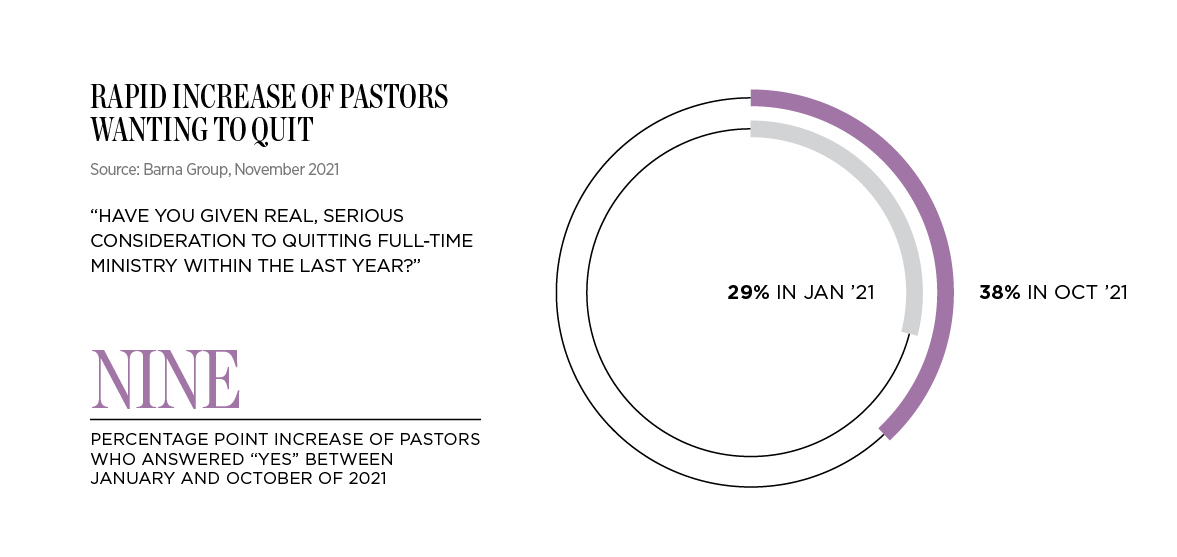
There are far fewer pastors in America than nurses, but some anticipate a similar exodus from pastoral ministry. As Christianity Today has reported, an October 2021 Barna Group survey revealed that 38 percent of Protestant pastors had seriously considered quitting full-time ministry that year—nearly a third more pastors than when Barna asked the same question that January.

At first glance, this tracks with what we’re seeing in America broadly. A Yahoo Finance/Harris Poll survey last year found that 37 percent of US workers “are either thinking of leaving their current jobs or are already preparing to make the move.”

But the Great Resignation is more complex than its name implies. Think of it more as a Great Reshuffling. In an article for The Atlantic, Derek Thompson wrote, “The increase in quits is mostly about low-wage workers switching to better jobs in industries that are raising wages to grab new employees as fast as possible.”

Despite higher-than-ever levels of exits in hotels and restaurants, the accommodation and food services sector grew by two million employees last year. It’s a job-seeker’s market, but the dramatic worker shortages we’re seeing in health care are an outlier in the Great Resignation.

While the nursing shortage is well documented, there’s less evidence that pastors are leaving ministry in droves—at least for now.

In a remarkably thorough survey of the available ministry attrition data, Duke University’s Allison K. Hamm and David E. Eagle concluded last year that “best estimates suggest that annual attrition rates across Protestant denominations in the United States are generally around 1%–2%, with occasional context-specific anomalies.”

This aligns with a 2015 Lifeway Research study that found a 1.3 percent annual attrition rate among evangelical and Black Protestant senior pastors. So if we’re looking for any spike in clergy leaving ministry, 1 or 2 percent annual attrition is a reasonable baseline to start from.

“I was walking toward the church one day, and I felt something inside of me snap, like a rubber band had been stretched too far.” Jonathan Dodson

To learn how the past two years have affected pastoral employment, consider BLS’s data on clergy. For the first time since 2011, its estimate for national employment of clergy dropped in 2020, from 53,180 in 2019 to 52,260. It dropped again in 2021 to 50,790. We should look at those numbers with a raised eyebrow, though. The Southern Baptist Convention alone had 47,592 churches in 2020, so the BLS is only measuring a fraction of all US clergy.

In a national employment matrix showing next-decade employment projections, the BLS uses a more realistic number for total 2020 clergy employment: 260,600, up from 243,900 the previous year. They predict a slower-than-average 3 percent growth rate between 2020 and 2030, but that’s far from a shortage.

A more reliable measure comes from a 2021 Lifeway Research study that mirrors the one from 2015. It found that, over the past decade, only 1.5 percent of evangelical and Black Protestant senior pastors left ministry each year—a statistically insignificant increase from the 2015 study and well within expected attrition rates.

“Typically, when [pastors] step away from a church—if it’s a really bad situation there—they’re stepping into another pastoral role,” said Scott McConnell, executive director of Lifeway Research. “And that’s still what we see today.”

A survey by Scott Thumma and the Hartford Institute for Religion Research conducted during the summer of 2021 revealed that, while 37 percent of pastors seriously considered leaving ministry in the past year (similar to Barna’s findings), most of them did so only once or twice in fleeting moments of unusually high discouragement. Thumma concludes, “Overall, our data just doesn’t provide much evidence of a pending mass exodus of clergy.”

In fact, there’s reason to believe senior pastors are more reluctant than usual to leave their churches. Sarah Robins, former vice president of client relations at pastor search firm Vanderbloemen, said the company has struggled in the past two years to find senior pastor candidates willing to consider other ministry positions. “The idea of leaving their church in the middle of what we’re going through is too much for them,” Robins said.

Angie Ward, assistant director of the doctor of ministry (DMin) program at Denver Seminary, has also seen transition hesitancy in her students, many of whom are working senior or solo pastors. “People aren’t making big transitions, whether that’s starting school or moving to a different church. They don’t feel like they’re in a stable enough place to leave,” she said. “Among my students, more are saying, ‘I can’t do DMin right now because I need to drill down with my congregation.’”

When it comes to overall ministry employment, fewer entrances can account for lower numbers just as much as more exits. Among Protestant and nondenominational seminaries that are part of the Association of Theological Schools (ATS), MDiv enrollment dropped slightly in the 2020–21 school year. But that’s nothing new—MDiv enrollment has trended down almost every year since 2013.

A clearer slip appears in the number of students graduating. MDiv and total degree completions at ATS schools in the US both dipped in the 2020–21 year, with only general theological degrees seeing a small increase. It’s possible some students were waiting to see how the pandemic would progress before completing their programs.

Even if we haven’t seen a dramatic increase in pastoral attrition, many people believe it’s still coming. Sean Nemecek serves as the West Michigan regional director for Pastor-in-Residence Ministries, where he works with pastors who have been let go from their churches. He is bracing for a wave of pastors to leave in the next year or two and has noticed a shift in the conversations he’s having with the pastors he coaches.

“In the culture at large, we’re seeing an increase in people saying they expect their employers to treat them well. Fair pay and time off. Flexibility and working from home,” Nemecek said. “A number of pastors are saying the same type of thing to me: They’re tired of being woefully underpaid or having to work a second job to support the ministry.”

If the bubble does burst later this year or next, all eyes are on three demographics: pastors early in their careers, those nearing retirement, and bivocational ministers.

Young, beginning pastors are often told that the first five years of ministry will weed out those who aren’t in it for the right reasons. Some put the five-year attrition rate at as high as 85 percent. But most reliable studies estimate that number actually ranges from 1 percent to 16 percent. (Compare that to the 44 percent of new public and private school teachers who leave education before their fifth year ends.)

Still, the past two years have gnawed at younger pastors more than established ones. Barna discovered that pastors under the age of 45 are more likely to consider quitting full-time ministry (46%) than pastors 45 and older (34%). And in the 2021 Lifeway Research survey, pastors ages 18–44 were more likely than pastors over age 65 to agree that “the role of being a pastor is frequently overwhelming,” that “I frequently get irritated with people at the church,” and that their congregations have experienced conflict over politics.

As part of his doctoral work, Prince Raney Rivers, senior pastor at Union Baptist Church, studied postpandemic burnout among African American Baptist pastors in North Carolina.

“I was surprised that the younger pastors—those under 40—reported more cynicism and a greater sense of depersonalization than older pastors in the study,” he said. “A certain amount of attrition happens, so if you make it to 60 or 65 years old, then you’ve already worked through those issues and you have built-in resilience. Maybe younger clergy are less patient with the time it takes to bring about change in a congregation. If you think you’re going to save the world in two years and everybody takes seven just to know what needs to be saved, that’s going to be a real challenge.”

Rivers continued, “I find that younger clergy in particular, who have more of an activist mindset, may have felt led to lean into that activism, but that may not have been where their congregations were ready to go at that time. That made some clergy say, ‘You know what, I think I would find it more life-giving to use my gifts and talents and calling outside of the church because of the pressure I’m getting not to do certain things from within the church.’”

But young pastors aren’t the only ones Rivers identified as standing on the edge of burnout and resignation.

“I have several friends who told me recently that they’re going to retire a lot sooner than they ever expected,” he said.

By this point, the aging of American pastors is a well-established phenomenon. Baby boomers have stayed in ministry longer than expected, and we should expect to see a natural rise in retirements as they finally transition out of lead roles. But the pressures of the past two years could cause many to retire early.

At Vanderbloemen, Robins recalled having more conversations with baby boomer pastors who were calling it quits earlier than expected.

She remembers one particular pastor in his early 60s. “He was so worn out from leading that church,” Robins said. “He had a couple board members say, ‘From the pulpit, you need to endorse Trump.’ And he said, ‘That’s not my job as a pastor.’ And they said, ‘Well, then we’re leaving your church.’ He had a room full of elders who loved him, but he was just so exhausted.”

Between the 2015 and the 2021 Lifeway Research surveys, the number of pastors who had retired in the previous decade rose from 17 percent to 20 percent. “That would be within the margin of error. But we do see it starting to inch up there,” McConnell said. “Between 1 in 5 and 1 in 4 Protestant pastors is of retirement age. If all of those at retirement age in any given year were to decide to retire, it would create a huge hole that couldn’t be filled.”

As the Great Resignation creates job openings across sectors, some experts believe that pastors with a second, “tentmaking” job are also more likely to leave ministry in the next year, since they already have one foot outside the ministry bubble.

“Some of the pastors I coach are bivocational,” Nemecek said, “and one of the things I’m hearing is, ‘Maybe I should just invest full time in my other job and pull away from the church for a little while.’”

Illustration by Dadu Shin

Bivocational pastors are at a higher-than-average risk for burnout if they juggle long hours working a full-time job and pastoring a congregation. Curtis Dunlap, family life pastor at Epiphany Fellowship Church in Philadelphia, said his full-time staff position is atypical at a mostly Black church like his. “The vast majority of pastors I know in urban cities that are ministering to people of color are bivocational,” he said.

Dunlap pointed out that it’s harder for bivocational pastors to schedule vacations or sabbaticals. “Pastors like me who are full time have more flexibility to control our schedules,” he said. “Sometimes in church culture, if the lead pastor is not preaching, a lot of people don’t show up. That’s a lot of pressure—especially in a smaller church where you have to think about how that will affect giving week to week, and especially in the summertime when giving already drops.”

Burnout, discouragement, and emotional exhaustion can devastate pastors and congregations if left unaddressed. Even if most of the 38 percent of pastors who considered quitting full-time ministry last year never actually leave, we should still ask why that number rose so quickly in 2021. Perhaps our greatest concern shouldn’t be empty pulpits, but rather empty pastors standing in them.

Jonathan Dodson has one word to describe his experience in ministry over the past two years: “excruciating.”

“I thought about quitting multiple times,” he said. “Put me in that 38 percent.”

God captivated Dodson’s heart at the age of seven. He read missionary biographies and tried to meet with missionaries when they came to town. “It was a sovereign planting of the Lord in my heart to this kind of missionary spirit,” he said. As an adult, Dodson planted City Life Church in the heart of Austin, Texas.

But in the years leading up to the pandemic, Dodson’s ministry enthusiasm took a hit from a series of grueling events, starting with a particularly distressing meeting. Before terms like social distancing or coronavirus entered the American vocabulary, Dodson sat down with a couple in their mid-50s, mentors at the church who had contacted him to share that they didn’t believe in the Trinity anymore.

At that meeting, the warm, Bible-loving people Dodson had known for years turned icy and cold. “When I asked to pray,” Dodson said, “he pinned me to the wall with daggers in his eyes.” The couple had discovered a rabbi on the internet whose aim was to deconvert Christians. “They swallowed it hook, line, and sinker.”

That was the first in a series of conversations with deconverting congregants. “That’s one of the worst things—for pastors to see people they love abandon the Messiah,” Dodson said. “It’s just heartbreaking.”

Then came COVID-19 quarantines, which further battered his spirits. “You’re preaching to a cold, dark camera instead of living, beating hearts in front of you, Sunday in and Sunday out,” he said.

After the 2020 presidential election, Dodson saw an increase in criticism from politically left-leaning congregants. “We are a gospel-centered church,” he said. “We care about justice, racial justice. We’ve been growing in our expression of that, to be sure, but this group became highly critical. There were lots of critiques. Three-page emails. Anger. ‘Why aren’t you doing this?’ ‘Why aren’t you doing that?’ And then people began to leave the church.”

A glimmer of hope came as the pandemic seemed to subside and City Life Church began gathering in person again. But then the delta variant arrived. This time, criticism came from the right, and the target was masks.

“We rent a facility downtown. We’ve been there 10 years, and we have to abide by their policies,” Dodson said. “We received bizarro emails from people we’ve known for 10 years. I’ve dedicated their children. I’ve mentored them, walked with them through seasons of hardship, and poof: ‘If we have to wear masks, then we’re out of here.’

“The density of those kind of encounters in the last two years was so atrophying and exhausting,” he said. “One of the real hard things for pastors across the country is that our role tends to be treated as relationally disposable. We value pastors when they give us what we need or want, but when we think we need something else, suddenly they’re inhuman. They’re a religious commodity to be unsubscribed from.”

And then, on top of everything else, the facility City Life Church rented kicked them out.

“I was walking toward the church one day,” Dodson said, “and I felt something inside of me snap, like a rubber band had been stretched too far. I became emotionally decoupled from the church. It was like the reserves were gone. The thought of walking into a room full of Christians I’m responsible for was harrowing. I’ve never had that kind of experience.”

Discouragement and thoughts of leaving ministry aren’t uncommon in the life of a pastor. Charles Spurgeon described them as “the minister’s fainting fits.” He wrote, “It is not necessary by quotations from the biographies of eminent ministers to prove that seasons of fearful prostration have fallen to the lot of most, if not all of them.”

Eugene Peterson, reflecting on his pastorate at Christ Our King Presbyterian Church, said, “I can think of three times since I’ve been here when I was ready to leave.” During one such episode, on his way to comfort the family of a woman killed in a car accident, Peterson thought, “Lord, I can’t do this. I don’t want to be a pastor anymore. I just can’t enter into that deep pain again. Or if I can, I don’t want to. I just don’t want to do this anymore.”

What’s unusual about our current situation, though, is the sheer number of pastors wanting to leave ministry simultaneously throughout the US and across demographics and traditions.

But whether all those pastors will actually jump ship is, in a sense, less important than understanding why they’re so eager to get out. When so many pastors are discouraged or burned out, it is—ironically—not especially pastoral to fixate on whether a ministry labor shortage is brewing.

Instead, we should be asking, What is happening to our pastors? We should ask because we care, certainly. But the stakes are bigger than any single leader.

It’s well established that unhealthy leadership often leads to an unhealthy organization. Rivers, the North Carolina pastor, said, “If the pastor is less available, if they’re pulling back, that’s going to spread over into less enthusiasm for the mission of the church, the vision of the church. It will probably cause greater conflict and less healthy ways of managing conflict.”

But there’s a more sinister risk that accompanies burnout: “Burnout makes a pastor vulnerable to all kinds of ethical and moral failure,” Rivers said. “The more emotionally exhausted you are, the more vulnerable you become to making choices you would not make at healthier times and in a healthier frame of mind.”

Nemecek has seen much the same thing in the pastors he’s coached.

“A lot of the moral failures and spiritual abuse we’re seeing in the church right now have some foundation in the culture that pastors are working in,” he said. “As I talked to pastors who have experienced moral failure, they didn’t start off as spiritual predators. They found themselves in a place where they were searching for some sort of affirmation and ended up in sexual temptation or other types of moral failure because of it.”

Ministry leaders caught having affairs often use the excuse that they felt they were owed some happiness after their unacknowledged hard work for the church. Although he wasn’t a pastor, Ravi Zacharias reportedly used this logic to justify his sexual abuse. According to a CT investigation, he told one woman that “the Lord understood what he had sacrificed and implied their sexual exchanges were God’s way of rewarding him.”

Robins said that at Vanderbloemen, “Almost every single time we’ve walked into a church and helped them navigate replacing a pastor after a moral failure, that has been correlated with extreme exhaustion in the senior pastor. That does not excuse bad behavior, but there’s a correlation there. Even monetarily—‘I’m exhausted. I deserve to spend this kind of money on this sort of thing because of all that I’m doing for this church.’”

It would be unwise to attribute all spiritual abuse and moral failure in ministry to emotional exhaustion, but if we’re considering how burnout can wreak havoc on churches, those things should top our list.

Illustration by Dadu Shin

Burnout is like a pressure cooker. Tension slowly builds, and without some kind of release valve, the temperature of discouragement becomes unbearable. In his Atlantic article, Derek Thompson wrote, “Strange as it sounds, the increase in self-reported burnout is happening in industries where workers are less likely to quit.” And pastoral ministry isn’t a vocation that people quit often.

The reasons for this are many and complex. “Few vocations are as deeply vocational as pastoral ministry,” said Ward at Denver Seminary. “There’s this deep sense of calling by God and to the people of God. It’s not something you just shake off and go into insurance.”

There are numerous reasons pastors might stay too long: a sense of obligation, or unhealthy ownership, or misunderstood duty to God. Financial struggles can also keep the exit locked as pastors approach retirement.

In a 2017 report on the economic challenges facing pastoral leaders, C. Kirk Hadaway and Penny Long Marler wrote, “In most surveys conducted by projects in the National Economic Initiative, retirement saving is the most serious financial concern expressed by clergy.” Across the US, pastoral salaries are relatively low, and retirement benefits are often nonexistent.

When Nemecek experienced his own season of burnout and stepped away from congregational ministry, he discovered another reason many pastors find it difficult to leave, even for a season.

“There’s a lot of stigma,” he said. “People assume that whenever a pastor says, ‘I’m stepping out of ministry,’ they must have some secret sin, or just couldn’t hack it, or were never really called in the first place. But when you actually sit down and ask, ‘What’s going on?’ a lot of times, they’re actually making really strong moves in their faith in Christ.”

Dodson put it like this: “Just because you’ve lost the power to do ministry doesn’t mean you’re in sin. It may be, in fact, that you’ve been sinned against.”

Forces both internal and external pull at pastors—and they’re nothing new in the church. In 1589, the 70-year-old Genevan reformer Theodore Beza faced many of the greatest challenges of his long ministry tenure.

His health was waning, yet his duties seemed heavier than ever. He was providing pastoral care for situations as awful as a cobbler demanding a divorce from his wife who had been raped by soldiers and may have gotten pregnant. And he was still expected to preach several times a week and give theology lectures at the Genevan Academy.

“Remember to pray more and more for your friend Beza as he looks down the final stretch of his course,” he wrote to a friend. “Although I am worn out, the Lord has never before given me a heavier load to carry.”

Illustration by Dadu Shin

The next year, he asked the council of Genevan pastors if he could step down from his ministry obligations. Scott M. Manetsch writes, “The Genevan clergy agreed to relieve him of his weekday preaching responsibilities, but insisted that he continue his lectures at the academy and his Sunday sermons. Geneva had too few ministers and professors to permit the old reformer a respite.”

Even given history, something different is afoot today. Pastors’ pressures feel greater than they have in generations. Thumma’s survey found two-thirds of pastors called 2020 “the hardest year in their ministry experience.”

COVID-19 might seem the obvious culprit. But none of the pastors interviewed for this story identified the pandemic as the primary cause of their burnout. It depleted their spiritual and emotional reserves, but it didn’t land the final punch. That came from other cultural disrupters—some recent, some decades old—disordering their relationships with churchgoers. When those things manifested in ugly, brutal ways, many pastors no longer had the fortitude to withstand them.

The most widely used measure of burnout is the Maslach Burnout Inventory, developed by Christina Maslach and Susan E. Jackson. It measures three factors: emotional exhaustion, cynicism or depersonalization, and self-perception of professional efficacy.

Most people associate burnout with only exhaustion, but according to Rivers, “Individuals are different. Some people can have high emotional exhaustion and really high satisfaction in ministry. They’re tired but not burned out.” So burnout is a greater threat for weary pastors who also have heightened cynicism and low professional efficacy.

What sorts of things are likely to raise pastors’ cynicism and lower their job satisfaction? Barna identified “lack of commitment among laypeople” as the frustration most pastors considered the worst (35%). “People’s apathy and lack of commitment” also topped the list in a Lifeway Research study asking pastors about the greatest needs they face.

The digitization of church services, sped along by the pandemic, has twisted the knife in that regard. Local pastors have bemoaned people’s preference for disembodied sermons since Paul Rader first preached the gospel message from a makeshift radio station on the roof of Chicago’s City Hall in 1922.

But since the pandemic, the debate over in-person versus impersonal preaching has been complicated considerably. For the first time, due to the recent proliferation of livestreamed and recorded services, local pastors are in stiff competition with obscure preachers from other states.

Glenn Packiam, associate senior pastor at New Life Church in Colorado Springs and author of The Resilient Pastor, told the story of a churchgoer who confronted him about his face mask.

“He told me about another pastor in Texas whose sermon he just listened to about how this is all a government attempt to create a fake crisis so they can increase their control,” Packiam said. “He’s listening to a pastor who doesn’t know his name and didn’t baptize his kids, and he’s using that YouTube sermon to rebuke me, a pastor in his own church.”

Even as mask mandates have subsided in the United States, pastors will remember the chaos they sowed for years to come. Some have joked that masks became the new carpet-color argument for churches.

But Packiam feels the divisions they caused may be more historic. “Mask-wearing is the latest iteration of our pseudo-religious culture,” he said. “One hundred years ago, the divide was between mainline and evangelicals, and you had the whole Social Gospel thing. If you were pro-evangelism, then you were a conservative church, and if you were all about feeding the hungry, then you must be liberal. The latest iteration of that is ‘If you’re pro-mask, then you must also be liberal in your politics and likely in your theology; and if you’re anti-mask, then you’re definitely conservative in your politics and theology.’”

The underlying issue causing pastors so much angst right now isn’t the existence of streaming technology or a particular mask policy. It’s lack of congregational trust. “There’s a sobering reality that we’re not living in the day when people would say, ‘My pastor said we need to wear a mask to protect the vulnerable, so we’ll do it.’ It’s just not like that anymore,” Packiam said.

The recent proliferation of high-profile ministry scandals hasn’t helped things, but Americans’ confidence in clergy has been falling for some time. Gallup asks people every year about their level of trust in various professions. In 2012, more than half of respondents ranked clergy “high” or “very high” in honesty and ethics. In 2018, that number dropped to a little over a third.

More concerning in 2018 was that, even among American Christians—the very people who pay pastors’ salaries—only 42 percent had a high level of trust in clergy.

In other words, do people trust their local pastor to have their best interests in mind, to do their theological and biblical homework, and to shepherd them well even if they disagree on a social issue or two?

The answer, increasingly, is no.

And as trust in pastors wanes, the amount of criticism they receive from churchgoers is increasing, Nemecek says. “When I first started in ministry in the early 2000s, it might be two or three days after you preached a sermon that somebody would come to you [with critical feedback]—maybe even a couple of weeks. Now it’s seconds. You may receive a text the same day or even while you’re preaching.”

Illustration by Dadu Shin

Packiam worries we’ve missed the forest for the trees when it comes to ministry health.

“The greater need is not to say, ‘Oh gosh, we need to raise up new pastors to fill in all these gaps that are being created.’ The need is to strengthen and help pastors become resilient.” What can churches do to help pastors build spiritual fortitude and to support them during times of crisis?

It stands to reason that churchgoers looking to support pastors right now should simply increase the amount of affirmation they give to balance out the discouraging conversations. And they should. But 90 percent of pastors already say that their family regularly receives genuine encouragement from the church, according to Lifeway Research. While affirmation hums, criticism screeches.

“Let’s be consistent stars; let’s stay in the sky for a bit longer.” Glenn Packiam

According to Nemecek, “One pastor I was talking with several months ago was really discouraged about what’s going on and was thinking of quitting. I said, ‘Tell me, what are some good things that have happened recently?’ He thought for a second and said, ‘Oh, I baptized 30 people last week.’ That’s huge! He had such a hard week of so much intense criticism that he couldn’t even remember the positive stuff that happened earlier.”

A pat on the back or a “Good sermon, Pastor!” won’t be enough to match the crisis many pastors are facing.

When Jonathan Dodson experienced his sudden-onset ministry burnout, he went straight to his elders and explained the situation to them.

“They said, ‘Let’s just sit in the dirt with you. Let’s mourn. We know it’s been an atrocious two years,’” he said.

Dodson was as surprised as most pastors might be by such a response. More often, they fear the kind of encounter he heard about a short time later. “I was meeting with a group of pastors who I have lunch with every six weeks, and I told them the story of this sitting in the dirt together. And the wisest and oldest pastor in the room said, ‘I can’t believe they responded like that. My elders would have tried to fix me.’”

Our first instincts, when we see a church leader spiraling, might be to jump to their rescue with book suggestions or time management recommendations. But ailing pastors need something deeper.

“We’re in a fix-it culture,” Dodson said. “If there’s something broken, we think, How do we get it healthy? How do we get it back on track? The category of lament is very inefficient. It’s unproductive.”

Dodson’s leadership team knew the greatest need of the moment wasn’t to get him back to preaching ASAP. His wounds were deep, and he needed time to heal. So they granted him an immediate sabbatical. No agenda. No strings attached. Just a promise of some time to process the previous two years without the weight of congregational leadership resting on his shoulders.

“The first few weeks were weeks of lament, of spontaneous crying, having to pull over because the tears were just coming so fast and hard. Not being able to walk into church. Feeling paralyzed and having to sit in the parking lot for 30 minutes and then sneak in the back,” he said.

“Then I moved into a second phase. I got away to the Colorado Rockies. Natural beauty is healing and restorative for me. I had some days of silence and solitude, and it was just so wonderful.”

Dodson found respite in Isaiah 53 and Lamentations. “In Lamentations 3, there’s a long argument that basically talks about the wormwood and the bitterness of [Jeremiah’s] sufferings. It only gets into that bit we’re familiar with about mercies being new every morning after [more than] 10 verses of suffering. But after that, he says, ‘It is good.’ The Lord does good to those who wait for him; the Lord is good to those who sit quietly and wait.”

This message and time with the Lord were just what Dodson needed. “It was in that quiet and waiting that restoration began to happen, where I wasn’t responsible for people, and the grief began to slip away.”

If there’s a silver lining in all of this, it is that recent years have placed an accent mark over pastors’ need to prioritize sustainability over tenacity.

“When I was first starting out in ministry,” Nemecek said, “some of the older pastors who mentored me had been taught things like if they took care of the church, God would take care of their family. And my generation saw that disintegrate and these pastors suffering from broken families and difficulties because of that lack of self-care.”

Packiam shared a similar story. “There are several retired pastors in my congregation who have said to me, ‘Back in my day, you had better preach 50 or 52 Sundays out of the year, and if you didn’t, people would wonder what the matter was; where did you go?’ ” he said. “I grew up on the radical missionary stories of people who moved overseas and left their families and were shooting stars—they burned out quickly. We’ve moved from that paradigm to say, ‘Let’s be consistent stars; let’s stay in the sky for a bit longer.’”

This trend toward sustainability is showing up in the data. In an article reflecting on the 2021 Lifeway Research study, Scott McConnell wrote, “Fewer pastors agree they must be ‘on-call’ 24 hours a day, declining from 84% to 71%. Perhaps even more telling, the majority of pastors (51%) strongly agreed with this expectation in 2015, while only a third (34%) strongly feel this obligation today.”

Pastors have no special well of spiritual strength to draw from, no secret tools to reinforce their spiritual fortitude beyond what any of us has. It’s easy to forget that Christ’s undershepherds are still sheep in his flock. If we treat pastors like spiritual superheroes, we do them a disservice. Superman doesn’t need to do pushups, but ministers still need permission and margin to do their spiritual exercises: time alone with God, time praying, time in Scripture beyond sermon prep, time with spiritual directors and counselors and other pastors who get what they’re going through.

Will pastors end up joining the Great Resignation? The answer may be up to us. Ward believes the pandemic “exposed a gap between clergy and laity as to who is carrying the load as far as pastoral care and leadership, not just leading programs.”

Her dream is to see pastors stop shouldering all the church’s weight alone. After all, an equipped and commissioned church laity has a better chance of not only retaining their pastor but also carrying on in strength if the pastor leaves. “How can laity pick up that load of caring and ministering? Hopefully we will see an increase in every-member ministry,” she said.

As a closing thought, Dodson added one more thing pastors need right now from the people in their churches: “invitations to nonthreatening lunches.”

He shared about the time leading up to his burnout experience. “I was shell-shocked, so when I got invitations to lunch, I started asking immediately, ‘Is this an emergency? Is there something I need to know about?’ I don’t think people realize how many of those meetings their pastors are having. If you’re a thoughtful church member, take your pastor to lunch or coffee and let them know, ‘I just want to encourage you and express my gratitude for you.’ That would mean a lot to pastors.”

Kyle Rohane is an acquisitions editor at Zondervan Reflective in Grand Rapids, Michigan. Before that, he was CT Pastors editor at Christianity Today.

Our May/June Issue: The Cold Wind of Ministry

Do we know what our pastors are up against?

Source Images: Unsplash / Aaron Burden / Fermin Rodriguez Penelas

John Ames did not have the kind of ministry pastors dream of. He gave his life to serve a church with a building not worth repairing in an ailing Iowa town he conceded was probably beyond hope. And for it all, he was repaid in heartache and rejection.

That is to say, Ames, the protagonist of Marilynne Robinson’s masterful novel Gilead, was in many ways a typical pastor.

Arguably the most stinging rejection of Ames’s career came at the hands of his father, also a minister, whose Congregationalist church Ames took over at a young age when his parents retired to the warmth of the Gulf Coast. They returned only twice.

On one visit, Ames invited his father to step back into the pulpit and preach a guest sermon. His father declined, leaving us to conclude he had deserted his faith altogether. “I have become aware that we here lived within the limits of notions that were very old and even very local,” father told son. “I want you to understand that you do not have to be loyal to them.”

Feeling belittled and abandoned by the central role model of his life, Ames said, “It was as if a great cold wind swept over me the like of which I had never felt before, and that wind blew for years and years.” The wind eventually did quiet. And in the end, Ames shrugged it off, declaring that all his father accomplished “was to make me homesick for a place I never left.”

If only that kind of healing were assured. In reporting for this month’s cover story about clergy and the Big Quit, Kyle Rohane heard from pastors across the country who have felt similar betrayals. People whose children they baptized told them they didn’t believe anything anymore, or told them they’d found an internet preacher they liked better. These pastors say they feel tired, as if a cold wind is blowing and they don’t know how to escape it.

The past few years of social and political upheaval have taken a particular toll on ministers. Countless churches today are threatened by an epidemic of pastoral burnout. Ministry leaders are imperfect beings, and we’ve devoted needed attention to the failings of many prominent ones. But most clergy are not celebrities: There are hundreds of thousands in the United States, and the portion of them with household name recognition is miniscule, statistically insignificant. This issue, we give special attention to all the rest, faithfully laboring unseen, wondering how they’ll go on.

To be sure, alongside sorrow, Ames experienced profound joys and ministered into old age. Let’s help our nonfictional pastors do the same.

Andy Olsen is print managing editor of Christianity Today. Follow him on Twitter @AndyROlsen.

Reply All

Responses to our March issue.

Source image: Envato Elements

Wait, You’re Not Deconstructing?

It’s good to let Thomas and Dionysius push us beyond naive images of a Zeus-like God. But we cannot conflate our final ignorance of God’s ineffable nature with the uncertainty of doubt. We do not doubt God’s goodness because he so exceeds what we know good to be. He is (infinitely) more than good—and so other than our mundane word good—but he cannot be less than good. Doubt needs serious engagement and destigmatizing. But there are better ways of doing this than using Christianity’s mystical tradition to conflate honest doubt, theological development, and deconstruction.

C. J. Carter Lexington, KY

Excellent essay, especially in an age where more simplistic approaches to deconstruction too often resemble agendas geared toward destruction. What the author addresses and what I have noticed in politicized religious discourse, is how we seemed to have lost the art of discernment, preferring slogans over substance and context.

Michael Braswell Jonesborough, TN

Deconstruction today is part of a cluster of words including standpoint, reification, constructs, blurring, identity, discourse, positionality, knowledges, and intersectionality. Deconstruction is no longer an improvisation or variation on a theme (Foucault), and it is not correcting, deepening, or revisiting (Olsen, Sanders), rather a serious attempt to dismantle categories like knowledge, belief, reason, emotion, and sex.

Rob Swanson Centerville, MA

I remember the night I was lying in bed, distraught from life and “deconstructing.” And suddenly God raised my head to look at him, and he said, “It’s between you and me. It’s just us here and now!” The tears fell slowly from my eyes. I was in his pure joy, love, and confidence. I catch myself wanting more of those moments with him.

Denise Segura Edwards Medford, OR

An AI Aims to be First Christian Celebrity of the Metaverse

An AI system is not descended from Adam and has not sinned, so it cannot be redeemed and therefore truly sing “from its heart.”

@IanRougas (Twitter)

We’re Not Mad Enough About Death

Assigning death significance only at the cessation of life misses the meaning of the Garden of Eden experience. Even those of us who have submitted to Jesus are living with death continually; the flawed and heart-breaking failures and could-have-beens that surround us on every side and will crowd in on us as long as we have breath in this world. I’m over 70 now, and I’ve lived most of my adult life waiting to be done with this apprenticeship and to move on to real life.

Sam Arthur Wilmington, DE

The Church Is Losing Its Gray Heads

The explanations given miss the whole point of the gathered church and ignore the tragic weaknesses of so many of the so-called churches in the West. When attendance is defined as sitting in rows of seats with hundreds of other people, that is something other than church. Try living out the “one another” exhortations of Romans 12:9–21 that way—it can’t done. Meeting together, serving together, and worshiping together in a face-to-face small group of believers is much more likely to fulfill the spiritual needs of those of us who are in Christ.

David Stravers Fountain Hills, AZ

Churches tend to tune out the worship needs of many of their most loyal members. Watch what churches do—not what they say. We still participate in our weekly Sunday school and other activities. But we avoid the noise called “worship” on Sunday mornings, choosing to control volume and content from home. We certainly are not the only ones doing that. COVID-19 was a blessing in that regard. It delivered services to our living room, complete with the remote!

Robin Connell Stewartsville, MO

My wife and I are in our mid-60s and have been committed Christians for almost 50 years. We’ve spent 45 of those deeply involved in churches. For the past several years, we have withdrawn from attendance and involvement. Our detachment is based on our perception that the vast majority of the churches in our area have shifted away from the wonder and centrality of Jesus and that growing as a Christ-follower should be the main focus of each believer.

Wendell King Reno, NV

Older people may get medical issues that prevents them from coming to church anymore (like me). Most churches don’t even check on people when they don’t come anymore or offer to bring them meals and help with chores like they used to. Other people stopped going the last couple of years because they don’t want to get COVID-19.

Donna Cooley Vancouver, WA

I Left the New Age Behind When I Read the Old Testament

Just wanted to let you all know that I love the Testimony section. Learning about other people’s experiences of conversion to Jesus has deepened my love and respect for the God who loves all people and yearns to bring them under his wings. God is infinitely resourceful, wise, and available to everyone. One day we will all kneel before him and confess his beauty and sovereignty. Your testimony offers a tiny glimpse into that wonderful day to come.

Brett Lutz Davenport, IA

News

Gleanings: May 2022

News from Christians around the world.

Image: Destroyed church in Lukashivka village, Ukraine / Sources: Anastasia Vlasova, Stringer / Getty / PeterHermesFurian

Televangelist’s organ restored

A pipe organ made famous on Robert H. Schuller’s Hour of Power television program has been restored for $3 million. “Hazel,” as the organ is called, was taken apart and sent to Italy for repairs in 2013. Since then, Schuller, who started a church at a drive-in movie theater in 1955 and paved the way for a generation of megachurch ministers, has died. Schuller’s drive-in and walk-in church, “The Crystal Cathedral,” has undergone a $72 million renovation and is now a Roman Catholic church. The reinstalled organ has 17,000 pipes and is the fifth largest in the world.

New Methodist church planned

The United Methodist Church has delayed for a third time a meeting to consider a proposed denominational divide, citing COVID-19. The move has prompted some conservatives to announce they will not wait any longer. A new denomination is launching in May. Organizers hope the Global Methodist Church will provide a home for those who maintain a traditional stance on LGBT issues. The topic of homosexuality has come up at every quadrennial conference since 1972, when the denomination decided LGBT people “are individuals of sacred worth” but Christians should “not condone the practice of homosexuality.” Some experts say about 2 million adherents will align with the new denomination in the US, more than 6 million in Africa, and around 150,000 from the rest of the world.

Guatemalan Congress defines marriage, family, and gender

A new law defining the meaning of marriage, family, and gender passed Congress with 101 yea votes, 8 nays, and 51 abstentions. The law, which was first considered in 2019, had the strong support of the Guatemalan Christian Ministerial Coalition. The evangelical group presented legislators with 100,000 signatures in support of the bill. In Guatemala, marriage is now the union of one man and one woman; family is defined as a man, woman, and children; and there are only two genders, each associated with distinct biological characteristics. President Alejandro Giammattei also announced Guatemala will be declared the pro-life capital of Latin America.

Spain streets will be named for Protestant women

The city of Seville will name three streets and a square for four Protestant women who were persecuted in the Spanish Inquisition: Isabel de Baena, María de Virues, Francisca de Chaves, and María de Bohórquez. When the Lutheran message of salvation by grace reached the Iberian Peninsula city, it was primarily embraced by women. The new names are part of a larger project to recognize women’s contributions.

Church raided amid ongoing conflict with Viktor Orbán

Federal agents raided an independent Methodist church and charitable organization, claiming failure to pay the equivalent of about $742,000. The church’s pastor, Gábor Iványi, says the government’s accounting is wrong and the raid is the result of his long conflict with Prime Minister Viktor Orbán. Iványi was once Orbán’s pastor but criticized his antidemocratic politics.

Churches destroyed in disputed East Africa region

A Pentecostal church and an evangelical Presbyterian church were destroyed in Aneet in the disputed, oil-rich region of Abyei between Sudan and South Sudan. A Presbyterian elder, two humanitarian aid workers, and more than a dozen others were killed in the attack, which was allegedly carried out by the Tuj Ajakjch, the tribe of South Sudan President Salva Kiir Mayardit. According to a 2005 peace agreement, the people of the region are supposed to hold a referendum to decide if they belong to Sudan or South Sudan. It has not happened yet, and an interim UN force remains in charge.

‘Curse tablet’ may contain oldest written name of God

Biblical archaeologists have discovered what they believe to be a tiny lead “curse tablet,” written in a Proto-Canaanite alphabet, containing the earliest known record of the name of God, “YHW.” The 2-by-2-centimeter inscription was found in the remains of a previous excavation of an altar on Mt. Ebal. It appears to read, “Cursed, cursed, cursed—cursed by the God YHW. You will die cursed. Cursed you will surely die. Cursed by YHW—cursed, cursed, cursed.” The discovery has not yet been reviewed by other scholars.

Evangelicals criticize war with Ukraine

The leader of the Russian Evangelical Alliance expressed regret over the war in Ukraine in a carefully worded statement that avoided saying Russia is at war with Ukraine, which is now criminalized in Russia as “fake news” and punishable by up to 15 years in prison. General Secretary Vitaly Vlasenko also avoided using President Vladimir Putin’s preferred term, “special military operation.” Vlasenko wrote in an open letter that he mourns “what my country has done in its recent military invasion of another sovereign country.” Meanwhile Peter Mitskevich, president of the Russian Union of Evangelical Christians-Baptists, signed an antiwar statement that avoided blaming Putin for the “severe tensions.”

Hillsong founder resigns while awaiting trial

Brian Houston has resigned from Hillsong, the global megachurch he founded and led for nearly 40 years. Houston has been on leave, awaiting trial on charges that he covered up abuse for his late father, when news broke that the church was also investigating two allegations of inappropriate behavior. Houston was accused of sending flirtatious texts to a staff member and spending 40 minutes alone in a hotel room with a woman after a conference. According to Hillsong, Houston was disoriented by medication during both incidents.

Christian music label launched in the Philippines

A division of Sony Music Philippines has launched Waterwalk Records, a label producing contemporary Christ-ian music for streaming services. The Philippines is one of the top 10 Christ-ian music markets, with an especially active group of 16- to 35-year-old consumers, but most music comes from outside the Philippines. Waterwalk’s first dozen artists are active in praise and worship bands at churches spread across the 7,641-island archipelago.

Books
Excerpt

On the Other Side of the Sea

A house church pastor in China shares how the image of the sea of glass in Revelation 15 brings hope and encouragement to the suffering church.

Christianity Today April 18, 2022
Anastasia Taioglou / Unsplash

In the midst of the pandemic, I made an observation: It was easy for people to fall into one or the other of two opposite extremes. Some people spent many hours a day reading through the news, consuming the tragedy experienced by each family in the midst of the pandemic, the various sins and distortions brought about by an unjust system, and all of the accompanying absurdities. These people got more and more caught up in the bad news and became increasingly desperate, angry, and miserable.

Faith in the Wilderness: Words of Exhortation from the Chinese Church

Faith in the Wilderness: Words of Exhortation from the Chinese Church

Lexham Press

192 pages

Meanwhile, there were others who did not care and said, “Looking at all of this disturbs my peace and quiet. Solving this pandemic is the government’s job.” If we do not know the path of God’s righteousness in the midst of suffering, then we will choose either to live in a self-constructed illusion of quietness or to jump in headfirst, where the endless suffering will overwhelm us and make our hearts bitter.

But if we look to Revelation 15, we find that before God brings his people into tribulation, he gives them reassurance rooted in the gospel to withstand it. Those who were victorious in their earthly battles stand by the shore of a sea of glass in heaven, worshiping God. This sea of glass—the sea of hope—is a biblical image that encompasses our suffering. It is a grace that connects the chaos of our earthly lives with the transparent sea of glass of the future, providing us with a way through our suffering.

There are many metaphors about the sea in Chinese culture. Buddhism, for example, refers to this earthly world of troubles as a sea of suffering. Meanwhile, lust causes people to fall and lose their character, so we call it the sea of desire. Sin keeps spreading and is impossible to cut off, so it is called the sea of iniquity. Uncontrolled anger is referred to as the sea of rage. Wealthy families are hard to approach, so we Chinese compare the complexity of nobilities to the sea. The bureaucracy is unstable like the ebb and flow of the sea, so we call it the imperial sea. When the Chinese consider academic training to be very difficult, we call it the sea of learning. Endless homework is referred to as the sea of problems. We feel insignificant in the midst of a huge mass of people, hence the phrase “sea of people.” In all these cultural idioms, the sea is endless, full of unknown threats, devouring, and the enemy of a happy life.

This scene in front of the sea of glass signifies that the victorious have come to the end of their waiting. All of creation that once labored and groaned is now filled with brilliance, and all things are restored to order. Revelation 21:1 speaks of a new heaven and a new earth, where the sea is no more. Interpreting this in conjunction with the sea of glass in Revelation 15, we find that the image of the sea is not gone, but rather the devouring power of the seas of sin, suffering, death, and the Devil. All creatures will worship the glory of God the King, while the sons of God appear by a glorious sea of glass, transparent and full of light and warmth.

During a pandemic, many people could be quarantined. Imagine a man with a very heavy workload, who could not go outside. He looked out the window and did his monotonous job over and over again every day. He felt on the verge of depression. He could not stop wondering: When can I finally go outside? One day, a friend called him. They talked for a long time and agreed that when the pandemic ends, they will go on a vacation together. They even set a destination for the vacation. Over the next few days, whenever he felt restless at work, he went online and enjoyed looking at pictures of their destination and began planning out an itinerary. Whenever he closed his eyes, the scenes of their destination came to life, and his heart was filled with anticipation and joy. A person in the midst of a pandemic can get a great deal of relief, relaxation, and anticipation just thinking about a future vacation.

Likewise, a Christian or church in the midst of suffering can rejoice greatly at the thought that at the end of this life, they will be met with a glorious view before the throne of God. What great hope this brings to those who are persevering, so that even in the face of persecution, they stand firm till the end. The beautiful, heavenly home awaiting us makes all of our current earthly sufferings worth it. As Paul says in Romans 8:18: “For I consider that the sufferings of this present time are not worth comparing with the glory that is to be revealed to us” (ESV). For the children who struggle in the sea of learning, for the people who struggle in the sea of suffering, for the men and women who are tormented in the sea of rage, for those who are agonized by guilt in the sea of sin: The sea of glass is our hope, and this hope gives us joy.

Right now, some may be thinking that I am saying it is important to have something to visualize or hope for as long as we live, and that those who live without positive thinking are like prisoners, trapped animals, walking corpses. When I was young and lived in the midst of ideological propaganda, there was a cliché we often heard: “This expresses the people’s vision of a better future.” I was especially antagonistic whenever I heard this phrase as a child because before long, I realized it was fake; and this realization produced a terrible consequence in my soul: I stopped trusting any promises about the future.

But a person cannot live without expectations, without visions, because then they are just a walking corpse. It is important to have thoughts, hopes, and visions, but is it just a matter of making them up arbitrarily? After all, they are a psychological comfort, a form of sustenance. Many contemporary Chinese intellectuals are fond of saying that we need a spiritual home, and so many fictional utopian novels have appeared throughout history, such as Thomas More’s Utopia or Tommaso Campanella’s The City of the Sun. They even inspired the formation of communism and socialism. And in all of the fairy tales, we find the theme of a perfect and beautiful place, and we Chinese call that place the “Peach Blossom Spring.”

But visualization is not all that we need. In fact, the difference between a God-inspired idea and a manmade fiction is very much like the difference between heaven and earth. Manmade fictions bring only cotton candy–like self-comfort, but the visions revealed by God bring solid security and sturdy hope. This image of the sea of glass is neither fiction nor the imaginings of men. This image is the revelation of the Bible, which is built upon the foundation of salvation history throughout the whole Bible. Revelation 15 is not a product of the imagination, but rather a reliable hope that comes from God’s revelation. God’s past works are true and trustworthy, and all that is left is the final scene. The glory of that final act will be fulfilled.

Paul Peng is pastor of a house church in China.

This is an excerpt from Faith in the Wilderness: Words of Exhortation from the Chinese Church, edited by Hannah Nation and Simon Liu (April 27, 2022).

addApple PodcastsDown ArrowDown ArrowDown Arrowarrow_left_altLeft ArrowLeft ArrowRight ArrowRight ArrowRight Arrowarrow_up_altUp ArrowUp ArrowAvailable at Amazoncaret-downCloseCloseellipseEmailEmailExpandExpandExternalExternalFacebookfacebook-squarefolderGiftGiftGooglegoogleGoogle KeephamburgerInstagraminstagram-squareLinkLinklinkedin-squareListenListenListenChristianity TodayCT Creative Studio Logologo_orgMegaphoneMenuMenupausePinterestPlayPlayPocketPodcastprintremoveRSSRSSSaveSavesaveSearchSearchsearchSpotifyStitcherTelegramTable of ContentsTable of Contentstwitter-squareWhatsAppXYouTubeYouTube