News

Billionaire Who Invested ‘According to the Word of God’ Charged with Multibillion-Dollar Fraud

Bill Hwang is at the center of what white-collar crime experts see as Wall Street’s biggest indictment since Bernie Madoff.

Archegos Capital founder Bill Hwang leaves federal court in Manhattan after being indicted on fraud charges.

Archegos Capital founder Bill Hwang leaves federal court in Manhattan after being indicted on fraud charges.

Christianity Today May 3, 2022
Spencer Platt / Getty Images

When the founder of Archegos Capital Management, Bill Hwang, was charged in a multibillion-dollar criminal case last week, the federal district attorney said the Christian investor’s “massive fraud … nearly jeopardized our financial system.”

The allegations come a decade after Hwang settled a civil case for insider trading. In the years since, the Korean-born fund owner has worked with evangelical institutions as a donor, board member, and voice in the faith-and-work conversation. If convicted, Hwang would join a list of spectacular securities fraud cases like Bernie Madoff’s and face multiple life sentences in prison.

The US government alleges that Archegos under Hwang’s direction engaged in market manipulation—buying up large portions of stocks in companies to inflate the price—and then lied about its market exposure to banks to get more and more funding.

In a few days in 2021, the government says that scheme resulted in losses of $10 billion directly to banks financing Archegos and the destruction of more than $100 billion of value in a dozen or so companies that Archegos was trading.

Though he had a huge position in the stock market, Hwang was not a famous investor, and his New York lifestyle was not flashy for a billionaire. The son of a pastor, he spoke at small Christian conferences, hosted Bible readings at his firm’s Midtown office, and gave visitors Christian books.

He was known for his Christian philanthropy through the Grace and Mercy Foundation that he founded. Archegos is named for ἀρχηγός, the Greek word used to describe Christ as the “author” of our salvation (Heb. 2:10) and the “prince” of life (Acts 3:15).

Hwang told fellow Christians how he believes investment helps set a “fair price” for stocks, and that that work is honoring to God. In a comment reported in the indictment, Hwang referred to a stock price going up because “it is a sign of me buying,” followed by a laughing emoji, which federal prosecutors took as a sign of market manipulation.

“In many countries, people make ‘speculations’ rather than investments,” Hwang said in an interview in Korean at the 2018 Yonsai University Conference on Faith & Work. “While reading the Bible I realized that God likes setting a fair value. … Helping companies establish an appropriate market price by making investments and supporting them to do well is all part of doing God’s work.”

“I try to invest according to the Word of God and by the power of the Holy Spirit,” he continued. “In a way, it’s a fearless way to invest. I’m not afraid of death or money. The people on Wall Street wonder about the freedom that I have, actually.”

Financial losses compare to Madoff

Based on the dollar amount, the indictment of Hwang appears to be the biggest white-collar indictment of an individual since that of Bernie Madoff in 2008, which was the largest fraud case in Wall Street history. Individual investors put an estimated $17.5 billion into Madoff’s Ponzi scheme, though those investors in the end believed they had holdings of $60 billion because of Madoff’s representations. Madoff was sentenced to 150 years in prison and forfeiture of all of his assets.

Hwang faces up to 380 years in prison, a maximum reflecting the monetary amounts involved and the potential impact on the financial system, but his lawyer Lawrence Lustberg told The New York Times that the charges had “absolutely no factual or legal basis” and were “overblown.” Hwang has pleaded not guilty to all of them.

Lustberg did not respond to a request for comment from CT. Two top Archegos employees have pleaded guilty and are cooperating with the government.

Though white-collar crime experts told CT that some elements of the case may complicate the prosecution, they agreed Hwang’s indictment is a big deal.

Deputy Attorney General Lisa Monaco, No. 2 at the US Justice Department, traveled to Manhattan for the announcement of Hwang’s indictment, which experts said is highly unusual. The judge at the initial hearing set Hwang’s bond at $100 million, among the highest bails in US history, which he secured through $5 million in cash bail and two properties.

David Miller, a former assistant US attorney at the Southern District of New York who now does white-collar defense at a private firm, said this case is a “very significant prosecution.”

He told CT it was “highly atypical” to see Southern District prosecutors include Racketeer Influenced and Corrupt Organizations Act (RICO) charges in a securities fraud case, as they did in the criminal charges against Hwang and Archegos chief financial officer Patrick Halligan. RICO has historically targeted organized crime, and prosecutors here are alleging that Archegos acted as a criminal enterprise.

Just including that charge would require approval from the criminal division at the Justice Department in Washington, DC. RICO charges come with “significant forfeiture consequences” Miller said, meaning the government could take more Archegos-connected assets.

Federal prosecutors generally secure convictions in above 90 percent of their cases. “They love to win, they love their careers, they love their won-loss records,” said David Shapiro, an expert on financial crimes at the John Jay College of Criminal Justice.

Miller agreed that most federal cases end with a guilty plea, but he added that “there can be complex issues with securities fraud cases, as a general matter.”

Some of the complexity of charges here, as well as the alleged market impact, make the case exceptional, Miller said.

The global investment bank Credit Suisse losing billions over the Archegos collapse is not as emotionally affecting as the individual investors and charities that put their money in Madoff’s hands. But with the indictment, the federal government clearly wants to make a statement about the kind of investing Hwang was doing.

“When those positions had to be sold and this whole thing collapsed, it not only affected the banks who lent these assets, but it affected the market,” said Justin Sher, a lawyer who handles white collar defense cases in New York, representing clients in the financial industry. “In that way, the effects are almost greater than Madoff. All these shareholders who held stock in companies—a lot of those prices were inflated by Archegos’s big holdings and activities. So when Archegos collapsed and pulled away, that froth that maybe wasn’t real disappeared.”

“The commonality is they were bamboozled,” Shapiro said about investors, whether illegal or not. In both situations, he said, people thought, “‘This guy is great!’ You put another million in, and you find out, ‘Hey, it was made up.’”

The “This guy is great!” mentality is partly why Hwang was welcomed back to Wall Street and Christian circles after his earlier insider trading conviction.

Back in 2012, Hwang and his hedge fund Tiger Asia Management paid a civil settlement of $44 million over Securities and Exchange Commission (SEC) charges related to insider trading. The fund itself separately pleaded guilty to a criminal fraud charge, resulting in a year’s probation and a $16 million forfeiture. In 2013, Hwang converted Tiger Asia to Archegos, a family office instead of a hedge fund, which meant the firm was managing his wealth.

As he built a good investment record again, more banks were interested in giving him their money. And his charitable foundation grew.

Christians asking him about faith and finance rarely brought up the insider trading charges, and he did not acknowledge the case either except to say he “made a lot of mistakes.” In one talk at a ministry, he said he had a “bad business problem … I knew I had to go to the Scripture.”

It remains unclear how the case will affect the Grace and Mercy Foundation, Hwang’s Christian philanthropy arm.

The foundation had given away at least $80 million over the past decade to grantees such as Fuller Theological Seminary, Ravi Zacharias International Ministries, Prison Fellowship, and New York nonprofits like the Bowery Mission. It had about $580 million as of the latest tax filing from 2019, before the alleged crimes took place.

Christian groups scrub Hwang’s talks

Now some ministries have pulled videos of Hwang and other Christian leaders at Archegos speaking at their events.

Fuller removed a video of Hwang speaking on faith and work, and it no longer lists Hwang as a trustee.

Faith Driven Investor deleted a 2019 talk at Redeemer Presbyterian Church by Andy Mills, who served as Archegos’s executive chairman starting in 2014 and then became the co-CEO in 2019. (Mills, a former president of The King’s College, does not list Archegos in his current King’s College bio. He is not mentioned in the indictment, nor is there any evidence of any wrongdoing on his part.)

Prior to Archegos’s 2021 collapse, Christians turned to Hwang for advice on money and theology.

In a 2019 talk at Metro Community Church in New Jersey, lead pastor Peter Ahn asked Hwang, “You have a lot of money. There’s this desire, people want to have it, they think it’s the root of joy, they want to have more. … What wisdom could you impart to the people here so they could continue to see money not as their god, but to see money as a way to bless God’s kingdom?”

Hwang responded by talking first about the positive work that money can do.

“God wires us so differently. You could probably handle fame really well,” he said to Ahn. “I handle money fairly well, because I grew up in a pastor’s family. We were poor, but somehow my mother and father always gave things away.”

Hwang’s father was a Korean pastor, and Hwang moved to the United States when he was about 18. He talked about working in a hotel laundromat as his first job. He went to college at the UCLA, earned an MBA at Carnegie Mellon University, and then started working in finance.

“I enjoy what God has given us,” he continued. “I go to nice restaurants. I confess to you I cannot live very poorly. But I live a few notches below where I could live. I’m just so happy about that. I think Tim Keller and other people say, all the things that entice us, it’s like fire. So money for me is like fire. I love fire, I love watching fire. I love using fire to heat up my home, cooking. But when fire comes out, it’ll kill you.”


News

This Is and Isn’t the Moment Pro-Life Evangelicals Have Waited For

“Roe v. Wade” opponents celebrate the Supreme Court’s move to overturn federal abortion rights while raising concerns about the leaked decision.

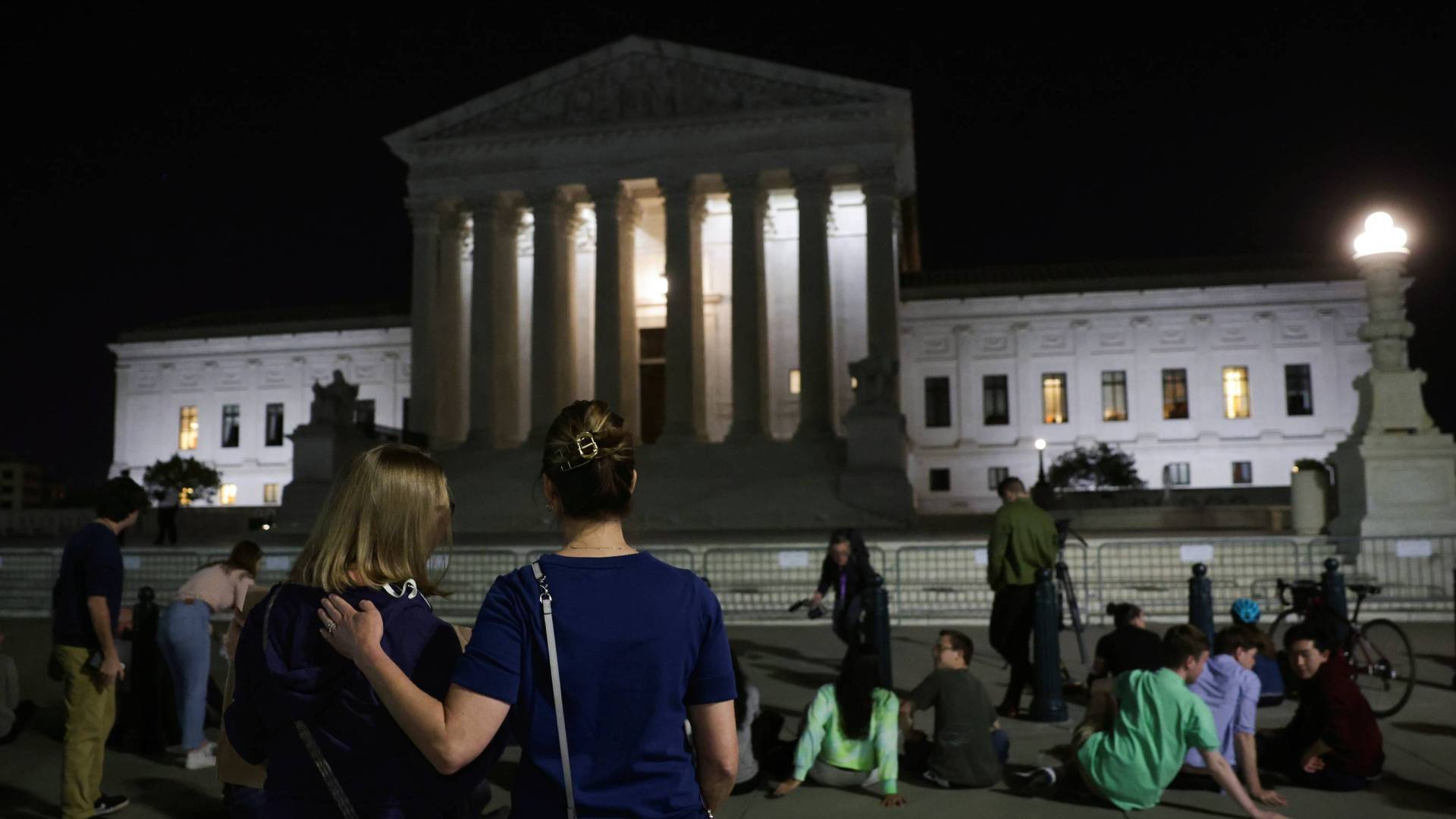
The US Supreme Court after the abortion opinion leak on Monday night.

The US Supreme Court after the abortion opinion leak on Monday night.

Christianity Today May 3, 2022
Kevin Dietsch / Getty Images

It’s the moment pro-life evangelicals had been working toward for decades. It came in a way none were expecting.

A leaked decision to overturn Roe v. Wade signals a win for the sanctity of life and a potential blow to the sanctity of the US Supreme Court.

On Monday night, Politico reported that the majority of justices are poised to strike down federal abortion rights in their upcoming ruling on a Mississippi abortion case. The source? A first draft of a majority opinion written by Justice Samuel Alito.

This early version of his 98-page decision, published on the outlet’s website, doesn’t just uphold the state’s restrictions on abortion—as some had predicted the conservative-leaning court would do—but rejects the landmark Roe case as “egregiously wrong from the start,” and returns the issue of abortion restrictions to state legislatures.

The court was expected to release its ruling on Mississippi’s 15-week abortion ban in Dobbs v. Jackson Women’s Health Organization before its term ends in June. Having a draft of the majority opinion made public is unprecedented. The process is notoriously secretive. Even the timing of decisions, or how many decisions will be issued in a given day, isn’t revealed in advance.

If the court’s final ruling in this case is similar to Alito’s leaked draft, it will represent the most significant move on abortion in a generation. Bolstered by Alito’s arguments, the pro-life faithful are looking to the post-Roe horizon, when they hope fewer and fewer young lives will end due to abortion. Yet, their reactions are tempered with questions over whether the draft reflects where the high court will finally land, when the decision will be made official, and how the draft was leaked.

“This is truly a breathtaking development. Assuming it truly remains a majority opinion—which could still change—it means we are one step closer to ending the Roe-Casey abortion framework that has stalked this nation for nearly 50 years. It feels almost like a dream to be able to state that,” Brent Leatherwood, acting president of the Southern Baptist Convention’s Ethics & Religious Liberty Commission, told CT on Monday.

“But this leak also represents an incredible rupture of the protocol that has seemingly governed court deliberations since its inception.”

White evangelicals are the most pro-life religious group in the country—they’re twice as likely as the average American to want to make abortion illegal. After generations of pro-life activism and a flurry of conservative appointments, including three justices under President Donald Trump, the Supreme Court is finally poised to overturn the 1973 landmark abortion case—only the news doesn’t come from the steps of the Supreme Court but from a leak to the media.

Mark Caleb Smith, politics professor at Cedarville University, said that the leak appears designed to put pressure on Alito and the justices in the majority, while spurring Democrats to act on legislation to protect abortion rights.

“Expect the court, and the justices themselves, to be the epicenter of protests. In their shoes, I would be worried about intimidation and violence,” Smith said. Within minutes of the report going up online Monday, the Supreme Court building was barricaded.

Leatherwood shared Smith’s concerns, worried about behind-the-scenes political efforts trying to get the court to change course. “I will be praying for each justice and their safety, for this majority to hold firm for life, and for them collectively to have the fortitude to withstand the torrent of criticism that is likely coming their way,” he said.

https://twitter.com/DavidAFrench/status/1521296694100561920

Ed Whelan, distinguished senior fellow and Antonin Scalia chair in constitutional studies at the Ethics and Public Policy Center, called the version of the draft opinion leaked Monday “powerful and meticulous” and “a systematic dismantling of the illegitimate Roe/Casey regime.”

In the document, Alito described Roe as “exceptionally weak” and said the previous Supreme Court decision’s “survey of history ranged from the constitutionally irrelevant to the plainly incorrect.” According to Alito, “The inescapable conclusion is that a right to abortion is not deeply rooted in the Nation’s history and traditions.”

Politico reported that Clarence Thomas, Neil Gorsuch, Brett Kavanaugh, and Amy Coney Barrett had sided with Alito in a vote after oral arguments in December. Chief Justice John Roberts—who during oral arguments seemed to favor a middle-ground decision that wouldn’t reverse Roe—did not. The final outcome could change if Roberts and another conservative justice join an opinion with the three liberal-leaning justices.

It’s also possible for justices to change their minds in between the first and final draft. Sometimes even on the day the ruling comes out. In Planned Parenthood of Southeastern Pennsylvania v. Casey, the 1992 Supreme Court was ready to reverse Roe, but after further negotiation ended up affirming it instead.

But now that the court’s position on the Mississippi case has been made public, there will be more scrutiny of where the justices stand, notes Liberty University law professor Rena M. Lindevaldsen.

“The released opinion is a legally persuasive opinion that is heavily sourced to reveal to the objective reader that Roe lacked constitutional basis. However, as the oral arguments in Dobbs revealed, there will be those who believe any overruling of Roe is inherently political,” she told CT.

“But if in response to the certain public outcry by pro-abortionists that will follow this released draft, those justices who have initially voted to overturn Roe change their votes to affirm Roe, it will epitomize the political nature of the court’s abortion precedent,” she added. “At this point, they simply cannot change their votes without appearing to succumb to political pressure.”

Pro-life groups are urging the court to make the decision final now that the draft is out. March for Life president Jeanne Mancini tweeted that “given the leak the court should issue a ruling as soon as possible.”

An early decision would shift the timeline for subsequent state-level moves on abortion up at least a month.

“For pro-life people, I am not sure it changes all that much. Assuming this is the final opinion, and Roe is overturned, it just means the struggle starts now instead of in June,” said Smith, the Cedarville professor. “States will become the political battleground for abortion, with very conservative states limiting the procedure significantly and very progressive states allowing abortion throughout the pregnancy.”

https://twitter.com/matthewsmithUS/status/1521314389701402630

Overturning Roe will also have implications for how churches and ministries care for pregnant moms and vulnerable families. In the weeks following Texas’s law restricting abortion to around six weeks, evangelical-run crisis pregnancy centers saw a shift in clientele, with women eager to confirm pregnancy earlier so they would have time to get an abortion before the cutoff.

https://twitter.com/ChelsPat/status/1521317586515943424

A statement from the pro-life Susan B. Anthony list mentioned the ongoing need for an “ever-growing pro-life safety net” as well as the organization’s commitment to “build consensus for the strongest protections possible for unborn children and women in every legislature.”

Overturning Roe would not be the end of the anti-abortion fight.

“It’s not enough to send abortion back to the states,” tweeted Lila Rose, founder of Live Action. “We will not have true Justice until every human being’s right to life is legally protected from the moment of fertilization. The Constitution is not silent on abortion. The 14th Amendment’s guarantee of equal protection and due process should make abortion illegal nationwide.”

“We are just getting started in our defense of human life,” she continued. “We must be in every statehouse, the halls of Congress, and we will even be back to the Supreme Court to advocate for our preborn brothers and sisters.”

Mary Ziegler, a legal historian focused on abortion, said the argument in the leaked opinion indicates the Supreme Court could go on to rule further on the issue after Roe. “The easy way to distinguish abortion is what Alito does—to focus on the state's interest in life,” she tweeted. “But that will intensify efforts to convince the Court to declare that abortion is unconstitutional. If this is how the Court determines the pedigree of rights, it may well not stop at abortion.”

While many pro-life evangelicals are relieved at the move toward overturning Roe, political and legal experts caution against overlooking the implications of how the groundbreaking news was made public and the longer-term implications for the court. SCOTUSblog called the leak “the gravest, most unforgivable sin.”

https://twitter.com/SCOTUSblog/status/1521295411545260035

“We desperately need the court to maintain its legitimacy for the good of our society. The court is designed to be objective, insulated from political pressure, and removed from public opinion,” said Smith. “When partisans start to see the court as merely a tool in their arsenal, and they use the court, pack it, or twist it to achieve their goals, we run the very real risk of losing those minority protections. This can only work if there is a general, cultural understanding of the court as fair, neutral, and apolitical.”

Charles Camosy, the Catholic author of Beyond the Abortion Wars, suggested that while there is a lot of common ground favoring some restrictions on abortion, extremist views threaten that unity.

“If what was leaked is basically what the opinion ends up becoming, it is a huge victory for a consistent vision of human rights. It creates the conditions for the possibility of prenatal justice which doesn’t pit women against their own children,” he wrote in a column for Religion News Serviceon Monday.

“But the leak, which puts the very notion of the legitimacy of the Supreme Court at stake, has more to say, perhaps about where the abortion debate is headed. The leaker seems to believe the stakes are so high as to be willing to destroy the Court’s ability to function.”

News

Supreme Court: Boston Should Have Let the Christian Flag Fly

In a unanimous ruling, justices agree the city violated the First Amendment by keeping religious views out of a space being used as a public forum.

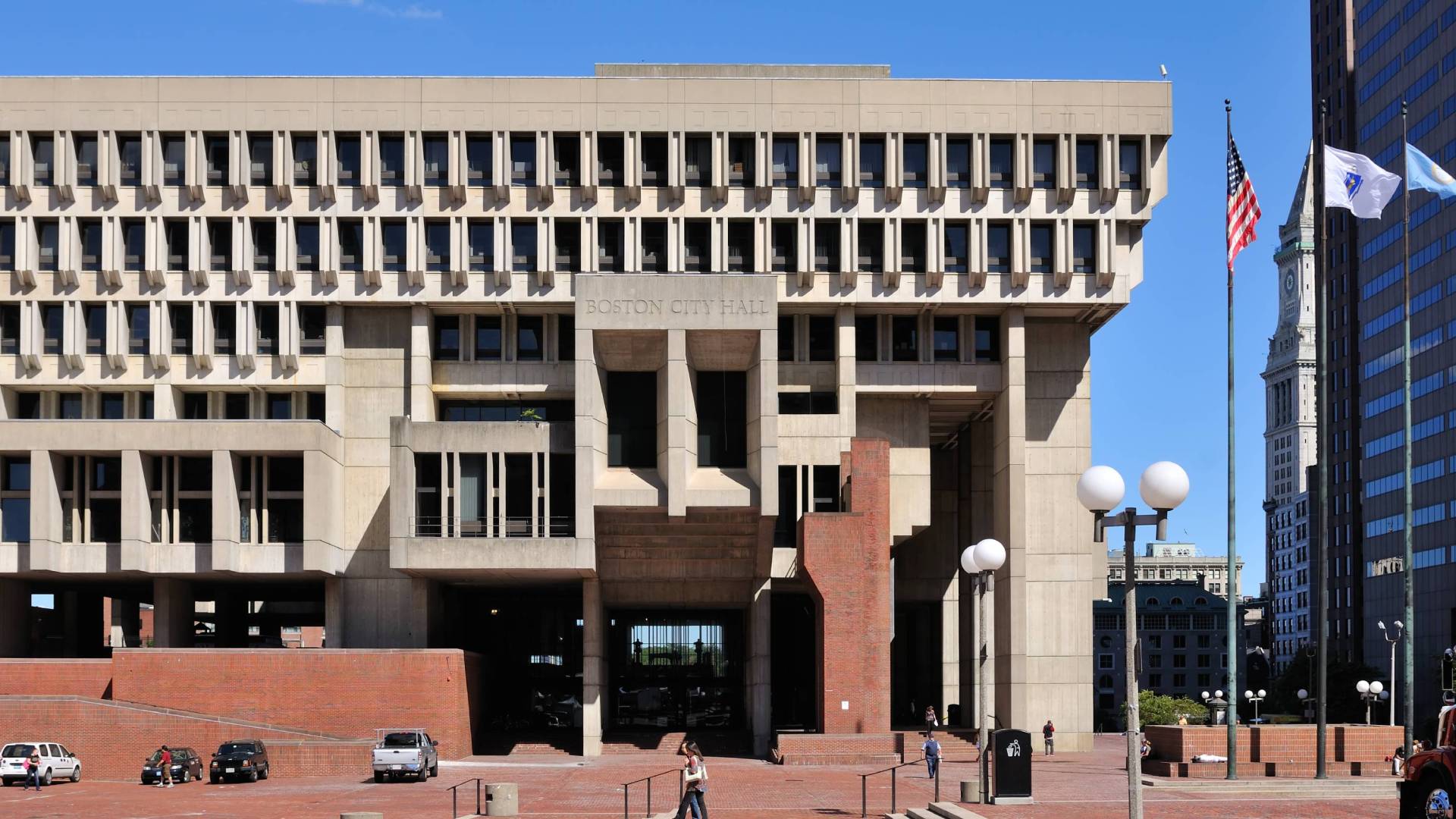
Boston's City Hall Plaza

Boston's City Hall Plaza

Christianity Today May 2, 2022
Jorge Antonio / iStock / Getty Images

By hoisting 50 other flags up the city hall flagpole but turning down one Christian flag, the city of Boston violated the Constitution and denied a Christian group its free speech rights, the US Supreme Court ruled Monday.

The unanimous decision declared that because Boston’s flagpole hadn’t been used for government speech but as a public forum for hundreds of groups to use, the city discriminated against the group—Camp Constitution—that applied for the ecumenical flag to fly for a day.

“When the government does not speak for itself, it may not exclude private speech based on ‘religious viewpoint,’” wrote outgoing Supreme Court justice Stephen Breyer in the opinion; “doing so ‘constitutes impermissible viewpoint discrimination.’”

Christian religious liberty advocates are celebrating the ruling as a win, coming just over a month after the high court sided with the religious rights of a Texas death row inmate requesting prayer at his execution.

“In one of the last opinions Justice Breyer will ever write (he retires at the end of the term), he says, ‘…Boston’s refusal to allow petitioners to raise their flag because of its religious viewpoint violated the Free Speech Clause,’” tweeted John Litzler, an attorney in Texas who represents Christian nonprofits.

“This is the 2nd of 4 different religious liberty cases being decided by SCOTUS this term,” Litzler added. “The decisions thus far have been 8-1 and 9-0 in favor of those asserting religious liberty claims. Freedom of religion & religious speech are not controversial or partisan issues.”

Brent Leatherwood, acting president of the Southern Baptist Ethics and Religious Liberty Commission, called the decision “a welcome addition to free speech jurisprudence.”

Pastor Chris Butler, a board member for the And Campaign and a US congressional candidate in Illinois, said the 9–0 decision was “spot-on” and that “religion MUST NEVER be the basis for exclusion.”

The court’s opinion focused on how readily Boston approved permits to fly other flags on one of three flagpoles outside of city hall, allowing 50 unique flags at 284 ceremonies between 2005 and 2017, including LGBT flags and flags of other countries.

“Indeed, the city’s practice was to approve flag raisings without exception—that is, until petitioners’ request,” Breyer wrote.

The plaintiff in the case, Hal Shurtleff, had asked to fly the Christian flag—a white flag with a blue box and red cross in the corner—in front of city hall on Constitution Day as a way to honor Christians’ civic contributions. His organization, Camp Constitution, promotes the country’s “Judeo-Christian moral heritage.”

The fact that the city of Boston emphasized accommodation and framed City Hall Plaza as a public forum rather than an outlet for its own views undercut its argument that allowing a religious flag would be government speech rather than private expression by citizens like Shurtleff.

The decision notes that “nothing prevents Boston from changing its policies going forward,” and other cities have been more selective in approving flags and designate that their poles are not a forum for free expression.

“This 9–0 decision from the Supreme Court strikes a victory for private speech in a public forum,” said Mat Staver, whose organization Liberty Counsel represented Shurtleff.

“This case is so much more significant than a flag. Boston openly discriminated against viewpoints it disfavored when it opened the flagpoles to all applicants and then excluded Christian viewpoints. Government cannot censor religious viewpoints under the guise of government speech.”

Justices Samuel Alito and Neil Gorsuch each penned concurring opinions with differing reasoning for why Boston’s rejection of Shurtleff’s permit application was wrong.

Gorsurch focused on the city’s claims that allowing the Christian flag to fly would violate the establishment clause. He criticized Boston’s use of the 1971 Lemon v. Kurtzman decision, which had to do with schools and church-state separation.

“For as long as the First Amendment means anything, government policies that discriminate against religious speech and exercise will only invite litigation and result in losses like Boston’s,” Gorsuch wrote.

“Today’s case is just one more in a long line of reminders about the costs associated with governmental efforts to discriminate against disfavored religious speakers.”

Church Life

Should We Keep Singing Hillsong?

When the megachurch’s former pastors are in the news with allegations of scandal and abuse, what a contentious name it is.

Hillsong United performs in concert in March 2022, weeks after Brian Houston’s resignation.

Hillsong United performs in concert in March 2022, weeks after Brian Houston’s resignation.

Christianity Today May 2, 2022
Daniel Knighton / Getty Images

When a megachurch scandal makes headlines, it doesn’t usually affect your Sunday morning set list. But Hillsong isn’t just a megachurch. It’s a major global force in worship music.

Since the explosion of the song “Shout to the Lord” in 1994, Sydney-based Hillsong has shaped worship in the US, particularly among Pentecostals and evangelicals. The pop and rock sounds of Hillsong United and Hillsong Young and Free reach Americans through the pews on Sunday, radio and streaming, and arena concert tours.

Currently, four of the ten most popular worship songs sung in churches have come out of Hillsong (“The Goodness of God,” “What a Beautiful Name,” “Who You Say I Am,” and “King Of Kings”).

But as successive headlines chronicle revelations of moral failings among Hillsong leadership, accusations of abuse, toxic internal structures, pastors stepping down, and congregations leaving the denomination, some worship leaders are questioning whether the musical fruit of such a ministry belongs in their own churches.

Recently, the situation at Hillsong was featured in Hillsong: A Megachurch Exposed, a Discovery+ docuseries hooked to the 2020 termination of Hillsong New York pastor Carl Lentz, who admitted to infidelity in his marriage.

“At first, it’s like, ‘There is no way this is happening’ … but then it goes to anger,” said Katie Thrush, a longtime Hillsong fan, a worship leader, and a survivor of abuse. Following the stories out of Hillsong, she said, felt like going through the stages of grief.

Now, she’s conflicted about whether to keep singing favorites like “What a Beautiful Name.” “I really love that song. It speaks volumes to me and a lot of other people,” Thrush said.

She’s worried that continuing to use that music could associate her or her church with Hillsong or serve as a reminder of the harm its leaders have caused. Founder Brian Houston left the church in March after a pair of investigations into his inappropriate behavior and awaits trial on charges he covered up abuse by his father.

The question over whether to keep playing Hillsong’s music in worship falls in an interesting place. Musicologists and critics have considered how we engage with songs produced by problematic composers for centuries, and revelations around contemporary artists like Michael Jackson and R. Kelly have also challenged how listeners engage with groundbreaking and chart-topping songs.

We don’t evaluate historical compositions and Billboard hits in the same way we consider music meant to facilitate worship, but the question of the separation between art and artist, or even art and the system that generated it, is a relevant one.

The conversation around Hillsong music also runs parallel to considerations around promoting the work of fallen pastors that have emerged in recent years. While some are quick to ask, “What about the psalms of David?” or “If we can’t sing songs written by sinners, what’s left?” others emphasize the need to hold worship music—for all its formative power—to a higher standard.

Even before the Hillsong news over the past two years, worship leaders in the US had been vetting worship hits on a theological basis. Some churches had already opted not to include songs by Hillsong (or Bethel or Elevation) because of conflicting beliefs or different approaches of ministry.

Anyone looking to have a nuanced conversation about the future of Hillsong’s music in the church may benefit from considering how musicologists and critics talk about important music with a troubling backstory.

“Musicologists are very good at drawing up borders around the circumstances in which a piece of music was composed and the way the music itself goes,” said Peter Mercer-Taylor, a professor at the University of Minnesota.

Sometimes, those borders are easy to draw. Franz Joseph Haydn—an influential Austrian composer of the 18th century—“worked for an incredibly wealthy prince for 30 years. He creates this great pile of symphonies that lay the blueprint for the future of the genre, just invaluable work,” Mercer-Taylor said. “I don’t like the idea of a princely court or the concentration of wealth … but the moral challenges don’t linger in the work itself.”

Haydn, though a far-flung parallel, is relevant as one example of a composer whose music has transcended its provenance as a product of the patronage of an unjust system or corrupt organization. With Hillsong, questions of power, wealth, proximity, and association are still relevant.

Hillsong leaders have criticized the Discovery+ documentary, saying its slanted portrayal is an attempt to harm the church, not an effort to present a true and fair account its ministry work. Some fans have drawn distinctions between Hillsong Church and Hillsong music. But even the musicians don’t claim to be their own entity.

In an Instagram post on April 6, Hillsong Worship announced its withdrawal from an upcoming tour with Casting Crowns and We The Kingdom, saying, “Uniquely, Hillsong Worship is not and has never been a band. We are an extension and expression of Hillsong Church­.”

It is true that big-name Hillsong artists like Brooke Ligertwood and Joel Houston have their own brands and images, but they are still employees of the church, and they have acknowledged the difficulties facing Hillsong, though in relatively veiled or general terms.

https://www.instagram.com/p/CcBOJ4sPb9e/

“The question becomes, ‘What do you do when you have teams of young people who have worked really hard at what they do and are really good at it?’” Mercer-Taylor said. “[They] have developed music that a lot of people find catchy and spiritually nourishing, that has gone out into the world and served a lot of people … but it turns out that the organization they serve is a bad organization.”

Hillsong has an unusual structure around the royalties for its music that gives the church the performance royalties in addition to those paid to the songwriters. For worship leaders worried about guilt by association, the financial connection between Hillsong and its music may be irreconcilable.

For others, the primary concern may be more about being identified with an organization that has lost its moral authority.

The legacy of composer Richard Wagner, another giant in the Western canon, is frequently relitigated because of his antisemitism and Hitler’s embrace of his music as a symbol of German greatness. But you’ll be hard-pressed to find a college course on the era that doesn’t include his works, even if they must come with an asterisk.

Unlike worship leaders in the context of a church service, music historians have the benefit of teaching and engaging with musical works while providing extensive context and facilitating discussion about a particular composer’s biography.

The 2019 documentary about Michael Jackson’s alleged sexual abuse of minors, Leaving Neverland, stirred fans to reconsider the artist and his musical legacy. The Guardian’s chief pop critic Alexis Petridis wrote:

You can’t easily eradicate Jackson from history: too many people have too much of their lives bound up with his music. And perhaps you shouldn’t. Perhaps it is all right that his music continues to be heard, so long as it comes with a caveat: that it reminds us great art can be made by terrible people, that talent can be weaponised in the most appalling way, that believing an artist automatically embodies goodness because we like their work is a dreadful mistake that can have awful consequences.

Mercer-Taylor, an expert in American hymnology and popular music, still includes Michael Jackson’s “Billie Jean” video in his courses. “This was the first video by a nonwhite artist to broadcast on the MTV network. It’s just historically a very significant thing, and Michael Jackson was a very significant figure.”

Some may dismiss the expulsion of Hillsong’s music as an example of cancel culture, a rush to get rid of historically significant influence on worship culture and songs that have been meaningful and formative for so many.

But this moment follows a gradual crescendo of calls to at least proceed with caution when it comes to engagement with Hillsong, claims that the charismatic church promotes a kind of prosperity gospel or a celebrity culture in Christianity.

“If I wouldn’t quote their pastor or allow him to preach in our pulpit, then I won’t use the songs their bands write,” wrote musician Dan Cogan in a blog post in 2016. Unlike singing an old hymn that may be doctrinally sound but have been written by someone with questionable theology, singing Hillsong or Bethel songs, he argued, “lends credence” to the active ministry of two influential churches.

The American worship music industry has always uncomfortably existed under the pressures of both the marketplace and the church. The bargain musicians make when they release worship music is that the same impulses that drive ideological boycotts will apply to their music.

In the case of Hillsong, said Mercer-Taylor, the music will be handled as a commodity, subject to being unseated in the marketplace even if it has artistic or spiritual value.

“It enters the world as a commodity; it enters the world under a brand name,” he said. People may decide they just can’t justify subsidizing the organization behind the brand.

The reality, though, is that “What a Beautiful Name” and other Hillsong hits will likely remain in the regular music rotation for many churches. Hillsong has produced a body of singable and infectious songs that are meaningful, encouraging, and comforting for many believers.

Oklahoma pastor Sam Storms, a past president of the Evangelical Theological Society and council member for The Gospel Coalition, defended singing Hillsong songs in a blog post last summer. He emphasized the orthodoxy of Hillsong’s statement of faith and lyrics.

He wrote, “In no way do I endorse or turn a blind eye to the scandals that have rocked Hillsong in recent days” and acknowledged some points of disagreement on ministry approaches. But he concluded, “To refuse to sing thoroughly biblical worship songs they wrote lest we be somehow tainted or defiled in doing so is both impractical and absurd and will only lead to a legalistic and Pharisaical local church culture.”

Many worship leaders agree. They see the content of songs themselves as a priority, not to mention the familiarity and sing-ability, over what’s happening at the church that bears the same name.

Thrush finds it understandable that many worship leaders would continue using Hillsong music. The songs “are biblically based,” she said, “and some [worship leaders] have never even heard of the documentary.”

As a worship leader, Thrush hopes that the attention around Hillsong will push leaders and worshipers to have difficult and honest conversations that acknowledge the associations with its music. Perhaps other leaders will also question whether using their songs sends a message of endorsement.

Lyndsey Winship, dance critic at The Guardian, wrote of Michael Jackson, “It must be possible to condemn the person, even shelve the records, without being ashamed of the influence his music had on us.”

That sentiment is strangely relevant to this very different situation. Regardless of how each individual or congregation decides to reckon with Hillsong, the profound spiritual experiences facilitated by its music need not be a source of shame or embarrassment, even if the memories of those experiences are now altered.

Kelsey Kramer McGinnis is a musicologist, educator, and writer. She holds a PhD from the University of Iowa and researches music in Christian communities.

Theology

Apocalypse Now: How the Left and Right Get Danger Wrong

Alarmist thinking is toxic in politics and at odds with Christian hope.

Christianity Today April 29, 2022
Illustration by Mallory Rentsch / Source Images: DJ Paine / Francesca di Pasqua / Unsplash / michalz86 / Getty

The idea of an apocalypse is terrifying for a people and culture under the pretension that everything is under our control—and that our best hope is to continue to feel in control.

In politics today, apocalyptic thinking on the right and the left is based on an apocalypse that is sure to harm us—but is not so unwieldy that our total control could not avert it. Meanwhile, the Christian idea is nearly the opposite: Embracing apocalypse would not only prepare us for the reality of the world to come, but it involves an acceptance of the world as it is and our role in it.

Political imaginings of apocalypse are of events that we might prevent if only everyone else would get on board. In this way, the apocalypse is not so much focused on the event itself, but on other people’s stubbornness. We are condemned not necessarily by God or by our own deeds and thoughts, but by our neighbors’ degraded political views. Because of this, the apocalyptic thinking dominating our politics is anti-humanistic since it depends on broad, explicit, and implicit condemnation of our fellow human beings—and ultimately, of our own existence.

One version of apocalyptic thinking on the right is lamenting the ever-encroaching immorality of others and “the culture” in general. We are at risk of losing America as we know it—that is, our communities have transformed such that they are “unrecognizable” and constantly on the verge of irretrievability. It’s the language of carnage and nostalgia.

On the right, the moral dualism of apocalyptic thinking moves from character and values outward to actions. We are doomed because evil people act in such a way that makes our way of life inhospitable.

For a significant segment of conservative Christianity in America, there is an entire subculture—including works of literature, advocacy organizations, and media pundits—premised on an opposing force that will make it impossible to live in this country as a faithful Christian.

As Peter Manseau observed, there is a common form of ideation in conservative Christian culture that imagines scenarios in which one must greatly sacrifice, even to the point of death, in response to a developing persecuting culture. Manseau cites the disproven narratives that formed around the Columbine shooting in 1999, in which the gunman reportedly asked a student whether she was a Christian and shot and killed her because she said yes.

But Manseau has identified this kind of thinking elsewhere, including during the pandemic—pointing to a TikTok video depicting a woman who denies the vaccine (portrayed as the mark of the beast) on threat of death. After she is killed, she arrives in heaven to receive a “Well Done, Good and Faithful Servant” as her eternal reward.

Ostensibly, conservatives believe such a future might be avoided. If the culture changed and people’s hearts were transformed, then evil thoughts would no longer flow from their minds, nor evil deeds from their hands. But what hope do we have for such transformation?

According to believers on the right, we can pray for it. But while we wait for God to intervene, this kind of apocalyptic thinking can lead to a logic of rationalization that justifies previously unthinkable behavior in light of the perceived existential threats.

Alison McQueen, author of Political Realism in Apocalyptic Times, argues in an interview that “apocalyptic rhetoric creates a false sense of moral clarity. … Once we see ourselves as engaged in an ultimate battle against evil, we are often more willing to use terrible means—war, torture, genocide, nuclear annihilation—to achieve our ends.”

Apocalyptic thinking is common on the political left as well, but it tends to begin with an assessment of action which is then used to make moral judgments about people. The primary mover in apocalyptic thinking is not who people are but what people do. On the right, there’s a fatalism concerning people’s behavior; on the left, a technocratic confidence in the right activity resulting in the right kind of outcomes—if only everyone would get on board.

This progressive mindset, of course, amounts to fatalism by way of a scenic route. This has been the course of many environmental debates. Climate change is cast as a threat of biblical proportions with consequences that could nonetheless be mitigated if collective action were taken on a set of prescribed political policy solutions.

Here’s another difference between the Left and the Right: On the right, apocalyptic thinking moves from the cultural to the political. On the left, apocalyptic thinking moves from the political to the cultural and individual. Climate change is first a political and systemic crisis—which seeps into the private domain in ways that mirror the apocalyptic thinking of the right.

The commensurate response on the right to the Left’s apocalyptic thinking is often death by martyrdom, as Manseau recognized. The heroic response to the coming apocalypse is that of the Christian who won’t deny Jesus in the face of an evil murderer—the libertarian who won’t let government mandates dictate their action. Amid cultural degradation or carnage, the question is always implicit, and often explicit: “How are we supposed to raise our children in this culture?”

In the Left’s response to climate change, as both a policy matter and a personal matter, the ethics of conceiving a child—and therefore by logical inference, the value of human life itself—are also brought into question.

A 2021 article in The New York Times, which bears the already-dehumanizing headline of “To Breed or Not to Breed,” profiled would-be parents who have shut off the possibility of having children of their own due to fear—and, according to the article itself, a misguided assessment of the positive impact childlessness might have on climate change.

The author cites a 2018 Morning Consult poll which found that one in four childless adults cited climate change as one reason they do not have children—offering a window into the apocalyptic thinking of the Left. It’s worth pointing out that this thinking, though premised on fears of insecurity, is more likely to be held by the most economically secure.

We regularly attribute suicides in this country to laws that are passed and prejudices that are held, but we have a popular culture that regularly embraces, and even extols, apocalyptic thinking. This inescapably leads to the conclusion that life is not worth living, or that certain social problems would improve if only some people did not exist to begin with.

Once that door opens and that question is asked, everyone feels the pressure to justify their existence. And then we expect them to be comforted by the cute slogans and meaningless gestures of the Peloton instructor who says they believe in you and that you’re crushing it—or the women’s cosmetics advertisement model who insists that everyone, especially you, are beautiful.

Apocalyptic thinking in politics is full of misdirection. As much as it seeks to find factual, substantive support—it is ultimately therapeutic. It is related to optimism and pessimism, entrepreneurialism and cynicism.

But true apocalypse is indifferent to these dispositions. Apocalyptic events reflect an intrusion of reality—the actual state of things—into the life we thought we were living.

The kind of apocalyptic thinking we’ve described so far is an escape hatch from reality, a way to avoid responsibility for the life we have. Whether it’s the anti-natalist for climate action or the anti-vaxxer concerned about the mark of the beast, people who push rational arguments often fail to face their deeper assumptions about the kind of world we live in and our place in it.

In 2012, Matthew Barrett Gross and Mel Gilles wrote an article for The Atlantic with the headline “How Apocalyptic Thinking Prevents Us from Taking Political Action.” In it, the authors describe a culture drawn to the “apocalyptic storyline,” which imposes that storyline on a range of theoretically possible but unlikely events or developments.

They write that “the danger of the media’s conflation of apocalyptic scenarios is that it leads us to believe that our existential threats come exclusively from events that are beyond our control and that await us in the future—and that a moment of universal recognition of such threats will be obvious to everyone when they arrive.”

They argue that these kinds of scenarios obscure real threats, such as climate change—saying that society’s efforts to address climate change have been hampered by apocalyptic thinking.

“Global climate change is not an apocalyptic event that will take place in the future; it is a human-caused trend that is occurring now,” they write. “And as we expend more time either fearfully imagining or vehemently denying whether that trend will bring about a future apocalypse, scientists tell us that the trend is accelerating.”

Gross and Gilles’s essay predicted—much to their chagrin, I’m sure—the plot of the Oscar-nominated film Don’t Look Up. (Although, before we think of them as prophets, they also critiqued media for “equat[ing] the remote threat of a possible event, like epidemics, with real trends like global warming.” Oops!). But the movie does exactly what Gross and Gilles criticize—directly compare climate change with an earth-destroying comet.

In the film, scientists discover a comet heading toward earth. They are foolish enough to believe that by clearly communicating the scientific fact that a catastrophic event is about to take place, they can move politicians and the public to put all their energies toward averting the disaster.

Instead, self-serving politicians, big corporations, a profit-driven media, and an unserious and distracted public ignore them. Everyone dies, even though they all should have seen it coming. Everything they needed to avert the disaster was known and available—everything, that is, except for the collective will to act.

This is how apocalypses are typically portrayed in Hollywood, but one recent movie takes a different approach. In Arrival, an unexpected outside force bursts onto the human scene. Almost every human being in the movie—particularly the governmental authorities—expects this outside force to harm them, and they come up with completely ineffective, counterproductive ideas about how to protect themselves.

The more aggressive and antagonistic those with power and access get, the worse the situation becomes. That is until Louise, played by Amy Adams, takes a risk and saves the day—not through aggression, but through vulnerability. However, she only acts after receiving a tool—a gift she could not have attained by her own effort—from the outside force indicating that it did not intend to harm humanity but save it.

Only in thinking about the apocalypse did I come to understand the movie in this way—and it has taken on new meaning for me in recent days. We live in a time of war and the threat of renewed nuclear aggression; of intense political sectarianism driven by aversion and othering; of the hubris of technocracy and the inevitability of progress.

The perverse worldview of our materialistic society holds that the perfection of the human condition lies just on the other side of less human life. And in some corners, it increasingly scoffs at the reality of a God in whose image human beings are made. In these times, I find that making oneself vulnerable for the sake of others—by trusting an outside force who wills our good—is profoundly countercultural.

“For God so loved the world that he gave his one and only Son, that whoever believes in him shall not perish but have eternal life.” Jesus was sent to be among us, and he announced that his kingdom is at hand. We don’t avert disaster by seeking ultimate control and authority—by ensuring no outside force can interfere with our designs.

It is Jesus who offers us life to the full, and not in exchange for our scheming. We must set our sights on a design that is not of our making—and only there can we place our hope.

“Hope is that act whereby a person becomes aware of the distance of the Kingdom,” wrote Jacques Ellul, “and it clings to apocalyptic thinking. If the Kingdom is there, within easy reach, if the Kingdom is quite naturally within us, there is no need for hope.”

Some fear that if we dare to locate our hope outside of our circumstances, we will not be sufficiently motivated to deal with life as it is. But this concern stems from a view of life that is much smaller than the life that is available to us.

The kind of apocalyptic thinking that permeates our politics and lives is not insufficient because it gets everything wrong. Epidemics can happen and climate change is occurring—these threats pose real harm to the well-being of people. We can still take these things seriously and seek to play our part in alleviating harm to others where and when we are able.

Rather, this politically charged apocalyptic thinking is insufficient because it tempts us to view our lives through a lens of control that we do not have. Indeed, we hardly know what to do with the mere illusion that we could make everything right if the world bent to our will.

True apocalyptic thinking is not about the objective processing of facts but about a way of knowing. And for Christians, apocalyptic thinking should more commonly be thought of as hope. It is a confidence that, as Fleming Rutledge argued for CT, “the upper lights are burning.”

We are stewards of a world we did not make—and as we care for it, we rely on the loving grace of the one who spoke all of creation into existence. It is the Lord who will finally make it new and right, whose justice is perfect, not proximate. And his kingdom will have no end.

Michael Wear is the author of Reclaiming Hope: Lessons Learned in the Obama White House About the Future of Faith in America. He runs the Reclaiming Hope Newsletter with his wife, Melissa Wear.

News

Sunday School Paused During the Pandemic. Will It Come Back?

A new report shows dramatic disruptions to religious education classes as fewer attend or volunteer.

Sunday school involvement was impacted by the pandemic.

Sunday school involvement was impacted by the pandemic.

Christianity Today April 29, 2022
Pearl / Lightstock

When Tracey Fixen volunteered to serve as the Sunday school superintendent for her church, she had a clean slate. There had been no religious education programing at Our Savior’s Lutheran in Colefax, North Dakota.

“I started saying, ‘We’re going to watch videos so we have some sort of adult education,’” she said. The 200-person church now offers lessons during a coffee hour prior to the Sunday service each week.

Many of the materials they have are “outdated,” Fixen said—it’s not in the budget to invest in new ones right now—but putting on some kind of Sunday school is more than a lot of churches are doing.

As US church attendance remains stagnant and congregations move toward a focus on Bible studies or small groups, religious education classes on Wednesday nights or Sunday mornings have largely fallen away.

Plus, those extra gatherings were put on hold during the COVID-19 pandemic. Will they ever come back?

New data from the Hartford Institute for Religion Research shows that half of churches surveyed report that their religious education programs were majorly disrupted in the past two years, though evangelical churches weren’t as affected as mainline, Catholic, and Orthodox congregations.

The majority of churches had fewer religious education offerings in 2021, while a quarter recouped some of those losses by March of this year.

Among the surveyed congregations, “a few consolidated classrooms and combined age groups, while some did away with their Sunday classes and moved them to weeknights for the whole family,” the researchers wrote. “For some churches, these decisions may have been a conscious choice, but for others, they may have been necessary to respond to shrinking numbers.”

About one in six churches either did not offer adult education programs before the pandemic or have since discontinued them, the study found. Lack of involvement may end up making Sunday school “no longer feasible” in more congregations in the future, it said.

Doug Hummer, associate pastor at Sanibel Community Church on Sanibel Island, Florida, sees Sunday school, coupled with weekly worship services, as a central way the church follows biblical commands around teaching and discipleship.

“The church is where discipleship happens … like it says in Matthew 28, to make disciples, teach them, train them, and baptize them,” he said. “If you remove that discipleship component, do you have a church? Because that's what makes the church unique from any other organization—that we are empowered by the Spirit of God to make disciples, to teach, train, and equip.”

The church also hosts small groups and Bible studies, but Hummer said he believes religious education classes are an essential component of the church’s mission.

The challenge of implementing religious education classes at churches comes down to finances, resources, availability, priorities, and time—squeezing in another weekly commitment beyond regular church services and small group meetings.

While churches recover from COVID-19 attendance losses, it can be a struggle to get busy congregants to sign up. But Sunday school, Paul Jeon says, plays a distinctive role compared to other gatherings.

“When someone comes to our classes, that's not really the venue to share what's going on in your life,” said Jeon, pastor of NewCity Church outside Washington, DC. “The purpose is learning something—whether a skill or specific content.”

Like many other congregations, NewCity also struggled finding people to lead small groups or teach Sunday school. Many people are intimidated, thinking they don’t know enough to hold such a position, Jeon said.

The pandemic has also significantly affected church volunteer numbers nationwide, Gallup reported. Older members, who were some of the most committed Sunday school teachers, had reason to be particularly cautious about returning in person during COVID-19, and some remain hesitant about teaching young kids, who haven’t yet been vaccinated.

Volunteer shortages can hit small churches hard. Churches with under 50 attendees saw the biggest drop in adult education programs in the Hartford survey, while large churches saw programs grow.

Chris Minor, who pastors an 80-person congregation in Rockford, Michigan, said Sunday nights at his church are devoted to a more casual and educational style.

“Instead of preaching a different message,” Minor said, “I teach and make it interactive with Q and A, going deeper into the morning’s text.”

Half of congregations (48%), like Our Savior’s in North Dakota, take advantage of video resources for Sunday school and other education programming.

Video classes also allowed churches to offer hybrid programs or for participants to watch “on demand” rather than attending a meeting together each week, the researchers found.

“Equal numbers of respondents praised Zoom as decried the ineffectiveness of it as a platform for religious education,” the study found, noting that children’s classes were more difficult to move online than adult ones. “Nevertheless, it was impressive to see the wide range of efforts tried and creativity of congregations of all sizes when faced with the reality of the pandemic and the need to educate their members young and old.”

Though the pandemic represents the latest iteration, perhaps Sunday school has always had its challenges. A 1959 CT cover story asked, “Shall We Close the Sunday School?”

“Though the Sunday School seems to limp along, it often accomplishes wonders,” it read. “Only an all-wise God could utilize untrained volunteers, meager physical facilities, and limited materials to change the course of so many lives.”

Theology

How Black Holes Radiate God’s Glory

Q&A with Reasons to Believe astrophysicist Jeff Zweerink on collapsing stars, quantum gravity, why physics isn’t finished, and what that tells us about our creator.

Dwarf starburst galaxy Henize 2-10 seen through the NASA Hubble Space Telescope. The bright region at the center, surrounded by pink clouds and dark dust lanes, indicates the location of the galaxy's massive black hole.

Dwarf starburst galaxy Henize 2-10 seen through the NASA Hubble Space Telescope. The bright region at the center, surrounded by pink clouds and dark dust lanes, indicates the location of the galaxy's massive black hole.

Christianity Today April 29, 2022
Science: NASA, ESA, Zachary Schutte (XGI), Amy Reines (XGI) / Image processing: Alyssa Pagan (STScI)

There has been a burst of research on black holes in recent days. Three scholars from Norway, Brazil, and Canada say they’ve found the “smoking gun for the quantum structure of black hole horizons” in gravitational wave echoes. NASA’s Chandra X-ray Observatory reports evidence black holes are devouring thousands of stars. And two more scholars from the United Kingdom and the United States have proposed that “quantum hair” can resolve the black hole paradox first described by theoretical physicist Stephen Hawking.

According to Reasons to Believe astrophysicist Jeff Zweerink, the new research raises new questions, showing us that “the more we learn, the more we realize how much more there is to learn.” CT asked him why physics isn’t finished and what that can teach Christians who, like the psalmist, “consider your heavens, the work of your fingers” (Ps. 8:3).

What do black holes tell us about God?

It’s not like, “Black holes, therefore God.” But the theory of the universe that we have—the theory that said black holes should exist before anyone knew to even think about them—is predicated on the idea that our universe ought to be understandable. It ought to be coherent. It ought to be the same out in the distant reaches of the universe as it is here.

That points to the Creator. That tells us something about the Creator.

Look at how we get to black holes in the first place. Albert Einstein, back in 1915, recognized that as you move through the universe, from big stuff to small stuff and very fast stuff to very slow stuff, the laws of physics seemed to change. The way electromagnetism behaved was different from the way gravity behaved, and Einstein looked at that and said that doesn’t make sense. The laws of physics ought to be the same no matter how you look at them.

It was that philosophical idea that led him to develop his general theory of relativity. And if general relativity is right, then there should be these things called black holes.

The insight or genius of general relatively is that space and time, instead of being abstractions or kind of empty spaces, are now understood as these dynamic quantities. As energy moves through space and time, it actually warps space and time, and they could become so warped that they would rupture. If you get a star that’s massive enough, the gravitational pull is so strong that it collapses on itself and that’s a black hole. So people started thinking about black holes theoretically and eventually found evidence. We even found that in the center of our galaxy there is this massive black hole.

The connection here is that when we look at creation, we expect to see an orderly, coherent creation. For Einstein, it is a philosophical idea that ultimately derives from the notion that there is a unified order. And that’s what you would expect if there is a God who created it.

My basic understanding is that a black hole is a very dense star, a collapsed star, with a gravitational pull so powerful that even light, instead of just shining past, is locked into an orbit. How does that happen?

Take something like the earth. The earth is round because of gravity. Gravity wants to pull everything to the center, so it pulls all the atoms it can reach inward, but the atoms are all negatively charged, so when the atoms get close enough together, the electrons on those atoms repel one another. Gravity pulls them, but electromagnetic force pushes out.

Now imagine we added more mass. It gets a little bigger. But add more and more mass; eventually the gravitational pull would get strong enough it would overcome that electromagnetic force and pull those atoms closer together. That’s a white dwarf.

Now if you keep adding mass, it will get more gravitational attraction. And eventually you overcome the Pauli exclusion principle that says two electrons can’t exist in the same place; you’re going to push all the electrons into the protons to make neutrons. It’s going to collapse further until you’re pushing neutrons together, and that a neutron star.

If you continue to add matter, eventually what will happen is it will collapse down to where all of the mass is concentrated into a point, and there you have a black hole.

Essentially, keep adding mass until there’s nothing that can keep it from collapsing—until there’s no volume—and all of the mass is concentrated into this point and the gravitational pull is so strong that even light can’t escape. That’s the recipe for making a black hole.

Sometimes when people talk about black holes, there’s a kind of reverence. It goes even beyond awe. Why do you think that is?

For me personally, it’s that black holes are so beyond what I could fathom, so far beyond what I could even comprehend experiencing. We’re confronted in a small way with what it would be like to experience something infinitely bigger than us.

When I stand here on the surface of the earth, the gravitational pull on my feet is a little bit larger than the gravitational pull on my head, but it’s no big deal. But if I were falling feet first into a black hole, the gravitational pull on my feet would become so much larger than what’s on my head that it will actually rip every atom apart and the atoms will spiral into the black hole.

If Christianity is correct, one of the things that is true is that we as humans are designed to worship. And when you see things like black holes that are so much bigger and more powerful than us, it’s a very natural response to be moved to worship.

A lot of people are fascinated by black holes because they’re these weird objects in the universe. But they also present problems for scientists. Why do scientists have to grapple with black holes?

General relativity is an incredibly successful theory. It has passed every experimental test we’ve thrown at it. Quantum mechanics is the same. It’s incredibly good at describing the universe. But when it comes to black holes, they’re giving us different answers. So we need to dig deeper.

Quantum mechanics says that information cannot be destroyed. But general relatively says that a black hole can only have three properties: mass, charge, and spin. It’s just the nature of the way black holes work, those are the only three properties.

Say you have a star that is made out of pumpkin pie and you’ve got a star that is made up of hydrogen. If they each collapse and form a black hole, and they both reduce to mass, spin, and charge, then they’re going to look identical. Does that mean you’ve lost all the information that could tell you that one was originally made out of hydrogen and the other pumpkin pie?

Stephen Hawking identified this as a big problem in the 1970s. The way we’re looking at black holes, all this information is getting destroyed, and a fundamental rule of quantum mechanics is you can’t destroy information. That information has to be somewhere.

This is where we get the idea of Hawking radiation as a potential solution to this problem.

There was recently a new discovery—I’m not sure whether to call it a discovery or an argument—about Hawking radiation. Can you tell us about that?

There are multiple solutions that have been proposed, but this is a novel one. It’s another idea for how Hawking radiation could work. In this study, the scientists are saying a mechanism called “quantum hair” could explain how the information inside the black hole is connected to the radiation in the quantum state outside the horizon of the gravitational field.

Basically, if the gravity gives off bits of information—if the information could be encoded in the gravitation, then it could be radiated off—and not lost in the black hole. Theoretically, in principle, it seems that the information is there to extract. Because of the way gravity is quantized, it’s giving off information about the black hole.

If that’s right, that leads to a new level of complexity. It would allow us to reconcile this discrepancy in what we know now, and we’d be able to explain it, but then it has implications for how things work, and that will open up a whole new set of questions.

Historically, physicists have sometimes talked like they’re almost done. Like we’re just about to have a complete picture of the physical structure of the universe and there will be nothing more to know. And Christians who promote “God of the gaps” theories try to hurry that process along. But it doesn’t seem like we’re going to be finished with physics very soon.

Every time we solve one of these big questions and put the answer out there, we run into a whole new set of questions that we didn’t know existed! Compare our understanding of the universe now to when Isaac Newton was talking about his theory of gravity. We know so much more about what’s going on than we did back then. But there are also so many more questions that we don’t have answers to.

It’s almost like, the more we learn, the more we realize how much more there is to learn. You can start to see that we will never exhaust this. We’re going to be able to study creation forever. There will be new questions that we haven’t even thought to ask.

And this, again, points to the Creator. That’s where I see a connection to theology. Because that same thing is true about studying God’s revelation and Scripture and God. We’ve got a lot of the big picture in place, but there are also new questions and we will never be done. We will never exhaust the subject. That moves me personally to awe and to want to worship.

Theology

Biblical Exile Is Not About Losing Cultural Influence

Christians throughout the ages face exile—but not in the way we often think of it.

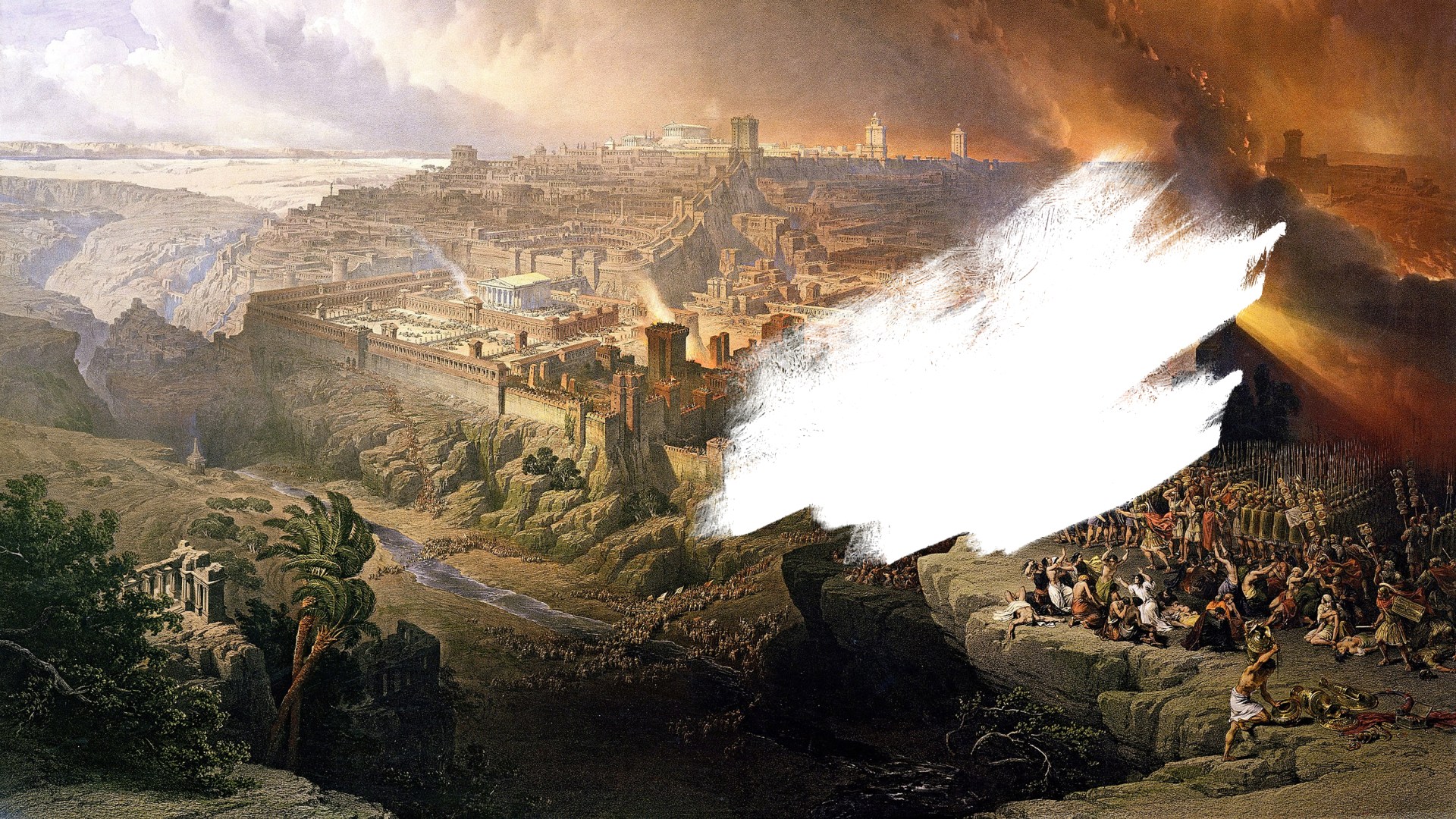
The siege and destruction of Jerusalem by David Roberts.

The siege and destruction of Jerusalem by David Roberts.

Christianity Today April 28, 2022
WikiMedia Commons / Edits by Christianity Today

This piece was adapted from Russell Moore’s newsletter. Subscribe here.

A week or so ago, Christianity Today published an essay by Canadian pastor Jacob Birch, arguing that “No, Western Christians Are Not in Exile.”

Birch is exactly right that exile language can betray some of the worst impulses of Western evangelicalism. But at the same time, I believe the language of exile is exactly what the Bible offers us to combat all that.

Birch starts by noting that many white evangelical churches today are accustomed to hearing themselves described as exiles, mostly in light of shifts toward secularization and the marginalization of Christianity. No doubt that is true in certain areas of the country and continent (including his Canadian context).

But alas, in my own Bible Belt context, the idea of “exile” seems absent altogether. Instead, ironically enough, I’ve found the metaphor Birch proposes—that of “occupation”—tends to be the governing analogy, even if not articulated in those words.

Occupation, after all, implies a hostile force has invaded one’s own territory, holding a people hostage in their own land. This is, at several points, a reality in the biblical story of the people of God. It is why, for instance, the religious leaders’ question to Jesus about whether to pay taxes to Caesar was so charged.

According to the mindset of many first-century Jews, saying yes to that question would be to affirm Rome’s occupation of their land—which they believed should rightly be governed not by a puppet government under Caesar but by the house of David. Jesus looked past this temporal occupation toward a deeper, more primal one—that of overtaking the strong man’s house (Matt. 12:29).

The question of occupation, however, was hardly unreasonable or unspiritual. It was a matter of God’s justice (“How could Israel’s God let this go on?”) and of a people’s humiliation. The problem was how to displace the occupiers from their illegitimate rule.

In fact, the question of how to deal with Rome’s occupation led to some of the most dangerous rifts among the occupied people—with a spectrum ranging from insurrectionists like Barabbas, to zealots like Simon, to collaborators like Matthew and Zacchaeus.

In an occupation, the “outsiders” (the occupiers) are the ones who are alien to the land. But in exile, it’s the “insiders” who are learning to navigate a strange place.

The language of exile is not the same kind of singular experience. It is part of the Christian story for those of us who are born into or grafted onto the house of Jacob. And the Bible applies that experience to us in an ongoing way, in the time between Christ’s ascension and his return.

Peter addressed the church as “God’s elect, exiles scattered throughout the provinces” (1 Pet. 1:1) and told them to “live out your time as foreigners here in reverent fear” (v. 17). This was not a recognition of how different the first-century church was but how much the same. They were not to find their pattern of life in the “empty way of life handed down to you from your ancestors” (v. 18).

The exile of which Peter spoke did not mean that the believers lacked belonging but that they had a different belonging: to “a chosen people, a royal priesthood, a holy nation” (2:9). Like Daniel in Babylon, such exile means that the objective is not to remove Nebuchadnezzar from his throne or to govern the Babylonian Empire. Quite the contrary, the goal was for the exiles to avoid becoming like the Babylonians.

In urging the church to be “foreigners and exiles,” then, Peter wanted them to see that their real problem was not the emperor or the surrounding culture. They could still show honor to everyone, including the emperor. Rather, the issue was to “abstain from sinful desires, which wage war against your soul” (2:11).

Being under occupation—in the sense of living in a land of promise dominated by enemies—the believers might seek to assimilate into the larger culture or rage against the occupiers. But Peter admonished that neither should be the case. Instead, they were to both live “good lives among the pagans” and see to it that their obedience was to God, not to that audience (v. 12).

Can exile be used dangerously to convey a sense of resentment at a loss of cultural power? Absolutely it can—in the same way that holiness can be used to suggest self-righteous perfection or that mission can be used to suggest colonization. But those dangerous uses do not reflect their biblical context.

In the original Exile, the people of Israel were constantly reminded that their plight was not the result of the Babylonians and couldn’t be resolved by finding some other power (say, Egypt or Assyria) to combat the Babylonians. God alone was responsible for their exile. That’s why the calling of the Israelites was not to find their own Nebuchadnezzar but to repent and reclaim their own distinctiveness as the people of God.

Moreover, the language of exile makes clear that the issue is not just about returning home. Both Jeremiah and Ezekiel clearly spelled out to the exiles that they couldn’t go back home. God’s glory had left the temple—not chased away by external forces but removed because of the sins of his own people (Ezek. 10; Jer. 7).

That’s the bad news. But the good news is that since God was the one who sent his people into exile, he was with them there. They could find him and sing the Lord’s song in a strange land.

They could build houses and have babies and adapt to some of the externalities of Babylonian life (like Daniel’s being called a Babylonian name and serving in Nebuchadnezzar’s court, for instance). All the while, they could refuse to yield to the expected idolatries or to the subtler pull to lose the “strangeness” and distinctiveness of their Abrahamic identity.

In fact, the point of exile language is exactly the opposite of the idea that Western Christians should lament or resent losing a “Christian culture.” The point is that in every place and culture, from the first to the second comings of Jesus, every Christian community is to consider themselves “foreigners and exiles.”

If we look back to a time when we felt we were not exiles, it’s because we had acclimated to and accommodated idolatry—like wishing for a previous Nebuchadnezzar to return. And if we ever look forward to a time when we can finally displace our sense of marginalization and find a cultural “home” in this world, then that too is because we are accustomed to idolatry—just like wishing for a different Nebuchadnezzar in the future.

That said, whenever we use exile language incorrectly to bemoan a darkening or growingly hostile culture—rather than to see our situation as fundamentally the same as every other era before us—then we don’t understand what the Bible means by exile.

Exile language does away with both our sense of entitlement and a siege mentality. We don’t attempt to merge into whatever seems “normal” in the society around us—and we don’t rage whenever we’re not accommodated there. Instead, we see our normal situation as a pilgrimage.

“All these people were still living by faith when they died. They did not receive the things promised; they only saw them and welcomed them from a distance, admitting that they were foreigners and strangers on earth,” the writer of Hebrews told us.

“People who say such things show that they are looking for a country of their own. If they had been thinking of the country they had left, they would have had opportunity to return. Instead, they were longing for a better country—a heavenly one” (Heb. 11:13–16).

An exilic identity does not say, “Oh no, we’re being marginalized! How can we fix this?” Rather, it asks, “Why am I not more marginalized? Have I adapted to my own appetites such that I can’t feel a longing to dive deeper into the unknown?”

I believe the real danger for us today is not that Christians see themselves as exiled in a far country but that they might see their own country—the United States, Canada, or wherever they are—as the Promised Land. This means they will seek to either embrace everything around them as milk and honey from God or attempt to uproot whichever “Amalekites” or “Philistines” are taking “our country” away from us.

I believe Western Christians are exiles, as are Eastern Christians. Twenty-first century Christians are exiles in the same way as Christians of the previous 20 centuries.

But the resentment, entitlement, culture warring, and Twitter trolling we exhibit today are not the actions of strangers and exiles. Rather, they are signs we are not nearly exiled enough.

Russell Moore leads the Public Theology Project at Christianity Today.

News

Conservative Methodists Launch Global Methodist Church

The leaner denomination will focus on international partnerships, but many conservatives in Africa are holding out for the much-delayed 2024 conference vote.

Leaders with the Global Methodist Church gather for worship.

Leaders with the Global Methodist Church gather for worship.

Christianity Today April 28, 2022
Courtesy of the Global Methodist Church

Methodist congregations that know their future is not in the United Methodist Church (UMC) officially have a new place to land: the Global Methodist Church (GMC).

Launching on May 1, the new denomination plans to uphold traditional, conservative Wesleyan theology but run on a lighter, leaner infrastructure that emphasizes grassroots accountability and ministry connections.

After years of delays, with the next opportunity to vote on a proposal to split scheduled for 2024, some UMC congregations in the US are starting the disaffiliation process and plan to join the GMC as soon as they can. And though many leaders in Africa—where Methodism is growing rapidly—align with the movement’s conservative stances on LGBT issues, they’re more inclined to wait.

At least one regional body, in Europe, has already decided to switch all its congregations over to the Global Methodist Church; in the US, the denomination’s top court has yet to rule on whether regional bodies can disaffiliate together under current church law.

For now, US churches are opting to join the GMC one by one. Mosaic Church in Evans, Georgia, plans to join the new Methodist denomination, but the process to leave the UMC will take months.

From the pews, not much will change. Mosaic’s name and logo will remain the same, as will the format for Sunday worship. Lead pastor Carolyn Moore will continue emphasizing Wesleyan theology in her sermons, and the church will continue its work partnering with ministries that help the people who, in Moore’s view, tend to “fall through the cracks” of other churches. Even the pension plans for Moore and other staff members will still go through Wespath Benefits and Investments, the organization that manages UMC pensions.

But behind the scenes, the church will belong to another body of believers. The property its warehouse meeting space sits on will no longer be held in trust by the United Methodist Church; Mosaic will own it.

And Mosaic will abide by a new book of discipline, one that defines term limits for bishops, sets financial contributions based on church budget, forbids trust clauses, and creates an accountability system in which bishops report to clergy and laypeople, not just other bishops.

“We regard the front line of ministry as being the local church, and we believe the denomination exists to empower, equip, deploy the local church in ministry in the local setting and regional and global outreach,” said Keith Boyette, the chairman of the Wesleyan Covenant Association, a conservative renewal group within the UMC, and the chairman of the GMC’s transitional leadership council.

Boyette and GMC leaders set out to build a denomination to bring Methodists together without what they saw as the bloated institutional structures of the UMC.

The Global Methodist Church will have regional annual conferences, but they will play a supporting role for the local church rather than serving as the basic unit of ministry, as they do in the UMC. The GMC won’t have programs like denominational seminaries or summer camps to fund.

“Our goal is to reduce the amount of money leaving the local church for denominational expenses by at least 50 percent,” Boyette said.

In the GMC, regional bodies in the US will be paired with bodies outside the US to partner in ministry and financial support. There will also be stronger accountability structures in place, according to Tom Lambrecht, who serves with the Methodist renewal group Good News and helped to draft the GMC’s Transitional Book of Doctrines and Discipline.

“As you go through clergy and bishops, there will be enhanced accountability to ensure people are abiding by teachings and practices of the Global Methodist Church,” Lambrecht said.

For decades, the UMC had spotty enforcement around its doctrines on sexuality, which bar same-sex marriage and clergy in same-sex relationships. Certain churches and bishops permitted and promoted LGBT stances that violated those teachings.

The differing stances on same-sex marriage have continued to drive the denomination apart. In 2019, parties in the UMC agreed on a plan for splitting the denomination, where conservative churches would be able to keep their property as they leave and receive $25 million to start a new denomination.

But the pandemic forced the UMC to twice postpone its General Conference, delaying votes on the proposal called the “Protocol of Reconciliation and Grace Through Separation.” Earlier this year, the denomination announced that the General Conference must wait until 2024.

“Many United Methodists have grown impatient with a denomination clearly struggling to function effectively at the general church level,” said Boyette, when he announced the plans to launch the GMC this year rather than wait for a vote to split.

“Theologically conservative local churches and annual conferences want to be free of divisive and destructive debates, and to have the freedom to move forward together.”

Mosaic is currently governed by the North Georgia Annual Conference. According to the conference’s disaffiliation process and requirements, the church has to vote by a two-thirds majority to disaffiliate, pay the annual conference two years of denominational dues and prorated pension liability, and receive a ratifying vote by the annual conference.

But what if an entire annual conference opts to go? Bishops have asked the Judicial Council, the UMC’s highest court, to rule on whether annual conferences in the US can leave ahead of the General Conference.

European annual conferences are taking matters into their own hands. Members of the Bulgaria-Romania Provisional Annual Conference voted unanimously on April 1 to leave the UMC and join the GMC, over the objections of its presiding bishop.

But the birth of a new denomination doesn’t mean Methodists around the world are ready to join just yet. Many United Methodists in Africa plan to stay with the UMC until 2024 in hopes that the General Conference will approve the protocol.

Jerry Kulah, general coordinator for the renewal group UMC Africa Initiative, said he believes the protocol is a way to “amicably separate the church so we don’t have litigation and don’t have to see one another as enemies.”

He points to examples from Scripture where believers parted ways and still worked together, including Paul and Barnabas in Acts 15 and Lot and Abram in Genesis 13.

But despite the willingness of many Africans to wait for 2024 and the passage of the protocol, they still feel that progressive United Methodists in the US are trying to ignore their voices despite their numbers.

African membership is poised to grow beyond the size of the church in the states. According to the 2019 UMC State of the Church Report, the number of United Methodist members in Africa more than doubled from 3 million to 6.2 million over the prior decade. By 2020, US membership had fallen to 6.3 million.

“There is a general mood across Africa, a holy discontent, for a church that doesn’t respect us for who we are and wants to impose upon us a practice that is inconsistent with Scripture,” Kulah said.

Fellow African Methodist leaders have said they believe if the church had met this year to pass the separation protocol, a majority of African UMC churches would be readying to join the GMC.

“We pray for the new church, and we do share many beliefs with them, including their traditional position on homosexual practice,” wrote Forbes Matonga in an opinion piece this month for Firebrand.

“Most Africans, however, will remain United Methodists until the Protocol is passed. We have comfort in the knowledge that should Americans split themselves, as is likely to happen, in either side we choose to join we will be the majority.”

Kulah said some annual conferences might join the GMC before the 2024 General Conference, especially in regions of Africa where conservative churches feel harassed by more progressive bishops.

And Kulah said Africans are aware that the delay tactics might continue. He said that if the General Conference does not pass the protocol in 2024, he will decide to leave, and he believes United Methodists across Africa will also wrestle with the same decision.

Many Methodists still hold on for an amicable separation. J. J. Mannschreck, pastor of Flushing UMC in Flushing, Michigan, plans to transfer his pastoral credentials to the GMC. He said his church will vote later this year on whether to disaffiliate with the UMC and start the process of joining the GMC.

Mannschreck said he’s excited to think that a smaller portion of his church’s budget could go to the denomination. Currently his church of 150 members sends nearly 15 percent of its budget to the UMC. If they join the GMC that amount could shrink to 7 percent, leaving more money for local ministry.

He is also eager to move on from human sexuality being the dominant conversation at denominational gatherings, as it has been for years in the UMC. Instead, he welcomes the accountability of the GMC and its vision for being a global church that stands for church planting, racial reconciliation, and other values that weigh on his heart.

What will not change is Mannschrek’s love for the United Methodist Church, including his UMC-ordained father. He plans to attend his region’s annual conference gathering in June, noting it will probably will be the final one he will attend and sits with his father, who does not plan to leave the UMC.

“But we will still sit next to each other at Thanksgiving,” he added.

Moore of Mosaic Church said she encourages anyone considering affiliating with the GMC to prayerfully consider not just what God is calling them away from, but the kingdom work God is calling them to.

“We would love to gather in people from the Methodist tradition around the world who are ready to be part of something bigger than themselves,” she said.

“We pray, ‘God, in your mercy, keep us from being a bunch of angry people who used to be United Methodists.’ That’s not worth doing. It’s not enough to just find an enemy. An enemy is not your call, and there is no enemy here.”

Books
Review

The Church Should Ask Two Questions About the Current Drug Crisis

Where do we find it? And more importantly, are we really prepared for what we’ll find?

Christianity Today April 28, 2022
Illustration by Mallory Rentsch / Source Images: WikiMedia Commons / Steven Puetzer / Sergii_Trofymchuk / Getty

The evidence of the US drug crisis is all around us, every single day. But because it is a lonely crisis, we often need someone to show us where to look. Having covered the opioid crisis as a reporter for the past seven years, I had the job of asking the “where” question to other people involved in the crisis.

The Least of Us: True Tales of America and Hope in the Time of Fentanyl and Meth

This has given me new eyes in my own city, New York. I’ve noticed more people shooting up, and one night on my way home I saw two people sprawled unconscious on the floor of the subway platform after overdosing. Emergency medical personnel came quickly and saved them. I now carry naloxone (also known by its brand name Narcan), the overdose reversal drug, which looks like a little bottle of nasal spray.

In addition to seeing the crisis all around me, I have begun noticing Christians working in these places. I remember sitting in a car on a main drag in Camden, New Jersey, one night in 2015, watching prostitutes shiver in the snow trying to find work to pay for drugs. The Christian woman sitting next to me in the car, Brenda Antinore, had at one time been addicted to drugs herself and was a friend to these women. She checked in on them daily, brought them toiletries and snacks, knew them all by name, and had a recovery home within walking distance where they could come when they were ready.

One of the women from the street I met and interviewed died of a drug overdose later. Antinore was one of the few people checking in on these women besides police, drug dealers, and johns. She was their emergency contact. Some of the women Antinore has loved went into recovery.

These are the imperfect examples and testimonies that deserve greater attention from the American church. But to know the testimonies, we need a trustworthy storyteller. Journalist Sam Quinones has written The Least of Us: True Tales of America and Hope in the Time of Fentanyl and Meth, which came out in November 2021, just as data was emerging from the Centers for Disease Control and Prevention of record-breaking drug overdose deaths during the pandemic.

Testimonies of addiction

Quinones is, to me, the best documenter of the American drug crisis, and not just because he is an engrossing storyteller. Even in stories of grief and crime he finds simple and profound insights, and he always reveals the dignity of the people he is writing about. He is not moralizing toward people in the drug world, but he also refuses to depict them solely as victims or people sick with a disease. The way he reports the stories of “the least of us” rings true from my own experience reporting on this crisis.

Quinones was among the first to write in-depth about the opioid crisis in his fantastic 2015 book Dreamland: The True Tale of America’s Opiate Epidemic, in which he reported from Mexican farms and Appalachian hollers . He shows the traits of a good journalist in seeing obvious connections and societal trends that few others notice at the time, like how addiction pushed white law-and-order conservatives toward criminal justice reforms like drug recovery instead of prison time. (My personal theory is that the opioid crisis also explains a lot about the 2016 election, including former President Donald Trump’s promises about sealing the Mexican border, but Quinones doesn’t go there.)

While Quinones is not writing from an explicitly Christian perspective, many of the stories he tells involve Christians and church communities. The book’s opening quote is Jesus’ words from the King James Version of Matthew 25:40: “In as much as ye have done it unto one of the least of these my brethren, ye have done it unto me.” In both Dreamland and The Least of Us, he focuses on the loss of community in America, the further isolation that comes from opioids, and some Christians as repairers of communities.

He chronicles church failures too: “In Carter County [Tennessee], community was created in church; there, children were raised, business connections were forged, romances begun. But an addict or unwed mother entered these churches with difficulty. Clothes drives, casseroles for families with a terminally ill child—churches knew how to do that. But addiction was different.” I have also come across this theme in my reporting over the years.

Some churches’ discomfort with addiction is why we need the testimonies of addiction.

This is what I have heard in interviews over the years: People in recovery are keenly aware that they are not in control, that they have failed people. They know they are weak. They know they cannot remain sober on their own willpower. They know that community is essential to their survival. Their stories, full of halting relapse after relapse, are anything but perfect trajectories of redemption.

These are lessons from the fringes that Americans need to hear, because the stories of addiction speak directly into the worst parts of American culture, a bigger theme Quinones addresses too. Even as American culture leaves us increasingly isolated, it still demands high measures of professional and personal performance, leaving little room for communal grace and forgiveness. We, members of the richest society of all time, think we can solve problems ourselves, but the truth is we will fail both ourselves and others. When someone experiences failure, that will often lead to coping mechanisms like substances.

We need a community where that failure and recovery can happen repeatedly. In my opinion, it needs to be a place built on supernatural grace. I have come across a church like that in Brooklyn, Recovery House of Worship, where all the staff are recovering from addiction. I can’t fully describe the atmosphere of that church, but it is welcoming to the lowly. One of the staffers, Chris Hook, told me about relapsing after he first started going to the church—and people from the church came looking for him, knocking on his door. That meant a lot to him.

Touching the dragon

You might be thinking, Yes, I’ve read quite enough about opioids, the malign role of pharmaceutical companies, and “deaths of despair.” If so, Quinones’s book will still offer you fresh insights, because he notices society-level shifts others don’t notice. He writes about the massive influx of a new kind of meth, P2P meth instead of the ephedrine-based alternative. As he argues, this new version correlates with a recent rise in mental illness, violence, and homelessness.

Though his evidence is mainly anecdotal, Quinones tells story after story of what P2P meth was doing to people: They were seeing angels and demons and barking like dogs in public. “Ephedrine-made meth wasn’t good for the brain, but it was nothing like this,” he writes. More shocking, given the widespread societal effects, he shares that there are no scientific studies comparing ephedrine-based meth with P2P meth.

Scientific research needs to back up his claims on this new meth, but Quinones has a lot of experience reporting on drug markets. If his thesis is true, I have a new understanding of some of the mental illness I see on the streets of New York. I can understand better why, when I interview emergency room doctors, they mention first how much violence they experience on the job now.

We are living in a time of record drug-overdose deaths, but because of meth, the church needs to be prepared for more people living with substance abuse.

“Meth didn’t kill people at nearly the same rate,” Quinones writes, comparing it to fentanyl. “It presented, instead, the rawest face of living addiction. Meth users dragged themselves through the nighttime streets, howling, hysterical, starving. That part of addiction, one counselor told me, ‘people don’t want to touch it.’”

I understand why people are afraid to get close to addiction. It is an ugly dragon. But that’s why we need stories from someone close to it: familiarizing readers, bringing things into the light, and showing us the helpers who reach out to prostitutes in the snow.

Emily Belz is a news reporter for Christianity Today.

addApple PodcastsDown ArrowDown ArrowDown Arrowarrow_left_altLeft ArrowLeft ArrowRight ArrowRight ArrowRight Arrowarrow_up_altUp ArrowUp ArrowAvailable at Amazoncaret-downCloseCloseellipseEmailEmailExpandExpandExternalExternalFacebookfacebook-squarefolderGiftGiftGooglegoogleGoogle KeephamburgerInstagraminstagram-squareLinkLinklinkedin-squareListenListenListenChristianity TodayCT Creative Studio Logologo_orgMegaphoneMenuMenupausePinterestPlayPlayPocketPodcastprintremoveRSSRSSSaveSavesaveSearchSearchsearchSpotifyStitcherTelegramTable of ContentsTable of Contentstwitter-squareWhatsAppXYouTubeYouTube