Ideas

Why I Voted For the Atheist President of Harvard’s Chaplain Group

Participating in interfaith work at the Ivy League university is a help not a hindrance to the exclusivist claims of Christian faith.

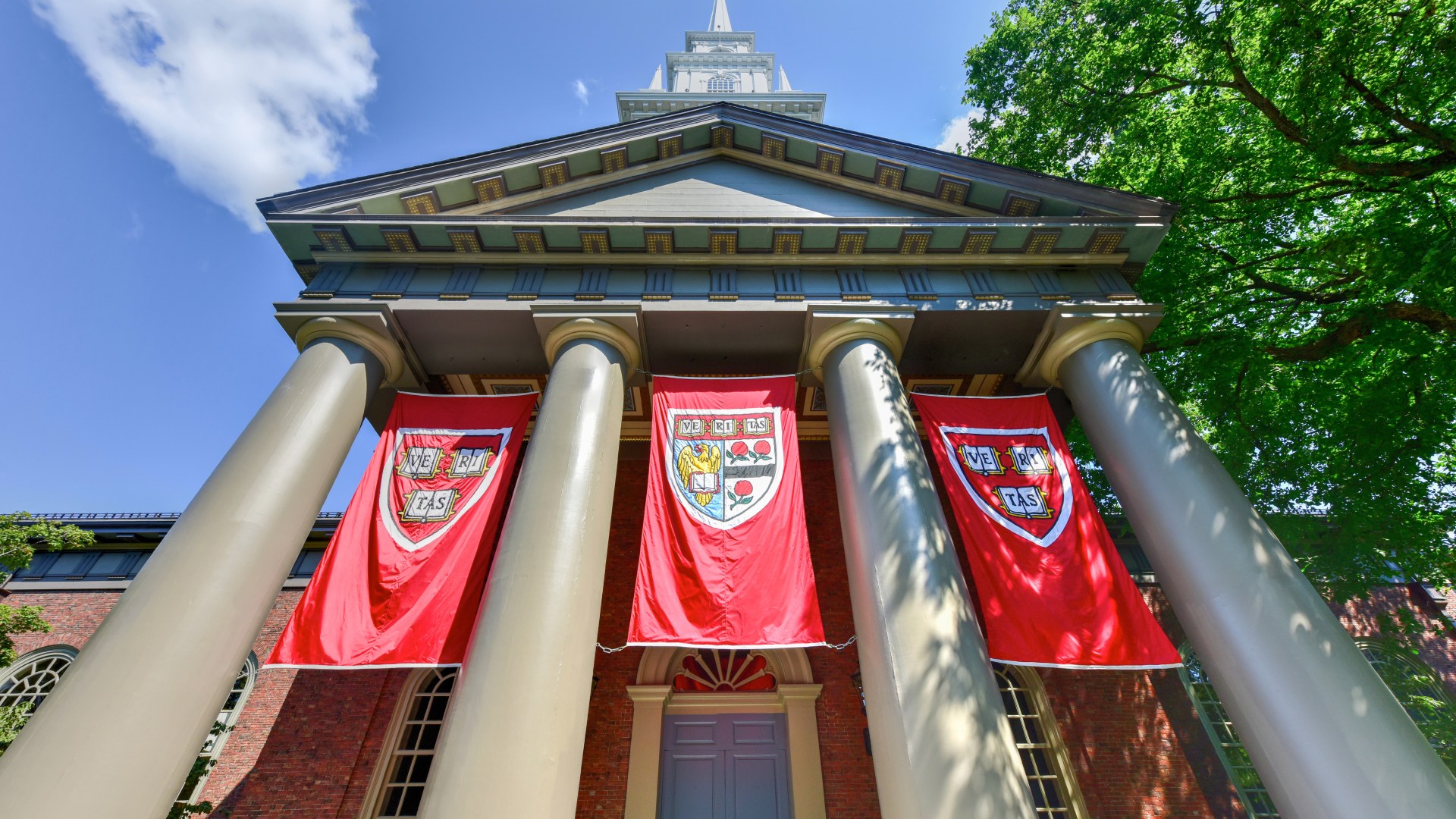
Memorial Church at Harvard University campus in Cambridge, Massachusetts

Memorial Church at Harvard University campus in Cambridge, Massachusetts

Christianity Today September 2, 2021
demerzel21 / Getty Images

Last week, The New York Times ran a provocative piece stating that the new president of the Harvard Chaplains is an atheist. Greg Epstein was elected unanimously last spring by his fellow Harvard chaplains. I am one of the people who voted for him.

For seven years, I have worked at Harvard as an evangelical campus minister employed by InterVarsity Christian Fellowship (IVCF). I believe the Bible is authoritative and entirely trustworthy as God’s Word. I believe that Jesus alone is the way of salvation, and that no one comes to the Father except through him. So why would I vote for an atheist to lead the Harvard Chaplains?

The answer lies in the unique, decentralized approach of the Harvard Chaplains and how that group of leaders from many faiths (or no faith) has opened doors for gospel-centered ministry on the campus of a prestigious Ivy League school. The real Harvard Chaplains group—not the one poorly represented in the media—tells a different and very significant story of how evangelicals can flourish in interfaith spaces without compromising faith, truth, or mission.

In response to The New York Times profile, many Christian and conservative media outlets were quick to fuel the sense of aggrievement felt by religious people who are understandably trying to protect themselves against the rising tide of secularism. In so many words, they’re concerned that “even faith spaces will be ruled by secularists, should Harvard have its way.”

Had I not been in the room where it happened, I might have had a similar reaction to the news.

That room was of course a Zoom call. It took place in the spring. As a group of about 30, we voted on a slate of chaplains for next year’s executive board. I was voted in as chair of the membership committee, and Greg Epstein—Harvard’s humanist chaplain since 2005—was voted in as president. There was very little discussion, a unanimous vote, and a lot of thankfulness for the various chaplains willing to serve in various ways, including the rabbi we voted for the previous year, and the Lutheran minister before him, and the evangelical campus minister before her.

Some media outlets have called Epstein the “chief chaplain.” Others claim he “will oversee the activities of all religious communities on campus,” and still others say he’s now “directing the university’s more than 40 religious leaders.”

These reports fail to appropriately portray the nature of the role. Harvard has no “chief chaplain,” and the president of the Harvard Chaplains does not direct spiritual life on campus. We are a decentralized, nonhierarchical community of independent chaplaincies, with about 40 chaplains spanning roughly 25 denominations, organizations, traditions, and religions.

We are Harvard affiliates but generally not employees of Harvard. We do not report to any higher-ups on matters of faith or doctrine. We share a primary commitment to treat each other’s communities fairly and honestly and a secondary, broader commitment to the spiritual needs of the people of Harvard. We are a consensus-based community, and consensus is often easily reached because no one is expected to agree on matters of doctrine.

The president is chosen from among us, normally to serve two one-year terms. That person is primarily a servant of the chaplains—coordinating, convening, and leading our meetings, as well as serving as a conduit between us and the office of the president of Harvard University. They also occasionally represent us at events here or there.

Chaplain presidents are chosen not to reflect whose tradition is ascendant, nor as a reward to the most influential chaplain. They are not an indicator of a bold new vision for the Harvard Chaplains. They get selected because they are trusted and competent members of our group.

In this case, I voted for Greg because he’s well equipped for the role he was elected to, not for the role much of the media has imagined. But my reasons go even deeper: This community of interfaith chaplains has benefited the ministry and mission of its evangelical leaders, including me and the organization I represent.

Evangelicals have historically been wary of interfaith initiatives. At many points in my life, I have too. But over time I’ve learned to engage in these projects without compromising my deeply held, exclusivist convictions. As Bob Roberts, pastor and founder of the Multi-Faith Neighbors Network, explains,

In recent years evangelical Christians have functionally cordoned themselves off from the rest of society and culture. They have done this for a variety of reasons, but the result has been a church that does not understand the world, and a church that does not understand the world is a church that cannot faithfully serve and engage the world with the love of Jesus. Multi-faith gives us the opportunity to not only serve the world, but to understand the world as well.

Nostalgia for the past can play a part in people’s wariness. I certainly mourn the decline of Christian identity wherever it is declining. But the church doesn’t gain anything when we pine for some misremembered, bygone era when Christianity was (almost) the only shop in town.

In Harvard’s particular case, if you go back just a few decades, evangelicals were largely excluded from religious life on campus. The group that preceded the Harvard Chaplains was restricted to mainline Protestant church ministers.

In that historical context, we evangelicals are beneficiaries of Harvard’s newfound desire for diverse religious representation.

However, the second cause for wariness carries some significant merit. Evangelicals rightly fear that interfaith spaces often come with a prerequisite for all participants to forsake any exclusive claims. We suspect that interfaith often means treating all religions as one, rather than talking and partnering across genuine (even tense) ideological differences.

When I arrived as a student at Harvard Divinity School (HDS), I harbored this fear. Some campus interfaith spaces had little room for people like me who held exclusive truth claims. But I was impressed when HDS invited Eboo Patel, founder of the Interfaith Youth Core, to speak, and even more impressed when he used his platform to bemoan the absence of evangelicals from interfaith spaces.

In his talk, he didn’t blame evangelicals for their intolerance but instead pointed the finger at interfaith spaces. In a related article for the Harvard Divinity Bulletin, he asked,

What is the purpose of interfaith work? Is it to bring together theological liberals and political progressives of various religions to share how their different faiths brought them to similar worldviews? … If this approach excludes, and potentially raises hostility toward, faith groups, then it ought to raise the question of just what it is we think we are doing in a movement called “interfaith.”

In my experience, I’ve seen interfaith spaces increasingly realize the limits of excluding people who hold exclusive claims. That approach ends up excluding most religious people. In response, a new approach is rising, and the Harvard Chaplains are part of that movement.

Our decentralized approach to interfaith work encourages authentic expressions of faith—not how a higher-education administrator or a chief chaplain envisions it, but how ministers and practitioners sent from churches and religious organizations live it. This commitment to genuine diversity makes space for evangelicals to flourish as trusted members of religious leadership at one of the world’s premier academic institutions.

In that vein, I am deeply thankful for the evangelical chaplains who have spent decades building friendships and partnerships and have fostered the trust that I now experience. I have many friends in campus ministry at other universities who are treated with much more suspicion, if not outright hostility.

My vote for Greg Epstein was motivated in part by my desire to build trust in an interfaith space where people hold sharply conflicting views and do not pretend otherwise. Without that trust, evangelicals would be relegated to the fringes. Instead, we are at the table, discussing truth in partnership with our fellow chaplains and being looked to for leadership in the diverse religious life of Harvard.

I voted for Epstein because he has been one of the strongest partners for the InterVarsity staff at Harvard. We worked together on service trips to post-Katrina New Orleans, and he’s also cosponsored speaking events with us.

The mission of Epstein’s chaplaincy is not to convince people to become atheists but rather to serve students who find themselves without faith (of which there are many at Harvard). He actively pursues our perspectives on matters pertaining to the Harvard Chaplains. Although we disagree sharply on the things that matter most, he leans into those spaces, where people can differ on their strongly held beliefs. He thinks it’s important.

Epstein’s new role at Harvard has triggered a significant amount of outrage among Christians. I can empathize with many of the concerns, especially given how The New York Times failed to provide full context for the story. But even in this divisive media environment, we would do well to imitate our Father, who is “slow to anger and abounding in steadfast love” (Ex. 34:6, NCB).

Underneath the overreaching headline is a model of how evangelicals can flourish in interfaith spaces and do so without compromise. It’s a model evangelicals would do well to emulate rather than condemn.

Pete Williamson is the team leader for InterVarsity’s Graduate and Faculty Ministries at Harvard and a Harvard Chaplain.

Speaking Out is Christianity Today’s guest opinion column and (unlike an editorial) does not necessarily represent the opinion of the publication.

News

Why the UN’s Dire Climate Change Report Is Dedicated to an Evangelical Christian

Welsh Nobel Prize-winner John Houghton saw sin at the heart of this ecological crisis.

Christianity Today September 2, 2021
Sean Rayford / Stringer / Getty Images

The sixth report from the United Nation’s Intergovernmental Panel on Climate Change is alarming—but not surprising.

The panel’s first assessment of scientific research on climate change in 1990 found that burning fossil fuels substantially increases the atmospheric concentrations of greenhouse gases—including carbon dioxide, methane, chlorofluorocarbons, and nitrous oxide—causing a rise in the global mean temperature and warming up the world’s oceans.

“Consequent changes,” the first report said, “may have a significant impact on society.”

The second, third, fourth, and fifth IPCC assessments found more evidence and growing consensus that human activity is causing climate change and that its impact will hurt a lot of people.

The sixth assessment, released in August, is more urgent and emphatic, but it reaches the same conclusion. The IPCC now says climate change not only may have a significant impact on society, it will.

Policy makers, scientists, and concerned citizens who pick up the final version of the report might be surprised by one thing, though: It is dedicated to an evangelical Christian who said the root problem of climate change is sin.

“Looking after the Earth is a God-given responsibility,” John Houghton once wrote. “Not to look after the Earth is a sin.”

Houghton, who died of complications related to COVID-19 in 2020 at the age of 88, was the chief editor of the first three IPCC reports and an early, influential leader calling for action on climate change.

His concerns about greenhouse gases, rising temperature averages, dying coral reefs, blistering heat waves, and increasingly extreme weather were informed by his training at as atmospheric physicist and his commitment to science. They also come out of his evangelical understanding of God, the biblical accounts of humanity’s relationship to creation, and what it means to love Jesus.

“We haven’t lived up to the call to holiness,” Houghton’s granddaughter Hannah Malcolm explained to CT. “We’ve been conformed to the patterns of this world, with the desire for wealth accumulation and the desire to increase our comforts, and that’s not the demand that is placed upon us as followers of Christ.”

Houghton was born in a Baptist family in Wales in 1931. As a young man he realized he needed to make a personal decision for Christ, and he did. To the end of his life, Houghton described it as the most important choice he’d ever made.

His love for God fueled his love for science. He saw it as a way to worship.

“The biggest thing that can ever happen to anybody is to get a relationship with the one who has created the universe,” Houghton told a Welsh newspaper in 2007. “We discover the laws of nature when we do our science. So we discover what’s behind the universe and if there’s an intelligence and a creator behind it. What we’re doing as Christians is exploring our relationship with the person who is the creator of the universe. Now that’s something that is absolutely wonderful.”

Houghton began attending Oxford University at 16, earning a bachelor’s in 1951 and a doctorate in 1955. The next year, the Soviet Union launched the first artificial satellite into space, and as the world considered what would happen if a nuclear bomb were detonated in the atmosphere, the 25-year-old scientist turned his attention to atmospheric circulation.

“We had measurements from aeroplanes and balloons, but they were only in one place,” he said. “If only we could put an instrument on a satellite circling the earth about 14 times a day, and measure atmospheric temperature at different levels by measuring radiation emitted from the earth, that would be a tremendous step forward.”

That led him to become one of the first scientists working on the problem of climate change, and a natural choice to chair the working group of the IPCC when it was set up by the World Meteorological Organization and the UN in 1988.

After the first report came out, it became clear to Houghton that careful science, carried out with the utmost transparency about levels of certainty, would not be enough to move the world’s governments to take action on climate change. There were too many short-term incentives to doubt warnings about devastating consequences that were far in the future.

Houghton increasingly found himself called to the role of communicator.

“He had a really deep belief in the goodness of scientific research for its own sake but he also found himself someone who was being given audience with politicians and leaders,” Malcolm said. “It was never just an intellectual problem he wanted to solve. Whenever he talked about it he would begin with ecological devastation and the question of justice was a constant reference point. I’ve heard people say he had the urgency of a prophet.”

In 1995, when the second IPCC assessment of the science of climate change was published, Houghton started talking about climate change explicitly in terms of sin. He was influenced by John Zizioulas, the Greek Orthodox Metropolitan bishop of Pergamon, who argued that sins against nature were also sins against God, since humans were given God’s creation to care for.

As Houghton saw it, some religions teach that the Earth and the material world are evil. But the Bible teaches that creation is good, and depicts humans as gardeners divinely commissioned to cultivate and care for the world.

“We are more often exploiters and spoilers rather than gardeners,” Houghton wrote. “Some Christians have misinterpreted the ‘dominion’ given to humans in Genesis 1.26 as an excuse for unbridled exploitation. However, the Genesis chapters, as do other parts of scripture, insist that human rule over creation is to be exercised under God, the ultimate ruler of creation, with the sort of care exemplified by this picture of humans as ‘gardeners.’”

Houghton began to reach out to evangelical leaders to talk to them about the coming ecological crisis. He was influential in convincing Richard Cizik, John Stott, and Rick Warren to make climate change a priority and talk about it as a spiritual problem.

After the third and fourth IPCC reports, and in spite of the panel winning a Nobel Prize (jointly with former vice president Al Gore), many advocates for dramatic cuts to carbon emissions began to despair. Change wasn’t happening quickly enough to make a difference.

But Houghton, drawing from his faith, spoke frequently about the importance of Christian hope.

“He believed the goodness of the Lord will be seen in the land of living, and that sustained him,” Malcolm said.

He prayed regularly that God’s kingdom would come—“Fast!”—and set things right.

In retirement, Houghton returned to Wales, where he served as an elder at a Presbyterian Church and taught his grandchildren to love the Welsh mountains and windswept beaches.

According to Malcolm, who is now preparing for ministry in the Church of England and writing a doctoral dissertation on theology and climate grief, Houghton thought it was it was impossible to convince people to protect something they didn’t love. He wanted Christians to learn to love their environment and let climate change science move them to repentance.

“Our desire to be gods drives a great deal of the destruction around us,” she said. “There is something in the work of climate science that reveals the consequence of our sin, troubles those in power, and calls for us to sit with that, but also be aware that an alternative is possible—an alternative to our sin.”

Houghton didn’t live to see the release of the sixth IPCC report or to promote it to evangelical Christians. But the scientific assessment dedicated to his memory echoes a core theme of Houghton’s life’s work: Now is the time, it says, to turn from the path of destruction.

News
Wire Story

John MacArthur’s Church to Receive $800K COVID-19 Settlement

Ahead of the legal payments, the California pastor acknowledged that he and others contracted the virus last winter.

Christianity Today September 1, 2021
Video screengrab via Vimeo / Grace Community Church / Religion News Service via AP

The Los Angeles County Board of Supervisors on Tuesday voted to authorize a $400,000 payment to settle a legal battle with Grace Community Church over lead pastor John MacArthur’s defiance of COVID-19 restrictions in the early months of the pandemic.

Under the agreement, which the board unanimously approved without discussion, the state of California will also pay the church $400,000.

This agreement, county officials said, was reached in the context of the US Supreme Court’s decision in February that told California it couldn’t enforce a ban on indoor worship because of the coronavirus pandemic. LA County modified its health order and lifted the indoor worship ban after the ruling.

“After the US Supreme Court ruled that some public health safety measures could not apply to houses of worship, resolving this litigation is the responsible and appropriate thing to do,” read a statement from county officials. “From the onset of the COVID-19 pandemic, Los Angeles County has been committed to protecting the health and safety of its residents. We are grateful to the county’s faith organizations for their continued partnership to keep their congregants and the entire community safe and protected from COVID-19.”

This decision also comes just days after MacArthur, during his Sunday sermon, confirmed he and his wife had contracted COVID-19 last winter. MacArthur also said “many people” contracted the coronavirus, adding “it probably went through our church in maybe December or January.”

“Patricia and I enjoyed our own bout with COVID for about a week and a half,” said MacArthur, who was absent from the pulpit late December.

MacArthur on Sunday said the settlement money would go to the Thomas More Society, which represented the church in this court case.

“Nothing will come to us except the affirmation that the Lord preserved and protected us through this,” MacArthur said.

MacArthur, in July 2020, held in-person services with congregants singing and sitting next to each other without masks, flouting COVID-19 public health orders that temporarily banned indoor religious services at the time.

Attorneys representing MacArthur filed a suit in August 2020 against California Gov. Gavin Newsom and other state, city, and county officials, saying the state’s restrictions on large group meetings and singing restricted its religious freedom. County officials then sued the church to require it to comply with COVID-19 protocols—including barring large group indoor worship and requiring social distancing at outdoor worship.

On Sunday, MacArthur told congregants “the natural immunity that God has designed is the greatest protection.” MacArthur cited a study suggesting those who recover from COVID-19 have more immunity than people who didn’t get COVID-19 and got the vaccine.

“God has a way of taking care of us as we love each other and share our germs,” MacArthur told congregants, who laughed in response on Sunday.

The Centers for Disease Control and Prevention released a report in early August saying vaccination offers higher protection than previous COVID-19 infection alone.

The CDC study found “unvaccinated individuals were more than twice as likely to be reinfected with COVID-19 than those who were fully vaccinated after initially contracting the virus.”

Theology

Is the Texas ‘Heartbeat Bill’ the End of Roe v. Wade?

A recent abortion ban isn’t the victory it seems. But it is a test run for pro-life Christians.

Christianity Today September 1, 2021
Sergio Flores / Stringer / Getty Images

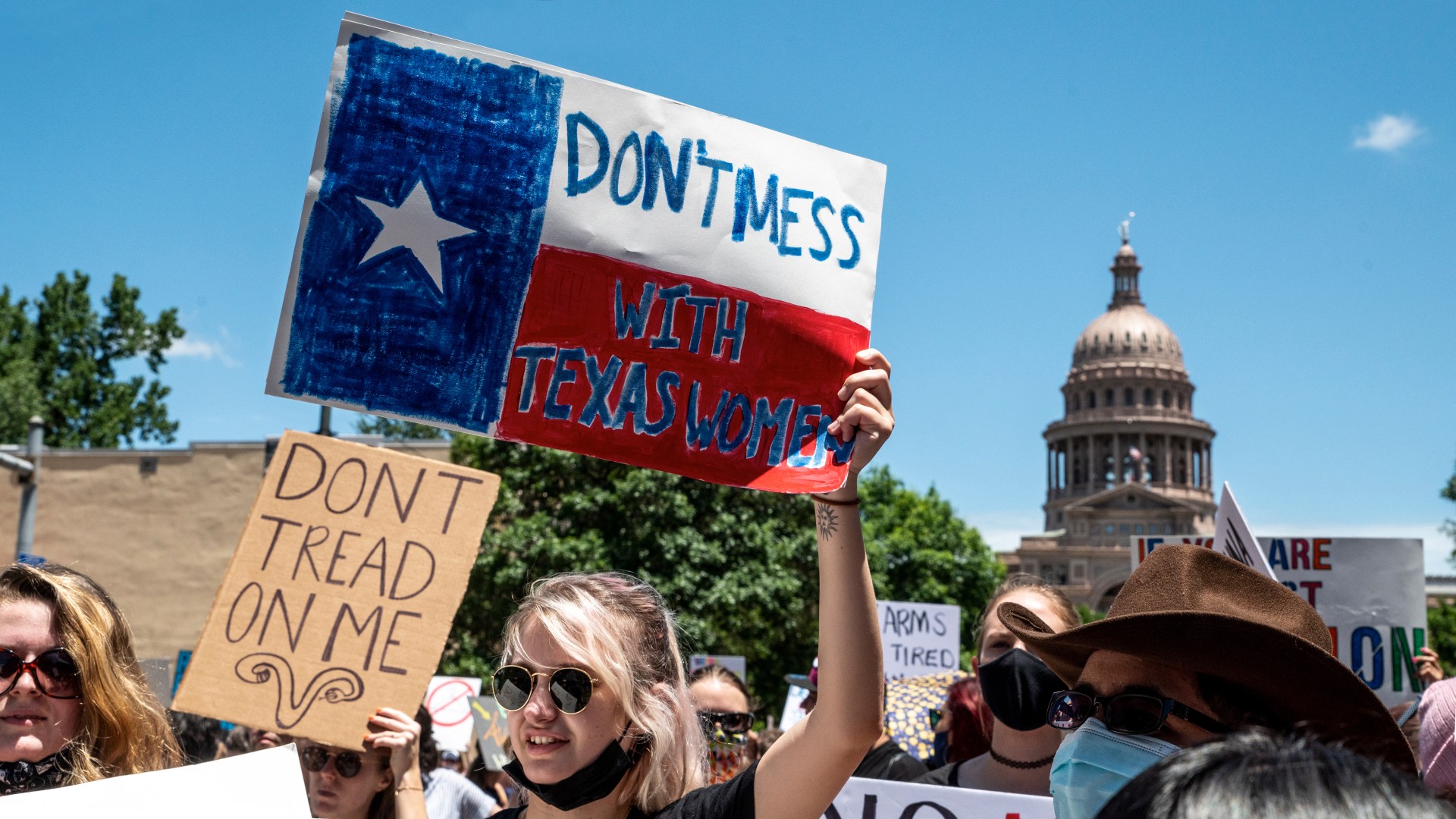
Many people counted down until midnight last night, waiting not for a New Year but for the possibility of a post–Roe v. Wade America. That’s because, due to a legal technicality, the Supreme Court of the United States had until then to overturn a new Texas abortion law before it went into effect on September 1.

The fact that the Supreme Court didn’t intervene has some Christians wondering: Is Roe now effectively gone?

The reason this case, in particular, is of such intense interest to both sides of the abortion debate is because the law in question, Senate Bill 8, seems to effectively ban abortion after about six weeks of pregnancy. Unlike the Mississippi law that will come before the Court this year, this law is different. It is not enforced by the state but rather by private persons who can sue anyone involved in an abortion—except the woman seeking the procedure.

Still, because a law seeming to prohibit abortion is now technically on the books, some have wondered if this means the almost fifty-year era of Roe v. Wade is at its end. And the answer to that is probably not—at least not yet.

Though it’s hard to discern the motives of nine justices, it is well within the realm of possibility that the Court’s decision to stay silent was not a way of undoing Roe but rather a means of not making such a decision before the Mississippi Dobbs case.

Dobbs v. Jackson Women’s Health Organization pertains to the State of Mississippi’s law banning most abortions after fifteen weeks from conception. If the law is upheld, it would directly challenge Roe’s framework of an almost unlimited right to abortion, especially before fetal viability (as defined by the Court). That case does not carry the same legal ambiguities as the Texas one and very well could decide the status of Roe, one way or the other.

Nonetheless, this moment could be a test run for pro-life Christians—and their legal opponents—showing what to expect when such a decision does come down from the Court, possibly even next summer. Under the current Roe structure, of course, very few meaningful restrictions on abortion can stand. Thus, the overturning or even the redefining of Roe is a necessary precondition for any legal turning of the tide on abortion.

But just because a repeal of Roe v. Wade is a necessary step for a pro-life victory does not mean that a repeal itself would overturn abortion.

If in the Dobbs case the Court were to overturn Roe, the laws of the states would return to their pre-Roe status quo: each state governing its own laws about abortion. This means that states such as New York and California and Illinois would have virtually unrestricted abortion, even as some states such as Texas or Mississippi could restrict it. That means the abortion debate would not have ended but, in many ways, would have just begun—state by state.

In some ways, even with Roe gone, there would be no time travel back to the days of 1972 with respect to abortion. In many ways, that’s good news for the pro-life community. After all, in the days leading up to and immediately after Roe, the pro-life witness was relatively small and disorganized. With very few exceptions, it was mostly led by Roman Catholics.

Some, such as Randall Balmer, have argued that evangelical lack of concern for abortion signified that race—not the protection of vulnerable life—was the real motive for the rise of the Moral Majority and other evangelical, socially conservative movements. Others, though, would argue that few evangelicals had really seen abortion on the scale we have seen since Roe and therefore didn’t have enough information to motivate them.

So much has changed since 1973 that a post-Roe America would hardly make our nation pro-life overnight. Opinion polls on abortion—which show the pro-choice side more popular but not dominant over the pro-life view—don’t really tell us what the popular landscape would be once the debate moves from abstract to real.

For example, a 2021 poll asking “Was the Afghanistan War a good idea?” would be drastically different from one asking the same question in 2001, right after a terrorist attack on the United States, or in 2031, if our country initiates a military draft to combat a resurgent al-Qaeda. Abstract opinions are easier for most people than situations in which they see the immediate stakes.

What has also changed since 1973 is technology. Yes, ultrasound and other advances enable us to view inside the womb, to see that the life there is not an undefined blob of tissue but a very human neighbor with a heartbeat and a face. But the technology works the other way as well—with abortion increasingly a chemical (or pill-form) reality rather than a clinical one, and thus much less easily regulated by the state.

Roe is not gone—yet. And even if and when it does fall, pro-life Christians will have a task ahead that will be more difficult and more potentially meaningful than what we have seen so far.

We will be seeking to persuade not only judges and justices or even just legislatures but also all of our neighbors of a vision where human life is defined not by power or usefulness but by intrinsic dignity. That will require those of us who are pro-life to be consistent in that vision and willing to break with our tribes and parties when they see human beings as dispensable or invisible.

Nothing much happened as of midnight August 31, but maybe that moment can remind us that it is time to prepare for the morning, whenever it comes.

Russell Moore is a public theologian and the director of the Public Theology Project at Christianity Today.

Theology

Let the Afghan Refugees Come Unto Me

In this global moment, we’re called to heed Christ’s command to open our hearts and hands.

Christianity Today August 30, 2021
Kent Nishimura / Getty Images

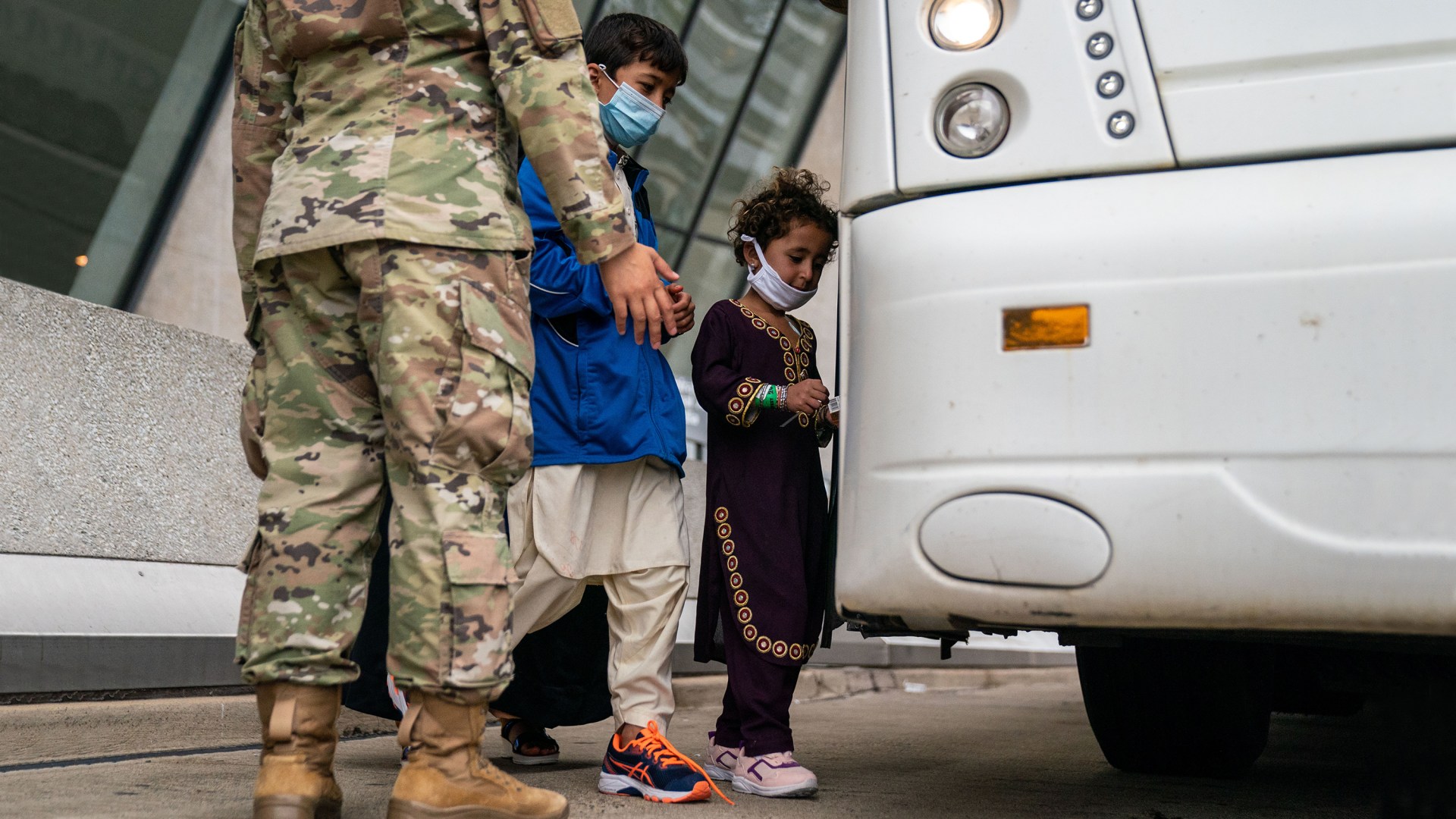
As we can see from the gut-wrenching images in Afghanistan, most of those wishing to flee the Taliban will never be able to escape, even many who faithfully helped the United States in the twenty-year war there.

Some, though, will be able to make it to other countries—including the United States—to seek shelter and to start a new life. As evangelical Christians, we should resolve, even before our new neighbors arrive, to ignore those who would ask us to fear these refugees.

Historically, those wishing to ostracize refugees take a number of different tactics. They sometimes speak of them in language of “uncleanness”—using metaphors such as rodents or insects—or they might suggest that the asylum seekers are themselves vectors of disease. They sometimes, though less often, speak as bluntly as some are now of refugees as an “invasion” of those who are coming to “replace us” (with “us” almost always referring to white and nominally Christian Americans). But perhaps most often, they speak of refugees as a threat.

Just as we saw with Syrian refugees and Kurdish refugees in years past, we will soon hear the insistent cries of those arguing that Afghan refugees are terrorists, or at least that they might be, since they are “unvetted” and we know nothing about them. These claims aren’t true.

As Elizabeth Neumann—a former high-ranking Trump Administration national security official—demonstrates, even if a terrorist wanted to play the long game of twenty years of pretending to be a pro-Western, anti-Taliban figure, the vetting process for all of these refugees is intense and rigorous, using extensive biometric and biographic checks. And as Neumann also points out, the sort of rhetoric used against such refugees almost always is accompanied by a rise in crimes or violence against such people.

The refugees moving into your community will not be there to terrorize you or to “replace” you. They will instead be looking for the chance to start a new life—without their sons murdered and their daughters raped by bloodthirsty despots. In that way, they will be like countless others who have found refuge here in the United States. You can see many of them at the Fourth of July parade in your town; they are often the ones waving the biggest American flags and weeping with patriotic joy.

Some of these refugees are your brothers and sisters in Christ. Some will be your future brothers and sisters in Christ. Whether they are or not, though, every one of them reflects back to us the picture of a God who made humanity in his image and loves each one of us.

The fear of refugees is meant to keep us in a state of emergency that sees everyone and everything not immediately familiar to us as a threat. That keeps viewers tuning in to television shows, callers calling in to radio shows, donors sending in dollars to politicians and interest groups. This sort of limbic-system override can cause even Christians who know their Bibles to forget the most minimal commands Jesus has given us to love and care for the vulnerable.

As Martin Luther King Jr. wrote in 1963, the priest and the Levite in Jesus’ parable, who avoided the beaten man on the side of the Jericho Road, were probably not feeling cruel or heartless. They were probably afraid—and understandably so. The Road to Jericho was a dangerous outpost for violent criminals. Those hurrying by might well have assumed that they could be beaten next.

“Perhaps the robbers were still nearby,” King wrote. “Or maybe the wounded man on the ground was a faker, who wished to draw passing travelers to his side for quick and easy seizure. I imagine that the first question the priest and the Levite asked was: ‘If I stop to help this man, what will happen to me?’”

There are times when we are called to a genuinely dangerous love of our neighbors. We see that in the Samaritan’s care for the wounded man on Jericho Road—or the early church overcoming its fear that the church-persecuting terrorist named Saul of Tarsus might be pretending to be a disciple to do harm to them from within (Acts 9:26).

In the case of Afghan refugees, we do not face anything even approaching that level of danger to ourselves.

Fear can sometimes drown out even our deepest convictions. We start to act in self-protecting ways that make us indiscriminately lash out at even imaginary threats. But the Bible tells us that perfect love casts out fear (1 John 4:18). That should remind us that when we find ourselves asking “Who is my neighbor?” we are asking the wrong question.

Russell Moore is a public theologian and the director of the Public Theology Project at Christianity Today.

Ideas

Don’t Quit Twitter Yet. You Might Have a Moral Duty to Stay.

Contributor

As leaders, how do we avoid the faults of online life without shirking our public responsibility?

Christianity Today August 30, 2021
Illustration by Mallory Rentsch / Texture: Annie Spratt / Unsplash

Recently, Caitlin Flanagan argued in The Atlantic that we really need to quit Twitter. She joins a long line of people who’ve sworn off the medium (at least for a time). Andrew Sullivan, Chrissy Teigen, Alec Baldwin, and other celebrities have publicly quit social media. Ta-Nehisi Coates famously left Twitter (and his 1.25 million followers) after an online argument with Cornel West in 2017.

In her essay, Flanagan examines how Twitter destroyed her “ability for private thought” and enjoyment of reading. She even admits to being a Twitter addict.

I am too. I have committed a thousand times to take a break from social media, just to find myself sneaking a look, consumed by shame, as if I huffed some glue real quick between work and picking up the kids. There are nights when I’m up too late, reddened eyes locked onto a screen, finally shaking myself out of my stupor with a cry: “Why am I doing this?”

We’ve all heard the studies. Social media decreases our ability to think critically, increases rates of depression, and fuels anxiety and distraction. Facebook and Twitter often make our conversations more combative. And online advocacy often usurps the more enduring (and more boring) work of governance and institutional change.

Nevertheless, most public discourse is now online. So even if social media is a cesspool, we still have to ask the question: Do some Christians have a moral responsibility to wade into the mire to voice opposition to bad legislation, promote good work, or amplify the concerns of the marginalized?

To cite one particularly disheartening example, sexual abuse victims of a lay leader in my own denomination took to Twitter this summer to highlight the ways leaders and systems allegedly failed to handle their abuse. The only way many of us (even within our institution) heard about any of this was because some brave survivors spoke up online. These institutional concerns were brought to light through social media.

I have written about the spiritual and emotional danger of social media consumption, but always with a bit of internal conflict, because I know that people are most likely finding these very essays through platforms like Twitter and Facebook.

The pitfalls of social media are real, dangerous, and myriad. But the unavoidable fact is that people today find a public voice, in part, through social media. This goes for Christian writers, artists, and public leaders as well. These online spaces are where people—those whom Jesus loves—are talking about important things. This is where people share their work.

But this fact, though unavoidable, is also rather destructive. If all our up-and-coming leaders, artists, and thinkers are formed by social media, this very formation will inevitably shape and limit our cultural possibilities, imaginations, and thought.

Our implicit requirement of emerging leaders for copious social media engagement is like requiring all of America’s young cardiologists to take up smoking. The means necessary to have a public voice in our culture is precisely that which undoes the kind of deep thinking, nuance, creativity, humility, and compassion we desperately need from leaders of any sort. This dynamic can also undermine our institutions. The last thing we need in the church is for each pastor to be a public brand. As I’ve written in CT, the authority that comes from being popular online can subvert institutional health and accountability. Yet, do our institutions themselves have some responsibility to deal with and equip people for the reality of a digital world?

I’ve had older church leaders praise the idea of opting out of social media altogether. They want to be “above the fray,” which is not a bad goal. But I wonder if Christians have some responsibility to enter the fray, even if it is fraught with all sorts of temptations, perils, and dangers.

How then do we—as individuals and as a church—resist the malformation of being always online without shirking our public responsibility? Is there any moral imperative to be part of the digital public square?

I’ve agonized over these questions and still don’t know the answer.

In their book, Practicing Theology: Beliefs and Practices in Christian Life, Miroslav Volf and Dorothy Bass write that the practice of discernment teaches us our own finitude, our need for prayer, our dependence on the Spirit of God. It shows us how our theology resonates “with the beliefs and practices that guide the community of faith on its pilgrimage.”

We are certainly in new territory on this pilgrimage. The church has faced persecution, famine, and plague, but we’ve never yet had to decide when or if to tweet. Of course, Christians have always faced temptations to vanity, arrogance, distraction, addiction, and idolatry. But we’ve never had hundreds of engineers hired by megacorporations to pinpoint how to ensnare more and more of our attention in ways uniquely suited to our individual loves and desires.

Still, Christian discernment is not a new practice, and we need to be intentional about discerning the vices and virtues—the dangers but also the obligations and responsibilities—that this new medium brings. I don’t mean we need to simply decide this individually. Discernment is a communal activity, which means we must ask these questions as a church. This needs to be a constant topic of Christian discipleship and debate.

The church and some individuals within it are called to the public square and, whether we like it or not, social media is an increasingly important part of that. Those digital spaces will inevitably involve us in practices, systems, and formation that are harmful to our souls. But we have a moral obligation not simply to perfect purity and personal health but to a wider world—a misshapen world that will inevitably misshape us as well. We can and should take up practices that limits these harms. But we might not be able to avoid them altogether.

Flanagan may be right: I may really need to quit Twitter. I may be self-justifying a damaging addiction. I truly do wish that a Christian ethical engagement with media was as easy as just quitting all the bad things, but there’s a kind of fundamentalist reductionism in this desire. Instead, we are faced with a riskier path, a practice of ongoing discernment as we navigate these complicated questions about both the needs of our souls and our responsibility to others.

I still believe what I wrote previously, that “technological habituation begets our spiritual formation, which begets our devotion and doxology.” I do not think that social media shapes our souls, our thinking, or our conversations in excellent ways. But at the end of the day, the church is called both to proper devotion and to the sullied complexities of the public square.

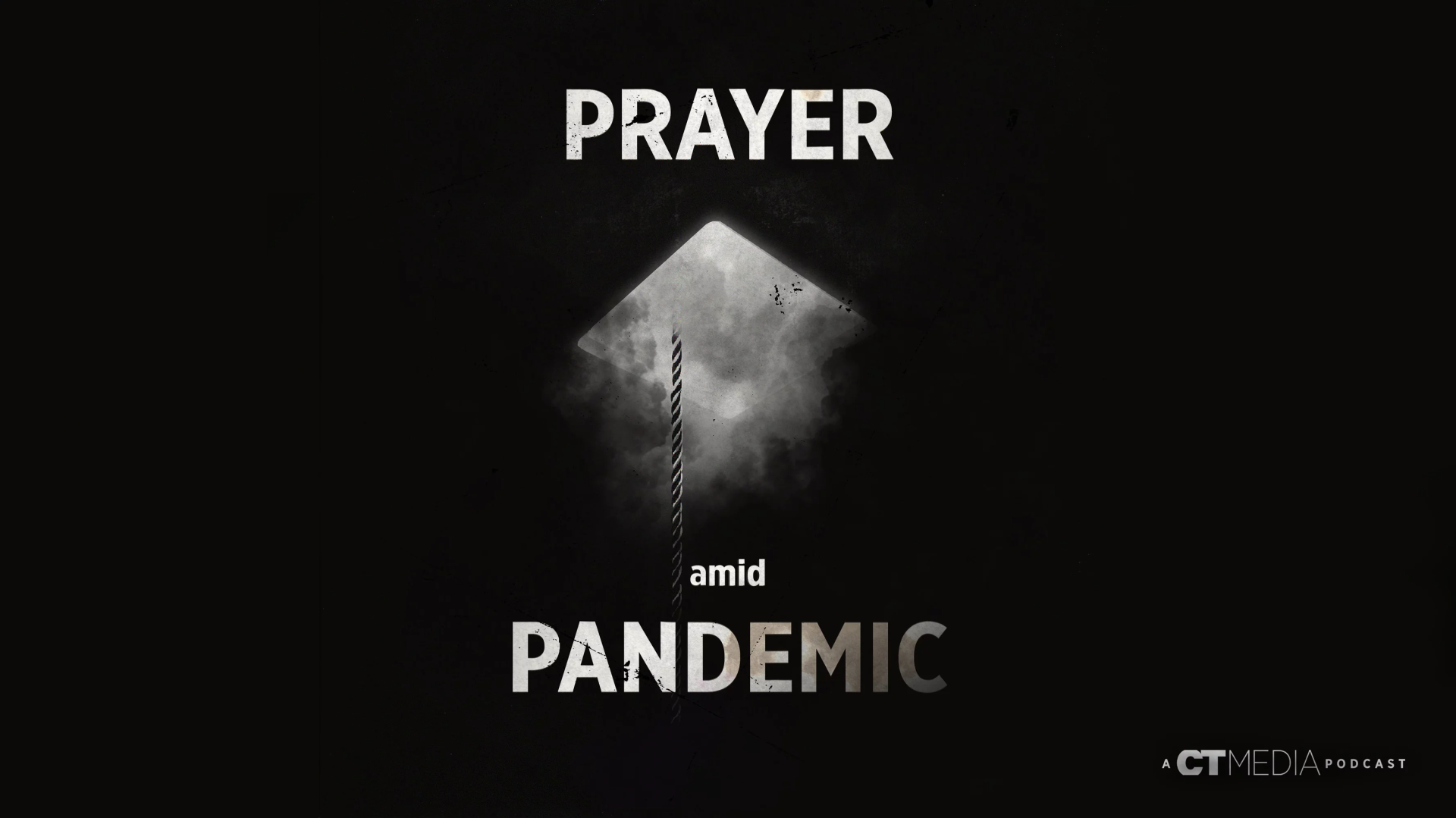
Prayer Amid Pandemic Podcast Tells Stories of Saints Who Were Strengthened by Sickness

CT podcast wins a first-place award from the Evangelical Press Association.

Prayer Amid Pandemic Podcast Tells Stories of Saints Who Were Strengthened by Sickness

When the COVID-19 pandemic started, Morgan Lee, CT’s global media manager, asked herself,

“How can we launch a new podcast from CT, speak into what’s happening, and hear from people around the world?”

Lee’s Prayer Amid Pandemic podcast went from a glimmer in her eye to recently winning a first-place award for the episode, “Even Fellow Believers Didn’t Understand Her Love for AIDS Patients” from the Evangelical Press Association (EPA) in the inaugural year of the podcast category.

“Being open about your Christianity is a massive hurdle for so many Christians, even those who serve as His hands and feet,” said an EPA judge. “To hear that people see Christ through her is huge.”

Lee, Matt Linder, a freelance podcast producer at CT, Mike Cosper, director of CT podcasts, and Erik Petrik, chief creative officer at CT were all credited with a first-place Higher Goal Award from the EPA in the podcast category.

The EPA judges rate podcasts on a set of criteria including originality of treatment, effective topic development, cultural relevance, clarity of thought, and production quality.

Lee’s search for stories of people facing sickness led her to Philomena Percival, a woman who has cared for hundreds of AIDS patients in Guyana in the last 25 years.

At the beginning of the AIDS crisis, few people wanted to visit HIV patients in the hospital because they were afraid of getting infected, Percival explained. It all stemmed from fear, even fears that weren’t grounded in how the sickness spreads.

“You don’t have to be a medical person to share God’s love with a sick person. Most people with AIDS got infected because they were looking for love,” Percival says on the episode.

Lee is a veteran podcaster; she hosts and produces CT’s longest running show, Quick to Listen, a news podcast that comes out each Friday. In 2019, she attended several Christian global meetings in South Africa and Indonesia which partially inspired her to launch the Prayer Amid Pandemic podcast, telling stories of Christians from around the world doing beautiful things for the kingdom of God.

“As Morgan helped us see the heart of Philomena Percival, it inspired the listener to consider how they might better love the sick and suffering near and far to them,” Cosper said. “Ira Glass often says that stories are a vehicle for empathy. I think this episode illustrates that beautifully.”

Prayer Amid Pandemic released 16 episodes over three months in 2020. Many of the podcasts’ subjects are recognized as saints by the Church today, including Julian of Norwich, Cyprian of Carthage, Catherine of Siena, Gregory of Nyssa, and Perpetua—all who faced sickness and their faith was strengthened by it.

“I love learning about a new saint in a relatable manner. The show is concise, engaging, and inspiring in short enough lengths that it doesn’t overwhelm our digitally overloaded days,” one of those listeners shared. “It can be listened to worldwide across religious sects.”

As Lee started her research in preparation for the podcast, she knew she needed to find people to profile. She turned to Daniel Silliman, CT news editor with a PhD in history, for suggestions.

One of his suggestions led to the episode, “They Named a Pandemic After This Church Leader,” telling the story of Cyprian of Carthage who became a bishop shortly after his conversion to Christianity.

“He refused to flee from a plague—and they ended up naming it after him,” Silliman said.

Lee also wanted a global and current feel from the podcast, sharing, “I met all of these folks from around the world and invited them to join us by praying a prayer in English for COVID-19 in their countries.”

Constantin V. Lysakov, pastor of Moscow Bible Church, offered one of those prayers:

“Lord, I pray right now that you would send your shalom to the city of Moscow in the midst of very trying times—that you would teach us by the power of your Holy Spirit to take care of one another.”

Men and women from sixteen countries all prayed on the podcast, including Argentina, Australia, Canada, Croatia, England, Finland, Germany, Guyana, Nepal, Nigeria, Uruguay, Japan, Russia, Singapore, Spain, and South Sudan.

Part of the podcast also includes news segments from around the world, a part that Lee admits was more challenging as she scoured for Christian COVID news happening outside of the US.

“One thing you can learn from history is we’ve been here before. This is not something new. That thing can be a hardship, a pandemic, or a divide in a country,” Lee said.

Kelsey Bowse is a UX Strategist at Christianity Today. Follow Kelsey on Twitter @ kelseybowse

News

Dari TV Host: Afghanistan Will Now See ‘Pure Christianity’

As satellite ministry becomes one of the few ways under the Taliban to reach local believers, SAT-7 Afghan pastor reflects on the gospel impact of the US military withdrawal.

Shoaib Ebadi

Shoaib Ebadi

Christianity Today August 30, 2021
Courtesy of SAT-7

Afghanistan and its neighbor Iran share the Persian language. Now that the Taliban will rule from Kabul again, might the countries begin to also share a spiritual trajectory?

In 1979, the shah of Iran was overthrown in an Islamic revolution. The crackdown that followed ended the Western Christian presence in the nation. Yet today the Iranian church is one of the fastest-growing in the world, as the ruthlessness of the mullahs led many to sour on Islam and some to find new faith in Jesus.

Satellite TV ministry played a great role in spreading the gospel in Iran, and continues today across the border in Afghanistan. Christian ministry SAT-7 began broadcasting in 2002 in Farsi, the Persian dialect spoken in Iran, and in 2010 Shoaib Ebadi began its first prerecorded programming in Dari, the Persian dialect spoken in Afghanistan. His show Secrets of Life went live in 2014, and today is accessible across the whole nation.

The 55-year-old Ebadi was born in Afghanistan but became a Christian in 1999 as a refugee in Pakistan. The following year he emigrated to Canada, and today heads Square One World Media, producing Christian media in various languages around the world.

He told CT about the history of the Afghan church, the impact of the US military upon it, and his hope that “pure Christianity” might now gain a hearing in his homeland.

Some statistics put the number of Christians in Afghanistan at 8,000. Can you give us a brief history of the church?

There was a Protestant church building constructed in 1970 in Kabul during the time of the shah, but it was destroyed when the monarchy was overthrown in 1973. The Catholics had a church in the Italian embassy since 1933. But these churches were only for foreign nationals, not Afghans.

There were a handful of believers in the 1950s, as American professionals came to Afghanistan and opened an eye hospital and a technical college. Later on, in the 1990s, tentmaker missionaries came as English teachers and NGO workers. And I was in a fellowship of about 30–40 Afghan believers in Pakistan. Most eventually went to the West.

These are probably the first Afghans to know Christ in the modern era, but God only knows.

So how did the Afghan church develop after the Americans came in 2001?

Some of the believers from Pakistan, as well as other refugees who fled to Iran, went back to Afghanistan after the Americans came in. And other missionaries came separate from the military presence and spread the word of God. Groups of believers were formed, but under foreign leadership. Gatherings at Christmas could be up to 150 people.

But in 2006, the case of Abdul Rahman gained international attention as he was threatened with the death penalty for converting to Christianity. The Catholic church helped get him asylum. And in 2010, Said Musa, an amputee, was arrested for his faith, but the international community helped get him to Canada.

Then in 2014, NATO ended its official operations in Afghanistan, and when they left most of the foreign Christian workers left also. Some gatherings disappeared, and there was an end to the financial assistance. But other believers took the initiative to lead the church, and the gospel began to spread, especially among the Hazara minority.

What is the ethnic makeup of the Afghan church, and why have the Hazara—about 1 in 10 of the population—been more open? (A plurality of Afghans are Pashtun, followed by Tajiks, Hazara, and other ethnicities.)

Probably about half are Hazara, then 30 percent Tajik, and 20 percent Pashtun. The Hazara (as a people) are Shiites, and were persecuted under the different shahs and kings of Afghanistan. But the Shiite form of Islam also has a concept of sacrifice, of someone giving his life for another. So when they are introduced to the sacrifice of Jesus, the lights can go on.

How does your show minister in Afghanistan?

Because there is no official church, we are trying to provide an hour-long service for believers. The first 10 minutes focus on a high-impact story, related to a social or political issue, presenting a biblical perspective. We broadcast worship songs, we pray, and we present a teaching from the Bible. And throughout, we take live, unfiltered calls from listeners.

Last week we had a believer call from inside Afghanistan, telling us that he is sick emotionally and doesn’t know what to do. We listen, we pray with them, and we put them in contact with our follow-up team. And sometimes non-Christian people just call to argue.

But now that the Taliban is in control, we will be one of the last resources available to Christians. They will begin to filter social media and the internet, but they cannot block just one station of a satellite TV feed.

How would you describe the current psychological state of the Afghan church?

It is very difficult now. Fear is dominant and believers think they will be the next target. Many are trying to leave, and some are getting help from international organizations. But it won’t be possible to get 8,000 people out of Afghanistan. Some are going underground, and we hear reports that some are heading toward the mountains—with the winter coming.

But by God’s grace, they will be able to continue to live under the Taliban as salt and light.

How do you advise us (Americans and other foreign Christians) to help them?

First is to pray. But they also need support, whether financial, spiritual, emotional, or simply in terms of evacuation. They are in desperate need.

But my other request is to get the news out.

When the Taliban go house to house, the first thing they ask is if a journalist lives there. But then the second thing they ask is if the household has a “big” phone—meaning smartphone. They are afraid of the media because it will record what they are doing.

As Christians, we need to report the truth about what is happening to believers and to everyone else.

Can you compare the situation today with the fall of the shah of Iran in 1979? Since then, there has been a dramatic rise in the number of Iranian Christians. Might we see something similar in Afghanistan?

There were more Christians in Iran at that time than in Afghanistan today. There were churches and pastors and missionaries. And the crackdown against them was great.

But a big difference is the media. Back then, there was only BBC radio. But today, if the Taliban does something it will be heard about right away, as the younger generation and women will react. I think it will be hard for the Taliban to rule as they did before.

But another difference is that the long presence of the US military made many Afghans associate Christianity with Western culture, and along with it the homosexuality and prostitution that are a challenge to local values.

Now they will see a different side of Islam, one of brutality and killing.

But they will also see a different side of Christianity. While the Taliban is hating their enemies, we have images of US forces doing all they can to evacuate Afghans, including filling planes with far more people than they can hold. And they also see the kindness of soldiers, holding babies and helping a pregnant mother deliver.

Afghanistan also needs economic assistance, which will open the borders. Christians will come from Pakistan, Iran, and central Asian nations. The people will see the humanitarian emphasis of Christianity, as they help support them and become a voice to the voiceless.

Did the US military presence help or hurt Afghanistan overall?

Under their watch, the Afghan government opened civil society. Girls went back to school, millions benefited from education, and women got involved in all aspects of life. There were signs of democracy and other freedoms, especially compared with neighboring countries.

But there were areas where the US military has a catastrophic impact.

In 2001, Afghanistan produced [a fraction] of the world’s opium supply. Twenty years later, it is 80 percent, with two million addicted Afghans. And corruption became a way of life, as warlords were given money to keep the peace. One believer told us that just to get regular paperwork, he had to pay a couple hundred dollars in bribes.

All this took place under the watch of the international community.

And ethnic conflict, which was present during the British and Soviet eras, continued under the Americans as Pashtuns were given the best positions. And then at the end with the peace deal, the Americans freed 5,000 Taliban members and other terrorists from prison.

It is understandable why the Afghans didn’t fight for their government. The United States was the mentor for civil society, but then made a deal with its enemy. People just lost their motivation. They feel abandoned.

How does this history impact future prospects for the gospel?

We have to give credit to the Lord. He works through difficult circumstances and turns evil into good. Despite these problems, there has been growth in Christianity inside Afghanistan. But at the same time, people have seen a mix of Christianity and Western culture.

Going forward, they will see pure Christianity—indigenous Christianity. The international community can pray and help support. But the Afghan church must now lead its own worship, and give its own teaching. God willing, they will put away their differences and unite in Christ.

A few years ago, I was teaching on forgiveness and a Hazara believer told me the Taliban killed his family. I believe in Jesus, he said, but I cannot forgive them. But then God opened his eyes, and he was able.

And then recently in London at a conference for Afghan believers, a group of Hazara, Tajiks, and Pashtun met together and asked each other for forgiveness. Christianity is what makes it possible to live at peace with other ethnicities. If this can happen, it will have a great impact.

News

Daniel Darling Fired from NRB After Pro-Vaccine Remarks

The ministry’s former spokesman had appeared in national media explaining why he as a Christian trusts the COVID-19 vaccine.

Christianity Today August 27, 2021
Screengrab / MSNBC

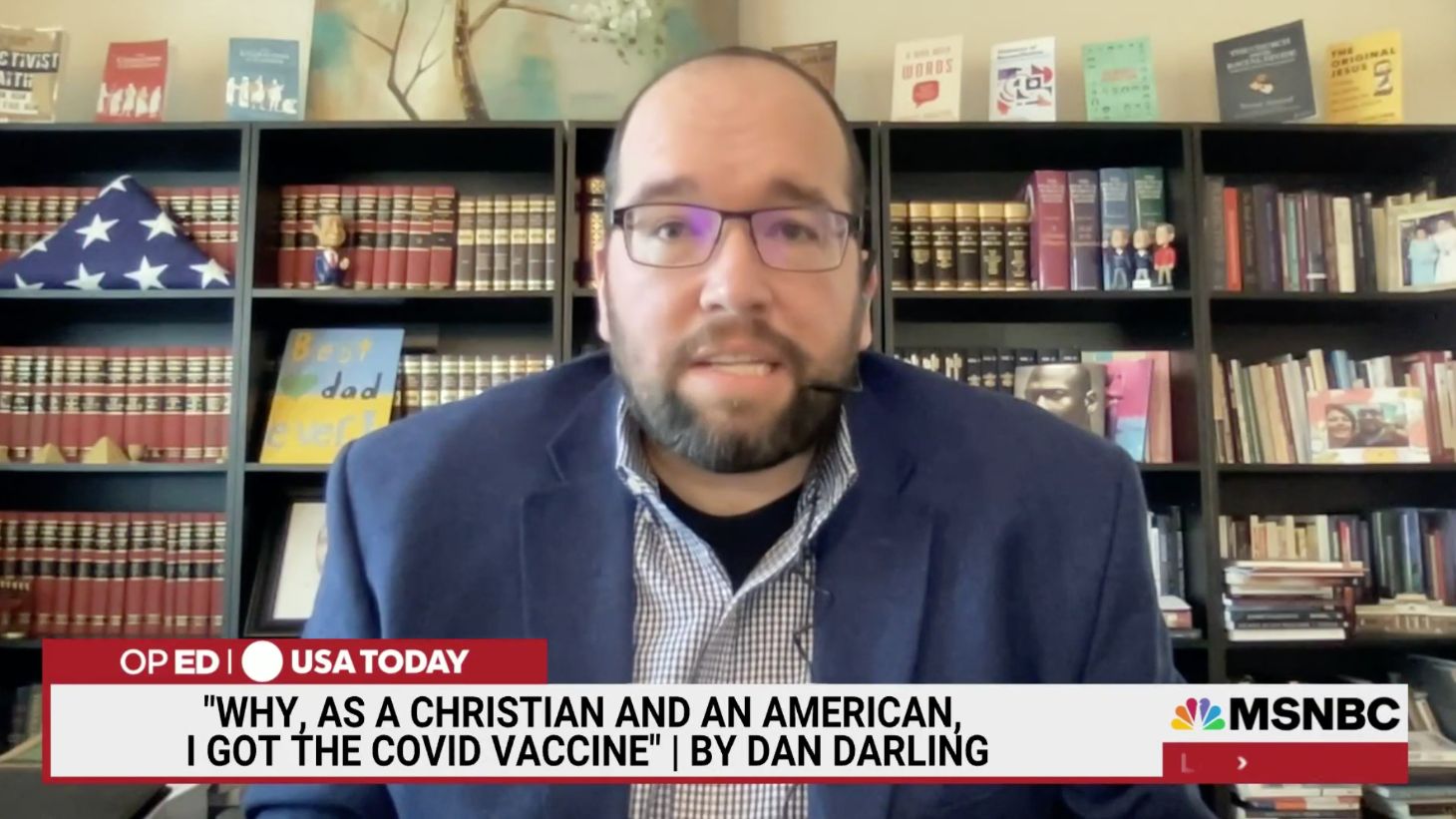
Daniel Darling, an evangelical author and the spokesman for NRB (National Religious Broadcasters), spoke out this month about his decision to get the COVID-19 vaccine in an op-ed in USA Today and a segment on MSNBC.

As of Friday, his remarks cost him his job with the ministry.

Darling was fired from NRB this week when he refused to sign a statement saying his pro-vaccine messaging amounted to insubordination, a source told CT on his behalf.

In a statement, Darling said he was “sad and disappointed that [his] time at NRB has come to a close.”

Darling joined NRB as its senior vice president of communications in April 2020, after a six-year stint as the vice president for communications at the Southern Baptist Convention’s Ethics and Religious Liberty Commission (ERLC).

NRB, which calls itself the largest association of Christian communicators, has more than 1,100 members working in Christian radio, TV, and other media. Part of the group’s purpose, it says, is to advocate for the “free speech rights of our members.”

In the aftermath of Darling’s firing, some evangelicals raised concerns that NRB was defying its own stances around free speech and anti-censorship, or that it was aligning with conservative radio pundits at the expense of a leader like Darling.

NRB CEO Troy Miller confirmed Darling’s departure in an email to Religion News Service, which first reported the story, but he did not elaborate on whether his vaccine remarks were the reason. “Dan is an excellent communicator and a great friend,” Miller said. “I wish him God’s best in all his future endeavors.”

The following day, Miller shared a longer response on Twitter saying, “No NRB employee has ever been fired for their views on this subject.” He said that he had issued a directive as CEO advising staff that “this is not an issue that NRB is called to advocate for one way or another” and “from here out NRB stays neutral.” According to a source familiar with the situation, Darling had not previously been asked to seek approval for media appearances.

Back in the spring, the NRB CEO had called the vaccines “stunningly effective” in an email urging members to attend its convention last June.

This summer, the spread of the delta variant has officials and community leaders once again urging vaccination. White evangelicals have become less hesitant toward the COVID-19 vaccine than they were in the spring, but in recent surveys, they still lag behind Americans overall.

Darling described how the vaccine has been shown to save lives and how he didn’t want to see anyone else die unnecessarily from the coronavirus. He lamented how a growing lack of trust in institutions played a factor in the current divides over the vaccine.

“There are not many things in the world today that are worthy of our trust, but I sincerely believe the COVID-19 vaccine is one of them,” Darling wrote in an August 1 op-ed in USA Today. “As a Christian and an American, I was proud to get it.”

He discussed the piece on Morning Joe, similarly telling host Joe Scarborough, “When we get a vaccine we not only protect ourselves, but we are also doing our part to keep from spreading the virus and hurting our neighbors.”

The source speaking for Darling said that he was fired without severance. Friends, fellow evangelicals, and fellow Southern Baptists on Twitter defended Darling and criticized the move.

Russell Moore, CT public theologian and Darling’s former colleague at the ERLC, called the decision “insanity” and “inexcusable.” Nathan Finn, provost at North Greenville University, said, “People are going to come out of the woodwork in his defense—and rightly so.”

In Darling’s statement, he referenced Jesus’ prayer in John 17 and his desire that believers would unify and “be one” around the truth of the gospel.

“I’m grieved that the issues that divide our country are also dividing Christians,” he said. “My desire is to build bridges and bring Christians together around our common mission of loving Jesus and loving our neighbor, but sadly we are sometimes tempted by the same things that tempt the world.”

News

Assemblies of God Avoids Jury Trial in Sexual Abuse Case

Oregon lawsuit sought to hold national organization liable for crimes committed in a Royal Rangers program in the 1980s.

Christianity Today August 27, 2021
Google Maps

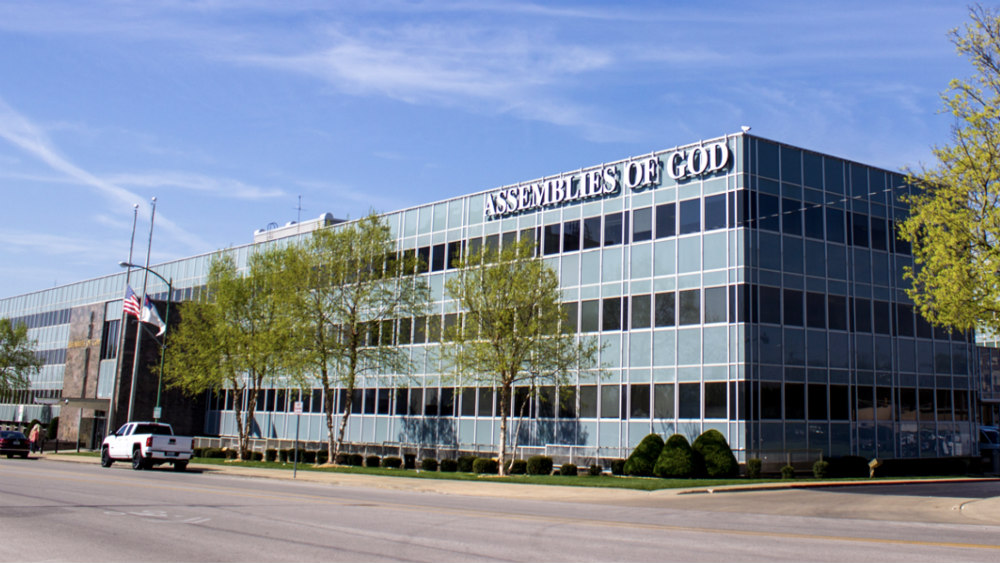
The Assemblies of God has settled a sexual abuse lawsuit in Oregon. If it had gone to trial, the suit would have been the first to put the Pentecostal denomination before a jury as a defendant in a sexual abuse case, allowing citizens of Portland to decide whether the Assemblies is legally liable for abuse that happened in the church scouting organization in the 1980s.

The denomination filed more than a dozen motions to get the case dismissed, according to Gilion Dumas, the attorney representing three men suing the denomination. The Assemblies also filed three appeals with the state supreme court.

The motions were rejected and appeals dismissed. When a trial date was set for September 7, the denomination agreed to a settlement.

“The trial court concluded that our legal theories of liability were viable, but they were not tested, ultimately, by a jury,” Dumas told CT. “It was the first time that the national organization was named and successfully kept in a sex abuse case. They tried to get out of it, but the court denied those motions and denied them consistently.”

A previous lawsuit was settled in 1990. Another was settled in 2017. The lawsuits sought damages between $5 million and $42 million, but the settlement amounts are secret. The dollar figures are protected by nondisclosure agreements, Dumas said.

Assemblies of God legal counsel Richard R. Hammar was unavailable to comment, according to church spokesman Mark Forrester. (Hammar is the cofounder and senior editor of CT’s sister publication, Church Law and Tax.) He authored Reducing the Risk in the early 1990s, one of the first abuse prevention programs for churches. Assemblies leadership recommends the 14-point plan to all its congregations.

The plan includes several points that might have prevented abuse in the Royal Rangers in the 1980s, such as a suggestion that adults should not be alone with children. Other suggestions might have stopped abuse before it was repeated, such as the strong recommendation that allegations be reported promptly to police.

The first allegations against a Royal Rangers leader in Albany, Oregon, were not taken seriously. A pastor in the Assemblies of God church near Corvallis was told in 1984 that Royal Rangers Commander Todd Scott Clark might be molesting boys in the program. Clark was not suspended, and police were not notified.

The next year, there were additional reports from multiple children and parents that Clark and a second leader, Ralph Wade Gantt, both in their 20s, were sexually abusing boys during campouts and sleepovers. The boys reported waking up in the middle of the night to find the church leaders touching them.

The church continued to allow campouts and sleepovers, and both Clark and Gantt spent more time alone with individual Royal Rangers, some of them as young as 10.

The Assemblies national leadership in Springfield, Missouri, does not appear to have known about these allegations or had any direct involvement with the Oregon congregation’s Royal Rangers program. Dumas argues, however, that the Assemblies was responsible for establishing safeguards.

“You don’t have to be a genius to recognize that child molesters are going to be drawn where the children are. You just need to set up the proper boundaries and keep a better eye on your volunteers and have better supervision and training,” she said. “If you have the power to tell them how to be a leader, as a national organization, you have the power to tell them what they can’t do and that they have to report inappropriate behavior.”

The Oregon church heard a third set of allegations in 1986 and finally suspended Clark and Gantt. There was an internal investigation and then the men were reinstated. They were allowed continued unsupervised access to the boys.

Parents turned to police, and both men were arrested in July 1987. Clark went to trial and was found guilty. Gantt pled guilty to five counts of sexually abusing children.

Those cases did not include the plaintiffs suing now. According to court filings, the three men did not know they had been abused until later in life. It is not uncommon for abuse victims to believe they were responsible for their abuse. The men—represented in court records only by their initials—were between the ages of 10 and 17 when the abuse occurred.

According to the lawsuit, those abused by Clark and Gantt suffered years of physical and psychological injuries, which manifest in drug and alcohol addictions, depression, shame, anxiety, guilt, intimacy issues, distrust of authority, and a loss of faith.

Dumas said the settlement amount is large enough to make a difference to the victims. She said her firm, which specializes in sexual abuse lawsuits, always recommends some of the money be used for counseling.

“Litigation can only do so much. It’s just a hammer and a box,” Dumas said. “The money doesn’t bring their childhoods back. It certainly doesn’t bring back their innocence. But what happened to them is finally acknowledged, and they did what they could to take control back in their lives.”

Apple PodcastsDown ArrowDown ArrowDown Arrowarrow_left_altLeft ArrowLeft ArrowRight ArrowRight ArrowRight Arrowarrow_up_altUp ArrowUp ArrowAvailable at Amazoncaret-downCloseCloseEmailEmailExpandExpandExternalExternalFacebookfacebook-squareGiftGiftGooglegoogleGoogle KeephamburgerInstagraminstagram-squareLinkLinklinkedin-squareListenListenListenChristianity TodayCT Creative Studio Logologo_orgMegaphoneMenuMenupausePinterestPlayPlayPocketPodcastRSSRSSSaveSaveSaveSearchSearchsearchSpotifyStitcherTelegramTable of ContentsTable of Contentstwitter-squareWhatsAppXYouTubeYouTube