Theology

Come, Lord Jesus!

An Advent reading for December 3.

Advent Week 1: Christ’s Return and Eternal Reign


This week, we focus on the Second Advent: our sure hope in Christ’s return. We explore Scripture’s portrayal of Christ’s power and righteous judgment, and the glorious future we await with God in the new creation.

Read Revelation 22:12–20.

The Bible ends with the prayer: “Come, Lord Jesus.” It is a prayer that is echoed in many of our Advent hymns, such as “O Come, O Come, Emmanuel” and “Come, Thou Long Expected Jesus.”

Christians have prayed it from the earliest days; it is the oldest Christian prayer we know (not counting the Lord’s Prayer). We know this because Paul quotes the original Aramaic version, Maranatha, meaning “Our Lord, come!” (1 Cor. 16:22). For Paul to expect his Greek-speaking readers in Corinth to recognize this Aramaic phrase, it must have had a key place in early Christian worship.

In Revelation 22:20, it is a response to Jesus’ promise to come. In verse 12 and again in verse 20, Jesus himself says, “I am coming soon.” This promise runs through the whole Book of Revelation (see 2:5, 16; 3:11; 16:15; 22:7, 12, 20), promising judgment for some and blessing for others, until at last it evokes an answer: “Come!”

We hear that answer first in verse 17. It is the prayer of “the Spirit and the bride.” By “the Spirit,” what is probably meant is the Spirit speaking through Christian prophets in worship. The bride is the church as she joins this prayer of the Spirit.

We can picture the bride waiting for the Bridegroom to arrive. She is adorned and ready for him (see 19:7–8). The bride is not the church as such, but the church as she should be, expectant and prepared for the Lord’s coming. She is the church that prays, “Come, Lord Jesus!”

We must imagine the Book of Revelation being read aloud in Christian worship. When the reader read the next sentence, “Let everyone who hears say, ‘Come!’” (22:17, NRSV), the whole congregation would join in the prayer, shouting, “Come, Lord Jesus!” Their heartfelt prayer identifies them as the bride of the Lamb.

But in the second half of verse 17, the use of the word “come” shifts. Now it is the hearers, “everyone who is thirsty,” who are invited to “come” and receive from God “the water of life” (NRSV). The water of life belongs in the new creation (21:6) and the New Jerusalem (22:1). But it is available already in the present to those who are awaiting the coming of Jesus.

It is as though he comes to us already, ahead of his final coming, and gives us a foretaste of the new creation. For that is what salvation is. We wait for him because we have met him already.

Richard Bauckham is senior scholar at Ridley Hall, Cambridge, and the author of many books, including Who Is God? and Theology of the Book of Revelation.


Reflect on Revelation 22:12–20.

What does it mean to pray, “Come, Lord Jesus”? How does this prayer challenge or change you? Join Christians around the globe and through the centuries as you pray this ancient prayer today.

Theology

The Gospel Life in Person

An Advent reading for December 4.

Advent Week 1: Christ’s Return and Eternal Reign


This week, we focus on the Second Advent: our sure hope in Christ’s return. We explore Scripture’s portrayal of Christ’s power and righteous judgment, and the glorious future we await with God in the new creation.

Read 1 Thessalonians 3:9–13.

Have you ever missed someone badly and wanted to see them again? Over these long, seemingly endless months of the pandemic, there are many loved ones we’ve been unable to see, greet, and hug in person. Zoom and FaceTime simply don’t cut it. We desire to be in the same space, same room, same place. We long to see them face to face.

The Apostle Paul also yearned to see the Thessalonian believers in person. He is overjoyed at Timothy’s report of confidence that they were embodying the gospel, living it in action, by “standing firm in the Lord” (3:8). He desires to visit in person and yet this letter must suffice for now. What is his message to them? That the Good News must be lived out in person until we see Jesus face to face. What does this look like? The same Good News of Jesus’ love is to “increase and overflow for each other and for everyone else” (v. 12).

This type of love is not easy to embody in our divided world. Many today have allowed worldly values to creep in and supplant Christian love and gospel witness. We may be more divided as a church than ever before.

This timely reminder from Paul to increase and overflow in love for others is not something we can achieve on our own. Rather, Paul says, “May the Lord make your love increase” (v. 12).

The implications of the gospel are lived out through our Christ-like love, particularly for those we consider to be in the “everyone else” category. We cannot claim that we eagerly wait to see Jesus at the Second Coming—the consummation of the gospel story—when we can’t stand the sight of our brothers and sisters in the Lord today!

As we await Jesus’ return, Paul urges believers to “be blameless and holy” (v. 13) in a society that celebrates compromise and sin. Our hopeful anticipation of the Second Coming challenges us to always pursue holy lives to the glory of God. This includes bearing with one another and being patient with those with whom we disagree, relying on God’s power to do so.

Paul urged the Thessalonians to live this way in light of Jesus’ return: to let their present discipleship be shaped by their future hope. Like them, we long to see Jesus face to face. Advent reminds us that one day we will. May we strive to be people of love and holiness in the meantime. Come quickly, Lord Jesus!

Matthew D. Kim is the George F. Bennett Professor of Preaching and Practical Theology at Gordon-Conwell Theological Seminary and the author of Preaching to People in Pain.

Consider 1 Thessalonians 3:9–13.

How does anticipation of Christ’s return shape your daily life? How do you desire as you live out the gospel life in person? Pray, inviting God to strengthen your heart and deepen your love for others as you await Christ’s return.

Theology

He Won’t Leave Us Alone

An Advent reading for December 5.

Nicole Xu

Advent Week 2: Sin and Redemption


John the Baptist played a crucial role in preparing people for the Messiah. This week, we consider what Scripture says about John’s purpose. We reflect on how his teachings about sin and repentance can speak to our own lives of Christian discipleship.

Read Malachi 3:1–4.

Today we read from the last book of the Old Testament, just before we flip the page into the first chapter of Matthew. The Israelites have returned from the Babylonian exile, the Jerusalem temple has been rebuilt, and yet their relationship with God is still … complicated.

The Book of Malachi is structured around a series of declarations by God, which are met by questions and accusations from the people of Israel. As these dialogues unfold, Israel’s ongoing sin and rebellion are laid bare, as is the steadfast character of Israel’s God. Our passage in chapter 3 is introduced by Israel’s pleading for the God of justice to show up (2:17), and God’s promise to send a messenger who will prepare the way of the Lord (3:1). After that, God himself will come to the temple. What a hopeful promise! The God who has chosen the Israelites as his treasured people will come, demonstrating anew his commitment to his people.

This hope, however, is given a sharp edge in the next verse. Yes, God is coming—but who can endure the day of his coming? God will not pat the Israelites on the back for their half-hearted temple service or refusal to honor God fully. Indeed, the God who is coming is like a refiner’s fire and a launderer’s soap, putting the Israelites on trial for their injustices and waywardness.

During Advent, as we await the birth of the Messiah and long for God’s coming yet again, the yearning is palpable. Our world is broken, and we need a savior. But, like the Israelites, the savior we await may not be exactly as we expect. He may not pat us on the back either. Rather, our shortcomings will be laid bare, and we too will be called to repent and change our ways.

But this is precisely the point. Our God is not a God who leaves us alone and lets us be just how we are. He is a God who changes us, and this change can only come about through an awakening to the parts of our lives that are in desperate need of reordering. It is this reordering, this opening of ourselves to the refining hand of God, that will indeed draw us nearer to God and closer to the people we were made to be.

Let us be open to God entering into our lives, and let us embrace that God showing up may not look exactly how we may have imagined. What can be trusted is the goodness and gentleness of this great God, the God of faithfulness, the God who will not leave us alone.

Jen Rosner is affiliate assistant professor of systematic theology at Fuller Theological Seminary and the author of Finding Messiah: A Journey Into the Jewishness of the Gospel.

Read Malachi 3:1–4.

Consider its meaning in several possible layers: its original historical and cultural context, John the Baptist’s and Jesus’ coming, and Christ’s return. What does this prophecy reveal about God’s character and love? Pray, inviting God’s refi ning work in your life.

Theology

Comfort My People

An Advent reading for December 6.

Advent Week 2: Sin and Redemption


John the Baptist played a crucial role in preparing people for the Messiah. This week, we consider what Scripture says about John’s purpose. We reflect on how his teachings about sin and repentance can speak to our own lives of Christian discipleship.

Read Isaiah 40:1–5.

As we seek to gain insight on this beautiful passage, a window into its meaning for the Jewish community can help us better understand its context and significance. The Jewish people worldwide move through a weekly biblical reading cycle, similar to the Christian lectionary. The darkest weeks of the cycle fall in midsummer, leading up to Tisha B’Av, the saddest day in the Jewish calendar. It commemorates the destruction of both the first and second temple in Jerusalem. Tisha B’Av also marks numerous other tragedies throughout Jewish history. It is a day of fasting and mourning. The Book of Lamentations is read publicly and Israel’s sin before God is laid bare.

But that is not the end of the story. Immediately following Tisha B’Av, the reading cycle enters seven weeks of consolation, leading up to Rosh Hashanah, the Jewish New Year. Isaiah 40:1–26 is the designated reading for the week after Tisha B’Av, offering a reminder that judgment is not the final word. Each year, the Jewish people walk through the darkness of divine rebuke and are then reminded that God’s grace and forgiveness ultimately carry the day. They emerge from a time of ashes and despair into a new promise of God’s unyielding love.

Isaiah wrote during the expansion of the Assyrian empire and the demise of the kingdom of Israel (and eventually Judah). It was a tumultuous and tragic time, which Isaiah paints with haunting imagery. Yet Isaiah knew that this would not be Israel’s ultimate destiny. His description of restoration is equally visionary, instilling hope and perseverance in a battle-sieged people who doubted God’s presence in their midst.

Isaiah’s words also point forward to the pinnacle of divine revelation in the New Testament and the role played by John the Baptist, who’s identified as “one calling in the wilderness” (Matt. 3:3). The reference to Jerusalem’s hard service being completed and her sin being paid for (Isa. 40:2) would one day become true for all nations, as Jesus proclaimed that all people on earth are now invited into a covenantal relationship with God.

The contours of this new covenant inaugurated by Jesus’ life, death, and resurrection mirror the covenant Israel had long known. While there are repercussions for sin, God’s forgiveness and commitment to his people are renewed again and again, like waves crashing on a shore. May we press into the comfort of God’s presence and promises as we await the full revelation of his glory, even as Isaiah prophesied.

Jen Rosner is affliate assistant professor of systematic theology at Fuller Theological Seminary and the author of Finding Messiah: A Journey Into the Jewishness of the Gospel.

Contemplate Isaiah 40:1–5. (Option: Also read vv. 6–26.)

How does the context of tragedy and sorrow—in the Jewish scriptural reading cycle and in Isaiah’s day—enrich your reading of this passage and the comfort it offers? How might it deepen your understanding of John the Baptist’s purpose?

Theology

The Rising Son

An Advent reading for December 7.

Advent Week 2: Sin and Redemption


John the Baptist played a crucial role in preparing people for the Messiah. This week, we consider what Scripture says about John’s purpose. We reflect on how his teachings about sin and repentance can speak to our own lives of Christian discipleship.

Read Luke 1:67–79.

In my branch of the church, we pray the words of the song of Zechariah each day during the service of Morning Prayer. As the new day begins, we say or sing: “The sunrise shall visit us from on high to give light to those who sit in darkness and in the shadow of death, to guide our feet into the way of peace” (vv. 78–79, ESV).

Anyone who has taken the trouble to get up early and climb a hill or tower to watch the burning cusp of the sun swell into a cheering, blazing ball on the horizon will know how easy it is to treat a sunrise as a metaphor for hope. The rising sun says, “Whatever happened yesterday, here is a day of new possibilities. There is life beyond darkness and peace beyond strife.”

Maybe the most famous use of the metaphor comes from the Old Testament prophet Malachi, who pictures the sun as a peaceable bird whose flight path showers mercy on those who look up to see it. In Eugene Peterson’s memorable paraphrase, Malachi 4:2 reads, “For you, sunrise! The sun of righteousness will dawn on those who honor my name, healing radiating from its wings” (MSG).

What we hope for when we say these words morning after morning is that the sun’s warm light would simply remind us of God’s light that shines in our hearts with fresh grace for the day ahead (2 Cor. 4:6).

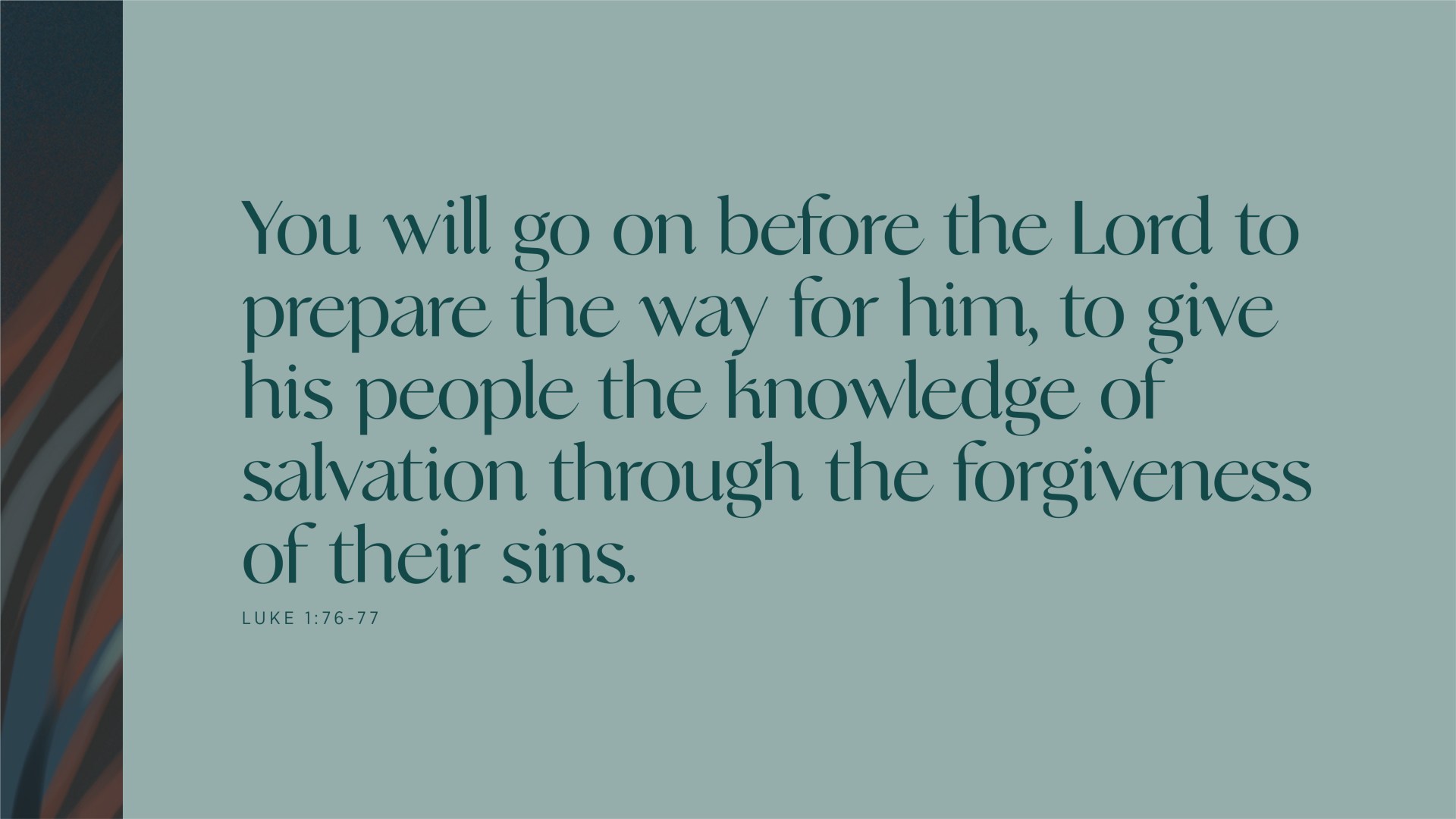
One of the things that’s always a bit jarring to me, though, when I pray the song of Zechariah is that the somewhat gauzy, universally recognizable symbol of the rising sun sits side by side with a stubbornly concrete reference to a specific child from history: the cousin of Jesus, the one we know as John the Baptist. “You, my child,” sings Zechariah, breaking away from his grandiose imagery to focus on one particular human being, “will be called a prophet of the Most High; for you will go on before the Lord to prepare the way for him” (Luke 1:76).

What this means for my prayer life, I’ve come to think, is that all the beautiful but somewhat underdetermined talk about divine light, health, peace, and so on comes into sharp focus in the events surrounding one particular first-century Israelite prophet who would one day, pointing away from himself, declare about Jesus: “Look, the Lamb of God, who takes away the sin of the world!” (John 1:29). The sun is meant to remind us of hope, yes—but, particularly, the hope of the Son himself.

Wesley Hill is a priest serving at Trinity Episcopal Cathedral, Pittsburgh, Pennsylvania, and an associate professor of New Testament at Western Theological Seminary in Holland, Michigan.

Meditate on Luke 1:67–79.

What is God drawing your attention to in Zechariah’s prophecy? What does this song emphasize about God? About humanity? About John’s purpose and God’s plan?

Theology

Repentance Made Possible

An Advent reading for December 8.

Advent Week 2: Sin and Redemption


John the Baptist played a crucial role in preparing people for the Messiah. This week, we consider what Scripture says about John’s purpose. We reflect on how his teachings about sin and repentance can speak to our own lives of Christian discipleship.

Read Luke 3:1–6.

We’re tempted to imagine the ancient world of the Bible as far more foreign than familiar. In phrases like, “In the fifteenth year of the reign of Tiberius Caesar” (Luke 3:1), we hear the yammering of our high school history teacher. But Luke’s gospel introduces us to a recognizable world. A world where lust for power, celebrity, and wealth reigned supreme. In this world, political might made right. In AD 19, for example, Tiberius Caesar exiled the Jewish community from Rome—because he felt like it. In this world, religious loyalties were corrupted by political compromise. Archaeologists believe they may have found Caiaphas’s house—its multiple stories, water installations, and mosaic floors all bearing witness to the high priest’s coziness with the ruling party. Much like ours, this world was waiting for rescue.

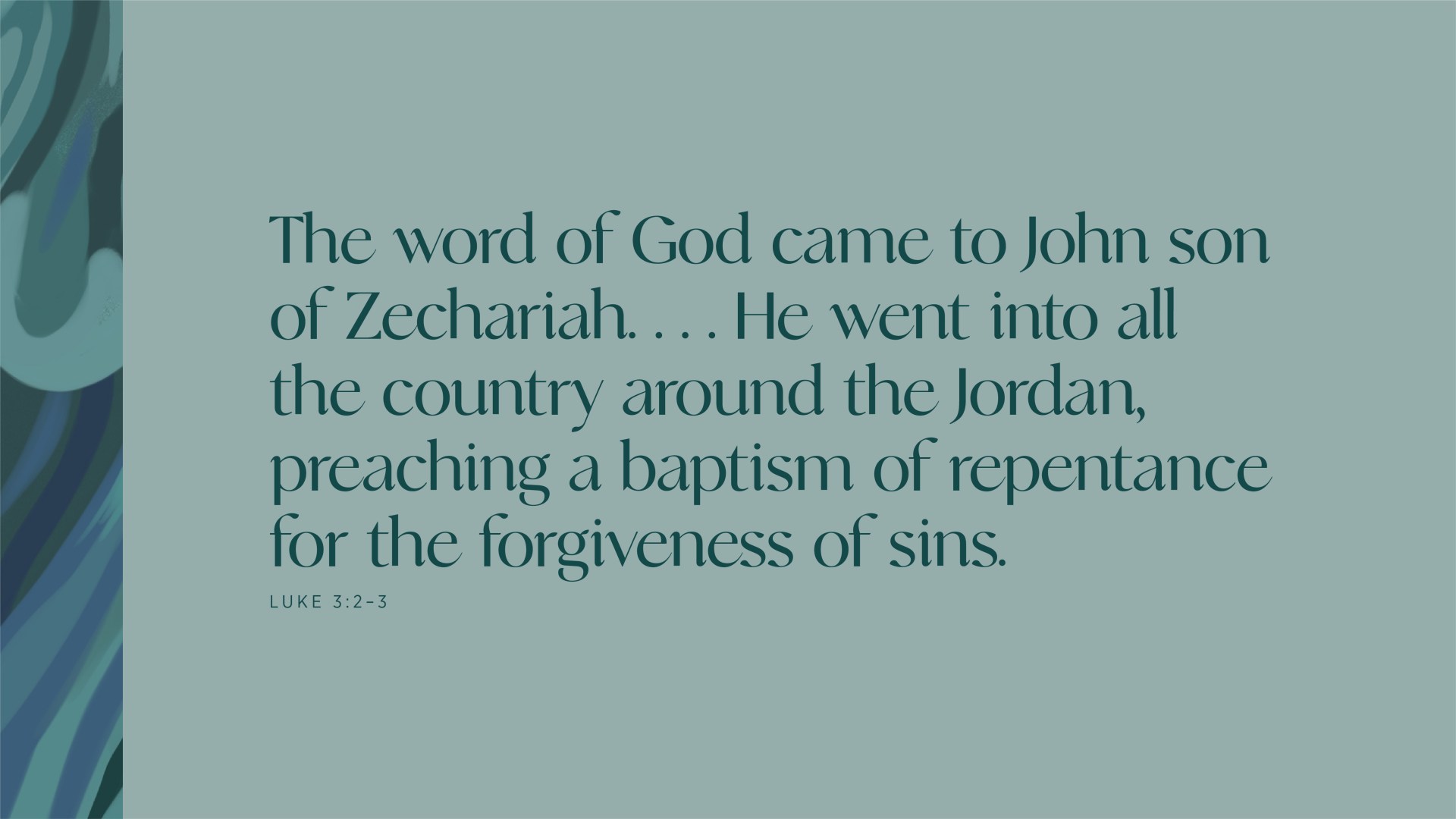
John the Baptist may have been a member of one of the small holiness communities that fled Jerusalem because of the corruption. From the wilderness, John preached his “baptism of repentance for the forgiveness of sins” (v. 3) and announced a loud cry of salvation (v. 6). As the forerunner of Jesus, John was making a way for people to see what Rome, despite its promises, could never provide.

In the Jewish imagination, repentance was a means for restoring the blessing of God. Although repentance reminded people of their sin, it was nevertheless emphatically good news. We see this clearly in the book of Deuteronomy. As Moses reprised the terms of the covenant God made with Israel, he reminded God’s people that sin would always be their ruin. To their own peril, he said, they “invoke a blessing on themselves, thinking, ‘I will be safe, even though I persist in going my own way’ ” (29:19). But despite the pleasure people may think sin affords, it is always cause for eventual catastrophe—as Israel learned the hard way.

Repentance is a call to turn from our sin and turn toward God. To say it differently, repentance is a call to turn from self-harm and turn toward self-preservation. Repentance is a lifesaving measure.

But as the message of John reminds us, this turning is only made possible because God sent a “word … to John son of Zechariah in the wilderness” (Luke 3:2). The good news announcement is that God himself has prepared the way for God’s people to return to him. During Advent, we remember that repentance is made possible because God enfleshes a Word—and sends him to speak, to serve, to save.

Jen Pollock Michel is a writer, podcast host, and speaker based in Toronto. She’s the author of four books, including A Habit Called Faith and Surprised by Paradox.

Consider Luke 3:1–6.

How is John’s emphasis on repentance essential in preparing the way for Jesus? When have you experienced repentance as “a lifesaving measure”? Pray, inviting God to deepen your understanding and practice of repentance.

Theology

Good, Severe News

An Advent reading for December 9.

Advent Week 2: Sin and Redemption


John the Baptist played a crucial role in preparing people for the Messiah. This week, we consider what Scripture says about John’s purpose. We reflect on how his teachings about sin and repentance can speak to our own lives of Christian discipleship.

Read Luke 3:7–18.

John the Baptist’s blazing sermon of repentance is not the “ABC gospel” of many evangelical churches. John doesn’t want people to simply admit their sin, believe in Jesus, and confess their faith in him. According to the Baptizer, repentance initiates life change. Love the poor! Be honest! Conduct your business with integrity! There’s no tolerance here for religious dabbling. To sign up for John’s baptism was to submit oneself to spiritual and moral cleansing, and according to Luke, these were words of “good news” (v. 18)!

Obedience to God had always been central to Israel’s calling. Their family status was not dependent on their religious performance. Rather, their identity as God’s treasured possession provided the foundation for their vocation of obedience. Through Abraham’s family, God’s people would represent God in the world: his holiness, his mercy, his steadfast love, and his faithfulness. “You will be for me a kingdom of priests and a holy nation,” God told Moses before giving the Ten Commandments (Ex. 19:6). But Israel failed that calling, falling into idolatry and being cast from the Promised Land.

Even though God’s people eventually returned to the land, the Roman occupation still signaled exile. So when John spoke of repentance, of return, it brought to mind God’s blessings and their calling—and crowds flocked to hear.

The enthusiastic response to John’s caustic language seems surprising. The Baptizer is no slick televangelist. His sermon text doesn’t soothe with platitudes. It doesn’t peddle moral evasions or play loose with God’s “coming wrath” (Luke 3:7). It says clearly: Each of you is guilty of sin, and sin will be judged. Given our self-esteem culture, we might wonder who would have signed up for this spiritual straight talk. But, as anyone knows, if cancer is eating your lungs, you want it found and cut out. Or, as John the Baptist would say, spiritual health isn’t possible without an ax (v. 9).

There’s love in this warning, compassion in this severity. There’s also hope beyond self-effort. God was sending another Baptizer (v. 16) who would make true repentance possible. “If I am told, over and over, to repent, to change, to orient my life to God, nothing will ever happen,” Fleming Rutledge writes in Advent. “I don’t need to hear exhortations to repent. I need power from outside myself to make me different.” When the Messiah would come, he would baptize his followers by his Spirit—and leave none of them the same.

Jen Pollock Michel is a writer, podcast host, and speaker based in Toronto. She’s the author of four books, including A Habit Called Faith and Surprised by Paradox.

Reflect on Luke 3:7–18.

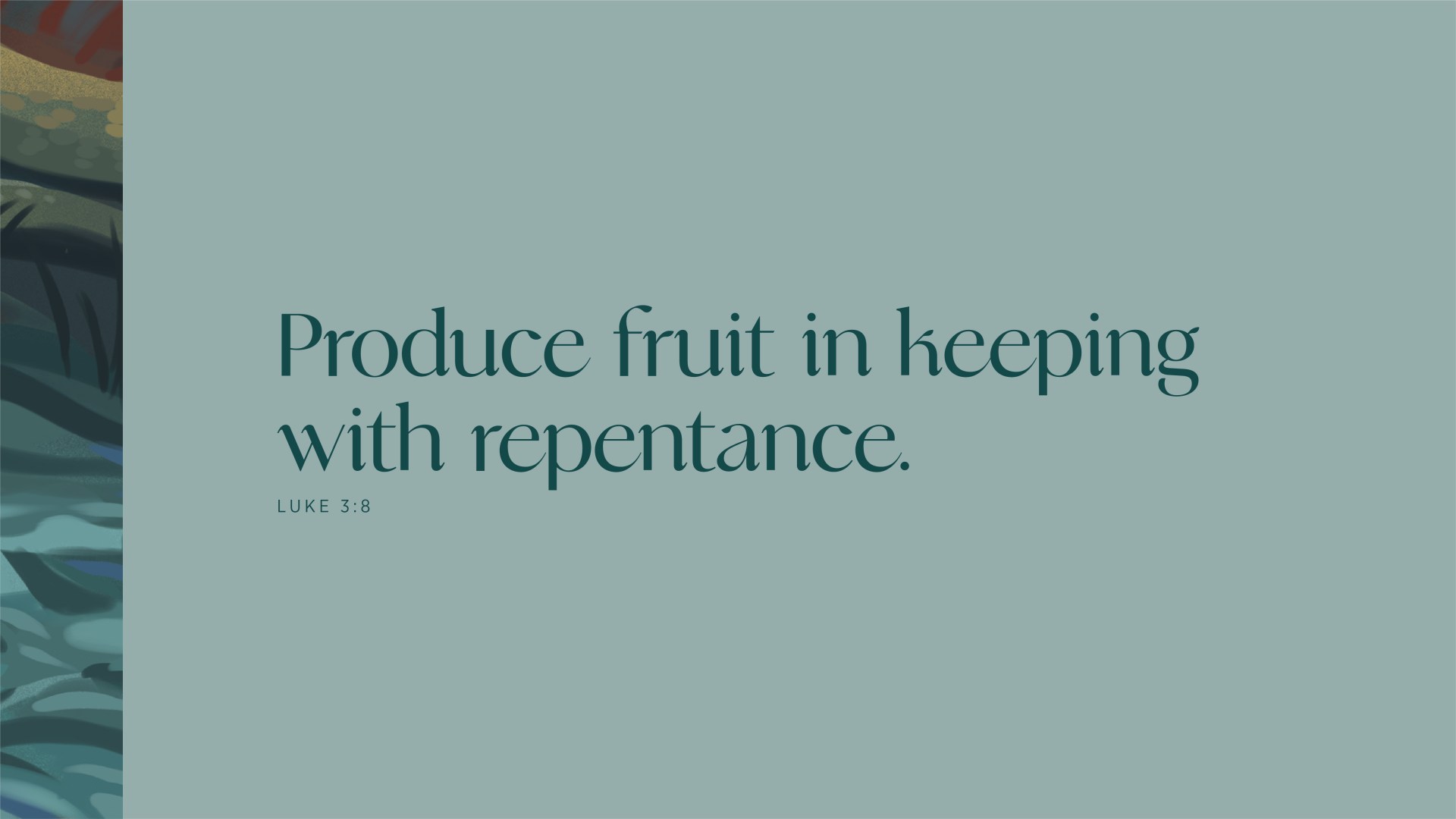
How is John’s confrontational message “good news”? What might you need to heed in John’s words? Pray, asking the Holy Spirit to work within you, producing fruit in your life that reflects repentance.

Theology

Amazing, Cleansing Grace

An Advent reading for December 10.

Advent Week 2: Sin and Redemption


John the Baptist played a crucial role in preparing people for the Messiah. This week, we consider what Scripture says about John’s purpose. We reflect on how his teachings about sin and repentance can speak to our own lives of Christian discipleship.

Read Matthew 3:1–12.

The Gospel writer Matthew preserves the historical setting for John the Baptist’s ministry with a simple timestamp: “In those days” (v. 1). To read the previous chapter (as well as Luke 3) is to understand these were the days of megalomaniacal rulers—like Herod the Great who, in bloodthirsty rage, killed the little boys of Bethlehem. After Herod died and his son had risen to power, Joseph remained afraid for his family and moved them to Nazareth “so that what was spoken by the prophets might be fulfilled, that he would be called a Nazarene” (2:23, ESV).

Matthew’s gospel is insistent upon the fulfillment of God’s prophetic promises. “God said—and it was accomplished,” Matthew emphasizes over and over again. This notion isn’t to be treated as self-evident, of course, not when visible reality suggests evil is winning. When babies are dead at the hands of an evil king, for example, can we really trust that heaven is breaking in, as John preaches (3:2)?

John the Baptist cuts the figure of Elijah in the Old Testament, dressed in camel’s hair, eating locusts and wild honey. Elijah was another prophet who ministered under an evil regime. King Ahab, like Herod, also killed for ambition. After Elijah’s dramatic victory over the prophets of Baal, his Queen Jezebel put a price on Elijah’s head.

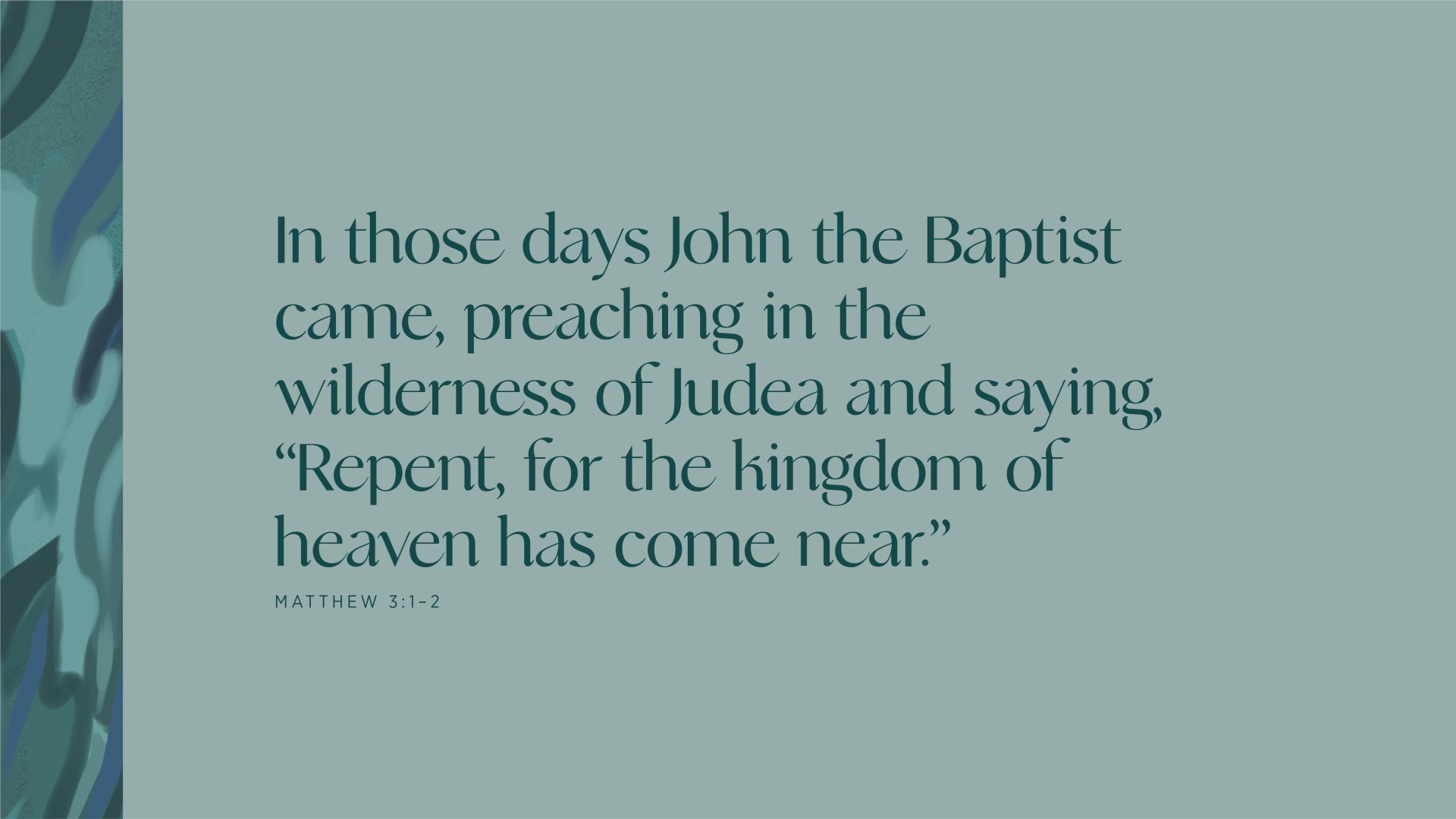
Repent, for the kingdom of heaven is at hand. This is essentially the word preached by all of God’s prophets, and by God’s grace, it is a word that arrives in the darkness. It’s a word of good news: There’s been a change of administration. This proclamation, preached both by John and Jesus, anticipates that another king will ascend to the throne. As the prophet Isaiah himself declared many hundreds of years earlier, the government of this king, unlike the government of King Ahab or King Herod, will be one of peace (Isa. 9:6–7).

To follow King Jesus is not simply to be saved by him; it’s to be changed by him. According to Paul, the gospel tells us that Jesus “gave himself for us to redeem us from all wickedness and to purify for himself a people that are his very own, eager to do what is good” (Titus 2:14).

We know the working of amazing, saving, cleansing grace when God’s people turn from sin and surrender themselves wholly to God. If Advent is the dawning of light, repentance is the daily habit of walking in it.

Jen Pollock Michel is a writer, podcast host, and speaker based in Toronto. She’s the author of four books, including A Habit Called Faith and Surprised by Paradox.

Contemplate Matthew 3:1–12.

How does the idea that the kingdom “has come near” (v. 2) or “is at hand” (ESV) add context to John’s call to repent? What does this statement reveal about Jesus? How does it enrich your understanding of the gospel? Of cleansing grace?

Theology

Behold the Lamb

An Advent reading for December 11.

Advent Week 2: Sin and Redemption


John the Baptist played a crucial role in preparing people for the Messiah. This week, we consider what Scripture says about John’s purpose. We reflect on how his teachings about sin and repentance can speak to our own lives of Christian discipleship.

Read John 1:29–34.

The Old Testament is replete with shepherds. Abraham was a shepherd, as were Jacob and Rachel, as well as Moses, King David, and the prophet Amos. Shepherding was an important job because the community of God’s people in the Old Testament needed sheep. They needed lambs, a lot of lambs, in order to fulfill the requirement of sacrifices to God.

The thought of a seemingly endless slaughter of lambs can be unsettling for us. Just imagine how unsettling it must have been for those who participated in these bloody offerings! Yet because of sin, God required a sacrifice. He required a lamb. But not just any lamb. The lamb had to be spotless, without blemishes or defect (Lev. 22:21–22). In other words, it had to be perfect.

Even though God’s people were tasked with choosing the most perfect lambs, those lambs were never perfect enough. Their sacrifice covered sin, but they could never actually take it away (Heb. 10:4). Every cry of a lamb sacrificed in the Old Testament was in some ways a cry of longing for the truly perfect Lamb of God.

This cry continued through the generations until one day, John the Baptist saw Jesus walking toward him and declared, “Look, the Lamb of God, who takes away the sin of the world!” (John 1:29). Here, John the Baptist offered an answer to the piercing question Isaac had asked his father Abraham many years before, and that echoed through the centuries: “Where is the lamb?” Abraham had replied to Isaac, “God himself will provide the lamb” (Gen. 22:7–8).

There by the river, John the Baptist declared Jesus to be the lamb God promised to provide. Behold, the perfect, unspotted, unblemished Lamb of God (see 1 Pet. 1:18–19).

We’re not looking for the lamb anymore. He has come. Jesus Christ is that lamb who was sacrificed—crucified—in our place (1 Cor. 5:7). He is the lamb “pierced for our transgressions” and “crushed for our iniquities” (Isa. 53:5). Jesus is the lamb, the only lamb, that once and for all made the sacrifice for our sins (Heb. 10:12).

John bore witness to the fact that Jesus was the “God’s Chosen One” (John 1:34). The baby who was born, whom John declared, was also "the Lamb who was slain" (Rev. 13:8). Today, when we worship the Lord, may we echo John's prophetic words: Now behold the lamb!

Anthony J. Carter is the lead pastor of East Point Church in East Point, Georgia. He is the author of several books, including Dying to Speak and Running from Mercy.

Read John 1:29–34. (Option: Also reflect on John 1:6–8; 1 Cor. 5:7; 1 Pet. 1:18–19.)

How do John’s teachings about sin and repentance connect with his testimony about Jesus? How do you desire to respond to Jesus as you contemplate his identity as the Lamb of God?

Theology

The God Who Suffers

An Advent reading for December 12.

Nicole Xu

Advent Week 3: Sacrifice and Salvation


God spoke through the prophets in the Old Testament, using poetic words and imagery, to describe the hope of salvation. This week, we contemplate prophecies pointing toward the Messiah—the servant, the light, the promised one God’s people longed for.

Read Isaiah 52:13–53:12.

During Advent, it is easy to sentimentalize the Incarnation. We imagine the God-man as a baby with his mother; we anticipate his ministry as “Wonderful Counselor” and “Prince of Peace” (Is. 9:6). These are true aspects of Jesus’ identity and humanity, and are certainly appropriate scriptural themes for this time of year. But Isaiah’s prophetic words in this last of his Servant Songs—which describe a coming servant of the Lord who will be found faithful to lead the nations—augment our understanding of Christ’s incarnate life: Jesus was born to suffer and die.

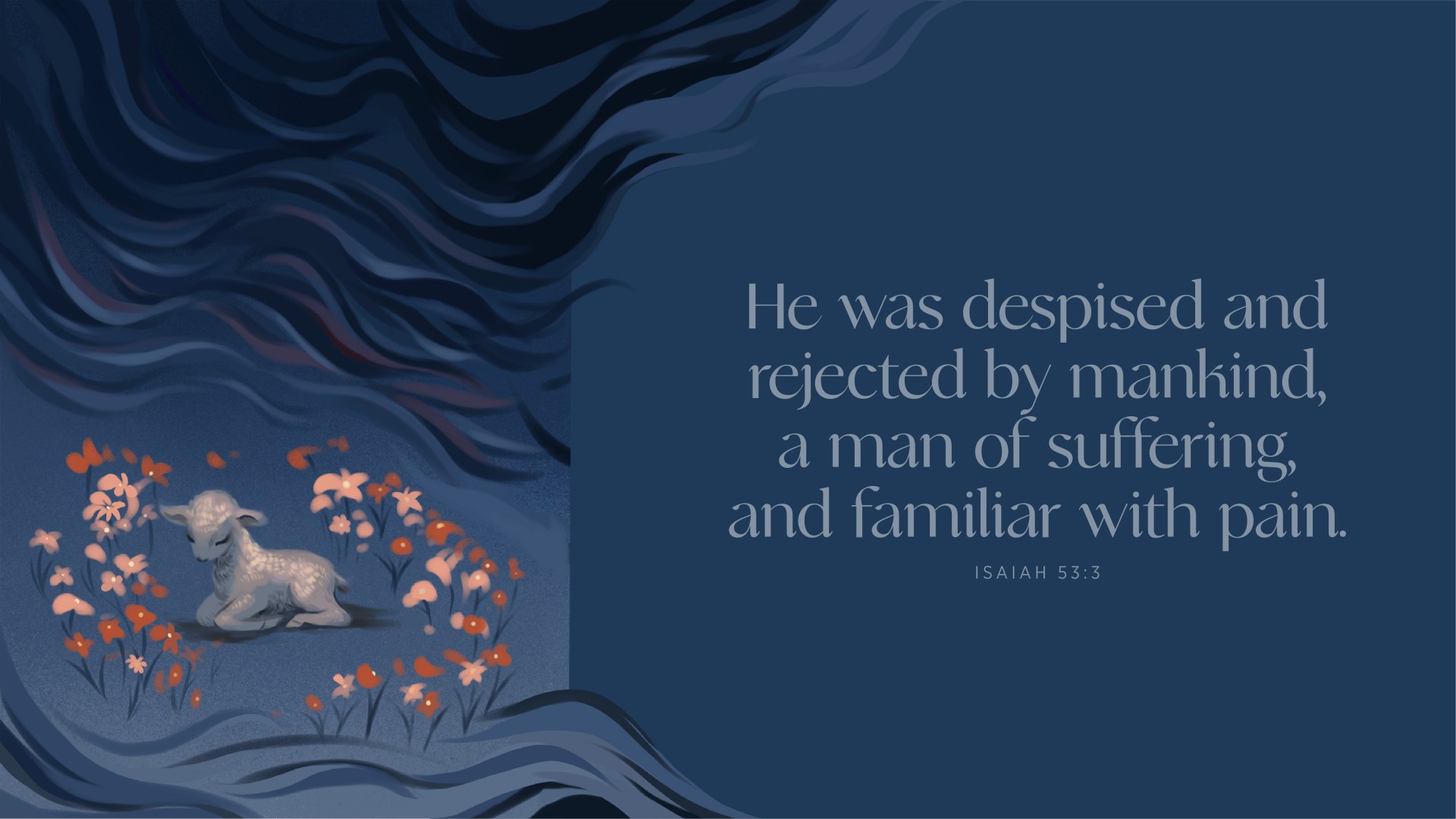
Jesus’ path to glory was not straightforward. Instead of being accepted by the world, he was despised and rejected (53:3). Instead of being exalted as king, he was tortured and murdered (53:5, 9). This is not merely a human tragedy—it is mysteriously part of the divine plan (53:10). Christ’s voluntary suffering reveals his willingness to be not only our High Priest, but also the sacrificial lamb.

This profound reality is more than a theological concept. Jesus suffered as a human being in a physical body, sharing in the most painful and dark aspects of the human experience. He knows what it is to be brutalized and humiliated (52:14), oppressed and abandoned (53:8). In the Incarnation, Jesus identifies with us even in our worst forms of suffering. For those who experience the holidays as painful or lonely, this aspect of Jesus’ life can be strangely comforting. No human tragedy extends beyond his understanding or his solidarity.

But Isaiah also makes it clear that Jesus’ story does not end in suffering and death. Rather, his affliction is the means through which he achieves his victory: “After he has suffered, he will see the light of life and be satisfied” (53:11). This is more than personal vindication. As God’s righteous servant, Jesus establishes justice and redemption for the nations of the earth. In other words, Jesus shares in our suffering so that we can share in his resurrection. His wounds redeem our own and become the very source of our healing (53:5).

As we contemplate the Incarnation in all its beauty, we can also be thankful for its grit. Jesus came down from heaven and then went further still: to the very depth of human shame and suffering. He did this for our sake. And when we meet him in our own suffering, sin, and shame, we can be confident that he will not leave us there—for by his wounds we are healed.

Hannah King is a priest and writer in the Anglican Church in North America. She serves as associate pastor at Village Church in Greenville, South Carolina.

Meditate on Isaiah 52:13–53:12.

What draws your attention most? How does this poetic prophecy deepen your engagement with gospel? Pray, reflecting on how these dark descriptions of what the servant would suffer are crucial in our observance of Advent.

addApple PodcastsDown ArrowDown ArrowDown Arrowarrow_left_altLeft ArrowLeft ArrowRight ArrowRight ArrowRight Arrowarrow_up_altUp ArrowUp ArrowAvailable at Amazoncaret-downCloseCloseellipseEmailEmailExpandExpandExternalExternalFacebookfacebook-squarefolderGiftGiftGooglegoogleGoogle KeephamburgerInstagraminstagram-squareLinkLinklinkedin-squareListenListenListenChristianity TodayCT Creative Studio Logologo_orgMegaphoneMenuMenupausePinterestPlayPlayPocketPodcastprintremoveRSSRSSSaveSavesaveSearchSearchsearchSpotifyStitcherTelegramTable of ContentsTable of Contentstwitter-squareWhatsAppXYouTubeYouTube