Theology

8 Prayer Mentors from History

Prayer empowered them to live their faith with great courage. Their spiritual habits can breathe new life into our own.

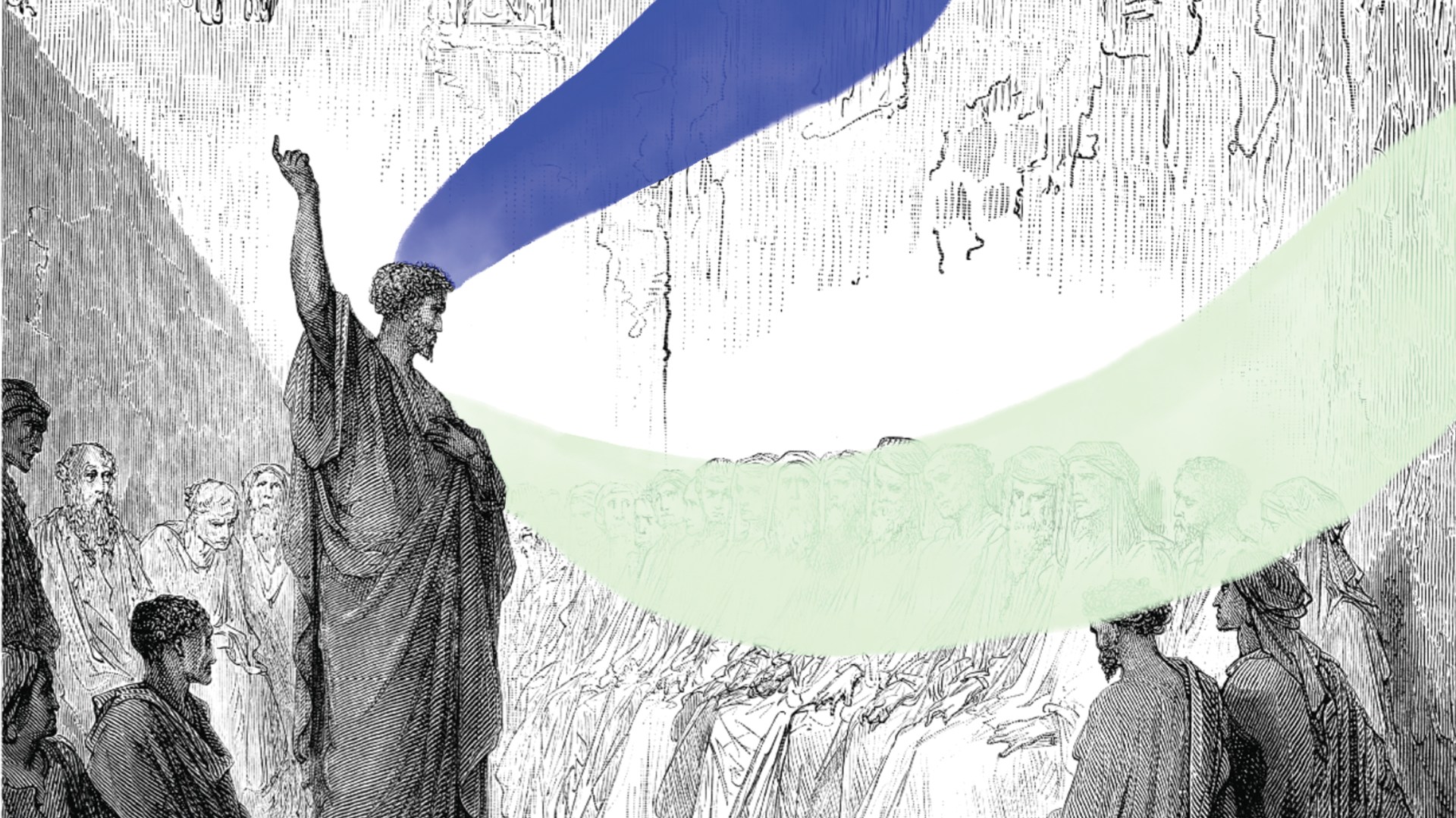
Illustration by Cassandra Roberts

Christian women throughout the centuries serve as a cloud of witnesses for us, and their stories of faith still speak to us today. These eight women exemplified goodness, truth, and beauty in the midst of struggles, questions, and suffering—and they found strength to do so through prayer. Their prayer practices can breathe new life and meaning into our own.

Vibia Perpetua: Courageous Love

Perpetua (c.182–203) grew up in a Roman family in Carthage when Tunisia was under Roman rule. Changing her faith from the Roman imperial cult to Christianity was illegal. Nonetheless, at the time of her arrest, Perpetua was a committed catechumen—a young believer undergoing training in the faith prior to baptism. As part of her formal instruction of Christian teachings, she likely would have read contemporary North African theologian Tertullian’s On Prayer, which emphasized placing hope in God. After several days of house arrest with her companions, Perpetua was baptized. She and her fellow catechumens were soon taken to prison. The Passion of Saints Perpetua and Felicity, one of the oldest Christian texts, describes how Perpetua and her fellow prisoner Felicity “poured out their prayer to the Lord” in the days preceding their execution. At age 22, Perpetua died as a martyr, being tossed by a wild bull and killed by the sword in an arena with many spectators watching. The Passion documents Perpetua calling out at the moment of death, “Stand fast in the faith, and love you all one another.” For centuries, Christian communities in Carthage read her writing annually and were encouraged by her sacrificial love.

For Perpetua, prayer was an act of courageous love—a way of loving others as a mother would care for her child. While in the dark, crowded prison awaiting execution, she had to confront her fear and anxiety, her familial ties, and especially her attachment to her nursing son. In Perpetua’s Passion, Joyce Salisbury notes how even when she was imprisoned, Perpetua exerted care for others through her prayers, “reclaiming a new maternal role after having renounced the old one.” Perpetua’s internal life of prayer also transformed her horrific death into an extraordinary external witness to the suffering of Christ and the Christian community. Prayer carried Perpetua through the gate of life.

Kassiani: Boundless Mercy

Kassiani (c.805–c.865) was the first female Byzantine composer of liturgical hymns. Born into an aristocratic family in Constantinople (Istanbul), Kassiani studied Scripture and classical Greek texts. She lived during the first iconoclasm—a period of deliberate destruction of Christian images. Kassiani was an iconophile who believed icons aided in prayer and were windows of God’s divine mystery. Because of this belief, she was flogged. Along with other devoted laywomen and nuns, Kassiani regularly visited the exiled and comforted those who suffered. She later became an abbess of a convent and cultivated a life dedicated to charity.

Prayer, for Kassiani, enchants us to God’s boundless mercy. As an inspired and exceptional poet, she prayed through music. More than 800 of her hymns and nonliturgical verses have survived. Her most well-known, “Hymn of Kassiani,” drew from Luke 7:36–50. In this hymn, Kassiani invites us to share in the despair of the woman who washed Jesus’ feet with her tears and anointed him with perfume. The verses sing, “Accept the fountain of my tears … without measure is your mercy.” Prayer opens the sorrow of our hearts to the merciful God. In Holy Mothers of Orthodoxy, Eva Catafygiotu Topping discusses Kassiani’s hymn: “The prayers [of the sinful woman], which began with a cry of despair and guilt, ends with a statement of faith and hope. The hymn which began with an image of a lost soul ends with the image of the soul redeemed by God’s infinite loving mercy.” Prayer is not just our human efforts of reaching out to God—it is also God’s way of extending his hands to ours.

Teresa of Avila: A Thriving Garden

Teresa of Avila (1515–1582) was a Spanish Carmelite nun, mystic, and prominent theologian. Teresa grew up in a Christian family and studied at an Augustinian nuns’ school. In her autobiography, The Life of Teresa of Jesus, she described her teenage vanities and how good friendship rekindled her virtues. At age 20, she entered a convent. Her extensive reading and devotion drew her to imitate Christ. Between 1563 and 1568, Teresa mainly prayed and wrote in seclusion. She went on to found convents and monasteries and to reform the Carmelite order for both nuns and monks. Despite facing opposition from religious leaders due to her reforms, Teresa felt comfort and peace from God. In her book The Way of Perfection, she instructs us to imagine the loving God by our side as our friend.

If our lives are gardens, Teresa’s example reminds us that prayer is like water and sunshine that nourish our growth. Teresa urged believers to emulate God the gardener who cultivates the gardens of our lives: “We must strive like good gardeners to get these plants to grow and take pains to water them so that they don’t wither but come to bud and flower and give forth a most pleasant fragrance to provide refreshment for this Lord of ours. Then He will often come to take delight in this garden and find His joy among these virtues.” Teresa’s garden analogy reminds us of the time Jesus asked the Samaritan woman at the well to draw water to give him a drink. We are not just recipients of God’s living water; we are called to be active participants. In prayer, Teresa reminds us, we are co-gardeners with God, participating in our spiritual growth.

Candida Xu: Compassionate Service

Candida Xu (1607–1680) was one of the most prominent Christians during the Ming-Qing era in China. She exemplifies the way prayer fuels our expressions of faith. Candida learned daily prayers as a child from her devout Christian mother. As an adult, Candida continued a similar practice with her own family, gathering her husband, children, and household for evening prayers and reading devotional books. After becoming a widow at age 46, she continued serving God for the next 27 years through charitable works, including sponsoring many Jesuit missionaries, building churches, printing Christian texts and sacred art, and befriending people with disabilities.

Prayer, for Candida, rooted her life deeper in God and compelled her to serve others with compassion. Her confessor (spiritual counselor), Flemish Jesuit missionary Philip Couplet, wrote her biography, Histoire d’une Dame Chrétienne de la Chine (History of a Chinese Christian Woman), describing how Candida’s pious deeds grew out of her persistent faith. Scholar Gail King’s “A Model for All Christian Women”: Candida Xu, a Chinese Christian Woman of the Seventeenth Century, describes how “[Candida] began every day with a half-hour of prayer before the crucifix in her home chapel.” King emphasizes that Candida was “a woman whose faith was the primary motive for her actions.” Candida’s private and collective prayers animated her dedication and labor of love for the sick and the poor.

Ignacia del Espíritu Santo: Bold Trust

Ignacia del Espíritu Santo (c.1663–1748) grew up facing racial segregation and prejudice. The child of a Chinese Christian father and a Filipina mother, she was baptized on March 4, 1663, in Parián de Chinos (Chinese Market) in Binondo, Manila. During this time, Chinese people were segregated from the rest of the population. When Ignacia reached age 21, instead of marriage, she sought guidance from a priest. She went through The Spiritual Exercises and, after a time of prayer and discernment, decided to pursue her religious calling. Under Spanish colonization at that time, ecclesiastical structures refused to admit native people into religious vocation, so Ignacia lived in a house behind the Jesuit headquarters.

In times of difficulty or uncertainty, prayer allows us to boldly trust God. For Ignacia, prayer was a lamp unto her feet. Her life of devotion, prayer, and work soon drew other Filipina laywomen to hear her teachings and to live with her. Ignacia and her company of women became known as the beatas (religious women). They developed rhythms of prayer, often praying late into the night. They overcame discrimination and poverty by supporting themselves through alms and manual labor. In contrast to the exclusion Ignacia frequently experienced in her life, she admitted girls and women of all ethnicities into her religious community. Her life was filled with trials, yet Ignacia fully trusted God and laid her burdens before God. Ignacia’s bold trust allowed her to become an instrument of God’s peace and truth.

Julia Foote: An Open Table

Julia Foote (1823–1901) was the first ordained woman deacon in the African Methodist Episcopal Zion Church. She preached as a holiness evangelist for over 50 years. In her autobiography, A Brand Plucked from the Fire, Julia narrates her life growing up in New York as a free Black child of parents who were former slaves. Not being allowed to attend school because of racial discrimination, Julia had great joy in learning the alphabet from her father. She learned the Lord’s Prayer at age eight. “No tongue can tell the joy that filled my poor heart when I could repeat, ‘Our Father, which art in heaven.’ ”

During her married life, she experienced a strong call to preach, but she received pushback from her family and the African Methodist Church due to her gender. After her husband’s death, Julia became a traveling evangelist in the AME Zion church. She ministered among both whites and Blacks and led prayer meetings from house to house. Julia faithfully advocated for women and African Americans. Although childless, Julia emphasized the importance of introducing prayer to children. She declared, “We are never too young to pray, or too ignorant or too sinful.” Her words remind us of the inclusiveness of God’s banquet table, open to all who are willing to come.

Lilias Trotter: Sublime Beauty

When words reach their limitations, visual art can be a mysterious and beautiful way of expressing prayer. Lilias Trotter (1853–1928), a British missionary to Algeria, prayed through her watercolor paintings. Influenced by a Wesleyan holiness group called the Higher Life Movement, Lilias crossed social boundaries and reached out to the marginalized in her native London. She made it a habit to spend time in prayer, read Scripture, and listen to God in nature, where she sensed God “speaks … through all living things.” As a young woman, Lilias was a talented artist, gaining the attention of an influential art critic who urged her to dedicate herself entirely to painting. Instead, she devoted more and more of her attention to ministry. Eventually, she gave up her dream of becoming a professional artist and chose to be a missionary. Rejected by the North Africa Mission because of her poor health, she and two other women ventured to Algiers on their own. Lilias later worked in Algeria as a missionary for about 40 years and adapted the gospel to Algerian culture.

Eventually, Lilias picked up her paintbrush again, revealing and expressing her love for God, for the land, for people, and for life lessons that God’s creation had taught her. In the documentary Many Beautiful Things, Lilias’s paintings open our eyes to perceive the sublime beauty of God. Lilias’s art, ministry, and prayer habits mentor us to learn from creation and walk in beauty with our Creator.

Alice Kahokuoluna: Fresh Air

For Alice Kahokuoluna (1888–1957), prayer was the breath of Christian life. Raised in a Christian family, she became the first Hawaiian female pastor ordained by the Hawaiian Evangelical Association. She faithfully ministered at churches and, after her husband’s death, cared for leprosy patients in Molokai, Hawaii. There she became known as “Mother Alice.”

In Nels Ferré’s Strengthening the Spiritual Life, Alice talks about learning from Hawaiian practices of prayer: long times of meditation and preparation. She noted how indigenous people “breathe life” into their prayers. Instead of rushing through prayers, Alice took time sitting with God. She breathed much life into her prayers as she met the demands and emotional tolls of being a caregiver for 31 years. Alice’s example invites us to be fully present and take our time when we communicate with God. When we rest in God’s presence without hurry, God breathes life into our prayers and into us.

Susangeline Patrick is assistant professor of world Christianity at Nazarene Theological Seminary in Kansas City, Missouri, and a faculty member of NAIITS (a seminary focused on addressing theological issues from indigenous perspectives).


This article is part of CT’s special issue “Teach Us to Pray: Women’s Perspectives on Deepening our Engagement in Life with God.” You can read the full issue here.

My Coparent in Heaven

As a single parent, I’m responsible for a job I’m not strong enough to navigate by myself. Prayer reminds me that I’m not on my own.

Illustration by Abigail Erickson

Most days, I wake up behind schedule from the moment my feet touch the floor. As I rush off to my job, I make sure my two teenagers are where they need to be. Then, like many single parents, my boys and I occupy two different worlds, in contact only by the occasional text or phone call. This is not what I had planned when, from the halls of Bible college, I’d imagined my future Christian home. I envisioned myself as a wife and stay-at-home mom, volunteering in my kids’ school and ministering in our church. In real life, for several years I was able to stay at home, volunteer at my children’s school, and carpool kids to soccer and playgrounds. But when my boys were nine and eleven years old, a divorce I did not want put me in a situation I hadn’t foreseen for myself. It turned my life sideways, and I had to get my bearings to function in this new life.

Parenting Alone

Single parents are often overwhelmed by their inability to be and do all they think they should for their children. I feel overwhelmed carrying the financial weight for my family alone. I feel overwhelmed figuring out education and extracurricular activities by myself. Most of all, I feel overwhelmed as the sole person in my immediate home influencing my children toward Christ.

Day in and day out, I feel responsible for a job I am not strong enough to navigate by myself. I often think of Jesus’ sweet promise to his disciples before his return to heaven: “I will not leave you as orphans” (John 14:18). If anyone was ever left with a job too big for them, it was Jesus’ disciples! But Jesus promised he would not abandon them to figure it out by themselves.

My divorce made me feel like an orphan, left alone to navigate circumstances that threatened to drown me. Though divorce may change circumstances in drastic ways for both parent and child, it does not change our God. God had always been the North Star in my life, but getting lost in life’s storms renewed my deep need to center on him daily in order to find my way in my new circumstances. Even when I’ve felt profoundly alone, I know it to be true: God has not left me as an orphan to navigate this by myself.

Practical Theology for Single Parents

I’ve long felt that theologians need to write about the deep things of God in ways that make their practical benefit evident. This burden has been heightened in the years after my divorce. We parents need to know the character of God for ourselves, and we need to believe it for the sake of our children. God is our Father, God is our Savior, and God is our help. These truths of God’s character matter in our daily lives.

Prayer, then, is the bridge from the theology lessons of a textbook to our own personal relationship with God. It enables us to know our transcendent God in immanent ways. From him, through him, and to him are all things, Paul says in Romans 11:36. Prayer connects the throne of God, with all the power in the world, to my bedroom, with all its immediate morning stresses.

Our Daily Bread

Three prayers of Scripture have been especially beneficial as I bridge my head knowledge of God to heart knowledge of my relationship with him that sustains me as a single mom. First is the Lord’s Prayer (Matt. 6:9–13; Luke 11:2–4). The disciples approached Jesus in Luke 11 with a request: “Teach us to pray.” Jesus replied with the essential template that can guide us when we feel too overwhelmed to start on our own. This prayer reminds us that our Father in heaven is our children’s Father as well. He is our sovereign coparent, and he hears our pleas that his kingdom will come in our households—that he will be obeyed in our home the way the angels obey him in heaven.

Of all the burdens on my heart as a single parent, this is the one that weighs most heavily. Will my children love God? Will they honor his name? Of course, two-parent families share these burdens for their children. But there is a particular struggle for single parents—it can feel impossible even getting our kids in the car to church.

Mykisha, my friend and fellow single mom, and I discussed the struggle just to get our families to church. Every time she attempts to leave her house with her boys, Mykisha said she feels overwhelmed. Her boys are all under six years old. Mine are teenagers. But in both homes—where we are the only positive peer pressure for going to church or reading the Bible in our house—it relieves our hearts to remember that it is ultimately God’s job to draw our children to himself. He is the coparent who does not shirk his responsibilities to lead his children to himself. He helps us get them in the car for church.

When I was a married, stay-at-home mom, I welcomed my children’s friends into our home. I saw to it that my kids were socialized with extracurricular activities. I planned for their meals. Now—unable to do most of that—I pray, “Give them and me our daily bread, Father.” Every day, I need God to expand my meager five loaves and two fish of time and money to cover more in my life than, as a single parent, is rationally possible.

The Lord’s Prayer guides us to pray, too, that God will deliver our children from the Evil One. I have tried to protect my children from temptation. But I am painfully aware of the limits of my influence as a single mom of teenage young men. We must lean on God to do the heavy lifting here. We can bring these burdens to our coparent in heaven through prayer, for he loves our children even more than we do, and he is equipped to do all for them that we cannot do alone.

Open Our Eyes, Lord

Another prayer that has been a gift to me when I am at the end of myself is Paul’s prayer in Ephesians 1:17–21. Paul prayed for believers in Ephesus, asking that “the eyes of [their] heart may be enlightened” to the deep theological truths he was trying to communicate to them. He wanted them to practically apply the theology he was teaching them. As single parents, we can benefit from praying, Enlighten me, God. Open my eyes.

We may believe the right things about the character of God in theory, but many days we need God to put fresh lenses on our eyes so we can see them in real life. Help me see the hope of my calling in you, God. Help me see your power at work in my and my children’s lives. Paul emphasized that the very power that raised Christ from the grave is the same power at work in us and our children. Paul prayed that God would turn the light on in our minds. I pray it too. Help me see these truths in my life today.

Wordless Prayer

The final scriptural prayer I lean on as a single mom is described in Romans 8:26: the prayer that has no words. When I can’t form words, and even the Spirit only groans, there is still real prayer between God and myself. At the lowest moments of life, when I stumble under burdens too heavy for words, there remains a bridge to the throne room of God where I can find grace and help in my time of need. My desolation—the anguish I am left to bear alone in moments of parenting crisis—actually serves as the force that drives me to the one greater than I, my help, my Savior, my Father.

Groaning, wordless prayer is a staple in my life. Recently, my teenage son shared with me something that grieved me deeply—something that I simply do not know how to parent him through. I got in my car and cried out to God as I drove. I cried out with words. But I cried out wordlessly as well. I cried out for my son, and I cried out for myself. Both my words and my groaning for myself and my son were heard in the throne room of God.

We can groan in God’s throne room, but we can rest there as well. This is our hope as we face burdens we cannot shoulder alone. There is rest, peace, and help in his throne room. There is no condemnation there through Christ Jesus (Rom. 8:1). Instead, we find the one who shoulders our burdens with and for us. When I pray, I sometimes use my imagination to envision myself there in God’s throne room, dumping my burdens into God's wide-open arms. Scripture teaches me to approach him boldly and confidently and trust him with these burdens. And afterward, I can curl up and nap. Someone else is in charge.

Aid to the Weary

“She has done what she could,” Jesus said of the woman who anointed his feet with oil in Mark 14:8 (CSB). What a simple yet powerful statement. She has done what she could. Single parents need this affirmation from our Father in heaven as well.

Jesus, we are assured, is the exact representation of our Father in heaven (Heb. 1:3). He beckons us to come to him when we are weary and promises us rest (Matt. 11:28). He invites—actually commands—us to come to him in our time of need to receive his grace and mercy (Heb. 4:16). Like the woman who anointed Jesus’ feet, single parents do what we can, even as we are painfully aware of all we cannot do. Through prayer, we bring the immanent lack in our lives to the one with transcendent resources. In God’s throne room, our sovereign coparent enables us to face our days—even the most stressful—with hope that we do not do this alone.

Wendy Alsup is a mom, math teacher, and author. Her most recent book is Companions in Suffering: Comfort for Times of Loss and Loneliness.

This article is part of CT’s special issue “Teach Us to Pray: Women’s Perspectives on Deepening our Engagement in Life with God.” You can read the full issue here.

Post Without Ceasing? How Social Media Reshapes Our Prayer Lives

Interceding on Instagram may seem like a uniquely 21st-century phenomenon, but Christians in the first century were already praying at a distance.

Illustration by Cassandra Roberts / Source image: Duncan1890 / Getty

Thousands of people have prayed for Sarah Walton. Most of whom she has never met.

In the past ten years, Walton, the best-selling coauthor of Hope When It Hurts, has suffered through chronic illness, multiple surgeries for a debilitating foot injury, financial stress stemming from her husband’s job loss, and a cross-country move with four children who also have significant health conditions and special needs.

Every day, her social media channels ping with notifications that her friends are interceding for her.

“When I log on to Facebook or Instagram, I see people from around the country saying they are praying,” she told me. “They leave praying hands emojis. They send DMs with specific things they’ve prayed that morning.”

Walton’s praying friends are not all her friends in the traditional sense—she has never shared a coffee or a face-to-face conversation with many of them—but they are fellow Christians who care enough to ask God for Walton’s healing.

In an online age—and especially during a pandemic that has moved many interactions to virtual platforms—Walton’s experience is not unfamiliar. Most of us have seen a social media prayer request for someone, and many of us have taken a moment to pray.

Interceding on Instagram may seem like a uniquely 21st-century phenomenon, but people were already praying at a distance in the first century. As his letters testify, the apostle Paul made a regular practice of praying for people he wasn’t with—and sometimes even for people he had never met.

Social media is an imperfect tool for prayer; its superficial and ephemeral interactions don’t readily lend themselves to the hard work of spiritual wrestling. But Paul’s prayerful example challenges us in several ways—teaching us how it can be possible to use even TikTok for spiritual good.

Proximity

“Who is my neighbor?” the lawyer asked Jesus (Luke 10:29), and it’s an important question for our age too. On social media, updates from people in our local church appear next to requests from people we’ve never met. We genuinely want to love our neighbor, but the boundaries of the online neighborhood stretch around the globe. And everyone could use prayer.

Rosaria Butterfield, the author of The Gospel Comes with a House Key, isn’t on Twitter or Facebook or Instagram. She doesn’t post to a YouTube channel or hang out in Clubhouse. Instead, she’s committed herself to loving her neighbors—her literal next-door and down-the-street neighbors.

Butterfield exclusively uses a neighborhood-based social media platform called Nextdoor. “I check Nextdoor in the morning to see how I can pray for my neighbors, but also how I can help them,” she told me. “A daily dose of walking someone else’s dog, taking out someone else’s garbage, and making room for someone else’s child at my home-school table is good for the soul. It’s also good for the whole business of loving God and loving neighbor.” For Butterfield, the work of praying for others is best joined to the tangible work of lending a neighborly hand. And she can only do that when she prioritizes proximity.

Paul, too, prized prayer relationships rooted in face-to-face interactions. In his letter to the Colossians, Paul praises Epaphras, the pastor at Colossae. Epaphras wrestled in prayer for people in his congregation—people who had shared meals and shouldered ministry with him—and he continued to pray for them when he was physically distant (4:12–13). Although social media gives us countless opportunities to pray for almost anyone, Paul teaches us to begin with the people in our church or right down the street.

Mutuality

The people in our local churches and communities are also most likely to pray for us. Prayer requests posted on social media are often a one-way transaction—but prayer relationships flourish best when they are mutual. As many times as Paul prayed for the churches, he also asked them to pray for him (1 Cor. 1:4–9; 2 Cor. 1:11). He didn’t just comment with a praying hands emoji; he invited the churches into a relationship.

For the past year, Alex and Maggie Halbert have been raising support to move to the mission field in Honduras. They regularly email prayer needs and requests for financial assistance to churches throughout the United States. But, one day, their inbox held a surprise. “One of our supporting churches had sent prayer requests to us,” Alex said. “It encouraged us and gave us a deeper sense of what it means to partner together for the sake of the gospel. We felt like we could be participants and not just be recipients.”

Invisibility

Recently, Facebook has been testing a “prayer post” feature to allow people to share and respond to requests. With a click, users are able to notify the poster—and the rest of the world—that they are praying for the request.

These visible symbols of prayer could be encouraging to a friend in need, but they also create spiritual danger for the person who is praying. The challenge, Butterfield said, is that “most forms of social media privilege virtue-signaling over virtue.” Jesus himself reminds us that the work of prayer is best done in secret (Matt. 6:6), where no one can be impressed by our piety.

Of course, the attraction of social media is often based on what is visible. For users of platforms like Instagram and Facebook, the experience is about the ability to share a picture or video—to allow friends and followers to see something. Prayer, by contrast, is a spiritual tool wielded in secret places for spiritual ends. And those ends are often invisible.

When Paul prayed for fellow Christians, his prayers focused on invisible, spiritual goals. He prayed for them to have wisdom, knowledge of Christ, hope, spiritual riches, confidence in God’s power, and love for the church (Eph. 1:17–23). You can’t post a photo of any of these things.

While it’s certainly good and right to pray for tangible answers to prayer—physical healing (James 5:13–18) and daily bread (Matt. 6:11) are both things we are commanded to pray for—we can’t allow the visual nature of online interactions to limit our petitions (or to feed our pride). Just because there’s no photograph doesn’t mean the Lord isn’t at work.

Tenacity

“Prayer changes things,” Walton said, “but prayer also changes the people who pray.” She recounts the ways God has changed her own heart over the course of her years- long trials. While she used to pray for specific acts of healing, she now often prays that God would show her more of himself.

“If people only prayed for me once or twice, they didn’t get a chance to see how my own prayers and heart have matured over the course of this journey,” she said. It’s the people who have stuck around—whether in real life or online—who get to see what God is doing in Walton’s life.One of the most striking features of Paul’s intercessions was his tenacity. He reported to the churches that he prayed “night and day” (1 Thess. 3:10) over a long period of time for them. Christ, too, encouraged his followers to “always pray and not give up” (Luke 18:1). In a world of online stories that disappear in 24 hours, the Lord delights in longevity.

The truth is, it’s not wrong to pray once for someone, but then we may never see any of the results. Answers to prayer often come over a long period of time. It’s the people who stick around, keep praying, and expect both temporal mercies and spiritual growth who get to see what God is doing.

Social media’s infinite scroll and instant gratification may not be ideal for cultivating a rich prayer life, but the situation isn’t hopeless. Paul’s example of proximity, mutuality, invisiblity, and tenacity can shape our prayer habits. His purposeful pen-and-ink prayers changed the world. Perhaps, by following his example, our Instagram intercessions will do the same.

Megan Hill is an editor for The Gospel Coalition and the author of several books, including Praying Together and Partners in the Gospel.

This article is part of CT’s special issue “Teach Us to Pray: Women’s Perspectives on Deepening our Engagement in Life with God.” You can read the full issue here.

In Prayer, We Are Fully Seen and Fully Known

How intimacy with God fuels Meg Baatz’s ministry among same-sex-attracted and LGBT peers.

Illustration by Cassandra Roberts

Meg Baatz was first drawn toward God as a preteen. “I was really insecure and just full of shame and guilt, and searching for meaning,” she says, but she knew “Jesus was there just loving me exactly as I was.”

Years later, while serving as a Bible study leader in a campus ministry, Baatz says her “faith and sexuality journey collided” as she became more conscious of feelings of attraction to other women.

For Baatz, prayer has been key in her personal discipleship as she holds to biblical convictions on sexuality while identifying with and ministering in the LGBT community. Baatz’s continual sense of God’s faithful, loving presence has characterized her ministry via Posture Shift (which equips church leaders to reach and care for LGBT individuals) and Kaleidoscope (a ministry focused on helping sexual minorities explore faith in Jesus).

What role has prayer played in your life as you’ve navigated discipleship and your sexuality?

Sometimes we can have a very narrow view of prayer—that it’s sitting alone in your room with a Bible open, which is great. But when you read in the Scriptures to “pray without ceasing,” I think of prayer more as this place where I’m aware of the presence of God around me, and I’m also ready to engage in relationship with God. It’s in that place where I feel most seen and known and upheld as a person.

It’s really only in prayer that I’m seen in full by these infinite eyes that are not fooled by any kind of filters or lens or opinions of me that might obscure the whole truth about myself. It’s in this nearness that it’s impossible for me to hide, or to deceive God into thinking that I’m someone that I’m not. But it’s also this place where I have nothing to prove or fake.

Prayer has shown me that God isn’t taken aback; God actually is leaning in to my life and my story with compassion, curiosity, and commitment to draw out his good image in me. This acceptance has been the only stable and sufficient comfort for me throughout my life. With people, there’s always this fear: What are people going to think of me? Are people going to reject me? But in prayer, God already knows and sees all of me. There’s nothing I can say, do, be, or introduce into our relationship that will cause Jesus to be ashamed of me.

Is that something you felt even early in your prayer life, or something that you had to grow into?

I honestly felt that early on. Something that stood out to me was a youth leader who basically said, “God already knows everything about you, yet loves you completely. He also wants to actually hear about your life from you.” So prayer isn’t just, Okay, I exist in a state of being known. It’s that God wants me to actively tell him about myself—even as he already knows everything about me. That was true for the awkward, unpopular, 12-year-old me, and for the 17-year-old me figuring out sexuality, and it’s true now. Even when I’m not consistent in prayer, prayer is consistently there for me because God is present and near; I can always enter into that nearness.

You’ve had a rich background of discipling other Christians who experience same-sex attraction or identify as LGBTQ. How would you describe your approach to ministry?

I didn’t come into discipling LGBTQ or same-sex-attracted people as an elder or expert—I have only ever just been a peer. When I started out in full-time ministry, my approach was informed by a few different things. One was my social work education, which taught me that there is a lot of power in active listening. Some of it was my evangelism skills that I learned in my high school youth group. And some of it was my own experience of Jesus’ love for me, including how I related to him in my sexuality. My approach to discipleship is, in a way, my effort to recreate with another person a dim reflection of the same acceptance, trust, and honesty I feel when I’m with God.

Practically, this looks like offering space for friends to just process their lives, and I do that in part by putting my own feelings or motives on the back burner in order to maximize the space where they can simply be seen and fully known as respected in their story. Doing this gives them space to consider God’s love for them; this unconditional love and presence serves as a baseline.

What approach or posture toward prayer have you found helpful as you disciple or evangelize others?

My posture in prayer has primarily focused on monitoring my own emotional process as I approach relationships with peers—both those who identify as Christians and those who do not. That could look like asking God, What do you want to say to me through this interaction? The focus is on how God is seeking to transform me and my own heart in the context of that relationship.

I wish this went without saying, but my relationship with a peer rarely has to do with talking about someone else’s sexual behaviors or thoughts. I say “I wish this went without saying” because discipleship with LGBTQ or same-sex-attracted people can often be oversimplified and hyperfocused on “Are you giving into lust?” Christians can inadvertently hypersexualize the discipleship of these peers rather than treating discipleship as holistic.

In prayer, I try to focus on what kind of presence I’m bringing to others as they’re processing their life. So, an example of that might be, Wow, this person’s story has a lot of family rejection and church rejection. What do I do with that? Am I broken by that? What is my responsibility to them and to my church?

Or, I remember when the Pulse nightclub massacre happened, I told God, I feel really numb and apathetic. Can you break my heart over these lost lives? It could also be something like, I feel envy toward a friend who is in a romantic relationship. Now what? Or, I had a friend who came out to me as nonbinary, and in my private time of prayer I confessed to God that I felt a lot of discomfort and fear around that. I asked, God, how do you want to humble me and transform me through knowing this fellow image-bearer who has this story?

When I focus on my own process in prayer, it gives others space to mature in their own process with God and in their prayer life. Hopefully they find in me a relationship that isn’t distracting them from dependence on God but is actually giving them space to do that. And hopefully I am also modeling that. At the end of the day, God’s work through my evangelism and discipleship is going to be a reflection of the level of honesty that I bring into my personal times of prayer.

What lessons could other Christians learn about a life of prayer and discipleship from fellow believers who experience same-sex attraction?

When your lived experience of relationships is complicated, and the extent to which you’re known and loved always seems to hit a ceiling, what draws you to lean into prayer? The LGBTQ and same-sex-attracted believers I know who are thriving are those who have come to know prayer as a sanctuary of tender intimacy with Christ. What their souls have found is not another accountability group, method of behavior management, or a spiritual inventory; they’ve uncovered a secret haven of familiar embrace.

Yes, prayer can be powerful to help sort out circumstances, temptations, and conflicts, but that happens not through an intellectual exchange but through a tangible expression of intimacy with God.

Intimacy is tricky for LGBTQ or same-sex-attracted believers. With the relationships they’re most naturally drawn to, the caution is to be careful or stay away. And in community, they constantly have their guard up, assessing who is safe to share their lives with and who they can trust. But with Jesus, there is pure and simple rest.

We can’t ever get “too close” to Jesus. We cannot be betrayed by him. We can’t be exiled from him for expressing ourselves too strongly or too honestly. Burdens like loneliness, temptation, and rejection become movable mountains—anthills, even—when you’re unencumbered in the arms of Jesus. I hope for my opposite-sex-attracted siblings in Christ to unearth this same intimacy with Jesus through prayer.

If the Lord said, “Meg, I will grant you that the church can be different in one way within ten years,” what would you ask for?

I would want to see the church stop trying to have the conversation about sexuality at this very high, public level that’s on the internet, that’s very politically tainted and divided, and instead bring that down into addressing sexuality on the level of my neighbor, my family member, my peer—no matter what other people think of me diving into that relationship.

That’s exactly what prayer helps us do. When we are distracted from prayer, we try to engage with everything in front of us—the opinions and voices and organizational positioning, and so on.

We need to get away from that and instead lean into this quiet place of prayer—this place where I’m living out my process, my relational engagement, and presence before the eyes of God who sees the motives of my heart.

This article is part of CT’s special issue “Teach Us to Pray: Women’s Perspectives on Deepening our Engagement in Life with God.” You can read the full issue here.

How Doubt Helps Us Pray

Uncertainty can propel us toward God in humility and honesty.

Illustration by Abigail Erickson

Is it any wonder that doubt can infiltrate our prayers, given the gap we may experience between what Scripture seems to promise and our lived reality? In Mark 11:23, Jesus tells us that God will rearrange geography for us if we come to him in faith. The implication is that our heavenly Father will do miraculous things for us. Yet we all can recount times when we have prayed for mundane miracles—perhaps an end to insomnia or the resolution to a long-standing conflict—and our circumstances don’t budge. It’s in that space where, as A. J. Swoboda describes, “doubt happens to us.”

Jesus’ brother James further complicates the equation by suggesting that the reason our personal mountains fail to move might very well be because doubt has somehow corrupted our faith. “When you ask, you must believe and not doubt, because the one who doubts is like a wave of the sea, blown and tossed by the wind. That person should not expect to receive anything from the Lord. Such a person is double-minded” (James 1:6–8).

Who, then, can pray? Because if we’re honest, we all struggle with doubt from time to time. Verses like these may lead us to believe that we’d be better off either denying doubt or avoiding God altogether when it surfaces.

Doubt can destabilize our faith, but it need not silence our prayers. In fact, when we bring our doubts to God, our faith can deepen.

Doubt’s DNA

Doubt can affect each of us at various points along our Christian journey; it’s like an underground stream that runs along the road of faith. Doubt can seep into our lives through many portals, such as unanswered prayers, parts of Scripture that lack congruence with our lives, or unabated suffering. Wounds inflicted by other believers or spiritual leaders are another common entry point. When those who claim to follow Jesus act reprehensibly, it may cause us to second-guess God or dull our hunger for the entire Christian enterprise.

Doubt can also emerge when our expectations are dashed. Whether or not we’re aware of it, we often carry specific expectations for how God should respond to our prayer requests. We build these expectations around our theological constructs—how we interpret what we’ve read in Scripture, what we’ve been taught, and what we’ve experienced. So if God doesn’t answer our prayers the way we hoped or imagined, disappointment can give way to doubt or even leave us wondering whether prayer is pointless.

Making Peace with Doubt

When we take James’s words to heart, we may assume we simply need to muster more faith. Or we may imagine that to overcome doubt, we need to acquire more knowledge. But the reality is we can’t fabricate faith and we will never fully comprehend God, no matter how much Scripture we memorize, how many seminary degrees we earn, or how many hours we pray. As Paul reminded the Corinthians, we see through a glass darkly (1 Cor. 13:12). We are limited creatures stuck in Earth time without the capacity to fully understand our own narrative, let alone God’s mysterious purposes or the Enemy’s nefarious schemes.

To some extent, our experience of doubt depends on how we perceive it. If we understand it to be, as poet Alfred Lord Tennyson jested, “Devil-born” or akin to an invader that breaches our defenses in order to deconstruct our faith, then doubt is to be avoided or denied at all costs. But that’s not the only vantage point.

“I think doubt and faith are not opposites,” says New Testament scholar Scot McKnight. “Doubt is often inherent to faith.” If we explore our doubt and trace it back to its source, it may expose our own false constructs about God or our feeble attempts to control him. In this way, doubt can actually propel us toward God in humility and deepen our relationship with him by inching our prayers toward greater honesty and intimacy.

How Then Do We Pray?

Scripture urges us to pray without ceasing and in total confidence that nothing can separate us from God’s love (1 Thess. 5:17; Rom. 8:38–39). That nothing includes doubt.

We can be assured of these two truths: Questions and doubts are a common experience among people of faith, and God longs for us to be in relationship with him. It just doesn’t make sense that God would expect us to deny, eradicate, or compartmentalize our doubts before conversing with him in prayer. Consider a marriage relationship: Silence and withdrawal rarely resolve conflict or draw spouses closer together. It’s much more likely that they will expand the distance and encourage worst-case-scenario thinking. The same holds true in our life with God: When doubts arise, we must remain proximate and vulnerable and continue to pray.

Scripture provides many examples of people who demonstrate that a person can simultaneously question God or the efficacy of prayer while also continuing to engage with God in faith. Consider Sarah, Abraham’s wife: When she overheard the three mysterious visitors prophesy that she would have a son within a year’s time, she laughed at the seeming impossibility of this promise (Gen. 18). But God fulfilled his promise, and Sarah is commended as a hero of the faith because she cooperated with God’s plan despite her doubts (Heb. 11:11).

King David, never one to conceal his emotions from anyone, helps us understand how to pray even if we feel like a storm-tossed wave. Psalm 13 begins with an angsty, doubt-filled cry: “How long, Lord? Will you forget me forever? How long will you hide your face from me? How long must I wrestle with my thoughts and day after day have sorrow in my heart?” (vv. 1–2). Rather than avoiding God or pretending he’s not troubled, David draws near to God while admitting his doubts and frustrations. He then prays, “But I trust in your unfailing love; my heart rejoices in your salvation. I will sing the Lord’s praise, for he has been good to me” (vv. 5–6), demonstrating that we cannot get to true praise by denial or pretense. God is neither threatened nor limited by our doubt—or fear or anxiety—in part because our emotions cannot invalidate his character or diminish his power.

What, then, did James mean when he warned that if believers didn’t pray in pure faith, they could not expect to receive anything from God? Perhaps James was not issuing an edict meant to silence us when we are uncertain, but rather, McKnight told me, he was appealing to believers to “fully trust” God’s character—regardless of their circumstances. This subtle difference is crucial. We may explore doubt regarding the what and the why but are discouraged from doubting the who. Perhaps James is not correcting believers for being uncertain; he’s cautioning us not to malign God.

A Doorway to Deepened Intimacy

Jesus’ response to those who shouldered doubt should give us confidence to approach him regardless of our emotional state. The Messiah never turned away those who were truly seeking him, even if they openly admitted their uncertainty. Two examples of this are Jesus’ interactions with the father of the demon-possessed boy and with his disciple Thomas.

As the distraught father gave Jesus details about his son’s condition, he added, “But if you can do anything, take pity on us and help us.” Jesus responded, “ ‘If you can’? … Everything is possible for one who believes.” And then, “Immediately, the boy’s father exclaimed, ‘I do believe; help me overcome my unbelief!’ ” (Mark 9:21–24, emphasis added). Jesus then healed his son.

In perhaps the most familiar passage on doubt in the New Testament, Thomas articulated his struggle to believe the accounts of Jesus’ resurrection: “Unless I see the nail marks in his hands and put my finger where the nails were, and put my hand into his side, I will not believe” (John 20:25). But Jesus later appeared and offered Thomas exactly what he needed: physical proof. Artist Makoto Fujimura draws out an often-overlooked aspect of Thomas’s response, writing in Art and Faith, “Perhaps we should reframe our view of this apostle and begin referring to him as ‘believing Thomas.’ After all, once the invitation was given, Thomas felt no need to actually touch Jesus’s wounds. His faith allowed him to move beyond the ‘proof’ of God’s promise.”

In the act of alleviating this disciple’s uncertainty, Jesus speaks across the centuries to normalize questions and doubt and to assure us that they need not ever become a barrier to intimacy with him. We can trust that Christ will not turn away from us, even when our faith wavers.

By minding our doubt rather than denying it or shaming ourselves, we can grieve those places where God did not answer prayers the way we hoped, relinquish our false beliefs and unrealistic expectations, and develop a more intimate prayer life. Doubt does not disqualify us from praying. In fact, it should prompt us to pray all the more, since God’s love and faithfulness may be the only things powerful and true enough to dispel those doubts.

Dorothy Littell Greco is a photographer, writer, and the author of Marriage in the Middle: Embracing Midlife Surprises, Challenges, and Joys.

This article is part of CT’s special issue “Teach Us to Pray: Women’s Perspectives on Deepening our Engagement in Life with God.” You can read the full issue here.

Quotations on Prayer that Stir the Soul

Insights from Augustine, Teresa of Avila, Martin Luther, and more.

For the highest prayer is to the goodness of God, and that comes down to us in our lowest need. It quickens our soul and gives it life, and makes it grow in grace and virtue. It is nearest in nature and readiest in grace; for it is the same grace which the soul seeks and always will. —Julian of Norwich, Revelations of Divine Love

I make it my business only to persevere in his holy presence, wherein I keep myself by a simple attention, and a general fond regard to God, which I may call an actual presence of God; or, to speak better, an habitual, silent, and secret conversation of the soul with God. —Brother Lawrence, The Practice of the Presence of God

If our presence is dripping with Christ, it will drip with alluring power and also cause demons to flee. —Marlena Graves, The Way Up Is Down

O Jesus, you who suffer, grant that today and every day I may be able to see you in the person of your sick ones and that, by offering them my care, I may serve you. Grant that, even if you are hidden under the unattractive disguise of anger, of crime, or of madness, I may recognize you and say, “Jesus, you who suffer, how sweet it is to serve you.” —Mother Teresa, In the Heart of the World, edited by Becky Benenate

So starting today, we craft a prayer strategy with peace in mind, leading to peace of mind for ourselves and the ones we love. —Priscilla Shirer, Fervent

When we pray we must hold fast and believe that God has heard our prayer. It was for this reason that the ancients defined prayer as an Ascensus mentis ad Deum, “a climbing up of the heart unto God.” —Martin Luther, Table Talk, featured in Devotional Classics edited by Richard J. Foster and James Bryan Smith

Eternal God, in whose perfect kingdom no sword is drawn but the sword of righteousness, no strength known but the strength of love: So mightily spread abroad your Spirit, that all peoples may be gathered under the banner of the Prince of Peace, as children of one Father; to whom be dominion and glory, now and forever. Amen. —The Book of Common Prayer

My own hope and prayer is that we go away with a repentant attitude . . . with a sense of our helplessness . . . and yet also with a great confidence in God, the Father of our Lord Jesus Christ, who “by the power at work within us is able to do far more abundantly than all we ask or think.” —C. René Padilla, speaking at the Lausanne Conference, 1974

Let nothing trouble you, nothing frighten you. All things are passing; God never changes. Patient endurance attains all things. Whoever possesses God lacks nothing: God alone suffices. —Teresa of Avila, a personal prayer she kept in her prayer book

O love ever burning and never extinguished charity My God set me on fire. —Augustine, Confessions, featured in An African Prayer Book edited by Desmond Tutu

Noemi Vega Quiñones is a doctoral student in religion and ethics at Southern Methodist University and serves on staff with LaFe, InterVarsity’s Latino fellowship. She is a co-author of Hermanas: Deepening Our Identity and Growing Our Influence.

This article is part of CT’s special issue “Teach Us to Pray: Women’s Perspectives on Deepening our Engagement in Life with God.” You can read the full issue here.

The Sweet Relief of Utter Dependence

We can always commune with God in a “chapel of the heart.”

Illustration by Cassandra Roberts

Prayer is both the simplest and most difficult of spiritual practices. We need it, we desire it, it is not actually hard to do—and yet even deeply committed believers can struggle at times with prayerlessness. The reasons we give for this neglect take many forms, but they often boil down to some version of “I’m too busy.” Underneath these rationalizations lies a deeper reason: Our pride continually pulls us toward self-reliance, so we avoid the God-reliance that’s at the very heart of prayer.

“Our problem is that we assume prayer is something to master the way we master algebra or auto mechanics. That puts us in the ‘on-top’ position, where we are competent and in control,” Richard Foster writes in Prayer: Finding the Heart’s True Home. “But when praying, we come ‘underneath,’ where we calmly and deliberately surrender control.” Prayer invites us into dependence—a kneeling and openhanded posture of the heart—where we are blessed to remember that it is he who made us, and not we ourselves.

It’s this posture of creaturely humility—of utter reliance upon God—that our souls deeply long for. When we enter into prayer, we enter into a sweet relief. What solace we find as we throw off our delusions of self-reliance and acknowledge that God is God and we are not!

Even in the very act of praying, we are reliant upon God. While prayer certainly involves our intention and will, we aren’t the main actors in the work of prayer—God is. As Kristen Deede Johnson explores, prayer is a response to God, who is alive and ever present.

This special issue spotlights the voices and perspectives of women as we explore this topic of great import for the whole church. From candid discussions of prayer amid suffering and doubt to stories of prayer mentors from history and God’s answers to prayer, these articles challenge us to experience prayer as a life-giving invitation rather than a guilt-ridden “should” on our spiritual to-do list.

Brother Lawrence, the 17th-century Carmelite monk, beckons us beyond our hollow excuses and preoccupations, envisioning prayer for us in simple terms. He wrote, “It is not necessary to be always in church to be with God, we can make a private chapel of our heart where we can retire from time to time to commune with Him, peacefully, humbly, lovingly; everyone is capable of these intimate conversations with God.”

No matter what is happening in our lives, through prayer we can retreat into a beautiful sanctuary with the Lord. We can speak to God in this chapel any time we want. We can sit silently, or cry, or voice our questions, or rejoice. We can be with God there. For “surely I am with you always,” Christ promised, “to the very end of the age” (Matt. 28:20).

Theology

She Didn’t Believe, But God Heard Her Cry

I was privileged to be part of his answer.

Illustration by Cassandra Roberts / Source images: We are / Getty

I’ve heard Christians I love and respect say that prayer doesn’t change anything. “We pray in order for God to change us,” they say. I get the sentiment. I, too, believe that as I pray and ask God’s will to override my own, my heart changes. Slowly, softly, sometimes painfully, I feel my desires transform. But I don’t think that’s all prayer does. I know prayer can also change our circumstances. I’ve experienced it.

Several years ago, I was teaching a communication course at a college campus in Michigan. One particular student, Shatina, would always make her way to the back of the classroom. Most days, she’d put her head down on the desk and practice not making eye contact with me for the full 90-minute class. I generally have positive relationships with my students, but Shatina never seemed interested in that. She didn’t laugh at my jokes. She didn’t raise her hand. She sat in the back of class and, when class was done, she left.

One day, as Shatina walked into class, a thought popped into my head: Give Shatina the money that is in your wallet.

I wondered if this thought was from the Holy Spirit. But I didn’t grow up in a church culture with a strong focus on the Holy Spirit, so over time, I think I’d taught myself to ignore such promptings.

I can’t just hand students cash from my wallet, I thought to myself. In fact, it would be inappropriate. So I dismissed the thought as my own and taught my class as usual. When class ended, the students left, including Shatina. The second she was gone, a thought emerged in my mind again: You keep asking me to give you big opportunities, and you haven’t been faithful in this small one.

I still wasn’t sure if I was talking to God or arguing with myself, but I knew the statement was convicting. I had been praying for God to use me, and now maybe he was and I was ignoring the opportunity. I quickly checked my wallet and saw I that had a 20-dollar bill. I ran outside and looked up and down the parking lot for Shatina but couldn’t find her. I told the Lord that if this was from him, I’d tried to be faithful, but apparently it was too little and too late.

This all happened on the Friday before spring break. My husband and I went on vacation the next day. I wish I could say that my entire trip was ruined by my grief over my refusal to obey what I perceived to be the voice of God. But it wasn’t. During our vacation, I didn’t give the situation a second thought.

But when I got back to work a week later, as soon as Shatina walked into my classroom, a thought entered my mind again: Heather, give Shatina the money you have in your wallet.

I took out my wallet and opened the zipper. This time there was 40 dollars sitting crisply inside. Okay, I thought. I’ll be faithful.

When class ended, I asked Shatina to stay behind. She looked incredibly nervous. We had no relationship, and this was about to get very awkward for both of us.

“I know this is going to sound very strange,” I began while fumbling for my wallet, “but I am a Christian. When you walked in here today, God told me to give you this 40 dollars. I am so sorry if I am making you uncomfortable. This money is not from me. This money is between you and him.”

I pressed it into her hand even as I felt nervous, hoping she wouldn’t file a complaint. Her face went from confusion to complete shock. “I’m a single mom,” she said. I did not know this. She was only 19.

“Before I stepped in this class, I did something I haven’t done in several years,” she whispered, now with tears streaming down her face. “I prayed.”

Shatina went on to tell me that right before my class she’d asked a friend for money to help her buy a box of diapers for her six-month-old baby. Her friend didn’t have any, so they called the friend’s dad to see if he had any money he could loan her. He also said he didn’t. They hung up with him, and Shatina’s friend turned to her and said, “I think we should pray.”

Shatina was offended; she saw no use for prayer. If there even was a God, he didn’t bother himself with her prayers. Shatina had grown up in foster care and experienced sexual assault. As a senior in high school, she moved into a halfway house. Then she’d gotten pregnant and had a baby.

Shatina didn’t really believe in God, but when her friend asked her to pray, she decided to be polite. The two girls, sitting right outside of my classroom, prayed to God. They didn’t pray for a house, or for riches or fame. They prayed for a box of diapers. And now here I was, roughly 90 minutes later, handing her 40 dollars.

I’ve never ignored the voice of the Holy Spirit again. If I had not answered that voice, whispering a second time for me to open my wallet, maybe God would have found another way to help Shatina. Or perhaps God’s response to this 19-year-old single mother who was barely able to pray actually relied in some mysterious way on my willingness to respond to the Spirit’s stirring.

Over the years, Shatina and I have stayed connected. God has continued to work in her life, and she’s now a believer in Jesus. But even then—when she barely believed in God and did not even want to pray—her prayer mattered. This is the God we get to serve. And this is a God I want to do my part to co-labor with.

Yes, I believe that our prayers change us. But I also believe God works through prayer to change our circumstances—because I was privileged to be part of God’s answer to a teenage mom from a halfway house who needed a box of diapers. I saw God answer the cry of a girl who didn’t even believe in prayer.

Heather Thompson Day is the author of It’s Not Your Turn, the host of CT’s Viral Jesus podcast, and associate professor of communication at Colorado Christian University.

This article is part of CT’s special issue “Teach Us to Pray: Women’s Perspectives on Deepening our Engagement in Life with God.” You can read the full issue here.

Theology

Our Theology of Prayer Matters More than Our Feelings

For years I’d prayed as if my relationship with God depended on it. Now I view prayer differently.

Illustration by Cassandra Roberts

For a season in my Christian life, I was known as the go-to person on prayer. If you had a prayer request, you could rest assured that I’d add you to my list and pray for you every morning in my quiet time. For years, a day had not gone by without me spending intentional time in prayer. If you asked me what I’d do if I was tired or discouraged, I’d have told you—in all honesty—that I found nothing more refreshing or encouraging than getting on my knees and praying.

If you were curious about different kinds of prayer, I’d have told you about how I learned to pray through the ACTS acronym (adoration, confession, thanksgiving, supplication) and then discovered that one can pray through journaling and singing. I’d have shared what I learned through Richard Foster and Dallas Willard, through practicing prayer as silence and stillness, through integrating prayer into all of life a la Brother Lawrence, through using the rich and meaningful prayers of Paul (which were captured in a tiny booklet by Elisabeth Elliot), and eventually through cherishing the eloquent words of the Book of Common Prayer.

I relished reading about prayer, talking about prayer, trying different kinds of prayer, and encouraging others in their lives of prayer. And most of all, I loved the sweet intimacy of prayer itself. I read and studied the Bible every day too, but prayer was the center of my relationship with God.

And then one day, without warning, reason, or explanation, that sense of sweet intimacy was gone. The life of prayer that I’d spent years cultivating appeared to vanish. My very relationship with God seemed threatened.

A Dry Season?

I was doing all the same practices and disciplines, but they didn’t seem to be working. I continued to carve out time to pray each day, but my experience was markedly different. Some days I could not find the words to offer. Other days I could not stay focused. Afterward, I’d find myself wondering if I’d been praying at all, if I’d been daydreaming, if my worries had hijacked my prayer time, if I’d fallen asleep, or if I’d done a little bit of each.

What worried me the most was that I had no sense of the presence of God in those times. Although I’d been taught that my faith was not dependent on my emotions, I had become used to having a feeling of spiritual connection with God during prayer that I didn’t experience at any other time. When that intimacy disappeared, I was left reeling.

Was this what C. S. Lewis had been talking about in The Screwtape Letters when he wrote that God “sooner or later … withdraws, if not in fact, at least from their conscience experience”? Was I at long last entering this “trough period,” as Lewis called it? Was Lewis right, that “the prayers offered in the state of dryness are those which please Him best”? Or was this the dark night of the soul that John of the Cross described? Could Teresa of Avila’s years of struggling with prayer, and her framework of the soul’s journey through different stages in ascent to God, help me understand what I was experiencing?

For all the wisdom that classic and contemporary resources on prayer offer, what God ultimately taught me was that my struggles with prayer arose not because I was in a state of dryness or a new stage of prayer, but because—ironically, I can now see—I had made prayer too important.

Reframing Prayer

I did not need another method of prayer or to read another book about prayer. What I needed was a faithful theology of prayer. The one that had undergirded my prayer life for years was, as it turned out, distorted.

I wrote above that “prayer was the center of my relationship with God.” I now see all sorts of red flags in this. I’d prayed as if my relationship with God depended on it, when in truth my relationship with God depends not on a spiritual practice but on his grace and mercy revealed in Jesus Christ by the power of the Holy Spirit. Rather than receiving prayer as a means of grace that God could use to strengthen my relationship with him, I’d understood prayer as the anchor of that relationship—and I’d put all of my weight and trust in prayer. Then, when my prayer life seemed gone, I was left unmoored and adrift.

While I certainly believed that I was saved by grace rather than works, I also thought that my daily relationship with God essentially depended upon my times of prayer—which ended up making my prayers a lot like “works.” Based on my conversations with fellow believers and students over the years, it seems many of us view prayer this way—as something we have to do—which leaves us feeling guilty or ashamed that we’re not praying enough. Or we believe we’re distant from God because we haven’t been praying. The Bible offers a different picture of prayer.

‘The Second Word’

In prayer, we are responding with gratitude to the God who has already reached out to us in Christ. We pray “Our Father” as Jesus taught us, because we are already a part of God’s covenant family. We’ve been adopted by God through Christ and the Spirit. Prayer is a family practice, not something we do to find our way in or to keep our place in the family, but something we do because we’re already part of the family. Prayer is always responsive in nature; in prayer we are responding to the God who created us, redeemed us, and called us into his family.

Eugene Peterson describes prayer as “answering speech.” He writes in Working the Angles, “Prayer is never the first word; it is always the second word. God has the first word. Prayer is answering speech; it is not primarily ‘address’ but ‘response.’ Essential to the practice of prayer is to fully realize this secondary quality.” What’s true of our entire relationship with God—that it depends on God’s prior action—is also true of prayer. The God who spoke creation into existence, the Lord who called Abram into a covenant with him, the Word who became flesh that we might become children of God, is the same God to whom we respond in prayer.

We do not enter our times of prayer as the initiators, with all the weight on our shoulders, but as responders to a God who has graciously given us all that we need to be in relationship with him. This is not simply a past-tense truth—that because of Christ’s salvific work on the cross we can be in a relationship with God—but it also includes the Holy Spirit’s presence in our lives in the present. The Holy Spirit, the one by whom we call out “Abba, Father” (Gal. 4:6), was given to us as our ongoing Counselor to be with us forever (John 14:16). God gave us the Spirit to both unite us to God in Christ and to provide guidance as we live each day as God’s children. In light of this, Augustine often called the Holy Spirit simply “the Gift.”

Praying with the Spirit

This has real implications for our lives of prayer. Peterson writes in Christ Plays in Ten Thousand Places,

If the Holy Spirit—God’s way of being with us, working through us, and speaking to us—is the way in which continuity is maintained between the life of Jesus and the life of Jesus’ community, prayer is the primary way in which the community actively receives and participates in that presence and working and speaking. Prayer is our way of being attentively present to God who is present to us in the Holy Spirit.

This frees us from thinking that prayer is about our posture or our “right words.” Prayer is a part of being attentive to the God who is already present with us; to the God already at work in us, our communities, and the world; and to the God who wants us to participate in his ongoing work.

And as we pray, we are dependent on the Spirit whether we recognize it or not. For “we do not know what we ought to pray for, but the Spirit himself intercedes for us through wordless groans. And he who searches our hearts knows the mind of the Spirit, because the Spirit intercedes for God’s people in accordance with the will of God” (Rom. 8:26–27). Paul is not simply saying, “When you can’t find the words, the Spirit will help.” Scripture is promising that the Spirit himself is interceding for us all the time! We never fully know what we ought to pray for, and that’s all right. The Spirit will take whatever we offer, however rich or impoverished our words are, however present or distracted we feel, and intercede for us in accordance with God’s will. Thanks be to God!

In Revelation 5, John describes a vision of a slain Lamb upon a throne, surrounded by elders who have fallen down in worship. Each of them is holding “golden bowls full of incense, which are the prayers of God’s people” (v. 8). It’s amazing to imagine: Our ordinary, everyday prayers reach the very presence of God. And nothing in this passage suggests that only the eloquent prayers make it into those golden bowls, or only the prayers offered by those who have achieved absolute stillness of mind and spirit. Whatever we offer, regardless of what we feel or don’t feel, the Spirit takes our words or our groans or our moments of silence, intercedes and refines them according to the will of God, and offers them to God, like fragrant incense rising to the Lamb upon the throne.

Christ Himself Prays for Us

Not only is the Spirit actively present in our lives of prayer, but Jesus himself is interceding for us. In the Book of Hebrews, we read of Christ’s “permanent priesthood” and the way “he always lives to intercede for [us]” (7:24–25). Christ offered himself as the sacrifice for our sins once and for all, and he continues to mediate on our behalf as he serves in the sanctuary, seated at the right hand of the Father (7:27–8:2). This includes praying on our behalf, just as the high priests of the Old Covenant offered not only sacrifices but also prayer on behalf of the people. Jesus’ ongoing priesthood further emphasizes that we are never on our own when we pray. All of our prayers are enveloped into the ongoing intercessions of our Savior.

On our own, we are helpless before God and entirely dependent on the salvation made possible by Jesus Christ. Similarly, we are no less dependent on the grace of God for our lives of prayer. As James B. Torrance puts it in Worship, Community, and the Triune God of Grace,

The God to whom we pray and with whom we commune knows we want to pray, try to pray, but cannot pray. So God comes to us as a man in Jesus Christ to stand in for us, pray for us, teach us to pray and lead our prayers. God in grace gives us what he seeks from us—a life of prayer—in giving us Jesus Christ and the Spirit. So Christ is very God, the God to whom we pray. And he is very man, the man who prays for us and with us.

When we pray, we can rely on Jesus Christ, who is always praying for us and with us.

Dietrich Bonhoeffer goes so far as to say that Christ’s praying on our behalf is what makes our prayers true prayer. Prayer is not fundamentally about us pouring out our words, our hearts, or our emotions to God. “Christian prayer,” Bonhoeffer writes in Life Together, “takes its stand on the solid ground of the revealed Word and has nothing to do with vague, self-seeking vagaries. We pray on the basis of the prayer of the true Man Jesus Christ. … We can pray aright to God only in the name of Jesus Christ.”

When we pray “in Jesus’ name,” we acknowledge that our prayers depend on Jesus Christ, which gives us freedom. When we’re not tangibly aware of God’s presence in prayer, it’s okay. We are always connected by the Spirit to Jesus’ ongoing ministry of prayer, whether we feel it or not. When prayer doesn’t deliver the sense of intimacy we are expecting, we can find joy in knowing that our union with Christ is secure. When suffering and grief make it difficult to pray, we can rest in the reality that the Holy Spirit and Jesus Christ will continue to intercede on our behalf. When we go through seasons of dryness, we can persevere in faith, remembering that our experience of prayer is not foundational. Jesus Christ himself is the foundation, the Word of God, who always lives to intercede for us.

Borrowed Words

More than 20 years have passed since my prayer life was upended. In those years, God has rebuilt it so that it stands on the firm foundation of Christ himself rather than on my expectations or experiences. As my theological understanding of prayer has deepened, I’ve rejoiced in the knowledge that my little prayers, however humbly or feebly offered, are part of a beautiful, ongoing Trinitarian reality. I’ve found freedom in knowing that prayer is a response to God, and a response empowered by God’s grace, rather than a duty that’s dependent on me.

Through the years I’ve found that praying the words of Scripture reminds me of these freeing theological truths. In his book Psalms: The Prayer Book of the Bible, Bonhoeffer writes, “We learn to speak to God because God has spoken to us and speaks to us. … God’s speech in Jesus Christ meets us in the Holy Scriptures. If we wish to pray with confidence and gladness, then the words of Holy Scripture will have to be the solid basis of our prayer.” Bonhoeffer’s words ring true for me. Praying with the borrowed words of the Bible was one way God rebuilt my life of prayer on a more solid basis, reminding me that prayer is answering God, not generating my relationship with God.

Praying the Psalms reminds me that my prayers are rooted in Jesus’ ongoing ministry of prayer. Jesus himself regularly prayed the Psalms during his earthly ministry. When we do the same, Bonhoeffer suggests that we encounter the praying Christ and that our prayers join in with his. Praying through the Psalms helps me to embrace prayer with “confidence and gladness,” as Bonhoeffer puts it, recognizing that my life of prayer is utterly dependent on the Father, the Son, and the Holy Spirit, not myself.

When we face discouragement in prayer, may the reality that Christ prays for us and the Spirit intercedes for us invite us into joy and freedom. Our prayers are a response to our loving God who first sought us.

Kristen Deede Johnson is dean and vice president of academic affairs as well as professor of theology and Christian formation at Western Theological Seminary in Holland, Michigan. Her books include The Justice Calling, coauthored with Bethany Hanke Hoang.

This article is part of CT’s special issue “Teach Us to Pray: Women’s Perspectives on Deepening our Engagement in Life with God.” You can read the full issue here.

Theology

How Should We Pray When We Suffer?

What looks like “resting in God” might actually be a mask for resignation.

Source Image: Massimo Pizzotti / Getty

When we suffer, we may outwardly appear to be “resting in God,” accepting whatever he gives us. But what looks like rest might actually hide a dangerous and deadly spiritual resignation. The truth is, we’ve lost hope and plastered a Jesus sticker on the face of our despair.

After the death of my infant son Paul, what looked to others like rest was a mask for resignation. I’d begged God to spare my baby’s life, but he died even as I was praying. In the days that followed his death, I planned a funeral, spoke of God’s goodness, and offered words of sound theology—theology that I believed. I said I was resting, trusting, and standing on the promises of God, but internally I was actually turning my face away from God.

I was too ashamed to admit to others, and even to myself, how disappointed I was with God, so I numbed the pain with platitudes that I wanted to believe while I distanced my heart from the Lord. My once-vibrant faith soon drifted into apathy and prayerlessness because I’d lost hope that God was even listening.

Months later, in desperation, I finally cried out to God again. I had nowhere else to go. He met me in my discouragement and drew me back to him. I felt a newfound freedom in being completely open with him, so I began voicing my fears, journaling my questions, and praying through Psalms as I processed my grief. This season of wrestling with God in prayer finally reengaged my heart. Instead of answers, I found rest in God himself and a peace beyond my understanding. My journey of wrestling in prayer amid suffering is what eventually led me out of hopeless resignation and into real trust.

The Reason to Wrestle

Wrestling in prayer is crying out to God, asking for what we need, holding nothing back. It isn’t fighting with God, but it is grabbing hold of him, expecting him to answer, and refusing to let go or look away. Augustine wrote in Confessions, “The best disposition for praying is that of being desolate, forsaken, stripped of everything.” The more desperate we are, the more earnestly and specifically we pray. When we see that only God can change the situation we’re facing, we fall to our knees, determined not to give up until he answers.

When my first husband left our family, I pleaded with God day and night for him to come to repentance. When I was diagnosed with post-polio syndrome, I implored God to prolong and increase my strength. When my daughter was becoming increasingly defiant during adolescence, I asked God to change her heart. I didn’t just ask for these things. I begged—sometimes flat on my face, often with tears, multiple times a day. No one had to remind me. I was desperate for God’s help.

Scripture consistently points us toward this sort of fierce, determined, wrestling prayer. Jacob wrestled with God all night, declaring, “I will not let you go unless you bless me,” and his tenacity earned him a new name—Israel, which means “he strives with God” (Gen. 32:26–28). Hannah cried bitterly to the Lord for a child; after many years of infertility, God gave her a son (1 Sam. 1:9–20). David often grappled with God in prayer, and his psalms are full of urgent and often frantic requests that God answered (Pss. 6, 22, 69).

Jesus commended relentless prayer in his parable of a persistent widow who doggedly cried out to an unjust judge for justice against her adversary (Luke 18:1–8). Because of her continual asking—her willingness to press the matter to the point of annoyance—she was rewarded. Jesus concluded his parable by saying, “And will not God bring about justice for his chosen ones, who cry out to him day and night? Will he keep putting them off? I tell you, he will see that they get justice, and quickly.” God never puts us off. God never grows weary of our requests and will never ignore our pleas. Our cries are always accomplishing something.

Consider what crying means for human infants. It is a natural response to need. Babies who don’t scream when they are hungry or wet have usually been neglected; they’ve learned their sobs are useless and won’t change anything. But when a baby cries, that crying is an instinctive affirmation that someone will respond to their needs. This is the heart behind wrestling in prayer. When we wrestle—in our pain and our need—we are acknowledging that we trust God to hear us and respond to our cries.

Where Things Can Go Wrong

Both wrestling in prayer and resting in prayer can have inherent dangers. The problem lies in wrestling without trust and in resting without wrestling. When we wrestle without trust, we are truthful about ourselves without acknowledging the truth about God. And when we rest without wrestling, we are truthful about God without being truthful about ourselves. Both can lead to hardness of heart.

While the Lord invites us to wrestle in prayer, this does not entitle us to demand the answer we want, as if God owes us and must do our bidding. When people pray with this sort of mindset, unanswered prayer can cause them to turn away from God in anger and hostility, questioning God’s goodness, power, or even existence. Their wrestling has felt pointless, and they walk away disillusioned.

Conversely, the refusal to wrestle with God amid suffering—instead offering up pious words, religious platitudes, and a false outward joy—can often mask a heart that has given up hope and is far from God. This so-called resting in prayer can also be an excuse for spiritual laziness, praying brief and detached prayers with no heart or vitality. These are what Charles Spurgeon called “fingertip prayers” in The Power of Prayer in a Believer’s Life—prayers he describes as “those dainty runaway knocks at the door of mercy,” requests that are more for show or out of obligation without any expectation of an answer.

What we are expecting from God can be the key to discerning true rest in prayer from false rest. Is our rest passively moving us away from God because we’ve given up any hope that he’ll answer? Or is our rest actively drawing us closer to him because deep down we know he always answers with his best, even if we don’t understand it? I’ve experienced both. After Paul died, my “rest” was a front for passive mistrust and hopelessness; but after my first husband left, my rest in God sprang out of active trust and eternal hope.

The Reason to Rest

While the kind of false rest I’ve described draws us further from God, true rest draws us closer. Isaiah 26:3 reminds us, “You will keep in perfect peace those whose minds are steadfast, because they trust in you.” Rest requires actively trusting God, keeping our minds on him.

True rest comes from God and is found in him alone. “Truly my soul finds rest in God,” David declared (Ps. 62:1). Jesus urges us to come to him and find true rest for our souls (Matt. 11:28–29). Resting in God in prayer brings a supernatural peace and inner calm as we quiet our souls before God like a weaned child in his presence (Ps. 131:2).

God’s presence is our rest. The Lord said as much to Moses when he was worried about the future: “My Presence will go with you, and I will give you rest” (Ex. 33:14). When we know the Lord is with us, we can stop worrying about the present or the future and can enter into his rest, trusting that he will both protect us and provide for us. This peace in the Lord’s presence is active—not passive—and is the overflow of choosing to trust, drawing near to God in prayer, and surrendering to his will.

True Rest Comes After Wrestling

Scripture underscores that true rest and peace amid suffering often come from asking and wrestling in prayer. In Philippians 4:6–7, Paul exhorts us to not to be anxious, but instead to pray about everything. It is only after we have poured out our requests before the Lord that his supernatural peace will surround us. Paul knew this from personal experience with suffering; in 2 Corinthians 12:7–10, he pleaded with the Lord three times to remove his thorn in the flesh. God didn’t remove the thorn but showed Paul how his weakness was an opportunity to rest and boast in God’s strength.

In Lamentations 3, Jeremiah cried out to God feeling desolate, bitter, and hopeless. He spoke some of the most anguished and desperate complaints in all of Scripture, saying, “He has besieged me and surrounded me with bitterness and hardship. … Even when I call out or cry for help, he shuts out my prayer. … He dragged me from the path and mangled me and left me without help” (vv. 5, 8, 11). But as Jeremiah remembered God’s character, he dared to hope that God’s love and mercy would deliver him. He declared, “Because of the Lord’s great love we are not consumed, for his compassions never fail. They are new every morning; great is your faithfulness. I say to myself, ‘The Lord is my portion; therefore, I will wait for him’ ” (vv. 22–24). After Jeremiah lamented and wrestled in prayer, he rested.

When we wrestle in prayer with faith, we discover the hidden treasures of God’s grace. It isn’t weak faith that leads us to wrestle and spend sleepless nights in prayer, but faith strong enough to believe that God himself will meet us and answer us, that he is not indifferent to our cries but is rather moving heaven and earth in response to our pleas.In Gethsemane, the disciples fell asleep, unaware of what was about to happen. Their resting was born out of ignorance and weakness. Meanwhile, Jesus was wrestling with God, praying in such “anguish” that “his sweat was like drops of blood falling to the ground” (Luke 22:44) as he asked his Father to remove the impending suffering. After asking, Christ willingly accepted the Father’s answer, trusting God would do what was best.

Biblical rest in suffering begins with wrestling. We cannot fully surrender to God in prayer, resting in him, without first engaging in the fight for faith. When we wrestle in prayer, we trust that God is accomplishing something through our prayers, changing us in the process, and inviting us to a life-changing encounter with him. We wrestle to see our prayers answered, and we wrestle when our prayer requests are denied—both of which will eventually give way to true rest in the Lord. This active rest is what our heart longs for; as Augustine said, “You have made us for yourself, O Lord, and our heart is restless until it rests in you.”

Vaneetha Rendall Risner is a writer and speaker. Her latest book is Walking Through Fire: A Memoir of Loss and Redemption.

This article is part of CT’s special issue “Teach Us to Pray: Women’s Perspectives on Deepening our Engagement in Life with God.” You can read the full issue here.

Apple PodcastsDown ArrowDown ArrowDown Arrowarrow_left_altLeft ArrowLeft ArrowRight ArrowRight ArrowRight Arrowarrow_up_altUp ArrowUp ArrowAvailable at Amazoncaret-downCloseCloseEmailEmailExpandExpandExternalExternalFacebookfacebook-squareGiftGiftGooglegoogleGoogle KeephamburgerInstagraminstagram-squareLinkLinklinkedin-squareListenListenListenChristianity TodayCT Creative Studio Logologo_orgMegaphoneMenuMenupausePinterestPlayPlayPocketPodcastRSSRSSSaveSaveSaveSearchSearchsearchSpotifyStitcherTelegramTable of ContentsTable of Contentstwitter-squareWhatsAppXYouTubeYouTube