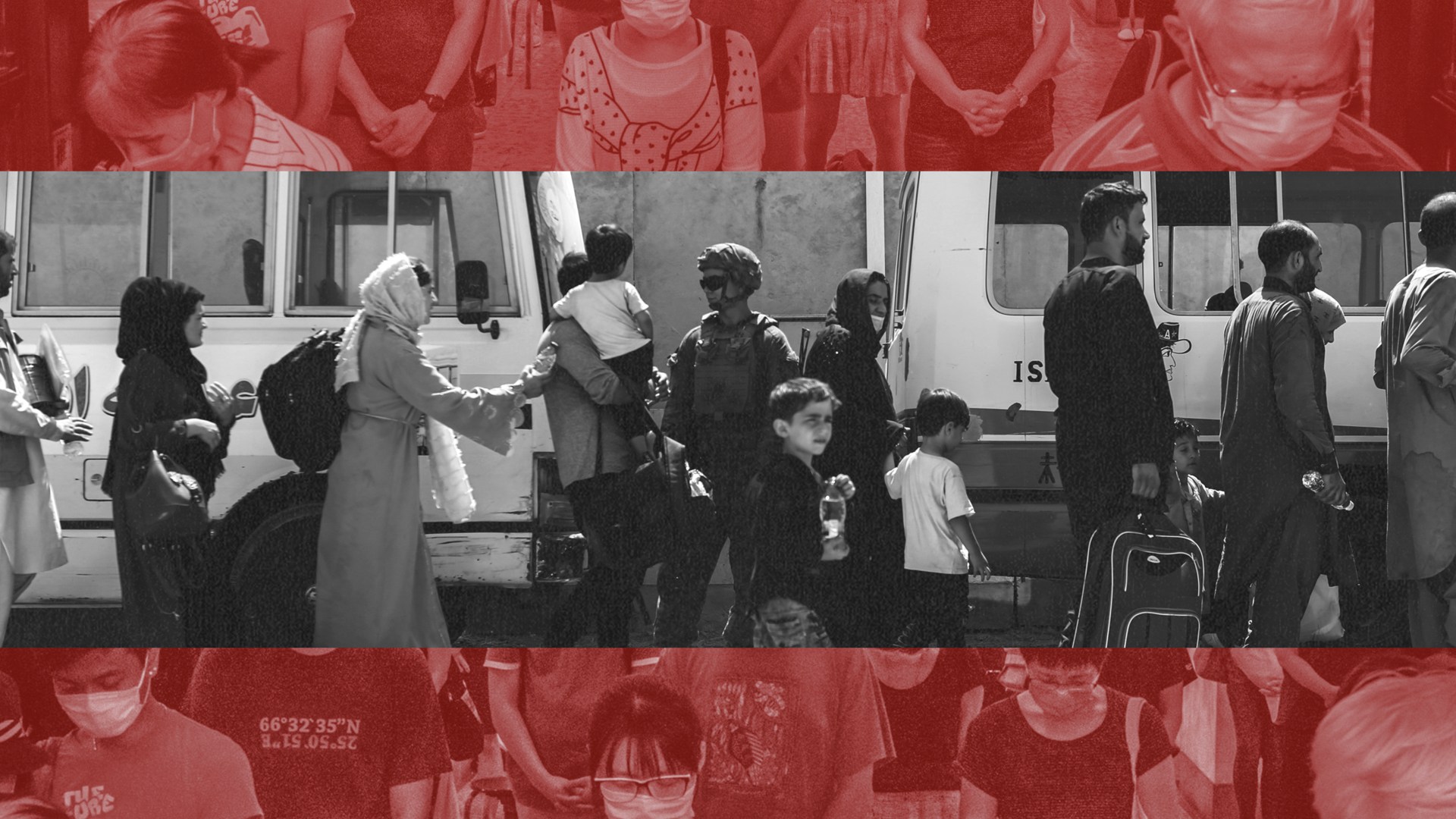
To Pray for Afghan Christians, I Look to China’s Church

Lessons I’ve learned in praying for and working with the Chinese church.

Christianity Today September 7, 2021
Illustration by Mallory Rentsch / Source Images: Billy H.C. Kwok / Stringer / Handout / Getty Images

Last week, a friend asked me to meet for coffee. She is a young mother, and after seeing the now-world-famous image of a young Afghani mother handing away her baby over a barbed wire fence to an American soldier, my friend found herself struggling to emotionally grapple with what she had seen. Though she has been praying consistently for the situation in Afghanistan, as the image continued to loop through her mind. She wanted advice regarding how to be concerned for the suffering church without succumbing to the heavy emotional toll of it all.

While working with the Chinese church over the past 16 years, I have had to do some processing and learning after watching brothers and sisters in Christ in another cultural context suffer deeply. In December 2018, I watched as a group of Chinese men and women I have prayed and worshiped with were viciously attacked and jailed. Watching their suffering from a distance over the joviality of American Christmas deeply impacted my understanding of Christ’s calling.

Roughly 70 years ago, the global church witnessed what was thought to be the end of the church in China. Similar to what we are witnessing today in Afghanistan, citizens (and especially Christians) scrambled to leave China after the Chinese Community Party took over. The Chinese government persecuted the church in the immediate years following. Thousands abandoned Christ.

But there was a generation of men and women who laid down their lives as the seeds of the Chinese church today. They remained faithful as individuals and as the corporate church. And when the time was right, the gospel spread across their country in such a way that today the Chinese church is the largest numerical church in the world. Christians in China are estimated to be around 5–7 percent of the population, a crucial tipping point, according to missiologists.

Paying attention to the global church causes us to realize just what our brothers and sisters are sacrificing in their walk with Christ. Engaging with the suffering church—from Afghanistan to China—has discipled my own heart. We must not let our own fear of suffering dictate the narrative, but rather we must be discipled by those in Afghanistan and China and elsewhere.

First, my emotions surrounding the suffering church have pressed me to examine what I actually believe about prayer. I’ve noticed that for many Americans like me, prayer can feel trite during times of global suffering because we don’t believe that prayer is an actual contribution to the situation. I’ve found that I pray because I feel distressed at what I see and read, and not out of true conviction that my prayers are part of the objective work of the Holy Spirit in the life of the church. Since watching those I work with suffer in 2018, I have been learning to see my prayer not just as a tool to ease my discomfort but as my weapon against the forces of evil in this world.

One diagnostic question I’ve asked myself since 2018 is whether I am capable of praying for justice and judgment. God’s justice is a theological framework for understanding a force for good in this world and a promise to be fulfilled at the end of time. As our brothers and sisters in China and Afghanistan demonstrate, preaching the gospel is about believing in a God who destroys evil and having the compassion of Christ. If our prayers for the situation in Afghanistan feel empty, then we need to reexamine how we are praying.

Second, watching churches I know suffer has caused me to examine what I believe about the perseverance of the saints. What is happening today is not the end of the story. But do I believe that and am I praying accordingly? As I watch the last American soldier leave Afghanistan, do I believe that God’s best plan for his people did not leave along with that soldier? For God himself has not left. I do not want to be trite. This is not a flippant statement to say that who is in power doesn’t matter or that our physical realities in this life don’t matter.

But if our view of church history requires friendly rulers and personal freedom to believe the church can not only survive but grow, then we have a faulty view of God’s relationship to his church.

There are a lot of things I’m praying for Afghanistan—justice and protection for women of all ages, justice and restoration for the abuses of government, economic stability, etc. I’m praying for those Christians who are fearing for their lives and want out. I’m praying for miraculous rescue.

But I also pray for those who stay. I am praying their lives will be the seeds of a similar gospel movement to what we’ve seen in China. I’m praying for their empowerment to be a strong and bold church in the coming decades so that in 50 years, we might be amazed to discover the largest church in the Muslim world. I am praying that their love for Afghanistan and their people will compel them.

As we awaken to the suffering of brothers and sisters on the other side of the world, let it disciple us to better engage the suffering we see in Afghanistan and here at home. We still have neighbors whose children are dying from cancer. We still have isolated widows who sit alone at night. We still have financial, psychological, and racial oppression. We still have divided churches. We still have wounds that are in need of binding.

Suffering is not a phenomenon of the persecuted church; though we try to avoid it, it is present everywhere. Suffering is part of our identity as adopted heirs of the suffering Lord, an identity which many of us are trying to escape. Where are you avoiding suffering with Christ? Where might you be able to testify to his name by entering into that suffering? Go there when you are compelled by what you see of the courage of your brothers and sisters in Afghanistan.

Hannah Nation serves as managing director of the Center for House Church Theology and content director for China Partnership. She is a co-editor of Faith in the Wilderness: Words of Exhortation from the Chinese Church (Kirkdale Press, 2022).

Culture

‘Ted Lasso’ Won’t Settle for Shallow Optimism

The show’s second season challenges viewers to consider true joy over hyper-positivity.

Christianity Today September 3, 2021
Courtesy of Apple TV+

Apple TV’s hit sitcom Ted Lasso has roped viewers (and 20 Emmy nominations) in with an inexplicably sunny protagonist, top-shelf pop culture references, and characters who care about one another. Despite the show’s unabashed sweetness, it attracted few critics, much less haters, until the second season’s Christmas episode recently dropped.

For some, scenes of Rebecca and Ted delivering presents to London’s less fortunate and the Higgins’ family home transforming into a premier destination for foreign players felt like “a warm blanket of nice.”

Not for everyone.

“Can Ted Lasso Recover from That Unspeakably Bad Christmas Episode?” wrote Paste magazine. “When there are no counterbalancing new episodes to wash away the astringent peppermint flavor, though, of course it’s easy to wonder if the Christmas episode is a one-off or if it represents the dominant new direction of the show,” suggested Vulture, referring to the weekly episode drop. “Maybe it’ll all be this wash of sentimental squishiness now. Ugh!”

Released in 2020, Ted Lasso centers an out-of-his-depth American football coach who takes a job with an English soccer team. He bakes biscuits for his team’s owner, opens a suggestion box to scornful players, and builds relationships with chronically bullied and insecure coworkers.

Ted’s vulnerable moments—a divorce, a disdainful team captain, and a boss who’s set him up for failure—have balanced his seemingly unflappable optimism, preventing him from being reduced to a symbol and revealing him as a human who, like us, is sometimes neglected, anxious, and in need of love. Even in the first season, writers attempted to make Ted more than a mustachioed Pollyanna by showing his panic attack at a karaoke bar and his procrastination in signing his divorce papers.

After a dark year that made many of us face our greatest anxieties and our mortality, watching Ted build an unlikely community felt satisfying. “Being nice, in ‘Ted Lasso,’ is not a naïve denial of the darkness of life. It’s a cleareyed adaptation to it,” wrote James Poniewozik at The New York Times. “The series recognizes that nice guys do sometimes finish last. It just argues that other things are more important than finishing first.”

And yet, what has haunted Ted Lasso’s second season is the chance that a good show centered on positivity, kindness, and joy might turn maudlin and trite. It offers us a glimpse of integrity without consequences and mirth without stakes. As someone who aggressively evangelized about Season 1, I’ve felt that.

When the team’s star Sam Obisanya took a stand against the Greyhounds’ lead sponsor for ethical reasons, I admired the show for taking on athlete activism. But when neither he nor his fellow protesting players nor the team’s ownership appeared to take a hit for their stance, I winced. Ted Lasso’s magic comes from presenting a fantasy of people deeply listening to each other, taking responsibility for their actions, and apologizing when they wrong each other, even as the earth shakes beneath them. It doesn’t come from bold but controversial choices not having consequences, no matter how noble they might be.

Among the many social phenomena that the pandemic has forced us to contend with has been “toxic positivity,” or, as the Psychology Group puts it, “the excessive and ineffective overgeneralization of a happy, optimistic state across all situations.” (Much of the reason we dislike Christian movies, after all, is because their storylines feature unearned saccharine performances or righteous actions that read as corny or hollow.)

The enthusiasm and reception to Ted Lasso suggests that part of serving sad people during chaotic and unpredictable times rests in leaning into both joy and pain. Hyperpositivity and happiness are shallow; they are emotions characterized by their ephemeral state and the existence of external conditions. But Scripture teaches that joy is much deeper. It is an unflappable fruit of the Spirit, grounded in the truth of God’s everlasting and unconditional love for us (Ps. 16:8–11).

Ted Lasso doesn’t have much to say about religion, or where ultimate hope might be found. But his persistence in his joy makes him attractive, especially for those in his life who have given up. Throughout season 2, the show has begun to suggest that Ted’s optimism may actually be masking deep hurt and pain, rather than coming from his suffering (1 Thess. 1:6). Ted’s wounds stay out of sight of many of his friends and, if he has it his way, out of the psychologist’s office. His visible and visceral pain make it possible to love his impenetrable cheeriness and not reduce him to a positivity mascot.

Our love for the show perhaps exemplifies our hunger for a space where trauma, joy, forgiveness, and community can coexist. And during a time of death and division, the church has a unique chance to be the messenger of the most consequential good news. How do we avoid the pitfall of shallow optimism and offer a greater gospel?

In the aftermath of the US withdrawal from Afghanistan, Afghan refugee Mariya Dostzadah Goodbrake wrote:

We want to stay encouraged and to say the right Christian things: “God will prevail,” “This is a broken world,” “Justice is not on this side of life,” or “We already have victory.” Yes, these comments remind us that we have a God that has already prevailed, but can we just grieve for a moment and not say the right Christian thing to say? Can we stand in righteous anger? Can we say that for this moment, evil prevailed? Can we just sit in the hurt and injustice for a moment?

The call of the Christian life is a complex one. It calls us to both joy and sorrow, both hope and lament. It calls us to a posture of wisdom, one where we discern when to sit in solidarity with friends who mourn, when to speak truth, and when to call a brother or sister to hope (Ecc. 3:4). In the gospel, the contradictions Lasso’s creators attempt to portray meld harmoniously together. Maybe we can show our friends the real-life thing.

Morgan Lee is global media manager for Christianity Today and the cohost of Quick to Listen. She is on Twitter at @mepaynl.

News
Wire Story

Native Christians: Indigenous Bible Version Is ‘Made By Us For Us’

The recently released New Testament translation adopts Native American descriptors for God—the Creator and Great Spirit.

“First Nations Version: An Indigenous Translation of the New Testament” and Terry Wildman.

“First Nations Version: An Indigenous Translation of the New Testament” and Terry Wildman.

Christianity Today September 3, 2021
Courtesy of InterVarsity Press

It’s a Bible verse familiar to many Christians—and even to many non-Christians who have seen John 3:16 on billboards and T-shirts or scrawled across eye black under football players’ helmets.

But Terry Wildman hopes the new translation published Tuesday by InterVarsity Press, First Nations Version: An Indigenous Translation of the New Testament, will help Christians and Indigenous peoples read it again in a fresh way.

“The Great Spirit loves this world of human beings so deeply he gave us his Son—the only Son who fully represents him. All who trust in him and his way will not come to a bad end, but will have the life of the world to come that never fades away, full of beauty and harmony,” reads the First Nations Version of the verse.

In the First Nations Version, “eternal life,” a concept unfamiliar in Native American cultures, becomes “the life of the world to come that never fades away, full of beauty and harmony.” The Greek word “cosmos,” usually translated in English as “the world,” had to be reconsidered, too: It doesn’t mean the planet Earth but how the world works and how creation lives and functions together, said Wildman, the lead translator and project manager of the First Nations Version.

They’re phrases that resonated with Wildman, changing the way he read the Bible even as he translated it for Native American readers.

“We believe it’s a gift not only to our Native people, (but) from our Native people to the dominant culture. We believe that there’s a fresh way that people can experience the story again from a Native perspective,” he said.

The idea for an Indigenous Bible translation first came to Wildman nearly 20 years ago in the storeroom of the church he pastored on the Hopi Reservation in Arizona.

Wildman, who is Ojibwe and Yaqui, was excited to find a Hopi translation of the New Testament in storage. He wanted to hear how that beloved Scripture sounded in Hopi, how it translated back into English.

But, he said, while many Hopi elders still speak their native language and children now are learning it in schools, he couldn’t find anyone able to read it. That is true for many Native American nations, he added, noting that at the same time Christian missionaries were translating the Bible into Native languages, they were also working with the boarding schools in the United States and Canada that punished students for speaking those languages.

It occurred to the pastor that “since 90-plus percent of our Native people are not speaking their tribal language or reading their tribal language, we felt there needed to be a translation in English worded for Native people,” he said.

Wildman, a licensed local pastor in the United Methodist Church, has been working on translating the Bible into words and concepts familiar to many Native Americans ever since.

He first began experimenting by rewording Scripture passages he was using in a prison ministry, giving them more of a “Native traditional sound,” he said—a sound he’d learned by being around Native elders and reading books written in a more traditional style of English by Native Americans like Oglala Lakota spiritual leader Black Elk.

He and his wife, Darlene, who have a music ministry called RainSong, also recorded readings of those passages over music in an album called The Great Story from the Sacred Book. It won a Native American Music Award in 2008 for best spoken-word album.

Wildman was encouraged by the reactions he received as he shared his rewordings across the country at tribal centers, Native American-led churches and powwows.

“They just loved listening to it because it didn’t have the church language. It didn’t have the colonial language. It had more of a Native feel to it—as much as possible that you can put in English,” he said.

Many Native people asked what Bible he was reading from.

Young people have told him it sounds like one of their elders telling them a story. Elders have said it resonates with how they heard traditional stories from their parents and grandparents.

As others encouraged him to turn his rewordings into a full translation of the Bible, Wildman published a children’s book retelling the Christmas story, Birth of the Chosen One, and a harmonization of the four Gospels called When the Great Spirit Walked among Us.

Then, on April Fool’s Day 2015, he heard from the CEO of OneBook Canada, who suggested the Bible translation organization fund his work. The offer wasn’t a prank, he said, it was “confirmation from Creator that this was something he wanted.”

“Everybody hears English a little differently,” Wildman said.

“We have all of these translations for that purpose to reach another generation, to reach a particular people group. But we had never had one for our Native people that has actually been translated into English.”

Wildman began by forming a translation council to guide the process, gathering men and women, young and old, from different Native cultures and church backgrounds. They started with a list of nearly 200 keywords Wycliffe Bible Translators said must be translated properly to get a good translation of Scripture.

With that foundation, Wildman got to work, sending drafts to the council for feedback. He looked up the original Greek text of the New Testament. He checked to see how other English translations rendered tricky passages. He consulted Dave Ohlson, a former Wycliffe translator who helped found OneBook Canada, part of the Wycliffe Global Alliance.

The Indigenous translation uses names for God common in many Native cultures, including “Great Spirit” or “Creator.” Names of biblical figures echo their original meanings in Greek and Hebrew: Jesus becomes “Creator Sets Free” and Abraham, “Father of Many Nations.”

“We believe it’s very important that the Gospel be kind of decolonized and told in a Native way, but being accurate to the meaning of the original language and understanding that it’s a different culture,” Wildman said.

Over the years, he and his council have published editions of the Gospel of Luke and Ephesians and a book called Walking the Good Road that included the four Gospels alongside Acts and Ephesians.

A number of ministries already have started using those translations, including Foursquare Native Ministries, Lutheran Indian Ministries, Montana Indian Ministries, Cru Nations and Native InterVarsity, he said.

Native InterVarsity, where Wildman serves as director of spiritual growth and leadership, has distributed earlier editions of the First Nations Version at conferences and used the Indigenous translation in its Bible studies for Native college students for several years.

Megan Murdock Krischke, national director of Native InterVarsity, said students have been more engaged with the translation, hearing the Bible in a way they’re used to stories being told.

“Even though it’s still English, it feels like it’s made by us for us. This is a version of Scripture that is for Native people, and it’s indigenized. You’re not having to kind of sort through the ways other cultures talk about faith and spirituality,” said Krischke, who is Wyandotte and Cherokee.

“It’s one less barrier between Native people and being able to follow Jesus.”

Earlier this month, The Jesus Film Project also released a collection of short animated films called “Retelling the Good Story,” bringing to life the stories of Jesus, or Creator Sets Free, feeding the 5,000 and walking on water from the First Nations Version.

Wildman said the response from Native peoples and ministries to the First Nations Version has exceeded any expectations he had when he first began rewording Bible passages.

He hopes it can help break down barriers between Native and non-Native peoples, too. He pointed out the suspicion and misinformation many white Christians have passed down for generations, believing Native Americans worship the devil and their cultures are evil when they share a belief in a Creator, he said.

“We hope that this will help non-Native people be more interested in our Native people—maybe the history, understanding the need for further reconciliation and things like that,” Wildman said.

“We hope that this will be part of creating a conversation that will help that process.”

Books

‘The Chosen One Will Make His Home in Your Heart’

The First Nations Version of Ephesians 3-4:16.

Christianity Today September 3, 2021
Katherine Frey / The Washington Post via Getty Images

As he ministered among native tribes, pastor Terry Wildman would reword parts of Scripture to reflect the language and perspectives of his people. This year, his efforts to “indigenize” Bible translation turned into an official version of the New Testament published by InterVarsity Press.

The following is an excerpt from Ephesians in the First Nations Version, which released on Tuesday.

A Great Mystery Revealed

Because I, Small Man (Paul), follow the Chosen One and represent you Nations in this way, I have been arrested and put in chains. I am sure you have heard how the Great Spirit chose me, because of his great kindness, to be a wisdomkeeper to all Nations. Creator chose me, by a sacred vision, to make known this hidden wisdom that I have already spoken about.

When you hear this message, you will understand how I see the mystery of the Chosen One. This mystery was not made known to the generations of humankind that walked before us in the same way his Spirit has now told it to his holy message bearers and prophets.

This mystery is that the people of all Nations have equal share in the blessings promised to the tribes of Wrestles with Creator (Israel). They have full membership in the same body and are included in the promise through the Chosen One as told in the good story.

Chosen to Tell the Good Story

The gift of Creator’s great kindness came to me in a powerful way and created in me a desire to serve this good story. Even though I am small and weak among his holy people, he still chose me to tell all Nations about the mysterious treasures he has hidden in the Chosen One and about the unfolding of this ancient plan—a great mystery that was hidden away for many ages in Creator’s heart. So that now, through his sacred family, his great wisdom, which is like a rainbow with many colors, will be made known to the powers and rulers in the spirit-world above.

This good story gives full meaning to the ancient purpose he planned before he created all things. This purpose has now been made clear though the Chosen One, Creator Sets Free (Jesus). Our trust in him opens the way and gives us strong hearts to move close to the Great Spirit. So do not become weak of heart when you hear about how much I am suffering for you, which is proof of your great worth.

A Humble Prayer

This is the reason I bow down on my knees and humble myself before the Father above, from whom all families, clans, and tribes, in this world and in the spirit-world above, are named.

My prayer for you is that from the great treasures of his beauty, Creator will gift you with the Spirit’s mighty power and strengthen you in your inner being. In this way, the Chosen One will make his home in your heart.

I pray that as you trust in him, your roots will go deep into the soil of his great love, and that from these roots you will draw the strength and courage needed to walk this sacred path together with all his holy people. This path of love is higher than the stars, deeper than the great waters, wider than the sky. Yes, this love comes from and reaches to all directions.

I pray that you would feel how deep the Chosen One’s great love is. It is a love that goes beyond our small and weak ways of thinking. This love fills us with the Great Spirit, the one who fills all things. I am praying to the Maker of Life, who, by his great power working in us, can do far more than what we ask for, more than our small minds can imagine.

May his sacred family and the Chosen One bring honor to him across all generations, to the time beyond the end of all days. Aho! May it be so!

A Humble Path

Because I walk the road with our Honored Chief, I have been made a prisoner. I now call on you to join me in representing him in a good way as you follow the path he has chosen for you. Walk with a humble and gentle spirit, patiently showing love and respect to each other. Let his Spirit weave you together in peace as you dance in step with one another in the great circle of life.

In this circle we are joined together in one body, by one Spirit, chosen to follow one purpose. There is only one Honored Chief, one common faith, and one purification ceremony. There is one Great Spirit and Father of us all, who is above all, and who works in and through all.

The Headdress of the Chosen One

His great kindness has gifted each of us from the headdress of the Chosen One. That is why it is said, “When he was lifted up on high, he captured many warriors, took their spoils of war, and gave them back to the people.”

What does “he was lifted up” mean? It could only mean that he had to first come down, into the lowest parts of the earth, so he could be lifted up, to the highest place, and be the one who would restore all things.

Walking in Harmony

He gifted us with message bearers, prophets, tellers of the good story, and wisdomkeepers, who watch over us like a shepherd watches over his sheep. These gifts were given to prepare Creator’s holy people for the work of helping others and to make the body of the Chosen One strong until we all follow the good road in harmony with each other because we know and understand who Creator’s Son is.

We will then be like the Chosen One—mature human beings, living and walking in his ways, and fully reflecting who he is. No longer will we be like children who are tossed about by the waves and follow every voice they hear in the wind. We will no longer listen to the ones who behave like tricksters with their forked tongues.

Instead, as true human beings, we will walk out this truth on the path of love. When we become fully grown, we will be like the Chosen One, joined together with him in the same way a body is connected to its head. Every joint in this body is needed to hold it together and help it grow. When all the parts work together the way they should, then the body grows strong in the love of the Great Spirit.

From First Nations Version: An Indigenous Translation of the New Testament by Terry M. Wildman. Consulting editor: First Nations Version Translation Council. Copyright (c) 2021 by Rain Ministries, Inc. Published by InterVarsity Press, Downers Grove, IL.

Ideas

Why I Voted For the Atheist President of Harvard’s Chaplain Group

Participating in interfaith work at the Ivy League university is a help not a hindrance to the exclusivist claims of Christian faith.

Memorial Church at Harvard University campus in Cambridge, Massachusetts

Memorial Church at Harvard University campus in Cambridge, Massachusetts

Christianity Today September 2, 2021
demerzel21 / Getty Images

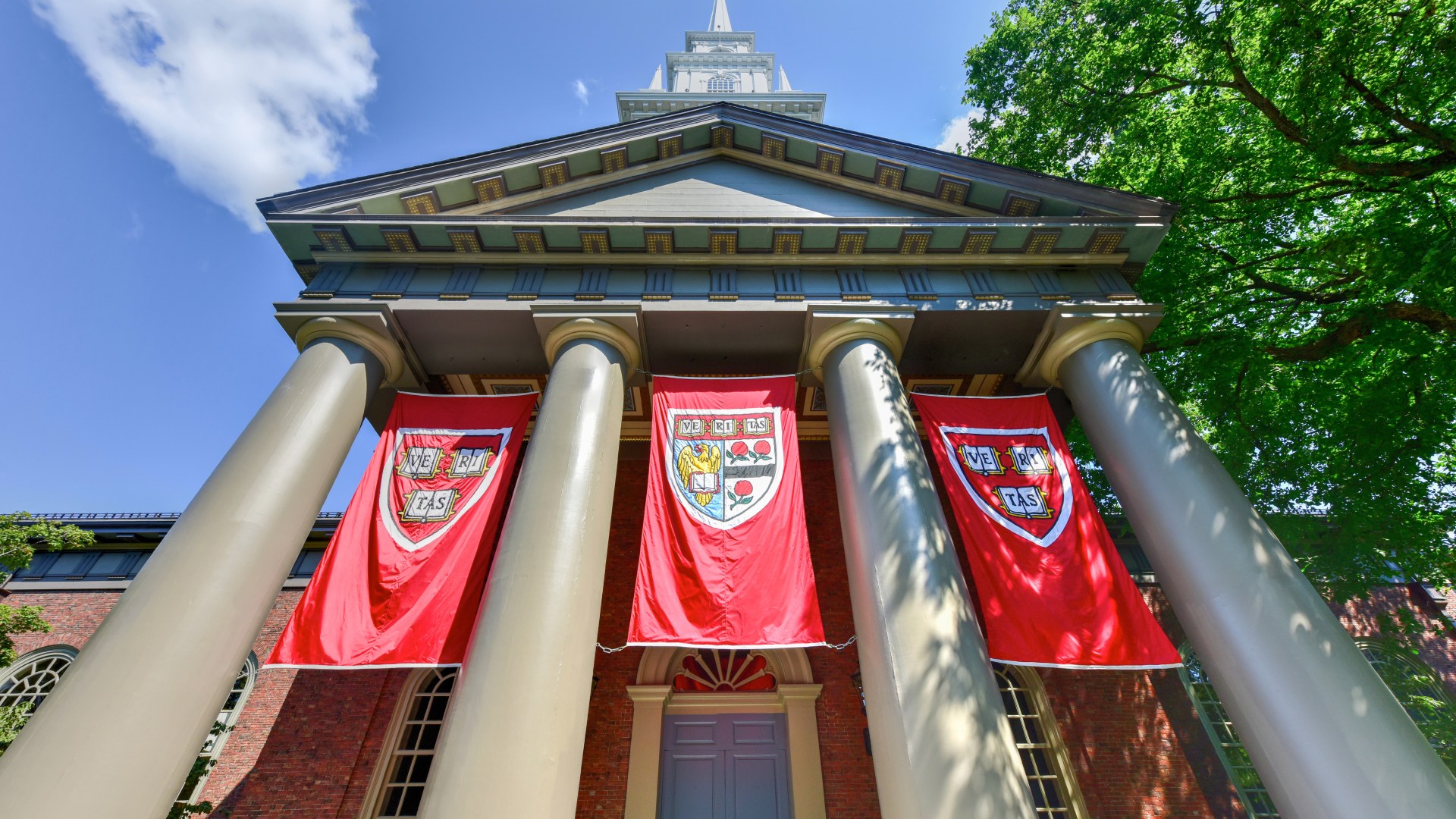
Last week, The New York Times ran a provocative piece stating that the new president of the Harvard Chaplains is an atheist. Greg Epstein was elected unanimously last spring by his fellow Harvard chaplains. I am one of the people who voted for him.

For seven years, I have worked at Harvard as an evangelical campus minister employed by InterVarsity Christian Fellowship (IVCF). I believe the Bible is authoritative and entirely trustworthy as God’s Word. I believe that Jesus alone is the way of salvation, and that no one comes to the Father except through him. So why would I vote for an atheist to lead the Harvard Chaplains?

The answer lies in the unique, decentralized approach of the Harvard Chaplains and how that group of leaders from many faiths (or no faith) has opened doors for gospel-centered ministry on the campus of a prestigious Ivy League school. The real Harvard Chaplains group—not the one poorly represented in the media—tells a different and very significant story of how evangelicals can flourish in interfaith spaces without compromising faith, truth, or mission.

In response to The New York Times profile, many Christian and conservative media outlets were quick to fuel the sense of aggrievement felt by religious people who are understandably trying to protect themselves against the rising tide of secularism. In so many words, they’re concerned that “even faith spaces will be ruled by secularists, should Harvard have its way.”

Had I not been in the room where it happened, I might have had a similar reaction to the news.

That room was of course a Zoom call. It took place in the spring. As a group of about 30, we voted on a slate of chaplains for next year’s executive board. I was voted in as chair of the membership committee, and Greg Epstein—Harvard’s humanist chaplain since 2005—was voted in as president. There was very little discussion, a unanimous vote, and a lot of thankfulness for the various chaplains willing to serve in various ways, including the rabbi we voted for the previous year, and the Lutheran minister before him, and the evangelical campus minister before her.

Some media outlets have called Epstein the “chief chaplain.” Others claim he “will oversee the activities of all religious communities on campus,” and still others say he’s now “directing the university’s more than 40 religious leaders.”

These reports fail to appropriately portray the nature of the role. Harvard has no “chief chaplain,” and the president of the Harvard Chaplains does not direct spiritual life on campus. We are a decentralized, nonhierarchical community of independent chaplaincies, with about 40 chaplains spanning roughly 25 denominations, organizations, traditions, and religions.

We are Harvard affiliates but generally not employees of Harvard. We do not report to any higher-ups on matters of faith or doctrine. We share a primary commitment to treat each other’s communities fairly and honestly and a secondary, broader commitment to the spiritual needs of the people of Harvard. We are a consensus-based community, and consensus is often easily reached because no one is expected to agree on matters of doctrine.

The president is chosen from among us, normally to serve two one-year terms. That person is primarily a servant of the chaplains—coordinating, convening, and leading our meetings, as well as serving as a conduit between us and the office of the president of Harvard University. They also occasionally represent us at events here or there.

Chaplain presidents are chosen not to reflect whose tradition is ascendant, nor as a reward to the most influential chaplain. They are not an indicator of a bold new vision for the Harvard Chaplains. They get selected because they are trusted and competent members of our group.

In this case, I voted for Greg because he’s well equipped for the role he was elected to, not for the role much of the media has imagined. But my reasons go even deeper: This community of interfaith chaplains has benefited the ministry and mission of its evangelical leaders, including me and the organization I represent.

Evangelicals have historically been wary of interfaith initiatives. At many points in my life, I have too. But over time I’ve learned to engage in these projects without compromising my deeply held, exclusivist convictions. As Bob Roberts, pastor and founder of the Multi-Faith Neighbors Network, explains,

In recent years evangelical Christians have functionally cordoned themselves off from the rest of society and culture. They have done this for a variety of reasons, but the result has been a church that does not understand the world, and a church that does not understand the world is a church that cannot faithfully serve and engage the world with the love of Jesus. Multi-faith gives us the opportunity to not only serve the world, but to understand the world as well.

Nostalgia for the past can play a part in people’s wariness. I certainly mourn the decline of Christian identity wherever it is declining. But the church doesn’t gain anything when we pine for some misremembered, bygone era when Christianity was (almost) the only shop in town.

In Harvard’s particular case, if you go back just a few decades, evangelicals were largely excluded from religious life on campus. The group that preceded the Harvard Chaplains was restricted to mainline Protestant church ministers.

In that historical context, we evangelicals are beneficiaries of Harvard’s newfound desire for diverse religious representation.

However, the second cause for wariness carries some significant merit. Evangelicals rightly fear that interfaith spaces often come with a prerequisite for all participants to forsake any exclusive claims. We suspect that interfaith often means treating all religions as one, rather than talking and partnering across genuine (even tense) ideological differences.

When I arrived as a student at Harvard Divinity School (HDS), I harbored this fear. Some campus interfaith spaces had little room for people like me who held exclusive truth claims. But I was impressed when HDS invited Eboo Patel, founder of the Interfaith Youth Core, to speak, and even more impressed when he used his platform to bemoan the absence of evangelicals from interfaith spaces.

In his talk, he didn’t blame evangelicals for their intolerance but instead pointed the finger at interfaith spaces. In a related article for the Harvard Divinity Bulletin, he asked,

What is the purpose of interfaith work? Is it to bring together theological liberals and political progressives of various religions to share how their different faiths brought them to similar worldviews? … If this approach excludes, and potentially raises hostility toward, faith groups, then it ought to raise the question of just what it is we think we are doing in a movement called “interfaith.”

In my experience, I’ve seen interfaith spaces increasingly realize the limits of excluding people who hold exclusive claims. That approach ends up excluding most religious people. In response, a new approach is rising, and the Harvard Chaplains are part of that movement.

Our decentralized approach to interfaith work encourages authentic expressions of faith—not how a higher-education administrator or a chief chaplain envisions it, but how ministers and practitioners sent from churches and religious organizations live it. This commitment to genuine diversity makes space for evangelicals to flourish as trusted members of religious leadership at one of the world’s premier academic institutions.

In that vein, I am deeply thankful for the evangelical chaplains who have spent decades building friendships and partnerships and have fostered the trust that I now experience. I have many friends in campus ministry at other universities who are treated with much more suspicion, if not outright hostility.

My vote for Greg Epstein was motivated in part by my desire to build trust in an interfaith space where people hold sharply conflicting views and do not pretend otherwise. Without that trust, evangelicals would be relegated to the fringes. Instead, we are at the table, discussing truth in partnership with our fellow chaplains and being looked to for leadership in the diverse religious life of Harvard.

I voted for Epstein because he has been one of the strongest partners for the InterVarsity staff at Harvard. We worked together on service trips to post-Katrina New Orleans, and he’s also cosponsored speaking events with us.

The mission of Epstein’s chaplaincy is not to convince people to become atheists but rather to serve students who find themselves without faith (of which there are many at Harvard). He actively pursues our perspectives on matters pertaining to the Harvard Chaplains. Although we disagree sharply on the things that matter most, he leans into those spaces, where people can differ on their strongly held beliefs. He thinks it’s important.

Epstein’s new role at Harvard has triggered a significant amount of outrage among Christians. I can empathize with many of the concerns, especially given how The New York Times failed to provide full context for the story. But even in this divisive media environment, we would do well to imitate our Father, who is “slow to anger and abounding in steadfast love” (Ex. 34:6, NCB).

Underneath the overreaching headline is a model of how evangelicals can flourish in interfaith spaces and do so without compromise. It’s a model evangelicals would do well to emulate rather than condemn.

Pete Williamson is the team leader for InterVarsity’s Graduate and Faculty Ministries at Harvard and a Harvard Chaplain.

Speaking Out is Christianity Today’s guest opinion column and (unlike an editorial) does not necessarily represent the opinion of the publication.

News

Why the UN’s Dire Climate Change Report Is Dedicated to an Evangelical Christian

Welsh Nobel Prize-winner John Houghton saw sin at the heart of this ecological crisis.

Christianity Today September 2, 2021
Sean Rayford / Stringer / Getty Images

The sixth report from the United Nation’s Intergovernmental Panel on Climate Change is alarming—but not surprising.

The panel’s first assessment of scientific research on climate change in 1990 found that burning fossil fuels substantially increases the atmospheric concentrations of greenhouse gases—including carbon dioxide, methane, chlorofluorocarbons, and nitrous oxide—causing a rise in the global mean temperature and warming up the world’s oceans.

“Consequent changes,” the first report said, “may have a significant impact on society.”

The second, third, fourth, and fifth IPCC assessments found more evidence and growing consensus that human activity is causing climate change and that its impact will hurt a lot of people.

The sixth assessment, released in August, is more urgent and emphatic, but it reaches the same conclusion. The IPCC now says climate change not only may have a significant impact on society, it will.

Policy makers, scientists, and concerned citizens who pick up the final version of the report might be surprised by one thing, though: It is dedicated to an evangelical Christian who said the root problem of climate change is sin.

“Looking after the Earth is a God-given responsibility,” John Houghton once wrote. “Not to look after the Earth is a sin.”

Houghton, who died of complications related to COVID-19 in 2020 at the age of 88, was the chief editor of the first three IPCC reports and an early, influential leader calling for action on climate change.

His concerns about greenhouse gases, rising temperature averages, dying coral reefs, blistering heat waves, and increasingly extreme weather were informed by his training at as atmospheric physicist and his commitment to science. They also come out of his evangelical understanding of God, the biblical accounts of humanity’s relationship to creation, and what it means to love Jesus.

“We haven’t lived up to the call to holiness,” Houghton’s granddaughter Hannah Malcolm explained to CT. “We’ve been conformed to the patterns of this world, with the desire for wealth accumulation and the desire to increase our comforts, and that’s not the demand that is placed upon us as followers of Christ.”

Houghton was born in a Baptist family in Wales in 1931. As a young man he realized he needed to make a personal decision for Christ, and he did. To the end of his life, Houghton described it as the most important choice he’d ever made.

His love for God fueled his love for science. He saw it as a way to worship.

“The biggest thing that can ever happen to anybody is to get a relationship with the one who has created the universe,” Houghton told a Welsh newspaper in 2007. “We discover the laws of nature when we do our science. So we discover what’s behind the universe and if there’s an intelligence and a creator behind it. What we’re doing as Christians is exploring our relationship with the person who is the creator of the universe. Now that’s something that is absolutely wonderful.”

Houghton began attending Oxford University at 16, earning a bachelor’s in 1951 and a doctorate in 1955. The next year, the Soviet Union launched the first artificial satellite into space, and as the world considered what would happen if a nuclear bomb were detonated in the atmosphere, the 25-year-old scientist turned his attention to atmospheric circulation.

“We had measurements from aeroplanes and balloons, but they were only in one place,” he said. “If only we could put an instrument on a satellite circling the earth about 14 times a day, and measure atmospheric temperature at different levels by measuring radiation emitted from the earth, that would be a tremendous step forward.”

That led him to become one of the first scientists working on the problem of climate change, and a natural choice to chair the working group of the IPCC when it was set up by the World Meteorological Organization and the UN in 1988.

After the first report came out, it became clear to Houghton that careful science, carried out with the utmost transparency about levels of certainty, would not be enough to move the world’s governments to take action on climate change. There were too many short-term incentives to doubt warnings about devastating consequences that were far in the future.

Houghton increasingly found himself called to the role of communicator.

“He had a really deep belief in the goodness of scientific research for its own sake but he also found himself someone who was being given audience with politicians and leaders,” Malcolm said. “It was never just an intellectual problem he wanted to solve. Whenever he talked about it he would begin with ecological devastation and the question of justice was a constant reference point. I’ve heard people say he had the urgency of a prophet.”

In 1995, when the second IPCC assessment of the science of climate change was published, Houghton started talking about climate change explicitly in terms of sin. He was influenced by John Zizioulas, the Greek Orthodox Metropolitan bishop of Pergamon, who argued that sins against nature were also sins against God, since humans were given God’s creation to care for.

As Houghton saw it, some religions teach that the Earth and the material world are evil. But the Bible teaches that creation is good, and depicts humans as gardeners divinely commissioned to cultivate and care for the world.

“We are more often exploiters and spoilers rather than gardeners,” Houghton wrote. “Some Christians have misinterpreted the ‘dominion’ given to humans in Genesis 1.26 as an excuse for unbridled exploitation. However, the Genesis chapters, as do other parts of scripture, insist that human rule over creation is to be exercised under God, the ultimate ruler of creation, with the sort of care exemplified by this picture of humans as ‘gardeners.’”

Houghton began to reach out to evangelical leaders to talk to them about the coming ecological crisis. He was influential in convincing Richard Cizik, John Stott, and Rick Warren to make climate change a priority and talk about it as a spiritual problem.

After the third and fourth IPCC reports, and in spite of the panel winning a Nobel Prize (jointly with former vice president Al Gore), many advocates for dramatic cuts to carbon emissions began to despair. Change wasn’t happening quickly enough to make a difference.

But Houghton, drawing from his faith, spoke frequently about the importance of Christian hope.

“He believed the goodness of the Lord will be seen in the land of living, and that sustained him,” Malcolm said.

He prayed regularly that God’s kingdom would come—“Fast!”—and set things right.

In retirement, Houghton returned to Wales, where he served as an elder at a Presbyterian Church and taught his grandchildren to love the Welsh mountains and windswept beaches.

According to Malcolm, who is now preparing for ministry in the Church of England and writing a doctoral dissertation on theology and climate grief, Houghton thought it was it was impossible to convince people to protect something they didn’t love. He wanted Christians to learn to love their environment and let climate change science move them to repentance.

“Our desire to be gods drives a great deal of the destruction around us,” she said. “There is something in the work of climate science that reveals the consequence of our sin, troubles those in power, and calls for us to sit with that, but also be aware that an alternative is possible—an alternative to our sin.”

Houghton didn’t live to see the release of the sixth IPCC report or to promote it to evangelical Christians. But the scientific assessment dedicated to his memory echoes a core theme of Houghton’s life’s work: Now is the time, it says, to turn from the path of destruction.

News
Wire Story

John MacArthur’s Church to Receive $800K COVID-19 Settlement

Ahead of the legal payments, the California pastor acknowledged that he and others contracted the virus last winter.

Christianity Today September 1, 2021
Video screengrab via Vimeo / Grace Community Church / Religion News Service via AP

The Los Angeles County Board of Supervisors on Tuesday voted to authorize a $400,000 payment to settle a legal battle with Grace Community Church over lead pastor John MacArthur’s defiance of COVID-19 restrictions in the early months of the pandemic.

Under the agreement, which the board unanimously approved without discussion, the state of California will also pay the church $400,000.

This agreement, county officials said, was reached in the context of the US Supreme Court’s decision in February that told California it couldn’t enforce a ban on indoor worship because of the coronavirus pandemic. LA County modified its health order and lifted the indoor worship ban after the ruling.

“After the US Supreme Court ruled that some public health safety measures could not apply to houses of worship, resolving this litigation is the responsible and appropriate thing to do,” read a statement from county officials. “From the onset of the COVID-19 pandemic, Los Angeles County has been committed to protecting the health and safety of its residents. We are grateful to the county’s faith organizations for their continued partnership to keep their congregants and the entire community safe and protected from COVID-19.”

This decision also comes just days after MacArthur, during his Sunday sermon, confirmed he and his wife had contracted COVID-19 last winter. MacArthur also said “many people” contracted the coronavirus, adding “it probably went through our church in maybe December or January.”

“Patricia and I enjoyed our own bout with COVID for about a week and a half,” said MacArthur, who was absent from the pulpit late December.

MacArthur on Sunday said the settlement money would go to the Thomas More Society, which represented the church in this court case.

“Nothing will come to us except the affirmation that the Lord preserved and protected us through this,” MacArthur said.

MacArthur, in July 2020, held in-person services with congregants singing and sitting next to each other without masks, flouting COVID-19 public health orders that temporarily banned indoor religious services at the time.

Attorneys representing MacArthur filed a suit in August 2020 against California Gov. Gavin Newsom and other state, city, and county officials, saying the state’s restrictions on large group meetings and singing restricted its religious freedom. County officials then sued the church to require it to comply with COVID-19 protocols—including barring large group indoor worship and requiring social distancing at outdoor worship.

On Sunday, MacArthur told congregants “the natural immunity that God has designed is the greatest protection.” MacArthur cited a study suggesting those who recover from COVID-19 have more immunity than people who didn’t get COVID-19 and got the vaccine.

“God has a way of taking care of us as we love each other and share our germs,” MacArthur told congregants, who laughed in response on Sunday.

The Centers for Disease Control and Prevention released a report in early August saying vaccination offers higher protection than previous COVID-19 infection alone.

The CDC study found “unvaccinated individuals were more than twice as likely to be reinfected with COVID-19 than those who were fully vaccinated after initially contracting the virus.”

Theology

Is the Texas ‘Heartbeat Bill’ the End of Roe v. Wade?

A recent abortion ban isn’t the victory it seems. But it is a test run for pro-life Christians.

Christianity Today September 1, 2021
Sergio Flores / Stringer / Getty Images

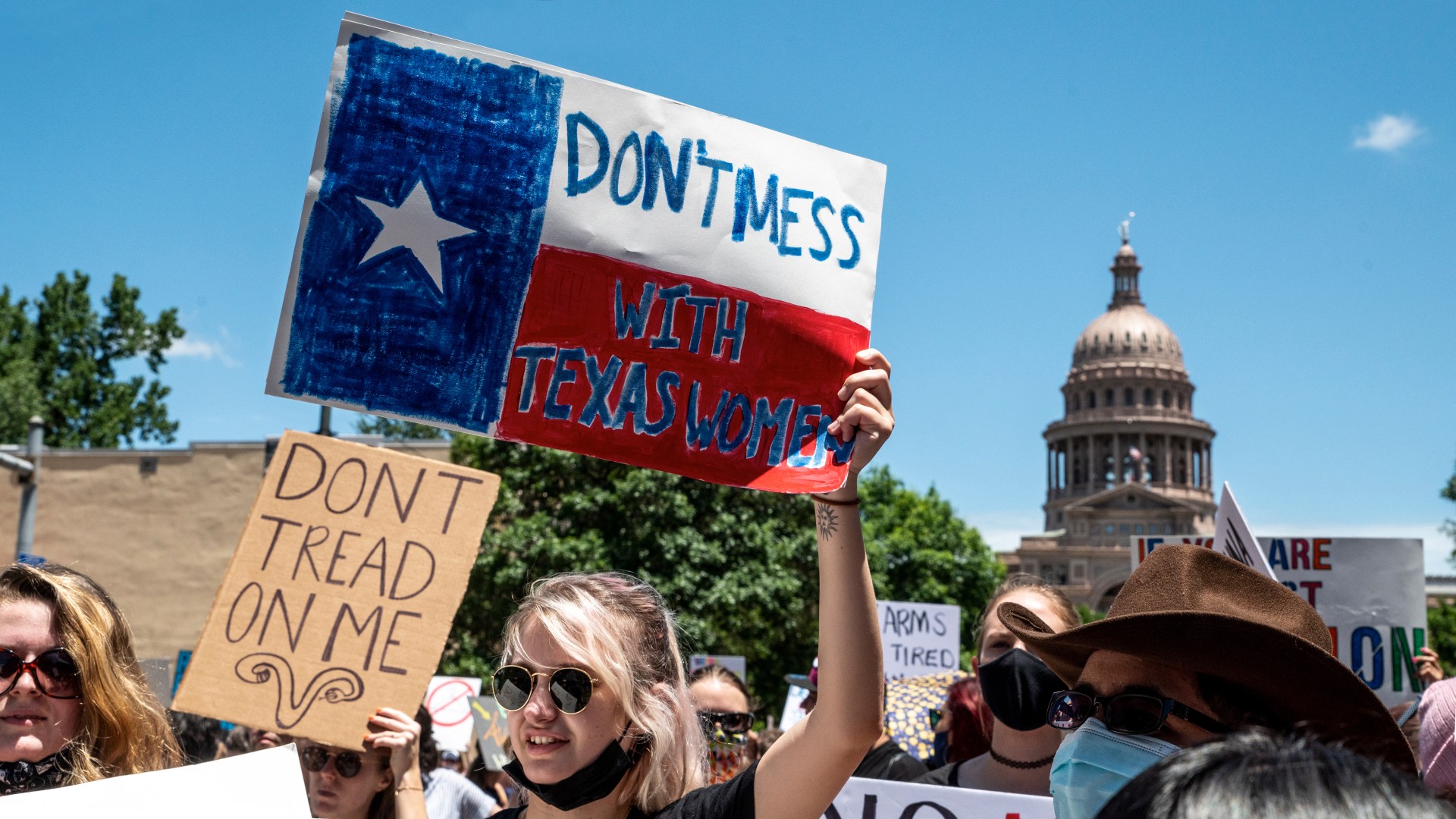
Many people counted down until midnight last night, waiting not for a New Year but for the possibility of a post–Roe v. Wade America. That’s because, due to a legal technicality, the Supreme Court of the United States had until then to overturn a new Texas abortion law before it went into effect on September 1.

The fact that the Supreme Court didn’t intervene has some Christians wondering: Is Roe now effectively gone?

The reason this case, in particular, is of such intense interest to both sides of the abortion debate is because the law in question, Senate Bill 8, seems to effectively ban abortion after about six weeks of pregnancy. Unlike the Mississippi law that will come before the Court this year, this law is different. It is not enforced by the state but rather by private persons who can sue anyone involved in an abortion—except the woman seeking the procedure.

Still, because a law seeming to prohibit abortion is now technically on the books, some have wondered if this means the almost fifty-year era of Roe v. Wade is at its end. And the answer to that is probably not—at least not yet.

Though it’s hard to discern the motives of nine justices, it is well within the realm of possibility that the Court’s decision to stay silent was not a way of undoing Roe but rather a means of not making such a decision before the Mississippi Dobbs case.

Dobbs v. Jackson Women’s Health Organization pertains to the State of Mississippi’s law banning most abortions after fifteen weeks from conception. If the law is upheld, it would directly challenge Roe’s framework of an almost unlimited right to abortion, especially before fetal viability (as defined by the Court). That case does not carry the same legal ambiguities as the Texas one and very well could decide the status of Roe, one way or the other.

Nonetheless, this moment could be a test run for pro-life Christians—and their legal opponents—showing what to expect when such a decision does come down from the Court, possibly even next summer. Under the current Roe structure, of course, very few meaningful restrictions on abortion can stand. Thus, the overturning or even the redefining of Roe is a necessary precondition for any legal turning of the tide on abortion.

But just because a repeal of Roe v. Wade is a necessary step for a pro-life victory does not mean that a repeal itself would overturn abortion.

If in the Dobbs case the Court were to overturn Roe, the laws of the states would return to their pre-Roe status quo: each state governing its own laws about abortion. This means that states such as New York and California and Illinois would have virtually unrestricted abortion, even as some states such as Texas or Mississippi could restrict it. That means the abortion debate would not have ended but, in many ways, would have just begun—state by state.

In some ways, even with Roe gone, there would be no time travel back to the days of 1972 with respect to abortion. In many ways, that’s good news for the pro-life community. After all, in the days leading up to and immediately after Roe, the pro-life witness was relatively small and disorganized. With very few exceptions, it was mostly led by Roman Catholics.

Some, such as Randall Balmer, have argued that evangelical lack of concern for abortion signified that race—not the protection of vulnerable life—was the real motive for the rise of the Moral Majority and other evangelical, socially conservative movements. Others, though, would argue that few evangelicals had really seen abortion on the scale we have seen since Roe and therefore didn’t have enough information to motivate them.

So much has changed since 1973 that a post-Roe America would hardly make our nation pro-life overnight. Opinion polls on abortion—which show the pro-choice side more popular but not dominant over the pro-life view—don’t really tell us what the popular landscape would be once the debate moves from abstract to real.

For example, a 2021 poll asking “Was the Afghanistan War a good idea?” would be drastically different from one asking the same question in 2001, right after a terrorist attack on the United States, or in 2031, if our country initiates a military draft to combat a resurgent al-Qaeda. Abstract opinions are easier for most people than situations in which they see the immediate stakes.

What has also changed since 1973 is technology. Yes, ultrasound and other advances enable us to view inside the womb, to see that the life there is not an undefined blob of tissue but a very human neighbor with a heartbeat and a face. But the technology works the other way as well—with abortion increasingly a chemical (or pill-form) reality rather than a clinical one, and thus much less easily regulated by the state.

Roe is not gone—yet. And even if and when it does fall, pro-life Christians will have a task ahead that will be more difficult and more potentially meaningful than what we have seen so far.

We will be seeking to persuade not only judges and justices or even just legislatures but also all of our neighbors of a vision where human life is defined not by power or usefulness but by intrinsic dignity. That will require those of us who are pro-life to be consistent in that vision and willing to break with our tribes and parties when they see human beings as dispensable or invisible.

Nothing much happened as of midnight August 31, but maybe that moment can remind us that it is time to prepare for the morning, whenever it comes.

Russell Moore is a public theologian and the director of the Public Theology Project at Christianity Today.

Theology

Let the Afghan Refugees Come Unto Me

In this global moment, we’re called to heed Christ’s command to open our hearts and hands.

Christianity Today August 30, 2021
Kent Nishimura / Getty Images

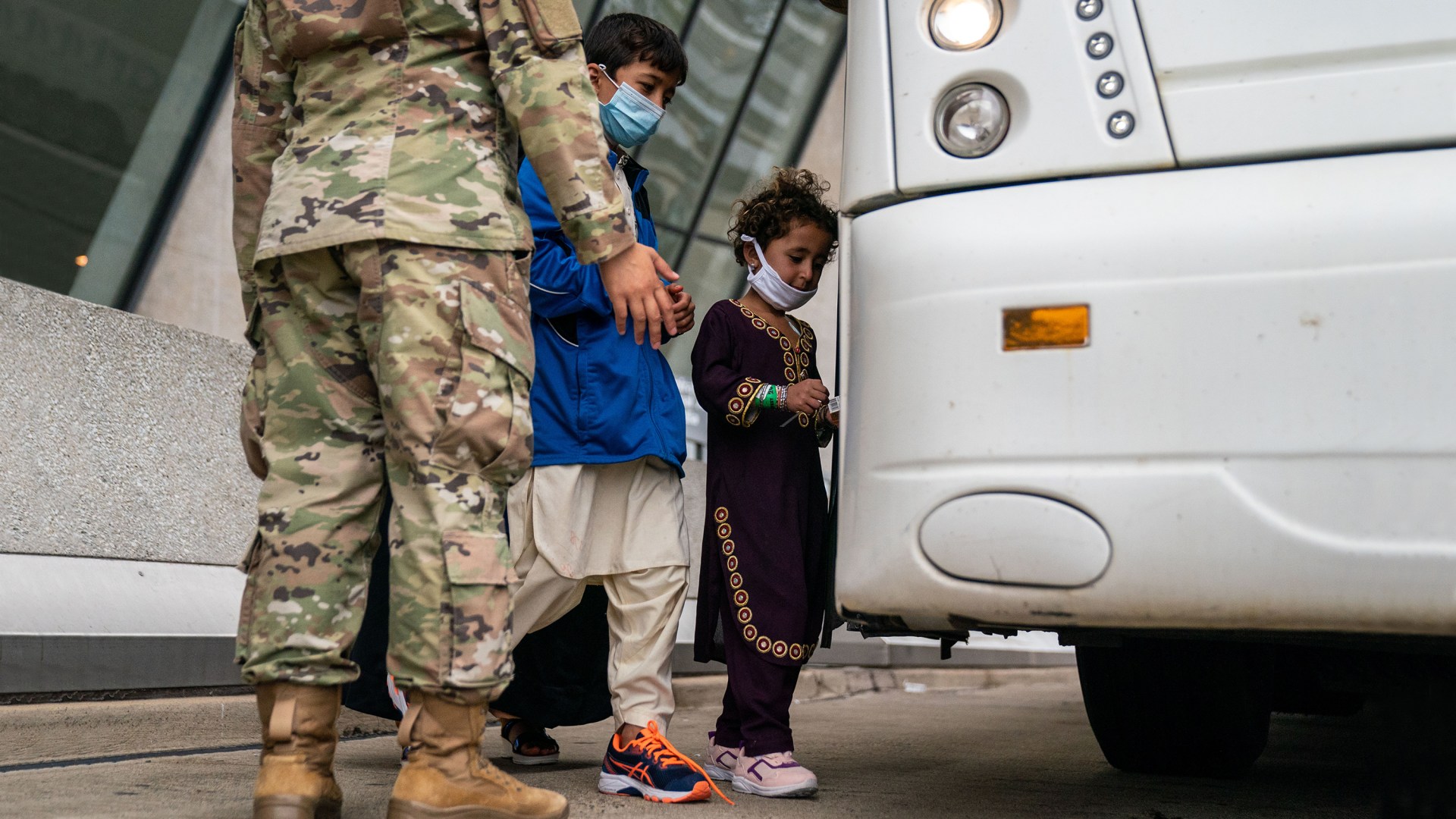
As we can see from the gut-wrenching images in Afghanistan, most of those wishing to flee the Taliban will never be able to escape, even many who faithfully helped the United States in the twenty-year war there.

Some, though, will be able to make it to other countries—including the United States—to seek shelter and to start a new life. As evangelical Christians, we should resolve, even before our new neighbors arrive, to ignore those who would ask us to fear these refugees.

Historically, those wishing to ostracize refugees take a number of different tactics. They sometimes speak of them in language of “uncleanness”—using metaphors such as rodents or insects—or they might suggest that the asylum seekers are themselves vectors of disease. They sometimes, though less often, speak as bluntly as some are now of refugees as an “invasion” of those who are coming to “replace us” (with “us” almost always referring to white and nominally Christian Americans). But perhaps most often, they speak of refugees as a threat.

Just as we saw with Syrian refugees and Kurdish refugees in years past, we will soon hear the insistent cries of those arguing that Afghan refugees are terrorists, or at least that they might be, since they are “unvetted” and we know nothing about them. These claims aren’t true.

As Elizabeth Neumann—a former high-ranking Trump Administration national security official—demonstrates, even if a terrorist wanted to play the long game of twenty years of pretending to be a pro-Western, anti-Taliban figure, the vetting process for all of these refugees is intense and rigorous, using extensive biometric and biographic checks. And as Neumann also points out, the sort of rhetoric used against such refugees almost always is accompanied by a rise in crimes or violence against such people.

The refugees moving into your community will not be there to terrorize you or to “replace” you. They will instead be looking for the chance to start a new life—without their sons murdered and their daughters raped by bloodthirsty despots. In that way, they will be like countless others who have found refuge here in the United States. You can see many of them at the Fourth of July parade in your town; they are often the ones waving the biggest American flags and weeping with patriotic joy.

Some of these refugees are your brothers and sisters in Christ. Some will be your future brothers and sisters in Christ. Whether they are or not, though, every one of them reflects back to us the picture of a God who made humanity in his image and loves each one of us.

The fear of refugees is meant to keep us in a state of emergency that sees everyone and everything not immediately familiar to us as a threat. That keeps viewers tuning in to television shows, callers calling in to radio shows, donors sending in dollars to politicians and interest groups. This sort of limbic-system override can cause even Christians who know their Bibles to forget the most minimal commands Jesus has given us to love and care for the vulnerable.

As Martin Luther King Jr. wrote in 1963, the priest and the Levite in Jesus’ parable, who avoided the beaten man on the side of the Jericho Road, were probably not feeling cruel or heartless. They were probably afraid—and understandably so. The Road to Jericho was a dangerous outpost for violent criminals. Those hurrying by might well have assumed that they could be beaten next.

“Perhaps the robbers were still nearby,” King wrote. “Or maybe the wounded man on the ground was a faker, who wished to draw passing travelers to his side for quick and easy seizure. I imagine that the first question the priest and the Levite asked was: ‘If I stop to help this man, what will happen to me?’”

There are times when we are called to a genuinely dangerous love of our neighbors. We see that in the Samaritan’s care for the wounded man on Jericho Road—or the early church overcoming its fear that the church-persecuting terrorist named Saul of Tarsus might be pretending to be a disciple to do harm to them from within (Acts 9:26).

In the case of Afghan refugees, we do not face anything even approaching that level of danger to ourselves.

Fear can sometimes drown out even our deepest convictions. We start to act in self-protecting ways that make us indiscriminately lash out at even imaginary threats. But the Bible tells us that perfect love casts out fear (1 John 4:18). That should remind us that when we find ourselves asking “Who is my neighbor?” we are asking the wrong question.

Russell Moore is a public theologian and the director of the Public Theology Project at Christianity Today.

Ideas

Don’t Quit Twitter Yet. You Might Have a Moral Duty to Stay.

Contributor

As leaders, how do we avoid the faults of online life without shirking our public responsibility?

Christianity Today August 30, 2021
Illustration by Mallory Rentsch / Texture: Annie Spratt / Unsplash

Recently, Caitlin Flanagan argued in The Atlantic that we really need to quit Twitter. She joins a long line of people who’ve sworn off the medium (at least for a time). Andrew Sullivan, Chrissy Teigen, Alec Baldwin, and other celebrities have publicly quit social media. Ta-Nehisi Coates famously left Twitter (and his 1.25 million followers) after an online argument with Cornel West in 2017.

In her essay, Flanagan examines how Twitter destroyed her “ability for private thought” and enjoyment of reading. She even admits to being a Twitter addict.

I am too. I have committed a thousand times to take a break from social media, just to find myself sneaking a look, consumed by shame, as if I huffed some glue real quick between work and picking up the kids. There are nights when I’m up too late, reddened eyes locked onto a screen, finally shaking myself out of my stupor with a cry: “Why am I doing this?”

We’ve all heard the studies. Social media decreases our ability to think critically, increases rates of depression, and fuels anxiety and distraction. Facebook and Twitter often make our conversations more combative. And online advocacy often usurps the more enduring (and more boring) work of governance and institutional change.

Nevertheless, most public discourse is now online. So even if social media is a cesspool, we still have to ask the question: Do some Christians have a moral responsibility to wade into the mire to voice opposition to bad legislation, promote good work, or amplify the concerns of the marginalized?

To cite one particularly disheartening example, sexual abuse victims of a lay leader in my own denomination took to Twitter this summer to highlight the ways leaders and systems allegedly failed to handle their abuse. The only way many of us (even within our institution) heard about any of this was because some brave survivors spoke up online. These institutional concerns were brought to light through social media.

I have written about the spiritual and emotional danger of social media consumption, but always with a bit of internal conflict, because I know that people are most likely finding these very essays through platforms like Twitter and Facebook.

The pitfalls of social media are real, dangerous, and myriad. But the unavoidable fact is that people today find a public voice, in part, through social media. This goes for Christian writers, artists, and public leaders as well. These online spaces are where people—those whom Jesus loves—are talking about important things. This is where people share their work.

But this fact, though unavoidable, is also rather destructive. If all our up-and-coming leaders, artists, and thinkers are formed by social media, this very formation will inevitably shape and limit our cultural possibilities, imaginations, and thought.

Our implicit requirement of emerging leaders for copious social media engagement is like requiring all of America’s young cardiologists to take up smoking. The means necessary to have a public voice in our culture is precisely that which undoes the kind of deep thinking, nuance, creativity, humility, and compassion we desperately need from leaders of any sort. This dynamic can also undermine our institutions. The last thing we need in the church is for each pastor to be a public brand. As I’ve written in CT, the authority that comes from being popular online can subvert institutional health and accountability. Yet, do our institutions themselves have some responsibility to deal with and equip people for the reality of a digital world?

I’ve had older church leaders praise the idea of opting out of social media altogether. They want to be “above the fray,” which is not a bad goal. But I wonder if Christians have some responsibility to enter the fray, even if it is fraught with all sorts of temptations, perils, and dangers.

How then do we—as individuals and as a church—resist the malformation of being always online without shirking our public responsibility? Is there any moral imperative to be part of the digital public square?

I’ve agonized over these questions and still don’t know the answer.

In their book, Practicing Theology: Beliefs and Practices in Christian Life, Miroslav Volf and Dorothy Bass write that the practice of discernment teaches us our own finitude, our need for prayer, our dependence on the Spirit of God. It shows us how our theology resonates “with the beliefs and practices that guide the community of faith on its pilgrimage.”

We are certainly in new territory on this pilgrimage. The church has faced persecution, famine, and plague, but we’ve never yet had to decide when or if to tweet. Of course, Christians have always faced temptations to vanity, arrogance, distraction, addiction, and idolatry. But we’ve never had hundreds of engineers hired by megacorporations to pinpoint how to ensnare more and more of our attention in ways uniquely suited to our individual loves and desires.

Still, Christian discernment is not a new practice, and we need to be intentional about discerning the vices and virtues—the dangers but also the obligations and responsibilities—that this new medium brings. I don’t mean we need to simply decide this individually. Discernment is a communal activity, which means we must ask these questions as a church. This needs to be a constant topic of Christian discipleship and debate.

The church and some individuals within it are called to the public square and, whether we like it or not, social media is an increasingly important part of that. Those digital spaces will inevitably involve us in practices, systems, and formation that are harmful to our souls. But we have a moral obligation not simply to perfect purity and personal health but to a wider world—a misshapen world that will inevitably misshape us as well. We can and should take up practices that limits these harms. But we might not be able to avoid them altogether.

Flanagan may be right: I may really need to quit Twitter. I may be self-justifying a damaging addiction. I truly do wish that a Christian ethical engagement with media was as easy as just quitting all the bad things, but there’s a kind of fundamentalist reductionism in this desire. Instead, we are faced with a riskier path, a practice of ongoing discernment as we navigate these complicated questions about both the needs of our souls and our responsibility to others.

I still believe what I wrote previously, that “technological habituation begets our spiritual formation, which begets our devotion and doxology.” I do not think that social media shapes our souls, our thinking, or our conversations in excellent ways. But at the end of the day, the church is called both to proper devotion and to the sullied complexities of the public square.

addApple PodcastsDown ArrowDown ArrowDown Arrowarrow_left_altLeft ArrowLeft ArrowRight ArrowRight ArrowRight Arrowarrow_up_altUp ArrowUp ArrowAvailable at Amazoncaret-downCloseCloseellipseEmailEmailExpandExpandExternalExternalFacebookfacebook-squarefolderGiftGiftGooglegoogleGoogle KeephamburgerInstagraminstagram-squareLinkLinklinkedin-squareListenListenListenChristianity TodayCT Creative Studio Logologo_orgMegaphoneMenuMenupausePinterestPlayPlayPocketPodcastprintremoveRSSRSSSaveSavesaveSearchSearchsearchSpotifyStitcherTelegramTable of ContentsTable of Contentstwitter-squareWhatsAppXYouTubeYouTube