The Sweet Relief of Utter Dependence

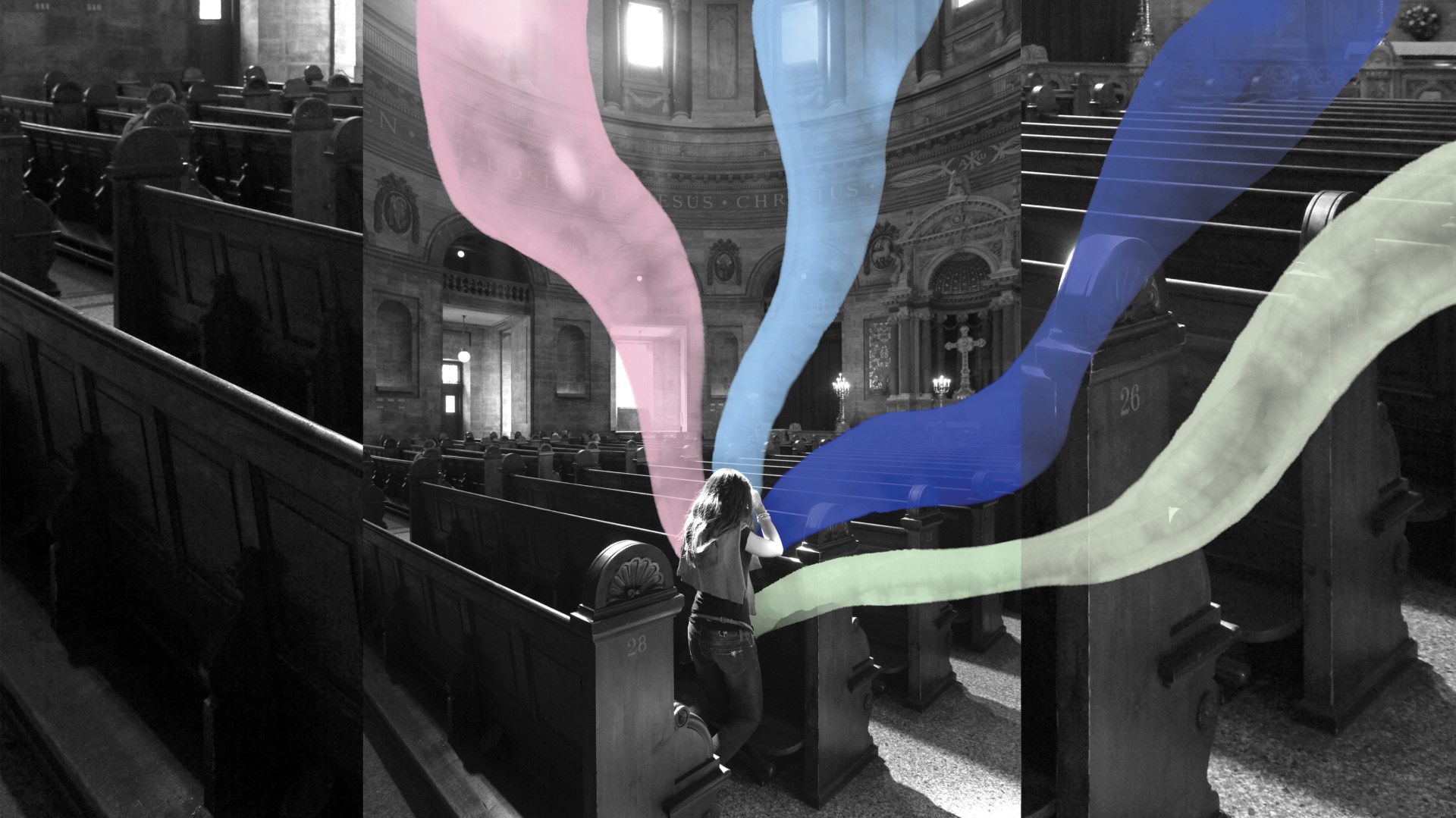
We can always commune with God in a “chapel of the heart.”

Illustration by Cassandra Roberts

Prayer is both the simplest and most difficult of spiritual practices. We need it, we desire it, it is not actually hard to do—and yet even deeply committed believers can struggle at times with prayerlessness. The reasons we give for this neglect take many forms, but they often boil down to some version of “I’m too busy.” Underneath these rationalizations lies a deeper reason: Our pride continually pulls us toward self-reliance, so we avoid the God-reliance that’s at the very heart of prayer.

“Our problem is that we assume prayer is something to master the way we master algebra or auto mechanics. That puts us in the ‘on-top’ position, where we are competent and in control,” Richard Foster writes in Prayer: Finding the Heart’s True Home. “But when praying, we come ‘underneath,’ where we calmly and deliberately surrender control.” Prayer invites us into dependence—a kneeling and openhanded posture of the heart—where we are blessed to remember that it is he who made us, and not we ourselves.

It’s this posture of creaturely humility—of utter reliance upon God—that our souls deeply long for. When we enter into prayer, we enter into a sweet relief. What solace we find as we throw off our delusions of self-reliance and acknowledge that God is God and we are not!

Even in the very act of praying, we are reliant upon God. While prayer certainly involves our intention and will, we aren’t the main actors in the work of prayer—God is. As Kristen Deede Johnson explores, prayer is a response to God, who is alive and ever present.

This special issue spotlights the voices and perspectives of women as we explore this topic of great import for the whole church. From candid discussions of prayer amid suffering and doubt to stories of prayer mentors from history and God’s answers to prayer, these articles challenge us to experience prayer as a life-giving invitation rather than a guilt-ridden “should” on our spiritual to-do list.

Brother Lawrence, the 17th-century Carmelite monk, beckons us beyond our hollow excuses and preoccupations, envisioning prayer for us in simple terms. He wrote, “It is not necessary to be always in church to be with God, we can make a private chapel of our heart where we can retire from time to time to commune with Him, peacefully, humbly, lovingly; everyone is capable of these intimate conversations with God.”

No matter what is happening in our lives, through prayer we can retreat into a beautiful sanctuary with the Lord. We can speak to God in this chapel any time we want. We can sit silently, or cry, or voice our questions, or rejoice. We can be with God there. For “surely I am with you always,” Christ promised, “to the very end of the age” (Matt. 28:20).


Theology

She Didn’t Believe, But God Heard Her Cry

I was privileged to be part of his answer.

Illustration by Cassandra Roberts / Source images: We are / Getty

I’ve heard Christians I love and respect say that prayer doesn’t change anything. “We pray in order for God to change us,” they say. I get the sentiment. I, too, believe that as I pray and ask God’s will to override my own, my heart changes. Slowly, softly, sometimes painfully, I feel my desires transform. But I don’t think that’s all prayer does. I know prayer can also change our circumstances. I’ve experienced it.

Several years ago, I was teaching a communication course at a college campus in Michigan. One particular student, Shatina, would always make her way to the back of the classroom. Most days, she’d put her head down on the desk and practice not making eye contact with me for the full 90-minute class. I generally have positive relationships with my students, but Shatina never seemed interested in that. She didn’t laugh at my jokes. She didn’t raise her hand. She sat in the back of class and, when class was done, she left.

One day, as Shatina walked into class, a thought popped into my head: Give Shatina the money that is in your wallet.

I wondered if this thought was from the Holy Spirit. But I didn’t grow up in a church culture with a strong focus on the Holy Spirit, so over time, I think I’d taught myself to ignore such promptings.

I can’t just hand students cash from my wallet, I thought to myself. In fact, it would be inappropriate. So I dismissed the thought as my own and taught my class as usual. When class ended, the students left, including Shatina. The second she was gone, a thought emerged in my mind again: You keep asking me to give you big opportunities, and you haven’t been faithful in this small one.

I still wasn’t sure if I was talking to God or arguing with myself, but I knew the statement was convicting. I had been praying for God to use me, and now maybe he was and I was ignoring the opportunity. I quickly checked my wallet and saw I that had a 20-dollar bill. I ran outside and looked up and down the parking lot for Shatina but couldn’t find her. I told the Lord that if this was from him, I’d tried to be faithful, but apparently it was too little and too late.

This all happened on the Friday before spring break. My husband and I went on vacation the next day. I wish I could say that my entire trip was ruined by my grief over my refusal to obey what I perceived to be the voice of God. But it wasn’t. During our vacation, I didn’t give the situation a second thought.

But when I got back to work a week later, as soon as Shatina walked into my classroom, a thought entered my mind again: Heather, give Shatina the money you have in your wallet.

I took out my wallet and opened the zipper. This time there was 40 dollars sitting crisply inside. Okay, I thought. I’ll be faithful.

When class ended, I asked Shatina to stay behind. She looked incredibly nervous. We had no relationship, and this was about to get very awkward for both of us.

“I know this is going to sound very strange,” I began while fumbling for my wallet, “but I am a Christian. When you walked in here today, God told me to give you this 40 dollars. I am so sorry if I am making you uncomfortable. This money is not from me. This money is between you and him.”

I pressed it into her hand even as I felt nervous, hoping she wouldn’t file a complaint. Her face went from confusion to complete shock. “I’m a single mom,” she said. I did not know this. She was only 19.

“Before I stepped in this class, I did something I haven’t done in several years,” she whispered, now with tears streaming down her face. “I prayed.”

Shatina went on to tell me that right before my class she’d asked a friend for money to help her buy a box of diapers for her six-month-old baby. Her friend didn’t have any, so they called the friend’s dad to see if he had any money he could loan her. He also said he didn’t. They hung up with him, and Shatina’s friend turned to her and said, “I think we should pray.”

Shatina was offended; she saw no use for prayer. If there even was a God, he didn’t bother himself with her prayers. Shatina had grown up in foster care and experienced sexual assault. As a senior in high school, she moved into a halfway house. Then she’d gotten pregnant and had a baby.

Shatina didn’t really believe in God, but when her friend asked her to pray, she decided to be polite. The two girls, sitting right outside of my classroom, prayed to God. They didn’t pray for a house, or for riches or fame. They prayed for a box of diapers. And now here I was, roughly 90 minutes later, handing her 40 dollars.

I’ve never ignored the voice of the Holy Spirit again. If I had not answered that voice, whispering a second time for me to open my wallet, maybe God would have found another way to help Shatina. Or perhaps God’s response to this 19-year-old single mother who was barely able to pray actually relied in some mysterious way on my willingness to respond to the Spirit’s stirring.

Over the years, Shatina and I have stayed connected. God has continued to work in her life, and she’s now a believer in Jesus. But even then—when she barely believed in God and did not even want to pray—her prayer mattered. This is the God we get to serve. And this is a God I want to do my part to co-labor with.

Yes, I believe that our prayers change us. But I also believe God works through prayer to change our circumstances—because I was privileged to be part of God’s answer to a teenage mom from a halfway house who needed a box of diapers. I saw God answer the cry of a girl who didn’t even believe in prayer.

Heather Thompson Day is the author of It’s Not Your Turn, the host of CT’s Viral Jesus podcast, and associate professor of communication at Colorado Christian University.

This article is part of CT’s special issue “Teach Us to Pray: Women’s Perspectives on Deepening our Engagement in Life with God.” You can read the full issue here.

Theology

Our Theology of Prayer Matters More than Our Feelings

For years I’d prayed as if my relationship with God depended on it. Now I view prayer differently.

Illustration by Cassandra Roberts

For a season in my Christian life, I was known as the go-to person on prayer. If you had a prayer request, you could rest assured that I’d add you to my list and pray for you every morning in my quiet time. For years, a day had not gone by without me spending intentional time in prayer. If you asked me what I’d do if I was tired or discouraged, I’d have told you—in all honesty—that I found nothing more refreshing or encouraging than getting on my knees and praying.

If you were curious about different kinds of prayer, I’d have told you about how I learned to pray through the ACTS acronym (adoration, confession, thanksgiving, supplication) and then discovered that one can pray through journaling and singing. I’d have shared what I learned through Richard Foster and Dallas Willard, through practicing prayer as silence and stillness, through integrating prayer into all of life a la Brother Lawrence, through using the rich and meaningful prayers of Paul (which were captured in a tiny booklet by Elisabeth Elliot), and eventually through cherishing the eloquent words of the Book of Common Prayer.

I relished reading about prayer, talking about prayer, trying different kinds of prayer, and encouraging others in their lives of prayer. And most of all, I loved the sweet intimacy of prayer itself. I read and studied the Bible every day too, but prayer was the center of my relationship with God.

And then one day, without warning, reason, or explanation, that sense of sweet intimacy was gone. The life of prayer that I’d spent years cultivating appeared to vanish. My very relationship with God seemed threatened.

A Dry Season?

I was doing all the same practices and disciplines, but they didn’t seem to be working. I continued to carve out time to pray each day, but my experience was markedly different. Some days I could not find the words to offer. Other days I could not stay focused. Afterward, I’d find myself wondering if I’d been praying at all, if I’d been daydreaming, if my worries had hijacked my prayer time, if I’d fallen asleep, or if I’d done a little bit of each.

What worried me the most was that I had no sense of the presence of God in those times. Although I’d been taught that my faith was not dependent on my emotions, I had become used to having a feeling of spiritual connection with God during prayer that I didn’t experience at any other time. When that intimacy disappeared, I was left reeling.

Was this what C. S. Lewis had been talking about in The Screwtape Letters when he wrote that God “sooner or later … withdraws, if not in fact, at least from their conscience experience”? Was I at long last entering this “trough period,” as Lewis called it? Was Lewis right, that “the prayers offered in the state of dryness are those which please Him best”? Or was this the dark night of the soul that John of the Cross described? Could Teresa of Avila’s years of struggling with prayer, and her framework of the soul’s journey through different stages in ascent to God, help me understand what I was experiencing?

For all the wisdom that classic and contemporary resources on prayer offer, what God ultimately taught me was that my struggles with prayer arose not because I was in a state of dryness or a new stage of prayer, but because—ironically, I can now see—I had made prayer too important.

Reframing Prayer

I did not need another method of prayer or to read another book about prayer. What I needed was a faithful theology of prayer. The one that had undergirded my prayer life for years was, as it turned out, distorted.

I wrote above that “prayer was the center of my relationship with God.” I now see all sorts of red flags in this. I’d prayed as if my relationship with God depended on it, when in truth my relationship with God depends not on a spiritual practice but on his grace and mercy revealed in Jesus Christ by the power of the Holy Spirit. Rather than receiving prayer as a means of grace that God could use to strengthen my relationship with him, I’d understood prayer as the anchor of that relationship—and I’d put all of my weight and trust in prayer. Then, when my prayer life seemed gone, I was left unmoored and adrift.

While I certainly believed that I was saved by grace rather than works, I also thought that my daily relationship with God essentially depended upon my times of prayer—which ended up making my prayers a lot like “works.” Based on my conversations with fellow believers and students over the years, it seems many of us view prayer this way—as something we have to do—which leaves us feeling guilty or ashamed that we’re not praying enough. Or we believe we’re distant from God because we haven’t been praying. The Bible offers a different picture of prayer.

‘The Second Word’

In prayer, we are responding with gratitude to the God who has already reached out to us in Christ. We pray “Our Father” as Jesus taught us, because we are already a part of God’s covenant family. We’ve been adopted by God through Christ and the Spirit. Prayer is a family practice, not something we do to find our way in or to keep our place in the family, but something we do because we’re already part of the family. Prayer is always responsive in nature; in prayer we are responding to the God who created us, redeemed us, and called us into his family.

Eugene Peterson describes prayer as “answering speech.” He writes in Working the Angles, “Prayer is never the first word; it is always the second word. God has the first word. Prayer is answering speech; it is not primarily ‘address’ but ‘response.’ Essential to the practice of prayer is to fully realize this secondary quality.” What’s true of our entire relationship with God—that it depends on God’s prior action—is also true of prayer. The God who spoke creation into existence, the Lord who called Abram into a covenant with him, the Word who became flesh that we might become children of God, is the same God to whom we respond in prayer.

We do not enter our times of prayer as the initiators, with all the weight on our shoulders, but as responders to a God who has graciously given us all that we need to be in relationship with him. This is not simply a past-tense truth—that because of Christ’s salvific work on the cross we can be in a relationship with God—but it also includes the Holy Spirit’s presence in our lives in the present. The Holy Spirit, the one by whom we call out “Abba, Father” (Gal. 4:6), was given to us as our ongoing Counselor to be with us forever (John 14:16). God gave us the Spirit to both unite us to God in Christ and to provide guidance as we live each day as God’s children. In light of this, Augustine often called the Holy Spirit simply “the Gift.”

Praying with the Spirit

This has real implications for our lives of prayer. Peterson writes in Christ Plays in Ten Thousand Places,

If the Holy Spirit—God’s way of being with us, working through us, and speaking to us—is the way in which continuity is maintained between the life of Jesus and the life of Jesus’ community, prayer is the primary way in which the community actively receives and participates in that presence and working and speaking. Prayer is our way of being attentively present to God who is present to us in the Holy Spirit.

This frees us from thinking that prayer is about our posture or our “right words.” Prayer is a part of being attentive to the God who is already present with us; to the God already at work in us, our communities, and the world; and to the God who wants us to participate in his ongoing work.

And as we pray, we are dependent on the Spirit whether we recognize it or not. For “we do not know what we ought to pray for, but the Spirit himself intercedes for us through wordless groans. And he who searches our hearts knows the mind of the Spirit, because the Spirit intercedes for God’s people in accordance with the will of God” (Rom. 8:26–27). Paul is not simply saying, “When you can’t find the words, the Spirit will help.” Scripture is promising that the Spirit himself is interceding for us all the time! We never fully know what we ought to pray for, and that’s all right. The Spirit will take whatever we offer, however rich or impoverished our words are, however present or distracted we feel, and intercede for us in accordance with God’s will. Thanks be to God!

In Revelation 5, John describes a vision of a slain Lamb upon a throne, surrounded by elders who have fallen down in worship. Each of them is holding “golden bowls full of incense, which are the prayers of God’s people” (v. 8). It’s amazing to imagine: Our ordinary, everyday prayers reach the very presence of God. And nothing in this passage suggests that only the eloquent prayers make it into those golden bowls, or only the prayers offered by those who have achieved absolute stillness of mind and spirit. Whatever we offer, regardless of what we feel or don’t feel, the Spirit takes our words or our groans or our moments of silence, intercedes and refines them according to the will of God, and offers them to God, like fragrant incense rising to the Lamb upon the throne.

Christ Himself Prays for Us

Not only is the Spirit actively present in our lives of prayer, but Jesus himself is interceding for us. In the Book of Hebrews, we read of Christ’s “permanent priesthood” and the way “he always lives to intercede for [us]” (7:24–25). Christ offered himself as the sacrifice for our sins once and for all, and he continues to mediate on our behalf as he serves in the sanctuary, seated at the right hand of the Father (7:27–8:2). This includes praying on our behalf, just as the high priests of the Old Covenant offered not only sacrifices but also prayer on behalf of the people. Jesus’ ongoing priesthood further emphasizes that we are never on our own when we pray. All of our prayers are enveloped into the ongoing intercessions of our Savior.

On our own, we are helpless before God and entirely dependent on the salvation made possible by Jesus Christ. Similarly, we are no less dependent on the grace of God for our lives of prayer. As James B. Torrance puts it in Worship, Community, and the Triune God of Grace,

The God to whom we pray and with whom we commune knows we want to pray, try to pray, but cannot pray. So God comes to us as a man in Jesus Christ to stand in for us, pray for us, teach us to pray and lead our prayers. God in grace gives us what he seeks from us—a life of prayer—in giving us Jesus Christ and the Spirit. So Christ is very God, the God to whom we pray. And he is very man, the man who prays for us and with us.

When we pray, we can rely on Jesus Christ, who is always praying for us and with us.

Dietrich Bonhoeffer goes so far as to say that Christ’s praying on our behalf is what makes our prayers true prayer. Prayer is not fundamentally about us pouring out our words, our hearts, or our emotions to God. “Christian prayer,” Bonhoeffer writes in Life Together, “takes its stand on the solid ground of the revealed Word and has nothing to do with vague, self-seeking vagaries. We pray on the basis of the prayer of the true Man Jesus Christ. … We can pray aright to God only in the name of Jesus Christ.”

When we pray “in Jesus’ name,” we acknowledge that our prayers depend on Jesus Christ, which gives us freedom. When we’re not tangibly aware of God’s presence in prayer, it’s okay. We are always connected by the Spirit to Jesus’ ongoing ministry of prayer, whether we feel it or not. When prayer doesn’t deliver the sense of intimacy we are expecting, we can find joy in knowing that our union with Christ is secure. When suffering and grief make it difficult to pray, we can rest in the reality that the Holy Spirit and Jesus Christ will continue to intercede on our behalf. When we go through seasons of dryness, we can persevere in faith, remembering that our experience of prayer is not foundational. Jesus Christ himself is the foundation, the Word of God, who always lives to intercede for us.

Borrowed Words

More than 20 years have passed since my prayer life was upended. In those years, God has rebuilt it so that it stands on the firm foundation of Christ himself rather than on my expectations or experiences. As my theological understanding of prayer has deepened, I’ve rejoiced in the knowledge that my little prayers, however humbly or feebly offered, are part of a beautiful, ongoing Trinitarian reality. I’ve found freedom in knowing that prayer is a response to God, and a response empowered by God’s grace, rather than a duty that’s dependent on me.

Through the years I’ve found that praying the words of Scripture reminds me of these freeing theological truths. In his book Psalms: The Prayer Book of the Bible, Bonhoeffer writes, “We learn to speak to God because God has spoken to us and speaks to us. … God’s speech in Jesus Christ meets us in the Holy Scriptures. If we wish to pray with confidence and gladness, then the words of Holy Scripture will have to be the solid basis of our prayer.” Bonhoeffer’s words ring true for me. Praying with the borrowed words of the Bible was one way God rebuilt my life of prayer on a more solid basis, reminding me that prayer is answering God, not generating my relationship with God.

Praying the Psalms reminds me that my prayers are rooted in Jesus’ ongoing ministry of prayer. Jesus himself regularly prayed the Psalms during his earthly ministry. When we do the same, Bonhoeffer suggests that we encounter the praying Christ and that our prayers join in with his. Praying through the Psalms helps me to embrace prayer with “confidence and gladness,” as Bonhoeffer puts it, recognizing that my life of prayer is utterly dependent on the Father, the Son, and the Holy Spirit, not myself.

When we face discouragement in prayer, may the reality that Christ prays for us and the Spirit intercedes for us invite us into joy and freedom. Our prayers are a response to our loving God who first sought us.

Kristen Deede Johnson is dean and vice president of academic affairs as well as professor of theology and Christian formation at Western Theological Seminary in Holland, Michigan. Her books include The Justice Calling, coauthored with Bethany Hanke Hoang.

This article is part of CT’s special issue “Teach Us to Pray: Women’s Perspectives on Deepening our Engagement in Life with God.” You can read the full issue here.

Theology

How Should We Pray When We Suffer?

What looks like “resting in God” might actually be a mask for resignation.

Source Image: Massimo Pizzotti / Getty

When we suffer, we may outwardly appear to be “resting in God,” accepting whatever he gives us. But what looks like rest might actually hide a dangerous and deadly spiritual resignation. The truth is, we’ve lost hope and plastered a Jesus sticker on the face of our despair.

After the death of my infant son Paul, what looked to others like rest was a mask for resignation. I’d begged God to spare my baby’s life, but he died even as I was praying. In the days that followed his death, I planned a funeral, spoke of God’s goodness, and offered words of sound theology—theology that I believed. I said I was resting, trusting, and standing on the promises of God, but internally I was actually turning my face away from God.

I was too ashamed to admit to others, and even to myself, how disappointed I was with God, so I numbed the pain with platitudes that I wanted to believe while I distanced my heart from the Lord. My once-vibrant faith soon drifted into apathy and prayerlessness because I’d lost hope that God was even listening.

Months later, in desperation, I finally cried out to God again. I had nowhere else to go. He met me in my discouragement and drew me back to him. I felt a newfound freedom in being completely open with him, so I began voicing my fears, journaling my questions, and praying through Psalms as I processed my grief. This season of wrestling with God in prayer finally reengaged my heart. Instead of answers, I found rest in God himself and a peace beyond my understanding. My journey of wrestling in prayer amid suffering is what eventually led me out of hopeless resignation and into real trust.

The Reason to Wrestle

Wrestling in prayer is crying out to God, asking for what we need, holding nothing back. It isn’t fighting with God, but it is grabbing hold of him, expecting him to answer, and refusing to let go or look away. Augustine wrote in Confessions, “The best disposition for praying is that of being desolate, forsaken, stripped of everything.” The more desperate we are, the more earnestly and specifically we pray. When we see that only God can change the situation we’re facing, we fall to our knees, determined not to give up until he answers.

When my first husband left our family, I pleaded with God day and night for him to come to repentance. When I was diagnosed with post-polio syndrome, I implored God to prolong and increase my strength. When my daughter was becoming increasingly defiant during adolescence, I asked God to change her heart. I didn’t just ask for these things. I begged—sometimes flat on my face, often with tears, multiple times a day. No one had to remind me. I was desperate for God’s help.

Scripture consistently points us toward this sort of fierce, determined, wrestling prayer. Jacob wrestled with God all night, declaring, “I will not let you go unless you bless me,” and his tenacity earned him a new name—Israel, which means “he strives with God” (Gen. 32:26–28). Hannah cried bitterly to the Lord for a child; after many years of infertility, God gave her a son (1 Sam. 1:9–20). David often grappled with God in prayer, and his psalms are full of urgent and often frantic requests that God answered (Pss. 6, 22, 69).

Jesus commended relentless prayer in his parable of a persistent widow who doggedly cried out to an unjust judge for justice against her adversary (Luke 18:1–8). Because of her continual asking—her willingness to press the matter to the point of annoyance—she was rewarded. Jesus concluded his parable by saying, “And will not God bring about justice for his chosen ones, who cry out to him day and night? Will he keep putting them off? I tell you, he will see that they get justice, and quickly.” God never puts us off. God never grows weary of our requests and will never ignore our pleas. Our cries are always accomplishing something.

Consider what crying means for human infants. It is a natural response to need. Babies who don’t scream when they are hungry or wet have usually been neglected; they’ve learned their sobs are useless and won’t change anything. But when a baby cries, that crying is an instinctive affirmation that someone will respond to their needs. This is the heart behind wrestling in prayer. When we wrestle—in our pain and our need—we are acknowledging that we trust God to hear us and respond to our cries.

Where Things Can Go Wrong

Both wrestling in prayer and resting in prayer can have inherent dangers. The problem lies in wrestling without trust and in resting without wrestling. When we wrestle without trust, we are truthful about ourselves without acknowledging the truth about God. And when we rest without wrestling, we are truthful about God without being truthful about ourselves. Both can lead to hardness of heart.

While the Lord invites us to wrestle in prayer, this does not entitle us to demand the answer we want, as if God owes us and must do our bidding. When people pray with this sort of mindset, unanswered prayer can cause them to turn away from God in anger and hostility, questioning God’s goodness, power, or even existence. Their wrestling has felt pointless, and they walk away disillusioned.

Conversely, the refusal to wrestle with God amid suffering—instead offering up pious words, religious platitudes, and a false outward joy—can often mask a heart that has given up hope and is far from God. This so-called resting in prayer can also be an excuse for spiritual laziness, praying brief and detached prayers with no heart or vitality. These are what Charles Spurgeon called “fingertip prayers” in The Power of Prayer in a Believer’s Life—prayers he describes as “those dainty runaway knocks at the door of mercy,” requests that are more for show or out of obligation without any expectation of an answer.

What we are expecting from God can be the key to discerning true rest in prayer from false rest. Is our rest passively moving us away from God because we’ve given up any hope that he’ll answer? Or is our rest actively drawing us closer to him because deep down we know he always answers with his best, even if we don’t understand it? I’ve experienced both. After Paul died, my “rest” was a front for passive mistrust and hopelessness; but after my first husband left, my rest in God sprang out of active trust and eternal hope.

The Reason to Rest

While the kind of false rest I’ve described draws us further from God, true rest draws us closer. Isaiah 26:3 reminds us, “You will keep in perfect peace those whose minds are steadfast, because they trust in you.” Rest requires actively trusting God, keeping our minds on him.

True rest comes from God and is found in him alone. “Truly my soul finds rest in God,” David declared (Ps. 62:1). Jesus urges us to come to him and find true rest for our souls (Matt. 11:28–29). Resting in God in prayer brings a supernatural peace and inner calm as we quiet our souls before God like a weaned child in his presence (Ps. 131:2).

God’s presence is our rest. The Lord said as much to Moses when he was worried about the future: “My Presence will go with you, and I will give you rest” (Ex. 33:14). When we know the Lord is with us, we can stop worrying about the present or the future and can enter into his rest, trusting that he will both protect us and provide for us. This peace in the Lord’s presence is active—not passive—and is the overflow of choosing to trust, drawing near to God in prayer, and surrendering to his will.

True Rest Comes After Wrestling

Scripture underscores that true rest and peace amid suffering often come from asking and wrestling in prayer. In Philippians 4:6–7, Paul exhorts us to not to be anxious, but instead to pray about everything. It is only after we have poured out our requests before the Lord that his supernatural peace will surround us. Paul knew this from personal experience with suffering; in 2 Corinthians 12:7–10, he pleaded with the Lord three times to remove his thorn in the flesh. God didn’t remove the thorn but showed Paul how his weakness was an opportunity to rest and boast in God’s strength.

In Lamentations 3, Jeremiah cried out to God feeling desolate, bitter, and hopeless. He spoke some of the most anguished and desperate complaints in all of Scripture, saying, “He has besieged me and surrounded me with bitterness and hardship. … Even when I call out or cry for help, he shuts out my prayer. … He dragged me from the path and mangled me and left me without help” (vv. 5, 8, 11). But as Jeremiah remembered God’s character, he dared to hope that God’s love and mercy would deliver him. He declared, “Because of the Lord’s great love we are not consumed, for his compassions never fail. They are new every morning; great is your faithfulness. I say to myself, ‘The Lord is my portion; therefore, I will wait for him’ ” (vv. 22–24). After Jeremiah lamented and wrestled in prayer, he rested.

When we wrestle in prayer with faith, we discover the hidden treasures of God’s grace. It isn’t weak faith that leads us to wrestle and spend sleepless nights in prayer, but faith strong enough to believe that God himself will meet us and answer us, that he is not indifferent to our cries but is rather moving heaven and earth in response to our pleas.In Gethsemane, the disciples fell asleep, unaware of what was about to happen. Their resting was born out of ignorance and weakness. Meanwhile, Jesus was wrestling with God, praying in such “anguish” that “his sweat was like drops of blood falling to the ground” (Luke 22:44) as he asked his Father to remove the impending suffering. After asking, Christ willingly accepted the Father’s answer, trusting God would do what was best.

Biblical rest in suffering begins with wrestling. We cannot fully surrender to God in prayer, resting in him, without first engaging in the fight for faith. When we wrestle in prayer, we trust that God is accomplishing something through our prayers, changing us in the process, and inviting us to a life-changing encounter with him. We wrestle to see our prayers answered, and we wrestle when our prayer requests are denied—both of which will eventually give way to true rest in the Lord. This active rest is what our heart longs for; as Augustine said, “You have made us for yourself, O Lord, and our heart is restless until it rests in you.”

Vaneetha Rendall Risner is a writer and speaker. Her latest book is Walking Through Fire: A Memoir of Loss and Redemption.

This article is part of CT’s special issue “Teach Us to Pray: Women’s Perspectives on Deepening our Engagement in Life with God.” You can read the full issue here.

Bethlehem Baptist Leaders Clash Over ‘Coddling’ and ‘Cancel Culture’

A debate over “untethered empathy” underscores how departing leaders, including John Piper’s successor, approached hot-button issues like race and abuse.

Christianity Today August 20, 2021
Ed Kohler / Flickr

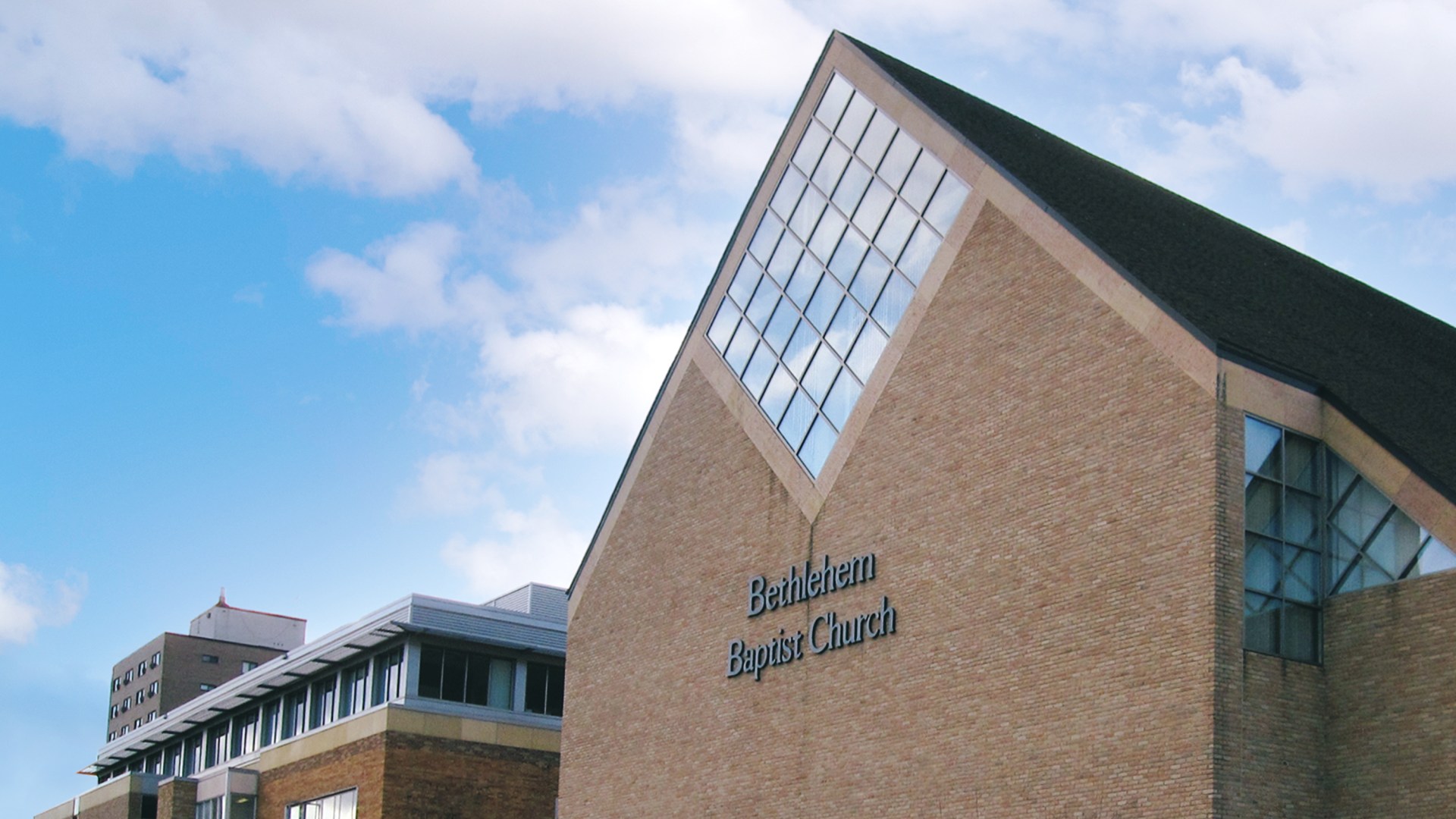
This was supposed to be a landmark year for Bethlehem Baptist Church in Minneapolis, as the historic congregation, best known for John Piper’s 33-year tenure as pastor, marked its 150th anniversary.

Bethlehem College and Seminary (BCS)—which grew from the church’s lay training institute to an accredited program—also has reason to celebrate. This fall, the school will inaugurate its second president, 10 years after its first graduating class.

Ahead of the commemorations, though, the community finds itself in the midst of what current leaders have called “a confusing and challenging time” and “a hard and difficult season in the life of our church.” Three pastors and a staff member resigned from the downtown campus of Bethlehem Baptist Church in recent months, alongside dozens of lay members. Another four faculty and staff left the college and seminary in the past year.

Some of the faces that appear in the compilation video of “150 God’s Grace at Bethlehem” no longer belong to the multisite Twin Cities church—most prominently Jason Meyer, Piper’s successor and Bethlehem’s pastor for preaching and vision. Members who spent 10, 20, or even 30 years worshiping and serving there, who expected they would be part of Bethlehem for the rest of their lives, said goodbye to their spiritual home.

“Bethlehem was the plan until we were going to be in Jesus’ arms. We can’t even think about what’s next,” said Debby Pickering, whose family left when her husband, Bryan, resigned his position as pastor. While he was trying to work for resolution, she didn’t know where to go with her own frustration and anxiety. “Nothing in seminary wife class prepares you for this.”

They leave behind a sizable community—2,400 members, spread across three campuses—whose leaders are also disappointed and grieved, enough that the church decided to postpone its 150th anniversary event scheduled for this weekend to November.

Unlike other high-profile evangelical scandals and shakeups in the headlines, the story at Bethlehem is not so clear-cut. In a letter emailed to his congregation, the pastor of one of the three Bethlehem campuses referenced “nuanced and complex issues at play” in Meyer’s resignation last month. Even people who’ve left in frustration agree there’s no single cause or person beneath the conflict.

Those leaving and those staying recognize some of the issues that have divided Bethlehem, many of which are straining other conservative churches: racial justice and critical race theory (CRT); the #MeToo movement and the call to believe women; and the nature of trauma and abuse.

Beneath this constellation of hot topics, though, there’s also a deeper philosophical disagreement over how to approach the various conflicts themselves. At its heart are questions over whether, when, and how Christians might challenge those who say they are hurting—and how they balance calls to show compassion, seek out truth, and repent of sin in such situations.

“If I just resign and pretend that I think everything at Bethlehem is fine, I would be dishonest,” wrote Meyer, who left August 1. “Rather, I believe our leadership culture has taken a turn in an unhealthy direction as we try to navigate conflict and division.”

Particularly since Donald Trump’s presidency, there’s been a deepening of divisions among American evangelicals, exposing disagreements not in theology per se but in how they as Christians see their greatest priorities and fears in society. It’s been accelerated by political polarization, racial reckoning, and pandemic stress.

Commentators have tried to parse the fault lines, and evangelicals themselves—including CT’s president and editor in chief Tim Dalrymple—have generated their own categories for how people of common faith can find themselves at odds.

In his resignation letter, Meyer referenced the “fracturing of evangelicalism” described in a recent Mere Orthodoxy article, which details how certain groups will experience “significant philosophy of ministry differences in how to contextualize the gospel in this cultural moment.” While accusations swirled of liberal drift under his leadership, Meyer instead saw the congregation moving in the other direction and suggested a pastor in the “neo-fundamentalist” category would be a better fit.

Several current leaders at Bethlehem as well as BCS’s new president, Joe Rigney, pointed to a similar taxonomy laid out by The Gospel Coalition’s Kevin DeYoung.

“Part of what’s happened, in the last five years plus especially, is emerging fault lines among people with sensibly shared theological commitments,” Rigney said in an interview with CT. At the same time, “There’s been an escalation of language and inflation of language such that when a certain issue rises to where it becomes the litmus test, where it becomes, ‘You’re either with us or against us’—as opposed to simply a different instinct or tendency within a same shared theological commitment—that’s when there’s real problems, and it’s hard to work together.”

Rigney has become known for raising concerns about the “sin of empathy,” a topic he’s written about on Desiring God and discussed in a video series hosted by Doug Wilson. His worries center on what he sees as contemporary expectations that people join others who are hurting in their pain. Such sensitivities, he fears, can threaten Christians’ relationship with the truth.

“God commands us to be compassionate. He commands us to show sympathy, but people demand empathy, and they regard it as a kind of betrayal if you refuse to join them in their pain, in their grievance,” he says in the series with Wilson. In this context of untethered empathy, he argues, “you lose the ability to actually make an independent judgment about anything that they’re saying or doing. In other words, you lose contact with truth.”

Rigney acknowledges that a criticism of empathy sounds provocative, and he’s made efforts to explain and defend his position online. But his take has also resonated. More than 25 people spoke to CT at length about their experiences navigating conflict at Bethlehem for this article. Many brought up the “untethered empathy” concept as a factor that they believe shaped leaders’ responses when confronted with claims of bullying, institutional protection, and spiritual abuse.

Three ‘empathetic’ pastors

Meyer’s exit last month followed two others’ at Bethlehem’s downtown campus. Ming-Jinn Tong, pastor for neighborhood outreach, announced his resignation in May; and Bryan Pickering, pastor for care and counseling, in June. All three had conflicted at times with Bethlehem’s 40-plus-member elder council, and they eventually saw their own ministries and the focus of the church going in different directions.

One point of tension was a months-long process evaluating grievances made against a Bethlehem elder and a BCS professor, Andy Naselli, who was accused of failing to be “quick to hear, slow to speak, slow to anger,” and thereby unfit for his positions, after his remarks at a church meeting. The elder council concluded in April that the charges against Naselli were not true, but the pastors were three of four elders who dissented in hopes that further investigation could take place.

They felt pressure for not going along with the rest of the elder council, to the point where some elders said they considered it “untenable” for Tong and Pickering to stay given their disagreement.

But it wasn’t just the situation around Naselli. During a meeting in May, the downtown pastors faced further challenges from some of the council. “Another elder in the meeting said of Pastor Jason, of Pastor Ming-Jinn, and of me that when we preach or pray publicly, or publicly communicate to the congregation, we are subordinating the gospel to other things,” Pickering told CT.

Jason MeyerScreengrab / Bethlehem Baptist Church
Jason Meyer

While Meyer was on sabbatical in May, Pickering and Tong were removed from the Sunday prayer and preaching schedule. They resigned not long after.

Meyer, whose involvement at Bethlehem dates back to 1999, returned from his sabbatical with what he says was a clear calling that it was time for him to go too. He described his reasons for leaving in a 3,100-word resignation letter that was recently leaked, nearly a month after the church announced his departure in a brief email.

He says the accusations against him were “(1) that I have subordinated the gospel, (2) that I empowered victims (‘coddler’), and (3) that I allowed compassion for others to steer and dictate my leadership direction.”

“In a climate of suspicion, compassion can look like coddling,” Meyer wrote.

A lay member, who attended Bethlehem for over a decade and asked not to be named to preserve ministry relationships, told CT it made sense that Meyer, Pickering, and Tong were the ones to go since they were seen as the “empathetic” ones. For some, these three pastors’ willingness to listen to and advocate for congregants, their teachings on race and abuse, and their leadership at the downtown campus were particular assets to Bethlehem.

“I’ve heard from various people who have said things like when they heard Jason preach or Ming-Jinn preach or me pray publicly, or things that I would post on social media, they would feel like they were very cared for, seen, or felt alignment with us,” said Pickering, who led the church in prayer the Sundays following the Capitol insurrection, the presidential inauguration, the Atlanta spa shootings, and the killing of Daunte Wright. “And if I’m saying it’s no longer a place to be able to say those things publicly and remain safe, they’re thinking, ‘That’s not a place for us then either.’”

But for others, the pastors’ focus on race and abuse issues reflected a differing philosophy of ministry.

“I believe that the issue isn’t whether or not we should show compassion (we should), but whether our compassion will be rooted in the gospel—deployed with discernment and with a willingness to provide correction or rebuke (Titus 1:13),” Steven Lee, pastor of Bethlehem’s North Campus, wrote in a response to Meyer’s resignation letter.

“I had a growing concern that compassion that lacks discernment would ultimately and subtly undermine sound doctrine. I observed leadership patterns that sought to help hurting people but left those same people even more frustrated and disappointed.”

‘Man Rampant’ fallout

Piper has hosted and defended pastor and author Doug Wilson over the years, even as he’s become an increasingly contentious figure in evangelicalism for his teachings on slavery, women, and other issues. Rigney has a degree from New Saint Andrews College, founded by Wilson’s Christ Church in Moscow, Idaho, and has maintained ties with him.

Rigney’s “sin of empathy” interview in Wilson’s series, called Man Rampant, released in October 2019 as the debut episode. A year later, Rigney, who had taught theology and literature at BCS since 2007, was named the school’s second president in an announcement by Piper as chancellor. Though Rigney serves as a pastor at a Bethlehem church plant in St. Paul, Cities Church, he is the first head of BCS who doesn’t belong to Bethlehem Baptist Church itself.

Bethlehem College and Seminary grew out of the church-run training center that dates back decades. It transitioned to a formal degree program that eventually became accredited in 2015. It remains based at Bethlehem’s downtown campus, and though BCS has its own board of trustees, there’s significant overlap in leadership.

“Our academic dean is an elder at the church. Five of our professors are elders; four of our trustees are elders,” said Rigney. “In terms of the leadership of the school, it’s the same guys. It’s the same individuals who are sitting in both places. Now, obviously I’m a pastor at a separate church, but that church has the same doctrinal commitment as Bethlehem does.”

Rigney and Wilson discuss the “sin of empathy.”Screengrab / Canon Press on YouTube
Rigney and Wilson discuss the “sin of empathy.”

With Rigney slated to lead the college and seminary, some worried that his theological views and his affiliations would become conflated with Bethlehem’s—specifically his concerns on empathy discussed in the hour-long Wilson interview (which is now on YouTube).

Janette and Steve Takata, who have attended and served at Bethlehem since 2003 and 1990, respectively, were concerned enough that Janette made a motion at the churchwide quarterly meeting in January. She requested that, prior to Rigney taking office, the elders make a statement to “separate” Rigney’s views in the episode from “the views and teachings of Bethlehem Baptist Church.”

Janette Takata pointed out that Rigney was identified as being from “Bethlehem” in the video and that a BCS professor and Bethlehem elder posted a five-star review of the episode. She asked how the message, with Rigney and Wilson discussing examples of women using emotional manipulation or falsely claiming abuse, would square with the church’s own ministry to care for victims.

Naselli, associate professor of theology and New Testament at BCS, spoke up to identify himself as the five-star reviewer and said that if the motion passed, he’d quit. The threat effectively shut down discussion. The Takatas were jarred by the response. In the following weeks, as the church attempted to make peace between them and Naselli, the couple felt maligned in the process, as the professor went on to characterize their motion as divisive and disrespectful.

The Takatas’ concerns quickly became about more than the motion, and they filed grievances challenging Naselli’s qualifications as an elder. Their dispute stirred underlying issues and philosophical differences, including over the subject of Rigney’s remarks themselves.

“The attitude undergirding the motion is too easily offended or hurt, and it turns that woundedness or offense into a crusade,” Naselli wrote in an email to fellow elders in February, referring to the move as a form of “cancel culture.”

Naselli stated that he reacted in the meeting because he worried about discrediting Rigney prior to his presidency, after BCS had undergone a careful, scrutinizing selection process to choose him. But he also saw the debate as a proxy for the other issues stirring around Bethlehem.

He told the elders:

I have been majorly burdened for our church for the past several years regarding how we approach ethnic harmony and related issues in our culture, including partisan politics, Critical Theory, Critical Race Theory, intersectionality, Black Lives Matter, etc.

I feel like we have encountered wave after wave after wave, and that in a good-faith effort to keep the peace and maintain some form of unity, we have not spoken with sufficient clarity about what is true and what is false and instead have attempted to appease left-leaning folks who are virtually unappeasable …

By the time the Takatas eventually met with Naselli and church leaders, they saw that “there are more dividing lines being formed here than we expected,” Janette told CT. They insisted he sinned against them “by explaining and denying” instead of seeking to understand. They said he “falsely accused us of insubordination to a pastor and acting in a manner that is intentionally divisive.”

But Naselli, according to the Takatas’ transcripts, spoke up about the difference between intent and impact and ultimately did not see his response as sinful. “I feel terribly that I hurt you, and I own that and I regret it, and I’m so sorry,” he said. “I’m not convinced that I sinned against you. I had zero ill intent against you.”

He later apologized for not being quick to listen in the moment and in later discussions of the incident, though in April the elders considered the grievances against him unfounded. Naselli did not reply to CT’s multiple requests to offer comment for this story.

Andy Naselli’s direct speech

The news of official grievances against Naselli, one of the best-known professors at BCS, spread among its 400 or so graduates. He is well respected for his scholarship and rigor, earning two PhDs (from Bob Jones and Trinity Evangelical Divinity School) before he turned 30. He writes for The Gospel Coalition and has served as D. A. Carson’s longtime research assistant.

Naselli often started the semester with an explanation of Malcolm Gladwell’s terminology of direct speech vs. mitigated speech—direct being the commands you give when a plane is crashing, and mitigated, the niceties you use as a matter of courtesy. The implications were clear: He would not be sugarcoating in this class.

Even with the warning, there were moments where the tone and classroom demeanor intensified in contrast to others at BCS. Four students recalled intense debates in their 2019 undergrad course in Christian ethics and apologetics. In one class, Naselli argued with those who disagreed with him over whether evil was created, to the point that he clenched his fists, grunted, and called the opposing position “almost a heresy.” He accused a student of “watering down the Bible with his understanding of evil and its existence,” according to Brax Carvette.

“This was baffling to me. We learned Augustine in doctrine class,” Carvette said. “That was a very heated conversation. I was pretty disappointed. Up until this point, I thought he was a pretty cool guy and authoritative in his teaching.”

As the debating and name-calling escalated, Jeffrey Hall joined the group of students defending the Augustinian position of evil as privation, or evil as the absence of good. His experience in the class led him to hear from others who had been called out by Naselli, and he brought concerns from a dozen students to leaders at the church at BCS the following year.

BCS is a confessional school where professors teach from its 52-page affirmation of faith, but students from other traditions can attend. Most, though, come through the Young, Restless, and Reformed movement. They’re drawn to Reformed theology and Piper’s Christian hedonism, which is reflected in the school’s motto: “Education in Serious Joy.”

“In a classroom full of men who would give their lives for the gospel, to have somebody who’s supposedly training you for ministry doubt your commitment to that gospel because you’re not convinced he’s right about everything is really hard to deal with,” said Karl Grant, who studied under Naselli in the seminary, as the sole Lutheran in the program. “He had the power to just wreck me. I used to wonder if I was too soft. Now I wonder why he was so harsh.”

Hall’s was one of two official grievances filed against Naselli last year. Tabb and fellow leaders at BCS conducted the investigation of the former students’ complaints, which concluded last August. Some current seminary students say they were satisfied with the outcome and have seen repentance from their professor following the investigation.

Though the process was done with the approval of Bethlehem pastors and the elder chair, some wanted the church to do its own review of Naselli last year. Even before Rigney’s selection and the Naselli investigation at BCS, church leaders had begun to rethink what it means for the college and seminary to be a “church-based” school when the church now has three campuses instead of one. Kenny Stokes, a pastor and elder at Bethlehem and associate professor and trustee at BCS, told CT they are currently in discussion to clarify protocols and policies between the two institutions.

Last year, Pickering and Meyer resigned from their teaching roles at BCS, with Pickering citing “egregious” student complaints against a “professor-elder” among his top reasons. He also opposed the selection of Rigney as president for how it complicates BCS’s relationship with the church and for his Wilson affiliations. Meyer had stepped down from the BCS board of trustees as well.

When Christina Boyum, a graduate of the college, discussed what happened in Naselli’s class with a fellow church member at Bethlehem, she was told, “A student feeling hurt does not mean that the student has been sinned against. It’s not bad to feel hurt.”

The BCS alumna said that he went on to say, “We came from a generation where Naselli’s teaching philosophy—and Don Carson’s—is completely normal. They’re trying to toughen you up. You are learning not to be led by your emotions. This generation—young people—are not being prepared to survive in the world they are going to find themselves in.”

This idea has come up in the cultural conversation with more loaded and often less theological terms: the overly sensitive “snowflake generation,” the debate over trigger warnings, and the 2018 bestseller The Coddling of the American Mind.

At Bethlehem, Rigney said, “we want to un-coddle the American mind, or at least the Christian mind. We don’t want that kind of escalation, inflation, and fragility in play. That’s part of our entire educational approach.” (He declined to comment on Naselli or any specific faculty members.)

Boyum said it was because of her training at Bethlehem that she felt like she should raise concerns. Overall, her professors and pastors “modeled a way to engage the world not from fear and suspicion, but with openness and critical thinking.”

“There’s much I love about Bethlehem. Frankly, it’s because I graduated from our undergrad program that I have concerns. I believe aspects of BCS culture are inconsistent with the mission and vision I came to love,” she said. She referenced the six habits that shape BCS education: observing, understanding, evaluating, feeling, applying, and expressing. “When we talk about the six habits of heart and mind, [we need to] actually do that.”

Rigney said that as Christian hedonists, feel becomes an educational distinctive at BCS. “We put a high premium on education in serious joy, and therefore we think the emotions are important,” he said. “The key thing in a lot of ways—maybe I’m feeling this one more directly now—is the way that our emotional responses to reality need to be in accordance with reality.”

Rigney recognizes spiritual abuse as something that does happen in Christian contexts, but he also challenged what he saw as the possibility for criticism or correction from a position of authority to get “inflated” as abuse. Similarly, Lee at Bethlehem’s North Campus referred to the spiritual abuse accusations against Naselli as the result of “concept creep,” suggesting that conceptions of abuse and victimhood are being expanded too far.

Ethnic harmony

Last year, as BCS academic dean Brian Tabb reviewed the students’ grievances against Naselli, the school also underwent a separate investigation in response to a group of current and former employees who raised broad concerns about leadership and workplace culture, including the position of women and minorities at the school. The investigation found that BCS policies did not violate workplace law. The school also hired its only female faculty professor, Betsy Howard, this year.

At the conclusion of the two investigations, Johnathon Bowers—who had taught for a decade at BCS—felt no better about the growing reservations he had over his place at the college. “There is no one factor that has driven me away from this school. It has been multiple factors in concert over time,” he wrote in a resignation letter last year.

Bowers had been a professor who looked forward to the first day of school every year and loved interacting with students—and it showed. Tabb, in an October 2020 email announcing Bowers’s final days at BCS, described him as being “beloved by students and colleagues for his excellent teaching, good humor, compassion for the marginalized, and faithful friendship.”

It took a lot for him to leave the classroom behind. He said he felt a conviction that he couldn’t in good conscience stay at BCS and by the end of 2020 his family left Bethlehem too.

Among his concerns, the former assistant professor of theology and philosophy wrote that leaders used “Scripture or Christian vocabulary to dismiss employee and student complaints,” and that he felt pressured to “tiptoe” around addressing racial progress. Bowers said that at BCS, “‘Black lives matter’ feels more threatening than the racism that has made that phrase necessary.”

He also expressed misgivings around the treatment of women, which he claimed was the result of attitudes that went beyond complementarian convictions, as well as around Rigney’s ties to Wilson.

Piper responded to Bowers’s account in an email to the campus community, saying that his characterization did not line up with his own as chancellor.

“If you find over time that Johnathon’s perceptions are true, you will rightly seek out another place to study or work. And in such a case, the school will rightly wither and die. As it should,” he wrote. “But if you see what I see, and if you experience this community (leadership, faculty, and students) as loving, and supportive and fair, and if you share my excitement about the future with Joe Rigney’s leadership and under God’s merciful providence, then I believe we will together walk in truth and love, and have a great impact for the glory of Christ.”

The sensitivity over Black Lives Matter and differing approaches to contemporary racial issues hits particularly hard in the Bethlehem community. Many at BCS, including Bowers himself, were influenced by Piper’s 2011 book Bloodlines, his confession of his own racism, and his desire for diversity.

The Christian conversation about racism has come a long way in the 10 years since Bloodlines, and has taken on more weight amid the recent string of high-profile police killings—three in the Minneapolis area alone: Philando Castille, George Floyd, and Daunte Wright. At the same time, worries around secular thinking overriding biblical approaches to race have spiked, particularly over critical race theory.

“I didn’t start experiencing regular conflict until I started advocating for racial justice issues,” Bowers told CT.

The three departing pastors from Bethlehem were based just a few miles from where George Floyd died in 2020. Tong led the church’s efforts to help the community in the unrest and grief in the aftermath of Floyd’s death, including setting up pop-up grocery stores.

Tong preaches to the downtown campus in March.Screengrab / Bethlehem Baptist Church
Tong preaches to the downtown campus in March.

A Taiwanese American, Tong also wore traditional Chinese attire as he preached on the Sunday following the Atlanta massage parlor shootings. He and Pickering, who read the names of the victims in prayer that week, received criticism from a fellow elder for bringing up race as a component in the incident.

Students saw the effects too, where professors were becoming less willing to find merit in concepts that have become associated with CRT, such as institutional bias. “The stakes continue to be raised,” said Josh Panos, a BCS alumnus. “There are things that professors would admit in classroom settings when I began that they wouldn’t be willing to admit now.”

Bethlehem uses the phrase “ethnic harmony,” believing ethnicity is a better match for the the cultural categories described in the Bible than race, which is primarily biological or physical. The church formed an ethnic harmony task force in 2019 to review issues such as representation and diversity within the church and leadership.

The group faced pushback from elders and pastors, who were worried that their approach focused only on where Bethlehem was not doing enough on matters of race. Then, its findings weren’t released to the church as a whole until a year and a half after issuing a report to elders. In the end, seven of the 17 original members of the task force ended up leaving Bethlehem, which some elders saw as confirmation that their misgivings about the group were justified.

In February 2021, the church released a statement on ethnic harmony that affirms Christians’ neighborly love across ethnic lines but denies that “ethnic diversity should be an end in itself” and rejects “all systems of thought that view relationships primarily through the lens of power—that is, those with more power are inherently oppressors, and those with less power are inherently oppressed.”

Like in many evangelical churches that are majority white, some members of the congregation believed the church was putting too little an effort into addressing ethnic harmony and justice, while others felt like it became too much of a focus.

The downtown campus was the most diverse of the three, with people of color making up 21 percent of attendees. Meyer told his congregation to expect that race would continue to be addressed from the pulpit. The Sunday after George Floyd was killed, he preached on racism and the call to sit in solidarity with those who are suffering. Meyer said, “If you as a church don’t like what I said today, you will have to get another pastor, because I believe this to the back of my teeth.”

Rethinking abuse

The issue of abuse also has particular resonance at Bethlehem. In the years after Piper stepped down in 2013, Bethlehem had its own reckoning on domestic abuse in complementarian marriages. Meyer preached in 2015 against the dangers of “hyper-headship” and made the case that doing nothing when faced with abuse is taking the side of the abuser. The church went on to revise its stance on divorce and start a ministry response team to care for victims.

Looking back, Pickering, as a counselor, wishes the church had established an understanding of systemic abuse prior to its focus on domestic abuse back in 2015.

It would have been easier, he said, to move from understanding abuse within institutions and systems, as can be the case with spiritual abuse and racism, to the ways abuse manifests in marriage relationships. But it’s more difficult to shift people’s thinking the other way, though more resources—books like Something’s Not Right: Decoding the Hidden Tactics of Abuse—and Freeing Yourself from Its Power by Wade Mullen and A Church Called Tov: Forming a Goodness Culture That Resists Abuses of Power and Promotes Healing by Laura Barringer and Scot McKnight—are changing how people see abuse within the church.

Leaders in the Bethlehem community, though, said they worry that the new sensitivities are hurting their ability to pastor and shepherd those in their care. Rigney at BCS lamented the challenge of responding “if a harsh word immediately becomes abuse.” Lee at the North Campus worried that even tenderhearted, gentle pushback is at risk of being dismissed. “Is there a way to do any rebuke or admonishment when someone is hurting?,” he asked.

Sarah Brima and her husband were former members of Bethlehem and Rigney’s Cities Church but left in part over his affiliation with Wilson. She described how hard it was to leave a church they’d helped plant, even as disagreements about race and gender emerged. “These churches that are really heavy on theology, we hold our theology so high that when we’re leaving, it felt like we’re leaving orthodoxy by leaving our church,” she told CT. “If that’s how you feel, there’s probably a problem.”

Brima, who is white and whose husband is Black, said she saw the “empathy as sin” idea used as protection from critique and believes it can do “unique harm” to women and minorities, seemingly minimizing their feelings and experiences. “When met with issues that strike at the core of one’s identity, it’s natural to have visceral responses,” she tweeted. “This response, of course, is labeled as immature, manipulative, and reactive.”

Last Sunday, Bethlehem campuses began to meet to discuss Meyer’s letter and the reasons for his resignation. The departures most directly affect the downtown campus, where Stokes, Bethlehem’s pastor of church planting, has assumed some of Meyer’s duties in the short term.

During the difficult moments over the past few months, he’s reminded himself of James 3:17 (ESV): “But the wisdom from above is first pure, then peaceable, gentle, open to reason, full of mercy and good fruits, impartial and sincere.” As the downtown campus grieves the loss of longtime leaders and friends, Stokes said he continues to answer questions, but he gets the sense that nearly all the remaining members are committed to stay.

Lee at the North Campus told CT that his congregation, the largest Bethlehem location, has been encouraged by the frankness of the discussion and is ready to move forward. He challenged his flock to consider their own experience in light of Meyer’s claims of drift toward “neo-fundamentalism” and “unity culture.”

“We have room to grow, yet I know that my fellow North elders have sought to shepherd not under compulsion but willingly, not for shameful gain but eagerly, and not domineering over others but serving as examples to the flock (1 Peter 5:2–3),” Lee wrote by email.

Abigail Dodds, who attends the North Campus, said that most remain confident in the church’s leadership—not as blind allegiance, but based on personal knowledge of their character—and that she has seen a “renewed unity around God’s Word and deepening hope in Christ among our members” in recent weeks.

“Bethlehem is in God’s hands,” she said. “He doesn’t need us, but by his grace and through his Son, we belong to him. We will continue to entrust ourselves to him in every circumstance.”

Discerning the truth

Churches and evangelical institutions across the country are trying to navigate their own divisions, but the process can be painful. Stokes said that even without charges of heresy or a false gospel, just differences in approach, “the discussion can feel very personal. Disagreements in this area can feel like personal attacks or as doctrinal attacks, when they really are neither.”

The situation at Bethlehem highlights not only certain issues being debated but also the conflicting philosophies shaping Christians’ responses: Are we accommodating feelings so much that we are crying “sin” where there is no sin? Are we not caring enough about our responsibilities to weep with those who weep? And are people on either side pitting truth and grace against each other and distorting the way of Jesus?

At Bethlehem, the biggest source of frustration and disappointment, in many cases, came not from the grievances themselves but from the resistance and attitudes people said they faced when they tried to bring those grievances forward.

Ann Mekala and her husband, who was on the ethnic harmony task force, left the church a couple years ago. She also left her job at Bethlehem’s Campus Outreach after reporting what she saw as domineering and sexist behavior by a coworker, only to have the leaders blame her personality and ambitions for the conflict, she said. She called what happened “double abuse.”

The Takatas, like the group of Naselli’s former students, felt like they too had gone through a convoluted process of praying, reporting, documenting, scheduling, meeting, and working for resolution only to have the process end without feeling like their concerns were fully understood and that nothing would change as a result.

Meanwhile, church elders and BCS administration concluded that the processes largely worked as they should, but that they came to a different conclusion than the accusers. In their minds, claims of inappropriate behavior or abuse won’t always be justified. Hurt feelings aren’t always a sign that someone has been sinned against. They were disappointed, too, that their pursuit of evidence and the truth became viewed as disbelieving victims or not showing compassion.

“One of the things that gets brought up in the abuse conversation is that abusers and their communities gaslight and minimize what they’ve done,” said Rigney. “You’re going to have people on opposite sides saying they’re making mountains out of molehills and then other people saying you’re making molehills out of mountains. Part of what I want to say is there’s actually an answer to that question.”

Both sides in a conflict want to get at what really happened; as Christians, they rightly set out to work toward justice and reconciliation where they can. But in contexts where believers already agree on the capital-T Truth, there’s even more weight and fallout when they fail to see eye to eye on the lowercase-t truth of a situation.

Theology

It Takes a Village to Escape a Toxic Leader

What recent scandals teach us about “betrayal blindness” in both church and parachurch settings.

Christianity Today August 19, 2021
Illustration by Rick Szuecs / Source images: Dziana Hasanbekava / Pexels / Valerie Gionet / Priscilla du Preez / Unsplash

A recent article about Ravi Zacharias International Ministries (RZIM) traces whistleblower Ruth Malhotra’s dawning realization that everything with the apologist and his ministry was not what it seemed to be. The piece alludes to questions that no doubt many have asked about Malhotra—who worked closely with Zacharias—and others: How could they not have seen this sooner? And why didn’t they leave earlier?

Those questions are not unreasonable. After all, we might listen to CT’s podcast The Rise and Fall of Mars Hill and wonder of those who left the church staff, “How did you not see all along the narcissism and dysfunction in such a setting?” Or even further afield, we might watch a documentary about Leah Remini’s departure from scientology and ask, “How could you not see that this was a multilevel marketing scheme combined with a UFO cult?”

There are many reasons why people stay in toxic systems as long as they do. Some of those reasons are rooted in the human sins of pride and ambition and some in the human foibles of fear or ignorance. But not all are. In some cases, what’s at work is “betrayal blindness.” The concept belongs to psychologist Jennifer Freyd and refers to the need for a person to trust a spouse, a parent, a caregiver, or a leader and, when betrayed by them, to fluctuate between the need to end the abuse and the need to preserve the relationship.

Lori Anne Thompson, the first woman to come forward publicly with charges against Zacharias, uses the term in her interview with Bob Smietana. After Malhotra spoke out and was ostracized from the ministry, Thompson supported her, prayed for her, and provided her with counsel, even though Malhotra had previously served as public relations officer for Thompson’s abuser.

Thompson told Smietana that the “betrayal blindness” concept helped her to better understand why some people stay in situations that from the outside are clearly toxic.

I’m not suggesting that betrayal blindness as Freyd articulates it is necessarily behind the case of Malhotra (who, full disclosure, is a friend) or any other group of whistleblowers there or elsewhere. But nonetheless, understanding the concept is essential for churches and other institutions to overcome the epidemic of abuse and abuse cover-ups. It’s also essential for making sense of the even-more-normalized patterns of toxic and spiritually abusive practices that characterize too many churches, ministries, governments, and political movements.

Every person is created with a need to be loved and accepted by those in authority, starting first with parents. When a parent rejects a child through abuse or neglect, some children cannot bear the psychological ramifications of thinking there is something wrong with their parents.

After all, such a thought would end with a scary and chaotic world, where the child would feel unprotected and alone. In some cases, then, the child concludes that there is something wrong with himself or herself. Sometimes the child thinks, “If only I behave better and work harder, then I can find safety and also help the caregiver be better.”

More often than not, this pattern of thinking doesn’t stop with childhood. Many of us have counseled abused women who conclude that the problem was that they didn’t adequately alleviate their partner’s stress. A spouse who is cheated on sometimes concludes that he or she wasn’t attractive enough, or is in some other way to blame for what happened. This often happens in church situations, where people sometimes find it difficult to see—sometimes until years later—that what they assumed was just “the messiness of dealing with people” turns out to have been a toxic and harmful environment.

That’s especially true when institutions—even churches—sometimes further the abuse of victims (or those who seek to help them) by gaslighting them, as though their reaction to the abuse—not the abuse itself—is the problem. Sometimes that happens when a person critiques the particular way the victim brought forward the complaint, or searches for other issues to pin on the victim.

In a church or ministry situation, this is especially perilous. When a person has been taught to see the church as “home” and as “family,” they sometimes start to question whether the red flags they have seen are real. When they are charged with sacrificing the “unity” of the ministry, they sometimes start to believe the rhetoric that they—not the problem itself—are the issue. Any institution can bully and intimidate a whistleblower—but no institution can do so with more claimed power than one that says, “If you do this, you’re walking away from Jesus.”

Just as a child with a parent, some people cannot bear to think that a church, ministry, or denomination—especially those that introduced them to Jesus—could be fraudulent. Some part of them might begin to think, “Maybe what they told me about Jesus and about the gospel might be fraudulent too.” And so they sometimes start to look for other possible explanations—ones that will pin the blame on themselves, rather than on those who are making things wrong.

Often, these people cannot even imagine themselves apart from their church, ministry, or denomination, so enmeshed is their identity with it. As neurologists and psychologists have shown, the experience of exile from a tribe is often experienced in the same way as physical pain.

The rationalizations, then, can be easy to believe: “The mission is too important for me to spend time dwelling on my intuitions telling me something’s not right”; or, “No one else seems to see this, so I must be the crazy one”; or, “If I’m gone, I’ll be replaced by someone much worse, and I can do more from the inside.” As we’ve seen time and time again, those lines of thinking end in disaster.

Even then, sometimes the counsel of outside friends is just as second-guessed as one’s own doubts. And sometimes it takes a breaking point to see that leaving is necessary. For some, as with Malhotra, that is when the evidence emerges—that one’s intuitions were right after all.

When I was in a toxic and spiritually abusive environment, I found myself coming out of years of second-guessing and finding ways to blame myself for what I was experiencing. It happened while reading a children’s book to my son. I read the final statement at the end of Mo Willems’s Goldilocks and the Three Dinosaurs: “If you find yourself in the wrong story, leave.” I put away the book and realized, “I’m in the wrong story.”

The scandals and frauds, deceptions and abuses within the church are the responsibility of all of us who belong to it. We have to take many steps—from creating accountability structures to training people how to identify problems to teaching leaders how to care for those harmed by them. We must insist on protections for whistleblowers. But we also should take steps—long before problems emerge—to train people to see the vision of the church Jesus has given us, where accountability is not sacrificed for unity and integrity is not sacrificed for mission.

As early as Sunday school, we should start helping people tell the difference between loyalty to Christ and loyalty to some who would claim his name. We should expend resources teaching them how to know when they are manipulated into blaming themselves and when they should step forward to say, “Something is wrong here.”

And we need to teach people that the story of Jesus does not harm the vulnerable. So if you find yourself in the wrong story, you can always leave.

Russell Moore leads the Public Theology Project at Christianity Today.

News

Indian Christians Discuss Different Reports on Persecution

Evangelical Fellowship of India panel responds to Pew research as annual tally of religious freedom violations gets released.

A compilation of documented religious freedom violations against Indian Christians over the past six months.

A compilation of documented religious freedom violations against Indian Christians over the past six months.

Christianity Today August 19, 2021
EFI Religious Liberty Commission

Christians in India are seeking to square conflicting research on communal tensions in their country.

About 100 Christian leaders from across the subcontinent attended an online consultation last month hosted by the Evangelical Fellowship of India (EFI) to discuss the findings and ramifications of a recent landmark report by the Pew Research Center, entitled “Religion in India: Tolerance and Segregation.”

A panel of seven leaders convened by EFI, which represents 65,000 churches and hundreds of Christian organizations across India, discussed the strengths and weaknesses of the report’s methodology and engaged attendees in Q&A on Pew’s findings on tolerance, segregation, religious beliefs, identity, nationalism, and more. Indian Christian sources previously told CT the report offered quantitative validation of their lived experience.

While the report surveyed about 30,000 Indians nationwide across six faiths and 17 languages, including about 1,000 Christians, the EFI panel wished the sample size had been even larger—given their nation’s 1.38 billion people and its size and diversity—and thus better able to examine regional differences in complex issues.

Their biggest area of disagreement: the level of communal tensions between India’s majority Hindus and its Christians, Muslims, and other religious minorities.

Pew found 9 in 10 Indian adults say they feel very free to practice their religion, while 8 in 10 say respecting other religions is very important to their own faith as well as to being truly Indian. Yet Pew also found a fair amount of support for religious segregation. For example, a third of Hindus in India would not be willing to accept a Christian as a neighbor, and neither would a quarter of Indian Muslims or Sikhs.

“Indians, then, simultaneously express enthusiasm for religious tolerance and a consistent preference for keeping their religious communities in segregated spheres,” wrote Pew researchers. “They live together separately.”

“It was generally agreed that the [Pew] report, although unsurprising in some respects, does not adequately reflect the ground reality in India—particularly the narrative of hate and polarization,” said Vijayesh Lal, EFI’s general secretary and a panelist during the consultation.

As CT previously noted, tensions over increasing Hindu nationalism in India have caused the nation to climb the ranks of persecution watchdogs in recent years. Open Doors ranks India at No. 10 on its 2021 World Watch List of the 50 countries where it’s hardest to be a Christian. The US Commission on International Religious Freedom recommends India be added to the State Department’s list of Countries of Particular Concern. Pew itself calculates that India has the highest level of social hostilities regarding religion among the world’s 25 most-populous countries, as well as one of the higher levels of government restrictions.

Pew found that only 1 in 10 Indian Christians reported being discriminated against in the past 12 months because of their faith. Yet this ranged regionally from 19 percent of Christians in the East and 12 percent in the Northeast to 6 percent in the South. (Pew could not break out Christian responses regionally in the North, Central, or West due to sample sizes.)

Days after EFI’s panel assessed the Pew report, its Religious Liberty Commission (RLC) released its latest report on hate and violence against Christians in India, concluding the number of incidents targeting Christians in the first six months of 2021 has increased compared to the same time period last year—even despite a brutal second wave of COVID-19.

The commission recorded 145 incidents targeting Christians from January to June 2021. Researchers stated the violence “was vicious, widespread, and ranged from murder to attacks on church, false cases, police immunity and connivance, and the now normalized social exclusion or boycott which is becoming viral.”

The analysis documents three murders, 22 cases of physical violence, 22 instances of attacks on churches or places of worship or their vandalization, and 20 cases of ostracizing or social boycotting in rural areas of families which had refused to renege on their Christian faith and had stood up to mobs and political leaders from the local majority community.

“The most alarming development has been the expansion and scope of the notorious Freedom of Religion Acts, which are popularly known as the anti-conversion laws, earlier enforced in 7 states, to more states ruled by the Bharatiya Janata Party,” stated RLC researchers. “Once targeting only Christians, they are now armed also against Muslims in the guise of curbing ‘Love Jihad.’ This is an Islamophobic term coined some years ago to demonize marriages between Muslim men and non-Muslim women, particularly those belonging to the Hindu upper castes.

“The laws ostensibly punish forced or fraudulent religious conversions,” the researchers stated. “But in practice, they are used to criminalize all conversions, especially in non-urban settings.”

For example, a mob of religious extremists forcefully barged into a church and assaulted 25 Christians, including women worshipers, on February 7 in the Alirajpur district of Madhya Pradesh, according to the report. The attackers also lodged a complaint against the Christians at the Udaygarh police station alleging conversions. This resulted in the police detaining and interrogating the two dozen Christians and filing charges against their pastor Dilip Vasunia under the state’s Freedom of Religion ordinance. The pastor was imprisoned and finally made bail after a few days, while no action was taken against the attackers who assaulted the Christians.

The report also narrates how on June 28, police in Uttar Pradesh arrested pastor Shivkumar Verma and another Christian on trumped up charges of religious conversions. Local sources alleged that since there was no evidence corroborating the accusations, police demanded bribes to release the two Christians. Verma spent a month in prison before finally being released at the end of July.

The EFI commission made it clear that its report is indicative of current events, not an exhaustive tally, and the actual number of sectarian incidents may be much larger.

Madhya Pradesh, the central state of India, and Uttar Pradesh, the most populous state, led the tally of incidents against Christians, followed by Chhattisgarh and Karnataka.

“Violence against Christians by non-state actors in India stems from an environment of targeted hate,” stated researchers. “The translation of the hate into violence is sparked by a sense of impunity generated in India’s administrative apparatus.”

The RLC report offered recommendations to the government of India. Chief among them: enacting a comprehensive national legislation against targeted and communal (sectarian) violence; advising the various state governments to repeal anti-conversion laws that limit religious freedom and are being misused against religious minorities; the enaction of laws to check hate speech and propaganda; and amending paragraph 3 of the Constitution (Scheduled Castes) Order of 1950 to include Christians and Muslims.

“The sad reality is that minorities are targeted, and these incidents occur and despite the pandemic have increased over last year’s figures,” said Lal. “This appears to be in contrast with the Pew report that would like us to believe that tolerance runs high in present-day India. While there are examples of tolerance historically, the dividing of people driven by narrow political interest is real as well and too often makes use of religion for polarizing people and carrying out sectarian violence.”

Panelist John Dayal, a Delhi-based Christian political analyst and cofounder and past secretary general of the All India Christian Council, said the report could mislead global thought leaders, the media, and fellow Christians into a “dipstick understanding” of religion in India and miss the “extreme polarization” in recent years.

Pew’s research found that 53 percent of all Indians and 44 percent of Indian Christians think religious diversity benefits India, while 24 percent of all Indians and 26 percent of Indian Christians think it harms the country. Christians were the least likely of any religious group to say that religious diversity benefits India.

The EFI panel concluded with recommendations for the Indian church.

The first was for Indian believers to go beyond the segregations of the denominationalism that exists within the church in India, and to examine how a more inclusive Christian spirituality could be developed.

“Failure to do this may destroy our ability to be a witness in the nation,” warned panelist C. B. Samuel, a respected Bible teacher and former executive director of EFICOR (formerly the Evangelical Fellowship of India Commission on Relief).

The divides of regionalism and caste in Indian society exist also within the church, thus a noticeable difference in the response of south Indian Christians vs. their brethren in the north or northeast. “Therefore, a conscious modeling of church which breaks the barriers is very important,” said Samuel.

Both panelists and participants stressed the themes of common humanity and the intentional visibility of good deeds. It was also shared that the church must be intentional about critiquing power issues.

“The report speaks about segregation, but the core issue is the misuse of power that leads to segregation which eventually destroys common humanity and leads to silos,” said panelist Richard Howell, principal at the Caleb Institute of Theology and past general secretary of EFI.

Howell also stressed the primacy of theological identity rather than cultural identity. “We have forgotten our theological identity. If we only major on cultural identity, there is no critique of power left,” he said. “Our critique comes from a transcendence. We must never forget this.”

Panelist Ashish Alexander, head of the English department at Sam Higginbottom University of Agriculture, Technology, and Sciences in Allahabad, pointed out that during the survey Christians were asked if Muslims were discriminated against in India and only 16 percent agreed. When Muslims were asked the same about Christians, only 8 percent agreed. Hence, Indian Christians need to be sensitized about Indian Muslims and vice versa, and a bridge needs to be built.

The consultation ended with a call for deeper research into themes both explored in the Pew study and beyond it, such as polarization, hate campaigns against minorities, and Islamophobia in India.

“I also wish that Pew would have dissected Indian Christianity,” said Dayal, “to find out what are our strengths and soft spots.”

“We do need more studies, more understanding among ourselves,” said panelist Vinay Samuel, founder of the Oxford Center for Mission Studies and the Oxford Centre for Religion and Public Life. “Identities have boundaries as well. So, we do need to look at how different groups are constructing their identities, i.e. South Indian Christians, North Indian Christians, Punjabi Christians, etc.”

“There is a need to devise institutions to bring India’s religious communities onto common platforms to discuss issues and diffuse tensions,” said Lal in summary at the end of the consultation.

“In India, religion has to be experienced. Experience comes first, then relationship and thirdly conceptuality,” said Howell. “Where Christians have taken time to build bridges, things are better. We [Christians] must take time to build bridges with all communities.”

News

Was Afghanistan Worthwhile or Wasted? Christians Lament, Pray, and Learn as Taliban Retakes Control

As the world debates the US withdrawal, 15 leaders reflect on how they are applying their faith to understand how to best advocate for justice in the aftermath.

Murals are seen along the walls at a quiet US embassy on July 30, 2021 in Kabul, Afghanistan.

Murals are seen along the walls at a quiet US embassy on July 30, 2021 in Kabul, Afghanistan.

Christianity Today August 19, 2021
Paula Bronstein / Getty Images

It will be hard to forget the images of Afghans mobbing outgoing aircraft, some clinging on to planes with their bare hands, in their desperation to leave their country following the Taliban’s takeover of Kabul.

President Joe Biden’s follow-through on former President Donald Trump’s planned withdrawal from Afghanistan, the Taliban’s prompt takeover, and the seeming lack of coordination and planning to evacuate translators and others at risk of persecution have sparked intense outrage and sadness worldwide.

Christians both inside and outside the United States disagree on what the US government and military should have done. But they are trying to apply their faith to help them understand how to best advocate for justice in the aftermath.

CT surveyed 15 leaders on what they are lamenting about the American withdrawal and Taliban takeover; how they’re praying for Afghanistan’s future; what they think American Christians can learn from the war; how they see the long-term impact on the mission field; and whether the decades of investment by Americans troops and foreign Christian workers were worthwhile or wasted.

Our contributors:

Chris Seiple

is president emeritus of the Institute for Global Engagement and author of

The US Military/NGO Relationship in Humanitarian Interventions

.

Paul Miller

is professor of the practice of international affairs at Georgetown University’s School of Foreign Service. He previously served as director for Afghanistan and Pakistan on the National Security Council.

Mariya Dostzadah Goodbrake

and her family were once Afghan refugees. She now serves as the executive director of Global FC, an organization that serves refugees in the Kansas City area.

Eugene

, a Christian worker who served in Afghanistan and Pakistan for decades and requested anonymity due to ongoing ministry.

Jenny Yang

is vice president for advocacy and policy at World Relief, the humanitarian arm of the National Association of Evangelicals and one of the US’s nine refugee resettlement agencies.

Mark Tooley

is the editor of

Providence: Journal of Christianity & American Foreign Policy

and the president of the Institute on Religion and Democracy.

Humphrey Peters

is primate of the Church of Pakistan and bishop of the Diocese of Peshawar, which extends to Kabul.

Ryan Brasher

spent seven years (2014–2021) as a political science professor at Forman Christian College in Lahore, Pakistan.

Mark Morris

is the director of RefugeeMemphis.com and urban theological studies professor at Union University.

Mansour Borji

is advocacy director for Article 18, an organization which supports persecuted Christians in Iran.

Josh Manley

is senior pastor of the Ras Al Khaimah church plant in the United Arab Emirates who has built relationships with Afghan pastors.

Fouad Masri

is president and CEO of Crescent Project and a Lebanese American pastor.

Hurunnessa Fariad

is an Afghan American Muslim and the director of outreach for Multi-Faith Neighbors Network, which builds relationships among religious communities in order to reduce suspicion or antagonism.

Another contributor is a veteranmissions leader from Southeast Asia, who requested anonymity because he is still active in the affected region.

A final contributor is a US-based Afghan married to an Afghan pastor, who requested anonymity due to personal connections in Afghanistan.

Click to navigate through the following questions:

What do you lament the most about the American withdrawal and the Taliban takeover?

Afghan pastor’s wife: It happened so quick and no one was ready. It was said September would be the date but they left so soon. My single sister could not escape.

Hurunnessa Fariad: First is knowing that a nation full of resilient and tenacious people is going to continue to suffer. More than 40 years of bloodshed and fear is too much and it shouldn’t be happening in today’s society. Afghanistan has gone back to the dark age, literally overnight.

Second, how cowardly President Ghani abandoned his responsibility to serve the people of Afghanistan. … He sold and left Afghanistan for the wolves. Third, the American withdrawal was so poorly planned and executed. The panic and rush which ensued at the airport in Kabul could have been avoided. What happens to the over 80,000 SIV (Special Immigrant Visa) applicants who were promised protection by the US government yet are stuck in Kabul, fearing for their life as the Taliban take inventory?

Third, the violence and control which will be placed on the women of Afghanistan. The idea of women being forced to wear the burqa again, not be allowed to leave their homes without a lawful male escort, not be allowed to go to school and work, forced into marriages with Taliban members, just makes my blood boil and my heart bleed for my people.

Paul Miller: I hardly know where to begin. I lament lost lives, lost freedoms, rampant injustice, the victory of tyranny and terror. The bad guys won. We live in a world where a coalition of the richest and most powerful nations in history collectively persuaded themselves that they were powerless to stop the descent of a nation into anarchy and barbarism—and, since they were powerless, they told themselves the comforting myth that it was inevitable, that there was nothing to be done. I lament the lies we tell ourselves and the myths we weave to help us feel better about the morally callous and cowardly decisions we make.

Jenny Yang: I’m concerned about the humanitarian fallout from the US withdrawal from Afghanistan and the lack of planning that has put many vulnerable Afghans in a very difficult situation and limited options for those who need to be evacuated. There are many groups of people who are fearful of what the Taliban’s return to power will mean: those associated with the US military, Christians and other religious minorities, and women and girls—particularly those who have taken up the opportunity to pursue education. We’re grieving with them and asking that the US and other countries push the Taliban to expand as many protections for them as possible.

Mansour Borji: Hard-gained values of human rights and democracy being further tarnished because of the lack of long-term vision and commitment by Western powers that give so much lip service to these values, and thereby giving ammunition to despotic regimes and ideologies to exploit countries and denigrate their people’s dignity.

Josh Manley: While I lament many realities about the Taliban takeover of Afghanistan, I lament most the perilous situation in which this places dear brothers and sisters in the Afghan church. For some time, they had known (relatively speaking) a degree of stability and safety. I lament what the new circumstances could mean for their future. I lament the fear and concern they suddenly know right now.

Mark Tooley: This war like all wars reflects human depravity. It’s inevitable and inescapable. And yet we can admire the sacrifice and courage of all—American, Afghan, and various NATO personnel, along with many NGOs—who labored and sacrificed that Afghanistan might escape the ravages of the past. There were many successes: longer lives, greater health, more education, more freedoms—across 20 years. These victories will not be entirely smothered by the Taliban. And we can assume that the church in Afghanistan, however small, has planted seeds whose fruit will be harvested across future generations in ways we cannot imagine.

[Return to list of questions] [Contributor bios]

How are you praying for Afghanistan’s future?

Afghan pastor’s wife: For women’s freedom.

Chris Seiple: My prayer is that new ways of being equipped and serving will be revealed to the church in Afghanistan, and the rest of Central Asia. I especially hope that churches throughout Afghanistan, and the region, as well as the Middle East/North Africa region, will become places of trauma care—and thus internal and external reconciliation—that serve all of society.

Mark Morris: Praying for the salvation of Taliban leaders. Praying for God to hide those most at risk from the wicked hands of evil men. Praying for the gospel to advance and Christ to refine his church in Afghanistan.

Mansour Borji: That people’s lives be spared, especially those with a faith and/or convictions that intolerant groups like the Taliban find dangerous and undermining their totalitarian rule. That Afghanistan would rise up like a phoenix from the ashes, this time stronger and wiser. Last time the Taliban ruled, the Afghan people realized the emptiness of the promises made by Islamist revolutionaries. A new generation is going to relive that experience.

Paul Miller: I pray for the victory of God’s kingdom, for peace and justice, when it is clearly humanly impossible for those things to come about for the foreseeable future.

Bishop Peters: We are praying that the Holy Spirit touches the Taliban and they remain softhearted and recognize the human rights of all the people. The global body of Christ needs to express Christian love and compassion to the Taliban and share the blessing and joy that God has given us. If prior to the withdrawal we were praying once a day for Afghanistan, now we should pray 10 times.

Jenny Yang: I’m praying most urgently for those desperate to escape, that God would preserve their lives and make a way—whether through the US government or otherwise—to find refuge in a safe place where their rights and dignity are fully respected. Beyond that, I’m praying for the flourishing of Afghanistan’s people, especially those who are particularly vulnerable, that they would experience freedoms and joys in the midst of a challenging environment. And I pray that the international community would continue to push the Taliban to promote the rights and freedoms of women and children, of religious and ethnic minorities, and others who often disagree with and may suffer under their rule.

Hurunnessa Fariad: I’m praying for Afghan children to never have to go to sleep under the sounds of bombs and gunfire. I’m praying for a nation which will be thriving in all areas of life—education, business, tourism—promoting and protecting women and human rights for all ethnicities which make up Afghanistan. I’m praying for Afghanistan to be recognized as a nation of strength, dignity, and perseverance as it was before the Soviet invasion.

Eugene: That the Afghan people begin the process of deciding their future without other countries’ militaries in their country controlling and talking about nation-building when this is what any state’s people have the right to do themselves. That the Taliban stick to their promises of a freer society with women participating in all aspects of life and girls/women in schools. That followers of Jesus grow in number and maturity and bless the country with transforming deeds and words.

Fouad Masri: Praying for protection and multiplication of secret believers. Praying that the Afghans will see that a jihadi group cannot be a legitimate leader of all the diversity of the Afghan people. Praying for Afghan neighbors in America to meet Christian friends who will comfort them.

Mariya Dostzadah Goodbrake: I am specifically praying for a generation of courage, resilience, and determination to rise up. I believe that the generation that received a taste of liberation and basic dignity will not forget. We serve a God that constantly reminds us to not forget, to remember, to ponder the path we have ventured. My deep prayer is that this generation will not forget the fragrance of democracy but will rise up with courage to defeat the enemy. I pray for supernatural intervention in the hearts of the Afghan people, that kingdom values and principles are miraculously planted as seeds in the soil of Afghanistan, to grow as trees and bear fruit beyond our comprehension. No democracy is built in 20 years. Nothing is wasted.

[Return to list of questions] [Contributor bios]

How should American Christians reflect on this war?

Ryan Brasher: American Christians should a) be thankful for that period of openness in Afghan history; b) be wise and discerning, rather than uncritically patriotic, when the US government proposes foreign military operations (which may well be justified, but there are very few examples, post-World War II, of successful (and ethical) military interventions, particularly in the Global South); c) be open to accepting refugees from Afghanistan and other war-torn countries—including into their own neighborhoods.

Chris Seiple: The phrasing of the question begs another: Are we Americans who happen to be Christian, or Christians who happen to be American? Either way, there are secular and ecclesial ways to reflect on the war, recognizing that God is sovereign over—and that the Holy Spirit actively works within—both.

On the “spiritual” side, it is fair to ask whether a Christian should even care about such things, especially since the “victory is already won.” I think so—unequivocally—as we are called to build God’s kingdom “on earth as it is in heaven.”

But we need some more work on a theology of citizenship, as well as a theology of engagement and a theology of suffering, all of which must inform and form the secular theory of positive change that explains how the operationalization of our beliefs serves the common good. To do so, we must be credible Christians, and credible Americans. And to be credible, we must be equipped with the skills of engagement. Remember: God does not need us to do his will. But he longs for us to come alongside what he is already doing, precisely because we engage the world not to change it but because he has changed us.

Mansour Borji: Americans paid for this war with their sweat and blood. Their taxes were invested in the war effort and their young died in the battlefields. This war was to uproot an ideology that gave birth to 9/11; and that is not like going on a picnic! American Christians should hold their governments accountable so that they demonstrate the values Americans want to be known by, and not repeat the same foreign policy disasters that only embolden their enemies.

Asian missions leader: American Christians will not (and should not!) feel proud at all about this war and even worse, about the way the US withdrawal was conducted. They will have to be humble whenever they meet any Afghan person and be prepared to let the Afghan speak and just listen. They should not try to argue or justify the US actions, but be empathetic and show love to their Afghan neighbor.

Hurunnessa Fariad: War and invasion shouldn’t be the first answer. Diplomacy and engaging others should be sought out till the very end. We are all inhabitants of this Earth and a war in one place will affect everyone everywhere else. As a Muslim, I can say that we have to stand up and fight for what’s right and morally sound, which is huge in the Christian faith as well. I just feel as Americans, we left most of our sacred tenets when we decided to leave Afghanistan to the reign of the Taliban.

Paul Miller: Just war is supposed to aim at a better peace, for lasting conditions of shalom not only for ourselves but for our enemies and for those in whose country we fight. We should think long and hard about how we, the electorate, allowed and enabled our elected officials to ignore those requirements of justice through our passivity, neglect, and apathy. We waged a war of convenience, an endless campaign of whack-a-mole against terrorists without regard for building lasting conditions of peace in Afghanistan or for ourselves—because we told ourselves it was too hard and too expensive. We are, of course, witnessing just how expensive the alternative is. And the worst thing is this: Building lasting conditions of peace would not be simple charity; it would be prudent strategy that would have been ultimately more effective than what we ended up doing.

Bishop Peters: Millions of Pakistanis are celebrating the Taliban rule as the victory of Islam over the infidel America. The Pakistani Christian minority (1.2 percent of the population) has been apprehensive, careful in their response. They fear spillover of the Taliban into Pakistan.

The global church cannot be critical and negative all the time. There is high illiteracy and unemployment in this region and British, Russian, and the American superpowers have not been successful in establishing their rule here. Given this volatility, we need to accept the Taliban rule. This further becomes important when we compare the way Taliban had atrocities and bloodshed back in 1995, but this time—so far—they have behaved in a much humane way and this can be attributed to the 20 years of American presence in Afghanistan.

Eugene: I am American and Swiss and have lived among Afghans for 25 years and related with them for about 40 years. In any war, and especially this one, as Americans we have to bear a terrible responsibility for not allowing the people to be free. In the first instance, we provided enough ammunition to the Afghans to defeat the Russians but not enough support to replace the war culture with support for a robust civil society to replace that and replace it with good. We are now in the position of not being able to say we have behaved as a godly people in that country.

Now it is imperative we pray that the Afghan peoples find a way forward to establish their own civil society and give generously of our prayers, time, and energy to support that growth. Being humbly bold about the fact we are followers of Jesus and that it breaks our hearts what our country has contributed to in the destruction of Afghanistan. Then to share and practice the love of Christ and to respect the peoples of Afghanistan as they find their way forward for their country.

Mariya Dostzadah Goodbrake: In our reflection, we want to stay encouraged and to say the right Christian things: “God will prevail”, “This is a broken world,” “Justice is not on this side of life,” or “We already have victory.”

Yes, these comments remind us that we have a God that has already prevailed, but can we just grieve for a moment and not say the right Christian thing to say? Can we stand in righteous anger? Can we say that for this moment, evil prevailed? Can we just sit in the hurt and injustice for a moment?

Why? Because only this way can we even feel an ounce of the pain and turmoil of the Afghan people and those who lost and sacrificed for the war. Then, when we have done this, aligned ourselves with the sorrow, we remember that tomorrow we continue the fight.

[Return to list of questions] [Contributor bios]

If the US entered an unwise war to begin with, was it best to stop and fully withdraw, as a sign of repentance?

Afghan pastor’s wife: It was a bad decision to leave so fast, but they ultimately had to leave. But not this way.

Mark Morris: Respectfully, that’s really not even a helpful question. We can all speculate and recalibrate the past, to no end. We cannot go back. Yes, the usual egocentric, culturally ignorant, and self-serving foreign policy blunders have been repeated by both parties when each held the reigns of power in our country. I don’t hold my breath for the US to repent. Rather, we will watch our leaders point at one another and blame the other party. Each leader, each party will be held accountable by God for the decisions they have made and the damage or the good done to humanity by those policy decisions. Now we must decide how we are to respond now.

Ryan Brasher: I am a bit hesitant to speak of “repentance” when it comes to US foreign or military policy. The US government is not the representative of the church or a Christian body. Furthermore it was not clear in 2001 that things would end up the way they did. It does seem to have been wise to end US engagement in Afghanistan, although perhaps unwise in the speed in which it was done.

Jenny Yang: I’m not able to comment on the question of the US military role in Afghanistan, but what’s clear to me—and to many Christians—is that we have an obligation to prepare for and assist those who will be vulnerable as we leave. When we do leave, we should have done so in such a way that protects the individuals who have risked their lives to stand with the United States. To abandon our allies now, after promising them for decades that we would have their backs, would be a moral stain on our nation with reverberations that will last for decades. The way we leave Afghanistan will be an enduring mark on our nation’s history.

Fouad Masri: This question is misleading. I think we are confusing the role of the church and the role of the government. The role of the government is to protect the country and to stop evil against its citizens. The role of the church is to be about mercy and justice. As a Christian minister, I believe that war does not solve anything. Jesus wants us to be peacemakers. Jesus also wants us to speak up for the least of these. The killing of Hazara, Uzbek, and Tajik women by the Taliban must be stopped. Islamic sharia law is directly opposite to the commandments of God. This is an ideological war and we are fighting it with the wrong weapons.

Asian missions leader: If the US military had entered an unwise war, then they should have withdrawn only when they could do so without causing more repercussions and damage. That means they should have stayed on longer to help develop the country and ensured that when they left, the Afghan army and government were strong enough and had the infrastructure and strength to hold out on their own without any foreign support. That could possibly have taken years, but it would be the costly price the US had to pay for entering the war unwisely.

Mariya Dostzadah Goodbrake: America went into Iraq and Afghanistan as mavericks. There was no turning back, no matter the cause. The war was not unwise, it was miscalculated. The US did not enter this war with the sole purpose to revenge the perpetrators of 9/11 as stated by President Biden. President George W. Bush captured the hearts of Afghans and Americans with a bigger narrative to bring dignity, safety, and security to the Afghan people. This justification for war was far more enduring and sustainable. American soldiers did not stay in Afghanistan for 20 years for revenge on terrorists, they stayed to free the hearts of Afghans to new hope. For Biden to minimize the war to [only] revenge is a slap across the face to those who lost their lives in the war, and the families of soldiers who must ask themselves now, “Was the sacrifice for nothing?”

[Return to list of questions] [Contributor bios]

What type of long-term impact do you think this will have on the mission field in Afghanistan and surrounding region?

Afghan pastor’s wife: If there are people who are weak in their faith, some will fall away. Social media will be destroyed by the Taliban and this will make it difficult for the believers to get encouraged from outside.

Mark Morris: One question that there is no good answer to is: Where are the missionaries? Where are the international charities? Afghans feel abandoned as expats post on Facebook expressing their gratitude to the military transport that brought them out. Afghan Christians have been talking today about how insensitive that is. “You celebrate your escape, but you don’t even mention those that you left behind to suffer.” There is a need for much prudence in the words we share right now, because the West is not appreciated right now for the nature of our departure. A better plan could have demonstrated our humanity and concern in a more tangible way.

Mansour Borji: Just yesterday I was informed of how some Afghan Christians are now burning literature and other Christian materials in their homes which could expose them to Taliban who are now searching house to house to identity their targets. Many of these believers desperate to find safety and security outside Afghanistan were fruits of many years of prayer, discipleship, and faithful ministry in a harsh environment. Of course their impact on their communities can still continue, but perhaps not as effectively as before. Additionally, the Iranian regime now feels more secure as they don’t have US forces on either side of their soil. They feel that they can continue their reign of terror which has already hurt the church not only in Iran, but also in Iraq, Syria, Yemen, and Lebanon.

Paul Miller: Afghanistan will be a closed country to missions, as it was prior to 2001. Western and Southern Pakistan are likely to be effectively closed as well. Missions will be extremely dangerous and difficult.

Eugene: It has always been challenging to win the right to share the gospel holistically with Afghans or other peoples from this background. We can talk freely but humbly about Christ and his wondrous transforming power; but now we have a number of huge hurdles to overcome because of our disempowering technology-driven intervention and subsequent hasty withdrawal.

Bishop Peters: China has expressed interest in having diplomatic relations with Afghanistan. So if the situation develops in this direction, we expect that Pakistani and Chinese churches can play a pivotal role in making inroads based on Islamic teachings. Muslims hold Jesus and Mary in great respect and awe. This is the bridge to reach out to these people.

Asian missions leader: Local Afghans and the surrounding regions will not trust Westerners so easily and especially Americans due to the feeling of betrayal by the US. They probably may be more receptive or open to people coming from the non-Western countries. China will likely take advantage of the One Belt One Road initiative to establish trade ties and business with Afghanistan, and this will provide opportunities for Chinese missionaries to go in as business people.

But in the longer term, the spread of the gospel will have to be done mainly by the local Afghan believers, with help from the diaspora believers as well as Iranian believers whose language is close to Dari. Satellite TV and digital and multimedia technologies will also be very important tools to help reach the Afghan people—including those who are displaced.

Jenny Yang: According to the Center for the Study of Global Christianity, less than 3 percent of people in Afghanistan personally know a Christian—not just that almost no one has heard the gospel or read the Bible or visited a church, but almost no one knows a Christian. Sadly, with the Taliban in power, that situation is not likely to change for the better.

However, while we lament and grieve a horrifically unjust situation that forces people to flee their country, I also have seen how God has worked through the movement of people to draw people to himself, which Acts 17:26–27 makes clear is part of God’s sovereign purpose in history, that men and women “would seek him and perhaps reach out for him and find him, though he is not far from any one of us.” There is a unique opportunity for Christians in neighboring countries to welcome Afghan refugees, and even in the United States as well. If the global church is welcoming of Afghan refugees, I believe it will lead many Afghan refugees to understand and feel the love of Christ.

Mark Tooley: The Taliban win is a huge blow against any approximation of religious tolerance in a region already very hostile to non-Islamic voices. There will be greater persecution. But the torments of the Taliban regime will ultimately discredit its brand of Islam, just as Iran’s theocrats have created generations of agnostics and religious skeptics with a still very small but growing church in Iran.

[Return to list of questions] [Contributor bios]

To what extent were the decades of investment by American forces and foreign Christian workers worth it or all for naught?

Afghan pastor’s wife: It has been worth it because in 2001 so many received Christ and are practicing their faith because they heard the gospel from foreigners.

Chris Seiple: If your lens is a spiritual one, and your definition of success is not secular metrics, just obedience, the practical ministry of presence exercised by the followers of Christ in Afghanistan will yield fruit in ways that we cannot yet imagine. That said, such times are always good for Christian ministries to reconsider and reevaluate their theology of engagement, as well as their theology of suffering, in reflecting on what “presence” now looks like. Accordingly, organizational approaches to leadership and (board) governance should also be revisited, ensuring that engagement strategies are rooted in Scripture and the culture (not necessarily the sending country and its own cultural approaches).

Put differently, the church always grows when it has compassion on the local people—when it suffers with them. The New Testament is replete with stories of Christians who did not complain about their situation, or flee from it, but saw each difficult situation as an opportunity to share the love of Christ, practically, serving those who were unable to flee war, famine, and pestilence. May we be worthy of the example of our spiritual forebears.

Paul Miller: There were no international terrorist attacks emanating from South Asia for 20 years. That’s a victory we shouldn’t take for granted. Second, we gave a generation of Afghans a taste of a better life—a memory that I hope they will use as inspiration to work for a better future. Beyond that, it is hard not to feel like all our efforts were turned to ash this week by the Taliban’s victory, aided and abetted by the US government’s decision to abandon our allies, betray our purpose, and make vain the sacrifice and hardship of countless thousands who worked and served there.

Ryan Brasher: The investment of foreign Christian workers was definitely worth it. The work of Christ does not depend on politics and political events, and is always worth it. As for the investment of the US government and military, I am sure the Taliban appreciate the massive infrastructural development of the country since they were kicked out. It will make it easier for them to govern, for better or worse! Afghanistan is another example of good intentions gone awry, when development is not driven by local conditions, local demands, local partnership, and local ownership, but by foreign interests and the short-term funding cycle demands of international donors. Strong and effective states can’t be imported; they have to develop from local conditions.

Eugene: This is a two-edged sword. The work of a number of like-minded NGO workers and groups will last a long time because of all that has been established across a wide variety of life transforming programs, such as eye care, community development, work among persons and communities relating to persons with disabilities, medical, agricultural, economic, and other areas. Also that there are a growing number of followers of Jesus in the country and the Afghan diaspora is wonderful to behold as these individuals and families are growing in their faith in Christ. These things cannot be taken away.

Fouad Masri: It is always worth it when people get freedom to study, go to school, be creative, and hear the teachings of Jesus. What a joy to meet Afghan believers. What a joy to see Malala go to school. It is always worth it to sacrifice for freedom. I think of all my Afghan friends who have had opportunities to study, travel, excel, and hear the good news of Jesus. What you see is a lack of long-term thinking on the part of the nations, Afghanistan, the US, and the international community.

Asian missions leader: There has been spiritual fruits as evidenced by the growing number of underground Afghan believers in recent years. Those believers who have stayed behind will become the nucleus of the underground church that will carry on the work of evangelism in the future. But looking at the amount of money spent by the US government, one wonders what could have been the outcome if a large portion of the expenditures were spent on infrastructural development like more building schools and hospitals, creating businesses and jobs, and improving the lives of the people.

Mariya Dostzadah Goodbrake: The seeds of democracy were planted in the hearts of the people. Christian workers have left footprints in the country that cannot be erased. Feeling hopeless right now does not equal defeat. The blood of Christians and fallen soldiers cannot be washed away. Nothing is ever wasted … what we cannot understand right now still has the potential for so much more. Was it all worth it? I am not sure, but what I hold on to is that the story of Afghanistan is not over. We may not see democracy regained in the country in our lifetime, which simply reminds us and humbles us that we are merely a small role in a much larger story. There is a famous Afghan saying that my father reminds me during this time: “Dika Dika, Darya Maysha,” which translates to “drop by drop, a river is made.” Right now, it feels like this river has dried up or gone empty; but drop by drop, progress will be made.

Mark Morris: Our Afghan followers of Jesus tell me that it was worth it.

[Return to list of questions] [Contributor bios]

Anything else you’d like to say that we didn’t ask you about?

Afghan pastor’s wife: Remember Afghan Christians. Pray for them. Encourage them. The believers feel abandoned and are confused. Please pray for us.

Chris Seiple: Afghanistan is but one troubling issues among many—e.g., the pandemic, race, our politics, etc.—that should challenge Christians about how they organize to testify to their hope within. Christian organizations, local and global, should be asking themselves if their strategy, structure, and staffing are appropriate to the times we live in, and whether its personnel have been sufficiently equipped to engage in a manner worthy of the gospel.

Asian missions leader: One can draw several similarities or parallels between the rapid church growth of Iran in the 1980s and 1990s after the Islamic Revolution and that of China in the post-Cultural Revolution. It would be interesting to see if Afghanistan will also see a parallel rapid church growth in the next 10–20 years after this Taliban invasion. They all had many similarities: the existence of strong anti-Western and anti-Christian backgrounds; long history of suffering and poverty; extremely authoritarian and harsh government regimes; a large number of disenchanted young people due to the lack of social freedoms; and people have been losing faith in their own religion or ideology (e.g., communism, Islam), just to name a few.

Josh Manley: At present, our Afghan brothers and sisters are in hiding. Consider the costs they are counting for holding fast to the gospel. While politics are important and certainly have real importance and their appropriate place, consider whether we should learn from our brothers and sisters in Afghanistan if we have placed too much hope in politics.

Have American Christians lost sight of the church’s mission by looking too much to American politics to fulfill our mission? Does the present acrimony, breakdowns of unity, and evident conflict among American Christians who profess the same gospel not evidence that we perhaps have?

Access and the ability to participate in the political process is a great blessing for us as American Christians, but could we also learn from our Afghan brothers and sisters who have no access to political power? Our brothers and sisters there are in no way confused how they will advance the mission of the church and who they are dependent on to advance that mission.

[Return to list of questions] [Contributor bios]

News
Wire Story

Jennifer Hudson: Aretha Franklin’s Faith Was ‘Bold’ and ‘Brave’

The actress says her Baptist background helped her portray Aretha Franklin in ‘Respect.’

Jennifer Hudson stars as Aretha Franklin in RESPECT

Jennifer Hudson stars as Aretha Franklin in RESPECT

Christianity Today August 18, 2021
Quantrell D. Colbert © 2021 Metro-Goldwyn-Mayer Pictures Inc. All Rights Reserved

Singer Jennifer Hudson, who performed an Aretha Franklin song when she auditioned for “American Idol,” portrays in a movie the woman whose career in some ways is mirrored by Hudson’s own.

One aspect of that reflection is a commitment to faith—which plays its own pivotal role in Respect, the star-studded movie that tells the story of the “Queen of Soul,” who died at age 76 in 2018.

“I could so relate to that, being born in a church and then her career taking her elsewhere,” said Hudson, “but her still staying true to her roots and coming home to that, although it never really fully left her. But it was what carried her.”

Hudson, 39, was hand-picked by Franklin for the movie role, which follows Hudson’s Oscar-winning performance in Dreamgirls and Broadway debut in the Tony-winning adaptation of The Color Purple. The two-time Grammy winner is joined by a cast that includes Audra McDonald, Marlon Wayans and Mary J. Blige. Forest Whitaker also stars, as C. L. Franklin, the father of the R&B star who became known simply as “Aretha.”

Hudson, who—like the Franklins—is Baptist, talked to Religion News Service about the Grammy Lifetime Achievement Award recipient, some of her little-known history and different ways to sing “Amazing Grace.”

The interview has been edited for length and clarity.

Both Aretha Franklin and you grew up in the church, the Black church specifically. How would you say that shaped her and played a role in you depicting her in “Respect”?

Our faith—that was the base of it all. That’s what got me through it. Just standing strong on my faith. We all felt it was very important to maintain her faith throughout the film in telling her story because that was her base and who she was.

The movie delved into lesser-known aspects of Aretha Franklin’s life, including her role as a singer in the civil rights movement. What did you learn about her touring the country with Martin Luther King Jr. and the Southern Christian Leadership Conference?

Just that, because that wasn’t something I knew about her, so it was really interesting to learn and to portray and to think that it kind of parallels with the times of today. But it was definitely inspiring to see her doing that, especially in a time like that, and to use her platform, in that way.

In some ways, she was the ultimate preacher’s kid. Her father, Detroit pastor C.L. Franklin, was a prominent preacher and a mentor to King. But she and her father didn’t agree all the time on some of the decisions she made. How did you view her decisions about how she sang, what she sang, where she sang, being influenced by that background?

I thought it was brave of her and bold. I can’t speak for her, but she was responding to her times, and I think it’s so impactful to be able to want to use her platform to do what she did because I think she understood her purpose and her calling.

The movie includes a depiction of the recording of the live album “Amazing Grace.” How would you explain the experience of singing that hymn in the way Aretha Franklin did—musically, physically and spiritually?

It was definitely a different experience because I grew up singing “Amazing Grace” in church myself—but as myself. So to reimagine it and re-create it from a perspective of Aretha’s, it was an interesting experience to approach it from her journey and to use the “Amazing Grace” documentary as a reference. But the goal was to try to keep it as close to and authentic as possible.

How do you describe your faith life? Are you affiliated with a particular denomination or congregation, and how do you practice your faith?

I’m of the Baptist faith. Born and raised, grew up in Pleasant Gift Missionary Baptist Church, 4526 South Greenwood Avenue (in Chicago). That was our family church. I probably spent every day of the week in church, and growing up, as they say, I was the lap baby sitting on my godmother’s lap in the choir stand. So it’s all I’ve ever known and it’s still very much a part of me.

Do you think that helped you portray Aretha Franklin, because she had a very similar experience?

Definitely, definitely in a lot of ways, a lot of things felt very familiar to me. Even while filming the church scenes I was like, I can’t really even see it as a scene. I don’t think there’s anything that can be scripted so let’s just have church. Luckily, all the musicians and everybody there were live. I call them musicians because I feel as though they were musicians first, then actors. It was as if they were filming us in church.

You and Forest Whitaker have had daughter-father roles before, including in Black Nativity and this movie, of course. Is there something that those kinds of movies say about the essence of the Black church?

Wow. You’re right. He’s played my father three times, actually. We did three films together. This is the third but two—I’d never thought about it—(were) church-based. I don’t know, but I guess it’s a good combination since we’re doing it again.

Comparing examples of “Amazing Grace,” how would you describe how you approach that song versus how Aretha Franklin approaches that song? Her track on that bestselling album is almost 11 minutes long. So would you sing “Amazing Grace” for 11 minutes, or would you have a different approach?

Oh, my God, that is excellent. Oof. Probably not. (laughs)

But that was the tricky part in the film: How do we condense it for moviemaking? Now, me, I’m not as—what’s the word for it?—I want to say as experienced, like Aretha helped set the blueprint of gospel, OK? I’m a student of it, you know what I mean, although I grew up in church, singing it the same way under the Dr. Watts (hymns sung during the introductory portion of some Black church services) morning service. But that’s praise. You can’t put a time limit on it. So however it comes out you just have to allow it and let it be what it is.

Ideas

The Spiritual Discipline of Forgiving Total Strangers

Staff Editor

How do Jesus’ commands apply when we are remote witnesses, not in-person victims?

Christianity Today August 18, 2021

Some teachings of Jesus are ambiguous. His command of forgiveness is not among them.

“If your brother or sister sins against you, rebuke them,” he taught his disciples, “and if they repent, forgive them. Even if they sin against you seven times in a day and seven times come back to you saying ‘I repent,’ you must forgive them” (Luke 17:3–4).

In the gospel of Matthew, Jesus tells his disciples to forgive “not seven times, but seventy-seven times” (Matt. 18:22) and then tells the parable of the unmerciful servant, which warns hearers not to be like a much-forgiven servant who refuses mercy for a small debt (Matt. 18:23–35).

In Mark, Jesus says we should forgive before we pray, “so that your Father in heaven may forgive you your sins” (Mark 11:25), and in Luke’s version of the Lord’s Prayer, we say, “Forgive us our sins, for we also forgive everyone who sins against us” (Luke 11:4, emphasis added).

There’s no evasion of forgiveness available to us as Christians, it seems. Yet forgiveness—both giving and seeking—is never easy. No wonder the apostles, on receiving Jesus’ command in Luke 17, “said to the Lord, ‘Increase our faith!’” (v. 5).

Forgiveness strikes me as particularly difficult in our public square, where we too often not only fail to forgive but also sometimes reject forgiveness as a virtue to which we should aspire.

“If forgiveness had a face, it would be hideous to us now,” wrote Catholic journalist Elizabeth Bruenig at The Washington Post in 2018. She continued:

Forgiveness means having the technical right to exact some penalty but electing not to pursue it. This breaks the cycle of retribution with unearned, undeserved mercy. … It is a hard thing, but necessary, if huge numbers of strangers are going to live peacefully together. … It’s the total absence of forgiveness from our cultural logic that makes any penalties whatsoever feel terminal.

In personal relationships, we still find our way to forgiveness. We must, sometimes, if we don’t want to be estranged. Forgiveness in public (and especially political) spaces is different in several ways.

For one, we often speak of forgiving people who have done us little to no direct harm. When a celebrity says something crude or offensive in public, we wonder whether we can ever forgive him, but it’s not always evident we’re really in the rightful position to forgive.

Can I forgive a celebrity whom I do not personally know, with whom I will probably never interact, and whose hurtful words I may never have encountered if I’d happened to lose my Wi-Fi connection on any given day? Did I ever have, in Bruenig’s phrase, a “right to exact some penalty”? (Consider Hebrews 10:18, “where these have been forgiven, sacrifice for sin is no longer necessary.”) If not, what do I forgo in pursuit of mercy?

Or suppose the public offender isn’t a celebrity at all, merely some unfortunate who, say, made a bad joke on Twitter then sat on a plane for several hours, unaware the tweeting public was tearing her life apart.

With celebrities, I suppose I might forgive by declining to boycott their future work or to speak ill of them to others who recognize their names. But in a case like this—and there are so many of them now—what rightful penalty could I relinquish? Perhaps it’s only my own animosity, including its public expression among Twitter’s furious flock.

The difficulty of public forgiveness is also compounded, as Bruenig has elsewhere observed, by our culture’s lack of a “coherent story … about how a person who's done wrong can atone, make amends, and retain some continuity between their life [and] identity before and after the mistake.”

We have public apologies, yes, but they are mainly known for their failures. “I’m sorry if you felt offended.” “I’m seeking help.” You know the sort of thing. They often feel less like repentance than forced box-checking and are received by their audiences accordingly.

Yet even genuine, voluntary public apologies are frequently unmet by forgiveness. We get bogged down in permanent, low-level despising instead of the endless mercy Jesus commands. Eventually we may forget, but not because we forgave.

In the political realm, I see these dynamics compounded by a pair of mutually reinforcing impulses from right and left. “The failure mode of right-wing is kook,” theorized an American Conservative article about the QAnon conspiracy movement earlier this year, while the correlate “failure mode of left-wing is puritan.”

This is a bit glib, but I think it gets at a certain truth about American politics in the last half decade. From some parts of the Right, there’s an impulse to transgress and troll: to “own the libs,” to provoke elite pearl clutching, to say exactly the shocking, perhaps hateful things “the PC police” try to suppress.

The mirror impulse, from some who lean more to the Left, is to condemn and ostracize: to “denounce those who are impure” and act as if “defilement marks you forever,” in the words of Baylor University professor Alan Jacobs.

Transgression is met with condemnation, which is met with trolling, which is met with ostracism, and on and on. The cycle of retribution doesn’t end. “And so,” wrote Miroslav Volf in his theological classic, Exclusion and Embrace, “both victim and perpetrator are imprisoned in the automatism of mutual exclusion, unable to forgive or repent and united in a perverse communion of mutual hate.”

I have no pat answer for this dilemma. I’m still thinking through how “seventy-seven times” could scale in today’s public spaces—physical and otherwise—of a nation of over 331 million.

For now, I can only say, again, that the command for Christians to forgive—and repent—is clear, though its fulfillment may be confusing, difficult, complex, even humanly impossible. Our faith rests, as Volf says, in an “economy of undeserved grace,” and “the story of the cross is about God who desires to embrace” his unrepentant enemies: us.

addApple PodcastsDown ArrowDown ArrowDown Arrowarrow_left_altLeft ArrowLeft ArrowRight ArrowRight ArrowRight Arrowarrow_up_altUp ArrowUp ArrowAvailable at Amazoncaret-downCloseCloseellipseEmailEmailExpandExpandExternalExternalFacebookfacebook-squarefolderGiftGiftGooglegoogleGoogle KeephamburgerInstagraminstagram-squareLinkLinklinkedin-squareListenListenListenChristianity TodayCT Creative Studio Logologo_orgMegaphoneMenuMenupausePinterestPlayPlayPocketPodcastprintremoveRSSRSSSaveSavesaveSearchSearchsearchSpotifyStitcherTelegramTable of ContentsTable of Contentstwitter-squareWhatsAppXYouTubeYouTube