Pastors

How Culture Shapes Sermons

Recent books on culturally distinct preaching challenge misconceptions and equip diverse pastors to better address a multiethnic world.

Illustration by Rick Szuecs / Source image: MHJ / Getty

In the mid-1980s, as a new believer fresh out of college, I attended a Sandi Patti concert. I’ll never forget the lesson she taught the audience that night. After recounting her fitful childhood attempts to imitate popular female artists, she admitted that “no one really paid attention until I found my own voice. People weren’t interested in the next someone who already existed. My career took off when I began to sing like me.”

Pastors, too, can fall into an imitation trap. This is especially true today, given that anyone with an internet connection can watch the best preachers across the globe showcase their gifts. But artful, effective preaching isn’t mainly a matter of finding someone you admire and crafting your sermons to fit that mold. At some level, you have to factor in your own unique personality and cultural background. In other words, who you are should inform how you preach.

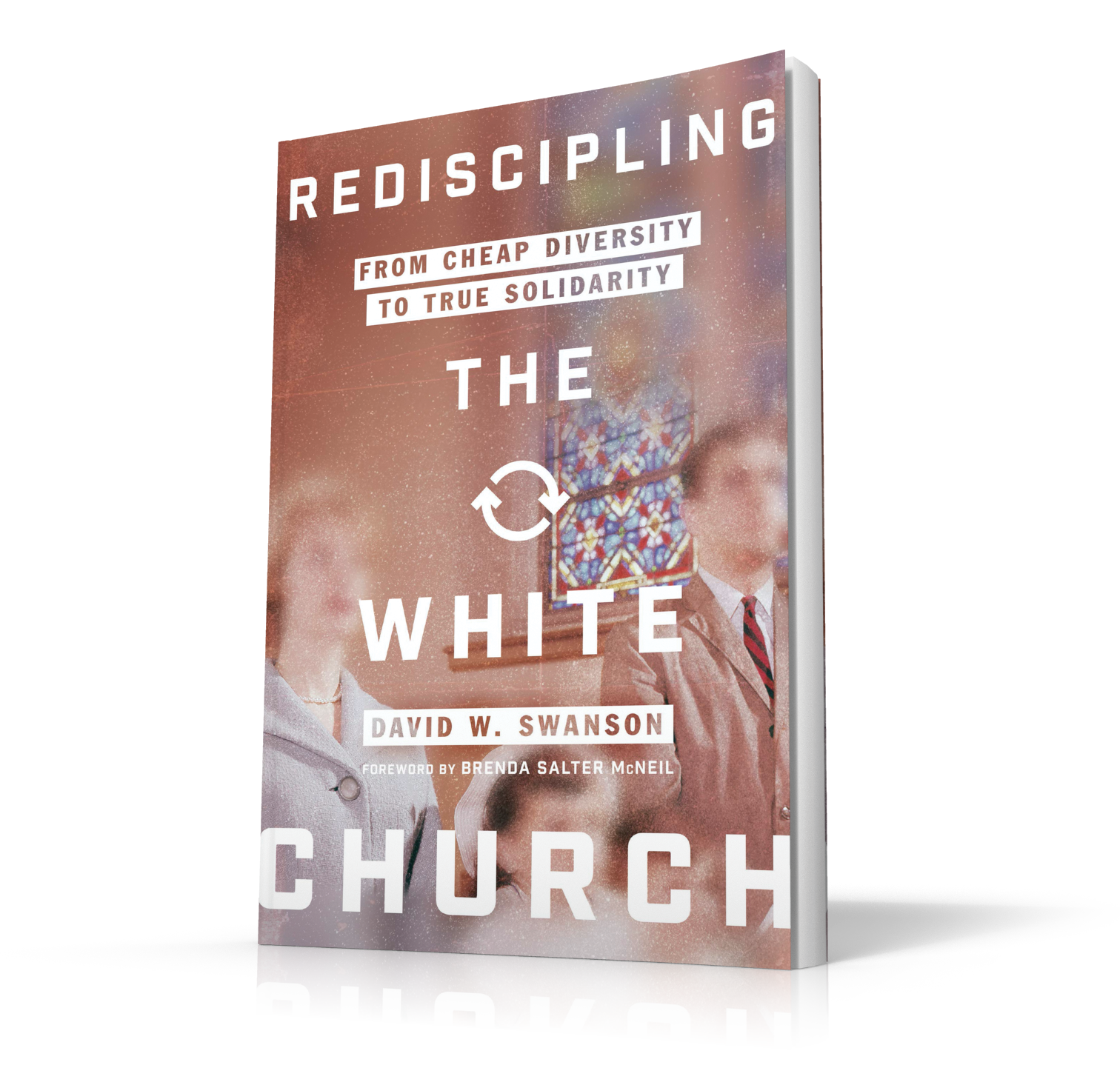
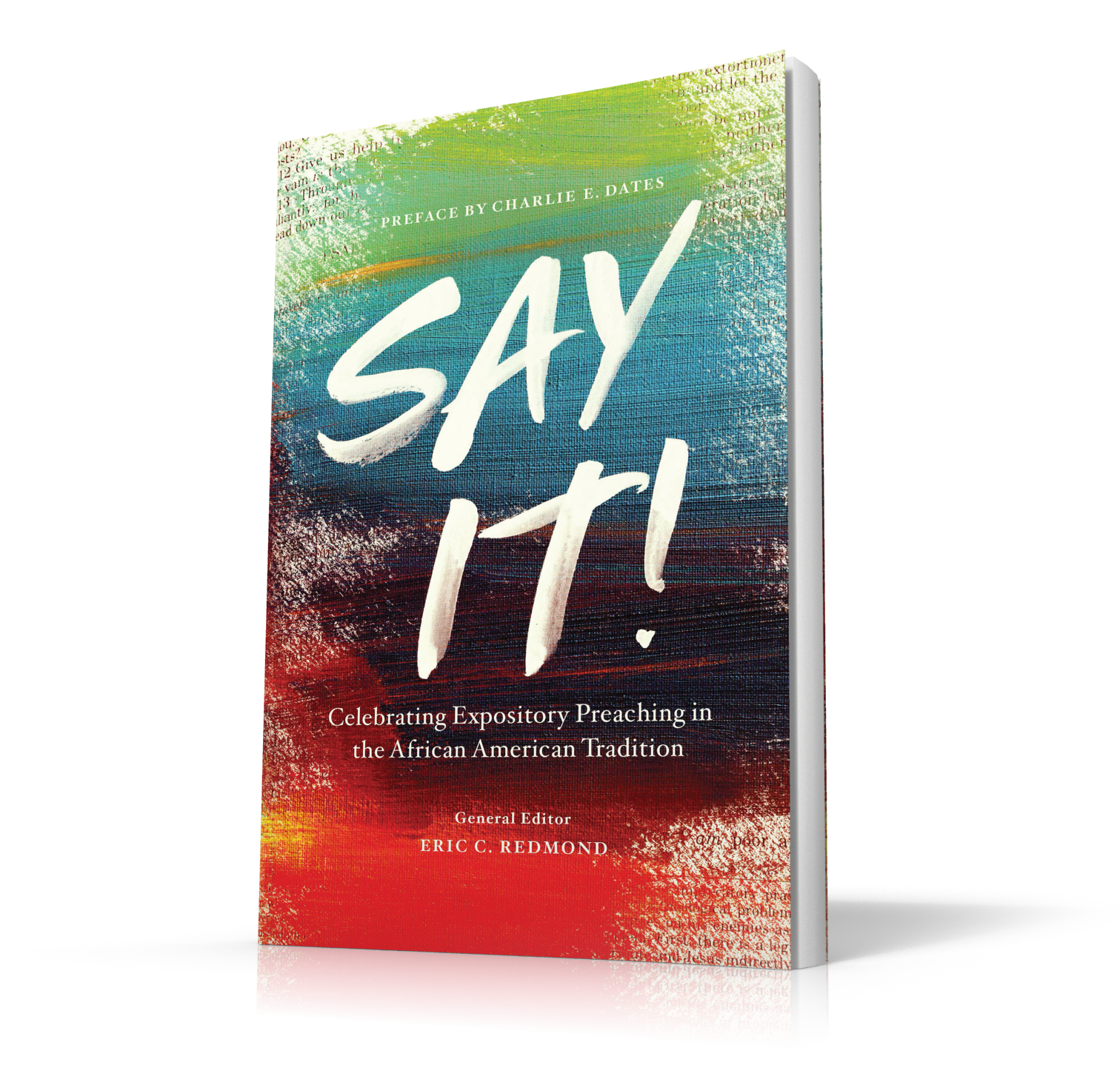
As ministry experts Matthew D. Kim and Daniel L. Wong suggest in Finding Our Voice: A Vision for Asian North American Preaching, “Every preacher possesses an identity and communicates out of his or her identity.” This isn’t just true within Asian North American contexts. Two other recent books tackle matters of identity in the pulpit: Say It!: Celebrating Expository Preaching in the African American Tradition, an essay collection edited by Moody Bible Institute professor Eric C. Redmond; and Rediscipling the White Church: From Cheap Diversity to True Solidarity, whose author, David W. Swanson, pastors a multiracial congregation on Chicago’s South Side.

Books like these are arriving at an important moment in American church history, when congregations across the country—monocultural and multiethnic alike—are wrestling with how racial and cultural identity play out within communities of faith. Each of these volumes, in its own way, challenges popular misconceptions that mar our understanding of culturally distinct preaching and what it can accomplish. Together, they offer local church leaders a compelling vision of diverse voices delivering one unified message: a credible gospel of faith, hope, and love that resonates with the entire body of Christ, in all of its cultural expressions.

Distinct Voices

“Most of us can distinguish between preachers from African American, Hispanic American, and European American backgrounds based on their distinct preaching traditions, styles, accents, and cultural traits,” write Kim and Wong. “However, could the same be said of Asian North American (ANA) preachers? Do ANA preachers have a preaching voice?”

Finding Our Voice sets out to explore this question by highlighting distinct aspects of “our unique voice in the world of homiletics.” This voice is shaped by the common experience of many ANA Christians who contend with both the “model minority” stereotype (which emphasizes cultural, educational, and economic assimilation) and the “perpetual foreigner” stereotype (the assumption “that we don’t speak English or that we are from overseas”). In Finding Our Voice, Kim and Wong discuss how these stereotypes create an unsettled feeling of belonging to the majority culture while also standing apart.

As Kim and Wong suggest, ANA preachers can draw fruitfully on this sense of cultural dividedness as they address a multiethnic and multicultural world. The authors encourage an approach that celebrates “our hybrid, hyphenated, both/and, bicultural, liminal, or perhaps even third-culture self-confidence.” The more that ANA preachers lean into this identity, write Kim and Wong, the more they can cultivate a “unique homiletical voice” every bit as robust and distinctive as “other minority groups such as African American and Hispanic American preaching traditions.” ANA preaching, they argue, should regularly emphasize “five key topics: identity, shame and pain, God as Father, reconciliation and healing, and social justice,” since these topics tend to play a major role in predominantly ANA congregations.

For Kim and Wong, the burden of wearing the “model minority” mantle should also encourage a prophetic strain within ANA preaching. Leveraging their own experience in negotiating biased and arbitrary norms of success, ANA preachers can and should speak out against injustice and stand up for the rights and dignity of other ethnic minorities. Moreover, as the authors note, since many ANA congregations are hardly monolithic in terms of race and ethnicity, a prophetic style of preaching has the added advantage of building bridges to different communities of faith.

Of course, neither a heightened awareness of cultural identity nor a special calling to speak out against injustice is anything new to the African American preaching tradition. Traits like these have been instrumental in forging the strong resolve and remarkable resilience of black church communities over the past four centuries. And yet, as Redmond and the other contributors to Say It! make clear, the strength and vibrancy of African American preaching owes at least as much to its firm grounding in biblical exposition.

The book overturns a misconception about the nature of black preaching: that sermons in black churches are heavy on emotional fervor and echoes of the African American experience but are comparatively light on scriptural depth and doctrinal rigor. Say It! offers a strong corrective, exploding the false dichotomy between teaching the Bible and touching the heart. The black church has no less legitimate a claim to the expositional tradition than anyone else.

As Chicago pastor Charlie Dates observes in his preface, “For too long, the study of Christian doctrine, its formulation, and the relationships between those doctrines have been hailed as Eurocentric disciplines.” But we can “no longer consider such preaching the brainchild of eighteenth- and nineteenth-century White America or sixteenth-century Europe. It is wealthier than that.”

Each chapter in Say It! includes a sermon manuscript from the author along with some thoughts on what went into its preparation and delivery. Together, the contributors present a model of preaching that combines solid biblical exposition, appeals to communal identity, and passionate invitations to personally encounter the living God. In so doing, they confirm that there is nothing inconsistent about embracing one’s ethnic culture and preaching tradition while giving an expositional sermon. Within the black church, Dates writes, “several of our most noted voices held both our ethnic value and our Christ [Christian or orthodox doctrine, its formation, and gospel-centered preaching] in the highest regard with no conflict. Who said we had to choose? Who has bewitched us?”

The fundamental goal of expositional preaching is to discern and communicate the intended meaning of a biblical text through historical, grammatical, and literary analysis. Yet as Redmond notes, nothing about this method “require[s] a particular mode of verbal delivery.” African American preachers, then, are free to use distinctively black idioms and speech patterns without any fear of watering down a sermon’s expositional character. “Because expository preaching must speak meaningfully to the preacher’s audience,” Redmond writes, “it seems that such preaching—biblical preaching—allows the preacher to utilize a style or mode of exposition that resonates with his audience’s contemporary concerns and vernacular.”
In important respects, the section about preaching in Rediscipling the White Church differs from discussion of the topic in Say It! and Finding Our Voice. Where the other two books identify a cultural style of preaching worth recovering and celebrating, Swanson’s volume issues a caution about a cultural style of preaching that often goes unacknowledged. Yet his book resembles the other two in challenging a mistaken assumption: in this case, that the preaching done by white pastors isn’t “cultural” in any way—that it’s just preaching, plain and simple. The blindness of this assumption, he argues, comes in part from belonging to the majority culture and regarding whiteness as the norm.

Swanson calls on white pastors to “dig more deeply into the nature of societal privilege, which shapes white identity.” To this end, he offers four suggestions for reimagining their approach to preaching so that, rather than reinforcing the structures of white privilege, their words open a genuine path toward multicultural discipleship. He isn’t suggesting that white pastors begin preaching on matters of race and justice nearly every Sunday; rather, he’s identifying some areas where he and his brethren have room to reflect and grow.

First, he argues, white preachers should be specific. “In majority white settings,” he writes, “community members should regularly reflect on who they are.” This can be as simple as helping white believers to understand “the differences racial privilege makes,” both in terms of the unearned blessings they enjoy and the harms that are imposed on others. Second, white preachers should educate about racial injustice. “The goal,” as Swanson puts it, “is not to turn sermons into seminars about white privilege, but rather to . . . see ourselves and our situation more accurately” against the backdrop of Scripture and society.

Third, white preaching should remember the full story of American history, especially as it bears on unjust patterns of race relations within our own communities. As Swanson observes, “Remembering can lead white Christians to join the rest of the body of Christ in resisting the forces of forgetfulness.” Finally, Swanson calls on his fellow white pastors to find commonality. “Beyond the practical benefits,” he writes, when “white Christians … find common cause with the [greater] body of Christ, we are moved one step further from our segregation, one step closer to solidarity.”

Cultural Intelligence

At a pivotal moment in American history, when matters of color, class, and culture have been driven to front and center, it’s vital that more churches consider racial and cultural identity and how the understanding of such (or lack thereof) influences the exercise of Christian faith. Demographic shifts have remade this country’s racial and cultural landscape, and these shifts are impacting the church. More than ever before, preachers need to develop and refine their cultural intelligence.

That’s why books like Finding Our Voice, Say It!, and Rediscipling the White Church are so valuable right now. Taken together, they reaffirm what these major cultural strains of American preaching have in common: a love of God’s Word and a commitment to studying it deeply, interpreting it carefully, and proclaiming it truthfully. But these books are also clear-eyed in assessing how cultural identity and communal experience invariably shape the style and content of our preaching, for good or for ill. They chip away at ingrained stereotypes and faulty assumptions that keep us from appreciating the fullness of each tradition, both the gifts they offer and the burdens they bear.

Local churches can draw on this wisdom as they work to feature a greater diversity of preaching styles in the pulpit. In fact, many healthy multiethnic churches already employ a culturally diverse preaching team, the better to reach and reflect their communities. In these churches, it’s about content and connection, proclamation and demonstration, unity and diversity. I suspect it will soon be so in your church, as well.

Mark DeYmaz, DMin, is the author of seven books, including Building a Healthy Multi-Ethnic Church and The Coming Revolution in Church Economics. He is the founding pastor of the Mosaic Church of Central Arkansas and the co-founder and president of the Mosaix Global Network.

Pastors

Listening to Podcasts Makes Us Better Preachers

How the popular audio genre can help pastors fine-tune sermon preparation and delivery.

Illustration by Rick Szuecs / Source images: Envato Elements

Conan O’Brien Needs a Friend may seem like odd preparation for preaching. But I’ve found the podcast to be a helpful elixir as I get out of the world of sermons, commentaries, books, and conferences to think about engaging with people on Sunday. In his conversations with other comedians, Conan gets into the pathos behind entertainers’ acts and the hard work it takes to produce a simple laugh. I was struck, for instance, by Ray Romano’s admission that his father’s refusal to give him approval is what drove Ray to try so hard to get laughs, and by Howard Stern’s description of how, as a boy, he took to cracking jokes about his neighbors to help relieve his mother’s severe depression.

As with these candid conversations, the work of a pastor often involves helping people get underneath their behaviors to a deeper understanding. And preaching, at its best, can lift back the layers to help us see ourselves as we really are.

Podcasts are part of an explosion in the popularity of on-demand audio content. According to research compiled by Podcast Insights, over 1 million podcast shows and over 30 million podcast episodes are currently available for listeners. Half of American households are podcast fans, and, when surveyed earlier this year, 37 percent of the US population said they listened to podcasts in the past month. The rise of podcasts is due, in part, to the ubiquity of smartphones and the ease of accessing on-demand audio. But it also seems to be a reaction to a visual world of blips and fast cuts, of surfing and scanning, of headlines without context. It’s an underground revolution that prizes nuance, deep diving on issues, and long-form conversations that defy our incessant need for tribalism and scorekeeping.

Podcasts and the Preaching Craft

Along with Conan O’Brien Needs a Friend, I’ve learned quite a bit about crafting sermons from other forms in the podcast genre. The storytelling and pace in This American Life, for instance, help me read and understand Scripture narratives—and prompt me to consider how I retell Scripture’s stories to a congregation. I learn a lot from listening to long-form conversations between people you wouldn’t normally see together, such as David Axelrod’s interview with Mitt Romney on The Axe Files podcast. That episode allowed me to listen in on honest reflection and camaraderie between a man who ran for president and the man who organized the campaign against him. This sort of conversation challenges me to consider the approach I use when interacting with opposing viewpoints in a sermon. And documentary podcasts like Slate’s Slow Burn help me think through investigative questions and see the deeper story underneath so many stories—both of which are essential to the sermon preparation process.

I’ve also learned a thing or two from podcasts about how to actually deliver the content of sermons. For instance, listening to the way Terry Gross asks questions on Fresh Air has helped me become a better question asker in my preaching. Listening to comedians discuss the importance of cadence and timing on podcasts like Netflix Is A Daily Joke has helped me think through the cadence and timing of my sermon delivery.

When preparing to preach, I always come back to audio content that directly helps me exegete or think about biblical texts. Many of my pastor friends feel the same way. I did an informal survey on social media, asking pastors and teachers which podcasts helped shape their preaching. Some gravitated primarily toward preaching-specific podcasts that discuss the technique of exegesis, such as Monday Morning Preacher with Matt Woodley and Kevin Miller; Preaching Lab, which features five pastors specifically talking about biblical texts; or Help Me Teach the Bible, in which Bible teacher Nancy Guthrie interviews scholars about specific Bible books or hard texts. Others said they enjoy podcasts about the art of pastoring, like Pastor Well with Hershael York, Pastor’s Talk from 9Marks, or The Carey Nieuwhof Leadership Podcast.

Many, like me, also find preaching inspiration from nonministry sources, such as storytelling podcasts like Crimetown or interview-style podcasts like Annie F. Downs’s That Sounds Fun. Others highlighted the importance of podcasts that dive into current issues, such as Truth’s Table and its frank discussions of race and faith by Michelle Higgins, Christina Edmondson, and Ekemini Uwan, or This Cultural Moment, hosted by a pastor in Portland, Oregon, and a pastor in Melbourne.

Mimicking Our Mentors

Almost everyone who responded to my question said that straight-up sermons delivered by other pastors around the country were a big part of their podcast diet. I have certainly found this to be the case in my own sermon preparation. There’s something about hearing the preached Word that ignites my heart and mind and unlocks my creative impulses. Listening to other pastors work their way through Scripture can be helpful in equipping preachers to understand a difficult text and in organizing our thoughts. Recently I was called on to preach Mark 13—Jesus’ teaching about the end times and the destruction of the temple—which has been interpreted by faithful Christians over the years in at least half a dozen ways. I felt like I knew where I was landing, but it took listening to several sermons by pastors from a variety of Christian traditions before I felt confident in my own exegesis.

Yet there is also a danger in regularly listening to other pastors’ sermon podcasts: the tendency to mimic another’s style and flatten one’s own unique preaching approach. This mimicking—while often unintentional—can also cause us to overlook the specific things the Spirit would have us say to our people in our moment in time. This is especially common, I think, when young pastors first begin their ministries. Some unconsciously sound like their mentors to a degree that is almost surreal. This, in and of itself, is a reminder of why it’s good for us to broaden our audio diet, diversifying who we listen to and seeking to learn from audio content other than sermons. Over time, as we hone and develop our own preaching craft, those who have shaped us should move from dominant voices to faint echoes.

The Preaching Act

Podcasts can help our preaching in so many good ways, from educating us on important cultural issues to honing the craft of exegesis and improving our delivery. Yet as much as these tools help us, it’s important to remember that even the most well-crafted audio content is not a sermon. And while preaching is the well-crafted delivery of spiritual content, it is also so much more.

A few years ago, author Donald Miller wrote of his decision to back away from regular church attendance, saying he found “a traditional church service … long and difficult to get through.” As a lifelong churchman who still gets up every Sunday excited to worship with my brothers and sisters in Christ, I disagreed with Miller’s ecclesiology. But there was something in his critique of church that struck me: the implication that he could find spiritual content elsewhere and could enjoy it on his own time, perhaps in a format that was a better fit for him. I’ve heard others say something similar—that they’d rather just stay home and enjoy spiritual content in a way they choose.

I’ve thought about this idea a lot since then. As someone who grew up in the age of the internet, I too enjoy listening to the sermon podcasts of my favorite preachers on my own time. I livestream important conferences. I’m blessed by the spiritual content I read from a variety of Christian organizations. Yet I’ve come to realize that church is so much more than merely the sum of its content. This truth is particularly poignant now, as so many of us have had to narrow our communal worship experiences into digital productions due to the pandemic. We long to gather in person because there’s something visceral and real and important about the embodied presence of church life, even in all its ugly messiness.

Miller’s critique and our experience during this pandemic remind us that church is (and should be) so much more than a glorified TED talk and a hot band. The preaching act is not merely about well-prepared and well-delivered biblical content. It is a sacred moment—the mystery of God being present in his Word, mediated by human expositors.

Yes, I’ve been brought to tears by podcast conversations I’ve heard. I’ve stopped my car and bowed my head after listening to a powerful sermon on my way to work. But the most formative spiritual work in my life has come while I’ve sat in an uncomfortable pew, Bible open, as God used gifted pastors filled by the Spirit to shape my heart and soul.

Podcasts That Can Enrich Preaching

Storytelling Podcasts

Conversation Podcasts

Discussion of Cultural Issues

The Craft of Preaching

The Art of Pastoring

Daniel Darling is the senior vice president at National Religious Broadcasters and serves as a pastor of teaching and discipleship at Green Hill Church in Mt. Juliet, Tennessee. His books include The Characters of Christmas, The Dignity Revolution, and A Way with Words.

Pastors

How to Preach When You Don’t Know Who’s Listening

5 principles for online preaching.

Image: Illustration by Jon Krause

I started Easter morning serving in my role as the online pastor for my church, facilitating conversation in the comments section during our livestreamed service. Then I joined a Zoom call as the guest preacher for a friend’s church. After the last “Amen,” I headed to my parents’ house to help them participate in their church’s online service. They are strangers to the internet, but there they were, bowing their heads on cue, celebrating the hope of resurrection.

While that particular Sunday was unusual for most churches due to the outbreak of COVID-19, it also reflected an already-evolving reality of how the story of God now gets told in the world: through streaming services and online content.

Preachers must sort out where their words fit in as more people spend time online, a context already inundated with words and images. Questions abound: How does the art of preaching change in a world in which people are scrolling for truth on social media? When people are now used to offering feedback on everything from their Uber ride to their latest e-book, where does that impulse belong in a church environment? If many congregants are now conditioned to pay attention to online videos for just two minutes, will they really watch the same screen for a 40-minute sermon?

But amid these questions are profound spiritual opportunities. People are hungry and thirsty for good words. They are consuming them in new ways, inviting them into their cars and coffee breaks. Online preaching expands the reach of churches, removing geographical—and maybe even emotional—limits to church attendance. This is a moment for pastors to find new answers and to reimagine the work of preaching.

Use Specific and Detailed Language

As the potential listening audience gets wider and more churches upload their content, the language of the preacher actually needs to get narrower and more specific rather than more general. For example, when we use words like we or you or them in a sermon, we have to describe whom we’re addressing: What are their pains and strengths? What defines the community we’re trying to build, especially if it isn’t proximity to a building? Preaching online requires us to call out what actually defines the community of faith, whether it is a faithful life in a particular neighborhood or the righteous presence of the church throughout the whole world.

These questions can help us better connect with the lives of the people we hope hear the story of God’s redemption through us. A few years ago, I intentionally made a shift from writing sermons in an office to writing them in coffee shops. The change in venue helped me put my words through new filters: Is this true for our whole city? How could I communicate this to the student drinking a latte next to me? Or to the woman sitting in the corner?

Preaching online also requires us to use clearer language about our beliefs, particularly for listeners who have little familiarity with church. When I train other preachers, I advise them to decide early on how they are going to talk about Christianity’s core ideas. For example, what are their words for the life and death and life again of Jesus? Do they know how to talk about sin to someone who didn’t grow up in the same world as they did?

Establish Your Voice

I’ve found that online preaching has similarities with guest preaching: Just as we need to let a new room know who we are, we need to be intentional about letting an online audience know who we are. When I go into new environments to preach, I notice that I have to establish my voice more quickly. Similarly, online, I have to be purposeful and strategic about establishing my voice. For example, as someone who tells dry jokes that people sometimes mistake for serious statements, I know I need to offer more cues—like being very purposeful about vocal inflections and facial expressions—when I preach online.

Connect Through Stories

In a local church context, a congregation naturally comes to know the personality and the character of the preacher. In addition to establishing our voice, we can work to build essential connection and rapport by telling stories that help online viewers get to know us and grow to trust us.

Whether they are personal stories or Scripture’s narratives, the best stories often rest on particular details that open our imaginations and connect better to our own worlds. When we craft online sermons, we can describe exactly what the Good News looks like in the homes, businesses, and intersections of our community. Consider Jesus’ example: He pointed to a particular field and called out the lilies to help the world see a universal truth about anxiety. He told detailed stories about a lost coin in a house and lost sons in a family.

Attend to the Listeners’ Context

Perhaps the most exciting reorientation that online preaching requires is for preachers to reimagine their listeners receiving the sermon in their context. The online sermon enters right into the space where listeners live. As we preach about the power of forgiveness, they may be sitting in the kitchen where they just had a fight with their spouse or in the break room right before a heated meeting. They may be driving by the neighborhoods, parks, stores, and restaurants where they could carry hope. They are listening in the very spaces where they need these words to come to life.

Online preaching can intentionally draw listeners’ attention to God’s presence in their context. For example, in a recent online sermon, I invited everyone to pause and pay attention to what they sensed around them—to thank God for what they saw, heard, smelled, tasted, touched. We praised the God who shows up in every room.

Initiate Interaction

Online preaching is an invitation for us as preachers to reform our understanding of ourselves. There are dangers in this context, to be sure. For example, the temptation for comparison is strong as we evaluate metrics such as viewing data or the number of likes a sermon received. The potential for discouragement looms if we open ourselves up to the gauntlet of comments sections.

But for all the dangers of ego, there are also opportunities for growth. Online preaching provides the opportunity for us to make the sermon less preacher-focused and more interactive, such as by inviting people to post questions or answers or to press pause for conversation with others. The shift invites us to help listeners see and articulate where the Spirit of God might be working in and around them.

The Word in Their World

Psalm 107 describes how different groups of Israelites arrive at the temple. Some wander through the desert, some travel through storms at sea, and some make their way out of prison or sickbeds. But they all cry out to God and wait for God’s response. When they reach the sacred space, the psalm reframes their world. Rather than inviting them to set their journey aside now that they have arrived, the psalm gives them the right words to celebrate the specific ways God rescues them.

Our best preaching should do nothing less, whether it’s to a crowded sanctuary or through an internet connection: We call out how and where God is working. The online sermon allows us to tell a full and rich story of how the Spirit of God moves as listeners receive the Word in their everyday context. And while we may not know exactly who’s listening, or when or where, God does. And God is there.

Laura Buffington is the online community pastor for SouthBrook Christian Church near Dayton, Ohio. She holds a doctor of ministry degree from Emmanuel Christian Seminary at Milligan College in Tennessee.

Pastors

God Gave You a Specific Congregation. Preach to Them.

5 keys to effective, locally focused preaching.

Illustration by Jon Krause

On any given Sunday, you’ll likely hear immigration, poverty, race, or injustice mentioned in the sermon at our church—not because of the latest headlines but because of our commitment to connect Scripture with our congregants’ lives. As a church in a low-income and disadvantaged community in Austin, Texas, over 50 percent of our congregation is Latino, most are bilingual, and many are immigrants. These topics reflect their daily struggles.

When we preach from the Book of Ruth, for example, we specifically address Ruth’s immigration journey, her border crossings, her vulnerable status in a new land, and the socioeconomic and cultural dynamics of the story. When we preach from Genesis 16, we tell our people—some of whom have fled human trafficking—that, as with Hagar, God sees them, understands their pain, and cares for them, even when they feel utterly alone. And when we preach the story of David and Bathsheba, we do so with a sensitivity to the women in our church who’ve been abused or sexually assaulted, emphasizing that David’s misuse of power was a form of rape and that God will bring a reckoning for this kind of evil.

We do all of this because we are committed to local expositional preaching. As John Stott writes in Between Two Worlds, “Preaching is not exposition only but communication, not just the exegesis of a text but the conveying of a God-given message to living people who need to hear it.” It’s the preacher’s job to personalize and contextualize God’s Word to the listeners—to bring the people’s needs, cares, and questions to the text and consider how God’s Word is directly speaking to them.

Know Your Sheep

Rather than producing a generic sermon that anyone could listen to, local preaching means crafting sermons as a shepherd who deeply and intimately knows one’s sheep. This is Jesus’ commission to Peter in John 21:15–17. “Feed my sheep” is a metaphorical challenge to spiritually nourish God’s people with God’s Word. The shepherd’s task, as Peter describes it, is to care for the “flock that is under your care” (1 Pet. 5:2, emphasis added). This call is more local than global in focus, as our attention is on knowing our sheep and on laboring to feed and protect them. No two flocks are the same. So, preachers must prepare their sermons knowing whom they are feeding.

A preacher is “an ethnographer of the congregation,” writes theology professor Ruth Conrad. This means asking ourselves, What is our congregation’s cultural makeup? What is the specific socioeconomic and educational background of each person who calls this church home? Who is having marriage difficulties, faith struggles, and parenting challenges? What sicknesses, diseases, and pains are in our midst? Who has been bullied or shamed? Who is struggling with mental health? We must know the specific answers to these questions and lovingly respond to real lives through our preaching.

Be Ready to Pivot

This requires a willingness to keep sermon planning flexible. Our preaching calendars must be malleable enough that they can be interrupted—that we can stop mid-series and turn to a completely different passage to tend to a need in our congregation. For example, during a sermon series on Genesis at our church, it became apparent by chapter 2 that we needed to address the subject of human sexuality more directly. Conversations with church members revealed that some were wrestling with society’s view of sexuality, others were struggling with their own sexual desires, and others were trying to parse out the meaning of maleness and femaleness. These issues felt pressing, so we adjusted our plans and devoted another entire sermon to human sexuality to help our congregation process their questions from the prior week. Several church members expressed appreciation that we made space to linger on this topic.

If Needed, Preach on Repeat

Local preaching also means being willing to address certain issues on repeat or in several sermons back to back. If our congregants are struggling with something, we shouldn’t be afraid to come back to it pastorally time and again. Ongoing needs require continual care and discipleship—and preaching can be part of that care. Even though our church has at times been criticized for emphasizing certain issues too often, our response is simple: We know our congregants, and this is what they need to hear.

Directly Address Specific Struggles

Preparation for a sermon is often done around people’s dining room tables just as much as at one’s desk, huddled over a Scripture text. As preachers, breaking bread with congregants protects us from reading the Bible in a vacuum. When I (Aaron) sit down to prepare a sermon, I still begin by translating a text from its original language. I study the text’s historical, literary, and theological elements. But as I do, I also seek to see how the passage at hand directly speaks into the realities of my congregants.

Put plain and simple, if a pastor knows someone is struggling with substance abuse and the text includes a word for that, the pastor should directly address this issue in the sermon. If a pastor just had a conversation with a single mom struggling with loneliness and the text has a word for that, the pastor should directly address this issue too.

Intentionally Make Eye Contact

We can make an intentional choice about where we direct our faces and how we make eye contact when preaching. There is power in looking people in the eye and speaking directly to them. When you give an exhortation to fight against the sin of pornography, for example, you can discreetly make eye contact with the person you spoke to last week about this issue—not to bring shame but to let the person know you see their struggle and you care for them.

While preaching on the inherent goodness of femaleness during the human sexuality sermon, I (Aaron) tried to make eye contact with every woman in our congregation to personally communicate the good news of how God sees them as females. And when I, as a second-generation Mexican American, spoke on how Latino culture oftentimes conveys that females are less important and valuable than males, I directly looked at each of my Latina sisters, affirming them as women.

A Worthy Calling

In my early years of ministry, I (Aaron) tended to preach theologically dense sermons with generic application. I often struggled to make the sermon text personal, in part because I didn’t know the congregation well. I’ll never forget the Sunday when a man came up to me after church and said, “Pastor, I like what you be saying, but sometimes I don’t know what you be saying.” God used his words to show me that, while my sermons may have been theologically accurate, they were not as accessible as I thought, and they were not personal.

Today, in my current congregation, I know my sheep. Whenever I prepare a sermon, I can hear their questions while studying; I can feel their pains and joys while writing. As I type my sermon, their names flash before my eyes. The effect is that I’ve learned (and am still learning) how to preach biblical and theological truths in an accessible way that touches their minds and hearts.

Local preaching is a worthy calling and one that every pastor should take confidence in. In an age of celebrity pastors, the tendency toward comparison will never escape us. However, the more securely we can embrace our unique ministry call—to preach to our congregation and to minister to our community—the better we can withstand the struggles of insecurity that often beset pastors. Success is not measured by counting the likes a sermon receives online but by connecting the Word of God to our congregants and seeing fruit in their individual lives.

Aaron and Michelle Reyes lead Hope Community Church, a multicultural church in Austin, Texas, where Aaron is lead pastor. Michelle is vice president of the Asian American Christian Collaborative; her forthcoming book is Becoming All Things: How Small Changes Lead To Lasting Connections Across Cultures (Zondervan, April 2021).

Pastors

Jon Tyson: ‘Run into the Controversy’

Why the NYC pastor’s goal is “to winsomely offend everybody.”

Courtesy of Jon Tyson

For many preachers, it can be difficult to navigate how best to approach passages that name specific sins, command obedience, or contain exhortations for godly living. It can be especially tricky when you’re trying to push back against a perception that Christianity is another word for “being good,” or ministering to people who still don’t believe the good news of God’s grace. Then try doing it in a culture where everything from racial justice to face masks prompts outrage. How can pastors effectively preach obedience to Scripture’s moral imperatives?

Jon Tyson serves as lead pastor of Church of the City New York. A native of Australia, Tyson is a church planter with a passion for evangelism and renewal in the church. His latest book is Beautiful Resistance: The Joy of Conviction in a Culture of Compromise. CT spoke with Tyson about how he approaches preaching on Scripture passages containing exhortations about sin.

When has it been challenging for you to figure out how to preach on a hard passage—a passage containing exhortations about sin or commands on moral issues?

I’ve been preaching in New York for 15 years, and in that time, I’ve preached on transgender issues, the gay community, war, violence, and so on. One recent example is a sermon series called “The Controversial Jesus.” I had a theological conviction that it was a form of selfishness and self-preservation to not lean into the hardest issues that our culture is grappling with. I felt like, What will nobody touch? Let me go right to the heart of those things.

In that series there were sermons on Jesus and privilege, Jesus and the gay community, Jesus and the transgender community, Jesus and women, Jesus and violence, Jesus and mammon. I wanted to show people that the Bible speaks with both compassion and conviction on these issues. And I wanted to get out of the selfishness and self-preservation of not speaking on them out of fear of getting it wrong.

The preacher has to have a sense of love for others and a sense of courage to lean into it. I’ve always tried to run into the controversy and not away from it because my conviction is that, if I don’t help my people form a theology of these issues, the culture will gladly give that to them on their behalf.

Do you do specific things to prepare when you’re approaching a passage addressing sin that you know may be hard for listeners? What do you think through?

I try to deconstruct the deconstruction of our culture, and I try to do this by reading source material from an opposing viewpoint and restating it fairly before I begin to dismantle it. I also consider the audience; I take into account the possible defensiveness that might arise and get underneath to the core assertion, showing why it’s bad news even though the culture says it’s good news.

There’s a communication idea called the sacred core—that every community possesses within it a sacred core of value, and if you attack the sacred core rather than acknowledging that you understand it, all you do is produce defensiveness. But if you acknowledge the sacred core and you humanize the person, it opens a window of persuasion that enables you to speak more deeply to the issue. I also try to read widely, especially from trusted people who have spoken to this issue before. I spend a lot of time praying that the Holy Spirit would prepare people’s hearts. I try to feel the pain of people, and I try to feel the burden of God. I want people to have a sense of “I may not agree with what he said, but I believe that he meant it.”

For pastors who are well aware of their own struggles, what does it mean to preach with authority—as well as humility and honesty—when addressing Scripture’s imperatives?

There are several tensions in place for the preacher. Number one, you don’t want to be a Pharisee; you don’t want to teach one thing and do another. Number two, you don’t want to rage in the pulpit against your own private struggle, projecting the anger in your own lack of formation and sanctification at your congregation or at the culture.

Number three, you want to share appropriate levels of vulnerability. And number four, you need to remember that the authority is found in the text, not in your personal experience.

You don’t have the luxury as a pastor to preach only what you are currently living out. Preaching is not a self-expression role; it is a pastoral role. Consider that, in business, it doesn’t matter how the president of a corporation is feeling; he still has a fiduciary responsibility to do his role. Similarly, we cannot let our personal sense of competency cause us to avoid preaching on difficult texts.

Increase in prayer. Be in conversation with people who may have wrestled with the issue or have expertise in it. And start where you are. Just say, “Look, I’m not an expert on this, but I’ve studied this because this is God’s Word and it matters.”

How does outreach to non-Christians or seekers who may be visiting factor in? How can sermons on passages that name specific sins be part of preaching the gospel?

There are two components to it. First is the idea that calling out some sins makes nonbelievers want God. Jesus is the clearest example of this; his critique of the Pharisees made the sinners love him. We need to have an awareness that often Jesus’ harshest critiques were reserved for those inside the church, not those outside the church.

Second, we need to have a holistic vision regarding the kinds of sins we are preaching against. If we preach only on one category of sin, we are going to repel the lost. The goal is to winsomely offend everybody, believer and nonbeliever alike.

If people sense that you love them and are trying to help them—and that the problem is the sin and we are at war with sin, Satan, death, and hell rather than with a person or a cause—then the message can be viewed as good news. Preaching the whole counsel of God requires preaching a winsome offensiveness.

The principle in 1 Corinthians 5 is probably the appropriate response for the moment that we live in now. When I said that I don’t want you to associate with the sexually immoral or the corrupt, Paul said, I didn’t mean those of the world, or you would have to leave the world. He said, You’ve got to look inward. The gospel points us inward to repentance, not outward to critique. So I don’t expect nonbelievers to act like Christians.

What kind of response have you had from non-Christians when you’ve preached on controversial issues or difficult passages?

You know what would amaze you? The only people who were offended during my “Controversial Jesus” series were Christians. Gay friends of mine said, “I totally disagree with you, but that was the best talk on the issue I’ve ever heard.” That particular sermon [on Jesus and homosexuality] was an hour and 27 minutes, and I’m telling you, in the room nobody blinked. People were on the edge of their seats—because people ache for it.

The book Winsome Persuasion describes three modes of communication: There’s the prophetic, there’s the pastoral, and then there’s the role of persuasion. Most of what I’m doing when I’m dealing with nonbelievers is about persuasion. I’m trying to help people get in touch with the deep currents of their heart. I’m trying to show them that sin ultimately will fail them, and they know it—and I’m trying to push on that. I’m trying to help them see the beauty of Jesus.

In Paul Gould’s Cultural Apologetics, he says the goal of traditional apologetics is to make Christianity true and the goal of cultural apologetics is to make Christianity desirable. And that’s what I’m trying to do. I’m trying to make Jesus beautiful.

What encouragement would you offer pastors who have a heart for outreach and who feel tension when they approach passages they know nonbelievers will likely misunderstand or be offended by?

When I first moved to New York, I talked to a Christian leader who had been serving there for decades. I said to him, “I am a young church planter. I am literally a blank slate. Give me one piece of advice.” And he said this: “ ‘Woe to you when all men speak well of you.’—Jesus.” You’ve got to break free of the fear of not being liked. I can’t state that strongly enough.

Our message is to preach Jesus and realize that he is going to offend everybody at some point. Jesus said to his own disciples, Do you guys want to leave? Scripture says at this point many turned away and followed him no longer. In Scripture, Jesus is offending his disciples; he is offending sinners; he is offending everyone.

We have to get away from trying to “manage” Jesus. The best way to make Jesus beautiful is to preach Jesus, not to manage Jesus’ image for him. If you put forth only the compelling parts of Jesus that are attractive to the sinners in the room, then later they are going to be shocked. They’ll be shocked when he says things like “Take up your cross and follow me.” Jesus doesn’t need Christians doing PR and spin for him. He needs people who will actually declare who he is. He will draw people to himself when he is lifted up.

So preach holistically on every issue. Be willing to offend “Christian sins” of pride and self-righteousness just as much as you would condemn sins of immorality, materialism, and those sorts of things.

Listen to Preaching Today’s “Monday Morning Preacher” podcast episode featuring Jon Tyson on prayer and preaching.

And create environments and moments in your sermon that speak to seekers. Every sermon I preach has a direct appeal to the nonbeliever. There’s always a moment when I say something like “Now, look, you may be listening to this and you’re not a follower of Jesus, and you’re thinking …” I got that principle from Tim Keller—the idea of addressing what he calls “defeater beliefs” in the sermon. I have a checklist for preaching that I use, and that’s one of the items on my checklist.

In Beautiful Resistance,you write, “Discipleship must be stronger than cultural formation” and “Loyalty must be stronger than compromise.” How can preaching—especially preaching on difficult passages—cultivate this sort of loyalty to Christ among congregants?

In the Greek, pistis—faith—is not just loyalty to an idea; it carries a relational fidelity to it. Faith is about loyalty to a person, not just to a theology or a worldview. We need to see that when we are unfaithful to Jesus, it’s like the moment when Peter looks across the courtyard, sees Jesus, and then goes out and weeps bitterly. We have to look at faithfulness through a relational lens— like committing adultery or like betraying a friend. It’s the relational dynamic that produces loyalty—loyalty to the person of Jesus.

Sometimes people say, “There are two ways to read the Bible. Either it’s a book about what you have to do to be right with God, or it’s a book about what God’s done for you to be right with him through Jesus.” I think that’s true only on the issue of salvation. There are many other ways to look at the Bible. One of them is it’s Jesus telling you how to be his disciple. That has absolutely nothing to do with self-righteousness or earning your salvation; it’s how to live your salvation out. Christ says, “If you love me, you’ll obey my commands.” We need to get out of always primarily talking about justification and the Bible. We need to settle that it’s by grace, and then we need to learn to obey Scripture as loyal followers of Jesus.

As preachers, we are showing people how to walk in the Spirit. When your habits and practices align with the kingdom of God, the Holy Spirit increases his intimacy and his presence. To me, the key is getting away from a justification-only emphasis in Scripture and looking at the Bible through the lens of discipleship.

You say in Beautiful Resistance, “The church that Jesus founded on his compassion and grace has at times failed to even resemble its founder.” How can pastors preach with conviction—and build conviction in congregants—while also clearly communicating that compassion and grace?

This may sound a touch simplistic, but you talk about Jesus in those passages. The appeal is always love and loyalty to him for what he has done for us. Consider what Paul wrote: “I urge you … in view of God’s mercy …” He didn’t say “In view of God’s wrath” or “In view of the coming judgment”—though Paul does get to those things later. But it’s like, Look, I’m pleading with you. This is the only appropriate response to the mercy that you have received. The key is always ending a sermon with an appeal to discipleship and intimacy with Jesus.

Pastors

Sermon Prep in the Name of the Father, Son, and Holy Spirit

How the Trinity is reshaping my preaching.

Envato Elements

Like many young pastors, I spent my early years of ministry torturing audiences through endless experiments with my preaching. I had been to seminary, listened to hundreds of sermons, read plenty of books, and learned about expository, topical, Christ-centered, and Spirit-empowered preaching. I knew about the need for both study and unction. When I entered the academy, I reiterated these same lessons in my preaching courses. And yet, inwardly, I knew there remained a wide chasm for me between mastering the mechanics of crafting sermons and truly serving as a translator between God and his church. As John Koessler writes in Folly, Grace, and Power, “Those who preach break God’s silence.” Most weeks, I was just trying to make it until next Monday.

The first sermon I preached was at the fledgling church plant I helped launch in a bar. In this context, my preaching moved from the theoretical banter of a classroom to the anxiety-inducing reality of standing before people who are dying to hear from God. In these initial years of ministry, my preaching preparation began—and often ended—with my eyes and ears directed toward the culture around me. Significant time spent in prayer and study seemed a luxury reserved for large churches with large staffs. Instead, my sermon series were often formed around summer blockbusters, bestseller lists, and TV ratings. In an attempt to create messages that kept people entertained, I picked from the low-hanging fruit and ended up using pulpit time each week to merely baptize cultural consumption rather than to illuminate the Word of God.

Deeper Communion

With these familiar siren songs exposed and found wanting, I began to increasingly realize the weight of Heinrich Bullinger’s contention that “the preaching of the Word of God is the Word of God.” This belief began to undergird my conviction that my preaching must begin not with my audience, tradition, or cultural setting but with a deeper communion with the very source of all of my sermons: a Trinitarian God whose multifaceted personhood gives clarity and balance to the sermons I preach. A God who has enlisted preachers to engage weekly in the daunting task of mediating his words to the bride.

Having spent significant time in churches around the country and the world, I began to wonder if I fully understood the weight of this assertion. Across boundaries of culture and tradition, I started to recognize that preaching preparation, like traditions and denominations, can often sideline members of the Trinity and hinder our ability to preach the whole counsel of God in ways consistent with the very character of God. Far from isolating individual members of the Trinity, my desire was to preach faithfully through a lens of orthodox Trinitarianism that was “neither blending their persons nor dividing their essence,” as the Athanasian Creed emphasizes.

This point was clarified for me several years ago while attending a conference where a prominent theologian described various Christian denominations through stereotypical frames. He asserted that Pentecostals are the “heart” of the church, Baptists are the “hands,” and the Reformed tradition is the “mind.” His statements were meant not to disparage but to clarify the uniqueness of various parts of the body of Christ and to emphasize the need for collaboration. But his remarks also sparked my observation that much of our preaching preparation in these broad traditions often follows these same fault lines and divisions. In my own ministry, preaching had become a largely cerebral performance, and what I began to sense God calling me toward was a more holistic preaching that mirrored the multifaceted nature of the God I was speaking for.

In his book Preaching: The Art of Narrative Exposition, Calvin Miller gives us a vision of the preacher as the one eavesdropping on the eternal Trinitarian conversation between the Father, Son, and Spirit. In this way, preaching becomes the moment when “the good dreams that God has for the congregation get pulpit time.”

In contrast, the majority of my sermons were being crafted in haste, centering on my own vision and the desire to create memorable principles rather than a reflective dialogue with God. My excuse was always a lack of time. But the conviction continued to grow that my emaciated parishioners were becoming exhausted by the burden of surviving off crumbs when the Bread of Life could be theirs instead.

If my preaching was to change, I needed to learn how to lean into the total personhood of God. I couldn’t speak for him if I didn’t know him more intimately. For our relationship to grow, it would mean changing the way I approached his Word each week. It would require the humility to let him speak and the patience for me to hear. It would demand greater space in my sermon preparation for reflection, prayer, and a more attuned ear toward the words on the page, the Word it revealed, and the words he wanted to speak into my own heart and in our congregation.

The Initiating Father

Throughout the pages of Scripture, one of the defining attributes of the Father is that he is a creator. As he is the initiator of both the physical world and redemptive history, our best attempts at exegeting remain stinted if they are disconnected from this truth while ignoring his ultimate plan of revealing himself. God’s revelation is relational, not merely propositional, and he gives us both the written Word and the Word made flesh so that he might be known. Our time in sermon preparation is not merely a search for a homiletic idea but an invitation to a deeper intimacy with the author and initiator of those words. In the same way that the Son directs us to make our petitions to the Father in prayer, so too can our initial times of sermon preparation begin by listening in on the divine conversation among the members of the Trinity. We do this to learn more about the heart of the Father for his children and the words he longs to speak to them.

The Illuminated Son

In the famous scene on the road to Emmaus recorded in Luke’s gospel (24:13–32), the resurrected Jesus converses with heavy-hearted disciples who have heard of Christ’s crucifixion. When they fail to recognize Jesus as the risen Messiah, Jesus opens the Scriptures to them to demonstrate his presence on every page (v. 27). This is a vitally important window into our sermon preparation as we join these Emmaus sojourners in their discovery of Jesus in every passage we preach.

And it is the heart of Paul’s exhortation when he declared that, regardless of what others may be teaching, “We preach Christ crucified” (1 Cor. 1:23). If the Father has sent the Son as the consummation of redemptive history, it is the role of every preacher to make that story known. While Jesus is often preached today as a mere model or a source of self-actualization, the Father desires that the Son himself be lifted up, not just his benefits. We preach Jesus so that he may receive his full glory. When we engage with Jesus in our preparation, we are walking with him along the Emmaus road again and are invited to see him more clearly in the pages of every Scripture so that we, and our people, might conform increasingly to what we see.

The Indwelling Spirit

For some preachers, following the Spirit in our sermon preparation is intimidating because it seems uncontrollable. Due to a plethora of false teachers claiming direct revelation of heretical theology, many preachers today prefer the objectivity of the text alone. My concern here is not so much with an abundance of study but with a neglecting of the Spirit. As the member of the Trinity who tabernacles within us, the Spirit acts as the mediator who unites us to the divine life of the Trinity. To neglect the Spirit’s guidance and leading in our sermon preparation is to effectively cut ourselves off from access to the plans and purposes the Father and the Son have in store for the church—plans that they have been discussing before the foundation of Earth and that are embedded in Scripture.

In his first letter to the church in Corinth, the apostle Paul describes the Spirit as the conduit for God’s revelation, reminding us that the Spirit alone is the one who can comprehend the thoughts of God (2:10–12). Paul’s emphatic declaration is a crucial corrective for me that, regardless of how much scholarly study I undertake, my efforts are in vain if they are divorced from the illumination of the Spirit. If my sincere hope is to impart the sort of life-giving words that are not “taught us by human wisdom but . . . taught by the Spirit” (v. 13), then prayerfully receiving the Spirit’s wisdom, however intimidating, becomes essential.

The Gift of the Trinity

Dialoguing with the whole Trinity in my sermon preparation has not negated my need for study, but it has certainly made my preaching more faithful, more powerful, and less dependent on my own ability to overcome my shortcomings. Michael Reeves reminds us that, as worshipers of the triune God, “we join in with the fellowship [of God] as the Father, Son and Spirit are already enjoying it.” This gift to all believers has now become the cornerstone of my preaching preparation as well, reminding me on a weekly basis to continue preaching with the Trinity instead of merely about it.

While there are still weeks in which I am tempted to fall back on my familiar utilitarian methods, I am reminded that the cost of expediency is simply too high and that there are truly infinite resources eager to help. For years I felt as if I had been fighting my way through a difficult exam, only to turn it in and discover that it was an open-book test. In this way, my sermon preparation moved from simply being another item on my task list to comprising a significant part of my own spiritual formation as I leaned into a weekly opportunity to draw closer to God and prepared sermons that would invite my people to do the same.

The God I preach, the God you preach, is not a silent God. He is a God of revelation who longs to be known by people on both sides of the pulpit. He desires to be not only the content of our message but also the source. Reeves again writes, “Indeed, in the triune God is the love behind all love, the life behind all life, the music behind all music, the beauty behind all beauty and the joy behind all joy.” And, I would add—in the name of the Father, Son, and Spirit—the sermon behind all our sermons.

Stephen L. Woodworth is a teaching elder in the Evangelical Presbyterian Church, a contributing editor for CT Pastors, and the associate coordinator for the International Theological Education Network.

Pastors

Confront Injustice with the Gospel

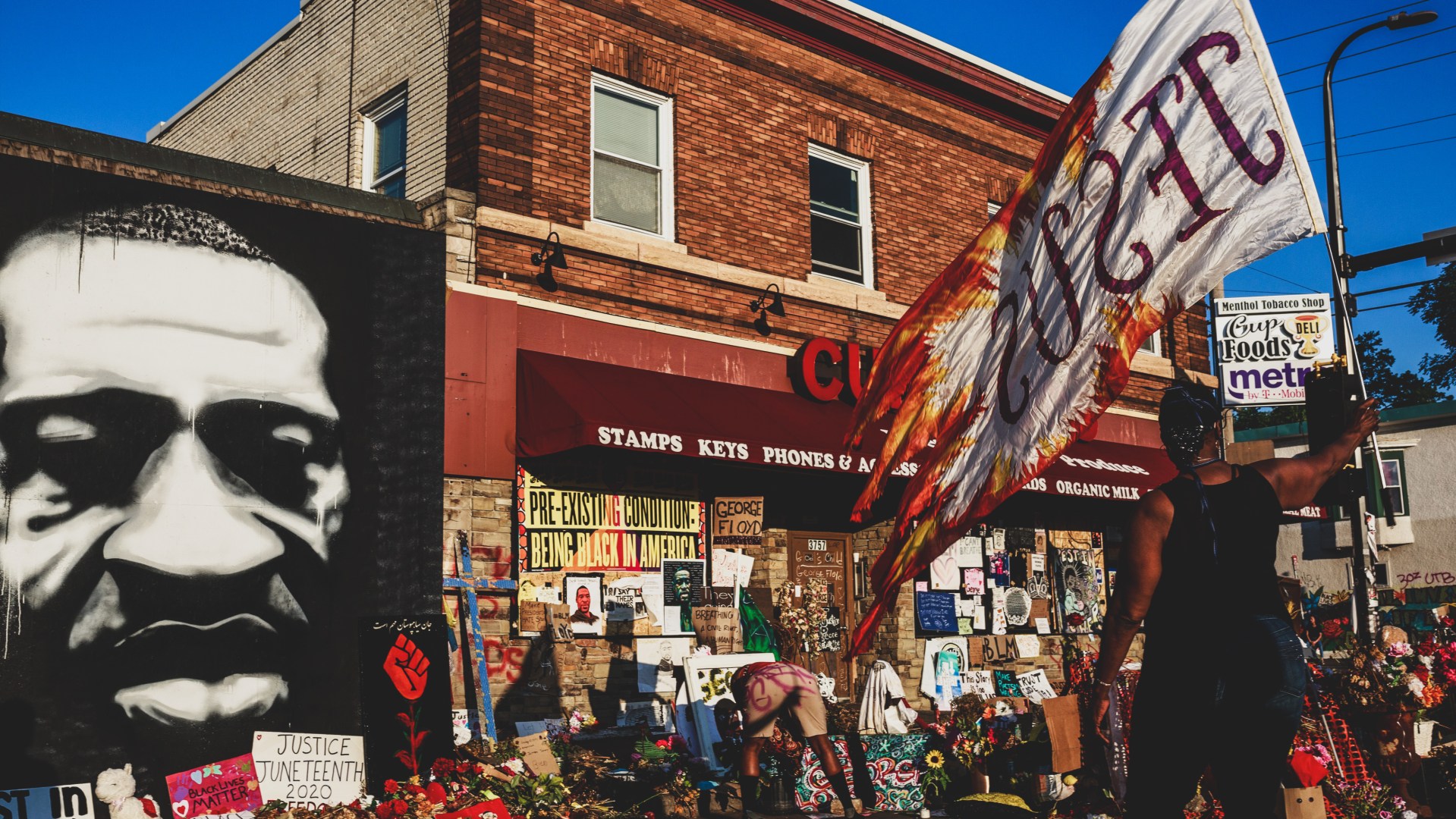
The Sunday after George Floyd’s death, I preached Christ’s death and resurrection.

Kerem Yucel / Contributor / Getty

When I was a 12-year-old boy, I had a sobering conversation with my father and my uncle. Generally, it is referred to as the talk. In African American families, it is common for parents to introduce their adolescent children, especially their sons, to the dangers awaiting them in a world that now perceives them as young adults. I still remember the alarm sounded by my uncle. He said, “Neph, you are male, black, and large. Many will perceive you as a threat, and it may get you killed.”

My uncle and my father equipped me for a life in which such dangers are very real. As I entered young adulthood, the concerns of the talk were proven true by my own experiences. But, while I was prepared to survive, I did not feel equipped to thrive. I did not know how to confront the problem of perpetual ethnic conflict. I knew how to get home safely, but I didn’t recognize how being treated justly was an essential demand of my humanity. Instead, I learned to brace myself for injustice. This gave rise to crippling hopelessness.

Right now, the United States faces the emotional aftermath of a series of unfathomable deaths that occurred during encounters with either active or retired law enforcement. Many people of color are coming to grips with the same crippling hopelessness that burdened me in my young adulthood. I, too, am deeply aggrieved by these circumstances. For if we genuinely value the imperative to love your neighbor as yourself, then the deaths of Elijah McClain, Ahmaud Arbery, Breonna Taylor, George Floyd, and numerous others cannot be dismissed or forgotten. Their deaths only add to a long-festering frustration—a frustration that has propelled thousands of protesters who have taken to the streets, crying out for justice. They are stricken with hopelessness.

As preachers, when we observe these conditions, we must look at them through the lens of Scripture—and we must address them from the pulpit. It is our divine calling. Amid injustice and protests, the preacher must say something—so I did.

I am never so emotionally taxed as when the heartache of injustice is poignantly felt within my own church family. As a pastor, I am compelled to confront it. Usually, the night before delivering such a sermon is restless and difficult. But as I prepared to preach on the Sunday after George Floyd’s death, thankfully, I knew it was not my responsibility to determine what I must say. It never is! I often tell people, tongue-in-cheek, that I have only one message: the gospel. Essentially, what is the sin and how did Christ confront it? I believe the gospel must redeem every aspect of brokenness in the world. This is the only fruitful word.

So that Sunday, I stood before people whom I love and I had two goals. First, I wanted to help them see the fallenness of our predicament. America’s ethnic rift is systemic and pervasive. Calling it sin is a good start—but it is only the start. As a preacher, I’m obliged to specify what the sin is so that the gospel implications can be defined. Second, I sought to provide them with legitimate and defensible hope by pointing them to our King who confronted sin through his life, death, and resurrection.

These ideas are not mine; they come from the apostle Paul’s thesis in Ephesians 2. The gospel of Christ reconciled us to God (vv. 1–10), and it also reconciled us to one another (vv. 11–22). The Cross resulted in both horizontal and vertical reconciliation. This is a comprehensive gospel message. As Ephesians 2 makes plain, ethnic wholeness and justice are inevitable fruits of the gospel—not just in heaven, but also on earth (Matt. 6:10).

This was and continues to be my message as ethnic division and protests continue. When the gospel is applied with specificity and grace, it is a compelling and restorative message to those with empathetic ears.

Communicating such a message has its challenges. Even among believers, it can be perceived as Pollyanna rubbish that amounts to saying, “Just wait, God will fix it all in the end.” But I reject such a perception. If the ethnic rift is sinful, then simply waiting is inappropriate. A preacher’s message must always be actionable. This gospel compels the church to empathize with and advocate for the marginalized. Prayerful faith is essential, but without action, it is impotent (James 2:14–26). If the gospel brings wholeness to a broken world, then the church is compelled to be an advocate for justice. The duty to speak up, in grace and truth, is central to the message I presented to my church family.

As their pastor, I sought to provide the church with a different version of the talk. Because of the gospel, this talk is infused with real hope and contains the authority to conquer the ethnic strife that plagues us. If the apostle Paul legitimately applied the effects of the Cross to human relationships, then we cannot be content with people simply bracing themselves for the blows of injustice. As the church, we are compelled to say something; as pastors, we are compelled to preach something. And the gospel is what we say.

Brandon Washington is a church planter and the pastor of preaching and vision at The Embassy Church in Denver. He holds a master’s degree in systematic theology from Denver Seminary and lives with his wife and two children in Colorado.

Pastors

If You Want to Reach Skeptics, Start Your Sermon Preparation with Distress

Paul’s model for preaching with a missional edge.

Hannah Busing / Unsplash

Where does the sermon begin? I am all too familiar with the uneasy staring contest we preachers so often have with our blank screens—cursor blinking, taunting us to write something meaningful. But nothing comes. We’ve studied the text and done the exegetical work. We’ve prayed, pondered, and wondered. We’ve read the commentaries. And yet we somehow find ourselves back in our familiar place—blank screen, blinking cursor, at a loss.

There’s a story in Acts 17 that’s not usually thought of as a preaching story, because a whole lot more is going on in the narrative. But it is in fact—at least in part—a story about preaching. It’s right there in the text: “Paul was preaching the good news about Jesus and the resurrection” (v. 18).

The apostle finds himself in Athens, an influential city in the first century, full of aesthetic splendor and intellectual fervor. As he waits there for Silas and Timothy, the cultural and spiritual climate overwhelms him. Surrounded by the gaudy embellishments of buildings and structures dedicated to the various gods of polytheistic Athens, the text tells us that Paul “was greatly distressed to see that the city was full of idols” (v. 16).

The original Greek word for distressed indicates a stirring or provoking of the spirit. This brief passage about Paul preaching the gospel starts with a stirring, a particular provocation in his spirit, prompted by an idolatrous culture. This is where Paul’s sermon begins. I believe this is where our sermons should begin as well: stirred and provoked to respond as we stand at the intersection between text and context—what God may want to say through his Word (text) in this moment to these people living in this culture, navigating their specific circumstances (context).

We cultivate and craft the space for this sort of distress—this Spirit-led stirring and provocation within—by paying constant and prayerful attention to the lived stories of the communities we serve. As Thomas Long reminds us, “Preaching does not occur in thin air but always happens on a specific occasion and with particular people in a given cultural setting.” We listen for the specifics and watch for the particulars of the circumstances, questions, and tensions that our people are facing in their everyday lives. We confess the idolatry in our own lives and name the idolatry in our midst, both subtle and blatant. This is where the sermon begins, but it is not where it ends.

“So he reasoned in the synagogue with both Jews and God-fearing Greeks, as well as in the marketplace day by day with those who happened to be there” (v. 17). Paul’s distress leads him to reason. The original Greek word here indicates a thorough, well-thought discussion. Paul reasons in the synagogue and marketplace with all sorts of people representing all sorts of perspectives.

The very next verse tells us that Paul debated both Epicurean and Stoic philosophers, prominent deists and pantheists in the first century. Confronting and convincing such broad and prevalent worldviews of a new possibility would have indeed demanded a thorough and well-thought-out display of the gospel. In our increasingly post-Christian world, preaching offers us a similar opportunity to step into the void, to thoroughly and thoughtfully share God’s story. Preaching is, in essence, the proclamation and declaration of an alternative and subversive story of hope in the midst of the world’s prevalent stories.

At one church where I served, we tried to lean into this reasoning approach by inviting discussion and dialogue as much as possible. About once a month, we hosted an event called “Ask Me Anything” after the worship gathering, where everyone was invited to meet with the teacher and ask anything he or she would like regarding the sermon. Other churches I know have taken similar approaches, leveraging both in-person opportunities and online question-and-response events. Whatever the specifics, a reasoning approach to preaching calls us to journey alongside the full spectrum of people in our midst, through their valleys of doubt.

In the words of Dallas Willard, preaching comes down to “aiding others in removing doubts that hinder their enthusiastic and full participation in the kingdom of the heavens and their discipleship to Christ.” This approach necessarily involves working toward linguistic, cultural, and situational nuance. It also calls for deep theological engagement. Many of us have experienced how taxing this work can be intellectually, emotionally, and spiritually. In some ways, it’s much easier to develop a few trite points detached from the actual questions people carry. Yet most of us know and feel on a visceral level that to preach detached in this way risks preaching to no one. And so, effective preaching dives headlong into the mess and murkiness of people’s doubts, fueled by evangelistic longing and energized by a missional edge. Thorough and thoughtful work must be done if our preaching will compel an increasingly skeptical world.

Preaching is a challenging endeavor. But with distress as the starting point and reason as the ensuing path, everything begins to open up. We ask the Spirit of God to stir and provoke us in unique ways within our unique contexts. We do the hard work of thoroughly and thoughtfully acknowledging and addressing the doubts people carry. And as we do, we will find the blank screen and blinking cursor give way to surprising possibilities.

Jay Kim serves as lead pastor of teaching at WestGate Church in the Silicon Valley of California and teacher in residence at Vintage Faith Church in Santa Cruz, California. He is the author of Analog Church and also serves on the leadership team of the ReGeneration Project.

Pastors

What Pastors See as the ‘New Normal’ for Preaching After the Pandemic

COVID-19’s ministry disruptions are generating lasting insights.

Arthur Senra / Ponto 618

The sanctuary was empty. But that didn’t distract Claude Alexander. He had just finished preaching from Jeremiah 8 on the temptation to despair amid COVID-19 and the hope found in Christ. As he called on musicians to sing “Lead Me to the Rock,” Alexander was visibly moved to tears by his sense of God’s presence, and worship continued another 30 minutes on the livestream. For Alexander, senior pastor of The Park Church—a 3,000-member predominantly black congregation in Charlotte, North Carolina—that late-spring worship service exemplified his surprising experience of preaching through the coronavirus pandemic.

“I have had some of the most powerful times of worship preaching in a sanctuary with no people,” he said. Preaching without a congregation became “an undistracted offering to God” without the temptation “to respond to what I’m seeing in the pew.”

Enduring Insights

As the coronavirus forced pastors around the world to begin preaching to cameras rather than live congregations, not all pastors experienced the same intensity of worship as Alexander. Indeed, some had many Sundays that felt quite the opposite. Yet a diverse array of pastors interviewed by CT reported that the COVID-19 pandemic refocused them on the God-centered nature of preaching.

Initially, the changes were at a surface level. Pastors went from scanning the room during sermons to looking at a camera. They transitioned from leading altar calls to asking those with spiritual decisions to text a number displayed on their screens. Alexander (who serves on CT’s board of directors) even found himself telling listeners to tweet their responses of “amen” and “praise the Lord” when they could no longer call them out in the congregation.

As the pandemic wore on, surface-level adjustments gave way to deeper reflection about preaching and catalyzed practical changes that will persist after churches regather and COVID-19 vaccinations are commonplace. CT spoke with several pastors from a wide variety of churches to hear how moving worship services online and delivering sermons through a screen rather than to a congregation impacted their preaching in lasting ways. They all agreed that the struggles of pandemic preaching generated new insights on the task—insights they hope to retain when Sunday worship eventually returns to a post-COVID-19 normal.

Absent Amens

Several pastors noted that the lack of a live congregation eliminated a valuable source of instant sermon feedback. This loss helped pastors place higher value on such feedback, and they’re likely to give heightened attention to it as they move forward with regathered congregations.

“What I miss the most,” said Rich Villodas, lead pastor of New Life Fellowship in New York City, “is just meeting with people afterwards and hearing how their lives are being impacted by the proclaimed message of God’s Word.” Before the pandemic, he would greet worshipers every week in the church lobby after each service and hear feedback (both positive and negative) on the sermon. At times, worshipers’ after- service comments caused him to tweak the sermon in a later service. He has also missed seeing and hearing real-time reactions as he preaches a sermon—amens, nods, and hums—that he said “help to unlock [preaching] in the moment.”

Villodas vividly remembers a Sunday before the pandemic when a blind African American man visited his Queens church and reacted verbally throughout the sermon. Vocal encouragement from listeners “happens on a regular basis” in Villodas’s multiethnic congregation, which includes people of 75 different nationalities, but he recalls this visitor because he was particularly vocal in a way that made the sermon better. “There was a cadence to his reactions that actually paced me,” Villodas said.

Resuming in-person worship refreshes preaching, Villodas said, because it puts preachers in contact once again with people like that notable visitor, reminding expositors that the Bible is best interpreted in community with other believers. In a post-COVID-19 world, the return of once-absent nods and amens will draw heightened attention as cues that the pastor’s exegesis is on target.

Michael York, pastor of Fairview Baptist Church in Ashland, Kentucky, agreed that addressing an empty sanctuary “was probably the biggest challenge” of pandemic preaching. With no amens to affirm his exegesis and no laughs to communicate that jokes resonated, “I had no idea how people were responding,” said York, who pastored First Baptist Church in Salem, Missouri, for most of the pandemic before moving to Kentucky in July.

With the absence of verbal and visual feedback, York encouraged church members to listen actively by taking notes during sermons. He also tried to help them ingest more Scripture amid the crisis by extending his normal 45-minute sermons to between 50 and 55 minutes. Some of York’s congregants told him they made a practice of listening to these longer sermons in multiple sittings.

York says his return to a live congregation reinvigorated his commitment to respond to audience feedback. He monitors listeners’ attention and seeks to keep them engaged with nonverbal communication tools—like gestures, body position, movement, and audience participation. York says he gestured more during pandemic sermons to draw people in visually. Now, preaching in person, he tries not to over-gesture to the live congregation. York’s vocal variety in terms of volume and pitch decreased without a live congregation, but the variety is back with a regathered church, drawn out by audience response.

Silence’s Spiritual Benefit

For Bryan Chapell, senior pastor of Grace Presbyterian Church in Peoria, Illinois, the experience of preaching in an empty room seemed to lack power at times. After a normal sermon with a live congregation, “the music swells. I trumpet the benediction and shake hands as I go down the aisles,” he said. But after preaching only to a set of cameras, “there is suddenly this awful silence, and you kind of wonder if you just did anything.”

The bewildering feeling of “awful silence” that Chapell and others experienced gave way to what was, perhaps, the greatest lasting benefit of pandemic preaching: a renewed conviction that preaching is from God and for God. Half of the pastors CT interviewed said the lack of feedback and human interaction during the pandemic ultimately reminded them to seek affirmation from God for their preaching rather than from people. They confessed a need for affirmation and said it’s easy to seek it from church members.

“When there’s nobody there to give any affirmation, I have the spiritual benefit of needing to receive it from the Lord and nobody else,” said Chapell. “That’s got to be good for my soul, even if it’s not good for my ego.”

From Congregation to Camera

Another significant shift for pastors came in adjustments to their normal weekly rhythms for study and exegesis. For some preachers, prerecording sermons on Thursday or Friday to allow time for video editing and production before Sunday decreased the number of days they would normally spend each week on sermon preparation.

But prerecording sermons carried benefits, too. In some cases, the usefulness of watching themselves each Sunday outweighed the inconvenience of shortened preparation time. Among those who regularly watched themselves preach during the pandemic was Ed Robb, senior pastor of The Woodlands United Methodist Church in Houston, the second largest church in its denomination.

Before the pandemic, Robb rarely watched recordings of himself preaching. But during the pandemic, he spent each Sunday morning watching prerecorded sermons at home with his wife. Now, standing before a regathered congregation, he knows more fully what people are experiencing as he preaches and what keeps their attention. The change in pastoral responsibilities during the pandemic—fewer regular meetings, more open blocks of time—also enabled Robb to start his sermon preparation earlier and to look ahead further in his preaching calendar than he did before.

Recording schedules likewise affected Vaughan Roberts, rector of St. Ebbe’s Church, an Anglican congregation in Oxford, England. Before the pandemic, Roberts wrote his sermons on Friday and let them percolate in his mind on Saturday before preaching them on Sunday. During the pandemic, however, that regular percolation time disappeared. When an application would occur to him on Saturday, he thought, “It’s too late. It’s gone to the video editors.” Amid online editing schedules, however, he sought to remind himself that preaching is not a production. “I’ve got a word from the Lord,” he said, “and those people out there need to hear it.”

Striving to Connect

A lack of people in the pews drove some pastors to work harder at being present with their congregations through their sermons, though distanced. Mandy Smith, lead pastor of University Christian Church in Cincinnati, discovered applications to preaching from autonomous sensory meridian response (ASMR), an experience of low-grade euphoria or effervescence triggered by soothing sounds or other stimuli. The preaching connection occurred to Smith when a woman in the church said she felt closer to her pastor after hearing Smith giggle and take a breath in a video the church posted online. That experience, and some accompanying research, prompted Smith to purchase a high-quality microphone to better capture sounds during her sermons, like breathing and pages turning.

“I just wanted to make sure that, subconsciously, people were reminded that there’s a human being behind this,” Smith said. This attention to sound quality—and to the humanizing effect of small or quiet sounds—could continue after the pandemic, particularly for churches that maintain significant online ministry.

While Smith generated closeness with her congregation through sound quality, other preachers said the need to connect has driven them to use words more intentionally—and, for some, more sparingly. During online services, Roberts chose to reduce his normal 35-minute sermons to 20 minutes to optimize viewers’ experiences. “I have to hone it down,” he said, by shortening introductions and maximizing the power of words in describing the Bible passage.

Chapell made similar adjustments. Because he could not respond in video sermons to listeners’ reactions, he felt an “obligation to be more precise” during the pandemic. That led Chapell to write out his sermons in full—planning the exact words to deliver applications and theological explanations. Although this practice of full manuscripting did not continue after regathering, the experience emphasized for Chapell the need for and value of planned and precise wording in sermons alongside appropriate spontaneity.

The challenges of pandemic preaching also sharpened pastors’ commitment to preach as shepherds, not merely orators. They knew the spiritual needs of their people and worried that those needs deepened through the pandemic. They could also go unmet, pastors feared, if sermons were not aimed specifically at the individuals they pastored. To keep those individuals in mind, Roberts chose to engage his imagination. “Before I start, I am seeing those people in my mind’s eye,” he said of video preaching, “because I want to speak not to a camera, but to people.”

This heightened attention to spiritual need seems warranted. Approximately one-third of Americans showed signs of clinical anxiety or depression during the initial months of the COVID-19 pandemic, the National Center for Health Statistics and the US Census Bureau reported. The Well Being Trust, in conjunction with the Robert Graham Center for Policy Research in Family Medicine and Primary Care, warned that “deaths of despair” due to drugs, alcohol, and suicides could top 154,000 in America during the pandemic and recovery.

The pandemic strengthened the sense of integration between pastoral care and preaching—an emphasis pastors hope to carry forward. “To preach as a pastor is to really know the stories of the people in the congregation,” Villodas said, “and to really preach with them in mind.”

Self-Quarantining with Scripture

In addition to focusing more intently on people, some pastors said the pandemic led them to meditate more deeply on Scripture—which both impacted their preaching and offered them spiritual nourishment. Robert Morgan, a 68-year-old teaching pastor at The Donelson Fellowship in Nashville, said he saw younger pastors learn to spend more time with Scripture during the lockdown—largely because their other time commitments were drastically reduced. Their preaching before the pandemic was not inadequate, he said, but he observed that greater study time has yielded greater depth of insight. Providentially, they had fewer meetings and pastoral responsibilities at the same moment a novel virus and inflamed racial tensions pushed them to find appropriate applications of Scripture.

One pastor in his 30s was frustrated that he didn’t adequately handle the death of George Floyd, an unarmed black man, at the hands of Minneapolis police. Morgan helped him think through applying the Bible to that situation and said the best application requires intense meditation on Scripture weekly. “Preachers ought to be self-quarantining every week with their Bibles,” Morgan said, “not because of the pandemic, but because of the urgency of the time, which demands authoritative messaging from this nuclear book.”

Alexander found new opportunities to meditate on Scripture because of his altered rhythms. He also realized that pandemic conditions have changed how he understands individual Scripture passages. On a walk to the grocery store, Alexander found himself pondering how Jesus would tell the parable of the Good Samaritan in a time of social distancing. The priest and the Levite in Jesus’ story were faulted for distancing themselves, he thought, highlighting the challenge of caring for our neighbors when we are required to separate from them physically. The meditation led Alexander to commit to buying groceries for a certain homeless man every time he bought groceries for himself.

Also, thinking about Acts 1–2 led Alexander to realize that the Holy Spirit’s indwelling at Pentecost happened amid a “shelter-in-place order” given by Jesus: His disciples were to remain in Jerusalem until they were baptized with the Holy Spirit (1:4). That gave Alexander hope that God would work powerfully despite America’s shelter-in-place orders. “I would not have paid attention to that level of detail pre-COVID-19,” Alexander said. “I came out better equipped as a preacher.”

The surprising spiritual blessings of the pandemic have been so good for Alexander’s soul, he said, that in one sense, “I dread having to go back” to the standard pastoral duties of a busy, in-person worship service. Yet preachers have to do just that. The silver lining is the hidden gifts from their COVID-19 experiences that continue to shape their preaching.

David Roach is a writer, preacher, and professor. He lives with his wife and three children in Nashville.

Pastors

Who Am I to Speak for God?

We craft personas as preachers. God prefers to use us as real people.

Ben White / Unsplash

I preached my first sermon to my home church while still a student in seminary. Everybody showed up to hear it—aunts and uncles and grandparents and cousins, the Sunday school teachers and youth workers and other mentors who’d had a hand in my spiritual nurturing—all of them about ready to burst with pride at my being a preacher. They sweetly poured on praise with sugar and said my sermon was just fine, bless his heart. One old gentleman went so far as to glad-fist a hundred-dollar bill into my hand on his way out. I reread that first sermon recently, and it truly was terrible. The old gentleman gave me that hundred out of necessity. He knew there was no way I would make it as a minister.

The fact that Jesus’ first sermon worried his home congregation gave me solace. Though Jesus’ sermon excelled and astounded the crowd, they nevertheless suspiciously whispered, Where did this man get such wisdom and these deeds of power? Isn’t he that carpenter’s son? Mary’s boy? We know his brothers and sisters. Implied was a certain presumptuousness on Jesus’ part, received as an insult: Who does he think he is? Matthew reports, “They took offense at him” (13:57). In Luke’s gospel, they tried to throw him off a cliff (4:29).

It was bad enough for the Son of God. For mere human sinners like me to stand before a congregation and proclaim the Word of God exceedingly presumes, especially if you preach from one of those high and lofty pulpits like I did. Who do I think I am to speak for God? Looking out over those gathered, I would catch an eye now and then, engaged and expectant, wanting if not needing a word from the Lord. I’d pray for a miracle of hearing, that somehow whatever people heard would serve them despite what I said.

Thirty-five years after my first sermon, despite giving almost a thousand more and even serving a stint as a homiletics professor, I’m not sure I ever fully got the hang of preaching. The high pulpit felt at times like a pedestal. To deal with the vertigo, we preachers instinctively project a persona, an image for congregational consumption, allowing us to keep social distance between “the preacher” and our real person, lest congregations confuse us with Jesus. However, if we’re not careful, the distance may grow and turn our preaching more into performance than practice.

Jesus censured such overly pedestaled and protected preachers as hypocrites, who “look beautiful on the outside but on the inside are full of the bones of the dead and everything unclean” (Matt. 23:27). Personas as personas non grata, so to speak. Ironically, Jesus did say people should do everything the hypocrites teach—even bad sermons are subject to miracle hearing. “But do not do what they do,” Jesus warned, “for they do not practice what they preach” (v. 3).

No preacher wants to be a hypocrite (from the Greek word for “actor”), but some of us fear risking our full humanity being known. “I’m only human,” we’ll say, as if our humanity is problematic, forgetting that Jesus was human too. The difference, of course, is that Jesus’ humanity was not only human but truly human, a fullness infused with the fullness of God. Jesus got crucified for preaching the truth, but also for being Truth in the flesh. His grace that redeems us doesn’t do so by lowering standards. If anything, Jesus raises the standards.

But unlike the hypocritical preachers who loaded up listeners with heavy, cumbersome burdens and never lifted a finger to help (Matt. 23:4), Jesus made his hard yoke easy to bear. As the apostle Paul preached it, we were buried with Christ through baptism into death so that, just as Christ was raised from the dead through the glory of the Father, we too may live a new life now (Rom. 6:4).

In my church tradition, there’s an old title for ministers that we don’t use much anymore. Parson derives from the Latin persona but went on in English parlance to signify clergy. Unlike a persona that projects an image and performs from a perch, a parson (meaning “person”) descends to practice what he or she preaches, bearing witness to both sin and salvation, to both grace and obedience. Our new lives show forth whenever we love our neighbors and forgive those who wrong us, whenever we care for the earth and the poor and the refugee and the widow and the orphan, whenever we speak truth and make peace and do right and worship the Lord as living sacrifices to God. And when we fail because of our weakness, we bear witness with our repentance and reliance on grace, born again yet again, until that day when we are fully like Christ, with Christ.

Daniel Harrell is editor in chief of Christianity Today.

Apple PodcastsDown ArrowDown ArrowDown Arrowarrow_left_altLeft ArrowLeft ArrowRight ArrowRight ArrowRight Arrowarrow_up_altUp ArrowUp ArrowAvailable at Amazoncaret-downCloseCloseEmailEmailExpandExpandExternalExternalFacebookfacebook-squareGiftGiftGooglegoogleGoogle KeephamburgerInstagraminstagram-squareLinkLinklinkedin-squareListenListenListenChristianity TodayCT Creative Studio Logologo_orgMegaphoneMenuMenupausePinterestPlayPlayPocketPodcastRSSRSSSaveSaveSaveSearchSearchsearchSpotifyStitcherTelegramTable of ContentsTable of Contentstwitter-squareWhatsAppXYouTubeYouTube