News
Wire Story

Trump Administration Expands Religious Exemptions for Federal Contractors

A new Labor Department rule offers organizations providing government services more freedom to follow their own employment guidelines on faith and LGBT identity.

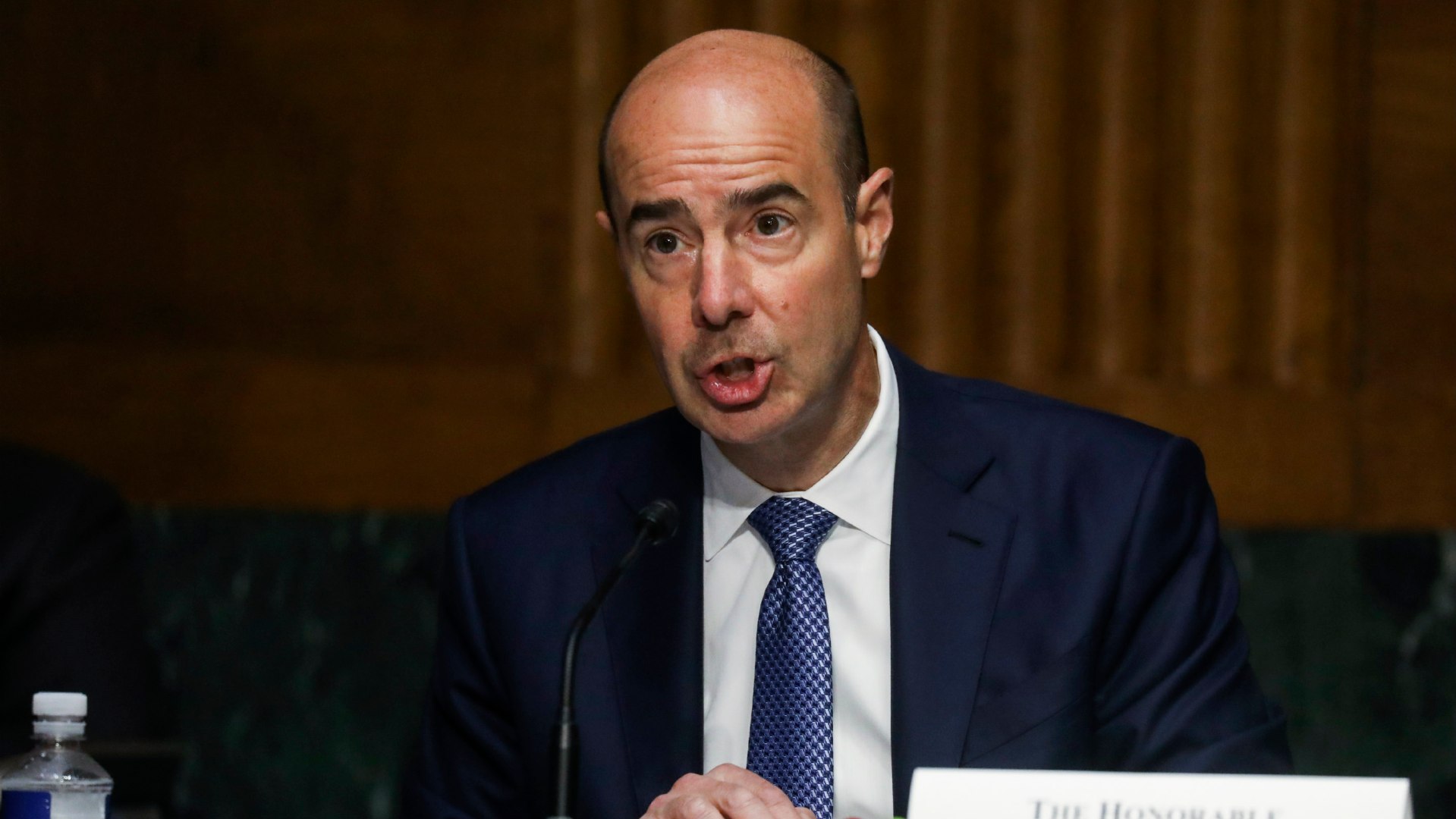
US Labor Secretary Eugene Scalia

US Labor Secretary Eugene Scalia

Christianity Today December 9, 2020
Leah Millis / Pool - Getty Images

The US Department of Labor has issued a new rule intended to foster “full and equal participation” of religious groups as federal contractors.

“Religious organizations should not have to fear that acceptance of a federal contract or subcontract will require them to abandon their religious character or identity,” said US Secretary of Labor Eugene Scalia in a statement Monday.

The final rule will become effective January 8, two weeks before President Donald Trump leaves office. It is the latest development in the long-running battle over how to balance religious rights with other, particularly LGBT, rights.

The department said the new rule builds on Executive Order 11246, which dates to the Johnson administration, that requires contractors to follow affirmative action and nondiscrimination requirements.

“Yet the order also acknowledges that religious organizations may prefer in employment ‘individuals of a particular religion,’ so that they can maintain their religious identity and integrity,” the department’s statement said.

The new rule, outlined in a 159-page document, aims to clarify what kinds of organizations qualify for a religious exemption. Since the George W. Bush administration, Labor Department rules have followed Title VII of the 1964 Civil Rights Act, which allows religious employers to prefer members of their own faith when it comes to hiring.

Under its definition of “Religious corporation, association, educational institution, or society,” the new final rule notes that they may or may not be connected to a house of worship.

Its final language also makes clear that a religious organization need not be nonprofit but if it is for-profit it must show “strong evidence that it possesses a substantial religious purpose.” For example, it would not be sufficient for an organization to include a scriptural quote in its marketing or a short mention of religious values on an “About Us” webpage.

The department received more than 109,000 comments after the rule was proposed last year. Some of the comments responded to the Labor Department’s referring in its proposed rule to Supreme Court cases—such as Hobby Lobby, Masterpiece Cakeshop and Trinity Lutheran Church in Columbia, Missouri—in which persons with religious claims were granted anti-discrimination protections.


The Trump administration’s focus on religious liberty has been hailed by conservatives and questioned as discriminatory by advocates of church-state separation and LGBT activists, who are concerned that religious exemptions will deprive same-sex couples of access to services.

Stanley Carlson-Thies, founder of the Center for Public Justice’s Institutional Religious Freedom Alliance, called the new rule a “welcome step” because disputes sometimes arose about the extent of the exemption after then-President Barack Obama in 2014 barred government contractors from discriminating against LGBT applicants and employees.

“The new final rule affirms that religious organizations can maintain their religious employment qualifications when they become federal contractors,” Carlson-Thies said, though he noted that it only applies to the small number of religious organizations who provide services to the federal government.

At the same time, Carlson-Thies said, “The new rule requires proof that an organization is religious—an employer cannot dream up a religious excuse simply because it desires to fire a gay person or someone of a minority faith.”

Americans United for Separation of Church and State opposed the rule, saying it could cause other kinds of discrimination.

“It’s unconscionable, though hardly surprising, that the lame-duck Trump administration would expand the ability of federal contractors—who employ one-fifth of the American workforce—to use religious litmus tests to hire or fire employees for jobs paid for with taxpayer dollars,” said AU President Rachel Laser.

“Like so many others issued by the Trump administration, this rule particularly puts at risk workers who are LGBTQ, women, religious minorities and non-religious people.”

Laser urged the Biden-Harris administration to “immediately begin the process of revoking this rule.” But Carlson-Thies said the new regulation “cannot be reversed by the wave of a pen.”

News
Wire Story

It’s Hard to Social Distance When You’re a Giant Singing Christmas Tree

Big church productions cancel, go digital, or try to adjust to COVID-19 precautions.

Christianity Today December 8, 2020
Joel Bissell / Muskegon Chronicle via AP

There are no sheep or goats or even llamas at the Capital Christian Center, a 3,000-seat Assemblies of God megachurch in Sacramento this Christmas season. Not even a pair of church members dressed up in a camel suit.

And for the first time in 63 years, no giant Singing Christmas Tree.

“Tonight would have been our opening night,” said Capital Center senior pastor Rick Cole on Friday. “It’s a really weird feeling.”

Large-scale Christian shows, including those featuring a Singing Christmas Tree—40- or 50-foot-tall structures holding hundreds of choir members—have been staples at large congregations like Capital Christian for decades. They draw in thousands of visitors who might never otherwise come to church and bring joy and a sense of community to cast and congregation members alike.

But this year, COVID-19 restrictions make such events nearly impossible to pull off.

Last year, 25,000 people came to see 11 Capital Center Singing Christmas Tree performances. Between 300 and 400 people are usually part of the production, which includes choir members, actors and a host of backstage staff and musicians who play in a specially built orchestra pit in front of the stage.

“We are disappointed,” said Cole. “It’s disappointing for every person on the planet right now. It is the nature of the moment we are in.”

First Baptist Church in Orlando is getting around the lack of in-person performances featuring two Singing Christmas Trees—each about 45 feet high from base to star and able to hold about 200 singers and tens of thousands of Christmas lights—by filming a series of short Christmas-themed videos to be shown at services during December, said Jonathan Hickey, the church’s creative arts director.

In Portland, the annual community Singing Christmas Tree, which began in 1962, will stream online from December 15 to New Year’s Day, with a mix of clips from past shows and stories from the Singing Christmas Tree’s history.

At least a few Singing Christmas Trees will go on with the show this year, with some adaptations.

Abilene Baptist Church in Martinez, Georgia, has moved its Singing Christmas Tree from the church’s sanctuary to a nearby park this year, said Thomas Sunderland, associate pastor of music and media.

Prompted in part by COVID-19 and by a major renovation of the church’s building, Sunderland said, the Singing Christmas Tree will be smaller, with no star, one less level and 70 singers, down from the usual 100 or so. They will be six feet apart, and some will stand next to the tree, rather than on it.

Sunderland said that having the tree outside will help limit the risk of spreading the coronavirus. The audience will also be socially distanced.

“In the end, God spoke to my heart to do the tree,” he told Religion News Service in an email, while admitting that things could change between now and December 10, when the first of three performances is scheduled.

“God could shut it all down tomorrow,” Sunderland said. “It belongs to him, not me, not our music ministry nor our church.”

At Belhaven University in Jackson, Mississippi, where the first Singing Christmas Tree was held in the 1930s, a lack of rehearsal—and personnel—was the problem with holding it this year.

None of the choirs on campus have sung together this year because of the risk of COVID-19, said Belhaven President Roger Parrott. And the school’s students were sent home at Thanksgiving. Bringing them back to do the Singing Christmas Tree, held outdoors each year at the school’s football stadium, made no sense.

He hopes that the Singing Christmas Tree will be back next year, and in the meantime he takes pride in the way church communities around the country have run with Belhaven’s invention.

“I’ve always said, if we franchised the idea, we could have made a lot of money by now,” Parrott added.

News

Died: Walter Hooper, Who Gave His Life to C.S. Lewis’s Legacy

He kept works in print, edited new collections, and spent a lifetime meditating on everything written by the beloved British author.

Christianity Today December 8, 2020
Courtesy of the Marion E. Wade Center.

Walter Hooper, a North Carolina man who dedicated his life to preserving and promoting the writings of C. S. Lewis, died Monday at the age of 89. He was sick with COVID-19.

Hooper served briefly and informally as Lewis’s literary secretary—helping the author of The Chronicles of Narnia, Mere Christianity, and The Abolition of Man answer his mail—before Lewis’s death in 1963. Hooper, then 33, left a teaching post at the University of Kentucky to take a leading role in managing Lewis’s literary estate. He continued to promote Lewis for the rest of his life.

Hooper edited more than 30 collections of Lewis’s writing and annotated four volumes of letters, in addition to writing the first authorized biography and a number of studies and reference volumes. In the early years, he played a pivotal role in keeping Lewis in print.

“I hero-worshipped him, and still do,” Hooper said after 30 years. “I can’t think of a better way of spending my life than by making his contribution better known.”

Hooper received a lifetime achievement award in 2009 from the Marion E. Wade Center at Wheaton College, which promotes the ongoing relevance of the literature of Lewis and his circle of Christian writers. According to the Wade Center, “there is not a single reader of C.S. Lewis’s writings who is not deeply indebted to Walter Hooper.”

Hooper was born outside of Greensboro, North Carolina, in 1931, and went to study English and education at the University of North Carolina at Chapel Hill.

He first heard of Lewis at a campus ministry, where a football player who had read The Screwtape Letters recounted the narrative about the senior demon writing instructions to his nephew, a junior tempter named Wormwood. Hooper was fascinated by the story, but the university bookstore didn’t carry The Screwtape Letters or any other works by Lewis. The store did sell J. B. Phillips’s colloquial modern translation of the biblical epistles, Letters to Young Churches, which had an introduction by Lewis. The introduction, which made an argument about how God entered into the world through the Incarnation and comes to us still in everyday, prosaic language, changed Hooper’s life.

“I’d never met anybody who believed that way,” he said. “I was determined to have more words by this man.”

Hooper was drafted into the army in 1953, near the end of the Korean War. He took Miracles with him, keeping it inside his shirt during basic training so he could read it during cigarette breaks.

Ten years later, as a young academic working on a book about Lewis, he went to meet the man in Oxford. They had tea at Lewis’s home, then beer with the Inklings at a local pub. When it came time to leave, Hooper didn’t want to go.

“As he and I walked on towards the pub where I would get the bus back, I didn’t know whether I’d ever see him again,” Hooper later recalled. “But I thought, I really love this man.”

He extended his stay to help Lewis answer his mail and then agreed to return officially when he was done with his teaching appointment in Kentucky. Lewis spoke of him to his friends as “my new secretary” and commented, “He’s almost too anxious to please, but no fool. No, no fool.”

That November, Lewis died, and Hooper was asked to return and help with the literary estate. When he saw a British bookshop clearing out its stock of Lewis’s titles, he decided he needed to fight to keep the works in print and promote Lewis’s legacy.

A few of his efforts were controversial. Hooper published an incomplete science fiction manuscript in 1977, titled The Dark Tower. He was accused of writing it himself and attempting to pass it off as authentic Lewis. According to one critic, the unfinished fiction was “a blemish” on Lewis’s reputation and did not match his other work in “style, content, and sexual orientation.” Hooper was also accused of inventing a backstory about saving manuscripts from a bonfire when Lewis’s brother and gardener decided to clean house, in order to perpetrate his alleged literary hoax.

Hooper never responded to the charges, but Lewis’s stepson Douglas Gresham came to Hooper’s defense, and a former student, Alistair Fowler, reported talking with Lewis about aborted fantasy fiction projects, including the story that became The Dark Tower, years before Hooper was involved with the estate.

The Dark Tower, along with other, lesser-known collections of Lewis’s work that were edited by Hooper, including The World’s Last Night, Present Concerns, and Selected Literary Essays, remain in print today.

Hooper may have made his most notable break from Lewis in 1988, when he left his mentor’s Anglican Church and converted to Roman Catholicism. Hooper said he thought Lewis might have done the same, though, if he had lived into the 1980s. The Church of England was “unravelling,” he said. “Anglicanism seemed a mess, in which its members said conflicting things about abortion and many other things.”

In 1997, Hooper finished his largest single contribution to Lewis studies with the 940-page volume, C. S. Lewis: A Companion and Guide. According to CT’s 1997 review, the book was “a whole reference shelf” between two covers.

“Hooper’s knowledge of Lewis’s writings (both published and unpublished) is unsurpassed, and he has chased down a thousand details to fill in the gaps left by the texts,” the review said. “This readable volume seems to reflect a lifetime of meditating on everything written by Lewis and about him, of talking to those who knew Lewis, and of ruminating upon his own conversations with Lewis during their brief acquaintance.”

When Hooper was once asked by a schoolchild what it felt like to dedicate his whole life to another man’s work, he said, “It feels wonderful. I wish I could do it all again.”

News

Will Caucasus Conflict Come Also to France?

President of Armenian evangelical churches in Europe tells CT the Turkish and Azerbaijani diasporas are threatening their neighborhoods, as he struggles to maintain Christian love.

French Armenians and their supporters protest in Paris.

French Armenians and their supporters protest in Paris.

Christianity Today December 8, 2020
Courtesy of Gilbert Léonian

Editor’s note: CT’s complete coverage of Armenian Christians is here.

Throughout the six-week war in Nagorno-Karabakh, the Armenian diaspora rallied in support of an ancient Caucasus mountain homeland they call Artsakh.

Overall, they donated $150 million in economic and humanitarian aid.

In California, they blocked freeway traffic to protest the lack of news coverage.

In Lebanon, they hung banners against Azerbaijani and Turkish aggression.

And in France, they successfully lobbied the senate for a non-binding resolution recognizing Artsakh’s independence. (International law recognizes Nagorno-Karabakh as Azerbaijani territory.)

The symbolic vote angered Azerbaijan, which called for France’s removal from the Minsk Group, co-chaired with Russia and the United States and tasked with overseeing negotiations with Armenia since 1994. Turkey has petitioned for a leading role.

But the consequences go beyond regional politics. The controversy could threaten the French social peace, already riled amid President Emmanuel Macron’s campaign against Muslim “separatism.”

Azerbaijan, and especially allied Turkey, also have an extensive diaspora throughout Europe. And last month, their supporters led demonstrations in Armenian neighborhoods in Lyon, vandalizing the Armenian genocide memorial.

France then banned one of the more violent groups, the Grey Wolves.

To gauge the situation, CT interviewed Gilbert Léonian, a Paris-based pastor and president of the Federation of Armenian Evangelical Churches in Europe. Of the roughly 500,000 French people of Armenian origin in France, about 3 percent are evangelical, worshiping across nine churches.

(Like many French pastors across all ethnicities, Léonian studied at the well-known evangelical seminary in Vaux sur Seine, near Paris. He recalled reading CT in the 1970s, as he studied under the renowned theologian Henri Blocher.)

Léonian discussed relations between the ethnic communities, his fears for the fate of Nagorno-Karabakh churches, and his personal struggle to love his Azerbaijani and Turkish neighbors:

Gilbert Léonian and his wife in front of their church near Paris.

To what degree are the Armenian, Turkish, and Azerbaijani communities integrated into secular French society? Do they maintain their respective faiths?

The first Armenians arrived in France in the early 1920s, following the genocide of 1915–1918.

Others came to France in different migratory waves due to insecurity in their countries of origin: Lebanon, Syria, Turkey, Iran, and more recently, Armenia, following the 1988 earthquake.

Today in France, the Armenian population is mainly established along a south-to-north line from the Mediterranean port city of Marseilles, where the majority of original immigrants arrived and settled, through France’s second largest city of Lyons, and up to Paris.

The Armenian people are deeply religious, and were the first people to accept Christianity as their state religion, in 301 A.D., 12 years before Emperor Constantine’s Edict of Tolerance in 313 A.D. In France, 90 percent belong to the Apostolic [Orthodox] community, in 24 churches. Catholics represent 7 percent, in five churches. Very few Armenians call themselves atheists.

However, we are seeing a major secularization of religious practice, reflecting the general trend in Europe. For many Armenians, the church is more the place where the diaspora maintains its identity and culture, rather than a place where Christian piety is nurtured.

There are about 800,000 Turks and 50,000 Azerbaijanis in France, and overall they try to avoid living close to French people of Armenian origin. We find them in large cities and all over France.

All studies and media cite Armenians as an example of successful integration. The most famous Frenchman of Armenian origin was the singer Charles Aznavour.

Turks and Azeris, on the other hand, live in identity-based and communitarian withdrawal and are very attached to their Muslim religion.

There are 2,500 mosques and Muslim places of worship in France, and 800 imams, 300 of whom are non-French citizens. Half of these are Turkish, and paid as civil servants by Turkey. Additionally, the previous general secretary of the representative council of the Muslim faith in France, was an ethnic Turk.

That gives a fairly accurate idea of the Turkish influence in France.

What is the relationship like between the three ethnic communities?

Inasmuch as successive Turkish governments have not recognized the genocide of 1.5 million Armenians in 1915, this wound has not yet healed. The majority of Armenians retain a deep bitterness and hatred for this injustice.

My own family members fled the massacres in modern-day Turkey via Syria and arrived in Marseilles in 1922, traumatized and having lost everything.

But my parents, my children, and my grandchildren were born in France. Over five generations, we have followed a long path to integration.

I did not deliberately cultivate hatred or revenge in my heart. But deep down, even though I was a born-again Christian and a pastor, I still felt very distant from the Turks and everything Turkish.

And then, one day, that wall fell.

Thanks to the prayer and compassion that God poured into my heart, I set out on a path of dialogue, with the aim of arriving, one day, at a reconciliation based on truth. And God put on my path a Turkish pastor who acknowledged the horror of the genocide and asked forgiveness from the Armenian people, by kneeling before the entire assembly of my church.

This year, with Turkish friends from my region, we had planned to go and visit the village of our grandparents, in Cilicia, to continue this path of inner healing. COVID-19 prevented us from doing so.

But after the horrors committed in recent days by the leaders of Turkey and Azerbaijan in Nagorno-Karabakh, the pain of genocide has once again been awakened. I feel that this path of dialogue has again gone far away from me, and for a very long time.

Several groups of Christians nevertheless have a true vision from God to make the gospel of Jesus Christ known to the Turkish people. I can only encourage them and pray for them.

What happened during the ethnic Turkish march in Lyon?

Around 250 Turks belonging to an extremist party marched in the main street of Décines, a suburb of Lyon, chanting very violent anti-Armenian slogans. It was a real manhunt. A few days later, in the middle of the night, they tagged the walls of the Armenian Heritage Museum, as well as the monument in memory of the victims of 1915. This type of hateful demonstration was then repeated in Vienne, a town 20 miles south of Lyons with a significant Armenian population.

After having chased us from our lands 100 years ago, they are now chasing us in our new homeland, the land that welcomed us, France. Armenian public buildings, including churches, schools, and cultural centers have since been placed under police surveillance in French cities where there is a strong Armenian community.

Gilbert Léonian's church near Paris.
Gilbert Léonian’s church near Paris.

How did the Armenian community respond?

As usual, Armenians reacted peacefully. Everywhere, meetings and protest marches were organized to denounce the massacre of Armenians in Nagorno-Karabakh.

In Paris, we were around 20,000.

We also alerted President Emmanuel Macron, our politicians, and the media.

In several cities in France, including my suburb of Alfortville, we organized ecumenical prayer vigils for peace—with Armenian Orthodox and evangelical believers, French Catholics, and Lebanese Maronites.

Azerbaijani officials are saying that once they regain sovereignty over Nagorno-Karabakh, they will not harm Armenian citizens. What is your view of the situation?

I remain very pessimistic about the security of the few Armenians who will remain in the free part of Karabakh. How can we trust a head of government who has publicly boasted: “We have finally chased away these Armenian dogs!”

My heart bleeds when I see that Armenians fleeing the area occupied by the Azeris are burning the houses they built with their own hands, so that they won’t fall into the hands of the Azeri conquerors.

Let us make no mistake: The recent tragic events in France—in Conflans-Saint Honorine, where a history teacher’s throat was slit in front of his school after a course on freedom of expression, and in Nice, where three Catholic faithful were also slit while praying in the city’s cathedral—are the result of the same fanatical ideology at work in the carnage suffered by Armenians in Artsakh.

Now that the cease-fire agreement has been signed to the detriment of the Armenians, what are your fears?

First of all, this ignominious defeat and the loss of three-quarters of Nagorno-Karabakh are a real crime against humanity, which will remain a gaping wound in the history of civilized peoples. I am afraid that the Armenian people, who over the centuries have given so many martyrs for the cause of the gospel of Christ, will have difficulty recovering from these barbaric acts in the 21st century.

I am very concerned about the preservation of the 500 churches and religious buildings in Nagorno-Karabakh, once they fall into the hands of the occupier. Nagorno-Karabakh is the cradle of Armenian Christianity.

One of the jewels in great danger is the 12th-century monastery of Saint Thaddeus, a UNESCO World Heritage Site. Thaddeus is one of the two apostles of Jesus who evangelized the Armenian people, according to tradition.

And finally, I’m very concerned about the West. After this savage tragedy, lived in full view of the whole world, who is going to stop religious fanaticism?

What are you praying for?

Prayer topics are many, because the Armenian people are in agony, and they need the solidarity of the whole world. Instead we deplore the guilty silence of the international authorities, while the churches of all denominations have shone by their lack of courage!

By the grace of God, I have been a pastor in the Armenian Evangelical Churches of France for 47 years. But I have never been so shaken in my humanity, and in my Christian faith, as by this barbaric war and by the unjust capitulation.

My prayer is that God will manifest his justice, in his time and by his means.

Interview by Jean-Paul Rempp and translation by Andrew Wiles, with additional reporting by Jayson Casper.

News

US Adds Nigeria to Top of Religious Persecution List, Removes Sudan and Uzbekistan

(UPDATED) State Department revises its Countries of Particular Concern on religious freedom.

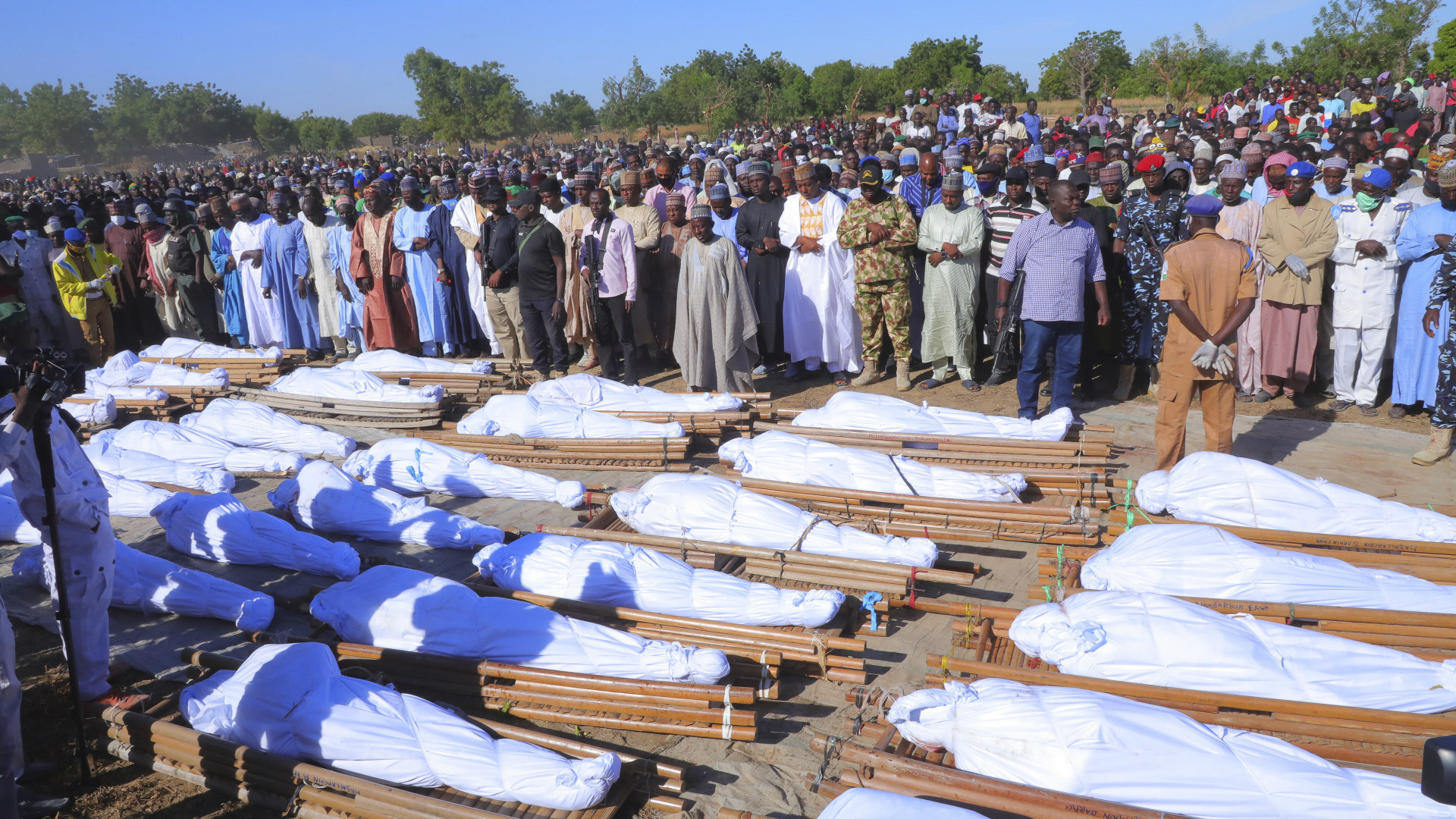
People attend a funeral for those killed by suspected Boko Haram militants in Zaabarmar, Nigeria, on November 29.

People attend a funeral for those killed by suspected Boko Haram militants in Zaabarmar, Nigeria, on November 29.

Christianity Today December 7, 2020
Jossy Ola / Associated Press

Only one country was added this year to the US government’s official list of the world’s worst persecutors of religion: Nigeria.

The West African nation – Africa’s most populous and divided roughly evenly between Christians and Muslims – has been plagued for years by rising sectarian tensions and the Islamist terror group Boko Haram, which most recently was blamed for a massacre of scores of farmers in Borno State.

Nigeria joins Burma, China, Eritrea, Iran, North Korea, Pakistan, Saudi Arabia, Tajikistan, and Turkmenistan on the US Department of State’s Countries of Particular Concern (CPC) list, which names and shames governments which have “engaged in or tolerated ‘systematic, ongoing, [and] egregious violations of religious freedom.’” Those nine nations were also on the 2018 and 2019 CPC lists.

“Today, the United States, a nation founded by those fleeing religious persecution … once again took action to defend those who simply want to exercise this essential freedom,” stated Secretary of State Mike Pompeo.

“… And yet our work is far from complete.”

Last year, Nigeria was added to the State Department’s Special Watch List (SWL), a secondary tier below the CPC list for governments that have “engaged in or tolerated ‘severe violations of religious freedom.’”

The 2020 watch list includes Comoros, Cuba, Nicaragua, and Russia, as it did in 2019. Cuba and Nicaragua were added to the list that year, while Russia was added in 2018.

The elevating of Nigeria to the highest level of concern was met with mixed reactions by the Christian Association of Nigeria (CAN).

“[We are] not happy that the US has placed Nigeria on a religious freedom blacķlist, because of the implications which include possible sanctions,” stated CAN president Samson Ayokunle.

“But at the same time, we are encouraged that the global world is aware of what is happening.”

Nigeria has religious freedom, CAN reminded, but it is denied in certain regional states—especially in the Muslim-majority north. Churches face discriminatory zoning procedures, and Christian professors are denied senior leadership positions, the group stated.

And while Muslims denounce terrorism by Boko Haram and its breakway faction, Islamic State West Africa Province (ISWAP), such violence is done in the name of Allah, stated CAN. Fulani herdsmen, meanwhile, kill in predominantly Christian farming communities.

“Pastors and their families are under attack,” stated Ayokunle. “Churches are being burnt and destroyed. They are taking over our farms and communities.”

Other Nigerian evangelical leaders, however, praised the CPC designation. Gideon Para-Mallam called it “long overdue.”

“This should be a wake-up call to the Muslim power elite and those who perpetually live in denial about the persecution of Christians in Nigeria,” said the president of the Para-Mallam Peace Foundation. “Systematic persecution of Christians in northern Nigeria is real.”

Agreeing that religious freedom is enshrined in Nigeria’s constitution, he called on the government to show—rather than say—that it is “real.”

As did Sunday Agang, president/provost of ECWA Seminary in Jos.

“A lack of religious freedom anywhere in the world is an outright denial of our God-given human freedom,” he said. “The administration of [President] Muhammadu Buhari needs to be confronted with the truth—Nigeria lacks religious freedom!”

But whereas Agang “enthusiastically” approved the “apt” CPC designation, John Hayab considered it “sad.”

“Our political leaders have allowed religious bigots, fanatics, and extremists to terrorize fellow citizens,” said the Kaduna state chairman of the Christian Association of Nigeria (CAN).

“No responsible government permits certain citizens to be treated badly, because of their faith.”

The problem is not just for Christians, he said. Shiite Muslims are persecuted also. Meanwhile, banditry and kidnapping affects everyone, though the severity of treatment often depends on one’s faith.

“No more lip service from the government,” said Hayab. “All forms of religious persecution must stop.”

The Nigerian government rejected the designation as a case of “honest disagreement.”

But religious freedom advocates had similar reactions to Nigerian Christians.

“I am sad it came to this but it’s time for Nigeria to change its behavior; it must protect its citizens,” tweeted Johnnie Moore, a member of the US Commission on International Religious Freedom (USCIRF) who visited Nigeria last year and wrote a book on his findings. “Nigeria now has the unfortunate distinction of being the first democracy ever added to the … infamous list of the worst religious freedom violators in the world.”

USCIRF has advised the State Department to add Nigeria to the CPC list since 2009.

“We especially welcome the increased level of accountability that will result,” Trent Martin, a Wilberforce21 fellow, told CT.

“Throughout the country, the people of Nigeria face a rising tide of violence that has left places of worship burned to the ground, families torn apart, and girls still held captive by terrorists,” he said. “We will continue to speak up for these people and encourage the American government to use this designation as a means to advocate for needed action in Nigeria.”

The State Department also shared two “positive developments” on international religious freedom.

Sudan and Uzbekistan have been removed from its Special Watch List “based on significant, concrete progress undertaken by their respective governments over the past year,” stated Pompeo. “Their courageous reforms of their laws and practices stand as models for other nations to follow.”

One Sudanese evangelical leader was “grateful.”

“It is true there have been slight steps taken to reform the law,” said Aida Weran, academic officer of Nile Theological College, in Khartoum. “But it has led to positive developments in religious freedom.”

Both Sudan and Uzbekistan had been listed as CPCs as recently as 2019 and 2018, respectively. USCIRF recommended earlier this year that both nations remain on the watch list; however, vice chair Tony Perkins stated today that its commissioners find it “undeniable the historic progress that has been made in these two countries” and “hope that their progress encourages positive change in other places.” [CT has reported on the religious freedom progress in both Sudan and Uzbekistan.]

“[Their] delisting is good news for religious freedom,” Knox Thames, former special advisor for religious minorities at the State Department, told CT.

“Both countries have undertaken real reforms that have improved the situation on the ground for religious minorities, as well as the country as a whole,” said Thames, currently a senior fellow with the Institute for Global Engagement which has long focused on Uzbekistan. “In both, we have seen oppressive laws and policies changed, and people freed from prison. Churches are freer to meet than at any time in recent memory.”

21Wilberforce also praised the removals. "Years of courageous leadership in those countries coupled with international engagement with civil society, religious freedom roundtables, and other governments has fueled promising progress for religious freedom in both nations,” said Martin.

However, Thames also criticized the lack of one addition: India.

“The State Department’s failure to add India to the Special Watch List was disappointing and a glaring omission,” he said. “The trend lines continue to point downward, with anti-conversion laws and attacks on churches of growing concern to India’s large Christian community.

“Other minorities are targeted, as government policies could force millions of Indian Muslims into statelessness, Muslims are lynched for selling beef, and India’s largest state Uttar Pradesh recently established criminal penalties for interfaith marriages,” said Thames. “If the United States had added India to the watch list, it could have encouraged a much-needed course correction back towards India’s founding ideals of tolerance and minority rights.”

USCIRF recommended in its 2020 report that India be added to the higher CPC list, along with Russia, Syria, and Vietnam.

For the secondary watch list, USCIRF recommended the addition of Afghanistan, Algeria, Azerbaijan, Bahrain, Central African Republic, Egypt, Indonesia, Iraq, Kazakhstan, Malaysia, and Turkey (in addition to Cuba, Sudan, and Uzbekistan).

Finally, today the State Department designated “al-Shabaab, al-Qa’ida, Boko Haram, Hayat Tahrir al-Sham, the Houthis, ISIS, ISIS-Greater Sahara, ISIS-West Africa, Jamaat Nasr al-Islam wal Muslimin, and the Taliban” as Entities of Particular Concern (EPC), a relatively new category for non-state actors.

Two groups, “al-Qa’ida in the Arabian Peninsula and ISIS-Khorasan,” were removed from the EPC list “due to the total loss of territory formerly controlled by these terrorist organizations,” stated Pompeo.

“While these two groups no longer meet the statutory criteria for designation, we will not rest until we have fully eliminated the threat of religious freedom abuses by any violent extremist and terrorist groups,” he stated.

The State Department is required to produce the CPC list every year by the International Religious Freedom Act, which was passed in 1998 and strengthened in 2016.

In the most recent attack to make international headlines, suspected members of Boko Haram killed scores of rice farmers and fishermen last month as they were harvesting crops in Nigeria’s northern state of Borno, officials said. The UN humanitarian coordinator in Nigeria, Edward Kallon, later stated that 110 people had died, according to multiple media outlets.

The November 28 attack in a rice field in Garin Kwashebe came on the same day that residents were casting votes for the first time in 13 years to elect local councils, although many didn’t go to cast their ballots.

The farmers were reportedly rounded up and summarily killed by armed insurgents in retaliation for refusing to pay extortion to one militant.

Malam Zabarmari, a leader of a rice farmers association in Borno state, confirmed the massacre to The Associated Press, saying at least 40 people were killed.

Prior to the US CPC designation, President Buhari was summoned to appear before a joint session of Nigeria’s National Assembly to give account of the security situation.

The Nigerian Senate, for the third time, called for top military officials to be replaced.

CAN stated that 95 percent of security chiefs are Muslim.

“We have cried in vain to the president to correct the lopsided appointments,” Ayokunle stated. “The country belongs to every citizen irrespective of their religious affiliation, but the government is not interested.”

Buhari, meanwhile, expressed grief over the killings.

“I condemn the killing of our hardworking farmers by terrorists in Borno State. The entire country is hurt by these senseless killings. My thoughts are with their families in this time of grief,” he said.

Buhari said the government had given the armed forces everything needed “to take all necessary steps to protect the country’s population and its territory.”

A member of the House of Representatives, Ahmed Satomi, who represents the Jere Federal constituency of Borno, said at least 44 burials were taking place Sunday.

So while the Christian leadership of Nigeria fears the impact of the CPC designation by the United States, the job of securing religious freedom may be too big for Buhari alone.

“CAN has been consistently calling on the government to fix the security challenges before too late,” Ayokunle stated. “We call on the international community to help our government to wipe out these terrorists.”

Additional reporting by Haruna Umar and Bashir Adigun of The Associated Press in Nigeria.

Theology

Advent Week 2: God’s Presence and His Promises

Advent devotional readings from Christianity Today.

Christianity Today December 6, 2020
Image: Illustration by Jared Boggess

In this series

Jump to the daily reading: Sunday | Monday | Tuesday | Wednesday | Thursday | Friday | Saturday.

Want to print these devotionals or read them in PDF format? Purchase this entire Advent devotional, plus additional Bible studies and Bible reading guide with our Advent 2020 digital bundle.

Sunday: What God Sees

Today’s Reading: Exodus 1:1–3:10

Israel’s exodus from Egypt has fueled the imaginations of countless generations. At its heart, it is a story of hope . The Israelites couldn’t see that at first. They were a despised minority enslaved by an ambitious and greedy pharaoh who continually sought to extract more profit at less cost. In spite of his dependence on their labor, Pharaoh saw the Israelites—especially the men—as a potential threat. Not only did he work them to the bone, but he sought to kill their sons.

The writer of Exodus begins by focusing on the women in the story: midwives, a mother, her daughter, a servant, and the daughter of Pharaoh. Each one acts within her sphere of influence to resist Pharaoh’s cruel policies. Working together, they save the infant Moses. They act with hope, refusing to let the regime force them into submission. The writer describes their bold actions with the same words he will later use to describe God’s saving of the Israelite nation.

Consider these examples: Moses’ mother saw he was good, reminding us that God values every human made in his image. She placed him in an ark in the reeds. The ark (or “basket”) reminds us of God’s rescue of Noah’s family from watery death. Moses’ rescue anticipates Israel’s future escape through the Sea of Reeds (or “Red” Sea). Pharaoh’s daughter saw the ark, saw the baby crying, and took pity on him. Suddenly there is hope for this condemned child. Then we learn that God saw his people’s suffering, heard their cries, and was concerned. God’s concern moved him to action when he commissioned Moses to lead the people out of Egypt.

Christian hope is rooted in God’s seeing. Nothing escapes his notice. The heart of Advent is knowing that God sees a world gone wrong and that he will do something to make it right. He may at times seem distant in our suffering, but he consistently acts to uphold the covenant he made with Abraham (Gen. 17). This same covenant is why God sent Jesus into the world.

The exodus story invites us to participate in God’s audacious work of redemption. The women of the story heard no clarion call from the heavens prompting them to act. They simply lived as though God could see and acted accordingly. They knew the right thing to do, and they did it.

—Carmen Joy Imes

Read Exodus 1:1–3:10

. (Optionally, also read 3:11–4:17 and 13:17–14:31.) How do the women in chapters 1 and 2 embody hope? How can the Exodus enrich our understanding of Advent?

Monday: Peace in the Storm

Today’s Reading: Psalms 46 and 112

Psalm 46 declares with confidence, “We will not fear, though the earth give way and the mountains fall into the heart of the sea” (v. 2). Our world, like the psalmist’s world, is in collapse: a pandemic, a recession, racial injustice, wildfires, hurricanes, floods, and a tense election season. Our earth is giving way and the mountains are falling into the sea.

What strikes me about this psalm is its call for stillness: “Be still, and know that I am God” (v. 10). This stillness is not the byproduct of resolved troubles. The psalmist remains surrounded by the uproar of nations and natural disasters. Even there, in the tumult, God commands stillness. It brings to mind Jesus sleeping in the boat during a storm (Mark 8:23–27). His trust was so great that he could rest amid the crashing waves. Such supernatural peace is available to any of us who knows who God is.

In verse 10, God explains why we can be still: “I will be exalted among the nations, I will be exalted in the earth.” God knows how this story unfolds. He wins in the end. That sure knowledge shapes how we respond to life’s challenges. This God—the one who will come out on top—is with us (vv. 7, 11). He is our fortress in the storm.

Our hope arises from the very center of trouble—unflustered and unafraid—not because we have confidence in ourselves, but because the one who knows all and sees all is with us.

This is the hope of Advent. Jesus took on flesh, entering the messy stage of human history. He was born crying into a world of hurt, where Rome exacted unfair taxes and kept its thumb on Israel’s worship. And when Jesus returns for our final redemption, he’ll reenter a world still plagued with its share of troubles.

As Psalm 112 puts it, “Even in darkness light dawns for the upright . . . they will have no fear of bad news; their hearts are steadfast, trusting in the Lord” (vv. 4, 7). Steadfast hearts know how the story ends, so they can weather the storms with confidence. This is our hope.

—Carmen Joy Imes

Meditate on Psalms 46 and 112.

How do these psalms envision peace and hope in difficult times? What is God drawing your attention to in these psalms?

Tuesday: An Astonishing Transformation

Today’s Reading: Isaiah 2:1–5

Isaiah 2 relays a vision of the Lord’s house on its mountain, which is indeed where the temple was located. But in the vision, the mountain has become the highest mountain in the world, and it’s therefore become a worldwide tourist attraction with “all nations” streaming to it. The reason people are coming is that they want to learn from the Lord. From there the Lord’s teaching will go out, and from there he will make the decisions between peoples that will bring their conflicts to an end.

It’s a crazy picture, for more than one reason. The practical one is that Zion, the mountain on which the Lord’s house sat, was only an insignificant little promontory in the midst of more impressive heights (even the Mount of Olives is higher). But I assume the vision isn’t talking about a literal change in physical geography.

More to the point is the fact that Isaiah has just been describing Jerusalem as a city that’s like a prostitute—a place where there’s no faithfulness, no truthfulness, no proper government, and no care for the vulnerable (1:21–23). But he has followed that assessment with a promise about the city being cleaned up and being called “Faithful City” again, “City of Righteousness” once more (v. 26). And that’s when Isaiah adds this vision of an astonishing second transformation (2:1–5). Given the first transformation, maybe this vision of the world being drawn to Jerusalem could be fulfilled.

I was in a prayer meeting last week in which one of my colleagues commented that we live in the context of a fourfold crisis: a health care crisis, a racial crisis, a governmental crisis, and an economic crisis. It isn’t a context in which people are turning to those who belong to Jesus as if we know how to approach these crises; it doesn’t seem that they are turning to the people of God in the way Isaiah’s vision pictures people being drawn to Jerusalem. But that is still God’s promise.

When Jesus came, he came as God’s “Yes” to all his promises (2 Cor. 1:20). He didn’t fulfill all of them there and then, but he did guarantee that they will find fulfillment. May we respond to this vision and promise just as Isaiah urged his own people: “Come . . . Let us walk in the light of the Lord.”

—John Goldingay

Ponder Isaiah 2:1–5

. What’s most striking to you about this vision? What deep longings and ultimate hopes does it speak to? Contemplate its connection with Advent—with Christ’s first coming and his awaited return.

Wednesday: On Building a Highway

Today’s Reading: Isaiah 40:1–11

Over the past two or three decades, the Israeli National Roads Authority has built an impressive network of highways through the country. One current project is an urban artery with tunnels and bridges that will take people straight into the center of Jerusalem from the point where the Tel Aviv highway reaches the edge of the city. The trouble is that the construction involves disturbing some Roman graves from 1,900 years ago, which has sparked protests. But people want to get to Jerusalem, fast, and they feel the need for a highway that overcomes the obstacles—a bit like the one God commissions in Isaiah 40. “In the wilderness clear Yahweh’s way, make straight in the steppe a causeway for our God” (v. 3, FT).

In the summer of 587 B.C., God essentially walked out on Jerusalem. He’d had it with his people’s unfaithfulness. His glory left, as Ezekiel 10 puts it. And when God walked out, Nebuchadnezzar was free to walk in. Nebuchadnezzar set about devastating the city so thoroughly that he rendered it more or less uninhabitable and had to locate his provincial headquarters elsewhere, in Mizpah.

Nothing happened for half a century. Then, in Isaiah 40, God told one of his aides to commission supernatural contractors to lay out a superhighway with flyovers and underpasses for him to return to the city, bringing his scattered people with him. And God did return. Some of those in exile came too, and they did their best to make the city habitable again. The Book of Ezra relates how they rebuilt the temple and God returned to live there and meet with them there once again.

On the whole, things were better between God and his people for the next 500 years, though for most of that time they remained under the authority of a series of imperial powers. They still longed for their independence.

In A.D. 30, along came John the Baptizer, picking up Isaiah 40 and proclaiming that people needed to turn to God and be washed clean. And again, God was saying, Build me a highway, I’m coming back, and I’m going to sort out your destiny (see Matt. 3:3). This time the highway was a moral and religious one, and John was commissioned to build it.

In effect, each Advent God is again saying to us, as he says in Isaiah 40, Build me a highway. You want to see Jesus? He’s coming.

—John Goldingay

Reflect on Isaiah 40:1–11,

first considering its original context: God’s people in exile, living far from Jerusalem. Then re-read it in light of John the Baptist’s role and Christ’s coming (Matt. 3). What stands out to you when you look at this passage through different lenses?

Thursday: A Bold, Dangerous Prayer

Today’s Reading: Isaiah 64:1–9

We wish you would tear open the heavens and come down, so that at your presence mountains would shake! This is the prayer of Isaiah 64. The order of chapters in Isaiah suggests that this prayer belongs in a time after the Persians have terminated Babylonian control of the Middle East. The trouble is that Judah has found that this power transition is not much of an improvement. Prophets have told Judah that God would put all the superpowers down, but that time never seemed to come. Persia taking over from Babylon underlines the point. Everything changes, but everything stays the same. So tear the sky apart and come and sort things out, Lord!

But in the next chapter, Isaiah 65, God blows a fuse and essentially says, You’ve got some nerve! God seems to be responding with anger to the effrontery of what the Judahites say in Isaiah 64.

When Jesus came, God did tear the sky apart and come to sort things out. The Gospels don’t use that language in connection with the Incarnation, though they do use similar language in connection with the coming of the Holy Spirit on Jesus at his baptism (Mark 1:10), with Jesus’ transfiguration (Mark 9:7), and with his prayer when he is about to be executed (John 12:28–29).

Then, a few decades later, some people who believe in Jesus are asking a similar question as the Judahites: Why does everything still stay the same? (2 Peter 3:4). In effect, they too are praying, We wish you would tear the heavens and come down! Peter responds to them in a confrontational way, too. He reminds his recipients that the world has been shaken before, by water, and it will be again, but by fire (vv. 5–7).

Both the Judahites and the early Christians were essentially little people under the control of a big empire. Most of us are not. In many ways, we are the empire. When we pray, like Isaiah 64, “We wish you would tear open the heavens and come down, come and sort out the imperial powers, come deal with injustice,” God’s response may be frightening. We’ll find God doing some sorting out in our own lives. When we pray Come down, Lord!, we invite God to confront us and convict us.

—John Goldingay

Read Isaiah 64:1–9

. (Optionally, also read 65:1–12.) When have you felt the longing expressed in 64:1? How does the context of God confronting sin add to your understanding of 64:1–9? How do you desire to respond to God?

Friday: Light and Life

Today’s Reading: Isaiah 9:2; John 1:4–5, 9

Some of us have grown up in cities, so we don’t really know what darkness is. In cities, there’s always a light on somewhere, and you can see by that light. But others of us grew up in the country, well beyond city lights—where darkness is darkness indeed. Where it can get so dark that you cannot even see your hand in front of your face.

This is the image in Isaiah 9:2—that the darkness of sin is so deep and complete, it incapacitates and immobilizes. You can’t walk in it with any certainty. You don’t know where you’re going. You’re lost. The darkness here symbolizes the blindness and death that come from sin.

But God solves this problem of sin and death with Christmas. The very people who walked in darkness “have seen a great light.” They didn’t turn the light on; rather, on them light has shone. God breaks into the darkness of sin with new hope, new vision, and with a new life of righteousness.

We shouldn’t be surprised that almost every Gospel comes back to this prophecy from Isaiah in describing how Jesus came into the world. For example, when John tells us about Jesus’ birth—the Incarnation—he reaches for this symbol of light. “In him was life, and that life was the light of all mankind. The light shines in the darkness, and the darkness has not overcome it. . . . The true light that gives light to everyone was coming into the world” (John 1:4–5, 9).

Jesus is that true light. This season is about God sending this light into the world to give salvation to all who would believe in him. Christmas is not about the lights on the tree or the lights decorating the house. At their very best, these are merely weak symbols for a much more powerful light that gives life to the world.

Isaiah saw it 700 years before Jesus’ birth. Two thousand years ago, the apostles laid eyes on that very light in the face of the Lord Jesus Christ. And today, he’s given us that light in the message of the gospel. Everyone who is in darkness must repent of sin and believe in this light in order to come into the kingdom of God. This is how the Lord changes us. This is the message of light bringing life.

—Thabiti Anyabwile

This article is adapted from a sermon Thabiti Anyabwile preached on December 17, 2017. Used by permission.

Meditate on Isaiah 9:2

and

John 1:4–5, 9.

Prayerfully reflect on

darkness

,

light

, and

life

in these passages. How does Isaiah’s prophecy help you understand the true hope Christ brings?

Saturday: A Son Is Given

Today’s Reading: Isaiah 7:14; 9:6–7

Isaiah 9:6–7 is a glorious, prophetic biography of Jesus. The son Isaiah describes is the “Wonderful Counselor.” The word wonderful is the same word often used in the Old Testament to describe miracles—the “wonders” God did in the world. And counselor brings to mind the wisdom of God. This is Jesus, our wonderful, miraculous counselor who speaks to us and guides us that we might walk in the paths of righteousness.

This son is the “Mighty God.” This is the unique child Isaiah 7:14 said would be born of a virgin and named “Immanuel,” which means “God with us.” Mighty and strong, there is no weakness in God at all. Even as a babe in a manger, Jesus was upholding the universe by the word of his power.

This son is the “Everlasting Father.” This doesn’t mean he’s the same as God the Father; the Father and Son are different persons of the Trinity. Rather, this could be translated to say he is the father of the ages, outside of time; and in his attitude toward his people, he is always fatherly. Psalm 103:13 puts it this way: “As a father has compassion on his children, so the Lord has compassion on those who fear him.” Over and over in the Gospels, we’re told that Jesus saw people and had compassion. He is a savior with the tenderness of a dad toward his children.

And this son is the “Prince of Peace.” Matthew Henry of Jesus, “As the Prince of Peace, he reconciles us to God. He is the Giver of peace in the heart and conscience; and when his kingdom is fully established, men shall learn war no more.”

Jesus is a wonder. His counsel never fails. He is the almighty God. He has a father’s heart. He brings a royal peace to all who believe in him. He’s so much more than just another baby. He is God come into the world. And don’t miss the most important phrase: He is given to us.

He is ours, if we will accept him. In all of his wisdom, all of his power, and all of his fatherly love, this same Jesus comes into the hearts of those who trust in him. This is the Son the world was waiting for. And he has come into the world to give himself to us.

—Thabiti Anyabwile

This article is adapted from a sermon Thabiti Anyabwile preached on December 17, 2017. Used by permission.

Contemplate Isaiah 7:14 and 9:6–7

. What phrases or ideas stand out to you most? What hope you think they offered Isaiah’s original audience? How do they offer you hope today?

Contributors:

Photos courtesy of contributors.

Thabiti Anyabwile is a pastor at Anacostia River Church in Washington, DC. He is the author of several books, including Exalting Jesus in Luke.

John Goldingay is senior professor of Old Testament at Fuller Theological Seminary. His translation of the entire Old Testament is The First Testament.

Carmen Joy Imes is associate professor of Old Testament at Prairie College and the author of Bearing God’s Name: Why Sinai Still Matters.

Want to print these devotionals or read them in PDF format? Purchase this entire Advent devotional, plus additional Bible studies and Bible reading guide with our Advent 2020 digital bundle.

Culture

Lauren Daigle’s Christmas Cheer Doesn’t Pause for a Pandemic

Ahead of her first televised special, the chart-topping Christian artist told CT her music has taken on special meaning in 2020.

Christianity Today December 4, 2020
Courtesy of BYUtv

This is Lauren Daigle’s third year reigning as Billboard’s top Christian artist. But her music—from powerful reminders of God’s presence to the comforting nostalgia of Christmas—has struck her differently in 2020.

In an interview with Christianity Today, the singer talked about seeing her recordings in a new light, describing the songwriting process as a “prophetic exchange” with God. She marvels at how the Lord has used her songs, which broke records on the Christian charts, to speak into a moment she never could have imagined.

“It’s wild how sometimes God will write through you. You don’t necessarily know what’s on the other side. When you see the time in which [a song] was meant to live, you know you couldn’t have done this if you tried,” the singer said.

Daigle points specifically to “Rescue,” from her 2018 Grammy-winning album Look Up Child, which begins, “You are not hidden / There’s never been a moment you were forgotten / You are not hopeless / Though you have been broken, your innocence stolen.” She said a forthcoming release, “Hold On to Me,” was written before the pandemic but will take on new meaning for weary listeners when it comes out next year.

Christmas music has always been special to Daigle and some of her favorite to sing. She says the texture and character in traditional Christmas songs make it easy to get lost in the wonder of the season. This year, fans have cued up their Christmas playlists early and are eager for familiar holiday cheer after a difficult year.

In 2016, Daigle released Behold: A Christmas Collection, which reached the 29th spot on the Billboard 200. Her versions of Christmas favorites like “What Child Is This?,” “The Christmas Song,” and “Winter Wonderland” paid tribute to her musical influences and her Louisiana home.

Four years later, Behold still “represents the nostalgia of what I was raised on,” she told CT. “That goes to the core of who I am as a creative.”

She’ll be singing songs from the album as well as hits like “You Say” during an upcoming BYUtv special, Christmas Under the Stars, premiering on December 6. During a year when many people will be apart from loved ones, Daigle is excited to be able to share the kinds of classic songs that make the holidays special for her, celebrating in her native Lake Charles.

“I love the way it feels and the nostalgia that it brings for so many people,” she said. “Just to be part of bringing that into people’s homes over the Christmas season, it means so much.”

In addition to the songs recorded before a live audience, the hour-long special—Daigle’s first televised concert—will also include more intimate performances filmed in a studio setting.

In early November, Daigle performed at an outdoor worship service held by musician Sean Feucht in New Orleans’s French Quarter. Critics decried Daigle’s appearance at an event with thousands of unmasked spectators at a time the COVID-19 cases were spiking in the city.

Daigle said she gathers every year with her immediate family on Christmas Eve for games and gifts and that there’s always plenty of laughter and Cajun food with her “vivacious” family.

On Christmas Day, Daigle’s extended family gathers for more feasting and fun. While the extended family gathering might be smaller this year, Daigle said she will still spend time with as much of her family as she can. Her family prioritizes relationships, especially with elderly loved ones who might be around only for a few more family holidays.

“Let’s be smart, let’s be wise, and if someone’s sick, stay home,” she said. “But if not, let’s still get together and lavish love on each other.”

Culture

Netflix’s ‘Voices of Fire’ Reveals Power of Sung Gospel

Choir director Patrick Riddick on how he saw God’s presence in the show’s rehearsals.

Christianity Today December 4, 2020
Antony Platt / Netflix

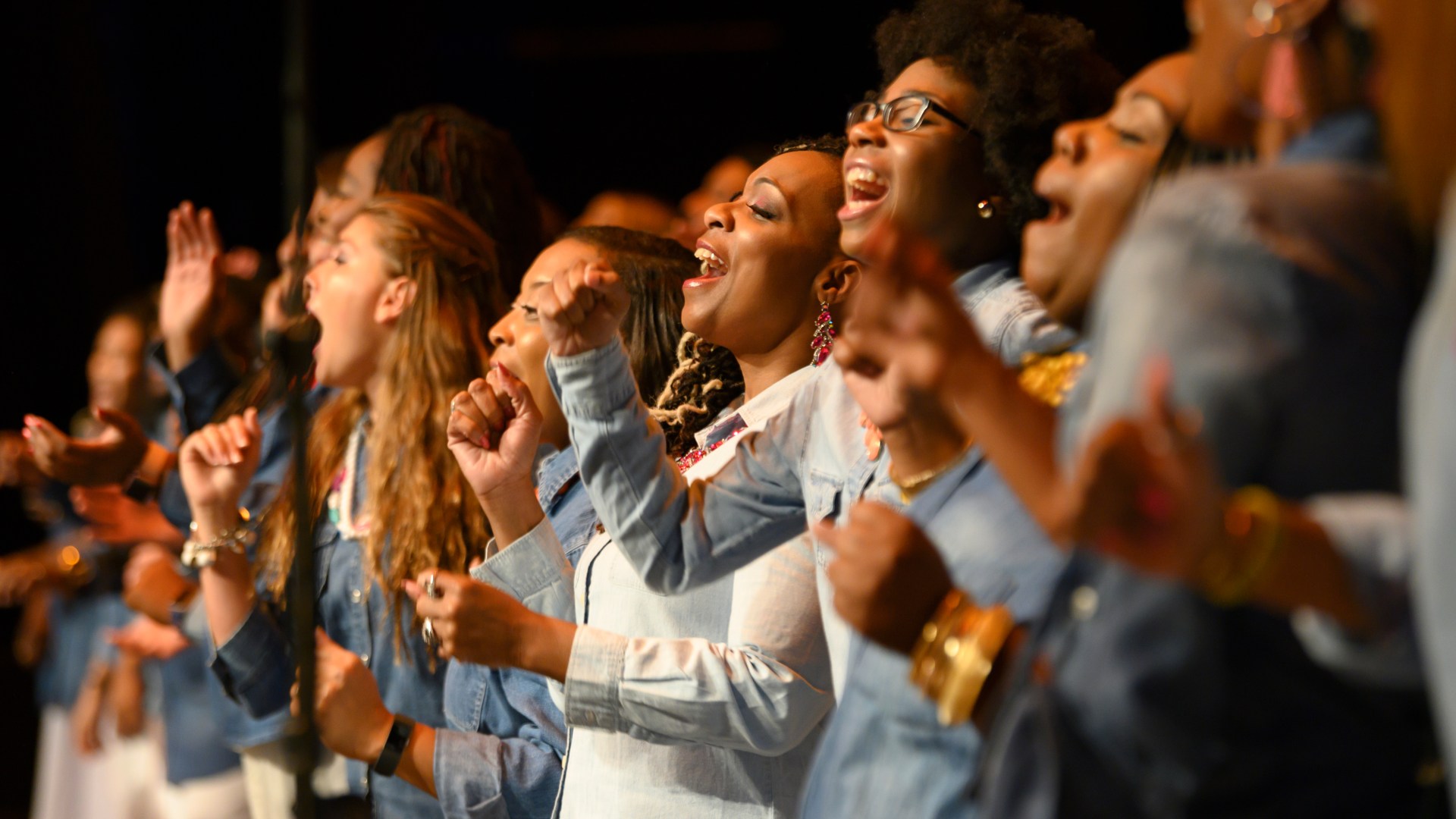
In the new Netflix show Voices of Fire , Grammy Award winner Pharrell Williams and his uncle, Bishop Ezekiel Williams, envision a diverse choir that will draw people to God through gospel music. As they hold auditions to find talent in Pharrell’s hometown of Hampton Roads, Virginia, they witness how the sung gospel changes the lives of its singers.

Kathryn Kemp, author of three books on gospel music, interviewed the choir’s director Patrick Riddick, also a pastor, about how he saw God at work in the show.

I see that God has blessed and used you from a young child to share the gospel first in song, then through sermons. How did that experience help you bring a nontraditional gospel choir to the understanding and appreciation needed to sing gospel music?

It was kind of a one-two punch. It helped me tie together all I had experienced and knew about music, and I was able to use that to create illustrations concerning the Word of God. Some of the singers had never gone to church. Some of them had never sung gospel. And so, as I began to teach music, I began to marry it with the Word. And then experience came in, and the experience was undeniable—what they were experiencing because of that. Having the preached Word background as well causes me to be more sensitive to the purpose of what we do musically, especially in gospel music. With that awareness and that sensitivity, it just makes it easier to administer it to the singers.

Are there any divine moments that stand out to you from the show?

During the rehearsals, there were these singers that were novices or had never experienced gospel music before. And some of them were not Christian. We were in our first or second rehearsal, and I had them blending. And then I was teaching them that blending and singing together corporately is the greatest kind of worship. God commands corporate worship; there’s something about when we all get together. And they began to grasp that. And the moment their sound changed because they became unified musically and in the Spirit—you begin to see tears fall. Some of them didn’t even understand, and they began to lift their hands in the moment. And some of them began to come up, because Bishop was there, and say, “I don’t know what’s going on, but I want more of this. Tell me about this.” That started about the second rehearsal, and it continued in every rehearsal that we had while we were shooting.

(L to R) Vocal coach Peggy Britt and choir master Patrick Riddick in 'Voices of Fire.'Antony Platt / Netflix
(L to R) Vocal coach Peggy Britt and choir master Patrick Riddick in ‘Voices of Fire.’

What is happening now with the choir in light of the pandemic?

Not as much right now. We’re actually talking about how we can safely come together and do some things to be productive because we have been down during the pandemic. We’re just concerned for some of the spiritual lives of some of the singers as well as, of course, the musical readiness of the choir in general. We met maybe once or twice. But as soon as we can get back together—everyone is saying, “We just miss it. We just wanted to come. … We want to worship when we come together to pray”—it’s going back to how it was.

One of the criticisms of 21st-century gospel performance is that an invitation to bring Christ into your life is rarely heard. How can salvation, redemption, and confession be brought into the concert atmosphere of gospel music?

I believe that it can be, and it should be. I know, for myself, I do it, but that has to be the objective of the person. I think a lot of what the problem is, is that everything has become so mainstream. And with all due respect, you have a lot of persons that run the various record labels that are not Christian, but within that record label, there is a Christian music division. And so then the pressure is put on the singer to simply be an artist. What is happening is people are being programmed as artistic-performing robots, and it’s moved the whole objective of gospel music, which is to share the good news of Jesus Christ. And so it is our duty when we go to perform—make a way, let it be known, “Yes, I thank God for this opportunity, but ultimately the opportunity still came from God. I’m blessed to do what he sent me here to do.”

Do you feel like God was present in this project?

The Scripture says, “The blessing of the Lord brings wealth, without painful toil for it” (Prov. 10:22). It’s easy. It’s organic. It seems like everything just falls in place. And truly with this endeavor, it was just seamless. The only struggle was that we had a little bit of time to turn it around by the time we got to the concert. But outside of that, it was just a spiritual ride that you know God was truly the captain of a ship.

Books
Review

Thomas Jefferson Tried to ‘Fix’ the Bible. He Only Succeeded in Making It Sad.

The third president’s attempts to revise Scripture offer a warning about our own tendency to “edit” the truth.

Christianity Today December 4, 2020
Illustration by Mallory Rentsch / Source Images: WikiMedia Commons / National Museum of American History

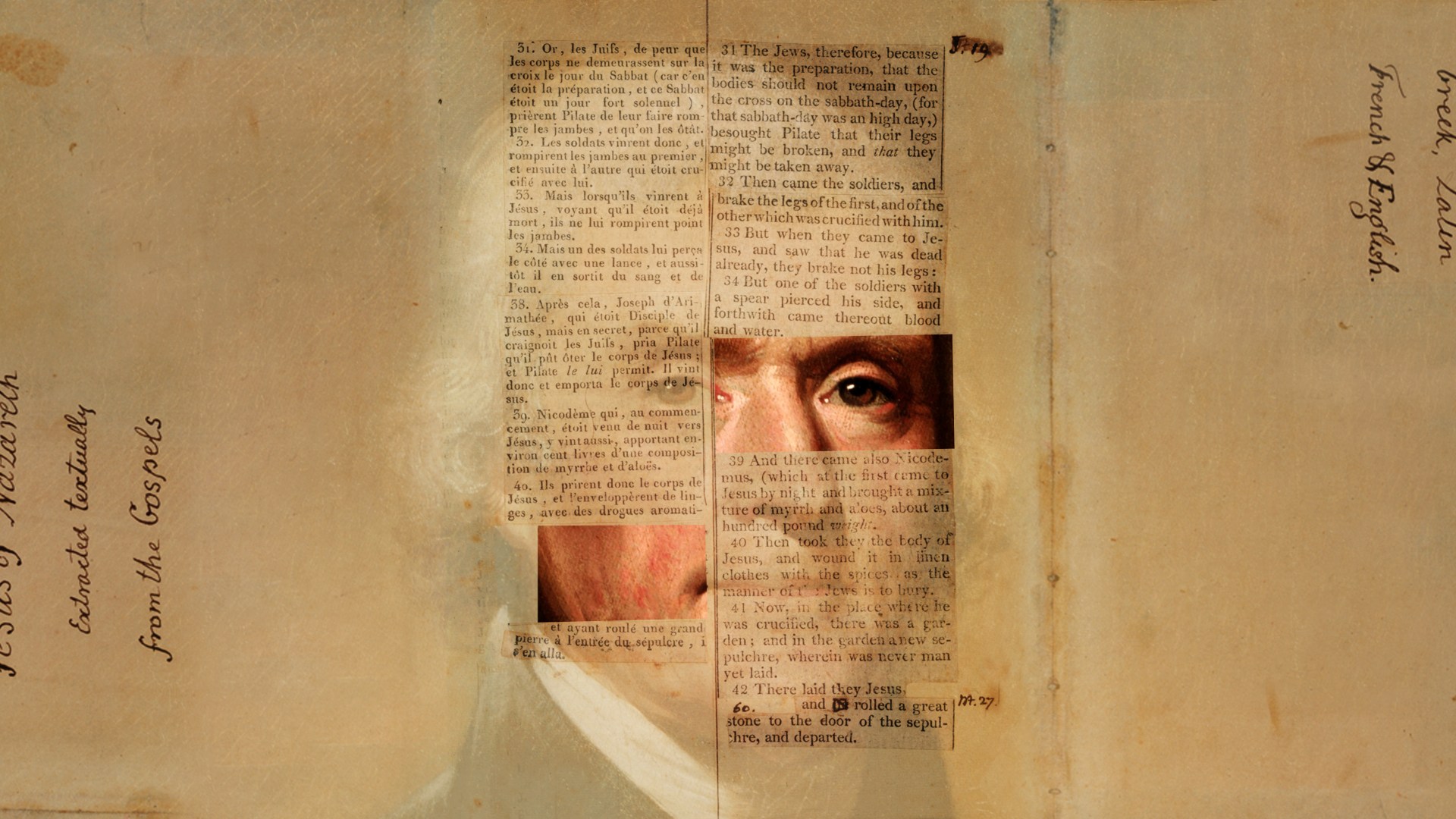
I first heard of Thomas Jefferson’s Bible as a warning. I was a teenager in a Bible study, and one of the pastors of the church brought up the third American president and his effort to “fix” the Scripture. Jefferson—who wrote the immortal words of the Declaration of Independence that “all men are created equal” and are “endowed by their creator with certain unalienable rights”—took for himself the liberty of editing the Gospels. He cut them up, using a sharp knife to excise what he saw as the problematic parts of the sacred text.

The Jefferson Bible: A Biography (Lives of Great Religious Books)

The Jefferson Bible: A Biography (Lives of Great Religious Books)

Princeton University Press

236 pages

But, the pastor said, don’t we all kind of do that? We have our favorite verses. And there are other parts of the Bible we ignore. Whether or not we wield actual scissors, we have to be careful, because it’s so easy to mutilate the Word of God.

There is certainly some truth to this, but it turns out it is not as easy to “fix” the Scripture as that pastor imagined. Jefferson, at least, had a hard time of it, according to a fascinating new book by Peter Manseau, the curator of American religious history at the Smithsonian Institution’s National Museum of American History. The Bible resisted Jefferson’s cuts, and the truth is stronger than its would-be editors.

The Jefferson Bible: A Biography is part of an excellent Princeton University Press series on the “lives of great religious books.” This installment follows titles on John Calvin’s Institutes of the Christian Religion, Dietrich Bonhoeffer’s Letters and Papers from Prison, and C. S. Lewis’s Mere Christianity, not to mention “biographies” of the biblical books of Genesis, Exodus, Job, Song of Songs, and Revelation. Manseau, in his volume, traces the origin of this particular, peculiar “great religious book” to Jefferson’s childhood Anglicanism. In that world, colonial Virginia law punished the heresy of doubting the divine authority of Scripture, while a burgeoning liberty movement questioned the government’s right to criminalize belief.

A Hard Gospel

Jefferson, like many at the time, shed his orthodox Christianity in stages. He started by doubting the Trinity. Then Old Testament miracles. Then New. He eventually embraced a religious skepticism that was held in check only by the same force that compelled him to conceal the fact that he had fathered multiple children with his deceased wife’s enslaved half-sister: public opprobrium. What would people think?

Jefferson hid his infidelities to conform with the mores of his day even as he spoke about the importance of intellectual boldness, heralded revolutions big and small, and mulled the idea of editing the Gospels to, as he put it, “winnow this grain from its chaff.”

His first effort at revising the text came while he was president—in a 46-page booklet he called The Philosophy of Jesus. The volume has been lost to history, but at one point he explained the project in detail to his frenemy John Adams. He said he had extracted, reduced, and cut down the gospel until the only thing left was “the most sublime and benevolent code of morals that has ever been offered to man.”

It was an easy process, Jefferson said. He cut the text up verse by verse, and the good parts stuck out “as diamonds in a dung hill.”

It wasn’t until 1820, more than a decade out of office, when he finished the fuller second version of his edited gospel. He called it The Life and Morals of Jesus of Nazareth. He read from it devoutly, Manseau says, until he died in 1826.

But the Jefferson Bible may have proved the opposite of what Jefferson intended. It doesn’t show Jesus to be a great moral teacher once his story is stripped of the miracles, exorcisms, and other acts that the former president found hard to believe. It presents Jesus rather as someone who didn’t do anything. As Manseau writes, “Jefferson’s is a hard gospel. The blind to not see; the lame do not walk; the multitudes will remain hungry if loaves and fishes must be multiplied to feed them. Even those who look to Jesus for forgiveness of sins are left wanting.”

The Jefferson Bible begins with the heading “Chapter 2.” The former president dispenses with Matthew’s genealogy, Mark’s reference to the prophecy about a voice crying in the wilderness, Luke’s narrative about an angelic announcement to a virgin named Mary, and John’s proclamation that “the light shines in the darkness, and the darkness has not overcome it” (1:5).

Instead, Jefferson cuts straight to the Roman Empire requiring everyone to return to their home city to be taxed. Joseph takes Mary to a manger in Bethlehem, and a baby is born. This Christmas scene has neither angels nor shepherds, star nor magi. The birth is revised to be unremarkable.

Jefferson allows the line “and the child grew, and waxed strong in spirit, filled with wisdom,” but excises the rest of the verse: “and the grace of God was upon him” (Luke 2:40, KJV).

Nor, in Jefferson’s revision, is the grace of God visible in Christ’s ministry. In Matthew 12:12, Jesus proclaims that “it is lawful to do well on the sabbath days” (KJV), but we don’t see him actually doing well. The following verse, in which Jesus heals a man with a withered hand, disappears. Jefferson’s version has Jesus commenting that a blind man is not blind because of any particular sin of his own or his parents (John 9:3), but he doesn’t give the blind man sight (v. 6). It shows Jesus allowing a woman to anoint his feet with her tears and an alabaster box of expensive oil (Luke 7:36–38), but he withholds the words “Your sins are forgiven” (v. 48). In Jefferson’s version Jesus dies and remains dead.

“The text often has a feeling of a series of jokes without their punch lines,” Manseau writes. “Jefferson apparently never contended with the possibility that, without all the stories he rejected, it’s unlikely we would have heard of Jesus at all.”

A snip here and there doesn’t “fix” the text. It just leaves weird holes. And perhaps this temptation is common, as my pastor suggested. We seek to make the Scripture sublime with our revisions, but we only succeed in making it sad.

No Easy Fix

In all likelihood, Jefferson’s attempts to fix the Scripture would be just as forgotten as our own if not for the fact of his being Jefferson—author of the Declaration of Independence and champion of a new, robust religious liberty that came, for many, to be a defining feature of America. Manseau’s history follows the fate of the singular book as it is subsequently discovered and rediscovered and as various people attempt to turn it into an icon of American religion. The former president’s revised gospel is sometimes held up as evidence of the great Christian devotion of the Founding Fathers, as in David Barton’s discredited The Jefferson Lies. More often, the spliced words are presented as a symbol of the freedom guaranteed by the First Amendment. Cyrus Adler, a predecessor of Manseau’s at the Smithsonian, wrote that the book was evidence that in America “all people may worship God according to the dictates of their own conscience.”

Manseau, for his part, hesitates to turn the “great religious book” into a simple icon. He notes how often such efforts fail. How often they end up strangely misshapen, serving unintended conclusions and undercutting their own points. Just as Jefferson could not quite reconfigure the gospel to fit his preferences, Americans cannot quite “fix” Jeffersonian history to be more useful. The truth—whether it’s the truth of Jesus’ life and morals or the truth of a Founding Father’s personal hypocrisy—will escape your grasp.

That is not to say that the truth cannot be known—only that it cannot be contained and controlled. This is, I think, the lesson of Manseau’s history. The Jefferson Bible, it turns out, does offer us a warning. It’s this: You will know the truth, and the truth will set you free. But, as the popular saying goes, not until it’s finished with you.

Daniel Silliman is news editor for Christianity Today.

Ideas

Christian Political Exile Persists No Matter the President

Staff Editor

The Trump era was not a new Babylon, and the Biden era will be no new Jerusalem. (And vice versa.)

Christianity Today December 4, 2020
Illustration by Mallory Rentsch / Source Images: RiverNorthPhotography / Pool / Nastasic / Mark Makela / Getty Images

Nearly 600 years before the birth of Christ, the city of Jerusalem was besieged, conquered, and razed by the Babylonian empire. The victorious invaders captured the king, destroyed the temple, and took thousands of Israelites into exile in Babylon.

Christians have long looked to stories and prophecies from the Exile era for guidance in how to live as “foreigners and exiles” (1 Pet. 2:11) whose “citizenship is in heaven” (Phil. 3:20). There’s the wisdom of Daniel, the shrewdness of Esther and Mordecai, the righteousness of Shadrach, Meshach, and Abednego. The exile framework for examining our lives and conforming them more to Christ can be especially useful in times of political and social upheaval, and this year is certainly one of those times.

The presidential election results bring exile to mind for many American Christians. For those on the political right, the victory of President-elect Joe Biden may seem like the start of a season of hardship. Author and legal scholar F. LaGard Smith made this link explicit in a recent contribution to The Christian Post, warning that our country is “headed to Babylon” because of how a Democratic administration will facilitate an ongoing “national moral rebellion” that will curtail religious liberty. For those on the political left or center, meanwhile, the defeat of President Donald Trump may seem a kind of release and restoration, an opportunity to return to older, better patterns of life, as the Israelites did when they were finally able to rebuild Jerusalem.

I too am troubled by the drift of public opinion on religious liberty, and I too am glad Trump will leave public office—that is, I understand why both perceptions make sense. But I also think both are built on too delimited an idea of exile, one that turns on the erratic shifts of national politics rather than a distinctive vision of the Christian life.

We are not headed to Babylon. We’re already there. For American Christians, the United States is not our true home.

We are not headed to Babylon. We’re already there. For American Christians, the United States is not our true home. Scripture insists that to be a Christian, by definition, is to be foreign to any earthly nation (1 Pet. 1:17). America is no exception; nor is any American president. The Biden administration is not a new exile, and the Trump administration was no Jerusalem.

That is a difficult truth. For all the advantages of representative government like ours, it presents a unique temptation to Christian faithfulness that many of our forebears in the faith never faced: We can wield power. We can elect politicians who promise to serve our interests as we see them. We can be lulled into deriving our security from our leaders.

This lulling effect knows no partisan bounds, so it must equally be said that we are not heading home from Babylon now. The Trump administration was not a new exile, and the Biden administration will be no Jerusalem.

More moderate, independent, and progressive Christians may not be swayed by the overt civil religion popular among some conservatives. That should not be mistaken for invulnerability to the temptations of democracy and its illegitimate claims on our allegiance. It is one thing to be pleased by the prospect of incoming policies we believe will improve on the old. (No doubt Daniel had preferences among the several kings he served.) But if any election outcome makes us feel newly at home in our political system—if it has us sighing in relief, “Ah, now we’ll be okay”—something in us is awry. It suggests we’ve forgotten to look for our real ruler’s final return, triumph, and redemption of the whole of creation (Rom. 8:19–21; Rev. 21:3–5). It is a sign we have lost an exilic attitude that should identify followers of Jesus.

The Old Testament texts on exile can help us to cultivate that attitude, to answer the question that is as urgent now as then of how to live in this strange land with its strange customs and ethics and rulers and gods. Some of the exiles in Babylon chose assimilation, some resistance or escape. But in a letter to remnants of the Jerusalem community, the prophet Jeremiah offered a different message from God:

Build houses and settle down; plant gardens and eat what they produce. Marry and have sons and daughters; find wives for your sons and give your daughters in marriage, so that they too may have sons and daughters. Increase in number there; do not decrease. Also, seek the peace and prosperity of the city to which I have carried you into exile. Pray to the Lord for it, because if it prospers, you too will prosper. (Jer. 29:5–7)

To this Jeremiah added warnings as well: Don’t be deceived by lies, he wrote, and don’t forget that you are God’s people whom God will rescue. This exile is not forever, it is not the end of God’s plan for human history, and it should not end his people’s hope (Jer. 29:8–14).

There’s a tension here: Put down roots—but remember you are not at home. Never give Babylon loyalty you owe only to God—but remember to work and pray for its good. Which of these reminders we require may vary with each election, but no matter who is in office, that is the exilic attitude we need.

This is not to say politics doesn’t matter. Politics can be a literal matter of life and death! If we have not learned that lesson from two decades of constant war, the past nine months of pandemic should have made it clear. Nor is there no difference between these two administrations. I’m often inclined to declare a “plague o’ both your houses,” but they’re not identical houses.

In the midst of that difference, however, and the accelerating pace of change in our political life, there is—or should be—a truer and deeper constancy for Christians. “Jesus Christ is the same yesterday and today and forever” (Heb. 13:8), and we are always equally called to a rooted, generous, and peaceful faith.

Bonnie Kristian is a columnist at Christianity Today.

addApple PodcastsDown ArrowDown ArrowDown Arrowarrow_left_altLeft ArrowLeft ArrowRight ArrowRight ArrowRight Arrowarrow_up_altUp ArrowUp ArrowAvailable at Amazoncaret-downCloseCloseellipseEmailEmailExpandExpandExternalExternalFacebookfacebook-squarefolderGiftGiftGooglegoogleGoogle KeephamburgerInstagraminstagram-squareLinkLinklinkedin-squareListenListenListenChristianity TodayCT Creative Studio Logologo_orgMegaphoneMenuMenupausePinterestPlayPlayPocketPodcastprintremoveRSSRSSSaveSavesaveSearchSearchsearchSpotifyStitcherTelegramTable of ContentsTable of Contentstwitter-squareWhatsAppXYouTubeYouTube