News

Unearthing the Faithful Foundations of a Historic Black Church

In Colonial Williamsburg, a neglected Christian past is being restored.

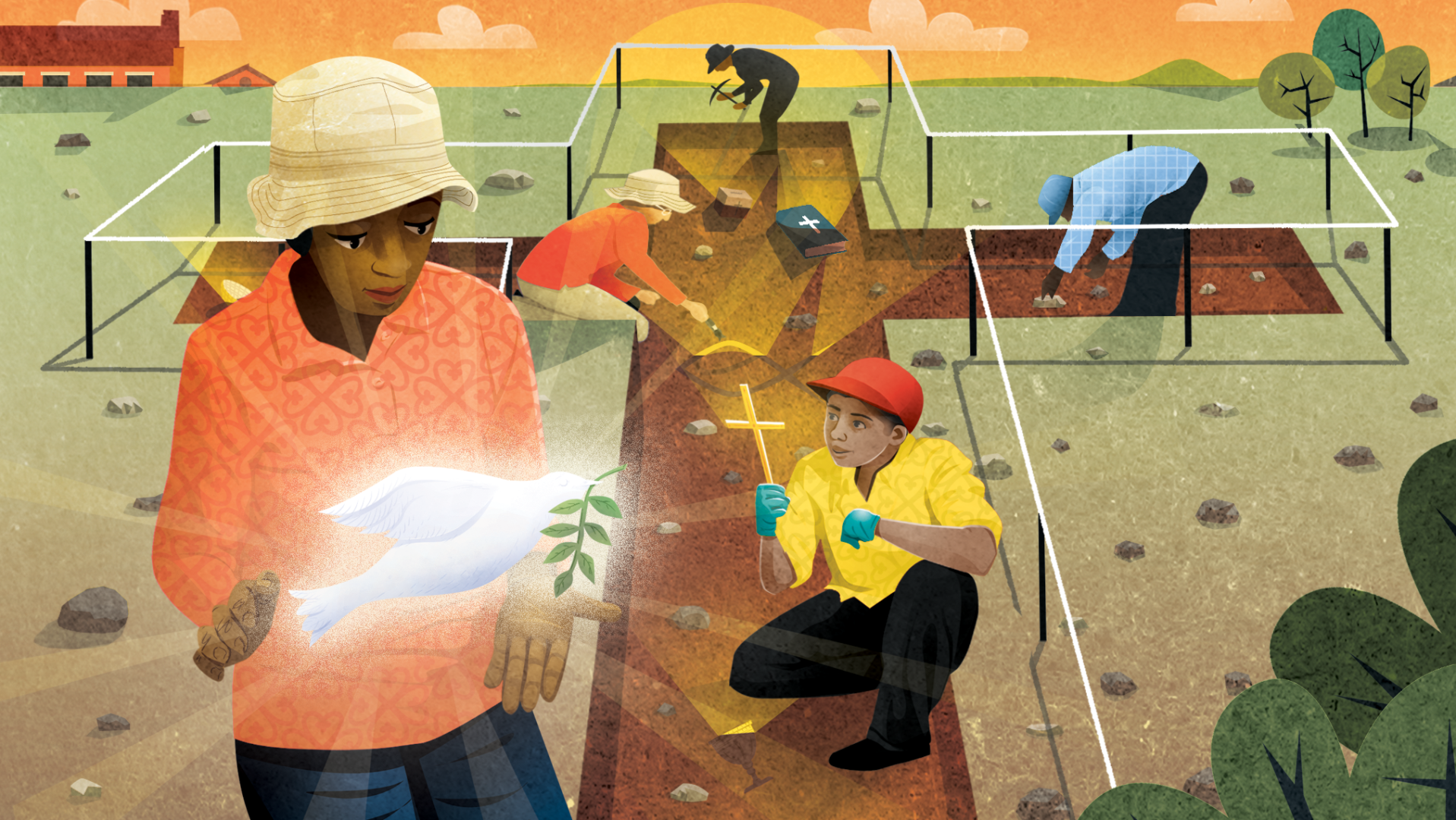
Illustration by Laura Freeman

They dug up broken bits of lamp, the foot of a porcelain doll, a piece of what was once a bowl, and brick fragments from the Baptist church where African Americans worshiped while they were still enslaved. They excavated down to the foundation. Carefully clearing away the earth, they exposed the cross-stacked bricks at the base, dusted them off, and called Connie Matthews Harshaw.

Harshaw stood at the edge of the dig. A member of the historic black First Baptist Church in Williamsburg, Virginia, she had pushed for this project before anyone knew if they would find anything worthwhile. She had come a long way by faith. Now the archaeologists had something to show her.

“I see it,” she said. “We were here and we were strong. Through it all, we kept the faith, and we were hopeful. That’s a story to tell.”

Colonial Williamsburg, the living history museum that recreates the life of the 18th-century town that was then the capital of the colony of Virginia, is excavating a black Baptist church. The first phase was finished in November, and the second started this January, with the ultimate aim of reconstructing the building and recovering its history.

First Baptist was founded by free and enslaved African Americans in 1776, not long after the signing of the Declaration of Independence. It was illegal for black people to congregate and worship then, but they did anyway. At first they met secretly in a hidden brush structure. Then a Virginia woman decided to let the man she owned become a Baptist minister, and Gowan Pamphlet became the first ordained black man in America in 1772, a dozen years before the better-known Lemuel Haynes. Inspired by the Great Awakening, Pamphlet preached sin, salvation, and the equality of all before God.

A white family dedicated land to the worshipers, and First Baptist built a church. They prayed, heard the Word, and kept the faith through the Civil War, the failure of Reconstruction, the rise of “black codes” and Jim Crow, the Great Depression, and World War II.

Then the church was torn down in the 1950s to make way for the Colonial Williamsburg museum. The site was paved over for a parking lot. No one in charge thought the simple black church was worth preserving until more than a half century later, when Harshaw, representing the congregation that continues worshiping about a mile away, asked why not.

“There’s this placard about this church that was organized in 1776, but where’s the rest of the story?” Harshaw asked Cliff Fleet, the new president of the Colonial Williamsburg Foundation. He asked her what she would like to have happen.

“Uncover—literally uncover—the history of this church,” she said.

Courtesy of Colonial Williamsburg

A lot of black Christian history has been buried in America, according to historian Paul Harvey, author of Christianity and Race in the American South and more than a half dozen other titles on African American Christianity.

Black institutions often haven’t had the resources to preserve their history. And white institutions “just didn’t care enough” in most cases, Harvey said.

As many historians have pointed out, the documentary record is often a reflection of who had power at a given time, not the product of a careful evaluation of what will be important. Starting in the 1970s, historians inspired by the civil rights movement started arguing that black history, and especially black religious history, was essential to understanding America.

“The neglect of black history…distorted both white and black American perception of who they were,” said historian Albert J. Raboteau, who wrote Slave Religion: The “Invisible Institution” in the Antebellum South about 20 years after the First Baptist Church at Colonial Williamsburg was torn down. “For a people to ‘lose’ their history, to have their story denigrated as insignificant, is a devastating blow, an exclusion that in effect denies their full humanity. Conversely, to ignore the history of another people whose fate has been intimately bound up with your own is to forgo self-understanding.”

In the years since, historians have gone to great lengths to recover what was lost. Raboteau combed through slave narratives, looking for every reference to faith. Harvey searched through travel narratives and white church records, looking for commentary on black Christians. Much of what he found was explicitly racist and dismissed African American faith as ignorant, but nonetheless it offered him glimpses of the forgotten Christians’ faith and practice.

Other recovery efforts are even more creative. At Colonial Williamsburg, for example, several African American men have been performing Gowan Pamphlet for visitors to the living history museum. James Ingram, one of the reenactors, started in 1998 with a two-paragraph description of everything that was then known about the black Baptist minister.

“What really stuck out to me was that those couple of paragraphs were kind of conjecture,” Ingram said.
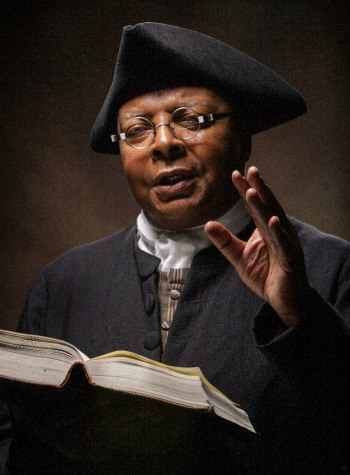
Courtesy of Colonial Williamsburg

For the past 22 years, Ingram has learned everything he could about the world Pamphlet lived in. And he has tried to imaginatively access Pamphlet’s history by using their shared experiences.

Ingram is also Baptist, also ordained, and also a black man who grew up in Virginia. He writes sermons as Pamphlet and thinks about what he would have preached in the years after the Declaration of Independance.

He’s hoping the excavation of the church will give him more information.

Jack Gary, the director of archaeology at Colonial Williamsburg, hopes so too. But it’s slow work. Six professional archaeologists and several graduate students pull back the soil by hand, running it through a screen and collecting and documenting everything they find. They take pictures and draw maps, noting even the stains in the dirt, which might tell them something. They record bits of glass, distinguishing which come from windows and which from wine bottles.

Later, they will wash it all, curate it, and work together to interpret the whole assemblage of things left behind and buried at the First Baptist Church.

They dig up an ink bottle, which means someone at this church could write. A vanilla extract bottle, which means someone was cooking. Animal bones, which might mean there was a barbecue. And they slowly uncover the foundation of the old church.

“The building itself is probably not going to be an architectural wonder,” Gary said. “But our study of it provides the place where we can have these conversations about the early African American Baptists and what they went through. You can stand on that spot and it’s powerful.”

Connie Matthews Harshaw felt that right away.

“It is nobody but God,” she said. “He is all up in the mix.”

Daniel Silliman is news editor for Christianity Today.

News

The Majority of American Megachurches Are Now Multiracial

‘The most segregated hour of the week’ isn’t as segregated as it used to be, study finds.

Illustration by Rick Szuecs / Source image: Envato Elements

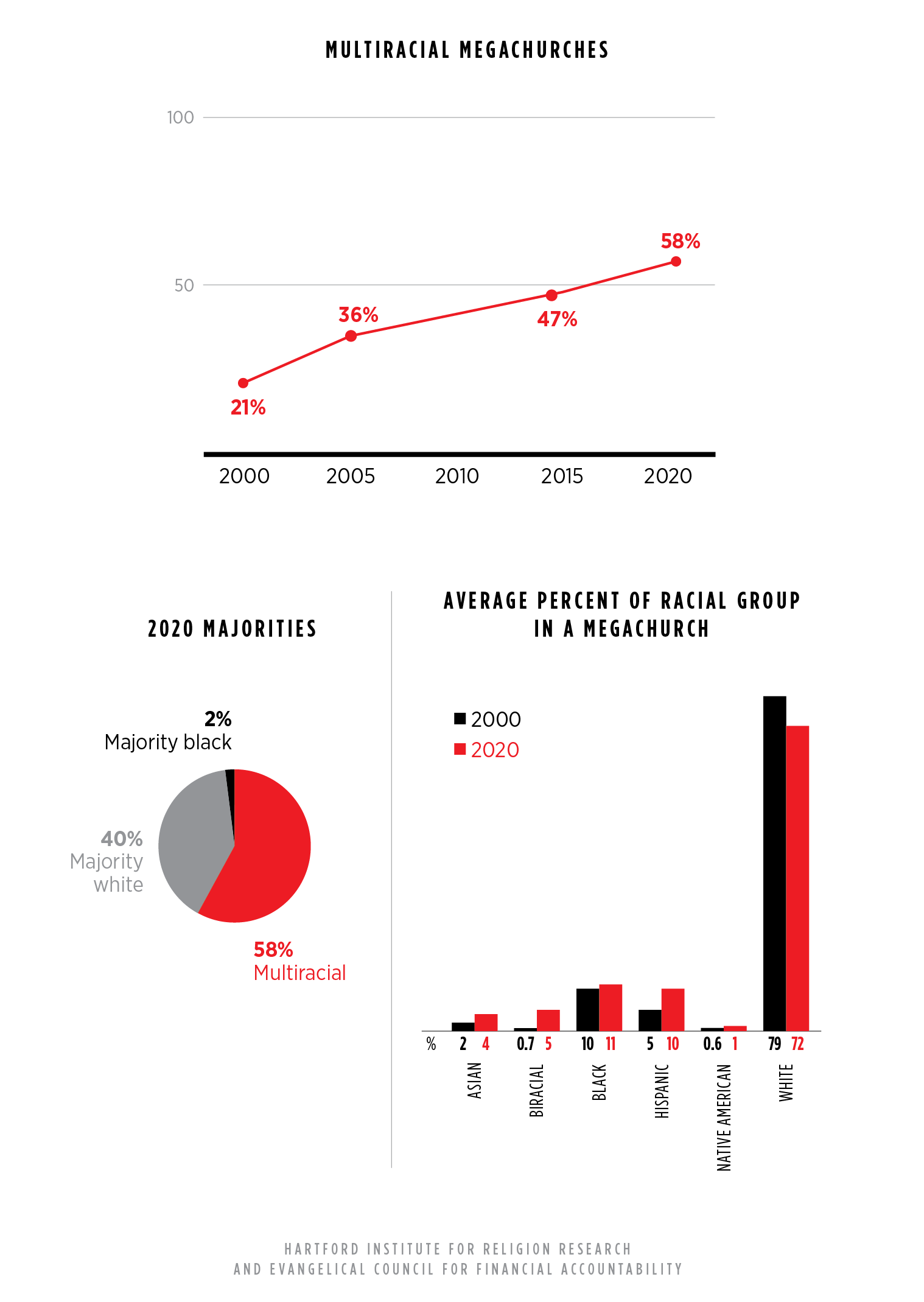
American megachurches are more racially and ethnically diverse than ever, according to a new study from sociologists Warren Bird and Scott Thumma. The majority of the country’s roughly 1,750 megachurches are now multiracial (defined as 20 percent or more of a congregation belonging to a minority group).

In the pulpit, 94 percent of senior pastors are white. But in the pews, the percentages of white people, black people, Asians, and Native Americans closely correspond with their percentages in the American population. Latinos are underrepresented by about 8 points, and biracial people are slightly overrepresented.

Smaller churches are growing more diverse as well, though at a slower rate. The total number of all multiracial congregations, across Christian denominations, has grown from 7 percent in 2000 to 16 percent in 2020.

Ideas

Trump and Afghanistan: Bad Character Wages a Never Ending War

Staff Editor

Promises to bring troops home by Christmas fail because the lack of character impedes practical accomplishments.

Christianity Today December 21, 2020
Oliver Douliery / Getty Images

My earliest political memories are about then-President Bill Clinton and the behavior that led to his impeachment. I was too young to understand what, exactly, he was accused of doing. But those specifics weren’t necessary for me to grasp the larger critique from my family and others in our mostly conservative and evangelical community: Character counts, and Clinton is a man of bad character.

“We are aware that certain moral qualities are central to the survival of our political system,” said a representative 1998 statement endorsed by theologians Stanley Hauerwas, John Piper, and many others affiliated with evangelical universities and seminaries. “We reject the premise that violations of these ethical standards should be excused,” the statement continued, “so long as a leader remains loyal to a particular political agenda and the nation is blessed by a strong economy.”

Of course, political loyalties aren’t guaranteed. The character critique reasoned that if a president can’t stay faithful to his wife, how will he be faithful to his voters? The thing about bad character is that its effects aren’t isolated to one arena of life (1 Cor. 5:6–8; Mark 7:17–23). However good a candidate’s policy pledges may sound, we should be wary of her ability to stay true to those words if she does not stay true to the ethics by which she professes to live.

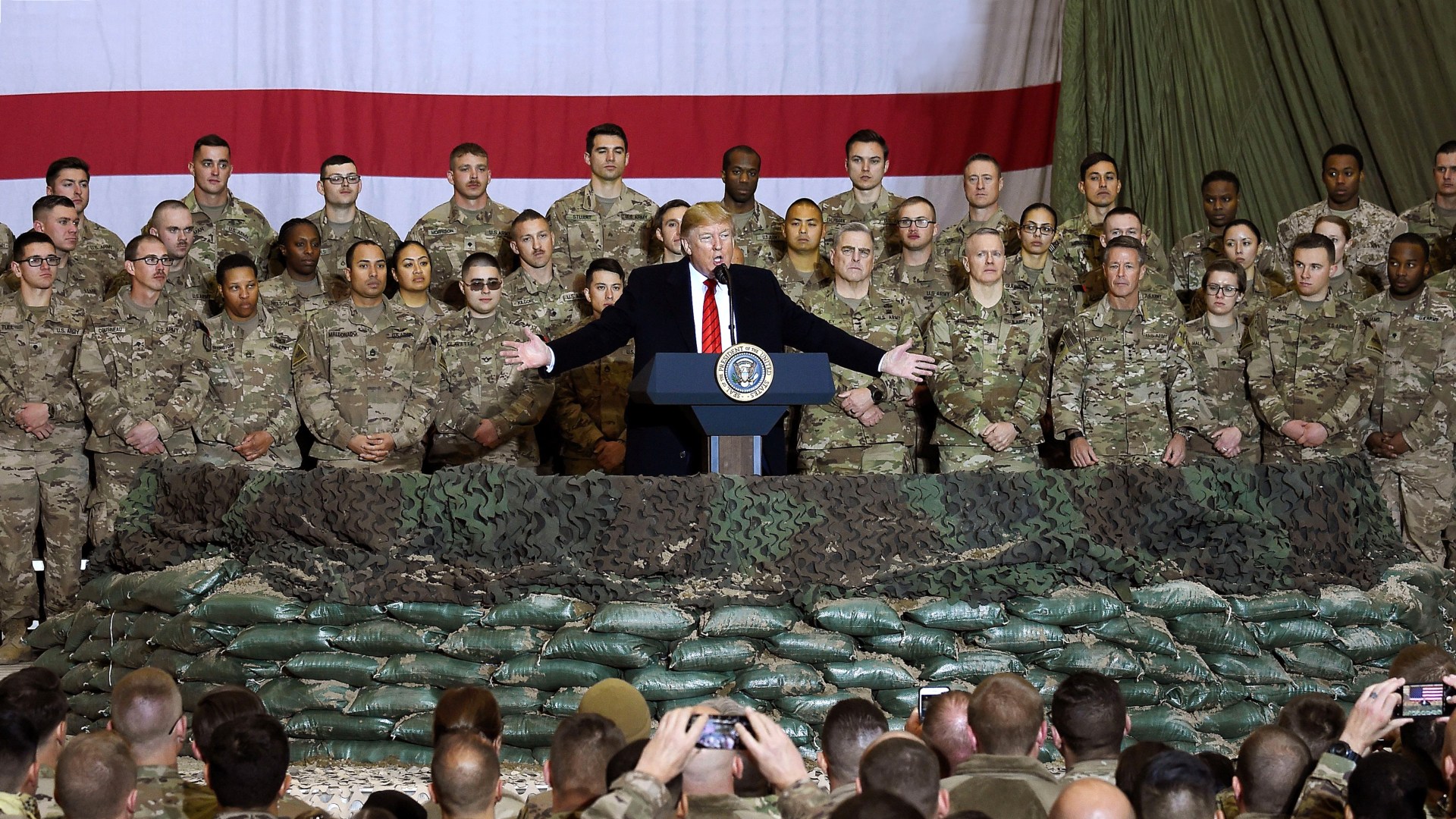
I’ve revisited some of that 1990s thinking on the importance of character in politics repeatedly over the past few years, and I’m reminded of it again as President Trump’s term comes to a close while one of his most important and oft-repeated promises—to end “endless wars,” chiefly the war in Afghanistanremains unfulfilled.

Afghanistan is a particularly useful issue to consider here. Trump has never so explicitly pledged US departure from other theaters of conflict, like Iraq, and in some, like Yemen, he actively opposes withdrawal despite his general rhetoric about shrinking the US military footprint abroad.

Afghanistan is also unique among policy promises because of its political and legal status. None of the usual political roadblocks were in Trump’s way. Ending this war would be immensely popular with the public: About three in four Americans support withdrawing from Afghanistan, an impressive consensus in this fractured age. Moreover, Trump has clear constitutional authority here. Our Constitution gives power to initiate military conflict to Congress, the idea being that the legislative body’s thoughtful deliberation (don’t laugh) would “facilitat[e] peace” by checking bellicose presidents. But once a war is underway, the president is responsible for prosecuting it and bringing it to a close. Presidents do many things of questionable legality, but ending a war is not one of them. The comparative ease with which Trump could have fulfilled this promise makes its break that much more telling.

Trump also had the benefit of a good argument. He is right that this war needs to end. (Trump has made this case mostly on a pragmatic basis, so that will be my focus here. It would be unfair, discussing character, to hold him to more principled arguments he has not made.) Now approaching the two-decade mark, Afghanistan is the longest war in American history. It has lasted so long there are now active-duty US troops who were born after the September 11th attacks—so long that fathers and mothers and their now-grown children have fought the same fight.

This is a fight the United States cannot win. The initial retributive mission in Afghanistan was accomplished relatively quickly and easily. Then a specious restorative mission creep set in.

And it is a fight the United States cannot win. The initial retributive mission in Afghanistan was accomplished relatively quickly and easily. Then a specious restorative mission creep set in—we were there for nation building, for training the Afghan army, for infrastructure development, for introducing democratic American values to the “graveyard of empires,” and for endless counterterrorism efforts that will always provide a rationale for prolonging this war because you cannot eradicate ideology with bombs.

The last 19 years—in which US deployment topped 100,000 boots on the ground and went through five surges with 19 different commanders—have demonstrated the impossibility of anything that may be fairly dubbed “victory.” After all that, the Taliban controls or has substantial influence over much of the country and civilian casualties are hitting record highs. “U.S. troops have made considerable sacrifices,” observes military historian Ret. Col. Andrew Bacevich. “The Pentagon has expended stupendous sums. Yet when it comes to promised results—disorder curbed, democracy promoted, human rights advanced, terrorism suppressed—the United States has precious little to show.”

That was true when Bacevich wrote it in 2016. It is just as true nearly five years later. At the rate we’re going, it will still be true five years hence.

Trump has called this war a “terrible mistake.” He has tweeted about bringing all US forces home from Afghanistan by Christmas, and he reportedly talked privately about a withdrawal timed for Election Day. It is now evident the Christmas deadline will be met no more than the Election Day one was. Trump will leave office with about 2,500 US troops in Afghanistan, and President-elect Joe Biden plans to keep them (or some similar number) stationed there indefinitely, perpetually holding open a door to re-escalation. It really is an endless war.

Trump was well positioned to change that. He didn’t because he is a man of bad character (Prov. 13:15).

This is not a secret. It is not even an allegation. It is his whole public persona. He has made a name and fortune for himself by being a man of bad character. He is, by his own account, “very greedy” and “always” has been. He boasts of sexually assaulting women. He is repeatedly, publicly unfaithful to his wives. He degrades, well, just about everyone, but especially women and anyone who is not white. He lies about things that could not possibly matter. He lies about things that matter very much, fostering an environment of epistemic chaos. He likes violence, enthuses about torture, and recommends targeted killing of innocents. He embodies the vice ancient Christians called “vainglory,” a disordered desire for public approval, and all the sins Thomas Aquinas taught flow from it: boasting, love of novelties, hypocrisy, obstinacy, discord, contentiousness, and refusal to recognize authority above himself.

This is not the character of a man who can make good on a promise to end a war.

It is true, as some of the president’s supporters have observed, that Trump was elected to be a president, not a pastor. He is not in a role of spiritual leadership, per se. But the qualifications of character that make for good leadership within the church (e.g., 1 Tim. 3:1–13; Titus 1:6–9) are relevant outside it too. The consequentialist notion that means are irrelevant to the ends they produce is a noxious lie. How we accomplish things in politics matters—and lack of character is itself an impediment to practical accomplishments (Prov. 28:18).

Trump‘s failure to extricate the United States from Afghanistan is a perfect, awful case study. As the war rages on, the lesson will be hard to forget.

Bonnie Kristian is a columnist at Christianity Today.

News

After 330 Schoolboys Freed from Kidnappers, Advocates Ask About Leah Sharibu

Good news from Katsina prompts questions about Nigerian Christians still held captive by jihadists.

A group of Nigerian schoolboys are escorted December 18 by military and officials in Katsina following their release after they were kidnapped last week.

A group of Nigerian schoolboys are escorted December 18 by military and officials in Katsina following their release after they were kidnapped last week.

Christianity Today December 20, 2020
Sunday Alamba / AP

Bleary, barefoot, apparently numbed by a week of captivity, more than 300 Nigerian schoolboys, freed after being kidnapped in an attack on their school, were welcomed by the governor of Katsina state and Nigeria’s president on Friday.

Reunions with their parents began late in the day.

“Since this incident happened I have not been able to sleep, but now I can sleep,” said Salisu Kankara, a parent of one of the schoolboys who was released.

The relatively quick release of the more than 330 boys took place after a prompt response by the government, which appears to have learned from earlier mass school abductions, especially of the Chibok schoolgirls, that did not have such a happy result.

“There is still the moral burden on the government to get Leah Sharibu and the rest Chibok girls released from captivity,” Supo Ayokunle, president of the Christian Association of Nigeria (CAN), told CT. “We are praying for [our] president for a better future and a more secure nation.”

The students’ nightmare began on the night of Dec. 11 when they were seized by men armed with AK-47 rifles from the all-boys Government Science Secondary School in Kankara village in Katsina state in northwestern Nigeria. They were marched through a forest and forced to lie in the dirt amid gun battles between their captors and the troops pursuing them.

The boys described walking through the bush and different forests, stopping during the days and walking at night without shoes, stepping over thorns and stones.

Nigeria’s Boko Haram jihadist rebels claimed responsibility for the abduction, saying they attacked the school because they believe Western education is un-Islamic.

As the boys’ parents anxiously awaited any news, many in Nigeria and around the world were bracing for a long, drawn-out hostage situation. Many feared the boys would be forced to become child soldiers for Boko Haram.

But the kidnapping reached an unexpectedly satisfactory climax when Katsina Governor Aminu Bella Masari announced the release of 344 boys late Thursday night.

“I think we can say … we have recovered most of the boys, if not all of them,” he said.

Masari told The Associated Press that no ransom was paid to secure the boys’ freedom. It’s not known if other concessions were made.

Masari said the government will work with the police to increase security at the Kankara school and other schools. Only one policeman was working at the school when it was attacked, according to the students.

The schoolboys’ abduction was a chilling reminder of Boko Haram’s previous attacks on schools, especially the April 2014 mass kidnapping by Boko Haram of more than 270 schoolgirls from a government boarding school in Chibok in northeastern Borno State. About 100 of those girls are still missing.

“The difference, we know in this case, is that the government moved faster,” said Bulama Bukarti, an analyst on sub-Saharan Africa at the Tony Blair Institute.

In Chibok, it took weeks of advocacy and outcry from Nigerians, celebrities, and the international community before the government acknowledged that the girls had been kidnapped and took action. During that time, Boko Haram had the opportunity to put the girls into smaller groups and move them far away so it would be difficult to find them.

This time, the government deployed forces quickly after the boys’ kidnapping and the abductors rapidly found themselves surrounded, Bukarti said.

Their release is “a fantastic story at the end of an awful week,” he said. “Parents will be reunited with their loved ones … all of Nigeria will breathe a sigh of relief for a good ending.”

UNICEF Nigeria Representative Peter Hawkins called on the attackers to release any other children that may be held from this or other attacks.

“Schools should be safe. Children should never be the target of attack and yet, far too often in Nigeria, they are precisely that—victims of attacks on their schools,” he said.

He called on Nigeria’s government to put better interventions in place “to ensure that schools are safe and that all Nigerian children can learn without fear.”

“While we congratulate the Federal Government for working hard to secure the release of these boys, and the parents for the joy of having their children back, more needs to be done,” CAN’s Ayokunle told CT.

He urged Buhari’s administration to “place high value on all lives” and reexamine the security infrastructure, given that Boko Haram seems to be spreading from its stronghold in the northeast. “We [at CAN] are after a secure Nigeria from North to South. The government should be humble enough to rejig our security architecture and change those in charge for a more effective delivery.”

President Muhammadu Buhari welcomed the boys’ release and met with all of them Friday, encouraging them to pursue their education despite the attack and abduction they endured.

“This little difficulty you have faced in life should not deter you. You should gear up, ginger up, and pursue your dreams in life,” he said. “Because I went to school I have risen to become president twice, so education is the key to success. Do the best you can to acquire education and even religious knowledge so that it will guide you and your family in future.”

After their release late Thursday, Buhari stated that his government needs to do more to make schools secure from such attacks, and to protect the life and property of Nigerians, acknowledging the northwest presents a true challenge for his administration.

Many thorny problems remain in Nigeria.

The kidnapping shows that Boko Haram has been able to recruit armed gangs in Nigeria’s northwest, a worrying sign as the criminal gangs have increased attacks in the region this year, killing more than 1,100. While the bandits don’t have ideological motivations, Bukarti said, it has become clear that Boko Haram’s leader, Abubakar Shekau, has been able to make alliances with some of them.

“Shekau started courting some of the bandits,” back in January, Bukarti said, referencing a video launched by the Boko Haram leader explaining his ideology and in which the last 15 minutes he spoke in Fulani, the language of most of the bandits in the northwest, including the ones who spoke in the video released by Boko Haram this week. Later, Boko Haram made claims that they had penetrated parts of the northwest.

While that future may not be clear, the boarding school kidnapping shows that there was clear recruitment and Bukarti says that he would go as far as calling some of these local gangs Boko Haram associates now.

Boko Haram may well extend their reach into the northwest, he said, adding that they also got publicity.

“This was a major propaganda point and that’s what Boko Haram and terrorist groups survive on,” he said.

Though the government reaction to this kidnapping was fast—it had a rescue mission by the next day—criticism remains over the government’s handling of violence and how it will continue to grow in the West African nation.

Many Nigerians blame Buhari for the security lapses in the country and the opposition People’s Democratic Party (PDP) says the abduction of the students in Katsina, the home state of the president while he was on a visit there, raises further serious questions over the government’s capacity to fight insurgency.

The PDP said President Buhari’s inability to manage Nigeria’s security has opened the country “for terrorists, bandits, vandals, and insurgents.”

“While welcoming the release of hundreds of abducted Katsina schoolboys, we’re concerned that the nation still remains ravaged by such insecurity that an atrocity bigger than Chibok could still happen in Nigeria six years after,” stated Emmanuel Ogebe, managing partner of the US Nigeria Law Group and special counsel for the Justice for Jos Project, in a press release. “The nation cannot continue to be held to ransom by the vulnerability of our school kids in full glare of the global community at every whim of terrorists.

“In a contrived affair, Boko Haram contracted Fulanis to abduct Fulanis to embarrass a Fulani president. Somehow, they sorted themselves out with or without Buhari’s input just in time for his birthday and for Christmas,” he stated.

“In Chibok, where over 90 percent Christian girls were abducted, 112 are still missing 6-plus years after. In Dapchi, where over 90 percent Muslim girls were taken, they were returned in one month and only the only one still missing is Christian schoolgirl Leah for three years now,” stated Ogebe. “In Kankara, Katsina where over 90 percent Muslims were taken, all were freed in six days.

“How does this engender a sense of justice, fairness, and equality for people of different faiths in Nigeria?”

The release of the mostly Muslim boys—only a handful were Christians—brought Gideon Para-Mallam a “mixture of joy and sadness.”

“They are young innocent children, and everything needed to be done to secure their freedom. I am happy this was done at the shortest time possible,” the president of the Jos-based Para-Mallam Peace Foundation told CT. “[Yet] this news brought sadness to my heart as I thought about many Christians who are still in captivity.

“Is Nigeria truly one country? Are the citizens having the same value in the eyes of our government? … Are Muslim captives and victims more favourably treated by the government than their Christian counterparts?” asked Para-Mallam.

“Think about the Chibok girls, about 103 of whom have been in missing for over six years now. Since April 2014, Leah Sharibu and Alice Ngaddah both held for almost three years; Grace Tuka for one and a half years; Lilian Daniel Gyang for one year by January 9. Pastor Polycarp Zongo and two women kidnapped in October.

“Yet there is no sign of freedom for these innocent lives.”

Carley Petesch reported from Dakar, Senegal. Lekan Oyekanmi reported from Katsina, Nigeria. AP reporter Haruna Umar in Maiduguri, Nigeria contributed. Additional reporting by Jeremy Weber.

News

Two Prominent Pastors Break With SBC After Critical Race Theory Statement

Charlie Dates and Ralph D. West spoke out in response to a controversial statement released by seminary presidents.

Ralph D. West and Charlie Dates

Ralph D. West and Charlie Dates

Christianity Today December 18, 2020
bengrey / Flickr and MLK50 / BP

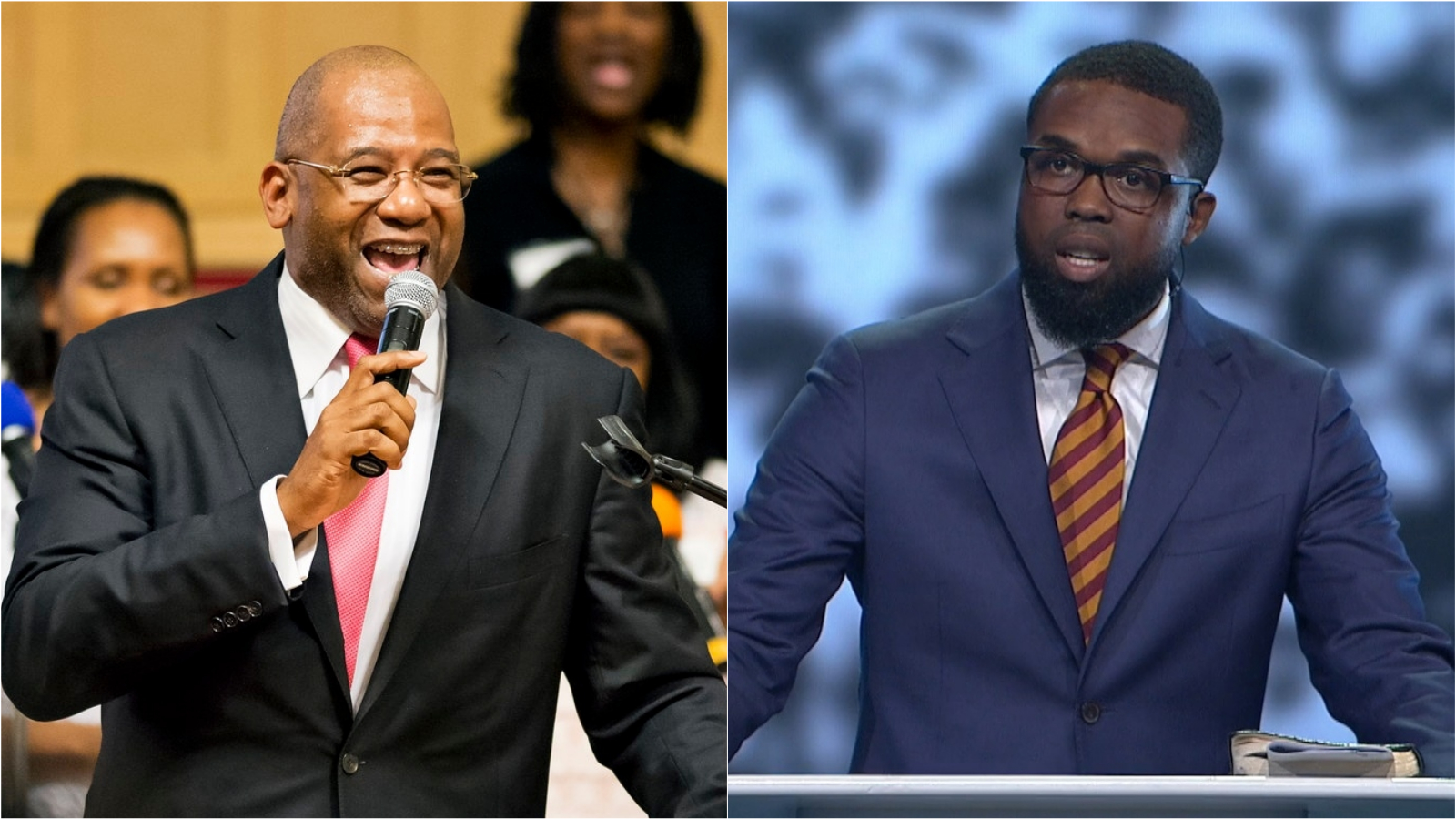
The leaders of two majority-black megachurches in major cities announced this week that they will no longer affiliate with the Southern Baptist Convention.

In op-eds announcing their decisions to leave, Charlie Dates of Chicago’s Progressive Baptist Church and Ralph D. West of Houston’s The Church Without Walls both criticized SBC seminary presidents’ declaration that critical race theory was “incompatible” with the denomination’s statement of faith.

The two pastors brought up recognizing the reality of systemic racism alongside the truth and authority of Scripture. Last month, in a joint statement and individual remarks, the six presidents of SBC seminaries called critical race theory “unbiblical” and instead emphasized the need to turn to Christian teachings alone, not secular ideas, to confront racism.

“How did they, who in 2020 still don’t have a single Black denominational entity head, reject once and for all a theory that helps to frame the real race problems we face?” Dates wrote in an op-ed Friday for the Religion News Service.

The recent departures caught the attention of Southern Baptist leaders who were disappointed to see them go, particularly fellow African Americans. The head of the SBC’s National African American Fellowship, which had raised concerns about the critical race theory statement a week ago, said he was “saddened” by the announcements.

“They are good men who are sending a big message to the SBC,” said Marshal Ausberry.

https://twitter.com/MAusberry/status/1340122175190278144

Dates’s 100-year-old congregation only began affiliating with the SBC last year, joining as a dual affiliate with the Progressive National Baptist Convention, a mainline, African American denomination. The young pastor said he had to convince his members that joining the denomination for the sake of mission partnerships would be a good move.

Over the summer, Dates discussed with CT his frustration with the lack of diversity among SBC’s recently appointed entity heads, all of whom are white men, and the inconsistent support for racial justice causes. Dates—who spoke at several national SBC events before and after deciding to affiliate with the denomination—wrote that the statement was “a final straw.”

His decision came two days after West made a similar argument in a Baptist Standard op-ed. West’s The Church Without Walls (originally Brookhollow Baptist Church) has ranked among the 100 biggest in the country and averages 9,000 people in weekly attendance, according to its site.

A graduate of Southwestern Baptist Theological Seminary and adjunct at Baylor University’s Truett Theological Seminary, West said he planned to withdraw from his current doctoral studies at Southwestern and will not associate with the SBC any longer.

“When I came back ‘home’ to Southwestern, I even encouraged other ministers to do the same. I took President Adam Greenway’s invitation to return as a statement of good faith, that the seminary wanted to welcome me and many other Black ministers to contribute to its legacy,” he wrote. “The statement on critical race theory and intersectionality has soiled that good faith.”

https://twitter.com/ralphdwest/status/1339289624703881222

While West says he cannot offer a full affirmation of the theory, he does not see it as incompatible with the gospel.

“Their stand against racism rings hollow when in their next breath they reject theories that have been helpful in framing the problem of racism,” he wrote, disappointed that the presidents would come together to speak out against it rather than turning their criticism toward other ills such a racism itself.

In the early discussion around the seminary presidents’ statement, which released last month, SBC president J. D. Greear recognized some of the issues with such emphasis on critical race theory (CRT) itself.

“Some in our ranks inappropriately use the label of ‘CRT!’ to avoid legitimate questions or as a cudgel to dismiss any discussion of discrimination. Many cannot even define what CRT is,” he tweeted. “If we in the SBC had shown as much sorrow for the painful legacy that sin has left as we show passion to decry CRT, we probably wouldn’t be in this mess.”

Critical race theory isn’t clearly defined, but generally refers to an approach to racism as systemic and embedded in society. The theory came up in a controversial resolution that passed at the SBC’s 2019 annual meeting, when Greear was elected. The resolution clarified the theory could be employed, but only “subordinate to Scripture.”

Since then, conservative groups have been more vocal about what they see as an embrace of critical race theory and secular thinking by seminaries and denominational leaders, with the newly formed Conservative Baptist Network being among the most vocal opponents.

Some worry that a systemic view of racism, where a person is considered privileged or disadvantaged in society because of their race, conflicts with Christian beliefs about forgiveness or people holding equal value before God. As one Conservative Baptist Network member said, they “must constantly repent” but “can never actually be forgiven.”

A group of Southern Baptist pastors released a statement Friday voicing their opposition to “any movement in the SBC that seeks to distract from racial reconciliation through the gospel and that denies the reality of systemic injustices.”

The statement—posted on the anniversary of the 13th amendment abolishing slavery—called for collective repentance and criticized those who would downplay SBC’s racial history or label others as “critical race theorists” for acknowledging systemic injustices. Religion News Service reported that Fred Luter, the only black SBC president, signed on in agreement.

In his response, current SBC president Greear asked that fellow members of the denomination consider their concerns and suggested that there are “things we can learn” from “worldly philosophies like critical race theory.”

Last week, prior to West and Dates’s announcements, Ausberry, who serves as SBC first vice president and head of the denomination’s National African American Fellowship, responded to the seminary presidents’ statement by saying that “systemic racism exists” and “there are theories and constructs that help us to see and discover otherwise undetected, systemic racism in institutions and in ourselves.”

“Especially for those of us who have experienced the brunt of systemic racism in our daily lives, our seminary presidents are good men and they had good intent,” Ausberry said in an interview with Baptist Press, “but the optics of six Anglo brothers meeting to discuss racism and other related issues without having ethnic representation in the room in 2020, at worst it looks like paternalism, at best insensitivity. The only outcome can be from their life experience, which really ignores the broader family of Southern Baptists.”

SBC events and church planting have grown more diverse over the past decade as leaders made a concerted effort to feature and invest in non-Anglo pastors. But some have grown frustrated with their position in a denomination that remains largely white (African Americans make up just 6 percent of Southern Baptists, according to Pew Research Center). Atlanta pastor John Onwuchekwa left the SBC over the summer due to concerns over its approach to racial issues.

But dozens of majority-black churches are joining the SBC each year, so the numbers are still growing—just not as fast as they once were.

As CT reported in August, there weren’t signs of a trend of majority-black churches leaving in the most recent denomination report from 2018, though the rates of growth year-over-year had slowed after shooting up in the early 2000s. The SBC experienced a 43 percent jump in majority-black churches between 1998 and 2002, compared to 11 percent over the most recent four years.

Ideas
Excerpt

When I Didn’t Want Christmas to Come

A holiday spent in grief helped me to take Christ’s coming more seriously.

Christianity Today December 18, 2020
Illustration by Mallory Rentsch / Source Images: Klaus Vedfelt / Portra Images / Getty Images / Joshua Herrera / Unsplash

In C. S. Lewis’s tale The Lion, the Witch, and the Wardrobe, the land of Narnia is under a curse in which it was decreed it would “always be winter, but never Christmas.” As we approached the month of December in that first year after our 30-year old daughter died suddenly, I wished it could be just winter and not Christmas all.

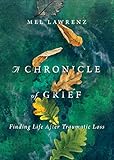
A Chronicle of Grief: Finding Life After Traumatic Loss

The last thing I wanted was to gaze at an empty space at the dinner table, at the gift-opening, at the Christmas stockings hung on the fireplace mantle.

When we have come through the worst, coming up on that first Christmas and later Christmases holds its own kind of anguish. But there is an opportunity there, too, to be driven to the core of the true meaning of Christmas.

We knew Christmas would be difficult, of course. Thanksgiving started out okay. I spoke at our church’s worship service about remembering, and we gathered with friends on Thanksgiving Day as we always do for the meal. But later that day, the void of Eva’s absence hit me hard. Our house felt so empty without her. I wept and wept. That’s when I realized that the cyclical rituals of our lives, like holidays, which we consider “family time,” is when we, the bereaved, face the starkness of our losses.

Christmas is difficult, of course, because that is when we typically gather in our family configurations. In my mother’s house, where we had Christmas for so many years, we were nurtured by the care with which she decorated. From when I was a child she set out the same six-inch painted figurines in a wooden manger: Mary, Joseph, Jesus, an angel, a shepherd, and a few animals. I can close my eyes now and see each figure in detail. The tree was always adorned in the same way. The whole extended family sat around the roast beef, mashed potatoes, and huge pot of mushroom gravy on the dinner table. We sat in the same spots every year until my grandfather died and then my grandmother. We all missed them so much when they passed away. Wonderful people. The chairs were re-arranged, one generation poignantly giving way to the next. But now the empty chair of our 30-year-old daughter was a void that was so much worse than empty.

Weeks ahead of time, my wife, Ingrid, and I discussed how we were going to navigate Christmas. Our sentiments were somewhat different from each other. With her Scandinavian flair, Ingrid always loved decorating the house, top to bottom, with greenery and lights and figurines. When Eva was a small girl, Ingrid arranged for the family the ritual of St. Lucia’s Day in which the daughter of the house dressed in white, with a wreath of electric candles on her head, delivering freshly cooked sweets to each family member. Eva loved that. It was etched in our memories.

To do Christmas more or less the normal way would have been Ingrid’s preference. My instinct was to pretend that Christmas wasn’t happening at all. In the end we compromised, keeping things simple. Christmas dinner was nothing fancy. We gave gifts to each other over a period of days rather than the normal sit-down gift exchange around the tree. I put a few floodlights on the front of the house, but nothing more.

We kept things low key. I wanted to get to January as quickly as possible that first year. I wanted each day to be a generic day—whether Tuesday or Friday or Sunday—to have a few tasks to accomplish. I knew I could survive any old day of the week.

So we took it one day at a time until we reached the new year.

Christmas is always a great opportunity to take in the wonder of God’s great love and to contemplate the miracle of God’s saving mission in Jesus. That first year I knew December would be unbearable if I dwelt every day on all the Christmas pageants our kids were in or the surprise presents under the tree or the travel to Grandma’s house, and all the other sentimental things. Glimpses were okay. Just couldn’t live there. Too soon. Too raw. A year later, and then two years later, Christmas would be less difficult.

We can get through grief, but not by trying to turn it into happiness. Grief has to be grief, and moments of happiness break in on their own.

We can’t take holiday traditions and fill in the gap of the person who is gone. That would be a mind game that would quickly collapse into something even harder. Going through grief does not mean trying to make yourself happy. I had to learn that being happy was not the most important goal of my life. That I could have a measure of contentment nonetheless. Peace and hope are far better. And ongoing love. The love does not need to stop. It cannot stop. There is no “Love you, too” coming from that empty room. That’s the terrible part. But I choose to believe there is a reciprocated love that is silent to my ears but real nonetheless.

We all wonder how that first Christmas will be for the bereaved families we know. From where I sit now, this is what I’d say: Continue to have quality interactions with them. Don’t analyze them, and don’t think you have to maneuver them out of their sadness. Understand. Don’t generalize when you talk about how wonderful Christmas is in the twinkly, candy-cane sticky, shiny-gift-wrap kind of “happiness.” Church leaders: Please lead us into an obsession with the miracle of the Incarnation. Go deep, please. Take Christmas seriously. Christmas is wonderful because we can focus on the world-shattering event of God become flesh, which gives us hope for the coming day when there will be “no more death, or mourning, or crying, or pain.” In that I take great comfort. And joy. Happiness deferred.

I always knew that people who recently lost someone very close to them found Christmas difficult to deal with. What I have learned from others who face a sorrowful Christmas is that we have to do what we have to do to get through it. One family I know went to a hotel over Christmas for several years. A mother told me that it was six years before they put up a Christmas tree. For us the challenge was that Ingrid had always taken great joy in decorating the house top to bottom with traditional Swedish Christmas decorations. She did it for the kids. But we knew that all those sights and smells would only draw attention to the fact that Eva wasn’t with us. So on that first December, Ingrid set out just a few decorations. We did what our instincts told us to do and were glad when we got to January.

The reduction of Christmas did have one positive benefit. It cleared away some of the clutter—flashy and busy and burdensome—so that we could put the focus appropriately on the coming of the Messiah and the promise of salvation. I found myself driven deep into the mystery of the Incarnation.

It has all made me wonder about the purpose of all our “special days.” Birthdays and Christmas and Easter and Thanksgiving—we all have our rituals on those days. Some people make more of special days than other people. Some go through their whole year by running from one marker to the next, while others barely notice those days. A lot of people feel obligated to do certain things or go to certain places or buy gifts or have parties or put lights on the house—but sometimes it is all obligation, little joy.

Our word holiday comes, of course, from “holy day” in Old English. Something that is holy is “set apart” for some special purpose. We may get time off work, opening us to gain something special from the special day.

Things change when we are in a season of survival. We might be more aware of the actual purpose of holy days. We are aware that there is grace in them that goes beyond nostalgia. It’s a good thing to think more about the actual event of the birth of Jesus than just the manger scene set out on top of a coffee table. The light of Christmas, which is the light of Christ, makes the most sense when we experience the darkest of darkest nights.

Adapted from A Chronicle of Grief by Mel Lawrenz. Copyright © 2020 by Mel Lawrenz. Published by InterVarsity Press, Downers Grove, IL. www.ivpress.com

News
Wire Story

Hungary Amends Constitution with Traditional Definition of Family

The legal changes explicitly promote “Christian culture” while barring LGBT adoptions.

Christianity Today December 18, 2020
Romeo Reidl / Getty Images

Conservative Christians and human rights groups are clashing over a new law in Hungary that effectively bans adoption for same-sex couples and legally defines a family according to traditional Christian views of marriage, family, and gender, where “the mother is a woman, the father is a man.”

The amendment, passed by Hungary’s ruling right-wing coalition in parliament on Tuesday, alters the constitutional definition of families to exclude transgender adults and same-sex couples, asserting that the “foundation of the family is marriage and the parent-child relationship.”

A Hungarian church leader told the European site Evangelical Focus that evangelical Christians in the country “are supportive of the sentence: ‘The mother is a woman, and the father is a man’” and agree “this is the order of Creation according to the Bible.”

The recent legal changes coincide with tensions between Hungary and the European Union. Earlier this month, the country (along with Poland) challenged the conditions of the EU budget and COVID-19 recovery funds, concerned that the EU was moving to impose more progressive cultural views on more conservative members.

Istvan Horvath, secretary general of the Hungarian Evangelical Alliance, said while Hungary’s tensions with the EU are complex, Hungarians do see “moral differences” between eastern and western Europe. They fear being targeted by more liberal factions for their traditionally “European and Christian” views, Evangelical Focus reported.

The bill passed this week stated, “The Fundamental Law of Hungary is a living framework that expresses the will of the nation, the form in which we want to live. However, the ‘modern’ set of ideas that make all traditional values, including the two sexes, relative is a growing concern.”

Same-sex marriage was constitutionally banned in Hungary in 2012, but civil partnerships are recognized. The new amendment declares that only married couples may adopt children, effectively barring same-sex couples or single individuals from doing so. Amnesty Hungary called the passage of the amendment “a dark day for human rights.”

The amendment also tasks the state with “protecting the right of children to self-identity according to their sex at birth,” and mandates that children be raised “in accordance with the values based on Hungary’s constitutional identity and Christian culture.”

A bill passed in May permanently defined one’s sex as the “biological sex determined by primary sex characteristics and chromosomes,” effectively disallowing transgender individuals from petitioning the government to change their names and genders in official documents. That law was sent to the Constitutional Court in November for review.

Fewer than half of Hungarians believe homosexuality should be accepted by society, according to Pew Research. Hungary is a majority-Catholic country, but has among the largest shares of Protestant Christians in Eastern Europe (20%). Most consider themselves Presbyterian or Reformed.

Hungarian Prime Minister Viktor Orbán, who belongs to the Calvinist Hungarian Reformed Church, has long said he was building an “illiberal” Christian democracy. Orbán has made a series of policy moves seen as hostile to the LGBT community, immigrants and refugees, and in some cases to fellow Christians as well. The head of the Hungary Evangelical Fellowship spoke up against Orbán’s “Christian liberty” slogan, opposing the use of the Christian label for an “exclusionary, hate-filled and corrosive policy.”

LGBT rights groups fear that a shortage of adoptive parents will result in more children staying in government care or adopted abroad. Unmarried individuals may still apply to adopt children under the new amendment, but must receive special approval.

Additional aggregation by CT.

News
Wire Story

Kenyan Christians Traveling for Christmas Fear al-Shabaab Bus Attacks

Christian and Muslim leaders have condemned the violence, which has turned deadly as neighboring Somalia broke diplomatic ties.

Christianity Today December 17, 2020
Oli Scarff / Getty Images

Christians traveling on buses for Christmas holiday close to the border with Somalia have recently become targets of the Somalian militant group, al-Shabaab.

According to Christians in the region, traveling has become a risky endeavor, as the militants have seized buses on remote roads. Locals in the mostly Muslim communities in the area have been accused of aiding the attacks, some of which have been fatal.

Kenyans are bracing for further attacks by al-Shabaab as the United States carries out plans to withdraw its troops from Somalia, which broke off diplomatic relations with Kenya on Tuesday, saying Kenya was meddling in its elections.

In response to the attacks, Christian and Muslim leaders have stepped up interfaith dialogue in hopes of reining in the bus attacks and other threats to the border region’s small Christian community.

“We continue to pray and talk. The interfaith dialogue has brought a great change in this region,” Nicholas Mutua, a Catholic priest in Garissa, told Religion News Service. “The buses are moving. All is fine, but we have to be on alert. The militants are very unpredictable.”

Al-Shabaab, the al-Qaida affiliate in East Africa, has posed a threat to regions along the border for almost a decade, staging attacks on security forces and government outposts in Mandera, Wajir, Garissa, and Lamu counties. Improvised explosive devices have been used to strike security forces, police posts and telecommunication masts along roadways.

Many of the non-Muslims caught in the recent bus attacks have been teachers traveling to other parts of Kenya for Christmas celebrations. Some church leaders have also been killed in the attacks.

“The target is the Christians and for their faith,” said Grace Kuthea, a teacher who has worked in the region for several years. “They usually take time for the people to forget, before they strike again.”

But the recent attacks on Christmas season travelers and some places of worship have motivated the faith leaders. “The Muslims are not against Christians in the region,” said Josiah Joab, a Pentecostal pastor who had worked in Garissa until March this year.

This isn’t the first time that al-Shabaab has come across the border to assault civilian transportation. In November 2014, militants hijacked a bus traveling from the northern Kenya town of Mandera and killed 28 non-Muslims, separating the passengers according to who could recite the Islamic creed.

A second bus attack in the Christmas season in December 2015 failed after Muslim passengers refused to identify the Christians among them to the attackers.

Sarah Farah, a teacher who later died while protecting Christians, was later honored. A short film, Watu Wote (“all of us”), based on the incident was later nominated for an Academy Award.

Mutua believes that faith leaders’ stand against the violence then saved lives. “I think the interfaith dialogue we have been having contributed to the teacher’s action,” he said.

Shaykh Hassan Ole Naado, the acting national chairman of the Supreme Council of Kenya Muslims, said solidarity with Christians was part of the effort by all Kenyans to counter al-Shabaab.

“Kenyans have teamed together to raise their voices. It cuts across the faiths,” said Ole Naado. “Mosques and churches are playing their roles, preaching peace.”

“All of us (Kenyans) are victims of a foreign problem in Kenya,” said Ole Naado.

Books
Review

Writing as a Christian Means Joining a Banquet, Not a Battle

How we can use our words to feed each other rather than destroy each other.

Christianity Today December 17, 2020
Illustration by Mallory Rentsch / Source Images: MikeyGen73 / Julio Embun / EyeEm / CSA Images / Getty Images

How do you write a review for a book titled Charitable Writing? Charitably, of course. Which means your words must embody what the book’s authors call “the distinctive Christian understanding of love, which used to go by the name ‘charity’ in English.” Fortunately, while love covers a multitude of sins, I don’t need an extra measure of charity to respond enthusiastically to this artful volume by Richard Hughes Gibson and James Edward Beitler III, both professors of English at Wheaton College.

Charitable Writing: Cultivating Virtue Through Our Words

Charitable Writing: Cultivating Virtue Through Our Words

IVP Academic

248 pages

Though the book has a clear target audience—professors and students of writing within academia—its message is vital in an uncivil world where argument often means war, public and private discourse divides, and words are wielded as weapons. How do Christians reclaim language and writing in such a world? As people of faith, called to love God and neighbor, might we write according to another rhetoric, another syntax, another grammar—the “grammar of faith”? If so, how might that happen inside the walls of academia and in the dreaded and much-maligned college composition class?

Three Core Concepts

Here is my main complaint: Where was this book when I first needed it 35 years ago? (But that is uncharitable and selfish.) Within the first chapter, I was transported back to the University of Oregon and teaching my first freshman comp class, where I stood before my skeptical students, sweaty hands behind my back. I wasn’t clueless: I’d completed a yearlong apprenticeship that included cutting-edge readings in composition and educational theory. I had written papers, student-taught, and questioned my professors. I was intellectually prepared. As a Christian, though, I was on shakier ground. What did the Christian faith have to say about the teaching and study of writing in a setting rocked by protests and deconstructed through postmodernism? I knew of no resources and no such conversation.

As the lone person of faith in my cohort, I devised an answer: In a culture immersed in the paradox of subjectivity as the only objective truth, I saw myself as a truth-warrior, a missionary for critical thinking. My greatest concern, in teaching, was my students’ intellectual formation. But even then, I knew something was missing.

My own limitations weren’t the only challenge. My students didn’t share my passion. Their primary concern was their grade. The biggest hurdle I faced that semester and all the years that followed—indeed, it’s one all writing professors face—is a tendency to devalue composition. For most, the course is a hoop-jumping throwaway class groaningly endured for the sake of raising scores on college papers—even at Christian colleges. (My son, currently a college freshman who just completed this course, assured me this is still the case.) Sadly, sometimes instructors feel the same way.

Yet the need for Christians inside and outside of academia to reclaim language and argument has never been greater. Which makes the publication of Charitable Writing especially welcome, as this much-needed resource restores writing and the teaching of writing to its rightful place: as an occasion to grow in virtue.

The book is built around three core concepts: humble listening, loving argument, and hopeful timekeeping. The notion of humble listening relies heavily on the work of Augustine and contemporary scholar Alan Jacobs. Both ask, what does it look like to love our neighbor as we read and write? It means being hospitable to other writers, making space to quietly listen rather than jumping to an offensive or defensive response.

What about “loving argument,” which is surely an oxymoron? Argument is not only the cornerstone of most composition classes but also the dominant rhetorical strategy in the media today. Is rescuing argument simply a matter of learning to sharpen our swords? Hardly. Argument, the authors posit, has too long been cast in metaphors of violence and war, necessitating winners and losers. What metaphors might resurrect a fuller, more charitable understanding? The authors borrow from the medieval mystic Bernard of Clairvaux and other historical luminaries who present argument as a banquet rather than a battle. Banquets are for feasting, for conversation, for companionship. Writers, bent over their papers, do not write alone. They are guests at a long table laden with many other dishes. But they are hosts as well. As they write, they invite readers to partake of their own offerings on the table. There are no winners or losers, only guests and hosts who are fed by each other.

The final “threshold concept,” hopeful timekeeping, is an even more ambitious challenge for beleaguered writers and students: How might we see the painful and seemingly endless process of revision through the lens of love? The banquet metaphor again serves well. If we’re to feed our readers, we’ll need to figure out their tastes, gather our ingredients, and learn how to prepare a meal they will ingest, enjoy, and grow from. Writing, then, from the first draft to the last, can be undertaken as an act of charity, as a noble pursuit.

I don’t know how I would have responded to such content as an 18-year-old college freshman, but I’d like to think it would have made me a convert. Writing papers is a noble endeavor? I’m communing with saints across the ages? I can love others fully and humbly even as I disagree with them? As a writing instructor, I would have responded even more enthusiastically, setting this modest book atop all my other writing resources.

A Thoughtful Feast

I expect and hope Charitable Writing will become required reading for both writing teachers and students at Christian colleges and universities. Its scholarship dazzles, brilliantly integrating not only faith and knowledge from scholars across centuries and continents but other art forms as well. The book opens and closes in an art gallery, teaching a wider form of textual “reading.” In all of its artistic and literary range, Charitable Writing exemplifies its own metaphor of writing as a celebratory banquet.

But I cannot finish without noting an empty corner of my plate and a bit of wishful thinking. The authors rightly address our need to communicate from first to last with humility, speaking “the truth in love.” Our entire culture, awash in conflicting news sources and conspiracies, is equally challenged in discerning error and ascertaining reliability and truth. I would argue humbly, then, for one more chapter that emphasizes discovering and then speaking “the truth in love.” Despite this omission, all who care about language and rhetoric will relish this thoughtful feast.

Leslie Leyland Fields is the author of Your Story Matters: Finding, Writing, and Living the Truth of Your Life. She lives on Kodiak Island, Alaska.

A Vaccine Could Save Prisoners’ Lives. Christians Can Help.

Advocating for prisoner vaccinations is a political issue, but it doesn’t have to be a partisan one.

Christianity Today December 17, 2020
Illustration by Mallory Rentsch / Source Images: Motortion / Getty Images / Call Me Fred / Markus Spiske / Unsplash

As states begin to roll out their plans for COVID-19 vaccination, the limited number of doses have prompted tough public conversations about how to prioritize vulnerable populations. Most states agree that health care workers, nursing home residents, and people with high-risk comorbidities should be at the top of the list. But another vulnerable population has proved more controversial: incarcerated people.

Medical and public health experts, including the American Medical Association, agree that incarcerated people face tremendous danger from the virus, given that social distancing in America’s overcrowded prisons is impossible. Prisoners also face inadequate testing, a shortage of soap and masks, and substandard health care. As a result, the virus has already spread widely in prisons. The Marshall Project reported that, as of December 8, at least 249,883 people in American prisons had tested positive, a 10 percent increase over the past week, including 1,657 fatalities. Contracting COVID-19 while incarcerated has proven deadly, with rates of prison cases and deaths at 3.7 and two times national levels, respectively. As incarcerated writer Christopher Blackwell wrote for the Washington Post, “we are sitting ducks.”

The response of many facilities has been to go on lockdown, restricting important programs and keeping residents inside cells. Some prisons have even used solitary confinement as a method of quarantining. These practices have alarmed reform advocates and have made life all the more difficult for those inside prison walls. Byron Johnson, a Baylor University sociologist and leading scholar of faith-based correctional programs, told me that the past nine months have been “devastating” for the prison initiatives that depend on volunteer efforts: “The pandemic has essentially killed many educational, vocational, and religious programs.”

The spread among prison populations also has put correctional officers and their families at high risk (with more than 62,171 prison staff testing positive, and 108 deaths reported). And these infections of staff present ongoing danger to the communities where prisons are located.

Despite experts’ warnings about the dangers of COVID-19 in confinement, many Americans resist the idea that prisoners should be at the top of the vaccination lists. According to analysis from the COVID Prison Project, 24 states have listed prisoners in the second tier of priority for the vaccine. Twelve states did not even mention prisoners in their plans. And many states, as the Prison Policy Initiative has pointed out, have put forward plans for vaccination that are “unclear and unspecific” regarding incarcerated people, or have neglected to detail plans for county jails alongside state prisons.

Prioritization—or even mention—of concern for prisoner health is a political liability. Colorado, for example, had previously announced plans to include prisoners among the top priority vaccine recipients. But after one Colorado Republican district attorney blasted the state’s draft plan as prioritizing “murderers, rapists, and child molesters” over law-abiding citizens who need the vaccine, Democratic Governor Jared Polis walked back the proposal, saying, “There’s no way it’s going to go to prisoners before it goes to people who haven’t committed any crime.” The new Colorado plan, released this past Wednesday, moved prisoners down the priority list, despite continued deadly outbreaks in the state’s facilities.

Reluctance to prioritize the health and well-being of incarcerated people has a long history in this country. Many Americans have seen mass incarceration as an acceptable policy outcome despite its disproportionate impact on the poor and people of color. Our political and cultural consensus has also fostered complacency concerning the poor conditions of prisons. Incarcerated people are routinely forced into inhumane living environments and face the threat of violence. COVID-19’s ravaging of prison populations is but a symptom of this deeper disease.

Priority vaccination for prisoners is an opportunity to challenge the punitive status quo. Karen Swanson, director of Wheaton College’s Institute for Prison Ministries, believes Christians should be at the forefront of advocating for prisoners’ right to the vaccine. She references Proverbs 31:8: “Speak up for those who cannot speak for themselves, for the rights of all who are destitute.”

The vast majority of American Christians believe that prison conditions should be “safe and humane.” My own research has also shown how evangelicals have historically exhibited a great deal of concern for incarcerated people, even as they have struggled to resist the pull of law-and-order politics. The question of prioritizing prisoner vaccinations is a clear opportunity for Christians, whatever our political persuasions or views of criminal justice, to practice what we preach.

This is undoubtedly a political issue, but it does not have to be a partisan one. Republican and Democratic politicians alike have fallen prey to the temptation of punitive politics, and leaders of both conservative and liberal persuasions have maintained our nation’s carceral state. Christians, therefore, have a unique opportunity in this moment for public witness above the partisan fray.

We can write and call elected leaders in our states on behalf of prisoners, asking them to prioritize prisoners’ early vaccination alongside other vulnerable populations in congregate settings, such as nursing homes and homeless shelters. For states that have already pledged prioritization of prisoners for vaccination, Christians can communicate their support to policymakers, who will likely receive pushback for this decision.

The National Association of Evangelicals (NAE) has already been advocating on behalf of prisoners during the pandemic, urging Congress to expand eligibility of compassionate release of federal prisoners. On the matter of vaccination, Galen Carey, the NAE vice president of government relations, told me that the organization believes that “those who remain behind bars, and the staff who serve them, should be among priority populations in the distribution of coronavirus vaccines.”

The public health stakes are high, but so are those of faithful Christian discipleship. For Carey, “Jesus said that those who do not care for the needy and the imprisoned demonstrate by such lack of action that they are not his followers.”

If our leaders and fellow citizens throughout the nation hear Christians speak boldly on this issue, we might begin rebuilding the public trust lost over the past few years amid political rancor. But more importantly, by advocating for priority vaccination for those who are most at risk, we might save the lives of our fellow citizens and fellow bearers of the image of God.

Aaron Griffith is a history professor at Sattler College and the author of God’s Law and Order.

addApple PodcastsDown ArrowDown ArrowDown Arrowarrow_left_altLeft ArrowLeft ArrowRight ArrowRight ArrowRight Arrowarrow_up_altUp ArrowUp ArrowAvailable at Amazoncaret-downCloseCloseellipseEmailEmailExpandExpandExternalExternalFacebookfacebook-squarefolderGiftGiftGooglegoogleGoogle KeephamburgerInstagraminstagram-squareLinkLinklinkedin-squareListenListenListenChristianity TodayCT Creative Studio Logologo_orgMegaphoneMenuMenupausePinterestPlayPlayPocketPodcastprintremoveRSSRSSSaveSavesaveSearchSearchsearchSpotifyStitcherTelegramTable of ContentsTable of Contentstwitter-squareWhatsAppXYouTubeYouTube