News

Christian Colleges Get Creative with Chapel Requirements

Pushed by pandemic, schools are reinventing a core part of campus life to work on the internet.

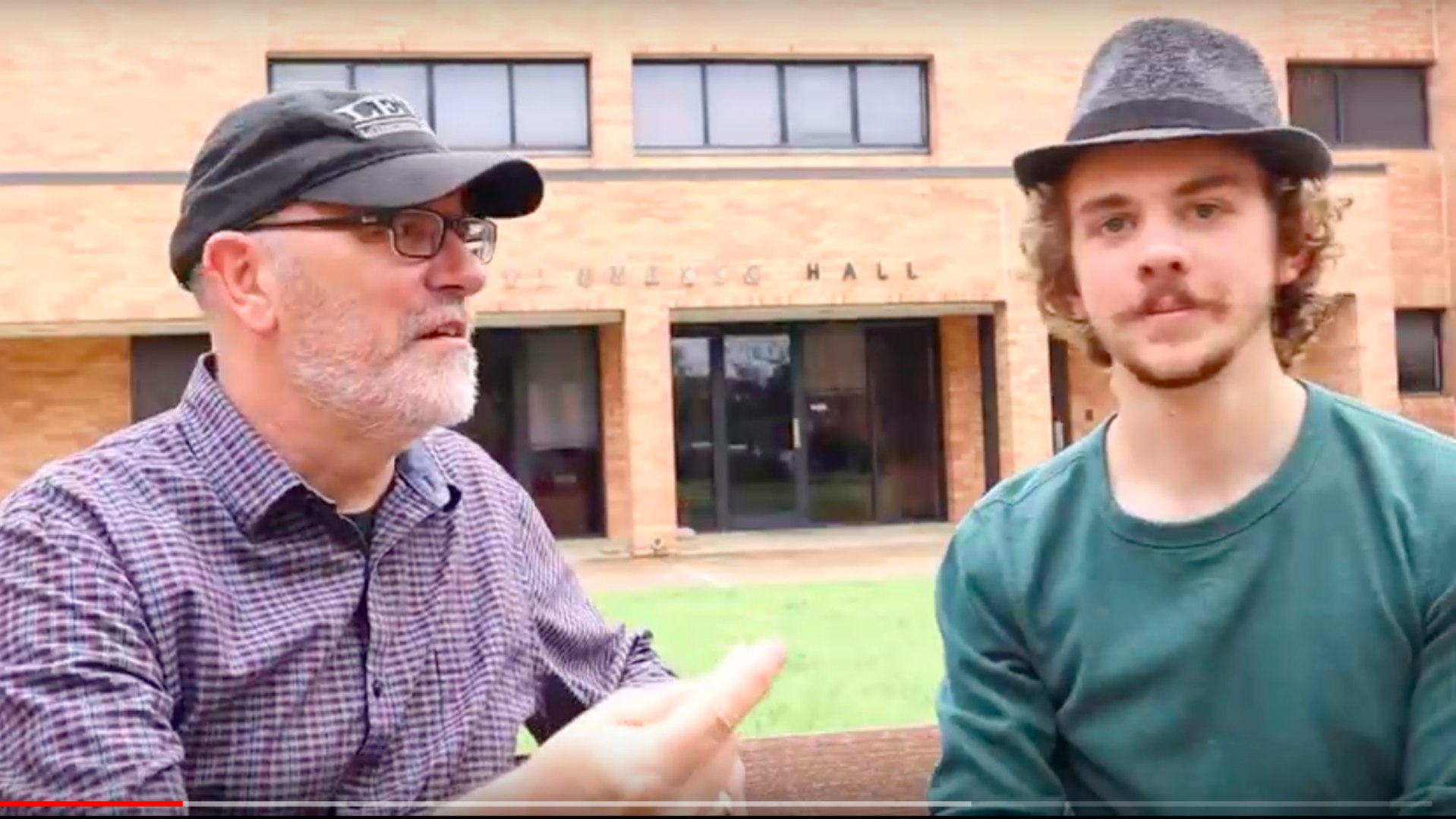
Screengrab from LeTourneau University / YouTube

Screengrab from LeTourneau University / YouTube

Christianity Today April 2, 2020

On a bench in the foreground, LeTourneau University campus pastor Pat Mays welcomes viewers and announces an update on a recent mission trip to Mexico. He shouts and snaps his fingers. There’s a quick cut, some editing magic, and freshman Wil Manchester jumps from the distant background to appear on the bench next to Mays, wearing a fedora and ready to share his experience on the spring break trip.

It could be a TikTok video, but this is LeTourneau’s “chapel” now.

The Texas school’s campus is closed, like most institutions of higher education across the country, and everything has moved online for fear of spreading COVID-19. For Christian colleges and universities, this includes chapel.

The daily or weekly service is often critical to the identity of a Christian college or university—it’s where the whole community comes together in one place and interacts. Chapel services are seen as a key part of students’ spiritual formation, and attendance is often required for credit necessary to graduate. And it’s not uncommon for a discussion—or controversy—that starts with a chapel speaker to define the life of a campus for a semester and sometimes the experience of a whole class of students. Chapel sets Christian higher education apart.

Now schools are trying to figure out how to translate that core part of their community life onto the internet.

“This feels like a brand-new school year, in a way, where we’re inventing new ways to connect with students and deliver content,” said university pastor Jamie Noling-Auth at George Fox University in Oregon.

Going online in a matter of weeks has been a challenge to a lot of Christian schools, where there hasn’t been a lot of emphasis on being tech savvy in the past. Angie Richey, president of Life Pacific University, in California, said it might have taken years to launch “online chapel” if there weren’t an urgent need to do it right now.

“Innovation thrives in crisis,” Richey said. “This is a way to keep some type of consistency in the midst of separation and isolation. It’s kept us together.”

Some schools are just trying to keep it simple while ministering to their college community in this time of crisis and keeping everyone connected. At Harding University, in Arkansas, president Bruce McLarty stars in a daily, five-minute YouTube video he films in his home office on his iPhone.

“This is about as low tech as it gets,” McLarty says in the first “virtual chapel” video.

Except, of course, it’s not as low tech as gathering students into a physical building. Compared to what Christian colleges have been doing, this is the future.

“It’s been a big learning curve,” said Laurel Bunker, associate vice president of Christian formation and church relations at Bethel University in Minnesota. “You can’t fall flat in front of the camera if you’re going to engage with the audience. You can’t just sit there and say, ‘Hi, let’s open up the word of God.’”

Bethel’s online chapel is a daily video and a podcast with interviews of faculty and staff, as well as a short weekly sermon. Bunker said she had to learn how to make eye contact with the camera. The audience should “feel as though you’re really looking at them and talking to them personally,” she said.

There were also technical difficulties, at first. Bunker has an old Dell computer that needed to be updated before she could record quality sound and video.

Many Christian colleges require chapel attendance as part of their core curriculum. That can be difficult to measure online. At some schools, like Oklahoma Baptist University, Life Pacific, and Palm Beach Atlantic in Florida, students are receiving chapel credit through quizzes and questionnaires after they’ve watched the videos. Other schools, including Harding, George Fox, and Covenant College in Georgia, have decided to waive the attendance requirement this year, giving students credit whether they log on and watch the videos or not.

“For a lot of us campus ministers, we’re just rolling with it,” Noling-Auth said. “It’s like, whatever we need to shift, we’re going to shift.”

Noling-Auth and her team are uploading sermons to Spotify multiple times a week. They’re also making an effort to have a presence on Instagram.

“We don’t understand the scale of how something like the coronavirus is going to be impacting our students and our families,” Noling-Auth said. But they want to do whatever they can so that that students “can continue to receive pastoral care, spiritual nurture, and biblical encouragement.”

While moving the services online, some chaplains feel extra pressure to be creative and entertaining. They’re trying to find ways to grab students’ attention. Charleston Southern University is producing daily, one-minute devotional videos featuring administrators, faculty, students and even board members. The first featured Clark Carter, vice president of student life, singing along to the Mister Rogers’ Neighborhood theme song, “Won’t You Be My Neighbor?” while he rubbed his hands with sanitizer, before he turns to the video and says, “Oh, hello, neighbor.”

At Life Pacific, the university is looking at using newer forms of social media, including TikTok and Snapchat, to engage students.

At LeTourneau, Mays is posting creative lessons to YouTube, making use of time lapses and other editing tricks when he can. His most recent video starts with a soliloquy about trees and wind and features students helping with yard work at his house.

“I don’t like to watch talking-head videos. They’re always, honestly, a little boring,” said Mays, who is also part of an improv troupe. “Anytime you can mix serious stuff with chances to laugh, or at least smile, to me, those are very rich moments.”

Richey said that kind of creative engagement will only become more important going forward. She wouldn’t be surprised if schools keep doing “virtual chapels” and looking for new forms of social media engagement, even when students are allowed to return to campus.

“There is so much noise out there,” Richey said. “So how can we be unique, how can we be creative without compromising authenticity to who we are?”


Ideas

Be Not Afraid

President & CEO

Anxiety is not the enemy of faith but a passageway on the road to it.

Christianity Today April 1, 2020
Image: Illustration by Mallory Rentsch / Source Images: saemilee / Getty Images

Today’s musical pairing is “Spiegel im Spiegel” by Arvo Pärt. Note that all the songs for this series have been gathered into a Spotify playlist here.

“The Lord is my light and my salvation—whom shall I fear? The Lord is the stronghold of my life—of whom shall I be afraid?”Psalm 27:1

“Then Jesus said to his disciples: ‘There I tell you, do not worry about your life, what you will eat; or about your body, what you will wear. For life is more than food, and the body more than clothes. Consider the ravens: they do not sow or reap, they have no storeroom or barn; yet God feeds them. And how much more valuable you are than birds! Who of you by worrying can add a single hour to your life? Since you cannot do this very little thing, why do you worry about the rest?’”Luke 12:11–26

Day 11. 926,095 confirmed cases, 46,413 deaths globally.

Calling these anxious times is like calling love an emotion: true, obvious, and understating the experience.

Soon we will crest a million confirmed cases and fifty thousand deaths. Tens of thousands of deaths seem certain in the United States in the month to come. Even when the contagion slows in one place, it will accelerate in another. What will happen when the pandemic devours cities with fewer resources than ours? How many will die in Kolkata and Karachi, Cairo and Lagos, Mexico City and São Paulo?

Our hearts are tense. Our thoughts are restless. We find it difficult to concentrate. We read the streams of online content constantly and desperately. We devour the news and the news devours us. So many of us have lost friends and loved ones already. Others await the day.

We tend to think of anxiety as a physiological and psychological phenomenon. It is also a spiritual reality.

The Bible counsels against fear time and again. Do not be afraid. Be strong and courageous. Fear not. Therefore I tell you, do not worry. Do not be anxious about anything. Perfect love drives out fear. The witness of Scripture is consistent and clear that we are not to remain in fear and anxiety but to go beyond them to faith.

Søren Kierkegaard describes anxiety as fear in search of an object. Anxiety latches onto things, and persuade us those things cause the anxiety. But anxiety actually precedes the object, and if the object of our anxiety were removed then our anxiety would swiftly find something else to worry over.

The source of anxiety, in other words, is not in our circumstances. Anxiety takes over when the musculature of the spirit has atrophied and we fail to rest completely in God. In the words of Augustine, “Our hearts are restless until they rest in thee.” We are right to be anxious when we are not rooted in God, because apart from God we are unmoored. Thus it makes sense that the Scriptures command against anxiety. Anxiety is the opposite of faith but not its enemy. It’s a necessary passageway on the road to faith because it discloses our need for God. Moving beyond anxiety is essential to faith.

In this sense, then, faith is a task and a struggle for every moment. It is a movement of the will, a spiritual discipline, a determination moment by moment always and completely to surrender to God, to dwell in him, and to rest in his sufficiency.

Give us this faith, O Lord, not to waste our time in futile anxiety over our lives and our circumstances. Give us this faith to rest completely in you, our stronghold.

Sign up for CT Direct and receive these daily meditations—written specifically for those struggling through the coronavirus pandemic—delivered to your inbox daily.

Pastors

A Little Bird Told Me …

Ministry wisdom can be found anywhere, even on Twitter.

CT Illustration

Lest you get the impression that great ministry advice is confined to history books, here are several quotes from Twitter and Facebook that are worth your time. Each was posted by a pastor in the past few months yet represents wisdom collected over years of ministry experience.

Carlos Eliel Rebollar on Facebook:

Something I like to do sometimes is look up sermons online from random, obscure pastors I’ve never heard of, and then listening to one of their sermons. There’s something about finding an obscure pastor/preacher of a rural town or a rough part of another city preaching a faithful and powerful sermon that excites the heck outta me. There’s a sense of solidarity, lots of encouragement, and a reminder of the “seven thousand in Israel, all the knees that have not bowed to Baal” that the Lord has left for himself in the world.

If you have been faithfully tilling hard ground day in and day out in a hard part of your city or in a small town, look up and remember that the Father sees you, delights in you, and is with you as you labor. You are recognized by the King of the Universe, who else’s recognition could matter more?

#embracingobscurity #ofwhomtheworldisnotworthy

Tara Beth Leach on Twitter (@tarabeth82):

One of my more meaningful practices that is a sustaining means of grace as a pastor is my Monday gathering with a small group of community pastors. We share vulnerably our wounds, sometimes freshly bleeding ones. We share wins. We share frustrations. We share headaches.

Jeremiah Vik on Twitter (@jeremiahvik):

Pastors, it’s too easy to say a lot and miss the main point. Don’t give them more than they can chew on the rest of the week.

Richard A. Villodas Jr. on Facebook:

Whenever I train preachers, I tell them to simply say “thank you” when they are complimented. No need to say stuff like, “it was all God.”

Nope. If it was all God it would be much better than that!!

Ray Ortlund on Twitter (@rayortlund):

This question weighs with me: However faithful I might be to biblical doctrine — and doctrine REALLY matters! –still, *does anyone want to hang out with me?* Truly faithful pastors are approachable, warm, tender, relaxed, a joy to be with.

Sharon Hodde Miller on Twitter (@shoddemiller):

The church is not a product, and the world is not a saturated marketplace. And yet, as soon as we received the call to plant, we got the question: “why does this area need another church?” As if “God called us” and also “people here still don’t know Jesus” isn’t reason enough.

News

Bible Museum Criticism ‘Was Justified,’ Founder Says

Steve Green announces 11,500 more items will be returned to the Middle East.

Christianity Today April 1, 2020
Alex Wong / Getty Images

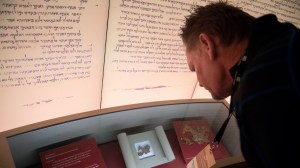
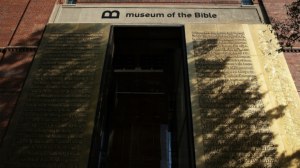
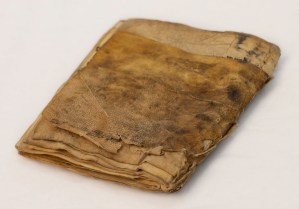
Steve Green, president of Hobby Lobby and chairman of the Museum of the Bible, is returning 11,500 antiquities to the Iraqi and Egyptian governments. The ancient clay seals and fragments of papyrus do not have complete documentation and may have been looted or stolen.

Green said he acquired the antiquities before the Washington, DC, museum opened in November 2017, when he didn’t understand the importance of proper provenance and trusted the word of unscrupulous dealers.

“These early mistakes resulted in Museum of the Bible receiving a great deal of criticism over the years,” Green said last week in an official statement. “The criticism resulting from my mistakes was justified.”

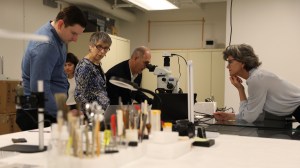
The announcement comes on the heels of a museum-funded investigation that found the 16 fragments of the Dead Sea Scroll on display at the Museum of the Bible are all forgeries, the latest in a string of controversies that cast a shadow on its collection.

A year ago, the museum agreed to return 13 Egyptian papyrus fragments that were stolen from the University of Oxford. And in 2017, the federal government fined Hobby Lobby and ordered it to return thousands of cuneiform tablets and other objects, which were illegally taken from war-torn Iraq and brought into the US by a United Arab Emirates-based dealer who falsely labeled the shipments as ceramic tiles.

Museum officials hope this closes the book on its collection’s controversial beginnings.

“We understand that there’s been questions all along,” said chief curatorial officer Jeffrey Kloha. “We’d like to make the point that we’ve been involved in these conversations for two and a half years, three years. It simply takes time to work through all of the questions, talk to the right people, to look at different options.”

According to Kloha, the museum board ordered its staff to verify the provenance of all items in the museum’s collection in 2017, as well as all the items Green acquired that that never made it to the museum’s collection. Twenty curators and registrars worked for more than two years, checking documentation on the roughly 60,000 objects held in Washington, DC, and in a climate-controlled warehouse owned by Hobby Lobby in Oklahoma City.

Most of the objects are Bibles and printed materials, with a history that is easily traceable. The items that will be repatriated, mostly tiny clay seal impressions and fragments of papyrus, are thousands of years old, and harder to trace. Only one of the items being returned, a clay tablet recounting the Babylonian Epic of Gilgamesh, was ever exhibited in the museum.

“Very few of the papyrus have any kind of literary text at all,” Kloha said. “If there's any writing it's typically a documentary item, a receipt, or a letter. The vast majority are small, heavily damaged pieces.”

Officials in various Middle Eastern governments have been receptive to the museum’s repatriation efforts, Kloha said. The museum hopes good relations might open the way for future partnerships.

“We would be very interested in loans that bring some of their items here to the US, to help people here in the US understand the important history in these countries, the contributions that they have made and continue to make, to culture and to society,” Kloha said.

Critics of the museum and Green may not be so quick to forgive. For many, the entire Bible museum project is under a cloud of suspicion. However, some scholars of biblical antiquities have lauded the museum’s efforts to make things right.

Christopher Rollston, professor of Semitic languages at George Washington University, said he would take family and friends to the museum. “The serious blunders of the museum, these breeches of ethics and law, are part of the past,” he said.

Lawrence Schiffman, professor of Hebrew and Judaic Studies at New York University, agreed.

“The museum deserves to be praised,” Schiffman said. “From the day it opened, the museum told the truth. They have been completely kosher about this.”

Books
Review

Women: Don’t Bury Your Leadership Gifts

That persistent sense of calling isn’t a fatal feminine flaw, but an invitation to walk intimately with God.

Christianity Today April 1, 2020
Illustration by Mallory Rentsch / Source Images: Jessica Overholt / Lightstock / sanjeri / Getty Images

In her book I Am a Leader: When Women Discover the Joy of Their Calling, Angie Ward shares her own struggle of questioning whether her leadership bent was a gift or a fatal feminine flaw. It is a familiar tension women face when they do not feel affirmed or encouraged by those in authority in their system. They end up either questioning their gift and their calling or questioning the system and the perspective of those in authority.

I Am a Leader: When Women Discover the Joy of Their Calling

I Am a Leader: When Women Discover the Joy of Their Calling

NavPress

240 pages

$15.67

For a while, Ward tried to not take charge and even prayed to be more meek and gentle. After a long season of prayer and anguish, she realized that the problem was not that she was a leader or a woman, but that she was denying who God had created her to be. Leadership is an essential part of her calling. She sees herself not as a woman who happens to have a leadership role but a leader who happens to be a woman. Vowing not to bury her gifts and her calling again, Ward wrote words in her journal that became the title and subject of this book: “I AM A LEADER.”

A Lifelong Journey

There are plenty of books that deal with theological views of the roles of women in congregational ministry. (Examples include Two Views of Women in Ministry from Zondervan’s Counterpoints series and Women in Ministry: Four Views, published by IVP Academic.) I Am a Leader, however, does not tackle this particular issue. Instead, the purpose of Ward’s book is to help women see themselves as leaders and live out their callings regardless of their theological positions or cultural contexts.

Ward recognizes that some women may sense individual callings or hold perspectives on women in leadership that clash with prevailing views inside their organizations. For women in these situations, she lays out the options and accompanying challenges to consider in deciding whether to follow one’s calling within less favorable confines or move on to a more supportive environment. However, she does not address how best to stay in an adverse situation while functioning as an agent for change. The book takes an individualistic focus on personal calling rather than advocating for systemic change in places where women do not hold positions of leadership.

Ward discusses different ways of defining calling, but for the purposes of this book she boils it down to “a God-given conviction about your life’s direction.” She examines the different aspects of calling, from how to discern it to how to live it out during different seasons of life. Ward defines leadership as “influence on people to movement toward a vision.” She challenges readers to think of leadership as a matter of exercising influence rather than holding a certain position or job title. While each of us has influence, not every woman is cognizant of or intentional about employing it. “The question,” Ward writes, “is not whether you have influence; the questions are, where you have influence and how are you using that influence to bring honor and glory to God.”

One of the biggest hindrances to our calling, as Ward sees it, comes from our own doubts about how we might work it out—which can cause us to begin questioning the calling itself. What should women do when they find themselves in environments that create (or aggravate) feelings of doubt? Looking back at my own ministry work, I often felt like my teaching and speaking gifts were undervalued and underdeveloped, relative to men, because I didn’t enjoy the same opportunities to exercise them in the Body of Christ. Over time, this dampened my confidence and sense of worth. It takes faith and perseverance to hear God’s call and affirmation over the unsupportive messages one may receive within one’s environment.

Ward sees following your calling as a lifelong journey. Her book devotes chapters to various factors—such as family relationships, seasons of life, and financial burdens—that can affect the pace and trajectory of this journey. As Ward makes clear, your calling and season of life do not always fit neatly together. At every stage, you will experience questions and points of tension. There will be times of waiting, greater surrender, questioning, and costly obedience. But God is always at work, and he does not waste anything. “Even if our experiences do not directly translate to our calling,” Ward writes, “they become part of our story and shape who we are, which in turn shapes how we live out our calling.” In the midst of the mystery and waiting, we can make a regular habit of reading God’s Word and listening to his voice, tuning our ear to what he has already revealed. As we trust in his goodness and timing, he will mold and guide us as we walk with him step by step.

Ward does not shy away from addressing challenges you may experience on the calling journey, such as spiritually dry seasons when God appears to be silent. We should not immediately interpret these challenges as open or closed doors. They can serve as a means for discipleship, loosening our grip on idols and forming us more completely into the likeness of Christ. Ward also cautions against equating our calling with identity, which can foster a slavish devotion to work that exponentially increases the likelihood of burnout, spiritual dryness, and emotional codependence.

Even though Ward disavows any rigid sacred-secular divide, stating explicitly that all work counts as some form of ministry, her book does not include many examples of those striving to live out the gospel in the context of the marketplace. As a result, it is likeliest to resonate with women who feel called to vocational Christian ministry. However, the book draws on the wisdom of a broad range of women representing different ages, ethnicities, and geographic locations. As their perspectives show, there is no one-size-fits-all answer to any of these complicated issues.

A Beautiful and Powerful Sisterhood

The tone of I Am a Leader is one of solidarity. Even though we are unique, we are not alone. As you read the stories of a broad range of women, you gain a sense of the beautiful and powerful sisterhood we share as women ministry leaders. The book lifts up all kinds of ministry without a sense of comparing, helping readers of all sorts discover a unique calling. While much wisdom can be gleaned by reading this book individually, it lends itself being studied and discussed in the setting of a women’s small group. Each chapter ends with a “What Now?” section (where Ward provides truths to remember and points the reader back to trusting God) and “Continue the Conversation” questions to consider individually or in small-group discussion.

In my own calling journey, I have experienced many detours (at least that’s how I perceived them at the time). But I am discovering that the detours may not be setbacks after all, because God has used the curves and bumps along the way to help me trust him more deeply. I Am a Leader is a helpful companion to women, like myself, who need encouragement to live out their leadership callings and walk intimately with God in the process.

Joyce Koo Dalrymple is a wife and mother, a pastor of discipleship, and a former attorney.

Theology

Bloom Where You’re Quarantined

Some of us were lonely well before the pandemic. How do we find God’s comfort now?

Christianity Today April 1, 2020
Oliver Rossi / Getty Images

This past Sunday, I took my children for a walk in a wildlife sanctuary on the edge of our small New England town. Sunday marked our ninth day of preventative quarantine from COVID-19, and after a busy week indoors adjusting to online schooling and working from home, we were ready to get outside in the fresh air. A shock of wintery weather had passed through Boston, so we pulled out hats and mittens, bundled up, and headed out to the Atlantic Ocean.

When we arrived, my four kids tumbled out of the car and went ahead of me down the trail. They ran and played, swatting each other with grasses and zigzagging off the trail to race through the meadows. As I stood for a moment and watched them, I closed my eyes and drank in the silence as the ocean wind carried away my children’s voices. Then it hit me, like it has so many times over the last eight months: My husband is dead, and I’m here alone.

Only a year ago, my husband Rob brought me on a date to these meadows. We bought cherry hand pies from a local grocery store and sat eating them as the sun set. We enjoyed the companionable silence that comes with 17 years of marriage. As birds returned to their nests in the dusk, quiet rain began to fall. It was a moment out of a Robert Frost poem: Come over the hills and far with me, and be my love in the rain. But for all my wishing now, Rob will never be here again with me.

When he died last July in a tragic hiking accident, I discovered a dreadful aloneness that I’d never known before. In that moment when the chaplains came to tell me of his death, I lost my partner, my confidante, my co-parent, my lover, my advisor, and my best friend. I’d always been an independent person, an introvert, even, but I never wanted to be ushered into a life without him. For the last eight months—and until Christ comes again—Rob’s seat sits empty at our kitchen table, and his side of the bed is cold when I slip beneath the covers each night.

Since Rob died, I’ve learned to do many things on my own. I’ve learned how to wire electrical fixtures in my home and how to fix the broken hot water heater on our family’s camper. I’ve learned to coordinate my finances without his wisdom to guide me and how to talk frankly with our sons about the birds and the bees. But however capable I become, I cannot cover for the love, assurance, and stability that Rob brought to our lives.

The loneliness of these last few weeks of public health-directed isolation only magnifies the solitary course my life has taken now. If I have fears or anxieties about the coronavirus, I must now manage them alone. I am the sole gatekeeper for my family. Every decision about our wellbeing falls to me. How do I manage this pandemic without my husband?

After my kids ran off down the ocean trail last weekend, I ceased hearing their voices after a while. I heard only the sound of the wind, rolling off the water, brisk and cold. As I stood against the wind, I was reminded of that striking Greek word eremos—lonely—which is used to describe the places that Jesus found to be refuges.

The Gospel writers tell us over and over how Jesus turned to lonely places when he needed rest and wished to pray. The words “wilderness” and “desert” offer visual description of those spaces, but “lonely” speaks the language of the heart. Jesus found solace where others saw uninhabitable wasteland. He didn’t fear isolation but looked to it for peace and renewal.

In my own story, I’m still struggling to find light in the darkness. But eight months after Rob’s death, I know this truth with growing confidence: If Jesus sought out lonely places, he’s here with me in mine. He’s with me in the sadness of days spent without my husband; in a future now empty of his presence; in a quarantine that further removes me from all of the support that sustained me these past eight months.

As communities around the world close down because of COVID-19, I suspect I’m not alone in my loneliness. We all carry our various sorrows into quarantine. Even though we know that Jesus attends us in our isolation, this knowledge may still not offer enough balm, and maybe for good reason. As C.S. Lewis writes in Mere Christianity, “If we find ourselves with a desire that nothing in this world can satisfy, the most probable explanation is that we were made for another world.”

In her book Blessed Are the Unsatisfied, Amy Simpson echoes Lewis. “Maybe God doesn’t want to take away our longings yet,” she writes. “When we grow deeper in faith and closer to Jesus, we’re likely to find ourselves less—not more—satisfied with life here and now.”

Indeed, Jesus will come to our lonely places. He promises to meet us in our deserts, our quarantined spaces, to renew our souls, bring us joy, comfort our hearts, and give us peace. If in the midst of this companionship our loneliness still gnaws at us, we can assure ourselves that it’s less a symptom of our solitude and more a mark of normal spiritual restlessness. This lingering loneliness reflects a deep longing for communion, one that will only ever be satisfied when we see Jesus face-to-face.

For now, quarantine will test our mettle as we learn to navigate life in isolation. In these next weeks and possibly months of separation, Christ invites us to direct our hearts toward him. These hours spent alone will only increase our longing for that sweet communion promised in the life to come, with those we’ve lost and with our faithful God.

Clarissa Moll (MA, Trinity Evangelical Divinity School) is the young widow of author Rob Moll and the mother of their four children. After a career in fundraising and marketing for small nonprofits, she now supports those in grief through her writing. Find her on Instagram and Twitter.

Ideas

Death Can Still Sting

Staff Editor

By fighting to save physical lives, the church imitates Christ.

Christianity Today April 1, 2020
Wynnter / Getty Images

The shutdowns are worth it, said New York Governor Andrew Cuomo, a Democrat, at a recent press conference. “And if everything we do saves just one life, I’ll be happy.” Bringing New York City to a grinding halt and risking national economic turmoil more severe than the Great Depression is all worthwhile, Cuomo argued, if it lowers the death toll from the COVID-19 pandemic even a little.

In an immediately controversial essay at First Things, the journal’s editor R. R. Reno roundly rejected Cuomo’s claim. “This statement reflects a disastrous sentimentalism,” he wrote. “There are many things more precious than life.” Anticipating allegations of hypocrisy citing his advocacy against abortion, Reno insisted these are dissimilar concerns. The “pro-life cause concerns the battle against killing,” he said, “not an ill-conceived crusade against human finitude and the dolorous reality of death.”

The germ of this argument is clearly in the air. Texas Lt. Governor Dan Patrick, a Republican, argued that elderly people like himself should be willing to die of COVID-19 so their grandchildren can keep “the America that all America loves.” Radio host Glenn Beck made the same proposal. And in conversations with Christian family members about the value of social distancing, I keep running into similar logic.

“None of us gets out of life alive,” they say, or, “The Lord will take me when he takes me.” Physical death is not something Christians need fear, they argue, because Christ conquered death itself (1 Cor. 15:54–57; 2 Tim. 1:9–10). Dramatic measures to control the deadly spread of COVID-19 aren’t a good thing. State mandates to stay at home are causing enormous economic and social disruption—not the least precluding in-person church services—and are a greater ill than the illness they seek to curb.

This perspective is compelling because it is built on a measure of truth. This shutdown is deeply frightening. We will live with its deleterious effects for years, maybe decades, to come.

Moreover, physical death isn’t the end for Christians, nor is it the worst that can happen to us. Death is better than apostasy or the service of evil. Revelation 12:11 lauds the saints who “did not love their lives so much as to shrink from death.” The Apostle Paul—who would himself be martyred—longs in 2 Corinthians 5:8 to “be away from the body and at home with the Lord.”

The Christian attitude toward death should be distinctive: We needn’t grieve fellow believers like those “who have no hope,” for they and we will be with the Lord forever (1 Thess. 4:13–18). And because Christ broke death’s power, Hebrews 2:14-15 teaches, we have been freed from the “fear of death.” These invisible realities should shape how we think about death, our health care choices included. Prolonging physical life by any means does not always honor God or the very life we seek to preserve.

Yet despite all this, the conclusion drawn by Reno and his camp goes far awry. Its theology of physical death is incomplete and, as a result, profoundly unchristian. Jesus entered a world where death from illness was commonplace and waged what I suspect Reno, were he a contemporary of Christ, might have dubbed “an ill-conceived crusade against human finitude and the dolorous reality of death.” Jesus preached a lot, certainly, but he spent at least as much time healing the sick, casting out demons, and raising the dead. The gospels describe marathon healing sessions where crowds pressed close, desperate for relief (consider Mark 3:10).

The effects of his healing were temporary, of course; every person Jesus healed or raised later died. Most likely suffered other illnesses. Jesus knew this, but he healed and raised anyway.

Jesus’ raising of Lazarus, recounted in John 11, seems particularly instructive here. Jesus knew Lazarus would live and die and live again, but still he wept over this death—and undid it. That this miracle could not unmake “the dolorous reality of death” gave him no pause.

Similarly, consider the curious story in Mark 5 where Jesus, after delivering a demonized man of his legion of demons, permitted the legion to enter a nearby herd of pigs, which then ran into the sea and drowned. Every time I read this, my attention is riveted to the pigs. Who owned them? Why does Jesus let the demons rob the owners of this valuable asset? Were the owners Galilean peasants now bankrupt? Mark doesn’t say. What Mark does say, however, is that Jesus restored the life of a man who had been chained and tortured, driven out of society, deprived of his own mind. This is a wondrous thing!—and I’m stuck on pigs.

It’s not wrong to wonder about the pigs. God cares about animals (Matt. 10:29). And God fiercely cares for the poor (Isa. 3:14–15, James 1:27). But to fixate on the economics at the expense of the miracle evinces myopia. What matters more than the economic and social distress caused by 2,000 pigs dying is the one life saved. Tragically, the people of that community begged Jesus to leave their region. Only when the healed man told everyone “how much the Lord had done” did they marvel (Mark 5:17–20).

Likewise, when the church acts like Christ—staving off and sometimes reversing death through healing—its testimony proves strong. Hospitals as we know them are a creation of Christianity, and the early church provided health care in an age when the sick and elderly could be abandoned in economic self-defense. “It was not uncommon for the chronically ill to be shunned … because they posed too great an economic burden,” notes historian Gary B. Ferngren in Medicine and Health Care in Early Christianity.

The early church shouldered that burden and the risk of contagion, too, even during pandemics and plagues. Can we follow their faithfulness? This does not mean accepting any and every policy response without scrutiny—some may well do more harm than good. But it does entail renouncing any idea that economic and social sacrifice for the sake of lifesaving is mere “sentimentalism.” We can seek to imitate Christ and the saints who have gone before us, foolish by worldly standards (1 Cor. 3:18–20), in our cross-marked fight for life.

Bonnie Kristian is a new columnist at Christianity Today,a contributing editor at The Week, a fellow at Defense Priorities, and the author of A Flexible Faith: Rethinking What It Means to Follow Jesus Today (Hachette).

Theology

Joni Eareckson Tada: Why Should I Fear Death?

Christ’s death and resurrection give me a heavenly perspective on suffering and mortality.

Christianity Today April 1, 2020
Westend61 / Getty

“He too shared in their humanity so that by his death he might break the power of him who holds the power of death—that is, the devil—and free those who all their lives were held in slavery by their fear of death” (Heb. 2:14–15).

“Francie, please file this and make copies of this letter, would you?” I hardly looked up from my desk while talking to my assistant. “And, one more time,” I groaned, “would you please pull out the sofa bed?”

For the fourth time that day, I needed to be lifted out of my wheelchair and laid down. We had to readjust my corset—shallow breathing, sweating, and skyrocketing blood pressure were signaling that something was either pinching or bruising my paralyzed body. Francie wiped away my tears. As she shifted my body, examining my legs and hips for pressure marks, I stared at the ceiling. I was done with being paralyzed. I was tired of the never-ending, day-to-day disability routines. I’d had my fill of it and mumbled to the ceiling, “I want to quit.”

“Oh, come on,” Francie joked, “what are you always saying? You ‘can’t do quadriplegia,’ but you ‘can do all things through Christ’?”

I didn’t have a comeback for that one, so I remained quiet. We couldn’t find anything wrong with my body. Francie hoisted me into my wheelchair.

“Where do I go to resign from this stupid paralysis?” I said.

Francie grinned. She’s heard me say it scores of times. As she was about to leave, she paused. “I bet you can’t wait for heaven. You know, like Paul said, ‘We groan, longing to be clothed with a heavenly dwelling.’ ”

My eyes dampened again, but this time they were tears of relief. My Christian friend had just given me a very comforting, powerful reminder. “Yeah, it’ll be great,” I said.

That afternoon, the verse she shared stuck with me, and I whispered a prayer. “Yes, Lord, I do look forward to being whole, to having a body that will never know pain. But to be honest, what I really want is a new heart that doesn’t want to give up or quit.” I sat in my office and dreamed of what I’ve imagined a thousand times: heaven. Jesus’ death and resurrection secured for us many amazing things, and one is a firm hope of eternal life in the new heavens and new earth with no more sorrow, pain, or tears.

It’s all I needed. That afternoon, I jerked my will right-side up, refocused my emotions, and realigned my thoughts. I repeated Psalm 43:5: “Why are you cast down, O my soul, and why are you in turmoil within me? Hope in God; for I shall again praise him, my salvation and my God” (ESV). I kept talking to my soul, mentally rehearsing a flood of other heavenly promises: When we see him, we shall be like him. … For this corruptible must put on incorruption, and this mortal must put on immortality. … That which is sown in weakness will be raised in power. … He has given us an inheritance that can never perish, spoil or fade. … If we suffer with him, we shall reign with him. Before leaving the office that day, I found my courage and said with a smile, “Come quickly, Lord Jesus.”

Physical affliction and emotional pain are part of my daily routine, but I’ve learned that self-pity can be a deadly trap. I quickly move upward and onward. It takes resurrection power to do that. Christ’s death and resurrection won us many amazing benefits, but I think one of the greatest benefits is their power in our daily lives. The apostle Paul said, “I want to know Christ—yes, to know the power of his resurrection and participation in his sufferings” (Phil. 3:10, emphasis added). We share in Christ’s sufferings so that we might become like him in his death—that is, that we may have the actual power to die to the sins that he died for on the cross. In Christ, we have resurrection power to say no to ungodliness and yes to living self-controlled lives; we can become holy as he is holy; we can partner with the Holy Spirit in fitting ourselves for heaven (Titus 2:12; 1 Pet. 1:15; Heb. 11:16).

The death and resurrection of Jesus give weight to the reality described in 2 Corinthians 4:18: “So we fix our eyes not on what is seen, but on what is unseen, since what is seen is temporary, but what is unseen is eternal.” My useless hands—and your wrinkles, your torn meniscus, your failing memory, or your macular degeneration—are only temporary. It’s our response to those afflictions that is eternal. What’s more, those afflictions make the here and now seem so vaporous, so thin and wispy. The span of our earthly lives is limited; each of our bodies will inevitably fail. Christ’s resurrection assures me that a new splendorous body awaits me in heaven. So why should I fear death? It’s a glorious door into Healing with a capital H!

Paul’s desire to “know the power of his resurrection” was tied to this hope: “attaining to the resurrection from the dead” (Phil. 3:10–11). As Paul knew, Christ’s glorious resurrection assures believers of their own resurrection from death into eternal life (1 Cor. 15:21–22). For me, the death and resurrection of Christ have removed every ounce of fear from death. The Grim Reaper is no longer the heinous, sharp-fanged, menacing monster it used to be. Hebrews 2:14–15 is my safeguard against fear, for “by [Jesus’] death he might break the power of him who holds the power of death—that is, the devil—and free those who all their lives were held in slavery by their fear of death.” The Devil has no power over me. I’m free from being a slave to fear—especially fear of death. Affliction has helped make that clear to me.

Most of us are sequestered at home right now, and renewing our devotion to Christ through this time of isolation and “safe at home” guidelines. But how timely is this, given that we are in this season of Lent. This is what Christians do during the Lenten season! Hardships are one way God helps us get our minds on the hereafter. I don’t speak of the hereafter as a death wish, psychological crutch, or escape from reality. I mean “hereafter” as reality. Pilgrims aren’t supposed to feel at home on earth. Their hearts are on things above; they wait on the Bridegroom. They are looking forward to a new body, heart, and mind. Pilgrims think about crowns and rewards and casting them all at Jesus’ feet. Such realities provide a glorious vantage point from which to look upon our pain and problems. The soul that mounts up to heaven’s kingdom cannot fail to triumph.

It’s odd that it took a wheelchair—something that bolts me to earth—to make me see the futility of fighting spiritual battles on the earthly plane. We Christians need to shift to a higher battleground and choose a resurrection perspective in our daily lives. Looking down on my problems through the lens of God’s promises makes my trials look different. When viewed from a human level, my paralysis feels like a huge, impassable wall; but when viewed from above, the wall appears as a thin line—something that can be overcome. It’s a resurrection view, a bird’s-eye view (Isa. 40:31).

Such a heavenly vantage point on our hardships and our mortality is made possible only through the death and resurrection of our wonderful Savior. In the here and now, may we embrace the power of his resurrection to live a godly life. And may we look forward in confident hope to the day when we mortals will put on immortality.

Joni Eareckson Tada is founder and CEO of Joni and Friends, an organization that accelerates Christian outreach in the disability community. Joni is the author of numerous books, including Joni and Ken: An Untold Love Story and When God Weeps.

This piece is part of The Cross , CT’s special issue featuring articles and Bible study sessions for Lent, Easter, or any time of year. You can learn more about purchasing bulk print copies of The Cross for your church or small group at OrderCT.com/TheCross. If you are a CT subscriber, you can download a free digital copy of The Cross at MoreCT.com/TheCross.

Ideas

Every Child Is on the Altar

President & CEO

This is our fear and our comfort all at once: that our children are not finally in our hands, but they stand in the palm of his.

Christianity Today March 31, 2020
Illustration by Mallory Rentsch / Source Images: saemilee / Getty Images

Today’s musical pairing, chosen to illustrate the meditation below, is Flight from the City by Jóhann Jóhannsson. See the video embedded below. Note that all the songs for this series have been gathered into a Spotify playlist here.

“When they reached the place God had told him about, Abraham built an altar there and arranged wood on it. He bound his son Isaac and laid him on the altar, on top of the wood. Then he reached out his hand and took the knife to slay his son. But the angel of the Lord called out to him from heaven, ‘Abraham! Abraham!’ ‘Here I am,’ he replied. ‘Do not lay a hand on the boy,’ he said. ‘Do not do anything to him. Now I know that you fear God, because you have not withheld from me your son, your only son.’”Genesis 22:9–12

Day 10. 838,061 confirmed cases, 41,261 deaths globally.

When the shadow of death touches the doorstep, we draw our children close. We fear more for them than we fear for ourselves. What should happen to them if the virus finds its way into their veins?

The majority of the suffering and death in the pandemic is concentrated among those who are grown and full of years. Yet statistics and probabilities are no comfort when it comes to the thought of losing your children. Or the thought of your children losing you.

Children are watching their parents go to the hospital and are never seeing them again. Fathers are saying their farewells through windows. One mother spoke her last words to her children through a walkie-talkie. Even those without children of their own are praying for the children they know.

To become a parent is to let love overflow in all its miraculous creativity. To be a parent is to love recklessly what is fragile, fleeting, and at risk. We want to possess our children, but we do not. We want to protect them, but we cannot. Our children outrun our grasp and outgrow our shelter.

Kahlil Gibran talks about this in The Prophet:

You are the bows from which your children
as living arrows are sent forth.
The archer sees the mark upon the path of the infinite,
and He bends you with His might
that His arrows may go swift and far.
Let your bending in the archer’s hand be for gladness;
For even as He loves the arrow that flights
so He loves also the bow that is stable.

Ever since my first daughter cried her first cry and clasped her hand around my finger, I have been captured. She may not be mine, but I am hers. We care more for our children than we care for ourselves because we are made in the image of a God who gave his life for his children. We are not creators of children, but we are vessels of God’s creativity and his yearning to have more children who will love him and love being loved by him.

We remember those things—their first cries, their first steps, the nights we held them, things they cannot remember. Before they fade, we gather those memories up like leaves and press them between the pages of our own recollections. We will carry their memories, and they will carry ours, and so we become a part of one another.

This is our fear and our comfort all at once: that our children are not finally in our hands, but they stand in the palm of his. Like Abraham, we offer our children on the mountain of the Lord. And as with Abraham, we only truly receive our children when we are willing to give them up. Then God gives them to us not as objects for sacrifice but as human beings who carry their own destiny and their own journey toward him.

We are their roots but not their branches. They rise from us, but they reach their arms higher than we can and open their hands to the face of God. And if the time should come for them to grow without us, then we whisper a prayer of gratitude for every day we knew them. Then we stand aside, we rejoice their life goes on, and we entrust them into the only embrace that could ever protect them in the first place.

Every child is on the altar. But we know you smile, O Lord, when we give you what was always and already yours. They are safer on your altar than they were in our shelter, and more loved in your hands than they were in ours.

Sign up for CT Direct and receive these daily meditations—written specifically for those struggling through the coronavirus pandemic—delivered to your inbox daily.

News

Asian Americans Call on the Church to Preach Against Coronavirus Racism

Hundreds of Christian leaders sign a landmark statement denouncing a spike in xenophobia.

Christianity Today March 31, 2020
Justin Sullivan / Getty Images

Inspired by their convictions around human dignity and their hope in the body of Christ, Asian American believers are asking the church to take the lead in opposing anti-Asian racism fueled by the coronavirus pandemic.

The Asian American Christian Collaborative today released a statement describing the current rise in anti-Asian incidents—by some counts, more than 750 reports just last week—as the latest in the long history of “yellow peril” tropes in the US.

The statement denounces xenophobia, stands in solidarity with victims, and directs Christians to speak out and make changes in their churches, schools, and communities.

“Our hope would be that people would address this from the pulpit,” said Ray Chang, who collaborated on the statement with church planter and writer Michelle Reyes. “There is no Good News without the bad news.”

The statement evokes the Christian commitment to neighborly love, calling for signatories to “engage in whole-life discipleship in your churches, and embrace the teaching and work of Jesus, by actively combating anti-Asian racism from the pulpit, in congregational life, and in the world.”

Hundreds initially signed on, from prominent Asian American Christian leaders like North Park Theological Seminary professor Soong-Chan Rah and Evangelicals for Social Action director Nikki Toyama-Szeto to the heads of major evangelical entities like Fuller Seminary president Mark Labberton and World Relief president Scott Arbeiter. By Tuesday evening, the statement garnered more than 3,000 signatories.

Asian American Christians have been vocal about racist remarks, characterizations, and violence since the earliest days of the outbreak.

“‘America first’ or ‘my own race first’ is not living out the Parable of the Good Samaritan, where Jesus defined our neighbor as the one who is most hated,” wrote Allen Yeh, Biola University professor of intercultural studies, back in mid-March. “In times of fear, take this as an opportunity to defend and support those who are most targeted and marginalized.”

Over the past couple weeks, the scope of the threat has become clearer with a spike in media reports on recent incidents, including a stabbing in Texas targeting an Asian family because of the virus. The Federal Bureau of Investigation has warned about a potential surge in hate crimes against Asian Americans.

“Asian Americans are being spat on, beaten down, bullied. Asian restaurants were being avoided long before all non-essential businesses were getting shut down,” wrote Grace P. Cho, editorial manager of Incourage. “On top of the fear and stress we all carry concerning the health and safety of our loved ones, racism against Asian Americans adds another layer to the anxiety, and we are weary.”

Russell Jeung, chair of Asian American studies at San Francisco State University, tracked a 50-percent rise in coverage of anti-Asian racism linked to the new coronavirus between early February and early March. He predicts many more take place that never make the news, and set up a site to track reports of incidents in multiple languages.

“I pray that Asian Americans don’t allow the hate and stigmatization to steep into their hearts,” Jeung, also the author of the spiritual memoir At Home in Exile, told CT. “Instead, may they recognize that their ethnic and racial backgrounds are God’s gift to them and the broader church.”

Christians like Reyes, a leader at Hope Community Church in Austin, have seen the discrimination in their own communities. A family in her congregation had their son chased by neighborhood kids yelling “coronavirus” and “go home,” and several pulled their kids from schools before the closures due to taunting from classmates.

Chang experienced remarks firsthand—a woman pointing and saying “there’s another one”—when he finally ventured to Walmart after a week in quarantine.

Worried that fellow Christians were ignoring or downplaying the problem, even calling people “snowflakes” for taking issue with terms like “Chinese virus” or “Wuhan flu,” they rallied together Asian American voices to address the racism they knew was real and posed a serious risk.

The statement, coupled with a range of informational resources for churches and leaders, is an effort to rally Christians to lead the way in quashing discrimination.

Several Christian leaders had already spoken up over the past week to grieve the continued reports of racist incidents and stand with Asian Americans.

“Pastor, don’t leave God’s people in the bondage of fear, lead them into the freedom of love. Condemn racism against our Asian neighbors,” tweeted Mika Edmondson, pastor of New City Fellowship in Grand Rapids, Michigan.

While the American church has had incidents of racial insensitivity and stereotyping toward Asians in its own past, statement organizers believe that with a willingness to listen to Asian American concerns and lean into a robust theology of human dignity, the church has the potential to lead the way in unprecedented and scary times.

“The church can play a powerful, prophetic role during this pandemic,” said Jeung, the researcher. “By preaching a message of peace and reconciliation, by caring for the sick and the marginalized, we would be a bright light in this time of darkness. Condemning anti-Asian hate and welcoming immigrants signals Christ’s embracing love.”

Apple PodcastsDown ArrowDown ArrowDown Arrowarrow_left_altLeft ArrowLeft ArrowRight ArrowRight ArrowRight Arrowarrow_up_altUp ArrowUp ArrowAvailable at Amazoncaret-downCloseCloseEmailEmailExpandExpandExternalExternalFacebookfacebook-squareGiftGiftGooglegoogleGoogle KeephamburgerInstagraminstagram-squareLinkLinklinkedin-squareListenListenListenChristianity TodayCT Creative Studio Logologo_orgMegaphoneMenuMenupausePinterestPlayPlayPocketPodcastRSSRSSSaveSaveSaveSearchSearchsearchSpotifyStitcherTelegramTable of ContentsTable of Contentstwitter-squareWhatsAppXYouTubeYouTube