Books

During COVID-19, Congregations Can Bond as ‘Backyard Pilgrims’

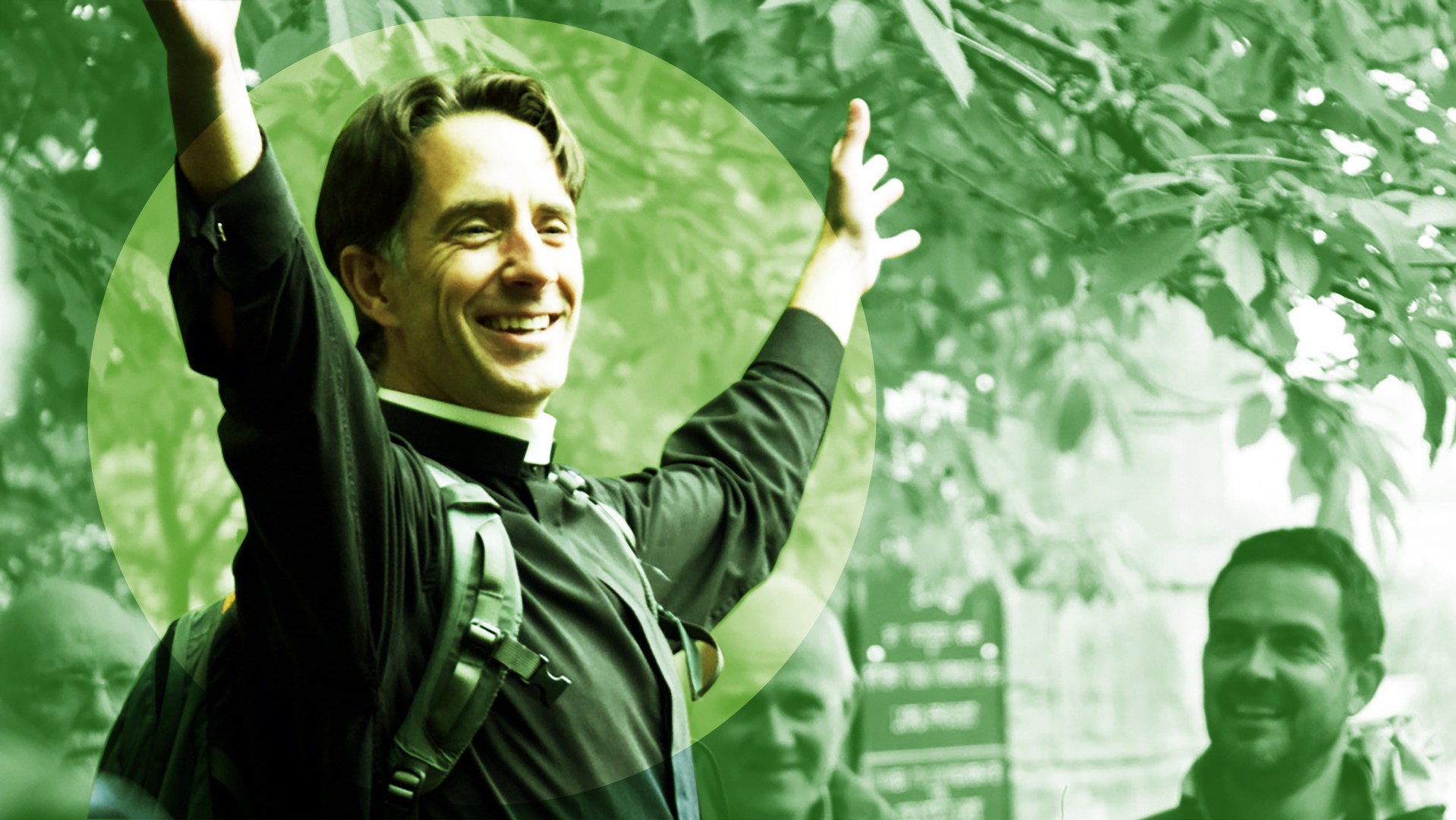
Author Matt Canlis invites homebound churchgoers to journey together from a distance.

Christianity Today March 24, 2020
Courtesy of Matt Canlis

While working as a pastor in rural Scotland some years ago, Matt Canlis produced the film Godspeed along with his brother Brian Canlis and friend Danny Lund. The film explores Christian spirituality and the pace at which many of us live. “The only problem,” Canlis says, “was when people watched it and thought, ‘There is greener grass in Scotland, let’s just move over there.’”

For Canlis, it’s critical that Christians “bloom where we are planted” and develop a deep spirituality in our own context. “So I conceived of a pilgrimage in your own backyard—a book that helps you be found where you already are,” he explains.

That book is the recently released Backyard Pilgrim: 40 Days at Godspeed. CT connected with Canlis to talk about how “blooming where we’re planted” takes on particular significance during the COVID-19 pandemic.

As many now find themselves confined to their own homes, yards, and neighborhoods, how has Backyard Pilgrim taken on new meaning?

I initially conceived of this as a pilgrimage in your own backyard—a book that helps you be found where you already are. But it is not just a book to read—it is a book that guides you on a walk. Over 40 days, readers follow two paths. One is the Bible path, which explores Scripture passages from Genesis all the way up to Jesus.

The other is the parish path, which involves walking in your community for 15 minutes a day. Another important piece of it is daily saying “Here I am” to God in prayer. Prior to the pandemic, we gathered in pilgrim groups once a week to say, “Here we are.” The idea was to regularly both say, “Here I am as a child of God,” and together, “Here we are as God’s children.”

But now most of my congregation is housebound. None of us imagined how Backyard Pilgrim would be God’s gift to keep us connected during the virus. The daily rhythm of saying “Here I am” to God in prayer, Bible reading, and walking our own neighborhoods has kept all of us on the same page. We are both embracing the new boundaries and learning to thrive within these limits. Almost daily, small groups in my congregation are FaceTiming each other to share their favorite verses from Backyard Pilgrim and to tell stories from their parish walks.

Many in our town are feeling isolated and alone. That said, our church family is actually feeling more in touch with God, our neighborhoods, and our neighbors’ needs than ever before. This is certainly a Lent like no other, and we will keep walking through to Easter and beyond.

You’ve been getting feedback from churches in the US and Canada, thanking you for the “backyard pilgrimage” model.

When I wrote the book, I had no idea of the circumstances it would be released under. While we hoped people would get to meet in person, here’s what’s happening instead. People are on the same page every day, checking in daily with each other, and talking about what they’re seeing out on their walks. Our congregants are also meeting weekly for a Zoom conference.Having a book where people are on the same page for 40 days has been to a gift to the isolated, those in nursing homes, for example, a gift to first responders, and a gift to our own congregation.

Backyard Pilgrim is structured around a fundamental human question: Where are you? You write, “It is first a question you can ask God but also a question God will ask you.” Why grapple with this question?

The value in questions is they always open up discussion and exploration, and they allow for the Holy Spirit to give particular answers that different people need to hear. There are certainly universal answers that apply to all of us, but there are also questions that we each need to answer in different ways. So a question like, “Where are you?” is a question meant to make us realize we are embodied persons and that we live in a particular place. “Where are you?” is a geographical question that is linked to identity—you can’t separate who you are from where you are.

The notion that where you are is part of who you are is a pretty countercultural idea when we consider how transient our society has become.

Exactly. I realize it’s a tourist generation and we like to be on the move. But “Where are you?” is a deliberately geographical question—and it’s God’s first question, connected to land and place and people.

In the book, you explore how the question “Where are you?” and the answer “Here I am” echo throughout the Bible, beginning in Genesis. As you began to trace this question-and-answer paring throughout Scripture, what did you notice?

God’s first question is a searching question. Not a question just to search our souls but to search for us, to find us, to say, I know you’re getting lost, let me help you be found. In studying the part in Genesis where God says, “Where are you?” I noticed God was walking in the garden, but the human beings were hiding behind a tree. Instead of saying “Here I am,” they hid, then started blaming each other and blaming God for what was happening.

It’s so different from when I’d play hide and seek with my daughter. Whenever I’d walk into the same place that she always hid and say “Where are you?” she would rip open the curtains and say, “Here I am! Here I am!” She loved being found.

In Genesis, not only have Adam and Eve fallen into sin, they’ve also been poisoned such that they don’t want to be found. God obviously knows where they are, but in asking the question, he is trying to get them to own where they are, what they’re doing, and who they are.

Readers of Backyard Pilgrim are asked to walk through their neighborhood or community every day. Why is it so important to you that people do more than just read the book—that they respond by getting outside in their neighborhood daily?

If we are to be found, it has to be in the places where we live. This is not about an individual encounter with an abstract God. This is the God who made heaven and earth, the one who is saying, Come and see the world I have made. Come and see the suffering. Come and see how I can make you a child in this world, both in this life and in the life that is to come. There is no abstract way to practice being found. It has to happen in a place.

And instead of just saying “Here I am”—which you do every day as an individual—I’m also hoping people say “Here we are” as they gather remotely in smaller pilgrim groups once a week. Back in the day, pilgrims did not travel alone. There were bandits and hard things to get through, so you traveled in groups. But it wasn’t just for protection—it was because community transforms. In our church, we’ve been gathering for one hour each week to say, Here we are together. When groups gather, they tell one story from their parish walk, they tell what their favorite verse was, and then they also share one question that’s been arising from the text that they’re wrestling with.

During this pandemic, how do you care pastorally for your congregants?

People call me. I listen to each congregant, I pray through that voicemail, and then I call each person back. My hours are spent visiting people via phone calls. We have 160 people in our church, and I will talk with each one who calls me.

We are doing everything we can to love our neighbors as ourselves, which sometimes means giving space, and other times means visiting homes to drop off home cooked meals, extra toilet paper, or walking people’s dogs for them. These are trying times with many uncertainties, but one thing remains certain: We are being the resilient body of Christ!
News

Easter Pageant Started by Pandemic in 1633 Canceled by COVID-19

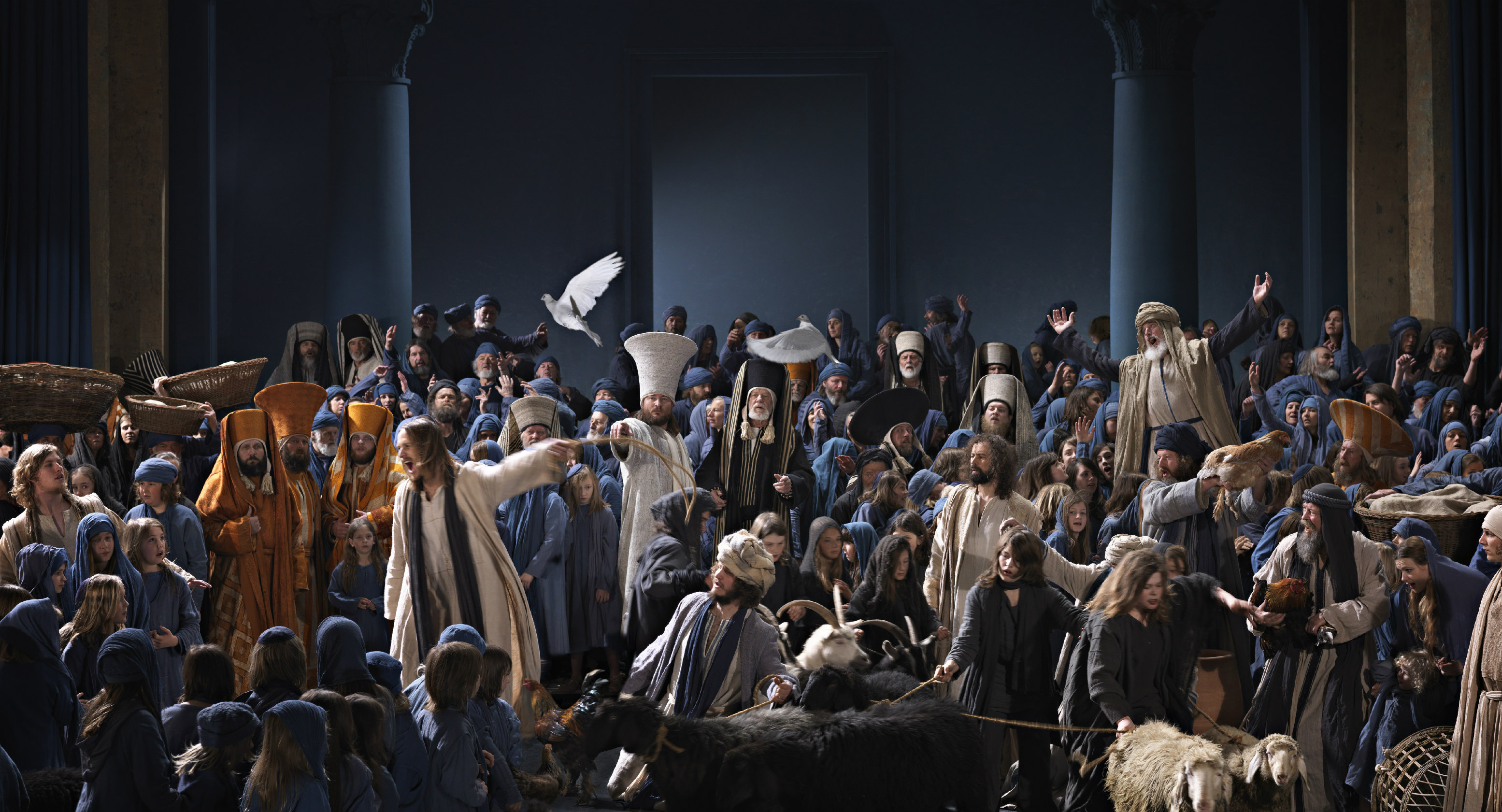
The famous Oberammergau Passion Play draws half a million people once a decade to watch small German village perform the life, death, and resurrection of Jesus.

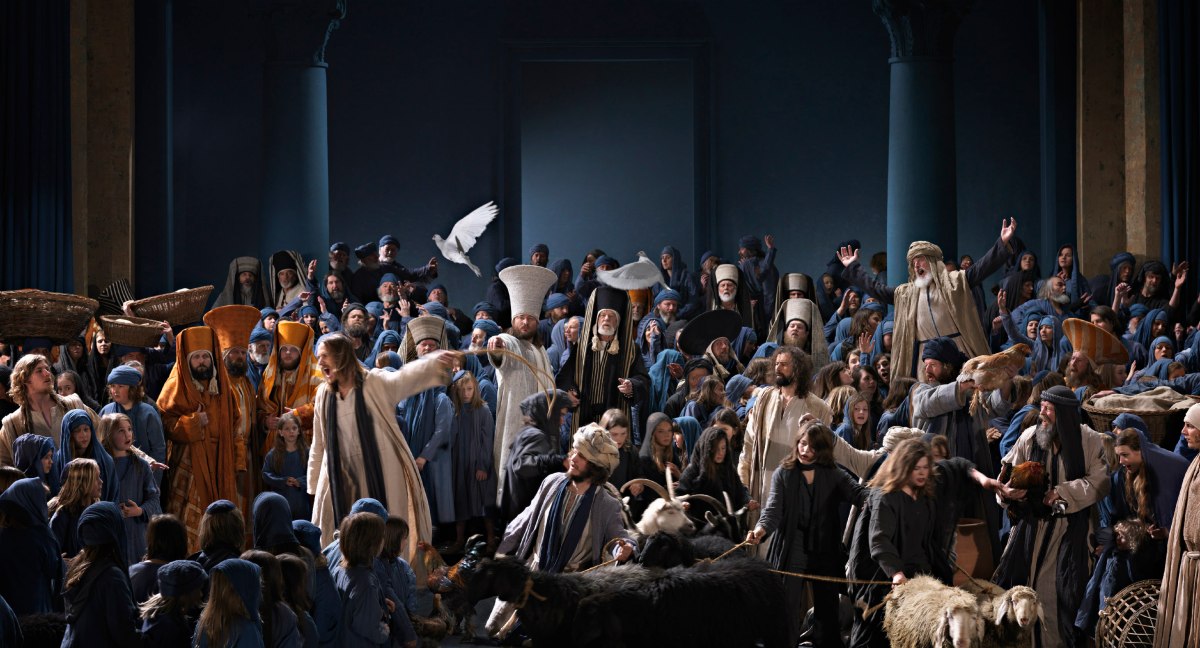
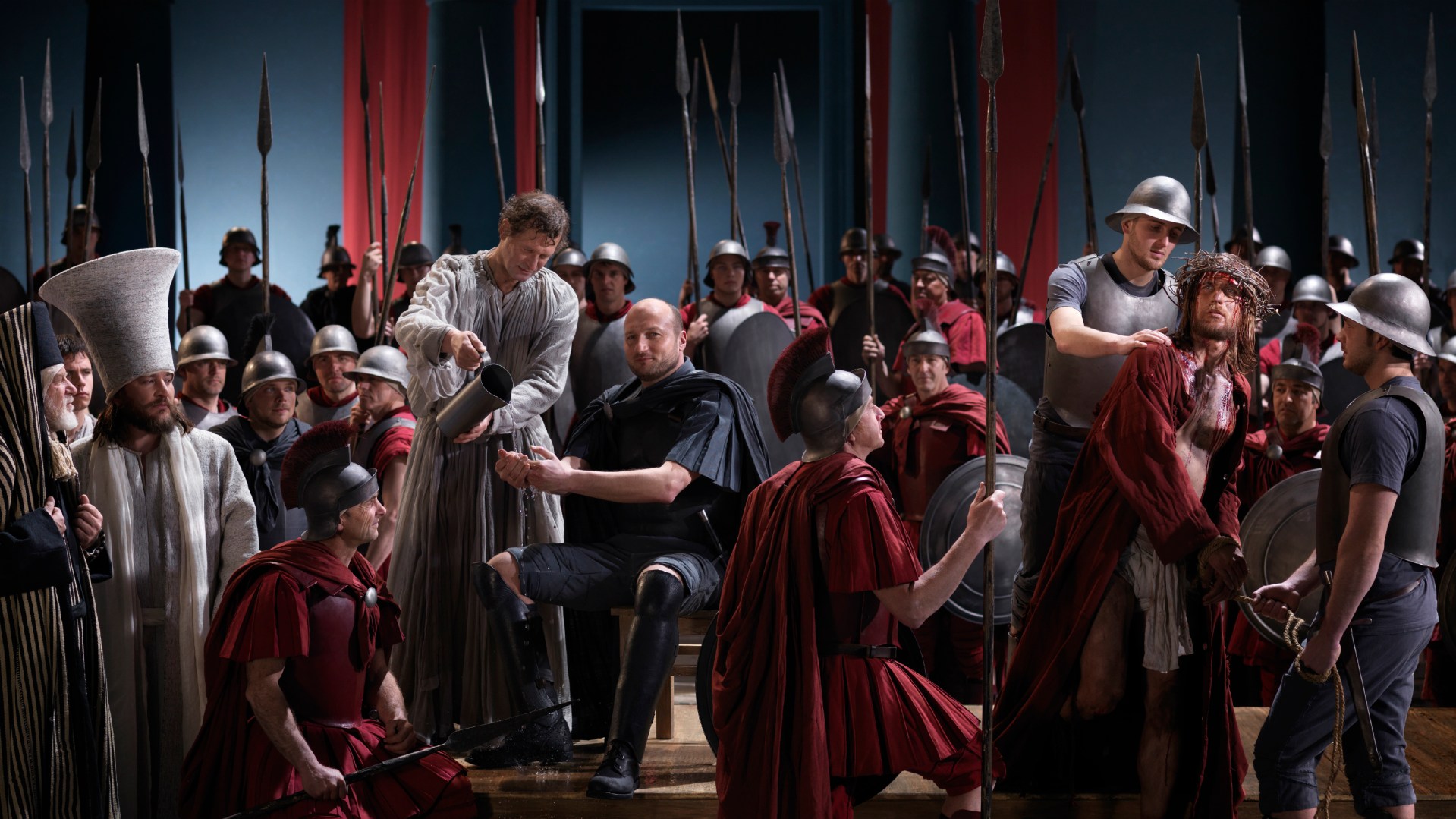
A scene from the 2010 Passion Play in Oberammergau, Germany.

A scene from the 2010 Passion Play in Oberammergau, Germany.

Christianity Today March 24, 2020
Oberammergau Passion Play

As an epidemic raged across Europe, a picturesque German village in the mountainous south of Bavaria decided to do something about it.

Having already lost 80 of their own to the plague, the villagers of Oberammergau pledged to perform the Passion of Jesus Christ—his suffering, death, and resurrection—every tenth year, so that no one else might die.

So goes the historical legend of the origins of the Oberammergau Passion Play, an almost four-century-old tradition that takes place once every 10 years.

The year of the pledge was 1633, not 2020. The Pest—German for plague—was the so-called “Black Death,” not the COVID-19 pandemic.

But, in an ironic twist, the 42nd Oberammergau season—set to run May 16 to October 4, 2020—was postponed last week due to measures taken by local government authorities in response to the new coronavirus outbreak.

Oberammergau expected to host between 500,000 and 750,000 people—many of them pilgrims—for the 2020 performances.

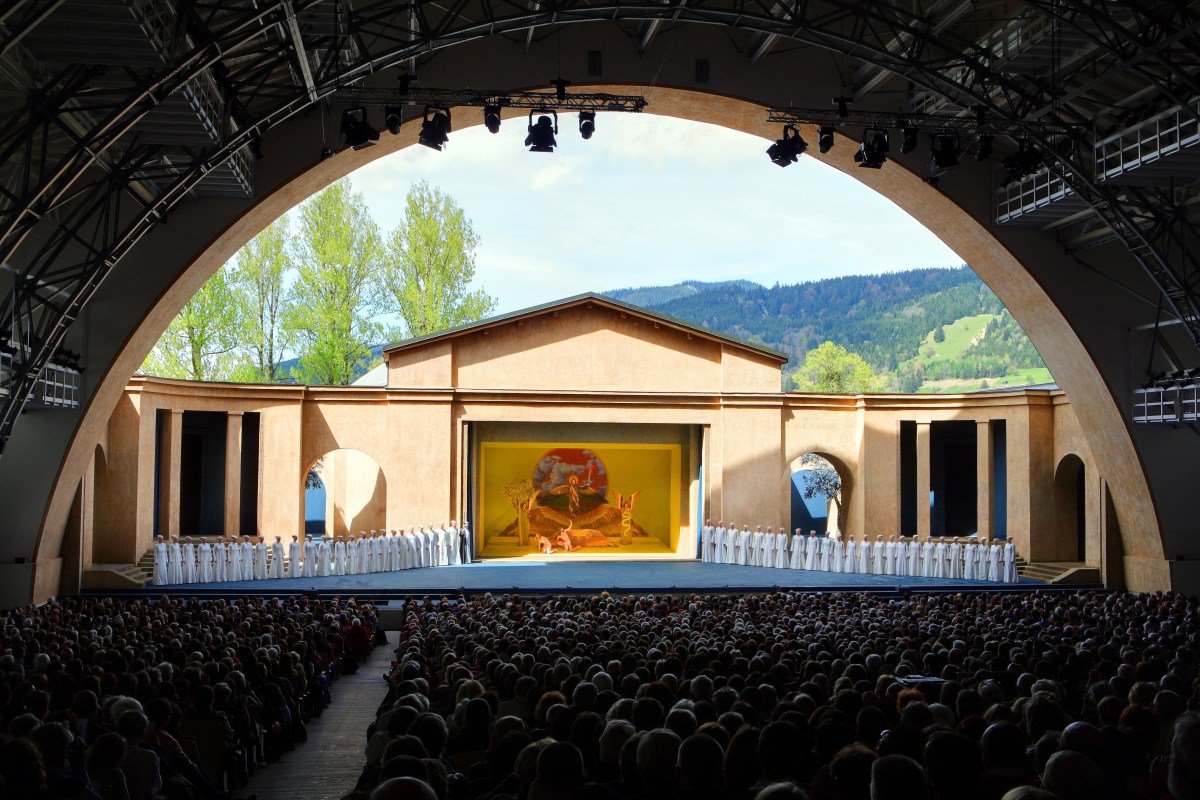
The 2010 production of the Oberammergau Passion Play.Oberammergau Passion Play
The 2010 production of the Oberammergau Passion Play.

In a statement, organizers said, “the health of our guests and contributors is a top priority for us, so those responsible have decided to postpone the premiere of the Passion Play.” The new premiere will be May 16, 2022.

The postponement is the latest in a string of challenges facing religious festivals, pilgrimages, and events across the globe this year. It is sure to have major impacts on the village of Oberammergau, the economy that surrounds the plays, and pilgrims planning to attend.

“We are in limbo,” said Cindy Friedrich, a 59-year-old from Apache Junction, Arizona, who was going to travel to Germany with 35 people from her church. “We are waiting to see what we will do, but we know God is with us, he will not leave us nor forsake us. He’s the one in control.”

Robert Moore, a pastor who was going to make the trip from Leipzig, Germany, said that while he and his wife are not surprised or heartbroken to not experience the Passion Play this year, they do “feel the loss—economically and spiritually—for the area of Oberammergau.”

Indeed, some 2,000 of the village’s 5,400 residents either perform on stage or play a supporting role behind the scenes. The rest are part of a network of shops, restaurants, and hotels that accommodate the thousands of pilgrims and attendees that descend on the village decennially.

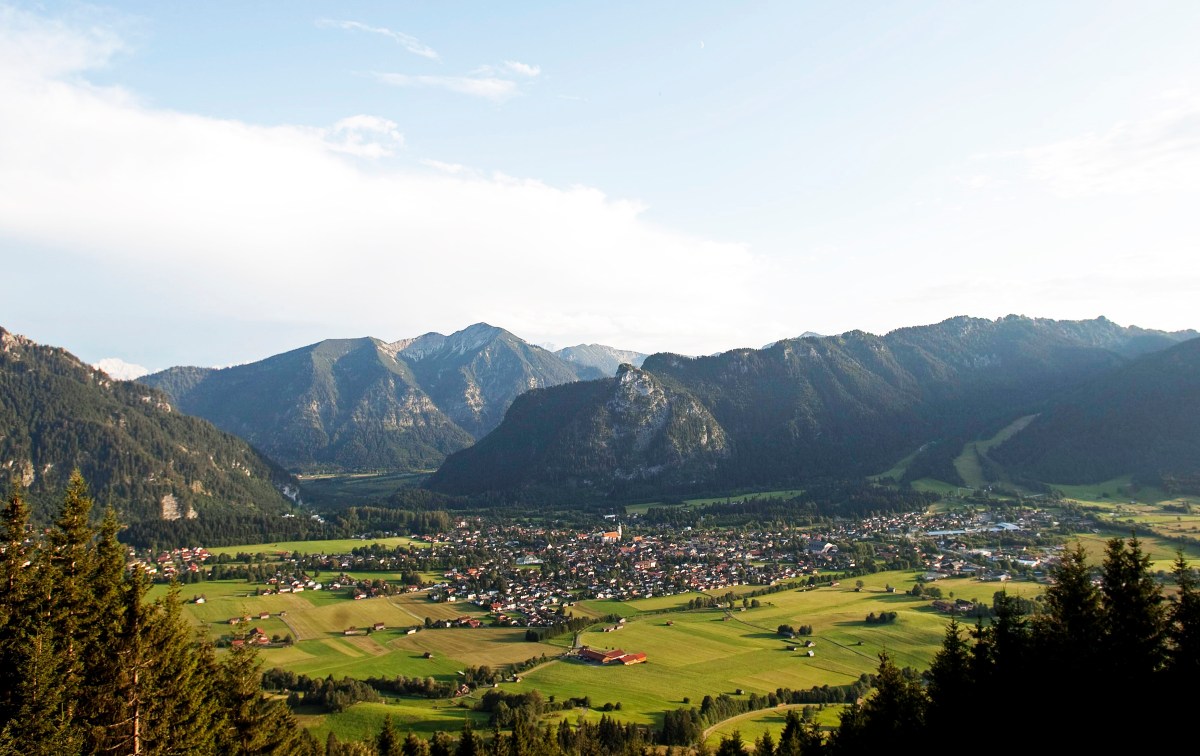
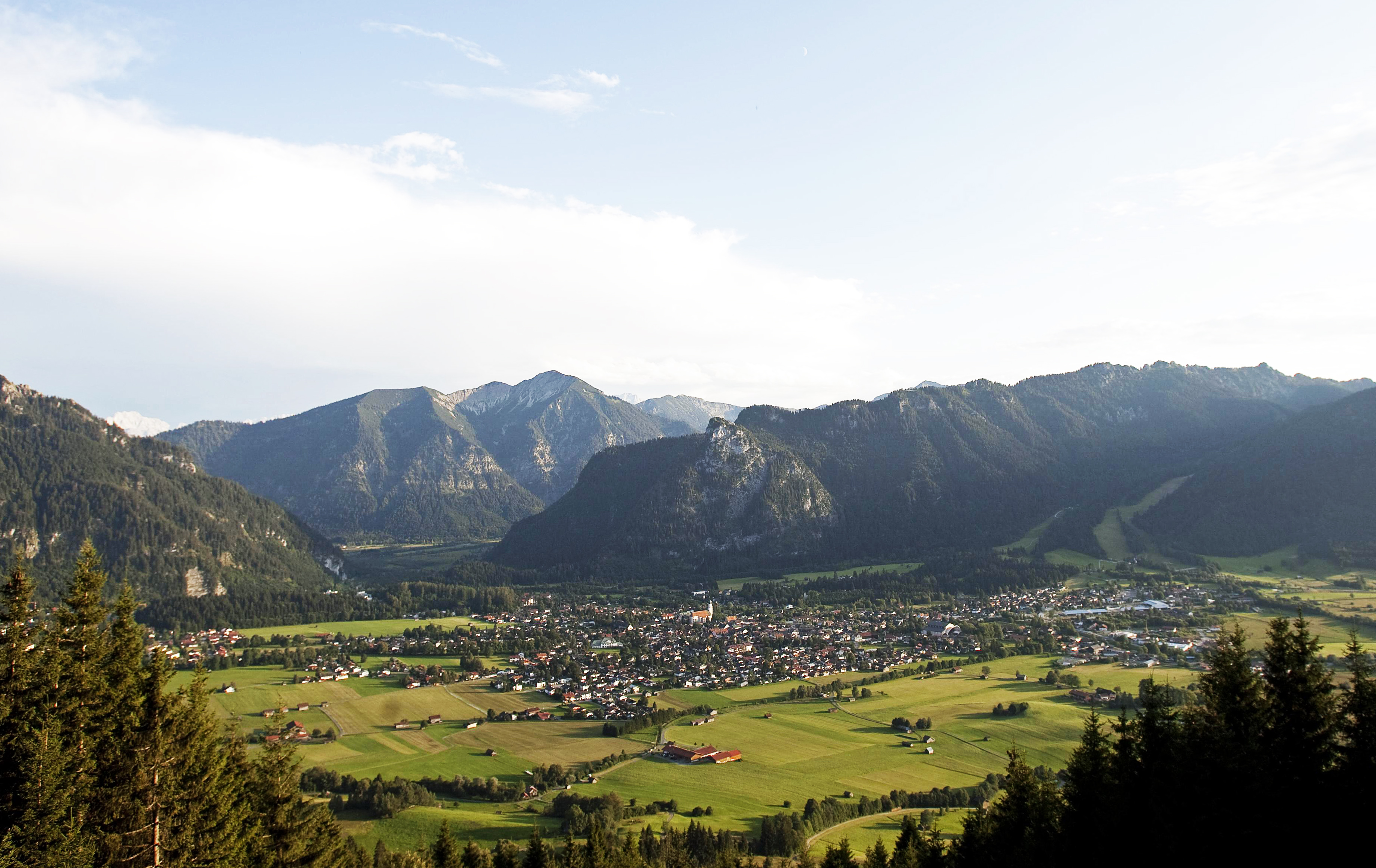
Oberammergau, GermanyFlorian Wagner / Oberammergau Passion Play
Oberammergau, Germany

To say the plays are important to the village’s identity—and economy—is an understatement, said Jake Krengel, a local tour operator based in Garmisch-Partenkirchen, 30 minutes south of Oberammergau.

“In Germany, traditions aren’t just something in the past, they live on today and are foundational to local, rural communities like this,” said Krengel. “The zeal they have for the production shows in Oberammergau the regard they have for this 400-year-old tradition.”

Krengel shared how preliminaries for the play begin over a year in advance, with “Die Pest”—a play about the original promise to act out Jesus’ Passion—taking place the summer before the big Passion Play. Preparations continue around-the-calendar year, with men of the village growing their beards out from Ash Wednesday in order to show off authentic whiskers for the premiere in May.

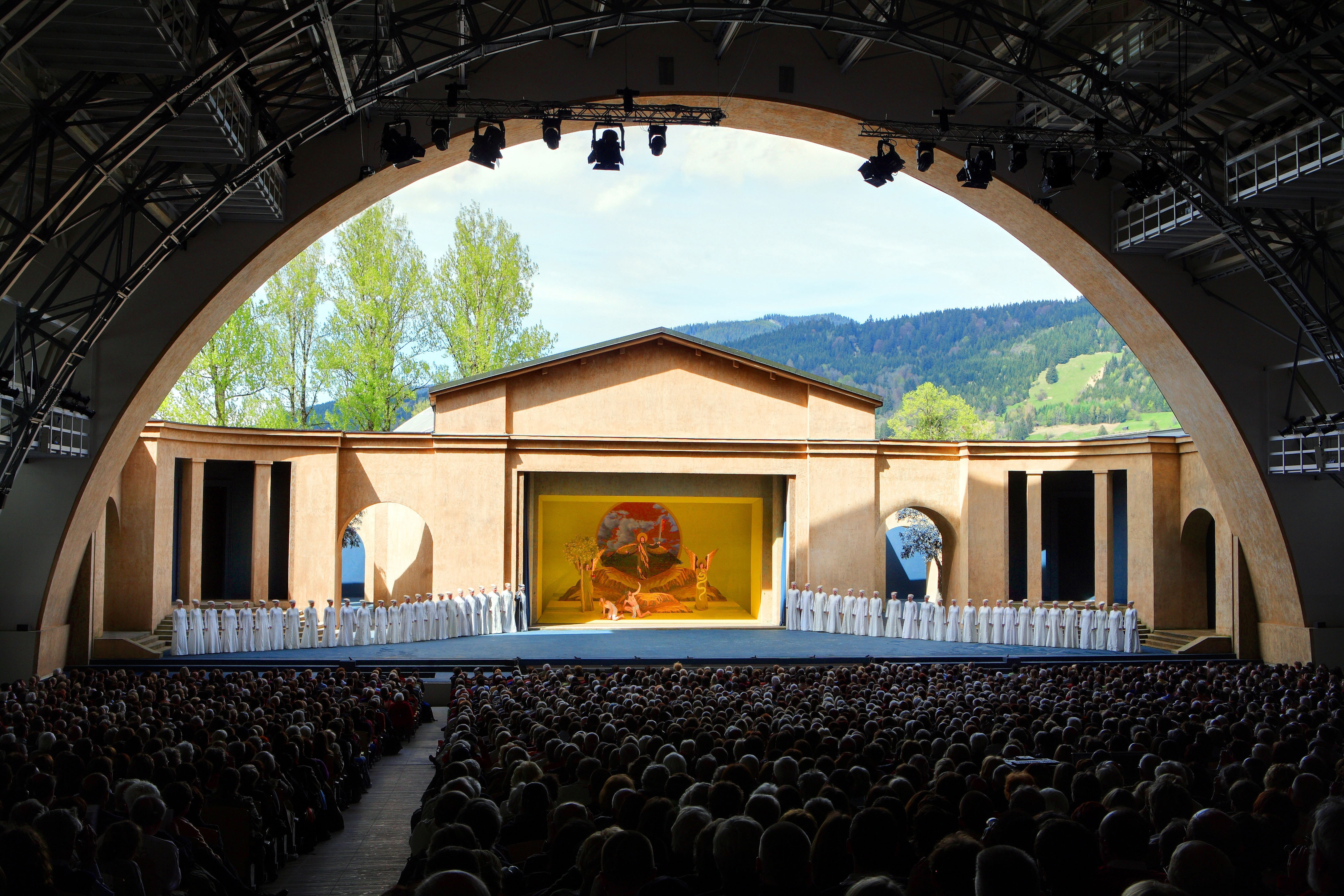
Then, for almost five months, five days a week, performances are held in an open-air, 4,700-capacity theater. Performances are five hours long, with a three-hour intermission for dinner in between two acts. Ticket holders are not only expected to enjoy the passion of the play itself, but the hospitality of the local community and its hotels, shops, and restaurants.

A scene from the 2010 Passion Play in Oberammergau, Germany.Oberammergau Passion Play
A scene from the 2010 Passion Play in Oberammergau, Germany.

Krengel, who co-owns a travel company called Bavaria and Beyond, was offering three different tours to participants from across the globe. He said news of the postponement was “just devastating.”

Currently, the organizers are offering two options for those with tickets or packages. Either they can convert their reservations to 2022 or cancel and receive a full refund.

Krengel is working day-in and day-out with guests, many of whom were planning once-in-a-lifetime trips.

Such was the case for Delisle Doherty, a 69-year-old evangelical from Katy, Texas, who was looking forward to how the Passion Play would help “bring the Bible to life” for him and his wife.

Having gone to Israel in 2017 and seen passion plays performed in North Dakota, Doherty hoped a pilgrimage to Oberammergau would “take our spiritual life to the next level,” he said.

Recalling the faith of those who promised to put on the play in the face of plague, Doherty said, “just being in the areas where there is such history and understanding the story and the things these people went through—to me, it’s priceless.”

Doherty is disappointed the plays are postponed, but he hopes to make it in 2022. Still, Doherty, Friedrich, and other pilgrims recognize that because of the financial ramifications of the global crisis, or due to the age of some pilgrims, a trip in 2022 might not be possible.

In the meantime, Doherty is trying to put things in perspective. “In the end, there’s a lot more important things in life,” he said, “so you’ve got to put your faith into this: it’s not just about the virus, the play; it’s about God’s plans and how he is at work through this.”

“No matter how much of a blessing it would have been to see the Passion Play with other Christians,” Friedrich said, “God wants us to be the hands and feet of Jesus in our neighborhoods right now, so that people are not scared and know they have someone to cling to in the midst of so many uncertainties.”

Doherty concurred. As important as the Passion Play was to him spiritually, he said, “there’s other things that I can be doing right now, to spiritually care for others in the midst of the crisis.”

A scene from the 2010 Passion Play in Oberammergau, Germany.Oberammergau Passion Play
A scene from the 2010 Passion Play in Oberammergau, Germany.

Passion Play organizers are trying to keep things in perspective too. In their statement, they noted that previous plays have been postponed and canceled in the past.

All passion plays were banned in Bavaria in 1770, only to resume again in 1780. Both World Wars also brought upheaval to the tradition. The performance was postponed to 1922 in the wake of the First World War, and the play was canceled in 1940 but resumed in 1950 under the oversight of the American Occupation Authorities. The Passion Play has also faced accusations of anti-Semitism, despite efforts at reform led by Christian Stückl, a native of Oberammergau who is directing the play for the fourth time.

Stückl said that his re-imagined version, told through a pageant of “living pictures,” aimed to portray Jesus as “relevant to today’s world.” Like with many things in Oberammergau these days, whether the COVID-19 pandemic might impact this portrayal of Jesus’ relevance is uncertain.

One thing, however, is beyond doubt, said the organizers. “The Passion Play goes back to a vow from 1633,” they said, “Oberammergauers will continue fulfilling this vow.”

Planning for 2022, they said, is already underway.

Church Life

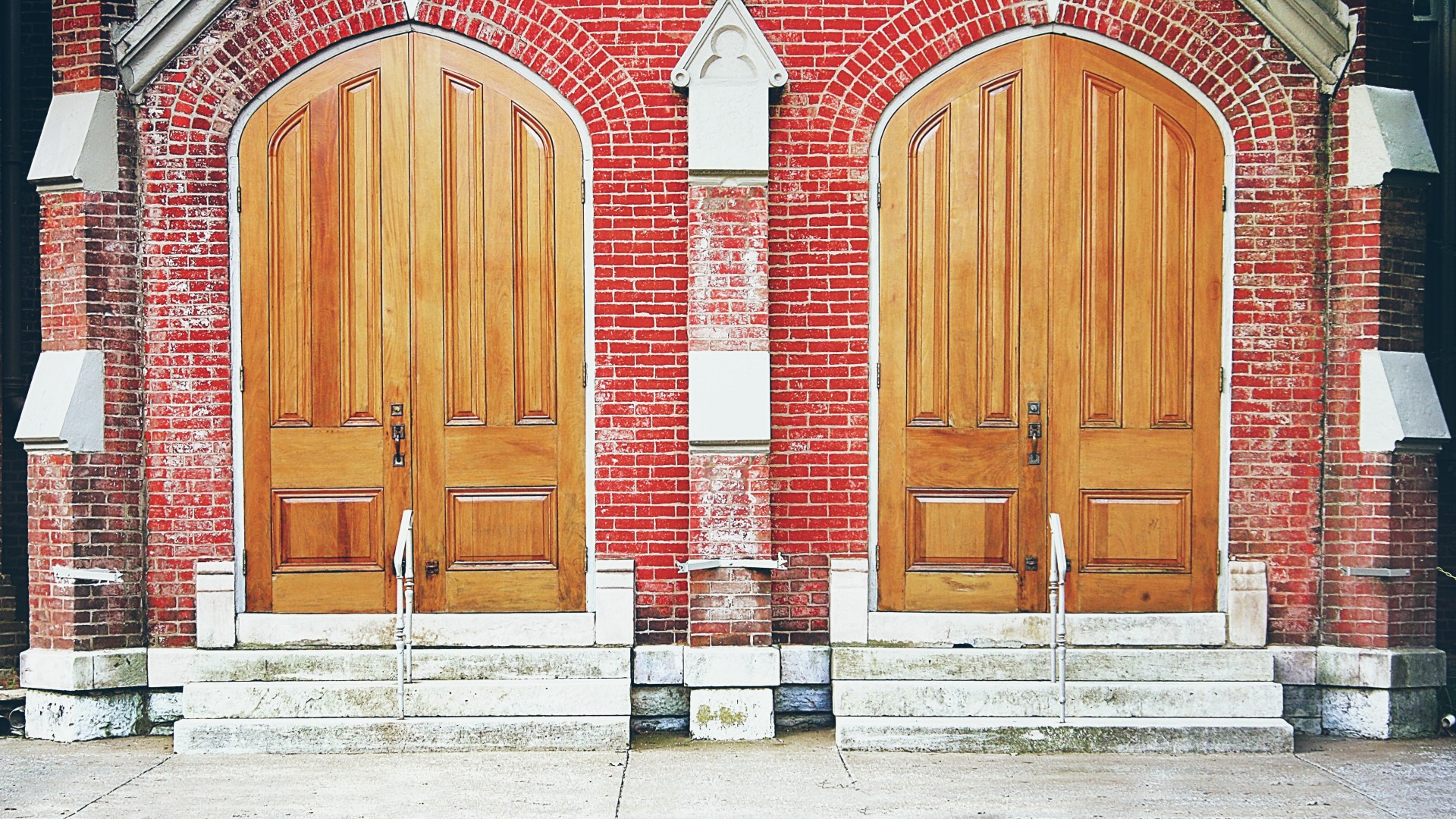
It’s Hard to Close Black Churches amid COVID-19

African American clergy respond to pandemic with unique considerations of culture, history, and faith values.

Christianity Today March 24, 2020
Larry Dixon Jr / Lightstock

When deciding to close the doors of black churches, congregational leaders across the US wrestle with unique considerations. Paul J. James, pastor of CareView Community Church in Lansdowne, Pennsylvania, noted in an interview with The Undefeated how closing is “counterintuitive to most churches, especially the black church… where we’re just glad to get together because of how hard life has been historically for us here in America. Church has been a safe place for us. It’s been a safe harbor. Now here we are faced with the inability to come together.”

Last week, the federal government strongly urged Americans not to gather in groups of more than 10, and restrictions keep coming. We suspect that many churches will close in the near future, but the decision will not been easy.

In St. Louis, the mayor hosted a teleconference with 300 clergy, including many of black churches, to urge them not to hold services. While some chose to stop meetings and modify their ministries, others struggled to make the change.

In Michigan, Gov. Gretchen Whitmer banned gatherings of more than 50 but then exempted churches from penalties. This will give some churches more options, though many are choosing to modify in some way. Triumph Church, which has seven locations in the Detroit area, will continue to gather in person, for now, though it expanded the number of services to reduce congregation size and is asking members to register ahead of time so it can maintain at least six feet between worshippers. It is also providing an online service and a drive-in service.

A lot of things inform these responses to the coronavirus outbreak: culture, histories of discrimination, and marginalization, as well as faith-based values. People experience events like COVID-19 not only as individuals but also in communities and in the social locations we inhabit. As social scientists—Deidra as a black woman doing research on HPV and Elaine as a white woman who studies how religious organizations respond to science—we offer some observations based on our research for the past 10 years at the Religion and Public Life Program at Rice University. We have been gathering upwards of 150 religious and civic leaders regularly to talk about how we can use social science research on religion to build common ground for the common good.

Among the congregations we have checked in with during the past two weeks, it seems to us that in our city of Houston, Texas, black churches, in particular, have continued to gather in person. In our city, Windsor Village United Methodist Church, which has about 16,000 members, and Good Hope Missionary Baptist Church, which has more than 2,500, both initially responded with statements informing members that while they would be exercising precautions, they would still be holding corporate worship services. They have since modified their approaches: Windsor Village transitioned to all virtual services last Sunday; Good Hope met for corporate worship while requiring adjusted practices, such as liberal hand washing and greeting by waving instead of hand shaking.

In African American communities where “Go Down, Moses” is commonly sung, a unique history of knowing God as protector and deliverer means faith, not fear, in the midst of this pandemic.

But pastors are now being forced to exercise a different kind of faith—trusting God as provider in the midst of financial and other kinds of threats, as they are having to make the difficult decision of closing church doors in order to protect the flock within communities that deeply prioritize collective strength and uplift.

Social scientist of religion Cleve V. Tinsley IV says that “There are multiple reasons these large mega-churches may keep their doors open, reasons that relate to a complex web of fear of paying large mortgages and staff salaries, smaller black churches collapsing because of lack of institutional and financial support; they also may not have the kind of larger structural resources to maintain their buildings that some mainline churches have when their doors close and giving inevitably drops off.

“There also may be differences between older and younger generations of black Americans. Those who have been through Jim Crow may go to church no matter what. We need to be considering the structural, economic, and generational divides that shape responses to COVID-19,” said Tinsley.

Public health scholars also offer the Health Belief Model to explain why some might continue to meet despite public health warnings. The model suggests that people engage in health-promoting behaviors, such as social distancing, when perceived threat of a disease is high (meaning preventive action is the product of one’s perceived susceptibility of contracting a disease as well as their beliefs about the severity of it). For some black Americans—and many other Americans—myths about immunity to COVID-19 coupled with WHO reports that 80 percent of the cases are “mild” might factor into the equation.

Another reason may be that some black Christians have more pressing problems. Poverty and race are deeply connected in cities like Houston. For example, black families are twice as likely as white and Asian families to be living in poverty.

When I (Elaine) recently surveyed congregations about how they are responding to new scientific technologies, one pastor of a predominantly black church in an impoverished metropolitan area told me with a laugh, “I think for most people within my congregation they are just dealing with the routine of living. If I started talking to them about science they might say, ‘Pastor, what the hell is wrong with you?’”

In some ways, then, intense fear of the virus may be a preserve of the privileged. Those who barely have enough food and are living paycheck to paycheck may not have capacity to worry about virus spread. Those who are the least paid may also be the most likely to have to go to work when sick, not to be given extensive sick time, or to suffer in other ways.

According to sociologist Jason Shelton, black churches have filled an important social role for black Americans who have been kept out of other social institutions, which may lead to mistrust in those institutions. For example, according to a new Pew Research study, nearly 80 percent of black Protestants are not confident that President Donald Trump is doing a good job to address the outbreak.

Further, we do not see many scientists and physicians of color talking about COVID-19 in the media. We have Jerome Adams, the US surgeon general and a member of the White House Coronavirus Task Force, but we need many more public black voices to amplify the voices of the black scientists and epidemiologists that we do have. And long term, we simply need more black Americans in science and technology professions. Black Americans, who comprise 12 to 14 percent of the US population, make up just over 1 percent of all those who have careers in science, medicine, or technology. One black pastor said to Elaine during a recent research interview that for many African Americans, science seems like “a no-trespassing zone,” where they feel marginalized because of both their race and their faith.

What can we do? Churches can play a role in alleviating this public health crisis by partnering with health experts to inform people of actions they can take to reduce risk. Practicing extensive hand washing, avoiding social gatherings, and staying home if we or others in our households are sick is the best way to love our neighbors. In this way, we can gracefully push back on the notion that science is at war with Christianity, a myth we’ve uncovered in our work interviewing scientists and congregants. To overcome COVID-19, we will need the best science has to offer made accessible and relevant to everyone.

In the words of theologian and writer Candice Marie Benbow, “as a Sunday kind of people, we bear witness to our faith and resilience every day. And, on the day we consider most holy, we have an incredible opportunity to reimagine the ways we honor that truth.”

Back in Pennsylvania, James emphasized the black church’s unique history of creativity in meeting—be it during slavery to strategizing during the civil rights era to combatting racism today. When “church” already feels defined, he feels that the black church—and all churches—can find a fuller expression of church as it started in the first-century. Further, he told The Undefeated, “We say, ‘I will go to church,’ where the first-century person would not have had an idea of a concept of going to a place for church. Church was wherever the relationships were—where the people were. The coronavirus may be a gift [to help us get back to] the most authentic expression of church.”

Elaine Howard Ecklund is Herbert S. Autrey Chair in Social Sciences and Director of the Religion and Public Life Program at Rice University. She is, most recently, author of Why Science and Faith Need Each Other: Eight Shared Values that Move Us Beyond Fear.

Deidra Carroll Coleman is a DrPH candidate at the University of Texas Health Science Center at Houston studying human papillomavirus vaccine initiation for black and Hispanic youth. She is also a research project manager with the Religion and Public Life Program at Rice University.

Church Life

To Cancel or Not to Cancel: That Is the Question

A statement from the leaders of the National Association of Evangelicals and Christianity Today.

Christianity Today March 23, 2020
Sunny Brook / Lightstock

A Critical Question

To cancel or not to cancel? That is the Shakespearean question confronting churches today. It is not a question of mere expediency. The gathered worship service is central to the church’s identity, and therefore, cancellation seems to trample on more than tradition. It can feel like a threat to the church’s existence.

Government officials, medical experts, and civic leaders have all asked citizens to mitigate the spread of the coronavirus by practicing physical distancing. According to leading experts, churches are one of the top places of community spread. Why? Christians shake hands, embrace one another, and kiss cheeks. Some are liturgically directed to drink from a common cup; others pass the peace with a warm touch. Our bodies do naturally what our souls do supernaturally. We connect. And we do so intergenerationally.

What are churches to do?

Our mandate as Christians to obey governing authorities (Rom. 13:1–7; 1 Pet. 2:13–17) is a good reason for churches to cancel worship services. But there are other Biblical principles that help us embrace this difficult decision.

Canceling in-person worship services is not the same as canceling worship. Christians should never stop worshiping, because God is worthy of all our praise. Those in the persecuted church have long worshiped God without buildings, because they know that church is not primarily a place but a people. And technology now gives us unprecedented options. This does not mean, of course, that place is unimportant. God himself authorized the building of a temple that would serve as a place where his name would dwell. Even with that decree, however, at the dedication of the temple, Solomon humbly acknowledged that God cannot be consigned to a place (1 Kings 8:27).

The Book of Hebrews warns we should “not forsak[e] our assembling together, as is the habit of some” (Heb. 10:25, NASB). Does closing church doors lead to direct disobedience of God’s command? The habitual practice of “missing church” may reflect a disregard of faith or a dismissive view of corporate responsibilities. Such is not the case for churches that are suspending gathered worship services in a pandemic. This decision comes out of sacrificial love, not from habitual or casual disregard for worship. The amount of angst displayed proves this point. Nor does it arise from a dismissive view of corporate responsibilities. The very reason for canceling is predicated upon a deep sense of responsibility for others. The coronavirus has reminded us that we are so interconnected that our very lives are impacted by proximity.

Sabbath and Service

In the Gospel of Mark, Jesus challenged the contemporary understanding of the Sabbath. When his disciples had picked grain for food on the Sabbath, Jesus responded to the Pharisees’ criticism by saying, “The Sabbath was made for man, not man for the Sabbath. So, the Son of Man is Lord even of the Sabbath” (Mark 2:27–28). Jesus later applied this statement about the Sabbath to a situation of service.

Another time Jesus went into the synagogue, and a man with a shriveled hand was there. Some of them were looking for a reason to accuse Jesus, so they watched him closely to see if he would heal him on the Sabbath. Jesus said to the man with the shriveled hand, “Stand up in front of everyone.” Then Jesus asked them, “Which is lawful on the Sabbath: to do good or to do evil, to save life or to kill?” But they remained silent. He looked around at them in anger and, deeply distressed at their stubborn hearts, said to the man, “Stretch out your hand.” He stretched it out, and his hand was completely restored. (Mark 3:1–5)

Jesus reminded the worshipers that a critical dimension of Sabbath involved care for the needy and vulnerable in society. He healed on the Sabbath, because healing is an appropriate thing to do on the Sabbath.

Sabbath observance was never just about what worshipers gained personally, but also what they gave communally. Sabbath encompassed the well-being of others. In Deuteronomy 5:12–15, the Israelites were instructed to observe the Sabbath by not working and also not allowing others to work. In the ancient world, it was astounding to be commanded to regularly release your household, servants, animals, and even the immigrant workers and refugees from work. Sabbath answered on a weekly basis the age-old question, “Am I my brother’s keeper?” Yes! We are called to ensure the flourishing of those within our sphere of influence.

With fresh power and unique authority, the Lord of the Sabbath applied the prophetic connection between worship and service. We hear echoes of Isaiah’s declaration of true fasting in acts of justice for the hungry and poor (58:6–7), of Micah’s concern for true sacrifice in expressing mercy (6:6–8), and of Amos’ lyrical entreaty for festivals of worship to be coupled with rivers of righteousness (5:21–24).

The teachings on Sabbath as an occasion of healing and service as an aspect of worship provide guidance for us on the question of whether or not to make religious services remote. It is lawful to do good and not to do harm, to save life and not to kill. Churches for thousands of years all around the world have had to find creative ways to worship. By physical distancing, the church practices preventative healing to mitigate the spread of a deadly virus. This would seem to be not only lawful but loving. We cancel physical gatherings not because we fear a virus but because we love the vulnerable and care for the world God loves. We remember that healing—both spiritual and physical—are aspects of worship.

Love of God and Love of Neighbor

Some of our brothers and sisters have argued that shuttering in-person services elevates the love of health over the love of God. We do not share this view. Of course, as Christians we believe there are worse fates than the loss of physical health or even this earthly life. We too admire the example of Christians throughout history who have risked their lives out of devotion to the gospel of Jesus Christ. However, we are being asked temporarily to convene remotely, not to deny our faith or to cease worshiping God. It is one thing to risk your own life in order to worship together in person; it is quite another to risk the lives of countless others, when so many churches are finding creative and compelling ways to carry on in worship and community from a distance. By offering their remote services and proclaiming the hope of the gospel in troubled times, many churches are reaching audiences they have never reached before.

For those who feel called by their faith to demonstrate the love of God in the midst of the pandemic in ways that are self-sacrificial, we encourage you to do so in ways that do not endanger others. Offer to watch a neighbor’s children so she can continue to work. Distribute food to the poor and the vulnerable. Arrange remote “visits” with the elderly and the isolated. Give sacrificially to your church and to other ministries engaged in the fight. We need not fall short in either our love of God or in our love of neighbor; the church can be the church outside the walls of the sanctuary.

Grace

Even if our observance of worship is less than ideal, even if there are honest mistakes or misjudgments made in the cancellation of services, God sees the heart of faith. During the time of King Hezekiah, the people of God sought to celebrate Passover after years of neglect. But because they could not get their act together, they observed the Passover in the wrong month (2 Chron. 30:15). They compounded bad timing with bad practices: “they ate the Passover, contrary to what was written.” (v. 18). Yet, even though the people were “not clean according to the rules of the sanctuary” (v. 19), the Lord accepted their worship because it was done in good faith, albeit not in good practice.

Will the Lord show any less grace to us than he showed to his people in Hezekiah’s day? In our moment of crisis, we suspect the Lord will see the deep faith and sincere intentions of his people, and will be pleased with worship that may not follow liturgical protocols but nonetheless seeks to honor him. We will not be passing the peace with hugs, but rather with texts and phone calls. Are these modes inferior? Yes. Will they be acceptable to the Lord? We also believe, yes.

Conclusion: Next Steps

As the nation closes down non-essential businesses, the church must rise up to its essential work of prayer. Nobody is exempted from this work: “And pray in the Spirit on all occasions with all kinds of prayers and requests. With this in mind, be alert and always keep on praying for all the Lord’s people” (Eph. 6:18). Physical distancing in household worship or online services still reflects our profound spiritual solidarity.

We can pray for Spirit-filled creativity to worship God, serve our communities, and love our neighbors. As our faithful brothers and sisters have done throughout history, we should be prepared to accept some personal risk as we look for innovative ways to serve that minimize danger to the broader community.

Let us join together in this prayer of Clement of Rome: We ask you, Master, be our helper and defender. Rescue those of our number in distress; raise up the fallen; assist the needy; heal the sick; turn back those of your people who stray; feed the hungry; release our captives; revive the weak; encourage those who lose heart. Let all the nations realize that you are the only God, that Jesus Christ is your Son, and that we are your people and the sheep of your pasture. Amen.

Dr. Walter Kim serves as pastor at Trinity Presbyterian Church in Charlottesville. He is the president of the National Association of Evangelicals.

Dr. Timothy Dalrymple is the president and CEO of Christianity Today.

Ideas

Out of the Depths

President & CEO

We live between the miracle of our redemption and the miracle of our deliverance.

Christianity Today March 23, 2020
Illustration by Mallory Rentsch / Source Images: saemilee / Getty Images

For today’s musical pairing, something different: this acoustic version of “Stay and Wait” by Hillsong UNITED. See the video below.

“Moses answered the people, ‘Do not be afraid. Stand firm and you will see the deliverance the Lord will bring you today. The Egyptians you see today you will never see again. The Lord will fight for you; you need only to be still.’”Exodus 14:13–14

“Then Moses stretched out his hand over the sea, and all that night the Lord drove the sea back with a strong east wind and turned it into dry land. The waters were divided, and the Israelites went through the sea on dry ground, with a wall of water on their right and on their left.”Exodus 14:21–22

Day 4. 350,536 confirmed cases, 15,328 deaths globally.

In the Book of Exodus, a series of increasingly catastrophic plagues loosened Pharaoh’s grip just long enough for the Israelites to make their way into the wilderness. Pharaoh reversed course and pursued them. The Israelites faced a vastly superior army on one side and the Red Sea on the other. They were hemmed in. “The Lord will fight for you,” Moses tells them. “You need only to be still.”

Then followed one of the most renowned and spectacular of all the miracles in the Bible. God “divided” the waters and the Israelites passed through, “with a wall of water on their right and on their left.”

It must have been an awe-inspiring experience to walk that hallway through the sea. It must also have been terrifying. At any moment, those towering walls could have crashed in upon them. Instead, after the Israelites ascended onto the far shore, the hallway collapsed upon the army of Pharaoh and freed the people of God.

The number of confirmed cases of and deaths from the pandemic in the United States soared over the weekend. We know the numbers will continue their rapid climb as symptoms begin to manifest and testing catches up with reality.

We feel, O Lord, like those Israelites passing through the sea. We are exhausted and bewildered. A frightening enemy pursues us. Danger looms at every side. The only way is forward. We know there is hope on the far shore, but we have not yet begun our ascent.

Our lives are in suspense. We wait in the in between. We walk in the depth of the depths. We are reminded of the psalmist and his de profundis cry. “Out of the depths I cry to you, Lord. … let your ears be attentive to my cry for mercy” (Ps. 130:1–2). The Bible calls it a song of ascent, and yet it comes in the waiting before the ascent. “I wait for the Lord, my whole being waits, and in his word I put my hope. I wait for the Lord more than the watchmen wait for the morning, more than the watchmen wait for the morning” (vv. 5–6).

We live between the miracle of our redemption and the miracle of our deliverance. We wait between one miracle and another. We know it’s only your grace that holds the walls of the sea. We look forward to our ascent. Someday you will meet us upon the mountain, and we will look back and see how mightily and beautifully and perfectly you delivered us.

But here, today, we cry out to you. Hear our prayers in the depths. “Israel, put your hope in the Lord, for with the Lord is unfailing love and with him is full redemption” (Ps. 130:7).

Sign up for CT Direct and receive these daily meditations—written specifically for those struggling through the coronavirus pandemic—delivered to your inbox daily.

Ideas

Joy Is Wiser Than Sorrow

President & CEO

Joy is all but extinguished around us. It cannot be extinguished within us.

Christianity Today March 23, 2020
Image: Illustration by Mallory Rentsch / Source Images: saemilee / Getty Images

For today’s musical pairing, listen to this selection from Max Richter’s recomposition of Vivaldi’s Four Seasons , with Mari Samuelsen on violin. You’ll forgive the quality of the recording when you see the quality of the performance. See video below. Listen to Richter’s original album here.

“If God is for us, who can be against us? He who did not spare his own Son, but gave him up for us all—how will he not also, along with him, graciously give us all things?”Romans 8:31–32

“For to me, to live is Christ and to die is gain.”Philippians 1:21

Day 5. 398,107 confirmed cases, 17,454 deaths globally.

Is it premature to talk about joy? Countless people are suffering. Fear haunts our houses. Our cities are desolate, our schools shuttered, our hospitals overwhelmed. Fathers and mothers wonder how they will feed their children.

We mourn with those who mourn and weep with those who weep. These are devastating times. It is not wrong to grieve, or lament, or cry out.

And yet joy is like a gem, most valuable when it is most rare. When the world can find no reason for joy, that Christians do find reason is a powerful testimony.

Christian joy is more profound than simple happiness. There is nothing shallow or glib or naive about it. Christian joy, in the face of suffering, is a hard, rugged, and defiant thing.

The apostle Paul was acquainted with suffering. He was persecuted and beaten and shipwrecked. Yet he knew that this life is filled with the opportunity to discover and to follow Jesus Christ and in the next life we will be with him. What greater cause for joy could there be? Paul knows that the same God who gave the greatest gift will not fail to give us lesser gifts. So even when we are embattled, even when we are beset with suffering, we have cause for an undefeated joy. Our sorrow is rooted in our circumstances, but circumstances are fleeting. Our joy is rooted in the love of God, and the love of God lasts forever.

I once thought wisdom wore a sorrowful face. The Teacher in Ecclesiastes expresses the ordinary, worldly view when he quotes, “For with much wisdom comes much sorrow; the more knowledge, the more grief” (1:18).

Yet Christ turns worldly wisdom on its head. In Christ there is a deeper wisdom. The righteousness of God has overcome the sin of the world. Life has defeated death. There will come a day when hatred and strife will cease, when the tombs will open, and when all that remains will be life and love and joy.

So we do not belittle the sorrow of the pandemic when we declare the joy of God is greater. We show our neighbors we share their grief. We also show them we know a deeper joy that will endure and will prevail.

In the final analysis, joy is wiser than sorrow. In joy we bear gentle testimony to the secret that sin, suffering, and death do not have the last word. Joy knows we will outlive the mountains. Joy knows that death will die and life will live. Joy knows that suffering is for now but the love of God is for eternity.

Joy is all but extinguished around us. It cannot be extinguished within us.

Sign up for CT Direct and receive these daily meditations—written specifically for those struggling through the coronavirus pandemic—delivered to your inbox daily.

Staying at Home and Fighting Boredom: A Survival Guide

Here’s how CT writers have found joy in gardening, knitting, organizing, and adult coloring books.

Christianity Today March 23, 2020
Westend61 / Getty Images

For the majority of us, our time in the foreseeable future will be spent at home or on a walk. For some of us, it will be a struggle to fill all this time, especially in an intentional way. “No doubt, technology will be a lifeline for both work and education. But we can choose the place of our screens and their boundaries. We must,” recently wrote Jedd Medefind for CT. “Otherwise, screen time will fill every crack and crevice of life, like jungle vines overtaking an ancient temple. If that happens, we’ll look back on this time as having been far less than it could have been.”

We hope these articles by writers ruminating on some of their favorite domestic hobbies and pastimes can offer some ideas and inspiration for those sheltering in place.

News

Iran Releases a Third of Christian Prisoners Due to Coronavirus Concerns

As COVID-19 halts Nowruz, satellite network encourages Iranian believers to know and assert their rights.

Azadi Tower in Tehran, Iran

Azadi Tower in Tehran, Iran

Christianity Today March 23, 2020
Alireza Heydarifard / Unsplash

Forced by the new coronavirus, Iran took the tiniest of steps to placate global advocacy for religious freedom.

A temporary release of about 85,000 prisoners to curb the spread of COVID-19 disease included Ramiel Bet Tamraz, an Assyrian Christian serving a four-month sentence for holding illegal church meetings.

He was one of seven Christians set free, some on bail.

The release—which also pardoned 10,000 prisoners in advance of this past weekend’s celebration of Nowruz, the Persian new year—did not include four Christians recently granted a retrial.

Ramiel’s father Victor was the pastor of the Assyrian Pentecostal Church of Tehran until 2009, when it was shut down by the government for holding services in Farsi, the Iranian national language. Arrested in 2014 for conducting services at home, in 2017 he was given a 10-year jail sentence. Released earlier on bail with his wife Shamiram, they are awaiting the outcome of court appeals.

Ramiel’s sister Dabrina has advocated for her family all the way to the White House.

“Raising awareness always helps,” she told CT, prior to her brother’s release. “When the US and international bodies speak out and address persecuted Christians, they have an enormous amount of influence.”

According to the latest annual report of violations against Christians in Iran, 17 believers ended 2019 in prison on account of their faith. Culled from public statistics describing sentences from 4 months to 10 years, the report—released in January and jointly produced by Open Doors, Article 18, Middle East Concern, and Christian Solidarity Worldwide—warned the true number could be much higher.

Open Doors, which ranks Iran No. 9 among the world’s worst persecutors of Christians, reports at least 169 Christians were arrested from November 2018 to October 2019.

Compared to those who decline advocacy, Dabrina said that international attention can result in better treatment in prison and the dropping of charges. She believes this is one reason her parents’ court sessions keep getting delayed.

“Putting them in prison will cost them a lot,” she said.

“They will have to give answers for why they put in prison a 65-year-old licensed pastor, from a Christian background.”

Iran’s constitution establishes Shiite Islam as the official religion. But it also guarantees freedom of religion for official religious minorities: Armenian and Assyrian Christians, Zoroastrians, and Jews.

Christians number 117,700, according to government statistics, out of a population of 83 million.

Estimates for converts to Christianity, however, range from 300,000 to 1 million, according to the US Commission on International Religious Freedom. Its latest report states that the law prohibits Muslims from changing or renouncing their religious beliefs, and that apostasy is a crime punishable by death—as is proselytization.

But even for converts, advocacy helps. Dabrina highlighted the example of Mary (born Fatemeh) Mohammedi, a 19-year-old would-be university student, denied her education by the regime. She was arrested in January, protesting the Iranian government for covering up the accidental downing of a civilian aircraft in the response to US killing of Qassem Soleimani.

Released prior to the coronavirus measure, her court hearing may have been pushed back because of the outbreak.

But prior to this, reports say Mohammedi was beaten and forced to sit in the cold in front of the toilets. Dabrina said that female prisoners especially need advocacy, as they are more likely to face ill treatment.

Practiced by only 21 percent of countries in the Middle East and North Africa region, such imprisonment of women for religious reasons is rare in the world, according to Open Doors’s 2020 Gender-Specific Religious Persecution Report.

But the advocacy group’s latest Iran dossier states the number has risen, once the government began arresting ordinary house church members, rather than just leaders.

“The behavior of the security forces was very aggressive and violent,” one woman told Open Doors, describing a raid. “They treated us, especially women, as if they were treating a bunch of prostitutes.”

Mohammedi has been a particular bother to the government, as a rare example of an advocate for Christians within Iran. Following an “invitation” to Christians by the intelligence minister to explain why they converted from Islam, she wrote him an open letter.

Mohammedi accused the minister of violating the constitution, which states “no one may be molested or taken to task simply for holding a certain belief.”

But she is not the only one protesting.

From within prison, Nasser Navard Gol-Tapeh wrote an open letter questioning the government narrative of conversion being against national security.

“Would it be even possible for a committed Christian,” he wrote, noting the biblical injunction to submit to government, “who was born and raised in Iran and whose forefathers lived in this land for thousands of years, to act against the national security of his own country?”

Serving a 10-year sentence for establishing house churches, Gol-Tapeh’s length of term made him ineligible for the coronavirus release.

Mansour Borji, director of Article 18, hopes to multiply their examples. Also a board member of SAT-7 PARS, Borji has appeared on the Christian satellite network to help Iranians understand their universal right to freedom of religion and belief.

“Iranians here have not been raised with an understanding of what their rights are, only their duties,” he said. “What Iran is doing to deny their citizens these rights is illegal.”

Borji recognized the freedom-limiting stipulations in the Iranian civil code. But he pushed back on the apostasy charge, noting that Shiite jurisprudence is not uniform about the death penalty.

Yet he stated clearly that the Iranian government is a signatory to the Universal Declaration of Human Rights and the International Covenant on Civil and Political Rights. These United Nations documents technically govern all civil law, he said, a message he emphasizes on SAT-7.

“Now, when accused Christian converts go before a prosecutor, they can speak without feeling like a criminal,” Borji said. “It gives them mental stamina and the moral high ground.

“They can say, ‘I know it is my legal right to choose.’”

SAT-7 PARS began broadcasting in 2006, and now reaches 2 million Farsi speakers in Iran and neighboring countries. Half of these are under 25 years old.

In addition to traditional religious broadcasting, SAT-7 PARS also tackles sensitive social issues. These have included Female Genital Mutilation (rare among Iran’s Shiite Muslim majority, more prevalent among its Sunni minority) and domestic abuse (affecting up to 2 in 3 Iranian women).

But following discussions with the UN and European Union, in 2018 SAT-7 partnered with the Nordic Ecumenical Network on International Freedom of Religion and Belief to promote the concept across all its stations—including Arabic and Turkish.

The first in this series of eight educational videos has been broadcast in Farsi. The rest are currently being translated.

Yet from Tehran, Sebouh Sarkissian, archbishop of the Armenian Orthodox Church, counsels outsiders to respect the freedom of religion already present.

“Christians are allowed to celebrate and practice their religion,” he said. “We live in a period of mutual respect, accepting each other as we are.

“But if freedom means that we can evangelize Iranians, this is forbidden.”

No Christian has ever been arrested for practicing his faith, Sarkissian said, only for trying to convert Muslims.

His church numbers between 75,000 and 85,000 ethnic Armenian citizens of Iran, who worship freely—in their own language—in about 25 churches. They host Bible studies and run Sunday schools.

Tehran also boasts 16 Armenian schools, where in addition to the standard curriculum they teach Christianity alongside Armenian history and language.

Two of five parliament seats (out of 290) reserved for religious minorities are assigned to Armenian Christians.

The Iranian government invites church leaders to official events, honors Christmas, and allows them to light the streets around the church for Easter, he said.

Sarkissian is a member of the SAT-7 international board, and appreciates how the network brings the gospel into Farsi-speaking Christian homes. Many Armenians do not speak their original language well.

But consistent with their language of liturgy, the Orthodox tell religious inquirers that theirs is an Armenian church.

“People in general are free to choose their own religion,” Sarkissian said. “But here, the religion of the state is Islam and all Muslims must observe it.

“Conversion is not encouraged; they should remain in their faith.”

Early in her faith journey, Mohammedi cried when a priest in one of Iran’s traditional churches turned her away.

She attributed this to government oppression.

“They put people under pressure,” she told Article 18. “And so if people want to know about Christianity, they say nothing, because it’s too dangerous.”

This is not limited to the Orthodox, however. Reza Jafari began exploring Christianity in a Farsi service of an Assyrian Evangelical Church in Tehran, which under a wave of government pressure asked them to stop attending.

Now a SAT-7 PARS presenter based in Cyprus, his weekly 90-minute show Signal features testimonies of others who have accepted Christ.

Jafari intends it to be an encouragement, especially to scattered believers.

Sharing the convictions of Borji and Mohammedi without the specific focus on religious freedom, he also hopes to normalize the concept of following Jesus.

“Sometimes fanatic Muslims think we are secret agents,” Jafari said.

“We want Iranians to see we are just like them, and not a different species.”

Correction: An earlier version of this article misstated the number of ethnic Armenian citizens of Iran. There are 75,000–85,000, not 750,000–850,000.

News

Canceled Mission Trips Expected to Have Long-Term Fallout

Without the typical influx of volunteers, ministries revise their plans and experts fear a COVID-19 kink in the missionary pipeline.

Christianity Today March 22, 2020
David Ramos / Getty Images

The sudden halt in mission trips has left some volunteers stranded, ministries scrambling for assistance, and missions organizations concerned about the inevitable long-term fallout of coronavirus cancellations.

Each summer, Cru sends up to 1,500 college students on international mission trips and about the same number on domestic ministry assignments. But this year, the COVID-19 global pandemic is changing everything.

Out of more than 100 Cru international mission trips once scheduled for this summer, “not one of them is going to take place,” said Daniel Higgins, associate executive director of Cru Global. Cru has announced it will suspend all international ministry travel through July 31.

In lieu of physical trips, the college-focused evangelism and discipleship organization is working to organize “virtual mission trips,” including virtual prayer walks using Google Maps and sharing the gospel with students at international universities through social media. Though optimistic about the push for online evangelism (one Cru website has recorded up to 2,300 decisions for Christ per day), Higgins acknowledges that volunteers on the ground are “really critical” for Cru’s work.

The story is similar at other mission organizations. Approximately 20 percent of all US-based international mission work each year is done by short-term volunteers, according to an analysis by sociologist of religion Robert Wuthnow. That translates to 1.6 million US church members annually going on international mission trips and doing work valued at $1.1 billion (not counting preparation time and travel days).

Yet that activity has ground to a virtual halt, with the US State Department warning Americans to “avoid all international travel” because of the coronavirus and the Centers for Disease Control and Prevention urging caution with domestic travel.

Some Christians who traveled for mission trips over spring break in early March were left stranded and still have not returned home, including dozens in Guatemala, Honduras, and Peru, which is sparring with the US over whether to let Americans fly back.

The pause of both international and domestic mission trips has potential both to disrupt short-term ministry and hamper missions giving and missionary recruitment long-term, missiologists say.

In light of canceled mission trips, ministries are developing creative solutions to mitigate the effects of lost volunteer labor. Meanwhile, mission leaders wonder whether virtual trips and other attempts to help from afar can make up for the absence of short-term missionaries.

Slowdown of short-term volunteers

Hardly any mission organizations “are continuing to run their short-term program,” said Ted Esler, president of Missio Nexus, an organization of 285 mission agencies and some 100 mission-focused churches. The “fallout will be seen in the years and months ahead.”

Taylor Field is among domestic missionaries affected by the slowdown of short-term volunteers. Funded by the North American Mission Board of the Southern Baptist Convention (SBC), he brings in 400 short-term volunteers a year to help at Graffiti Ministries in Lower Manhattan, a church and compassion ministry.

With 8,000 confirmed cases of coronavirus in the city and an order by New York Governor Andrew Cuomo for all nonessential workers in the state to stay home, “teams are beginning to cancel down through the summer,” Field said.

Without its typical slate of volunteers, Graffiti has begun to rely on volunteers within walking distance to help feed the homeless and teach them how to practice social distancing. The usual tutoring programs and worship gatherings have given way to grab-and-go meals as well as demonstrations of proper hand-washing technique and how to cover coughs with your arm. Some volunteer teams are still delivering supplies to Graffiti, including 6,000 meals from Send Relief, the SBC’s channel for compassion ministry.

“At our ministry center, there’s always a plan B,” Field said. If that doesn’t work, “there are 24 more letters in the alphabet. We’ll find a way to do this.”

Across mission organizations broadly, Cru and Graffiti may be exceptions in their reliance on volunteers for day-to-day ministry operations, as the mission landscape continues to debate the place of short-term mission trips (see CT’s 2019 cover story on “gospel tourism”). Critics contended short-term volunteers “are often poorly trained or organized and are essentially a drain on the busy schedules of full-time workers,” Wuthnow wrote.

Disruptions to giving and recruitment

Consequently, most agencies do not use enough out-of-town volunteers for the COVID-19 drop-off to affect ministry operations, Esler said. However, even organizations that don’t directly depend on short-term volunteers acknowledge they play a key role in long-term missions success.

The Dallas-based church planting organization Christar sends only 20–30 volunteers annually to assist nearly 300 workers in over 30 countries. Most volunteer projects are not “traditional short-term trips that are building something or doing a VBS,” said Andrew Broeckelman, Christar’s director of mobilization.

Volunteers tend to focus on “seeing what life as a long-term worker looks like,” he said. As a result, it’s not uncommon for short-term workers to “catch the vision” and become long-term overseas workers.

Participants in upcoming summer trips have begun to cancel, Broeckelman said. While that will have minimal effect on ministry now, “it really hinders the ministry the most with [recruiting] potential long-term people.”

Across mission agencies, short-term trips often influence participants to become career missionaries, Esler said, with “almost 100 percent” of career workers citing short-term missions as a key influence on them.

In addition, short-term volunteers tend to give more money to missions upon their return. According to Wuthnow’s analysis, Christians who participate in volunteer trips report that 5 percent more of their giving is devoted to international ministries than the giving of Christians who have not gone on a mission trip. Overall financial giving to Christian causes is “substantially higher” among mission trip participants.

Those realities could mean fewer missionaries sent in the future and fewer dollars given to support them—thanks to COVID-19.

The immediate effect of coronavirus cancelations may be more significant at large mission organizations. Cru, for example, utilizes approximately 12 percent of the trip fees paid by each short-term volunteer to help fund work around the world. That yields about $430,000 annually, Higgins said. This year, many of those funds may not be available.

SBC and Assemblies of God

The SBC’s International Mission Board (IMB) is America’s largest sender of short-term volunteers, according to records compiled by Missio Nexus. In 2016, it sent 20,000 people on volunteer trips of two weeks or less. Earlier this month, the IMB recommended that churches postpone volunteer trips through at least April 30.

The coronavirus “has meant the cancelation of hundreds of Southern Baptist churches’ planned short-term volunteer mission trips to engage in the missionary task alongside our IMB missionaries and national partners,” said Charles Clark, IMB vice president of mobilization.

Volunteers unable to proceed with their trips should pray for IMB missionaries around the world, he said, many of whom “live in areas with closed borders, restrictive quarantines, and a high incidence of infection by the virus.”

Among the other largest senders of short-term missionaries, according to Missio Nexus, Assemblies of God World Missions sent 10,489 volunteers on trips of two weeks or less in 2016, the Church of the Nazarene sent 8,484, and SCORE International sent 6,500.

Earlier this month Assemblies of God World Missions placed all missionary personal under an indefinite international travel restriction and requested all mission trips be deferred. Its executive director and Northern Asia regional director have both been hospitalized with COVID-19.

Stranded spring break trips

Another issue for some short-term volunteers is not being able to return to the US now that the coronavirus crisis has escalated. One Orlando, Florida, mission team was working in Honduras when the Honduran government closed the country’s borders March 17, Orlando’s Fox 35 reported.

The team’s “goal is to rescue kids living in poverty and bring them into safe, loving shelters,” said team member Stephen Hauck, a Fox 35 anchor. “With the country now on a seven-day lockdown, the volunteers need their own help.”

Several other mission trips serving in Honduras have run into the same issue. Meanwhile, Peru’s travel ban continues to frustrate American groups who were scheduled to return but can no longer fly home.

The US State Department has warned that other countries “may limit traveler mobility, including quarantines and border restrictions … without notice.”

Despite the challenges of COVID-19, many ministries appear hopeful rather than panicked.

“I’m wondering what the Lord is up to, like all of us are,” Higgins said. “I just have this sense that the Lord is going to prepare people” and perhaps bring about “an openness spiritually.”

David Roach is a writer in Nashville, Tennessee.

News
Wire Story

Christians Urge Congress to Incentivize Charitable Giving

As coronavirus spreads, churches, charities, and other non-profits face declining donations and rising demand for help.

Lawmakers and Trump administration officials are in negotiations over the coronavirus stimulus bill, which leaders say they hope to have passed by Monday.

Lawmakers and Trump administration officials are in negotiations over the coronavirus stimulus bill, which leaders say they hope to have passed by Monday.

Christianity Today March 21, 2020
Drew Angerer / Getty Images

As churches and faith-based nonprofits brace for a painful drop in contributions, Christians are lobbying for Congress to incentivize charitable giving in its response to the spread of COVID-19.

Lawmakers spent Saturday negotiating the $1 trillion-plus relief package. The current Coronavirus Aid, Relief, and Economic Security (CARES) Act, proposes offering stimulus checks, relief for small businesses, and some changes to charitable giving. The bill would allow taxpayers to claim a charitable deduction for up to $300 without itemizing.

But some from the faith community are speaking up to say that’s not enough to keep churches and other non-profits afloat as demand for social services spikes.

“This level of stimulus does not scratch the surface for what charities, nonprofits, and houses of worship need during this time of crisis,” wrote the Southern Baptist Convention’s public policy arm, the Ethics and Religious Liberty Commission, which is calling for a two-year universal deduction for charitable giving, with no cap.

The Center for Public Justice (CPJ) in Washington made a similar recommendation, saying the universal deduction should be effective immediately. (Many charities had been pushing for a change in the charitable deduction since before the coronavirus outbreak; because of tax reform enacted in 2018, fewer Americans get to claim their charitable contributions, thereby reducing giving.)

CPJ’s Rachel Anderson and Stanley Carlson-Thies also argued that since faith-based organizations are involved in caring for those put at risk by the pandemic, they should not be exempt from unemployment insurance or reimbursement for mandated leave.

“Religious communities have sprung into action, sustaining social ties in a time of social distance and caring for those most at risk of homelessness, food insecurity, and isolation,” they said. “These same religious communities and faith-based institutions will need support now and as the crisis persists.”

Deseret News’s Boyd Matheson, former chief of staff for US Senator Mike Lee, said in an op-ed published Saturday that Congress needs to support civil society as they take on unprecedented demand and constraints.

He evoked the New Testament, writing, “The best way to help Americans in need and strengthen the economy is really Samaritanly simple. The biblical account says the Good Samaritan first helped a stranger in need. Second, he donated his time by taking the wounded stranger to an organization — the inn. Then, when it was no longer possible for the Samaritan to sustain the first two gates of giving, he deployed the third; he offered a charitable donation. He even promised he would give again, if needed.”

Churches are seeing the fear and financial strain tighten purse strings already, particularly since congregants no longer have the opportunity to give at typical in-person services. The drop in tithing limits their ability to organize outreach in their communities, and in some cases can threaten the future of a congregation.

At Friendship Baptist Church in Baltimore, a mostly African American congregation of about 1,100, Alvin Gwynn Sr. bucked the cancellation trend by holding services last Sunday. But attendance was down by about 50 percent, and Gwynn said the day’s offering netted about $5,000 compared to a normal intake of about $15,000.

“It cuts into our ministry,” he said. “If this keeps up, we can’t fund all our outreach to help other people.”

There was a brighter outcome at the Church of the Resurrection, a large United Methodist Church congregation that operates out of five locations in the Kansas City area.

Cathy Bien, the church’s communications director, said about 25,700 people logged in to join online worship last Sunday after in-person services were canceled. That compared to normal Sunday participation of 14,000 worshippers -– 8,000 in person and 6,000 online.

The huge turnout didn’t translate into a larger than normal offering, although the church is still processing checks that were sent by some of the worshippers, Bien said. She expressed hope that financial support will remain robust as the church stresses the need to bolster food pantries and other community programs in the face of COVID-19.

At Trinity Presbyterian Church in Charlottesville, Virginia, giving was down modestly last weekend as the church cancelled in-person worship and made the service available online.

The pastor, Walter Kim, said some of his roughly 1,000 congregants have grown accustomed to online giving in recent years, but many worshippers still give in person at the services.

“We’ll be asking them to sign up (for online giving) or mail a check,” said Kim. He will be urging congregants to bolster the church’s “mercy fund” for use assisting hard-up members of the community as job losses multiply. (Editor’s note: Kim is also a board member for CT.)

In addition to his pastoral duties, Kim is president of the National Association of Evangelicals, which represents more than 45,000 evangelical churches. The NAE will be co-hosting a two-day digital summit next week featuring videos from church leaders advising other pastors nationwide how to respond creatively and effectively to the virus outbreak.

The co-host is the Humanitarian Disaster Institute at Wheaton College, which already has offered resources to churches in response to COVID-19.

“Some changes are going to be required,” Kim said. “The church is a very creative institution. In the end it will find ways of fulfilling its mission.”

Joe Wright, executive director of the Bivocational and Small Church Leadership Network in Nashville said many pastors in the network have been holding regular in-person services, while monitoring the spread of the virus.

“Once the coronavirus rises to the level where it starts hitting smaller groups, then we’ll see even the smaller groups back away and seek ways to gather, probably electronically,” he said.

When that happens, Wright said, financial giving will depend on the church, especially the age of the congregations.

“Some churches with older congregations do not give electronically so the transition to that will be a little bit harder,” he said.

Ron Klassen, executive director of Rural Home Missionary Association, said it’s too early to say how the rural churches he represents are being impacted.

“My sense is that in the past, people rise up and, if anything, the giving might increase,” he said. “People are going to give. They’ll take care of their church and their community.”

AP Religion Editor Gary Fields contributed.

Apple PodcastsDown ArrowDown ArrowDown Arrowarrow_left_altLeft ArrowLeft ArrowRight ArrowRight ArrowRight Arrowarrow_up_altUp ArrowUp ArrowAvailable at Amazoncaret-downCloseCloseEmailEmailExpandExpandExternalExternalFacebookfacebook-squareGiftGiftGooglegoogleGoogle KeephamburgerInstagraminstagram-squareLinkLinklinkedin-squareListenListenListenChristianity TodayCT Creative Studio Logologo_orgMegaphoneMenuMenupausePinterestPlayPlayPocketPodcastRSSRSSSaveSaveSaveSearchSearchsearchSpotifyStitcherTelegramTable of ContentsTable of Contentstwitter-squareWhatsAppXYouTubeYouTube