Books
Review

Our Lives Aren’t Conducive to Prayer. But a Better Way Is Possible.

John Starke gives us a compelling vision of the praying life—and the practices to turn that vision into a reality.

Ileana Soon

I grew up listening to my dad play the guitar. He was an amateur with the instrument, but what he lacked in training he made up for with his pristine voice, which would soar through the rooms and wash over you like warm water. He made up a lot of his own songs; some were forgettable, but there was one I have never forgotten. The chorus, which was really slow and always hit the top of his register, went like this:

The Possibility of Prayer: Finding Stillness with God in a Restless World

I don’t know how to pray / Don’t know what to say

/ I think I’ve lost my way.

Years later, I still shudder at the raw beauty of his sonorous confession. It was a troubling statement from a man I admired. But the idea that longing to pray is something worth singing about moved me. It still does.

At times I imagine this song being sung as a confession over the modern American church. I don’t think we know how to pray. Which makes the new book from New York City pastor John Starke, The Possibility of Prayer: Finding Stillness with God in a Restless World, all the more urgent. The title alone stokes the heart the same way my father’s song did. I wanted to read it before I could even open it, and it did not disappoint.

Neatly divided and very readable (I finished it, without rushing, in one sitting on a plane), the book is broken into two sections: “The Possibility of Prayer” and “The Practice of Prayer.” Broadly speaking, the first half describes what we should think about prayer, and the second half focuses on what we should do about it.

The Greatest Insanity

Most believers, like me, live with the vague assumption that prayer is a good thing, and attendant with that is the nagging suspicion that we should probably be praying more. So I appreciate how Starke begins with the opposite assumption—the impossibility of prayer. “Somehow,” he writes, “humans have pondered the idea of communicating with this God of exploding stars. Did we inherit this insanity? . . . Why would we think this is a good idea?”

He has a point. Where do we get off thinking we have any right to speak to God in the first place?

This leads Starke into a strong opening claim: The only reason prayer is a possibility is because Jesus came to us, lived for us, died for us, rose again for us—and now prays for us. Everything else proceeds from there. This is a comforting reminder that this book is not foremost about us and why we should pray more. Before anything else, it’s a meditation on the ridiculous notion that we little humans even have access to a God who spins planets and explodes stars. As Starke observes, this is “either the greatest insanity or the most wonderful news.”

The first half of the book proceeds accordingly, emphasizing the God we pray to above the creatures that pray. Anyone in love knows that you spend more time thinking about your beloved than worrying about what you’ll say or do. That’s the beauty of love—its self-forgetfulness. And that’s the beginning of prayer, too: this posture of being awestruck before a God who, remarkably, condescends to listen.

My criticisms of the book are rather trivial: I like a lot of storytelling, and I could have used more throughout. Further, at times the chapters can seem arbitrarily divided, such that the topics end up bleeding into each other. But the upside is that the book feels like an extended rumination on prayer.

Starke is by far at his best when we’re invited into his home to listen to him pray. Or watch his prayer routine. Or sit in the quiet with him while the psalms teach him to pray. This was an important movement for me, because I realized about halfway through the book that despite my lawyerly proclivity for systematic argument, I suspect I don’t really need to listen to people talk about why we should pray more. I need to listen to people pray more. And the personal dimension of Starke’s book allowed me to do that. As I watched him move through his prayer life, I began simply wanting to be a part of it. I wanted to imitate it. I started longing to pray.

Once you long to pray, it is helpful to have a place to start, which is what makes part two of the book so important. In fact, I think Starke’s chief contribution comes through marrying this compelling vision of a life of prayer with the practical offerings put forward in the second part of the book. It’s this combination that moves us from being people who long to pray to being people who actually pray. That’s an important movement, one that many of us never make.

Starke’s chapter on meditation is a good example. As someone who is prone to slip into an intellectual routine of Bible reading, I found Starke’s recommendation of the practice of meditating on Scripture compelling. “Meditation,” he writes, “is the discipline that lights the fuse between the understanding of the mind and the tasting of the heart—the knowledge of God and the joy of his presence.”

Elsewhere in the book, Starke reminds us (through the words of Athanasius) that “most Scriptures speak to us; the Psalms speak for us.” The mediation chapter gets specific on how to take a piece of the Bible and, instead of simply reading it, mediate on how it speaks about us, how it speaks for us, how it makes our hearts hot, and how we can then tell God about that. Simple enough, on the surface—but as I said before, it seems I cannot get enough glimpses of practice. I need to see how other people pray, to watch what they say and do.

No Small Adjustment

I don’t think this is merely a function of my own inclination toward practice. I think there’s something more going on.

The modern world has done such a thorough job stripping us of all authority and structure that, whether we admit it or not, we’re all dying for someone to tell us what to do again. To tell us how to lead our lives. To tell us how, among other things, to pray. So these practical examples become water in our modern desert of discipline. Because it’s not as if our lives are conducive to prayer, and we just need a reminder or a little lesson to motivate us. It couldn’t be more the opposite.

Call it the pace of modern life, the busyness, or an obsessive compulsion toward always driving or controlling something, but whatever you call it, this is the default pattern. Starke delves into this at one point in the book, naming it as our fear of stillness:

In stillness, intolerable things begin to happen. . . . Busyness is good news for those of us who want to resist stillness like the plague. Busyness helps us avoid the ghosts and goblins of our fears and anxieties—but it cuts us off from healing as well. . . . [O]ur age of pathological efficiency has taught our hearts to resist any moments of quiet, un-hurried time. We fear the judgment of using our time inefficiently. You cannot prove your worth by your quiet prayers in secret.

While many of us may have a longing to pray, odds are we lead lives not at all conducive to what prayer actually requires. The kind of prayer that Starke writes about is not something we are asked to tack onto our lives. It is something we are asked to reorient our lives around. By the end of the book, that’s what I saw as the central theme: Prayer is a way of life.

If we are to take Starke’s practices of prayer seriously, we would have to consider reorienting our lives into rhythms of feasting, fasting, and sabbathing. We’d have to wonder what life would look like if prayer happened in community and in solitude, in silence and in song. To be honest, this would probably not be a small adjustment. Even so, it sounds like a much lighter burden than the one most of us carry simply by doing nothing about the disorder in our lives that crowds out the possibility of prayer.

In one sense, this could mean the book ends on too ambitious a note—who would really do all that? But I don’t think this is the case. I think these practices are precisely the kind of rhythms that the modern world has flattened into the deafening white noise of rush, hurry, scrolling, and distraction—and it is tremendously refreshing to hear that there is a different way to live. Hearing those notes come through was like hearing echoes of my dad’s song again.

Speaking of which, his chorus had some lines I didn’t tell you about:

I don’t know how to pray / Don’t know what to say / I think I’ve lost my way.

So please, won’t you take me by the hand / Make me a better man . . .

I want to say the things / you’ve said to me.

It’s best to think of Starke’s book as a gentle invitation that takes you by the hand and walks you into the possibility of prayer, even into the possibility of a life of prayer. I would suggest taking him up on the invitation.

Justin Whitmel Earley is a business lawyer in Richmond, Virginia and the author of The Common Rule: Habits of Purpose for an Age of Distraction (InterVarsity Press). Find him at www.thecommonrule.org.

Books
Review

Her Son Took up Heroin. She Was the One Whose World Unraveled.

A mother’s meditation on sin, guilt, and the grace of self-doubt.

Vladimir Godnik / Jose A. Bernat Bacete / Shestock / Getty Images

What will I do when my children sin? I’ve asked myself this since my first moments of mothering, holding delicate pink baby fingers in the palm of my hand, wondering how my own sins would carve out the pathways down which their baby feet would totter. I ask myself this even now when they do sin, for they are all old enough to contrive their own vices and plot their own deceits. To be human is to fall away from God’s perfection, to perish in the pits we dig for ourselves, individually and collectively—except that God himself comes down into the pit, pulls us out one by one, and makes us whole.

A Prayer for Orion: A Son's Addiction and a Mother's Love

A Prayer for Orion: A Son's Addiction and a Mother's Love

IVP

224 pages

$10.38

In A Prayer for Orion: A Son’s Addiction and a Mother’s Love, Katherine James traces out the origins and meanings of her son’s heroin addiction and his two, mercifully, nonfatal overdoses. In painful, haunting vignettes, James interweaves her life with his, telling their story from the anguished, solitary helplessness of self-doubt—and then, ultimately, the resplendent relief of joy.

Working backwards from the devastating hour of discovering her son dying, blue and unresponsive, in a stranger’s pool house, James recalls his childhood and adolescence, wrestling with essential questions of motherhood along the way. “Of course it’s not your fault, someone says even though you suspect they think otherwise,” she writes. “Who would say it’s your fault to your face? But then you get hints. You hang back as people talk about how they would never let their kid hang out with So and So.” And yet that is her own journey, to wonder aloud where he went wrong, where she went wrong, to question whether God’s providence will pull them back into the land of the living.

Drawing on her harrowing experience, James illumines the pathology of addiction. She enfleshes the whole person who finds himself with a needle in hand, facing the reality that the drug is no longer a choice. It rules him; he cannot live without it. The numbers regarding heroin abuse are staggering. They transcend all demographics—race, gender, economic status. James transforms the senseless horror of the statistic into a single soul, the son she calls “Sweetboy.”
As the story takes shape, James includes the companions of her suffering, the friends and acquaintances of her son, to whom she and her husband opened their home. James calls them The Lost Boys, a kaleidoscope of teenagers drifting along through their lives, searching for God and for help, each caught in some form of addiction, loneliness, or confusion. “They flattened themselves in the shadows of the world,” she writes, “and yet they wanted to be noticed. . . . The Lost Boys blended with each other in one long percussion of sound that, over and over, beat out a rhythm: we are.”

And yet—and this is James’s genius as a writer—the pages turn, and she reveals that she is the lost one, the one whose whole world unravels. From the anxious wonder over the statistics correlating birthweight with certain kinds of addiction, to her mental illness, to every parenting misstep, to her enabling choice of buying Sweetboy cigarettes, hoping they would keep him from running away from her, to her naive ignorance about the world her son had entered, she articulates her own defeat, her own pit of destruction. “The humbling that parents experience when a child is lost in drugs is a precious thing,” she writes. “The humility of everything falling apart, of every loved thing you have veering away like a meteor slipping from orbit, reveals your true state of affairs.”

Ultimately, James’s story has a happy ending. Her son, after the second overdose, is scared enough to walk away from heroin. In the final scene, the warmth of a Christmas fire glows on the page—she is surrounded by her restored, healthy, whole children. She herself is reconciled to life. And yet, what could be the use of so much suffering? “Near the end of the Gospel of Luke,” she writes, “Jesus tells Peter he will deny him. Jesus knows this will happen, and could have ‘fixed’ Peter, but chooses not to because fixing him would not have allowed for the difficult circumstances that ultimately shaped Peter’s faith.” In the final hour, the sovereign providence of God is stronger than the deepest pit, the most profound loss. For the parent, and child, who encounters such a truth firsthand, there is almost no greater gift.

Anne Kennedy is the author of Nailed It: 365 Sarcastic Devotions for Angry or Worn-Out People (Kalos Press). She blogs at Preventing Grace on patheos.com.

Books

To Touch or Not to Touch?

In an era of anxiety about personal boundaries and sexual signals, Jesus shows us how to minister to others with care and sensitivity.

Illustration by Mallory Rentsch / Source Images: Hinterhaus Productions / Westend61 / Janie Airey / Getty Images

People have varying levels of comfort with physical touch. Some are happy to receive hugs from friends—or even total strangers. Others would prefer that everyone else keep their hands to themselves. Throw in the taboos surrounding evangelical purity culture and the wider social reckoning with unwanted sexual attention, and it quickly becomes a challenge to discern, in individual cases, whether touch is a welcome gesture or a violation of personal space. How can believers minister well in this environment? Lore Ferguson Wilbert takes up this question in Handle with Care: How Jesus Redeems the Power of Touch in Life and Ministry, which builds on her 2016 CT Women article, “Public Displays of Christian Affection.” Writer Abby Perry spoke with Wilbert about her book.

Handle with Care: How Jesus Redeems the Power of Touch in Life and Ministry

Handle with Care: How Jesus Redeems the Power of Touch in Life and Ministry

B&H Books

264 pages

$14.70

Sometimes it’s tough to know when physical touch is appropriate in a friendship context. How can friends make touch a healthy part of their relationship?

I’m careful not to impose blanket rules along the lines of “this is how you should touch” or “this is how you should hug.” These already get us into lots of trouble. Ultimately, the solution is the same for everyone: seeing the person sitting in front of us as an image-bearer of God. The most important question is how we care for the person in front of us. As I say again and again, my emphasis in Handle with Care is not on handling but on care. At its core, that changes how we touch within friendships, whether same-gender or cross-gender.

You argue that neither purity culture nor an ethic of consent offers a sufficient perspective on touch, especially as it pertains to sexuality. What are the gaps that you see?

Our world is so over-sexualized. Because we are sexual beings, we can default to thinking that almost all touch is sexual in nature. Whenever I mention the book, people immediately wonder, “Do you talk about masturbation and sex?” Well, of course! But that’s not what the book is ultimately about.

Touch is much bigger than sexualized touch, but it’s also most broken around sexualized touch. We are all either legalists or a little licentious. We either want to eat the fruit or we want to add to God’s Word and say, “God said not to eat or touch.” So this isn’t just a cultural problem in the church or the wider society; it’s a problem of sinful human nature.

How did something like the “side-hug” get to be such a phenomenon in Christian circles? It’s because we’ve bought into the notion that there’s something inherently sexual about giving regular hugs. Instead of taking our bearings from cultural norms around touch, we should be asking how God’s Word bears on our physical interactions with one another.

Eve’s first sin, in the Garden, was listening to the Enemy instead of believing God’s Word was true. And we’re still doing that. We’re doing it when we side-hug because we’re afraid of the supposed sexual connotations of front-hugging. And we’re doing it when we grasp for fruit that isn’t ours to have, touching in non-consensual ways. But we’re also doing it when we follow the culture in boiling questions of touch down to questions of consent alone. That isn’t the answer either.

For people in positions of authority, like pastors, teachers, coaches, or even parents, the stakes around touch can be pretty high. How can Christians in authority know whether to keep their hands to themselves?

The short answer is, “I don’t know.” I think I would do a disservice by saying “always do this” or “never do that.” I don’t mean to take the easy way out. I only mean that all of us will stand before God and make an account of our lives, of how we cared for the person in front of us.

In an age characterized by abuse of authority, there’s a corresponding fear of false accusations. In the book, I argue that you can’t live in fear of a certain outcome. You have to be faithful to what God is asking you to do. You have to care more for the person in front of you than you care about avoiding lawsuits or protecting your own reputation. Sometimes that means giving touch, while sometimes it’s better to withhold touch. But the primary concern is never your reputation; it’s the person in front of you.

In the Gospels, we see that Jesus isn’t bound by the usual concerns for reputation. Think about Mary anointing his feet with oil in the house of a Pharisee and the narrative that could have spread. But Jesus wasn’t deterred by that. He cared for the woman in front of him. We are not Jesus. But we should walk more as he walked than like the Pharisees who cared more about reputation.

In certain situations—like disability, illness, or prior abuse—people are often less comfortable being touched. How do you proceed when you don’t know someone’s whole story or their comfort level with physical contact?

One of the stories that compelled me to write this book comes from John Piper. He was engaging with a woman who was cutting herself and landing in the hospital, and he was confused as to why. When he asked her about it tenderly, she replied, “I like it when they [the doctors and nurses] touch me.”

So many things about that story break my heart. But I appreciate how he admits his confusion. So often in the church, we assume we have all the answers, or that our experience of something is the same as someone else’s. As believers, we have to learn to ask questions.

And we have to go to people who are hurting—I love how, again and again, Jesus goes to people and touches them. The “going” part is something we tend to struggle with in church; we mostly wait for people to come to us. In some ways, of course, that’s appropriate; I write about the story from the Gospels of the woman with chronic bleeding who reaches out and touches Jesus (Matt. 9:20–22). But we should also be people who engage well.

So how do we touch people when we don’t know their story? I think we don’t—certainly not before we’ve at least received permission. Pastors, for instance, should be more careful about coming at people and saying, “I’m a hugger!” Forget your “love language” or your natural inclination. Ask, “What does the person in front of me need?”

Throughout the book you address people, like yourself, who have suffered abuse—even admitting that, in some cases, this might not be the book for them. What do you hope abuse victims will take away from it?

Touch affects everyone differently, and the process of healing is so specific and so varied. No one should expect a silver bullet from this book. My prayer all along has been that it would beautifully display Christ and his healing touch for anyone who’s been hurt through touch.

If you consider yourself a “hugger,” I hope you’ll come away feeling more sober about touch. If you say “I don’t touch people” or “touch isn’t my love language,” I hope you’ll come away seeing how it’s possible to neglect people’s needs this way. If you haven’t been harmed by touch, I hope you’ll learn to see why those who have would carry that burden so heavily. And if you have been harmed, I hope you’ll come away seeing the possibility of a future where touch is not a harmful thing.

Testimony

What Bill Maher, Donald Miller, and John Piper Have in Common

In different ways, God used them to lead me to Christ.

John Boal

I was a typical American kid, until I wasn’t. In high school, life revolved around sports and popularity. Then, after high school, I took a scholarship to play baseball at Virginia Commonwealth University. By the end of college, most people were ready to take on the responsibilities of adulthood. Not me.

My life got further out of control with each passing year. The weekend parties of my freshman year became weeklong parties by my senior year, as casual drinking metastasized into alcoholism.

With no direction and no aspirations, I took to the streets. And over the next five years, my life spiraled out of control. A college friend with whom I regularly smoked weed connected me with his dealer, and I began selling drugs. To supplement my income, I started working in the restaurant business as a waiter and bartender. This enabled me to keep partying all week, besides supplying an instant client base.

It also introduced me to cocaine. And cocaine stole my soul. As soon as I was introduced, I was hooked. I partied so much that I got fired from multiple bartending jobs. Then I started selling cocaine. I became a monster—a liar and a thief. I used everyone and everything to serve myself. I didn’t care who I hurt.

It almost came to an end one summer night in 2005. I had just returned to my row home after making a few sales. Pulling into my parking space, I glanced in the rearview mirror and saw a black Crown Victoria screech to a halt. I figured I was about to be robbed, killed, or arrested.

As I made a beeline toward my back door, I heard someone yell for me to stop. I pretended to be on the phone. He yelled again. I turned around to see a man clad in a black leather coat and jeans. I told him I didn’t know who he was. So he whipped out a giant chain from under his sweater, revealing a gold police badge. He told me we were going into my house together and that I needed to open the door. I tried to hide that my hands were shaking. As soon as I turned the key in the lock he said, “All right, we’re cool.”

He explained that there were reports of someone starting fires in alley dumpsters in my area, and he wanted to make sure I actually lived there. What he didn’t realize was that just inside my back door was a table piled high with cocaine being readied for sale. I celebrated by doing a ton of cocaine.

By this time, constant partying had become a way to avoid the gaping hole in my soul. I couldn’t keep a job. I had driven away everyone who cared about me. I was miserable. And, to make matters worse, I didn’t know how to stop.

Trying to Change

I decided to make drastic changes, and in 2007 I enlisted in the United States Coast Guard. And although boot camp gave me some much-needed structure and discipline, it couldn’t change my heart. That became painfully obvious when, after reporting for duty in Oregon, I fell back into the same way of living and began struggling with depression and anxiety.

Then God put Art Thompson in my life. Art was a young skater-kid out of Northern California who had just joined the Coast Guard. Art loved Jesus, and he loved me. He faithfully shared the gospel with me, always making a point to say, “Jesus loves you, bro.” He regularly invited me over for dinner with his wife and daughters, during which he described how Jesus had changed his life. He also invited me to church, and although I never went (because I was usually too hungover), he never stopped loving me. Art had a serious joy that I wanted in my own life. I just didn’t know how to get it.

In March 2008, I was re-stationed (to California). And despite the change in scenery, the same problems with drinking and drugs followed me. But this time, so did God. He put a couple more Christians in my life, one of whom put Donald Miller books in my hand. One in particular, Blue Like Jazz, struck a chord. It made me desire a relationship with God like never before.

I started attending church, albeit irregularly, and came away thinking that being a Christian meant doing good things. So I started doing good things, like coaching a little league baseball team and volunteering for community service events. But I wasn’t actually changing. I still hit the clubs as hard as ever. I still lied and used people without thinking twice.

In October 2008, I was re-stationed once more (this time to Baltimore). Without any friends, I spent most of my time drinking, playing online poker, and watching movies.

In early 2009, I rented Bill Maher’s documentary Religulous. His objections to Christianity caught my attention because they called into question some of the core doctrines that Art had explained to me the year before. After watching, I went online and Googled “Christian debate,” hoping to find someone who could respond to these objections. I found Ravi Zacharias. Over the next six months, I watched his every video and listened to his every talk. I memorized the arguments for God’s existence. I knew how to respond to objections to Christianity. Mentally, I believed all of it was true.

The problem, though, was that I still conceived of the gospel as a call to change myself through an exercise of willpower. And during the second half of 2009, I actually started becoming a better person. I stopped drinking and doing drugs and started exercising self-control. My life was in order for the first time since high school. I had saved myself.

My Chains Fell Off

And then the bottom fell out. While celebrating New Year’s Eve with some old friends, a round of casual drinking turned into an all-out binge. I was so drunk that I blacked out, which hadn’t happened in years. The next day, my friends expressed concern about my reckless behavior.

I drove home in a state of despair, convinced I could never truly change. Arriving back, I thought I would listen to a sermon to clear my mind. Just a couple weeks earlier, I had learned about a preacher named John Piper, and I thought it might be worthwhile to check him out.

I began unpacking while the sermon played, but before long I found myself standing in my living room, captivated. Piper’s preaching about God, sin, justice, and hell was unlike anything I’d ever heard. For the first time, I understood that I was guilty of more than doing “bad things”—I had sinned against God and deserved his judgment.

Two nights later, I listened to another Piper sermon, one on John 3:16. Piper described how the verse contains some of the most important truths in Scripture. Depending on how we respond to it, he preached, we will either spend eternity with God in heaven or apart from him in hell.

I distinctly remember time slowing to a crawl as he said those words. I was replaying the last 10 years of my life: the lying, the drunkenness, the drug use—all my terrible sins against a holy God. I felt the crushing weight of it, and I knew I was going to hell. And then, I knew I wasn’t.

The burden of my sin fell off in an instant, replaced with the knowledge that Jesus was Lord and God had saved me. That moment led to an immediate and radical change, as God removed my heart of stone and gave me a heart of flesh. He had set me free from my sin.

John Joseph is lead pastor of Cheverly Baptist Church in Bladensburg, Maryland.

Theology

The Light of the Nations

The visit of the Magi draws our attention to the global nature of the gospel.

Christianity Today January 6, 2020
Sedmak / Getty

“They saw the child with his mother Mary, and they bowed down and worshiped him. Then they opened their treasures and presented him with gifts of gold, frankincense and myrrh” (Matthew 2:11).

Israel never existed for herself alone. When the Lord called Abram, he aimed beyond Abram’s descendants to bless the nations. This Abrahamic promise animates the prophets—they see nations bringing treasures to Zion, learning the law of the Lord, turning from violence, and living together in peace. Light shines from Zion, so that “nations will come to your light, and kings to the brightness of your dawn” (Isa. 60:3). In Revelation, John sees the same vision: “The nations will walk by its light, and the kings of the earth will bring their splendor into it” (Rev. 21:24).

This was no pipe dream. Jethro helped Moses organize elders to rule Israel. Hiram of Tyre sent cedar timber and craftsmen to help Solomon build the temple, and the queen of Sheba visited Jerusalem with a large retinue and pack animals laden with treasure. Cyrus became a “nursing father” to Israel, supplying the returned exiles with all they needed to rebuild the house of God. Every time Israel needed to build, Gentiles were right there to help.

So it is no surprise that as soon as Israel’s Messiah appears, Gentiles appear. Magi—rulers and wise men—follow a star from the east. They search for the King of the Jews, because somehow they know Abraham’s Seed is also their king. Like Hiram, Sheba, and the nations of Isaiah’s prophecy, they bring treasures as if they’re preparing to build yet another temple—gold for the floor and furnishings, frankincense to turn to smoke, myrrh to anoint Jesus as priest.

It is a triumphant story of fulfilled promise, depicted heartwarmingly in countless Nativity plays. But the Magi’s visit also has a bloody aftermath. Jealous of Jesus, King Herod slaughters the infants of Bethlehem and the surrounding towns.

It seems an unmitigated tragedy: While Gentiles pay homage to Jesus, Israel’s own king tries to kill him. But it is God’s habit to bring comedy from tragedy. Israel failed to honor her newborn King, but Israel’s mission to the Gentiles doesn’t fail. Jesus takes the burden of the Abrahamic promise on himself to spread blessings to the nations.

Our word mission comes from the Latin missio, “send.” Advent and Christmas are about mission—the mission of God, the Father’s gift of the Spirit-born Son. As the season comes to a close on Epiphany, may these feasts stay with us, calling us into the ongoing mission of Jesus, our Light, Savior of the world.

Peter J. Leithart is president of the Theopolis Institute, a Christian think tank and training institute in Birmingham, Alabama. An ordained minister, he serves as a teacher at Trinity Presbyterian Church. He is author, most recently, of 1 & 2 Chronicles (Brazos).

This article was part of CT’s 2019 Advent devotional which includes Scripture-based reflections for the Advent and Christmas season. A similar CT devotional special issue for Lent and Easter is now available for purchase; find out more here.

News
Wire Story

At Reinhard Bonnke’s Memorial Service, Thousands Celebrate His Massive Harvest in Africa

African and Pentecostal leaders honor German evangelist during three-hour Orlando funeral.

Funeral service for Reinhard Bonnke at Faith Assembly of God church in Orlando, Florida, on Jan. 4, 2019.

Funeral service for Reinhard Bonnke at Faith Assembly of God church in Orlando, Florida, on Jan. 4, 2019.

Christianity Today January 4, 2020
Sarah M. Brown

ORLANDO, Fla. (RNS) — Reinhard Bonnke, the German evangelist known as “The Billy Graham of Africa,” was lauded at a memorial service today as “a giant and a general in the army of God.”

The Pentecostal pastor died December 7 at the age of 79 in Orlando, where he moved his international ministry, Christ for All Nations (CfaN), in the early 2000s. He retired as head of CfaN in 2017, citing declining health.

During more than four decades of mass crusades in Africa, Bonnke preached in 51 of the continent’s countries and claimed to have converted 79 million people to Christianity.

About 2,000 people gathered from around the US and around the world in the sanctuary of the Faith Assembly of God for a three-hour celebration of Bonnke’s life and ministry.

More than a dozen speakers, including a number from African ministries and denominations, lauded Bonnke, for both his zeal and his personal humility. Other Pentecostal leaders—including T. D. Jakes, Benny Hinn, and Paula White—appeared on the three large screens above the sanctuary’s stage with filmed tributes.

Members of the racially diverse crowd sang Bonnke’s favorite hymns, waving their arms.

A large, red floral arrangement in the shape of the African continent was placed on an easel next to the speaker’s lectern. Along the front of the stage, sheaves of wheat were arranged in containers, symbolizing the harvest of Bonnke’s evangelism.

Between the morning’s speakers, clips of Bonnke’s African crusades—some to audiences of hundreds of thousands—played on the screen.

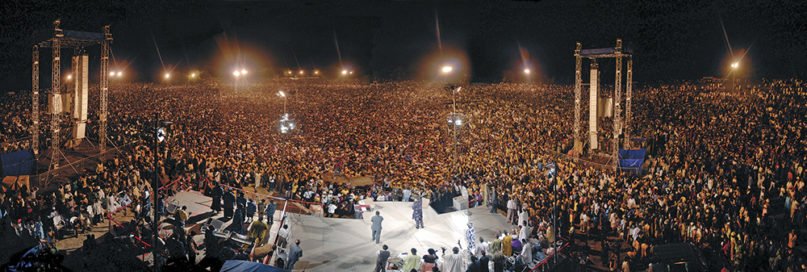
A large crowd surrounds the stage as Reinhard Bonnke holds a crusade in 2006 in Africa.Photo courtesy of Bonnke.net
A large crowd surrounds the stage as Reinhard Bonnke holds a crusade in 2006 in Africa.

The best known of these was in Lagos, Nigeria, in November 2000, when an estimated 1.6 million heard Bonnke preach. In 2001, Christianity Today called Bonnke “one of the continent’s most recognizable religious figures.”

In a tweet after Bonnke’s death, Muhammadu Buhari, the president of Nigeria, said the country “joins Christendom at large in mourning the passing of [the] renowned evangelist.”

Bonnke’s death, Buhari said, was “a great loss to Nigeria, Africa [and the] entire world.”

Pia Sebastian, 46, came from Dallas to attend the celebration. In 2013, she gave up a corporate career to study evangelism at one of Bonnke’s training schools.

“I honor Reinhard Bonnke, and I believe that I’m called to carry the torch and fulfill the work of sharing the gospel,” Sebastian said.

Reinhard BonnkePhoto courtesy of Bonnke.net
Reinhard Bonnke

Bonnke was the son of a German soldier who became a minister after World War II. Mesmerized by tales of 19th century European missionaries like David Livingstone, young Reinhard would later say he heard the voice of the Holy Spirit say to him: “Africa shall be saved!”

In a Facebook post in 2018, Bonnke cited another role model.

“Billy Graham has inspired me personally,” he wrote after the American evangelist’s death in 2018. “When he preached in a tent in Hamburg, Germany. I always felt connected to him.”

Early in his evangelistic career, Bonnke acknowledged in a 2003 interview, he made a strategic decision that proved controversial. He based his ministry in an all-white area of Johannesburg, South Africa, and did not publicly oppose the apartheid regime. Bonnke said he did make known his opposition to apartheid, but indirectly through his ministry. His associate was a black minister who always traveled with him.

“I had a choice,” he said. “To become politically active and oppose apartheid from the pulpit. Or, to preach the gospel and make people find salvation in Jesus Christ.”

Bonnke’s healing claims have also drawn controversy.

“The most remarkable things are happening: blind eyes open, cripples walk, people jump out of their wheelchairs,” he said in a 2003 interview with the Orlando Sentinel.

“I am as amazed as anybody else. It is just too wonderful. But I personally am not the miracle worker—it is Jesus.”

People wave their arms during a 1991 Reinhard Bonnke crusade in Zaire.Photo courtesy of Bonnke.net
People wave their arms during a 1991 Reinhard Bonnke crusade in Zaire.

Bonnke’s followers claimed that he did in fact perform a miracle. In November 2001, they say, the evangelist raised a Nigerian minister from the dead.

Pastor Daniel Ekechukwu was twice pronounced dead after a car crash, according to the story, and embalmed—although by African custom, his organs were not removed. Three days later, after hearing a prophecy, his wife brought the body to the basement of a church where Bonnke was praying in the sanctuary above.

At the same time, others later told the evangelist, Ekechukwu sat bolt upright and began to breathe again.

“That man was dead as a stone,” Bonnke said, although he did not know the man was in the church basement at the time he was preaching above. “There is no doubt about it.”

CfaN ministry officials investigated the account, Bonnke said, and found it to be “so true, so genuine, so fantastic” that they embraced it as a miracle, and produced and distributed a video on the episode.

Rick DuBose, assistant general superintendent of the Assemblies of God, lauded Bonnke for his decades of missionary work.

Bonnke “literally pushed back the darkness,” he said.

Toward the end of his career, Bonnke held his first crusades in the United States, a country he said needed to experience God’s power.

“I have seen whole countries shaken by the power of God,” he told Jeff Kunerth of the Orlando Sentinel in 2013. “That experience in Africa has turned me into an incurable believer that God will do it in other parts of the world as well. And I pray for America.”

Religion writer Mark I. Pinsky covered Reinhard Bonnke's career for the Orlando Sentinel until 2008.

News
Wire Story

Todd Bentley Investigation Finds ‘Steady Pattern’ of Immoral Conduct

The edgy Canadian preacher was declared unfit for ministry due to credible allegations of adultery, sexting, and substance abuse spanning the past 15 years.

Christianity Today January 3, 2020
Fresh Fire

Todd Bentley, a bearded, tattooed Canadian charismatic preacher who once claimed to heal people by punching and kicking them at a Florida revival, is no longer fit for ministry, a group of Charismatic ministers announced this week.

“Based on our careful review of numerous first-hand reports, some of them dating back to 2004, we state our theological opinion and can say with one voice that, without a doubt, Todd is not qualified to serve in leadership or ministry today,” the group said in a statement posted online Thursday.

Bentley had been accused of “ungodly and immoral conduct,” including adultery, substance abuse, and sexting, according to the panel.

The group of pastors, which included James W. Goll, Jane Hamon, Bishop Harry Jackson, and Nashville minister Don Finto, also recommended that Bentley’s ordination be rescinded. Their statement was posted online by author and professor Michael Brown of the FIRE School of Ministry, who oversaw the process of evaluating concerns about Bentley’s conduct.

According to the statement, panel members reviewed what they called credible allegations against Bentley, dating back to 2004. Those allegations were reviewed by an independent investigator.

Earlier this year, a former associate of Bentley’s accused him of inappropriate conduct with interns and others under his supervision.

“In our view, this disqualifies Todd from public ministry until such time that he has demonstrated true, lasting fruits of repentance, which would include: the breaking of these long-term, sinful habits; public acknowledgment of his sin, without equivocation, including asking forgiveness of those he sinned against; and submission to local church leadership until trust had been rebuilt,” the statement read.

Bentley, who denounced the panel as unbiblical, said he has sought God’s forgiveness for any past wrongdoing. In early December, he said in a video on his Facebook page that he has left the ministry to focus on his new beard care company but this week announced on social media that he will start a new school of ministry.

Bentley did not respond to a request for comment.

The evangelist and founder of a ministry called Fresh Fire USA first gained national attention in 2007 and 2008 after holding a series of revival meetings in Lakeland, Florida, that drew huge crowds. He told crowds that God instructed him to knee a man in the gut to cure colon cancer and to hit other people so they could experience God’s power.

Among his claimed miracles was a “Grandma slapping healing,” where he said God told him to slap an elderly woman in the face. He recounted that incident in a documentary about the revivals.

Bentley ended the revivals after other charismatic and Pentecostal leaders began to question Bentley’s methods and claims about healings.

Soon afterward, Bentley and his wife separated and eventually divorced. Fresh Fire later announced that Bentley had “entered into an unhealthy relationship on an emotional level with a female member of his staff.”

Bentley later returned to ministry after being counseled by other pastors.

In the video posted in early December, Bentley admitted that he had struggled with brokenness and sexual sins and said that his wife knows about all his struggles.

“I am not here to pretend that I haven’t struggled,” he said. “I am just here to say so much of what is being (said) out there now is old, some of it six, seven, ten, fifteen years. And I am actually here to say, where’s the power of the cross for me now?”

Bentley said in the video interview that he is in counseling and is trying to “get right with God.”

He also compared himself to “Mary the prostitute” and said that God had shown him grace despite his flaws and that the same forgiveness is offered to church people who struggle. Bentley said he was willing to be a “poster boy for helping people realize you can confess your faults to one another and pray for one another and be healed.”

Bentley was interviewed for the Facebook video in early December by author and speaker Michael Fickess, who said Bentley’s accusers hadn’t followed a biblical protocol. He compared the investigation into Bentley to the hearings over Supreme Court Justice Brett Kavanaugh and the recent impeachment of President Trump.

“It was a witch trial,” he said. “It was a classic fishing expedition, witch trial.”

Bentley added that the investigation was “evil.” He also said his ministry was “over.”

“I have lost it all,” he said. “… I don’t have any ministry left. I had 15 people in church Sunday.”

The interview ended with Fickess promoting Bentley’s new beard care and body wash products sold by his Magnificent Man company.

In a video posted on Bentley’s Facebook page Thursday, Fickess said that he rejected the panel’s methods and findings. He said that Bentley was never allowed to face his accusers.

“This is not the way God intended us to operate as the Body of Christ,” he said.

In a statement Friday, Brown, who oversaw the review of Bentley’s conduct, outlined the steps used to evaluate concerns about Bentley and said he was committed to a “fair and impartial process” for Bentley.

“I wanted everything to come to light,” Brown said.

Brown said that he met with Bentley, who initially agreed to cooperate with the inquiry. Later, Bentley’s lawyer sent a cease and desist letter to Brown, asking him to stop the investigation. Brown said he sent questions to Bentley’s lawyer but received no answer.

He said that the investigation was handled in a legal, ethical, and biblical manner. Brown dismissed the idea that the panel had been on a witch hunt, saying that instead, panel members invested hundreds of hours in their work.

Brown also said that Bentley refused to meet face to face with his accusers. And while sin should be confessed privately, he told RNS, “when a leader, over a period of many years, and repeatedly, violates biblical standards, public accountability is called for.”

“Even if Todd has been forgiven, this pattern would still disqualify him from leadership, at least for a substantial period of time, until he made things right with those he sinned against and proved himself to be above reproach,” Brown told RNS.

Theology

Christianity Today’s Top Testimonies of 2019

The Christian conversion stories that CT readers shared most.

Christianity Today January 3, 2020

In each print issue, Christianity Today devotes the back page to stories of Christian conversion—from the quiet to the highly dramatic. If you missed any, here are CT’s 2019 top testimonies, including some online exclusives, ranked in reverse order of what readers read most.

– Compiled by CT editors

Theology

Netflix’s ‘Messiah’ Says the World Needs a Savior

The problem is, which one?

Christianity Today January 3, 2020
John Golden Britt / Netflix

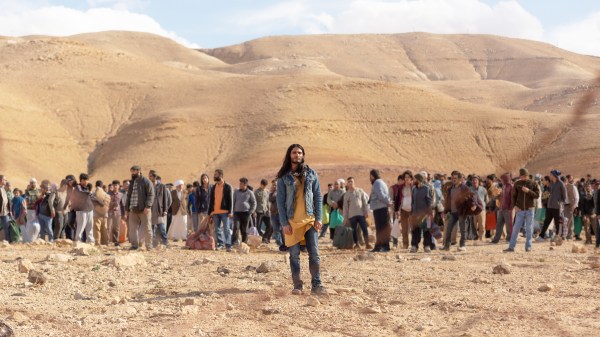
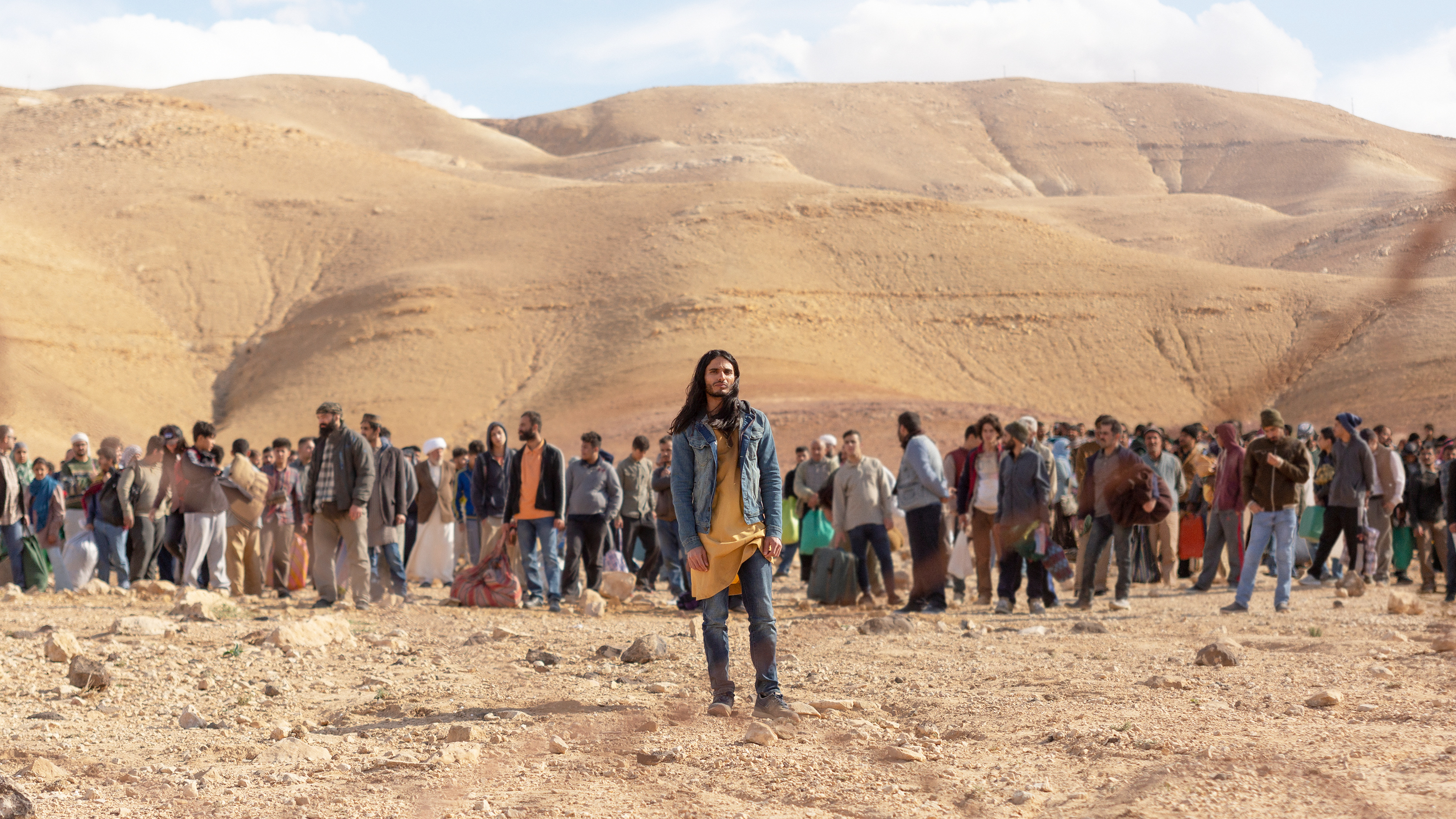
On January 1, Netflix released its latest über-bingeable series, Messiah, telling an all-too-believable story about the rise of a contemporary messianic figure known as Al-Masih (played by Mehdi Dehbi). Appearing out of nowhere in modern-day Syria, he begins to heal the wounded, stand in the path of tornadoes, and even walk on water. Following each miraculous feat, growing throngs of faithful believers from around the world become increasingly convinced that this man has been sent from on high.

But it isn’t until Al-Masih calls for the disruption of the religious, social, and political orders of the day that he catches the attention of the CIA and special agent Eva Gellar (Michelle Monaghan). Claiming to be divine is one thing. Threatening the vested interests of global superpowers by calling for their complete disarmament is quite another, which is why agent Gellar commits herself to exposing Al-Masih as the fraud she knows him to be. A game of cat-and-mouse quickly ensues as agent Gellar moves ever closer to the revelation of Al-Masih’s true identity. Is he the second coming of the Messiah as his followers believe? Or is he simply another opportunistic charlatan suffering from a messiah complex?

Messiah is a genuinely entertaining show. But it’s also a thoughtful exploration of the infinitely complex and increasingly fraught political and global landscape we inhabit. The reason a show like Messiah is worth our time is not because it is “family-friendly” (it’s rated TV-MA) or because it depicts (or fails to depict) a Christian understanding of the end of the age. Rather, it’s because the show confronts viewers with what Martin Luther King Jr. called “the fierce urgency of now.” Messiah presents Christians in particular with a rare opportunity to reflect upon not the distant future, but the present. In doing so, it presses us to consider what kind of faith we need to embody if we are to become credible witnesses in such a time as this.

Let’s not sugarcoat it. The times in which we live are in flux. There is no shortage of voices suggesting that if certain politicians are elected to office (or not), or certain industries are allowed to survive (or not), or certain ideas are given airtime (or not), the world as we know it will come to an end. Some of this is simply clickbait, engineered by architects of fear. But some of it is based in reality.

The globe is shrinking.

Wars are raging.

Ecological disasters are increasingly frequent and devastating.

The threat of mass shootings hovers over our schools, our public gatherings, and our places of worship.

The world, it would seem, is on fire. Fear and uncertainty have set it ablaze.

Historically speaking, this is nothing new, so we shouldn’t make too much of how chaotic the world appears in comparison to past eras. But the constant disruption and tumult should be a sign to us. Just as Jesus indicated, they create the necessary conditions for messiahs of various kinds to emerge. He said as much to his disciples:

As Jesus was sitting on the Mount of Olives, the disciples came to him privately. “Tell us,” they said, “when will this happen, and what will be the sign of your coming and of the end of the age?” Jesus answered: “Watch out that no one deceives you. For many will come in my name, claiming, ‘I am the Messiah,’ and will deceive many. You will hear of wars and rumors of wars, but see to it that you are not alarmed. Such things must happen, but the end is still to come. Nation will rise against nation, and kingdom against kingdom. There will be famines and earthquakes in various places. All these are the beginning of birth pains. …

“At that time if anyone says to you, ‘Look, here is the Messiah!’ or, ‘There he is!’ do not believe it. For false messiahs and false prophets will appear and perform great signs and wonders to deceive, if possible, even the elect. See, I have told you ahead of time. So if anyone tells you, ‘There he is, out in the wilderness,’ do not go out; or, ‘Here he is, in the inner rooms,’ do not believe it. For as lightning that comes from the east is visible even in the west, so will be the coming of the Son of Man (Matt. 24:3–8, 23–27).

It’s pretty interesting that Jesus frames his comments about the destruction of the temple and his second coming in terms of the human tendency to believe. Rather than provide his disciples with a roadmap to the future, complete with step-by-step instructions for what to do and when to do it, Jesus reminds them that the profound faith they demonstrated by dropping everything to follow him could also make them susceptible to deception. Under certain conditions, says Jesus, their propensity to believe could become a liability. It could even lead them to place their faith in false messiahs.

Part of what makes us human is the network of built-in psychological mechanisms that give rise to belief. As my colleague Justin Barrett has suggested, humans are “born believers.” Whether religious or not, to be human is to interact with the world faith-fully, to devote ourselves to something or someone.

Or, as Al-Masih puts it to agent Gellar in response to her claims of atheism, “Everybody worships. The only choice is what we worship.”

Regardless of whether the show reveals him to be the true Messiah (no spoilers!), Al-Masih speaks the truth on this. Since the Garden of Eden, our core human failure isn’t disobedience or pride or the absence of faith (although those are certainly reflections of our fallen state). Rather, it’s our tendency to point our sincerely held beliefs in the wrong direction (Rom. 1:21–23). Another word for it is idolatry—devoting ourselves ultimately to that which isn’t ultimate.

Despite our best efforts, humanity suffers most fundamentally not from a lack of faith, but from a misplaced faith.

Hiba Judeh/Netflix

In this respect, beneath the surface of its otherwise fast-paced narrative, Messiah finds a deeper resonance with Jesus’ words. Much like first-century Palestine, the contemporary world that Messiah depicts is one in which religious, geopolitical, and ethnic identities are colliding in a highly contested space. Impoverished people are oppressed by an increasingly wealthy and powerful elite. And anytime this happens, whether today or 2,000 years ago, certain individuals are able to gain a following because people are desperate to put their faith in something or someone who promises them safety, security, and peace.

In other words, messianic figures aren’t just exceptionally cunning humans who leverage chaotic situations for their own gain (although they are). Messiahs are made. And we are the ones who make them.

We make them anytime we pledge our loyalty to religious, business, or political leaders and believe when they say they alone can fix what ails us, they hold the truth, or they are worthy of our devotion. We make them anytime we “betray and hate each other” (Matt. 24:10) over differing ideologies. And we make them whenever we abandon our primary calling to love God and others by replacing that calling with another passion project or cause.

Jesus was fairly clear about where we should locate our particular moment in the grand scope of history. “The end is still to come,” he told his disciples. “All these are the beginning of birth pains” (Matt. 24:6, 8). What this doesn’t mean is our present experiences are somehow insignificant or less painful than what’s to come. It simply means that, in order to live as “faithful and wise servants” (v. 45), we have to operate with an accurate picture of reality, and this starts by acknowledging that the end has not yet come. The sociopolitical turmoil, the wars, the natural disasters, and even the emergence of false prophets serve as an indication that “the whole creation has been groaning as in the pains of childbirth right up to the present time” (Rom. 8:22). And it is in this time—not some other time—that God has called us to demonstrate a faithful presence.

Our time is best spent, says Jesus, not in quibbling over which charismatic leader, or which organization or technological innovation, will or won’t save us, but in remaining faithful to who God has called us to be here and now.

So you also must be ready, because the Son of Man will come at an hour when you do not expect him. Who then is the faithful and wise servant, whom the master has put in charge of the servants in his household to give them their food at the proper time? It will be good for that servant whose master finds him doing so when he returns (Matt. 24:44–46).

Messiah invites people of faith to reflect on what it means to remain steadfast in a tumultuous world and how the times in which we live affect who and what we believe in. The show reminds us that messianic figures are not so much the source of our false beliefs as they are the product of our misplaced faith. In times such as these, when the human propensity to believe is at a fever pitch, we must decide which messiah we will follow.

Kutter Callaway is associate professor of theology and culture at Fuller Theological Seminary and co-director of Reel Spirituality. His most recent books are Deep Focus: Film and Theology in Dialogue and The Aesthetics of Atheism: Theology and Imagination in Contemporary Culture. He hosts the Kutter Callaway Podcast and tweets @kuttercallaway.

News

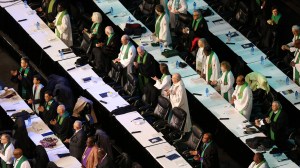
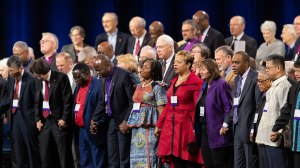
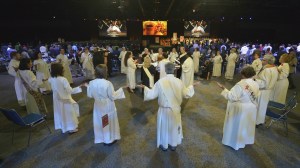
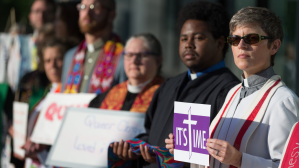
Methodists Agree on Compromise to Split Denomination

There’s broad support for a new plan to allow traditional marriage proponents to leave the UMC with $25 million in funding.

Christianity Today January 3, 2020
United Methodist News Service / Flickr

In this series

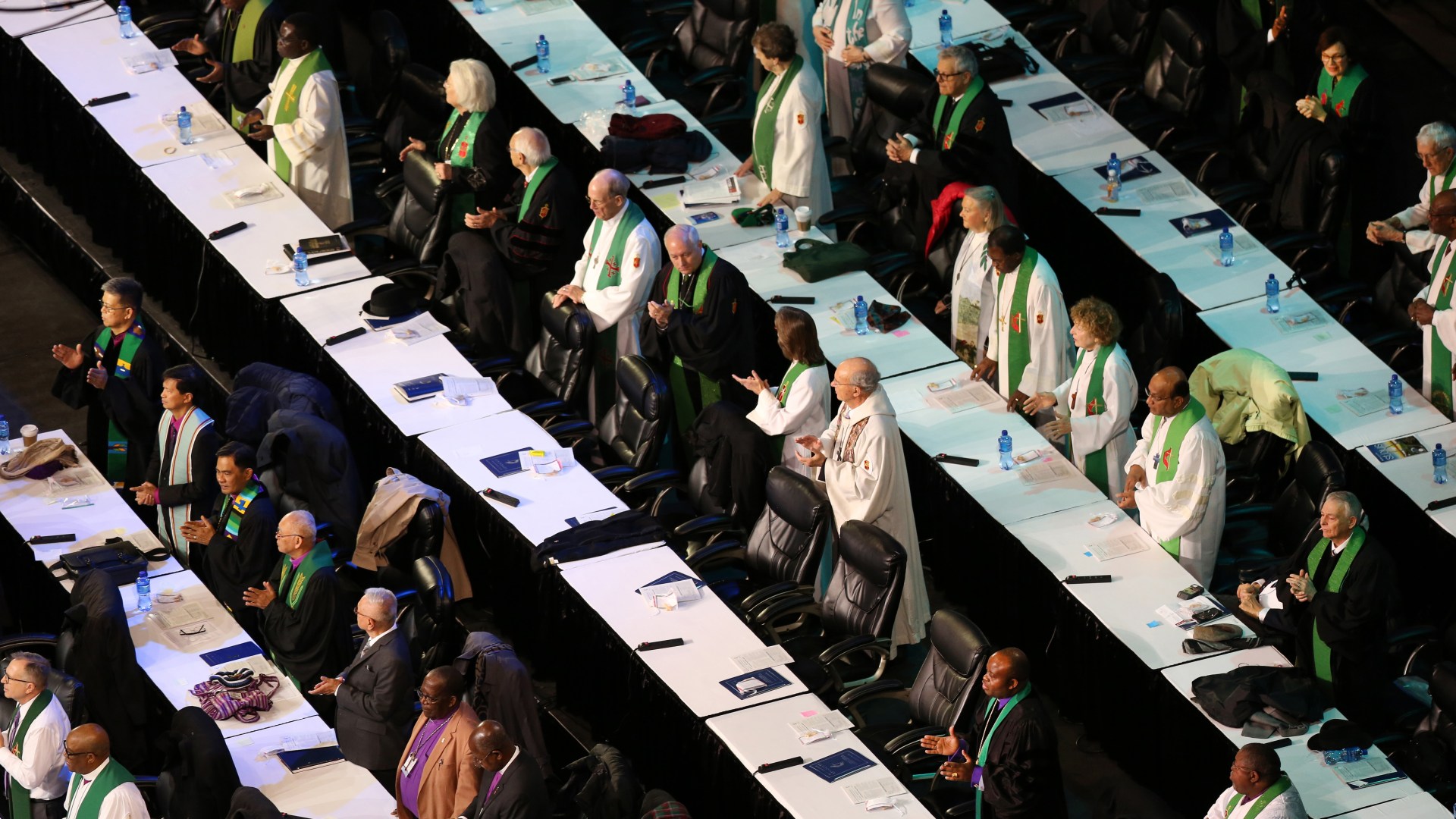
Factions in the United Methodist Church (UMC) have reached an initial settlement around its intractable division over LGBT marriage and ordination—offering $25 million to a group of conservative congregations who want to break away and form a new denomination.

For both conservatives and progressives in the church, this compromise comes as an answer to prayer.

Various groups were slated to once again propose different plans for a split at the UMC’s general conference in May, but under the new agreement, they will abandon the proposals and put their full support behind the Protocol of Reconciliation & Grace Through Separation, which was announced Friday.

The eight-page statement details the terms of the split for the nation’s largest mainline denomination:

The undersigned propose restructuring The United Methodist Church by separation as the best means to resolve our differences, allowing each part of the Church to remain true to its theological understanding, while recognizing the dignity, equality, integrity, and respect of every person.

The protocol will still need to be approved by the UMC’s legislative body, but has unanimous support from a diverse 16-member mediation team, including representatives from “UMCNext; Mainstream UMC; Uniting Methodists; The Confessing Movement; Good News; The Institute on Religion & Democracy; the Wesleyan Covenant Association; Affirmation; Methodist Federation for Social Action; Reconciling Ministries Network; and the United Methodist Queer Clergy Caucus; as well as bishops from the United States and across the world.”

“This is very likely to bring to an end this dysfunction that we have suffered through for the past 47 years,” said Rob Renfroe, president and publisher of Good News and pastor of adult discipleship at The Woodlands UMC outside of Houston. “We were never going to find a way to move forward together. Our ultimate goal of setting each other free to do ministry as we believe God would have us do has come to fruition.”

The 12.5-million-member UMC has been in a standoff over LGBT issues for decades, culminating in a vote in favor of its traditional position against same-sex marriage and gay clergy during a special session last year. As a result, some left the UMC, some continued to defy the UMC positions outright, and some challenged the legality of the vote in the denomination’s court—ultimately putting the question of how to move forward before the delegation once again in 2020.

The result of months of negotiation, the new protocol creates a quick, “clean break” for a new, traditionalist denomination that has yet to be created but will receive a $25 million sum at its inception.

“The assumption for everybody involved in this agreement was that the Wesleyan Covenant Association (WCA) would launch the traditional denomination referenced in the protocol,” said Virginia pastor Keith Boyette, WCA president. The WCA includes 125,000 people in 1,500 churches who favor the UMC’s traditional marriage stance.

For years, they have feared they have reached a point of “irreconcilable differences” with more progressive factions in the UMC, and WCA leaders have prepared for the launch of a new denomination. As part of the agreement, the WCA will not make further claims for money beyond the $25 million.

In addition, the protocol sets aside $2 million for other new denominations that are created pursuant to its guidelines. Regional bodies of the UMC, known as annual conferences, would remain in the UMC unless they vote (by 57% majority) to join another denomination prior to July 1, 2021. In the meantime, the protocol would put a moratorium on charges against clergy and members who have violated the current prohibitions around homosexuality.

In previous attempts to formulate a plan to split, ownership of property has been a sticking point. The new protocol provides provisions for churches that leave to “retain their assets and liabilities” and for all clergy and lay employees to keep their pensions.

Pastor Tom Berlin expressed the relief felt by many fellow Methodists, saying, “The United Methodist Church will have far greater possibilities for viability and vitality once this conflict is put behind us. It allows United Methodists to self differentiate and choose a future with hope that honors their theological convictions and their interpretation of Scripture.”

As CT previously reported, US Methodists tend to be more conservative than their clergy; they are twice as likely to identify as “conservative-traditional” (44%) than “liberal-progressive” (20%) and evenly split on the church’s ban on same-sex ceremonies, according to a denominational poll. Though Methodist views have shifted, Pew Research Center found that they are still less likely than mainline Protestants overall to say homosexuality should be accepted (60% of Methodists vs. 66% of mainline) or support the legalization of same-sex marriage (49% vs. 57%).

LGBT advocates in the UMC have praised the plan, looking forward to finally overcoming the stalemates over the denomination’s official stance on homosexuality. In 1972, the UMC stated that “homosexuals no less than heterosexuals are persons of sacred worth,” but “the practice of homosexuality … incompatible with Christian teaching.”

“This is exciting to me,” said Jan Lawrence, who participated in the protocol deliberations as director of the Reconciling Ministries Network. “The potential to have the anti-LGBTQ language removed in 2020 is amazing, and the agreement to start a moratorium two days ago, those are very positive things for LGBTQ United Methodists.”

The statement on the protocol was sent by the Council of Bishops Office on behalf of the mediation team, who will provide further details about the plan during a January 13 livestream.

“All of us are servants of the church and realize that we are not the primary decision makers on these matters,” said Bishop John Yambasu of Sierra Leone. “Instead, we humbly offer to the delegates of the 2020 General Conference the work which we have accomplished in the hopes that it will help heal the harms and conflicts within the body of Christ and free us to be more effective witnesses to God’s Kingdom.”

Apple PodcastsDown ArrowDown ArrowDown Arrowarrow_left_altLeft ArrowLeft ArrowRight ArrowRight ArrowRight Arrowarrow_up_altUp ArrowUp ArrowAvailable at Amazoncaret-downCloseCloseEmailEmailExpandExpandExternalExternalFacebookfacebook-squareGiftGiftGooglegoogleGoogle KeephamburgerInstagraminstagram-squareLinkLinklinkedin-squareListenListenListenChristianity TodayCT Creative Studio Logologo_orgMegaphoneMenuMenupausePinterestPlayPlayPocketPodcastRSSRSSSaveSaveSaveSearchSearchsearchSpotifyStitcherTelegramTable of ContentsTable of Contentstwitter-squareWhatsAppXYouTubeYouTube