Culture

Our Favorite New Christian Christmas Albums of the Year

Mix up your holiday listening with releases from Phil Wickham, Audrey Assad, and others.

Christianity Today December 13, 2019

If your Christmas playlist needs another voice—someone besides Mariah Carey to get you in the spirit of the season—there are plenty of varieties of carols, hymns, and festive tunes to choose from.

Even the newest Christian Christmas albums offer a shiny array, from jazzed-up classics and sing-along worship songs to haunting seasonal reflections.

Here are six recent releases that have earned their place among our beloved favorites. (And check out this Spotify playlist to hear all the recommendations from the picks below.)

Fragile by Nichole Nordeman

This is not an album that candy-coats the holidays. Nichole Nordeman’s title track “Fragile” is an intelligently woven medley that wistfully draws the favorite carol “What Child Is This?” into conversation with Sting’s “Fragile.” The result is a remarkably fresh version of this age-old tune and particularly relevant to contemporary life. The entire 41 minutes of production is silky smooth, and its movement in mood is sublime. Lyrics dive deep into the struggle with reconciliation and loss: “So I will swallow hard to say this / It might be a little rough / If the world wants peace for Christmas / Might it not begin with us?” But it still finds room for joy as well as plenty of beloved carols in Nordeman’s iconic style, including “O Come, O Come Emmanuel” and “O Little Town of Bethlehem.” Cue up this album as your soundtrack for drinking cocoa on Christmas Eve and catching up with family while candles flicker in the background. Or, even better, give it to a neighbor to start a conversation about faith, doubt, and life.

Christmas by Phil Wickham

Phil Wickham’s guitar-led Christmas album is the perfect tonic for the frantic Christian contemporary worship leader looking to revamp the carols service. If there’s a time and a place for this kind of cliché, surely Christmas is it. The album offers a wide range from the slightly offbeat or quirky to the atmospheric and even cathedral-appropriate. The real surprise pearls are songs such as “Away in a Manger” and “Angels We Have Heard on High,” which become jubilant, singable, and oh-so-cool. These carols are in an ethereal contemporary mood but still traditional enough for Grandma. She’ll never know it’s a new album because Wickham’s versions feel like the way these songs were meant to be sung, with the band’s musicality and the layered vocals producing a timeless sound.

Peace by Audrey Assad

Audrey Assad’s Peace banishes all traditional carol tunes, replaced them with an evocative collection of seven seasonal pieces. An ode to winter, the metaphor hangs heavy on the hearth, so to speak. Assad’s beautiful voice sings out, “You came like a winter snow / Quiet and soft and slow / Falling from the sky in the night / To the earth below.” There’s a lot of beauty in this project spurring listeners to think through the way winter might testify to God’s gift in Jesus. The reflective song “Your Peace Will Make Us One” also rings out in singable, happy solidarity into the cold night air. For those in the Northern hemisphere, at least, embarking into this kind of contextual theology makes sense. And for the rest of us in the Southern hemisphere, we will just happily pretend. Who doesn’t love snow?

And on Earth, Peace by Salt of the Sound

And on Earth, Peace by Salt of the Sound is a play on sound, poetry, and Scripture to mesmerizing effect. A collaboration by husband-wife duo Anita and Ben Tatlow, the album reworks the biblical Christmas narrative in beautiful and simple ways. These tracks draw upon carols but seldom reference the traditional tune. However, just as you think the songs must have grown wings and flown away to a mystical land, there are moments of familiar nostalgia: “O come let us adore him Christ the Lord.” This album could make you believe unicorns attended to the baby Jesus in the manger.

Lovkn Christmas: Awaited One by LOVKN

LOVKN’s Awaited One begins with the Doxology. In more than one sense Steven Lufkin’s album is a bold declaration with explicitly Christian lyrics focused on the Christmas event. The relationship between listener and God are crystalized in lines like, “I’ve been looking all my life for the answer / Now I find the answer here in the eyes of love / Today is a little reminder / that Jesus is alive and the King of all peace is come.” He deserves some commendation for rhyming lines that don’t come across as corny. And for the catchy upbeat folk treatment on “We Three Kings” as well as more reflective ballad “God Rest Ye Merry Gentlemen.” Think classic Mumford & Sons but in the key of Christmas-y.

Behold by Lauren Daigle

Going back just a few years, a notable mention goes to Lauren Daigle’s 2016 Christmas album Behold, which dances back in time to perfect the Christmas jazz standard in songs such as “Have Yourself a Merry Little Christmas,” “White Christmas,” and “Winter Wonderland.” Her vocal is sublime, relaxed Louisiana in all its gloriousness. I’ll wear my gown and you wear a tuxedo, and we’ll meet by the Christmas tree.

Tanya Riches is a worship leader; the writer of songs such as “Jesus What a Beautiful Name” and “Hear Our Prayer”; and a scholar studying Hillsong Church and Pentecostal worship. She lives in Sydney, Australia.

Observing Advent Makes Me Feel Less Alone

Following the rituals of the church calendar remind me that my life is part of the larger story of God’s creation, redemption, and restoration.

Christianity Today December 13, 2019
WeCreate / Lightstock

I remember an Advent when I was struggling with infertility and found it difficult to enter into a season that anticipates the birth of a baby. During church on those Sunday evenings leading up to Christmas day, a different family—a mother, a father, and at least one child—lit the Advent wreath candles and read a Scripture about the coming of our Savior. While I sat in the dim light of the sanctuary and observed those who had that for which I longed, other parents whispered to their children, answering questions about the wreath and the candles or asking the rowdier little ones to settle down. I saw my pregnant friends sprinkled throughout the congregation whose desires to become mothers were being fulfilled, their bellies full and round. I knew Emmanuel had come. I believed Jesus would return. But I didn’t know if I would ever have a child of my own. I wanted to believe God was always good even if I never became a mother, but I was full of doubt. And my doubt made me lonely.

Christians can find solace in our relationship with God, fellowship with other Christians, and witnesses from Scripture who assure us God will never leave us or forsake us, and yet Christian faith isn’t an inoculation against loneliness and isolation. Indeed, when it comes to this particular suffering, I have often wondered if the mature Christian has an especially deep capacity to notice her loneliness. Does a life of spiritual discipline, Scripture, and truth-telling open our eyes to see the ways that we are always, on this side of eternity, restless for the true intimacy and union that await us?

My faith certainly hasn’t shielded me from loneliness. I’ve known different forms of loneliness since I was a child. Observing the church year has become one buoy that holds me up when I’m overwhelmed with feelings of unbelonging. It reminds me that my life is part of the larger story of God’s creation, redemption, and restoration. “The Christian year, by its rhythms, allows us an opportunity to both look back and remember the story of Christ, and to look forward to its ultimate conclusion,” said Bobby Gross in an interview about his book, Living the Christian Year: Time to Inhabit the Story of God. “The Christian year participates in that same sacramental pattern that God instituted and blessed for the people in the Old Testament and the New Testament, to help us remember in a very active way and anticipate in a way that brings grace into our present spiritual experience.”

I don’t follow the church year with the intent of diminishing my loneliness. I observe it to know more intimately the life of Jesus, his work in the lives of those whom he has rescued and redeemed, and the hope of the “not yet” on this side of heaven. I also enter into the liturgical seasons because they help us wait, lament, hope, celebrate, and acknowledge the full spectrum of the life of the Christian and the life of the church. But one blessing I have received from engaging the church year and its rituals is an increased sense of belonging to myself, others, and God.

Rituals can enhance our affiliation with fellow group members, increase a sense of group loyalty and trust, and produce stronger feelings of connection because they help to integrate our private and public lives. When we partake in rituals, we put words, actions, and meaning around our beliefs. Rituals also help us learn and share cultural knowledge that defines our group’s priorities and creates a sense of closeness because they help us interact with others who share our beliefs. The same is true when we observe the church year. Many of our liturgical rituals are performed in community with our families, friends, neighbors, and members of our local church congregations. As we embark on a collective observance of Advent, Christmas, Lent, Easter, and the other liturgical seasons, we are linked with others who are observing the church year in similar ways. While we light Advent wreath candles on the four Sundays before Christmas or receive ashes on our foreheads on Ash Wednesday, we know scores of Christians all over the world are doing the same thing and generations of Christians before us have done the same thing throughout a large portion of the church’s existence.

Observing the church year also allows us to feel closer to the Triune Lord. As we explore the stories of Jesus and the truths of the gospel of grace in the Scripture readings and rituals that unfold throughout the church year, we learn more of who God is and more of who we are. When we view time primarily through the lens of the liturgical seasons, we can ask the Holy Spirit to give us clarity regarding the movement of God in our lives, the church, and the world. Every year we cycle through the various seasons and see how our lives are intertwined with the life of Jesus brings more invitations to experience greater spiritual intimacy. We walk the well-worn paths again and again and know God will meet us along the way because he has shown up before and has told us in Matthew 28:20, “And surely I am with you always, to the very end of the age.”

In my own life, I have also found that practicing the church year connects me to past versions of myself when I engaged time and my faith in similar ways. While I am asking God how I should observe an upcoming Lenten season, I may remember where I spiritually was during Lent the previous year and reflect on what has changed and what has stayed the same. I hear and read the familiar stories about Jesus as he approached the cross and am reminded that while my circumstances change, the truths of the gospel remain the same. When I pull out the bright red tablecloth that adorns our dining table on Pentecost, I think about the very real power of the Holy Spirit that is active in my life and in the church, interceding for us, comforting us, and redirecting our attention to Jesus and the gospel of grace.

Despite the strong communal ties reinforced by following the church year, this sense of belonging won’t always insulate Christians from feeling lonely. When we have lost loved ones through death or other forms of separation, we may feel more alone during seasons and celebrations we used to share with others. When we are in a season of feeling far away from God, we may feel guilt and shame because we think we should be more enthusiastic about observing Advent or Christmas or Easter. The widow or divorcee reading a well-meaning devotional that uses language of families might feel she doesn’t belong in the ritual. And when we elevate our participation in the church year in ways that minimize our communion with other Christians and our common gospel foundation, those who don’t feel led to observe the church year might sense that those of us who do think less of them and their faith.

On Easter Sunday a few years ago during a period of significant suffering, I wept all day. In addition to the isolation I felt because of my circumstances, I was also grieving my inability to celebrate the resurrection. Yet, I still had confidence in the test of time and confidence in the saints from many eras who companioned me in my Christian journey, whose witness reminded me of the generations of Christians who have observed the church year in order to know God and root their own stories to Jesus’ story.

As we consider Jesus throughout the course of the year and give our attention to his life, death, and resurrection, we can ask God to help us see those whom Christ sees. Who is suffering, grieving, lost, or alone? How can we invite others to join us as we observe and celebrate the life and work of Jesus? How can we have conversations with other Christians during Advent or Lent or Ordinary Time about how the current season is or isn’t helping us connect with ourselves, others, and God? How can we be, as James K.A. Smith wrote, a people of memory and expectation while “praying for and looking forward to a coming kingdom that will break in upon our present as a thief in the night”?

I will continue to ask myself these questions and follow the path of those who have gone before me while I discover the answers. This year, on the first Sunday of Advent, I did what I have done the past several years. I woke before the rest of my family, possibly before the rest of my street. I walked down the hall to my living room and dining area. As the sun was beginning to rise and offer itself to the darkness of the night, I lit the first candle in the Advent wreath. I basked in the glow of that one purple candle and contemplated this season that helps me remember Jesus’ birth and wait for his second coming when we will face the fullness of our true belonging.

Then I went to church with my family. We worshiped with our local congregation using a liturgy designed especially for this day. We sang hymns of waiting, heard the appointed Scripture readings including Jesus’ words in Matthew 24 about his return, and prayed the Collect for Advent Sunday, Rite One from the Book of Common Prayer, that says :

Almighty God, give us grace that we may cast away the works of darkness, and put upon us the armor of light, now in the time of this mortal life in which thy Son Jesus Christ came to visit us in great humility; that in the last day, when he shall come again in his glorious majesty to judge both the quick and the dead, we may rise to the life immortal; through him who liveth and reigneth with thee and the Holy Ghost, one God, now and for ever. Amen.

Throughout the remaining days leading up to Christmas, I will continue to view this season as a fresh opportunity to give my attention to the life and work of Jesus that has ushered in the light and pushed away the works of darkness. And I will anticipate another year full of familiar readings and rituals that might help me connect more with myself, others, and God.

Charlotte Donlon is a writer, spiritual director trainee, and host of the Hope for the Lonely podcast. Her first book, The Great Belonging: How Loneliness Leads Us to Each Other, will be published by Fortress Press in November 2020. Learn more at CharlotteDonlon.com.

Theology

Is the Wisdom of Mary Unique for a Teenager?

Psychology suggests why we shouldn’t look down on the faith of the young.

Christianity Today December 13, 2019
Robert Cheaib / Pixabay

A version of this article was first published in the Advent Series from Science for the Church. To sign up for content like this, please visit the website.

“A 14-year-old girl is pregnant. What should she, what should one, consider and do?”

This question was posed by a premier wisdom researcher a couple thousand years after Mary and Joseph may have faced a similar quandary. We don’t actually know Mary’s age when she became pregnant with Jesus because the Gospel accounts don’t tell us, but many scholars suggest she was a teenager, and perhaps in the first half of her teenage years.

If this question seems hard to answer now, it was difficult then, too. Artists may put a halo over the baby Jesus to represent his divinity, but he also was birthed into the gritty human reality of a confusing and conflictual world brimming with hard questions. To be fully human is to live amidst the difficulties of embodied life, where wisdom is required of us every day.

Wisdom for the Christian Life

Several years ago, one of my doctoral students with prior theological training announced that he wanted to do his dissertation on wisdom. I replied, “Paul, that’s a great idea, but psychologists don’t really study wisdom.” He went to the library and proved me wrong. It turns out there is a vibrant science of wisdom. In the last part of the 20th century, much of it occurred at the University of Berlin, where researcher Paul Baltes and his colleagues developed a way to measure wisdom by asking people to respond to challenging questions, such as the one about a 14-year-old pregnant girl. That research continues today at places like the Center for Practical Wisdom at the University of Chicago.

My student, Paul McLaughlin, went on to combine his theological training with psychological science and developed a fascinating dissertation looking at wisdom mentoring in a local congregation. But before describing Paul’s study, I need to distinguish between two types of wisdom in the Christian tradition that Paul and I learned about during his project.

Conventional wisdom is about living a good and effective life. Think of the Old Testament book of Proverbs as the prototype of conventional wisdom. Here we find a vast repository of good advice for how to live well. Similarly, Baltes and his colleagues defined wisdom in the Berlin Wisdom Paradigm as, “expert knowledge in the fundamental pragmatics of life.”

The second kind of wisdom we see in Christianity is critical wisdom. This form of wisdom is embedded in complexity and paradox, requiring exceptional discernment and creativity. Critical wisdom is exemplified in the biblical books of Ecclesiastes and Job, and in the life of Jesus.

When reading through Jesus’ famous Sermon on the Mount, we see all sorts of outside-the-box, paradoxical wisdom at play. “Consider yourself blessed when people insult and revile you” (see Matt. 5:11). “You have heard it said not to murder, but I say that some dire cascade starts when you give yourself over to anger and call someone a fool” (see Matt. 5:21–22). “And, by the way, if you’re about to worship God by offering a sacrifice and remember your friend has something against you, go address that relational problem first even before continuing your worship” (see Matt. 5:23–­­25).

Or consider how often Jesus healed on the Sabbath, and often in the synagogue where he stirred up huge controversy. If conventional wisdom promotes general guidelines for effective living, critical wisdom calls us into the murkiest, most complicated places of life.

For his dissertation, McLaughlin developed a group curriculum for critical wisdom mentoring and tested it out in a church context. Small groups of young adults met twice each month with wise, older parishioners selected by the pastoral staff. These mentoring groups leaned into the hard places of life together. For example:

“A friend who has been married only a few months comes and asks for your counsel on filing for divorce. What do you say?”

“What do you do when a friend is diagnosed with cancer and you find yourself questioning God’s goodness?”

“A friend with an addiction shows up on your front porch and asks for a place to stay, and it comes at a bad time because you and your spouse are having troubles in your relationship. What do you say?”

The wisdom mentors didn’t dispense neat answers to these hard questions. Instead, the groups talked together about the complexities of Christian life. They studied Scriptures and prayed, they sat in silent contemplation, practicing the art of listening to God and one another.

At the end of the study, those in the wisdom mentoring groups showed improved life satisfaction in relation to a comparison group. Those in the wisdom groups also reported greater increases in practical wisdom, more daily spiritual experiences, and better ability to hold the ambiguities of life.

Wisdom in the Body of Christ

We sometimes assume that only older people are wise, but that’s not what the scientists in Germany found when they looked at age and wisdom, and it’s not what McLaughlin found in his dissertation. The greatest growth in wisdom appears to occur in our late teens and early 20s. Congregations that are multigenerational have amazing potential for people to learn from one another. If you’re a church leader, what might it look like to promote mentoring possibilities in your congregation? If you’re young, consider asking an older Christian that you respect for coffee to talk about the complex places of life. If you’re an older Christian, perhaps you could foster some creative imagination about how you might help one or more younger people who are eager to grow in wisdom.

As we grow together in wisdom, it seems important to recognize that simple answers to complex problems rarely suffice. Imagine a 15 year old wants to move out of his house right away. What would you say? The wisest approach is not blurting out an answer—neither yes nor no—but instead to approach this provocative question with curiosity. What is his current living situation? What alternatives is he considering? What culture surrounds him, and what social norms apply? Is he a precocious student heading to college? An abused adolescent trying to get away and find a better life? An idealist wanting to save the world? Wisdom often calls us to be quick to listen and slow to speak (James 1:19) because life is more complicated than we might readily imagine.

It’s right to find conventional wisdom in the pages of Scripture, to study Proverbs, to sink deeply into spiritual and moral practices that contribute to a good and godly life. At the same time, we may find critical wisdom visits us in surprising ways, and not necessarily in ways we invite. Current researchers argue that wisdom often comes through adversity because tough times remind us to focus on what matters the most—what theologian Paul Tillich called ultimate concerns. Adversity also stirs things up and makes us question our deeply established ways of doing something so that we might consider new ways forward. Many congregations today face adversity and conflict, and while no reasonable person deems struggle itself to be intrinsically good, it may still produce good by lighting a pathway toward new possibilities.

In this Advent season, we remember the messy world Jesus entered. Born amidst controversy to an unwed mother who was likely a teenager, and in a smelly barn where he spent the night in a feeding trough, Jesus entered fully into our complexity. Throughout his years of ministry, he was controversial and unconventional, cutting through religious pretenses to show the heart of God. In today’s world, how can we engage creativity and curiosity when facing the big challenges? Sometimes this might even call into question some of our religious traditions and expectations.

The eternal Word (John 1:1), the source of all wisdom, became human and lived in our messy world with us. Jesus showed us how critical wisdom shows up in flesh and blood, and invites us to follow his ways of wisdom in our Christian journey.

Mark R. McMinn is Professor of Psychology at George Fox University and author of The Science of Virtue: Why Positive Psychology Matters to the Church.

Books
Review

The Business of Evangelical Book Publishing Is Business

Or is it faith? Or some complex combination of both?

Christianity Today December 12, 2019
Illustration by Rick Szuecs / Source Images: Envato

The evangelist Billy Sunday wasn’t afraid to try something new. He would jump on top of a pulpit if he thought it would get attention. He would sell shares of a revival tabernacle, complete with “stock certificates” guaranteeing the bearer a portion of the proceeds, if he thought it would bring in enough money to fund the business of preaching the gospel.

Evangelicals Incorporated: Books and the Business of Religion in America

Evangelicals Incorporated: Books and the Business of Religion in America

Harvard University Press

336 pages

$36.56

He was a man who believed in innovation. But this was surprising even for him.

In 1934, Sunday was deciding who would publish his next book. He had two publishers, William Eerdmans and Pat Zondervan, come meet him at the same time. Each man was surprised to find the other in the meeting. Then Sunday asked them both to pray out loud. In a prayer competition. Which he would judge. The two men did pray, Sunday judged that Zondervan’s extemporaneous prayer was best, and he awarded the 25-year-old’s company with the contract for Billy Sunday Speaks!

The story is kind of a parable of American evangelicalism. As a parable, it raises a question: Which of these men acted out of faith and which from commercial interest?

Daniel Vaca, an American religious historian at Brown University, offers a clear answer in his new book, Evangelicals Incorporated: Books and the Business of Religion in America. He says all three. All three were acting out of faith. All three were acting out of commercial interest. In fact, when looking at the history of contemporary American evangelicalism, it doesn’t make sense to distinguish between the commercial and the religious.

“Evangelicalism exemplifies what I describe as ‘commercial religion,’” Vaca writes. “Religion that takes shape through the ideas, activities, and strategies that typify commercial capitalism.”

Leaps of Commercial Faith

Evangelicalism is not unique in this regard, according to Vaca. It’s the nature of spirituality in a consumer society. When “virtually all aspects of social life involve commodification and consumption,” then our social identities—including our sense of belonging, our obligations to others, our rational self-interest, and our sense of what it would mean to flourish—all are formed “within and through the marketplace.” The marketplace, however, tends to reward innovation, individual choice, and celebrity, and evangelicalism has long embraced those values. Not every evangelical has been as eager as Sunday to jump up on a pulpit, to be sure, but more often than not, evangelicals haven taken that leap of commercial faith.

Vaca argues this is critical to understanding the history of evangelicalism. He wants to focus readers on social organization and the production of authority, to show how “contemporary evangelicalism took shape and steadily expanded through commercial efforts to generate new media markets and build successful media corporations.”

Religious historians have divided over the definition of evangelicalism in the last few years. Some are arguing that evangelicalism is essentially theological. Others, that politics are primary. Vaca is joining a third group, who say that evangelicalism is defined by its infrastructure. Evangelicals Incorporated makes a sophisticated case that book publishers, in particular, created the commercial infrastructure that made the modern religious movement possible.

The story starts around 1875, when evangelist Dwight L. Moody gave his brother-in-law Fleming H. Revell exclusive rights to publish authorized versions of Moody sermons. There were various unofficial versions floating around, and Moody was concerned about his lack of control over his brand. Revell publications included Moody’s signature, attesting to the authenticity of the product, as well as the explanation that “all former books in Mr. Moody’s name have been mere compilations, issued without his consent.”

After only a few years, Revell went from being Moody’s personal press to something more. Revell started billing itself as a “Publisher of Evangelical Literature” in 1880. It published texts that appealed to a swath of Protestants, giving those Protestants a sense of connection and common identity.

“Media objects perpetually invite us to affiliate ourselves with people whom we imagine as the ideal audience for that media,” Vaca explains. “Publics do not take shape through central institutions or subscriptions to any particular criteria. They are the product of active participation, attention, and imagination.”
One early bestseller was a 25-cent hardback titled Jesus Is Coming!, by William Blackstone. The book argued that Christ would return at any moment, and Christians should feel a sense of urgency about spreading the gospel. Revell sold 10,000 copies in a year. The book found an audience in a wide range of denominations—from the Presbyterian church, to the Church of God in Christ, to the Southern Baptists—and made them feel like they were all part of the same movement.

Another bestseller was The Christian’s Secret of a Happy Life, which sold about 12,000 copies per year for more than a dozen years. Author Hannah Whitall Smith told readers that theology wasn’t as important as trusting in God. She wrote about the practice of trusting God in everyday life, especially doing the day-to-day work of a wife and mother. The book made people feel connected to God, and also less alone.

Commitments in Tension

Commercial religion contains some tensions, however. Even when business practice and religious commitment both reward innovation and expansion, for example, that doesn’t mean the logic of maximizing profit always sat well with everyone. Vaca shows evangelical publishers have had to continually work to account for commercial religion, explaining how religious values and business practices really do align.

Perhaps the most interesting case of this is the story of how Zondervan became part of HarperCollins, which is a subsidiary of News Corp, the Rupert Murdoch-owned conglomerate that does $9 billion in annual business. First the family business went public, incorporating and selling shares on the stock market in 1975. This meant that anyone could own a piece of Zondervan, regardless of whether or not they shared the company’s Christian commitments. Executives argued, however, that the pursuit of dividends would not conflict with the religious mission. The stocks would be sold to people who “wanted to see their money working in two ways: first, to grow in an investment situation, and second, to be supportive of a kingdom cause.”

And, in fact, Zondervan profits increased 50 percent from 1976 to 1979. In 1983, one popular analyst praised Zondervan as the year’s “best stock buy.” But then the company’s value took a tumble, prompted in part by an error in the computerization of the inventory process, and some shareholders experienced a crisis of faith. A British investor launched a hostile takeover bid in 1986, and was only stopped when Zondervan sold itself to News Corp—at a discount of $10 per share.

The company agreed to forego some profits to maintain its identity. In the process, Zondervan became part of a multinational media conglomerate, committed above all to profits. It raises the question again: Religious commitment or commercial interest?

Vaca points out that there is a name for this kind of apparent paradox, where seeming contradictions between conflicting commitments are held in tension. It’s faith. The substance of commercial religion.

Not every reader will be convinced by Vaca’s arguments. He presents evangelicalism as something less solid than people often want it to be. But this book is a well-crafted, thoroughly researched, and compelling account of a dynamic that every observer of American evangelicalism will recognize. Vaca offers the insight to understand what was happening when Billy Sunday jumped on a pulpit or pulled two publishers into a room and said, “let’s pray.”

Daniel Silliman is news editor for Christianity Today. He also teaches humanities and writing at Milligan College in Tennessee.

News

Solar Light of the World: Evangelicals Launch Global Clean Energy Campaign

The initiative aims to convert 1 in 5 WEA churches and institutions to renewable power by 2025.

Christianity Today December 11, 2019
Education Images / Contributor / Getty

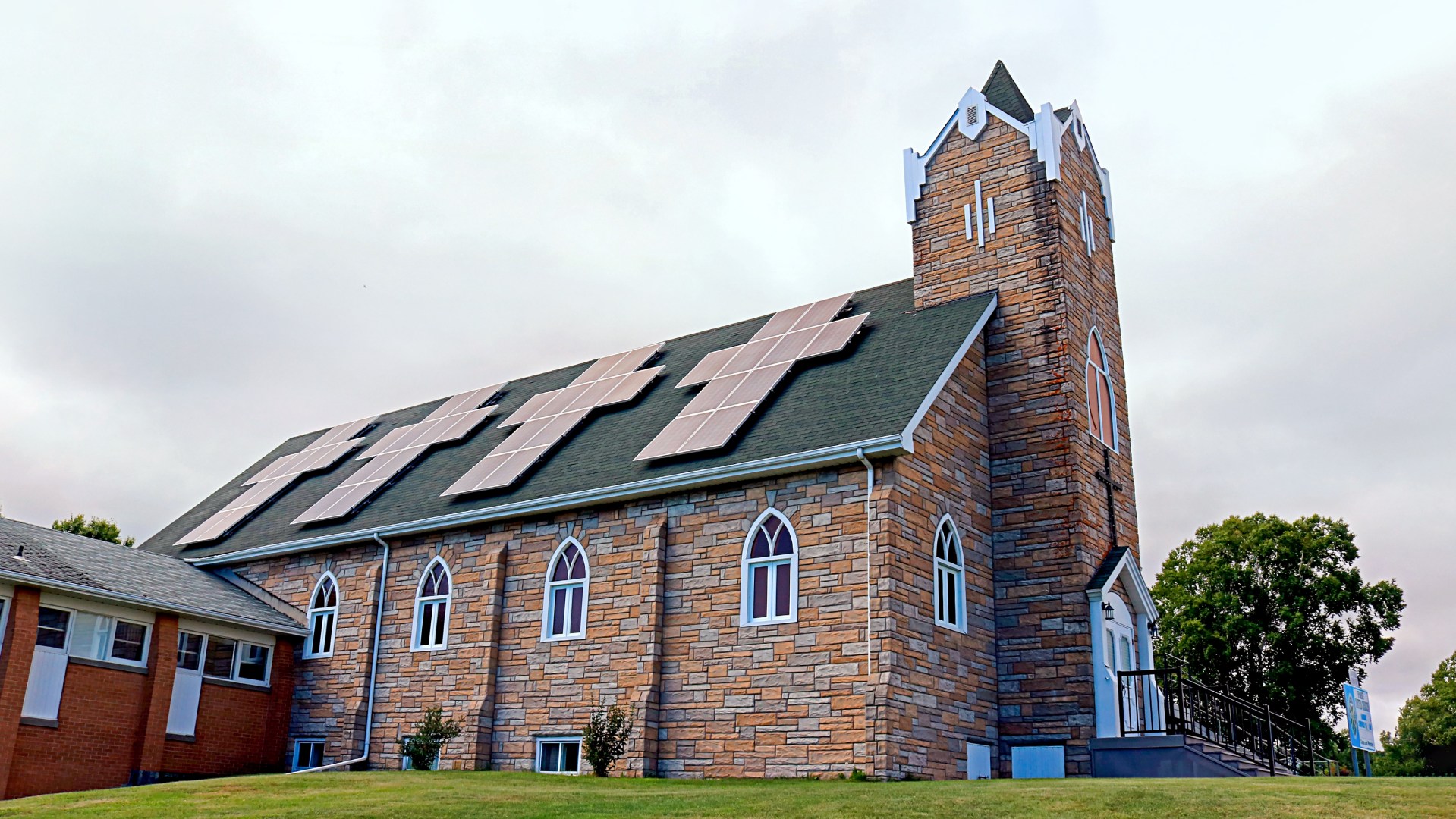
Solar panels could be coming soon to a church near you. Through a campaign called Project 20.’25, the World Evangelical Alliance (WEA) has set out to get 20 percent of its members to convert fully to clean energy by 2025.

This fall, the global network announced its partnership with Smart Roofs Solar Inc. Together they will help universities, health care facilities, and churches looking to adopt clean power, including offering guidance for local suppliers and providing financing options. The renewable energy initiative builds on the WEA’s efforts to promote creation care, said Chris Elisara, director of the WEA Creation Care Task Force.

Clean energy reduces air pollution, which improves human health and productivity; preserves nonrenewable resources; and cuts down on the emission of greenhouse gases that trap heat and can fuel, among other things, extreme weather that impacts food production and human safety.

“Christians should be at the forefront of efforts to reduce air pollution and greenhouse gas emissions because we know that this is our Father’s world,” Galen Carey, the National Association of Evangelicals’ vice president of government relations, told CT. “We also know that these efforts will particularly benefit our most vulnerable neighbors, those whose health and livelihoods most directly depend on clean air and a stable climate.”

There is also a financial benefit to making the shift to renewable energy, with wind and solar power being the most cost-efficient sources when installing new electricity-generating capacity.

“It doesn’t only make environmental and social justice sense—it makes economic sense,” said Brent Nelson, a group manager in the materials and chemical science and technology directorate of the National Renewable Energy Laboratory. “Renewable prices have fallen, and we’ve entered the era of extreme fossil fuels. The easy stuff has been extracted; we now have to go to extreme measures to continue using fossil fuels. This means going forward, it is good financial stewardship to shift to clean energy.”

In the US, the number of congregations using solar power more than doubled between 2016 and 2019, according to Interfaith Power & Light, which campaigns to mobilize people of faith to take action on climate change. As of November, 770 American congregations report the use of solar photovoltaic systems, which convert sunlight into electricity. California boasts the most solar-powered churches, followed by Massachusetts; Washington, DC; and Indiana.

Project 20.’25 and its supporters point to biblical principles that undergird its creation care engagement.

Carey notes the cultural mandate of Genesis 2:15—“The Lord God took the man and put him in the Garden of Eden to work it and take care of it”—and the recognition in Psalm 24:1 that all things belong to God—“The earth is the Lord’s, and everything in it, the world, and all who live in it.”

Responsible care for creation not only honors the Creator, but bears a powerful witness to secular environmentalists, said Carey.

Carey, Nelson, and a host of evangelical leaders have also pressed addressing the changing environment as a means of loving the least of these, claiming that projected environmental shifts could represent an even more severe threat to the poor.

“It’s important to understand that people of low-income and/or minority communities are inextricably linked to environmentally hazardous or degraded environments, such as toxic waste, pollution, and urban decay,” said Nelson. “Since social justice and environmental concern are directly coupled, the clean energy campaign is one way to fulfill the call of Christ.”

Nelson emphasizes the importance of clean energy, but even more of energy efficiency. According to data from Interfaith Power & Light, most churches can slash their power costs by as much as 30 percent simply by investing in more efficient equipment and facility upgrades.

“Spend your energy budget first on energy efficiency then on renewable generation,” said Nelson. “Every unit of energy you don’t use costs less than generating it.”

While there are plenty of environmental campaigns that can act as touchpoints for concerned citizens, Brian Webb, sustainability director at Houghton College and director of Climate Caretakers, an organization that engages Christians on climate change, told CT that Project 20.’25 is something unique: “This is a vision for us as evangelicals.”

Among Christians, mainline denominations have been more on the front edge of the clean energy movement than evangelicals. The WEA initiative may provide the impetus to catch up.

At Houghton, Webb oversees the school’s Center for Sustainability, which includes one of the largest solar energy projects among Christian colleges in the United States. When it was completed in 2015, the system generated more solar power than any other college in New York, enough to power 300 homes per year. The school also hosts events to engage students about creation care issues and is working on a number of sustainability projects like reducing energy and water consumption.

“The idea behind the WEA initiative, as well as behind Houghton’s initiative, is simply a response to our biblical call to love God, love our neighbors, and care for what he has made,” said Webb.

Webb said Christians actually have even more motivation to care for creation than secular environmentalists. “We have the same scientific reasons; there are important environmental issues out there. There are the same common-sense reasons that, of course, we want to care for the place where we live. But on top of that, we have a really significant theological reason.”

Webb pointed out that evangelicals tend to align themselves with conservative politics, and environmental initiatives are often viewed as tied to a more progressive agenda, so evangelicals have too often steered clear of environmental causes because of political perception.

“Of course, if you look at our theology, our Scripture, there’s great justification for wholeheartedly embracing clean energy and environmental stewardship,” said Webb. “But I think often our cultural identities and political affiliations make it harder for us to engage with these kinds of initiatives.”

A 2015 Pew Research Center survey found that 28 percent of evangelicals believed in global warming caused by human activity, compared to half of Americans overall.

But as sustainability issues continue to dominate news cycles and policy agendas, creation care is becoming a larger priority, especially for young Christians. Project 20.’25 reflects that shift, and the desire for evangelicals to act.

“If Christians aren’t leading the way, that’s a shame,” said Webb. “We’re missing out on an opportunity to demonstrate Christ’s love for the world by taking seriously our role as stewards of God’s creation.”

Books
Review

The How and the Why of Writing as a Christian

An experienced editor shows how well-crafted words can help us serve God and neighbor.

Christianity Today December 11, 2019
Ethan / Lightstock

Rarely does an aspiring writer get invited to sit with an ink-dyed editor to hash over the finer points of storytelling. Twenty-five years ago, fresh out of college, I landed a journalism gig at Maine’s smallest daily newspaper, which happened to have a writing coach. Every Friday after our morning deadline, five other staff reporters and I would gather at a local sandwich shop for lunch with Willis, a former Vietnam War correspondent, who would open a manila file filled with clippings of everything we’d written that week and spread them across the table. Then, over burgers and fries, he’d analyze each article, sentence by sentence and paragraph by paragraph, showing us how to make our writing stronger. His feedback showed. Despite the paper’s diminutive size, we regularly won top awards from the Maine Press Association.

Write Better: A Lifelong Editor on Craft, Art, and Spirituality

Write Better: A Lifelong Editor on Craft, Art, and Spirituality

IVP

272 pages

$14.54

For those who don’t have access to such a coach, longtime editor Andrew T. Le Peau serves the same wise writing instruction in his new book Write Better: A Lifelong Editor on Craft, Art, and Spirituality. This is the book for anyone who has said, “I’d like to write, but I don’t know where to begin”—whether you’d like to write a shorter piece for a newspaper or magazine or to write a full-length book. It’s also for those with more experience who’d like to make their writing even better. Le Peau, who worked for more than 40 years as an editor at InterVarsity Press, has also written several Bible studies and books. In the preface to his writing guide he says his desire throughout his career has been “to help people express their ideas as clearly and powerfully as possible.” The same motivation, he says, inspired this book.

Le Peau, who focuses on writing nonfiction, divides his book into three sections: the craft of writing, the art of writing, and the spirituality of writing. He also includes a handful of handy appendices, such as how to gain recognition as a writer, how to work with an editor or agent, and whether or not to self-publish. While there are plenty of popular writing guides (some of which the author references), Le Peau’s stands out because of his extensive experience behind the editor’s desk and because of his Christian faith.

Tips on Craft

Le Peau’s tips on craft—how to write clearly and effectively—are as applicable to fiction writers as they are to those who write nonfiction because many techniques are the same. Seasoning his advice with humor and personal stories, Le Peau provides examples from writers of both genres to address topics such as how to find a good opening, recognizing who you are writing for, and finding a suitable structure for your work.

Think you have to outline before you start writing? For those who hate constructing an outline, Le Peau has a solution: “Step one may be to just start writing.” After all, he notes, it is impossible “to outline something when we don’t even know what we want to say.” For many writers, myself included, tapping out letters on a keyboard or scratching them with a pen on paper is how we discover what want to say. The best writing is a process of discovery. Or, as the poet Robert Frost supposedly once said, “No surprise in the writer, no surprise in the reader.”

Le Peau also covers the topic of “principled persuasion,” which he defines as “the honest attempt to influence others for a good purpose” (as opposed to trying to manipulate or coerce them). This distinction is essential in an increasingly virulent culture where anyone with an opinion and a computer can broadcast their words before millions, and it is equally important for pastors and other Christian leaders who want to influence that culture.

Almost every piece of nonfiction, Le Peau says, includes persuasive writing. The key is to stick to the facts, be honest about contrary viewpoints, credit sources, use logic, and show humility by not overstating opinions. Rather than merely convincing others, he argues, a writer’s goal should be to work toward the common good and help others flourish by “learning to live out the image of God” in our lives and our words. Such spiritually attuned thoughts, which permeate Le Peau’s advice, elevate this book from a mere writing guide into a reflection on why we write to begin with.

The Rules—and When to Break Them

For those who struggled with grammar in school (as I did), Le Peau’s section on artistry offers relief. “Forget everything you learned about English in grade school,” Le Peau advises in his chapter, “Breaking the Rules.” “None of it is true.” Fixed in my memory is the bespectacled teacher who leaned over my desk in fourth grade to inspect my work and said, “You never begin a sentence with ‘and.’”

“And why is that?” I wish I’d asked.

“Grammar has one—and only one—purpose,” Le Peau says: “to facilitate clear, effective, powerful, artful communication.” While certain rules are helpful, they are the servant of the writer—not the other way around. When a sentence fragment best expresses the author’s intent, Le Peau says, use it. In fact, some deviation from conventional usage may be necessary. “Breaking rules can be a step on the path toward art,” Le Peau writes, as long as it helps communicate information in a new way that enlivens the reader.

Christian writers seeking to share a particular message may want to abandon their three-point sermon in favor of a more nuanced approach. As one Christian filmmaker told Le Peau, he didn’t like faith-based movies because they often fail to trust their audience. “I like movies that give enough without giving too much,” he said. “They show respect for their audience by letting them figure things out for themselves without spoon-feeding them.”

Christian writing—like Christian filmmaking—has come a long way in the past couple of decades, earning respect from both religious and secular audiences. Critically acclaimed, best-selling memoirs such as Lauren Winner’s Girl Meets God, Donald Miller’s Blue Like Jazz, and Ann Voskamp’s One Thousand Gifts come to mind. All tell a story in a refreshingly artistic way without telling readers that they must obey a particular message. It is hard to balance the fervency of the gospel with the artistry of a poet without losing the intended meaning. This balance is the art for which the Christian writer aims. Le Peau offers suggestions on how to achieve it, such as embracing ambiguity (but not too much); resisting the urge to “overtell, overexplain, or overwrite;” and describing what we see and experience rather than always feeling the need to explain.

“The art of writing with less certainty in ourselves leaves more room for faith, hope, and love,” Le Peau writes. The result? Deeper spirituality.

The Worth of Our Work

“What effect does the act of writing have on my life in God?” That is the question Le Peau encourages readers to consider in the third section of his book, titled, “The Spirituality of Writing.” Christians are often concerned about using their gifts to serve others in a way that exemplifies their faith, Le Peau says. But how do we know how God wants to use us? Le Peau offers five guiding principles: Keep your eyes open to what God is already doing; pay attention to what gives you joy and energy; listen to others; don’t ignore dreams; and follow Jesus.

As valuable as I found the previous sections of Le Peau’s book, I consider this the most important. For the Christian writer, the worth of our work does not lie in the marketability of our words or in what honors we may win; it lies in how our work furthers the kingdom of God. If our goal is to write a bestseller, we may achieve it. But if our goal is to write in response to the impulse of God, we may forgo temporal approval to achieve something far greater—or we may attain both. The result of our work is beyond our control. As Christians, we are simply called to be faithful.

“How do you find out if writing is your call?” Le Peau asks. “Write. Then write some more. Then write a lot more. Try fiction. Try nonfiction. Experiment with different styles. Get suggestions for improvement from qualified people. Revise. See how you like it. See how others like it. And if those things check out, keep going. That might be a call. And if not, no problem. Just keep listening, and maybe keep writing anyway.”

Perhaps the hardest parts of the writer’s journey are the isolation, the rejection, and the question of whether our work is worth anything. In Write Better, Le Peau offers good company for the ride, along with a wealth of firsthand experience to make it smoother. But most importantly he offers a reason to keep writing—not only the hope of improving our craft but the hope of improving our world by responding to the call of Christ.

Meadow Rue Merrill is a writer living in mid-coast Maine. She is the author of a memoir, Redeeming Ruth, a children’s picture book, The Christmas Cradle, and four other books in the Lantern Hill Farm series. Her website is www.meadowrue.com.

Pastors
Excerpt

Pastors Need Friends Born for Adversity

When beloved congregants turned on me, who could I trust for advice?

CT Pastors December 11, 2019
Source images: Envato

Not too many years ago I got lost in the woods near Linville, a small village high in the North Carolina mountains. I had been the Sunday speaker for summertime worship at the Wee Kirk and stayed over for a day to relax. Midafternoon my dog, Wrangler, and I went for a walk in the woods. I’d walked there before and thought I knew the path pretty well; it wound a short distance around and back to a small lake. But as the sun began to set, it became clear that we were terribly lost.

A Life of Listening: Discerning God's Voice and Discovering Our Own

My cell phone was close to powering down, so I realized I better call for help before the charge was totally gone. So I called the nearby Eseeola Lodge hoping I could reach the manager.

“Where do you think you are?” he asked. “Describe it.” I tried to tell him the best I could.

“I think I know where you are,” he said, then told me to go another direction. Confused in the woods and hills I had been headed 180 degrees wrong.

Relieved, I set off again. Wrangler and I walked for a good 45 minutes along trails I did not recognize. As evening closed in, every minute seemed longer. I was still unsure I was going the right way, but I trusted that someone who knew the woods had set me right. Then came a final turn and I saw a security guard waiting with a pickup to take me back to my car.

Lines in a poem by David Wagoner take me back vividly to that lost afternoon.

You are surely lost. Stand still. The forest knows

Where you are. You must let it find you.

There have been several other seasons in my life in which I found myself feeling lost in a dark wood spiritually and in need of help to find my way back home. Some of these times have come when I have made a wrong turn and deliberately gone in a direction I knew was not for the best. Or when I wasn’t really paying attention to the deepest longings of my heart. Or when some of our efforts faced impossible roadblocks. Or when someone I thought was a friend spoke untruth to and about me. Or when a member of our family was hurt.

But one of the darkest came for my wife, Jeanie, and me at a very crucial time of transition in our ministry. I suddenly found myself questioned and misinterpreted by friends I had long known and trusted. It was a disagreement that could have been prevented. What totally shattered me was an unwillingness to listen and understand.

Behind our house is a schoolyard. In the schoolyard is an iron post that holds a basketball goal. On a cold, black night during this ordeal I walked through that yard trembling with rage and humiliation. I grasped the iron bar with bare hands, shook it, roared into the night and tried to bend and break it. The despair I felt then was about how I could survive and not let my spirit be broken; I knew I could not make it without the help of friends. I was lost in the “dark wood” of a wounded soul. Were there voices that would help?

My Anamcharas

“What helped you during that dark time?” asked a young leader who knew something of this situation. And I immediately answered, “My friends, my anamcharas.’”

It is a lovely word, anamchara. I love the sound of it. It is the term the ancient Celts used to describe the men and women who were “soul friends” on their life journeys.

It reminds me of that beautiful story of friendship between David and Jonathan, the son of King Saul. Saul, furious with envy at the popularity of his gifted young aide, sought to kill him. David fled and hid in the wilderness. There Jonathan, who loved David as himself, found him and “helped [David] find strength in God” (1 Samuel 23:16).

Before his death Jesus told his followers, “I have called you friends” (John 15:15). After his resurrection he came to two disheartened disciples and opened their eyes to see it was truly him—alive—then and always the friend on their journey.

What a friend we have in Jesus. Yes, and what friends we have in the friends of Jesus. I have relied on these friends in my wilderness times and on my lonely road—friends who believed in and supported me, helped me to find my way again through that dark wood.

What they offered in so many ways will stay with me.

I picture a group of young friends sitting with me by a fire in a mountain home, asking me penetrating questions and then giving me their trust and love. Helpful perspective came from Jim, a psychologist friend who explained how toxic elements often surface during times of transition. People often project their own desires and fears onto their spiritual leaders. If the leader fails their expectations, they turn on them with as much venom as the adoration they lavished before.

During conflict, he says, there is a cognitive dissonance when values clash and power is at stake. Voices become distorted. Those on all sides dig in and are not willing to listen or find it difficult to listen. Motives are misunderstood, and those involved project onto leaders their own needs. Reason shuts down, and emotions rule. We get wrapped in “the fog of war.” The desire for power and control take over. And when those we have trusted let us down, the sense of betrayal is acute.

John, a long-time pastor friend, counseled me by phone. “Leighton, you’re too close to the table. Take a step back. You are too close to the situation to see clearly. You need a larger perspective. Back up from the table until you can take a wider view. Remember this is not your whole story.”

I told a writer friend how my ability to paint seemed to have deserted me. “Leighton,” she said, “those instincts have had to go underground a while to protect some vulnerable parts. Give them time. They will come back.”

Needing some time alone to heal and recover, I went off for a few days to a small cabin I rented in a mountain cove. There I journaled and poured out my soul, the hurts, and the wounds in prayer. One night I turned out all the lights, sat on the floor, and with some music in the background began blindly to draw shapes and contours with a marker on a pad. What I drew that night was no ordinary scene. It was a scrim of emotions, scrabbled lines and circles, a pouring out of the anguish within. And somehow it opened inner doors in my psyche and let the dammed up hurt ebb out.

The next morning there was a downpour of mountain rain. The little cabin was hidden and out of sight. So I stripped down, walked out into the downpour, let it pour over me, through my hair, down my body, gather round my feet. And began to feel the confusion and shame wash away.

These and other anamcharas guided me through and out of my dark wood.

Perhaps most of all—next to Jeanie’s unfailing trust—there was Jack, the Anglican bishop who was a spiritual father to me. During this painful time, I visited him at his home in the south of England. As we sat in his home, I shared the hurt of what had erupted. He recalled that years before when he was treated unjustly, a wise bishop told him that we can lose by winning and win by losing. And he tenderly said to me, “You just need to find a way to let the pain and hurt go. Hold it loosely even if you can’t fix it.”

Hold It, Don’t Fix It

Soon after this dark period I was speaking at a conference in northern England. I went for a walk one afternoon on a country path through the farm fields. As I came back to the gate to our residence, I remembered Jack’s words, picked up a stick, and drew a line on the dirt. I stepped across it, and breathed, “Lord, as best I can, I let go of the hurt, the resentment, the anger. I don’t know if the breach will ever be repaired. But as much as is in me I leave it behind. Help me to do so.”

As the months passed and the hurt began to heal, bitter feelings would rear again. And I could hear Jack’s voice saying, “Hold it loosely, Leighton. Don’t fix it. Hold it loosely, don’t fix it.”

Now, many years later, I sense no need to fix it. Rather I am grateful for the insights that often come only through the hardest times.

I will not soon again venture alone, without a map, into deep woods I don’t know or without letting someone know where I am going. And I will also seek to remember and pass on lessons I have learned.

What do we do when we lose our way? We can either panic and freeze or stand still and listen for a Voice (and voices) that can tell us where we are and point to where we need to go.

Leighton Ford is president of Leighton Ford Ministries and served for nearly 20 years as chairman of the Lausanne Committee for World Evangelization.

Adapted from A Life of Listening by Leighton Ford. Copyright (c) 2019 by Leighton Ford. Published by InterVarsity Press, Downers Grove, IL. www.ivpress.com

Ideas

Cambodian Christians’ Government Endorsement Represents a ‘Modern-Day Miracle’

With major gatherings and promises of continued religious freedom protections, evangelists are eager to see the gospel keep spreading in the Buddhist nation.

Christianity Today December 10, 2019
Office of the Council of Ministers / Government of Cambodia

Last weekend the Billy Graham Evangelistic Association held its first rally in Cambodia, with Franklin Graham preaching before thousands in Phnom Penh. Organizers called it a “historic event” and the “perfect time” for the global organization to encourage the faithful minority trying to reach their country for Christ.

Momentum around the spread of the gospel in Cambodia has been mounting for years, with another significant gathering taking place a couple months before.

In October, the government of Cambodia held its largest-ever meeting with Christian leaders, with Prime Minister Hun Sen addressing over 3,000 leaders representing more than 7,000 local churches. It was only the third time in the history of the predominantly Buddhist nation that this official gathering with the head of government had taken place.

Amid heavy security, smiles, and countless selfies, the prime minister entered Koh Pich Convention Center in Phnom Penh. He addressed the Christians gathered and thanked them for their involvement in education, ethics, and social projects. He praised the church’s role in contributing to the peace and stability of the nation through promoting human dignity and unity.

Among the many leaders in the audience were the leaders of the two largest groups of evangelical churches in Cambodia: General Secretary Heng Cheng of the Evangelical Fellowship of Cambodia (EFC) and Pastor Uong Vibol of the National Christian Churches Network, Cambodia Council (NCCN-CC). The chairman of the board of NCCN-CC, Pastor Uong Rein, was appointed to help organize the church leaders and offer prayer for the prime minister and the Kingdom of Cambodia at the event.

Praise from the Prime Minister

Courtesy of Bob Craft

The gathering has grown since 2010, when 400 Christian leaders first met with officials from the ministry of religion. At that first event, officials were presented with the Creation story using Cambodian music, dance, and drama. I was there as a ministry partner from the US, and it brought tears to my eyes as I prayed for the Buddhist officials who were watching. They were clearly moved and pledged continued religious freedom for the church leaders who, even then, represented almost every province in Cambodia. In 2012, the Cambodian ministry of religion approved and attended the public celebration of Easter with worship organized by the NCCN-CC involving 18 different associations and denominations.

Nearly a decade later, the evangelical networks have continued their plan for church planting and evangelization across the country, and only in May of 2017 did the prime minister begin to address Christians in large gatherings like the one in October.

While elsewhere in the region, Christians face government restrictions, Cambodia’s church leaders have seen their work not only permitted but championed and celebrated from the highest levels of government.

This year, Hun Sen commented on the contribution that the Christian community had made in society to combat violence and addiction within Cambodia. And he specifically thanked Christians for participating in the peaceful, democratic elections that had helped keep the Cambodian People’s Party in leadership. (Hun Sen has been in office since 1985.)

The leaders of the national evangelical networks can celebrate the event as an answered prayer. The prime minister assured Christians that their religious freedoms would continue, meaning evangelicals can continue their coordination in a years-long plan to reach all of Cambodia—each and every village—with the gospel.

Looking back through all the struggles in the history of the gospel in Cambodia, this event is nothing less than a modern-day miracle. The year 2019 will prove a landmark year for Cambodia, with the growth of the church standing in stark contrast to the repression and trauma of its historic past.

Christianity After Year Zero

Few countries in the world have a more glorious or gruesome history than Cambodia. The Cambodian people once ruled an empire that stretched over most of modern Thailand, Laos, and Cambodia, and into Vietnam. The center was near Siem Reap, where magnificent temple ruins of Angkor Wat, a UNESCO World Heritage Site, reflect Hindu, Buddhist, and Khmer imagery.

By the time the first Protestant missionaries arrived in 1923, Cambodia was part of French Indochina and had been reduced to its current boundaries, with an estimated population of 2.5 million. Christian and Missionary Alliance (C&MA) missionary Arthur Hammond began Bible translation into the Khmer language in 1925, with printed versions available about 30 years later. Christianity had long been characterized by most Cambodians as a “foreign religion” beginning during the period of the French Protectorate (1863–1954) As a consequence, there were only 700–1,000 Christians in Cambodia by 1970.

The political climate of Southeast Asia, and particularly in Cambodia, had not proven to be a fertile seedbed for the gospel. However, a change of government in 1970 under Prime Minister Lon Nol led to a period of religious freedom. Missionaries were again allowed into Cambodia, the number of Cambodian believers rose to as many as 10,000, with approximately 30 churches in Phnom Penh by 1975. Then suddenly, Lon Nol was overthrown by the infamous Pol Pot, Marxist leader of the Khmer Rouge revolution in April 1975.

Pol Pot declared “Year Zero,” in an attempt to reset the country politically, socially, and religiously. Missionaries were evacuated from Cambodia when the Khmer Rouge came to power. By the end of 1979, 80 percent of Cambodian believers had been martyred during the horrors of Pol Pot’s Killing Fields. Most Christians were among more than 1.3 million Cambodians whose bodies were scattered in more than 20,000 mass burial sites called “killing fields” throughout the country, in what many consider the worst genocide of the 20th century.

There may have been as few as 200 remnant believers who were meeting in secret among the ruins of Phnom Penh city. The Vietnamese military invaded and occupied Cambodia from 1979 to 1989 as they scoured the countryside looking for any remaining Khmer Rouge fighters. The church was suppressed and remained underground during the Vietnamese occupation.

Office of the Council of Ministers / Government of Cambodia

Pastor Im Chhrorn from the C&MA, currently 88 years old, survived the killing fields and kept the remnant believers encouraged. Vibol, now the NCCN-CC president, had also survived as a teen, escaping brutality and bullets of the Khmer Rouge by hiding in the jungle. Some years later he made his way into Phnom Penh, taking refuge in a Buddhist temple. He eventually came to Im with questions about a god named “Jesus,” whom he’d read about in a library book.

Pastor Vibol was caring for orphans in one of the poorest areas of Phnom Penh when I met him in 2002 and partnered with him soon after to provide Bibles and training for Christian workers and new believers. At that point, Vibol was already the head of a group of over 300 churches that made up the NCCN-CC. Soon, he saw even more church growth and new churches established as Cambodian trainers and Scripture flowed from Phnom Penh into the countryside villages.

58,000 New Believers in 2019

During the past fiscal year, the NCCN-CC reported 58,313 new believers from the evangelistic efforts of their more than 3,000 established churches. Who would have imagined this kind of growth in a single year, considering the history of Cambodia?

The two major gatherings in Phnom Penh—Franklin Graham’s rally and the prime minister meeting—are noteworthy for gathering Christians and Christian leaders in a country where the faith remains a minority. But even more significant and effective gospel work is happening at a smaller scale throughout the year. A network of provincial leaders meets each month in Phnom Penh for fellowship, reporting, and resupplying of materials needed for evangelism and discipleship, with teams focused on going into unreached villages and establishing house churches.

Their approach is inspired by the principle of Matthew 13:31–32: “The kingdom of heaven is like a mustard seed, which a man took and planted in his field. Though it is the smallest of all your seeds, yet when it grows, it is the largest of garden plants and becomes a tree, so that the birds of the air come and perch in its branches.”

The prime minister’s pledge of continued religious freedom means that the door will remain open for their ministry—whether through mass events or seeds planted through small-scale neighborly outreach. We will continue to pray that God will work through his people at this opportune time and that the gospel will spread across Cambodia, including to 8,600 villages and communities that still do not have a church.

Bob Craft is the founder and president of Reach a Village. He has served in ministry throughout Southeast Asia for nearly 30 years and has worked in Cambodia with the NCCN-CC since 2002, helping train local pastors and Christian workers in church growth and church planting.

Books
Excerpt

What If I’m Not the ‘Submissive’ Type?

I used to be repulsed by Ephesians 5. Then I learned to see Paul’s instructions through a gospel lens.

Illustration by Mallory Rentsch

An excerpt from CT’s Beautiful Orthodoxy Book of the Year. Here’s the full list of CT’s 2020 Book Award winners.

Confronting Christianity: 12 Hard Questions for the World's Largest Religion (The Gospel Coalition)

I was an undergraduate at Cambridge when I first wrestled with Paul’s instruction, in Ephesians, for wives to “submit to your own husbands, as to the Lord” (5:22, ESV). I came from an academically driven, equality-oriented, all-female high school. I was now studying in a majority-male college. And I was repulsed.

I had three problems with this passage. The first was that wives should submit. I knew women were just as competent as men. My second problem was with the idea that wives should submit to their husbands as to the Lord. It is one thing to submit to Jesus Christ, the self-sacrificing King of the universe. It is quite another to offer that kind of submission to a fallible, sinful man.

My third problem was the idea that the husband was the “head” of the wife. This seemed to imply a hierarchy at odds with men and women’s equal status as image bearers of God. Jesus, in countercultural gospel fashion, had elevated women. Paul, it seemed, had pushed them down.

Gospel Roles

At first, I tried to explain the shock away. I tried, for instance, to argue that in the Greek, the word translated “submit” appears only in the previous verse, “Submit to one another out of reverence for Christ” (Eph. 5:21), so the rest of the passage must imply mutual submission. But the command for wives to submit occurs three times in the New Testament (see also Col. 3:18; 1 Pet. 3:1).

But when I trained my lens on the command to husbands, the Ephesians passage came into focus. “Husbands, love your wives, just as Christ loved the church and gave himself up for her” (Eph. 5:25). How did Christ love the church? By dying on a cross; by giving himself, naked and bleeding, to suffer for her; by putting her needs above his own; by sacrificing everything for her. I asked myself how I would feel if this were the command to wives. Ephesians 5:22 is sometimes critiqued as a mandate for spousal abuse. Tragically, it has been misused that way. But the command to husbands makes that reading impossible. How much more easily could an abuser twist a verse calling his wife to suffer for him, to give herself up for him, to die for him?

When I realized the lens for this teaching was the lens of the gospel itself, it started making sense. If the message of Jesus is true, no one comes to the table with rights. The only way to enter is flat on your face. Male or female, if we grasp at our right to self-determination, we must reject Jesus, because he calls us to submit to him completely.

With this lens in place, I saw that God created sex and marriage as a telescope to give us a glimpse of his star-sized desire for intimacy with us. Our roles in this great marriage are not interchangeable: Jesus gives himself for us, Christians (male or female) follow his lead. Ultimately, my marriage is not about me and my husband any more than Romeo and Juliet is about the actors playing the title roles.

Recognizing that marriage (at its best) points to a much greater reality relieves the pressure on all concerned. First, it depressurizes single people. We live in a world where sexual and romantic fulfillment are paraded as ultimate goods. But within a Christian framework, missing marriage and gaining Christ is like missing out on playing with dolls as a child, but growing up to have a real baby. When we are fully enjoying the ultimate relationship, no one will lament for the loss of the scale model.

It also takes the pressure off married people. Of course, we have the challenge of playing our roles in the drama. But we need not worry about whether we married the right person, or why our marriages are not flinging us to a constant state of Nirvana. In one sense, human marriage is designed to disappoint. It leaves us longing for more, and that longing points us to the ultimate reality of which the best marriage is a scale model.

Ephesians 5 used to repulse me. Now it convicts me and calls me toward Jesus: the true husband who satisfies my needs, the one man who truly deserves my submission.

Christ-Centered Theology, Not Gendered Psychology

Desiring to justify God’s commands, Christians sometimes try to ground this picture of marriage in gendered psychology. Some suggest that women are natural followers, while men are natural leaders. But the primary command to men is to love, not to lead, and I have never heard anyone argue that men are naturally better at loving. Some claim that men need respect while women need love, or that we are given commands corresponding to natural deficiencies: Women are better at love; men are better at respect. But to look at human history and say that men naturally respect women is to stick your head in the sand with a blindfold on!

At best, these claims about male and female psychology are generalizations. At worst, they cause needless offense and give way to exceptions: If these commands are given because wives are naturally more submissive, and I find that I am a more natural leader than my husband, does that mean we can switch roles? Ephesians 5 grounds our roles in marriage not in gendered psychology but Christ-centered theology.

I have been married for a decade, and I am not naturally submissive. I am naturally leadership-oriented. I hold a PhD and a seminary degree, and I am the trained debater of the family. Thank God, I married a man who celebrates this! Yet it is a daily challenge to remember my role in this drama and notice opportunities to submit to my husband as to the Lord, not because I am naturally more or less submissive or because he is more or less naturally loving, but because Jesus went to the cross for me.

A Withering Critique

Ephesians 5 sticks like a burr in our 21st-century ears because centuries of “traditional” gender roles have often meant wives contorting around the needs of their husbands, while husbands assert their dominance.

But Paul does not say that the husband’s needs come first, or that women are less gifted in leadership than men, or that women should not work outside the home. At least one of Paul’s key ministry partners was a woman who did just that (Acts 16:14), as did the idealized wife described in Proverbs 31. Paul does not specify that wives should earn less than their husbands, or that families should privilege the husband’s career over their wife’s.

Paul is clear elsewhere that men cannot abdicate their responsibility to ensure that their families are provided for. But this does not mean the husband must be the primary breadwinner. In biblical terms, the value of work is measured not in dollars but in service. Indeed, Jesus himself, the archetypal leader, did not earn money, and he was financially dependent on some of his female followers (Luke 8:2–3).

Viewed closely, Ephesians 5 is a withering critique of common conceptions of “traditional” gender roles that have often amounted to privileging men and patronizing women. In the drama of marriage, the wife’s needs come first, and the husband’s drive to prioritize himself is cut down with the brutal ax of the gospel. This is no return to Victorian values. Rather, it is a call to pay attention to the character of Christ.

The Ultimate Man

We will never understand the Bible’s call on men and women unless we see Jesus as the ultimate man. He had strength to calm storms, summon angel armies, and defeat death. But his arms held little children, his words elevated women, and his hands reached out to heal the sick. Jesus drove traders out of the temple with a whip. But he tenderly welcomed the outcast and weak.

After he had been mocked, beaten, and abused by his guards, Jesus was displayed to the crowds wearing a crown of thorns and a purple robe to ridicule his kingly claim. The Roman governor Pilate announced, “Behold the man!” (John 19:5, ESV). These words drip with irony. Jesus, beaten and humiliated out of love for his people, was and is the perfect man. No one who uses the Bible’s teaching on marriage to justify chauvinism, abuse, or denigration of women has looked at Jesus.

Content adapted from Confronting Christianity: 12 Hard Questions for the World’s Largest Religion by Rebecca McLaughlin, ©2019. Used by permission of Crossway, a publishing ministry of Good News Publishers, Wheaton, IL 60187. www.crossway.org.

Books

Christianity Today’s 2020 Book Awards

Our picks for the books most likely to shape evangelical life, thought, and culture.

Mallory Rentsch

When the calendar flips from one decade to the next, we typically see a flurry of articles and blog posts taking stock of the decade just past. What were the defining events, trends, and personalities? Which films, albums, and books left the largest mark?

Analyzing the religious landscape of the last 10 years at The Anxious Bench, historian Philip Jenkins concluded with this postscript: “What are the most influential Christian books of the past decade? I scarcely know where to begin!” On his blog, Alan Jacobs replied, “There aren’t any. In our moment Christians are not influenced by books, at all.”

Naturally, I can think of several 2010s books I would classify, with varying degrees of conviction, as game-changers. And I have my own thoughts—somewhat more upbeat, but hardly Pollyannish—about the state of Christian reading habits. But perhaps that category of “influence” is worth a longer look.

The lives and afterlives of great books are hard to forecast. Some make waves right from the starting gun. Others take the scenic route, ambling along until some twist of circumstance lifts them from obscurity. Herman Melville died long before Moby-Dick became a staple of college literature courses and great-American-novel debates. When Oswald Chambers died, My Utmost for His Highest existed only in fragments of lecture and sermon notes, awaiting his wife’s expert harmonizing. Rare though such stories are, you just never know.

Leaving aside the pantheon of consensus classics, you still find plenty of books that exercise a quieter influence, instructing, delighting, encouraging, and convicting a wide range of everyday believers. They’re not “influential” in the big-picture sense of causing cultural tremors or paradigm shifts—only in the humbler sense of spurring changed lives, renewed minds, and renovated hearts.

Christians who write books write with all the motivations native to sinful humanity. Ideally, however, the gospel liberates us from chasing after influence, as commonly defined. We can lay our manuscripts before the throne of grace, trusting in God to use them as he wills for the building of his kingdom and the equipping of his saints.

I’d love to peek one decade into the future and see Christians still talking about at least some of the titles featured in this year’s book awards. Or maybe they’ll be talking about books no one’s heard of yet. One thing’s for sure: Through the bestseller list or the bargain bin, God will make his influence felt. —Matt Reynolds, books editor

Apologetics / Evangelism

Confronting Christianity: 12 Hard Questions for the World’s Largest Religion

Rebecca McLaughlin (Crossway)

Confronting Christianity is the book you’ve been waiting to give to your skeptical friends! Drawing on her experience working with secular university professors and students, McLaughlin effectively identifies the 12 most commonly heard objections on college campuses today and responds to them with clarity and concision. Using detailed research and a wealth of statistics, McLaughlin smashes many of the cultural myths held about Christianity. She paints a compelling picture of a faith that is global, diverse, intellectually robust, and existentially appealing.” —Jo Vitale, speaker, Ravi Zacharias International Ministries

(Read an excerpt from Confronting Christianity.)

Award of Merit

Cultural Apologetics: Renewing the Christian Voice, Conscience, and Imagination in a Disenchanted World

Paul M. Gould (Zondervan)

“This is an extraordinary and original book, quite unlike anything I’ve ever read on the subject. Well written. Practical. Insightful. Stimulating. Challenging. Any Christian, church, or Christian organization wanting to do serious evangelism in the 21st century should read this book.” —David Robertson, director of Third Space, a project of the City Bible Forum in Australia

(Read an excerpt from Cultural Apologetics.)

Biblical Studies

Christobiography: Memory, History, and the Reliability of the Gospels

Craig Keener (Eerdmans)

“Since the early 1990s, a broad consensus has emerged that the Gospels are best understood as a modified form of ancient biography. Keener persuasively demonstrates that biographies from this period were expected to provide accurate information about their subjects, especially when they were written within living memory of those subjects. Biographers based their work on research, written sources, and eyewitness testimony, and they did not feel the freedom to simply make things up. If anything, the Gospel writers were even more careful than their contemporaries. This is a groundbreaking work by a prolific scholar. It strengthens our confidence that the Gospels provide accurate information about Jesus.” —Matthew Harmon, New Testament professor, Grace College and Seminary in Winona Lake, Indiana

(Read CT’s interview with Craig Keener.)

Award of Merit

Reading Romans with Eastern Eyes: Honor and Shame in Paul’s Message and Mission

Jackson W. (IVP Academic)

Reading Romans with Eastern Eyes introduces Western readers to Eastern cultural concepts (particularly the honor-shame dynamic and the matrix of social expectations and behaviors related to it) and demonstrates how these concepts play a major role in Paul’s letter to the church in Rome. This is a sophisticated exercise in cultural analysis for the sake of better understanding the Bible, and it should serve as a methodological primer for and a prime example of such an approach for the foreseeable future.” —Matthew Emerson, executive director, Center for Baptist Renewal

(Read CT’s interview with Jackson W.)

Children & Youth

(Tie) Far From Home: A Story of Loss, Refuge, and Hope

Sarah Parker Rubio (Tyndale Kids)

Far From Home meets a felt need for children in Christian families around the world who are being uprooted and displaced because of their faith. The story within this story of a refugee child is the account of the child Jesus’ flight into Egypt to escape certain death. Comforting yet realistic, the book encourages little ones in the midst of confusing and sometimes dangerous situations. It’s also a tool for teaching young readers to have a heart of compassion and to pray for persecuted Christians worldwide.” —Nancy Sanders, children’s author

(Tie) Jesus and the Lions’ Den: A True Story about How Daniel Points Us to Jesus

Alison Mitchell (The Good Book Company)

“I really appreciated how the book connected the dots from the story and life of Daniel to the story and life of Jesus. I wish there were more books that would take Old Testament stories and messages and point kids to their fulfillment in Christ. The story line was easy to follow, and I enjoyed how the graphics draw kids in to look for Jesus moments.” —Julie Lowe, faculty member, Christian Counseling and Educational Foundation

Award of Merit

One Big Heart: A Celebration of Being More Alike Than Different

Linsey Davis (Zonderkidz)

“The colorful and joyful cover grabbed my attention right away. To my surprise, it was full of different skin tones! The delight continued on every page of this vibrant story. Linsey Davis splendidly shows how, when it comes to ethnicity, ability, emotion, or interest, different is very good. ‘God made each us unique’ is the common thread woven throughout this charming story.” —Dorena Williamson, author of GraceFull, ColorFull, and ThoughtFull

Christian Living / Discipleship

(Tie) The Common Rule: Habits of Purpose for an Age of Distraction

Justin Whitmel Earley (InterVarsity Press)

“This book is an excellent blend of theological, personal, and practical insight. It describes problems unique to our time in a way that’s easily relatable, in part because Earley makes good use of personal anecdotes rather than merely citing sociological data. The strength of the book is how well he connects these common problems to simple, usable practices of resistance. And the summaries and quick tips at the end of each chapter will make it a wonderful tool to revisit regularly.” —Matthew McCullough, pastor, Trinity Church in Nashville, Tennessee

(Read an excerpt from The Common Rule.)

(Tie) Be the Bridge: Pursuing God’s Heart for Racial Reconciliation

Latasha Morrison (WaterBrook)

“You don’t have to be American to find this compelling, robust, grace-filled roadmap to racial reconciliation eye-opening, heart-rending, mind-expanding, and personally challenging—we Brits have plenty to ponder. But Latasha Morrison made me look back on my seven years working on Madison Avenue with a sharper recognition of how white privilege had propelled me there—and how an English accent didn’t hurt either. Be the Bridge combines judicious examples of America’s mistreatment of non-white races with insights into how that mistreatment has perpetuated a host of injustices to which the dominant race is often blind.” —Mark Greene, executive director, London Institute for Contemporary Christianity

(Read CT’s review of Be the Bridge.)

Award of Merit

We Too: How the Church Can Respond Redemptively to the Sexual Abuse Crisis

Mary DeMuth (Harvest House)

We Too is an incredibly timely and beautiful book. It carefully combines grace, truth, and a deep love for the church. DeMuth has a clear eye for justice as God prunes and purges his church, and her book is full of practical advice for those in ministry. Her prose is clear, appropriately vulnerable given the topic, and well-crafted to usher her readers into stark conversations about sex, power, and culture.” —Ashley Hales, author of Finding Holy in the Suburbs

The Church / Pastoral Leadership

The Care of Souls: Cultivating a Pastor’s Heart

Harold Senkbeil (Lexham Press)

“I will be returning to this book again, to read it carefully and slowly. The rhythms and the wisdom in The Care of Souls reminded me of the books by Eugene Peterson that shaped my soul as a young pastor—books that God, in his mercy, used to keep me from boarding my own ship to Tarshish. Senkbeil’s images and analogies aren’t drawn from boardrooms but from agrarian themes of shepherding, sheep dogs, and farming, all of which are far closer not only to biblical images but also to the realities of pastoral life, in which anything good grows slowly and follows the contours of a particular place. Many books on pastoral ministry convey information; this book renewed my joy in being a pastor and, every once in a while, traced a tear at the corner of my eye.” —Timothy Paul Jones, professor of family ministry, Southern Baptist Theological Seminary

Award of Merit

Spirit and Sacrament: An Invitation to Eucharismatic Worship

Andrew Wilson (Zondervan)

“I found this book useful during a time when I was thinking through different questions of liturgy. Wilson combines sound argumentation with beautiful prose. I may not have agreed with everything he has to say, but I enjoyed reading it. And where I disagreed, his argumentation made me think more carefully as to why.” —Juan Sanchez, senior pastor, High Pointe Baptist Church in Austin, Texas

(Read an adapted essay from Spirit and Sacrament.)

CT Women

What Is a Girl Worth?: My Story of Breaking the Silence and Exposing the Truth About Larry Nassar and USA Gymnastics

Rachael Denhollander (Tyndale Momentum)

“In January 2018, I watched Rachel Denhollander testify against her abuser, Larry Nassar, the former USA Gymnastics national team doctor. It was an absolute privilege to read her story in this powerful memoir. In it, Denhollander shines a powerful light on the issue of abuse, discusses the lack of response from trusted people in her life, and shares her story of building a case against Larry Nassar. Her book helps us grieve over abuse, learn how to care well for its victims, and prevent it from occurring in the future.” —Chelsea Patterson Sobolik, policy director, Ethics and Religious Liberty Commission

(Read CT’s review of What Is a Girl Worth?)

Award of Merit

His Testimonies, My Heritage: Women of Color on the Word of God

Edited by Kristie Anyabwile (The Good Book Company)

“This is a book that the church needs today, combining thoughtful reflection, robust theology, and diverse perspectives. The devotionals span the human experience, meditating on truths about Scripture, suffering, joy, and injustice. They are grounded in eternal truths but expressed in the context of the particular times and places in which these women live. For women of color, this resource will likely quench a thirst that’s been felt for some time. For the rest of us, this resource should help train us to learn from diverse sources and seek out voices we have ignored.” —Kaitlyn Schiess, staff writer, Christ and Pop Culture

Culture & the Arts

Write Better: A Lifelong Editor on Craft, Art, and Spirituality

Andrew Le Peau (InterVarsity Press)

“Writing, and especially writing that’s thoughtful, engaging, and creative, can often seem like an arcane art—one that feels out of reach for many. In Write Better, longtime editor Andrew Le Peau offers concise, thoughtful advice on a number of writerly topics: struggling with creativity and writer’s block, crafting sentences that captivate and reward readers, publishing, and even copyright and legal issues. Above all, Le Peau encourages writers by reminding them of the gift that God has given to them. Writing can be an insular, introverted activity, but LePeau does well to remind us that writing should ultimately be a blessing to others.” —Jason Morehead, pop culture blogger at Opus

Award of Merit

Adorning the Dark: Thoughts on Community, Calling, and the Mystery of Making

Andrew Peterson (B&H)

“Falling somewhere between memoir and manual, this odd and wonderful tale about Peterson’s calling and craft has to be the most remarkable book of its kind this year. In so many ways, it shows—rather than tells—by giving the reader an abundant sense of the arduous journey undertaken by artists who want to glorify Christ with their art. As he presents it, that journey is full of stops and starts, catastrophes and conundrums, moments of profound, worshipful clarity, but also seasons of struggle and hard work to win that clarity back. At turns vulnerable and exuberant, Adorning the Dark is both eminently practical and yet inspires with the comforting wisdom a trusted friend would give.” —Taylor Worley, associate professor of faith and culture, Trinity International University

(Read CT’s interview with Andrew Peterson and an excerpt from Adorning the Dark.)

Fiction

Light from Distant Stars

Shawn Smucker (Revell)

“Shawn Smucker’s genre-bending novel, about a single week in the life of middle-aged mortician Cohen Marah, is a book to be savored. When Cohen’s father is found critically injured, questions abound—not the least of which is: Did Cohen do it? Thrust into the past, Cohen relives important moments in his childhood, coming face-to-face with a tragic memory that has shaped his life in grievous ways. When past and present collide and Cohen is forced to reconcile his current reality with a history that seems more terrible fantasy than fact, grace becomes a sacred hope that holds the very power of redemption. Light from Distant Stars is a singular experience, one infused with all the beauty and mystery of a broken creation that groans as in the pains of childbirth.” —Nicole Baart, novelist, author of You Were Always Mine and Little Broken Things

Award of Merit

Throw

Ruben Degollado (Slant)

“Tough, real, and heartfelt. Throw is a richly drawn, immersive look into South Texas Mexican-American culture in all its conflicting facets, mingled with a story of guilt and forgiveness, despair and newfound hope in Christ.” —R. J. Anderson, fantasy and science-fiction author

History / Biography

God in the Rainforest: A Tale of Martyrdom and Redemption in Amazonian Ecuador

Kathryn Long (Oxford University Press)

“The romantic legend of Jim Elliot and his missionary friends, speared to death in 1956 by Waorani warriors, is firmly fixed in evangelical folklore. The subsequent Christian conversion of the Waorani is often recounted triumphantly as proof of God’s redemption of indigenous peoples, stimulating many missionary vocations and helping to raise funds for a new wave of Bible translators. At the other extreme, secular critics accuse the Ecuadorian missionaries of ethnocide, as ‘the new conquistadors’ of Latin America. Long cuts through these rhetorical tropes, subjecting them to searing analysis. She provides a detailed reconstruction of Waorani religious culture from the 1950s to the present, examining the complexities and failures that have been airbrushed from the idealized narratives.” —Andrew Atherstone, tutor in history and doctrine, Wycliffe Hall, University of Oxford

(Read CT’s article on God in the Rainforest.)

Award of Merit

(Tie) Anointed with Oil: How Christianity and Crude Made Modern America

Darren Dochuk (Basic Books)

Anointed with Oil provides fascinating insight into how religion became embedded in the modern US economy and how fossil-fuel capitalism became embedded in US faith and values. It is a detailed and panoramic survey of the relationship between different approaches to Christianity and different approaches to industry and commerce. It contains colorful and potent characters and is lively despite its length. Dochuk’s style is always clear and fluent. He digs deep and gives the reader a strong sense of the power that oil and its unsustainable benefits have over the American soul.” —Stephen Tomkins, author of The Journey to the Mayflower: God’s Outlaws and the Invention of Freedom

(Read CT’s review of Anointed with Oil.)

(Tie) One Soul at a Time: The Story of Billy Graham

Grant Wacker (Eerdmans)

“Wacker’s biography presents a well-researched window into Billy Graham as a man who had a powerful public career as an evangelist. It contains short, readable chapters that unveil the real Graham, flaws and all, and the incredible impact he had on millions of people. Wacker does an excellent job showing how Graham was able to skillfully understand the trends of his era and speak to individuals in a powerful, life-changing way. While Graham constantly adapted the fine nuances of his approach to the ever-changing culture and his specific audiences, Wacker effectively points out his heart never changed. He consistently sought to give every person the opportunity to embrace the Good News of the gospel.” —Karin Stetina, professor of theology, Biola University

(Read an excerpt from One Soul at a Time.)

Missions / Global Church

Women in God’s Mission: Accepting the Invitation to Serve and Lead

Mary Lederleitner (InterVarsity Press)

“Equal parts prophetic and pastoral, this book puts Lederleitner’s heart as a scholar-practitioner on brilliant display, showcasing her unique blend of gifts in research, missions practice, and engagement across theological traditions. Women should read it to be reminded of their non-negotiable role in Great Commission fulfillment. Men should read it to gain a better understanding of their responsibility to help remove obstructions that many women face in missions organizations. Ultimately, the stories and research presented here remind us that God’s mission in the world depends on both men and women responding to the church’s missionary mandate. Neither should ever feel sidelined.” —Daniel Yang, director of the Send Institute at Wheaton College’s Billy Graham Center

(Read CT’s interview with Mary Lederleitner.)

Award of Merit

Christian Mission: A Concise Global History

Edward Smither (Lexham Press)

Christian Missions: A Concise Global History is just that—compact but complete. In just 200 pages, Smither covers mission history from the inception of Christianity to the present day. For each age of church history, he explains how and by whom mission work spread in each and every part of the world. The strength of this book is its global focus. In the last chapter, Smither notes that the majority of mission work in the 21st century is carried out by majority-world missionaries and lay believers, just as it was during the early-church era.” —Robin Hadaway, professor of missions, Midwestern Baptist Theological Seminary

Politics and Public Life

In Search of the Common Good: Christian Fidelity in a Fractured World

Jake Meador (InterVarsity Press)

In Search of the Common Good is timely not only in its theology and praxis but in its faithful capture of our era’s sense of disintegration, isolation, and uncertainty. Yet Meador does not follow other critics of the loneliness of the liberal order into a call for a new culture war offensive to compel external Christian virtue via the power of the state. Rather, he invites readers to push deeper into robust community, to cling to hope and work together to incarnate it in every sphere of our lives.” —Bonnie Kristian, contributing editor, The Week

Award of Merit

Religious Freedom in Islam: The Fate of a Universal Human Right in the Muslim World Today

Daniel Philpott (Oxford University Press)

“Few controversies desperately need to see the light of day as much as religious freedom. Outside of Communist regimes, in no wider segment of the world’s population is religious freedom more absent than in Islamic nations; this is simply an incontrovertible fact. To Philpott’s credit, Religious Freedom in Islam is committed to ‘dignify both sides’ of a debate that features ‘Islamoskeptics’ and ‘Islamopluralists.’ Moreover, it does so by doing the hard work of statistical and cultural analysis, which is needed to inform such debates.” —J. Daryl Charles, Acton Institute affiliated scholar in theology and ethics

(Read CT’s review of Religious Freedom in Islam.)

Spiritual Formation

On the Road with Saint Augustine: A Real-World Spirituality for Restless Hearts

James K. A. Smith (Brazos)

“Augustine towers over history. I knew this, but I’d forgotten how much he wrestled with the issues that keep me awake at night: ambition, sex, friendship, death, and more. He’s been where we are. On the Road with Saint Augustine is a rare book. It’s weighty, beautiful, and insightful. I opened this book expecting to learn from and about Augustine, but I didn’t expect that he would become my traveling companion. We have more in common with this ancient African monk than we realize.” —Darryl Dash, pastor and church planter, author of How to Grow

(Read CT’s review of On the Road with Saint Augustine.)

Award of Merit

As I Recall: Discovering the Place of Memories in Our Spiritual Life

Casey Tygrett (InterVarsity Press)

“While we might think our souls are formed through classic disciplines like prayer, meditation, or gratitude, Tygrett demonstrates that our journey toward wholeness will fall short without the practice of remembrance. With gentle encouragement and eloquent prose, he invites us on a pilgrimage into our past through practical exercises that help us see our memories for the redemptive treasures God intends them to be. Even painful memories, when brought into the presence of God, can come together to form a powerful story of identity, enabling us to live with uncertainty and flourish in resilience.” —Tricia McCary Rhodes, author of The Soul at Rest

Theology / Ethics

Justification (2 vols.)

Michael Horton (Zondervan Academic)

“Few works of theological scholarship deserve to be called ‘magisterial,’ but Justification is among them. Sober, generous, with but a few broadsides and almost always in good humor, Horton presents the Protestant case for justification by grace alone through faith alone in Christ alone. Those already persuaded will take comfort and refuge in the logical, exegetical, historical, and theological arguments on display. Those who remain unconverted will now have a masterful summa of the doctrine in all its contours ready to hand. No consideration of the topic going forward will succeed if it ignores Horton’s work. It is a gift to theological scholarship and to the church.” —Brad East, assistant professor of theology, Abilene Christian University

Award of Merit

For the Life of the World: Theology that Makes a Difference

Miroslav Volf and Matthew Croasmun (Brazos)

“Volf and Croasmun give a critique of theology as we know it today: its sequestration within the academy, its entanglement with a business model of seminary and university life, and its cooperation with some forms of postmodern deconstruction that leave some of life’s most vital questions unattended. But the authors also offer a positive vision for theology that serves the community of faith by articulating a model of human flourishing under God.” —Nicola Hoggard Creegan, theologian, project director for New Zealand Christians in Science

(Read CT’s review of For the Life of the World.)

The Beautiful Orthodoxy Book of the Year

Confronting Christianity: 12 Hard Questions for the World’s Largest Religion

Rebecca McLaughlin (Crossway)

“This could be the most significant apologetics book of this decade, effectively updating Tim Keller’s The Reason for God by taking into account the very different questions and objections we encounter today, especially around sexuality, gender, and slavery. McLaughlin writes with confidence but also with a winsome and sympathetic tone. Confronting Christianity offers an unusual combination: It is theologically robust yet very outsider-friendly. Some of the more conversational books out there can be quite light (and even simplistic) theologically, and some of the more solid books can be somewhat tone-deaf. McLaughlin (like Keller) really embodies truth and grace in how she writes.” —Sam Allberry, pastor and speaker, author of 7 Myths about Singleness

“Do we need yet another apologetics book addressing the most common indictments of Christianity? The answer in this case is a resounding yes. McLaughlin brings sound argumentation and evidence to counter Christianity’s critics, but she also offers compelling personal stories. This is not a dry philosophical tome, even though it astutely answers difficult questions. McLaughlin demonstrates with intellect and grace that Christianity’s truths hold up against even the fiercest opposition.” —Melanie Cogdill, managing editor, Christian Research Journal

“I find modern apologetics quite rancorous at times: Too often, instead of writing for outsiders who are curious about the faith, we pander to insiders who want to see their ‘enemies’ get a good roasting. But McLaughlin offers apologetics in the best sense: never brash or overbearing, never dismissive of objections, balanced and sympathetic, and ultimately a very confident and hope-filled argument for the truth and continuing power of the Christian message. Some of her positions might be controversial. But she is never eccentric or sensationalistic. She reflects the depth of Christian doctrinal and moral teaching as she sees it, and there is something about the book’s tone that creates space for readers to question, disagree, or argue back.” —Ben Myers, director of the Millis Institute at Christian Heritage College in Brisbane, Australia

(Read an excerpt from Confronting Christianity.)

Award of Merit

Surprised by Paradox: The Promise of “And” in an Either-Or World

Jen Pollock Michel (InterVarsity Press)

“While the news cycle is telling us that Christianity must check this box or that, and swallow down whatever else comes with it, Surprised by Paradox suggests that the God who became flesh in Jesus Christ opens up an alternate way of living between and beyond the boxes. Many authors have attempted to redeem the paradox of the Christian story by telling their audience to be satisfied with tension. Michel peers into the space between either-or and discovers a feast of God’s goodness. Read this book as a devotional guide or in a study group. It will deepen and enrich your faith in the God who defies our categories.” —Shawna Songer Gaines, pastor, Trevecca Community Church in Nashville, Tennessee

“Michel asks readers to suspend their need for black and white distinctions, learning instead to sit in the tension of mystery. As she traces the paradoxes at the heart of ideas like Incarnation, grace, lament, and the kingdom of God, once-unnerving mysteries start to feel like welcome realities. Beautifully written, Surprised by Paradox weaves personal experience, theological reflection, and solid exegesis into a book that will comfort, encourage, and rebuke. Her vulnerability will pull readers in to take a closer look, and her cogent arguments will beckon them not only to acknowledge the mystery of the Christian faith, but also to celebrate and herald it.” —Nika Spaulding, resident theologian, St. Jude Oak Cliff church in Dallas, Texas

Surprised by Paradox is so thought-provoking and heart-warming that I could hardly put it down. I was continually surprised by the depth and beauty of each chapter. The book liberates us from the pressure of conforming to the categories and either-or labels imposed by popular culture, enabling us to embrace all that God has called us to be in all of life.” —Femi Adelaye, executive director, Institute for Christian Impact in Africa

(Read CT’s review of Surprised by Paradox.)

Apple PodcastsDown ArrowDown ArrowDown Arrowarrow_left_altLeft ArrowLeft ArrowRight ArrowRight ArrowRight Arrowarrow_up_altUp ArrowUp ArrowAvailable at Amazoncaret-downCloseCloseEmailEmailExpandExpandExternalExternalFacebookfacebook-squareGiftGiftGooglegoogleGoogle KeephamburgerInstagraminstagram-squareLinkLinklinkedin-squareListenListenListenChristianity TodayCT Creative Studio Logologo_orgMegaphoneMenuMenupausePinterestPlayPlayPocketPodcastRSSRSSSaveSaveSaveSearchSearchsearchSpotifyStitcherTelegramTable of ContentsTable of Contentstwitter-squareWhatsAppXYouTubeYouTube