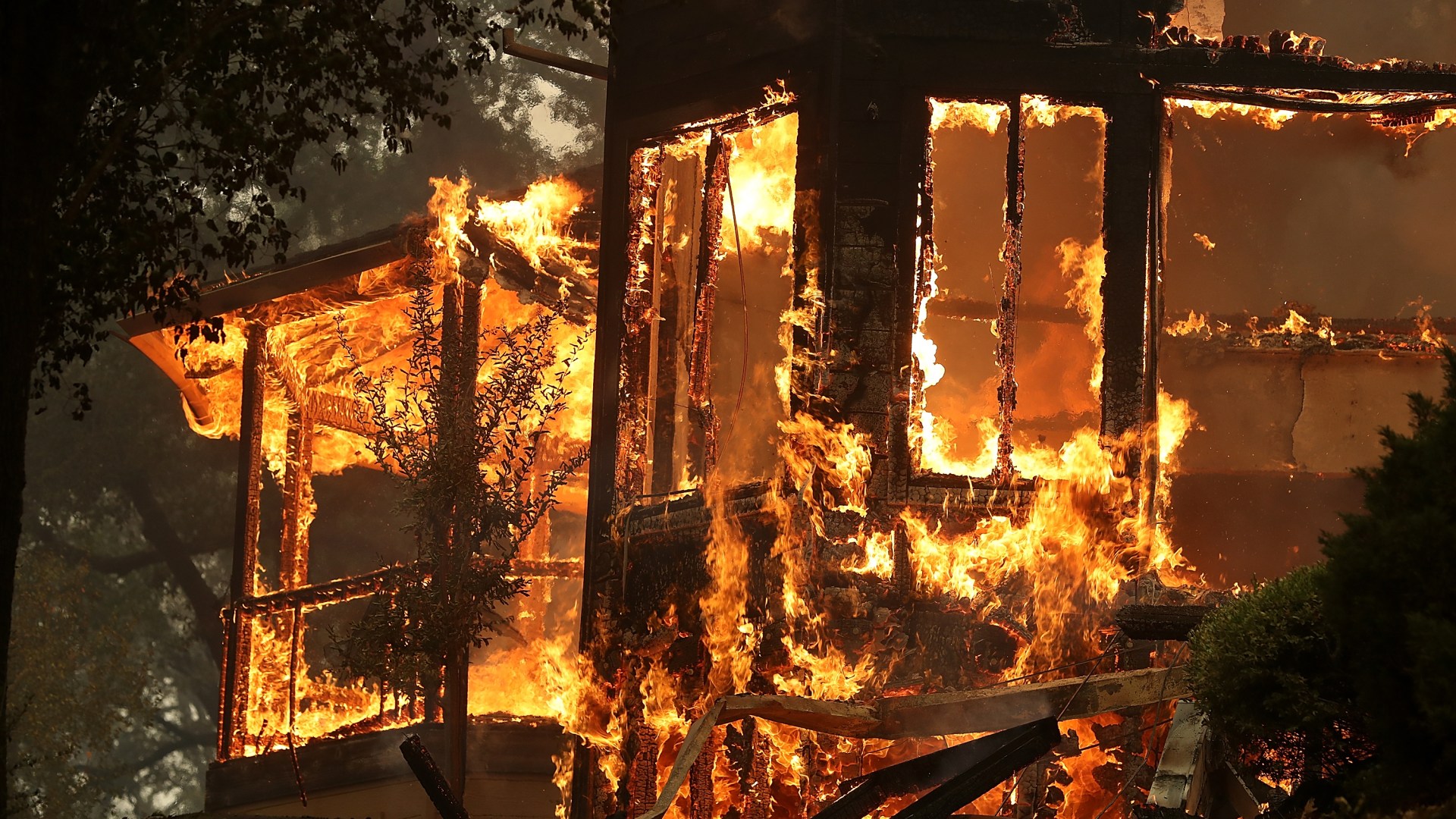
For a week now, I’ve been tracking live online maps of Northern California. The blue dot representing our house is in the “fire watch” zone. We are not in immediate danger but close enough to know many people who are—and close enough that I’ve been fielding messages all week: “I saw the fires on TV. Are you safe?”
A few weeks ago, I was starting a mental list of potential Christmas luxuries. Now I’m making a list of the most important “grab bag” necessities, which is exposing a much deeper set of priorities. If we had ten minutes to evacuate, the “essential” list is surprisingly short: our kids. The dog. The folder with our passports, birth certificates, and green cards. Our wallets. Phones and chargers. Maybe our wedding photos. But the rest is replaceable.
The looming threat of fire—or any other disaster—distills down our core values not just in practical ways but also in spiritual ways, too. As thousands face devastating displacement and loss, Jesus’ words to clothe, visit, care for, and feed others in need (Matt. 25:35–36) sound out a clarion call to action. My family and I are thinking deeply over how to donate and give well in this crisis.
But there are other words from Jesus that strike an even deeper chord as I hear story after story of devastation.
In Luke 13, Jesus was asked to comment on a local tragedy: Pilate had killed Galilean Jews and mixed their blood with sacrifices—a horrific, bloody offense. Jesus’ response was stunning. He told them not to draw any conclusions about whether the Galileans were worse sinners simply because they’d suffered. That tragedy and others like it weren’t indicative of anyone’s guilt. Nonetheless, Jesus pivoted and warned his listeners twice: “But unless you repent, you too will all perish” (Luke 13:1–5).
Apart from the hellfire and brimstone preachers who occasionally breeze through town with “turn or burn” placards, I hear very little mention about the day of reckoning that has historically held a powerful place in the church. But Jesus spoke regularly of fire and an eternal separation to come; he issued loving but clear warnings that God’s judgment is serious, just, and inescapable. He took the reality of judgment so seriously that he laid down his own life so that we can escape it and enter into the promised new heaven and new earth, “where righteousness dwells” (2 Peter 3:13).
There is a beautiful new creation coming, but we must not forget, as the apostle Peter warned us, that “the present heavens and earth are reserved for fire, being kept for the day of judgment and destruction of the ungodly. … The heavens will disappear with a roar, the elements will be destroyed by fire, and the earth and everything done in it will be laid bare” (2 Peter 3:7, 10).
This week, after seeing images of the charred ruins of homes in Santa Rosa, reading these verses feels particularly harrowing. I hesitate to even write this. But Jesus was clear—is clear—that I dare not gloss past these words or feelings. Luke 13 issues a warning in the face of every tragedy: We are not to point fingers but rather to examine ourselves.
“Since everything will be destroyed this way,” writes Peter, “what kind of people ought you to be?” (2 Peter 3:11). We should be gentle, generous, and humble, offering prayers to God and aid to others as an expression of the holy and godly life he calls us to. But Peter goes further, urging us to “make every effort to be found spotless, blameless, and at peace with him” (3:14).
That last phrase smolders in my conscience. At the core, this week’s tragedies have reminded me of the crisis of not being at peace with God.
“Are you scared?” one friend asked, and her question gave me pause. “I’m not scared of these fires,” I answered, “but thinking about how quickly life can be over makes me scared for my family and friends who don’t know God.” I am chastened, too, because I’m among those who so quickly forget about the coming Day of Judgment. Peter warns us against scoffers who say, “Everything goes on as it has since the beginning of creation” (3:4). I admit I too often fall under their spell. After all, “where is this ‘coming’ he promised?”
The urgency and heartbreak of the California fires should issue a wake-up call to us. This world is full of suffering, and God has a new one in store that will have no remnants of pain or crying. But we are not there yet, as these fires and hurricanes painfully remind us, and a final, more devastating Day is yet to come.
In that context, Jesus’ words are a challenge and a charge: We are called to care for others practically, prayerfully, and persistently in their immediate needs, and yet our deepest care is shown by sharing the gospel of Christ. We are witnesses to his care and healing in this life. We cannot forget to be witnesses to his salvation for the life to come.
Bronwyn Lea is a South-African writer and speaker living in North California. You can find her online at bronlea.com and connect on Facebook and on Twitter @bronleatweets.