In this series






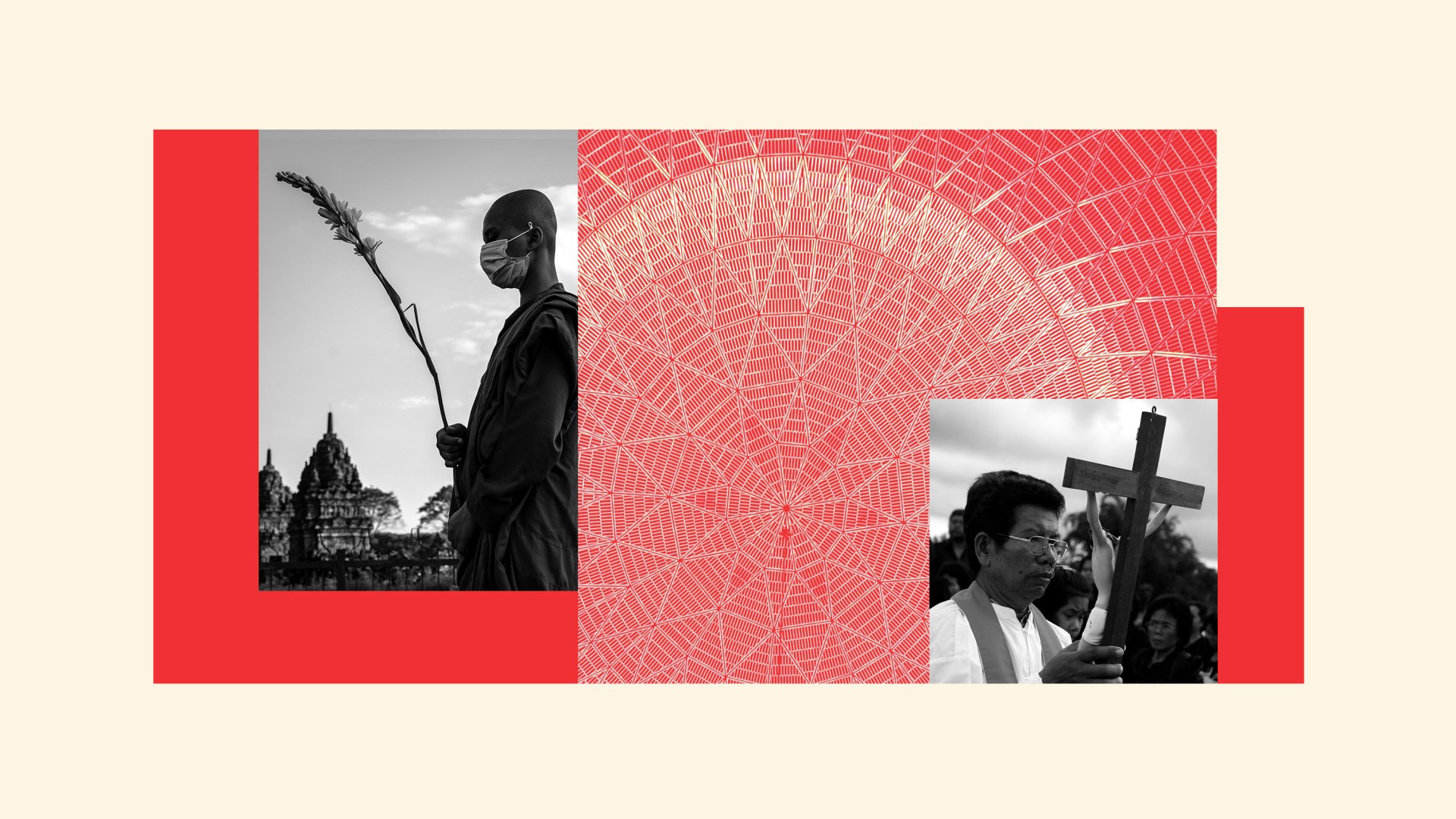
About a third of Indonesian Muslims said that the growing number of Christians in Indonesia is a threat to Islam, according to a special report by the Pew Research Center. One way such concern is manifested is in restrictions local officials place on Christian worship. We asked a panel of Indonesian religious leaders—both Muslims and Christians—their thoughts on why this concern exists, and how can Indonesians address persecution against minority religions.
Muslim Respondents:
Inayah Rohmaniyah: This is a classic issue where growth is feared and perceived as a threat, but it is not a serious problem as long as there is education. In practice, Indonesia is accustomed to diversity, with many people living next to neighbors of different faiths, both in rural and urban areas. Although Islamic symbols are growing, such as hijabs for Muslim women, it does not correlate with a desire to establish an Islamic state. These are merely expressions of religious identity in the public sphere, not the political realm.
We need to examine why these fears toward other religions exist. There are narratives, including hoaxes, that are circulated through social media. At the same time, critical thinking is lacking in our educational and societal contexts. To address this, we need counternarratives and activities to instill new knowledge that challenges the status quo.
Regarding restrictions on worship, we need to question the motives of politicians or local leaders who are partial to intolerant or radical groups. Could it be that they aim to gain support from the community for potential reelections?
Intolerant groups exist at the grassroots level, but the question is whether we will exploit these fears for political gain or counter them, eliminate them, and make them productive through communication and collaboration among people of different faiths.
Amin Abdullah: The fear is an exaggerated feeling of insecurity that has been around since the ’60s and ’70s when interfaith dialogue between Muslims and Christians failed. Such feelings of insecurity are entirely unhealthy for the nation’s life and should not be allowed. Christianity has been present in Indonesia for hundreds of years, since the Portuguese and Dutch colonizations, and is not a threat.
But again, Muslim thoughts are diverse and not monolithic; they cannot be reduced to a single representation. In political Islam, for example, there are also interests such as wanting to gain votes through negative campaigns against Christian threats and taking advantage of feelings of insecurity that do not align with reality. Restrictions on worship are one of the tangible manifestations of this feeling of insecurity.
Second, those who have such feelings are not abiding by the constitution, and they don’t fully understand concepts like al-muwatanah (citizenship), the principles of statehood, and equality before the law. Not only should they have religious knowledge, but they should also know about governance.
Christian Respondents:
Ferry Mamahit: The Muslim-Christian relations in Indonesia are quite complex, as there is a mutual distrust between the two groups, which sometimes breeds feelings of hostility and competition, especially in the realms of politics and economics. Suspicion arising from differences in beliefs and religious practices reinforces this dynamic. Legally, these worship restrictions contradict the principle of religious freedom guaranteed by the constitution. The government and relevant authorities need to ensure fair and equal law enforcement for all citizens, regardless of their religion or beliefs.
On the other hand, understanding the socioreligious conditions of the community is also crucial. Church denominations need to consider judiciously how to establish churches under government regulations and create constructive dialogue with the local community. Legal advocacy remains important, but dialogue and collaboration with the community can be additional steps toward achieving justice and harmony, proving that Christianity is not a threat but a positive force.
Farsijana Adeney Risakotta: The freedom of religion embraced in the national life of Indonesia has allowed citizens to convert from one religion to another, either through marriage or personal choice. Therefore, the survey results indicating that the growth of the Christian population is a threat to Islam demonstrate the success of a pluralistic way of life, where interfaith cooperation has become a part of cultural life in Indonesia.
Views on the threat posed by the development of Christianity in Indonesia will encourage Muslims to practice Islam in a way that responds to and addresses the needs of people in the modern world. The future of religion will no longer emphasize indoctrination but also encourage believers to digest religious teachings wisely and functionally. When believers reach this stage, it will lead to discussions with an emphasis on the virtues and benefits of religion in building and guiding Indonesia.
The difficulty in establishing churches in Indonesia is a legacy from the New Order era [under Suharto], and its spirit violates freedom of religion and human rights. The 2006 Joint Decree [which requires a church to provide a list of at least 90 local Christian residents before a church can be established] is often used by conservative Islamic groups to hinder Christians from constructing church buildings. This regulation has a good intention, which is to ensure that gatherings proceed in an orderly manner. Yet both maintaining order and religious freedom must be preserved.
Read our panelists’ bios in the series’ lead article, Parsing Pancasila: How Indonesia’s Muslims and Christians Seek Unity. (Other articles in this special series are listed to the right on desktop or below on mobile.)