





 A silver anniversary isn’t what it used to be. I know this from experience, having celebrated mine last month, but the data speaks for itself. According to a 2005 U.S. Census Bureau report, only 33 percent of us reached the milestone 10 years ago, whereas 70 percent of those who married in the late 1950s did. For previous generations, a 25th wedding anniversary was as much a simple consequence of time as it was cause to celebrate. Surrounded by as many divorcing and non-marrying loved ones as I am, I was a little embarrassed to draw attention to our special day. And like the older brother in the story of the prodigal son, I harbored some resentment about this fact.
My husband and I have been through a series of potentially marriage-destroying events in recent years, and I would have appreciated some salutations acknowledging our accomplishment. On Facebook, where I shared photos from our wedding day to mark the occasion, only a few long-married female friends and one never-married person posted well wishes. We received one card in the mail, from my parents. Perhaps we should have thrown a party, but that would have been insensitive given that two of our siblings finalized divorces in 2009. Of the 15 middle-aged siblings and step-siblings in our combined families, only 4 of us are currently married.
A recent Pew Research Center / Time magazine study indicated that over the past 50 years, “a sharp decline in marriage and a rise of new family forms have been shaped by attitudes and behaviors that differ by class, age and race,” with lower levels of income and education correlating with lower marriage rates.
The executive summary further states that “even as marriage shrinks, family—in all its emerging varieties—remains resilient.” But wait. More respondents said they would feel “very obligated” to help a parent (83%) or adult child (77%) in need than said this about a stepparent (55%) or a step or half sibling (43%), and only 39% would feel similarly obligated to a best friend. The old definition continues to have traction when it matters most.
The key finding of a 2010 study conducted by the National Marriage Project at the University of Virginia is that divorce, non-marital childbearing, and unmarried cohabitation have led to a dramatic increase in “fragile” and “typically fatherless” families over the past five decades. The executive summary includes this dire warning: “Today’s retreat from marriage among the moderately educated middle is placing the American Dream beyond the reach of too many Americans. It makes the lives of mothers harder and drives fathers further away from families. It increases the odds that children from Middle America will … lose their way.” As marriage increasingly becomes an institution aligned with wealth and eduction, the divide “threatens the American experiment in democracy and should be of concern to every civic and social leader in our nation.”
In a blog post about the Pew study, Southern Baptist Theological Seminary president Al Mohler declared, “Marriage was given to us by our Creator as the central institution for sexual relatedness, procreation, and the nurture of children. But, even beyond these goods, God gave us marriage as an institution central to human happiness and flourishing. Rightly understood, marriage is essential even to the happiness and flourishing of the unmarried. It is just that central to human existence, and not by accident.”
I believe this. So, although my 49-year-old husband is unlikely to ever work again because of a physical disability that has fundamentally changed both our marital and financial health in ways I didn’t anticipate, divorce is no more an option than it ever was. What is a daily choice is how we live together in light of these and other challenges. Not only do love and faith constrain us, so do the above cited personal and professional stats.
I am simultaneously compelled to resist the encroaching pressure of the easy out and feel a deep obligation to model fidelity and stability to the next generation in light of it. This is no easy task. I vowed to love my husband in sickness and in health, for richer and for poorer and can say unequivocally that rich and healthy is a whole lot easier than sick and poor. I can also affirm that hardness of heart is the fastest route to marital decline (Matt. 19:8).
Penn State sociologist Stacy J. Rogers is co-author of Alone Together: How Marriage in America Is Changing. She explained the National Marriage Project findings to the Huffington Post by saying that education, first marriage, no children from previous relationships, and financial health produce fewer external stressors. She also concluded, “We put a lot of emphasis on the marriage to make us happy, and fulfill our lives. We’re victims of unrealistic expectations.”
As much as I affirm lofty marriage ideals like Mohler’s, I believe discipleship in our age inevitably involves putting unrealistic expectations to death. Consider how we enthusiastically memorize a verse like Psalm 37:4 because it tells us that if we delight in God, he will fulfill our desires. We would do well to keep reading. Verses five and six add, “Commit your way to the Lord; trust in him and he will do this: He will make your righteous reward shine like the dawn, your vindication like the noonday sun.”
When my husband and I were in pre-marriage counseling, our pastor noted our mutual realism as an indicator of relational health. Twenty-five years later, reality is much more insistent and the truths of 1 Corinthians 13 are much more compelling.
Editor’s note: This post is slightly revised from an earlier version.
If you break down box office statistics in just the right way, you could conclude that American moviegoers care more about supporting communism and its causes than they do about widows and orphans and global poverty.
We could do that if we used a similar approach to the logic employed in this recent op/ed in the Wall Street Journal, written by Movieguide’s Ted Baehr and Tom Snyder, who argue that “what succeeds [at the box office] is capitalism, patriotism, faith and values.”
Baehr and Snyder base this on their analysis of “250 major films from Hollywood studios and independents for their social, political, philosophical, moral and religious content. . . . Once again, family-friendly, uplifting, and inspiring movies drew far more viewers in 2008 than films with themes of despair, or leftist political agendas.”
Consider how statistics don’t tell the whole story.
First, the year’s No. 1 movie – The Dark Knight, grossing well over $500 million domestically and $1 billion worldwide – depicted a city in complete despair until redemption finally wins through in the end. Second, family-friendly movies will obviously sell more tickets because you can take the whole family, and not just the “grown-ups.” (In my family, that means buying four tickets instead of just two.) Third, Movieguide’s “formula” for successful films doesn’t even factor in foreign box office figures, which are often more than the domestic take.
And consider how some categories may be irrelevant to moviegoers’ choices. Movieguide’s WSJ piece praises The Dark Knight and Iron Man because they are “pro-capitalist” movies, simply because their protagonists are very wealthy men who did some good things with their money. There’s no thought that perhaps so many flocked to the film because Heath Ledger’s portrayal of The Joker was so compelling, or because it’s a battle of good vs. evil, or because we just think Batman is one uber-cool superhero. I’ve never heard anyone say they wanted to see The Dark Knight “because I absolutely LOVE pro-capitalist movies!”
The editorial also slams movies like The Visitor for their “anti-American content” (we named it one of the year’s most redeeming films because of the love and sensitivity shown to foreigners in desperate need) and Under the Same Moon (ditto; that movie was about showing compassion to immigrants).
This paragraph leaves us especially puzzled:
“The moneymaking trend was similar for movies with explicit or implicit anticommunist content. That group – including an ‘An American Carol,’ which mocks communism; ‘Indiana Jones and the Kingdom of the Crystal Skull,’ where Indy reviles communists and their impoverished ideology is exposed; ‘City of Ember,’ where a tyrant steals from the people; and ‘Fly Me to the Moon,’ about the space race between the U.S. and the Soviet Union – averaged $71.8 million at the 2008 box office in America and Canada. By comparison, movies with pro-communist content, such as ‘Che,’ ‘The Children of Huang Shi,’ ‘Gonzo,’ ‘Trumbo’ and ‘Vicky Cristina Barcelona,’ averaged a measly $7.9 million in 2008.”
 Seven weeks and twice as many apple pies later, life has remained surprising normal—albeit a little sweeter—since my mother and father arrived from across the country to make their final home with my husband and me. The Great Recession of 2007-2009 and the sluggish home sales that accompanied it hit home for us through the agonizingly long time it took to sell my parents’ previous home. But the sale occurred, finally, just in time to get them here for the holidays.
For much of our marriage, my husband and I have lived far from any family, and, without children, our holiday celebrations have grown increasingly spare over the years. Putting up a tree, decorating, and holiday cooking seem like an awful lot of trouble for the two of us, especially when grading final papers and exams always takes me up to the day or two before Christmas. Lacking many traditions of our own, I was excited about having my parents here for the holidays, the first of what I expect will be many more. I wondered what new traditions we might begin in this new chapter of life.
The purchase of a Thanksgiving turkey provided the perfect opportunity to begin a new tradition. Like many others, particularly (and fittingly) Christians, I have recently undergone a personal conviction about factory farming. So on a gorgeous fall morning, we drove an hour south to pick up a free-range turkey that had been raised humanely and processed at a local farm. The chance to support a Christian family in their agricultural efforts (and to witness all eight of their children taking part in that wholesome work) blessed us, too.
In the absence of most of the trappings of Christmas, spending Christmas Eve with our church family has become the center of my husband’s and my Christmas celebration. We both take part in leading the worship each year in the church’s two candlelight Celtic Christian services. This year, for the first time, I shared the message at the second service, and my parents’ presence was especially meaningful, since it was their example of faith that led me to my own relationship with Christ as a young girl.
When Christmas morning arrived, my husband and I schlepped our stuffed stockings and wrapped gifts up to the garage apartment, where my parents are staying while we build their new house behind ours. Mom had bought a three-foot-tall plastic tree at the drugstore, strung up a few lights, and placed presents underneath it next to the Nativity and a paper mache angel one of my brothers made many years ago in grade school. Pulling the little surprises left by Santa from our stockings and opening gifts by turn, laughing, and reminiscing stretched the morning out, much like those magical Christmas mornings of childhood when unwrapping presents seemed to take all day. I imagine when the disciples handed out to the 5,000 the endless bounty Jesus provided from five loaves and two fishes, it felt a lot like such a Christmas morning. And almost as miraculously for Virginia, it began to snow, creating the first White Christmas our region had seen in years.
Speaking of miracles, having my parents here is awakening my dormant domesticity. Or maybe I just freely borrow from Mom’s. My husband and I are the type who attend parties but don’t throw them. Yet this year I felt inspired to host a New Year’s Eve Eve gathering at our home, inviting all the people who usually invite us. Having my mother here to help me get the house ready while my husband prepared an army’s portion of food made hosting such an event not only more doable but more pleasurable, too.
Sharing the holidays with my parents was certainly wonderful. But even more joyous is sharing the mundane, everyday things: enjoying Mom’s ubiquitous apple pies, for example (okay, those aren’t exactly mundane); taking the daily newspaper to my father rather than directly to the recycling bin; sharing meals and trips to the post office, and driving Dad to the car dealer to pick up his vehicle after servicing; coming home to the laundry having been brought in from the clothesline and folded by Mom; and setting weekly appointments with Dad to watch Modern Family and The Office. These are the things I am treasuring.
I realize that just seven weeks into our new life together—one I hope will extend into a decade or more—my husband and I are in the honeymoon phase with my parents. When I told my mom about these blog posts, she exhibited her characteristically helpful spirit. “Well, if things are going too smoothly,” she offered, “I can always try to rough things up a little to give you more to write about.”
I suspect that, ultimately, won’t be necessary. But for now, I’ll keep enjoying the honeymoon.
It’s hard to know where to start in response. First, it’s not at all clear that these are “pro-communist” movies. For example, The Children of Huang Shi is a true story about a British journalist, George Hogg, who rescues Chinese orphans from certain death during the nation’s war with Japan in the 1940s. The Chinese remember Hogg as a hero today, and the boys he saved are eternally grateful for his selfless act of mercy and compassion. We don’t see how that’s “pro-communist.”
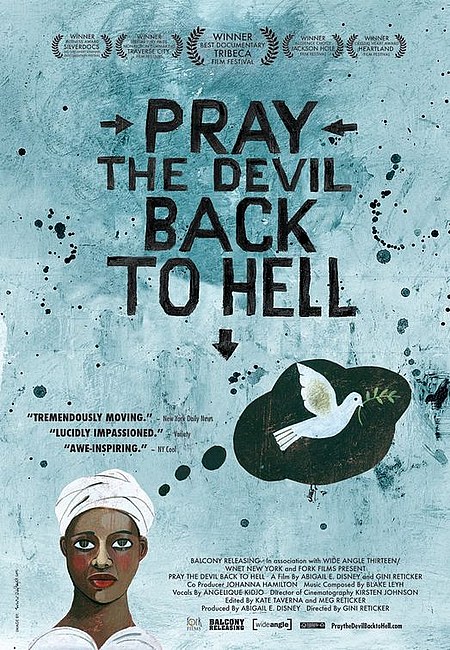
Second, using the same statistical logic, let’s compare those those “pro-communist” movies – which averaged a “measly” $7.9 million – to the average for movies that depicted Christ’s radical love in action, such Pray the Devil Back to Hell, Call + Response, We Are Together, As We Forgive, War Child, and Sons of Lwala. Box Office Mojo only has stats on Call + Response ($215,000) and Pray the Devil ($73,000), but I’m sure the others were well under $50,000. So, let’s say their average was a “measly” $50,000. Compared to the “pro-communist” movies’ take of nearly $8 million, that means Americans are 160 times more likely to be pro-commie than pro-love. Hey, statistics don’t lie!
Well, that depends on how they’re presented. Stats can be manipulated in any way, just as I manipulated them here to “prove” that Americans are more pro-communist than they are pro-compassion.
As a young journalist just out of college, I was told by an editor to read the book How to Lie With Statistics, first published in 1954. The book’s title is intentionally ironic; it’s not really a primer on how to lie with stats, but how to recognize that stats can indeed be misused so as to be misleading.
And that’s all I’m doing here: Recognizing just that.
2/21 UPDATE: Others voice their frustrations with–and had some strong words in response to–the Baehr/Snyder WSJ piece, including Dan Savage, Glenn Kenny, and Sean Gaffney.
2/22 UPDATE: And now Newsweek/The Washington Post have given Baehr and Snyder a forum for their statistical “analysis”–and the comments in reply are sassy: “No one sells more food than McDonald’s. McDonald’s must therefore be the most wholesome, moral food there is,” says one. “Christians neither invented nor have ownership of love, sacrifice, or heroism. As is clear from Mr. Baehr’s and Mr. Snyder’s article, they are also not free from bigotry, smugness, nor self-serving delusions,” writes another.







