





I grew up in Arabic churches where women wore lace head coverings, a tradition still practiced in some Eastern Orthodox, pre-Vatican II Catholic, and Middle Eastern churches. When I questioned my mom about it, she told me she covered her head out of respect to God. Years later, at a non–denominational megachurch, I was taught that "none of that stuff applies anymore."
In a culture where a vast majority of Christian women never consider a veil or hat for Sunday service, Bible verses addressing head coverings get quickly dismissed as irrelevant.
But there remain important questions for the church to consider about what has become a largely dated practice: If Paul, in inspired Scripture, asks the wives of the church to cover their heads to show that their submission to their husbands as a part of decorum for corporate worship, why don't we modern complementarians do so? And why, for example, is this small but well-advertised headcovering movement trying to bring it back? This is a tough issue, not least because it's difficult to detangle the historical aspects from the timeless ones.
Theologians such as Wayne Grudem say contemporary Christians no longer need to wear head coverings because veils, hats, and other types of hair coverings do not designate submission in our culture. But what does? He and others have likened the contemporary use of wedding bands to head coverings in Corinth. It's a valid position, but the wedding band, today's typical symbol for marriage, does not necessarily show the headship–submission model the passage refers to, since both men and women wear them.
Paul writes, "But I want you to understand that the head of every man (that is Christian men and women) is Christ, the head of a wife is her husband, and the head of Christ is God. Every man who prays or prophesies with his head covered dishonors his head, but every wife who prays or prophesies with her head uncovered dishonors her head, since it is the same as if her head were shaven. For if a wife will not cover her head, then she should cut her hair short. But since it is disgraceful for a wife to cut off her hair or shave her head, let her cover her head" (1 Cor. 1:3-6).
While styles changed, the practice of head covering continued even up to the early 20th century. Christian leaders believed the head covering called for in 1 Corinthians signified women's modesty and submission, so they continued to wear whatever type of covering was in fashion at the time. Some women wore bonnets, shawls, or hats, as a part of modest attire or to designate the married from the unmarried. By the 1960s in the West, the biblical practice had become merely a tradition, so when hats fell out of syle, the practice was dropped in Christian churches too.
If head covering is important in worship as a signifier, even more important is the thing it signifies: a husband's headship and authority. That's why today's headcovering movement, led by a man who has gathered several women to share their experiences of returning to the practice, concerns me as a complementarian woman. These women are each called to look to their own husbands and submit to his leadership, not to another man behind a website.
Couples can and should study the teaching together for themselves, and if neither husband nor wife are gripped by this conviction, let them go without her head covered. If on the other hand, they come to the conviction to practice head covering then do so, considering that submission to a husband's authority remains the higher principle in this passage.
Martin Luther said, "to go against conscience is neither right nor safe," but he said this after having established that his "conscience is captive to the word of God." If we are to follow something as a matter of conscience, we should make sure our consciences are in the service of our God and not to our whims. We consider the whole counsel of God, never neglect the weightier matters of the law, and seek a way rooted in love for God and our neighbors.
We do this because what we do as Christians—particularly in the church worship setting—affects the rest of the body of Christ. As I write in my book Gospel Amnesia, we never want something secondary to the gospel to distract or divide the church. The church is replete with secondary issues that denominations and subgroups use to distinguish themselves from others. These "secondary distinctives" include stances toward alcohol, wearing head coverings, contemporary music vs. psalms or hymns, and so on. Unfortunately, adhering to these can lead people to believe they have gained a certain godliness through their obedience, while they may be marginalizing other central gospel teachings and commands.
If we think we are being scrupulous about our obedience to God while judging others who aren't as theologically savvy, observant, or as modest as we are, then we negate the very heart of the gospel, the very thing Jesus himself said would define a disciple—the higher principle that compels us to love, among others, our brothers and sisters in the church.
When I was growing up in churches where women covered their heads in worship, no one made a big deal out of it, and certainly no one went around believing they were being more obedient to God because they were covering their head. It was part of the culture of that church. However, in a church that does not share this cultural symbol, women who—with their husbands—choose to cover should keep their expectations reasonable and honor others above themselves (Rom. 12:10). They can practice head covering discreetly, without proselytizing their practice to their pew-mates. After all, drawing attention to the head covering violates the call for modesty described in very same portion of 1 Corinthians.
Since modesty, marital submission, and order and decorum in the worship service lie at the very heart of this section of Scripture, that is what the Church as a whole and we as individuals need to be pursuing. Our conviction to love God and love our brothers and sisters should preside over all our other convictions.
This article was adapted from and inspired by a more thorough discussion of 1 Corinthians 11:1-16 on Luma Simms's blog, Gospel Grace.
Luma Simms (@lumasimms) is a wife, and mother of five children. She has a B.S. degree in physics and studied law before Christ led her to become a writer, blogger, and Bible teacher. Her book Gospel Amnesia can be found at GCD Press. She blogs regularly at lumasimms.com.
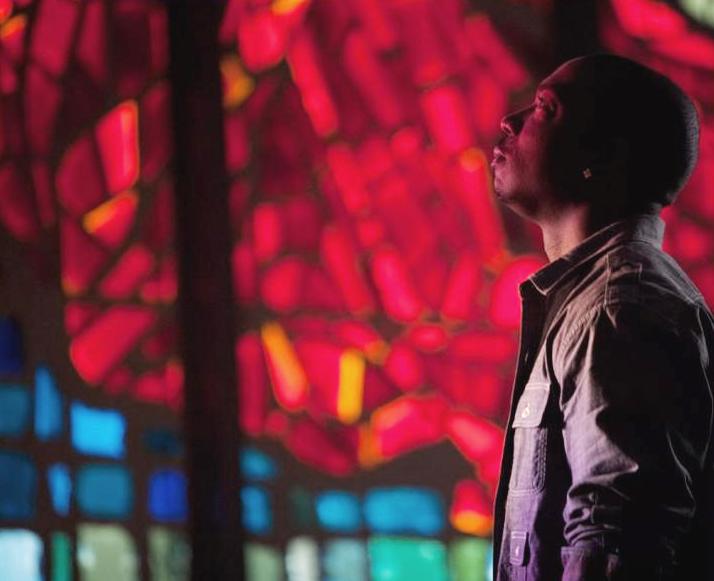
Ja Rule, a foul-mouthed rapper with a history of gun and drug charges, is playing the lead role in an upcoming film about a troubled man who finds faith and turns his life around. Rule is so proud of the part, he says it’s got a “shot at winning awards and sh*t.” Hoo boy.
I’m in Love with a Church Girl recently finished filming and is slated for a 2011 TBA release. The film is based on the true story of Galley Molina, a former music industry exec who was involved in drug trafficking and did prison time before finding God; he’s now a youth pastor at Evergreen Valley Church in San Jose.
In an interview on the film’s official website, Ja Rule said “I almost felt like I was that character” – and it’s easy to see why. Rule has been in trouble with the law numerous times with drug and gun charges, though he’s never served time in jail; a gun charge is still pending. And his potty mouth is notorious; all seven of his studio albums come with explicit language warnings. In a recent interview, he ripped fellow artists – using the term “n*ggas” – for what he perceives as misuse of the phrase “keeping it real.” Rule said, “You know what keeping it real is? Feeding your f*cking family, taking care of your f*cking kids, that’s what’s keeping it real. All that other frivolous bullsh*t is just that.” Hmmm, okay.
Rule, who has acted before (The Fast and the Furious, Scary Movie 3), is clearly proud to be part of a faith-based project: “I just shot this real ill movie, this Tyler Perry sh*t called I’m In Love With A Church Girl, with Adrienne Bailon. They talking about taking it to the festivals and sh*t. So we can get a shot at winning awards and sh*t. It’s like everything is moving in the right direction for me right now.” (Note: It’s not a Tyler Perry film.)
I wonder if they’ll be sending Rule to pastors’ conferences and churches to plug the film, and other sh*t like that? Good Lord.
The film also stars Stephen Baldwin, Michael Madsen, and former Cheetah Girl Adrienne Bailon, Christian rappers TobyMac and T-Bone also appear in the film.
Molina says that “the message of this film is really simple but profound. Sometimes God needs to use extreme measures to deal with extreme circumstances. I was that extreme circumstance. This film is simply about the power of God in a man’s life. The unique part of this story aside from being based and inspired on my real-life experiences is that I wrote it while I was incarcerated in a federal prison on drug trafficking charges.”
The movie will be the first release from Reverence Gospel Media. Here’s a video of Molina talking about the film:







