Silenced: How Apostasy and Blasphemy Codes are Choking Freedom Worldwide
Author
Nina Shea; Paul Marshall
Publisher
Oxford University Press
Release Date
October 31, 2011
Pages
480
Price
41.93
Religious freedom is in global crisis. According to two comprehensive studies by the nonpartisan Pew Forum on Religion and Public Life, 70 percent of the world's population lives in nations where this precious freedom is subject to severe restriction. Many people suffer "mere discrimination" (some serious form of civil, economic, or political disability) because of their religious beliefs or those of their tormentors. Others—tens of millions, in fact—are victims of violent persecution, such as torture, rape, "disappearance" (kidnapping and murder), unjust imprisonment, and execution.
You can be forgiven if you haven't heard much about this crisis from the mainstream press, whether left or right. Neither The New York Times and CNN, nor The Wall Street Journal and Fox News, have much time for religious persecution, beyond spectacular episodes of mass murder. Even then, the coverage is usually brief, thin, and void of analysis. How often, to cite one egregious area of neglect, has the secular press examined the effects of antiblasphemy laws in the Middle East?
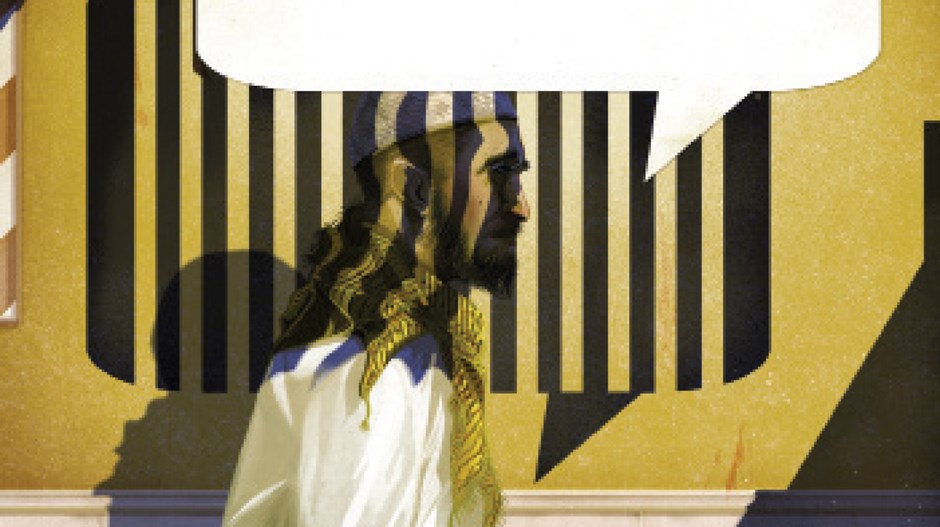
In Silenced: How Apostasy and Blasphemy Codes are Choking Freedom Worldwide (Oxford University Press), Paul Marshall and Nina Shea go bravely where the media fear to tread. Based on an extensive examination of Muslim-majority countries, they contend that laws and policies punishing blasphemy and apostasy are not only a major source of religious persecution, but also an obstacle to stable democracy and the defeat of Islamist terrorism.
Having collaborated for several years, first at Freedom House and currently at the Hudson Institute's Center for Religious Freedom, the pair brings to the subject a remarkable background in research and advocacy. Marshall is in many respects the intellectual godfather of the fight for international religious freedom. His 2007 Religious Freedom in the World was the first attempt to provide a comparative index of religious liberty that measured the performances of key countries. And Shea has pioneered activism on behalf of the victims of persecution, while maintaining a steady stream of trenchant writings on the subject. Of late, she has directed much of her fire at the failures of Saudi Arabia to remove toxic Wahhabist principles from its textbooks.
Deepening Alarm
Blasphemy has been understood classically as manifesting contempt for God or, worse, assuming the attributes of God. In medieval Europe, it was considered a crime warranting severe penalties from the state, usually supported by the Catholic Church. But today—despite the continued presence of antiblasphemy laws on the books of a few Western states—most Christian denominations believe religious error must be addressed by better preaching and teaching, not by coercion from the state or private actors. One of the key demands of the Second Vatican Council's Declaration on Religious Liberty (1965) is that all religious communities have the right to make their truth claims freely and publicly, and to win converts where those claims are persuasive.
The lands of Islam, however, are still far from embracing this aspect of religious liberty. Blasphemy continues to be criminalized throughout the Muslim nations of the greater Middle East, Africa, and South and East Asia. Converts from Islam—apostates—are often imprisoned, tortured, or murdered. Under the aegis of the Organization of Islamic Cooperation, Muslim nations have for years attempted to internationalize the treatment of blasphemy as a crime, a campaign Marshall and Shea recognize as a threat to Western democracy.
It should be noted that neither Marshall nor Shea argues in favor of blasphemy or apostasy as religious, social, or political goods. Rather, they contend that government or social restrictions on either category of expression, especially restrictions that involve coercion or violence, cripple religious reform, penalize minorities, and shut off any possibility that democracy can mature in the Muslim world. Worse, coercive legal or social restrictions have the effect of encouraging violent religious extremism and Islamist terrorism.
Nor do the authors argue that the pathologies they describe are intrinsic to Islam. The book includes three essays by Muslim intellectuals who defend religious freedom, each drawing in different ways from Islamic texts and traditions. It begins with a foreword by Abdurrahman Wahid, the distinguished Muslim liberal and former prime minister of Indonesia who died in late 2009. Wahid's essay, "God Needs No Defense," contends that Islam is defiled by laws such as Section 295-C of Pakistan's legal code, which mandates death for acts like "defiling the name of Muhammad." Those who would punish others in God's name are guilty, he argues, of the Muslim equivalent of mortal sin—taking on the role of God.
The core of Silenced, however, is an eminently disturbing tour through key Muslim-majority states. In chapters on Saudi Arabia, Iran, Egypt, Pakistan, and Afghanistan, the authors identify the horrors that attend crackdowns on blasphemy and apostasy. One cannot read these accounts without a deepening sense of alarm. We expect certain pathologies in theocratic states such as Saudi Arabia and Iran, but not in the erstwhile democracies of the greater Middle East. Both the Pakistani and Afghan governments support the arrest and punishment of blasphemers. In Pakistan, Muslim governor Salman Taseer and Christian cabinet member Shahbaz Bhatti were murdered earlier this year for demanding the repeal of antiblasphemy laws. Polls show broad public support for the murderers.
Article continues below
It is perhaps providential that this book hits the shelves at a moment when religious persecution is hitting historic levels.
Even in states like Egypt that lack explicit statutory bans on blasphemy and apostasy, the political and social basis for persecution is clearly evident. One Egyptian convert to Christianity—a married woman—was arrested by local police, ostensibly to protect her from family members who had attacked her and her husband. But she was soon transferred to State Security in Cairo, where she was tortured, including with electric shocks, photographed naked, and then released to her family, who dragged her screaming from the station.
With such stories, Marshall and Shea pose serious questions for American foreign policy: Can post-Hosni Mubarak Egypt rid itself of these practices, and grant all its citizens and religious groups complete equality under the law? What might the "Arab Spring" mean, in general, for global religious liberty and American national security?
Missed Opportunities
Sadly, American politicians and diplomats persist in ignoring the profound relationship between these two ideals. Quite apart from humanitarian considerations, there is mounting evidence that religious liberty is necessary for the stability and longevity of democracy in highly religious societies, and for the defeat of religion-based terrorism. Yet the United States, for the most part, has not encouraged or assisted other countries in reforming their repressive institutions and habits.
Some hoped the International Religious Freedom Act, enacted in 1998, would upset this bizarre lethargy. The law required American diplomacy to combat persecution by advancing religious freedom around the world. Alas, it has failed to elevate the strategic importance of religious freedom, and U.S. foreign policy continues to have little impact on global persecution.
Article continues below
It is perhaps providential, then, that this book hits the shelves at a moment when such persecution is hitting historic levels. One can hope it will garner the attention of reporters, scholars, and—especially—policymakers. Marshall and Shea will not, of course, win acclamation among authoritarian governments or Muslim extremists. Their book will dismay Western "realists" and others who prefer their foreign affairs stripped of religious ideas and actors. But among the victims of religious persecution, and those who see religious freedom as critical to stable democracy and the defeat of Islamist terrorism, Silenced will be welcomed and celebrated.


















 While we pray for peace, we need moral clarity about this war.
 We’ve got little information on Jesus’ appearance and personality. But that’s the way God designed it.españolFrançais
 How groups like Hillsong learned to let go of the literal in favor of creative collaboration.españolPortuguês






