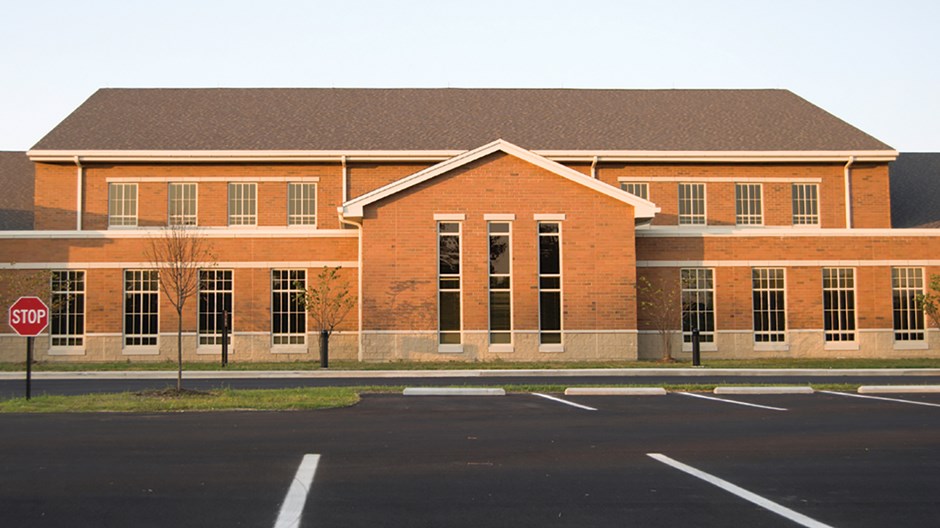
Here's what you can do in a New York City public school after hours: You may gather people together once a week (or more often). You can start off with praise choruses and Bible reading. Someone can stand up and teach that Jesus is Lord, that he rose from the dead to save us from sin, and that he is coming again. Then you can break bread and pray together.
Here's what you can't do in a New York City public school after hours: Hold a "religious worship service."
Got it? To the U.S. Second Circuit Court of Appeals, the distinction is clear. "A worship service is an act of organized religion that consecrates the place in which it is performed, making it a church," the court ruled last June. And if New York City's Department of Education wants to bar "religious worship services," it can do so without violating the Constitution, the court said.
But as Park Slope Presbyterian Church senior pastor Matt Brown told The New York Times, "I would love to know who at the Board of Education is theologically capable of making those decisions" about what's an unacceptable worship service and what's a religious meeting protected by the First Amendment.
The Supreme Court has repeatedly ruled that if the government opens the door to one outside group, it has to open it up to others without discriminating against viewpoints—even religious ones. It's a principle based more in the First Amendment's protection of free speech than of the free exercise of religion. The Second Circuit tried to get around this principle by saying the Board of Education rule bars only an activity (worship services), not a viewpoint.
Observers had expected the Supreme Court to point to a 1981 decision striking down a state university's ban on students using campus facilities for worship. There is no "constitutional difference between religious 'speech' and religious 'worship,' " the court said over 30 years ago. Such a distinction would be "judicially unmanageable."
Instead, in December the Supreme Court said it would not consider the New York case. That left dozens of churches scrambling to find space before a February 12 eviction deadline.
From all accounts, these churches seem to be responding Christianly. After their eviction, they plan to continue ministering in their neighborhoods—even to the schools. And they are working with city and state governments to eliminate the worship service ban.
This would be a good place for a Christianity Today editorial to stop: outrage at a bad ruling and praise for ongoing church ministry amid adversity. But it's not quite so simple. There's something in that Circuit Court opinion that stands out.
"When worship services are performed in a place, the nature of the site changes," Judge Pierre Leval wrote. "The site is no longer simply a room in a school being used temporarily for some activity. The church has made the school the place for the performance of its rites, and might well appear to have established itself there. The place has, at least for a time, become the church."
'When worship services are performed in a place, the nature of the site changes.'
As a point of law, Leval's argument is untenable, straying widely from what the First Amendment means when it bars "establishment of religion." But as a point of Christian theology, Leval is on to something. There is something special about God's people coming together in worship. Worship does change the nature of a place. Christian traditions may differ on theological specifics, but we all agree that when we worship we participate in God further establishing his eternal kingship in this world.
We believe that false worship matters, too. Would you want your child in a classroom where Hindu priests had performed a ceremony hours earlier? If you found out your child's photo on the wall had been part of a Wiccan ritual, would you care? If Moonies were handing out cookies and balloons in front of your child's school every week, would you be worried about perceived endorsement? A right to worship in public school buildings is also a right to worship falsely in public school buildings. And Christian calls for inclusion are hollow indeed if we join them with calls to keep religious minorities out.
This doesn't mean that the New York rule, the Second Circuit's ruling, or the Supreme Court's refusal to hear the case is right. On the contrary, the rule remains unconstitutional, discriminatory, and ridiculous. But there's something to celebrate in this ruling: Worship really does matter. It may be prudent and legally important to argue otherwise in the courts, but let us not mistake constitutional argument for metaphysical reality. Worship is not merely another form of speech.















 While we pray for peace, we need moral clarity about this war.
 A Christian reconciliation group in Israel and Palestine warned that war would come. Now the war threatens their relevance.españolالعربيةFrançaisрусскийУкраїнська
 How groups like Hillsong learned to let go of the literal in favor of creative collaboration.españolPortuguês






