Books
Review

The Need for Creeds

It’s more than merely helpful to set down the church’s core convictions in words.

The Need for Creeds

The Need for Creeds

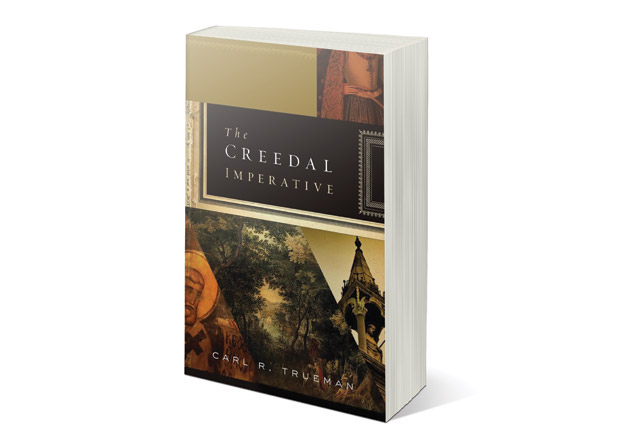
Our church has a need for a creed. In The Creedal Imperative (Crossway), Westminster Theological Seminary's Carl R. Trueman presses the case that "creeds and confessions are vital to the present and future well-being of the church."

The Creedal Imperative

The Creedal Imperative

Crossway

208 pages

It's not just that a creed (a public, established statement of a church's most important beliefs) is a useful tool for teaching doctrine, holding leaders accountable, defining the boundaries of church membership or cooperation among churches, and telling the world what a church stands for. Creeds do all that. But this book is not about the handy helpfulness of creeds; it's about the creedal imperative. A church that obeys the Bible should follow the injunction of the apostle Paul's pastoral epistles to Timothy, and resolve to guard "a form of sound words transmitted by eldership … ensuring good management of the household of God."

Trueman builds up this biblical case for creeds, layers over it the historical case from both the patristic church and confessional Protestantism, and puts the burden of proof on what he calls the "'No Creed but the Bible!' brigade." Given this biblical and historical trajectory of churches using creeds, "the question is not so much 'Should we use them?' as 'Why would we not use them?'"

Trueman acknowledges that there is a case to be made against creedalism, but he thinks that case is spurious because it is entirely cultural: The spirit of our age ignores history, distrusts institutions, values emotions more than words, and hankers after novelty. For moderns, the loftiest goal is to be authentic, to speak spontaneously from the heart, giving voice to unique insights from our own points of view. For this mindset, the idea of reciting a set of ancient words in public agreement with a group is, if the word be allowed, anathema.

As a result, anti-creedal evangelicalism is, ironically, "not countercultural, but culturally enslaved." Trueman is passionate and eloquent about how creeds enable churches to dig in their heels and stand with the great tradition, pushing against the modern temperament.

One of Trueman's most deft arguments is that every Christian and every church already has a creed in the sense that they all "think the Bible means something and that its teaching can be summarized" in different words.

He continues, "The only difference is whether one writes the confession down, so that others may scrutinize it and judge whether its teaching is consistent with Scripture, or whether one refuses to do so, in which case one's beliefs are essentially identified with the teaching of Scripture and placed above such scrutiny."

It is the anti-creedalist, in other words, who trumps the Bible with an unassailable (because unstated) tradition.

Ironies like this are delicious to the already persuaded, but they are unlikely to change minds. Trueman almost always avoids what he calls the "rather distasteful, not to mention sinful, tendency among many confessional writers to look down with scorn and derision on those who are not confessional." But he does lecture from a rather high seat, and at times he makes it clear that all God's ways tend toward a good Presbyterian church.

But what about evangelicals not already convinced by confessionalism? Perhaps, for them, the most helpful parts of The Creedal Imperative will be the section on the biblical foundations of creedalism and the delightful chapter on "confession as praise." Trueman's fine book may actually give them a glimpse of the high helpfulness, if not the necessity, of creeds.

Fred Sanders is associate professor of theology at Biola University's Torrey Honors Institute, and the author of The Deep Things of God: How the Trinity Changes Everything (Crossway).

Also in this issue

The CT archives are a rich treasure of biblical wisdom and insight from our past. Some things we would say differently today, and some stances we've changed. But overall, we're amazed at how relevant so much of this content is. We trust that you'll find it a helpful resource.

Cover Story

Honoring Faith in the Public Square

Wilfred McClay

The Mystic Baptist

Review

How to Remove Our Bible-Reading Blinders

Christopher Hall

Excerpt

Why Love Never Ends

Shari'ah's Uphill Climb

John Witte Jr.

God Did It

The Key to a Purposeful Life

Sarah Lebhar Hall

'Fringe' Has Always Been About Playing God

Todd Hertz

What Is the Biggest Change Evangelical Seminaries Need to Make Right Now?

Dan Kimball, Cheryl Sanders, and Winfield Bevins

News

Church and State for the Homeless

Matt Branaugh in Denver

How Gabriel Wilson Discovered his Paternal Roots—and Made a Record About It

Robert Ham

Jamie Grace Is Holding On

Mark Moring

The Truth About World War II's True Shepherds

Interview by Lisa Velthouse

News

The Trouble with TBN

Bobby Ross Jr.

News

Should Seminary Professors Be Granted Tenure?

Compiled by Ruth Moon

News

Christians Fight Israel's Marriage Ban

Ruth Moon

Editorial

How to Unfreeze the Middle East

A Christianity Today Editorial

What to Watch For on Election Night

This (Ambiguous) Political Life

John G. Stackhouse Jr.

News

Doubting China's One-Child Policy Change

Melissa Steffan

News

Crisis of Faith Statements

Melissa Steffan

Review

Review: The Church In An Age of Crisis

Matt Reynolds

Review

Review: Amplifying Our Witness

Matt Reynolds

Wilson's Bookmarks

John Wilson

My Top 5 Books on Homosexuality

Sacrilege Is Real

Letters to the Editor

News

Go Figure

News

Quotation Marks

News

Gleanings

Our 'Call'

Harold B. Smith

Questions That Drive Us

View issue

Our Latest

News

Finland’s Top Court Split on Christian Politician’s Hate Speech Charges

The court convicted Päivi Räsänen for publishing a brochure on sexual ethics but acquitted her for a social media post quoting Romans.

What’s the Point of Education in an Age of AI? 

American teenagers are getting a crash course in nihilism, and we need answers more compelling than the hope of universal basic income.

News

Pro-Life Ministries Find New Ways to Connect Clients and Donors

Social media and giving apps expedite the process of helping women with unplanned pregnancies.

The Bulletin

ICE at Airports, School Shooting Convictions, and Ruling Against Meta

Clarissa Moll, Russell Moore

DHS shutdown and expanded ICE presence, murder charges of school shooter’s parent, and jury rules social media causes harm.

Review

When ‘Nothing’ Happens

Justin Ariel Bailey

Three books to read on church life and ministry this month.

News

As Antisemitism Rises, Members of Abrahamic Religions Fight Back

Christians, Muslims, and Jews lead tours, direct films, and speak to youth about the concerning trend.

The Just Life with Benjamin Watson

Anquan Boldin: From the Muck to the Movement

What it means to move from the field to the fight and to pursue justice when it becomes personal.

Jonathan McReynolds Fuses Gospel Music with ’80s Pop in ‘Closer’

A conversation with the Grammy-winning artist about fame, intimacy with God, and the music of the neon decade.

Apple PodcastsDown ArrowDown ArrowDown Arrowarrow_left_altLeft ArrowLeft ArrowRight ArrowRight ArrowRight Arrowarrow_up_altUp ArrowUp ArrowAvailable at Amazoncaret-downCloseCloseEmailEmailExpandExpandExternalExternalFacebookfacebook-squareGiftGiftGooglegoogleGoogle KeephamburgerInstagraminstagram-squareLinkLinklinkedin-squareListenListenListenChristianity TodayCT Creative Studio Logologo_orgMegaphoneMenuMenupausePinterestPlayPlayPocketPodcastprintRSSRSSSaveSaveSaveSearchSearchsearchSpotifyStitcherTelegramTable of ContentsTable of Contentstwitter-squareWhatsAppXYouTubeYouTube