Frustration. Fatigue. Failure. These emotions overwhelmed me as I stumbled toward the finish line of completing my first ministry term in Bangladesh in 1967.
And exactly what did I have to report to our friends and churches—faithful supporters for five seemingly interminable years? I could talk about living without electricity and running water in a small village, or about learning a language for which my lungs produced a torrent of air when only a gentle puff was required.
But what about John 15? The assurance of "much fruit" had prompted this 24-year-old zealot to take his lovely bride of nine months to a remote village where not one convert from Islam had ever existed. Fruit? What fruit? Not one believer. Not even one inquirer to show for my marathon of perseverance.
After years of even more effort, our team of 21 missionaries embarked into the unknown in 1975. As far as we could research, no one was attempting to design and implement a contextualized way to evangelize Muslims.
We were living in a country of tens of millions of Muslims—but only 100 had come to Christ over the past 50 years. Most of these believers were extracted from their community and financially dependent on the small national church, heavily subsidized by foreigners.
The traditional Bangladeshi church was and is an amalgam of Western and Hindi influences. Iswar, a polytheistic word for "God," was the word missionary William Carey chose in the early 1800s while translating the Bible into Bengali. To Hindus, who compose about 10 percent of the Bangladesh population, Iswar is a positive bridge word into the Christian faith. But to Muslims, who compose the other 90 percent, it is abhorrent to think of God in terms of multiplicity and idol worship.
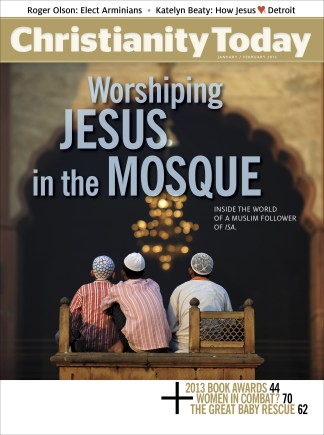
No faithful Muslim would ever enter a mosque wearing shoes. They cleanse their feet, hands, and face prior to worship. Sitting on the floor and prostrating themselves are acts of deep humility before the sovereign God of the universe. Singing and musical instruments are forbidden in mosques. They chant as the preferred mode of giving adoration to the "Great God." The few Muslims who venture into the Bangladeshi church find the Hindu-influenced forms so repugnant that they are rarely able to process the message.
Our team commenced a two-year effort that centered on research, analysis, experimentation, and evaluation. Our goal was to be biblically orthodox and maximally attractive to our Muslim audience. We adopted some forms common to Muslim worship. But we were always cautious about accepting rituals whose form is inextricably linked to a heretical message. For instance, the prayer (salat) postures are filled with verses from the Qur'an. We didn't adopt this. At the same time, we used biblical forms of prayer such as kneeling, raised hands, and prostration.
Perhaps the most significant assistance we received was a translation of the Bengali New Testament into Muslim-friendly terminology. Viggo Olsen of Association of Baptists for World Evangelism, along with his wife, Joan, birthed this masterful text, low-cost and packaged in a Muslim-friendly design. Bangladeshis affiliated with Operation Mobilization sold the New Testaments by the thousands throughout the country.
Years later, what about that John 15 fruit? Today, tens of thousands of Muslims in Bangladesh have become followers of Isa. And in our fruitless village of the 1960s, more than 600 have been baptized.
But by the early 1980s, other committed evangelicals felt they should push further into a new evangelism effort: the insider movements. Actually, we have always considered our approach as insider, but we have strived to remain within biblical boundaries. I have significant concerns about these newer attempts in contextualization:
- There is a tendency to encourage converts to remain in mosques and perform the attendant prayers.
- New believers are still known as Muslims, and without further identification, such as "Muslim, follower of Jesus."
- To some, it is still permissible to recite the creed, "There is no God but Allah, and Muhammad is his Messenger."
The latest controversy (one that CT covered extensively in 2011) relates to the Muslim's misunderstanding of the term "Son of God." A number of vernacular translations have translated this phrase to Isa al Masih, which is "Jesus the Messiah," or an equivalent. Not all insiders use each of the above. Contexts vary as do the opinions of missionaries and mission boards. But how much contextualization is too much? Missionaries of good will have different opinions and strategies. Prayerful respect is essential to resolve these issues.
Phil Parshall is a missionary with sim and author of Muslim Evangelism: Contemporary Approaches to Contextualization (IVP). He spent 44 years in ministry to Muslims in Asia.