Mel Gibson's The Passion of Christ sure is getting a lot of heat these days. With more than two months left to go yet before its theatrical release, prominent Jewish leaders, foremost among them New York State Assemblyman Dov Hikind, have labeled Gibson's film as anti-Jewish. "This film can potentially lead to violence directed against the Jewish community," Hikind asserted. "It will result in anti-Semitism and bigotry. It really takes us back to the Dark Ages … the Inquisition, the Crusades, all for the so-called sin of the Crucifixion of Jesus.
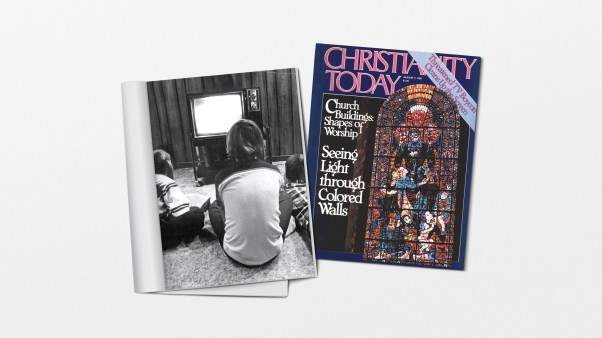
 Although television has been a major factor in American life for nearly a generation, it has yet to find a creative niche. Except in times of crisis, its great potential for immediacy goes largely untapped. Television as a positive force is still so insignificant that the sudden demise of the medium might be more of a joy than a calamity.From the religious perspective, the most lamentable thing is that the churches have hardly even begun to use television. What was first seen as a new means for fulfilling the Great Commission is still looked upon wistfully by evangelistically minded Christians. But they are attempting only a smattering of productions—some of them remarkably good—and virtually all of these appear early Sunday, when the unchurched are asleep. An exception are semi-annual Billy Graham crusades in “prime time.”The predicament was aptly underscored a few days ago by a Hollywood scriptwriter at a conference in Montreal. John Bloch, who helps create such shows as “The Man from U.N.C.L.E.” and “Run for Your Life,” told the conferees that “all the money and energy being channeled into half-hour programming on Sunday morning is a waste.” He urged church communicators to try to penetrate prime evening time.Columnist Jack Gould of the New York Times agreed in principle but questioned the practicality of Bloch’s appeal. “As he knows better than any viewer,” Gould said, “the output of Hollywood is rigorously formalized and dependent on materialistic considerations above all else.” Gould didn’t have any answers, either, and was able only to look askance at “the deluge of evangelists who spend huge sums on radio every weekend to hear the sound of their own voices and come up with soothing maxims that faith in God is the answer to miserable housing, unemployment and the absence of minimum human dignity.”Unfortunately, Gould’s underlying presupposition that church involvement in social problems will win better TV time falls apart when one realizes that the National Council of Churches’ perennial preoccupation with non-ecclesiastical matters has won only slight massmedia attention. Gould scores much better with another thesis “What religion on TV requires is hard-hitting and searching reportage.”Interestingly, one of the new TV season’s prime-time shows does inject a religious element—as the gimmick for a comedy routine. “The Flying Nun” on ABC features Sally Field as the ninety-pound novice whose headgear enables her to become airborne.About the only other TV program worth talking about so far this fall was the four-hour Africa special ABC pioneered. The most glaring shortcoming in an otherwise commendable program was the omission of any mention of the role Christian missionaries have had in the development of Africa. Here was a perfect opportunity to include the religious element, but the producers chose to ignore it completely. It was as if they did not know that the missionaries were helping the African back when no one else cared.To mobilize the church to exert pressure for better programming, the Methodist Television, Radio and Film Commission has designated October as “Television Valuation Month” and is issuing 1,600,000 copies of “A Guide to Action.” The material includes perforated cards on which viewers are asked to comment on TV programs; the cards are then to be sent to local stations.Commission chief Harry Spencer realizes full well, however, that programming changes cannot be effected without changes in viewing habits. Said Spencer: “We are telling our church people that if they want changes in television programs, they will have to do more than voice their opinions—they will have to change themselves.”‘Heart Of America’ RespondsEvangelist Billy Graham preached with traditional simplicity to the largest audiences ever to assemble for a religious event in Kansas City during the ten-day “Heart of America” crusade, September 8–17.The crowds that gathered at Municipal Stadium also challenged a previous attendance record set when the Kansas City Chiefs attracted 43,835 persons for their 1966 football opener. More than 42,000 attended the first Sunday service of the crusade.After the evangelist’s zealous messages delivered from a platform in short center field, one person in every forty-two stepped onto the infield skin to indicate a spiritual need.Among inquirers were several chiefs of police attending their national convention in Kansas City and a timid ten-year-old carrying an airline travel bag well stuffed with whatever little girls put in them.Although Graham had vowed to avoid political issues, he frequently acknowledged the need for federal action in racial and poverty problems.“I’ve been in a place in New York City where two families with nine children between them live in the same room, with only a sheet to divide the families. And the closest bathroom was three floors away. Things like this should not happen in America,” he said.But the problems of race, poverty, agitation, and subversion are only symptoms of the greatest problem, he said—“man pitting his will against God’s.”The evangelist interpreted the statements made by Bishop James Pike on Johnny Carson’s TV show while the crusade was in progress as a disavowal of the Bible. He paralleled what Pike said to the work of the Devil who created doubts in Adam and Eve about the Word of God. “Bishop Pike’s ideas are not new,” Graham asserted. “They began in the Garden of Eden.”He warned, “This crusade is being held at a time when the world is caught up in a psychopathic madness that could mean ultimate racial suicide.”Seven hundred seminary students and young ministers representing forty denominations attended a week-long school of evangelism conducted by Graham associates. An additional four hundred observers were present. The first school, started by four seminary students, was held during the 1962 Greater Chicago crusade, and others have followed in several cities.Among dignitaries to greet Graham publicly was Senator Frank Carlson, (Republican-Kansas), a longtime friend of his. Carlson recalled that Graham had been a “source of strength to three presidents, Eisenhower, Kennedy, and Johnson” through the Presidential Prayer Breakfast.During the crusade former President Harry S. Truman, who lives in nearby Independence, Missouri, invited Graham to his home. It was the first meeting between the two in fifteen years. Truman, now 83, had entertained the evangelist at the White House in 1952 after his Boston crusade.During the 1952 visit, Graham asked the President whether he could pray with him. Truman agreed, “seeing how it couldn’t do any harm.” Later, on the White House lawn, Graham discussed the conference and posed kneeling for photographers. Truman was irked.During the cordial twenty-minute visit September 13, Graham said to Truman that he would go down in history as “a great and decisive president.”Minor controversies eddied about the crusade. One to which Graham alluded as the number of seekers increased concerned the grass, which both the Chiefs and the baseball Athletics hope to use yet this fall.Prior to the crusade, John Antonello, Municipal Stadium manager, had lamented: “While the people are standing around out there waiting to get saved they have a tendency to kill the grass.”ELDEN RAWLINGSGraham At The ‘Ex’A Sunday afternoon rally with evangelist Billy Graham drew 40,000 into the grandstands of the 1967 Canadian National Exhibition in Toronto. The crowd was said to have been the largest ever to attend a single event in the eighty-nine-year history of the “Ex.”Charles Pitts, president of Pitts Construction Company, told the crowd of his decision for Christ during a similar Graham rally in the exhibition grounds in 1955. George Beverly Shea sang the beloved “How Great Thou Art,” which was first used in the Toronto crusade twelve years ago.Methodist EvangelismA special committee on evangelism has been established by the World Methodist Council. The six-man group was created by the WMC Executive Committee on a motion of Bishop F. Gerald Ensley of Columbus, Ohio, who was also made committee chairman. Ensley pleaded with fellow churchmen to give evangelism a greater role.Gearing For ActionLast fall’s World Congress on Evangelism stimulated demands for similar meetings on a regional scale. In Australia, these came to fruition August 29-September 1 in the Victorian Congress on Evangelism in Melbourne. The meeting drew churchmen from all over the state of Victoria (see story below). Similar regional congresses are planned for North America, Asia, and West Africa.Latin America Mission has called for a consultation of evangelists and theologians this week and plans to publish the papers and findings. The two-day meeting is being sponsored by LAM’s new Office of Worldwide Evangelism-in-Depth. Director Ruben Lores says evangelism-in-depth is a theological revolution because it relates clergy and laity in new ways, strives for intensive involvement rather than impact alone, and finds new evangelistic significance in the unity of believers.The Victorian congress, inspired by the Victorian delegation to the Berlin congress, was sponsored jointly by the Evangelical Alliance and Ridley College. It was held at Ridley and the adjoining College of Pharmacy.Wide denominational representation brought together likeminded men who in the normal course of events rarely meet. The congress was an impressive display of evangelical strength.The theme emphasized continually throughout the meetings was the responsibility of all Christians to engage in evangelism. This is not something to be left to the professionals; the obligation rests on every Christian.The Cross received a continuing emphasis. Without the Cross, Christianity would be just like any other organization. The Cross gives the Church its reason for existence and its dynamic for service.A number of speakers stressed the universal note. The Church does not confine its efforts to some limited section, such as the people near at hand or the people far away. Both must be evangelized. And the Church is concerned not with some “religious” part of life but with the whole of life. Several speakers, though they did not espouse a merely social gospel, stressed the importance of social service as the outworking of the evangelist’s deep concern for the whole of man.The congress took a separate theme each day and ran it through the Bible study, the position paper, the discussion sessions in the afternoon workshops, and the evening public meeting.The Victorian congress shook many. “My whole future ministry will be different,” said an Anglican priest. “The congress has shown me the importance of evangelism and something of the way I can evangelize.” “I’ve never before realized that without the Cross Christianity is nothing,” said a Church of Christ pastor.LEON MORRISWee-Hours CrusadeAn eight-week evangelistic campaign netted more than 2,600 professions of faith in Indonesia, according to European Baptist Federation.The federation said the figure included 1,407 converts in Central Java, 831 in East Java, 423 in West Java, and 20 on the island of Sumatra.During the campaign, it was reported, a pastor and an evangelist arrived after midnight at a village where they had been asked to preach. Their host roused the villagers, and a service was begun at 1 A.M. Fifteen persons were reported “enlisted as Christians.”
Why Do You Read So Slowly?
A noted publisher in Chicago reports there is a simple technique of rapid reading which should enable you to double your reading speed and yet retain much more. Most people do not realize how much they could increase their pleasure and ability in their personal and professional life by reading faster and more accurately.According to this publisher, anyone, regardless of his present reading skill, can use this simple technique to improve his reading skill to a remarkable degree. Whether reading literature, business material, technical data, it becomes possible to read sentences at a glance and entire pages in seconds with this method.To acquaint the readers of this publication with the easy-to-follow rules for developing rapid reading skill, the company has printed full details of its interesting self-training method in a new booklet, “How to Read Faster and Retain More” mailed free to anyone who requests it. No obligation. Send your name, address, and zip code to: Reading, 835 Diversey Parkway, Dept. 508019, Chicago, Ill. 60614. A postcard will do.
It's true that Christians have directed hatred against Jews throughout church history. But if Gibson is correct in saying his movie is faithful to the Gospels, Hikind is protesting the heart of the Christian story itself. Conservative Catholic John McCloskey notes, "If you find the Scriptures anti-Semitic, you'll find this film anti-Semitic." And so some have, like Irwin Borowsky, who has cut out entire sections of the New Testament that Jews find offensive and has published his version as the American Holy Bible.
But are the Gospels anti-Semitic? Most Christians today would contend anti-Semitism and Christianity clearly can't be compatible—Jesus' command to love one's neighbor overrides any kind of rationale permitting violence against Jews. But then how do we explain passages in the New Testament that seem to come down hard on the Jews?
Two recent books help us unpack this question—and come up with quite different solutions. Constantine's Sword, published in 2001, garnered widespread acclaim among the media, though some Christian critics refused to join in the praise. James Carroll, a former Catholic priest who wrote his book on a fellowship with Harvard University, traced the history of Christian anti-Semitism, beginning with the early church all the way into modern times. His theory concerning the roots of anti-Semitism is interesting: Jesus, a faithful Jew, was anything but anti-Semitic. He faithfully observed Jewish law and customs, celebrated Jewish holidays, and made pilgrimages to the Temple. And he hated the brutal Roman occupation of Judea and Galilee as much as any other Jew.
But when we read the New Testament, argues Carroll, we are reading the text of writers a generation or more removed from its events. By then, the church was losing its Jewish identity (owing to the destruction of Jerusalem by Titus in A.D. 70 and the phenomenal growth of the Gentile church through the missionary journeys of Paul and others). "The tragic difference that would set in motion the razor-edged arc of this narrative," writes Carroll, "was that they who now heard this story, and who retold it, were not Jews." In other words, a Gentile church had no sympathy for Jews who rejected Jesus as the messiah, and so it resorted to anti-Jewish sentiment, while Jewish Christians (had the church remained Jewish) would have instead mourned their people's choice and stayed in relationship with them.
Rather than carving anti-Semitic passages out of Scripture, Carroll's solution is to recover the "Jewish" character of Jesus and Paul in his reading of Scripture. But he does so in a disturbing way—the writers of the New Testament wrote with a Gentile, anti-Semitic bias, Carroll claims, so we must read between the lines to perceive the "real" Jesus. In doing so, he questions the Resurrection and divinity of Christ, suggesting instead that his disappointed disciples formed a "healing circle" to comfort themselves in their grief. "His love survived his death," writes Carroll, "which is what the Resurrection means."
And that's where orthodox Christians part ways with Carroll. A writer equally conscious of the Jewish character of the early church but faithful to the message of the Gospels is Oskar Skarsaune. In his newly published In the Shadow of the Temple, Skarsaune busts the myth that Carroll buys—that Christianity lost its Jewish roots by the end of the first century and consequently turned anti-Semitic. No, says Skarsaune, Christians returned to Jerusalem after Titus left the ruins smoldering. And fourth-century historian Eusebius records a list of Jewish Christian bishops beginning with James, brother of Jesus, running unbroken until 135 A.D., when Jewish revolutionary Bar Kokhba challenged Roman rule and Hadrian responded by leveling Jerusalem and prohibiting Jews (including Jewish Christians) from living there.
What about the charges of anti-Semitism in the New Testament? If we look at the letters of Paul (some of the earliest written) we find him following Jesus' own policy by taking the gospel "to the Jew first" during his missionary journeys. Gentiles who listened to Paul and converted to Christianity were almost always "God-fearers" already attached to a local synagogue. Such people esteemed Jewish law highly, points out Skarsaune, and they understood their newfound faith in Christ to be in continuity with the promises made to God's chosen people, the Jews. Rather than despising the Jews, these new believers held them in highest regard for having introduced them to the one true God.
What do we do, though, with "difficult" passages like Stephen's speech to the Sanhedrin in Acts 7, in which he blasts the Jews as "stiff-necked people with uncircumcised hearts and ears?" Understand it, rather, as a rebuke from within, much as the prophets of the Old Testament called their people to repentance. This is the pattern we find throughout Scripture—the Jews falling away from the true worship of Yahweh and God calling a prophet to turn them back. These same people now refused to accept the incarnate Word of God, Stephen would say, much as they had jeered and shamed the prophets of old. His intent was not to smear the Jewish name, but to reconcile his Jewish brethren to the risen Lord.
This is a message Hikind and other Jews protesting The Passion of Christ don't want to hear. But if they would give Gibson's film a chance, they might perceive the good news in Jesus' story—that their messiah has come, and that those who believe in him will reign with him in his second coming. And this coming will inaugurate that kingdom Jews have been awaiting for so long.
Copyright © 2003 by the author or Christianity Today/Christian History magazine. Click here for reprint information on Christian History.