
In this series

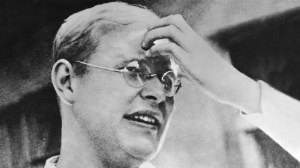
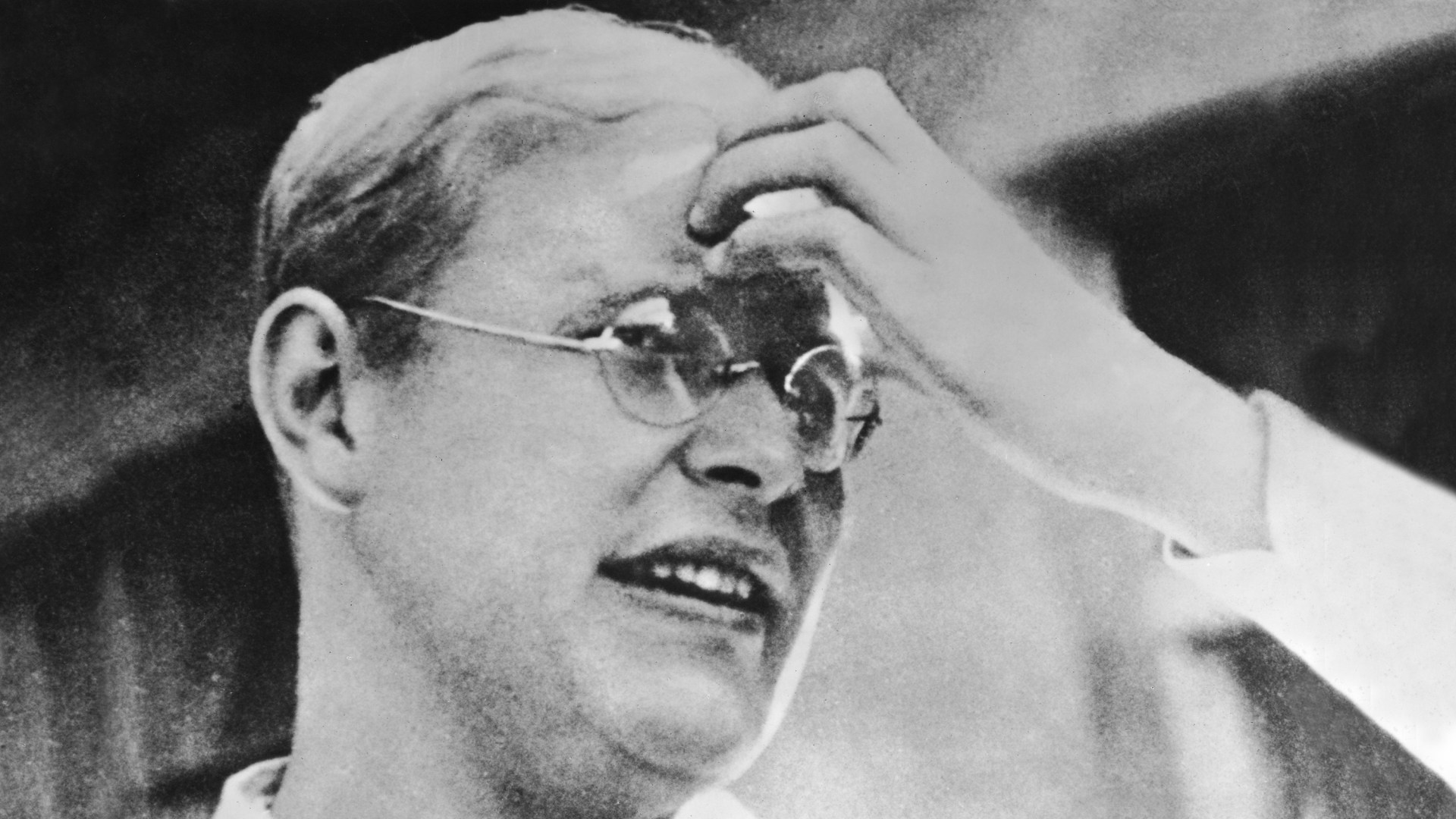
Dietrich Bonhoeffer was a twin. (He was born just before his twin sister, Sabine.)
Dietrich’s father, Karl, was Berlin’s leading psychiatrist and neurologist from 1912 until his death in 1948.
Dietrich was so skilled at playing the piano that for a time he and his parents thought he might become a professional musician.
At 14, Bonhoeffer announced matter-of-factly that he was going to become a theologian.
Bonhoeffer earned his doctorate in theology when he was only 21.
Though later he was an outspoken advocate of pacifism, Bonhoeffer was an enthusiastic fan of bullfighting. He developed the passion while serving as assistant pastor of a German-speaking congregation in Barcelona, Spain.
By the end of 1930, the year before Bonhoeffer was ordained, church seminaries were complaining that over half the candidates for ordination were followers of Hitler.
In 1933, when the government instigated a one-day boycott of Jewish-owned businesses, Bonhoeffer’s grandmother broke through a cordon of SS officers to buy strawberries from a Jewish store.
In his short lifetime, Bonhoeffer traveled widely. He visited Cuba, Mexico, Italy, Libya, Denmark, and Sweden, among other countries, and he lived for a time in Spain, in England, and in the United States.
Bonhoeffer taught a confirmation class in what he described as “about the worst area of Berlin,” yet he moved into that neighborhood so he could spend more time with the boys.
Bonhoeffer was fascinated by Gandhi’s methods of nonviolent resistance. He asked for—and received—permission to visit Gandhi and live at his ashram. The two never met, however, because the crisis in Germany demanded Bonhoeffer’s attention.
Bonhoeffer served as a member of the Abwehr, the military-intelligence organization under Hitler. (He was actually a double agent. While ostensibly working for the Abwehr, Bonhoeffer helped to smuggle Jews into Switzerland—and do other underground tasks.)
Bonhoeffer studied for a year in New York City. He was uniformly disappointed with the preaching he heard there: “One may hear sermons in New York upon almost any subject; one only is never handled, … namely, the gospel of Jesus Christ, of the cross, of sin and forgiveness.… ”
While a student at Union Theological Seminary in New York, Bonhoeffer regularly attended the Abyssinian Baptist Church in Harlem. He taught one youth Sunday school class and one women’s Bible study; he also helped weekly in Sunday school.
Bonhoeffer learned to drive a car while in the United States—yet he failed his American driver’s-license examination three times.
Bonhoeffer directed an illegal seminary for two and a half years until it was closed by the Gestapo. The seminary trained pastors for the “Confessing Church,” a group Bonhoeffer and others had formed as an alternative to the Nazi-influenced German Reich Church. It was at this seminary that he developed his classic work The Cost of Discipleship.
Just before World War II, Bonhoeffer was invited to lecture in the United States. This allowed him to escape increasing persecution and the impending draft. But Bonhoeffer decided he must share the fate of those suffering in Germany. In less than a month, he returned home.
In 1936, because of his anti-Nazi views, Bonhoeffer was no longer permitted to teach at the University of Berlin. Two years later, he was forbidden to live in Berlin. In 1940, the German authorities forbade him to speak in public, and he had to report regularly to the police.
Bonhoeffer was engaged to be married, but he was arrested and eventually killed before he and his fiancee could be married.
During Allied bombing raids over Berlin, Bonhoeffer’s calm deeply impressed his fellow prisoners at Tegel Prison. Prisoners and even guards used all kinds of tricks to get near him and find the comfort of exchanging a few words with him.
The majority of Bonhoeffer’s classic Letters and Papers from Prison was smuggled out by guards who chose to assist Bonhoeffer.
Bonhoeffer could have escaped from prison but chose not to for the sake of others. He had prepared to escape with one of the guards when he learned that his brother Klaus had been arrested. Fearing reprisals against his brother and his family if he escaped, Bonhoeffer stayed in prison.
The German underground failed on numerous occasions to assassinate Hitler. Had they succeeded, Bonhoeffer probably would not have been executed.
Adolf Hitler was directly involved in the decision to execute Bonhoeffer and his co-conspirators.
Bonhoeffer’s brother Klaus and two of his brothers-in-law were also executed for their roles in the resistance movement against Hitler.
Some of Bonhoeffer’s best-known works, such as Ethics and Letters and Papers from Prison were not published until after his death.
Bonhoeffer’s parents did not learn of his death until three and a half months afterward, when they tuned into a radio broadcast of a London memorial service for their son.
Mark and Barbara Galli live in Glen Ellyn, Illinois. This is their first joint contribution to Christian History.
Copyright © 1991 by the author or Christianity Today/Christian History magazine. Click here for reprint information on Christian History.