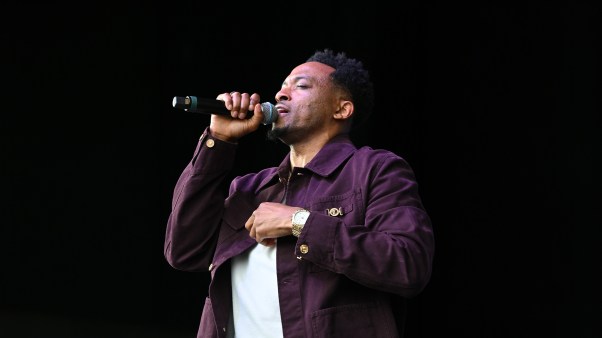

When Graham Kendrick once complained that the contemporary worship music of the 1970s Jesus Movement was “a little bit simplistic” without “enough musical integrity,” a friend challenged him to do better. Having written and performed songs in coffee houses and in college, Kendrick turned his talent to praise music. In 1984, he devoted himself completely to a praise and worship ministry and has since written some 225 songs.
Why are praise marches attracting such a broad audience of believers?
My perception is that there is a timing for these things. I wouldn’t presume to say that every nation should have praise marches, although my recent experience is that the people seem to be rising to the idea. The time for the church to become visible may vary from nation to nation.
Some have said the most positive element of these events is that they get the church outside its four walls.
I think of the dynamic of people publicly confessing their faith, knowing that their neighbors could be coming out of the supermarket when they pass by. That is a liberating thing. It breaks the spell of silence.
Some might expect a charismatic, freewheeling style of music. But you show an appreciation for structure.
Actually, through the marches I’ve rediscovered the value of structure, creedal statements, and so on in worship. For instance, the marches are written for a specific occasion, a specific situation, and the street dynamic, which I think demands structure.
Is there a biblical foundation for praise marches?
I don’t think it is necessary to find chapter and verse for a praise march, but all the elements are thoroughly biblical. For one, it’s a public testimony. The church ought to be an event that demands an explanation. Second, it’s coming together—it’s unity. It’s an opportunity for Christians who wouldn’t normally worship together to focus on the one thing we do agree on: that Jesus is worthy of worship and praise. There are several other things, such as scriptural examples like Joshua and the walls of Jericho, and Moses leading the procession of Israel. I think in the nature of the church, the symbolism of a procession is very appropriate.
There are quite a few interesting traditions of street processions. The Anglican church has a tradition called “beating the bounds,” a procession around their parish boundary to beat back the Devil.
Some talk about praise marches in the context of conducting spiritual warfare. Could you elaborate?
The term spiritual warfare covers a wide variety of understandings and practices, some of which I would not identify with. Participation in praise marches does not depend on holding a particular view. But when churches unite, repent, witness, and evangelize through their city, and pray for the kingdom of God to come and for his will to be done—if that doesn’t have any effect on the kingdom of darkness, then what does?
Are praise marches just a blip on the screen?
At present there is a natural snowballing effect. And we now see next May—with the European marches accompanied by those in the United States—as a prototype for a global March for Jesus. We don’t have massive public-relations machinery to make this happen. I don’t think you could make it happen.
Where do you view yourself in this whole trend?
I’m very much a songwriter/worship leader, and I try hard to stay within the gifts that I think God has given me. I feel like a spectator, basically. Nobody controls this thing. We try to guard the vision. We don’t want it to turn into a protest march or something like that. But it’s really a march for Jesus. It’s a positive thing with him right in the center.