Andrew Sullivan has written an unusually honest and reflective column for The Guardian on the intellectual tradeoffs of living in a one-click-away world.
A veteran of the blogosphere now publishing at a rate of 300 posts per week, Sullivan rhapsodizes over the transformations this has worked on his brain functioning:
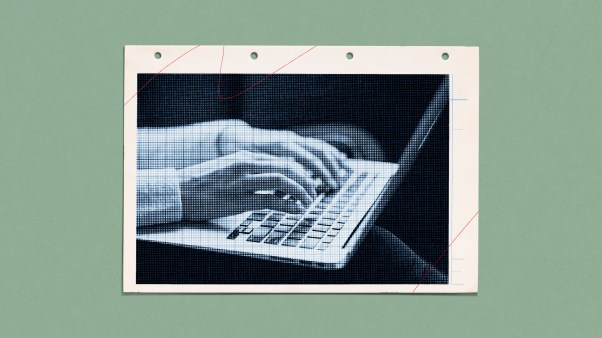
I process information far more rapidly and seem able to absorb multiple sources of information simultaneously in ways that would have shocked my teenage self. In researching a topic, or just browsing through the blogosphere, the mind leaps and jumps and vaults from one source to another.
Leaping and vaulting at high speed sounds like the preoccupation of extreme sport adrenaline junkies, which may partially explain Sullivan’s quick jump to panicky lament in the next few paragraphs:
When it comes to sitting down and actually reading a multiple-page print-out, or even, God help us, a book, however, my mind seizes for a moment. After a paragraph, I’m ready for a new link. But the prose in front of my nose stretches on.
I get antsy. I skim the footnotes for the quick info high that I’m used to. No good. I scan the acknowledgments, hoping for a name I recognise. I start again.
A few paragraphs later, I reach for the laptop. It’s not that I cannot find the time for real reading, for a leisurely absorption of argument or narrative. It’s more that my mind has been conditioned to resist it.
In trying to name what’s at stake here, the 45-year-old journalist and hyper-blogger even displays nostalgia for a computer-less yesteryear:
The experience of reading only one good book for a while, and allowing its themes to resonate in the mind, is what we risk losing. When I was younger I would carry a single book around with me for days, letting its ideas splash around in my head, not forming an instant judgment (for or against) but allowing the book to sit for a while, as the rest of the world had its say – the countryside or pavement, the crowd or train carriage, the armchair or lunch counter. Sometimes, human beings need time to think things through, to allow themselves to entertain a thought before committing to it.
The white noise of the ever-faster information highway may, one fears, be preventing this. The still, small voice of calm that refreshes a civilisation may be in the process of being snuffed out by myriad distractions.
Sullivan is no Luddite, and closes his column with the hopeful assumption that human society will in due time gain mastery of this and every new technology, as it has writing, printing, radio, and television (Sullivan’s inclusion of television is an unfortunate choice). He suggests that part of this mastery may involve telling the web where it gets off at regular intervals–i.e. taking a “sabbath” from our many information gadgets, an idea taken up and expanded in Mark Glaser’s fine piece at PBS, which you would do well to take up and read…offline.
These pieces raise more questions than a month’s worth of Sullivan’s posts (1,200+!) could address, but they are particularly refreshing as evidence that there remains among some a sense that humans–amazingly adaptable though we may be–retain a given shape that is not infinitely malleable. We are not information processing units, but people. And whether we willingly acknowledge it, or the universe forces us to bedgrudgingly admit it, we’re all sabbath-shaped people.