Ideas

What Atonement Theories Tell Us About Our Politics

Staff Editor

They were developed in their historical contexts. What does that mean for today?

Source Images: Getty / arsenisspyros | Wikimedia Commons

The story of Easter, all Christians agree, is the story of our salvation. “By this gospel you are saved,” wrote Paul, “that Christ died for our sins according to the Scriptures, that he was buried, that he was raised on the third day” (1 Cor. 15:2–4). It was for “us and for our salvation,” says the Nicene Creed, that Jesus took on flesh, died, and rose as “Lord and Messiah” (Acts 2:36).

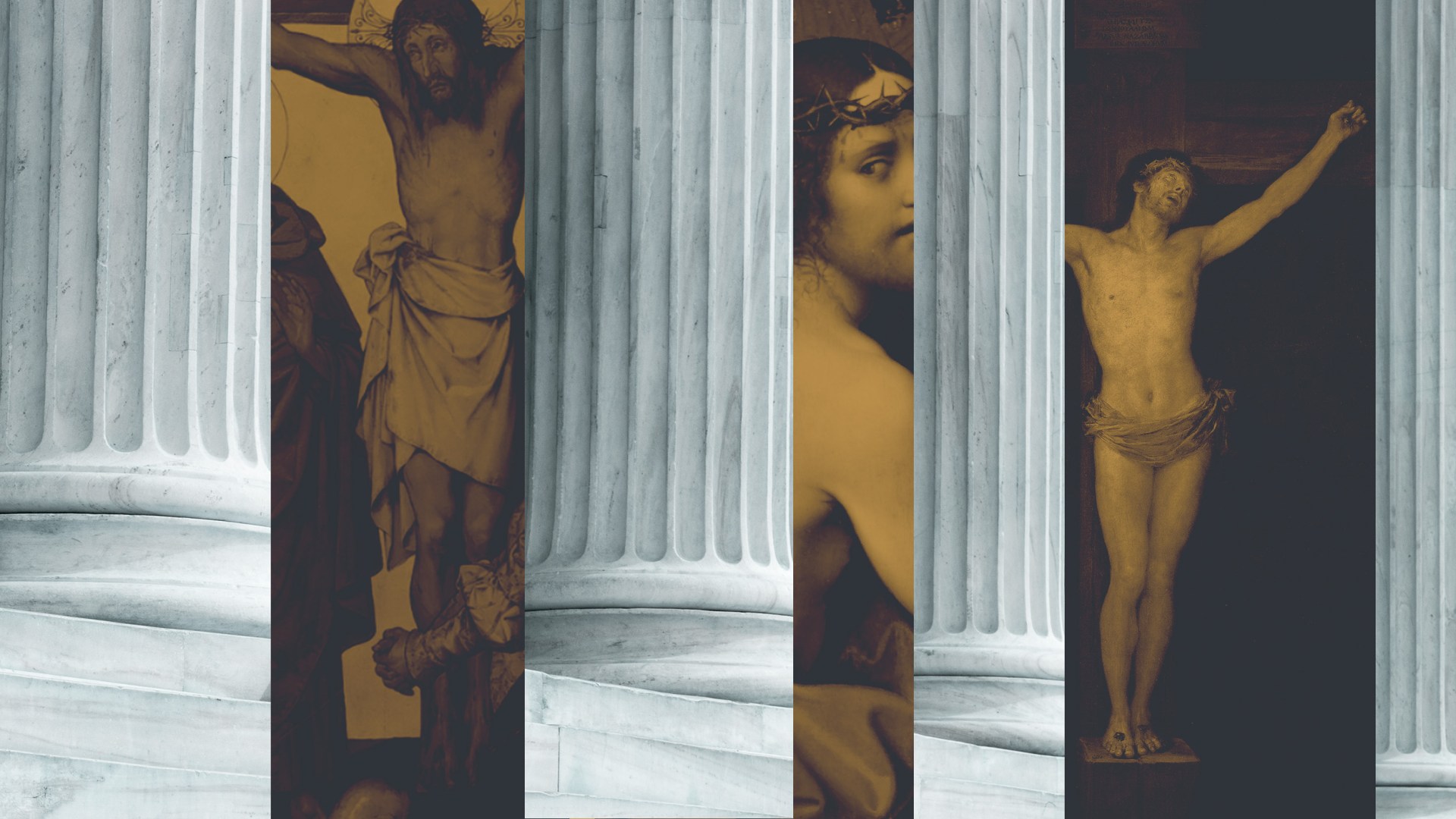
But how did our salvation take place, exactly? The theories of Christ’s atonement tell stories of Easter’s inner workings. And the three most popular models throughout church history—Christus Victor, satisfaction theory, and penal substitution—are also remarkably political. They were shaped by the governmental contexts in which they arose.

I’ve come to love studying atonement theories, because it has clarified and enriched my understanding of God’s character and because learning about those political contexts has shed light on where our society is moving now.

My first exposure to Christus Victor was The Lion, the Witch, and the Wardrobe, but the theory is dominant among early theologians like Origen, Athanasius, and Gregory of Nyssa. They speak of Jesus redeeming us from oppressive powers—sin, death, the Devil—to whom we’d bound ourselves by our own treachery. Christ “disarmed” those powers and triumphed over them on the cross (Col. 2:13–15). God became incarnate, as Irenaeus wrote, that “He might kill sin, deprive death of its power, and vivify man.”

That made sense in the ancient Greco-Roman world, where conquest was familiar and a redemptor could buy the freedom of someone enslaved or taken prisoner of war. But in the 11th century, as Normans brought the feudal system to England, Anselm, bishop of Canterbury, told a new atonement story.

Explicitly drawing on rules of honor and hierarchy of his day, Anselm’s satisfaction theory swaps the roles: God the Father, rather than Satan, demands humanity’s debt be paid before reconciliation can occur. Here, humanity’s sin violates divine honor and requires satisfaction we cannot make, so God becomes human to satisfy our obligation on our behalf.

That change of the Father’s role persisted when penal substitution arose 500 years later alongside the modern legal system. Figures like John Calvin, who studied law before becoming a Reformer, replaced the image of a serf trying to satisfy his lord with a courtroom where God as righteous judge condemns sinners who violate his law. But “Christ interposed, took the punishment upon himself,” and “propitiated God the Father,” Calvin wrote in his Institutes, relying on passages like Isaiah 53:5-6 and Romans 3:25, so that God is no longer “in a manner hostile to us, [with] his arm raised for our destruction.”

I understand why penal substitution became “a distinguishing mark” of evangelicalism, in the phrase of the late J. I. Packer. Some of that adoption is theological—compelling cases for the theory abound—but some of it is cultural. I can easily explain penal substitution because we know how a courtroom works. Penal substitution is immediately intelligible in the world of the Reformation, Renaissance, Enlightenment, and Industrial Revolution.

In many ways, we still live in that world, but in many ways we don’t. I think resurgent interest in Christus Victor, the view that is most convincing to me, is a little-noticed bellwether of this change. A God who crushes evil we’re helpless to defeat and who frees us from striving is good news in a culture preoccupied with institutional corruption.

The new or renewed cultural resonance of an atonement theory doesn’t prove its truth, of course. Theories can attract fans for perverse reasons. Some Christus Victor proponents, for instance, are too eager to dispense with notions of personal sin.

But the cultural response to a theory can tell us something about the longings and needs of our time. It offers insight into our political dramas and reminds us, too, of the different stories that explain Christ’s work on the cross.

Also in this issue

A church is always more than the space in which it meets, but it is never less. Congregations cannot help being shaped by the places and neighborhoods they inhabit, as editor Kara Bettis explores this month in her reporting on the concept of “spiritual gentrification.” Churches are usually birthed around a shared vision for ministry. When the world around a church changes—gradually or suddenly—one of the most difficult challenges is discerning how, if at all, that shared vision should also change. PLUS: Rediscovering the Jewish roots of Easter.

China’s Public Schools Are Failing Christian Families

E. F. Gregory

Reply All

Faith Is More than a Feeling, but Not Less

Black Christian Homeschoolers Are Redefining the Movement

Liuan Huska

Don’t Expect Instant Gratification from Your ‘Quiet Time’

When the Congregation Leaves Town, Should the Building Follow?

Kara Bettis

Why We Need the Evangelical Jeremiad

Editorial

Don’t Make the Church Leadership Crisis Worse

Mike Cosper

Christ Conquered Death. He Didn’t Cancel It.

Jennifer M. Rosner

Our April Issue: How Place Shapes Church

Andy Olsen

Visiting Prisoners in Jesus’ Day

David L. Stubbs

New & Noteworthy Fiction

Roseanna M. White

Testimony

The Booze-Filled Business Trip That Made Me a Christian

Stu Fuhlendorf

News

More Ministries Seek Alternatives to Child Sponsorships

Rebecca Hopkins

News

Gleanings: April 2022

News

Embezzlement Bedevils Global Church Giving

News

Are the Precise Words of Baptism Important?

Compiled by Daniel Silliman

News

Who Is My Neighbor? For Christians in the Balkans, the Answer Might be Troll Farms.

Jayson Casper

Help! I’ve Stopped Caring About God.

Interview by Matthew LaPine

Review

Jesus Is Risen! Now What?

Rhyne Putman

Review

Fearing God Means Living with the Grain of Reality

Anne Kennedy

5 Books on the Connection Between God and Animals

Caryn Rivadeneira

View issue

Our Latest

Thou Art the Man

President Donald Trump’s diatribe against the pope—paired with his posting of a blasphemous AI-generated image—shows contempt for the things of God.

Being Human

Christine Caine Shares Her Adoption Story, Abuse Recovery, and ‘The Faith to Flourish’

Emotional healing through identity in Christ not identity in crisis

The Russell Moore Show

Should I Report Abuse in Church to the Police?

Spoiler alert: yes, you should.

Fertility Treatment Beyond the Quick Fix

Restorative reproductive medicine is a great idea and can honor traditional Christian teachings on marriage, children, and sex. Just don’t oversell it.

News

10 Journalistic Reading and Listening Recommendations

Ten prize winners who acknowledge sin but report redemptive twists.

Threatening Profound Evil Trivializes That Evil

Justin R. Hawkins

President Donald Trump and Pete Hegseth speak often of Christianity—but they seem to have no interest in its vision for just warfare.

The Iranian Church Persists

David Yeghnazar

Amid war, some Christians are evangelizing, preparing food for neighbors, and displaying other acts of generosity.

The Bulletin

Trump Threatens Iran, Artemis II Returns, and Anthropic’s AI Triggers Fear

Clarissa Moll, Russell Moore

Trump kills conservatism, astronauts head home, and Claude Mythos Preview deemed too dangerous for public consumption.

addApple PodcastsDown ArrowDown ArrowDown Arrowarrow_left_altLeft ArrowLeft ArrowRight ArrowRight ArrowRight Arrowarrow_up_altUp ArrowUp ArrowAvailable at Amazoncaret-downCloseCloseellipseEmailEmailExpandExpandExternalExternalFacebookfacebook-squarefolderGiftGiftGooglegoogleGoogle KeephamburgerInstagraminstagram-squareLinkLinklinkedin-squareListenListenListenChristianity TodayCT Creative Studio Logologo_orgMegaphoneMenuMenupausePinterestPlayPlayPocketPodcastprintremoveRSSRSSSaveSavesaveSearchSearchsearchSpotifyStitcherTelegramTable of ContentsTable of Contentstwitter-squareWhatsAppXYouTubeYouTube