
I grew up in an interfaith home in Seattle, a city cradled between mountains and water, where belief often felt like a patchwork quilt. Our house had a little Christmas, some Hanukkah, and a bit of everything else.
When I was a child, this didn’t feel strange. I did not question the mixture of traditions. In fact, it mirrors the lives of many Jewish families today, navigating multiple layers of identity and culture.
My father was raised Jewish, my mother Catholic, and both came to believe that Jesus is the Messiah. When I was about 12, our family began attending a Messianic congregation to deepen our Jewish roots.
About a year later, I had my bar mitzvah. My haftarah reading—a selection from the books of the Prophets—was Isaiah 1:18, which says, “Though your sins are like scarlet, they shall be as white as snow.”
At 13, I did not fully grasp the depth of this promise, which would later ignite and reshape my life.
Two years later, everything changed. My family made aliyah, the process by which Jews immigrate to Israel, and we moved to an Orthodox community about an hour northwest of Jerusalem. My father felt a deep conviction that Jewish people belonged in the Land of Promise.
The move was a leap into a life entirely different from the one I had known. Suddenly, my Jewish identity was no longer a theoretical or cultural idea. It was tangible, lived, and steeped in ritual. We celebrated every holiday, national and biblical, and observed customs that were foreign to my American upbringing.
The move brought unexpected challenges. Living in Israel during the First Intifada (the Palestinian uprising against Israel) meant facing uncertainty and fear daily. As a 15-year-old suddenly confronted with my mortality and my inability to shield my family from harm, I began to wrestle deeply with questions about my faith, my identity, and even God.
By 17, I decided to leave home, seeking to understand my Jewish background. My journey took me to an Orthodox yeshiva in Jerusalem, where young men trained for rabbinical life.
I walked in expecting answers but walked out with more questions than ever. What does it really mean to be Jewish? Why did God give us the Torah? Does he even exist? My questions were treated as distractions, a detour from the talmudic study that defined daily life there. The more I studied, the more the walls around me seemed to close in.
While at yeshiva, I formed a friendship with Joshua, an Orthodox Jew from Montreal. Our bond grew over music and basketball, simple joys that briefly distracted us from the intensity of our surroundings. Yet while I felt my Jewish identity fraying under pressure, Joshua’s commitment to Israel and his faith only seemed to deepen.
In 1992, we both enlisted in the Israel Defense Forces (IDF), he out of duty and I out of obligation as a citizen. The military years were some of the darkest of my life as my search for identity collided with the realities of war.
One day, while stationed with my paratrooper unit in the desert near the Dead Sea, I saw Joshua’s name on the front page of an Israeli newspaper with the word ne’dar. Missing.
Panic and disbelief surged through me as I raced back to Jerusalem to join the search. The outcome was devastating. Joshua had been kidnapped, tortured, and killed by Hamas terrorists simply because he was Jewish.
His death shattered me. I slipped further into nihilism and disillusionment. One morning, as I hitchhiked to my new base, an Israeli man gave me a ride and shared his thoughts on religion, echoing my own growing disbelief. “Religion is for the weak,” he said, “a crutch for people who cannot face life on their own.” His words resonated with me. I began to see belief as an illusion, and the God I had once trusted seemed like a distant memory.
My time in the IDF only grew in difficulty. I wrestled with depression and a deep sense that the world was broken. By the time I completed my service, I was tired of conflict, tired of God, and tired of living in Israel. My Messianic roots had withered, and my Jewish identity felt like a fragile thread I had no desire to repair.
I stayed in Israel only long enough to save some money and then embarked on a journey of wandering and self-discovery. Like a character out of a Jack Kerouac novel, I traveled around America, Canada, and Mexico with an Israeli friend, moving from city to city, seeking anonymity and escape. If I heard Hebrew, I would turn the other way. I wanted to fade into the background and be free from the weight of my past.
Even in my self-imposed exile, I could not escape the stirrings of a spiritual reality. I encountered loving people who saw my brokenness and told me about Jesus. At first their words and kindness were curious, but later they became unsettling. Their insistence that God was real and that Jesus was relevant to me as a Jewish person began to press on my disbelief. Questions I had long ignored about morality, meaning, and the purpose of life began to demand answers once again.
Finally, someone challenged me to read the New Testament. Pride made me hesitant. I did not want to admit I had never read it. But curiosity and a sense of desperation overcame my resistance. I opened the text for the first time, and the words resounded deep inside. Everything I had questioned since my yeshiva days, like the nature of God, the purpose of God’s laws, and our role in God’s creation, began to make sense. I discovered Jesus in those pages, not as a distant figure but as a fulfillment of the Hebrew Scriptures.
The prophecies of the Messiah, the teachings of the Torah, and the writings of the Prophets all pointed to him.
The parables of Jesus pierced through my hardened heart. The story of the Prodigal Son mirrored my own. The lost sheep reflected my sense of isolation. The climax of Jesus’ ministry, his sacrificial death on the cross, shocked me with its depth of love. An innocent Jewish man, tortured and killed, praying for the forgiveness of his executioners, showed me what divine mercy truly looked like.
For the first time in years, hope began to grow. I called upon the God of my ancestors, asking him to forgive me, cleanse me, and be Lord of my life. A joy I had never known filled me, accompanied by a deep, abiding peace.
During this time, I returned home and stayed with my family in Israel. One Sunday morning, I wandered through the graffiti-marked streets of the Armenian Quarter in Jerusalem to attend my first church service as a believer.
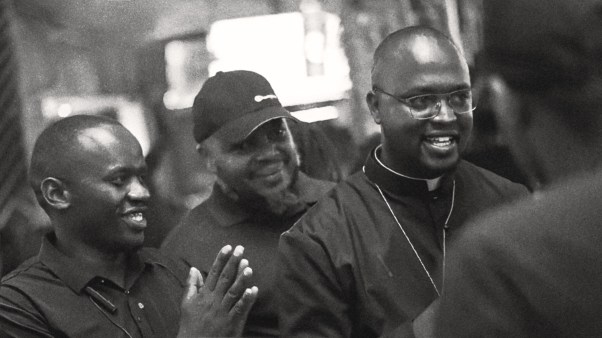
To my surprise, the service was in Arabic, and the congregation was filled with former Muslims. My suspicion rose immediately. I felt like an intruder. But Pastor Issam, an Arab man with a warm smile, welcomed me with open arms. His words and the fellowship of Jews and Arabs worshiping together powerfully demonstrated God’s heart to forgive. My anger over Joshua’s death began to dissolve.
That moment reshaped my understanding of reconciliation. Since then, I have met many Jewish and Arab brothers and sisters in Christ. Although we don’t all share the same experiences or agree on everything, the gospel has provided a solid foundation that has changed hearts and brought reconciliation where none existed.
Even today, with tensions running high between Israel and Hamas, it is easy for Arabs and Israelis to think of one another only as enemies. But I have seen with my own eyes that the only lasting hope for peace comes not through politics or power but through the saving grace of Yeshua. Only the gospel can break down ancient walls of hostility and animosity, turning enemies into family.
Over time, my passion for sharing the peace I had found grew stronger. I wanted everyone to experience the love, compassion, and forgiveness I had discovered in Yeshua. I began volunteering with Jews for Jesus in Israel, speaking with people on the streets, hosting Bible studies, and sharing the gospel.
Each encounter reminded me of how far I had come and how God had guided and sustained me. In a short time, I realized that helping others to meet Jesus, especially among my own Jewish people, was what I was meant to do with my life. I went through training and eventually became a full-time missionary.
My work is about not just outreach but also breaking down barriers that stand in the way of people understanding the gospel as well as equipping others to share the hope of the Messiah with courage, compassion, and clarity.
When I wandered far from God, Jesus met me on the road and welcomed me home. That is the same invitation he extends to every Jewish person, to every Arab, and to every nation: Come home to the Father through the Messiah.
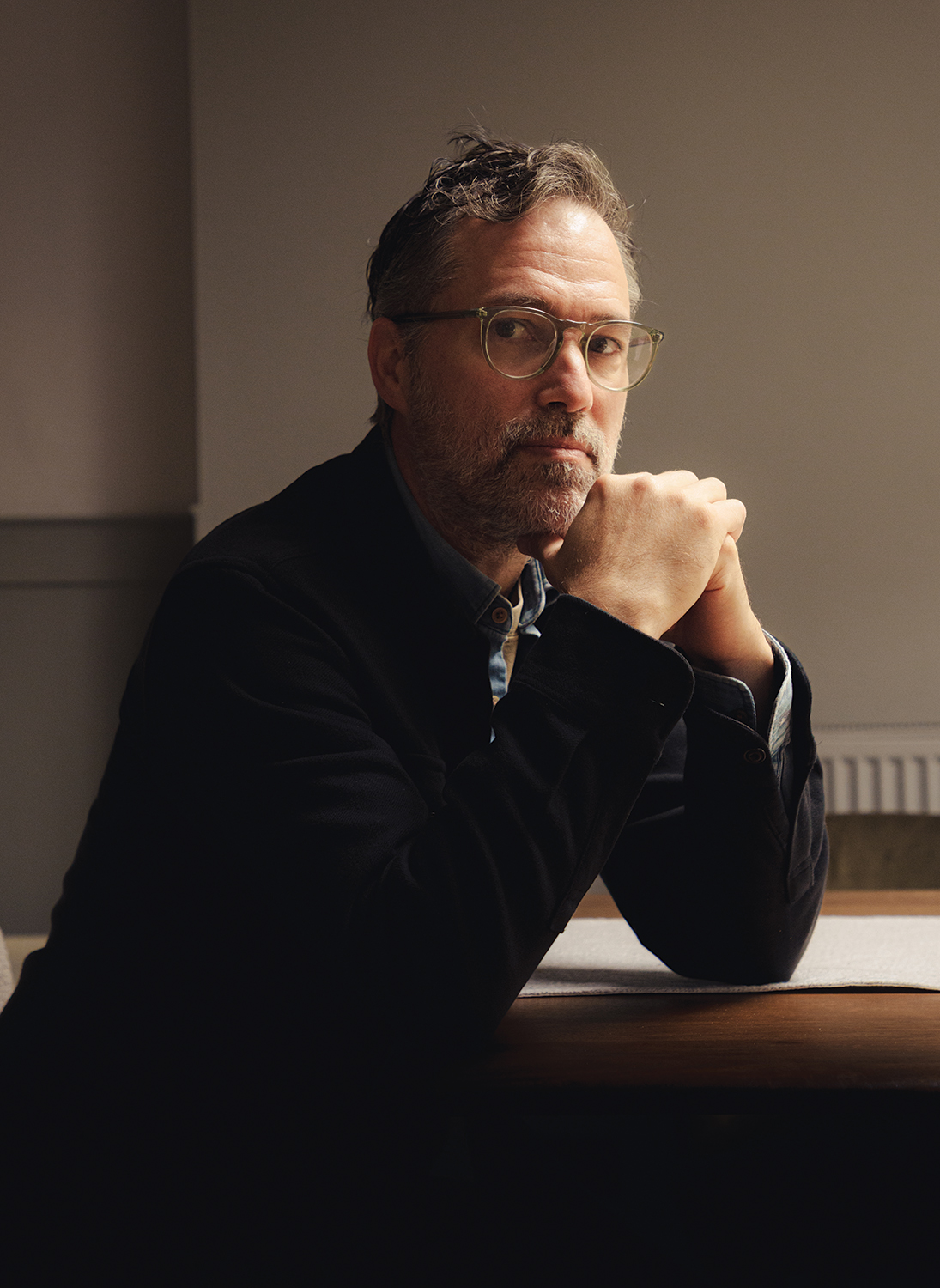
Aaron Abramson is the CEO and executive director of Jews for Jesus and is the author of Mission Design: Leading Your Ministry Through Organizational and Cultural Change.
This article appeared in the January/February 2026 issue of Christianity Today as "Testimony".
Related