US Congressman Chip Roy recently introduced a piece of legislation called the “MAMDANI Act.” The bill was named as a jab against New York City mayor Zohran Mamdani, a democratic socialist who is Muslim. It proposes deporting, denaturalizing, or denying entry to any migrant who “advocates” for socialism, communism, Marxism, or “Islamic fundamentalism.” The language in it is sweepingly broad, targeting anyone who distributes, circulates, prints, displays, possesses, or publishes written materials supporting such ideologies.
Roy’s bill arrives amid a broader surge of religious rhetoric in the US framing America’s wars and conflicts in explicitly Christianity-versus-Islam terms.
President Donald Trump and his allies have increasingly deployed biblical language to rally evangelical support for the unpopular Iran war, which is currently under a shaky ceasefire. Some conservative leaders have cast the conflict as a battle between good and evil, emphasizing biblical prophecies about Israel and depicting Iran as a spiritual threat. Defense secretary Pete Hegseth has prayed at a Pentagon service for “overwhelming violence of action against those who deserve no mercy,” and likened the rescue of a downed US airman to an Easter miracle.
Against this backdrop, Philip Anthony Mitchell, the pastor of 2819 Church, one of the fastest-growing congregations in the US, faced backlash after saying on a podcast recently that Islam was a “radical ideology that is hostile to Christianity” and that people shouldn’t perform “ignorant inclusion” that might lead to a “hostile takeover.” Mitchell, whose congregation is largely made up of young Black adults, also said that Islam is “incompatible with Western values,” prompting some politically progressive Christians to accuse him of preaching white Christian nationalism.
I want to set Mitchell aside for a moment and discuss a larger issue: how we talk about Christian nationalism. Upholding the Constitution’s religious liberty protections, which also safeguard our own faith, precludes the government targeting Islam for legal discrimination. And as Christians, we’re commanded to love and care for our neighbors of every religion, Islam included. But insisting on that freedom of conscience does not mean leveling all religions or pretending there is no conflict of belief between Christianity and Islam—or between extremist expressions of Islam and our values, including freedom of religion. It’s not “Christian nationalism” to recognize that fact.
That said, the way a lot of politicians talk about Islam and Muslims is no doubt abhorrent. Just a few weeks before Roy, a Southern Baptist, introduced his far-fetched legislation, he posted on social media that there should be “No more Muslims,” revealing that the desired endpoint for his legislation is the removal of an entire faith group.
Similarly, Hegseth’s crusader theology represents a dangerous rejection of the fundamental gospel view that no person (and certainly not an entire society) is beyond the reach of God’s mercy and love. This is not a minor theological error but rather a fundamental distortion that reduces the Savior of all mankind to a mascot for foreign policy.
But the fact that Roy is being discriminatory or that Hegseth is embracing bad theology does not mean that every question about Islam’s growth in America is illegitimate or that every Christian raising such questions, as Mitchell did, is a Christian nationalist. There are actual Christian nationalists who have appalling ideas about religious pluralism that need to be debated. And likening Mitchell, one of the most prominent contemporary pastors in evangelicalism, to a Christian nationalist is intellectually lazy and leads to a muddled public witness.


The issue here is not whether Mitchell’s specific claims about Islam are correct. I have serious questions about whether the term Western values, which he mentioned during the podcast, provides the right framework for assessing religious pluralism. The concept often conflates the Christian faith with Enlightenment liberalism and other cultural preferences.
But it similarly is not helpful to weaponize Christian nationalism as a conversation-ender on this or any other topic instead of substantively engaging with genuine questions and concerns posed by brothers and sisters in the faith.
I have been on the record talking about the detrimental ways our political culture is forming us, and this is just another example that shows how. As our politics have become more bifurcated, public discourse has also become increasingly centered on one’s opponents. Political candidates have built successful campaigns talking about whom they’re against, and fear has become a major motivator for both sides of the aisle.
In this environment, the charge of “white Christian nationalism” has become a rhetorical escape hatch.
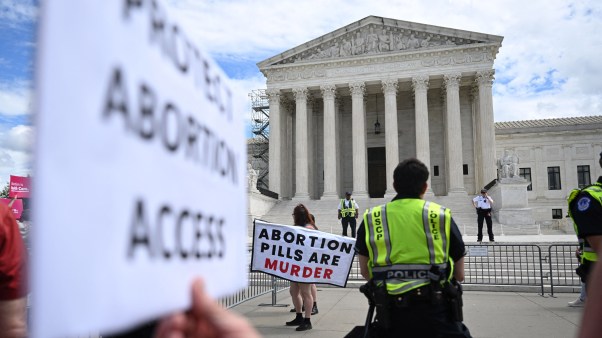
I’ve experienced this firsthand in my own advocacy work. Someone raising concerns about educational freedom is accused of advancing the white Christian nationalism’s agenda of school privatization. Any questions on immigration, sovereignty, and the asylum system are often lumped in with nativist fearmongering. For some inside and outside the church, concerns about unrestricted abortion access become part of a theocratic project to impose Christian values on a pluralistic society.
The pattern is consistent: Label the concern as white Christian nationalism, and you’ve absolved yourself of the responsibility to engage the underlying question seriously.
related


In the long run, this approach to dealing with political dissent is designed to fail. When Christians refuse to create space for serious conversations about pluralism, cultural integration, and theological difference, they won’t eliminate bad ideas. They simply push them into spaces where they calcify without theological correction or moral constraint.
Most Christians who have negative things to say about Islam don’t want religious minorities to be second-class citizens. But they do have questions that, regardless of what we think about their intellectual heft, should not be met with dismissal.
We can defend people’s rights to practice their faith freely, help communities embrace religious pluralism, and still ask hard questions about how to maintain shared civic values amid deep religious divides.
Roy’s bill will likely fail, but the impulse behind it won’t disappear. Neither will the legitimate questions people have about how diverse religious communities do life together. American Christians can either lead this conversation with theological depth and pastoral wisdom or keep lobbing accusations at each other across partisan lines while watching our public witness crumble.
The gospel calls us to something better than a fear-driven politics focused on attacking opponents at every turn. It calls us to a witness grounded in Christ’s lordship, expressed through sacrificial love and practiced with independence from partisan capture. It’s the only witness worth offering in a fractured moment that desperately needs the church to lead with both truth and grace.
Chris Butler is a pastor in Chicago and the director of Christian civic formation at the Center for Christianity & Public Life. He is also the co-author of Compassion & Conviction: The And Campaign’s Guide to Faithful Civic Engagement