Scrolling through Instagram a few months ago, I came across a reel that made me stop and stare. A woman with a full face of makeup and an unnaturally small waist held up a Ziplock bag of bones. She said she had gotten a rib-removal surgery—and these were her ribs.

Plastic surgeons later debunked the video, saying it was “Photoshop + barbecue takeout.” But how many girls saw only the original post and thought this surgery was the next body modification trend?
Young women like me see short-form videos like this every day, along with carefully curated selfies and digitally modified shots of girls in bikinis. The most extreme posts rise to the top of our feeds, and if we’re not careful, we come to think that plastic surgery is a normal way to accept the parts of our bodies we don’t like and that women should have 22-inch waistlines.
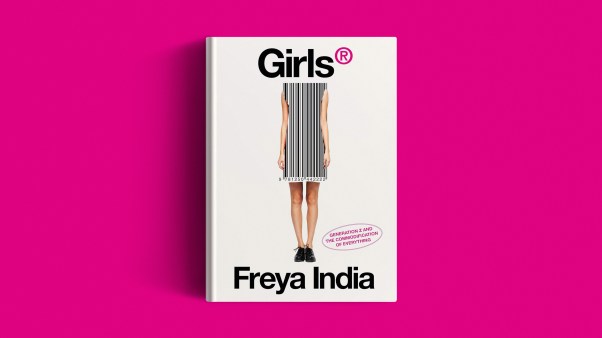
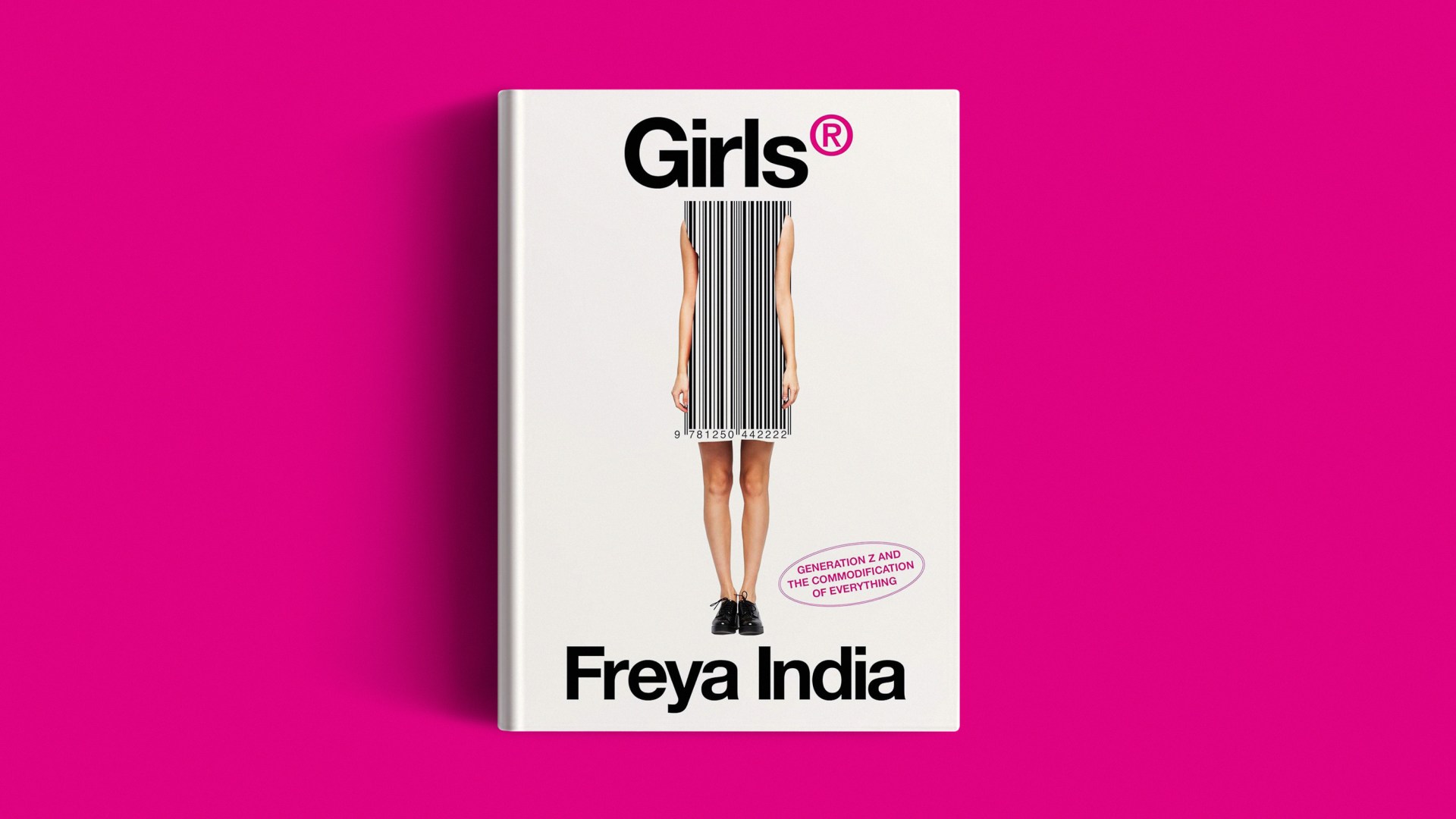
This is the type of problem Gen Z women and girls face regularly—problems to which Freya India draws our attention in GirlsⓇ: Generation Z and the Commodification of Everything.
India is a British writer in her late 20s who works with social psychologist Jonathan Haidt. Friendly to the social benefits of Christianity, she offers proverbial wisdom and insight into how life usually works. Despite that, she has not publicly discussed her personal beliefs, and her proposed solutions stop short of Christ’s good gospel.
Her basic argument is that modern technology amplifies and exploits the “age-old anxieties” of teen girls. “Every worry a girl has can be monitored, categorized, and monetized,” India writes, and “our despair and disempowerment are worth billions.” India writes from a secular perspective, but her assessment repeatedly affirms and encourages Christian values. Though occasionally repetitious, her well-researched book compellingly points to what our generation has lost—core aspects of our humanity—and how we can get it back.
India writes to Gen Z girls and women like me (born between 1996 and 2011), as well as older adults in our lives, to help us understand the challenges resulting from “the mass commodification of girls.”
related


GirlsⓇ includes six chapters on the areas of our lives that have been commodified: physical appearance, emotions and mental health, the details we document and share online, friends and family, romance, and a sense of fulfillment.
Each chapter opens with a story to illustrate the main concept—often a description of a short-form social media video—and asks some version of “How did we get here?” Then, India gives an inside look at the world of young women: information about apps, data from research centers, and quotes from social media. She intersperses this deep dive with her own analysis and ends each chapter with commentary and encouragement. “We are both the consumers and the consumed,” she says in her introduction, hitting on a theme that continues throughout the book.
Porn, dating apps, social media, artificial intelligence, family breakdown, hookup culture, materialism, photo editing and filters, influencers, vlogs, smartphones, even normalization of mental illness—India argues each of these developments has turned girls into products. And many of these features have confused us as well. Girls often compare themselves to inhuman standards: beauty ideals that “can only be bought, surgically sculpted, or generated out of pixels,” as well as “porn stars, sexualized influencers, and even AI-generated women.”
What we’ve lost is our humanity, India writes. She concludes with a summary and a set of solutions and pulls her research together by talking about how we lost “a sense of belonging,” “moral guidance,” and “ourselves” by chasing an inhuman vision of what we think we should look like. One of her core solutions is “remembering what makes us human”—real relationships, emotions, and flaws, for example—“and holding on to that.”
Occasionally the book feels repetitive. India makes the same points in different forms, and the first part of the conclusion summarizes what readers have already processed without adding much new insight. Several times I got a sense of déjà vu. (Didn’t I just read this?) Though organized, the book sometimes feels stiff, as if India were following a template.
Most worryingly, I wonder if it is too data-heavy for the youngest segment of her audience. The book contains a whopping 85 pages of endnotes! Though many of India’s sources are TikToks and YouTube videos, not academic tomes, I would hesitate to hand this book to the girls who most need to hear it, unsure the average 16-year-old is prepared to dig through her mountain of data.
But the strengths of the book far outweigh its weaknesses. For one, though I may not give this book to the youngest Gen Z girls, I would easily recommend it to their parents. To older readers, all that research illuminates what girls are seeing on TikTok, which apps their friends tell them to download, and how they might cope with their anxieties.
recommended


Gen Z readers can use the book to acknowledge the issues we faced in our childhoods and the repercussions we’re dealing with now: We waved away bad habits in the name of mental health, manufactured our lives to make them fit for social media, compared ourselves to each other’s curated images, and shrank back from friendships and romance, confused by conflicting advice. Now, some of us are prone to be lazy, jealous, lonely, and afraid, India argues, and her book helps us understand why.
India’s research also builds on and confirms many biblical truths. For example, she commends in-person community, including church, as a safe place for girls to learn morality and grow under the mentorship of others. And she writes disapprovingly about the idolatry many girls have fallen into in a therapeutic culture:
We are the divine; we are the deity. We have become the omniscient, omnipotent, and omnibenevolent beings in our lives. Loving ourselves is the ultimate commandment, and our positive affirmations are about how powerful we are. … We mocked faith only to mimic it.
As India laments our self-centeredness, she points to a type of gospel: naming our mistakes and moving on to new life. Maybe too much freedom isn’t good, she writes. Maybe we need to look outside ourselves to find meaning. Maybe that’s where we find true life. In an urge to help girls wake up and see their own humanity, she even writes, “You are alive!” echoing the language of resurrection.
At the end of the book, I felt more confident of the goodness of Christ’s gospel, the way God set up the world—and the consequences of refusing it. But there’s still a hole in India’s solutions.
Ultimately, India wants girls to believe in something and some moral values bigger than themselves. But faith in “something” doesn’t produce moral certainty. Girls being “empowered by who they are on the inside” is not empowering; that’s what led us to lose our moral compass in the first place.
We need external guidance, a strong and steady voice from the God who designed the world, knows everything, and never lies. And sadly, India’s encouragement to get involved with any religious institution misses the reasons someone would sincerely do so.
There are many smaller things to love in this book. India has an authoritative, calm, and empathetic voice. Her readability and storytelling are a must for a younger audience that’s used to chatty social media posts. She’s personal without oversharing, like the influencers she critiques for spilling too many gossipy confessions into public forums. And her argumentation is smooth, with one thought leading naturally to the next. In the weeks since reading the book, I’ve already found myself referencing it in conversations with friends.
When I try to remember what the world was like before influencers encouraged us girls to treat ourselves like products, I think of my favorite class at my Christian university: Outdoor Living.
A week before finals during my sophomore year, I spent a few days in the woods with my classmates—no phones or laptops, just tents, packs, and journals. It was the first and only time in my adult life when I spent an extended amount of time with a group that had no phone access. We cooked, canoed, and—most importantly—shared many awkward and vulnerable moments. We couldn’t hide tiredness, sore limbs, colds, social discomfort, or anxiety. And we didn’t need to.
I expected it to be exhausting to take three days off school right before final exams—it was anything but. We rediscovered our humanity. Instead of restless scrolling and comparing, we consumed foil-wrapped camp food and dad jokes. We rested outdoors and discovered friendship like we’d never known. It felt more real, more grounding than almost all my daily interactions.
As we drove home, noise, color, and marketing surrounded us in the form of billboards and phone notifications and the rumble of our van over the interstate. Behind the wheel, my professor said, “After a camping trip, I’m never sure whether I’m leaving the real world or entering it.”
India’s book provides comfort and clarity to girls who are straddling two worlds and want to know which one is real.
Elise Brandon is a copy editor at Christianity Today.