The Sweet Relief of Utter Dependence

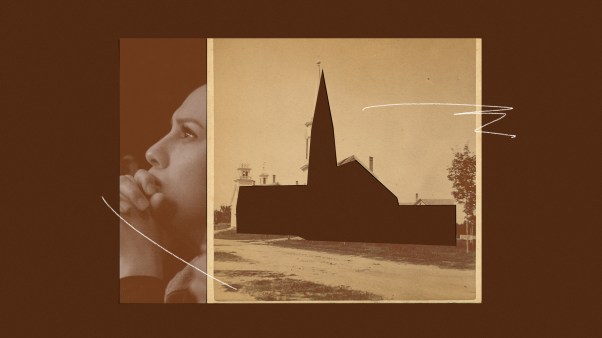
We can always commune with God in a “chapel of the heart.”

Illustration by Cassandra Roberts

Prayer is both the simplest and most difficult of spiritual practices. We need it, we desire it, it is not actually hard to do—and yet even deeply committed believers can struggle at times with prayerlessness. The reasons we give for this neglect take many forms, but they often boil down to some version of “I’m too busy.” Underneath these rationalizations lies a deeper reason: Our pride continually pulls us toward self-reliance, so we avoid the God-reliance that’s at the very heart of prayer.

“Our problem is that we assume prayer is something to master the way we master algebra or auto mechanics. That puts us in the ‘on-top’ position, where we are competent and in control,” Richard Foster writes in Prayer: Finding the Heart’s True Home. “But when praying, we come ‘underneath,’ where we calmly and deliberately surrender control.” Prayer invites us into dependence—a kneeling and openhanded posture of the heart—where we are blessed to remember that it is he who made us, and not we ourselves.

It’s this posture of creaturely humility—of utter reliance upon God—that our souls deeply long for. When we enter into prayer, we enter into a sweet relief. What solace we find as we throw off our delusions of self-reliance and acknowledge that God is God and we are not!

Even in the very act of praying, we are reliant upon God. While prayer certainly involves our intention and will, we aren’t the main actors in the work of prayer—God is. As Kristen Deede Johnson explores, prayer is a response to God, who is alive and ever present.

This special issue spotlights the voices and perspectives of women as we explore this topic of great import for the whole church. From candid discussions of prayer amid suffering and doubt to stories of prayer mentors from history and God’s answers to prayer, these articles challenge us to experience prayer as a life-giving invitation rather than a guilt-ridden “should” on our spiritual to-do list.

Brother Lawrence, the 17th-century Carmelite monk, beckons us beyond our hollow excuses and preoccupations, envisioning prayer for us in simple terms. He wrote, “It is not necessary to be always in church to be with God, we can make a private chapel of our heart where we can retire from time to time to commune with Him, peacefully, humbly, lovingly; everyone is capable of these intimate conversations with God.”

No matter what is happening in our lives, through prayer we can retreat into a beautiful sanctuary with the Lord. We can speak to God in this chapel any time we want. We can sit silently, or cry, or voice our questions, or rejoice. We can be with God there. For “surely I am with you always,” Christ promised, “to the very end of the age” (Matt. 28:20).
Also in this issue

Prayer is not actually hard to do—and yet even deeply committed believers can struggle with prayerlessness. Underneath our "I’m too busy" rationalizations lies a deeper reason: Our pride pulls us toward self-reliance. Prayer, in contrast, invites us into God-reliance. This special issue spotlights the perspectives of women on this crucial topic. From candid discussions of prayer amid suffering and doubt to stories of prayer mentors from history and God’s answers to prayer, these articles challenge us to experience prayer as the life-giving invitation it truly is rather than as a guilt-ridden "should" on our spiritual to-do list.

Our Latest

News

Died: John M. Perkins, Who Lived and Preached Racial Reconciliation

The civil rights leader believed in a gospel bigger than race or self-interest.

The Year of the Evangelical

America prepared for a bicentennial, and religious identity dominated the presidential campaign.

Review

Decoding the Supreme Court

Three books to read this month on politics and public life.

The Bulletin

Cost of Iran War, Quiet Southern Border, and Anglican Church Split

Mike Cosper, Clarissa Moll, Russell Moore

The financial and moral toll of war, immigration slows but ministry continues, and why denominations split.

Review

‘The Secret Agent’ Explores Memory and Authoritarianism in Brazil

Mariana Albuquerque

The Oscar-nominated film reminds viewers to learn from the past—and to share our stories with the next generation.

Q&A: Eric Mason on Ministering to Men and Witnessing in Politics

Interview by Benjamin Watson

The Philadelphia-based pastor discusses how the church can engage Black men and have a biblical approach to government.

Jan Karon Looks Back on 89 Years of God’s Faithfulness

The author of the Mitford Years series married at 14, protested segregation, and wrote her first book at 57.

The Just Life with Benjamin Watson

Michel Lusakueno: Why the World Can’t Ignore Congo

Exploring the sobering connection between modern convenience and human suffering.

Apple PodcastsDown ArrowDown ArrowDown Arrowarrow_left_altLeft ArrowLeft ArrowRight ArrowRight ArrowRight Arrowarrow_up_altUp ArrowUp ArrowAvailable at Amazoncaret-downCloseCloseEmailEmailExpandExpandExternalExternalFacebookfacebook-squareGiftGiftGooglegoogleGoogle KeephamburgerInstagraminstagram-squareLinkLinklinkedin-squareListenListenListenChristianity TodayCT Creative Studio Logologo_orgMegaphoneMenuMenupausePinterestPlayPlayPocketPodcastprintRSSRSSSaveSaveSaveSearchSearchsearchSpotifyStitcherTelegramTable of ContentsTable of Contentstwitter-squareWhatsAppXYouTubeYouTube