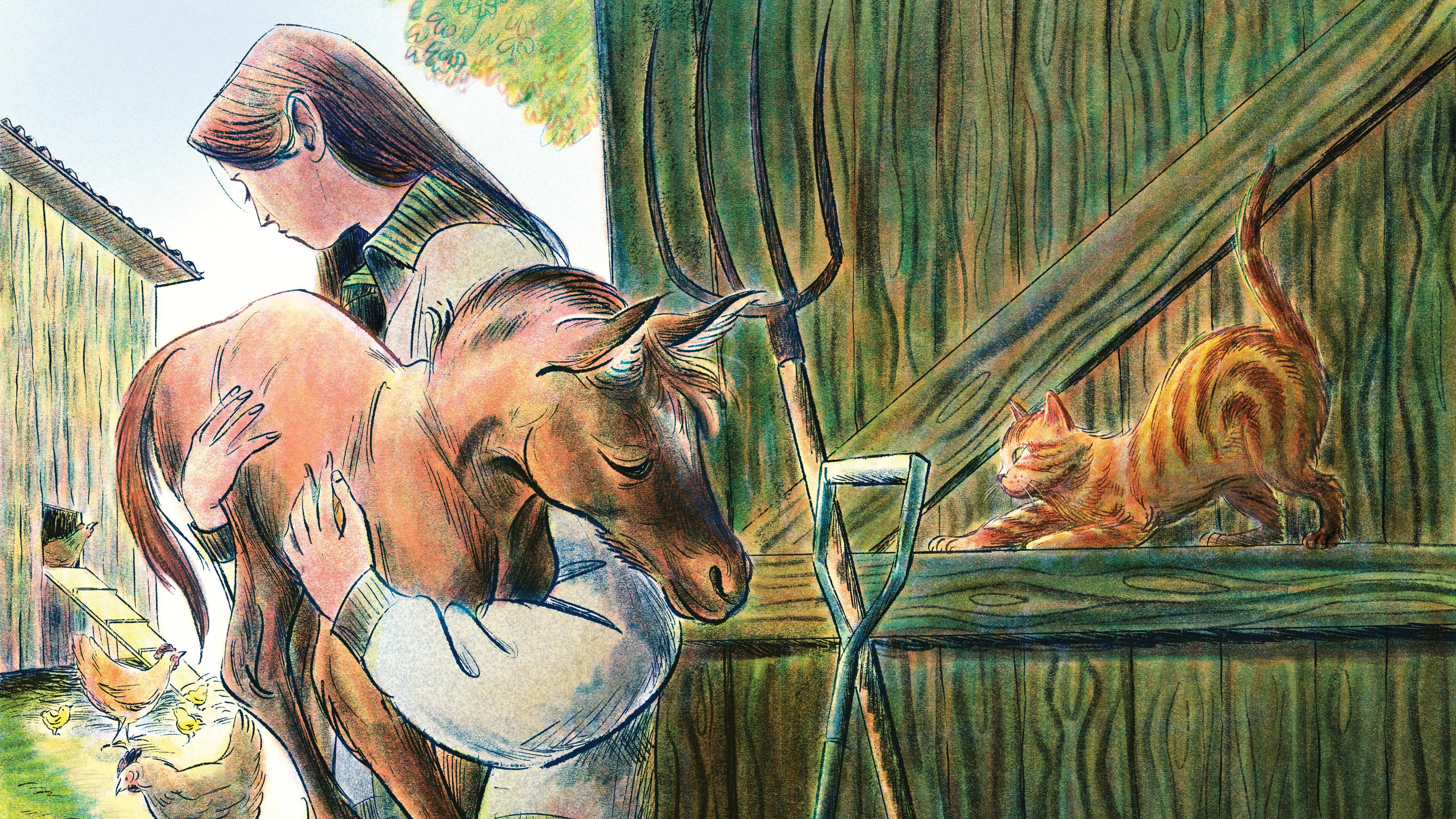
I spent a lot of time thinking about the birds and the bees while growing up. I was raised in a rural community as the child and grandchild of farmers. I helped oversee the births of kittens, chickens, rabbits, and one horse. Later, as a college student, I worked at a farm that bred and trained show horses. At times, I was called on to assist in the breeding of mares, the collection of semen from stallions for use in artificial insemination, and the castration of colts. On the farm, we had no doubts about how and when a new life began because we spent so much time trying to facilitate, manage, and control it. The facts of life were all around us every day.
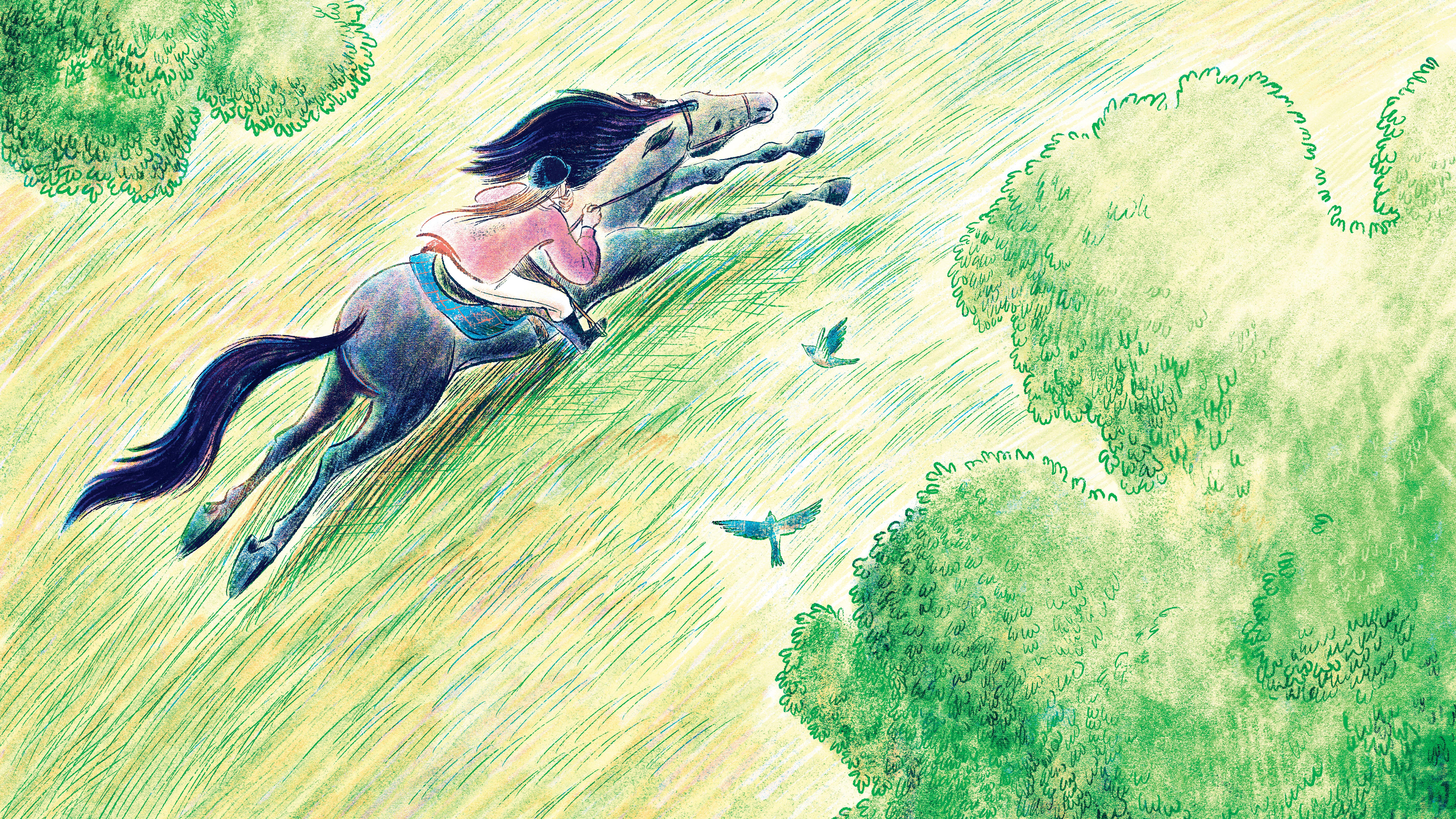
The barn housed one stallion, a stunning steel-gray Arabian. He’d been brought to the farm with hopes he’d sire more progeny from his coveted lineage, but alas, he turned out to be sterile. He didn’t know it though, and whenever a mare was led past his stall, he’d prance about with flared nostrils, arched neck, and flourishing tail. As his past and present owners battled out their legal and financial claims, his fate remained in limbo. Once, I got to exercise him by galloping through the wooded trails that wound around the outskirts of the farm. It was the most exhilarating ride of my life. Like most stallions, he had to be turned out alone and housed in a stall set apart lest he be constantly worked up by the other horses. His was a lonely life.
Like other animals, human beings are subject to nature’s laws. In the realm of mere nature, reproduction is a biological, mechanical, and utilitarian affair. Yet when it comes to human reproduction, so much more than science, biology, and nature are involved. Being made in God’s own likeness and image, humans are more than natural beings. To bear or not to bear a child is a matter that touches on all that it means to be human: not just our biology but also our personal desires, drives, hopes, expectations, and fears—all these wrapped up in our social and familial contexts, traditions, and assumptions.
Being childless has forced me to examine these things.
The thought of not having children, of not being able to have children, had never occurred to me. People in my family tended to marry and have babies early. Not always in that order. I assumed when I married at age 19 that babies would come not long after. They didn’t. But I was still young and not worried. I had so much life ahead. I embraced fully what was already in front of me: marriage, school, work, and a thriving church life.
Year after year passed, however, and I didn’t get pregnant. Then one day, I woke up in the surgical room of my gynecologist after a procedure that discovered and (ostensibly) repaired the damage done to my body by previously undiagnosed endometriosis.
“You’ll be pregnant within six months,” the doctor said confidently.
Except I wasn’t. Not six months later, not one year later. Not, as far as I know, ever.
The doctor also mentioned that the next step would be to take fertility drugs. He said it as though he were a waiter in a fine restaurant describing the next course as he cleared the current dishes away. I nodded dumbly, got dressed, and shuffled woozily to the waiting room to find my husband. Because it had taken longer than expected for me to awaken from the anesthesia, we were the last patients to leave. As we exited the building, I was surprised to find it was already dark outside.
This was the ’90s. Tabloid headlines regularly blasted harrowing but triumphant stories of multiple births resulting from fertility treatments. Afternoon talk shows featured beaming young parents seated on plush couches next to six, seven, or eight infants or toddlers adorned in matching bow ties and ribbons. But beneath the shiny surfaces emerged stories of months of bed rest for imperiled mothers, pregnancy “reductions,” and fragile babies spending weeks or months in intensive care units. At the same time, breakthroughs with in vitro fertilization raised a little (but not much) public debate about the ethics of intentionally creating embryos fated for medical waste bins or perpetual storage in freezers.
It seemed there were more regulations and safeguards around breeding horses than in making God’s image bearers.
The blessing of medical science had healed my diseased body, as far as we could determine. That was enough. My husband and I decided that intentionally undertaking such grave medical and ethical risks was, for us, too close to testing God. We declined further fertility treatments of any kind, leaving it in God’s hands. And to wild abandon in the marital bed.
Still, no babies came.
I didn’t have many role models for faithful, happy, childless marriages. I have vague memories from my childhood of an elderly couple, distant relatives, who lived in an old brick house in Vermont where a clear, stony brook gurgled in the back. They were kind hosts who let me ramble throughout the place, full of rooms with no other children to be found. There was a sense of something mysterious about them and their home—something about the abundance of a life that doesn’t look like everyone else’s—that lingers with me still.
Most of the married women my age in church had or were having children, so I didn’t find childless role models there. Nor did I reveal my fertility struggles with my church or even my family. These were things few talked about then, and if the internet existed at that time, I didn’t know about it. I certainly didn’t want pressure, or sympathy, or advice. Most people assumed, I think, that I was tied up with my academic pursuits and didn’t want children at the time or perhaps ever. If they were making that assumption, it was fine with me.
Later, into my 30s and 40s, as such subjects were increasingly becoming topics of public conversation, much of what was expressed—by childless women more than childless men—displayed a level of existential longing, struggle, and despair that I did not share. Because I was not striving to be pregnant, I felt my loss was less. I resonate with words I recently read from the late Elizabeth Felicetti. In Unexpected Abundance: The Fruitful Lives of Women Without Children, Felicetti mentions that since she had no diagnosis for her infertility, she had no cause to turn to reproductive technologies. As a result, she says, “I sometimes felt like I could not express my own sadness about children because I had not gone to such lengths.”
Being in the minority is, by its very nature, hard. Procreation reflects the natural order and is the pattern fulfilled by most creatures and most people. It is the way of the birds and the bees. But not me.
The hardness of not having the children I hoped and dreamed I would have has brought various kinds of grief. Chief among them is knowing what a great father my husband would have been and wanted to be. Smaller sadnesses include how I missed being able to read to my children the stories I loved when I was a child. To hear a child’s delighted squeals when playing with a puppy. To watch a small being grow into the unique person whom God made her to be and whom I had a part in forming. To experience my own children having children.
But great blessings have come, too, blessings that a path with children would likely have turned toward the home rather than outside it. My husband has been a teacher—more than a teacher, a father figure—to the teens he teaches in school. Likewise, I have been, for a small number of my own students, a mother figure—to some (they tell me) the mother they never had. I have written books that have helped others love the stories I love. I have cared for many of the lesser creatures God created and called good. I have been able to give back to my parents in their last years a fraction of all they gave me, by housing them, caring for them, and being their companion and helper—more so, to be sure, because I did not have children to care for as well. In the “sandwich” generation—those caring for two generations, those before them and those after them—I am an open-faced kind.
This openness is a gift. Childlessness can be a calling in the same way that being a parent is a calling, or as marriage or celibacy can be callings. Not to be called to something is inherently to be called to something else, even if that something else is elusive for a while.
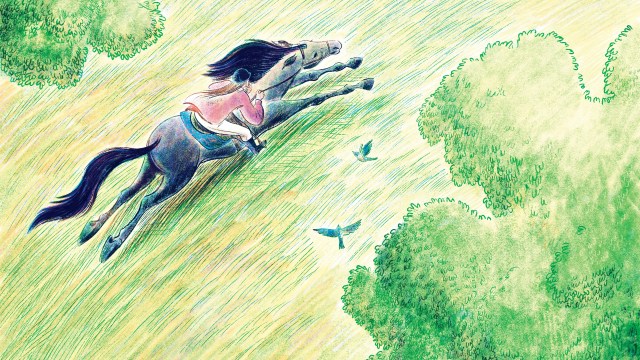 Illustration by Wesley Allsbrook
Writing about celibacy—another way of life outside the ordinary course for most people—Wesley Hill observes in his essay “Celibacy Is Not the Gospel” that celibacy can “witness to the coming new creation in which ‘they neither marry nor are given in marriage’ (Matthew 22:30; 19:12),” just as marriage can “point to the coming wedding supper of Christ and the Church (Ephesians 5:31–32; Revelation 19:6–8).”
Similarly, while having children is the primary way to fulfill the creation mandate given in Genesis 1:28 and 2:15, those who do not have children can also “be fruitful and multiply” (ESV) in other service to God’s people. Just as marriage points to the mystical union of Christ and his church, so too children point to a fruitfulness of our spiritual lives that is born of life in Christ.
In her book Solo Planet: How Singles Help the Church Recover Our Calling, Anna Broadway relays the words of Joanna, a celibate Catholic, who describes her call as one not to singleness or celibacy but rather to a life in community. “Through that shared religious life, she’s bonded with people she didn’t choose,” Broadway writes. Joanna explains, “They are given to me. And I learn to love them.” Similarly, in childlessness, God brings people other than our own children into our lives to love.
A rich, helpful heritage on childlessness is contained in the pages of the Bible. Indeed, it’s a recurrent theme resonant with individual, historical, and spiritual meaning.
Abraham and Sarah using the enslaved Hagar as a surrogate rather than trusting God to fulfill his promise moved me deeply early in my infertile years. I felt the anguish of each of them and understood the desire to take actions oriented toward the promise God had made, being unable to imagine how else God might fulfill that promise.
Their story served not only as a warning but also as a reminder: God’s grace is sufficient. It is sufficient when we obey and when we disobey (for God was merciful and faithful even when Abraham and Sarah were not). My heart goes out to Sarah—and to Hagar. The pressure Sarah felt to have a child, to give Abraham heirs, and to see the fulfillment of God’s promise grew heavier on her year after year, until she and Abraham took matters into their own hands, altering the course of history. Many of our desires are socially constructed, as Sarah’s surely were in a patriarchal culture in which her value as a woman depended almost entirely on her ability to produce an heir. Our discontentment becomes greatest when expectations we or others impose on us go unmet.
I have, over the years, heard from many people struggling with infertility. Sometimes they are would-be fathers or would-be grandparents. But mostly they are young women facing the prospect of dreams and expectations (not only their own but often, sadly, those of others) unfulfilled. What I want to tell them—what I do tell them—is that God’s gifts are good. He may not give you the one you wanted, but he will give you others.
It’s a cliché and as such is sadly drained of meaning. But it’s a truth whose meaning is worthy of recovering: Children are a gift. A gift is neither a right nor an obligation. A gift is given. A gift is received. A gift is not to be demanded or rudely refused. The best gifts are not deserved or bought, sometimes not even sought. The gift of children is like this. So, too, are the other gifts God brings. Sometimes, while we are looking for one gift, it can be harder to see another one resting, still wrapped, in the other direction.
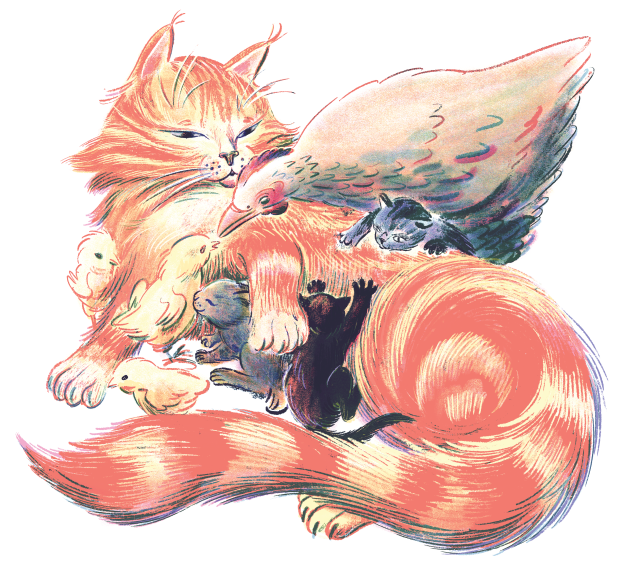 Illustration by Wesley Allsbrook
In the midst of the years that are the time of peak fertility for most women, I was (along with trying to get pregnant) working on my PhD in English literature. I was fortunate that my studies gave me a closer look at British authors (my specialization) who were faithful Christians who contributed much good to the world—but didn’t have children. Jane Austen, brilliant novelist and satirist who never married, was one. Hannah More, the evangelical poet, dramatist, social reformer, and abolitionist, was another. In fact, More had four sisters who assisted each other in their educational and charitable endeavors, and none of them married or had children either. Nor did the poet Christina Rossetti, whose devout faith led her to minister to prostitutes as a volunteer with the St. Mary Magdalene Penitentiary. Charlotte Brontë lost her only child during pregnancy and lived the remainder of her life childless. Her sisters Anne and Emily never had children.
Church history is also full of people who did not have children and yet lived fruitful lives in service to their neighbors and to the church. Paul, for example. Jesus! Julian of Norwich, Queen Elizabeth I, Florence Nightingale, and John Stott. Some of my closest friends, too.
Childlessness is actually much more historically normal than you might think. Historian Rachel Chrastil writes in How to Be Childless: A History and Philosophy of Life Without Children that “widespread childlessness has been a long-standing reality in northwestern European towns and cities from around 1500 onward.” One notable exception is America’s baby boom (the period for those born between 1946 and 1964), an event Chrastil characterizes as a historical anomaly: “Some of the highest rates of childlessness ever recorded (including current rates) were for women born around 1900,” Chrastil said elsewhere in an interview. “In the U.S., for example, 24% of women born in 1900 never had children. Among those born a half-century later, between 1950-1954, a much smaller number, 17%, reached age 45 without ever having children.”
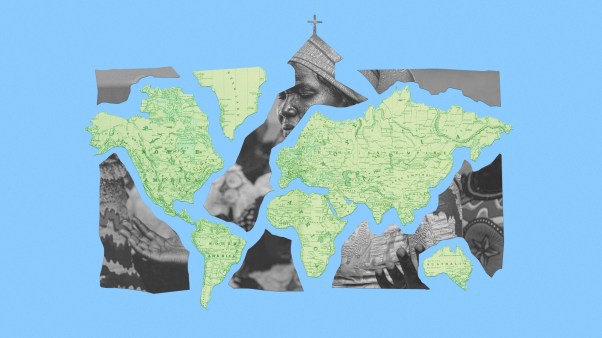
Since then, childlessness in America has seen a dramatic increase, as many experts and news headlines have highlighted. One in five US adults ages 50 and older have never had children, according to an analysis of government data the Pew Research Center reported in 2024. The same analysis found that 23 percent of adults in their 50s and 22 percent of those in their 60s have never had children. On a global scale, the World Health Organization estimated in 2025 that infertility affects one in six people of reproductive age at some point in their lives, a significant factor contributing to childlessness.
Why do these numbers matter? Childlessness is fainter in our collective consciousness than in reality. It is often portrayed as either an expression of some sort of defiant independence or a cause for scrutinizing pity. But there is a wide range of experiences, circumstances, and contingencies that lead to not having a child. Nevertheless, for whatever reasons they are childless, a group who constitute 20 percent of the population may be a minority, but they are numerous enough not to be invisible or inconsequential. Childlessness doesn’t need to be normalized, because it is—in fact, if not in understanding—already normal.
Recognizing this will naturally open ways for the childless among us to be more integrated into communal life—especially church life. Collectively (while taking individual differences into account), childless people have just as much need to socialize as young mothers do, for example. They desire to participate in holiday meals, traditions, and celebrations just as much as those with children. They will need care and comfort when they are sick or aging—and, in fact, will likely be in greater need of such than those who have children to assist in the later years. I don’t know a single childless person who doesn’t worry about facing the end stages of life not knowing who will be there with them. We need imaginations that make more room for the reasons for childlessness and, more importantly, for the childless people among us. We need structures, institutions, and policies that do the same.
Christians have even more than contemporary trends and social structures to draw on in considering what childlessness has to teach. There is more to being fruitful than what the birds and the bees show us. We have more resources than the natural family to draw on in loving and caring for one another.
As Emily Hunter McGowin observes in Households of Faith: Practicing Family in the Kingdom of God, “Scripture characterizes the church as God’s household.” The New Testament refers to fellow believers as brothers, sisters, mothers, and fathers.
Of course, McGowin explains, the natural family is not the same as the church family. “Unlike the church, however, which anticipates a future union with Christ in the new heavens and new earth, Scripture suggests that human families as we currently experience them will come to an end.” Because the kingdom of God is an eternal family, the church must be a place that not only supports human families in this earthly life but also recognizes and affirms in practice the status of spiritual mothers, fathers, brothers, and sisters in the eternal family of God.
Desire for children is natural. Yet part of what the story of Abraham and Sarah in the Old Testament teaches focuses on more than just natural children. Sarah’s conceiving and bearing a child with Abraham when both were so late in age was a work of God, not the flesh. The symbolic (as well as historic) significance of this event is described later in the New Testament by Paul when he writes in Galatians 4:22–31 that God’s spiritual children are those who came through Abraham and Sarah not through the flesh but through God’s promise—through his grace.
Grace, as Aquinas says and the Westminster Confession suggests, perfects nature.
We speak of the birds and the bees to speak of the ways of nature. But the ways of nature are authored by a God who is beyond nature. When nature sings, heaven sings too. There is grace too in the ways of the birds and the bees and the galloping steed.
And it is grace, not nature, that has made my life fruitful.
Karen Swallow Prior is a scholar, writer, and speaker who lives in rural Virginia.