“The most influential African American Christian leader since Dr. King.” That’s what University of Virginia religious studies professor Charles Marsh in 2008 called John M. Perkins, who is 95 and under hospice care. But I know Perkins from interviewing him several times, hearing his Bible studies during the 1990s at Christian Community Development Association conferences, and reading his books.
Perkins had his greatest influence in the late 20th century. His most-read book, Let Justice Roll Down, came out 50 years ago, so now some have forgotten him—but this great leader deserves remembering both for his own achievements and the way his life demonstrates God’s mercy.
Psychologists talks about ACEs—adverse childhood experiences that can scar a life—and Perkins had a handful of them. His mom died when he was seven months old and his father disappeared. Perkins in Let Justice Roll Down described how his father came back four years later: “He arrived late one Friday night. … He woke me up, and I saw him in the glow of the lamp. … He hugged me in strong arms. And he talked to me. My daddy!”
Then came misery: The next afternoon, “when he said he would be going … there was only one thing on my mind: I would go with him. [Dad Perkins] saw me following. ‘Go back. Go back.’ The way he ordered me back sounded strange, like he was confused somewhat. Yet he didn’t really sound like he was angry with me, so I followed, but at a careful distance. … He came back … and whupped me with a switch from a tree.” When his dad left, “with him went my newfound joy in belonging, in being loved, in being somebody for just a little while. Years would pass before I would know this joy again.”
related


Perkins’s grandma and other relatives, who worked as sharecroppers, raised him. He dropped out of school in the third grade and gained his first lesson in economic exploitation at age 12. He worked all day hauling hay, expecting to be paid $1.50 or $2, a typical day’s pay in 1942. Instead, a white man paid him 15 cents. “I took a long look at what had just happened to me and really began thinking about economics,” he said.
It got worse. In 1946 older brother Clyde Perkins returned home from fighting in World War II. Clyde and his girlfriend were waiting in a noisy ticket line at the movie theater. A deputy sheriff told everyone to shut up. Clyde and his girlfriend chatted some more. The officer clubbed Clyde, who grabbed the blackjack. The lawman pulled his gun and shot Clyde twice in the stomach, killing him.
John Perkins the next year moved to Southern California, worked as a janitor, married Vera Mae Buckley in 1951, did army service in Okinawa during the Korean War, and came back to factory work. He was a bitter man until his little son, Spencer, came home from Bible classes singing “Jesus Loves the Little Children,” red and yellow, black and white. Perkins began studying how that could be so. He soon professed faith in Christ.
That faith moved him to move back to Mississippi in 1960 with Vera Mae and their five children. Perkins became a civil rights leader over the next decade, supporting voter registration efforts in 1965, school desegregation in 1967, and an economic boycott in 1969 of stores that wouldn’t hire Black employees.
related

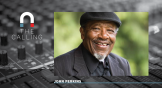
Perkins said his nonviolent approach didn’t come easily: “I had learned to hate all the white people in Mississippi,” he wrote in One Blood (2018). “I hated their control over our lives. … If I had not met Jesus I would have died carrying that heavy burden of hate to my grave.”
Again from Let Justice Roll Down: “The most terrible thing about the situation in the South was that so many of the folks who were either violently racist or who participated in discrimination and enslavement through unfair and unlawful business practices called themselves Christians.”
But suffering led Perkins to compassion. “I know what it feels like to be at the low end of the totem pole. I know what it feels like when ‘good’ people look down their noses at you. Something on the inside dies over and over again,” he said. “I love it that Jesus comes after those kinds of folks. … If God Himself loves and wants the outcasts, why don’t we?”
To help the outcasts, Perkins founded Voice of Calvary and Mendenhall Ministries, which developed health clinics, theology classes, a housing cooperative, and thrift stores. During the 1980s, Perkins created institutions to help other outcasts: the Harambee Christian Family Center, the John and Vera Mae Perkins Foundation, and the Christian Community Development Association.
Lawless law officers in 1970 beat him because of his civil rights efforts. Brandon, Mississippi, deputy sheriffs and highway patrolmen stuck a fork up his nose and down his throat. They beat him to the floor and kicked him in the head, ribs, stomach, and groin. One physical result: two-thirds of his stomach had to be removed. One spiritual result, Perkins later related: “When I saw what hate had done to them, I couldn’t hate back. I could only pity them. I didn’t ever want hate to do to me what it had already done to those men.”
Perkins told me six years ago he believed that those who beat him knew deep down they were wrong, and that sometimes made them even more brutal. He said some, then and now, talk loudly to cover up the whispers about right and wrong in their own heads. In his book He Calls Me Friend, Perkins noted, “Our culture applauds people who are brash and arrogant. The self-promoter gets the most attention and the most encouragement. But God intends for his friends to be marked by gentleness.”
related
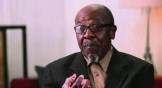
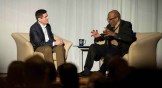
I asked Perkins five years ago if he thought America still had a lot of racism. He responded, “To say people are racist is to say there’s more than one human race. There’s not. We are one blood. But we forget that. We sing God loves all the children of the world, but we don’t mean it. We say all people are created equal. We get fuzzy about that and cry about that, but we don’t mean it.”
My follow-up question: “When you can cut the racial tension with a knife, do people start carrying knives?”He replied, “Black folk are broken just as much as white folk, and white folk are broken just as much as black folk. But we’ve lost tolerance. You can’t even get anybody to answer a pollster now. But maybe that’s why voting in secret is good. I don’t want my neighbor thinking I hate him because I vote against his idea.”
Here’s what Perkins said “progress” would look like now: “Churches grow better when they enter into the pain of society. We weaken the church when we turn it into a prosperity gospel.” He added, “In Acts, they didn’t sit at home waiting for food to come by chariot. They went out to homes and started classes.” He added, “I tell people they’re broken, but I can’t do that if I don’t tell them I’m broken too.”
Yes, the most influential African American Christian leader since Dr. King is dying. But John Perkins privately and publicly emphasized not how he made a difference but how Christ has. “If we are going to help others understand who Jesus is, our own lives must reflect His character and love,” he wrote. That’s why we must love political opponents and others, he said: “It is at this precise moment that the watching world gets a glimpse of Him.”
Marvin Olasky is editor in chief of Christianity Today.