News

The Christian and Jewish Israelis Protecting West Bank Palestinians

As settler violence increases in the West Bank, a night-watch group guards Bedouin homes from intruders.

A home and farmland damaged by Israeli settlers who trespassed and vandalized property in the West Bank.

A home and farmland damaged by Israeli settlers who trespassed and vandalized property in the West Bank.

Christianity Today April 22, 2025
Marcus Yam / Contributor / Getty

Jonathan Pex is concerned about his Palestinian Bedouin neighbors in the West Bank’s South Hebron Hills.

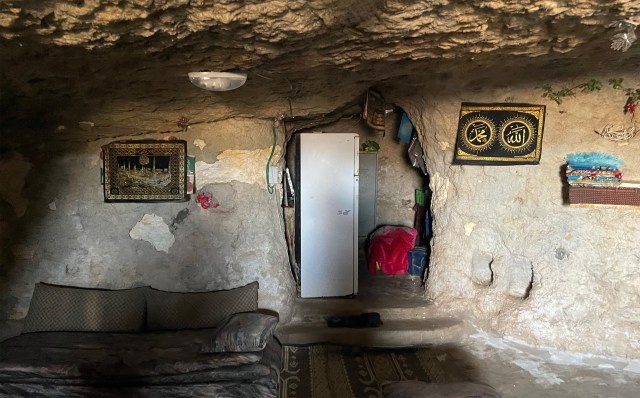
They’re sheepherders who live in an expansive cave outfitted with solar electricity, ten minutes from Pex’s home. The region has seen an uptick in Israeli settler violence against Palestinians since the October 2023 Hamas attacks, and the Palestinian family is afraid they may be next on the settlers’ hit list, as they’ve had several disputes with their neighbors over grazing rights. 

So Pex, a Jewish Israeli Christian, packed a small bag and drove from his home near the border of the West Bank to Abu Shchade’s property for an overnight stay in late March. Through a friend’s invitation, he had joined a local night-watch group made up of several dozen Israelis who are on call to help local Palestinians concerned about extremist settler violence. 

After a simple dinner of rice with sheep’s milk, sliced tomatoes, and flatbread with olive oil, Pex set up the sleeping mat and blanket the Bedouin women provided and joined two other Israeli “night guards” in a strategic location outside the cave. 

“I’m going to do whatever I can to support them,” Pex said. “Jesus would have really had a heart for these people.” 

Pex said the attacks often happen at night. During past night watches at the homes of Bedouins, a seminomadic people originally from the Negev desert, he encountered some young men who had sneaked onto their property to cut water pipes and destroy solar panels. Settlers take in troubled youth and send them out to terrorize their Palestinian neighbors, Pex said. 

Sometimes the attacks are far worse than property damage.

In late March, dozens of extremist settlers assaulted a group of Palestinians in the village of Jinba, also in the South Hebron Hills. Three of the victims needed medical care, including a 16-year-old Palestinian boy with a severe head injury. Local authorities arrested more than 20 Palestinians but no settlers in the wake of the attack. Pex noted that this was a common trend. 

An attack last August involved more than 100 masked settlers who torched houses and cars in the northern West Bank city of Jit and killed a Palestinian man. Israeli prime minister Benjamin Netanyahu condemned the attack but has done little to curb settler violence and stop the expansion of illegal settlements. Israeli human rights groups claim indictments against settlers are rare.

Close to half a million settlers—Israelis with an even split of ultra-Orthodox, secular, and religious nationalist beliefs—live among 3 million Palestinians in the West Bank. After Israel captured the West Bank from Jordan during the 1967 war, it began building Israeli communities among the Palestinian population, an endeavor that has accelerated over time. 

The International Court of Justice considers all settlements in the West Bank illegal, but Israel claims its 141 government-sanctioned settlements are necessary for Israel’s national security and legal as they are built on “legitimately acquired land which did not belong to a previous lawful sovereign and which was designated as part of the Jewish State under the League of Nations Mandate,” according to Israel’s Ministry of Foreign Affairs. Most Israelis who move to the settlements believe Israel has a historical or religious claim to the territory. 
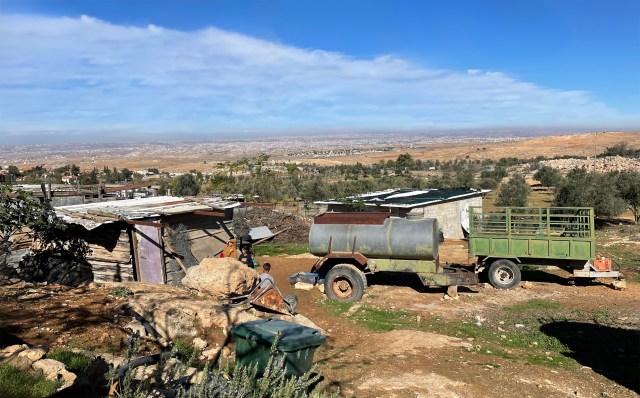
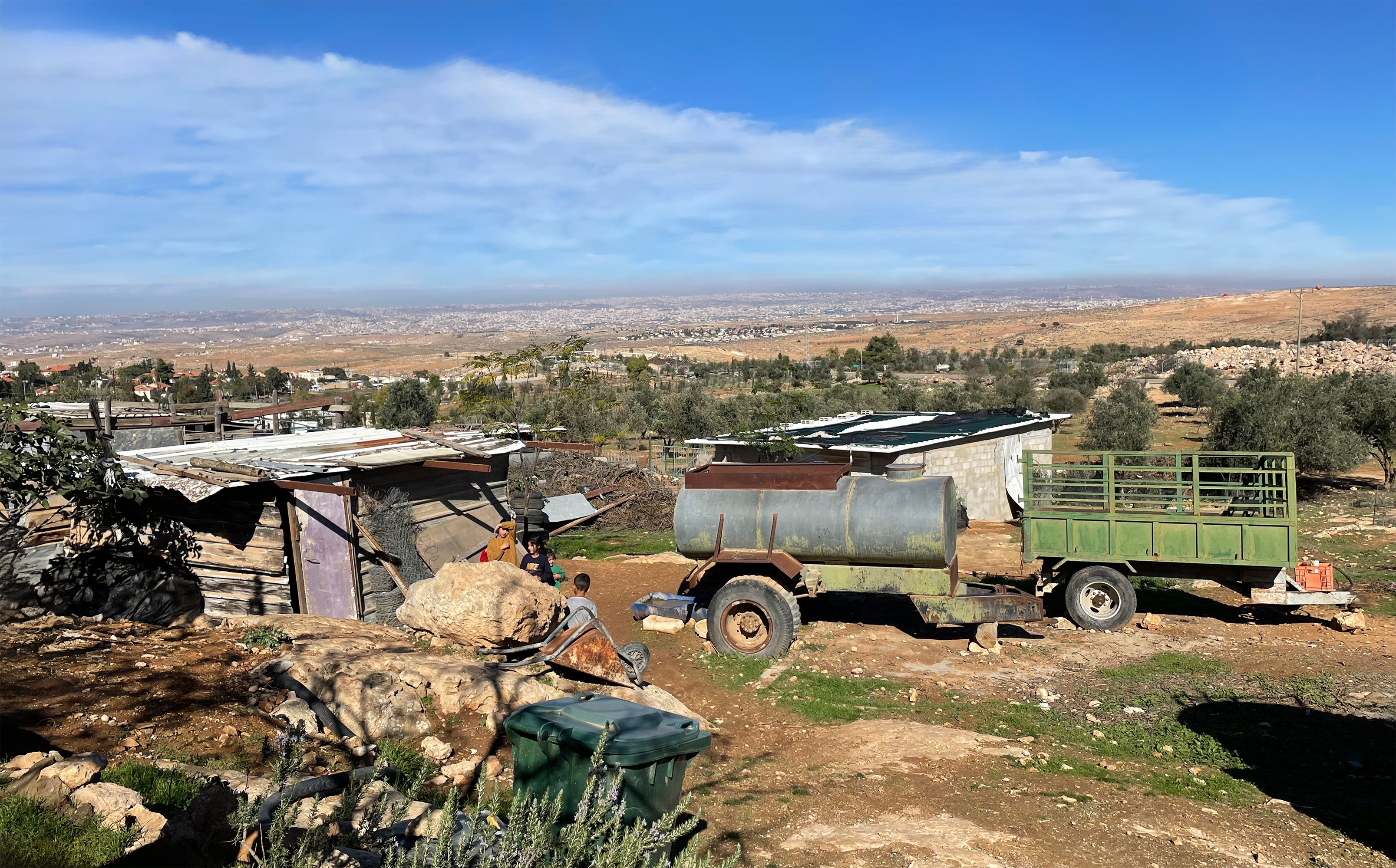
An outside view of a Bedouin house in South Hebron Hills.Photography by Jill Nelson
An an inside view of a Bedouin house in South Hebron Hills.Photography by Jill Nelson
An outside view (top) and an inside view (bottom) of a Bedouin house in the South Hebron Hills.

More than 200 of the settler outposts are considered illegal, even under Israeli law. Some far-right settlers wear partial Israeli military uniforms, posing as ruling authorities and committing acts of violence.

Some extremist settlers want to prevent a future Palestinian state in the territory, so they turn to violence and threats to scare Palestinians away and take over their property. Since the war began, uniformed settlers have increasingly patrolled beyond their settlements and attacked Palestinians. The United Nations counted more than 1,800 settler attacks between October 2023 and the beginning of this year. 

The Biden administration in February 2024 imposed sanctions on settlers accused of violence or the destruction of property. (The sanctions also applied to Palestinians who harm their neighbors.) The Trump administration scrapped the sanctions in January. 

“[The extremist settlers] have done many bad things in the name of the army and with the equipment of the army,” said Noam Oren, a Jewish Israeli farmer who lives just outside the West Bank. He is also part of the night-watch group, and sometimes Palestinians also call him during the day with reports of trouble.

A year ago, a Bedouin Palestinian called him when settlers brought a herd of sheep to his property to eat from his barley pile, just 50 yards from his home. Oren said settlers also let their sheep drink from Bedouin rainwater tanks, and sometimes they spoil the water by adding oil.

Oren called the police and drove to his friend’s home to confront the settlers—a decision he now acknowledges may not have been wise. As Oren approached the men, he said one threw a rock at his face while another shot his gun in the air. Oren tackled the man who had hit him with a rock and held him down until the other man put his gun down.

When Oren released the settler, the settler began throwing rocks again while the other man made a phone call. Five minutes later, 20 more uniformed settlers came onto the property and tackled him. The police officer eventually arrived and interviewed all parties involved. 

a herd of sheep owned by Bedouin in the South Hebron Hills.Photography by Jonathan Pex
A herd of sheep owned by the Abu Shchade family in the South Hebron Hills.

Oren showed the officer his injuries and video evidence from his phone that proved the settler had started the fight, but he learned weeks later that the officer still sided with the settlers in his report. “This is how it works,” Oren said.

Oren filed a separate report in the West Bank city of Hebron, and his case is still pending. The settler brought charges against Oren but eventually dropped them after Oren presented his evidence to regional authorities. 

Pex said it’s common for settlers to provoke Palestinians, and as soon as a Palestinian loses patience and reacts, the settler calls that person a terrorist and files charges. “Usually it’s just a poor Palestinian herder,” he said. Many Palestinians have added security cameras to their properties so they have a chance at proving their innocence. 

Pex is concerned that many of his Israeli friends, even those with left-leaning views, haven’t had compassion for Arabs since the Hamas attacks. But he believes the recent escalation in violence has raised awareness about the lack of justice in parts of the West Bank. He is considering hosting tours in the South Hebron Hills so Israelis who are afraid to visit these areas alone have an opportunity to meet the Bedouin population suffering from these attacks. 

“It makes me sad that a lot of Christians support Israel at all costs,” Pex said. He pointed to Jesus’ words in the Beatitudes, “Blessed are the meek,” as instructive for Christian interactions with suffering populations.

Pex didn’t sleep much during his night watch at Abu Shchade’s property—the dogs, chickens, and sheep were noisy—but he’s glad he went. The settlers kept their distance, and he hopes the somewhat regular presence of his group will be a deterrent. In the morning, the family served him fresh eggs, cream cheese, and bread.

“It was really quite an experience,” Pex said. “They’re sweet, simple people who live with hardly any running water, and all of this really breaks my heart.”
News

Died: Pope Francis, Friend to Evangelicals

The Roman Catholic leader “built bridges on the foundation of relationships” with Protestant ministers in Argentina.

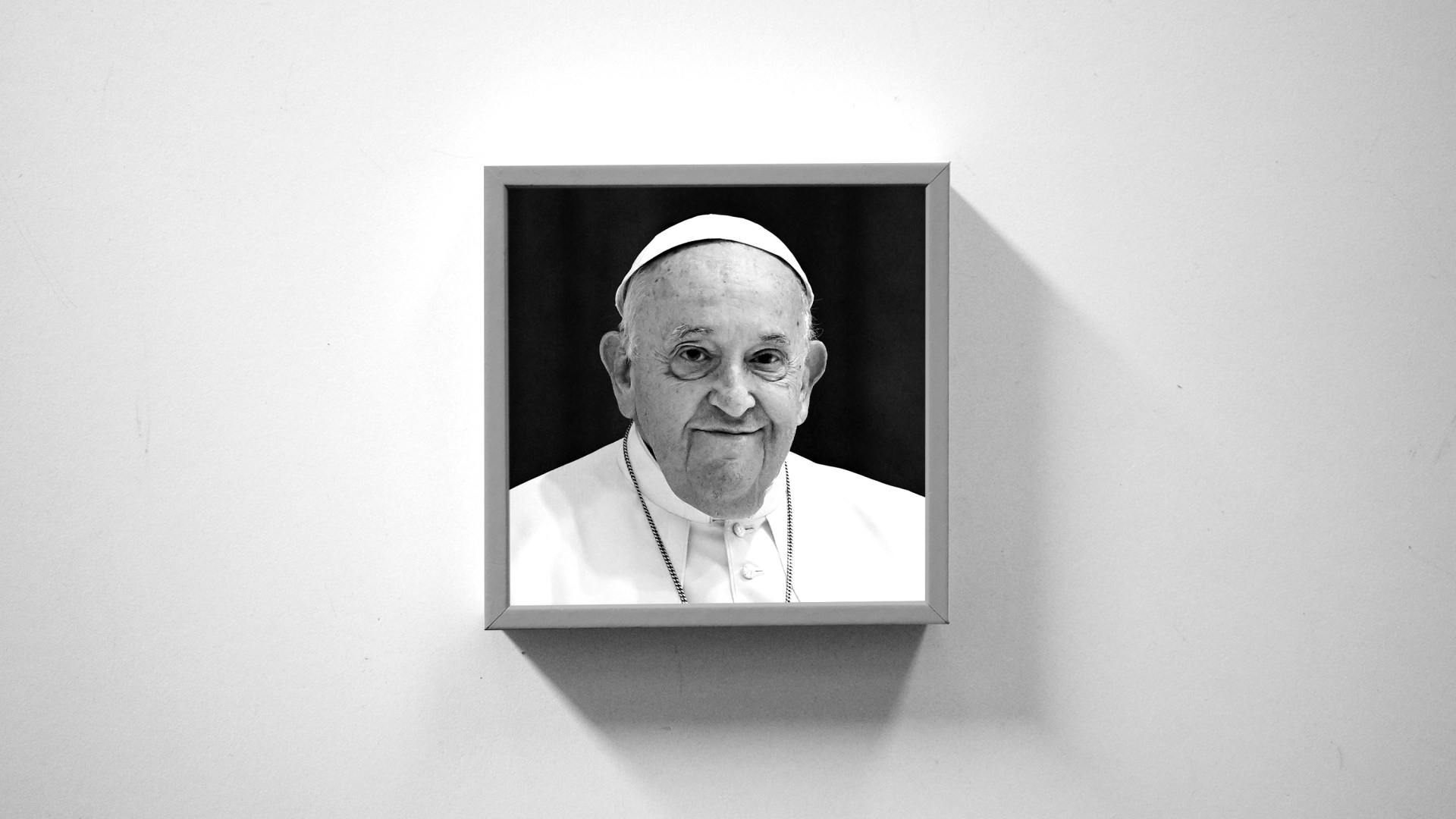
Pope Francis
Christianity Today April 21, 2025
Edits by CT / Source Images: Vatican Pool, Getty

From his hospital bed in Rome, Pope Francis challenged Christians to “transform evil into goodness and build a fraternal world.” The pope, struggling with a lung infection, said, “Do not be afraid to take risks for love!”

One of the risks that the Argentine Jesuit born Jorge Mario Bergoglio was always willing to take was the risk of friendship with evangelicals.

“He was a person of relations,” Alejandro Rodríguez, president of Youth With A Mission (YWAM) Argentina, told Christianity Today. “He respected the institutions but built bridges on the foundation of relationships.”

Francis died on Monday at the age of 88 after 12 years as head of the Roman Catholic Church. He was at home, in the Saint Martha House, after spending five weeks in the Agostino Gemelli University Hospital in Rome. 

Catholics around the world are mourning the loss. And in Argentina, Christian leaders who did not follow Francis and do not recognize papal authority are, nonetheless, mourning too. 

“I am not ecumenical; we Christians are not all part of the same group,” Rodríguez said. And yet, he noted, “When we were together, we were not the pope and the pastor. We were Jorge and Alejandro.”

The YWAM director first met Francis more than 20 years ago, when Francis was called Cardinal Bergoglio and served the church as the archbishop of Buenos Aires. At the time, Rodríguez was working with Centro Nacional de Oración (Center for National Prayer), located in front of the Casa Rosada, the presidential palace, in Buenos Aires. 

The cardinal asked to meet for coffee, and Rodríguez used the opportunity to critique the Catholic church.

“You are always pointing out that the rulers are doing poorly,” he told Bergoglio. “But every leader in this country has always been educated and influenced by the Catholic church.” 

Why did Bergoglio think that was? 

Rodríguez went ahead and gave him his explanation: “The Catholic church has been the most corrupt institution in Latin American history.”

The cardinal’s answer surprised Rodríguez. Bergoglio said, “You’re right,” and then a few minutes later he asked the evangelical critic of the Catholic church to pray for him.

It was the beginning of a long friendship that continued even after Bergoglio went to Rome in 2013 and became Francis. In his 12 years as head of the Catholic church, he would never return to Argentina. The pontiff would call the YWAM director and ask for his advice on issues involving Latin America, or the war in Ukraine, or Protestants generally. Francis would also confide in him, Rodríguez said, and discuss his struggles dealing with the internal politics of the Vatican. 

Francis seemed to enjoy his evangelical Argentinian friends. Marcelo Figueroa, a Presbyterian who headed Argentine Bible Society, told CT that occasionally the pope would ask him his views on something, but much of their relationship was more personal. 

“We laughed a lot,” Figueroa said. “He is a good porteño”—a person from Buenos Aires.

The two men originally connected as cohosts, along with rabbi Abraham Skorka, of a weekly TV show called Biblia: Diálogo Vigente. It ran from 2010 to 2013, going off the air when Bergoglio was made pope. It was a professional relationship, but they became friends drinking coffee and chatting on public transportation. They stayed in touch, and in some ways the relationship even grew deeper.

In March 2015, Francis called Figueroa to wish him a happy birthday, and he asked him about his health. “I said, ‘Well, I’ll have a biopsy,’” Figueroa recalled, “‘but it will be no big deal.’”

He was wrong. He was diagnosed with a rare and aggressive type of skin cancer. Figueroa wrote to the pope to tell him and ask for prayer.

“He called me the moment he opened the letter,” Figueroa said. “He also called my wife when I was in surgery. One day he was leaving for an event on Holy Week and said, ‘I don’t want to leave without knowing how you are.’”

Figueroa recovered, to the surprise of his doctors, and Francis appointed him to be editor of the official Vatican newspaper, L’Osservatore Romano, in Argentina. He is the first Protestant in that position.

It may have been Francis’ ecumenical theology that led him to these relationships. While he certainly embraced the traditional Catholic teaching that there is only one church—the catholic, or universal, church—he also looked at Christians who were not in communion at Rome and, in some mysterious way, saw God at work.

“The Holy Spirit creates diversity in the Church,” Francis said a 2014 speech. “But then, the same Holy Spirit creates unity, and this way the Church is one in diversity. And, to use a beautiful word of an Evangelist whom I love very much, a diversity reconciled by the Holy Spirit.”

Or perhaps, more simply, it was Francis’ humility that allowed him, as head of the Catholic church, to be such good friends with evangelicals who did not acknowledge his authority. 

Humility was one of the hallmarks of his papacy. In his first public words after he became pope, Francis made a joke about how unlikely it was to have a pope from Argentina. “You know that the duty of the conclave was to give a bishop to Rome,” he said. “It seems that my brother cardinals went almost to the end of the world to get him.”

Then he asked people to pray for him. Usually, the pope is the one who prays for the crowd, not the one who requests the prayers of regular people. Vatican observers said the change was “unprecedented and shocking.”

Francis also just valued friendship. In his apostolic exhortation Christus Vivit, he argued that friendship is a gift from God and serves to sanctify us. 

“Through our friends,” he wrote, “the Lord refines us and leads us to maturity.” 

In another exhortation, Querida Amazonia (Beloved Amazon), he called on Catholics to be “open to the multiplicity of gifts that the Holy Spirit bestows on every one.”

Francis’ friendly interactions with evangelicals occasionally caused some consternation among his fellow Catholics. In 2014, for example, just a year after his consecration, Francis said he wanted to go to Chiesa Evangelica Della Riconciliazione (Evangelical Church of the Reconciliation), in Caserta, Italy. He knew the pastor, Giovanni Traettino, from a religious dialogue a dozen years before in Argentina. They were friends—and besides, it would be the first time a pope had ever visited a Pentecostal church. 

The local bishop objected. The day of the planned visit, he noted, was the feast day of Caserta’s patron saints, Joachim and Anne. It would cause a scandal if the pope visited on the special day only to go see the Protestants. 

Francis conceded the point, visiting the Catholics in Caserta and going to see the Pentecostals a few days later. When he met with Traettino and 350 evangelicals, though, he also asked for their forgiveness for the Catholics who had condemned them over the years. 

His humility won the praise of international evangelist Luis Palau, who called him a friend and “a very Jesus Christ-centered man.”

Since the pope’s passing, millions around the world have echoed that sentiment, remembering Francis as a model Christian and a shepherd to his flock. It reminded Rodríguez, the YWAM director, of a conversation they had years ago. He told the future pope that real shepherds live with their sheep and that they’re around them so much they have the same smell as their flock. 

“A pastor,” Rodríguez remembers saying, “must have the odor of the sheep.”

Francis was so touched by the metaphor that he would repeat it years later in a homily in his first Chrism Mass.

“This tells a lot about his humility,” Rodríguez said. 

Francis thought of himself as a shepherd with his sheep, not set above them. And he believed in taking risks to reach people—even evangelicals.

Inkwell Gatherings Provide A Much-Needed Space for Christian Creatives

“I saw firsthand the value of gathering Christ-centered artists and dreamers.”

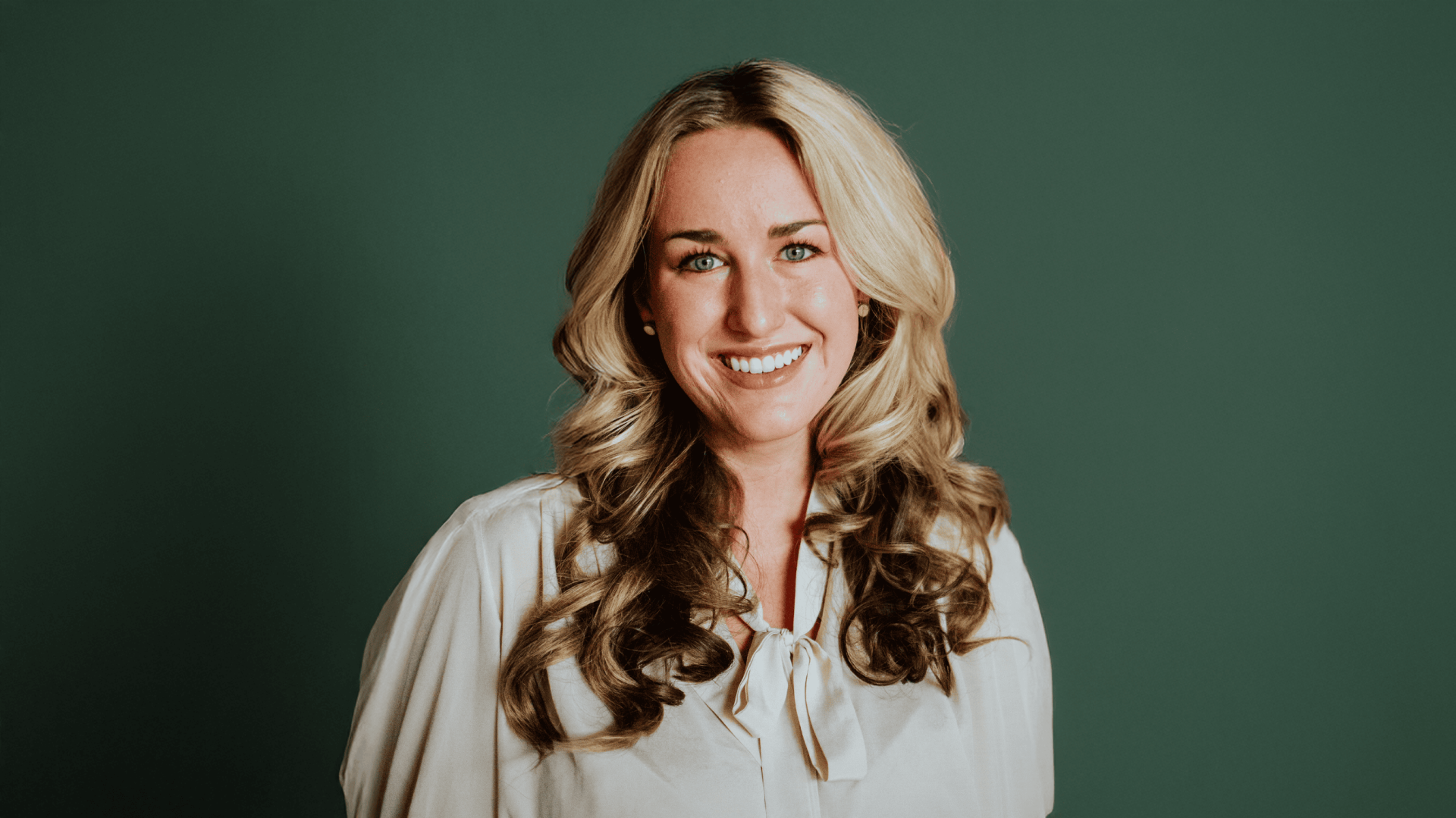
Inkwell host Grace Pike sees value of gathering Christ-centered artists.
Meegan Dobson

One Friday night last May, Grace Pike was finalizing the details for a Christianity Today Inkwell event that would shortly bring over 200 people to a space in downtown Colorado Springs. While she prepped, one of the evening’s guest artists, writer and photographer Lancia E. Smith, approached her, and the two connected in person for the first time. 

They marveled at Inkwell and its unique ability to bring together Christian writers, artists, and creatives. Smith enthusiastically took Pike’s hands and shared her belief that the impact of Inkwell would extend far beyond that night.

“She expressed a strong sense that the Lord was doing something in the art community of Colorado Springs,” Pike recalled.

Inkwell is part of Christianity Today’s Next Gen Initiative, which aims to advance a captivating vision of following Jesus for the next generation. Inkwell has several offerings in addition to Inkwell Evenings—Inkwell Online (formerly Ekstasis); Inkwell Annual, a print edition; and Inkwell Local, a network of ongoing local gatherings. For Christians like Grace, Inkwell has been an invaluable community.

“It was a joy to come alongside my community in cultivating a space where Christians could celebrate the beauty, truth, and goodness reflected in the arts—all with the aim of glorifying the Lord,” she said. 

Nearly a year after the event, which also featured musician Joel Ansett; photographers Venson Chapman, Meegan Dobson, and Maddy Montoya; and writers Amy Baik Lee, Soren Johnson, Alyssa Shikles, and Nicole Hunka, Pike remembers the audience lingering afterward, energized by the discovery of fellow Christians committed to their crafts. Many approached her, offering their email addresses or business cards, eager to know when the next Inkwell gathering would be and how they could stay connected beyond the event.

“Some artists in that room have since displayed their work around the city, thanks to the connections they made,” she said. “Others have been inspired to create art drawn from the experience.”

A native of Alabama, Pike hadn’t lived in Colorado Springs for long when she offered to host Inkwell. She had previously volunteered with Ekstasis, which was founded by Conor Sweetman and later acquired by Christianity Today. Inkwell first appeared on Pike’s radar after a seminary friend mentioned making a submission.

Pike later published her own poetry and soon became an Inkwell ambassador. In November 2023, she attended the Renaissance Conference in London alongside Sweetman and other volunteers.

“I saw firsthand the value of gathering Christ-centered artists and dreamers,” she wrote on LinkedIn later. “I didn’t know how or when, but I knew I wanted to work towards creating that opportunity for my community in Colorado.” 

A couple of months later, she met with eight other creatives, many representing different churches, to pray about organizing an Inkwell event in Colorado Springs. The group continued to regularly meet to pray, plan, and worship leading up to the event. After setting the date, Sweetman realized it would overlap with the C. S. Lewis Writer’s Conference, a gathering for people who would also enjoy Inkwell, and invited its keynote speakers to participate.

“An in-person gathering like Inkwell offers a rare and sacred opportunity,” she said. “It brings together creativity, collaboration, and a shared focus on what is true and lasting. In that space, something happens—an environment is formed where people can come, partake, and delight together. It heals. It gives hope.”

That evening, the essay and poetry readings echoed with a quiet strength, many reflecting on God’s power to mend and renew, to bring flourishing out of suffering.

“Suffering wears on the soul,” Pike reflected. “It can feel like we forget to lift our eyes. There’s so much brokenness, so much that is not as it should be. And yet, when we come alongside one another and say, ‘There are still stories that are good and true—stories that reflect the great Story, the gospel,’ something shifts. Hope finds a foothold. And that’s the kind of good Christianity Today is nurturing here.”

Much of the art showcased at Inkwell captured Colorado’s natural beauty. Inspired by a photographer’s capture of evergreens, one attendee has since crafted a series of textile works proclaiming God’s glory through general revelation. Another attendee is currently working on a video project addressing mental health in the Church.

Pike is passionate about in-person connections rooted in community and is eager to see these sparks of inspiration grow into something sustainable in the coming year, such as monthly Inkwell Community gatherings. Though the past year has been full, including planning and celebrating her wedding, she has stayed in touch with many of her co-organizers, and they hope to launch something formally this summer or fall.

“While preparing for Inkwell and in the days since,” she said, “I’ve reflected on one of my favorite quotes from Conor: ‘As humans, God has embedded a hunger for beauty in our spirit, and we will satisfy it one way or another. As God’s people, we should prepare and host the feast.’” 

Ideas

The Silicon Calf

The rush toward artificial general intelligence reveals our age-old impulse to create tangible “gods” with power over uncertainty.

Two men carrying a computer window on their shoulders with a golden calf on it.
Christianity Today April 21, 2025
Illustration by Chris Gash

Deliverance from evil is not deliverance from uncertainty. Even in times of peace and plenty and even with the assurance of God’s providence and love, we feel the weight of the unknown every day and often struggle under its burden. On our best days, faith and hope carry us. In our darker moments, they fail us—or we fail them—and we find ourselves flailing in the winds of change.

The human struggle with uncertainty is a very old story that’s been told and retold for many years and in many ways. It is integral to the biblical account of the Exodus: The Israelites were enslaved by the Egyptians, and God appointed Moses to deliver them. They left Egypt behind, crossed the miraculously parted Red Sea, and entered the desert, journeying under God’s guidance. 

But at Sinai, when Moses went up the mountain to hear from God, his prolonged absence created uncertainty. The people grew impatient. They decided that an intangible God—one they could not see or control—was not as desirable as a tangible, reliable idol made with their own hands. “Come, make us a god who will go before us,” they said to Moses’ brother, Aaron (Ex. 32:1, NASB). With his help, they fashioned a golden calf and begin to worship it, choosing a shiny certainty over the God who had led them out of Egypt.

Those of us who have served as pastors or led Bible studies know the questions this story commonly invites: How could they reject God after he delivered them from slavery? How could they forget the miracles they’d just seen?

The unfortunate answer is that they were like us—we are like them. This longing for certainty is part of the human condition. And the experience of uncertainty, which is a constant in a fallen world even for those who follow God, demands a measure of faith. If we’re honest with ourselves, we know that sometimes our faith wanes. 

We may truly believe that “what is seen is temporary, but what is unseen is eternal,” but it can still be difficult to “fix our eyes not on what is seen, but on what is unseen” (2 Cor. 4:18). In moments of uncertainty, we too turn to gods our senses can grasp. We have our own golden calves.

Last December, OpenAI (the company behind ChatGPT) announced its newest frontier model, o3, to a flurry of reviews that ranged from optimistic awe to foreboding unease. The release amplified debate around the idea of artificial general intelligence (AGI)—a debate that has further accelerated in the months since, fueled by additional announcements from OpenAI competitors like the Chinese company DeepSeek, which in January released its R1 reasoning model.

At present, AGI is only the hypothetical idea of a powerful form of artificial intelligence capable of understanding, learning, and performing any intellectual task a human can. But for companies including OpenAI, AGI is a very real goal. Indeed, OpenAI’s stated mission is “to ensure that artificial general intelligence—AI systems that are generally smarter than humans—benefits all of humanity.” 

For some, the prospect of AGI portends doom on an existential scale, conjuring fears of scenarios like those depicted in The Terminator or 2001: A Space Odyssey, where AI surpasses and subjugates humanity. But others, like futurist Ray Kurzweil in his 2024 book The Singularity Is Nearer, welcome AGI with religious optimism and fervor, envisioning a utopian future where AGI eradicates disease, ends poverty, and merges with humans, endowing us with superhuman abilities to solve currently unsolvable challenges, mortality included. 

In that optimistic vision, AGI would make us like gods. But both extremes have an almost-theological texture—a sort of 21st-century eschatology—each grounded in its own form of faith.

I suspect this is telling of something deeper than our culture’s penchant for end-times thinking. It cuts to the heart of our thoughts about and desires concerning God (or gods “who will go before us”). It is a reiteration of the ethos that necessitated the first commandment, “You shall have no other gods before me” (Ex. 20:3). It reflects our drive to find (or seize or make) meaning, power, and control in a world that seems more unpredictable every day. 

Just as the children of Israel were too impatient to wait for a God beyond their control, so are we still striving to create a tangible god through whom we can deliver ourselves from uncertainty. The hope of AGI is a modern golden calf, crafted to guide us through increasingly complex societal, scientific, and existential challenges.

If that seems like hyperbole, listen to AGI enthusiasts’ own words. Last November, Masayoshi Son (CEO, SoftBank) said, “Artificial super intelligence will evolve into Super Wisdom and contribute to the happiness of all humanity.” 

In October of 2024, Demis Hassabis (CEO, Google DeepMind) predicted that AGI will emerge within ten years and, among other fantastical things, will “cure all diseases.” In January, he upgraded this projection to five years. 

Also in January, Sam Altman (CEO, OpenAI) spoke of his company’s contribution to “the glorious future.” 

In February, immediately following the AI Action Summit in Paris, Dario Amodei (CEO of the AI company Anthropic) portended that by “2026 or 2027,” we will likely have AI systems comparable to a “country of geniuses in a datacenter.” 

And if there was any doubt about the religious overtones of this discussion, French president Emmanuel Macron invoked the rebuilding of the Notre-Dame cathedral as a symbol for an initiative to construct the sort of data centers that would be required for the housing of AGI.

For all the technological trappings, these expectations—hopes—for AGI are anything but objective scientific inquiry. These comments read to me as the makings of a new religion from an ancient impulse: a silicon calf, a god with power over uncertainty, and a god humans can control.

Recognizing this movement for what it is will be necessary to put AGI in its proper place. This technology may well benefit humanity in incredible ways. Rejecting this religious embrace of it need not result in all-out rejection of real benefits. If AGI contributed to a treatment to eliminate cancer, I would not reject that treatment because of its source. 

But that kind of wonder is not the only way a paradigmatic disruptive technology like this may be used, and Christians are uniquely positioned to draw attention to the more complicated and, yes, uncertain reality here. We are well equipped to speak to the need for faith in the changeless God who is “the same yesterday and today and forever” (Heb. 13:8). We are positioned to offer the only true solution to life’s uncertainty.

Just as the Israelites had to learn that no golden calf could replace the presence of God, so must we recognize that even the most advanced AI systems cannot grant us the certainty we crave. Our identity, hope, and future belong ultimately and only to Christ. Rightly engaging with technology—avoiding the open idolatry of some AGI boosters today—requires us to honor the God who liberates us from bondage to every idol, ancient or modern, and invites us into a Canaan of genuine freedom and flourishing.

A. G. Elrod is a lecturer of English and AI ethics at the HZ University of Applied Sciences in the Netherlands. He is also a PhD researcher at Vrije University Amsterdam, exploring the biases of generative AI models and implications of their use for society, culture, and faith.

Church Life

China Closed Christian Bookstores. Digital Publishing Grew in the Vacuum.

As Christian books struggle to get published, ministries offer free e-books to equip the church.

Christianity Today April 21, 2025

Note: All the names of Chinese Christians have been changed in this article as sources risk imprisonment and fines for their involvement in this work.

Over the Chinese New Year holiday, David Fang, a Beijing house church pastor, organized an online book club. For 23 days, the 20 members of the club gathered on a video call where Fang would read one chapter of the Chinese translation of Dane Ortlund’s Gentle and Lowly before leading a discussion on the reading.

One woman in her 50s who joined the club said she had been feeling burnt out from serving at church, as conflicts had arisen between her and other church members. She had begun to withdraw from her ministry commitments.

Yet as she read the book, she said, her heart softened. Jesus understands sinners because his heart is merciful and gentle, Ortlund wrote. Believers are called to imitate him. Convicted, she called members of her church and sought reconciliation. 

“Seeing the heart of Jesus for the sinner and the needy, I was deeply touched by the love of Jesus Christ,” she said. “The bitterness was dissolved, and my heart became gentle and lowly.”

The Chinese translation of Gentle and Lowly used by the book club has not been published in China and can’t be found in any physical bookstores. Instead, the Christian organization Living Stone offered the e-book as a free download, and from there, it was widely shared among the Chinese Christian community. (CT changed the name of Living Stone to protect it from being shut down by the government.)

Under China’s increasingly strict book-publishing system, fewer and fewer Christian books—translated or not—pass censors and obtain the government-issued ISBNs (International Standard Book Numbers) required for books to be sold in the country. To combat the lack of high-quality Christian literature, groups like Living Stone now produce e-books as PDF, EPUB, and MOBI files and disseminate them online.

Although online Christian publishers risk getting shut down and struggle to make a profit, they believe these books are vital in growing China’s churches, so they plan to continue adapting as policies change.

“The external environment may force us to change our format, but it will not diminish people’s spiritual needs,” said a former bookseller at Baojiayin, China’s biggest online Christian book retailer. “Instead, it will ignite an even greater need for the gospel.”

It wasn’t always the case that Christian books were hard to find in China. In the early 2000s, Chinese Christian publishing houses experienced a brief period of growth when Christian bookstores had brick-and-mortar establishments that legally published translated books by authors like Rick Warren, John Stott, and John Piper. Between 2012 and 2013, more than 300 Christian bookstores existed in China, according to the former Baojiayin employee.

Yet beginning in 2013, the government began to crack down on the industry, shuttering bookstores, sealing warehouses, and suspending online bookstores. In one prominent case, a court in Zhejiang sentenced Chen Yu, the owner of Xiaomai (“Wheat”) Bookstore, to seven years in prison in 2020 and fined him more than $27,000 Authorities destroyed nearly 13,000 of his books.

Today, only ten Christian booksellers are left, a majority of them publishing Reformed authors. Last year, the most established Christian publisher managed to publish only four printed books. The authors who made the cut: Tim Keller, James K. A. Smith, David Naugle, and the first-century Jewish historian Josephus.

Only state-owned publishers can apply for ISBNs, so private publishing companies must collaborate with them. Since Chinese president Xi Jinping came into power in 2013, the government began enforcing a law cracking down on the distribution of books that contradict the Chinese Communist Party.

Christian publishers only pitch books they think can be approved by the censors at their state-owned publishing partners. Many of those are rejected during the content review. Books that make it through the process and get published still aren’t safe: Authorities can ban them from being sold or destroy them for unexplained reasons.

Since 2018, the government has significantly reduced the number of ISBNs it gives out, a change that came after the Central Propaganda Department began overseeing the country’s publishing industry. This reduction increased competition among manuscripts, so books that are not profitable or cover sensitive topics—such as religious books—rarely get published.

Even the government-run State Administration for Religious Affairs and the China Christian Council, the only legally recognized Bible publishers in China, have recently stopped selling Bibles online. A search for “Bible” on major online bookstores like Dangdang, Taobao, JD, and Weidian led to zero matches.

Yet Living Stone is still equipping believers with resources. In the past decade, it has translated and created digital copies of more than 100 theological books, including works by D. A. Carson, Sinclair Ferguson, and Jen Wilkin. Currently, it offers 75 free e-books, 20 printed books, and 27 audiobooks, with permission from the original publishers.

Most of the books on its website focus on practical topics such as pastoral work, discipleship, parenting, and spiritual formation. Many house churches share these e-books with church members or use them in book studies for their leaders or congregations.

For instance, the pastor of a Reformed house church in Shanghai said he gives away one or two copies of Mark Dever’s What Is a Healthy Church? and Thabiti M. Anyabwile’s What Is a Healthy Church Member? to his church members every Sunday. He sees the books, which he prints out himself, as supplemental to his church’s current adult Sunday school series on ecclesiology, or the theology of the church.

“Chinese house churches are very weak in ecclesiology and even overlook this important doctrine,” Chen said. “This series of books has solid theology and is easy to understand, making them very suitable for congregations without formal theological training.”

Most Christian publishers focus on translating foreign books, as house church pastors and theologians in China often don’t see publishing as a viable option—they fear persecution for penning books, don’t have time to devote to it, or feel like the “younger brother” in global Christianity and question whether they have much to contribute, said Hannah Nation, cofounder of the Center for House Church Theology. Those who do write book-length treatments often unofficially share their work online.

Living Stone’s director, Lawrence Lau, never expected to get into Christian publishing. In 2007, Lau returned to China from studying abroad, hoping to become an e-commerce entrepreneur. Yet through Christian friends and sermons, he felt God reminding him to “seek first the kingdom of God and his righteousness” (Matt. 6:33, ESV) instead of following his own professional dreams. He remembers finally acquiescing and telling God, “I am willing to obey whatever you want me to do.”

Living Stone started as a traditional Christian publishing company before going completely online in 2020. Today, Living Stone’s e-books, which do not have Chinese ISBN numbers, are mostly offered for free or low prices to make them accessible to the church. To pay translators and staff, publishers sell online courses on how to be faithful stewards or on marriage and raise support from churches.

E-books more easily skirt Chinese censors than physical copies do and are easier to disseminate. The format is also gaining popularity in China as more and more people read on e-readers, phones, and tablets. A 2023 National Reading Report found that the average Chinese adult reads three to four e-books per year, with 10 percent reading ten or more e-books annually.

Living Stone isn’t the only Christian organization turning to digital products. WeDevote Book, one of the largest Chinese Christian e-book platforms based outside China, has more than 2,000 titles available. Domestic Christian publishing organizations have also released many e-books over the years, covering topics and genres such as exegesis, marriage, devotionals, and biographies. Some of these books were previously available in print but were banned, later returning in e-book format.

Living Stone also offers audiobooks, book studies, podcasts, and articles. In the past few years, its website has received visitors from 100 countries. Lau said it is reaching the Chinese diaspora who need Chinese-language Christian books.

“Although our publishing environment is difficult, I feel the needs of a broader audience,” Lau said. “When I communicate with overseas brothers and sisters, I find that they have abundant English book resources … while the supply of Chinese Christian book resources is far less rich than that in mainland China.”

A translator for Living Stone noted that, growing up in a rural house church, he often heard Christians ask, “If you can’t understand the Bible, why read other books?”

However, he had questions about the faith that he couldn’t find answers to by reading the Bible. For instance, through reading R. C. Sproul’s The Holiness of God, he understood for the first time that he could not win God’s favor through good deeds or draw near to God’s holiness apart from Christ.

He said many of his questions have been answered during the translation process, and his understanding of Christ continues to deepen.

Over the past two years, he has translated 11 theological works for Living Stone and frequently shares book recommendations with his Christian friends. “Every time I receive a new book to translate, I feel particularly happy,” he said. “Not only can I support my family through this, but I can also learn theological knowledge.”

After the translation team finishes their manuscripts, Living Stone must send the work to overseas e-book platforms because it cannot obtain publication permits in China. China’s Great Firewall blocks most of these platforms, making it difficult for domestic users to access them.

Living Stone has built its own website platform to give Chinese users access without a VPN (virtual private network) to bypass the government’s restrictions, yet at any moment censors could shut them down. Some users have reported network issues while trying to download or purchase books, and others have experienced issues with making payments.

Organizations like Living Stone also face a shortage of translators and editors who have knowledge of literature, history, and philosophy—and also a solid theological foundation. The translator who has been in the industry for a decade still feels his translation skills fall short of Living Stone’s standards. He spends his free time taking courses to fill the gaps in his theological knowledge.

Today, Lau noted, urban house churches are in great need of pastoral resources, as the COVID-19 pandemic caused churches to break up into smaller groups and meet in homes. This has resulted in a lack of leaders.

“Books can play the role of teachers and advisers,” Lau said. “Even by reading a book together, churches can achieve unity on certain issues. It is regrettable and frustrating that we cannot legally publish in the country, but if we wait for printed books to be published, we might miss the needs of this period.”

Inkwell

Joseph of Arimathea

Inkwell April 20, 2025
Photography by Kwnos IV

The air is cool and smells of jasmine. It is fitting
that we are in a garden; he would meet with me
in the garden of my home. He knew I was afraid,
so he would come to me when no one could see.
I had so many questions, but he never ran out of
answers. All my years in the temple couldn’t come
close. Sometimes we laughed, sometimes we ate.
I never remember silence; there was always
something I needed to know.

He is silent now. I am still afraid, but I cannot let
the dearest friend I ever had go to the grave
without custom. I have brought my finest linens,
freshly laundered. I have brought my oils – frankincense,
myrrh. The garden is full of jasmine and gardenias.
Even the nightingales mourn him. They sing their
sad song while I go about my task. I have brought
my wash cloth of finest linen. I dip it into the stream,
wring it out. I wipe the bloody brow of my friend,
he who was not afraid to be that which he is.

He who felt no need to explain, defend himself.
This is the gentlest work I will ever do – wiping
the tears from eyes that will no longer open.
I wash his wounds, too many to count – in his side,
his hands, his brow and back. There are places
the skin threatens to come off altogether – I have
seen this before. I have been prepared for such
a time as this.

I ease the muscles back into place; I seal with oil
what threatens to come undone. I anoint him in
the aroma of his heavenly home and encase him
in linens. I never remember the moon glowing this bright.
I can see him so clearly. I try to find fear in his face,
but can only see peace. I weep quietly as I work –
the most important task I will ever do.

The table is set; he is bathed in moonlight.
Eventually, they will come for him. Til then,
I will have one last night in the garden with my friend.

Jessie Epstein is a writer and actor based between Los Angeles and the Midwest. Her work can be read in Identity Theory, orangepeel, and Anti-Heroin Chic, among others. Her debut chapbook of poetry, Francesca Dons Beatrice’s Cloak: A Lovergirl’s Guide through Dante’s Inferno, is available through Bottlecap Press. Find more on her Substack and website

Ideas

I Confessed My Sin with a Christian Nationalist Pastor

We stand on equal footing at the cross.

Christianity Today April 17, 2025
Illustration by Mallory Rentsch Tlapek / Source Images: Getty

On a recent work trip down South, I visited a church for its Wednesday Lenten service. I chose the church casually, simply identifying a familiar denomination and going from there.

I love the communion of saints and especially the sense of home that comes from walking into even an unfamiliar church, the liturgy drawing me in like the arms of distant cousins at a family reunion. But as the service progressed, I began to feel out of place, like I’d wandered into the wrong hotel ballroom and discovered myself in a stranger’s wedding reception. I caught a strange whiff of American politics that I couldn’t make sense of in a Lenten service.

Afterward, I went back to my hotel room and searched the pastor’s name online. What I discovered disquieted me. I’d just been led in worship and guided into penitence by a Christian nationalist pastor who was a member of the Black Robe Regiment, a gathering of clergy initially committed to overthrowing the 2020 US presidential election. The whiff now made sense. So did curious references to Israel in the church service as I learned of the regiment’s antisemitic leanings.

With each Google hit, I grew more and more indignant. Who did this man think he was to lead me toward repentance? I shared my dismay with friends, and they agreed. The whole experience had clearly been a sham, an exercise in religious pageantry, a quiet yet sinister display of Christian nationalism. Or was it?

As I traveled home later that week, I kept turning over that evening in my mind. Together, we had bent our knees to confess our sins. Together, we had acknowledged our self-indulgent appetites, our intemperate love of worldly goods and comforts, our indifference to injustice and cruelty. Together, we had voiced our pleas for God’s mercy and a renewed spirit of true repentance.

The liturgy united the congregation under the same words of penitence. In such a context, shouldn’t I be able to expect that my neighbor was just as sorry for his sins as I was? Shouldn’t his sins that seemed so obvious to me be illuminated for him in these words of confession?

In the call and response of the liturgy, we had spoken as one voice, the pastor’s voice blending with mine and those around me. And yet I could not—I refused to—number myself among those who needed forgiveness like he did. How could I when dark shadows lurked within that dimmed sanctuary in the hearts of some around me? Personal repentance was hard enough, but corporate repentance, I was discovering, was even more complicated.

In the fundamentalist Christian circles in which I was raised, we often joked about the Sadducees. They were “sad, you see” because their religious trappings belied disbelief in the Resurrection. They didn’t know what they were missing, we said. They had all the right outfits and ceremonies without the right beliefs.

The Pharisees, too, were sad because, like their priestly counterparts, they were whitewashed tombs (Matt. 23:27–28), clean on the outside but filled with dead theology on the inside. They were the ones Jesus identified as hypocrites in Luke 18, the ones who would pray with great gusto as they set themselves apart from the low-life tax collectors who lamented under the weight of shame.

Right beliefs always birthed right actions, we believed. This logic applied to everything from saving sex for marriage to not cheating on your income taxes to choosing a version of the Bible that was the most accurate translation.

When it came to repentance and forgiveness, we were to be known by certain fruits (Matt. 7:16), namely public confessions before the congregation (often for private sins) and a clear turning away from evil to do good. Metanoia, the Greek word for repentance, means literally “to change one’s mind.” Repentance was hard, we were told, but cathartic, too. To ask for forgiveness was to experience sin made as white as snow, to be made right with God—a rightness that should be evident to all (Isa. 1:17–19).

As I considered the Pharisees and Sadducees in light of my Lenten worship visit, the parallels were clear. A Christian nationalist pastor was a Sadducee, belonging to a regiment of self-righteous religious leaders drawn away by earthly power and worldly concerns. A Christian nationalist pastor was a Pharisee, ready to criticize the spiritual convictions of others as “less than”—less than committed, less than strident, less than ready to take up arms and fight for the cause of righteousness.

The news headlines testified clearly: the Black Robe Regiment did not have right beliefs or right actions. Surely that made me the humble tax collector in Jesus’ story, then. No wonder I’d had such difficulty worshiping in that service.

I held this position of pride as a signifier of my own contrition and my own righteousness until I remembered one vital detail from Jesus’ story in Luke 18—the location. Jesus had situated his parable of these two men within exactly the same space—worship at the temple. Misguided or not, they were both still showing up at church.

In a church landscape where congregations are increasingly divided along political lines, I’ll admit that I long to worship with people like me—people who think like me, live like me, believe like me. Misguided parishioners can stay home, please. Misguided pastors? Surely we’ve got enough of those.

But more often than not, I realize—usually in confession—that these impulses are not fruitful for the body of Christ or the common good. It is valid to desire a faith community that upholds orthodoxy and orthopraxis. Paul warns the church at Galatia to beware of ministers who would “pervert the gospel of Christ” (Gal. 1:7–9). He instructs the Corinthians to avoid associating with believers who persist in sin (1 Cor. 5:10–12). Yet God also reminds the church through the prophet Samuel that he alone is the best discerner of hearts (1 Sam. 16:7). The Spirit teaches us how to hold those truths in tension.

Scripture and the confessional liturgy of the church also call us to a deeper level of humility. Regardless of how sorry anyone else might be for the things they’ve done or left undone, I am called to repent. Regardless of how our politics divide us, acknowledging our sin does not. We are each dead until made alive through Christ. The ground is level at the foot of the cross.

Confession also reminds me that whether or not my neighbor and I see eye to eye on what requires repentance, Christ calls me to forgive. If our sins are so great that they must be cast to the east and west to be far enough away not to haunt us (Ps. 103:12), the Christian nationalist pastor and I must both be desperately in need of redemption, neither of us fully aware of what the breadth and depth of that forgiveness must be.

Holy Week is an annual reminder that the upside-down kingdom of Jesus enlightens the eyes of those who have been drawn to earthly power. I pray that they find the Jesus who arrived in Jerusalem on a donkey more compelling than a president in a luxury car in the White House driveway. I hope that earnest study of Scripture reveals the error of their ways.

I also pray that my sins will become even more evident to me than others’ are. That the Holy Spirit will enlighten my eyes to see how often, like Peter in Gethsemane, I, too, abandon Jesus in favor of power. I pray that Golgotha will cast an appropriate shadow over my own self-righteousness.

The empty tomb gapes with extraordinary welcome for all of us in the face of our unbelief. Alleluia.

Clarissa Moll is producer and moderator of The Bulletin at Christianity Today.

Theology

More than a Deathbed Conversion

The thief on the cross next to Jesus waited in suffering for the promise of paradise. So do many of us.

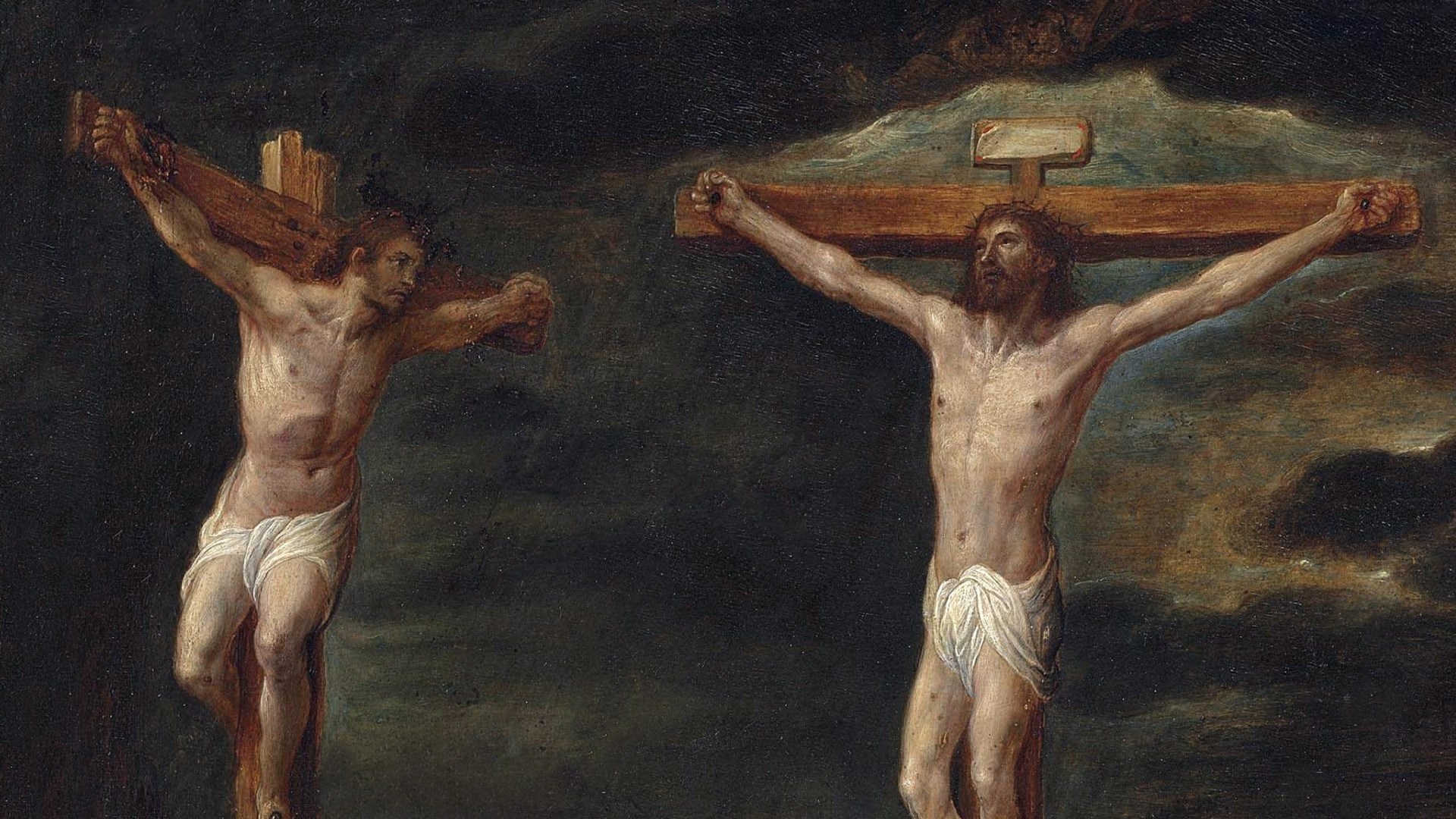
A painting called The Crucifixion with the Two Thieves by Jan Snellinck.

Detail from The Crucifixion with the Two Thieves by Jan Snellinck.

Christianity Today April 17, 2025
Wikimedia Commons / Edits by CT

When readers thumb through their Bibles for examples of courage, few consider flipping to the passage of the penitent thief on the cross (Luke 23:32–43). Whether in sermons or hospital rooms, his story has become a sort of byword for eleventh-hour repentance.

In contrast to his unrepentant companion, he’s seen as the poster boy for the deathbed conversion, the face of the last-minute participation prize: he is the anyone Christ can save. But what if the story of this man, whom tradition calls Saint Dismas, has more to teach us?

While Dismas’ example remains an incredible testimony of salvation in Christ, a look at details in the surrounding text reveals a deeper layer to his story—where we find not only a companion for the one who has sinned but also an example of faith and courage for the one who faithfully suffers.

We are first introduced to Dismas as he is being led away with Jesus to be crucified, likely still reeling from the shock of a beating (v. 32). Luke’s gospel labels Dismas and his companion (named Gestas, as tradition has it) as “criminals.”

But instead of using the standard word for “thief” (kleptai), Matthew and Mark use the Greek word lestes, which most Bibles translate as “robber”—that is, someone who takes goods by force—for its connotation of violence. For reference, this is the same word used in the story of the Good Samaritan for the robbers who beat up the traveler on the Jericho road.

What’s even more interesting is that the first-century historian Josephus’ use of this term suggests an additional element of opposition to Roman authority. In fact, John’s gospel uses the word lestes, translated as “rebel,” to describe Barabbas, whose crimes were insurrection and murder (18:40). Given the timing, it’s possible both Dismas and Gestas were among Barabbas’s compatriots (Mark 15:7), albeit fatally lacking Barabbas’s public relations clout and popularity.

Like Jesus’ death, the two mens’ death sentences were designed to crush the spirits of both victims and observers—as crucifixion was often used against political enemies to show off the intimidating power of the Roman Empire and stand as a warning to potential imitators.

This background may explain why Dismas and his companion initially expend such excruciating effort in hurling abuse at Jesus (Matt. 27:44; Mark 15:32). Crucifixion places stress on the chest cavity, making it painfully difficult for a victim to inhale. The struggle to take each breath and deliver every curse would have made it a painful and deliberate act.

Mockery in the midst of pain suggests more than just a dark coping mechanism. These men would have grown up hearing stories of a coming messiah who would throw off Roman rule and bring justice to their people. To them, Jesus, who seemed to be nothing more than the latest in a string of pretenders, represented the ultimate failure to make things right.

Luke doesn’t tell us exactly when Dismas’ change of heart begins. Perhaps it’s the moment when Jesus spends some of his own precious breaths to ask God to forgive his enemies rather than destroy them (Luke 23:34). Maybe Dismas could sense the purpose, the sheer intentionality undergirding Jesus’ distress, so different from his own. Whatever the moment, a sense of conviction blossoms, and Dismas rebukes his fellow rebel.

“Don’t you fear God,” Dismas asks, loud enough for Gestas to hear him on the other side of Jesus, “since you are under the same sentence? We are punished justly, for we are getting what our deeds deserve. But this man has done nothing wrong” (v. 40).

This remark displays an almost shocking shift in awareness. He accepts that his sentence is balanced on the scale of justice not only with respect to the governing authorities, Rome and Judea, but also before God as ultimate judge. Despite the inhumane mode of his death, he seems to reckon with the fact that he is reaping the wages of a life lived for violence.

Perhaps even more unexpectedly, he then turns to the one many call Messiah and dares to hope: “Jesus,” he pleads, “remember me when you come into your kingdom”(v. 42).

But Dismas is not making some blind and desperate swipe at grace here. His language is that of a vassal to a king who would grant favors after taking up his reign. By acknowledging his sin and appealing to Christ’s mercy, Dismas gives up all belief in his former revolution and throws in his lot with an entirely different kind of savior.

There’s a prophetic sense to his words, too. Present-day readers may take Jesus’ resurrection for granted, but few, if any, of his first-century followers anticipated crucifixion for their messiah. In that respect, Dismas was the first person to understand and believe that Christ’s cross did not negate his coming kingdom.

At the climax of Jesus’ supposed weakness and shame, Dismas recognizes Christ’s kingly power and glory. He also appeals to Jesus’ own generosity. As Rachel Gilson notes, Dismas has the “faithful audacity” not only to believe in Jesus’ coming victory but also to believe “that the victory was won in order to be shared” even with someone as guilty as himself.

Jesus mercifully accepts Dismas’ request, albeit with a different favor than Dismas might have expected. Instead of merely responding to his request regarding a “kingdom,” Jesus promises him a place in “paradise” (v. 43). Dismas would have immediately recognized the term for the place of the righteous dead. As is his habit throughout the Gospels, Jesus offers Dismas something that includes yet surpasses the scope of an eventual earthly rule—by forgiving Dismas’ sins and welcoming him into his heavenly kingdom.

Dismas and Jesus suffer side by side on their crosses for about six hours. But as final as their last words recorded are, that is not where Dismas’ story ends.

As the sky darkens and the ground shakes, does Dismas wonder whether now is the moment for the heavens to tear and this true Messiah’s kingdom to be realized? Yet all at once, Jesus cries out and breathes his last. The ground steadies, the sun shines back through the clouds, and everything returns to the way it was before. With the main “spectacle” over, the entire crowd begins to trickle away (v. 48) As the sun begins its descent toward the horizon, all grows quiet. The kingdom isn’t coming, at least not this day.

Jesus has died, but Dismas remains on the cross for hours longer, in mounting pain. It is believed Dismas languished on the cross for at least twice as long as Jesus did. And yet as every new breath grows more difficult than the last, Dismas has the perseverance to wait for paradise. With each shudder, he clings to the promise he received, despite the clear death of its giver. I wonder if, at any point, Dismas asked himself whether the lifeless man beside him would—or could—keep his word.

As dusk draws near, soldiers come to break the ankles of both Dismas and his fellow rebel, destroying their balance and brutally cutting off their airflow to hasten their deaths, as the Sabbath was soon to begin (John 19:31–32). It probably didn’t take much longer for Dismas to die, presumably in unimaginable agony. And yet we can be sure that Dismas’ faith held on—and that his spirit endured into eternity—for Jesus is not one who fails to fulfill his promises.

What can we learn from this man’s story? Those praying for loved ones who are far from Christ can still be encouraged by the way Dismas turned to the Lord for salvation in the last moments of his life. Nevertheless, it’s important not to caricature Dismas as merely a “foxhole theist” who made a last-ditch effort out of hopeless desperation. Doing so makes light of his faithfulness and ultimately the faithfulness of the one who saved him.

In the midst of unbearable pain, Dismas clung to the promise of a kingdom that looked nothing like the one he had lived his whole life expecting. This man of action, who had relied on his physicality to further his cause, ultimately found what he was searching for when he was forced to do nothing but suffer and believe unto death.

Dismas’ endurance beyond Jesus’ death is what makes him a companion to the long-suffering. He has gone before those for whom, whether by age or chronic illness, every breath is a burden. Dismas is a brother to all those whose service to God looks mostly like waiting on his promises. In Dismas, we are reminded that faith itself is an act of courage.

His and our Savior remains the Man of Sorrows, who is near to us in our suffering—the one who is glorified even when our limbs no longer have strength. With Dismas, we reaffirm our trust that, as Trevin Wax says, Christ can “take up our burdens upon himself and deliver us from our despair.” And even in the moments when it seems Christ is absent, the promise that held the thief holds us, too.

Tori Campbell has written for The Gospel Coalition, David C Cook, and The Yale Logos.

Theology

Even Our Corpses Belong to Christ

The Son did not forsake his body in the grave, and he won’t forsake ours either.

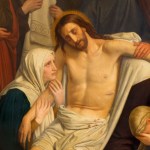
A collage of Jesus' corpse and a coffin.
Christianity Today April 17, 2025
Illustration by Elizabeth Kaye / Source Images: Getty, Wikimedia Commons

My son’s first day of life was also my grandmother’s last.

She was among my closest friends and biggest cheerleaders, yet she died a thousand miles away as I sat holding my new baby boy. I cried both tears of joy and tears of sorrow that day, one after the other and all mixed together.

As my mind darted between the two hospital rooms, two loved ones, and two lives, I found myself pondering the question “What is our only hope in life and death?”

The answer, according to the first question of the Heidelberg Catechism, is this: “that I am not my own, but belong—body and soul, in life and in death—to my faithful Savior, Jesus Christ.”

Every year, on my son’s birthday and the anniversary of my grandmother’s death, this familiar liturgy rings in my head all day. Initially, the portion that stuck out to me most was “in life and in death” because of my simultaneous proximity to the beginning and the end of life—that my baby boy’s only hope in life and my grandmother’s only hope in death is Jesus Christ.

More recently, I’ve been struck by the preceding phrase, “belong—body and soul.” It seems intuitive that a Christian’s soul belongs to Jesus (Col. 3:3) in death as in life. Even many non-Christians affirm the persistence of our souls after death. But what does it mean for our bodies to belong to Christ in life and death? And why does it matter?

While mulling over these questions, I was reading John of Damascus, an eighth-century monk. In his work On the Orthodox Faith, the Damascene makes a claim I hadn’t noticed before:

For since both the body and the soul had their existence in the same way from the beginning in the hypostasis of the Word, and although they were separated from each other in death, each of them remained because they had the one hypostasis of the Word. (Compare with Peter Lombard’s Sentences, book 4, distinction 21, chapter 1.)

For the Damascene (and nearly everyone else in church history), death was defined as the separation of the soul from the body. Yet John of Damascus insisted that the Son of God was “inseparable from both” his body and his soul, even in death. In other words, he remained united to his human soul and body even after death.

Since the person of Christ is the person of the Son, his soul and body both depend upon him for their existence. If the Son’s soul or body were to exist independently from himself at any point, then the “person of Christ” and the “person of the Son” would refer to two different persons, which is a heresy known as Nestorianism, instead of one and the same.

In other words, the Son’s human soul and human body must depend upon and remain united to himself in both life and death.

Protestants, evangelicals in particular, have recently begun to (re)appreciate Holy Saturday—the day between Good Friday and Easter—and Christ’s work after his death.

“Christ dies a human death, as all humans do. His body is buried, and his soul departs to the place of the dead,” Matthew Emerson said in an interview for CT. “While he is there, he proclaims his victory over the powers of death. Then, in his resurrection, he achieves victory over death itself.”

In other words, in order to secure full victory over death for our salvation, the Son had to stay united to his soul in death. But it is equally important that the Son remained present and united to his body in those three days it laid dead in Joseph’s tomb.

Beyond being a theological factoid, why should this matter to us? I would argue there are at least three reasons this is significant for our faith, especially as we contemplate our hope in death.

The first reason this truth matters is because of the ancient dictum What has not been assumed is not healed. The early church father Gregory of Nazianzus crafted this statement to affirm the existence of Christ’s human soul. The logic goes like this: If human souls need healing, then the Son must assume a human soul. That’s because whatever part of humanity is not assumed by the Son—that is, united to his divinity—could not be healed from the effects of sin and death.

Therefore, if human bodies (more specifically, dead human bodies) need healing in the form of resurrection, then the divine Son must unite a human body to himself and must remain united to that body even after it is buried in the ground.

As Scripture says, Jesus took up our infirmities (Isa. 53:4), which must include the ultimate and final infirmity—death—if he is truly to heal all our diseases.

Not only must Christ assume every aspect of our human nature, but also he must experience every stage of human life, the church father Irenaeus observed. Jesus became an infant, a toddler, a teenager, a full-grown adult. And relevant for our purposes, he became a corpse. All this so that Christ could restore every part of our lives, including the lack of life in our bodies after death.

The second lesson is that God does not disdain our human frailty. The excommunicated church leader Nestorius was wrongly nervous about associating the Son with the womb of Mary. A divine being could not be associated with birth canals and blood, he thought.

Contrary to Nestorius, the gospel relies on the fact that God humbled himself to the point of gestation, birth, infancy, and death, even death on a cross (Phil. 2:8). But God the Son went even further by remaining united to his human corpse after it was buried—he was present in the cold, dark, and silent tomb. The God we worship does not disdain the fleshy pits of human life or death.

As Charles Wesley wrote, “’Tis mystery all! Th’Immortal dies!” He continues, “Amazing love! [H]ow can it be / That Thou, my God, should die for me?” It’s worth noting that this line has often changed in more recent versions to “That you, my king, would die for me”—potentially because they were nervous about associating the immortal God with death!

But we need not be nervous about picturing the divine Son in the borrowed tomb of Joseph of Arimathea. We can wholeheartedly declare that Jesus, the immortal God, died a criminal’s death with last-minute funeral arrangements. This profound theological truth should inspire a deep appreciation in us for the extent of God’s love demonstrated in the death of Christ (Rom. 5:8).

Last but not least, as Christ’s body is bound to God, so our bodies are bound to Christ in death. For just as the immortal Son of God lay dead in a tomb, present with his human body, God the Son will remain present with us as we too are buried one day in “borrowed”—that is, temporary—tombs (Ezek. 37:13–14). God is never absent or distant from the brokenhearted and grief-stricken (Ps. 34:18), nor does he forsake our souls or our bodies, even in death (139:8, 12).

As David wrote in the Psalms, “My body rests in safety. For you will not leave my soul among the dead or allow your holy one to rot in the grave” (Ps. 16:9–10, NLT). This is, in some sense, not literally true (Acts 2:29), since David’s dead body eventually rotted into dust.

So how can David—and how can we—sing this Psalm honestly? It is only because of Christ, the “holy one,” whom this verse prophetically pointed to. God did not leave Christ’s body to rot in the grave but rose him to life again, as he will raise us all on the last day (John 6:40).

Scripture assures us that our entire lives are “hidden with Christ” (Col. 3:3) and that this is not just a spiritual reality—our physical bodies are also united to him, from womb to tomb and beyond.

Because of this, we need not fear the decay of death. Regardless of the decomposing state of our physical bodies, Christ holds them together in himself. Whether our corpses turn to dust in concrete crypts, are separated limb from limb, or are engulfed in flames at the martyr’s stake, they remain united to Christ, whose body is united to the Godhead.

In summary, because the union between the Son and his humanity persists even after death, the union between Christ and his body, the church, persists even after our deaths.

So we need fear neither death nor dissolution, and we need not lose hope. God the Son shared in our humanity, body and soul, in life and in death, “so that by his death he might break the power of him who holds the power of death—that is, the devil—and free those who all their lives were held in slavery by their fear of death” (Heb. 2:14–15).

“For if we have been united with him in a death like his, we will certainly also be united with him in a resurrection like his.” (Rom. 6:5).

On a day in the church calendar when we recognize hope and anticipation in the midst of death, may we take heart in the grace of God, who became human to live and die on our behalf. God is not ignorant of what lurks behind the curtain of death, even if such ignorance brings us anxiety.

Rather than fear, I can hope that my grandmother’s body will ultimately not see decay but be raised with her Savior, to whom she belongs. Likewise, I can have hope when I consider my son’s future, not because his body is currently healthy but because of Christ.

One day, everyone, including our parents and friends, children and neighbors, will taste death. But as they descend into the grave, may we remember that it is a place God himself has known, a place where God himself is present (Ps. 139:8), and a place God has ultimately defeated.

We can all rest in peace knowing that in life and death, our souls and bodies belong to God.

Ty Kieser is assistant professor of theology, program director, and faculty in residence at Criswell College in Dallas.

addApple PodcastsDown ArrowDown ArrowDown Arrowarrow_left_altLeft ArrowLeft ArrowRight ArrowRight ArrowRight Arrowarrow_up_altUp ArrowUp ArrowAvailable at Amazoncaret-downCloseCloseellipseEmailEmailExpandExpandExternalExternalFacebookfacebook-squarefolderGiftGiftGooglegoogleGoogle KeephamburgerInstagraminstagram-squareLinkLinklinkedin-squareListenListenListenChristianity TodayCT Creative Studio Logologo_orgMegaphoneMenuMenupausePinterestPlayPlayPocketPodcastprintremoveRSSRSSSaveSavesaveSearchSearchsearchSpotifyStitcherTelegramTable of ContentsTable of Contentstwitter-squareWhatsAppXYouTubeYouTube