News

Law and Order in Tariffs

News analysis from an evangelical and conservative insider.

U.S. President Donald Trump, accompanied by White House staff secretary Will Scharf, signs an executive order imposing tariffs on imported goods.

President Donald Trump, accompanied by White House staff secretary Will Scharf, signs an executive order imposing tariffs on imported goods.

Christianity Today April 7, 2025
Andrew Harnik, Getty / Edits by CT

This piece was adapted from a post that originally appeared on David Bahnsen’s Dividend Cafe

Many have asked how the president can unilaterally impose tariffs since the power to tax is given to Congress in the United States Constitution (Article I, Section 8, Clause 1) and since there was once a time when a bunch of colonists got really mad at a king for imposing taxation without representation. It is not a question for which I can give a good answer, because I do not have one. 

The president has used Section 232 of the Trade Expansion Act of 1962 to claim that many of the tariffs are necessary for national security. He has the right for temporary emergency tariffs if he is responding to a surge in imports, under Section 201 of the Trade Act of 1974. Congress has legislative ability to restrict and intervene in all these excesses or implementations, but let’s just say that Congress has not seemed willing to jump into all this and, well, be a congress.

A conservative legal group, the New Civil Liberties Alliance, has filed the first lawsuit. I expect many more lawsuits in the days and weeks ahead challenging the constitutional legality of some (not all) of these tariffs, and I expect that to add to the uncertainty risk premium in markets.

I am surprised by how much my phone rang during the last several days, not from clients panicking about the market but from business owners in severe distress over the impact to their businesses. Here’s a note I received from a business owner who also informed me that he had voted for President Donald Trump (I say this just to make clear his concerns do not reflect a partisan hostility—quite the opposite): “It’s exhausting and demoralizing to have spent more than ten years building a business, survive Covid craziness, and finally really be hitting our stride as an organization and end up here. The cost of this is about 50% of our annual payroll expense.”

The stock market impact is one thing; the devastation to small businesses is another. Production is coming to a halt, global trade is in a near freeze, capital goods orders are evaporating, and the clock is ticking. I believe the president has one fatal belief driving him, combined with some bad advice coming to him. That fatal belief is that trade deficits inherently reflect something unfair. The bad advice is that we can somehow reorder the entire global trading system with top-down central planning and taxation.

I am surprised by how many people continue to believe they know what Trump is going to do in the weeks or months ahead, because I suspect that he doesn’t know what he is going to do. It is odd to hear so many so sure that he is going to back down and reverse course—or that he is never going to back down and take an off-ramp. In both cases, the people asserting so are projecting their own frustrations or opinions, or, in the best case, making predictions that have a 50 percent chance of being correct (because of how coin flips work).

Here is what I know about Trump: I believe there is a pathology at play that observers would be wise to think about psychologically and not ideologically. It seems to me a nonpartisan, objective, reasonable thing with what the American public knows about Trump (those who love him, those who hate him, and those in between) that there could be a scenario where his psychological motivations push him to double down on this and there could be a scenario where they push him to seek an off-ramp. Those psychological motivations are the same in both possible scenarios.

David Bahnsen, managing partner of The Bahnsen Group and an influential leader in Republican circles, hosts a weekly National Review podcast.


Ideas

Why Scandal Matters

Recent controversies at Wheaton College and Regent College give us opportunity to reflect on our reputation in a watching world.

Two rows of university buildings with a few scribbled out
Christianity Today April 7, 2025
Illustration by Mallory Rentsch Tlapek / Source Images: Unsplash, Getty

Over the past few weeks, two Christian universities have been roiled by controversies at the boundaries of Christian speech. In one episode, Wheaton College’s social media team congratulated alumnus Russ Vought for his appointment to the Trump administration. After some alumni objected, the university deleted the post while clarifying its political neutrality. The backlash from the school’s conservative constituency was swift: An open letter raising concerns about Wheaton’s “institutional drift” went semi-viral, garnering around 2,000 signatories.

North of the border, Regent College faced similar dynamics after canceling a lecture on colonialism by British theological ethicist (and my doctoral supervisor) Nigel Biggar. Like Wheaton, Regent’s decision appeared to respond to complaints that the talk might make the school appear sympathetic to British colonialism.

Though Biggar’s work interrogating colonialism has generated controversy, Regent’s decision was surprising: Biggar is among Regent College’s most influential alumni. Less surprisingly, backlash against the backlash ensued, and the board of Regent issued a statement apologizing for its handling of the affair and its decision to cancel the talk.

Public contests over the faithfulness of Christian institutions are nothing new: World Vision, InterVarsity, Cru, and other organizations have been swept up in various controversies over the past decade. However, our shifting cultural landscape has changed the texture of these latest dramas. Opposition to Regent and Wheaton has been inflected by concerns about their capitulation to “cancel culture” even while critics have triumphed in its demise.

Cancel culture is perhaps best understood as license to engage in social punishment, often as a means of enforcing hotly contested norms of speech or conduct, for indiscretions or wrongdoings that were likely to escape formal institutional mechanisms. As a form of reputation management, “cancellation” was effective when it involved a sufficiently large number of people. As a result, “cancellations” were often accused of employing a mob mentality that thrived in the decontextualized environment of social media.

Stigmatization deliberately penalizes people’s status for their transgressions, ruining their reputations. As Musa al-Gharbi has argued in his recent book We Have Never Been Woke, the expressive character of canceling has been especially attractive to highly educated elites for whom symbolic capital is the primary currency. But what began in the realm of symbolic punishment rarely stayed there. Employers were often subjected to similar pressure campaigns to distance themselves from their employees or even terminate them.

Insofar as the threat of cancellation extended through social media and corporate infrastructures to reshape speech patterns, it was a distinct phenomenon. But the mechanisms of reputation management it employed are universal.

In Dr. Wortle’s School, moralist and novelist Anthony Trollope distills Victorian anxieties about affiliating with morally tainted people, anxieties that cancel culture revived. When (true) rumors spread that a teacher is not legally married to the woman he lives with, concerned bystanders undertake a campaign persuading parents to remove their children and so escape the scandal. Despite the teacher’s extraordinary reasons for his irregular situation, the threat of moral contagion prompts the highest-status parents to withdraw their support, imperiling the school’s existence.

These cultural dynamics have played out on both sides of our political aisle the past 30 years. Some version of cancel culture is inevitable; the only question is which norms are enforced and whether the norms of Christian unity and faithfulness will prevail. Public shaming has never disappeared. Our society is simply undergoing whiplash from changing which transgressions we think deserve recrimination.

In 1 Corinthians 8, Paul admonishes the congregation to take care that the freedom to eat food sacrificed to idols does not become a stumbling block to those who are weak (v. 9). The logic beneath Paul’s exhortation is complex but worth revisiting in light of contemporary disputes about the boundaries of Christian discourse.

The possibility of the “weak” being scandalized by the “strong” arose because Christians had different levels of knowledge about the gospel’s relationship to pagan sacrifices. The strong knew the gods to whom the Corinthians sacrificed were not real. Yet this knowledge did not mean they could be indifferent to other Christians. “Those who think they know something,” Paul writes, “do not yet know as they ought to know” (v. 2). Knowledge puffs up, he says, but love edifies (v. 1).

Instead, those who are strong, or theologically knowledgeable, must conform their conduct to the expectations of the weak, who might otherwise emulate the strong and eat meat sacrificed to idols while falsely believing that the gods to whom such food is sacrificed are real.

In acting as a “stumbling block” against which the weak fall (v. 9), the strong do not simply make a mistake: They strike the consciences of the weak (v. 12), inflicting the same blows on the brothers and sisters “for whom Christ died” (v. 11) that Christ suffered in his passion (Matt. 25:40; Matt. 27:30; Luke 22:63).

Paul’s complicated moral reasoning underscores the lengths Christians must take to maintain unity with each other. Setting aside our own liberty for the sake of others’ consciences is a distinctive mark of our Christian witness, a sign that we are empowered by the Spirit to conform to Christ’s sacrificial love. Paul enjoins the strong to accommodate the distorted misperceptions of the weak. They are wrong, but the fragility of their consciences requires medicines and cures that are more patient, more deliberate, and more private than belligerent assertions of our freedom.

Paul’s pastoral admonition has been worked out across the course of the Christian tradition through the framework of “scandal,” which names the threat that appearances pose to people’s confidence in the truth of the gospel. As Jesus says in Luke 17, it would be better for wrongdoers “to be thrown into the sea with a millstone tied around their neck than to cause one of these little ones” (v. 2) to be scandalized, to stumble and fall from faith.

This most obviously happens through misconduct that becomes public—as we see from how media coverage of church leaders’ wrongdoings undermines people’s confidence in the gospel. But it also happens when the norms of Christian conduct are simply unclear, when one constituency knows that Christian freedom permits conduct other Christians find offensive.

The logic beneath scandal also underwrites the social character of discipline. Because Christians are bound together, one person’s reputation shapes how the entire community is perceived—which means communities must hold wrongdoers accountable by publicly chastening publicly known sins.

Public wrongs by leaders are to be corrected publicly (as Paul corrects Peter in Galatians) so that everyone who sees them might “fear” and be chastened against participating in the same kind of wrong (1 Tim. 5:20, ESV). A “little leaven leavens the whole lump,” Paul says, as he enjoins the church to both mourn and separate a wrongdoer (1 Cor. 5:6, ESV). Paul does not object to associating with unbelievers who engage in sexual immorality or greed, but he admonishes the Corinthians to not associate with those who bear the name of Christian while their lives contradict the gospel (v. 11), in order to ensure that the public reputation and message of Christianity is not confused or distorted.

The imperative to avoid scandal means that it is not enough for Christians to be good; they must appear to be good as well. In 2 Corinthians 8, Paul writes that he and Titus are bringing along a third party as they carry money from the churches in Macedonia, on the grounds that he aims at what is honorable “not only in the eyes of the Lord but also in the eyes of man” (v. 21).

Christian conduct demands going beyond the basic structures of right and wrong, sanctified or sinful. Christians are bound to live coram Deo, before the eyes of God, and coram hominibus, before the eyes of the Christian community and all those who (with more or less charity) watch to see whether they will stumble and fall.

We cannot map Scripture’s concerns about scandal and reputation directly onto controversies surrounding cancel culture. There are important differences between intimate communities like the church in Corinth and the technologically diffused, global public before which our conduct can be displayed today. Yet for institutions looking to faithfully navigate contemporary controversies, scandal offers resources that are more theologically potent than the seesaw oscillation between cancel culture and demands for free speech prevalent in so much of our online discourse.

For one, the substance of a controversy is more fundamental than the social dynamics that often take precedence. The cross of Jesus Christ is both foolishness to the Greeks and a “stumbling block” to the Jews (1 Cor. 1:23), yet it forms the center of the church’s life. Such a conviction puts real boundaries on what Christian institutions may reasonably accommodate with respect to their reputations. When push comes to shove, they must welcome the lower status that comes from adhering to the truth of the gospel of Jesus Christ in its fullness.

If they have legitimate Christian concerns with maintaining appearances, institutions are also perennially tempted to try to save face while sacrificing their substance. Paul’s concern for the integrity of the church’s witness before the eyes of the world is not about preserving respectability but about preventing unnecessary offenses that make it harder for unbelievers to convert. Christian institutions embroiled in controversy will find their credibility in question—at which point they will be able either to (foolishly) boast in the sufferings they have undergone for Christ, as Paul does to buttress his authority in 2 Corinthians 11:16–33, or lose the confidence of their constituency outright.

But much of the scandalizing conduct of Christians happens in arenas where Christians have not yet reached the unanimity of judgment and mind that Paul calls us to (1 Cor. 1:10; Phil. 2:2). Such ambiguities mean that navigating scandal tests a community’s willingness to “keep the unity of the Spirit through the bond of peace,” as Paul writes to the Ephesians (4:3).

The imperative to maintain peaceful and orderly relations in the midst of correcting or confronting others requires Christians and their institutions to value two goods that would suffocate the worst excesses of cancel culture: patience and privacy. Paul admonishes the Corinthians not to judge anything “before the appointed time” (1 Cor. 4:5), which Christians have long taken up as a caution against rash inferences about people’s character or conduct.

When institutions make public missteps, it can be hard to know whether to blame deliberate malfeasance or incompetence. In many cases, the communal judgment that we now associate with cancel culture happens so swiftly that it fails to leave time for institutions to offer responsible accounts of their conduct. The “pile on” of a social media mob is fueled by our impatient unwillingness to consider realities beyond immediate appearances.

At the same time, working through the complicated dynamics of disagreement between different constituencies requires trust, which privacy helps preserve. Jesus is explicit that private wrongs should be corrected privately before they are brought to whole communities (Matt. 18:15–20) so that offenders are not unnecessarily deprived of their good name. Working through public disputes through the same process operates, I think, on similar principles: Publicity raises the stakes for everyone and makes winning concessions and concord more difficult.

Private speech about controversy cannot be the end of the matter, though. Insofar as a controversy becomes public, it eventually requires public resolution. This can require institutions to clear the names of those involved to the extent that they are able. If cancel culture is deliberately predicated on soiling people’s names, Christian forms of disaffiliation must take into account the reputational damage that those people suffer and compensate them accordingly.

When institutions try to clandestinely cancel speakers, they invite onlookers to think the speakers are unacceptable. Public actions thus need public justification, and if universities reverse course, they need to offer similarly public accounts as to why.

University controversies also raise questions about unique institutional and pedagogical responsibilities. Churches have an obligation to proclaim the fullness of Christian doctrine—sometimes even by seeking to “silence” false teachers who are leading people astray (Titus 1:11). Christian universities have different (if related) ends: They are oriented toward the discovery of the truth, both within the scope of special revelation and beyond.

Christian universities are not indoctrination centers but testing grounds for ideas so that students can learn to distinguish between the true and the false in their arenas of study. Mature Christian students need to consider ideas at the edges of acceptability so they can better see the beauty and truth of God’s revelation and have deeper confidence in it for the sake of the church and the world.

Ambiguities about what Christian faithfulness demands mean such controversies are not likely to abate any time soon. Neither Christian institutions nor their constituencies can escape the burdens of judgment, even through uncertainty, fallibility, and disagreement.

As Augustine wrote in City of God, judges who confront their own uncertainty cannot abdicate their role—but they should submit to the necessity of judgment only with lamentations, crying out to God, “From my necessities deliver me.” If not many of us are called to be teachers (James 3:1), we should be equally cautious about participating in punishment of such teachers.

For, as I have had frequent occasion to say, the manner in which Christians argue among ourselves is as much a part of the witness to the world as where we arrive.

Matthew Lee Anderson is an assistant research professor of ethics and theology in Baylor University’s honor program and author of Called into Questions: Cultivating the Love of Learning in the Life of Faith.

Church Life

Christian Converts Pay the Price to Marry in the Faith

Three first-generation Indian Christians face strong societal and familial pressures.

A collage showing a wedding and a disapproving family.
Christianity Today April 7, 2025
Illustration by Elizabeth Kaye / Source Images: Getty, Pexels

Rethinam, a 45-year-old woman from rural Tamil Nadu, the southernmost state in India, hates looking at her wedding pictures from two decades ago. “I look sad in every photo,” she said. 

A first-generation Christian from a Hindu background, Rethinam, who goes by one name, was the only member of her family to become a Christian after she was miraculously healed from a persistent illness. She then met her future husband, Augustine Arumugam, through India Campus Crusade for Christ as he evangelized at her college. Also a former Hindu from Tamil Nadu, Arumugam had always wanted to marry another Christian from a similar background.

Yet when he sent a formal proposal to her family expressing his desire to marry her, they were furious. Accusing her of being in love with a man outside their religion and caste, they immediately fixed a marriage for her with her sister-in-law’s brother to stop her from marrying Arumugam.

Facing persecution from her family, which included physical abuse and emotional blackmail, Rethinam ended up running with Arumugam to a town two hours away to get married quickly by a pastor without their family or friends present. Their marriage led to years of estrangement from her family.

Today, Hindus who convert to Christianity still face immense struggles to marry in the faith. Their numbers are few, with only 0.4 percent of adults being Hindu converts to Christianity, according to a 2021 Pew survey. Meanwhile, 12 Indian states have anticonversion laws in place, leading to fines or arrests for those accused of forcibly converting people. Family and community pressures are also still strong, although Rethinam noted that increasing education levels and exposure to media have caused most people to become more open to marriages for love.

For Rethinam and the two other Hindu converts CT spoke with, the importance of marrying fellow Christian outweighs the suffering they face. They sought to be equally yoked with their spouses (2 Cor. 6:14) and feared that by marrying non-Christians, they could be swayed back to the Hindu faith. In many cases, the church became a surrogate family as their own families rejected them.

“I had to go through a lot of physical and emotional torture,” Rethinam said of the period before her marriage. “There was no church, no fellowship, and no Christians around me to help. But there was an unusual conviction that this was God’s plan and that he would bring [it] to pass.”

Before Rethinam met Arumugam, her parents didn’t stop her from pursuing her new faith, as they assumed she would come back to Hinduism once she was married. But when she told her family her decision to marry Arumugam, everything changed.

They dragged her to several Hindu temples and took her to an exorcist to “cleanse” her from her beliefs. The exorcist charged them 50,000 Indian rupees ($585 USD) and rebuked Rethinam for dishonoring her family. She performed rituals that included smearing camphor on Rethinam’s forehead and chanting mantras, leaving Rethinam terrified and embarrassed.

When the exorcist failed to see a change in Rethinam’s conviction, she instructed the family to take away her Bible, seize her diplomas, and forbid her from praying. For the next few months, Rethinam said her family beat and slapped her daily. They promised to give her property and gold if she agreed to give up marrying Arumugam. They threatened to kill themselves if she went through with the marriage. With no access to the Bible and no ability to pray openly, Rethinam’s strength came from remembering Exodus 14:14, which says, “The Lord will fight for you; you need only to be still.”

At the time, Arumugam, who was in Chennai working for Campus Crusade, had no idea of the persecution Rethinam was going through. 

Unable to bear the abuse any longer, Rethinam packed her things and got on a bus to a town two hours away. Through a mutual friend, she contacted Arumugam and told him everything that had happened. Arumugam took the next train to meet Rethinam. 

Assessing the seriousness of the situation and considering the honor killings prevalent at the time, his friend advised them to get married before her parents found her. 

“That entire night, we visited every church in the vicinity in search of a registered pastor who could marry us,” Arumugam said. “We were told at 4:30 a.m. that we’d be married at 5.30 a.m. In the presence of a few people, a pastor got us married in a small house church. Instead of rings, we exchanged [a Bible].”

In the meantime, Rethinam’s family was furiously hunting her down. When they discovered her whereabouts, Arumugam’s friend was able to pacify and convince them to meet with Arumugam’s family, who were accepting of their marriage. But the next day, her family arrived with big knives, determined to take Rethinam home. A pastor, a few members from the local church, and members of the Communist Party office—which supports interfaith and intercaste marriages in India—facilitated a meeting between the families at a local church. 

Outraged, Rethinam’s family refused to accept the marriage and cursed her for betraying them. Three months later, Arumugam’s family held a formal reception for the couple, which Rethinam’s family did not attend. 

For the first few years after their marriage, Rethinam received painful letters full of threats and curses from her family before they cut off all contact with her. Rethinam faced heavy emotional turmoil due to their estrangement. 

“For the first six months, I would cry every night,” she recalled. “The absence of family pricked me, especially after I gave birth to my first daughter. Whenever I’d see grandmothers play with their grandchildren, I missed [my] mother.” 

She also missed important family moments, like her brother’s wedding and her uncle’s funeral.

It took five years and the death of her nephew before Rethinam’s family reconciled with her. Things between her and the family mostly returned to normal. However, in 2014, Rethinam found out that her father’s will stated he had no daughter. 

“He didn’t even acknowledge me as his daughter,” she said. “It still hurts when I think about it.”

Today, most marriages in India are still arranged, and views on caste remain deeply embedded in the older generation. Only in 2014 did India start recording honor killings instead of lumping them with murders, kidnappings, or injuries. The number of these cases is on the rise, and there is still no legislation to tackle honor-based crimes. 

First-generation Christians continue to fight silent battles to marry in the faith. Suhas Manjunath, a Hindu convert from Bangaluru is the only Christian in his entire village. The 32-year-old knew the reactions to his desire to marry a Christian would test of his faith, and his prayers for his family’s salvation intensified as he started to think of marriage. 

He faced verbal attacks from his family when he told them he would only marry a Christian and refused to let them set him up with anyone. He recalls how one Sunday his mother hid his bag and physically stopped him from attending church. This was out of the ordinary since his family had accepted his choice to be a Christian, believing that he would return to Hinduism after marrying a Hindu woman.

“To be able to attend church is a prayer I never thought I’d ever have to pray,” he said.

In a culture where most marriages are arranged by families, Manjunath found his support system within his church. Manjunath found a woman from a Christian family through a fellow church member who shared Manjunath’s profile with friends in his circle. 

At first, his family refused to accept his choice, citing social pressures from his relatives and community. They blamed his mother for letting him become a Christian and blamed the church for setting him up with a woman of whom they did not approve. After a year of constant conflict, his family finally relented and attended their son’s wedding.

During that time, the pastor and deacons of his local church played the role of Manjunath’s family, including mediating between the couple’s families and counseling the couple on how to handle conflict in a God-honoring manner.

Single female converts often have a harder time finding a Christian spouse, said Arumugam. “Hindu-convert boys easily find girls from Christian families, but it is very hard for a Hindu-convert girl to find a Christian boy to marry,” he said. He ticked off the reasons: Christian families are afraid of accepting former Hindu women who might not be familiar with Christian traditions, which is part of the wife’s job to pass on to her children. They also worry that if the girl doesn’t have her family’s support, they won’t receive a dowry. 

“Christian families are happy to accept committed Christian boys who take a stand for their faith, but the same families don’t want to take the risk of getting their boys married to Hindu-convert girls,” he noted.

Gayathri R, a 26-year-old Tamil Brahmin who became a Christian in college, is waiting for her parents to accept her choice to marry a Christian man she met through her mentor. (In Southern India, it is a common practice to write one’s surname as an initial or abbreviation.) He is also from a Hindu background but from a different caste and state.

This has been the toughest phase of her spiritual life, she said. She is close with her parents, but they have become critical of her faith, accusing Christians—and sometimes her—of converting people. 

“For many Hindu families, when their child becomes a Christian, they see it as their child being taken away from them,” Gayathri said, who lives in Chennai. “I want to bear a testimony that Jesus is a loving God and show them that they won’t lose me because of my faith.

But there are costs to pay. Gayathri is prepared to be known as “the girl who ran away” in her family circle. “It doesn’t matter what you do or what you’ve achieved. If you marry against your parents’ choice, it becomes your whole social identity,” Gayathri said. She noted that friends and mentors from her university fellowship have been a huge support in helping her navigate this season of her life.

Gayathri said she is willing to have a Hindu ceremony if her parents ever agree to the marriage. “It is a sacrifice I will have to make to honor my parents,” she said. 

It’s been one and a half years since Gayathri started waiting for her parents to accept her decision. She doesn’t know how much longer she will have to wait or even whether her parents would ever agree. “The one thing I’m sure about is that God will give me the courage to do what I need to do,” she said. 

News

The Secret Cure for a Health Care System Without a Heart

One of the last Christian medical schools in the US could change how doctors do medicine.

A doctor with her eyes closed surrounded by different hands holding medical equipment

Christianity Today April 7, 2025
Illustration by Mallory Rentsch Tlapek / Source Images: Getty

Andrew Wai hit a breaking point as a third-year medical student. Exhausted from the pressure of doing rounds and studying for exams, he began viewing each patient as another barrier in between him and the end of his shift.

“You ask me another question?” Wai thought at the time. “That just means I’m getting home later.”

Overextended hospital staff know the feeling, and patients know what it feels like to be on the other end. US health care right now is a story of shortages, staff burnout, and unhappy patients. Between backed-up emergency rooms, overloaded nurses, and denied insurance claims, the medical system is overdue for change.

Today’s leading medical organizations are coalescing around the idea of “whole person care,” a holistic approach where doctors set out to build relationships with patients and take social, spiritual, emotional, and behavioral factors into account. 

In other words, US health care needs more compassion.

Over in San Bernardino, California, one lonely Christian medical school has been teaching this “whole person care” model for more than a century.

Loma Linda University School of Medicine is an unusual US medical school where doctors in training learn to read EKGs and pray for their patients, John Mark Comer’s The Ruthless Elimination of Hurry is required reading, and medical students can take a class on God and human suffering.

Loma Linda UniversityIllustration by Mallory Rentsch Tlapek / Source Images: Loma Linda University
Loma Linda University

Until last year, Loma Linda appeared to be the only remaining Protestant medical school granting MD degrees that still integrates faith in the education. It has been joined this year by a new medical school at Belmont University, the first Christian medical school to open in the US in more than 40 years.

Wai was in med school at Loma Linda when he noticed his failure to approach his patients as humans rather than tasks. It made him realize he needed spiritual care.

Loma Linda weaves faith into the curricula, requires chapel attendance, and draws from the approach of Seventh-day Adventist hospitals established around the world, though faculty and students are not required to belong to that tradition.

Now a faculty member at the school and an internal and pediatrics doctor at its hospital, Wai talked over lunch with students about how Christian community and spiritual habits saved him from the cynicism of such a heavy and high-pressure job.

US health economics reward a high volume of patients and not long conversations. The “whole person” approach requires a different kind of doctor than our current health system is designed for: one who listens to patients and thinks holistically about whether they can afford particular medicines, for example. But it also needs doctors with the inner resilience to endure what can feel like a crushing health care system.

Loma Linda faculty members discovered they needed to teach doctors not just how to ask the right questions and really listen to patients but how to take care of themselves.

In a lab at the medical school, first-year medical students were struggling to intubate a baby-size manikin. A faculty member showed the knot of students the delicate task of opening the mouth and finding the right size of laryngeal mask to go down such a small airway so the patient can breathe while unconscious.

Intubation is a typical medical-school drill, but across campus another—more unusual—class was beginning on this foggy morning in Southern California.

Amy Hayton, an internal medicine doctor at the local Veterans Affairs hospital and a faculty member at Loma Linda, opened her class on whole person care with prayer and lectured on how doctors can make patients in their care feel “seen and known.”

Hayton gave examples of questions to ask, like “What about this illness concerns you the most?” or “What is your source of strength?” Patients lead the conversation, she said, and a doctor shouldn’t be pushy or proselytizing. Based on student feedback, the school also recently added curriculum for having sensitive conversations with the religiously unaffiliated, or “nones.”

Conversation could cover a range of issues: Are mental health issues affecting this person’s ailment or ability to carry out treatment? Does this patient have community? Is the patient living in a neighborhood with little access to fruits and vegetables? Does the patient have a spiritual source of support?

Asking these questions leads not only to better treatment but also to better trust with physicians, Loma Linda has found.

Hayton recounted to her class a Loma Linda medical student working with a stroke survivor who couldn’t speak. When no one on the patient’s team could find out how to communicate, the medical student searched out the patient’s background and found the patient had been in a choir. With this type of stroke (aphasia), people can often sing but not talk. The patient was able to communicate for the first time since the stroke by singing a hymn with the student.

“I cry thinking about it because it was so powerful,” Hayton said to her students. “I do believe that, with Christ in you, each of you reveals something unique as you express that to your patients.”

For Hayton, practicing whole person care has kept her from frustration with US health care. Becoming a doctor requires such intense focus on performance, she said students have to unlearn some habits to “truly be present with [their] patients.” Graded simulations at the school teach students how to have a conversation with a family after a child’s death or how to sensitively navigate something as basic as an interruption while talking to a patient in pain.

The week before CT’s visit, Duke University School of Medicine’s Harold Koenig, a leading researcher on how integrating spiritual concerns improves health outcomes, met with Loma Linda staff about their curricula on whole person care.

“They’re the poster child on all of that,” he said.

More research about the efficacy and outcomes of the whole-person approach could have more schools emulating the Seventh-day Adventist school. Koenig found in 2010 that only 7 percent of US medical schools have required courses or content on spirituality and health.

“Only a handful are actually doing this,” he said. “And Loma Linda was one of the first.”

Christian medical schools have been disappearing in the United States, either by drifting from their faith-based origins or by encountering finance and accreditation troubles.

Baylor College of Medicine disaffiliated from Baylor University in 1969 and shed its Christian mission. Oral Roberts University opened a medical school and hospital in 1981 but closed both in 1990 under the weight of millions in debt.

Oral Roberts had hoped its “holistic medical approach” would draw patients for its teaching hospital, according to a CT report in 1984. But patients didn’t materialize to help underwrite the school’s budget. As Oral Roberts found, medical schools are expensive to run, and there are few to begin with: Only 160 offer MD programs in the US. By comparison, many more schools award degrees for physician’s assistants and nurse practitioners.

A few Christian universities like Liberty and William Carey have osteopathic medical schools granting DO degrees but not traditional medical schools. DO doctors tend to end up practicing primary care. Their education has a slightly different emphasis, and those programs are less common than MD programs. Jesuit schools like Loyola, Creighton, and Georgetown still make faith and holistic care part of their education.

Richard Hart, president of Loma Linda University Health, oversees the $4 billion budget and 18,000 employees between the hospitals and medical schools. “There’s very few organizations that can say that, 119 years in, we’re doing the same thing,” Hart said. “It’s always the mission versus margin issue. … How do you maintain a common philosophical commitment when you get that size?”

Working at Loma Linda since 1972, Hart remembers two times when the school considered becoming part of a larger hospital system for financial stability, but commitment to its Christian mission always kept leadership from carrying out that plan.

“Starting medical schools is tough, and right now it’s frankly become more of a business than a mission for many of these,” said Hart. “I’m not aware of any other Christian ones trying to start, but they should be. There’s something very special about that … whole person care in a Christian setting.”

Hart remembered the school absorbing doctors in training from shuttered programs like Oral Roberts and another Christian residency program in Tennessee that shut down a few years ago. When a Christian school would close, accreditors tried to send students to another Christian school, and that was often Loma Linda.

In addition to teaching doctors about empathetic conversations, Loma Linda emphasizes going to underserved populations, both in global missions and in rural areas of the US.

Loma Linda sends a high percentage of its graduates into primary care, particularly family medicine. Primary care medicine is less lucrative than specialist medicine—like urology or oncology—and often leads to burnout because of the high volume of patients doctors need to see to make their economics work.

The Department of Health and Human Services is projecting a severe shortage of primary care doctors, especially in nonmetropolitan areas.

Joseph Elkins, a fourth-year medical student at Loma Linda, wants to help address that shortage. He has applied to two types of residencies in primary care: internal medicine and family medicine.

Elkins did not grow up Adventist but, as a Christian, was drawn to the school’s emphasis on whole person care and rest in particular.

“We humans need time and space to stop and rest and worship,” Elkins said. “That’s countercultural to medicine and doctors, the way we tend to think and live.”

Spiritual practices serve as part of “Christian physician formation” at Loma Linda. Students learn from the formation classes, from small groups with other students, and from physician mentors about prioritizing prayer, service, and solitude—habits that can easily fall away when a primary care doctor is seeing 50 patients a day or when an emergency room physician is going from crisis to crisis.

But faculty members also tell students they don’t have to feel that all their spiritual grounding is gone if they miss a day of personal prayer time. Mentoring doctors tell students to look for other people in their workdays to minister to them and tell them to look for God to show up when they have no resources within themselves.

As Elkins has done rotations, finding rest has been harder than he thought. He is rotating on teams at the hospital every couple weeks, absorbing as much knowledge as he can, preparing for exams, and trying to perform well clinically.

“I remember over time gradually feeling like I was drifting from the reasons that I came to medical school,” he said. “The pressure of performing well on exams feels more real than these abstract ideas of whole person care.”

He found himself asking patients fewer questions, making less space to have conversations or to process his own emotions and experiences. What helped him recenter was being around doctors and other students who had the same objective of compassionate care.

Elkins and fellow students are becoming doctors at a time when Americans now rate the quality of their health care at a 24-year low and trust in doctors is slipping.

While health care workers were first applauded as heroes at the beginning of the COVID-19 pandemic, the public later turned on them. Assaults on health care workers have increased, especially on nurses and in emergency rooms, so much so that hospitals began giving staff “panic buttons” to help protect them.

“Our patients don’t trust us anymore,” intensive care nurse Amy Arlund told NBC in 2021.

Loma Linda is trying to rebuild that trust. 

Medical students at Loma Linda UniversityIllustration by Mallory Rentsch Tlapek / Source Images: Loma Linda Univsersity
Medical students learning clinical skills at Loma Linda University.

Hayton, who oversees the curriculum on whole person care at the school as an associate dean, has noticed a trend in the third year of medical school when students start rotations on the wards. Their performance starts to matter a lot, and they run out of time to sit and listen to patients and care for themselves.

Loma Linda can’t completely change the intense nature of medical school. But the solution the school has found is to attach students to mentors they can trust to keep them from building up cynicism toward patients or the system they’re working in. A supportive community, Hayton thinks, is the way to counter the exhaustion of students working and studying 16 hours a day.

Across campus from Hayton’s class was one of those mentors. Wai, the internal and pediatrics doctor, was debriefing with medical students who had just finished a morning of seeing pediatric patients with him.

The students were wolfing down sandwiches and analyzing how conversations with patients had gone. One mom had been upset, saying they hadn’t run enough tests on her son with abdominal pain. Wai knew they had gone above and beyond in caring for her son, but he apologized to the mom anyway. He wanted her to feel that they were listening to her.

Then Wai cautioned the students: “How do I make sure how she responds to me is not how I respond to the rest of the day?” The students needed emotional fortitude, he said.

“Sometimes presence equals success, even if I can’t see the result of that,” he told them. At the end of lunch, Wai prayed for the students going back to their work: “Would they feel deeply loved. They are precious in your sight.”

Ideas

The Euangelion According to Trump

Editor in Chief

In those days Donald Trump issued a decree that a tariff should be taken. Was it good news?

US President Donald Trump delivers remarks on reciprocal tariffs at the White House.

President Donald Trump delivers remarks on reciprocal tariffs at the White House.

Christianity Today April 4, 2025
Brendan Smialowski / Getty

Has Donald Trump gone too far? With the stock market down 5 percent in one day yesterday and other economic losses cascading today, will his most loyal supporters thus far, evangelicals, turn on him? Depends on what evangelical means.  

After surviving the Access Hollywood tape in 2016, four indictments and a felony conviction, and criticism for treatment of immigrants, it would be ironic if tariffs, of all things, brought Trump down. A Gallup poll last September found “trade with other nations” only the 20th out of 22 issues important to voters.  

But The Washington Post’s banner headline this morning proclaimed disaster: “Onslaught of tariffs ripples across globe.” Columnists like Thomas Friedman of The New York Times said, “Trump, with his grievance-filled gut,” doesn’t understand “the U.S.-engineered global free trade system.” If so, Trump has “sown the wind, and we as a nation will reap the whirlwind.”

Friedman did not cite the Bible, but that expression comes from Hosea 8:7—“They sow the wind and reap the whirlwind. The stalk has no head; it will produce no flour. Were it to yield grain, foreigners would swallow it up.” The whirlwind is a biblical metaphor for God’s power and might: Nahum 1:3 says God’s “way is in the whirlwind.” But how do we discern, amid turbulent times, what is blowing the wind? 

The Bible doesn’t give us answers about tariffs. The Bible does give us answers about how character (Prov. 10:8–10) and thoughtful judgment carry over into decision making. It’s on those questions that evangelicals should apply discernment.

Will we? It depends on the definition of evangelical. Pollsters ask voters to self-define whether they are evangelicals, but even back in 2016, American church historian Thomas Kidd complained that (as the headline over one of his articles put it) “the term ‘evangelical’ has become meaningless.” Kidd wrote that many call themselves evangelicals because they think, “I watch Fox News, so I must be an evangelical” or “I respect religion, and I vote Republican, so I must be an evangelical.”

Some headlines have complained about “hijacking the word, ‘Evangelical.’” I’d argue, though, that Trump’s evangelical voters represent a far older meaning of the term, even though only half attend church weekly, according to a Pew survey, and nearly a quarter, “more than 17 million … don’t go to church.” 

Evangelthe root of evangelicalism, long ago meant “glad tidings,” particularly in relation to political news regarding a leader. Cicero in ancient Rome six decades before the birth of Jesus used the Greek word euangelion that way: “Does Brutus really say Caesar is going over to the right party? That is good news [euangelion].” In 9 BC, an appointee of Roman emperor Augustus used the term to show his fealty: “Augustus was the beginning of the good tidings [euangelion] for the world that came by reason of him.”

The idea was that the emperor was a savior, and all who heard that should celebrate such good news. The four Gospels in the Greek are four euangelions. Luke in chapter two of his euangelion probably played off the political meaning when he wrote concerning the birth of Jesus, “In those days Caesar Augustus issued a decree that a census should be taken.” Luke wanted us to put our trust in Christ, not Caesar.

Donald Trump won election by saying, “I am your retribution” (now on T-shirts) and “I’m being indicted for you.” The word evangelical used theologically today refers to a specific core of Christian beliefs and implies frequent church attendance, but both in loose polling usage and the word’s early history, defining Trump’s core supporters as evangelical makes sense. Many put their faith in Trump sacrificing himself for us (and taking revenge on our enemies). 

But the president’s actions, particularly since his second inauguration on January 20, have created a quandary for his supporters who actually are evangelical, defined theologically. What happens when the two euangelions come into sharp contrast?

Has Trump gone too far? I’ve thought that harsh treatment of sojourners would change many hearts, but that hasn’t happened. Some remain true believers in him. Now that he is reaching into wallets, we’ll see whether attitudes toward the new euangelion change. If tariff decisions do reap a whirlwind, what then? 

Marvin Olasky is executive editor of news and global at Christianity Today.

Culture

Faith Isn’t a ‘Shiny Add-on’ to Baseball Fame

Former MLB pitcher Josh Lindblom says Christian athletes need deeper discipleship and not just bigger platforms.

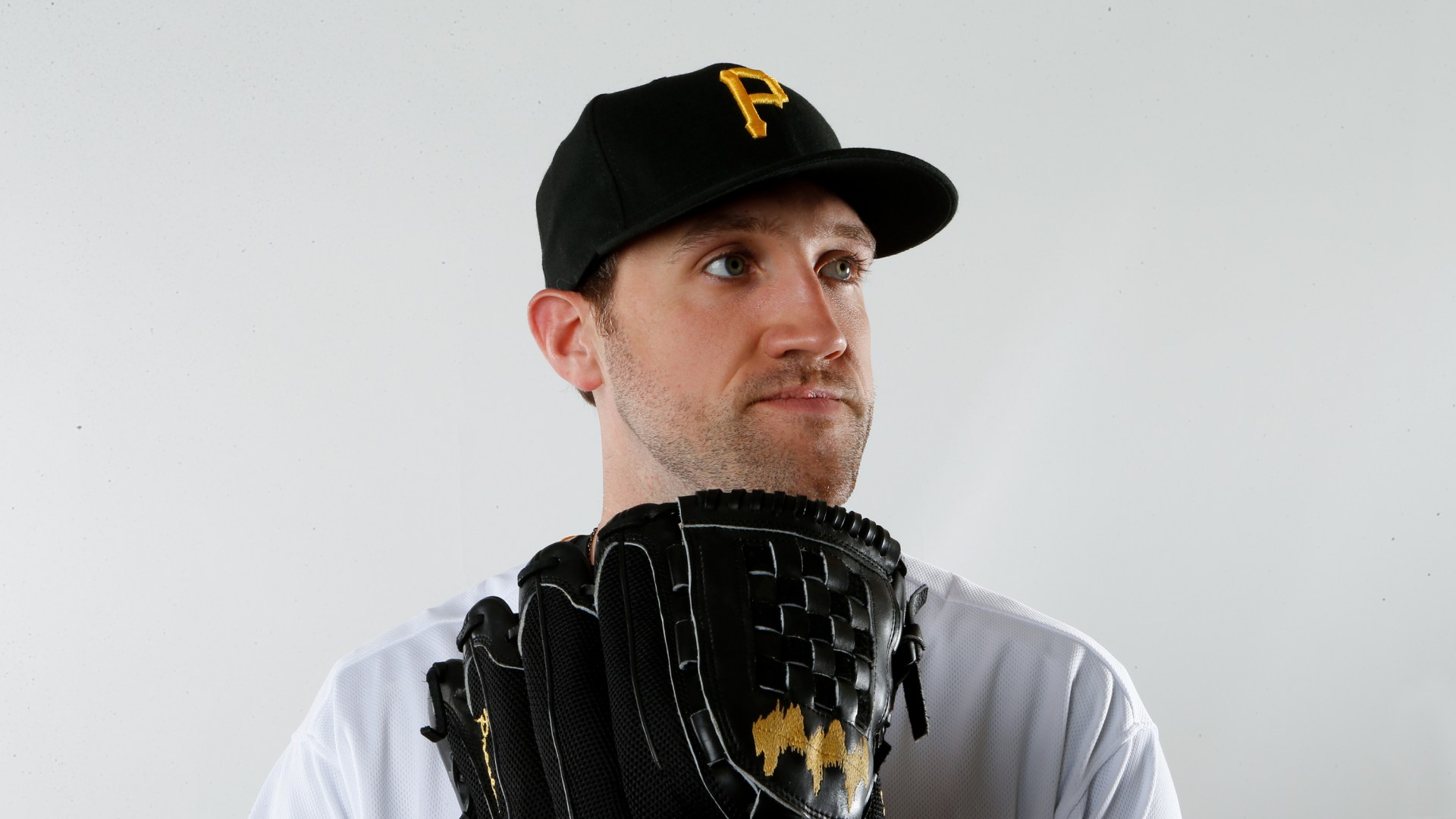
Josh Lindblom when he played for the Pittsburgh Pirates in 2017.

Josh Lindblom when he played for the Pittsburgh Pirates in 2017.

Christianity Today April 4, 2025
Brian Blanco / Stringer / Getty

A revival of sorts has broken out in American sports in the past few years, with an uptick in attention around athletes sharing their testimonies, getting baptized, and speaking out about their faith.

From Billy Sunday to Branch Rickey to Jackie Robinson, Christianity has long had a place within America’s pastime, which continues through contemporary players like Clayton Kershaw, Tommy Edman, and Jackson Holliday. But as baseball’s cultural prominence and popularity declines, Christians in Major League Baseball don’t carry as much cultural impact as those in other leagues.

Sports ministry leaders believe that could be a good thing. More than the acclaim of a viral testimonial, Christian athletes need spaces for the slow work of spiritual formation and growth. Few people are more equipped to speak about this than Josh Lindblom, a graduate of Indiana Wesleyan and Grace School of Theology who spent parts of seven seasons pitching in the big leagues.

“Faith was always a part of my journey in baseball, but for a long time it was kind of like the shiny add-on that helped me do the thing that I needed to do in sports. If I wanted to win, if I wanted to do well, if I needed to get through a struggle, it was there for me to apply it to those situations,” said Lindblom.

“Dallas Willard has this quote, ‘Everyone receives spiritual formation, the only question is whether it is a good one or a bad one.’ As I think back over the course of my career, there were some things I had to unlearn as a Christian athlete in professional sports.”

A second-round draft pick, Lindblom got called up to the majors in 2011, but after a few seasons and some success, hit a rough patch and left the MLB to play in South Korea. After five seasons overseas, and two pitcher-of-the-year honors, he finished his career with the Milwaukee Brewers in 2022.

Paul Putz, director for the Faith & Sports Institute at Baylor University’s Truett Seminary, spoke with Lindblom about his baseball career, his current work in sports ministry, and the everyday ways that Christianity is shaping the lives of baseball players and other pro athletes.

This interview has been edited for length and clarity.

Over the course of your professional baseball career, when did you find yourself leaning on your faith—and when did it seem to be coming up short?

I think back to when I first made my debut in the majors. I accomplished the thing that I always wanted to accomplish from the time that I was five years old throwing a sock into a couch. I remember coming off the mound that day and thinking, “All right, now what? Is that it?” I entered into this protective mode where it’s like I’ve got to play king of the hill, I’ve got to protect this thing because it’s mine. It was tiring. It was really, really tiring.

And then there’s all the stuff happening outside the white lines. I’m newly married. I’m trying to navigate how to be a good husband. My wife and I are talking about having kids, and then we have kids and I’ve got to navigate being a father. Then I’m traded four times. Then I go to Asia and play. And then we have a daughter with a congenital heart defect.

And this is where, for me, the rubber met the road. … I’m a professional athlete. But I’m more tired. I’m more frustrated. I’m more anxious. The thing that was supposed to bring me peace and joy and comfort did the exact opposite.

Was there a specific turning point or event that shifted your perspective?

I remember when I was playing in Korea, I was also finishing my undergraduate degree in biblical studies. And for some reason for my final thesis paper, I choose the book of Job. There’s a verse in Job 1:9 where the accuser asks, “Does Job fear God for nothing?”

So here I am as a baseball player. I have a daughter in the hospital, and she’s just come out of her first heart surgery. Reading that verse, I put my name in the passage. I asked, “Does Josh fear God for nothing?” If all of this were taken away, if I didn’t have the baseball career and the family and the support that I had, would I still love God? If Jesus wasn’t an add-on to help me accomplish what I wanted to in sports, would I still love him?

In that moment, I realized that the most important thing about me can’t be my sport or even my faith in a general sense. As a Christian, the most important thing about me has to be what God has done for me through his son on the cross.

Viewing faith as an add-on, like I had done in the past, causes you to miss the gospel and fall into a performance-based identity. It becomes about what you do and how well you apply faith to your life. The gospel does not start with what we can do for God. The gospel starts with what God has already done for us.

That truth needs to become deeply embedded in everything that I do: my relationships with my teammates, my relationships with my coaches, my relationship with the fans, how I go about my day and my work, everything. And that’s really where I would say that my career and my understanding of faith and sports started to change, where the focus became different.

In a certain sense, being willing to let go of your baseball career actually brought new life to it.

That’s right. The only known in sport, the only definitive thing, is that your career is going to end. But it’s the least talked about thing. We think that if we talk about the end, it’s going to take away from the present.

But it really has the reverse effect. Because if I know that every day that I show up to the field I’m one day closer to the end of my career, that should do something inside of me and transform the work that I do. Now every day is a gift and every day has a purpose.

And then I go back to the fact that Jesus is at the center, and he’s given me the gifts, talents, and abilities that I use in sports. Each and every day that I get to play baseball has new energy and excitement, and it’s divorced from the pressure to perform and the anxiousness.

This seems to connect with the practice of reflecting on our own mortality as a way to live more fully in the present. I hear you saying that for athletes, reflecting on the death of their athletic career can deepen how they engage in their sport.

Kevin DeYoung has this quote, and I’m paraphrasing, that the people who end up accomplishing nothing on this planet are the people who never realize they can’t do everything. Knowing our limits can free us to focus on what’s important, on the work that God has given me to do.

And this is where I think with sports, we’ve missed the boat. You know this better than anybody, studying the history, that in the past sports ministry has been viewed primarily as an evangelistic tool when really sport is a school of discipleship and a context of formation.

When you put sports within the broader narrative of the story that God is telling through the Scriptures, you realize that salvation is not primarily a story about me going to heaven when I die, but the God of the universe redeeming and restoring all of creation. That includes all of the human institutions, and sport is one of those.

As a Christian athlete, as a coach, as an athletic director, as anybody connected to sports, I now become a part of that story. I become an agent of redemption in the cultural context in which God has placed me. It fires me up just thinking about that.

Does that framing resonate with the athletes you mentor now?

I would say yes and no. Most athletes are not necessarily thinking in those terms, which I think is fine. It’s about meeting people where they are.

But getting excited about theology is not the main thing, discipleship is. When you think about discipleship, it’s really all about learning how to live well—how to follow Jesus. In sports, it’s taking kingdom content and applying it to earthly context.

I think my primary role, and I’m taking this from Eugene Peterson, is to name God where God has not been named before. When I disciple guys I’m trying to find points where God is working but where their eyes aren’t seeing, or their ears aren’t hearing, or their minds aren’t understanding. I want to help open them to this perspective that God is working in your sport, in your career, on your team, in your city. And we just need to be attuned to how he’s working.

What are some of those specific points for athletes, those common areas where you can “name God” for them?

If we’re talking baseball, I’m with a group of individuals every single day for eight months out of the year. The opportunities are all around if you’re willing to look for them.

Is somebody anxious about something? Is somebody falling into a performance-based relationship with their sport, with their coach, with their spouse, with their teammates? Where are they trying to strive and prove their worth apart from Christ?

It’s about slowing down to have conversations, slowing down to listen, slowing down to hear when somebody might be going through something painful, because I think one of the primary places where Jesus meets us is in our pain.

The other thing is that a lot of people think discipleship is about a formal strategic plan. Yes, we do want to move people from one point to the next, deeper into relationship with Jesus. But each individual’s story is unique. It’s about figuring out where somebody is and then helping them along the way.                       

How does the structure of the baseball season allow for opportunities to encounter Jesus or reflect on one’s faith?

My mind goes to liturgy. The natural rhythms of a baseball season don’t mirror the liturgy of the church, but I think the routine of a season is a great place to start making a connection with how God wants us to live our lives.

In baseball, you’ve got everything from batting practice, to changing your uniform, to the pre-game meal, to the National Anthem, to the seventh-inning stretch. How do we begin to connect those little liturgies of sport with the liturgies of faith? How can they be transformed by God’s grace so that we can meet him in those moments?

My daughter plays volleyball, and I was talking with one of her teammates last week. She has this nervous tick where she grabs her necklace and rubs it because she gets nervous. So I was like, “What do you think about when you’re rubbing your necklace?” She explained that she thinks about what might be next, what could happen—and usually, it was negative stuff. So I gave her a suggestion. I told her that every time she touches her necklace, she should say, “Win the next point.”

I wanted her to take something she was already doing, something that’s already embedded into her sports experience, and to transform that into something that is now a point of hope rather than a point of anxiety.

I think it’s the same thing with the everyday rhythms of baseball. A meal before a game, a plane ride, a bus ride, all of those things. We want to help each other transform them through God’s grace to become places where we can experience his presence.

I like thinking about the liturgies of baseball. What about those liturgies in the sport that are already connected to religion—what opportunities are built into the baseball season to practice one’s faith?

One of the challenges for pro athletes, and honestly, a point of guilt in my life, is that it’s really hard to be rooted in a local church while you’re playing. When you’re in the baseball season, you can’t regularly attend Sunday services. And even in the off-season, where you’re around for four months, it’s hard to feel fully committed.

In the past that could cause me to fall back into a performance-based identity with my faith. As a younger athlete, I’d be thinking, “Since I don’t go to church on Sunday, God might be mad at me, I might have a bad game.”

Does God want me gathering with others in a local church on Sunday? Yes, 100 percent he does. But he’s not going to take away a hit if you aren’t there. That’s not the character of God.

As pro athletes, we need to recognize the season of life that we are in and do our best to figure it out. For me, it was going to team chapel services on Sundays and being a part of a Bible study.

If athletes don’t have a strong spiritual community on their teams, my encouragement is to have the courage to start something. Make it super practical. When I organized a team Bible study, I said, “Look, here’s the deal, we’re gonna do a Bible study. I need you to read one chapter. I need you to write down one question. And I need you to write down one observation.”

It was important to make it super simple. An athlete might say “I don’t know enough about the Bible.” Good, you don’t have to! That’s exactly why we’re here, to learn together.

What opportunities specific to baseball do you see for the Christian sports movement to grow?

When you think about the length of the baseball season, how much time you spend together, the tradition and the inherent relationships that you have, and then all the rhythms and routines of the batting practice, bus rides, flights, and all of those things, you have the ingredients for connection and relationship to happen. It’s just a matter of tapping into that and being intentional with what is already present.

This is where spiritual formation is so important. A lot of athletes are speaking about Jesus, but what you don’t want is a generation that is an inch deep and a mile wide. Is there a solid foundation that this is built upon? Because when failure comes, when life happens, you want to make sure that you’ve built your life on the solid rock.

And that goes back to my own journey and experience. Is faith an optional add-on or is Jesus the most important thing? Because Jesus is the one person who has never let me down, ever.

That’s what I want to help younger players see and experience too.

Culture
Review

‘Revelations’ Is a Torrid Melodrama

But the South Korean thriller, now streaming on Netflix, also tells a sober truth.

Ryu Jun-yeol as Sung Min-chan in Revelations

Ryu Jun-yeol as Sung Min-chan in Revelations.

Christianity Today April 4, 2025
Cho Wonjin / Netflix © 2025

Yeon Sang-ho’s Revelations, recently released on Netflix, accomplishes something contrary to its apparent end goal. Smugly critical of Christianity, the film dramatizes the fall of a young, hypocritical pastor who dreams of leading a megachurch. Believing he has been granted a special dispensation to commit crimes that forward a divine agenda, pastor Sung Min-chan gets up to all sorts of awful chicanery. Faith, Revelations will try to convince us, involves delusions easily explained by psychoanalysis and a bit of common sense.

But in the process of gleefully undercutting Pastor Sung’s occupation—and his frequent, loud protestations of righteousness—Revelations unwittingly illustrates a truth: “After desire has conceived, it gives birth to sin; and sin, when it is full-grown, gives birth to death” (James 1:15).

This kind of accidental truth telling isn’t unusual. In the Christian-skeptical works of self-professed atheists—poet Percy Bysshe Shelley, novelist Virginia Woolf, or filmmaker Lars von Trier—concerted efforts to dismantle the church, brick by brick, often reveal the strength of its foundation.

The truth will out.

Revelations states its thesis most clearly toward its conclusion—not in a church but in a psychiatric office. Months earlier, psychiatrist Lee Nak-seong’s testimony successfully portrayed the criminal Kwon Yang-rae as more of a victim than the young woman he kidnapped and raped. Yang-rae walked free. The young woman took her own life.

Now the young woman’s sister, a detective, is attempting to find Yang-rae’s latest victim—and is seeking more details about Yang-rae’s tortured childhood. Reluctantly, she pays a visit to the clinician she blames for her sibling’s death.

In this late scene, the film attempts to present Lee Nak-seong as a truth teller, a lucid voice surrounded by religious maniacs and tortured survivors incapable of thinking straight. Faced with the anxious detective, he coolly explains that her ongoing hallucinations of her dead, accusing sister (visible to her during their conversation) resemble Yang-rae’s obsession with his abusive stepfather, the “one-eyed monster” he holds responsible for his crimes.

And these fixations are just the same as (now-incarcerated) Pastor Sung’s fantasy that Christ ratifies his selfish actions. “Most tragedies are caused in life by a combination of circumstances we cannot control,” Dr. Lee intones. “Things like the Devil and monsters are created by humans to justify themselves.”

The psychiatrist deftly reduces the Devil and sin alike to imaginary playthings, illusions generated to deal with problems better attributed to mere “circumstance.” For a moment, his words echo the conclusions of notorious psychologist B. F. Skinner, a behaviorist who questioned the existence of free will in light of the many environmental factors shaping human action. Dr. Lee, however, admits humanity’s tendency toward self-justification, presuming a moral framework that Skinner never would have approved.

Self-justification is what enables Pastor Sung’s hypocrisy. At the opening of Revelations, the evangelical leader’s humble role as the shepherd of a small but tightly knit church vies with secret aspirations to lead a much larger congregation in a fancy building being erected in their district. When he learns that his superior has no intention of considering him for the position despite his investment in the neighborhood, he drops to his knees and begs God to grant him the opportunity. 

A few days later, Pastor Sung’s supplication appears to have worked. The young man slated for this appointment is publicly accused of adultery. Assured of God’s favor, Pastor Sung does everything possible to avoid disqualification for the pulpit he has now been offered, including interpreting visions of divine figures in rainstorms as supernatural stamps of approval for criminal action.

Before matters careen completely off the rails, Pastor Sung wins a small measure of viewer sympathy. The camera lingers on the rotting walls and leaky ceiling of his dilapidated church office as he tries to befriend an unfamiliar man who has wandered into the worship service. Pastor Sung has recently learned his wife is having an affair—but even rocked by this betrayal and noticing the GPS tracker on the stranger’s ankle, he still manages to mumble a kind of welcome: “Church is for sinners. God loves us all.”

Even these vulnerable moments, however, anticipate Pastor Sung’s fall. The desire to report growing attendance drives his overtures to the visitor as much as any genuine concern. He’s disappointed to discover that the stranger, later revealed to be Yang-rae out on bail, did not fill out the membership form despite being given a freshly laundered church jacket.

Pastor Sung’s confrontation with his unfaithful spouse also erodes our pity. His calls for her to confess hidden sins jar uncomfortably with the false claim that he has “repented for everything” himself. 

Revelations is a torrid melodrama, sporting poorly written dialogue, unrealistic characterization, and situations that beggar belief. It does, however, effectively illustrate how desire can partner with self-interest to conceive sin. Pastor Sung’s longing for public renown in his faith community combines with an overwhelming need to appear righteous in his own and others’ eyes. Pride, deceit, and aggression proliferate. The pastor is convinced: God wants him to take all necessary actions—including murdering Yang-rae—to ensure he can step into the new preaching position.

“And sin, when it is full-grown, gives birth to death.”

Pastor Sung’s downfall might have been interrupted had he seized a few opportunities for confession. He could have shared his coverups with his wife instead of hammering her in a self-congratulatory prayer session that ignores his own failings. He could have confessed to his church while preaching, ironically, on a passage that points to his own crimes.

Revelations sets up Pastor Sung as a straw man; the film confronts the Christian with a series of supposed “revelations” that merely reveal his entrenched self-interest. If he had been moved to tearful contrition when recognizing the silhouette of a crucified Christ hanging in the hills or a winged angel breaking through the clouds, these images would have seemed timely, corrective visions. Instead of heaven-sent messages, they become data points, empirical evidence of self-justifying delusions.

What the film’s creators do not appear willing to realize is that Pastor Sung’s outrageous hypocrisy reifies the very standard he fails to uphold. His risible brokenness, which all humanity shares to some degree, cannot help but point to the need for grace. When embraced with humility, there’s nothing—even murder—that Christ’s blood cannot cover.

Paul Marchbanks is a professor of English at California Polytechnic State University. His YouTube channel is “Digging in the Dirt.”

News

Police: Nashville School Shooter Wasn’t Angry at Christians

After a two-year investigation, detectives say the motive was notoriety.

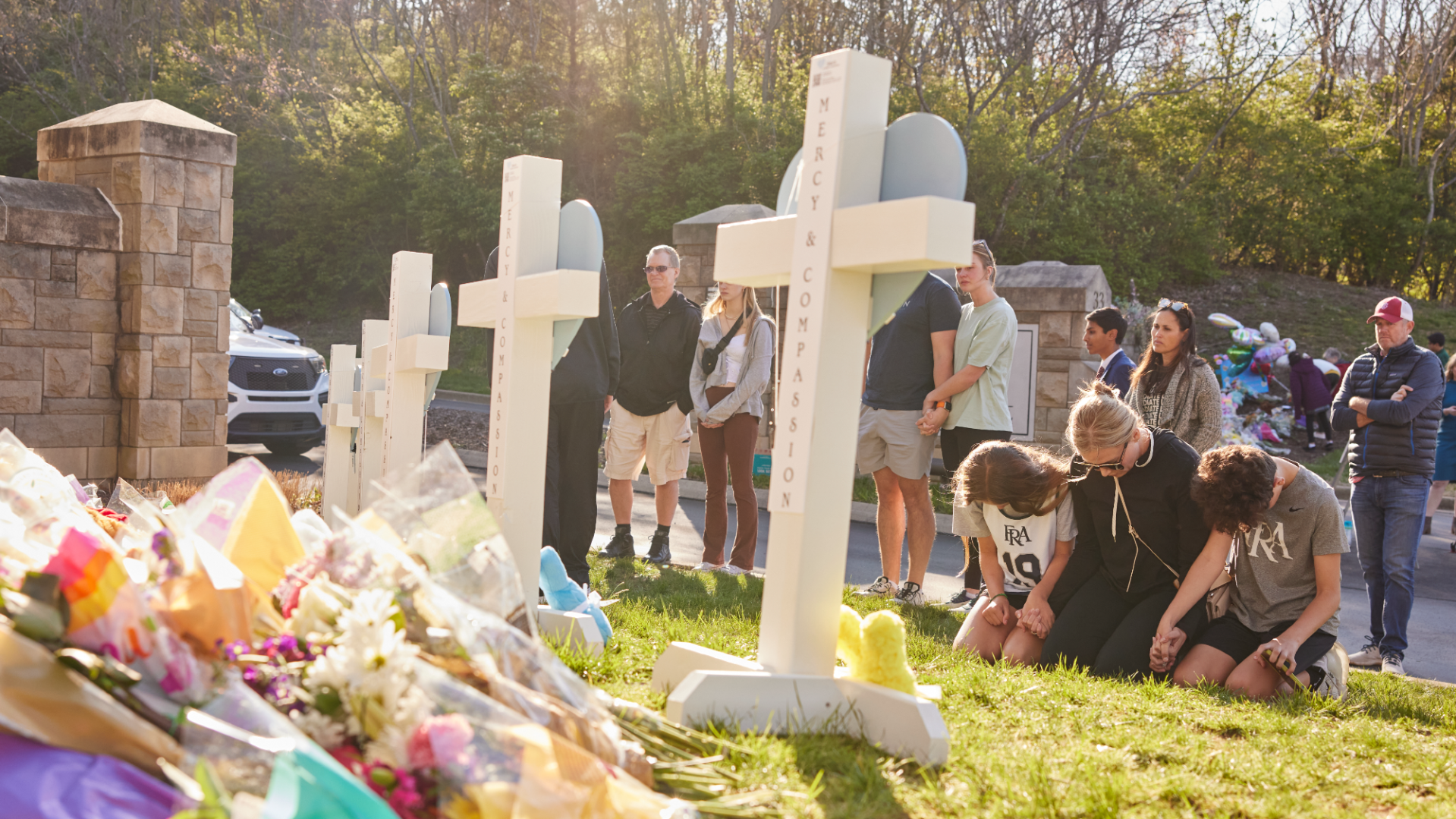
People pray at a makeshift memorial after a school shooting in Nashville.

People pray at a makeshift memorial after a school shooting in Nashville.

Christianity Today April 3, 2025
Johnnie Izquierdo for The Washington Post via Getty Images

Audrey Hale didn’t care that The Covenant School was a Christian school. 

The 28-year-old woman wanted to kill children and get famous, Nashville police have concluded after a two-year criminal investigation into the March 2023 shooting that left three students and three staff members dead.

Detectives examined 16 notebooks with 1,299 pages of Hale’s writing, including to-do lists, journal entries detailing daily activities, and expletive-filled diatribes that Hale called “rage storms,” according to the investigative report that police released publicly on Wednesday. They looked at eight thumb drives, seven sketchbooks, six cellphones, three laptops, two Google Drive accounts, and a dozen video recordings, some of them up to 40 minutes long.

Investigators did not find a manifesto laying out the motives for the school shooting. But after reviewing all the data and documents that the shooter left behind, they were able to say with confidence that they could explain Hale’s reason for committing mass murder.

“She felt by ‘killing a bunch of children’ she would no longer be ignored,” the report says. “She openly acknowledged none of those she would kill were guilty of anything and denied any personal motivation for targeting them. She felt their deaths were necessary to give her death meaning.”

Hale identified as a lesbian and sometimes used masculine pronouns. Tennessee law requires officials recognize only the gender identity corresponding to a person’s biological sex. Hale had not taken steps to transition medically, police said.

In the days after the shooting, some commentators claimed Hale was likely motivated by gender ideology.

“The modern trans movement is radicalizing activists into terrorists,” the popular right-wing YouTuber Benny Johnson said on X. “These are straight facts.”

The hashtag #TransTerrorism trended on the social media site formerly known as Twitter, and several politicians and political commentators aligned with Donald Trump picked up the issue.

“Maybe, rather than talking about guns we should be talking about lunatics pushing their gender affirming bulls— on our kids?” the president’s son Donald Trump Jr. said. Congresswoman Marjorie Taylor Greene agreed, tweeting, “Everyone can stop blaming guns now.”

JD Vance, who would go on to become vice president, argued the incident called for “a lot of soul searching on the extreme left”—“if early reports are accurate that a trans shooter targeted a Christian school.”

Police now say those early reports were not accurate. Hale did not target the Christian school because it was Christian or fantasize about attacking conservative Christians specifically. 

Hale attended The Covenant School, which is affiliated with the Presbyterian Church in America, from kindergarten through fourth grade and always recalled the experience with fondness. Hale’s journals and “rage storms” do not contain any allegations of emotional or physical abuse at the private school, and investigators found no evidence of disciplinary problems or even serious conflict with the staff and administration.

According to police, “Hale considered these years the happiest of her childhood.”

Hale originally planned to attack a public middle school about nine miles away. Hale attended Isaiah T. Creswell Middle School of the Arts from the ages of 10 to 15 and found it difficult to make friends there. When Hale did get close to girls on the basketball team—experiencing romantic feelings for some of them—the older girls graduated and moved away, leaving Hale lonely, depressed, and increasingly angry, the investigators’ report said.

Hale became fascinated with school shootings in 2017, and started watching documentaries and doing additional research on different attacks. The following year, Hale began to develop plans to shoot children at Creswell Middle.

Hale had second thoughts, though. The journals and notebooks record concerns that an attack on the middle school would be perceived as racist since many of the students were Black. 

Hale considered other targets. Detectives found research on four additional schools: another private Christian school, a private school with no religious commitments, and two public high schools. Hale also looked at the possibility of committing a mass shooting at Green Hills Mall, Opry Mills Mall, Belmont Boulevard just south of Belmont University, and several busy interchanges in Nashville and the suburb of Mount Juliet.

Hale’s priority, according to investigators, was killing children and becoming a “god.” Hale was inspired by the mass shooting at Columbine High School in Colorado, which happened when Hale was four, and came to idolize the perpetrators, Eric Harris and Dylan Klebold. They became godlike, Hale believed, through the notoriety achieved through killing.

“She likewise … focused on the notoriety she would attain during a mass killing,” Nashville police concluded. “She sought to become a ‘god’ like Harris and Klebold by killing victims nobody would forget: children.”

The Christian school had children the age that Hale wanted to kill and was remote enough that police response time might be slower than it would be at Creswell Middle or a busy interchange on Interstate 40. Hale also thought that Christians would be less likely to fight back, since their faith makes them “meek and afraid.”

And Hale was drawn to an idea of autobiographical symmetry that death at The Covenant School could provide.

“Hale often remarked her time at The Covenant was the happiest she was during her childhood education,” police said. “Hale felt The Covenant was the perfect place to commit an attack, as it was the perfect setting for her death.”

Hale entered the school on March 27, 2023, carrying an AR-15 semiautomatic rifle and two 9 mm pistols. The 28-year-old fired 152 bullets in 14 minutes, including five through a stained-glass window depicting Adam and Eve naked in the Garden of Eden, at peace with the world around them. 

Hale killed Evelyn Dieckhaus, William Kinney, and Hallie Scruggs, all nine-year-olds in the third grade, and custodian Michael Hill, principal Katherine Koonce, and substitute teacher Cynthia Peak. 

Police found Hale on the second floor of the lobby of the school, shooting through a window. One officer fired at Hale from behind with a rifle. Another fired a 9 mm pistol. The bullets were fatal.

The Nashville shooting was one of 349 at American schools in 2023. But Hale, who had frequently fantasized about being the subject of future documentaries, books, and even museum exhibits, died hoping to become famous, according to police.

“Hale demonstrated a high degree of narcissism,” the report says.

Families of the victims called the report “bleak” in a statement, but said it reflected the reality they’ve been living with for two years.

“This was truly a senseless crime,” the families said, “committed by a deranged, selfish, evil individual who relished the killing of innocent children.”

News

Aid Struggles to Reach Myanmar Earthquake Victims

Christian relief groups say the military junta has slowed humanitarian efforts after the 7.7 magnitude quake.

A young monk standing in front of a ruined building.

A young Buddhist monk stands in front of the damaged Thahtay Kyaung Monastery in Mandalay.

Christianity Today April 3, 2025
Sai Aung Main / Contributor / Getty

Lal Ruat Cawk, pastor of Victory Life Church in Mandalay, Myanmar, was driving with his sister to the hospital for a prechemotherapy blood test last Friday when his car started shaking violently. He thought he had punctured a tire.

“I could hear people screaming outside,” he recalled. “At that point I still thought it was because our car was disrupting traffic.”

It was only when he saw buildings collapsing around him that the 43-year-old realized “we had a larger disaster upon us.” He’d later learn that a 7.7 magnitude earthquake had hit central Myanmar. Mandalay, Myanmar’s second-largest city, was one of the cities worst hit by the quake.

Two aftershocks hit minutes later, prompting Lal Ruat Cawk and his sister to turn the car around and drive home. The journey that typically took 20 minutes lasted an hour that day, amid buckled roads and crushed buildings.

They returned home to find parts of their neighborhood flattened and their home partially destroyed. The pastor watched as rescuers pulled bodies out of the collapsed building. It left him feeling hopeless, especially as the disaster hit amid Myanmar’s ongoing civil war.

“Apart from God, there is no other person in the country we can rely on in the midst of these things,” said the pastor, who is currently sleeping in the streets due to concerns of his house’s structural integrity and future aftershocks.

The death toll in Myanmar has surpassed 3,000, with more than 4,500 people injured, according to state television MRTV. Yet relief aid is proceeding slowly, as humanitarian groups say the military government has blocked access to some quake-stricken areas.

Poor infrastructure and the lack of manpower from within the war-torn country—scores of young and skilled workers have fled since a military coup in 2021—also hinder relief and subsequent rebuilding efforts.

On Wednesday, the military declared a temporary truce in the war to facilitate relief efforts, despite earlier rejecting cease-fire proposals by ethnic armed groups. 

Before the cease-fire, the junta continued to bomb parts of the country amid the earthquake in what it described as “necessary protective measures.” Tom Andrews, the United Nation’s special rapporteur on the human rights situation in Myanmar, called for the attacks to stop and for obstructions to aid to be lifted.

“[The attacks] are outrageous and should be condemned in the strongest possible terms by world leaders,” Andrews wrote on X on Wednesday.

Countries around the world have sent emergency aid, including tents, blankets, hygiene kits, food, teams of rescue workers, sniffer dogs, and millions of dollars to Myanmar. However, some of it hasn’t reached earthquake victims, as the military junta is blocking its delivery.

For instance, many trucks carrying aid have been stuck overnight at military checkpoints in Sagaing, where the fighting between resistance groups and the military is intense, say several rights groups, including the Centre for Ah Nyar Studies.

On Wednesday, the junta admitted to opening fire at a Chinese Red Cross aid convoy, highlighting how the civil war complicates relief efforts. While the convoy said it had informed the military of its aid delivery plans, the military said it had not been notified.

“The junta is asking for international aid and has declared a state of emergency in the regions hit hardest, but their actions do not align with what they’re saying,” said Claire Gibbons, strategy manager at Christian aid group Partners Relief and Development.

This made it “incredibly difficult” for aid to reach those most affected, and Gibbons anticipates that rebuilding efforts will be hampered by the civil war. At the same time, the country’s health system has been ranked one of the poorest in the world by the World Health Organization.

Workers from Partners Relief and Development unloading supplies.Courtesy of Partners Relief & Development
Workers from Partners Relief and Development unloading supplies.

Partners Relief and Development, which has been in Myanmar since 1994, focused its relief efforts at Inle Lake, a former tourist spot south of Mandalay. The earthquake has completely destroyed many of the houses there, which are built on stilts in the water. Residents are struggling to build even temporary shelters with the limited land.

“Since COVID and the military coup, people here have lost most of their jobs from the tourist industry … so they are already struggling financially. They needed help before. They need more now,” said a Partners staff member on the ground, whom CT granted anonymity for security reasons.

The staff member noted that the locals need food, shelter, and drinking water most immediately. The aid organization distributed 600 bottles of waters, 5,500 pounds of rice, and 60 tarpaulins during its first visit on Tuesday, but the residents still need more.

“When they heard [we were] coming to make distributions, many people from the community got into their boats to wait for us. … Even then, the supplies we distributed [pale] in comparison to what they need,” he said.

The Way Station, a Christian nonprofit in Mandalay that supports women and children, says it has managed to bring aid to earthquake victims by working with partners in Yangon.

Overland journeys from Yangon to Mandalay can take up to 15 hours in current conditions, and the organization managed to get its first truck of food supplies and solar-powered generators to its community on Monday.

“The people we work with are among the poorest of the poor,” said Sandie Lund-Steinheuer, who cofounded The Way Station with her husband, Paul. “They already had next to nothing even before the earthquake and have been living in makeshift shelters for decades. The need is massive. The funds we have been able to raise is but a drop in the ocean.”

An image of collapsed buildings.Courtesy of Partners Relief and Development
The aftermath of the earthquake in Myanmar.

Sandie and Paul, who are coordinating fundraising from Denmark while communicating regularly with teammates in Mandalay, say they have been encouraged by how believers have been reminding one another of the hope they have in Jesus.

“In the midst of all this, they are concerned about whether or not Sunday services can still take place,” Paul said. “In the developed Western world, it is easy to put our hope in our circumstances. But Myanmar has been embroiled in crisis after crisis, so much so that you see Christians there living out the truth that there is no other hope but God.”

Other Christian aid groups are also seeking ways to help. On Monday, Samaritan’s Purse’s DC-8 jet took off from Greensboro, North Carolina, with an emergency field hospital and 28 disaster response specialists, including doctors and nurses, onboard headed to Myanmar. The hospital will include two operating theaters, an emergency room, inpatient wards, a pharmacy, and a laboratory. Meanwhile, Viriginia-based Operation Blessing sent a team to Mandalay with water-purification equipment, solar lanterns, and emergency supplies, including food, toothbrushes, bottled water, and medicine.

Lal Ruat Cawk is praying that the crisis will cause non-Christians to call upon the Lord for help.

“Pray that they will acknowledge that disasters like that are beyond human control and that only God can help us recover from this crisis,” he said. “Pray, too, that more Christian organizations will be able to come into the quake-affected areas to help us see and experience God’s love in the midst of this.”

Culture

How Biblically Accurate Is ‘House of David’?

A look at polygamy, giants, and Goliath’s Greek armor.

David played by Michael Iskander in House of David

David played by Michael Iskander in House of David

Christianity Today April 3, 2025
Jonathan Prime / Prime Video © Amazon Content Services LLC

The first season of House of David has just concluded.

Its eight episodes, streaming on Amazon Prime, covered only three chapters in the Bible: God’s rejection of King Saul in 1 Samuel 15, Samuel’s anointing of David in 1 Samuel 16, and David’s defeat of Goliath in 1 Samuel 17.

To fill in the plot, flesh out characters, and give their story more biblical and historical context, the show’s writers invented subplots, many of which draw on other parts of the Bible as well as later Jewish traditions.

Some viewers have wondered how much of this narrative is true to the Bible and how much is pure fiction—maybe even revision. Here’s a look at some of House of David’s central elements and how they match up (or don’t) with the biblical source material. (Spoilers ahead.)

David’s family

Let’s start with David’s family. In House of David, he is living with his father Jesse, five older half brothers, and some other people, including a young girl named Avva. It’s not entirely clear how these other people are related to Jesse—children? grandchildren? extended family?—but the show’s press kit says Avva, at least, is Jesse’s daughter and David’s sister. David and Avva’s mother, Nitzevet, is dead before the series begins, though we see her in flashbacks.

The biblical David’s immediate family was a bit different. He had more older brothers—either six or seven, depending on which passage you read (six according to 1 Chronicles 2:13–15, seven according to 1 Samuel 16:10 and 17:12). And his mother was still alive well into his adulthood; David arranged for both his parents to stay in Moab while he was hiding from King Saul (1 Sam. 22:3–4).

The biblical David also had two sisters, named Zeruiah and Abigail (1 Chron. 2:16–17); “Avva,” the name of the girl in the series, might be intended as a variation on “Abigail.” Interestingly, the biblical Zeruiah was the mother of Joab, one of David’s top generals—so the biblical Joab was basically David’s nephew. But in the series, Joab is noticeably older than David and is merely a “cousin” of his. (Joab is also, at this point in the series, one of the top soldiers in King Saul’s army.)

In House of David, David is called a “bastard” by his brothers and neighbors, and Jesse says he married David’s mother “unlawfully.” This backstory isn’t spelled out in the Bible but is loosely based on a Jewish tradition that says David was an outcast within his own family because of the circumstances of his birth. This tradition (or the filmmakers who used it) may have been inspired by passages from the Psalms in which David says his mother conceived him in sin (Ps. 51:5, ESV) and he was a stranger to his brothers, mocked by the people who sat in the city gate (69:8–12).

King Saul’s family

In the series, King Saul has a wife named Ahinoam, two sons named Jonathan and Eshbaal, and two daughters named Mirab and Michal. When Eshbaal, who is something of a libertine, suggests that he and Saul go to a tavern and meet some women, Saul replies, “You expect me to disrespect your mother?”

The impression we get is that Saul is a faithful monogamist. But the biblical Saul was not. Like other kings and wealthy men of the period, he had multiple wives (2 Sam. 12:8)—including, yes, Ahinoam (1 Sam. 14:50). He had at least one concubine whose name we know, Rizpah (2 Sam. 3:7; 21:8–13).

Saul also had at least seven sons that we know of: two by Rizpah, named Armoni and Mephibosheth, and five whose mothers are not specified, including Jonathan, Ishvi, Malki-Shua, Abinadab, and Eshbaal (1 Sam. 14:49; 1 Chron. 8:33), the last of whom was also known as Ish-Bosheth (2 Sam. 2–4). The biblical Saul had at least two daughters, named Merab and Michal (1 Sam. 14:49).

In the series, Saul calls his general Abner an “old friend.” The biblical Abner wasn’t just a friend. He was family, Saul’s first cousin (1 Sam. 14:50–51). The series also implies that Abner’s mother is the Witch of Endor, a medium who, in the Bible at least, summoned the spirit of Samuel at Saul’s request shortly before Saul’s death (1 Sam. 28:3–25). This connection between Abner and the witch is not made in the Bible but comes from rabbinic tradition.

The first season of House of David ends with Eshbaal putting himself on the throne while Saul is away on the battlefield. There is no basis for this in the Bible; in fact, Eshbaal isn’t even mentioned in the Bible until after Saul’s death (2 Sam. 2:8–10). Most of the show’s fictitious elements are meant to fill the gaps in the biblical narrative; this one threatens to throw the narrative off course. But we’ll see what happens next season.

No polygamy?

Saul isn’t the only monogamist in House of David. At one point, a man named Adriel says to Michal, “If my wife were dead, I would marry you myself and wake up every day a happy man.” But there was no reason—not in that culture—that Adriel would have had to wait for his wife to die before marrying Michal. As it is, the biblical Adriel married Michal’s sister Merab (1 Sam. 18:19; 2 Sam. 21:8).

The show’s reluctance to depict the polygamy of the times makes you wonder how it will deal with David’s many marriages. The series leans heavily into David’s romance with Michal, but after the biblical David married Michal (1 Sam. 18:20–27), he went on to have at least six other wives or concubines before he moved to Jerusalem (2 Sam. 3:2–5). The fact that he had children by all these different women was a contributing factor in the events that led up to the civil war between David and his son Absalom (see 2 Samuel 13, especially).

The capital city, Gibeah

Saul says he grew up in a “poor village,” and a few characters say that Gibeah—the capital city of Israel—is a former Philistine stronghold that Saul captured. He is now busy purging the palace of all the pagan art that the Philistines put there.

It is true that the Philistines had an outpost in Gibeah, though I doubt they had a full palace there (1 Sam. 10:5), and it appears that the biblical Saul may have actually come from that town (v. 26), which had been part of the tribe of Benjamin since Joshua’s day (Josh. 18:21–28).

Gibeah was, in fact, notorious, the site of an atrocity that sparked a civil war that almost resulted in the tribe of Benjamin’s complete destruction (Judges 19–21). So when the biblical Saul told Samuel he was “from the smallest tribe of Israel” (1 Sam. 9:21) … well, there was a reason for that. And it’s not insignificant that, when the people asked Samuel to give them a king and Samuel warned them about all the ways a monarchy could go wrong (1 Sam. 8), Samuel, under God’s direction, responded by giving them a king from that tribe.

The Philistines

The Philistine king Achish says his people “came from across the Great Sea” centuries ago to try to conquer Egypt. He also says the armor he is giving Goliath was “crafted by the finest Mycenaean blacksmith.”

All of this is historically sound. The Bible says the Philistines came from an island or coastal region known as Caphtor—now widely thought to have been Crete or Cyprus—around the same time that the Israelites arrived in Canaan (Deut. 2:23; Jer. 47:4; Amos 9:7). Most modern historians also identify the Philistines with the Peleset, one of the ethnic groups known as “sea peoples” who attacked Egypt in the 12th century BC.

The Mycenaeans were Bronze Age Greeks, and scholars have noted for years that Goliath’s armor and weaponry seem to have had certain Greek characteristics, like the bronze greaves that Goliath wore on his legs (1 Sam. 17:6) or the spear with a shaft “like a weaver’s rod” (v. 7), which many think is a nod to the looped cord that Greeks and others attached to their weapons to increase their range and accuracy when they threw them.

The fact that Goliath challenges the Israelites to resolve their standoff through a duel between two champions is also reminiscent of some of the clashes that we see in the Iliad. It’s a very Greek way to try to settle a battle.

The giants

Finally, the giants. In House of David, the giants are identified as descendants of fallen angels who mated with human women in the days before the Flood, as per Genesis 6:1–4. They also have more recent human ancestors; Goliath and his brothers live with their regular-sized mother, whose name is Orpah.

The link between Goliath and the fallen angels has a pretty solid biblical basis. The children of the angels and their human wives were called the Nephilim (Gen. 6:4). The Nephilim were identified with a race of giants known as the Anakim, or the descendants of Anak (Num. 13:33). After Joshua defeated them, the Anakim lived in a handful of Philistine cities like Gath (Josh. 11:22). And Goliath, like some of the other giants who fought David and his men, came from Gath (1 Sam. 17:4; 2 Sam. 21:15–22; 1 Chron. 20:4–8).

The Bible says nothing about Goliath’s mother, though. That detail comes from a Jewish tradition that says Goliath and his brothers were the children of Orpah, the Moabite daughter-in-law of Naomi who did not go to Bethlehem with her (Ruth 1:8–15). Because Naomi’s other Moabite daughter-in-law, Ruth, was the great-grandmother of David (4:13–17), the legend linking Orpah to the giants basically imagines that the fight between David and Goliath was a fight between two branches of Naomi’s extended family.

In House of David, the giants are living in a cave and mostly hiding from human society until Achish finds them and forges an alliance with them. In the Bible, the giants appear to have lived quite openly in a handful of Philistine cities after Joshua drove them out of the hill country of Israel (Josh. 11:21–22).

Also, the giants in the series are very, very tall—roughly twice the height of regular humans. Depending on the interview, the show’s producers have said their Goliath is supposed to be anywhere from 10 to 14 feet tall. The biblical Goliath was shorter than that, possibly by a lot. Most modern Bibles say Goliath was “six cubits and a span” (1 Sam. 17:4), or nine feet, nine inches, because that’s the height he has in the Masoretic text, an 11th-century manuscript that is the oldest complete copy of the Hebrew Bible.

But the Dead Sea Scrolls (which are over a thousand years older) and some other ancient texts say he was “four cubits and a span,” or six feet, nine inches—just one inch taller than Martyn Ford, the actor who plays him! That still would have seemed very large at a time when the average person probably wasn’t much more than five feet tall.

There are many other details and much more foreshadowing to explore—for brevity’s sake, this will have to do for now. Cameras are already rolling on House of David season 2; we’ll have more biblical material to sort through soon.

Peter T. Chattaway is a film critic with a special interest in Bible movies.

addApple PodcastsDown ArrowDown ArrowDown Arrowarrow_left_altLeft ArrowLeft ArrowRight ArrowRight ArrowRight Arrowarrow_up_altUp ArrowUp ArrowAvailable at Amazoncaret-downCloseCloseellipseEmailEmailExpandExpandExternalExternalFacebookfacebook-squarefolderGiftGiftGooglegoogleGoogle KeephamburgerInstagraminstagram-squareLinkLinklinkedin-squareListenListenListenChristianity TodayCT Creative Studio Logologo_orgMegaphoneMenuMenupausePinterestPlayPlayPocketPodcastprintremoveRSSRSSSaveSavesaveSearchSearchsearchSpotifyStitcherTelegramTable of ContentsTable of Contentstwitter-squareWhatsAppXYouTubeYouTube