News

Supreme Court Says Schools Can’t Hide Kids’ Gender Transition

Q&A with attorney Adele Keim on the landmark ruling for parental rights.

Blue school lockers, some are open to reveal pink interiors.
Christianity Today March 30, 2026
Illustration by Elizabeth Kaye / Source Images: Getty


On March 2, the Supreme Court voted in a 6–3 decision to allow California parents the right to be informed if their child chooses to socially enact gender transition at school. The Bulletin sat down with Adele Keim, legal counsel at the Beckett Fund for Religious Liberty, to understand more about this landmark case, not only for parental rights regarding their children’s gender expression but for religious freedom more broadly. Here are edited excerpts from that conversation in episode 263.

What was argued in Mirabelli v. Bonta, the case brought to the Supreme Court? 

This case was originally filed by two teachers and two families in California. All of them were Catholic. The parents had gone to their children’s schools and said, We think something’s going on with our child. Have you socially transitioned them? Have you changed their name and their pronouns, and are you treating them as a boy instead of a girl? 

In both cases, the teachers and principles said, No, we would never do that. We haven’t done that. Years went by, and, in both cases, the two children had severe mental health crises that resulted in hospitalization and suicide attempts.

The parents discovered upon the hospitalization of their kids that the schools actually had lied to their faces. Their children had been transitioned socially and were being treated as the opposite of their biological sex—girls being treated as boys. Teachers had actively worked to conceal this from the parents throughout years of parent-teacher conferences. They did false paperwork so the parents wouldn’t catch on and then refused to answer questions, stonewalled, or lied when the parents asked the question. 

The California law actually required school districts statewide to engage in this pattern of concealment from parents unless a student affirmatively told the school, I want you to tell my parents about my experience of gender incongruence, about the fact that I’m using different pronouns and a different name at school, that I’m going to the boys’ bathroom instead of the girls’ bathroom. 

Because the California law required the school districts to conceal actively from parents, the parents sued to challenge that law. They proceeded along with two Catholic teachers who said, We have a religious obligation to be truthful and to not lie in our jobs. 

There was a lengthy trial proceeding with expert witnesses from both sides and testimony from the parents, families, and administrators. In December 2025, the district court judge ruled in favor of the parents and the teachers and issued an injunction that said California could no longer enforce this law. After this injunction, the Ninth Circuit Court of Appeals tried to pause the ruling and allow California to continue its concealment practices while the case went on. Federal court cases can take years to complete. 

The parents and the teachers went to the Supreme Court and asked for the policy to be paused while the lawsuit continued. The Supreme Court, unusually, reached out and agreed. In that 6-3 decision, they said, We think this is outrageous, and we’re not going to let California keep parents in the dark while this case is litigated. 

What argument does California make for why concealment is necessary? 

On the legal side, one of their primary arguments was that children have a constitutional right to privacy under the California constitution, and the state needs to protect children’s right to privacy from their own parents. The district court and the US Supreme Court rejected that argument. The supremacy clause in the US Constitution overrides a contrary state law. Even if the contrary state law is very popular back home, the federal Bill of Rights controls. That’s why Jim Crow was overturned. 

California doesn’t think they’re doing evil or harm here. They say they are motivated by a concern to avoid child abuse. The state has said throughout that they do not want children who disclose to their parents that they are feeling gender incongruence or gender dysphoria, that they want to transition, to face child abuse at home. It is important and legitimate that the state is concerned about avoiding child abuse. 

The US Supreme Court said that, while their concern was fair, the state has an entire child abuse enforcement system in place to adjudicate cases of genuine child abuse. All teachers are still mandatory reporters who can report potential abuse through the right channels for proper investigation and, if substantiated, for child abuse charges. There’s a whole process for protecting the child while protecting the integrity of the family, seeking changes in the family, and eventual reunification if that’s possible or removal if it’s not. 

The Supreme Court took great pains to say those processes still apply. California still has all of those tools because the state does have a legitimate and important interest in preventing child abuse. But what the court did say was that the state can’t presume that parents will abuse their children and therefore protect them from their parents. 

The Catholic parents in this case testified that their beliefs prevented them from letting their children go through social transition. They said they would get their children counseling and help and support them. They would show them love and acceptance but would not facilitate their gender transition. The court below and the Supreme Court found that that is not child abuse—that the parent has a fundamental right to raise their child in their faith and the state may not knowingly and deliberately interfere with a parent’s efforts to raise their child in the faith. 

That’s a really important thing for Christian parents to hear out of this decision. There are ways to be a loving parent that do not involve facilitating a gender transition when you believe, as a Christian parent, that is not in the best interest of your child. 

The district court said in its ruling for the parents that, if parents didn’t know what was going on, they couldn’t help their child. All the experts agree that kids whose parents are working together with their therapists to address their problems do much better than kids whose parents are not working with their therapists. Unless parents are involved, the child is essentially left on their own. Schools cannot arrange therapeutic intervention on their own; parents need to be involved. Concealment doesn’t serve the child’s interest on any level. 

Is this concealment by school districts happening in other places beyond California?

This is happening nationwide. Around 2016, right at the end of the Obama administration, these policies started to be rolled out and recommended by advocacy groups as the gold standard for accommodation for transgender students. They were often introduced with nondiscrimination policies. Schools could not discriminate against students on the basis of their transgender status. If the student asked you to, you concealed their social gender transition from their parents. If the student and their parents disagreed about transition, you sided with the kids over their parents’ objections. Those policies have been around for 10 years, and estimates say about 1,200 school districts have them. Some are imposed at the state level. 

How would parents know that’s going on in their particular school district? 

You could look up rights for transgender students in your district. You could go in and talk to your kid’s teachers. If you have a good relationship with teachers or administrators, you can say, “What do you do in these situations?” And you can put them on notice. You can say, “I really care about my kid. I want to get them all the help that I can, so I really want you to let me know if my kid is expressing discomfort with their gender identity and wanting to transition. Please tell me.” You can bring it up in parent-teacher conferences if you feel comfortable, reminding them that you are your kid’s best advocate. You are the one who knows your kid best and loves your kid best. You can do it in a winsome way, but you can also do it knowing that the law is on your side. 

Parents have the right and the duty to raise their children in the way they see fit. The Supreme Court case law here goes back a hundred years. That’s a fundamental constitutional right, and that overrides your school district’s policies. Any school district officials that now continue to conceal gender transitions from parents are in violation of clearly established constitutional law. It means they’re personally liable for monetary damages. 

We want a pluralistic society. That’s what it means to be an American. What is the limiting principle for how our education system should address these ideologies as they emerge in our culture?

The Mirabelli case went back to 100-year-old case law that existed at the height of American xenophobia, where Nebraska tried to enact laws that banned German Lutherans from having Bible classes in German, in their parochial Lutheran schools, and Oregon tried to outlaw Catholic schools. Both laws were designed to shore up support for the nascent public school system, but they required you to send your kids to public schools only. The Supreme Court said 100 years ago that the child is not the mere creature of the state. It is their parents who have the responsibility, the right, the high duty to prepare them for their future life and their responsibilities. 

Those principles are still true today, and they apply in the most contentious questions that educators and parents are dealing with today. Parents are still the primary educators of their kids, and the public schools do not have the right to deliberately interfere with parents’ efforts to bring their kids up. This is important for Christians, but it’s even more important for members of religious minorities. 

Protestant parents who do not wish to have their child enrolled any longer in a public school may find a Protestant school nearby. It may not be ideal. It may be costly, but you may also have a homeschool co-op nearby that you can join or a private school you can go to. You shouldn’t have to do this, to be clear, but there are options out there. 

If you’re a Muslim parent in Montgomery County, Maryland, for example, there are no good options for you other than sending your kid to a religious school that’s not your faith. If you’re the parent of a disabled child who needs a lot of special support, there aren’t good options for you outside of the public school system. 

When Christian parents step up and say, This is woven into our constitution, and you can’t take this away from us, it actually has an umbrella effect. Our advocacy advances the common good for our Muslim neighbors and for others who are, for some reason, locked into the public system and don’t have a way out. 

Books
Review

The Meaning of Your Life Can’t Rest on You

Arthur Brooks’s new book is enjoyable, smart, and often wise, but a search for true meaning must bring us to Christ.

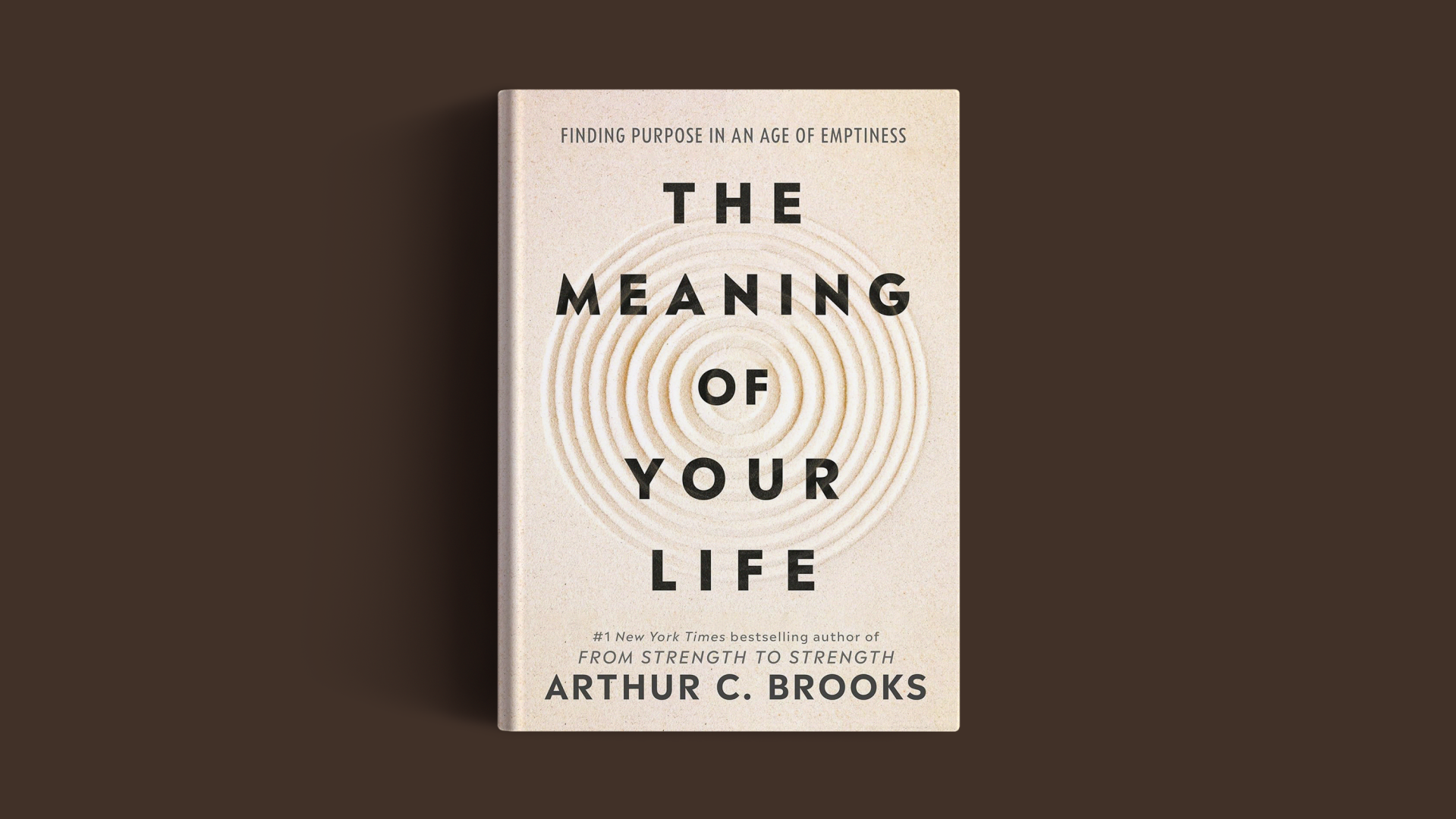
The book on a brown background.
Christianity Today March 30, 2026
Illustration by Christianity Today / Source Images: Getty, Portfolio

When discussing the biggest problems in life, Christians are understandably eager to present Jesus as the solution.

Sometimes this looks like basic fidelity to Scripture, which depicts Christ as the source of all wisdom, the one in whom “all things hold together” (Col. 1:17). Regrettably, it often looks more like the dreaded “Jesus juke”—an awkward, heavy-handed, or manipulative attempt to shove faith into a conversation. (Yes, I worry about the Iran war. But in the end, I’m more concerned about the war to win souls for Christ.)

I fought mightily to restrain this altar-call impulse while reading Arthur C. Brooks’s newest book, The Meaning of Your Life: Finding Purpose in an Age of Emptiness. A Harvard University professor and leading expert on happiness, Brooks specializes in social science, and his book leans on insights from this field as it investigates why so many people enjoying outwardly enviable lives struggle with loneliness, anxiety, and aching dissatisfaction. But as much as I long to answer such existential worries with Jesus’ self-attestation as the way, the truth, and the life (John 14:6), I wanted to honor Brooks’s expertise and his chosen analytical framework.

And it’s not as though Brooks ignores the place of Christianity in illuminating life’s meaning. Far from it: He writes candidly about his own Catholic faith and often bolsters social-scientific findings with complementary strands of Christian wisdom, alongside samplings from other theological and philosophical traditions.

Still, the further I read, the more trouble I had quieting my inner Billy Graham. I can understand why Brooks issues a generous, inclusive invitation, proposing pathways to deeper meaning that anyone can pursue, regardless of religious beliefs (or lack thereof). There are virtues to mapping out the good life with ecumenical expansiveness. Yet I’m loathe to settle for anything less than acknowledging Christianity as the map itself.

Before plunging into those waters, let’s back up a little. The Meaning of Your Life addresses a specific dimension of the social crisis playing out in parts of American society. Many researchers have studied the mental health burdens weighing on younger generations, raising alarms about their disordered attachments to smartphones and social media. Others have dug into data concerning Americans without college degrees and steady paychecks who fall away from family and community, get hooked on drinking and drugs, and succumb to premature “deaths of despair.”

Brooks aims his appeal at the high-achieving end of the bell curve, toward members of America’s “striver” class. Blessed with superior gifts and unceasing energies, these strivers are continually scaling mountains of personal, educational, professional success—always pushing, in the words of one interview subject, to earn “the next gold star.” But Brooks observes a void in their lives. As their accolades and material wealth pile up, they wonder whether their labors amount to anything worthwhile, especially after counting the cost in strained relationships, harried psyches, and punishing daily grinds.

Brooks sees these tendencies in his Harvard students. He sees them in personal and professional acquaintances. And he sees them, perhaps most profoundly, in himself. An incurable striver from childhood onward, Brooks excelled as a classical musician before pivoting to triumphs as a professor, nonprofit boss, and public intellectual. He resonates on an intimate wavelength with misgivings about workaholic zeal crowding out deeper questions of meaning. Much of his happiness research, he admits, doubles as an avenue of “me-search.”

With that record, Brooks might seem like an insufferable showoff, custom-engineered to arouse envy in mere mortals (like me). But I think regular Joes will find his manner disarmingly down-to-earth. The book features the same genial, plainspoken, and self-effacing style on display in his advice essays for outlets like The Atlantic and The Free Press. For anyone seeking practical, relatable guidance on happiness, I can imagine him making a delightful conversation partner.

Such guidance abounds in The Meaning of Your Life, in which Brooks distills decades of research and reflection. The “problem of meaning has vexed me more than any other in my career,” he confesses, “and this is the hardest book I have ever written.”

Early on, Brooks recounts a conversation that provided a flash of conceptual clarity: One anxious striver described feeling trapped in a “simulation” where cheap, two-dimensional stage props replaced the rich architecture of authentic life. That image struck a chord, and subsequent interviews echoed a similar refrain: “Life felt unreal,” Brooks reports, “full of false rewards, empty accomplishments, therapeutic talk, and fake experiences, all curated to pass the time as painlessly as possible.”

Eventually, Brooks concluded that what “was missing was the one thing that can never be simulated: meaning. Again and again, people said that life was busy but not meaningful. That experiences and relationships felt meaningless. Or that they didn’t know what they were meant to do in work and life.”

As Brooks observes, strivers can often identify and lament this absence of meaning. But they’re tempted to respond in counterproductive ways, soaking up the screen-based diversions of our digital age. Time and again, the book introduces fine specimens of on-the-clock industriousness who fritter away their leisure hours with aimless scrolling. The ensuing dopamine briefly numbs their discontent, but their sadness returns soon enough, piling guilt atop their weary souls while leaving the fundamental problem unresolved.

Escaping this “doom loop,” Brooks argues, is the first step toward getting a firmer grasp on what life is all about. Yet what strivers need most, he suggests, is an awakening jolt to parts of their neural circuitry too often stuck on sleep mode. 

As Brooks theorizes, the people most adept at climbing ladders of power and prestige tend to operate within the brain’s analytical centers. What they often lack is a receptivity to signals sent from the brain’s opposite hemisphere, a fertile soil for ruminations on mystery, beauty, divinity, and other proverbial staples of late-night dorm-room debates. This is where meaning dwells most richly, Brooks suggests, in the “numinous” realms that defy rational explanation.

How do you open new passageways to these neglected regions? This question guides most of Brooks’s chapters, which offer concrete strategies for “ignit[ing] the right hemisphere of your brain” and training it to recognize what matters most. 

He asks readers to make regular assessments of the coherence and direction of our lives, invites us to pursue romantic love and committed friendship, and calls us to look beyond our own needs, cultivating an openness to spiritual realities. He teaches us to orient our working hours to something beyond money and our leisure hours to something beyond fleeting or trivial pleasure. He encourages us to immerse ourselves in natural, aesthetic, and moral beauty. And he reminds us that our suffering, while inevitable, need not be in vain.
By and large, this is wise (and sometimes urgently needed) counsel. If you’re struck in a metaphysical rut, you can hardly go wrong hearing an orchestra, hitting a hiking trail, taking someone on a date, catching up with a friend, or—who knows?—even darkening the doors of a church. I have my quibbles with certain arguments and illustrations, as anyone might. But Brooks’s core recommendations seem broadly congruent with basic Christian teachings.

Speaking of which … uh-oh, here it comes. Let’s call it a Jesus juke lite. Don’t say you weren’t warned.

Scripture, of course, doesn’t say much about the brain’s precise cartography or the happiness principles that flow from diagramming it rightly. But it says plenty about what makes meaning genuinely meaningful.

Drawing on a definition proposed by psychologists Frank Martela and Michael F. Steger, Brooks pictures meaning as a cord of three strands: coherencepurpose, and significance. You’ll notice the glaring absence of any anchoring in objective realities or moral truths. Plenty of false religions and grotesque ideologies check these three boxes. Perhaps their adherents enjoy a secure sense of meaning, but it rests on a foundation of illusions and lies.

In his determination to liberate meaning from the cramped perspective of rationalistic strivers, Brooks risks liberating it from anything solid and stable. At one point, he approvingly cites psychiatrist Carl Jung, who wrote, “The greatest and most important problems of life are all fundamentally insoluble.” Which requires getting comfortable with philosophical and experiential loose ends, rather than demanding some program or paradigm to tie them together.

But Christians believe the Bible spells out both our greatest problem (sin and alienation from God) and an efficacious solution (Christ’s death and resurrection). Yes, our faith embraces mystery and transcendence. It proclaims realities so unfathomable—a triune God, a divinely ordered cosmos, a virgin birth, a kingdom that has no end—that our puny minds can scarcely comprehend them. But it tethers the sublime grandeur of redemption to decidedly non-numinous claims of historical fact.

In 1 Corinthians 15, Paul gives them a workmanlike rundown: “that Christ died for our sins according to the Scriptures, that he was buried, that he was raised on the third day according to the Scriptures, and that he appeared to Cephas, and then to the Twelve,” and then to a further succession of disciples and apostles, including Paul himself (vv. 3–8). If these statements are untrue, he insists, then our “faith is futile,” and “we are of all people most to be pitied” (vv. 17, 19).

If Brooks’s conception of meaning lacks a firm grounding in objective truth, it also lacks a firm grounding in the binding stories, communities, and traditions that have structured lives and shaped consciences for most of human history. In other words, it lacks a firm grounding in the authoritative meaning we inherit, rather than the subjective meaning we find and choose for ourselves.

Even as Brooks exhorts us to look outward and forge relationships of reciprocal care and concern, the book’s overall thrust remains curiously individualistic. It’s right there in the title, which speaks of the meaning of your life, not life in general. Words like search and journey get heavy workouts, suggesting more of a lonely quest than a baptism or initiation into an established community.

In fairness, Brooks does include a moving epilogue tied to his experience walking the famed Camino de Santiago with other Christian pilgrims. Here he stresses how meaning can find us rather than us finding it. For most of the book, however, the onus seems to fall on individual seekers, who need only drop their phones and reprogram their brains by doing “what your grandparents did in the course of their ordinary lives.” 

In fact, I was surprised that Brooks didn’t pay more attention to broader trends of institutional and communal decay. If people today are starved of meaning, perhaps that’s because an atomized society isn’t satisfying their hunger to belong.

Here, again, is where Christianity helpfully enlarges the frame. Scripture doesn’t deny the subjective dimension of meaning derived from relationships, responsibilities, talents, and callings that vary from person to person. But it weaves those threads into a single all-encompassing story of redemption showing all people, in all ages and places, as well as who they are, where they’ve come from, and where God in Christ wills to take them.

There are lots of things worth saying to anyone doubting the significance of their life and work, and Brooks says many of them clearly and effectively. But here’s what I’d like to say most: Step into the story of redemption. Put your trust in its author and perfecter. Look forward to its consummation in the new heavens, the new earth, and the multiethnic multitudes gathered to worship Christ forevermore.

Discovering the meaning of your life, of all life, really is every bit as simple—and infinitely, gloriously complex—as that.

Matt Reynolds is a writer and a former CT editor. He lives with his wife and son in the suburbs of Chicago.

News

1,000 Kenyans Fought for Russia in Ukraine. Many Were Duped.

False advertising lured Africans to Eastern Europe for jobs, then recruiters pressured them into the army.

Families of Kenyans recruited illegally to fight for the Russian army in the Russia-Ukraine war hold photos of their missing relatives during a protest demanding answers in Nairobi, Kenya, on March 05, 2026.

Families of Kenyans recruited illegally to fight for the Russian army in the Russia-Ukraine war hold photos of their missing relatives on March 05, 2026.

Christianity Today March 30, 2026
Anadolu / Contributor / Getty

Ian Simiyu was struggling to find enough day-labor jobs to provide for his family in Eldoret, Kenya, when he came across a Facebook ad last April recruiting Kenyan citizens to work as cleaners in Russia. His younger sister had taken a job as a housemaid in Qatar, so the idea of working abroad and earning more money to send back home appealed to him.

The ad said the company would provide a Russian work visa and an airline ticket. Excited, he worked to get his passport, but the paperwork and fees bogged down his efforts to go abroad.

What he didn’t realize was that other Kenyans had responded to similar ads and traveled to Russia to work as drivers or security guards only to find themselves coerced into joining the country’s army.

Several months later, as Simiyu waited for his passport, he saw a video released by the Ukrainian army of a 36-year-old Kenyan man—identified only as “Evans”—appealing for release after being captured and detained on the frontlines. Evans said a sports agent tricked him into traveling to Russia on a tourist visa, only to force him into the Russian army. Shocked by Evans’s story, Simiyu realized the job he had been hoping for was likely a scam.

A February report by Kenyan intelligence officers estimated more than 1,000 Kenyans have fought in Russia’s war against Ukraine—some voluntarily and others, like Evans, tricked into it. The intelligence officers also alleged corrupt Kenyan and Russian officials colluded with recruitment agencies to fraudulently press unsuspecting workers to join the military. After an outcry from the families of the duped Kenyan recruits, foreign minister Musalia Mudavadi met with his Russian counterpart this month. They agreed Kenyans would no longer be able to join the army.

At least one Kenyan, Charles Waithaka Wangari, has died in the war, while 39 have been hospitalized and 28 are missing in action. The Russian Embassy in Nairobi, Kenya, denied accusations of embassy officials’ involvement and called such reports propaganda.

Human rights group Vocal Africa alleged individuals connected with the Russian Orthodox Church in Kenya promoted work opportunities in Russia. In recent years, the Russian church has expanded in Africa, growing to 350 parishes across over 30 countries. A professor of ecumenism said the church is part of Russia’s “soft power” in the continent, as the church aligns closely with the state.

Yet a Russian Orthodox priest in Nairobi told Religion News Service the church sends seminary students to Ukraine only for religious studies, and it warns them that military recruitment can happen there.

Most church leaders in Kenya contacted by CT declined to comment on potential recruitment by the Russian Orthodox Church until reports receive further confirmation.

One Christian, Justus Wazlala, said, “If … the Russian Orthodox Church was involved in this human trafficking, then it is high time the government started monitoring foreign churches in country, just like it is with Islamic groups.”

According to Ukraine’s February estimates, Russia has recruited over 1,700 soldiers from 36 African countries, and reports of fraudulent recruitment have surfaced in other nations, including South Africa and Zimbabwe. The daughter of Jacob Zuma, South Africa’s former prime minister, resigned from her position as a member of Parliament after accusations that she helped fraudulently recruit Africans into the Russian army.

Human rights advocate Stephen Lempaa told CT that high unemployment and poverty in Kenya leave young men susceptible to recruitment into foreign armies. The Kenya Poverty Report of 2022, released in 2024, shows over 20 million Kenyans lived below the poverty line. Unemployment and poverty in Kenya have forced many to look for work abroad and have made young people prime targets for recruitment by terrorist organizations like al-Shabaab.

In one case reported by The Kenyan Daily Post in early March, a man named Dennis Mokaya Mong’are left Kenya in November and traveled to Moscow then Belarus for promised work as a cleaner, only to have his passport confiscated after arrival. Mongare said he was forced to sign documents in Russian before military personnel sent him to the frontlines. After sustaining injuries in a February 5 drone strike, Mongare reportedly pled with the Kenyan government to rescue him and others coerced into joining the conflict.

Lempaa said desperation also influences voluntary recruitment. Some jobless young men searching for purpose end up fighting in Russia or other African countries—such as the Democratic Republic of the Congo and South Sudan. Lempaa said many Kenyan youths have fled the stagnant economy at home with a common slogan: “I [would] rather die of a bullet than die of poverty.”

Anecdotal evidence suggests social media may influence some youth to consider foreign army service, especially in Russia. In late February, when Kenya’s National Intelligence Service arrested Festus Arasa Omwamba—a prime suspect in Russian recruitment of Kenyans—young men on social media asked for information about joining the Russian army.

“How do I reach this man for greener pastures[?]” wrote a user named Baraka John Mwas, a single man from Nairobi, Kenya.

“Please I need his contact,” wrote Bamah Emzo from Cameroon. “I want to go fight for Russia.”

Senator Okiya Omtatah from Busia County, Kenya, pointed to a June 2023 government initiative to increase youth employment abroad and questioned whether the program was used to deliberately send Kenyans to Russia. He called for the government “to come clean.”

Ian Simiyu said he believes God prevented him from taking the job offer in Russia. Instead of going abroad, Simiyu decided to farm a two-acre plot of family land. Now he grows kale and onions, selling them to urban markets and hotels. His profits bring in enough to feed his family, help his younger siblings, and give a tithe to his church.

“God has opened me another door,” said Simiyu. “I don’t know if I would be alive, had I gone to Russia.”

News

Finland’s Top Court Split on Christian Politician’s Hate Speech Charges

The court convicted Päivi Räsänen for publishing a brochure on sexual ethics but acquitted her for a social media post quoting Romans.

Member of the Finnish parliament Päivi Räsänen testifies on "Europe's Threat to American Speech and Innovation" at the U.S. Capitol on February 04, 2026.

Member of the Finnish parliament Päivi Räsänen testifies on "Europe's Threat to American Speech and Innovation" at the U.S. Capitol on February 04, 2026.

Christianity Today March 27, 2026
Heather Diehl / Staff / Getty / Edits by CT

In a divided ruling, the Finnish Supreme Court on Thursday delivered a mixed decision in the long-running case involving parliamentarian Päivi Räsänen, finding her guilty on one charge of hate speech while unanimously acquitting her on another.

The court voted 3–2 to convict and fine Räsänen for her role in publishing and maintaining public access to a 23-page pamphlet published in 2004 arguing that “homosexual relationships challenge the Christian concept of humanity.” The narrow majority said the material—distributed by the Luther Foundation Finland, the legal entity behind Evangelical Lutheran Mission Diocese of Finland (ELMDF)—“made available to the public and kept available to the public opinions that insult homosexuals as a group on the basis of their sexual orientation.”

The ruling also applied to bishop Juhana Pohjola, who published the pamphlet. Pohjola is the leader of the 2,749-member ELMDF, as well as chairman of the International Lutheran Council, a worldwide association of conservative Lutheran churches that oppose same-sex marriages and the ordination of women.

At the same time, the court unanimously upheld Räsänen’s acquittal on a charge stemming from a 2019 social media post in which she posted a picture of Romans 1:24–27 to criticize the Evangelical Lutheran Church of Finland—one of Finland’s two national churches—for its affiliation with the Helsinki Pride march. Though the national church does not officially perform same-sex marriages, it has grown increasingly LGBTQ affirming. Räsänen led the opposition against the passage of Finland’s law recognizing same-sex marriage in 2017.

The ruling by the Supreme Court, which heard the case in October, upheld earlier lower-court decisions that the tweet, while offensive, did not amount to “incitement to hatred” and thus did not meet the legal threshold for criminal liability.

The mixed verdict marks the latest development in a case that has drawn international attention for its implications regarding freedom of expression, the limits of religious speech, and the interpretation of hate-speech laws in democratic societies. In February, US House Republicans invited Räsänen to testify at a hearing on European online censorship laws.

Räsänen, longtime member of Finland’s Parliament for the Christian Democrats and former interior minister, expressed strong disagreement with the conviction.

“I am shocked and profoundly disappointed that the court has failed to recognize my basic human right to freedom of expression,” she said following the ruling. “I stand by the teachings of my Christian faith, and will continue to defend my and every person’s right to share their convictions in the public square.”

Räsänen said she is considering appealing the decision to the European Court of Human Rights.

ADF International, the global arm of the Alliance Defending Freedom, represented Räsänen and Pohjola and has been involved throughout the proceedings. In a statement released after the decision, the organization highlighted the dual nature of the outcome.

“Freedom of speech is a cornerstone of democracy,” said Paul Coleman, the organization’s executive director. “It is right that the Court has acquitted Päivi Räsänen for her 2019 Bible verse tweet. However, the conviction for a simple church pamphlet published decades ago—before the law under which she has been convicted was even passed—is an outrageous example of state censorship.”

This would have a “chilling effect” on society in regard to free speech, he said.

The legal proceedings against Räsänen began in 2021 after Finnish prosecutors brought multiple charges alleging that her public statements and writings violated laws prohibiting “incitement against a minority group,” including sexual minorities. The charges related to three separate instances, including the 2004 pamphlet, the 2019 tweet, and comments made during a radio interview. Lower courts had previously acquitted Räsänen on all counts, finding that her statements fell within the bounds of protected expression and did not constitute a hate crime.

The Supreme Court’s ruling partially overturns those earlier acquittals, but only with respect to the pamphlet. In its decision, the court noted Räsänen’s text characterized homosexuality as a “disorder of psychosexual development” and a “sexual abnormality,” concluding that such descriptions were demeaning toward gay and lesbian people.

The court has not yet released a full English-language summary, but Finnish-language reporting indicates that the justices were divided on how to balance protections for free expression with safeguards against speech deemed harmful to minority groups.

At the same time, the unanimous acquittal on the tweet signals a point of judicial agreement that in public debate not all religiously grounded expression—particularly the quotation of religious texts—meets the threshold for criminal sanction. The distinction suggests the court is attempting to navigate a line, however contested, between protected participation in civic discourse and speech it determines to be injurious.

If Räsänen proceeds with an appeal to the European Court of Human Rights, the case could extend well beyond Finland. The court, which is based in Strasbourg, France, would likely be asked to consider whether the application of Finland’s hate-speech laws in this instance aligns with the European Convention on Human Rights, particularly its protections for freedom of expression and religion and how that aligns with upholding the dignity of minority communities.

“This is not about my free speech alone, but that of every person in Finland,” Räsänen said. “A positive ruling would help to prevent other innocent people from experiencing the same ordeal for simply sharing their beliefs.”

Books
Review

When ‘Nothing’ Happens

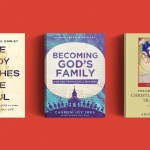
Three books to read on church life and ministry this month.

Three books on a cream background.
Christianity Today March 27, 2026
Illustration by Christianity Today

This piece was adapted from CT’s books newsletter. Subscribe here.

Kyle Strobel and John Coe, When God Seems Distant: Surprising Ways God Deepens Our Faith and Draws Us Near (Baker, 2026)

What do we do when it feels like spiritual life has stalled? During just such a season in my early 30s, I discovered a lecture by theologian John Coe. I was surprised to hear him describe the feeling of God’s distance as a gift, a chance to face the truth about my need for Christ. I wished for a book-length treatment to share with others.

Fifteen years later, I’m glad to report that it has arrived, cowritten with his colleague Kyle Strobel (see their earlier volume Where Prayer Becomes Real). This new volume reconnects with a neglected Protestant tradition that makes sense of spiritual dryness: a mind that wanders in prayer, boredom with the Bible, coldness in praise.

The authors argue that when spiritual practices stop providing excitement, they become mirrors, showing us our hearts. Mistaking emotional warmth as the mark of a healthy spiritual life, we go looking for a shot of adrenaline. But this search for feelings is a mark of immaturity! Newborn babies drink out of bottles, but for greater growth to occur, their parents must wean them. Likewise, God must give us experiences that are hard to chew for us to know him more deeply.

Unless we are willing to face the truth and journey with Christ into the brokenness, seeking better feelings may become a strategy to avoid God, leading us to miss the gift of the dry season.

Amy Peeler, Ordinary Time: The Season of Growth (InterVarsity, 2026)

Peeler’s Ordinary Time is the final book in InterVarsity Press’s Fullness of Time series, which views the seasons of the church year as an instrument for discipleship. Peeler writes as one who has lived and led others through the seasons, but as a “convert to liturgical worship,” she is an ideal guide for Christians less familiar with the church calendar.

Early in the book, she observes that over half the year is classified as “ordinary time,” which means it is neither a season of fasting (like Lent) nor one of feasting (like Eastertide). As such, ordinary time might feel like a season to rush through on the way to the “excitement and change” we crave. Yet this balance between seasons is a gift. “God does a radical thing,” she writes, “and then grants us time to reflect on it. If every day were radical, we could not take it in.”

Moving gently through the weeks of the calendar, Peeler pauses to reflect on the prescribed prayers, lectionary passages (like readings from Genesis), and celebrations (like Trinity Sunday, Christ the King Sunday). Each calendar season has a color, and Peeler notes that green is the color of ordinary time, reminding us that growth happens in the midst of everyday rhythms and common means of grace.

Julie Canlis, A Theology of the Ordinary (Godspeed, 2017)

Julie Canlis’s Theology of the Ordinary is short, but I have yet to find another book that contains so much depth for its page count. Drawn from a lecture series presented to undergraduate students, Canlis’s writing counters the “cultural obsession with greatness” that tilts spiritual formation toward supercharged emotions, radical discipleship, and measurable impact. Although these emphases can correct a faith “devoid of sacrifice or hope,” she wants to offer a theology of the ordinary that “will not undermine being passionate or sold-out but will ground and purify it.”

Canlis organizes her book in three movements: the blessing of the Father on ordinary life (creation), the inhabitation of the Son in ordinary life (redemption), and the work of the Spirit to shepherd our everyday lives toward their intended goal (new creation). Alongside this Trinitarian story, she describes three lesser “counter-stories” that stand in as substitutes. The “Gnostic Story” rejects God’s original blessing on creation. The “Docetic Story” seeks redemption apart from the humanity Jesus wants to heal. The “Platonic Story” places the spiritual life on a higher plane, splitting the ordinary from the extraordinary.

In the last decade, some of the cultural tilt toward exciting spirituality has leveled out, whether from weariness, cynicism, or recovery work found in popular books like Tish Harrison Warren’s Liturgy of the Ordinary or Douglas McKelvey’s Every Moment Holy. Yet we always need the call to offer our everyday, “walking-around life,” (Rom. 12:1, MSG) to the God who remains faithful in every season. Indeed, these books testify that what feels like nothing is often the ordinary work of God.

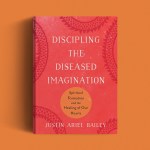
Justin Ariel Bailey is a professor of theology at Dordt University. He is the author of Interpreting Your World: Five Lenses for Engaging Theology and Culture.

News

Pro-Life Ministries Find New Ways to Connect Clients and Donors

Social media and giving apps expedite the process of helping women with unplanned pregnancies.

Several text bubbles with gift ribbons around them.
Christianity Today March 27, 2026
Illustration by Elizabeth Kaye

Tears filled Tierra McCarty’s eyes as she saw her cellphone notifications pop up, one after another. Strangers were sending her money. 

God was answering prayer and using technology to do it.

“Are you okay?” her teacher asked as the notifications and tears continued.

McCarty was in her first week of classes to become an aviation technician. It was a dream she says God placed on her heart as she searched for a way to make a better life for her two kids. But after her first day of classes and a shift at work that night, McCarty came out to find her car gone. It had been repossessed. What had seemed like a God-ordained path felt blocked as she lost her only means to get to work or school. 

Desperate, McCarty reached out to Amy Ford, founder of Embrace Grace, a Texas-based ministry that had supported her during an unexpected pregnancy eight years earlier. McCarty had remained connected with the ministry in the years that followed and knew that Ford sometimes posted about urgent needs on social media. 

“I feel like I’m drowning with my kids in my arms,” Ford recalls McCarty saying.

Ford posted McCarty’s story on her personal Facebook page, where she has 7,000 followers who support Embrace Grace, and the amount needed to get the car back—around $5,000. Within days, the request was met by a mix of small and large donations from various people.

McCarty’s story is just one of many now happening across the US as pregnancy support centers harness technology to meet urgent needs in real time. 

“It’s just cool to see everybody coming together for a cause, and Facebook seems to be a really good platform,” Ford said.

For more than 50 years, Heartbeat International has served women with unplanned pregnancies, building the largest network of pregnancy resource centers in the world. Heartbeat president Jor-El Godsey recalls that during his earlier days working at a pregnancy center, he heard about a client who was biking three miles to work each day. The center put out a request in a newsletter to help her get a car. Social media, he said, is today’s newsletter, and he sees the benefit of using it and other technology to help moms in a more expedient way.

“If it’s really a connected community, then there’s a great way simply to say, ‘These are the needs that we have,’ or ‘This person has this particular need,’” Godsey said.

Many of the more than 4,000 Heartbeat-affiliated centers already use social media tools to serve clients, he said. In addition to general Facebook posts on specific pages, they commonly use giving apps that notify people of needs and allow them to donate instantly from their smartphones to make giving easier. Godsey said he’s only heard positives from those who have used these tools, and he’s found that the support can influence whether a woman chooses to keep a baby.

“To be able to say we can help you with this and we can help you with those other things and we can provide, it unlocks for them the fact that they can do this,” he said.

A 2023 peer-reviewed study published in the medical journal Cureus found that lack of support and lack of financial security both play significant roles in women’s decision to get an abortion. Of the 1,000 American women surveyed, 54 percent said they would have continued their pregnancy if they had had more financial security.

Human Coalition, a national pro-life organization, also reports that many of the women who contact them considering an abortion say they would prefer to parent if their circumstances were different. 

“We address those barriers so that they can make a decision with a clear head, not based on temporary circumstances,” said Becky Gallagher, national director of social services for Human Coalition. 

Erin Rogers, executive director of the Bakersfield Pregnancy Center, has witnessed the difference support can make in the lives of women.

“For some of our clients, it’s those very practical things that make them believe that having this baby is just impossible,” Rogers said.

Anel Rubio is an example. At 16, she received help at Bakersfield after learning she was pregnant with twins. Part of what brought Rubio peace was the way the center helped meet her physical needs.

“They were able to provide a lot of the things that I needed to start,” Rubio said.

That help included everything from prenatal vitamins and clothing to contact information for a health provider and enough clothes and diapers for the babies’ first year of life.

“I don’t know where I would be without the support of the Bakersfield Pregnancy Center,” Rubio said. “I feel like they set me up for success.”

At Bakersfield, Rogers said staff now use a software program called Meet the Need.

“I think pregnancy centers should use every tool that they can reasonably do,” Rogers said.

She likes Meet the Need because it doesn’t cost anything and has been effective. Staff at the center are able to share a link to Bakersfield’s Meet the Need where specific requests are listed in digital and nondigital communication, and if someone calls wondering how best to give support, they can direct them to the site.

“It’s a very easy tool to use to remind people who you are and what you’re doing and how they can get involved,” she said.

Another platform used by some pregnancy centers is called CarePortal.

With CarePortal, centers can publicize specific needs someone has, such as for a stroller for twins or help with vehicle repair. Churches register to receive notifications when a need is posted and then share it with their circles. 

Gallagher said Human Coalition–affiliated centers have been using CarePortal to serve clients in Texas and North Carolina and are starting to expand use in Georgia. She said it’s been a blessing for women in need.

“They get to receive timely, compassionate support that helps relieve immediate stress and then reminds them that they’re not alone during a vulnerable season,” Gallagher said. 

It can also be the start of a deeper relationship with people and the church. 

“That is always a hope of ours, that the clients can see the love of Christ through tangible help,” she said.

Most needs are met the same day, while larger requests, such as a rent payment, can take up to a week or two.

There is a risk that with ease of giving, donations can become automatic or so sophisticated that it loses a personal connection, according to Godsey. “Even if someone is faithfully giving a few dollars every month or significant dollars on a regular basis, it can be done automatically,” he said.

He believes part of the solution is for pro-life organizations to share the prayer requests and personal stories behind the needs.

At Embrace Grace, Ford said she’s found the posts for help that get the strongest response are those in which she shares the most details about the person needing the support, because it allows others to relate more.

“People want to know the story—the why,” she said.

To mitigate the risk of someone taking advantage of people’s generosity, Ford makes sure she only posts a need for women she knows personally through Embrace Grace and knows have legitimate needs. Ford posts links for people to donate directly to the person, such as Venmo or Cash App, and then the individuals let her know when the need has been met. 

Sometimes, people who donate continue to build connections with the people they help. McCarty, for instance, received some donations from people who work in the aviation industry and told her to get in touch when she graduates. Others have added her on social media and followed her journey. When she posts a video of herself working on a plane, they’ll leave comments of encouragement.

The whole experience was spiritually uplifting, McCarty said.

“It just opened my eyes to a deeper revelation of how much God loves me and how much he’s gonna cover me and keep me,” she said.

This spring, when she walks across the stage at graduation, she will remember the people God used to make it possible.

“God knew exactly what needed to happen,” McCarty said. “I needed the courage to ask for help, and then I just needed to sit and watch him make that way for me.” 

Ideas

What’s the Point of Education in an Age of AI? 

Contributor

American teenagers are getting a crash course in nihilism, and we need answers more compelling than the hope of universal basic income.

A girl on her phone sitting at a desk with two computers open.
Christianity Today March 27, 2026
Maskot / Getty

American middle and high school teachers face challenges recognizable to educators of just about any era: overcrowded classrooms, disruptive students, plagiarism and other cheating, and parents who are more obstacle than partner.

But veteran teachers tell me they’ve seen a new challenge over the past few years: widespread disengagement. Heads on desks. Rampant apathy. Zoned-out students with low energy and even lower interest in learning. (I have to wonder: If living, breathing teachers struggle to motivate students, what can we expect from humanoid robots, promoted by First Lady Melania Trump this week as the future of American education?)

If we want something to blame for this disengagement, there are options aplenty. Many students are still dealing with learning loss and other challenges from pandemic-era school closures—and perhaps always will be. Compared with endless short-form videos and other techno-dopamine hits, even the most talented teacher at the whiteboard will seem dull. Glitchy learning platforms have moved classwork and homework online, frustrating students and teachers alike. Novel ways of teaching have students more focused on tests than mastery. Anxiety is upSocial connection is down. All around, it’s bleak.

But on top of all this is an increasingly inescapable new cultural messageArtificial intelligence will soon do everything you do, and it’ll do it faster and better than you ever could. That message is difficult enough to challenge if you’re an adult. Imagine hearing it when you’re 15 and bored in class, fully aware that you can answer any question your teacher asks in milliseconds using Google Gemini on your school-district-issued Chromebook. Why not outsource your thinking to a machine? It’s easy, frictionless, and—it seems—inevitable in this brave new world.

And also: Your classmates are doing it already. School counselors tell kids to take school seriously because good grades produce a bright future. But 75 to 80 percent of American high school students admit to cheating, and in many schools, funding systems reward keeping kids in seats over ensuring they’ve learned the content—so kids get passed along even if they fail. One Connecticut student graduated high school—with honors!—and is now suing her school district for negligence because she never learned to read. 

Students notice all this and understandably wonder why they should bother to be diligent and honest. Why trudge along, memorizing names and dates and vocab words, just to compete against AI cheating? Why aspire to a particular vocation if you’ve been told it’ll soon be done more efficiently and affordably by a computer named Claude or a humanoid named Plato? Just wait for the robots to come and give you a universal basic income. And what’s the point of education, anyway, in the face of an AI takeover? Why try if nothing matters?

American teenagers are getting a crash course in nihilism, and their apathy is a rational response to a demoralizing situation. 

No one knows better than educators how desperately young people need hopeful, realistic answers to these questions. The teachers I’ve interviewed describe grappling with these queries in their classrooms on a routine basis. 

One teacher said she tells her middle school science students that AI is only ever as smart as its user: You must be a clear thinker to prompt it effectively. You must be able to recognize reasonable answers from illogical and unhelpful ones to avoid being deceived. 

Another educator, a middle school reading and writing teacher, told me she reassures her students that she’d rather read their work—and will grade it more generously, even if it has errors—than the impersonal, inauthentic AI substitutes some students pass off as their own. The point of learning to write, she tries to communicate, is to learn how to think for yourself. “We don’t assign essays because there’s a national shortage of 9th grade interpretations of Macbeth,” in the words of writer Caitlin Flanagan. “We do it because the process of writing that paper teaches the student a lot of skills.”

Athletic and musical metaphors tend to resonate with some students, multiple teachers told me. Athletes know they cannot excel at their sports if they haven’t put in hours of training. Musicians will never be able to play beautiful music if they haven’t first practiced. These comparisons make sense for some students, who come to understand that they’ll lose out in the long term when they take the path of least mental resistance. 

But classroom education today rarely rewards disciplined students the way athletic and musical endeavors do. Cheat subtly enough, and you can still get good grades and a path to future success. Even when students know it isn’t in their own best interest to outsource their thinking to AI, they rightfully recognize that their immediate challenges—acceptance at competitive universities, desirable internships, and jobs—don’t depend on long-term intellectual development. They depend on grades and test scores now. 

And so, even when schools try to ban or limit AI use, students use it anyway. They know our educational system largely rewards those who do. If you’re skeptical, ask an ambitious high schooler at a public or tech-friendly private school if any classmates with better GPAs regularly cheat. I guarantee that some do—and that it’s an open secret among the students.

The tech involved is novel, of course, but we shouldn’t find any of this surprising. Our culture is geared for optimization and utility, profit and instant gratification. It’s failing to offer a compelling answer to these big questions. If we want students to value education in the age of AI, we must give them more meaningful metrics and better questions to ask. But what does that entail?

I took this question to Jeffrey Bilbro, a CT contributor who’s an English professor at Grove City College and author of a forthcoming book on AI, Creaturely Intelligence: Living as Creatures in a World Made for Machines. He’s eager to help his students want to pursue a life of intellectual and spiritual growth even in the midst of such uncertain and transformative technological shifts.

The way forward starts not with fighting against the inevitabilities of tech, Bilbro told me, but with a choice. It’s a question, first articulated by Wendell Berry in his essay Life Is a Miracle: An Essay Against Modern Superstition, that each of us must answer: Will we be “people who wish to live as creatures” or “people who wish to live as machines”?

“As information becomes easier than ever to access, it’s more important than ever to have intellectual virtues—like humility, attention, and patience—and numerical and verbal literacy to make sense of abundant information,” said Bilbro. It’s difficult to form these virtues “in this noisy environment,” he continued, but that makes them all the more necessary and likely evermore rare. We must help our youth understand that the point of education is the pursuit of wisdom. 

I recognize how lofty that sounds, and I don’t pretend to know how to reform an entire country’s worth of educational institutions to better meet this moment. But I can share what my husband and I are telling our own children, as often and in as many ways as we can: Education is about your formation, not merely about gathering information.

You read To Kill a Mockingbird not merely to check it off an assigned reading list but to think about what it means to be morally courageous when there’s great social pressure to conform. 

You study World War II not just to memorize facts and dates but to consider what virtues you must cultivate to be rightly prepared if history repeats itself.

You learn mathematics not just to get an A on a test but to think with clarity and order in a chaotic world. 

You build a model of the human brain out of clay not because it will be more scientifically accurate than one you could buy on Amazon but because exercising human creativity, however clumsily, builds a more beautiful world.

These reasons are true for everyone, but they are particularly and firmly rooted in the rich history and tradition of our Christian faith. Scripture frames our human frailty and limitations not as a problem to be overcome (2 Cor. 12:9) but as a means through which we can encounter God’s mercy, tenderness, presence, and love.

The point of education in the face of AI takeover is that it still shapes the kind of people we will be. That is why no program or robot, however “humanoid,” can be an acceptable substitute for human teachers—the very idea is dangerously inhumane and aimed directly at the most vulnerable and impressionable members of our society. And this truth about formation is what we must teach our children in our homes and in our classrooms, even in public schools where reasoning may not be tied to biblical chapter and verse.

God calls us to be people who love him with all our heart and all our soul and all our mind and who love our neighbors as ourselves (Matt. 22:37–39). This includes growth and development for the good of ourselves and the world around us, for “we are God’s handiwork, created in Christ Jesus to do good works, which God prepared in advance for us to do” (Eph. 2:10). In Christ, we have distinctly human callings that computers can never fulfill, and understanding education as formation frees us to answer those calls instead of submitting to the impossible tyranny of competing with machines. They will always be smarter, but they cannot be wise.

AI is impressive already and only getting better. For the rest of our lives, it will always be better than us at retrieving facts and spitting out endless words. But it will never be better at being human. A computer program can never love truth, grieve injustice, be courageous, or stare up in wide-eyed wonder at the Milky Way on a dark West Texas night, humbled by the immense mystery of it all. 

These are achievements of a soul, not a processor. This is the point of an education.

Carrie McKean is a West Texas–based writer whose work has appeared in The New York TimesThe Atlantic, and Texas Monthly magazine. Find her at carriemckean.com

News

As Antisemitism Rises, Members of Abrahamic Religions Fight Back

Christians, Muslims, and Jews lead tours, direct films, and speak to youth about the concerning trend.

A memorial for victims of anti-semitism.

Stones, mementos and messages are left outside the Lillian and Albert Small Capital Jewish Museum on May 29, 2025 in Washington, DC.

Christianity Today March 27, 2026
Chip Somodevilla / Staff / Getty

For years, French politician Shannon Seban has encountered antisemitism from both the far left and the far right—an experience she said reflects a broader and growing trend.

Seban’s troubles began in July 2023 when she was about three years into her term as a city council member in a suburb of Paris. A neo-Nazi activist posted antisemitic comments on his website. “He targeted my Jewish nose, and he made some caricature that was crazy,” Seban told Christianity Today. Seban’s lawyer filed a complaint about the hate speech with the local court, but the man avoided prosecution after reportedly fleeing to Japan.

The attacks against her intensified after the October 7, 2023, Hamas attack. Seban campaigned for a seat in the French parliament, running against a far-left candidate from a party she described as “deeply antisemitic.”

One week into her political campaign, a crowd of around 300 people surrounded her during a public gathering and physically assaulted members of her team, she recalled. Some in the crowd shouted, “Move away from here, dirty Zionist!”

Seban feared for her safety and fled the scene, and France’s Ministry of the Interior put her under police protection. “That was maybe a turning point in my political life and my personal life,” Seban said at a religious freedom summit held in Malta in early March. She noted that the experience prompted her to write the book Française et juive, et alors? (French and Jewish—So What?). “We need to wake up before it’s too late.”

Shannon Seban signing her book.Image courtesy of Shannon Seban
Shannon Seban signing her book.

October 7 was also a turning point for Shirin Taber, an Iranian American Christian and the founder of Empower Women Media (EWM), which hosted the summit. When Taber saw images of campus protests and heard news about the growing number of attacks against Jews, she decided she could no longer be a bystander, and she added antisemitism to the list of challenges EWM addresses. EWM is a women’s leadership network that uses media, education, and leadership events to promote human rights and religious freedom across the Middle East, North Africa, Pakistan, and the West.

Taber and her team produced a 13-minute video titled“Who Moved the Jews?” with the goal of educating Christians and Muslims about Jewish history. “Even though [Jews] were dispersed and had to live in different countries, they actually brought a lot of value wherever they lived—whether it was Morocco or Jordan or Egypt or Iran,” Taber said.

Antisemitic incidents in the US spiked within weeks of the Hamas attacks—rising by nearly 400 percent. Rather than subsiding, the wave has continued at unprecedented levels and evolved into deadly acts of violence around the world, including attacks that killed 2 Israeli diplomats in Washington, DC; 2 worshipers at a synagogue in Manchester, UK; and 15 people at a Hanukkah celebration in Sydney.

In Australia, researchers reported more than a 300 percent increase in antisemitic incidents against Jews in 2024 compared to the previous year. In France, the number of incidents in 2024 was nearly three times higher than in 2022. Many Jews—including college students—are attempting to hide their Jewish identity by removing their traditional kippahs (skullcaps) and refraining from speaking Hebrew in public.

The war with Iran, which began February 28, may be adding fuel to the fire.

On March 5, Antisemitism Research Center reported a 34 percent increase in global incidents against Jewish communities compared to the week prior. Nearly half of the 154 recorded incidents were linked to the war and were motivated either by support for the Iranian regime or by hatred of Jews and Israel.

“Jews are being scapegoated today in a shocking and dangerous way,” said David Pileggi, rector of Christ Church in Jerusalem’s Old City. An American, Pileggi has lived among Christians, Muslims, and Jews in Israel for more than four decades and holds a master’s degree in Jewish studies.

Antisemitism operates like a parasite, he said, attaching itself to other movements, ideologies, and political parties. Pileggi noted that it is gaining traction among both the far right (“If the common good is lower taxes and more economic freedom, who’s holding that up? The Jews”) as well as the far left (“If the common good is for more state ownership and more government control and taxing the rich, who’s stopping that? The Jews.”)

He sees a historical pattern: After Germany lost World War I, it needed a scapegoat. Nazi propaganda claimed the Jews of Wall Street were cooperating with the Jews of the Soviet Union to control the world and to squeeze Germany. “If you repeat these charges over and over again, then people start to believe a lie,” Pileggi said. Now some in the US are once again blaming Jews for societal problems amid fear of the West’s decline.

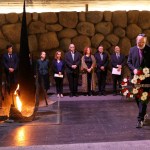
For the past 20 years, Pileggi has led annual tours to Poland for Christians—including seminary professors and pastors—to learn about Jewish history, the Holocaust, and Jewish–Christian relations. Poland’s Jewish community was one of the largest in the world before the Nazis murdered 90 percent of the country’s Jewish inhabitants. 

He is concerned that the memory of the 6 million Jews who perished during the Holocaust has begun to fade.

“One of the most-often-repeated commandments in the Bible that God tells his people is to remember,” Pileggi said. For much of its history, Christendom fostered hostility toward Jews that included forced expulsions and periodic violence.

Pileggi encourages Christians to counter antisemitism by first addressing conspiracy theories and false narratives about Judaism circulating in the church—including those spread online by prominent conservative commentators like Candace Owens and Tucker Carlson.

Among the claims circulating online are that Judaism is inherently racist (despite the historic inclusion of converts such as Ruth and the multiethnic diversity of Jewish communities today); that the church is the new Israel, so God’s dealings with the Jewish people are no longer relevant (despite the ongoing significance of the Jewish people in Romans 9–11 as well as the inherent worth of all individuals); and that the Jewish people were responsible for the death of Jesus (a charge that most Christian traditions reject, pointing instead to the teaching in Acts 2:23 that Christ was crucified according to “God’s deliberate plan and foreknowledge” even as specific individuals bore responsibility).

“They are distorting the message of Scripture and distorting the character of God,” Pileggi said. “All of this is very dangerous for us as a community and for our spiritual health and the witness we want to present to the world.”

Pileggi said Christians play an important role amid rising antisemitism, including by learning from history so we don’t repeat mistakes and by not being bystanders. Taking a stand against antisemitism, he noted, does not require withdrawing support for Palestinians.

Seban—who is director of European affairs for CAM—shares a similar perspective. She has expressed support for an eventual Palestinian state but said she continues to face harassment. She added that Jewish university students across France frequently contact her to report antisemitic incidents. 

Seban, who has Algerian and Moroccan heritage, believes anti-Zionism is the latest form of antisemitism. “You can definitely criticize the political choices, the military choices, that are made by Bibi Netanyahu,” she said, referring to the Israeli prime minister’s nickname. “But when you deny the right of the people to have their own state, this is antisemitism.”

CAM’s researchers concluded that the far left and Islamists, often under the “free Palestine” movement, were responsible for more than 80 percent of global antisemitic incidents in 2025, with the far left accounting for the largest share—nearly 63 percent.

At the Malta summit, Seban shared her ideas for countering antisemitism in France. In addition to advocating politically for religious tolerance, she plans to launch boot camps for teens that break down stereotypes about Jews—as well as Muslims and Christians.

Meanwhile, Soraya Deen, an American Muslim attorney and member of the International Religious Freedom Roundtable in Washington, DC, has drafted a proposal to build a cohort of 20 Arab Israeli women willing to share their life experiences on social media and television platforms.

The idea emerged from a recent conversation Deen had with an Arab Israeli woman who expressed gratitude for her Israeli citizenship and the opportunities her country has provided for her community. Together, they hope to identify those among Israel’s 2 million Arab citizens—20 percent of the population—“who will really speak out, stand up for Israel, and call out antisemitism and speak specifically to the Arab world,” Deen told CT.

Taber said her Jewish friends have taught her the importance of working together to protect religious freedom. “We cannot have a religiously free society if you only defend your own rights to religious freedom,” she said. “You must also defend the rights of your neighbor, especially Jews, who have been persecuted historically.”

Culture

Jonathan McReynolds Fuses Gospel Music with ’80s Pop in ‘Closer’

A conversation with the Grammy-winning artist about fame, intimacy with God, and the music of the neon decade.

Jonathan McReynolds performs during 2025 Praise In The Park on October 4, 2025 in South Fulton, Georgia.

Jonathan McReynolds performs during 2025 Praise In The Park on October 4, 2025 in South Fulton, Georgia.

Christianity Today March 26, 2026
Paras Griffin / Contributor / Getty / Edits by CT

Jonathan McReynolds was born three months before the end of the 1980s. Nonetheless, that decade provides the sonic inspiration for his new album, Closer (Live in Chicago). The first track, “Echo,” sounds thoroughly contemporary, with a pulsing, guitar-driven groove that builds through added instrumental and vocal layers. Those sounds hint at what’s to come—electronic synthesizer interjections and guitar tones that are more Bon Jovi than modern gospel.

By the start of the second track, “About Your Love,” listeners are firmly in the era of Huey Lewis and the News. An infectious opening synth hook, punchy bass licks, and Phil Collins–esque crashing drums show that McReynolds wasn’t just looking for subtle nods to the ’80s. “About Your Love” is a synth-pop earworm that doesn’t feel like pastiche; it’s smart, fresh, and danceable. The title track, “Closer,” a duet featuring Tasha Cobbs Leonard, is an unmistakable homage to the ’80s power ballad, complete with soaring vocal harmonies, bombastic percussion, and lush textures.

The project (releasing on Friday) is a fun, experimental contemporary gospel album that showcases McReynolds’s creativity, instrumental abilities, and vocal power. McReynolds is a two-time Grammy-winning gospel artist who broke out in 2012 with the viral hit “No Gray,” which he recorded in his dorm room as a student at Columbia College in Chicago. He has also won 15 Stellar Awards, four Dove Awards, and in 2023 was named BMI’s gospel songwriter of the year along with Dante Bowe.

Last year, McReynolds published his second book, Before You Climb Any Higher: Valley Wisdom for Mountain Dreams. In it, the 36-year-old musician reflects on his own “mountaintop” experiences and struggles with success, fame, and the desire to live in humbler “valley” places, where identity and security can be separated from accomplishments. Closer explores similar themes; McReynolds sings, “Fly high but keep your feet on the ground, and don’t let the day keep you up at night, if only I took my own advice” on the song “Own Advice,” a low-key piano ballad.

The gospel singer has been thinking a lot about what it means to be a Christian singer in a quickly changing music industry. He recently spoke with CT about his new album, his recent book, and the challenges of being an artist in an era of social media, when fame and popularity feel fleeting, precarious, and unpredictable. The interview has been edited for clarity and length. 

You’re releasing this album after publishing a book about wrestling with your success as a performer and the demands of navigating public and private life. How did working through some of these big questions and inner conflicts shape the album?

I think the book was really about moving closer to God, toward intimacy with God. The book was about learning how to do whatever you do while staying connected to your identity as a son or daughter of God, down in the valley. I get to go up on these mountains, write songs, take some pictures, sign some autographs, do a great concert. But can I come down from that quickly? Can I get back down to that humble place where it doesn’t matter what I’ve accomplished and rest in being God’s workmanship, having that unearned title of “son”?

I started to wonder if I could stay in “son mode,” even if I’m doing all of these public things. I think there are better ways of doing this. There are better ways of centering and getting still. This whole season, the writing of the book and the creation of the album, is about getting closer to God and making that closeness part of my identity.

In your book, you’re uniquely frank about some of the absurdity of being a Christian performer or celebrity. You describe getting ready for a photo shoot and picking outfits to craft an image. Some Christian performers prefer not to talk about that at all or pretend they don’t have to do it. How do you navigate that tension now, as your profile in the music industry is growing and you’re on bigger stages?

I think we have to stop with the Christianizing of everything. American Christianity has become “show-me Christianity.” It’s like we have this idea that Christianity is something to be demonstrated. It has to be something that we can all see. It’s something that we’ll all feel because you’ll be wearing the same thing I’m wearing and I’ll be concerned about the same thing you’re concerned about and we’ll see this whole world the same way.

So when you become a leader or a spokesman or some heralded figure, you feel like you have to embody all of those codes of unity and uniformity and sameness. But there’s so much extra stuff that gets folded in that none of us really has the capacity to police all the time. For our souls’ sake, we have to cut down on some of the fakeness and disconnection it can encourage.

I don’t like the idea that I’m a celebrity, but there’s the marquee, and it’s got my name on it. There are parts of this that I absolutely don’t like. But I have to come to all of it with my authenticity. This is what we are doing, this is what comes with being an artist and being excellent in a particular industry. So I’ve just had to barrel roll through that tension. I can’t ignore it.

You mention in your book that, as you’ve worked with successful artists in the music industry, it’s been unsettling to see that so many people at the height of their careers are deeply unhappy. You also say that the number of people who are both successful and admirable in terms of character seem so small. What have you learned from the people who seem to be navigating the industry well?

You have to fight to keep finding yourself underneath the rubble of praise and criticism. You have to keep finding yourself under that mask. Because the truth is, I have to get on stage and I don’t always feel like it. It doesn’t matter how we feel. So we all learn to put on a mask and cope as performers. That’s why I talk so much about coming down off that mountain at the end of the day. I have to come down and ask, “Now where am I? Who am I? I performed, everybody’s happy, but where am I?”

I have to be chasing that person under there and making sure he’s okay. Paul told Timothy, “Watch your life and doctrine closely” (1 Tim. 4:16). Watch it. Don’t just watch the ministry part of it. Don’t watch your impact and the fruit that you seem to be bearing all over. No, look at you. Watch your life.

Your new album explores a lot of these big themes we’ve been talking about—closeness and intimacy with God, finding ways to bridge distance with God when you feel like you’re drifting—but tell me more about the musical influences. As I was listening, I was struck by the homage to ’80s pop and rock. What were you listening to and experimenting with as you put this music together?

I only caught a few months in the ’80s, but I woke up one day and just wanted to listen to the music of that decade. I didn’t grow up with this music; it’s not like I’ve always had a deep reverence for the ’80s prior to this, but I think that as musicians and artists, we’re allowed to just go off and study and listen.

So I’m listening to the music, looking at the outfits, seeing some of the energy and the risks they were taking back then. Looking at it from this moment, it seems like things were a little less formulaic. Like, they didn’t know exactly what worked. By the 2000s we had boy bands and some pop industry formulas down pat. But when I look at what was going on in the ’80s, it seems like they were just trying things: “Let’s just wear this, let’s try this instrument I just built in my garage, let’s start a song with a three-minute-long solo.”

I appreciate that freedom. I’ve always done records where some of my music is worship, some of it is more singer-songwriter, some of it is gospel or an homage to an old choir song. But the way I wanted to hold this album together was with the ’80s. The ’80s is the glue.

You also teach and get to talk about music with college students, which I imagine gives you a unique perspective as an artist. What do you think young people are looking for in new Christian music right now?

Christian music used to have a couple of feeders—we were all in church, there was TBN, Christian radio—if I could get on one of those outlets, I could make it. Now, we’re all everywhere. It’s scattered, and there are sincere, zealous Christians who will never come into contact with any of our old feeders. Everyone used to know Hillsong, but even that world is fading. There is a huge, diverse Christian music world out there that has nothing to do with TBN or BET.

Now, that rapper you’ve never heard of has 2 million followers who like how he talks about God. And somewhere on your block, there is probably a teenager who has way more influence than her parents would ever know. Gen Z’s watching and quietly putting out music from their cellphones. That’s the world we’re living in now.

What’s required now is to just be authentic and creative. That’s it. You’re going to resonate with who you’re going to resonate with.

Theology

Every Head Bowed, Every Eye Closed

Contributor

Is the way we talk to God for our comfort or for his glory?

A person praying in church.
Christianity Today March 26, 2026
Mats Silvan / Getty / Edits by CT

When I was in college, my grandparents showed me a room in their house they called their prayer room. It had a big Bible in it along with a padded kneeler so they could pray on their aging knees without too much discomfort. I remember thinking it odd that they chose to pray in such an inconvenient posture. Raised evangelical, I associated daily prayer with my big comfy chair and a cup of coffee.

I’ve since realized that all my years of praying in ways that suited me grew my faith in a therapeutic direction. My devotion to God was at least partially a devotion to myself and my comfort. I now believe that kneeling—and other less convenient approaches to prayer—are not only appropriate but also important. They teach us something essential about the one to whom we pray and the ways in which we are called to relate to him. Prayer is not only about intimacy. It is also about reverence.

In theological terms, the gospel shows us a God who is both transcendent and accessible: “In the beginning was the Word, and the Word was with God, and the Word was God. … The Word became flesh and made his dwelling among us” (John 1:1, 14). The Protestant tradition has always championed God’s accessibility.

The early Reformers and their forebears took great risks to translate the Bible and the church’s liturgy into familiar languages so people could hear and speak to God in words they understood. God has come near to us—so near that we can hear him in what missionaries call a person’s “heart language.” In his humility, we encounter a God who has become like us so we can know him.

However, God’s desire to be accessible does not change the fact that he is still God. He remains transcendent: holy and wholly other than creation. We “approach God’s throne of grace with confidence” (Heb. 4:16), but it remains a throne. In emphasizing God’s nearness, many Protestant evangelicals have lost sight of God’s transcendence. We have lost our sense of reverence.

Without reverence for God as one worthy of our worship—however inconvenient that worship may be—we also lose our sense of awe at his willingness to condescend and draw near. The gospel is a scandal precisely because a holy God has chosen to dwell among us. And our fellowship with him will never cancel our reverence for him. Even after he wipes every tear from our eyes, we’ll still be servants who worship around his throne (Rev. 21:4; 22:3).

Historically, an emphasis on God’s nearness and accessibility was a needed corrective in a time when Christian devotion was often characterized by fear and guilt (see, for example, A History of the Church in England by J.R.H. Moorman). Christians of all traditions have benefited from a greater appreciation for the intimacy on offer to us in the gospel of grace. But today, in a culture increasingly defined by casual, self-made meaning and therapeutic pragmatism, reverence for a transcendent God is a needed corrective.

As a millennial raised in the church, I know Jesus is my friend. What I sometimes forget is that he is also my Lord. Recovering some of the practices of historic Christian devotion like kneeling for prayer, sitting in silence, and even fasting have helped me with that.

Embracing reverence as a vital aspect of our faith forms us as disciples of a holy God. But it also has missional value. In many parts of the world, converts from other religions expect worship to look like deference and honor. I recently heard the head of a missions agency explain that his own spiritual life changed when Muslim-background believers told him they wanted to pray in ways that visibly acknowledged God’s holiness. “When they came to Christian faith,” the missions leader said, “I led them in worship the way I’d grown up doing it in my house church—slumped on a couch. They felt this fell short of reverence to an almighty God.”

Something similar is happening even in the West. Though the data isn’t statistically clear, the amount of conversation happening about younger generations’ interest in liturgical church traditions—where worshipers practice silence, confession, bowing, fasting, and other disciplines—indicates that people are growing hungry for transcendence. In a world saturated with celebrity and self-fulfillment, we want to kneel before the mystery.

This mystery, of course, does not belong to only one church tradition or denomination. All Christians worship the holy God who came near. And practicing reverence can take many forms, some of which are culturally conditioned and not biblically commanded. In the South where I grew up, even nonchurchgoing men would customarily remove their hats before a prayer. This take on 1 Corinthians 11 is somewhat antiquated, yet it taught a generation that prayer is special. How are we conveying that today? How can I teach my young children to feel comfortable talking to God but also to practice reverence in conversation with him? These are important questions because the way we pray both reflects and shapes what we believe.

But they are questions that families, congregations, and church leaders can explore with curiosity, not condemnation. The gospel affords us the opportunity to keep learning and growing in our devotion to the transcendent yet accessible God. Thankfully, we have centuries of Christian history to help us learn. What began for me as an oddity introduced by my grandfather—a Baptist layman who knelt to pray—continued as a journey of discovering the riches of ancient church practices that have deepened and strengthened my prayer life.

The intuition of our bodies can also help us. What many of these ancient prayer practices teach us is that body language matters and is intuitive. Even if someone doesn’t use a kneeler or recite liturgical prayers, he or she can imagine Jesus in the room and wonder which posture would befit his presence.

My 4-year-old could probably follow that imaginative exercise. At church, she sees the adults kneel and stand and raise their hands. Sometimes she joins us. She also comes forward for a blessing at Communion and often hugs the pastor (her dad) instead. For me, this is a picture of Christian devotion: bowing the knee and receiving a hug. We need both postures to understand the whole story.

Hannah Miller King is the associate rector at The Vine Anglican Church in Western North Carolina and the author of Feasting on Hope: How God Sets a Table in the Wilderness.

addApple PodcastsDown ArrowDown ArrowDown Arrowarrow_left_altLeft ArrowLeft ArrowRight ArrowRight ArrowRight Arrowarrow_up_altUp ArrowUp ArrowAvailable at Amazoncaret-downCloseCloseellipseEmailEmailExpandExpandExternalExternalFacebookfacebook-squarefolderGiftGiftGooglegoogleGoogle KeephamburgerInstagraminstagram-squareLinkLinklinkedin-squareListenListenListenChristianity TodayCT Creative Studio Logologo_orgMegaphoneMenuMenupausePinterestPlayPlayPocketPodcastprintremoveRSSRSSSaveSavesaveSearchSearchsearchSpotifyStitcherTelegramTable of ContentsTable of Contentstwitter-squareWhatsAppXYouTubeYouTube