News

Washington Attack Suspect Sought to Justify Himself to Christians

In writings, Cole Tomas Allen thanked his church and argued that his attempt to assassinate Trump administration officials was compatible with his faith.

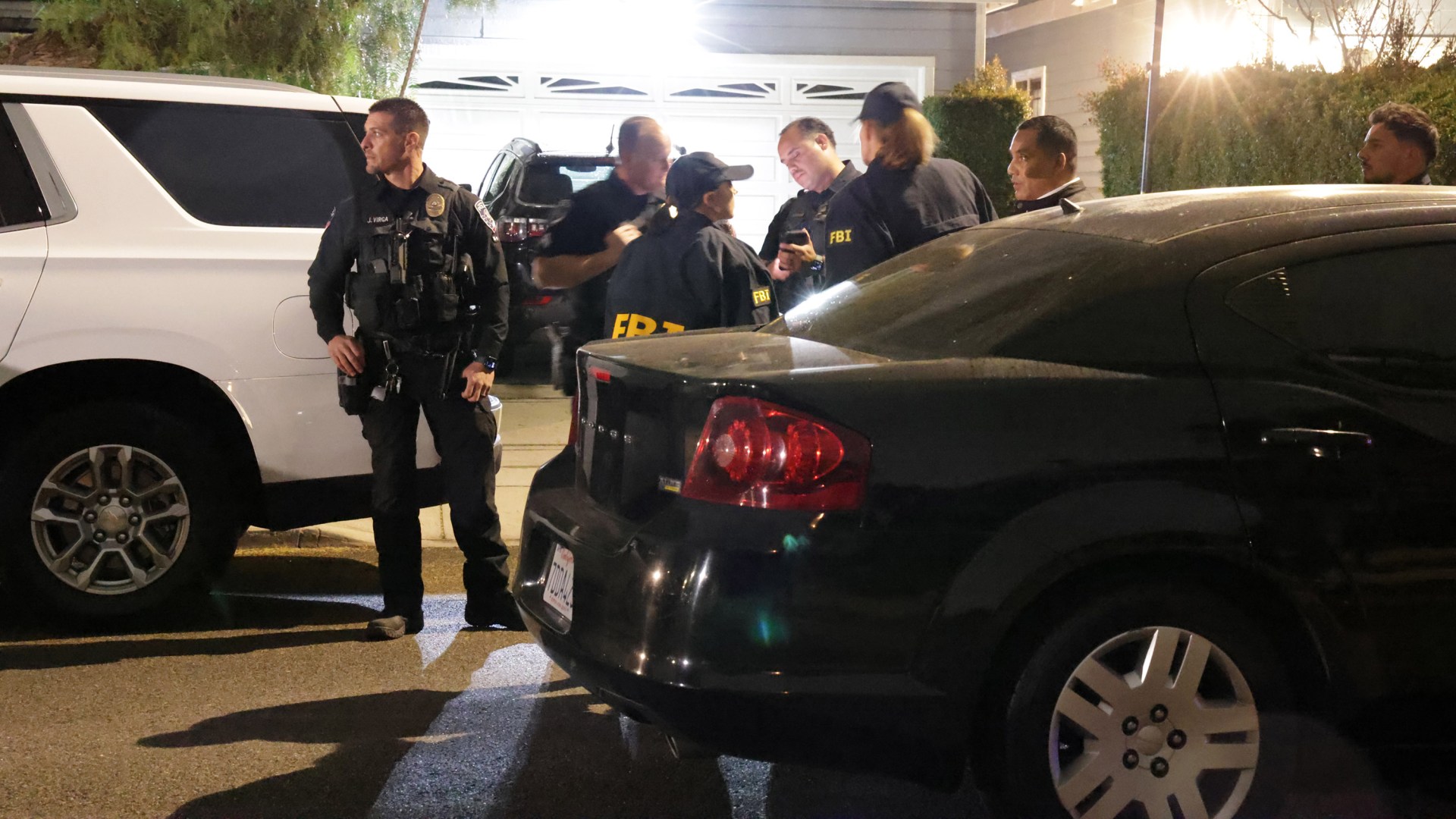
FBI at Cole Tomas Allen home

FBI on the street of the Torrance, California house connected to Cole Tomas Allen.

Christianity Today April 27, 2026
Robbin Goddard / Los Angeles Times via Getty Images

Moments before he allegedly targeted members of the Trump administration at the White House correspondents’ dinner Saturday, the suspected gunman wrote to family members and suggested his violence was an act of faith to defend the oppressed.

Authorities have linked the writings to 31-year-old Cole Tomas Allen, a highly educated California man who was a part-time teacher and amateur video game developer. The document, which he sent just minutes before attempting to reach a ballroom at the Washington Hilton with several firearms and knives, read at times like a suicide note.

In the document, Allen called himself the “Friendly Federal Assassin” and included a list of targets in the Trump administration, without explicitly naming President Donald Trump. Allen aired a litany of complaints about the administration. Among them he listed and responded to hypothetical objections that could come from Christians.

While some media have reported that the manifesto contained “anti-Christian” content, Allen appeared to identify himself with the faith.

“Objection 1,” he wrote, “as a Christian, you should turn the other cheek.”

“Turning the other cheek is for when you yourself are oppressed,” he wrote. “Turning the other cheek when *someone else* is oppressed is not Christian behavior; it is complicity in the oppressor’s crimes.”

Another objection appeared to reference Matthew 22:21: “Yield unto Caesar what is Caesar’s,” Cole wrote. But if political representatives don’t “follow the law,” he wrote, “no one is required to yield them anything so unlawfully ordered.”

Allen’s father, Thomas Allen, was listed as an elder at Grace United Reformed Church (Grace URC) in Torrance, an evangelical congregation that describes itself as preaching “a gospel that is Christ-centered, covenantal and confessional.” The church’s leadership page and social media pages have since been pulled down, and the church did not respond to a request for comment.

The church is less than a mile from the home where Allen lived with his parents. On Sunday, security guards escorted church members inside for worship while keeping reporters out.

It’s unclear if Allen was attending Grace URC at the time of the attack, but in his writing he thanked his “family, both personal and church, for your love over these 31 years.”

On his LinkedIn profile, Allen listed an association with Caltech Christian Fellowship during his time studying at California Institute of Technology, an elite university in Pasadena where he graduated in 2017. According to The Wall Street Journal, he coordinated a group that met for Bible study, prayer, food, and fellowship.

Members of Caltech Christian Fellowship recalled Allen as quiet and committed to his faith. “He was definitely a strong believer in evangelical Christianity at the time that I knew him,” Elizabeth Terlinden told The New York Times.

Caltech Christian Fellowship did not respond to a request for comment.

Last week, Cole traveled by train from California to Washington, DC, checking in as a guest at the Washington Hilton hotel with weapons including a shotgun, a handgun, and knives. According to his document, he lied to his family about where he would be, saying he had an interview.

On Saturday around 8:30 p.m., shortly after the White House press gala got underway, security rushed Trump offstage after shots were heard outside the hotel’s International Ballroom. He, along with First Lady Melania Trump and cabinet members, was present for the annual gala, where members of the media mingled with administration officials. Allen, who appeared to be acting solo, had rushed a Secret Service checkpoint on the hotel’s ground floor before being arrested.

There were no fatalities from the incident. One law enforcement official was wounded; a Secret Service officer who was shot in the chest was wearing a bulletproof vest. He has since been released from the hospital.

It was the first time Trump attended the annual press event as president.

“He never even came close to getting by the doors or through the doors,” Trump told Fox News Sunday. “Law enforcement was great … and I’d be the first to complain if they weren’t.”

Despite Cole’s statements of affection for his church family, Trump characterized the suspect as someone who was motivated by hatred toward Christians.

“The guy is a sick guy when you read his manifesto,” Trump said. “He hates Christians, that’s one thing for sure. He hates Christians. … He was a very troubled guy.”

This is the latest high-profile assassination attempt Trump has faced in recent years. The most serious occurred at a Butler, Pennsylvania, campaign rally on July 13, 2024, during the presidential campaign. A rally attendee and the would-be assassin both died. Trump sustained an injury to his right ear. Another attempt occurred on September 15, 2024, when security detained a man with a rifle in the bushes at the Trump International Golf Club in West Palm Beach, Florida, while Trump was golfing.

This is also the second time an attempted presidential assassination has happened on the grounds of the Washington Hilton. On March 30, 1981, John Hinckley Jr. fired six shots, wounding then-president Ronald Reagan and several others. Reagan underwent emergency surgery for a punctured lung and broken rib but recovered. Hinckley was found not guilty of charges of attempting to assassinate the president by reason of insanity.

In remarks at the White House after Saturday’s event, Trump asked Americans to “recommit with their hearts in resolving our difference peacefully.”

The Justice Department charged Allen Monday with attempting to assassinate the president and with two firearms charges. He did not enter a plea.


Church Life

You Don’t Graduate from Discernment

As you seek your vocation with diploma in hand, the way of the Cross must still shape your days.

A glowing path toward a cross.
Christianity Today April 27, 2026
Illustration by Sara Tran

I still remember what it was like, as a senior in college, to hear the dreaded question: “What’s next?” Plenty of my friends had good answers. I didn’t. I was sure I was going to marry my college sweetheart (she in fact said yes). I knew I wanted to study certain subjects. I knew I needed to earn enough money to live and make my student loan payments. When the question came from well-meaning professors, friends, and future in-laws, I fumbled for an answer, trying not to visibly panic.

Since then, I’ve learned my story isn’t unique: Many soon-to-be-graduates don’t know what’s next. Many feel something must have gone wrong. After four years of study and formation, we think, wasn’t I meant to have my whole life mapped out and immediately use my degree to provide financially and make a meaningful difference in the world? Why am I about to walk across the stage without my vocation figured out?

That word vocation is at the heart of graduation-season anxiety. Many worry that if they don’t launch straightaway into a meaningful career, they’re missing their vocation. But this has very little to do with a biblical understanding of vocation.

If you want your post-college “bridge years” to be fruitful and not just anxiety-ridden, or if you’re walking alongside a recent graduate, we need to return to what Scripture teaches about vocation. Here are five things graduates can hold onto in this season:

1. Your vocation is not unique to you.

Vocation comes from the Greek vocare, “to be called.” The apostle Paul really liked this word, addressing believers in Rome and in Corinth as “called ones,” or “invited ones” (Rom. 1:7; 1 Cor. 1:2). In Paul’s letters, vocation is tied to being called by God: We’ve been called to participate in God’s kingdom plan of redemption through Christ. And crucially, in all of this, Paul is addressing churches, not individuals. The most important aspects of your vocation, your calling, are common to all Christians. Put another way, while God’s call is personal, it is never individual. It is a call to be part of a people.

2. Your vocation is not primarily (or even secondarily) about your career.

We live, as philosopher Josef Pieper put it, in a world of “total work.” Writing in Europe as it sought to rebuild after World War II, Pieper argued that the modern world makes work our identity: Work spreads “to cover and include the whole of human activity and even of human life.” In other words, we are what we achieve and produce. If Pieper’s diagnosis is right, no wonder that when we speak about vocation, we’re usually talking about our career.

To be sure, work is part of being human. Working hard, earning a wage, and being productive are all good things. The problem is that vocation and occupation aren’t interchangeable. Instead, the Bible makes clear that our vocation, God’s call on our lives, is fundamental. Christ calls us, just as he called his disciples, saying, “Come, follow me” (Matt. 4:19).

Following Christ has implications for every aspect of life, and responding to God’s call should make a difference in why and how (and perhaps even in what field) one works. But a career is likely not even secondary to a person’s vocation. Likely, paid work is less central to following God’s call than things like loving your family, caring for your neighbor, serving others, and perhaps even pursuing hobbies or unpaid work. These may be more essential to your vocation.

3. Your vocation is not a secret plan for your life that God will only reveal if you crack the code.

When I listen to students talk about vocation, it sometimes sounds like they’re trying to solve a riddle or decode a secret message. It’s as if God designed them for one specific career path but refuses to give them the map. We’ve already challenged this notion by remembering that vocation is primarily corporate. But it’s also not a riddle or a secret. It’s something clearly laid out for you.

Listen to some things Paul makes quite clear: Your calling doesn’t have anything to do with your abilities (1 Cor. 1:18–31); your calling is something bestowed on you by God (Rom. 11); your calling is eschatologically oriented toward your final hope (Eph. 13–14); your calling is about holiness (2 Tim. 1:9); and God is making you worthy of your calling (2 Thess. 1:11). Notice how many of these come from the opening lines of Paul’s epistles. There’s nothing hidden here. Paul wants you to get it, so he says it right up front.

What’s hard about vocation is not that we have to guess what it is. What’s hard is obeying. As Dietrich Bonhoeffer put it, “When Christ calls a man, he bids him come and die.” Our vocation is to follow Christ to the Cross.

4. Your vocation is not something you figure out between the ages of 20 and 23 and then coast on for the rest of your life.

If the heart of your vocation is clear—it’s the way of the Cross—you still need to discern what to do with your days. This discernment isn’t something you’ll finish this year, or next. You won’t figure out your vocation at age 25 and be done with it.

One reason is practical: Life won’t go the way you expect. If you’re graduating in 2026, you’ll change jobs on average every 3.2 years. Your generation moves around more, buys a first home later, and marries both less and older. Your life will be more fluid and less permanent than that of your predecessors. That might excite you or make you anxious or both. Regardless, it means you’ll never be done asking, How should I follow Christ?

You don’t graduate from vocational discernment, because the Christian life requires ongoing repentance. We need moments in our days and in the church year (like the season of Lent) when we pause to remember our mortality, to take a long, hard look at our sin and to ask, once again, “How can I turn back to you, Lord? From what do I need to turn away?”

Because life holds many twists and turns, and because we’re never done repenting, discernment isn’t something from which we move on.

5. Your vocation is as much about the present as it is about the future.

Finally, it’s tempting to think of vocational discernment as figuring out something that happens in the future, about making plans or large life choices. There’s nothing wrong with making a plan, but planning can easily distract us from the present. Worse still, our planning can be spiritually dangerous when it makes us feel like we’re in control of lives. To those of us addicted to planning, Christ asks: “Can any one of you by worrying add a single hour to your life?” (Matt. 6:27).

Discernment is less about the future and more about what God is doing right now. As theologian Gordon Smith puts it, “To discern well we must pay attention: we need to observe and listen, noting what is happening around us and within us and attending to what others are saying.” In other words, discernment requires noticing what God is doing and seeking to participate in his work. We can only hear Christ’s call when he speaks to us—here and now. One way to avoid answering Christ is to obsess over the future, to fixate on our plans, dreams, and anxieties.

If you’re coming up on graduation, you’ve likely been in a season of life that’s all about discerning your vocation. Whether or not you have plans lined up or are still wondering what to do, it’s a weighty time.

Thankfully, your vocation doesn’t hinge on what comes right after graduation. The most important aspects of your calling have already been given to you. Your vocation is not defined by what you’ll go on to achieve. Instead, you’ve been invited to belong to God’s people, to hear and respond to Christ’s call to follow him to the Cross. And the work of discerning how to follow this call isn’t something you’ll wrap up by May. And for someone who keeps getting the “What’s next?” question, this is very good news.

Paul Gutacker serves as the executive director of Brazos Fellows, a post-college program in Waco, Texas, that invites emerging adults to commit to a common rule of life. He is the author of Practicing Life Together: A Common Rule for Christian Growth.

News

Australia’s Teen Social Media Ban Isn’t Perfect. But It’s Helping Analog Families.

Teens have workarounds to get on the apps, but parents have it easier delaying children’s introduction to social networks.

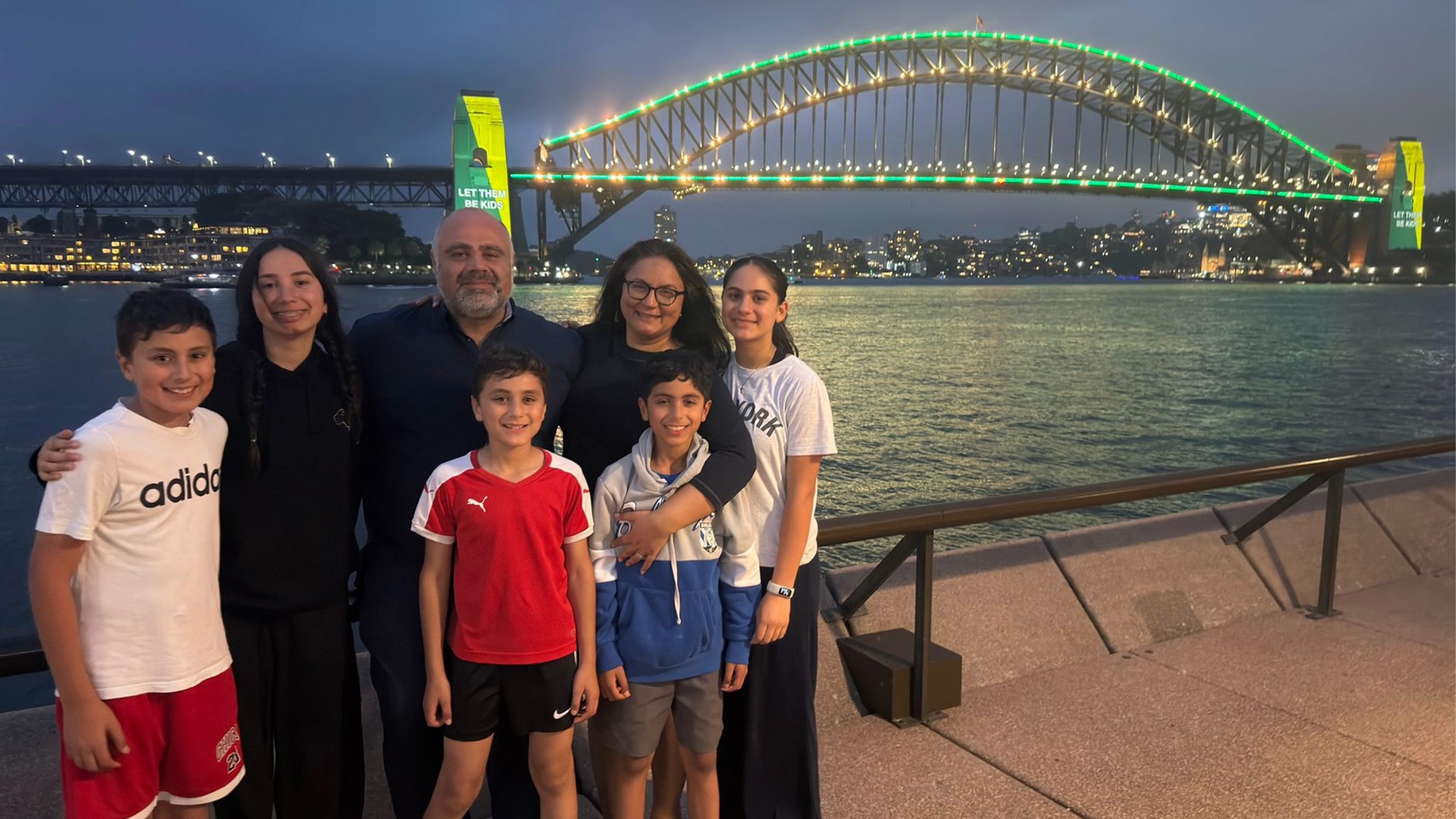
The Elachi family at the Sydney Harbour Bridge on December 10, 2025, the day of the social media ban. The sign on the bridge behind them reads, “Let Them Be Kids.”

The Elachi family at the Sydney Harbour Bridge on December 10, 2025, the day of the social media ban. The sign behind them reads, “Let Them Be Kids.”

Christianity Today April 27, 2026
Image courtesy of Dany Elachi.

Dany Elachi recently drove to his local bike repair shop in Sydney, Australia, hoping for a quick fix. At Christmas, he and his wife, Cynthia, gave bikes to the three youngest of their five children—boys aged 9, 11, and 13—and they’ve had a hard time keeping them off them ever since.

The boys often head down to the local park with neighbors and friends to practice jumps and skids. Last month, Elachi’s 11-year-old borrowed his older brother’s sea green 26-inch bike and fell off, damaging the derailleur. By mid-April, Elachi had to haul all three bikes to the repair shop.

“Tell your boys if they want to skid, they should only do that on grass, otherwise the tires will wear out too fast. And these bikes aren’t really made for jumps,” the bike mechanic told Elachi before handing him the $150 bill.

The cost of the bikes and their repairs is a small price to pay as the Elachis seek to keep their kids active and outdoors instead of in their rooms glued to screens. They are one of a growing number of families in Australia that don’t allow their children to have smartphones or social media as the country implements the world’s first social media ban for anyone under 16.

It’s a decision they made based on experience: In 2020, the Elachis gave their eldest daughter, Aalia, then 10 years old, a smartphone, since every other student in her class had one. It didn’t take long for them to see its negative effects. She stopped reading books, even though she’d been an avid reader. She played less with her siblings. Her parents had to frequently urge her to leave her room and help with chores.

“It overwhelmed and overtook her childhood,” Elachi said. Within a few months, the phone malfunctioned and they decided to not replace it.

But that meant she was left out of plans, conversations, and social connections with her smartphone-using classmates. When the Elachis spoke with other parents at their Catholic school, they discovered that they weren’t alone in their concerns. “Everybody felt like they had to give their kids a phone, but they really didn’t want to,” he said.

That’s when the Elachis formed an alliance with 45 families at their school—representing 10 percent of the student population—who all agreed not give their children smartphones. Aalia was no longer the odd one out, and the Elachis weren’t the only “mean parents” at the school.

As news of their alliance spread to parents at other schools, Elachi and his wife founded the Heads Up Alliance later that year. In 2022 and 2023, the organization successfully lobbied to make Sydney Catholic schools and New South Wales public schools phone free from 9 a.m. to 3 p.m.

Elachi’s group also successfully advocated for a nationwide ban on social media for anyone under age 16. That ban went into effect on December 10, just two weeks before the Elachi boys got their new bikes for Christmas. Facebook, Instagram, Kick, Reddit, Snapchat, Threads, TikTok, Twitch, X, and YouTube are included in the new restrictions, and the eSafety Commissioner’s office said it may include more.

Australia’s ban comes as governments around the world are reckoning with the consequences of social media use on children and teens. In the US last month, a California jury found Meta and Google, which owns YouTube, responsible for a young user’s anxiety and depression due to addictive design features, such as infinite scroll and algorithm-based recommendations. The landmark decision set a precedent that social media can cause personal injury, which will likely factor into many similar cases against the tech giants.

Meanwhile in March, Indonesia became the second country to ban social media for those under 16. Countries like France, Spain, Malaysia, and Denmark are considering similar policies in hopes to protect children from their potential harm.

Critics are calling the Australia ban a failure as young people find workarounds and social media companies haven’t kicked all users under 16 off their platforms. Regulators have said they are investigating whether some of the biggest platforms are fully complying with the law. Tech companies, meanwhile, have indicated it’s challenging to prevent minors from bypassing age-verification checks. 

Despite these challenges, Elachi and other Australian parents are grateful that its passage has helped publicize the dangers of social media and normalize a childhood that doesn’t revolve around screens.

The Popping family in Geelong, a port city southwest of Melbourne, agrees. When Darci Popping was in third grade, her mother Katherine and other parents at her school made an informal alliance to not give their children phones. But one by one, each parent gave in, until at age 13, Darci said she was the only one in her class without a smartphone. She could only email classmates on her iPad, which her parents allowed as they reasoned it was too big and clunky to enable constant access.

The Poppings let their children have an iPad at age 13 and a phone at age 15. Before the ban, Katherine Popping said her children felt like they were missing out on not being on social media, which they were toying with allowing at age 16. Now that the ban is in effect, it’s more socially acceptable to not have social media, “and it’s not us that are being the rule makers,” she said.

Darci said that in the past she knew social media was addictive and harmful but still felt annoyed at not having something others had. Now that she’s 16 and has a smartphone, she mainly uses it to take photos and use WhatsApp, which is unaffected by the social media ban.

Darci and her 14-year-old brother Fletcher say only one person in their youth group of two dozen kids uses social media, so it’s not a topic leaders go into much detail about. Fletcher remembers a series on “big topics” at a meeting that touched on social media and body image when they discussed Philippians 4:8: “​​Finally, brothers and sisters, whatever is true, whatever is noble, whatever is right, whatever is pure, whatever is lovely, whatever is admirable—if anything is excellent or praiseworthy—think about such things.”

Fletcher said a friend from youth group doesn’t want anything to do with smartphones as he worries that cookies and algorithms will know too much about him and invade his privacy.

Personally, Fletcher is looking forward to getting his first smartphone next year since his friends all have them and communicate on apps that he doesn’t have on his iPad. Plus, he says, he’ll have an actual phone number and data, allowing him to call his parents to pick him up from theater practice without walking to the train station to use free public Wi-Fi.

At their Christian school, Covenant College, they’ve heard administrators give strong injunctions to stay away from social media, even while admitting it’s a decision between parents and their children. But Darci says her friends’ parents don’t always explain the reasoning behind their rules, so kids often rebel.

Just before the social media ban went into effect, Darci and Fletcher said they heard of kids creating new accounts with fake birthdays. Many were concerned about losing access to constant music on YouTube.

“They were concerned that without having something to do, they’d get really bored,” Darci said. “They’re like, ‘How am I supposed to keep my 300-day streak if I can’t go on social media?’”

Since the ban, Fletcher says he knows of people who asked older siblings to create an account for them, since some platforms now incorporate biometric scans to ensure the person in front of the camera is over 16.

Some see these biometric scans as a problem. Reuben Kirkham, one of the directors of Australia’s Free Speech Union, says they discriminate against Indigenous people and people with disabilities, facial disfigurements, or mobility issues whose faces or physical abilities make matching a profile impossible.

The union sees the ban as an unnecessary intrusion into people’s privacy and believes it will have a chilling effect on anonymous speech. “If everyone is subject to digital ID in the form of age verification,” Kirkham said, “the social media platforms won’t be anonymous. It will be easier to be sued for defamation.”

Kirkham says there are less invasive and more effective ways to protect children from social media harms, like employing artificial intelligence to scan and block problematic images or videos on devices.

While the ban requires platforms to close the accounts of underage users, none of the families CT spoke with knew anyone who had been kicked off a social media platform. In fact, of 900 parents surveyed, 70 percent said their children, who are between 8 and 15, were still accessing social media.

Elachi believes that while the law hasn’t changed the big tech companies’ practices, its presence still has a positive effect. Parents with younger children are now more confident in delaying their children’s entrance into the world of scrolling, posting curated photos, and staring at their screens.

“Those children are in a different boat compared to kids who are currently 13 or 14, who already had social media for a few years and then felt like something was being taken away from them,” he said.

Elachi says the law is pro-parent, allowing parents to “reclaim their children, to build a relationship with them that perhaps has been weakening over the last 10 or 15 years.”

A Catholic, Elachi believes the church should do more to warn its congregants of how smartphones distract from more important things. “Very few children are waking up in the morning and thanking their Creator for a new day,” he said. “Very few adults are doing that anymore.” Instead, they reach for the phone to see what messages they missed overnight. “Our children’s spiritual lives are being impacted.”

Elachi isn’t anti-technology. At times he allows his kids to use the computer or play video games, but that time is limited. He can easily tell them that their screen time is up and encourage them to go outside and ride their bikes or read a book. Teachers have noticed the difference in his children and those of the other parents in the alliance, mentioning they are better able to hold a conversation.

Elachi encourages parents to heed their instincts while taking the advice of experts—who failed to admit social media was as addictive as a drug—with a grain of salt.

“In our children’s cases, if they’re addicted, the price they pay is with their entire childhood,” Elachi said as he drove home with three working bikes. “That comes once. And once it’s gone, they’re never getting another chance. This law helps parents stick to their own convictions.”

Correction: A previous version of the article misstated Dany Elachi’s religion. He is Maronite Catholic.

Church Life

The Revival That Wasn’t—and the One That May Be

Young people remain deeply wary of large institutions, but they are undeniably interested in faith.

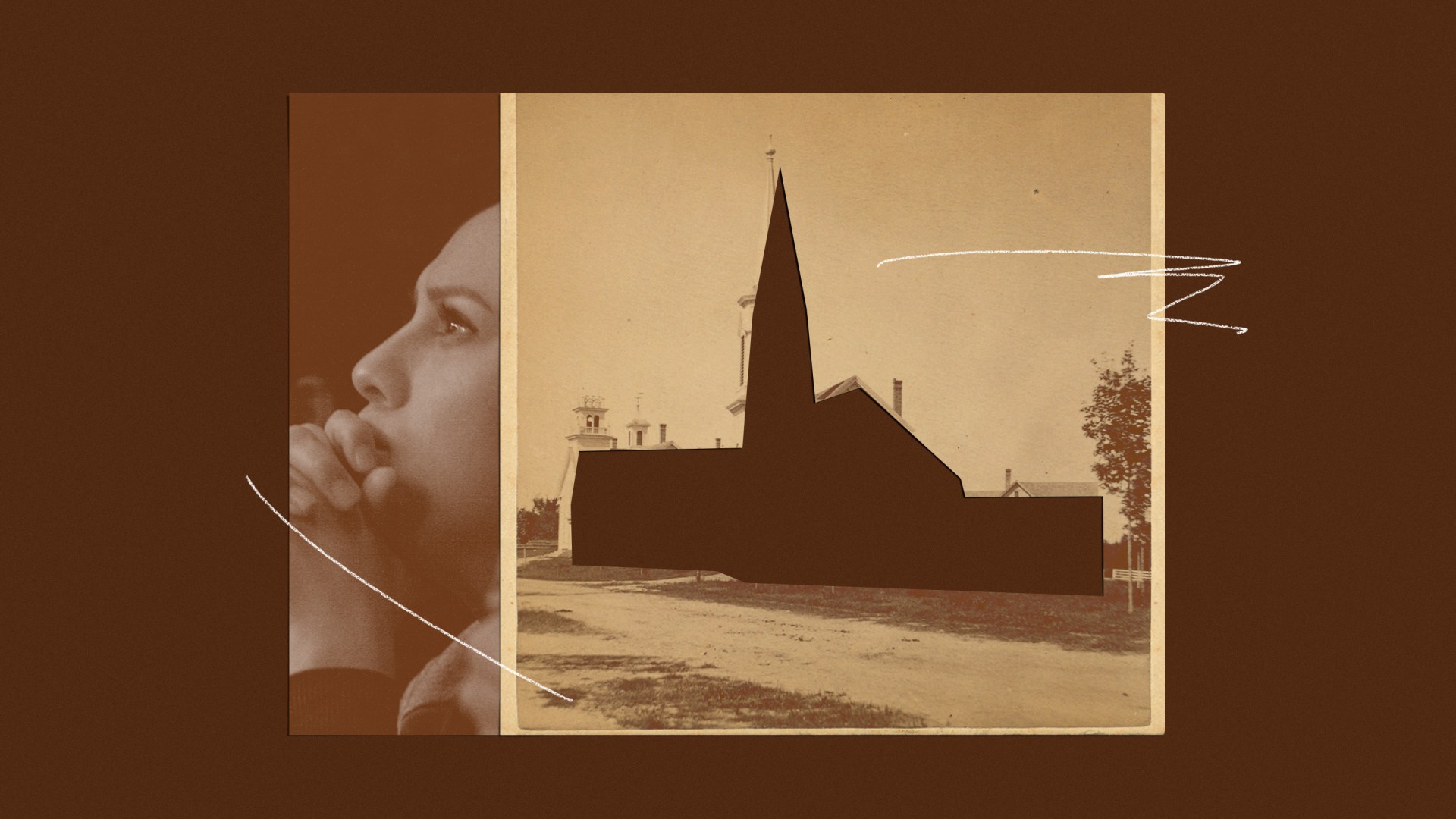
A cut-out church and a person praying.
Christianity Today April 27, 2026
Illustration by Elizabeth Kaye / Source Images: WikiMedia Commons, Unsplash

The recent retraction of a British Bible Society report on a supposed “quiet revival” among young adults felt like a gut punch. While some had long been skeptical of the data, others had understandably been thrilled over the report’s claim that church attendance among 18- to 24-year-olds in England and Wales had quadrupled between 2018 and 2024, from 4 percent to 16 percent. Before the retraction, those findings traveled everywhere: to Parliament, to conferences, to headlines on both sides of the Atlantic. A narrative took hold: Young people were returning to church. 

When the data firm YouGov admitted the numbers were flawed, and the report was pulled, the ensuing disappointment was palpable. The revival in the UK was not real. Just as the hopeful narrative had spread, so did a resurgence of the familiar discouraging story of endless institutional decline. 

For the church in the United States, we want to offer a more complicated account, neither the thrill of the quiet revival nor the dismay of its debunking.

Many US observers had enthusiastically picked up the British study as a lens for looking at trends popping up closer to home. Now we have to ask if our own signs of revival are a mirage as well. We have been watching campus revivalsreports of white Gen Z men showing new interest in church, and a generation that seems more spiritually curious than the one before it. Should we be concerned about how we have been interpreting the data here in the US?

The short answer is no. The signs we continue to see are quite real and remarkably consistent. They’re just consistent with a different story: Young people remain deeply wary of large institutions, but they are undeniably interested in faith and spirituality. The front door of the church has moved.

Sociologist Nancy Ammerman put it best in Sacred Stories, Spiritual Tribes. “In a time of significant change,” she writes, “we cannot assume we will find religion in the predictable places or in the predictable forms. And if we do not find as much of it in those predictable places as we did before, we cannot assume that it is disappearing.” 

That sentence frames the argument of this piece better than any statistic could—but consider what major surveys reveal when you separate belief from belonging. 

If you look only at institutions, the story is undeniably grim. Gallup’s 2025 tracking data puts clear confidence in organized religion at just 36 percent. For young adults, formal religious affiliation continues to slide inmajor polls. This led Pew to conclude recently that traditional survey instruments show no clear evidence of a youth revival in America.

But when you look at spiritual hunger instead of church attendance, the picture changes dramatically. Pew’s massive Religious Landscape Study found that while less than half of young adults identify as Christian, a full 71 percent believe there is something spiritual beyond the natural world. On measures of institutional belonging, the generational gap is large. On these measures of spiritual openness, it’s significantly smaller.

Our own research at Future of Faith confirms this exact tension. We found that a staggering 73 percent of young people become more open to spiritual conversations when someone simply listens to them, yet only 16 percent are willing to trust large organizations. What is shifting is not belief itself but the relationship between belief and the church as an institution.

This is the defining sociological reality of our moment. For previous generations, the institution itself provided credibility. A church building or a pastoral title was often enough to get people through the doors. That era is over. Young people today will not walk into a building simply because it exists.

But this does not mean Generations Z and Alpha are necessarily secular or closed to the gospel. Young people still actively seek meaning, guidance, and truth, but they only accept it from adults and communities who have first demonstrated genuine care for them. Trust must be built interpersonally before it can be transferred institutionally. That is, young people must feel they belong before they can believe. 

As researchers and practitioners who work daily alongside congregations, youth workers, and community leaders at the forefront of this field, we can tell you firsthand that the story on the ground is not that of the retracted report or its aftermath. What we see every day is evidence of renewed spiritual interest and churches that are rising to meet it.

Our own studies suggest that when caring adults give young people the chance to be genuinely heard, the results are striking. Eight in ten respondents in our Sacred Listening research said being listened to shaped their faith more than any other single factor. Teenagers were far more likely to tell us that being heard was important (67%) than to say sermons (33%) were important to their spiritual growth. And seven in ten said they become more open to spiritual conversations after someone has listened to them. 

The hunger is there. What young people are not always willing to do is show up to an institution they believe is more interested in their attendance than their questions.

Accordingly, some of the most vital congregations we’ve encountered are communities that have planted themselves in particular neighborhoods, learned to pay attention to what’s already there, and built their common life around shared practices and reliable relationships with younger congregants. Churches like Tapestry LA ChurchOpen Door Presbyterian Church in Virginia, and Lifegate in Denver have hundreds of members in Gen Z and younger generations—composing more than half their congregations—not only present but actively engaged. They approach cultivation of institutional trust practically (e.g., Tapestry LA offers ride reimbursements to students), formationally (e.g., Open Door Presbyterian Church structures its volunteer base to reflect a multigenerational household instead of siloing congregants by age), and creatively (e.g., Tapestry LA supports a Gen Z–led Asian American worship band that produces its own music and draws young people into the community).

We live in a world where institutional trust is earned, not assumed, and young people are exacting judges of the difference. The congregations attracting young people have different styles but share a common posture: They lead with curiosity rather than pronouncements, welcome difficult questions, and measure depth of discipleship over head count. 

This is profoundly good news for the local church. The congregation is not obsolete. It remains the essential vessel for Christian formation and discipleship. What has changed from decades past are the entry point and the assumptions pastors and other Christians sometimes make about how others see our institutions. 

The door of the church has moved, but we can still pray, as Paul asked the Colossians, “that God may open a door for our message, so that we may proclaim the mystery of Christ,” being “wise in the way [we] act toward outsiders,” and “mak[ing] the most of every opportunity” (Col. 4:3, 5). The revival we thought was happening isn’t, but perhaps another revival is already here.

Josh Packard is a sociologist, cofounder of Future of Faith, and author of Faithful Futures: Sacred Tools for Engaging Younger Generations

Raymond Chang is president of the Asian American Christian Collaborative and an executive with the TENx10 Collaboration at Fuller Seminary. He is a coauthor of Future-Focused Church.

Books

On America’s 250th, Remember Liberty Denied

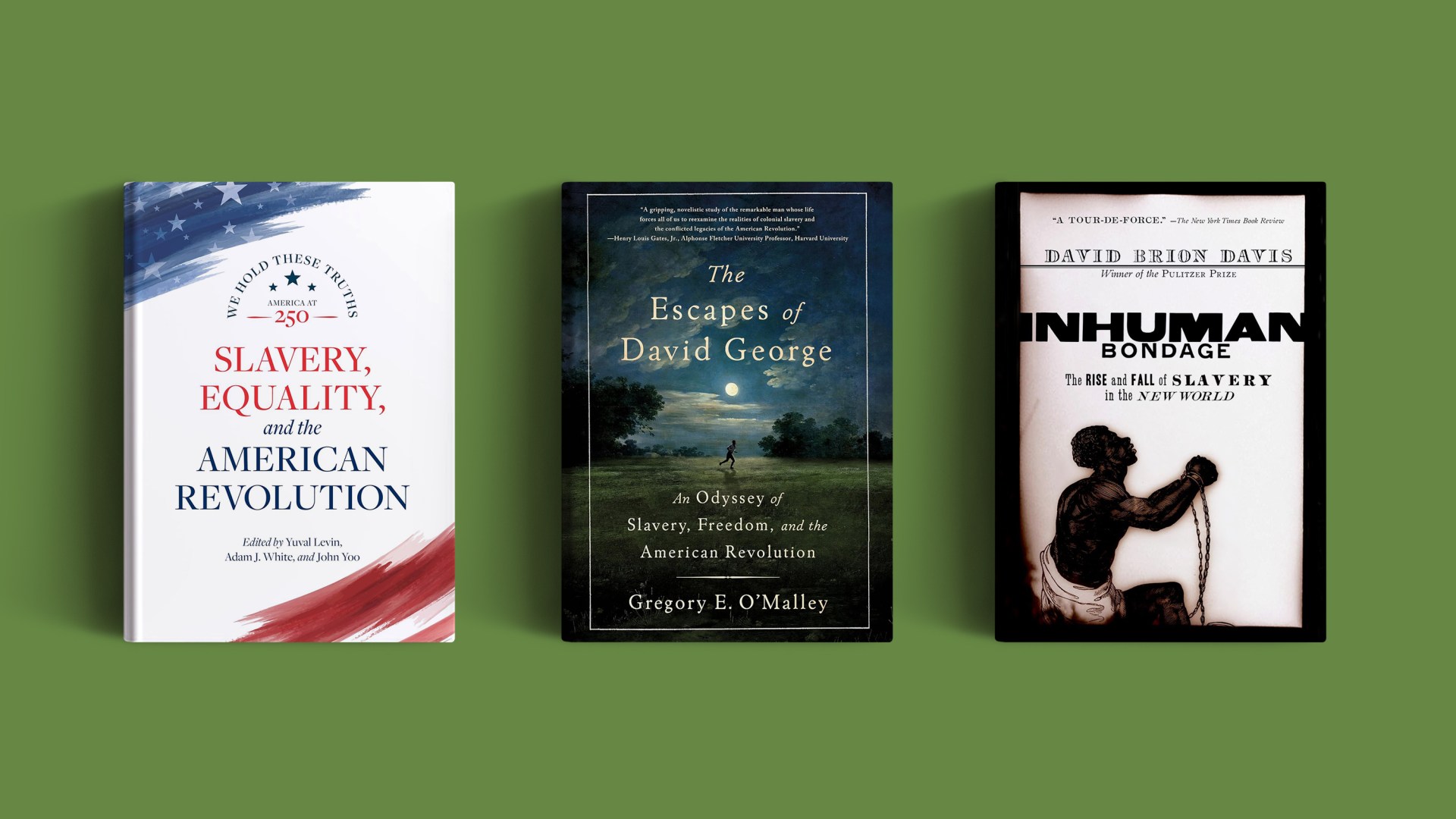
Three history books on the US slave trade.

Three books on a green background.
Christianity Today April 24, 2026
Illustration by Christianity Today

This piece was adapted from CT’s books newsletter. Subscribe here.

Gregory E. O’Malley, The Escapes of David George: An Odyssey of Slavery, Freedom, and the American Revolution (St. Martin’s Press, 2026)

In this anniversary year of American independence, the problem of slavery introduces a minor chord into our national celebrations. The United States proclaimed that all men are created equal, but it also permitted the enslavement of millions of people. Gregory O’Malley’s The Escapes of David George brilliantly evokes the founding’s moral tensions by reconstructing the amazing life of the runaway slave and Baptist preacher.

George’s improbable escapes took him away from the Virginia plantation where he was born into slavery, to stopovers in Native American villages, and then to a South Carolina plantation where he heard the gospel of salvation through Christ. Around 1773, George became the pastor of Silver Bluff Baptist Church, likely the oldest enduring African American–pastored congregation.

Then, during the Revolutionary War, he escaped again, going to British-occupied Savannah and Charleston before evacuating to Nova Scotia at the war’s end. He became one of Nova Scotia’s key evangelical pastors before leaving one more time, resettling in Sierra Leone in West Africa.

O’Malley has little direct source material with which to reconstruct George’s extraordinary story, but he makes the most of what exists to depict slavery’s grim realities in the Atlantic world. However, O’Malley might have done more to understand George not just as a former slave escaping bondage’s shadow but also as a sinner saved by God’s grace. The sources suggest this was how George primarily viewed himself.

Edited by Yuval Levin, Adam J. White, and John Yoo, Slavery, Equality, and the American Revolution (AEI Press, 2025)

Slavery, Equality, and the American Revolution (America at 250, 5)

Slavery, Equality, and the American Revolution (America at 250, 5)

AEI Press

130 pages

The American Enterprise Institute (AEI) has produced a terrific series of thematic volumes about the American founding in anticipation of the anniversary of the Declaration of Independence. One of these collections is Slavery, Equality, and the American Revolution. Available in print and for free online, this book features five essays by scholars of law and politics, all considering the relationship of America’s founding documents to slavery.

As AEI’s Yuval Levin notes, the dilemma regarding slavery and America dates back to the founding itself. Jefferson initially included a critical section on the slave trade in the Declaration, but the Continental Congress removed it from the final version.

Likewise, the Constitutional Convention debated several clauses related to slavery, including the notorious three-fifths clause, which counted each slave as three-fifths of a person for the sake of representation. Many people today misunderstand this clause. It was designed primarily not to denigrate enslaved people but to give more political power to slaveholders in Congress and the Electoral College.

The first two essays in Slavery, Equality, and the American Revolution deal with the founding period. The other three discuss interpretations of the founding by Abraham Lincoln and Frederick Douglass. Both men embraced the Declaration as the “charter of our liberties,” as Lincoln put it. The Constitution made concessions to the ugly realities of chattel slavery, but the Declaration was an aspirational document (albeit one written by a slaveholder) envisioning an American future without slavery.

David Brion Davis, Inhuman Bondage: The Rise and Fall of Slavery in the New World (Oxford University Press, 2006)

Inhuman Bondage: The Rise and Fall of Slavery in the New World

Inhuman Bondage: The Rise and Fall of Slavery in the New World

Oxford University Press, USA

464 pages

The late David Brion Davis wrote several classic books on slavery in the Age of Revolutions, including Inhuman Bondage: The Rise and Fall of Slavery in the New World. This ambitious synthesis ranges from the ancient advent of slavery to its abolition in the British Empire and United States.

The claim that slavery was inhuman is conventional. But to Davis it is an especially apt term for New World slavery because of the way slave traders and enslavers dehumanized people and treated them—economically, legally, and personally—as if they were animals.

New World chattel slavery became especially harsh because it linked racist views to an unfettered market that demanded cheap and unlimited sugar, cotton, and other plantation crops, regardless of the cost to the enslaved.

Davis observes that European and American culture moved from virtual silence on the immorality of slavery as of 1775 to its abolition in most of Europe and the Americas by 1865. Explaining this change is not simple.

Some have argued that vast economic shifts undermined the profitability of slave-grown staples and paved the way for emancipation. Others contend that the idealization of free labor in the 1800s made slavery intolerable, even in the eyes of many white laborers who otherwise had little sympathy for others.

Davis recognizes such explanations, but he can’t escape the conclusion that without Christian reformers, including evangelicals such as England’s William Wilberforce, abolition simply would not have happened. The fall of New World slavery, then, resulted from “a major transformation in moral perception,” a transformation few would have predicted in 1775.

Thomas S. Kidd is research professor of church history at Midwestern Baptist Theological Seminary.

News

How a Kidnapping Changed a Theologian’s Mind

An interview with Sunday Bobai Agang about the lessons he learned from his abduction last month.

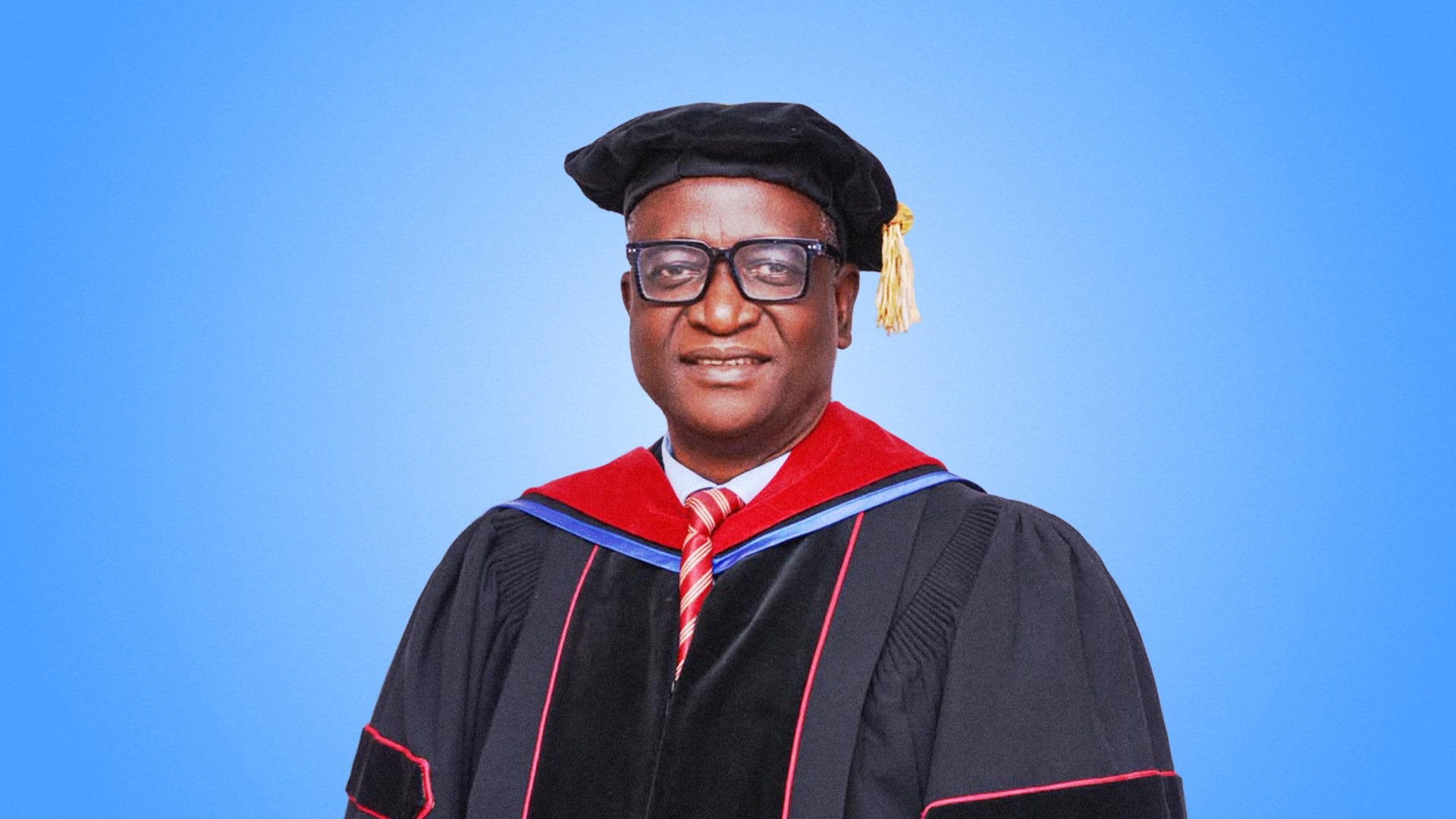
An image of Sunday Agang.
Christianity Today April 24, 2026
Facebook / Edits by CT

In the early hours of March 24, Sunday Bobai Agang was in bed in his home in Jos, the capital of Nigeria’s Plateau state, when four men broke into his house and kidnapped him.

They made him walk 10 hours into the bush and held him in a remote cave. The second night, they walked a long distance to a different cave, where Agang remembered being cold, as he only had a T-shirt on, and in pain, as he had hit his leg on a rock and stepped on a thorn during the journey. The bandits demanded a ransom of 50 million naira ($37,000 USD) but ultimately released him March 27 after his family paid them 5 million naira (about $3,700 USD) they borrowed from friends.

Agang, a prominent Nigerian theologian, was formerly the provost of Evangelical Church Winning All (ECWA) Theological Seminary, Jos, and is now the chairman of the ECWA board of trustees. A prolific author, Agang has also written for Christianity Today.

Agang spoke to CT about his interactions with the kidnappers, the increase in kidnappings in the country, and ways the church can minister to families of kidnapping victims. This interview has been edited and shortened for clarity.

What was on your mind during the kidnapping? Were you fearful?

The first thing that came to my mind was that I was about to experience what others have suffered. I felt God allowed this to happen because he wanted me to come back with a message. I saw God’s hands upon me—the kidnappers brought me water to drink and were friendly to me. They promised not to kill me if the ransom was paid.

When I heard the ransom of 50 million naira, I lost hope. I believed it was better for me to just die instead of paying them. My family would need to borrow a huge amount of money. And even if they could, where would they get that kind of cash? But my kidnappers refused to kill me. They said it was because my time had not come to die. They just wanted me to work to get the ransom money for them.

They were all Fulani herdsmen and had one AK-47. They asked me to call my wife to tell her the ransom amount. I also called one of the leaders in my denomination, ECWA. I told him my situation and asked him to mobilize prayers for me. I was encouraged to know Christians were praying for me.

What did you learn about the kidnappers through your interactions with them?

When one of the kidnappers began speaking to me about his experience, I felt perhaps this is another dimension of the Fulani people that I need to know about. He told me his parents died and left him with 70 cattle, but the Nigerian military came to their homes and took the livestock. They were left without anything to survive on.

A second kidnapper also shared a similar experience. He said the military came and killed his parents, killed some of his siblings, and then carted away 80 cattle, leaving him with nothing. They told me they don’t kidnap because they want to but because it was the only way for them to survive. He also said Fulanis aren’t seen as legal citizens of the country because people only see them as bandits or Boko Haram members, so they can’t go to the city like other Nigerians. He added that if I had a job for him, he’d rather take that job.

God really sent me to listen to those stories. I learned to avoid stupid conclusions about what is going on in the conflict between Fulani herdsmen and farmers, as if it is all about religion. As a researcher, I believe God has given me another angle to research. The kidnappers told me where I could gather more information, as many Fulani are in prison.

I want to work with two researchers who are focusing on reaching out to Fulani and see how I can contribute to what they are doing. I need prayers and wisdom.

CT reported the case of pastor Audu Issa James, who died in a kidnappers’ den even after his family paid a ransom of 5 million naira ($3,000 USD). How can the Nigerian church minister to the families of kidnapping victims as well as the victims themselves? 

When the kidnappers came to my house, they broke the windows and shattered the main doors. The church immediately took my family to a hotel for their safety. I was very happy to hear that. However, our denomination has a policy: The church does not help pay ransom. I was the first person that was affected by the policy.

It is true that some families don’t even see the dead bodies of their loved ones—even after paying ransoms in millions. But we must always realize that anything that happens is because God allowed it.

Last year, the husband of a woman at my village of Kafanchan in Kaduna state was kidnapped. His captors killed him even after his family paid for his release. When I went back to Kafanchan after my release, this woman visited me. I didn’t even know he had been killed. She said something that struck me: “If God had not planned that my husband would die that way, he wouldn’t have died.”

We don’t always have to search for words to comfort them; we just need to go and listen to them. Nobody can assume they have a way of comforting them, of helping them process their situation. It is difficult for them to go on with their lives. They need more than we can give them, and God will always give his people what they need.

The church could also provide a trauma-healing process for kidnapping victims. I was lucky that my daughter helped organize such a session for our family, which was very, very helpful. We were very happy because it helped us to process what we have gone through and think through it.

Amnesty International reported 1,100 kidnappings occurred between January and April of this year. How do you view the crisis of kidnappings in the country?

Nigeria’s problem is sin: the sin of corruption, dishonesty, jealousy, and greed. My experience confirmed that the conflict is serious in this country and we will continue to suffer. We will continue to go through this until we face the reality of sin.

We also have to talk about the reality of who we are. How do we help people recognize that they are human beings created in God’s image? The issue is one of human dignity—the dignity of these bandits, the dignity of the kidnappers. How do we still see them as human beings and begin to find ways of making sure that they realize that?

Based on my conversation with the kidnappers that I encountered, they have not lost that consciousness. They still believe that they are human beings and we are all human beings.

The church must begin to speak to the issues and challenges facing this country. We must demand politicians, who have been given the opportunity to be in power, focus on rebuilding this country. The church also needs to put its house in order. It’s unfortunate that with all the mess in Nigeria, the church is still engaging in harmful lifestyles, such as immorality and preaching the prosperity gospel. We need to face the reality of sin in the church and in society.

It’s now been several weeks since the kidnapping. How have you adjusted back to normal life after this traumatic experience?

God has turned that harrowing experience for his own glory. There were celebrations when people heard I was released. Even up to today, people are calling and only thanking God and celebrating God.

Recently, my family and I went to our home in Kafanchan. Several widows and orphans came to us, thanking God for answering prayers and releasing me. There were prayers for me from across Africa and other continents of the world. God really intervened.

My satisfaction is that people are giving glory and honor to God. I now have a certificate from the university of kidnappers.

News

What Christian Athletes Can’t Do

An NBA player’s fall resurrects an old anxiety: When does talking about faith become “detrimental conduct”?

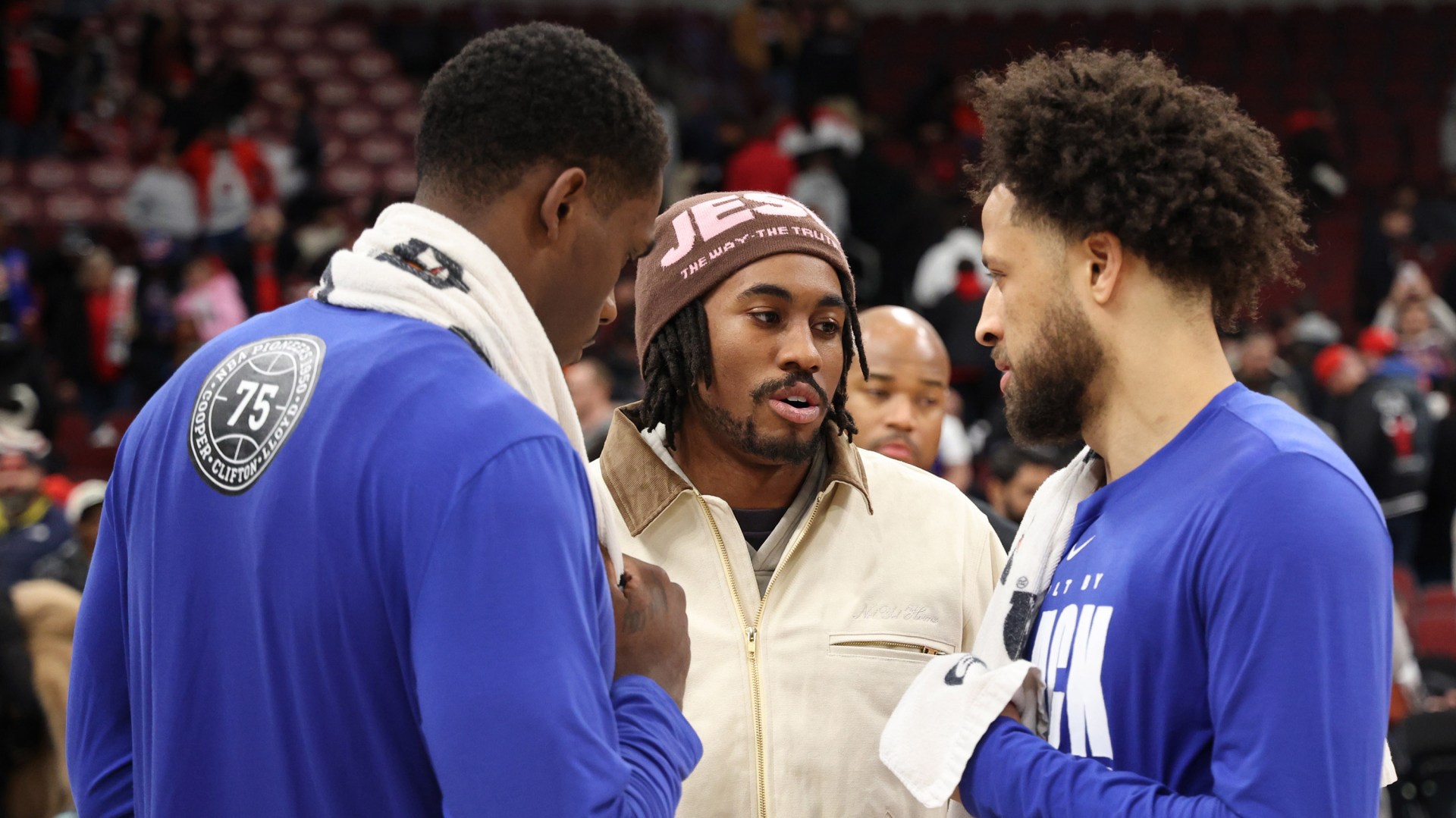
Jaden Ivey and Cade Cunningham

Jaden Ivey, of the Chicago Bulls (center), talks with Detroit Pistons guard Cade Cunningham after a game on February 21, 2026.

Christianity Today April 24, 2026
Photo by Jayden Mack / Getty Images

It was the night before Easter, and the shouting began to spread. Street preachers had claimed a corner near Auburn University. As video of their efforts circulated on social media, one preacher in particular appeared to drive interest.

Tall, with twisted locks and sporting a “Child of God” jersey, the man paced and declared the words of Matthew 5:8 (“Blessed are the pure in heart”). Onlookers quickly recognized him as Jaden Ivey, who five days earlier had effectively been ousted from the NBA.

Ivey, 24, was dismissed by the Chicago Bulls on March 30 for “conduct detrimental to the team.” Acquired via trade from the Detroit Pistons not two months earlier, Ivey had posted a string of Instagram videos the day of his release. Streaming from inside his car, he offered what many media outlets quickly branded “anti-LGBTQ+” remarks.

“They proclaim Pride Month in the NBA,” Ivey said. “They say come join us for Pride … to celebrate unrighteousness. They proclaim it on the billboards. They proclaim it in the streets. Unrighteousness.”

Ivey had long been outspoken about his faith. In April 2024, when he strolled into Detroit’s Little Caesars Arena for a game against his future team, the Bulls, Ivey wore a sweatshirt emblazoned with the words Do not fear and an excerpt from Psalm 23.

Fear he did not. Ivey joined the Bulls two years later, and journalists were warned ahead of his introductory press conference that he was “a Jesus guy.” The shooting guard allegedly flipped the script in locker-room interview sessions, asking reporters about their lifestyle choices and personal salvation. On personal livestreams, the former Purdue star spent hours reading the Bible aloud or opining on spiritual matters.

After just a few games with the Bulls, when the team had an abundance of healthy players, Ivey was benched. He downplayed any disappointment.

“I’m not the J. I. I used to be,” he told reporters. “The old J. I. is dead. I’m alive in Christ no matter what the basketball setting is. … Jesus is not going to say, ‘Feb. 19, why didn’t you play, Jaden?’ He’s gonna say, ‘What did you do for my kingdom?’”

More than a year earlier, in an interview with Sports Spectrum, Ivey had credited God for victory over sin, including drunkenness, premarital sex, pornography addiction, and borderline abuse of his wife, Caitlyn. In 2024, while still playing for the Pistons, he ended a press conference by quoting John 14:6, declaring calmly that Jesus is “the Way, the Truth and the Life.” He once autographed his jersey for a young man with a note to “repent and believe in the gospel.”

In short, Ivey’s problematic remarks were perfectly in character. And so in the hours after his release from the Bulls, he seemed perplexed that his Christian messaging was now considered “detrimental conduct”—the reason for his dismissal.

“All I’m preaching about is Jesus Christ and they waived me,” he said during another livestream while boarding a plane out of Chicago. “They say I’m crazy, psycho.”

If Ivey’s professions were permitted before, why not now?

Ivey’s behavior may have simply been the final straw for an organization that had grown tired of his commentary while he was rehabbing from a knee injury; ESPN reported that some team staffers became “agitated” by his “preachy” presence.

But Ivey’s fall may also reflect the unwritten rules of platforming faith in professional sports.

Presumably unrelated to the Ivey drama, the Bulls failed to make the cut for this year’s NBA playoffs. Regardless, the tournament, now entering its second week, will offer ample opportunities for fans hoping to catch stars glorifying God in an era when professing pro athletes seem to be everywhere. Teams poised to make deep runs feature plenty of faith-forward talent, from Detroit Pistons point guard Cade Cunningham (“I get my aura from Jesus Christ,” he said in February) to Boston Celtics coach Joe Mazzulla (whose family kept a request on their home “prayer board” that he would someday lead an NBA team).

Pro locker rooms are far more open to faith than they once were. Rob Maaddi, an Associated Press sports reporter, told CT that in the 1970s, Christian athletes were mostly seen as “sissies,” and “fewer players openly prayed or shared their faith.”

But clearly, teams and fans still maintain boundaries—often invisible—around what’s acceptable. Why do plenty of players get away with talking about God, but some don’t?

Benjamin Watson, who played in the NFL for more than 15 seasons, says that viewers (and team owners) are generally comfortable with athletes who express faith. But there are limits.

“We’ve always seen certain guardrails,” Watson told CT in an interview. “It’s one thing for an individual athlete to thank Jesus for keeping them safe on the field or to honor God for giving them talents or even honor God in defeat by saying their identity is not in winning or losing. That’s personalizing their faith. The rub is always going to be when they start talking about biblical principles that don’t align with an accepted cultural norm.”

More than 55 percent of sports fans are comfortable with proclamations of faith, Watson said, citing a 2025 Sports Spectrum survey. This “brings more fullness to the personality of the people they watch perform.”

The apparent difference in Ivey’s case: His words took aim at people beyond himself.

Matt Forte, a former Chicago Bears running back who hosts Sports Spectrum’s podcast, wondered if the manner and method of Ivey’s delivery overshadowed the principles he was trying to convey.

“I’m not in agreement that big organizations should force their employees to … promote what you promote and join the parade,” Forte said on his show. But “even if we do speak the truth, we need to speak the truth in love.”

Watson, who also hosts the CT podcast The Just Life, says believers—and not only those with large platforms—point to God most effectively by emphasizing their own unrighteousness apart from Jesus.

“We are to stand firm for the Lord, but we don’t hold the world to the same standard,” Watson said. “We still say, ‘This is God’s best for you,’ but we always uphold the dignity of every person. We’re condemned as well. We have to lace everything in love.”

Ivey’s prophetic posture cut across the grain of self-infatuation often associated with the NBA. Ironically, after Ivey’s ouster, he appears in one clip of his street preaching asking a young man whom he will serve—“your father the devil, or your Father who loves you”—to which the passerby replies, “I will serve myself.”

Yet Ivey’s divisive videos sometimes found targets beyond biblical lists of unrighteousness. The former top-five NBA draft pick called Catholicism a “false religion.” He claimed that Golden State Warriors star Stephen Curry, one of the most prominent Christians in pro sports, is “not even surrendered” to God and “don’t know Jesus.”

Ivey acknowledged that some of his family members thought he was “losing my mind,” prompting some ex-teammates and media personalities to question his overall well-being, saying they “hope he gets the help he needs.”

Watson says the messiness of Ivey’s remarks underscores a larger need for Christians to pray for the high-profile believers they root for.

“As a Christian athlete, suddenly you are the poster child for Christians and organizations,” Watson said. “Many times it’s a disservice to the athlete who needs discipleship, mentorship, who may be young in their faith and trying to navigate storms.”

In the immediate hours after Ivey’s exile from the Bulls, people and personalities lined up to defend or destroy the young man’s declarations.

Dane Ortlund, senior pastor of Naperville Presbyterian Church in Illinois, swore off the Bulls as his favorite team, condemning the club for “cancelling … a man who did nothing more than hold to his convictions” in a “tragic capitulation to the spirit of the age.”

Josh Howerton, senior pastor of Lakepointe Church in Dallas, compared Ivey’s stand against Pride Month to Daniel refusing to worship a golden idol.

Two-time NFL MVP Lamar Jackson fired off a string of Scripture-filled posts and said, “I’d rather be canceled by society than rejected by Christ.” He then reported to the Baltimore Ravens’ offseason program with an “I Love Jesus” sweatshirt.

Others offered less sympathy. Former NFL linebacker Emmanuel Acho called Ivey’s words “dangerous” and linked them to mental health issues, then urged Christians to emphasize the “lamb” of God—love, grace, mercy—over “the lion.” Former NBA champion Nick Young took to Instagram and suggested, through laughs, that Ivey’s real misstep was criticizing Stephen Curry.

Joe Cowley, a Chicago Sun-Times columnist who reported on Ivey’s Bulls tenure, was equally pragmatic. “Jesus ain’t paying your bills,” he said on his podcast. “The NBA is.”

Watson feels all the noise was the inevitable result of Ivey’s aggressive public stance: “He becomes a mascot for greedy people.” He said culture warriors and conflict entrepreneurs took Ivey’s controversial words and the Bulls’ decision and exploited them without a care for the man at the center of it all. “They point and say, ‘See, they’re coming for us and they’re coming for your kids.’”

A cold truth that both sides appear to acknowledge in debating whether Ivey crossed the line: Had he simply been more talented at basketball, “the line” may not have existed at all.

After all, athletes’ careers, contracts, and endorsements survive legal and criminal trouble all the time. Owners don’t like firing players who sell lots of tickets. As former NFL player RK Russell put it, the NBA “does not police its players’ beliefs, only how their image affects the NBA’s bottom line.”

Ryan Clark, a former NFL veteran who also cohosts The Pivot podcast, spoke on a recent episode as if addressing Ivey directly: “You don’t have the tolerance that great talent provides you.” Consider Minnesota Timberwolves star Anthony Edwards, Clark said. Edwards’s controversies—including viral comments made about gay men and alleged texts urging a woman to have an abortion—were more easily overlooked given Edwards’s résumé and fan appeal.

“There’s a sliding scale for what’s acceptable,” Watson explained. If a player “wins games for you but is late to curfew a couple times, you’ll put up with it more than you will for the 52nd man on the roster.”

This may explain why Clayton Kershaw, the former Los Angeles Dodgers pitcher, could oppose his team’s promotional night for the Sisters of Perpetual Indulgence, an LGBTQ charity; write a Bible verse on his Dodgers-supplied Pride Night hat; and still retire a beloved West Coast icon after 18 years with the club.

It may also explain America’s fair-weather embrace of Tim Tebow, a brief cultural phenomenon for his avid Christian faith as both a Florida Gators standout and NFL hopeful. Tebow accumulated a hysteric following for his conservative personal values and frequent displays of faith—“John 3:16” eyeblack and steady kneeling for on-field prayer that became a “Tebowing” movement. Yet that same faith became fuel for ridicule when his star faded after only a few seasons in the NFL.

So is there a template for athletes who want to express their faith and preserve their careers?

If so, it probably involves prudence. A day after Ivey’s release, Dallas Mavericks veteran Daniel Gafford was asked to explain a T-shirt referencing faith. He declined to elaborate, saying, “I don’t wanna get waived or anything like that.” (The Mavericks, ironically, launched in 1980 as an NBA model of Christian values, what cofounder Norm Sonju called a club of “wholesomeness and goodness and respect for God and country.”)

Stephen Curry has made at least a few believers with a much less provocative brand of witnessing on the West Coast. Filmmaker Brian Ivie, who partnered with the Golden State Warriors star on a documentary about the 2015 Charleston church shooting, said in an interview that he once thought “evangelicals were like the children of the corn” and he wanted “nothing to do with Christianity.” Ivie partially credits Curry and the way he carries himself for his conversion. “He makes God accessible.”

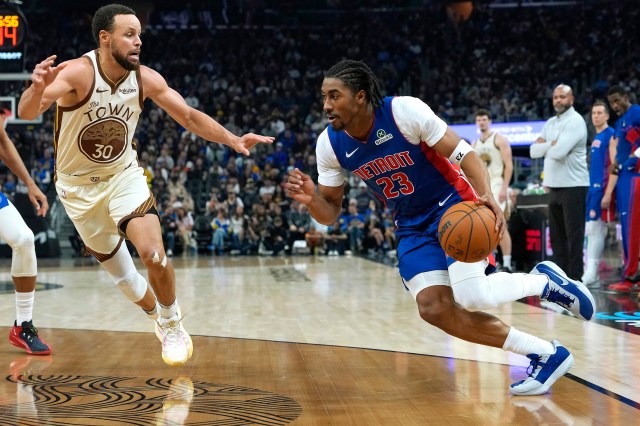
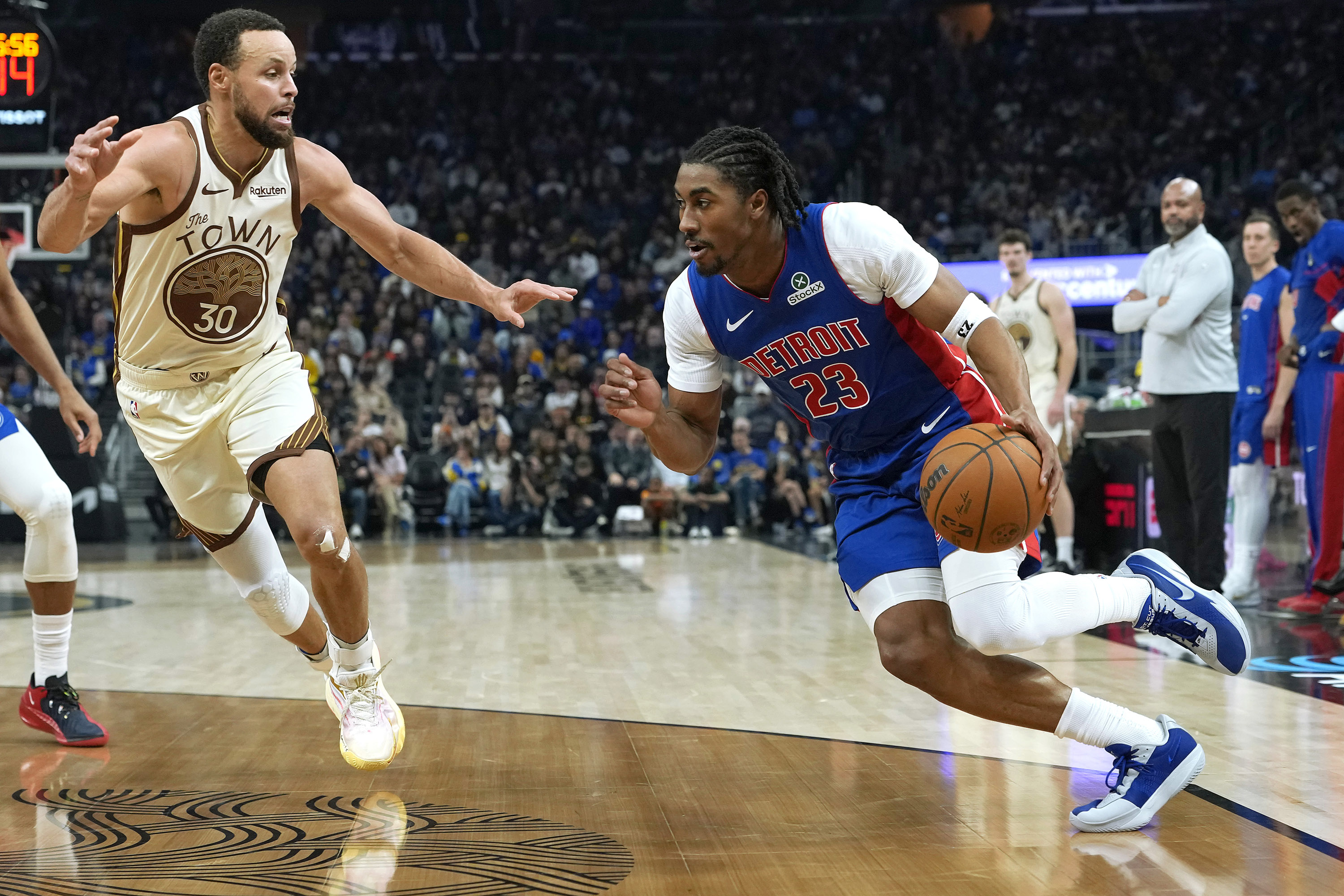
Photo by Thearon W. Henderson / Getty Images
Ivey, then with the Detroit Pistons, drives to the basket past Golden State Warriors star Stephen Curry in an early 2026 game.

Curry has long cited the same two verses—Philippians 4:13 and Romans 8:28—as inspiration. In a 2023 interview, he said he’s “never been one to just bash people over the head with Scriptures or verses or mantras about my faith.”

But his palatability as a public Christian may have as much to do with his three-point shot as it does with his God-blesses-me demeanor.

Joshua Cooley, a longtime Christian sports editor and best-selling author, thinks there’s no denying the influence of star power. But Cooley, who cowrote a memoir of former Philadelphia Eagles quarterback Nick Foles, also pointed to the Super Bowl MVP and outspoken Christian as a model for relatability. The morning after a historic performance to give the Eagles their first Super Bowl win in 2018, rather than flexing for the world, Foles highlighted his flaws, telling reporters: “I’m not Superman.”

“Nick approached it so humbly. ‘I almost quit football. I’m weak. I fail,’” Cooley said. “Athletes could learn from that.”

Watson, for his part, has wrestled with the balance between boldness and discretion. He became a vocal advocate of “protecting life in the womb” while playing for the New Orleans Saints. Many inside the locker room, including coaches and their wives, lent their support; others, like the ACLU, branded him “outspoken and ill-informed.” A decade later, when Watson criticized the confrontational style of the late political activist Charlie Kirk, “it cost me financially—ironically in the same realm where I was speaking.”

There is a fine line, Watson concluded, between speaking truth and speaking too much. Sin is not ended by multiplying words, the Proverbs warn, but the prudent hold their tongues.

Meanwhile, the words already spoken will hang in the air, immortalized online.

On March 30, Ivey paused his post-release livestream, quietly receiving a flight attendant’s request to wrap up his video before departing Chicago. He smiled, rubbed his chin, and offered a few more assurances before signing off.

“All them rings LeBron [James] got, all them rings Michael Jordan got, all them people in the Hall of Fame who don’t know Jesus Christ?” he said from his seat. “It’s not gonna matter on Judgment Day. … And they gonna try to stop me. But I’m not. I’m gonna keep speaking the truth.”

Cody Benjamin is senior news writer at Christianity Today.

News

Facing Arrest, Cuban Christian Influencers Continue Call for Freedom

Young people are using social media to spread the gospel and denounce the Communist regime.

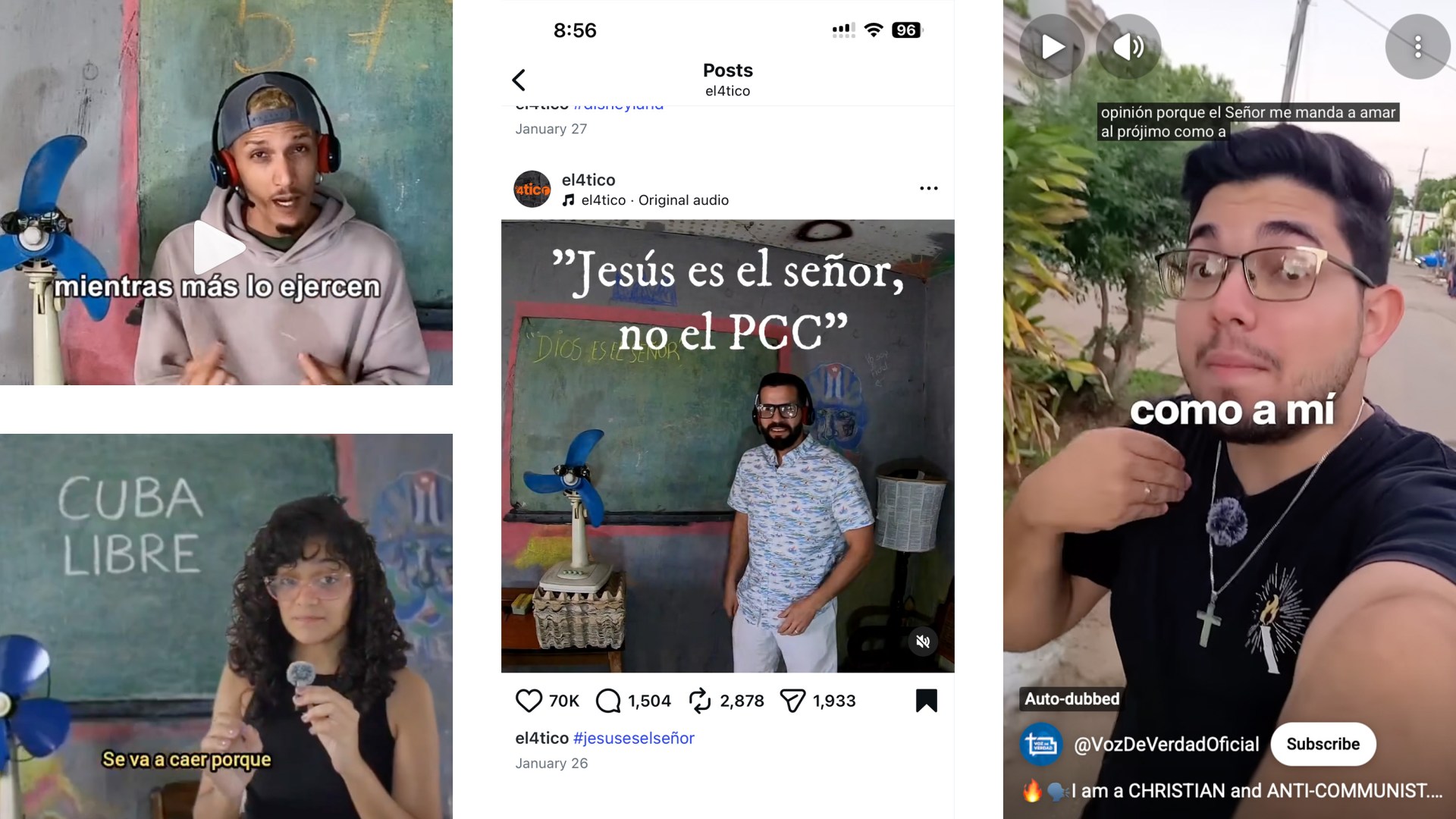
Screenshots from several Cuban influencers' accounts.
Christianity Today April 23, 2026
Illustration by Christianity Today / Source Images: Instagram, Youtube

Ernesto Ricardo Medina began filming short videos with friends in early 2024 from a small room, or cuartico, of his home in Holguín, Cuba. By 2026, he had become one of the foremost Christian voices speaking out against the Cuban government.

“Jesus is Lord, not the Communist Party of Cuba,” Medina declares at the beginning of a January 26 video posted from his Instagram account @el4tico, short for cuartico. Behind Medina, “Dios es el Señor” (“God is the Lord”) is scrawled on the chalkboard in his iconic makeshift studio. To his right sits an old Russian desk fan that turns but doesn’t blow air with a pair of sunglasses perched on its unmoving blades—a metaphor for the futility of the Cuban state.  

“They’ve taken everything from us—food, health, hope. They’ve even taken our own self-respect,” Medina continues, encouraging his Cuban compatriots to throw off fear, speak the truth, and “begin to live as if your life means more than just obedience.”

Nearly 70,000 people liked the video. Eleven days later, on February 6, authorities arrested 32-year-old Medina and his filming partner Kamil Zayas Pérez for “crimes of propaganda against the constitutional order and incitement to commit crimes.” They remain in custody even as calls to #freeel4tico reverberate across social media.

In early April, Medina managed to smuggle out a message to his fellow Cuban Christians written on sheets of toilet paper.

“I deeply long for my freedom, but I know that this is an opportunity the Father has given me so that he may be glorified in me,” Medina wrote. “He is the God of all comfort, and although the pain has been greater than I ever imagined, his presence has been even greater.”

Though threatened and detained, Cuban Christian influencers like Medina have used social media as a tool in recent years to proclaim Christ and push for freedom. Their words echo across YouTube shorts, Instagram reels, and X posts, with messages like “I am a Christian and anticommunist,”Liberty for Cuba now!” and “Down with the dictatorship!”

Combined, Cuban influencers Iván Daniel Calás Navarro, David Espinosa, and Anna Sofía Benítez Silvente have hundreds of thousands of followers. Never before has the antisocialist message, a topic banned in libraries and universities, been so influential and accessible in the country, said Yoe Suárez, an exiled Christian Cuban journalist and analyst at the Family Research Council. Suárez pioneered independent Christian journalism in Cuba, resulting in government harassment and eventual exile to the US.

“These evangelical influencers are the most influential independent political voices in Cuba today,” Suárez said.  

Yet their truth-telling comes at a high cost in Cuba, an authoritarian state where churches are heavily regulated and speech against the government is illegal. In a recent interview, Cuban president Miguel Díaz-Canel claimed no political prisoners exist on the island and that Cubans are free to protest. Reality proves otherwise. Online dissenters face intimidation, interrogations, arrest, surveillance, and threats of job loss or detention in prisons known for human rights abuses.

The current online Christian resistance movement is a crystallization of several factors, according to Suárez, including the authorization of home internet in 2017 and the introduction of 3G internet access for mobile phones a year later. Suárez said he believes the regime saw a financial boon in selling expensive mobile phone data, not realizing it would provide Cubans with an outlet to speak freely about their frustrations.

Furthermore, in the past decade, evangelical Christians have increasingly stepped into political activism, starting with the Evangelical Civic Movement in 2018 and continuing with the July 11 protests three years later. Also called “11J,” these post-COVID-19 demonstrations brought together thousands of Cubans as they marched peacefully for increased liberties and economic relief. The Cuban government responded with a violent crackdown and arrested more than 700 protestors, including evangelical pastors and church members.

For many years, the catchphrase Los Cristianos no se meten en política (“Christians don’t get involved in politics”) defined the church’s role in society. This philosophy, Suárez said, is a tool the regime uses to prevent “the sleeping giant” of the church from waking up. 

Iván Daniel Calás Navarro, a 22-year-old audiovisual producer, originally began his YouTube channel Voz de Verdad (Voice of Truth) in 2018 because he wanted to share the gospel with other young people in Cuba. It was never his intention to get involved in politics, Calás said, but “the injustices and the situation in Cuba compelled me to speak out.”

After becoming more politically vocal, the police summoned him to the station in 2023, where they interrogated him and threatened him with prison time for criticizing the government. In late March, Calás and his wife left the country to take political refuge in Spain.

“Our mission is to preach the gospel and make disciples,” Calás said. “Remaining silent and turning a blind eye to injustice is the very opposite of the gospel.”

Many Christian political dissidents, like Calás and Suárez, have fled Cuba. Those who stay do so either because they feel the Lord has called them to remain or because a legal exit path doesn’t exist. Either way, they face the constant risk of repercussions from Cuban State Security. 

David Espinosa, 38, first created a Facebook account in 2014. At the time, the only way to access the web was through hotel internet at a costly hourly fee. An audiovisual producer at Havana’s Calvary Baptist Church, Espinosa said his initial purpose was to publish evangelical content; but like Calás, he couldn’t stay silent about politics. 

“I’ve had to use whatever I have on hand to somehow speak out against these wrongdoings,” Espinosa said. “For a while now, with a lot of caution, I’ve been trying to speak out and proclaim that the truth is Jesus Christ, the truth of the gospel, the truth of the Bible, and the wrongs our leaders are doing and the injustices that are being committed.”

Authorities have often summoned Espinosa to the police station, including most recently on April 13, when police interrogated him for nearly two and a half hours. They fined him 3,000 Cuban pesos ($125 USD), threatened him with prison, told him his children’s safety was at risk, and warned him his filming equipment would be confiscated, all to persuade him to stop publishing content online.

While Espinosa is certain he’s doing the right thing, depression and fear are, at times, also part of the struggle. He said he fought depression much of last year.

“There are a lot of times I’ve felt afraid,” Espinosa said. “I have three children, and I want to see them grow up.”

Espinosa said some Christians still don’t support what he’s doing, calling him zelote (zealot), apedreador (someone who throws stones), and a false Christian. But far greater in number are the Christians who do support him, Espinosa said. His pastors, family members, and even strangers from across Cuba send him messages saying they are with him and praying for him. These words of encouragement, he said, are what keep him going. 

“God has given us the responsibility to speak the truth and share his Word,” Espinosa said. “It’s been hard and it’s dangerous, but we know that God is with us, and that’s why we’re doing it.”

Twenty-year-old Anna Sofía Benítez Silvente, also known as Anna Bensi, became an overnight sensation in October 2025 when she posted a video citing the Cuban constitution and drawing attention to the basic rights many Cubans lack. Her platform changed from humorous sketches to videos calling for the dismantling of the dictatorship. 

On March 10, the Cuban police served Bensi’s mother, Caridad Silvente, with a summons to present herself at the police station the following day. They gave no reason why. Caridad Silvente filmed the encounter, which Bensi uploaded to her social media channels, saying, “I’m not afraid of them. They don’t intimidate me. And above all, they won’t silence me.”

The next day, Espinosa, Calás, and others drove across the city to the Alamar police station in Havana for Silvente’s interrogation, praying and waiting for her outside. According to Bensi, Cuban state security tried to convince Silvente that her daughter was a mercenary, a homosexual, and that an outside actor paid her to post content. Police also charged Silvente with “exposing a government official” for filming the state officers the day before. They threatened her with five years of prison time, forbade her to leave the country, and put her under house arrest.

Two weeks later, authorities called Bensi to the police department, where they charged her with the same infraction as her mother and also placed her under house arrest. In a video detailing the police questioning to followers, she closed by saying, “No matter what happens, even though they want to hurt us, they want to do wrong to us, everything will be for our good. Amen.”

Anna continues to upload content despite being confined to her home, including calls to #freeel4ico and a previously filmed music video called “Mi Tierra,” a melancholy Latin folk ballad pleading for the healing of her homeland.

Further complicating the difficulties these Christians face is the Trump administration’s recent oil blockade of the country, which has weakened an already struggling country. Gas prices skyrocketed, trash piled up in the streets, failing public transportation systems left citizens stranded, and food spoiled in refrigerators due to rolling blackouts.

Just like their fellow Cubans, Espinosa, Bensi, and Calás are struggling to obtain basic necessities—and in their cases, to continue uploading content.

For a day after Silvente’s interrogation, lack of cellphone connection prevented her and Bensi from communicating with the outside world. A week later, they experienced a 30-hour blackout. Though power and cell service outages are on the rise due to the oil blockade, the Cuban state is also known to intentionally cause blackouts “to prevent people from organizing or sharing evidence of human rights abuses,” according to Amnesty International.

On April 9, Bensi woke up to discover she was locked out of her WhatsApp account, the primary form of communication for many Cubans. Other Cubans speaking out against the government have experienced the same, including Espinosa and Medina’s wife, Doris Batista. Espinosa said in a post that he constantly finds himself without phone service and suspects Cuba’s state-run telecommunications company of trying “to prevent what I say from reaching far and wide.”

Despite the physical dangers, political challenges, and practical obstacles, Medina, Espinosa, Calás, Bensi, and many other Cuban Christians refuse to stop speaking out. 

“I know even more surely that the truth doesn’t need mobile data to make its way,” Espinosa said at the end of the same post. “And when a child of God is blocked, the Lord himself often opens up paths in ways that no one can even begin to understand. I won’t stop speaking out about what I’ve seen and heard. My loyalty is to the Lord, not to men.”

Correction: An earlier version of this article misstated Iván Daniel Calás Navarro’s name.

Theology

Against the Casinofication of the Church

Columnist

The Atlantic’s McKay Coppins told me about problems that feel eerily similar to what I see in the church.

A roulette wheel
Christianity Today April 22, 2026
Illustration by Christianity Today / Source Image: Getty

This piece was adapted from Russell Moore’s newsletter. Subscribe here.

Sometimes a guest says something that goes by in the moment but that I can’t stop thinking about later. Earlier this week, I recorded a conversation with McKay Coppins of The Atlantic about his essay on what it was like to spend a year doing online sports gambling. You can listen to our conversation next week on my podcast, but what kept me up at night had little to do with the question of betting and much to do with what Coppins calls “the casinofication of everything.” What he described sounds eerily familiar to the most un-casino-like setting of all—the church.

Coppins said part of the problem in American life is that the authority figures making decisions—from senators to parents—don’t really understand what gambling is now. Some of them think of it as lonely old women playing slot machines in casinos on the Las Vegas Strip or, more benignly, as a couple of coworkers betting $100 that the Timberwolves will beat the Nuggets. The latter example is one of the reasons professional sports owners believe online gambling is good for their business: People get even more invested in their teams’ wins and losses if they have, as the cliché goes, skin in the game.

The problem, Coppins notes, is that the algorithmic nature of online betting actually changes the game. He told me to imagine a sports bar full of people watching a game. They are sharing an experience as they cheer for their team or boo for the opponent. Even in loss, there’s community as the group collectively groans. That’s true even if the crowd is made up of fans of opposing teams. Their jeering over such rivalries is itself a kind of bonding.

But with the onset of online gambling, Coppins told me, the guy on the barstool is not really looking at those around him or even at the television overhead. He’s on his phone. And what he’s betting on isn’t typically about who wins and who loses or even about point spreads alone: His bets are on an almost-uncountable variety of small, random acts in the game. The sports bar might be full of people cheering for the same team, but they’re playing different games.

When Coppins describes the “casinofication” of everything, he points to the ways betting markets are now about, almost literally, everything. You can bet on whether a Venezuelan drug boat will be blown up between May 1 and May 10. You can bet on whether Tom Holland and Zendaya will split up in 2027. You can bet on whether famine will hit North Korea by winter. And on and on.

That doesn’t mean the gambler will care about those situations in and of themselves—people who bet against famine aren’t typically motivated to work on world hunger. It means the person will be invested in his or her own interests.

Casinofication breaks down community. If I’m playing my own secret, individual game, then I’m separated from the very thing the teams are meant to do—connect people in shared appreciation for the art of the game or in shared belonging to the same hometown. That’s why what seems to be a short-term win for a team’s owners is a long-term loss. It raises the apparent stakes while lowering the real ones. Corporations think betting will make young men care more about sports, but they’re actually severing them from the communities that would have made them care about sports for a lifetime.

Coppins writes in his essay about how his growing obsession with his gambling app brought out something in him he never expected: personal hatred. When a player he had bet on fumbled the ball, Coppins felt a visceral rage and then noticed that he was critical, from that point on, of everything the player did—the way he talked at the postgame press conference, even the way he walked up to the end zone. Coppins hated this player he had never met—not for the way his playing had disappointed the group of fans but for the way he had personally cost Coppins. He could see in his own psyche how his affections were being algorithmically reordered without his consent.

In that way, the individual replaces the community, and the individual is eroded too. After all, as Coppins and I discussed in our conversation, 11- to 14-year-old boys are seeing floods of ads and, more importantly, are allowed to win when they do play. Their losing is not in the companies’ interest at first. They want a bettor to experience the dopamine rush of winning—and winning really big—until the dopamine rush is the thing he’s chasing. Not the sport, not the team, not even money. He thinks that he’s a winner—that his knowledge or skill or even luck is better than other people’s—without ever knowing that behind all of that are some faceless guys in suits who don’t care about him or the team or the game.

Very few people (I hope) are betting on what praise songs they will sing at church this Sunday or how many weeks the sermon series on Philippians will go or how many infants will cry during the baby dedication. But that doesn’t mean we are safe from the casinofication around us. In fact, we are—all of us—in danger of having already accommodated to it.

Every culture assumes some kind of split between the individual and the community. The Bible does not. Israel starts with one man, Abraham, and becomes a multitude. The multitude narrows to a remnant, and the remnant narrows to one law-keeping man and then broadens out to a crowd no one can number. The church, specifically, creates both true individualism and true communitarianism. We are collectively “the body of Christ and individually members of it” (1 Cor. 12:27, ESV throughout). We have a common mission but individual giftings to accomplish it (vv. 1–11). We have a common ethic as a community, but we respect the consciences of individual persons among us (Rom. 14:1–23).

To press the metaphor, we win together and lose together—and both can bond us closer to Christ (8:17) and to one another (12:15). In many ways, we have different games and teams going on in our lives, but what ultimately binds us together is that we are playing the same game, with the same stakes and scoreboard.

We have always been tempted to forget our common goal. The New Testament is filled with stories of the church being confused about whether the “game” it’s playing is celebrity identification (1 Cor. 1:11–13) or ethnic tribalization (Gal. 2:11–14) or financial prosperity (Acts 8:9–24) or political captivity (Rev. 13:1–18). In every age, the church must be shaken out of that confusion.

The guy looking at his smartphone in the sports bar and checking his betting app isn’t really watching the game. The game is just a means to achieve what he really cares about—his bank balance or his self-image as a winner or the little adrenal rush that comes with it. There are always forces at work that want to do the same thing to us—with a much more ultimate game.

The gospel and the church become carriers for what we already care about on our own individual or tribal terms. When the gospel becomes a tool—for culture war, institutional survival, partisan politics, and personal brand—its relevance feels sharp and immediate. The things I already care about are being addressed. But the slow formation of intuitions, instincts, and affections is being hollowed out.

If the New Orleans Saints are just a vehicle for a gambling addiction, a fan can find a team that can do that better. If football itself is the same kind of vehicle, the addict will ultimately find a sport that can serve him more reliably. Eventually, he is no longer a sports fan—he’s an app fan.

Once a new generation sees the church as being about marketing products or voter mobilization or ethnic tribalization or anything else, people will find both the “I” of individual identity and the “we” of group identity in something other than the gospel of Jesus Christ. Having money or supporting a ministry or being a Republican or Democrat or demonizing and idealizing people in the “correct” categories—that becomes the thing. That becomes the game.

This mindset can work especially well with fear and anger, which can give the illusion of both a personal jolt of life and a cohesive group of “us versus them.” Our minds shift. We keep score by different metrics than those Jesus gave us. We think we are claiming the individual and the communal when we’re really losing both.

And all the while, neither approach to these concepts is true. It’s in somebody’s interest to get me playing his or her game. The house always wins.

The danger is there as long as it’s invisible. When we realize we are on a different field, we can remember that, as Paul put it, we are playing according to a different set of rules (2 Tim. 2:5). We can see that the stands are full of a different cloud of onlookers than those we can see (Heb. 12:1). We can recover a real “we” that doesn’t bypass but instead makes the “I.” And we can do it with the slow, boring, unglamorous work of being formed by churches that we didn’t pick for their algorithmic fit and that aren’t using us to do something else.

We can look up from whatever devices are holding us in thrall and love the game again. Is that hard in times like these? Yes. Will it be difficult for the church to counter casino culture with something that really matters? Of course. Can we do it? You bet your life.

Russell Moore is editor at large and columnist at Christianity Today as well as host of the weekly podcast The Russell Moore Show from CT Media.

News
Wire Story

The Religion Gender Gap Among the Young Is Disappearing

Women still dominate church pews, but studies find that devotion among Gen Z women has cooled to levels on par with Gen Z men.

Gen Z women are becoming less religious.
Christianity Today April 22, 2026
Photo by bojanstory / Getty

Women have long been the backbone of religion in America.

They are more likely than men to identify as religious, say faith is important in their lives, attend services, and pray. That’s especially true among older women, according to data from the Pew Research Center. 

But times are changing. And more young women seem to be giving up on God—or at least on organized religion. 

new report last week from the Public Religion Research Institute (PRRI) found that 43 percent of adult women under 30 identify as “none”—those who claim no religious identity. That’s up from 29 percent in 2013.

PRRI found that unaffiliated young women outnumber unaffiliated men (35%). Overall, 39 percent of Americans under 30 identify as “none.”

The findings conflict with claims of a religious boom among young Americans.

“Looking at young adults, there is a shift happening, but it’s not among Gen Z men, as some suggest. Instead, young women’s declining religiosity has brought them on par with their male counterparts,” said Melissa Deckman, CEO of PRRI.

Key religious indicators—such as identifying with a religion or praying daily—have declined among adults of all ages over the last decade. But studies have also measured a shrinking religion gender gap among young people. Pew found that only 57 percent of young women and 58 percent of young men claim a religious identity—a virtual tie.   

Deckman said the data reflects political and social realities. Many young women, she said, aren’t interested in the kind of traditional gender roles that conservative religious groups are promoting.

“I think you’re running into this head-on collision, where a lot of younger women are just shedding religious labels because they don’t endorse the views of a lot of conservative and outspoken churches,” Deckman said.

Charissa Mikoski, an assistant professor at Hartford Institute for Religion Research, said that overall, women still make up about 60 percent of active congregation members. Mikoski is part of a team that studies trends in congregational life, rather than the general population. While young women—both millennials and Generation Z—attend services slightly less than men, they are still more likely than men to be part of a congregation.  

“In all of our data, women are still much more likely to be participating in congregations,” she said. 

Young people make up only about 14 percent of all church members, despite being about a quarter of the US population. But Mikoski noted that the percentage of young people who say they are attending more regularly outnumbers the percentage who say they are attending less often. 

And there’s no sign that religion in America will disappear anytime soon.

PRRI’s report, along with reports from Pew and other researchers, found that the rise of the unaffiliated—which has dominated religion headlines in recent decades—has plateaued. The percentage of Americans who claim no religion rose from 16 percent in 2007 to 31 percent in 2022, according to Pew, before settling at about 28 percent.

Although the share of the population that is unaffiliated will likely rise as older religious Americans die and are replaced by younger, less devout Americans, most surveys show that more than half of young Americans are religious.

Deckman said religious groups will persist but be smaller.

“I think the great irony is that we have a nation of people that are lonely—they’re looking for connection,” Deckman said. “And in some ways, you would think that religious bodies would be the ideal place to have that.”

PRRI’s report also showed stark differences in the religious makeup of the country’s two major political parties. Republicans remain overwhelmingly Christian—84 percent of Republicans identified as Christians, including 68 percent who were white Christians. Only 13 percent were “none.”

By contrast, the unaffiliated (34%) now outnumber white Christians (24%) among Democrats. Just over half (58%) of Democrats identify as Christian, while 8 percent identify with other faiths.

addApple PodcastsDown ArrowDown ArrowDown Arrowarrow_left_altLeft ArrowLeft ArrowRight ArrowRight ArrowRight Arrowarrow_up_altUp ArrowUp ArrowAvailable at Amazoncaret-downCloseCloseellipseEmailEmailExpandExpandExternalExternalFacebookfacebook-squarefolderGiftGiftGooglegoogleGoogle KeephamburgerInstagraminstagram-squareLinkLinklinkedin-squareListenListenListenChristianity TodayCT Creative Studio Logologo_orgMegaphoneMenuMenupausePinterestPlayPlayPocketPodcastprintremoveRSSRSSSaveSavesaveSearchSearchsearchSpotifyStitcherTelegramTable of ContentsTable of Contentstwitter-squareWhatsAppXYouTubeYouTube