Books
Review

Reckoning with Race, Immigration, and Power

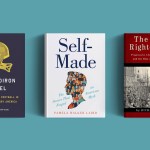
Three books to read this month on politics and public life.

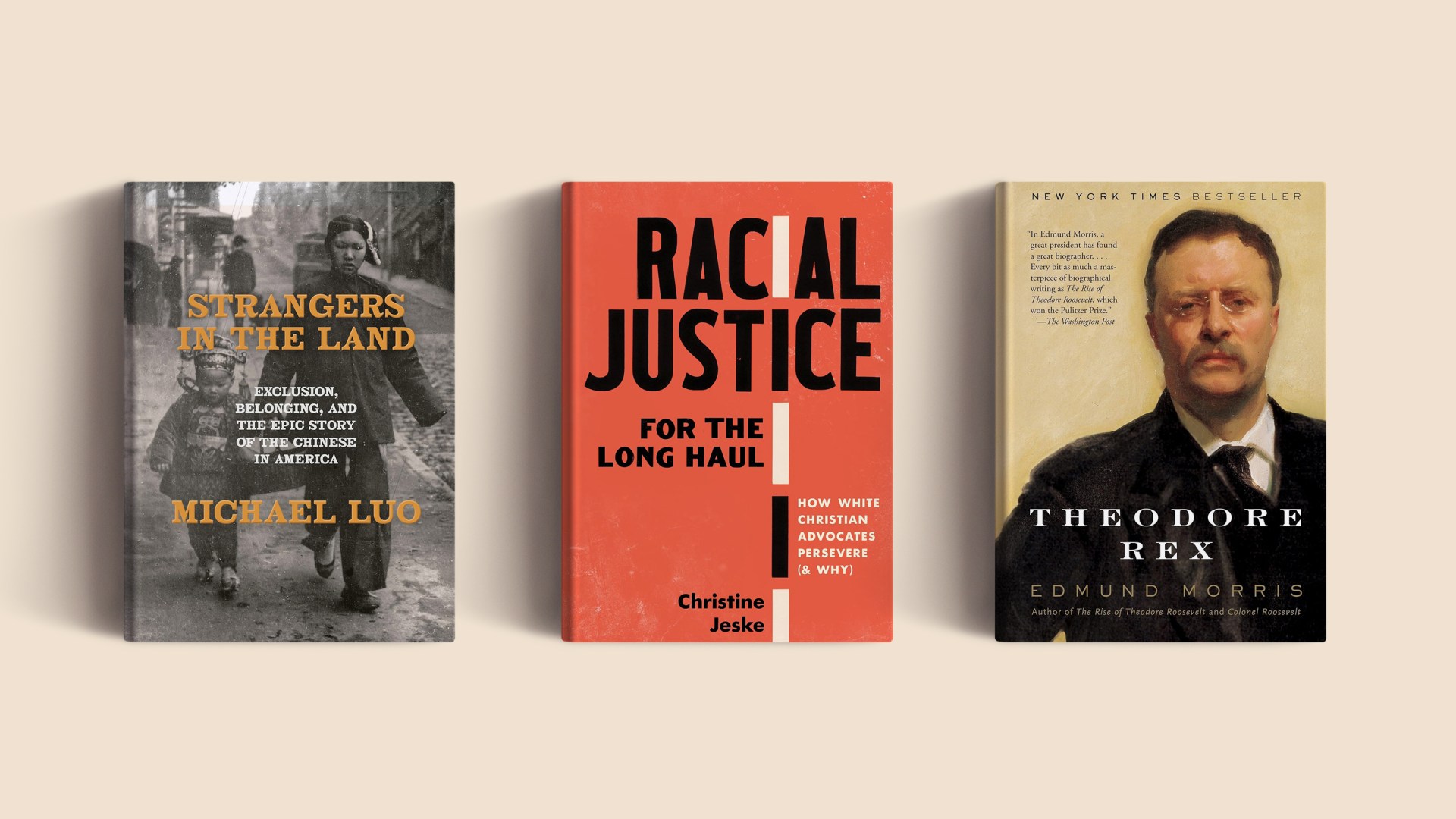
Three book covers
Christianity Today February 6, 2026
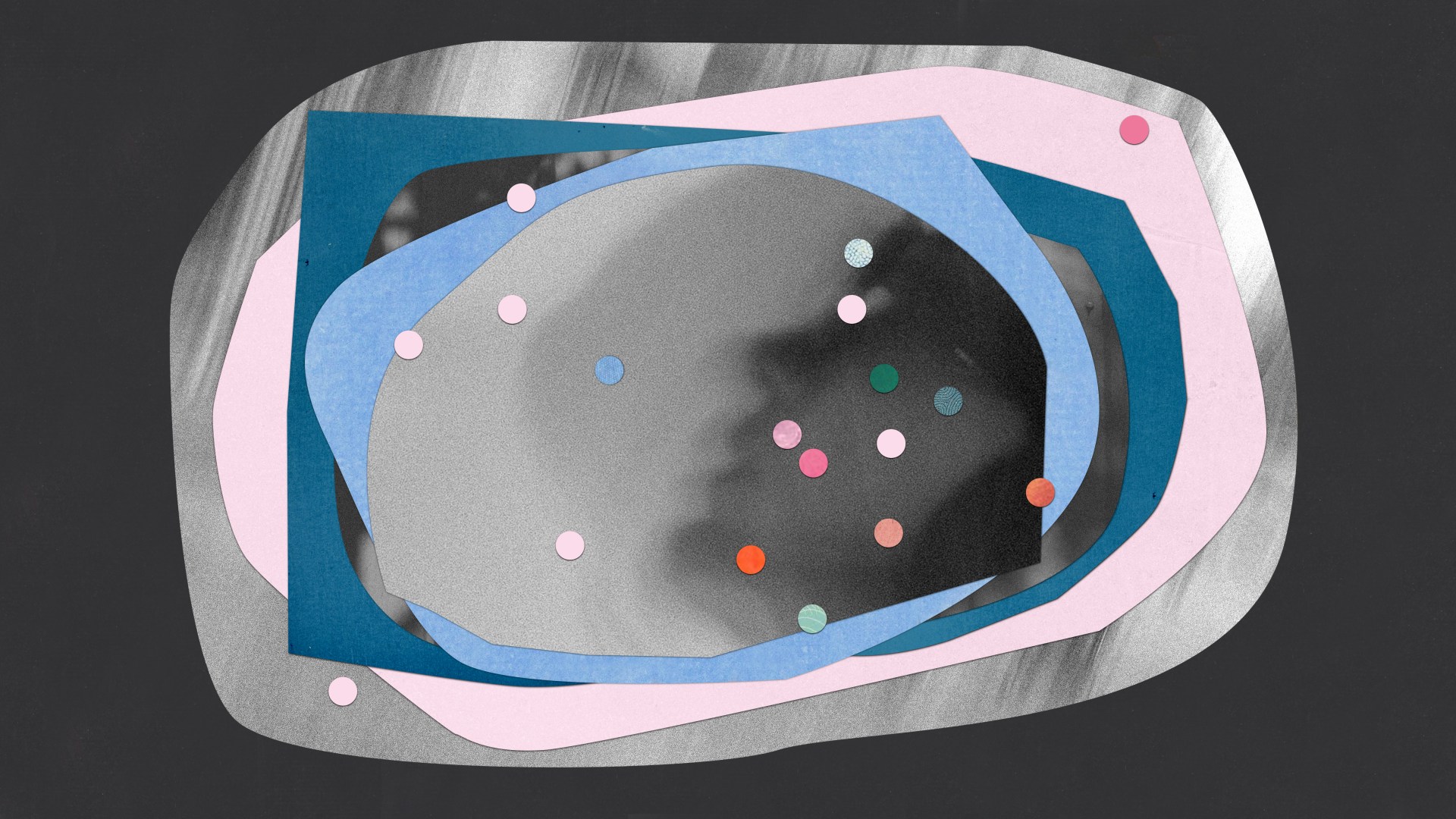
Illustration by Christianity Today

This piece was adapted from CT’s books newsletter. Subscribe here.

Christine Jeske, Racial Justice for the Long Haul: How White Christian Advocates Persevere (and Why) (IVP Academic 2026)

Racial Justice for the Long Haul has a very specific audience in mind, one that is likely a minority among Christians, as the author herself seems to acknowledge. “By becoming Christians who cared about racial justice, they became their own kind of numerical minority among the wider body of White Christians,” writes Christine Jeske, associate professor of anthropology at Wheaton College.

But Jeske offers those who do find their way to her work a unique anthropological approach to studying repair across racial divides in a faith context. She bypasses easy platitudes and feel-good sentiments to drill down practicalities: what has sustained over 70 individuals who bring their Christian faith and a proven history of work in this thorny area.

Along the way, Jeske explores how race interacts with key theological concepts, including suffering, hope, and grace. Many of the stories she shares are unsparing reminders of how messy relationships can be between Christians of color and their white counterparts. But it’s precisely that discomfort into which Jeske invites readers to lean. Her hope shines through—far from Pollyannaish—that her book will be a resource for those desiring to forge stronger, more redemptive relationships across racial barriers. But as she suggests, it might land only with readers already committed to her framework for race relations.
Michael Luo, Strangers in the Land: Exclusion, Belonging, and the Epic Story of the Chinese in America (Doubleday 2025)

In the 19th century, tens of thousands of Chinese laborers hoping to better their lives traveled to Gum Shan, or the American West’s “Gold Mountain.” An initial welcome swiftly soured, and these new immigrants faced entrenched prejudice, white mob violence, and exclusionary federal laws.

Michael Luo’s debut book is a delight to read, characterized by precision, authority, and a knack for landing on fascinating characters even as he pulls no punches in detailing the numerous tragedies that color this history. The New Yorker writer’s painstaking eye for detail illuminates every page.

Along the way, Luo relates horrifying incidents of racial terror, from efforts to expel Chinese laborers from nearly 200 Western communities to graphic details about the 1871 Los Angeles massacre.

A Christian himself, Luo has an eye for the role faith played in this complicated history. Some clergy sought to aid their new neighbors, acting as intermediaries, championing their education, or defending them in the public square. Others, suspicious of the “heathens,” inflicted persecution and preached exclusion.

“Perhaps the biggest obstacle of all to the spread of the gospel among the Chinese … was the abuses they experienced,” Luo wrote as he told the story of Huie Kin, a Chinese American Presbyterian minister.

Strangers in the Land ably depicts how America’s struggle over “the Chinese question,” which often failed to live up to democracy’s stated ideals and promises, nevertheless proved the grit and determination of those under scrutiny.

Edmund Morris, Theodore Rex (Random House, 2002)

“It is a horrible thing,” wrote one former White House aide, “to realize that we have a bully in the White House.”

That is just one of the many strong reactions provoked by Theodore Roosevelt, the “accidental president” whose two terms in office left an indelible mark on his country and the world order.

The late biographer Edmund Morris won a Pulitzer Prize for the first installment of a tripartite series on America’s 26th president. His second book, Theodore Rex, focuses on Roosevelt’s time in office. This most “extraordinary President … more powerful than a king” is portrayed vividly, whether skinny-dipping in Rock Creek Park; stirring scandal by dining with a Black man—abolitionist Frederick Douglass—at the White House; or using his bully pulpit to bend a recalcitrant Congress to his bidding.

Deeply researched, the biography follows Roosevelt’s rapid consolidation of power as he expanded the Monroe Doctrine, interfered in Latin America, reckoned with racial strife, secured an end to the Russo-Japanese War, and scrapped with big monopolistic interests.

But Morris is equally interested in exploring Roosevelt’s personality and the way he alternatively bulldozed, persuaded, and alienated other powerful figures in his day—from his diplomatic adventures with career politicians to his clashes with businessmen like J. P. Morgan. Along the way, Morris weaves in colorful anecdotes, such as the story of a Mississippi hunting trip that led to small stuffed bears everywhere being christened “Teddy Bears.”

The overall disposition of the book is quite favorable toward Roosevelt, but it does relate moments of poorer judgment, most notably a circumvention of justice to Black service members in the 1906 Brownsville incident. Morris is rather too prone to quote contemporary extracts at length. Some of the language he uses to refer to racial minorities and some violent passages (such as the mob burning of a Black man) make the book best suited for mature audiences. Overall, it is a worthwhile read.

Harvest Prude is national political correspondent at Christianity Today.
Where The Church Gathers, Listens, and Grows Together

How The Big Tent Initiative is fostering unity in the Church.

The Church finds itself in a defining moment. Cultural pressure, political division, and long-standing denominational differences have too often pulled believers apart, obscuring the unity Christ calls us to embody. Yet across the Church, many are yearning for something better—a community shaped by conviction and compassion, where differences are engaged with honesty and love rather than fear.

The Big Tent Initiative was created in response to this moment. At its heart, the “Big Tent” is a shared space where Christians from diverse backgrounds gather around core biblical beliefs while remaining open to meaningful dialogue. Through compelling storytelling, thoughtful conversations, and innovative theological resources, the initiative brings together leaders, artists, and thinkers to demonstrate a more faithful way forward—one rooted in humility, grace, and mutual respect.

By elevating voices that are often overlooked and fostering conversations that are both courageous and hopeful, The Big Tent Initiative is helping the Church remember what truly binds us together in Christ.

Support for the One Kingdom Campaign makes this work possible. Your generosity helps expand these conversations, deepen understanding, and strengthen the Church’s witness. Learn more about The Big Tent Initiative and how you can be part of this movement.

News

The Jewish Archaeologist Who Inspired a Generation of American Christians

Pastors, students, and researchers have Gabriel Barkay to thank for insights into biblical history.

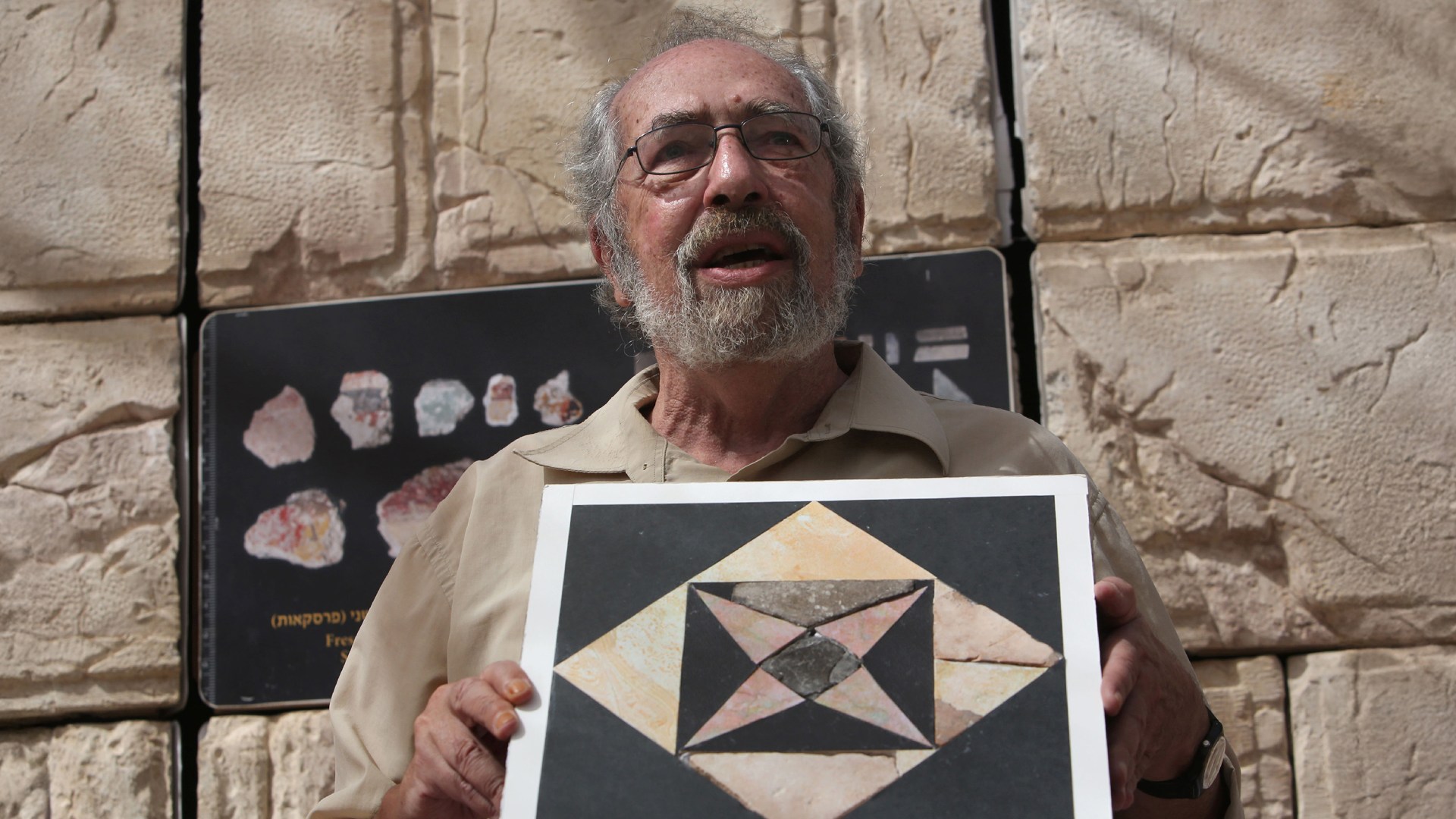
Dr. Gabriel Barkay showing a restored floor tile in east Jerusalem on September 6, 2016.

Dr. Gabriel Barkay showing a restored floor tile in east Jerusalem on September 6, 2016.

Christianity Today February 5, 2026
Menahem Kahana / Staff / Getty / Edits by CT

In biblical archaeology, there are the Dead Sea Scrolls of Qumran, and then there are the silver scrolls of Ketef Hinnom. The former are quite important; they include biblical texts over 2,000 years old. The latter are also important, containing the earliest biblical text archaeologists have ever discovered.

The two silver amulet scrolls date to 600 BC and are inscribed with the priestly blessing of Numbers 6:24–26. They were discovered in a Jerusalem excavation in 1979 by Israeli archaeologist Gabriel Barkay, who passed away January 11, 2026. He was 81.

Barkay’s career was typical of an Israeli archaeologist in many ways, with him excavating at a series of important sites. But his influence on American archaeologists and Bible scholars, particularly evangelicals, was greater than that of any other Israeli archaeologist.

One of the volunteers who worked with Barkay at the Ketef Hinnom excavation where he discovered the scrolls was 15-year-old John Monson. His father (Jim Monson) and Barkay both taught classes at what was then The American Institute of Holy Land Studies, now known as Jerusalem University College (JUC).

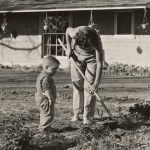
“Gabi was like an uncle to me,” Monson told CT. “We contributed garden tools from our house for that excavation.” 

After growing up in Jerusalem steeped in archaeology, Monson went to Wheaton College then Harvard University, where he graduated in 1999 with a PhD that covered the Hebrew Bible, biblical archaeology, and ancient Near Eastern studies. He is now a professor of Old Testament and semitic languages at Trinity Evangelical Divinity School. 

“Gabi Barkay was not only a genius but a person who had depth like few others in both biblical studies and archaeology,” Monson said. “He had a profound impact by his accessibility and by the depth of his expertise.”

American seminaries and Christian colleges have been sending their students to JUC since its founding in 1957. Barkay was hired as a lecturer around 1970 and taught a semester-long class on the history of Jerusalem. His daylong field trips into the nooks and crannies of the historic city, which could last from 7 a.m. to dark, were legendary.

Monson said Barkay frequently praised the American evangelical students he taught because they came hungry to learn and knew their Bibles. And in Barkay they found not just a Jewish archaeologist but a man with a passion for God’s Word.

“He was not a narrow literalist,” Monson said, “but he was one who saw the Bible aligning with its context powerfully. And because of his immersion in Scripture and archaeology, he would talk about God as the Almighty.” 

Barkay exuded a love for Scripture, in contrast to many archaeologists who do excellent work but are interested in the Bible mainly where it intersects with their excavations. They are wary of connecting the two spheres too strongly.

“Even many evangelicals are scared to go down the path of owning the alignment of Scripture and archaeology,” Monson said.

Barkay’s legacy shows itself among thousands of former students who are now in the pulpit on Sunday mornings or in front of their own classrooms, sharing their knowledge with new generations.

“I will always remember his enthusiasm,” said Jonathan Greer, who teaches anthropology at Grand Valley State University and helps direct the ongoing excavations at Tel Dan in northern Israel. He studied at JUC for a semester.

Chris McKinny teaches archaeology at Lipscomb University. He called Barkay a throwback to an earlier generation of archaeologists who could lecture for hours without notes or a break. “I think one of the keys to his effectiveness was his focus on Jerusalem,” McKinny said. “This 4,000-year-old city uniquely forces one to interact with every aspect of the archaeology and history of the Holy Land.” 

“Walking around Jerusalem with Barkay, reading biblical texts, and seeing archaeology was a true gift to me as a young scholar,” said Bobby Duke, chief curatorial officer at the Museum of the Bible. He has an MA in Hebrew Bible from JUC.

One of Duke’s younger colleagues at the Museum of the Bible, exhibits coordinator Kellie Mitchell, studied at JUC with a degree in anthropology but was uncertain about her career options. “One lecture from Dr. Barkay and his legacy, as well as some other archaeology heroes, really impacted my goals, and now I work with biblical artifacts and exhibits every day.” 

In the early ’90s, Todd Bolen was thankful to be one of the few students with a laptop, upon which he typed furiously as he took classes from Barkay. “He was one of the most influential teachers of my life,” Bolen recalled. “He didn’t just demand that I know it all; he made me want to know it all. His legacy is the way he mastered his subject and presented it so clearly.” Bolen is professor of biblical studies at The Master’s University and created Bibleplaces.com with the photos he took while studying and working in Israel.

Gabriel Breslauer (Barkay) was born in Budapest, Hungary, on June 20, 1944, three months after the Nazis occupied the city. Monson said he was whisked out of the Budapest ghetto as a baby, along with the Torah scroll of his family synagogue. The family immigrated to Israel in 1950. 

His interest in archaeology started early; he joined the Israel Exploration Society at age 10. While working on many excavations in Israel, he studied archaeology as an undergrad with Yigael Yadin, Benjamin Mazar, and other top archaeologists at Hebrew University, then completed his PhD in archaeology at Tel Aviv University in 1985. 

In 1996, Barkay was awarded the Jerusalem Prize for his work. But one of his most important and challenging jobs was still ahead. 

In 2000, one of the students he had taught at Bar Ilan University after joining the school in 1997 came to his door carrying a bag of pottery collected from a trash dump. Nine thousand tons of dirt—400 truckloads—had been scraped out of a remodeling project on the Temple Mount by Muslim authorities and unceremoniously hauled to the Jerusalem dump or scattered along the Kidron Valley.

Archaeology removed from its context is typically seen as of little value. Although the project was controversial and raised the ire of many, no one paid attention to the dirt. Studying the pottery, Barkay realized the pieces represented all the biblical periods of Israel’s history, as well as the Christian Byzantine period and the Arabic and Crusader periods.

Barkay and his student, Zachi Dvira, applied for a permit to excavate the dirt. The request was denied, but people circulated a petition and printed it on the front page of several newspapers. Academic leaders, artists, military leaders, 80 Knesset members, and former Jerusalem mayor Teddy Kollek all signed it.

After more refusals, authorities finally granted the excavation license. The Temple Mount Sifting Project (TMSP) began in 2004 and continues to this day in an outpost near The Hebrew University of Jerusalem’s campus on Mount Scopus. 

In several interviews over the years, Barkay pointed out to me that Jerusalem is one of the most excavated places on earth. “No other city has so many stories to tell,” he said. Yet the most important archaeological site in Israel, “perhaps in the world,” he said, has never been excavated and perhaps never will be—except for that illicit 1999 dirt removal. 

“In this curse, there is a blessing,” he said. “It’s the only way to find out about the history of the Temple Mount archaeologically.”

As with typical excavations in Israel, TMSP volunteers do most of the work. Tour groups, school classes, civic groups, soldiers, and other individuals by the hundreds of thousands have dumped half buckets of wet dirt onto a screen in a waist-high frame and hosed the dirt until all that was left were coins (over 7,000 so far), stones, pottery shards, mosaic tesserae, bone fragments, arrowheads, and a stunning variety of other historical refuse.

Barkay innovated this wet sifting process to ensure not even the smallest item would escape notice. Other Israeli archaeologists, such as the late Eilat Mazar and Ronny Reich, also saw the effectiveness and efficiency of wet sifting and sent material from their Jerusalem digs to TMSP. Without that additional step, finds such as bullae (seal impressions) naming biblical personalities like King Hezekiah, the prophet Isaiah, and the prophet Jeremiah’s oppressors Gedaliah and Jehukal (Jer. 38:1) might never have been found.

Archaeologist Scott Stripling worked two seasons as a supervisor with TMSP. He was amazed at Barkay’s encyclopedic knowledge and impressed with the scrutiny wet sifting yielded. Years later, when he became the director of the Associates for Biblical Research excavation at Tel Shiloh, he included wet sifting as part of the daily regimen and advocated that other digs do the same.

In 2020, TMSP sponsored an online seminar on the archaeology of Jerusalem’s Temple Mount. Barkay related the history of the project and the significance of some of its finds. The fact that there’s no dearth of material from the Byzantine period, when the Temple Mount was thought to have been barren, between the destruction of the Second Temple and the construction of the Dome of the Rock, convinced him it had to have been occupied in some way.

“Most of what has been discovered is not sensational, but it has a cumulative value,” Barkay once told me. It’s new information about the Temple Mount. During the 2020 conference, he acknowledged it would have been better if the material they were sifting and studying had been carefully excavated rather than pulled out of a trash heap.

“It has lost 90 percent of its scientific value,” he said. “But we have 10 percent left. That’s much more than zero percent.”

If you go to the TMSP website, you can find the numbers for tons of dirt sifted so far (4,742 out of 5,210 at last check), people participating in the sifting (more than 260,000), and artifacts waiting to be published in archaeological reports (more than 635,000). Once all the evidence has been accumulated and published, a fuller picture of the history of the Temple Mount can be told. 

Barkay’s earlier discovery of the silver amulet scrolls also has more to tell scholars, Monson said: “It’s one of the great finds of biblical archaeology, but its impact has yet to be digested fully in biblical studies.”

The fact that these amulets containing Scripture from Numbers and Deuteronomy were worn around necks in the days of Jeremiah shows how popular the texts were at that time. And they presumably had a long life before that. They are further evidence against the documentary hypothesis, or the JEDP theory, that was popular among critical Bible scholars for much of the 20th century and that suggested Scripture was written and compiled late in biblical history.

“Gabi, without intending to be so, represents a kind of an anchor to the reality of the Bible and the biblical world—and indirectly to the veracity of Scripture,” Monson said, adding that we still need Barkay’s voice to guide pastors who don’t know the Bible and Christian communities that fall prey to theological and philosophical whims.

Theology

We Are Not Workhorses

In a culture that champions power, Proverbs 21:31 reframes what strength and victory look like for Chinese Christians.

A gold workhorse on a red background.
Christianity Today February 5, 2026
Illustration by Christianity Today / Source Images: Unsplash

I moved to Australia from China three decades ago. One reason I felt drawn to live in the country was seeing wild horses running freely on vast, dusty plains. Their carefree spirits charmed me to move away from the concrete jungle I grew up in.

Today, my experiences with feeding and riding brown-haired colts along the beach have become a treasured part of sabbath rest for me in the busyness of life and ministry.

Scripture often portrays the horse as a symbol of military power, royal authority, and fearlessness in battle. The NIV translation, for instance, mentions the animal 176 times.

In the Old Testament, we encounter the mighty Egyptian horses and riders that God hurled into the sea in Exodus 15 and the 12,000 horses (or charioteers) that King Solomon possessed as a sign of his riches in 1 Kings 10. In the Wisdom Literature, God interrogates Job about the source of a horse’s strength and fearlessness, vividly describing its leaps, snorts, and fierce charges towards the enemy (39:19–25).

In the prophetic books, visions of horses as agents of divine action and triumph recur, like the four spirits of heaven appearing in the form of red, black, white, and dappled horses in the Book of Zechariah (1:8; 6:1–8). And in the Book of Revelation, the image of Christ and the heavenly armies riding white horses showcases the pinnacle of God’s authority (19:14).  

Yet for all its positive depictions of horses, the Bible exhorts us not to trust in the strength of a steed but rather to trust in God’s might and sovereignty, as Proverbs 21:31 declares, “The horse is made ready for the day of battle, but victory rests with the Lord.”

This verse offers a rich perspective on what victorious living ought to look like for Chinese Christians who celebrate the Year of the Horse this Lunar New Year. Scripture exhorts us not to define victory as attaining personal or political success but to regard it as Christ does: a giving up and surrendering to God’s plan and purposes. 

Like Scripture, Chinese culture holds the horse in high regard. The Chinese zodiac says that people born this particular year are hardworking, active, and energetic and are supposedly best suited to be architects or entrepreneurs.

Popular Chinese idioms use the horse (ma) to signify vigor and vitality at an individual and communal level. One idiom, ma dao cheng gong, describes achieving success through persistent effort and confidence in one’s abilities—much like a horse triumphantly galloping toward the finish line in a race. Another idiom, long ma jing shen, articulates how a person or community is filled with a vigorous and courageous spirit.

Decorative depictions of the horse are also a mainstay in many Chinese homes and offices. Statues of the fierce, sleek beast are often displayed facing doors or windows to attract positive qi (energy) as a means of boosting wealth and fortune, according to feng shui (Chinese geomancy).

These modern-day perceptions of horses in Chinese culture arise from the ways that political and national strength have been defined in Chinese civilization across the centuries.

Ancient Chinese people regarded horses as a key resource for transportation, productivity, and warfare. The Terracotta Army, which was created in the late third century BC to protect the first emperor of China, Qinshi Huang, in the afterlife, comprises life-sized sculptures of soldiers, horses, and chariots. The golden age of the Tang Dynasty (AD 618–917) was also famous for producing decorative glazed horses in sancai (three-color style) to extol the nation’s prowess over others.

China may not rely on the horse anymore, but it still seeks to exert its power through transport and industry. The Belt and Road Initiative (BRI), a massive worldwide project implemented by the Chinese government in 2013 that is also known as the New Silk Road, aims to connect China with Eurasian countries via roads, railways, ports, and maritime routes. 

Chinese Christians have expressed enthusiasm about BRI, noting that it may offer opportunities for believers to live and work among communities with limited access to the gospel. However, this view underestimates the pitfalls in sharing the gospel cross-culturally, particularly when intermingled with economic and political power.

Such evangelism and outreach may well make the same mistakes that colonial-era missions have made in history. This form of missions risks imposing a culturally and socially bound gospel without an attentiveness toward, and empowerment of, local believers.

Proverbs 21:30 reminds us that “there is no wisdom, no insight, no plan that can succeed against the Lord.” Victory—or how to carry out missions effectively as Chinese Christians in this case—is found in the knowledge that it is the Holy Spirit, not political, economic, or social influence, that causes fruit to flourish on hard ground and causes the gospel to spread.

Within the Chinese church, our understanding of what being “horse-like” is can also backfire. Just as a horse’s value lies almost entirely in what it can carry and how far it can go, Chinese Christians may unconsciously operate with a similar framework in how they relate to God and ministry.

Here, a person’s commitment to ministry is often measured by his or her level of perseverance, endurance, and ability to bear hardship (or “eat bitterness”). In such environments, victory tends to be defined by refusing to rest until every task or commitment is completed. Consequently, people experience exhaustion and burnout, especially in paternalistic church structures where it may be hard to disregard an elder or pastor’s authority as a church member.

But Proverbs 21:31 subverts this cultural inclination to rely on our own “horsepower”  (human effort) as a symbol of strength and victory. While discipline and obedience are valuable, the verse resists the illusion that our individual abilities are what help us secure success.

The danger lies not in the hard work we do in building up the kingdom of God, but in allowing this work to become ultimate. Work without reliance and rest quietly shifts faith from God to human capability.

This proverb shapes a posture of humble readiness within us. God’s people are to serve him faithfully while surrendering outcomes they cannot control to him. Fruitfulness is not guaranteed by strategy or strength but is received as a gift. We are not to treat people as “workhorses” but walk alongside them at the pace and revelation of God’s love.

The truth that “victory rests with the Lord” in Proverbs 21:31 frees us to act wisely without anxiety or coercion. We are called to work diligently and prepare fully for “the day of battle”—fighting against dark spiritual forces threatening Christian faith and unity—and recognize God’s presence and provision all the way.

Still, victory is not merely winning wars, whether physical or spiritual; rather, it is placing our full trust in the Lord who alone gives life, joy, and peace.

One of the clearest illustrations of what strength and victory ought to look like for Chinese believers comes from Jesus entering Jerusalem on a humble donkey, rather than a fearsome horse (Matt. 21:5).

Here, the reign of God is established not by force, conquest, or relentless forward momentum, but through self-giving love expressed in compassion, peace, and justice. Jesus’ authority, in stark contrast to worldly powers, is expressed in meekness, an unassuming persistence that accomplishes God’s purposes over time.

The counter-cultural image of Jesus riding a donkey in this Bible passage also speaks of an intentional lowliness, a downward mobility that Christ invites us to imitate. What would it look like for Chinese believers to become a lowly “donkey” ridden by the Lord? Can we become “the foolish things of the world” God chose to shame the wise (1 Cor. 1:27)?

The horse remains a powerful symbol of courage and might in Scripture. These are virtues the church should not abandon. But the gospel reframes how we ought to understand depictions of the horse in Chinese culture.

Chinese Christians are not to function merely as war horses driven toward success. In all we do for God, we are to be shaped by love, bounded by humility, and sustained by rest.

Like the prophet Jeremiah, who committed his life wholeheartedly in response to God’s call to “run with the horses,” as Eugene Peterson puts it (Jer. 12:5), we can pursue life with purpose and excellence, resting in the confidence that God already holds the ultimate victory over sin and evil through Jesus Christ.

Xiaoli Yang is an Australian Chinese theologian, spiritual director, and poet. Her recent publications include Chinese Christian Witness: Identity, Creativity, Transmission and Poetics.

News

Families of Venezuelan Political Prisoners Pray for Their Release

The acting president proposed an amnesty law, yet hundreds remain in prison.

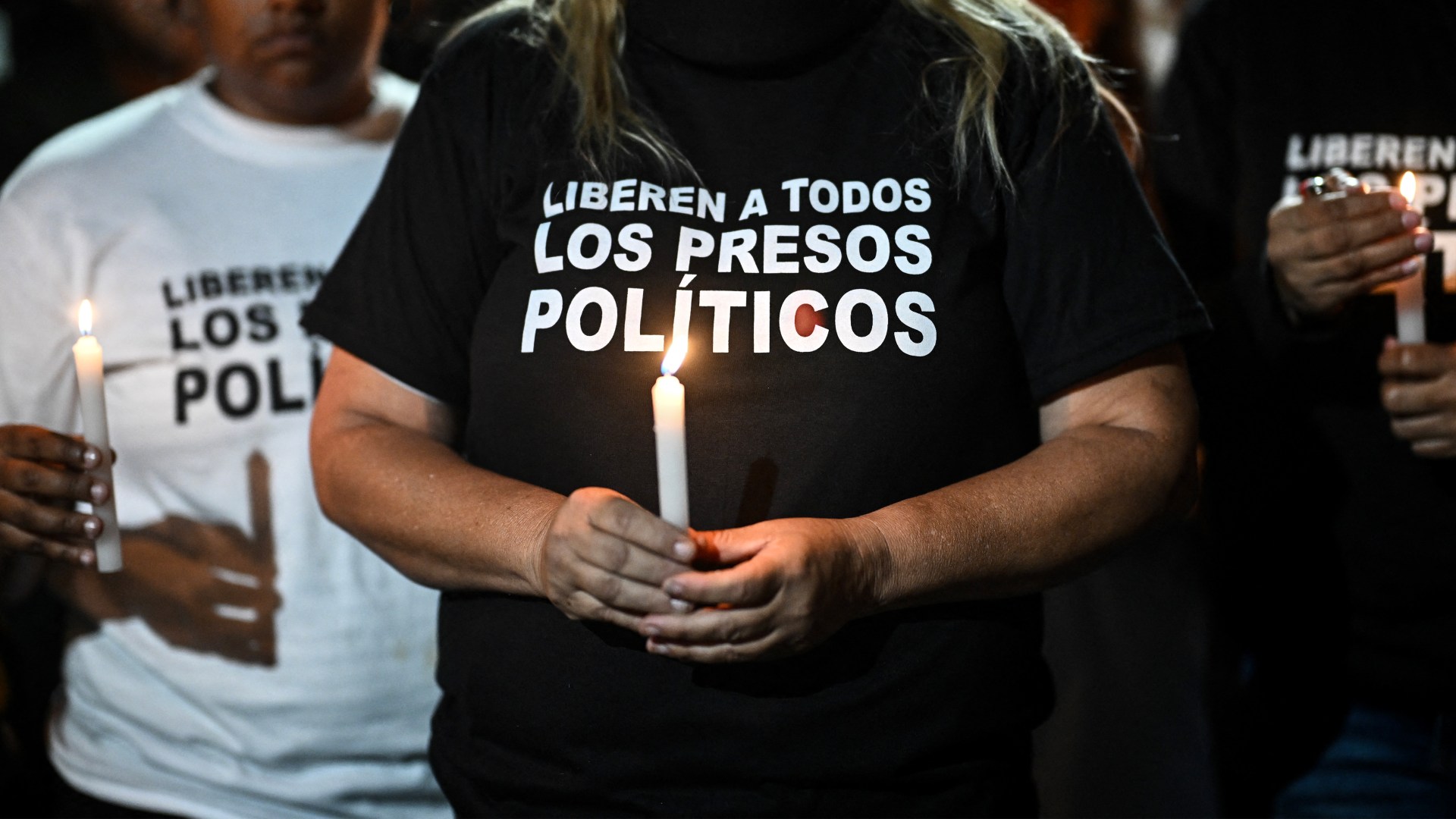
A woman holds a candle during a vigil to demand the freedom of Venezuelan political prisoners.

A woman holds a candle during a vigil to demand the freedom of Venezuelan political prisoners.

Christianity Today February 5, 2026
Ronaldo Schemidt / Getty

On the evening of January 17, dozens of people gathered outside Zona 7 detention center in Caracas, Venezuela. Holding candles and signs calling for the release of political prisoners, they joined pastor Luis Méndez in prayer: “We cry out for freedom for innocent political prisoners. Let the prison gates be opened throughout this country, in the name of Jesus of Nazareth.” 

Behind him stood police in full riot gear.

Since January 9, the family members of political prisoners have held vigils outside some of the 120 detention facilities in Venezuela, including El Helicoide, El Rodeo I, Tocorón, Ramo Verde, Yare, and Zona 7. Some wore black and white shirts reading, “Free all the Political Prisoners,” as they lit candles, sang worship songs like “Way Maker,” and knelt in prayer. At one vigil, people wore chains around their necks while holding up a Venezuelan flag.

The families are pressing the acting government in Venezuela to make good on its promise to release the country’s political prisoners following president Nicolás Maduro’s capture on January 3. The government had said it would release political prisoners as a gesture of goodwill and willingness to respond to US demands. 

Since then, the interim government led by Delcy Rodríguez claims to have released more than 600 prisoners. Yet human rights group Foro Penal found that only 383 political prisoners have been freed, while about 650 remain behind bars. 

After 21 nights of vigils, Rodríguez announced on January 30 that she would propose an amnesty law to the National Assembly. The law would drop the charges imposed since 1999, the year Hugo Chávez rose to power, against all political prisoners.

Yet relatives of the prisoners and human rights organizations remain skeptical about the announcement. 

“We welcome with optimism, but also with caution, the announcement of the amnesty law that will encompass all political prisoners and those persecuted in Venezuela,” Alfredo Romero, director of Foro Penal, said in a statement. “We hope that this step will contribute to justice, freedom, peace, and national reconciliation.”

Marcos Daniel Velazco, whose father, Julio, is still being held in Zona 7, agreed. “The amnesty law will only make sense when all political prisoners are freed,” he told CT. “Since the announcement was made, there has been no real, large-scale gesture of release and forgiveness for political prisoners.”

Velazco said his father’s only crime was driving a bus for supporters of opposition leader María Corina Machado during the May 2025 elections.

“My father was kidnapped by the regime and disappeared for 49 days,” said Velazco, who currently lives in the US. “We learned of [his arrest] only when the Caracas court handed down a 30-year prison sentence, falsely accusing him of terrorism and of attempting to lead a plot to assassinate Diosdado Cabello, the minister of the interior.”

But Velazco said Julio is neither an activist nor a politician. Rather, he is a meat-products distributor and a Christian passionate about sharing the gospel message with everyone he encounters.

Velazco believes the real reason for his father’s arrests is that the government wants to use him as a pawn to gain more information about Machado through Velazco, who is friends with the Nobel Peace Prize winner. After Machado met with US president Donald Trump on January 15, she ran into Velazco outside the US Capitol building and gave him a big hug.

Born into an evangelical family, Velazco became interested in politics at a young age, joining the Christian Democratic Party. He studied political science at the Central University of Venezuela and led groups of youth aligned with the opposition party Vente Venezuela.

When he first heard authorities had detained his father, he was shocked. 

“I didn’t feel hatred but a lot of helplessness in the face of injustice,” he said. “Seeing a family member kidnapped as a consequence of the work one does is very, very painful.”

He worries about his father’s health, as the detention centers are overcrowded and unsanitary, with the Venezuelan Prison Observatory recording 25 deaths of political prisoners since 2015. 

Since Maduro came to power in 2014, the regime has detained nearly 19,000 political prisoners and held them in 120 prisons around the country. The most famous is El Helicoide, a former futuristic shopping mall Chávez transformed into a massive prison and torture center. Instead of housing luxury stores, it holds prisoners captured by the Bolivarian National Intelligence Service (SEBIN).

Josnars Adolfo Baduel spent four years inside El Helicoide, where he faced beatings, electric shock, and suffocation, according to his sister Andreina, who heads the Comité por la Libertad de los Presos Políticos (Committee for the Freedom of Political Prisoners). At one point, prison guards hung him from his tied wrists for days. 

“We have been persecuted with cruelty simply for having the last name Baduel,” Andreina said. 

Andreina and Josnars’ father, General Raúl Isaías Baduel, was responsible for restoring Hugo Chávez to power after the coup attempt against him in 2002. In return, Chávez appointed him commander of the army in 2004 and minister of defense in 2006. 

But a year later, his relationship with Chávez broke down as he spoke out against the dictator’s constitutional reform that would keep him in power and turn Venezuela into a socialist state. For this, authorities imprisoned Baduel in 2009 and again in 2017. He died under unclear circumstances while in prison in 2021. Authorities also detained his three sons, including Josnars, who is currently serving a 30-year prison sentence for the crime of “conspiracy.”

Two years ago, authorities moved Josnars to El Rodeo I prison, where Andreina said he is allowed weekly visits. Yet “he has asked me not to go see him,” she said, “because I could be arrested due to my activism for the freedom of all political prisoners.”

Another prominent political prisoner is Leocenis García, a presidential candidate for the ProCiudadanos party. After he shared a video on social media denouncing Maduro for electoral fraud, SEBIN detained García on September 11, 2024, accusing him of terrorism. A few months before his arrest, García spoke to CT about how Maduro sought to court evangelical voters. Yet “with faith in political leaders—both government and opposition—disappearing, people have increasingly clung to religious beliefs,” he said at the time.

García’s father, who bears the same name, feared the worst on the night of Maduro’s capture, as Diosdado Cabello, Maduro’s right-hand man, had threatened to kill political prisoners if the United States launched military action against Venezuela. 

Now García’s father sees the prisoners being used as leverage in Chavismo’s negotiations with Trump.

“They are releasing people selectively,” the senior García said. “Political prisoners are like bargaining chips for this regime.”

Since last year, he has been able to see his son every Saturday. He is also allowed to bring him food and hygiene products, which his son shares with other inmates who still can’t see their families.

Meanwhile, Velazco noted that in the detention centers, the number of evangelicals is growing. 

“We have a lot of Pauls and Silases in Venezuela’s torture centers,” said Velazco, who has heard stories from the families of political prisoners. “I’m sure their prayers will break chains and bring about their release. Many went in as unbelievers and have been transformed and touched by the Lord inside.”

One of the converts is former opposition congressman Freddy Superlano, also detained in El Rodeo I, whom his wife, Aurora, saw for the first time in 18 months on January 24. “Don’t stop praying for us. Don’t stop praising God, because we can hear you from inside, and we are praying with you,” she remembers him stating before saying goodbye through the security glass that separated them.

Like Superlano, more detainees have been allowed visits since Maduro’s ouster. Julio Velazco’s wife was able to see him for the first time on January 27, nearly 150 days after his arrest. She found him thinner but hopeful, convinced that the day of his freedom was near. 

Behind bars, he said he draws strength from Isaiah 41:10, a verse he memorized with his children when they were young: “So do not fear, for I am with you; do not be dismayed, for I am your God. I will strengthen you and help you; I will uphold you with my righteous right hand.”

Theology

When Christians Contemplate Assisted Suicide

Columnist

Answering a reader’s tragic question requires more than a sound theology of hell.

An empty hospital bed.
Christianity Today February 4, 2026
Illustration by Christianity Today / Source Image: Unsplash

This piece was adapted from Russell Moore’s newsletter. Subscribe here.

A reader of my newsletter asked me if he might be going to hell.

Actually, the reader’s question was quite a bit more nuanced. He’s a Christian, a committed follower of Jesus. He’s also suffering from a debilitating, painful, and slowly terminal disease. Let’s call him Max. He lives in Canada, where physician-assisted suicide—or “aid in dying,” as the euphemism goes—is now legal and ubiquitous. Max says he is not at all suicidal. He is not tempted to die. But, he notes, he is looking at himself right now. Who can tell what state of mind he will be in in five or ten years? Who can predict what will tempt him later, when he might be much weaker?

What if, Max wonders, a future version of himself were to make a decision he would never make right now—maybe because his disease blurred his thinking or simply because he’s in a different place spiritually. Would he go to hell?

Max’s question is in some ways a very old one but in other ways a pressing matter. In Canada, medical assistance in dying (MAID) has expanded at lightning speed—from terminal illness to chronic suffering and now, in principle, to mental illness alone—making it one of the most permissive regimes in the world. In parts of Europe—such as the Netherlands and Belgium—eligibility has widened to include those with psychiatric conditions and, in some cases, even minors. Here in the United States, several states allow physician-assisted suicide, but only for the terminally ill and with tighter procedural limits. But it’s not hard to see that the framing of assisted dying as compassionate is advancing culturally.

There are at least two angles to Max’s question, and all of them make me sad. The first is the gospel angle. I was hesitant to say to him, “You will not go to hell.” That’s because I was afraid that if indeed some future version of him changed his mind in a darker direction, he might use that as reassurance to choose to die. Yet if I were to use the threat of hell as a useful rhetorical tool, would I not be doing the very thing I most oppose—turning the gospel into a means for manipulation? Even worse, would I be doing what Jesus never did: breaking a bruised reed, snuffing out a faintly burning wick?

What Max needs to hear right now is John 3:16–17: “For God so loved the world, that he gave his only Son, that whoever believes in him should not perish but have eternal life. For God did not send his Son into the world to condemn the world, but in order that the world might be saved through him” (ESV throughout). In other words, God’s love for Max is real. God is not a bigger version of Faust’s Devil, looking for loopholes in a contract in order to damn one who has come to him.

The very fact that Max is asking this question means his real question is whether he’s really loved or whether God loves him for his stability and strength right now. This suffering man wants to know if it’s true that, as the apostle Paul wrote, “neither death nor life, nor angels nor rulers, nor things present nor things to come, nor powers, nor height nor depth, nor anything else in all creation, will be able to separate us from the love of God in Christ Jesus our Lord” (Rom. 8:38–39). If none of that can sever his union with Christ, a future mental illness won’t either.

But the second angle is the personal suffering this question reveals. Max didn’t say this, but I suspect his question is not just about uncertainty of his own resistance to temptation in the future. It may also point to an even more tragic fear: Is my living a burden to those around me?

“Will I go to heaven?” might be a request for straightforward theology, but it also might hint at something else. Have you ever been somewhere, maybe a dinner party, where you wondered, Have I stayed too long? Is everyone being polite but secretly wishing I would just leave? Maybe Max is worried about that kind of future and doesn’t know what pressure he will face then, even if it’s unspoken.

In the social Darwinism of this time, many people see human life as something calculable. Am I contributing? Am I useful? Am I wanted? If human beings are just machines made of meat, those calculations make sense. And if the law of nature is our morality, then few things could seem more natural than a stronger animal snuffing out the life of a weaker one to keep it from dragging down the rest of the herd.

But if human life is something more—a mystery that somehow discloses a sign of God himself—then to treat that mystery as the sum of its contributions is a long disobedience in the wrong direction.

And that brings me to the third angle: culture and policy. Consider the cultural context in which these questions of “assisted dying” are unfolding: aging populations, overwhelmed health systems, loneliness, marginalization of those with disabilities, economic anxiety, and a growing sense that everyone must justify their own continued existence. The signs are not promising when we look at the prospects of war, political collapse, and technological upheaval.

In the background is a key question: Is human life to be protected precisely when it feels most burdensome, or should it be optimized and monetized and, when it no longer “works,” discarded like an obsolete digital app? The question is not just about Max—although it would be worth asking even if it were—but about what kind of society we are becoming. It is about whether we respond to despair with relationship or with an exit sign.

This question is precisely what is so cruel about Max even facing this choice. What was once framed as a right becomes, in the fullness of time, a responsibility. We shouldn’t judge Max for wrestling with this awful possible temptation. He might well see an entire society saying to him, “Why don’t you just die already?” Max needs a community willing to bear his burdens—not just the burden of his illness and suffering but also the burden of his despair.

If Max has put his trust in Jesus, he is not going to hell. But if we’re not careful, the rest of us could act like the Devil. And we should turn back from that before it’s too late. We should see “assisted dying” for what it is—an exploitation of the weakest among us just to keep us in our illusion that a life with suffering is no life at all. As Jesus told us, “For it is necessary that temptations come, but woe to the one by whom the temptation comes!” (Matt. 18:7).

After his resurrection from the dead, Jesus appeared to Peter and the other disciples by the Sea of Tiberias. Peter must have had ringing in his mind the words Jesus had spoken to him before everything went sideways: “Satan demanded to have you, that he might sift you like wheat, but I have prayed for you that your faith may not fail. And when you have turned again, strengthen your brothers” (Luke 22:31).

Here Peter was—having run away and denied his Lord. But there Jesus was—not in judgment or anger but with the same words he said on that same shore years before: “Follow me” (John 21:19).

What Max should think about, should he ever waver—and what I should think about if I do too—is how Jesus defined what it means to follow him: “Truly, truly, I say to you, when you were young, you used to dress yourself and walk wherever you wanted, but when you are old, you will stretch out your hands, and another will dress you and carry you where you do not want to go” (v. 18).

What Jesus meant by “Follow me” wasn’t summed up in Peter’s coming strength—his sermon at Pentecost, his plowing the way for the Gentiles to enter the church, his escapes from the Roman authorities. It was defined here by the very moment when Peter was at his weakest, in his deepest suffering and despair, in his helplessness to control his future. That’s following Jesus too. In many ways, that’s when following Jesus really starts.

Max, if you have put yourself in Jesus’ hands, you’re not going to hell. God loves you and draws near to the brokenhearted. Of all of the things you have to carry right now, worrying about God’s perception of you is not one of them. He hears and saves all who look to him for mercy through Jesus, full stop.

I want to encourage you to live. That’s not because I am worried you will go to hell. God’s mercy is greater than all our sin. It’s because your life is worth living. Your life is a mystery—indwelt by God—even when you don’t feel like it. You are not alone. It’s okay to pray now for future Max, but you don’t need to store up the grace you will need then. It’s already in the future waiting for you. I can’t imagine the suffering you face or will face. But Jesus loves you, this I know.

If you are in immediate danger or are thinking of harming yourself, please, right now, reach out to someone local who can help you stay safe. If you’re in Canada or the United States, you can call or text 988 for the Suicide and Crisis Lifeline. Someone will answer 24 hours a day and can connect you with people who will listen and help you find care nearby.

Russell Moore is editor at large and columnist at Christianity Today and leads its Public Theology Project.

Ideas

We Are Obsessed with Gender

Staff Editor

With incoherent language trickled down from academic theorists, we think and talk about gender incessantly—and to our detriment.

A baby with pink and blue circles.
Christianity Today February 4, 2026
Illustration by Mallory Tlapek / Source Images: Pexels, Wikimedia Commons

I would just like to point out,” said Sara Jacobs, a California Democrat speaking from the House floor, “that I think it’s very interesting that my colleague from South Carolina [Rep. Nancy Mace] is so obsessed with the issue of trans people—using horrible slurs to talk about them—when many people in this body have received gender-affirming care.”

Jacobs wasn’t referring to lawmakers who have undergone medical transition, of whom there is exactly one. Her argument was rather the increasingly common notion among trans advocates that cosmetic and reparative plastic surgery, treatment for hormonal disorders, less permanent cosmetic alterations, and even cancer prevention may be swept into the same category as a vaginoplasty performed on a male. Jacobs continued:

Filler is gender-affirming care. Boob jobs [are] gender-affirming care. Botox is gender-affirming care. Lots of my colleagues have received gender-affirming care. And let me be clear: I think everyone should have access to the gender-affirming care that they need.

This is nonsense, not least because no one needs cosmetic filler. But it is perhaps a predictable nonsense in a culture as fixated on gender as ours.

America has long been consumed by sex: having it, wanting it, denying it, describing it, commodifying and coercing and containing it. But this conscious fixation on gender is comparatively novel.

We think about gender too much. We talk about gender too much. We are ruminative—mulling, mulling, mulling what it means to be a woman; to feel like a “real man”; to be masculine but not toxic or feminine but not retrograde; to flout stereotypes and profit from them; to willingly choose the only option our grandmothers ever had; to cut into our bodies to make them meet the very social standards and vanities we denounce.

Our obsession, if I may borrow the single word Jacobs got correct, is not limited to one side of the culture war. To be sure, the left-wing version is the more obvious and disquieting—gender theory and the elective, sometimes gruesome and unsuccessful surgeries it is deployed to justify. This is a milieu that at once makes too much of our body parts (“bodies with vaginas”) and too little of our embodied sex as part of an integrated whole (“trans women are women”).

The right-wing version is more familiar, though lately expressed in technologically novel forms. Tradwife influencing is big business. Burly men who drink whiskey, grow big beards, wear flannel, and record Reformed theology podcasts are a trope for good reason. President Donald Trump’s supporters work up AI images that plop his head onto cartoonishly masculine bodies.

Or consider Secretary of Homeland Security Kristi Noem, who apparently prepared for her move from congressional and state politics to the White House with an Instagram-inspired makeover: tight clothes, long and flowing hair, new teeth, and what looks to my eye to be considerable use of injectables. Noem made news early in her tenure for a series of photos and videos that seemed designed to remind their beholders that, though filling a stereotypically masculine role in a historically male sphere of life, she is not only a woman but also an attractive and uncannily youthful one.

The American church has not escaped this obsession. We too talk endlessly about manhood and womanhood (biblical or otherwise), masculinity and femininity, gender roles and whether our conception and execution of them is Christlike or worldly. Sometimes it seems we attend more to the conversations and cultural trappings around the male and female experiences than to males and females themselves.

When I was a child, gender was a polite euphemism for sex, deployed when you wished to distinguish between male and female but could not bring yourself to enunciate the word that also signified the act of copulation. That usage lingers, but it is not what I mean when I say we are fixated on gender.

Exactly what I do mean is difficult to pin down—not because it’s uncertain in my mind but because it’s uncertain in our culture. The way we now speak about gender in popular conversation is downstream of the convoluted work of academic gender theorists, the most recognizable of whom is Judith Butler, known for her conception of gender as a sort of performance. (If you’re unfamiliar, here’s a taste from a 2021 interview: It is “anti-feminist, homophobic, and transphobic,” Butler alleged, to insist “that sex is biological and real.”)

The exact schema of gender theory depends on the thinker. For some, gender is an expression of sex; for others, it is wholly independent of sex; for yet others, the relationship is different still. But as most of us have adopted the newer uses of gender without any knowledge of that theoretical history, two colloquial definitions will here suffice.

Sometimes we distinguish between gender and sex as I have implicitly done in the first section of this article: Sex is the biological fact, while gender is about the cultural expectations, norms, and habits related to each sex. Gender as “a social construct” is the common phrase.

In my marriage, I am the spouse who gave birth because I am female (that’s sex). I’m also the spouse who wears a dress to our cocktail parties because that’s the conventional attire for such an occasion in the modern West (that’s gender). In this usage, sex and gender are related. Sex is the primary or foundational element, while the expectations, norms, and habits of gender may be questioned or changed, whether deliberately or organically. My husband could not choose to give birth, but I could choose pants for our next party.

At its best, gender in this sense is a useful word for talking about what we expect of and assume about one another in connection to the realities of sex. It can be a tool of prudence and grace. At its worst, however, this understanding of gender devolves into rank stereotyping and sets the stage for the second colloquial usage.

Sometimes we speak about gender as Catholic scholar Abigail Favale critically described in The Genesis of Gender: “the sex of the soul, the innate manhood or womanhood that may or may not ‘align’ with the sex of the body. In this understanding, gender is decidedly not a mere construct, but is rather a pre-social reality, the inner truth against which the body must be measured.” Here, an internal conception of gender is the primary or foundational element, while the sexed body may be questioned or changed through hormonal and surgical intervention.

It is incoherent to hold to these two colloquial ideas of gender simultaneously. Gender cannot be both an external social construct and an internal, indisputable sex of the soul. It cannot be both secondary to biological sex and its unquestionable override. Yet in practice, particularly in conversations around gender dysphoria, that incoherence is blithely ignored.

It works like this: Drawing on the second usage, trans advocates announce the existence and primacy of gender identity. Some people may imagine that being trans is a choice, the sole trans member of Congress, Sarah McBride, told The New York Times. “That’s not what gender identity is,” McBride said. “It is much more innate. It is a visceral feeling.”

But what exactly does that feeling entail? What does it mean to feel like a man or a woman? How would a member of one sex—who has only ever experienced life as that sex—have any true knowledge of the internal experience of the other? We can imagine, sure. But how would we know?

This is when the worst version of the first usage is pulled into play: You feel like a woman if you like stereotypically female things. You feel like a man if you enjoy stereotypically male things. A little boy who plays with a princess dress-up set is conforming to norms for girls (gender in the social usage); therefore he may be said to be a girl (gender in the soul usage).

McBride and allies might cry foul here, contending that it’s not so simple as this, that a playtime predilection would not set anyone on the path to medical transition. Maybe not, but in many cases I think my simplification is slight.

“If girlness and boyness no longer reside in the body, there is no other ground for these concepts except stereotypes,” Favale observed. And so, “when a girl recognizes that she does not fit the stereotypes of girlhood, she is now invited to question her sex rather than the stereotype.”

It is unsurprising, then, in transition stories, to hear a ruminative concern for what social-gender is supposed to say about soul-gender. In 18 Months, Shannon Thrace’s memoir of her husband’s transition and the resulting dissolution of their marriage, she repeatedly describes “endless ruminating.”

“Since you came out, we haven’t had a single pleasant evening,” she writes, addressing her ex-husband. “You’re obsessed with your appearance. You’re fragile and quick to fight. You cry yourself to sleep.” She mourns “the days when we snapped green beans on the porch. Concerns about your gender consume our days and keep us up at night.”

Or consider the account of a detransitioner named Céline Calame, who wrote on her Substack last summer about life after a regretted mastectomy:

It is odd for me to look at myself in the mirror. … My chest feels simultaneously flat and full. When I focus on it, this between-feeling makes my head hurt and stomach twist. I grasp myself—where am I? How long have I been gone? What could my body have been if I had never thought of “woman” as an identity I had to feel in order to be, and had never pursued these medical interventions?

Calame’s final what if points toward the way out of this ruminative cycle. Being a man or a woman, as Christian author Leah Libresco Sargeant told me in an interview, is not dependent on our feelings or actions. It is a fact, a biological reality, a relational necessity, a given, and a gift of God, though a gift we may sometimes struggle to understand.

Rejection of that givenness is unmistakable in trans medicalization. But our culture’s far broader tendency to ruminate on gender, Sargeant said, likewise “implies that being a man or a woman is something you can fail at”—and therefore a project in which you must pursue some measure of success.

The better understanding, Sargeant said, is that “there are men and there are women, and both men and women are called to virtue.” Sex is a given, but virtue is not, and our individual pursuits of virtue may well be shaped by our sex and gender (in the social sense). “Virtue is what you can fail at,” Sargeant continued, drawing on the work of Sister Prudence Allen:

You can be more or less virtuous—more or less anything—but sex is a bedrock thing about you. It can’t be threatened by, say, the fact that you wear jeans or don’t. You can grow further into virtue, and when you’re brave as a woman, you’re always brave in a womanly way. That’s not because the act of bravery is different. You’re brave in a womanly way because you are a woman. Your gender is never imperiled.

Now, your soul can be imperiled. You can be more or less virtuous. You can be more or less of what God has asked you to be—which is not necessarily the same as what he’s asked the man or woman next to you to be. But whatever you do, you are always doing it in a womanly way.

The claim here is not about different standards of morality for the sexes. In her newest book, The Dignity of Dependence, Sargeant approvingly quotes Teddy Roosevelt remembering his father’s instruction that “what was wrong in a woman could not be right in a man.” Yet a man’s cowardice might well be distinguishable from a woman’s, and a woman’s courage may take a different shape than a man’s.

What would it mean to understand that we can’t fail in being a man or a woman? That it’s a given that “male and female he created” us (Gen. 1:27)? How could it break our culture’s gender fixation?

To begin, we can be free of the taxing and ridiculous idea of gender affirmation. If a woman is something I am, not something I must somehow feel or do, then there is no way to make me more or less a woman. There is no way to diminish my sex—and no way to affirm it. There is nothing to achieve, no performance to perfect, no lack to which I can add. I can decide to play by the current rules of social-gender or not, but even in that case affirmation is the wrong word.

So down with contorting ourselves to fit silly stereotypes, with self-justifying performances, with cutting off healthy body parts and putting acids inside our faces to fashion ourselves into visions of man and woman that are all surface, no substance—all rumination, no relational responsibility.

“When gender remains rooted in sex—when womanhood refers to femaleness rather than the embodiment of a feminine stereotype—this allows ‘woman’ to be a much roomier box,” Favale wrote. To me, that sounds like freedom, a reprieve to focus on better and more needful things in service of God and neighbor (Gal. 5:6, 13). It’s not like Jesus gave sex-segregated versions of the Sermon on the Mount.

I don’t think about my own sex or gender much anyway. But in this I suspect I’m the oddity. Not everyone wants a roomier box. “Most people have strong sense of being men or women,” noted theologian Alastair Roberts for the Theopolis Institute.

At Wisdom of Crowds, journalist Christine Emba extends that point, arguing that a generic aim toward virtue is not enough for many people, especially many men. “Young men and boys are telling us, often literally, that they desperately need and desire direction, norms, and a concrete rubric for how to be a man—not just a ‘good person’—and that in fact the lack of said norms is causing considerable distress,” Emba writes.

In practice, she believes, a set of ideals “capacious” enough for the experiences of male and female alike is unlikely to be “thick enough to live on.” Virtue is virtue, yes, yet because “difference demands specificity,” an injunction to “‘Just be good’ isn’t enough.”

Many, perhaps most, people would agree. They want some assurance that they’re being a man or a woman as they ought to be. The perpetual uncertainty of rumination has proved to be of no help, but a universal call to virtue may seem insubstantial. We need virtue not in the abstract but, suitably to the subject at hand, embodied in relationship.

The internet untethered us from the body, from the concrete relationships that really elicit our sense of ourselves as male and female,” Roberts told me in an interview. “Things like being a husband, father, son, or brother—this sort of thing is very grounded.” Our increasingly isolated, disembodied way of life will tend to “elicit rumination,” he argued, because it requires us to craft a sense of self and purpose as male or female for and by ourselves.

“In the past, that would largely be given to you, and it would be something that was evoked in you by the grounding realities of your existence”—chiefly your relationships, Roberts said. “My body says that I’m male, and ideally, my embodied relationships ground that sense for me. Like walking on the floor, I don’t have to think about it.” With too few of those relationships, we think and overthink, perform and consume in search of some substitute source of grounding.

These alternatives won’t satisfy. Sargeant recounts in The Dignity of Dependence that a reader once wrote to her describing exactly this problem. Single and nearing 30, he had an instinct that being a virtuous Christian man would entail sacrificial care for others. But, he told Sargeant, “I feel like I can’t really know if I’m ‘doing life right’ or being as charitable toward my fellow humans as I could because there are no particular, instantiated person[s] for me to love.”

Most Christians would not talk about our culture’s sex and gender woes in terms of “grounding” or “rumination.” But I suspect, with Roberts, that our “concern to get a sort of ‘biblical masculinity’ or ‘biblical femininity’ is often responding to these same anxieties.” There may well be a place for that work, but I’m increasingly convinced a less direct approach is better. Rather than meet overthinking with even more thinking, or answering anxiety about measuring up with another standard to reach, we should focus on growing in grace and love in the relationships God gives us. Focus on life in community—especially family, but also in friendship, neighborhood, school, work, and church.

Community “gives context within which virtues can be shown and reputations can be built or destroyed,” Roberts said. Seek out enduring community, he advised. Learn from elderly couples with long marriages. Invest in institutions and help young people get their start. Aspire to imitate the good men and good women you know, to emulate their model of maleness or femaleness conformed not to stereotypes but to Christ.

Bonnie Kristian is deputy editor at Christianity Today.

Culture

I Failed to Mature as an Artist—Until I Learned to See

Drawing is a way of entrusting what I can see to the care and attention of God.

An eye and an artist's canvas.
Christianity Today February 4, 2026
Illustration by Elizabeth Kaye / Source Images: Unsplash

My husband and I moved into a low-ceilinged basement apartment on a snowy day in January. The landlord was related to a prominent Nigerian poet, which boded well for our literary future, I thought. Combining our books into a single collection was one of the first tasks of our young marriage.

I was unpacking a box of my husband’s when I pulled out a book I’d never seen before. I stood upright to get a good look: Drawing on the Right Side of the Brain by Betty Edwards.

“What’s this book?” I called to my husband, holding it up.

“From an art class I took,” he said.

I turned it over and read the summary. On the back were before-and-after student drawings. The “afters” were sophisticated self-portraits. I felt a stab of envy.

In preschool, some of my work had gotten my parents excited about my creative potential. They commissioned little ink drawings from me that they cut to size and printed in our family letter at Christmas time. They signed me up for private art classes. I went weekly to a neighborhood studio, where I worked on textured paper with waxy pastels that lay side by side in a neat, boxed array.

I failed to develop as an artist.

There was some household discussion about this. Most of the blame landed on the art teacher—she was apparently not a serious instructor. I was more inclined to chalk it up to my own defects. Privately, I found the whole thing alarming. In class, I didn’t know what was going on. Drawing was not like reading or math, which I had picked up seemingly without effort.

The best I could manage was mimicry. I memorized step-by-step procedures that made it seem like I could draw. My proudest achievement was a little dog-grass-rainbow cartoon that pleased my 8-year-old, anxious-to-succeed heart to no end and that I reproduced for friends and relatives for years. It was flat and trite, but at least it looked like I knew what I was doing.

I never quite learned to draw. That’s not to say I couldn’t draw some when I wanted to.  In school, I drew scenes from Oliver Twist and Watership Down, and I was pleased with them.

But I admired work by people who actually could draw, like my friend Dan. His senior-year art show featured a bold painting of a man whose shouting mouth opened like a tunnel for a twisting road, running out against a fiery turbulent sky. He was even commissioned to paint a tiger on the floor of the basketball court. It was beautiful.

Maybe what I admired most was how the true “art kids” spent time drawing as though it were just as important as classes like chemistry and calculus. Art was fine as a hobby, I thought, like tennis—except I only played after school and on my own time. Drawing wasn’t really something serious to study. It wasn’t going to get me into college or a prestigious career.

“When did you take an art class?” I asked my husband, emerging from my reverie.

“In high school,” he said.

I frowned at this. I had never taken an art class in high school, or any time other than with the neighborhood instructor. I’d never permitted myself to try to learn to draw. I wasn’t sure I could handle it if I turned out to be bad at it.

My husband is very talented, but I had seen enough of his skill set to doubt that he was any more likely than me to excel at drawing. Indignant, I wondered: How come he got to learn to draw in high school, and I didn’t?

Why did you take an art class?” I asked.

“I wanted to,” he said.

I thumbed through the book’s pages and glimpsed a full-page illustration. I stopped to look: Igor Stravinsky by Pablo Picasso, depicted upside down.

Drawing “Igor Stravinsky” upside down, the author explained, was an exercise to help students train their artistic perception. Most of us see with habitual “left brain” patterns that are symbolic, verbalized constructs: Here is an orange; that is a hat. When we learn to draw, these preconceptions often get in the way.

We need a perceptual shift into a more “right-brain” mode that is more interested in shape and tone, lengths of line, arcs of curves, and spatial fit. Learning to draw, Edwards claimed, is mainly about learning to see.

I thought that was interesting. But I had boxes to unpack, studying to do, and a marriage to figure out. I closed the book and put it into the empty place on the shelf.

Twelve years later, I was a mother to three young children who had come to our home on a late summer day from their previous foster family and were now ours for good. Daily life seemed precarious. Simply getting through the day was too much to do most of the time. My husband and I threw ourselves into caring for them. We had a frantic sense that through our individual effort we might be able to undo the damage done in their early childhood and halt the effects of reactive attachment disorder or fetal alcohol syndrome.

By the time the kids were in bed each night, I was depleted and keyed up. Most people in this state probably turn to television, but the idea of lounging there, unproductive, was hateful to me. I felt stunted and wanted to do something “improving.” I wanted to handle physical materials. I pick at my nails in times of stress, and they were a mess now. I needed to keep my hands busy.

So, one day in late fall, I pulled Drawing on the Right Side of the Brain down from the shelf and started reading.

Almost everyone can learn to draw, Edwards says, just like almost everyone can learn to read. If we can just shift out of the symbolic view—what we think we see—to see what is truly there, then we can draw. All it takes is some training in the five perceptual skills,  seeing “edges, spaces, relationships, lights and shadows, and the gestalt”—the coherent whole.

I wanted to see that way.

I got out paper, pencil, and eraser and set to work on Igor Stravinsky upside down. After three quarters of an hour, I made my last stroke and turned the paper right side up. It resembled Picasso’s original. I smiled with satisfaction. Not bad.

Emboldened, I darkened the negative spaces around a wooden chair. I sketched my hand, marking the crevices in my knuckles and the moons of my nailbeds and the curves of my finger pads. I timidly shaded a saltshaker and avocado with hatch marks, then crosshatched them with more confidence.

Drawing people was intimidating. The book warned me about not giving people a “chopped-off skull” by underestimating how big the back of the head is. Even Vincent van Gogh, who learned to draw at age 27, had “problems of proportion” early on, giving people outsized hands and chopped-off skulls. But by age 29, he was a skilled portraitist.

My first portraits were from photographs. I drew my daughters in various poses and then my sister in a three-quarters profile view. I didn’t cut off her skull, but I messed up the placement, and her features were a bit crammed onto the paper. I put it in a frame above my sink, pleased to see her familiar smile in my own pencil marks. When she visited, I showed her.

“Look, I drew you,” I said expectantly.

She glanced at it. “That does not look like me,” she said.

“What do you mean?” I was taken aback. “That looks exactly like you.”

She pursed her lips. We didn’t discuss it further.

When she left, I kept it right where it was. It looked exactly like her, and I liked having her near, even if she didn’t appreciate it.

My husband was a sitting duck as a live model, and I tried to draw him—once while he was leaning back on the sofa with his legs crossed as he talked on the phone with his brother, another time as he typed on his laptop.

These drawings were okay. They didn’t have skull problems, but the mouths didn’t look right. Mouths are hard. If you study them carefully, they are more line-and-shadow than lip, and very unforgiving. The merest dip or lift makes your loved one into a monster or a clown.

In the winter, we traveled to visit family. The children had never flown before. They were anxious and out of sorts to begin with, and the new surroundings only dysregulated them further. They also got sick and spent the week vomiting and running fevers.

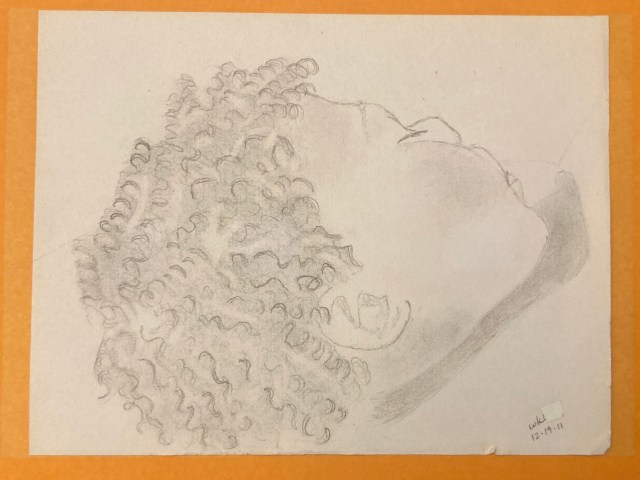
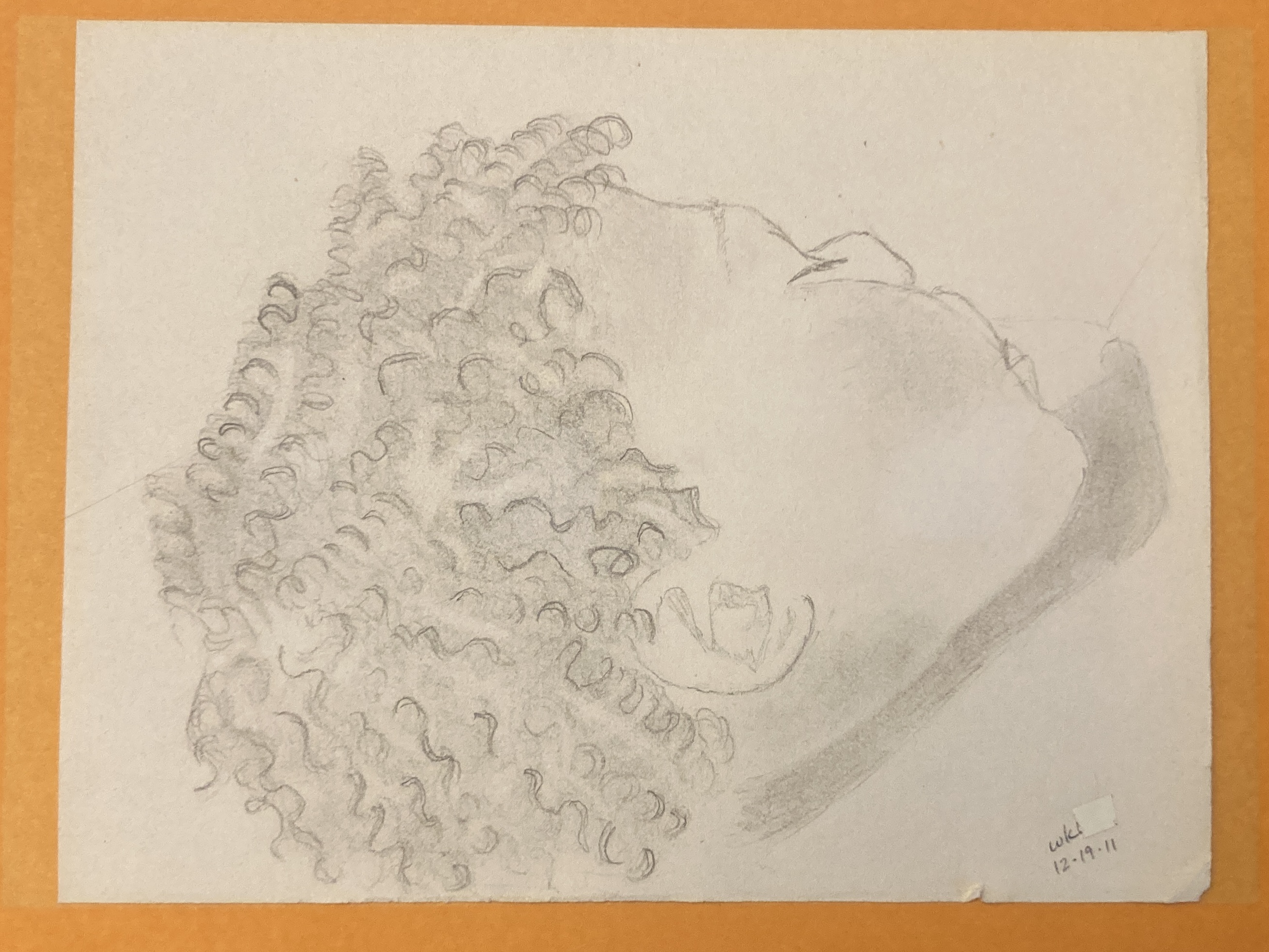
On the return trip, I was sad and exhausted from the stress of caregiving. There was bad weather in the northeast, and we got into our seats late in the evening. My daughter badly needed sleep but was nervous and squirmy. I laid her head in my lap and covered her with a jacket. She fell asleep. I sat still for a while, then gingerly reached down for my drawing pad and set about sketching her sleeping face. I traced her round cheek, the delicate arch of her eyebrow, the tiny flare of her eyelashes, the folds of her ear. I was struck with tenderness.

“Absolute unmixed attention is prayer,” writes Simone Weil. I see what she means. That drawing from the airplane, when I see it now, brings me to that exact posture and state of feeling. I see the vulnerable beauty of her little face before me, but I feel also the heft of her body, the care I took not to jostle her, the drone of the jet engines, the gratitude for the gift of her sleep, and the temporary reprieve from worry. I saw her, I believe, somewhat as the Lord himself sees her: beloved and under his care on this difficult, uncertain path of life. And what I have seen will not be taken away.

Choosing what to draw is one of my major hang-ups. I want to draw the important and beautiful things—the smooth-skinned faces of my children, my mother’s hands, my dog’s velvety snout, the sweep of cirrus clouds across the sky. But they are complicated. I have neither the skill nor the time to capture them. 

Most instructors say that subjects are all around, and the most ordinary things are great for drawing. Office supplies on your desk. Dishes piled in the sink. The bare trees crossing limbs overhead.

These still-life options are easier because they don’t move. The more compelling scenes are fleeting. Friends alter their postures, cityscapes blur, animals shift, water moves, weather changes.

At church or gathered with friends, in waiting rooms or meetings, in restaurants and on sidewalks, I sometimes sit back and try the perceptual shift. What could I draw? The water glass on the table? The young man bent over his phone? The worshipers standing in song? I case the joint, watching.

Author Wendell Berry’s fictional barber Jayber Crow spends his many slow hours watching his little town. “I was always on the lookout for what could be revealed,” he says. “Sometimes nothing would be, but sometimes I beheld astonishing sights.”

Jesus’ initial call to his disciples is simply Come and see (John 1:39). Jesus requires very few specific tasks of his disciples, but he is insistent that they watch and “see” what he is about.

After Jesus has risen, his disciples realize their salvation is at hand and declare it simply: “We have seen the Lord!” (John 20:25).

I have not yet reached a level that good artists achieve, of being able to draw from memory. I can put down only what is right in front of me—and only if it doesn’t move too fast.

The pastor at our church preached recently on Luke 7. Jesus is reclining at table with Pharisees when a woman walks in to anoint his feet. Everyone is aghast, but Jesus beholds her joyfully. He turns to his host and asks, “Do you see this woman?” (v. 44).

“Well, of course the pharisees saw her,” my pastor said. She was all too visible. They looked and saw scandal. They missed the color and tone, the gestalt of what Christ saw, the hidden power of God’s inbreaking kingdom.

How often do we too fail to mark the signs of his kingdom?

What do I see, pen and paper before me? Do I see and worry about my children’s struggles and careless mistakes? Yes, but I cannot draw them. My son reading a book, the way he looks self-consciously down while talking—these I might draw. I see my daughter tidying the kitchen and the way her smile spreads across her face. I treasure them and ponder them in my heart. Seeing is the way of love. 

In each image I attempt to draw, I am forced to acknowledge how much I must leave unseen. My powers of sight cannot encompass all that is there. I cannot see all the wisps of cloud striating the sky. I cannot draw each filament of curl on my son’s head. I cannot catch the exact lines of amusement in my friend’s smile.

To produce a good drawing, an artist must know when to stop. Art can be ruined by trying to put in too much. I must leave undrawn thousands of snowflakes clumped on the branches of a red cedar, myriad glinting droplets shivering on the twigs of a young maple. These are exquisite beauties that yet must remain undrawn and mostly unseen by all but their Creator.

Drawing is a way of entrusting what I can see to the care and attention of God, who is El Roi, the “God who sees” (Gen. 16:13). The Lord’s seeing is not merely passing notice but rather a powerful activity of loving concern.

When God intervenes in Abraham’s sacrifice of his son Isaac, Abraham looks up and sees a ram nearby, caught by its horns, and offers it in sacrifice instead. He names the place, “The Lord Will Provide.” The verb rendered provide is the Hebrew word for see (Gen. 22:14).

I pray only as I partly see, and the Holy Spirit must see all and intercede for all that needs the Lord’s attention. The cares furrowing my husband’s brow are only partially seen by me, his closest companion. My children’s futures, too, the Lord must provide for. He is the shepherd of their hearts, their lives’ pains and pleasures, and all they must experience and learn.

My drawings are not always as I would wish, yet I am drawn to marvel at the provision of the One Who Sees. He alone will redeem all my errors in perception; and he is healing all things, hidden and visible, whether I can draw them or not.

Wendy Kiyomi is an essayist whose writing on the trials of faith, complexities of adoption, and delights of friendship has appeared in Plough QuarterlyImage JournalChristianity TodayMockingbird, the Englewood Review of Books, and at wendykiyomi.com. She lives in Tacoma with her family and is a 2023 winner of the Zenger Prize for journalistic excellence.

Theology

Jesus Did Not Serve Grape Juice

Contributor

Why reopen debate about what we serve for Communion? Because it matters that we follow God’s commands.

Several abstract wine bottles.
Christianity Today February 4, 2026
Illustration by Elizabeth Kaye / Source Images: Unsplash

When I teach evangelical college students about the practicalities of Communion, I’ll often begin with the Last Supper, with Jesus and the disciples, because it raises some straightforward questions. I’ll ask them: Should we obey Jesus? Should we celebrate the meal as he instituted it? Should we do what he said? Should we use what he used, eating what he ate and drinking what he drank?

Obviously, they respond—but then they catch themselves. On second thought, their churches don’t do that. And it occurs to them that they can’t quite offer an explanation why.

Some of their churches have taught them that the Communion elements don’t matter at all: Cheez-Its and Minute Maid will work in a pinch. Whatever’s on hand can do the job. Why be such a legalist? God doesn’t care. It’s about the intention of your heart.

COVID-19 lockdowns exacerbated this attitude. While most churches fasted from the Lord’s Supper if they couldn’t assemble, some encouraged families and even individuals to “self-serve” at home. Apart from questions of spiritual solemnity, communal ritual, or pastoral authority, the practical matter of what to use was answered by whatever was in the fridge and pantry. I suspect that not a few young people’s assumptions about Communion were formed quite powerfully during that time—and not for the best.

Years after the pandemic, with those unusual circumstances past, Communion is once again little discussed in many Christian circles. This may be because, in certain respects, it is a rare point of relative Christian unity. We disagree over so many things that it is always a joy to be able to say that “all Christians agree” about anything. But regarding the sacraments, happily, all Christians agree about three important things:

First, though we disagree about whether there are more than two sacraments, all Christians agree that there aren’t fewer than two: baptism and Communion. And if you twist their arms, Catholics, Orthodox, and Christians in other “high church” traditions will generally admit that these two are the most important.

Second, all Christians agree that Jesus himself instituted both Communion and baptism and commanded his followers to continue practicing them until his return from heaven.

And third, all Christians agree that the church ought to celebrate baptism and Communion in accordance with God’s will, starting with Jesus’ own words in the Gospels before turning to the teaching and practice of the apostles in the rest of the New Testament.

Now, it’s true that I’ve overstated a little. Some Quakers don’t celebrate Communion; Baptists avoid the word sacrament; and many traditions persist in denying the validity of other Christian groups’ practice of Communion, baptism, or both. We remain divided, even here. I don’t want to gloss over that.

Nevertheless, Christian unity is worth pursuing. Last year I wrote an article for CT in which I called on evangelicals and other Protestants to embrace a higher view of baptism—of its necessity, its efficacy, and its power. I wanted to make the strongest possible case primarily because of what I believe is Scripture’s own teaching, but secondarily to draw divided Christians together. What I didn’t address was baptism’s practice, avoiding entirely the question of sprinkling or dunking babies or adults.

Here I want to do something with Communion, only reversed. That is, instead of discussing the doctrine of the Lord’s Supper, I’d like to address its practice. I want to show you that, whatever we understand to be happening in the meal, our practice of it can converge.

There’s much to discuss here, not least the frequency of the Supper’s celebration as well as its placement and importance in worship. But I’ll limit myself to a single practical question: What should we eat and drink? While this may seem like a minor matter, I hope to convince you it is anything but.

Start in the Upper Room, at the Last Supper of Jesus mere hours before he was betrayed by Judas (Luke 22:12; 1 Cor. 11:23). There’s little doubt that, when Jesus instituted what we call the Lord’s Supper, he and his disciples shared unleavened bread and wine (Mark 14:12–25). 

This was, after all, not just a Passover meal but also the Feast of Unleavened Bread (v. 1; Luke 22:1), and according to the Law of Moses, “if anyone eats what is leavened, from the first day until the seventh day [of the feast], that person shall be cut off from Israel” (Ex. 12:15, ESV). 

Moreover, Jesus refers to having drunk “the fruit of the vine” from the shared cup (Mark 14:25), and this is a biblical shorthand for wine (Num. 18:12; Deut. 18:4; 28:30; Josh. 24:13; Zech. 8:12, ESV).

Most churches, to be sure, are not as casual about the elements as those that allowed Cheez-Its at home in 2020. They use unleavened bread, generally some kind of wafer. But that’s only half of the meal. The other half is the problem: They don’t use wine. This is the sacramental pebble in the evangelical shoe.

By contrast, most of the world’s Christians, including many Protestants, do use wine in Communion. That includes some Methodists, many Presbyterians, and all Lutherans and Anglicans, along with the Orthodox and Catholics. Those who don’t use wine tend to be “low church” evangelicals: Baptists, Pentecostals, Churches of Christ (my own tradition), and a variety of nondenominational believers. Instead of wine, these groups tend to use grape juice.

My students usually hail from these churches, and they’ve never given the grape juice a second thought. So it comes as quite a shock to them to realize, first, that they’re not following Jesus’ stated instructions; and second, that this is a radically new development in church history, having nothing to do with divisions stemming from the Reformation.

Far from being a scriptural or doctrinal matter, grape juice in Communion was introduced by the American temperance movement. It was made possible by Mr. Welch himself, a teetotaling Methodist minister in the late 19th century who pioneered a way of preventing the process of fermentation in the sweet juice squeezed from grapes. This enabled believers who wished to abstain from drinking alcohol to do so every day of the week, Sunday mornings included.

Since then, grape juice as both a drink and a substitute for Communion wine exploded in popularity—here in the States and as an export abroad. There are millions of Christians around the world who now use grape juice in the Lord’s Supper because American missionaries bringing the gospel also brought a novel cultural practice—a product not of centuries-long Christian tradition but of temporary domestic conflict in America over whether drinking alcohol was compatible with following Jesus.

All this raises a fundamental question: If Jesus used wine in his institution of his Supper, does that matter? Did Jesus—does God—care whether what we drink from the Communion cup is fermented? And if he does, why?

The best way to approach these questions is to consider the nature of the elements as symbols. This, too, is a matter about which all Christians agree: Whatever else they may be, the bread and wine are symbols, and what symbols do is symbolize. They are signs, and signs signify. They are significant. They are pregnant with meaning. They are eloquent without words. In and of themselves, they point beyond themselves. They are inaudible arrows, drawing your gaze to what lies beyond them.

Symbols work because of what they are—and because of what they are not. The shape and color of a stop sign are not incidental to its meaning. The number of stars on the American flag is not accidental. And I’ve never heard of someone getting baptized in oil, tar, or urine. Water is a loaded symbol: It is clear, clean, and pure. And even as it’s good for washing, it’s also good for drowning.

These rules about symbols apply to Communion as well. The bread is unleavened because this is the new Passover meal for God’s new covenant people (Luke 22:20). We have been delivered by Jesus from the Pharaoh of sin, death, and the Devil, and this is our sustenance for the journey, at once the bread baked in haste (Ex. 12:8, 33–34) and the manna from heaven in the wilderness (John 6:25–59). It is the bread of the new and final exodus—the Lord’s own body broken for our sake (Luke 9:31; 1 Cor. 11:24). Therefore, 1 Corinthians 5:8 (KJV) instructs, “let us keep the feast”!

If the type of bread is so significant, it would be odd if the contents of the cup were irrelevant. But as it happens, Scripture has much to say about wine. In fact, wine is ubiquitous in the Bible. It’s not usually prescribed, as in 1 Timothy 5:23, but it’s everywhere, in story and prophesy and theology alike. Cutting it out of Communion is almost like cutting out these verses—a teetotaling Jefferson Bible.

There is Melchizedek, the king of Jerusalem and priest of God, who brings out bread and wine to share with Abram (Gen. 14:18)—a type of Christ in every one of these respects (Heb. 5–7). There is the role of wine in libations commanded as drink offerings in the Law (Lev. 23:13; Num. 15:1–10). There is the promise of God to the Israelites that he will richly bless them when they possess the land: “He will love you and bless you and increase your numbers. He will bless the fruit of your womb, the crops of your land—your grain, new wine and olive oil—the calves of your herds and the lambs of your flocks” (Deut. 7:13).

In the Psalms and the Prophets, the language of wine—of vines, vineyards, and winepresses—becomes a symbolic world unto itself. God uses the language of wine to speak of Israel as his beloved and to warn of wrath and judgment—or to do both at once, as in Isaiah 5:1–7. One theologian goes so far as to refer to the extraordinary “oino-theology” of the Bible’s “typology of wine.”

When Jesus—not only the master interpreter of Scripture but its very author—takes up the cup at the Last Supper, he is drawing on all this and much more. And it is crucial to see that none of this is foreign to our own culture today. It’s not merely what wine meant “in Bible times.” 

Compare the symbolism of wine and grape juice for us. The one signifies adulthood, maturity, festivity, and celebration. It’s valuable and, as in Jesus’s own ministry (John 2:1–11), capable of marking an occasion as momentous, meaningful, and memorable.

Grape juice signifies children. Preadolescence. It’s what parents and teachers offer to young kids as a treat instead of water. It’s cheap and mass-produced. No adult goes to a restaurant and asks for a glass of their finest grape juice. No man impresses his date by buying her a bottle of grape juice. A teetotaler wedding might have sparkling grape juice, but even there the juice requires something more to be special.

Biblically, grape juice signifies nothing—except perhaps its eventual transition into wine, as in the Nazirite vows of abstention found in Numbers 6:1-4. And culturally, it signifies worse than nothing—assuming that we want to take our practice of the Supper seriously. And yet for millions of Christians, juice has become an unquestioned substitute for wine, one of the most richly significant and important symbols in all of Scripture.

Jesus instituted both unleavened bread and wine on purpose—that is to say, with purpose. These are signs that, in the Bible and in human culture alike, mean something. And if Jesus did this on purpose, then it remains his purpose now. We don’t have to wonder what the Lord’s will is here. His will is that we use what he used in his institution of the Supper.

And why not? There are no good reasons at the general level for churches to systematically substitute grape juice for wine in Communion. There may be local, person-specific, or missionary situations that raise reasonable questions about exceptions to the rule. But for an exception to work, there has to be a rule. And the rule is—or rather, ought to be—wine.

There’s an irony here that cannot go unremarked. Strict teetotalism and principled abstention from wine as forms of Christian piety have their roots in American evangelicalism. But as I have written at CT, that generational strictness has been loosened in recent decades. All the evangelicals I know now drink—and so do their parents, who once abstained.

Whatever the virtues of this change (and I don’t want to be glib about the downsides, which are all too real), it has produced a bizarre situation in many churches. Evangelical pews are filled with adult believers who drink wine at home but not in the Lord’s Supper. We have perfectly inverted the 19th century: avoiding alcohol only on Sundays.

Surely we can agree that, practically speaking, this is the worst of all possible worlds. At least it made a certain kind of sense for Christians who never drank at home to avoid wine at church too. The present inconsistency is simply too much to bear.

Be that as it may, the reasons to reintroduce wine into Communion practice are not themselves practical but theological, biblical, and ecclesial.

To use wine in the Supper would bring our churches into alignment both with the rest of the global church and with Christian tradition prior to Welch’s grape juice. It would bring them into alignment, too, with Scripture’s rich symbolism of the fruit of the vine. And finally, it would bring them into alignment with—I want to say, obedience to—the teaching and practice of the apostles and of the Lord Jesus himself. 

There is no better reason than that.

Brad East is an associate professor of theology at Abilene Christian University. He is the author of four books, including The Church: A Guide to the People of God and Letters to a Future Saint.

Culture

How A Pastor’s Book Inspired a New Rom-Com

Mike Todd’s book, Relationship Goals, gets a spotlight in a film aimed at both Christian and secular audiences.

Kelly Rowland as Leah Caldwell and Clifford “Method Man” Smith as Jarrett Roy in Relationship Goals.

Kelly Rowland as Leah Caldwell and Clifford “Method Man” Smith as Jarrett Roy in Relationship Goals.

Christianity Today February 4, 2026
Amanda Matlovich / Prime / © Amazon Content Services LLC

When I was in grad school eight years ago, YouTube’s algorithm recommended I watch pastor Mike Todd’s sermon series on relationships, aptly called Relationship Goals.

I hadn’t heard of Todd before, and at that point not a lot of other people had either. He was a young pastor shepherding Transformation Church, which was then a small congregation in Tulsa. When his sermon on relationships went viral, however, that changed.

Many young Christians—particularly those who are Black—were attracted to his approach and delivery. The sermons were biblical, funny, and relevant (especially for those of us who didn’t know what we were doing in our 20s). Todd’s ministry grew into a megachurch, and the sermon series inspired a popular Christian relationship-advice book. After seeing the success, Amazon greenlit an idea by Hollywood producer DeVon Franklin to transform the book into a romantic comedy, released Wednesday on Prime Video.

The roughly 90-minute film—also called Relationship Goals—stars singer and actress Kelly Rowland (of Destiny’s Child fame and Beyonce’s best friend) as Leah Caldwell, an ambitious staffer on a fictional morning show in New York called Better Day USA. Leah has plans to replace her boss as the program’s top producer once he retires. But the network overlords are concerned about her ability to be a team player, and they bring in another candidate to compete for the role.

That decision removes the façade of control Leah felt over her life, which Rowland told me during a brief conversation in January is partly what attracted her to the role. “I go through … [the process] of just letting go, I’d say every other quarter or maybe every quarter,” the singer said.

Leah is disappointed by what’s being asked of her and becomes even more annoyed when she learns she’ll be competing with a well-known TV producer whom she once dated and who cheated on her. To prove to her boss that she can be a team player, she swallows her pride and works with her suave ex, Jarrett Roy, on a Valentine’s Day segment about Todd’s book. Jarrett, played by the rapper Method Man, tells her the book helped him turn away from his player ways.

Viewers will spend most of the movie trying to determine whether Roy’s maturation is genuine and whether Leah’s character will open herself up to love. The film also traces how the book impacts Leah’s two close friends, played by actresses Robin Thede and Annie Gonzalez.

When I sat down for an early preview of the movie, I didn’t have high hopes. The last DeVon Franklin film I watched, produced with Tyler Perry, trafficked in a lot of cliché tropes. I expected Relationship Goals to be more of the same, but I was pleasantly surprised. Rowland’s character is compelling and believable, and the situational humor (especially from Gonzalez’s tired-of-bad-dates character) was good enough to elicit several laughs from my husband and me as we watched the film together.

Method Man, whose real name is Clifford Smith Jr., also delivered a decent performance as Jarrett. The movie could have spent more time teasing out what exactly about the book and faith—which his character says is “hotter than ever”—made Jarrett change how he thinks about relationships. But for a lighthearted romantic comedy, those flaws are forgivable.

That said, Relationship Goals does have explicit Christian elements. It shows the morning-show crew traveling to Tulsa to record an interview with Todd and his wife, Natalie, who portray themselves. The two leading characters also attend a worship service at the real Transformation Church, where Todd gives a brief sermon.

Even with those types of scenes, the writers made sure the film didn’t emphasize Christianity so much that it could turn off secular viewers. “I love love,” Rowland told me. “I love rom-coms. And I love [that] the faith aspect of it … wasn’t force-fed down our throat as much as allowing these characters to be human, honest, and real.”

The movie is heavily marketed toward Christians, and many people who follow Todd will likely check it out. Todd told me he put in his two cents wherever he could. But it’s not a Christian movie per se, he and Franklin said during separate interviews. That point was communicated clearly in one scene (spoiler alert) where the two leads sleep together, and there was no dialogue afterward about the act being wrong, nor any movement to tie up the moral loose ends.

Todd noted he wanted to cast a “wider net” with the movie and appeal to people who weren’t already believers. The goal was “to make a movie that had Christian principles in it [and] that transformed people in their everyday” lives, he said. He wants his preteen daughters to watch it, but not until “a few years from now.”

Haleluya Hadero is the Black church editor at Christianity Today.

addApple PodcastsDown ArrowDown ArrowDown Arrowarrow_left_altLeft ArrowLeft ArrowRight ArrowRight ArrowRight Arrowarrow_up_altUp ArrowUp ArrowAvailable at Amazoncaret-downCloseCloseellipseEmailEmailExpandExpandExternalExternalFacebookfacebook-squarefolderGiftGiftGooglegoogleGoogle KeephamburgerInstagraminstagram-squareLinkLinklinkedin-squareListenListenListenChristianity TodayCT Creative Studio Logologo_orgMegaphoneMenuMenupausePinterestPlayPlayPocketPodcastprintremoveRSSRSSSaveSavesaveSearchSearchsearchSpotifyStitcherTelegramTable of ContentsTable of Contentstwitter-squareWhatsAppXYouTubeYouTube