News

Kenyan Pastors Champion Reconciliation at Christmas

One Christian father hopes the church can help his family reconcile before he dies.

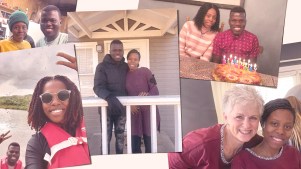
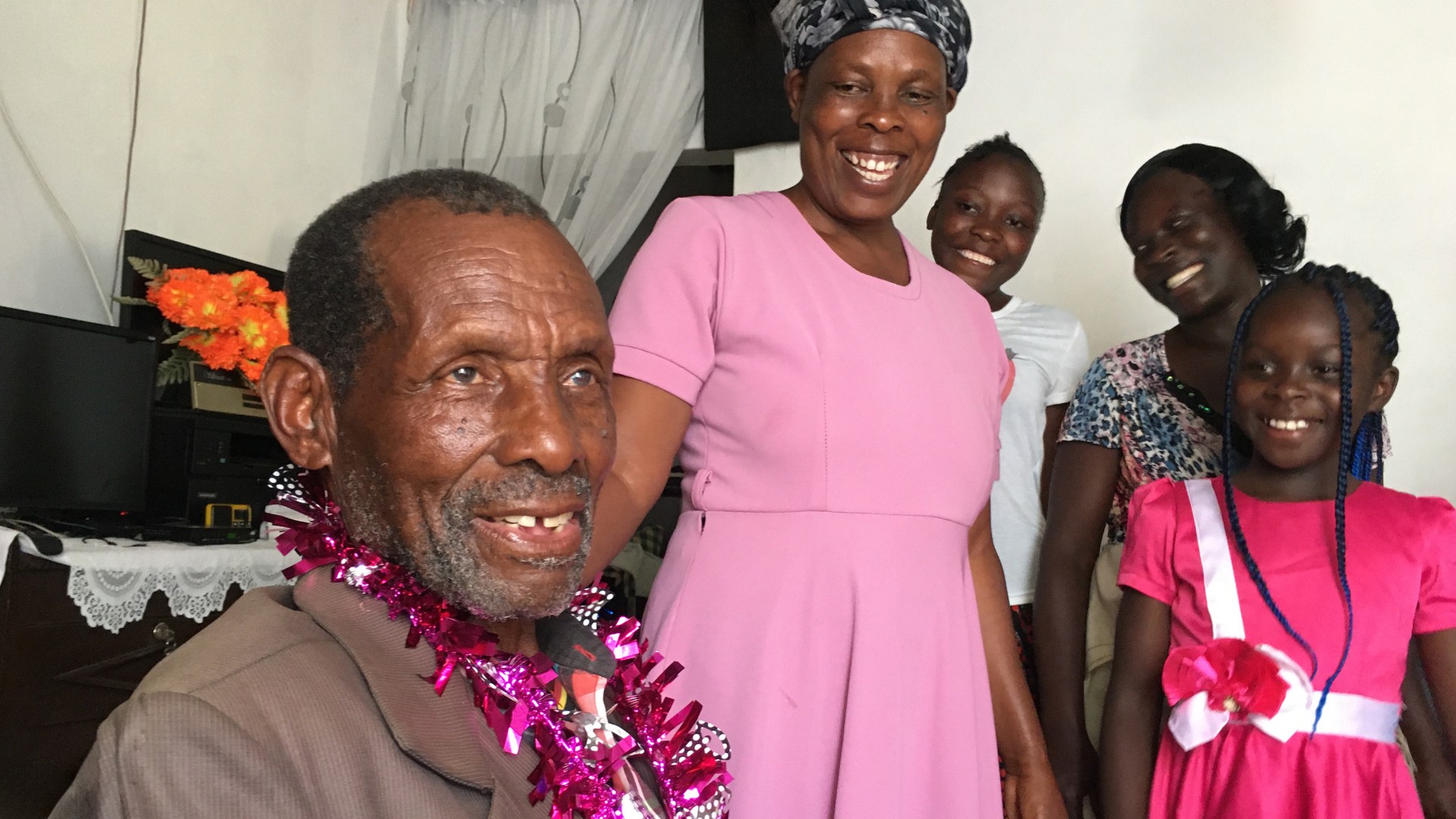
Wafula celebrating his 91st birthday with his daughter and grandchildren in December 2024.

Wafula celebrating his 91st birthday with his daughter and grandchildren in December 2024.

Christianity Today December 23, 2025
Image courtesy of Lydia Nekesa

Ninety-two-year-old Julius Wafula lives in an old, rusty-iron-roofed mud house in Bungoma County, Kenya. Nearby, amid avocado trees and banana plantations, a new seven-bedroom house that he built for his children and grandchildren stands empty.

Before his wife, Mary, died in 2018, Wafula’s children visited often out of love for her. Now they rarely come. Sibling quarrels and broken relationships with their father have split them apart.

Wafula has felt increasingly lonely and isolated since his wife’s death. He regrets being drunk and violent when his 12 children were growing up, and he recognizes that his neglect as a father drove a deep-seated wedge between him and his children.

After Mary’s death, Wafula encountered Jesus when his old friend and now pastor visited him and explained the gospel. Wafula then committed his life to God. He stopped drinking and smoking and got baptized. But his efforts to reconcile with his children have failed, as they remain divided over who should take care of him and over their religious beliefs. Three of his children converted to Islam, and others attend different Christian churches.

This Christmas, Wafula hopes the infighting will end. He’s asked his pastor, Matthias Wanjala, to mediate a family gathering to help them resolve their differences.

Kenyans often celebrate major family events—anniversaries, weddings, and graduations—during the Christmas season. Among Christians, the holiday also serves as a time for dedicated reconciliation gatherings. When attempts to mend conflicts fail, church leaders step in to heal families and communities.

Wanjala leads the local Pentecostal Evangelistic Fellowship of Africa church and has been helping families reconcile for more than 30 years. He sees Christmas as a time to make amends because the birth of Jesus brings renewal. As the year ends, he said, Christians can welcome Christ into their lives and start the New Year clean.

“Christmas should have a purpose in our lives, and there is nothing more pleasing to God than seeing a family celebrating the sacrifice of forgiveness,” Wanjala said.

The grandfatherly pastor, who is in his early 90s, was born in Bungoma and knows most of the families who live there. Whenever there is an irreconcilable conflict, he visits them at home to learn more and sets a date for mediation. Wanjala calls each family member personally, inviting the person to the meeting. Because people in the community respect him as a pastor, they nearly always say yes.

At these meetings, Wanjala brings along three or four associate pastors to pray, read the Bible, and teach the aggrieved parties about forgiveness. He closes their time together by encouraging the family to admit their mistakes, repent, and ask for forgiveness from each other.

Wanjala hopes to pass on this practice to younger pastors. “I am aging but will love to see my junior pastors continue [family ministry] with [the same] spirit,” he said.

Pastor Anthony Juma of Full Gospel Church in Kitale town said family feuds don’t just hurt the family—they also hurt the church. When a churchgoing family fights, some family members may stop attending church or may suffer in their spiritual lives because of the conflict.

“When families fall apart, the Devil takes advantage,” Juma said. “As a pastor, I have the trust of the society to ensure I bring [the family] together.”

Churches extend the practice of reconciliation to community conflicts too. Phanice Mulamula, a pastor at Glory Tabernacle in Kakamega, organizes a special reconciliation meeting every year during Christmas. The church invites widows, orphans, and the elderly, regardless of their religion, to the event and supplies them with food and clothing while guest speakers teach from Bible passages about reconciliation, such as Ephesians 4:32.

“We emphasize love and forgiveness because we are the body of Christ,” Mulamula said. “Let nobody cross to the New Year with old grudges, hatred, and disunity.”

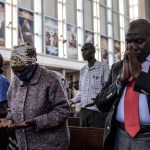
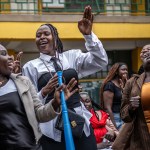
During these meetings, church members stand up to share their testimonies, confess their wrongdoing, and ask others for forgiveness. The congregation then enters a time of cheering, hugging, and dancing. The meeting ends with a special meal and take-home Christmas packages filled with rice, bread, chicken, clothes, shoes, blankets, cooking oil, sugar, and money for those in need.

“This is the true spirit of Christmas: when families reconcile and the poor [are] remembered,” Mulamula said.

In the six years since Glory Tabernacle began holding Christmas reconciliation services, several nonbelievers have participated in it. So have members of other churches.

Jacinta Muthoni, who is a Christian but not a member of Glory Tabernacle, has attended the reconciliation services for three years now. Her neighbors had let their animals destroy crops on her farms or let their children cut down her fruit trees, which resulted in bitter quarrels and demands for compensation among them. After hearing about Jesus’ message of forgiveness, Muthoni asked her neighbors to come to the church and sought to make amends with them.

“It gives me the opportunity to forgive all those who wronged me as I also ask for forgiveness from those I wronged,” she said.

Christmas also provides a time for bridging generational divides. Sometimes children flee home over forced marriages or arguments with parents. When youth who live far from home return to visit their parents, pastors can mediate conflicts face-to-face.

Pastor Rose Zadock of Holy Peace Fire in Kakamega helps reconcile these divides. She said a common cause of conflict comes from parents arguing with children about romantic relationships. When teens sneak out to visit their boyfriends or girlfriends, some parents react in a heavy-handed way. Zadock said it drives teenagers from church when they feel accused of sexual immorality or bad friendships. She helps parents respond less harshly and teaches teenagers how to pursue romantic relationships without falling into sexual sin.

Kenyan elders often initiate reconciliation. Bringing younger people, especially Gen Zers, to reconciliation meetings can be difficult, Zadock said. They can become defensive when corrected and don’t always respect the authority of parents and church leaders.

“The Gen Zs … look at parents as illiterate or primitive,” she said. “But we keep on talking to them through the power of the Holy Spirit.”

When families are home for Christmas, Zadock sets up face-to-face meetings for them. She and her husband, bishop Zadock Lubira, pray. Then they let the parents explain their concerns and allow the children to respond. After listening to both sides, she and her husband offer biblical teaching and ask everyone to hold hands in a circle and pray. Zadock said these mediations usually succeed, though reconciliations over conflicts that involved police take more meetings.

For Wafula, bridging these generational divides with his children, who range from 30 to 68 years old, is foremost on his mind this Christmas. All 12 of them have accepted Wafula and his pastor’s invitation to meet at Wafula’s home on December 23 and stay at the new house through the holiday.

Wafula plans to ask his children to forgive him and each other. He has dedicated one cow, two goats, and several chickens for the Christmas feast, hoping to celebrate a joyous family reunion like the father of the Prodigal Son did in Luke 15:11–32.

“I don’t want to die before my children come together and forgive each other,” Wafula said.

Ideas

A Rhythm of Silence and Solitude

Contributor

Our culture rewards the sharpest take, but two spiritual practices can help Christians show up better in the public sphere.

A glowing manger in snow.
Christianity Today December 23, 2025
Illustration by Christianity Today / Source Images: Unsplash

Silent night, holy night.

Austrian priest Joseph Mohr wrote these words in 1816, starting off my favorite—and one of the most ubiquitous—Christmas hymns.

Some of my affection for the song stems from purely pragmatic reasons: It is easy enough to strum on my acoustic guitar. At some point in my life, I realized aspects of the song were too simplistic and the night of Jesus’ birth was likely not so silent. But I always appreciated how the simple melody seems to float gently above the chaos of Christmas shopping lists and year-end deadlines.

Despite its shortcomings, the hymn points to a kind of tranquility many of us long for in the world. Silence feels foreign in modern American life. It has become rare, suspect even. Every moment seems filled with questions, commentary, content, and outrage. Social media offers an opportunity to scroll endlessly, speak constantly, and react reflexively—all of which is more pronounced in our politics than in any other sphere of life.

In our national conversations, the refusal to rage can be interpreted as a kind of naiveté. The attention economy rewards the sharpest take, the quickest response, and the most performative certainty. A quiet spirit is easily mistaken for disengagement, cowardice, or complicity. But the Christian tradition shows that silence and its close cousin solitude are not necessarily means of withdrawing from public life. Instead, they can be critical spiritual practices that help us resist chaos, recenter our thoughts, and became more faithful witnesses to the watching world.  

All is calm, all is bright.

The first Christmas took place in a land under political occupation, among a people subject to state surveillance, and in a social environment accustomed to imperial violence. Caesar ruled from afar. Herod schemed in the community. And yet it was in full view of these realities, not in a denial of them, that Mary sang the words of the Magnificat: the proud being scattered, the powerful brought low, the humble lifted up.

Mary’s song highlights what I love about the calm of Christmas: the stillness that comes from knowing where authority truly resides despite a noticeable lack of calm. More than 2,000 years later, her words still ring true today. Christians are calm not because the world is stable. We are calm because God has entered history without shouting, coercing, or dominating and still achieved the victory (John 16:33).

Round yon virgin, mother and child.

When the eternal king arrived on earth, he came through a humble young mother, quietly and vulnerably. He did not announce himself through a press release or demand anything through mass mobilization. He came in power but still as a child, dependent, exposed, and entrusted to a family.

If my years in politics have taught me anything, it’s that Christian political engagement must begin from a similar heart posture. If God chose to enter the world through weakness, then how much more should believers resist the temptation to seek popularity above fruitfulness or to devolve into fleshly fights with those who disagree.

But the discernment to know that—or to know how to live our lives more generally—is not cultivated amid spectacles. It’s formed in stillness. Like Elijah, we often find God is not in the wind or fire but in the “sound of sheer silence” (1 Kings 19:12, NRSVue).

I’m not saying silence and solitude show us what to think. But they do shape how we think and, perhaps more importantly, how to speak with words ordered toward truth and love. Without these practices, we risk mistaking constant commentary for courage and noise for relevance. Over time, that erosion costs us—not because we spoke too boldly but because we spoke too quickly and listened too little in return.

Holy infant so tender and mild.

So much of what our Lord would teach through his life and preaching is also revealed in the Christ child. The tenderness of the babe lying in the manger does not make him any less King of Glory; it reveals his discerning intentionality.

Jesus spoke when speech was necessary, such as when the scribes and Pharisees required public rebuke. Other times, he refused to be baited into a spectacle and remained silent (Matt. 27:11–14). He often sought solitude and withdrew into desolate spaces to pray. He resisted the tempter’s demand to turn stones into bread and the pressures of the crowd in Nazareth to prove himself through a sign.

The systems of our world suggest to us the opposite: Respond now. Condemn now. Signal now. But imitating Christ requires speaking from depth rather than impulse.

Sleep in heavenly peace.

In the biblical imagination, peace is not merely the absence of conflict but the presence of order, right relationship, and rightly ordered loves. Godly peace is achieved through trust in the Lord, with the awareness that his purposes do not depend on our power. 

From the first night in Bethlehem to the night before his arrest, God incarnate slept. Surely his sleep did not diminish his calling or jeopardize his victory, and our own moments away from the noise won’t either.

The meaning of “Silent Night” is not that the world will finally become calm because it is Christmastime but that the God who gives us the hope of peace has entered our chaotic world without being overwhelmed by it. On that night, heaven drew near, and that same nearness is what steadies us now. If Christ could enter history quietly and still overturn it completely, then surely his people can learn to engage public life without shouting, posturing, or surrendering their souls to the noise.

Chris Butler is a pastor in Chicago and the director of Christian civic formation at the Center for Christianity & Public Life. He is also the co-author of  Compassion & Conviction: The And Campaign’s Guide to Faithful Civic Engagement.

News

New Hispanic Churches See Growth Despite Political Turmoil

Fresh Lifeway research shows Latino pastors are reaching new people and helping members navigate anxiety about immigration enforcement.

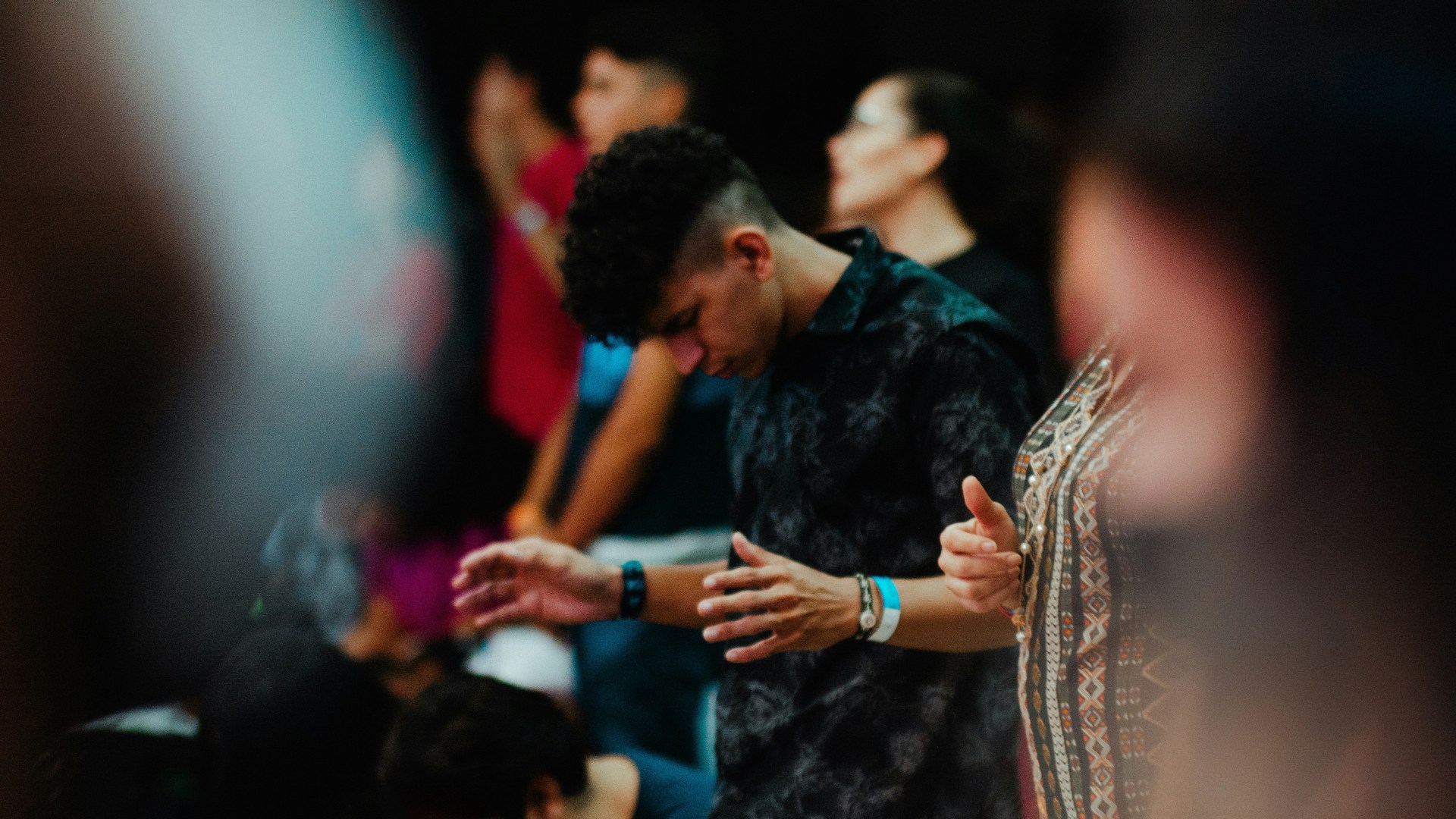
A Hispanic congregation at church.
Christianity Today December 23, 2025
Tom Ramalho / Unplash

Latino evangelicals in the US are reaching the unchurched and drawing in converts despite funding shortfalls, widespread community fear, and other challenges caused by the federal government’s immigration crackdown.

Lifeway Research said in a new study—which surveyed leaders at 292 new Hispanic church plants, campus sites, and other ministries—that the average new Hispanic congregation almost tripled in size (from 31 to 85) within eight years of its founding and saw 10 conversions its first year before reaching 15 per year down the line. 

Most protestant churches in the US reached fewer new people in the past year. It’s common for church plants to focus more on outreach as they aim to grow and embed themselves in their communities. But new Hispanic congregations have been “particularly evangelistic in their approach” and have continued to be that way as their congregations mature, said Scott McConnell, executive director of Lifeway Research.

At the same time, the study—funded by Exponential, eight denominations, Biola University, and Wheaton College —showed burgeoning Hispanic churches are grappling with President Donald Trump’s aggressive deportation campaign.

Half of the leaders surveyed said they “have had to address pain and fear” in their congregation caused by government practices in the past year. About a third (35%) said attendance declined because undocumented members were afraid to leave their homes. Meanwhile, a similar amount (34%) noted church finances have taken a hit because undocumented members have not been able to work.

Latino leaders who were not included in the study have also witnessed significant declines in church attendance this year. Undocumented congregants worry they can be picked up anywhere, including in church, where detention and other immigration enforcement is now possible. Some worship leaders were detained and other ministry leaders have been deported.

One pastor who leads a 400-member congregation in Maryland told Gabriel Salguero, president of the National Latino Evangelical Coalition, that only 40 people are showing up regularly for Sunday service at his church. The rest are watching online.

“The group that is part of the … revitalization of the church is the one who’s now feeling under siege,” said Salguero, also the pastor of The Gathering Place, an Assemblies of God church in Orlando.

Leaders surveyed by Lifeway also noted more members have needed “tangible help” in the last year. More than a quarter said members have been discouraged by a disrespectful cultural tone toward Hispanics. Separately, 38% reported they’re seeing greater interest among unchurched Hispanics who are looking for hope.

Nearly two-thirds of Hispanic Protestants supported Trump during last year’s presidential election. Voters were driven by economic dissatisfaction and resonated with the president’s approach to other cultural issues, such as sexuality, abortion, and parental rights. Recent polling, however, shows a majority of Latinos in the country—including Protestants—disapprove of the president’s performance in the White House, with immigration emerging as a key concern.

“Many who voted for the president have said, ‘We did not vote for this; we support the deportation of violent criminals, but this is not what we asked for,’” Salguero said.

Some findings from the Lifeway report mirrored a similar study published by the research firm six years ago. Most lead pastors of new Hispanic churches (77%) are still first-generation immigrants, as are nearly two-thirds of their flock. The majority of congregants (56%) in these ministries had either never attended church, didn’t go for many years, or were migrating from Catholic churches. Nearly half (46%) of the congregations surveyed are Southern Baptists and approximately half are located in the South, where the Latino population has grown. About a fifth (21%—the next highest percentage) are affiliated with the Assemblies of God.

A lot of Hispanic churches are already multiethnic, drawing congregants from Mexican, Puerto Rican, and other Latino backgrounds. Most of the leaders surveyed say their ministries have sought to reach all Hispanic people, but a portion (29%) note they are also aiming to reach other ethnic groups.

New congregations hold outreach Bible studies and keep up with door-to-door evangelism after the launch of their ministries, though slightly fewer do so compared to the previous survey. A majority also put together “fun social events” and service projects to reach new people. Most hold their services in Spanish, while some offer bilingual services or separate services in different languages.

Samuel Rodriguez, pastor of New Season Church in Sacramento and the president of the National Hispanic Christian Leadership, said “it is inevitable” for Hispanic congregations to diversify by the second and third generations. By then, Rodriguez said, kids tend to lose touch with the Spanish vernacular, which eventually leads churches to launch an English service. Over time, the English service can become larger than the Spanish service, he said, drawing in different audiences.  

The missional mindset has always been prominent in Hispanic evangelical churches. Growing up, Alvin Padilla, a professor of New Testament at Gordon-Conwell Theological Seminary, said the Sunday evening services he saw were often evangelistic in nature. Saturday mornings would also be devoted to visiting individuals or families, and pastors would routinely encourage congregants to bring friends to church. This study bears that the sense of urgency to reach new people has remained, he said.
Church planters surveyed said it’s important for partners to understand cultural differences in Hispanic communities, prioritize relationships over programs, and offer better financial support. Most pastors and leaders launching ministries are bivocational and have worked another full-time job to sustain their families. Some (29%) did not receive any financial compensation from their churches in the first five years, while others have used their work salary for church needs.

In addition to practical help, leaders say more collaboration with established churches, networks, and patience in the church-planting process would help them and their ministries.

The entire Lifeway report can be found here.

Christianity Today in 2025

A year in review of our most read articles and favorite stories.

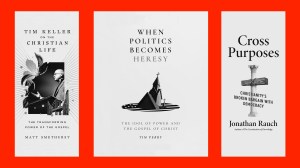
Images from CT articles.
Christianity Today December 23, 2025
Illustration by Christianity Today

In this series, we’ve curated several categories of CT articles that we think are worth returning to. Browse our list of 2025’s big stories, book reviews, podcasts, obituaries, testimonies, and more. You can also read this year’s top 10 discoveries in biblical archeology, along with our most read stories of the global church.

This year, CT published more than 6,000 translations, including stories featured in the top 10 articles in Spanish, Portuguese, and Chinese (simplified and traditional). We also reach thousands of readers around the world every day through social media and newsletters.

Thanks for reading Christianity Today in 2025. If you’re not already a subscriber, check out our membership options here, and subscribe to our newsletter here.

Ideas

CT’s Best Ideas of 2025

From AI to K-pop to medical missions, our essays on culture, ethics, sociology, and more tackled the year’s most discussed topics.

Images from three articles in the list.
Christianity Today December 23, 2025
Illustration by Christianity Today

Christianity Today published thoughtful essayists from around the world in 2025 who analyzed current news events, offered culture criticism, and wrote about how faith and theology intersect with the dilemmas of our time.

Author Jen Pollock Michel told the complicated story of caring for her mother with Alzheimer’s disease, and writer Carrie McKean told stories of model immigrants who were mistreated as well as about hosting vaccine experts and critics to meet together and talk in her living room. Our writers tackled Charlie Kirk’s death, ethics around artificial intelligence and porn, revival in Silicon Valley, CCM music, immigration, Christian schools—even Zyn and Labubus.

Here are our editors’ picks of top Ideas essays of 2025.

News

Big CT Stories of 2025

Ten of our most-read articles this year.

Images from three articles in the list.
Christianity Today December 23, 2025
Illustration by Christianity Today.

Summarizing an entire year of reporting, commentary, and storytelling is no easy feat. One way to reflect on 2025 coverage is by looking at what you, our readers, visited the most. Here are our top ten by page views, an intriguing mix of breaking news reports, cultural coverage, and global stories.

But readership is only one way to measure an article’s impact. In our other year-end lists, you’ll find curated selections based on topic (such as ten of this year’s biblical archaeological discoveries), medium (such as articles from the print magazine and podcasts), genre (book reviews, testimonies), and more.

As we close out 2025, we hope these lists allow you to meditate on all that God has done this year.

News

Christianity Today’s Top News Stories of 2025

From the massive policy shifts under the second Trump administration to violence taking off in Nigeria, Ukraine, and Gaza, we rank the biggest developments we covered this year.

Images from three articles in the list.
Christianity Today December 23, 2025
Illustration by Christianity Today

This past year we saw big changes under the second Trump administration as well as violence in the US and abroad. The news team looked back on what we covered to rank what we saw as the most significant developments for the church.

11.  Ministry Scandals

Several high-profile leaders made headlines over confessions or allegations of misconduct. Former Gateway Church pastor Robert Morris pleaded guilty and was sentenced to prison for sexually abusing a minor in the 1980s. After allegations surfaced online, Newsboys singer Michael Tait confessed to substance abuse and sexually assaulting multiple men. His scandal highlighted the lack of moral accountability in the Christian music industry. As the Anglican Church in North America weighed a high-profile case about abuse cover-up, its archbishop also faced allegations of sexual harassment

10. Artificial Intelligence in Ministry

The growing AI industry captured public attention this year in a new way, and generative AI made its mark in Christian spaces too. Christian engineers working on these powerful AI models wrestled with burnout and purpose. What were these tools creating? In one case at ChatGPT, it looked like it would be erotica. Elsewhere it was Bible videos. In November, an AI-generated artist hit the number one spot on Apple’s top 100 chart for Christian music.

9. Abortion Pills Debate 

In a move disappointed pro-lifers called a “stain on the Trump presidency,” the US Food and Drug Administration expanded the availability of abortion pills by giving the green light to another generic version of mifepristone. In the wake of the Supreme Court’s ruling overturning Roe v. Wade, more than 60 percent of abortions take place through medication, making the fight over their legality today’s primary abortion battleground.

8. Ongoing War in Ukraine 

Ukrainian evangelicals, numb and bombed out, lived through another year of war in their country as Russia’s attacks continued. They were suspicious of Trump’s early cease-fire proposals after he berated Ukrainian president Volodymyr Zelensky in a high-profile Oval Office meeting. Meanwhile, Ukrainian refugees rebuilt lives elsewhere

7. Persecution in Nigeria

Heeding the outcry of Christians who have suffered kidnappings, mass killings, destroyed churches, and a worsening crackdown on religious freedom, President Trump designated Nigeria a “country of particular concern.” Nigeria is the seventh-deadliest country for Christians, Open Doors determined in its 2025 World Watch List, with the country’s religious minorities persecuted by extremist jihadist group Boko Haram and militants linked with Fulani herders.

6. Chinese Church Leaders Arrested 

Fears of a new wave of persecution against Christians in China rose after police detained and arrested pastors and staff members of a well-known house church this fall. Despite the crackdown, family members living abroad continue to preach over Zoom to congregations who meet in smaller groups inside houses or private restaurant rooms. And around the world, Christians have called for the release of the arrested leaders of China’s Zion Church.

5. End of Israel-Hamas War 

A US-brokered cease-fire ended two years of war in Gaza, freeing remaining hostages and restoring food aid. The shrinking Palestinian Christian minority in the Holy Land was relieved but wary of plans for lasting peace. Israel and Hamas continued efforts to influence US perceptions of the war. 
4. USAID Shutdown 

The Trump administration’s sudden shutdown of the US Agency for International Development (USAID) had immediate fallout for Christian aid groups and the people they serve around the world. Clinics serving those with HIV/AIDS struggled to access lifesaving medications. Cuts disrupted food for starving children and medical care for pregnant mothers. The agency’s dismantling reverberated in Christian operations from Africa to Iraq to Latin America.  

3. Winding Down of US Refugee Program

In less than a year’s time, the Trump administration has all but strangled the US refugee program, in effect “slamming the door” on persecuted Christians. Americans hoping to continue ministering to refugees have faced stop-work orders, reimbursement delays, and a near-total ban on any refugees but white South Africans entering the country. 

2. ICE Deportations

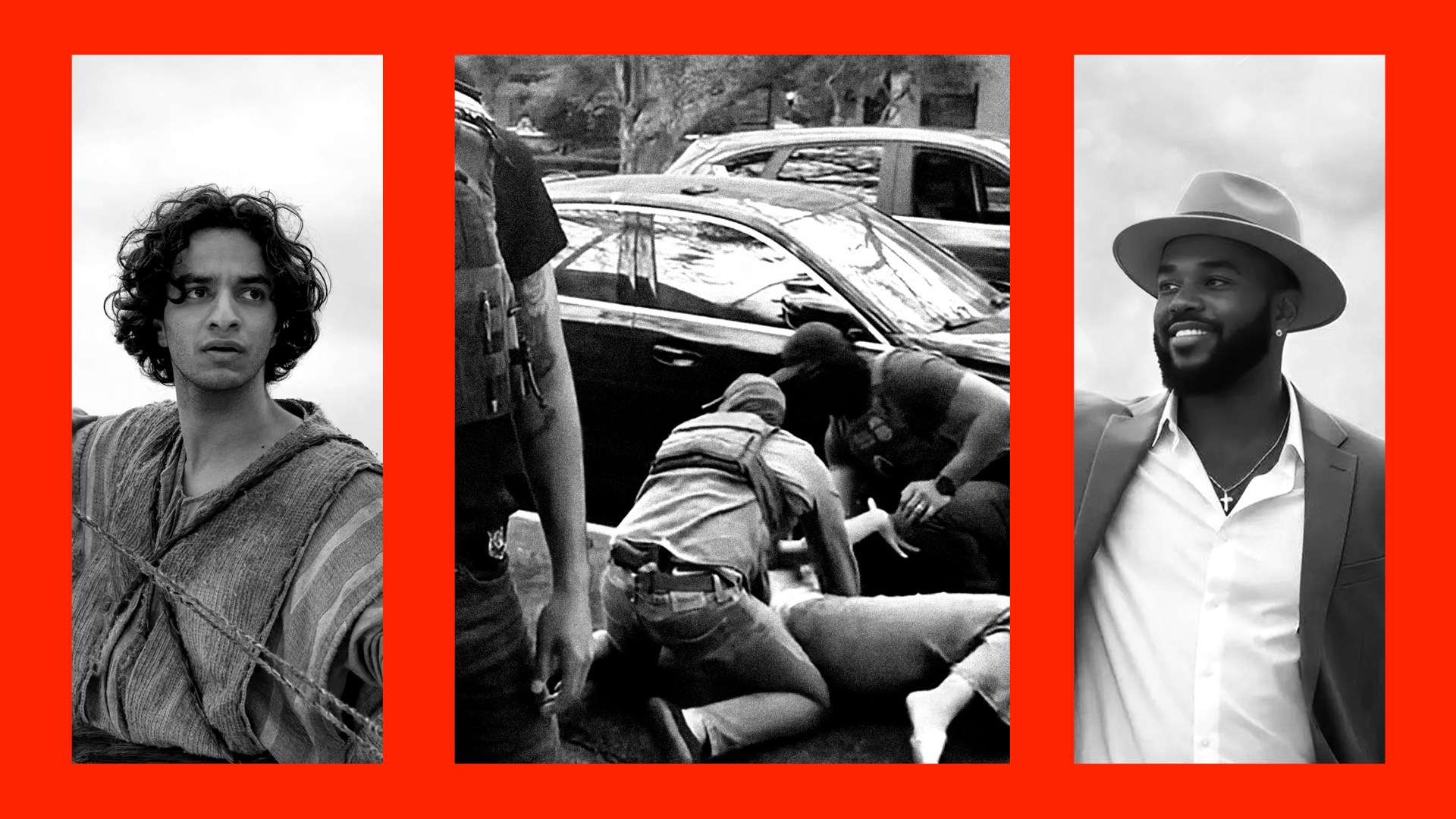
Early in 2025 a report predicted that 10 million Christians could be deported from the US under President Donald Trump’s immigration plan. Hispanic pastors saw many in their congregations stay home out of fear of arrest, and some Trump-supporting Latinos felt betrayed by the extent of the crackdown. CT documented one of the first ICE detentions at a church, a new practice that a federal judge affirmed. But then the raids hit Christians elsewhere. International students lost visas at Christian colleges. Persecuted Iranian Christians were arrested. Longtime leaders in Saddleback Church’s Hispanic ministry were deported. In cities targeted for raids, like Los Angeles, churches learned how to band together to support immigrants in their communities, setting up systems to take care of the children of those arrested or to visit immigrants in detention
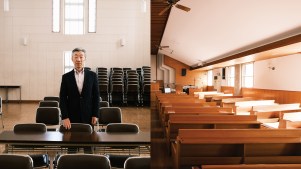
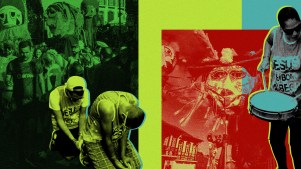
1. Charlie Kirk’s Assassination

Turning Point USA founder Charlie Kirk was killed at age 34 when shot at a rally on a Utah campus. The tragic incident propelled a national conversation over rhetoric (including Kirk’s comments on race) and political violence, spotlighted Kirk’s significant role in rallying young conservatives, and spurred followers to carry on Kirk’s legacy of speaking out for his Christian faith, with some showing up at church for the first time and tens of thousands crowding into his stadium memorial

Ideas

CT Stories You May Have Missed in 2025

From a Christian chess detective to spiritualized gambling to hymns in the Alaskan wilderness.

Images from three articles in the list.
Christianity Today December 23, 2025
Illustration by Christianity Today

At Christianity Today, many of our most-read articles have titles that draw the eye, report on major news events, or weigh in on highly debated topics. But beyond the stories that get thousands of likes on Instagram or show up in your Google search results, we’ve offered many quieter meticulously reported news stories, book reviews that engage thoughtfully with the text, and ideas that encourage us to think critically about how to live as Christians. 

As editorial support staff, we have the privilege of reading every article that publishes at CT each year—yes, all 1,300-plus. So we know when a piece didn’t get the attention we feel it deserves.

Among the selections below are stories of a retired professor singing hymns to bears in the Alaskan wilderness, one of the last Christian medical schools that is changing how doctors do medicine, and a missionary who spent 17 years behind bars translating the Bible. Plus, arguments for why couples should use marriage vows from the 1550s and why millennial dads are a major sign of hope. 

As we wrap up 2025, we hope these hidden gems make your holiday reading list.

—CT’s engagement and copy editors

News

15 Stories About the Vibrant Global Church in 2025

A doctor caring for Congo rape victims, pastors shepherding a Ukrainian youth group in wartime, and leaders serving faithfully in Christian-minority Japan.

Images from three articles in the list.
Christianity Today December 23, 2025
Illustration by Christianity Today

This year, Christianity Today expanded its coverage of Africa, highlighting the myriad ways in which believers on the continent are bringing the Good News to their communities and tackling political, social, and economic issues in their contexts with wisdom and tenacity.

CT also reported widely on ongoing turmoil and struggle in the Middle East, Europe, and Asia, with stories of Christians persevering under persecution or embarking on countercultural practices that displayed selfless, Christlike love.

Meanwhile, CT examined how the faith is thriving in unexpected ways and how missional living is paramount for evangelism in Latin America and Oceania.

These stories are opportunities for CT readers to witness God’s hand at work on a worldwide scale, intercede for fellow believers who are suffering, and praise God for all the ways he builds his church.

Here are our editors’ picks of international stories worth reading in 2025:

Church Life

Christianity Today’s Most-Read Testimonies of 2025

Ten of the most powerful conversion stories of the year.

Images from three articles in the list.
Christianity Today December 23, 2025
Illustration by Christianity Today

Christians have been sharing conversion stories for 2,000 years, ever since Saul of Tarsus—a brutal persecutor of the first followers of Christ—miraculously became a follower himself (Acts 9:1–31). The Christianity Today team is honored to share current-day stories of transformation. It is our prayer that these testimonies encourage you and strengthen you in your faith.

addApple PodcastsDown ArrowDown ArrowDown Arrowarrow_left_altLeft ArrowLeft ArrowRight ArrowRight ArrowRight Arrowarrow_up_altUp ArrowUp ArrowAvailable at Amazoncaret-downCloseCloseellipseEmailEmailExpandExpandExternalExternalFacebookfacebook-squarefolderGiftGiftGooglegoogleGoogle KeephamburgerInstagraminstagram-squareLinkLinklinkedin-squareListenListenListenChristianity TodayCT Creative Studio Logologo_orgMegaphoneMenuMenupausePinterestPlayPlayPocketPodcastprintremoveRSSRSSSaveSavesaveSearchSearchsearchSpotifyStitcherTelegramTable of ContentsTable of Contentstwitter-squareWhatsAppXYouTubeYouTube