Books

A Heartwarming Book on Sin

Three books on theology to read this month.

Three book covers.
Christianity Today December 19, 2025
Illustration by Christianity Today

This piece was adapted from CT’s books newsletter. Subscribe here.

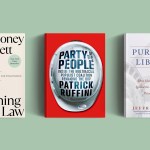
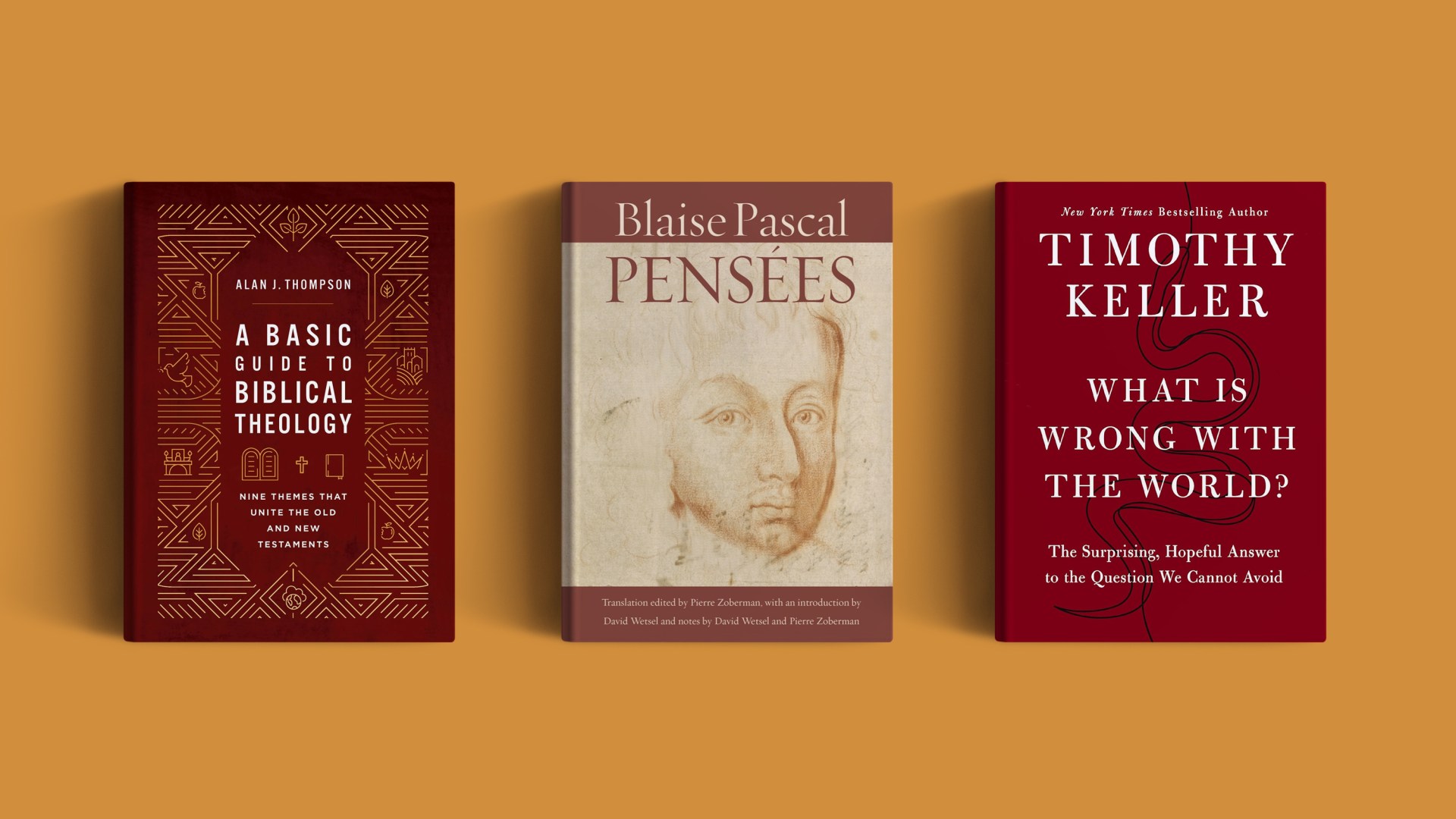
Alan J. Thompson, A Basic Guide to Biblical Theology: Nine Themes That Unite the Old and New Testaments (Baker Academic, 2025)

Fitting the whole Bible together can be challenging. Many readers are familiar with some of the most dramatic stories and most famous wisdom verses but would struggle to put them all in sequence—let alone assemble them into an overarching story that makes theological and narrative sense.

That is why basic introductions to biblical theology can be so helpful. Summarizing the story of Scripture, showing people what to look for as they read it, and helping them visualize how it all hangs together can help readers find their feet in God’s Word and can give them tools to make sense of it.

Sydney Missionary and Bible College New Testament scholar Alan Thompson does this thematically. Nine biblical themes receive a chapter each—Creation and Fall, covenant, Exodus and tabernacle, Law and wisdom, sacrifice, kingship, prophetic hope, kingdom of God, and Holy City—topped and tailed by discussions of how to put the Bible together as a whole.

The clarity and simplicity of these themes is a strength of the book, as is the frequent use of diagrams to illustrate them. Thompson’s tone is also helpful. His hermeneutic is unapologetically Baptist, but he gives his reasons and highlights areas where people disagree, explaining differing positions fairly.

In places, the book is not as basic as its title suggests, with less storytelling and more jargon (and mentions of the millennium) than we might expect. But this is a short, clear, fair, lucid, and well-researched introduction to biblical theology will serve plenty of students and serious laypeople well.

Timothy Keller, What Is Wrong with the World? The Surprising, Hopeful Answer to the Question We Cannot Avoid (Zondervan, 2025)

It is not easy to write a compelling, heartwarming, devotional book on sin. The subject lends itself to treatments that either breathe fire or water things down, depending on the audience. It’s hard to get to the heart of human sinfulness in a way that both exposes and explains, confronting the sin while comforting the sinner. The fact that Tim Keller has done both in What Is Wrong with the World? is testimony to his remarkable preaching ministry and to the skill with which his wife, Kathy, has posthumously presented it.

Keller’s approach is to show us seven ways in which the Scriptures picture sin, each rooted in a different biblical narrative. In the story of Cain, sin is a predator crouching at the door. In the story of Saul, it shows a frightening capacity for self-deception. In Jesus’ parables, sin is leaven, quietly but inevitably spreading until it is rooted out. To Jeremiah, sin is mistrust; with Jonah, self-righteousness; with Naaman, leprosy; with the Israelites in the wilderness, slavery.

Each picture receives a chapter full of biblical wisdom, psychological insight, practical illustration, and gospel hope, and each impressively reads like a book chapter rather than a transcribed sermon, which makes it a refreshing joy to read (also impressive, given the topic). The book concludes with two chapters on true repentance drawing from Psalm 51. Highly recommended.

Blaise Pascal, Pensées (1670)

Blaise Pascal (1623–1662) was a genius. He gave his name to a philosophical dilemma, a unit of pressure, and a mathematical triangle—and he only lived to the age of 39. But he was also a deeply thoughtful Jansenist theologian whose blend of biblical observation, cultural analysis, apologetic wit, and charismatic experience makes him fascinating to read on nearly any topic.

Many of his theological arguments have extraordinary sticking power. The Pensées (literally, “thoughts”) are an eclectic assembly of them, in the form of aphorisms, one-liners, paragraphs, short essays, and personal testimonies. Yet they still sparkle nearly four centuries later.

Some have become familiar. Many readers will have come across his wager about betting on God’s existence or his quip that the sole cause of humanity’s unhappiness is that people does not know how to stay quietly in their room. (For Pascal, the reason for leaving his room is that if he stays there quietly, then he thinks about death, so he fills his life with diversions instead.)

His evangelistic method has also been highly influential: Since people despise religion and are afraid it might be true, we have to first show that religion is worthy of respect, then make good people want it to be true. Only then do we show that it is.

But the book also fizzes with humor, penetrating apologetics, and biblical insight. (I will never read the Joseph story the same way again.) Most of all, Pensées displays a deep love for Jesus.

Andrew Wilson is teaching pastor at King’s Church London and author of Remaking the World: How 1776 Created the Post-Christian West.

Theology

Come, Thou Long-Expected Spirit

The Holy Spirit is present throughout the Nativity story. So why is the third person of the Trinity often missing from our Christmas carols?

A picture of a dove flying in light.
Christianity Today December 19, 2025
Vlad Georgescu / Getty

My New Testament professor Gordon Fee said something in class that sticks with me to this day. “Let me hear you sing. Let me hear you pray,” he said, “and I will write your theology.” His point was that Christians, as a matter of conviction, typically set to music the things they most cherish about God. What we cherish about God on the evidence of our Christmas carols, however, should make us wonder.

In carol after carol, we sing “of the Father’s love begotten” and we extol the one in whose “name all oppression shall cease.” We sing our praises, that is, of the Father and the Son but rarely of the Holy Spirit. In the second stanza of Charles Wesley’s 1744 hymn “Come, Thou Long Expected Jesus,” we petition Christ’s “eternal Spirit” to rule in our hearts alone. And that’s just about it. The Holy Spirit is breathtakingly absent from our canon of carols.

Our Christmas hymns give glory, laud, and honor to the first and second persons of the Trinity, but we fail to give similar praise to the Third Person. In doing so, we not only fail to give honor to whom honor is due; we also fail to bear faithful witness to the record of Scripture. If our music gives evidence of what we cherish most about God, the God of our Christmas carols is binitarian, not Trinitarian.

Why is there such a stark absence of the Spirit in our repertoire of carols? How does this stand in contrast to the witness of Matthew and Luke? And what might we do about it?

First, the majority of our carols come to us by way of the medieval age, with the exception of a handful of 18th-century hymns. Medieval Christianity placed a dominant emphasis on Christology, and Franciscan piety prioritized an affective encounter with the events of the manger. Mary’s tender love, the shepherd’s astonished faces, the angels’ celestial acclamation, the noble adoration of farm animals?

These images of Christ’s birth captured the imagination of the poets of this age. The prior events, such as Mary’s Spirit-overshadowed pregnancy or Zechariah’s Spirit-inspired song, remained offstage and secondary to the main-stage events.

A second reason is cultural. Our usual celebration of Christmas in America is shaped less by the accounts of Matthew and Luke and more by the stories and songs of 19th-century Western life, as I’ve written previously. Many of our most beloved carols, including “It Came upon the Midnight Clear” by Edmund Hamilton Sears and “Do You Hear What I Hear?” by Noël Regney, were penned, in fact, not by Trinitarian but by Unitarian Christians.

The carol “O Holy Night,” which Unitarian minister John Sullivan Dwight translated into English from the poem “Cantique de Noël” and which remains a beloved favorite on Christmas Eve services, was originally written by a French poet who later apostatized.

Charles Dickens, while officially Anglican, attended a Unitarian chapel while he wrote A Christmas Carol, and for him, it was the spirit of Christmas, not the Spirit of Christ, that ought to mark the celebration of the season. Such a conviction echoes the desire of many Americans today. They’re happy to sing about peace on earth and joy to the world, but only because these things are generically religious goods. It’s much harder to sing about the Prince of Peace who endures the Cross for the joy set before him (Heb. 12:2). Such a song would be scandalous rather than innocuous. 

Christians often tag along with this way of thinking about Christmas music, because they too love the “traditional” songs. They clamor for “The First Noel” and “Silent Night” on Christmas Eve because they say, “This is what we’ve always done.” Except that we haven’t. The way American Christians have typically celebrated Christmas is only 150 years old. It is not a terribly long tradition, and it is not fully biblical, at least not as it relates to the ministry of the Holy Spirit, and it owes more to the market than to our theological convictions.

The “canon” of Christmas carols is closed because the market says so, and with it any possibility that the Holy Spirit might gain entrance into our habitual practices of communal singing. That’s the third reason: the market is the boss, not our biblical faith.

When we look at how Matthew and Luke tell the story of the Incarnation, however, we see that the Spirit plays a central rather than peripheral role. Luke writes that John the Baptist “will be filled with the Holy Spirit even before he is born” (1:15). In the same chapter, the angel tells Mary that the Spirit will come upon her and, as at the beginning of all things, the power of the Most High will hover over her (v. 35).

In Luke 1:41, Elizabeth is filled with the Spirit the moment she hears Mary’s greeting. In Luke 1:67, the Spirit fills Zechariah in order that he might prophesy to the Lord’s future doings through his son, John. In Luke 2:25, we encounter an elderly man, Simeon, upon whom the Spirit rested. And in Matthew 1:18–20, finally, the angel reassures Joseph that what Mary bears in her womb is the Holy Spirit’s doing.

All this Spirited activity has its roots in Isaiah’s vision of what was to come, and it climaxes in the events of Pentecost. In his 2017 essay “The Holy Ghost of Christmas Past, Present, and Future,” John Witvliet reminds us of the Book of Isaiah’s status as “the fifth Gospel,” for it is here that we read of the role the Spirit of the Lord would play in the Messiah’s life. All the Old Testament prophets, in fact, who bore witness to this future Messiah did so because the Spirit of Christ was within them (1 Pet. 1:11).

Witvliet summarizes Luke’s gospel this way:

Luke depicts the entire Christmas drama as fully Trinitarian, involving God the Son, who was born in a manger, God the Father, who sent him, and also God the Holy Spirit, who was mysteriously active in so many moments in the drama.

To put the matter bluntly, there is no Incarnation apart from the power of the Holy Spirit. There are no miraculous births without the work of the indwelling Spirit. There is no ability to confirm or to recognize the true identity of the Christ child apart from the illuminating ministry of the Third Person of the Trinity. The Spirit is very much visible, not invisible, in the Nativity narratives, and an active rather than passive agent in Luke’s “account of the things” (1:1).

For the Gospel writers, this isn’t a negligible or dismissible matter. The Spirit’s presence in the Nativity is emphatically newsworthy. Luke especially magnifies the Spirit of God in his tale of Christ’s birth. Why do we not also?

One thing we could do is to recover and repurpose ancient texts. This might include medieval hymns, such as “Creator of the Stars at Night,” with its sixth stanza that gives explicit praise to God the Spirit:

To God the Father, God the Son,

And God the Spirit, Three in One,

Praise, honor, might, and glory be,

From age to age eternally.

It could include the hymn by the fourth-century poet, Prudentius, “Of the Father’s Love Begotten,” with its robust witness to the Holy Ghost. A second thing we could do is to set to music a greater number of Charles Wesley’s Nativity hymns. This might include Hymn 8 with these lines:

And while we are here,

Our King shall appear,

His Spirit impart,

And form his full image

of love in our heart.

Or these lines from hymns 9 and 17, respectively:

And meekly in his Spirit live

And in his love increase! …

His Spirit is our surest guide

His Spirit glimmering in our hearts.

The other way forward is to sing new songs. It is extraordinarily difficult to find such songs—songs that are suitable, that is, for congregational worship. If Spirit-themed songs have been written about the Nativity story, they’re usually of a devotional sort, suitable for personal or nonliturgical enjoyment.

Who then will write the hymns that will help us magnify the Holy Spirit? Who will raise a hallelujah to the comprehensive ministry of the Third Person of the Trinity in the stories of the Gospel writers?

Which singer-songwriters will help us to sing of the God who chooses to use the most unlikely characters, not just the teenage Mary or the doubting Zechariah, but also tax collectors and sinners, the grafted-in Gentiles, and the one-time-violent figure of Paul?

Which church musicians will help us to sing of the God who did the impossible through the wombs of both Mary and Elizabeth and who continues to do the impossible by healing the sick and the traumatized, raising the dead to life, and causing our wildernesses to blossom with life?

Which worship leader will help us to sing of the God who inspires prophetic speech that bears witness to the divine promise to raise the lowly, scatter the proud, fill the hungry, and extend mercy to all those who sorely need it?

Songs such as these will not only do our faith good, they will offer us a chance to acclaim the person and work of the Holy Spirit with all our heart, soul, mind, and strength, in the manner of the ancient hymn:

Christ! to thee with God the Father,

And O Holy Ghost, to thee,

Hymn and chant and high thanksgiving

And unwearied praises be,

Honor, glory, and dominion,

And eternal victory—

Evermore and evermore.

Amen and amen.

W. David O. Taylor is associate professor of theology and culture at Fuller Theological Seminary and the author of Open and Unafraid and Prayers for the Pilgrimage. He posts about art and theology @davidtaylor_theologian on Instagram.

Church Life

Who Writes History When There Is No Winner?

Lebanon’s civil war is a taboo subject. A group of Christians and Muslims is broaching it.

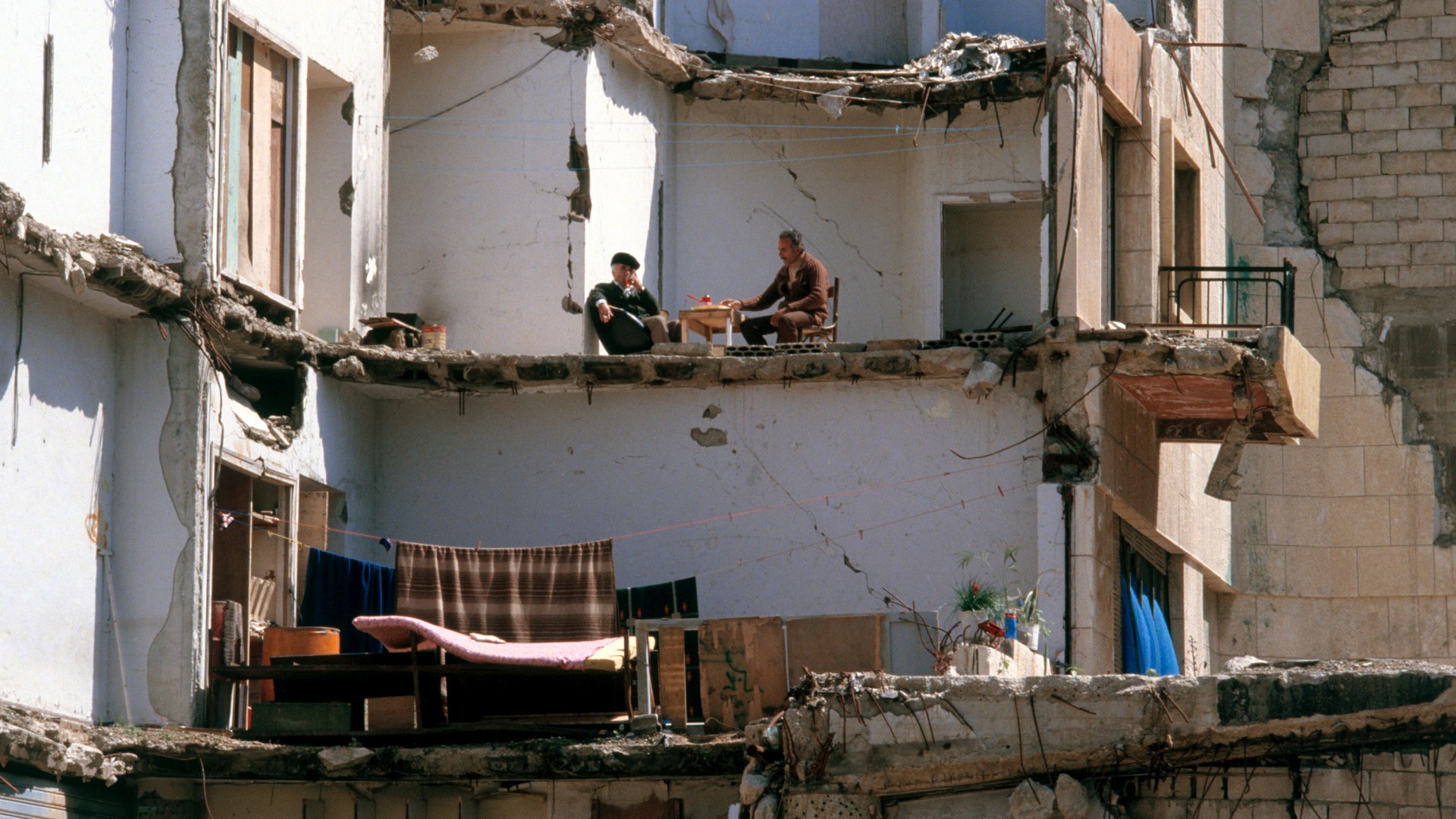
Two men sit at a table in what remains of their devastated Beirut apartment in 1984 during Lebanon's civil war.

Two men sit at a table in what remains of their devastated Beirut apartment in 1984 during Lebanon's civil war.

Christianity Today December 18, 2025
Peter Charlesworth / Getty

Eight somber Muslims sat around white plastic tables on the gold-tinged red carpet of Sayyida Aisha Mosque in Sidon, Lebanon. Arabic sweets beckoned, but few partook. The seriousness of the occasion—reviewing their memories of Lebanon’s 15-year civil war that ended in 1990—seemed to make several uneasy. They did sip their tea.

Four were Lebanese native to Sidon. Four were Palestinian refugees. Several wore beards, some long and scraggly, others short and trimmed. One was a former fighter in the war. Another lost family members when a Christian militia massacred inhabitants in Tel al-Zaatar.

Beginning in 1975, Christians, Muslims, and Palestinians plunged Lebanon into a regional conflict that included Israel and Syria, leaving 150,000 dead. Those convening the meeting, a Lebanese evangelical and a Druze follower of Jesus, hoped to unravel the reasons behind the highly contested conflict. Their host, chief judge for the Sunni Muslim court in Sidon and imam of the mosque, lent his legitimacy to the sensitive proceedings.

As participants received a 12-page document presenting Lebanese history that preceded the war, they were taken aback by reading a fully Christian perspective. But then the story shifted to Muslim perspectives, divided between Lebanese and Palestinian views. Three versions of history, none legitimized over the other.  

Many Christians do not call Lebanon’s tragedy a civil war. They emphasize how Palestinian refugees brought local destruction in their fight against Israel. Meanwhile, Palestinians emphasize displacement from their homeland and their need for a base from which to fight Israel. Lebanese Muslims sympathized with Palestine but aimed to change a sectarian political order that disproportionately favored Christians.

When the group finished reading the document, the evangelical stood up.

“Which narrative do you sympathize with the most?” he asked.

Martin Accad, president of the Beirut-based Near East School of Theology, spoke in his capacity as founder of Action Research Associates (ARA), which is working on a project that presents civil war history through multiple narratives. Cofounder Chaden Hani took notes. Their project is unique because, in schools, history books end shortly after the country’s independence in 1943 and avoid discussion of the sectarian struggles that followed.

A few participants dominated the mosque conversation with their viewpoints. An elderly Palestinian former fighter mostly sat silent. Accad asked about their emotions, which prompted different responses. “Sadness at what happened,” said one. “Fear it might happen again,” said another. A third noted, “I am happy we are finally trying to talk objectively about what took place.”

To move on from the conflict, Parliament passed a general amnesty law in 1991 that pardoned all political and civil war–related crimes. Former militia leaders became politicians and ignored the peace accord to write a unified history textbook as each sect clung to its narrative.

In 1997, Lebanon mandated a new educational approach. After three years of work, the cabinet formally adopted the history curriculum. But it was never implemented due to political interference behind the scenes.

“History is written by the winners,” said Accad. “But there was no winner in Lebanon.”

Christians and Muslims fought each other, and as allegiances shifted, each religion split into rival factions that clashed as well. Accad said history became too sensitive a subject for postwar leaders, as each feared being cast as a villain. A multinarrative approach sidesteps this issue, Accad believes, as every religious community can voice its own perspective.

Accad noted that this historical retelling should not gloss over criminality, which he personally lived through. While many people left the country during the war, his father, an evangelical leader, insisted they remain and serve in their Muslim-majority neighborhood. When Accad was 13, his parents allowed a displaced family to stay in their home during a summer trip abroad—but when they returned, the family refused to leave. They became displaced in turn, forced to relocate to Christian-majority East Beirut.

Accad later became a leader as well, serving as academic dean of Arab Baptist Theological Seminary. During that time, he discovered the power of empathetic listening as he pioneered evangelical interfaith work. He learned that by genuinely listening to another person’s story, participants win the right for their stories to be heard. As Lebanon again spiraled into political and economic chaos in 2019, Accad resigned his position and founded ARA to heal the wounds left by the civil war.

ARA’s initial work was archival. After collecting facts, images, and conflicting versions of events from the sectarian press, ARA presented its findings to leaders of the different factions in the civil war. Accad focused on Christians, while Hani won the trust of Muslim groups with her Druze background and similar history of displacement. After recording responses and crosschecking perspectives, they carefully crafted each side’s narrative.

Then the hard work began. For each of the project’s four modules, ARA convened about a dozen focus groups with a maximum of 10 people and a mix of age brackets, religions, and political orientations. Accad and Hani then read—and, as necessary, explained—the narrative of the sect opposite their own, modeling empathy for the other.

Younger groups born after the war confessed they knew only the narratives of their families and sects. Those who lived through it as youth were more familiar with other narratives, as they had lived in mixed Lebanese society, but they had no idea what had really happened. After hearing facts and testimonies that clashed with what they had been taught, they often concluded, If we cannot trust our leaders about our history, why do we trust them with our politics today?

Older groups, meanwhile, recounted emotionally charged stories of victimhood alongside more muted tales of wartime combat. When a Muslim recalled the horrors of crossing a checkpoint—where militants killed civilians from both faiths simply for the religion printed on their ID cards—it matched Christian terror evading sniper fire. For the first time, many heard directly how the actions of their community hurt others. But their conclusions were personal: What did we get out of this war?

“Seeing themselves as both victims and perpetrators created empathy,” said Hani. “This is necessary to help our many sects live together as one people.”

One Druze participant, Arij Koukash, a 23-year-old independent journalist from Aley, Lebanon, said that growing up, he heard from his grandfather that Christians wanted to drive the Druze from their homes in the mountains. His grandfather was a simple man, a lifelong fighter for the Druze militia, and Koukash’s role model. In return for his grandfather’s service, the primary political party of his sect took care of family needs and would eventually ensure Koukash’s employment as well.

Koukash first began to doubt the Druze version of history in 2019 during an ultimately unsuccessful nonsectarian protest movement as he met members of different sects who similarly wished to address Lebanese corruption. A few years later, he met Hani, who invited him to an ARA focus group exploring the Palestinian massacre of Christians in the village of Damour.

Impressed by ARA’s academic professionalism and fairness in listening to all sides, Koukash shared at home what he had learned. You didn’t live the war, his grandfather said, rebuking him. But when a relative demanded Koukash remove a Facebook post criticizing a Druze leader accused of corruption, his father defended him. The family lost its life savings during the banking crisis that followed the 2019 uprising, and his parents, he said, now understand that the country must change.

“I love my grandfather,” Koukash said. “But what I learned was propaganda.”

Last April, ARA invited Koukash to speak at a commemoration of the 50th anniversary of the civil war, which featured Lebanese prime minister Nawaf Salam as well as a discussion moderated by Accad on the multiple-narratives approach to dealing with the past.

Salam and President Joseph Aoun assumed their positions early this year. Outsiders of the traditional political elite, they promised reform. Accad and Hani hope the reform will include education.

In 2022, the Ministry of Education and Higher Education announced an overhaul of the entire curriculum beginning in 2026. The effort involves the Lebanese Association for History (LAH), which hopes to shift education from rote learning to critical thinking, said its president, Leila Zahoui. LAH also supports multiple-narrative approaches to teaching about the civil war, and it created a less-controversial module on the daily life of women.

The newly appointed minister of education asked all public schools to include it and similar LAH lesson plans during the 50th anniversary week, Zahoui said, the first time the government ever authorized the teaching of civil-war material. She hopes this will lay the groundwork for future efforts to tackle the highly sensitive conflict.

“The multiple-narrative approach is gaining traction,” Hani said.

But while it may attract the attention of the philosophically minded who can place their national identity above the sectarian, Hani emphasized that the Lebanese have yet to become one people. Latent hostility still divides many. During the focus groups, one Muslim redirected Lebanon’s problems to the colonial divisions imposed on the Middle East. One Christian could only repeat his party’s political verdict about the war. Even the participant who most clearly articulated why the Lebanese could not trust their leaders then immediately walked out of the focus group, frustrated.
Many felt such frustration during the discussions.

Saeed Tuhami, the elderly Palestinian fighter in the Sayyida Aisha mosque, maintained his quiet posture at home, while his wife, Bader, spoke with animation about their family history. Tuhami was born in 1946 before the creation of Israel. His family became refugees who settled in the Mieh Mieh Palestinian camp outside Sidon. A building contractor, he married Bader, a Muslim Palestinian born in the Christian village of Mieh Mieh. Residents invited her father to live there in 1958 to escape sectarian tension.

Once married, Tuhami lived with his wife and six children in the camp and maintained good relations with Christians. Even after a Christian militia bombed the camp and displaced Palestinians during the war, he rented a Christian-owned second-floor apartment down a narrow alley in Sidon’s old city center.

But Tuhami was already a militant before the civil war started, clashing with Lebanese police he viewed as oppressive and discriminatory against Palestinian refugees. His faction smuggled rifles in a vegetable cart. During the war, he served in military intelligence, scouting the geography of southern Lebanon for fighting against Israelis, Shiites, or Christians as shifting militia alliances dictated.

“We and our neighbors shared the same water and bread,” said Bader, recalling her prewar friendships. “Those were good days, but the politicians divided us.”

She was adamantly in favor of the multiple-narratives approach, believing global media is biased against Palestinian voices. Tuhami was less sure. Why should we bother teaching our children about who killed whom 50 years ago, he said, when Gazans are being killed today?

If Christians had participated in the Sayyida Aisha discussion, Tuhami would have told them they are good people—but their leaders weren’t. He was always a faithful Muslim. But as he and Bader went back and forth about history, he noted the conflict’s many layers of complexity. Some of his own faction’s leaders were Christian, while many of his colleagues took drugs and drank alcohol. Others were motivated by Marxist ideology.


Tuhami and his fellow militants fought for their people. But as the war became increasingly sectarian, he watched Palestinian and Lebanese Muslims become more religious, believing they were fighting for Allah. Tuhami’s son thought that finding faith, at least, was positive. Yet his father remembered the horror of checkpoints where innocent people were killed for their religious identity. And on one occasion, he pleaded with fellow fighters not to take revenge against the Mieh Mieh family of an officer accused of massacring Muslims. They didn’t listen.

He lamented that if the conflict is not taught in its complexity, 70 years of history will be lost.

“Students today have to read all three perspectives,” Tuhami concluded. “If you want to have a future, you have to know your past.”

Culture
Review

Review: Angel Studios’ ‘David’

Artistically, it’s ambitious. Narratively, it works. But it’s no “The Prince of Egypt.”

Brandon Engman as Young David in Angel Studio’s David.

Brandon Engman as Young David in Angel Studio’s David.

Christianity Today December 18, 2025
Copyright © 2025 by Angel, All Rights Reserved

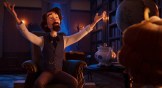
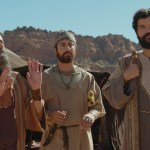
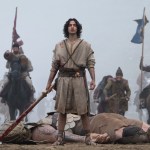
This has been quite the year for animated Bible stories, from The King of Kings and Light of the World on the big screen to The Chosen Adventures on Prime Video. Now comes the most ambitious animated biblical production of them all: a rousing, epic, family-friendly musical about David called simply David.

The look and feel of the film—at least in its early scenes—will be familiar to anyone who has seen Young David, the prequel series that has been streaming on Angel and Minno for the past two years. David begins with the young shepherd (voiced by Brandon Engman) hanging out with his sheep in the fields and singing of the joy he feels just being with them in nature. He even saves them from a lion, just as he does in the prequel’s first episode.

But Young David stayed out to pasture for the most part and didn’t do all that much with David’s hometown of Bethlehem, aside from one memorable musical number. The film, on the other hand, ranges all over Israel and beyond, and it boasts some massive set pieces, from armies massed for battle in the Valley of Elah to singing and cheering crowds in the streets of Gibeah.

It’s not just the size of the storytelling that’s impressive; there’s also the way the film pays attention to smaller, more intimate details, like when Samuel (Brian Stivale) anoints David in the presence of his family. The prophet sings a blessing in Hebrew as he holds his horn of oil above the boy’s head. A hush comes over the film as leaves stir in the wind, a flame flickers in a lamp, and birds perch in the beams of Jesse’s house, keen to get a look at what’s happening.

The images in scenes like this have a depth and texture that is simply unparalleled in faith-based animation—and if Angel Studios has been surprisingly generous in releasing clips from the film online, it could be because they’re counting on viewers to be so impressed by what they see that they’ll head to the theater to see them all over again in even greater detail.

The story, of course, is a familiar one: the rise of David from simple shepherd to king of Israel, and his complicated relationship with the previous king, Saul (Adam Michael Gold), along the way.

We’ve seen part of this story already this year in Prime Video and Wonder Project’s House of David. But where that series leaned into the darker, grittier aspects of the narrative, full of battlefield violence and hints (just hints!) of sexual misdeeds, the animated David keeps things Sunday-school friendly.

For one thing, there is very little violence onscreen. The film can’t avoid the killing of Goliath (Kamran Nikhad) entirely, of course—it does omit the beheading—but it manages to suggest the darker parts of the story without quite showing them. Armies chase each other, but we don’t see what happens when one army catches up to the other. And when someone holds up a weapon to someone else, the camera cuts away before we see how the weapon is used.

The film tones things down in other, more unexpected ways too. After saving his sheep from the lion—by knocking the beast off a cliff, as he did in Young David—David then saves the lion itself, which is pinned against a rock. And when the adult David (now voiced by Phil Wickham) confronts the Amalekites who have captured his family (1 Sam. 30) … well, no spoilers, but suffice it to say he leads with nonviolence in a way that directly parallels his rejection of Saul’s armor before he fights Goliath. The Amalekites, incidentally, are wonderfully dark and ominous, and wear masks of bone and antler like something out of a Terry Gilliam movie.

The film also completely avoids any hint of David’s love life. King Saul has no daughters to offer as a prize for killing Goliath, and David’s closest female relationships are with his kid sister Zeruiah (Sloan Lucas Muldown and Ashley Boettcher) and especially his mother Nitzevet (Israeli singer Miri Mesika). It’s particularly gratifying to see how big a role Nitzevet plays in this film. House of David and Of Kings and Prophets killed her off before they even began, contrary to the biblical narrative.

David makes its protagonist more heroic in other ways too. The biblical David and his men hid from King Saul by forging an uneasy alliance with the Philistines—one that entailed a fair bit of lying and killing on David’s part (1 Sam. 27; 29)—but the David of the movie plans to infiltrate the Philistines to save the Israelite army, until events conspire to draw him away.

Strikingly, a lot of these twists work. The film makes perfect dramatic sense on its own terms, and you can marvel at how cleverly it rearranges the narrative pieces of the biblical story. It just isn’t as morally complex as the original.

Bible nerds might get a kick out of some of the more obscure details that make their way into the script. One of David’s men is named Elhanan (Doron Rechlis), and when David’s men put on a skit celebrating David’s victory over Goliath, Elhanan plays the giant. (The biblical Elhanan had a history of his own with Goliath’s brother; see 2 Sam. 21:19 and 1 Chron. 20:5.)

The film also has some interesting parallels with another animated Bible movie, The Prince of Egypt. Like that film, this one emphasizes the hero’s closeness to his female relatives, and it casts an Israeli singer as his mother. It also features a scene in which a giant stone image of the king is defaced or destroyed. And in a song called “Tapestry,” David’s mother teaches him about trying to see the big picture, just as Jethro taught Moses in “Through Heaven’s Eyes”—a song that begins with the line “a single thread in a tapestry.”

For all its visual and artistic ambition, though, David isn’t as grown-up (for lack of a better word) as The Prince of Egypt. David has its serious moments, but it frequently goes for the joke in a way that the Moses movie didn’t—by finding humor in the cowardice of the Israelite soldiers, for example.

David is also arguably weakest when it should be most iconic—that is, when David fights Goliath. The confrontation between the Israelites and the Philistines plays like something out of a pantomime, as the Philistine king Achish (Asim Chaudhry) and the giant himself come across as campy, cartoonish villains. (Goliath is also super pale, which unfortunately plays into the “evil albino” stereotype.)

But there’s still a lot of movie to go after that, as David grows up and finds himself running from King Saul. And there’s plenty to enjoy, from the gorgeous visuals to the stirring music and the clearly articulated lessons about faith and courage. David may be a children’s film at heart, but it’s one that raises the bar for faith-based animation as a whole: thematically resonant for kids but artistically inspiring for viewers of all ages.

Peter T. Chattaway is a film critic with a special interest in Bible movies.

Culture

My Son’s Last Christmas at Home

Christmastime comes with its own losses and longings. God understands them.

A teenage boy decorating a Christmas tree.
December 18, 2025
Illustration by Elizabeth Kaye / Source Images: Getty

It is Advent. I ask my teenage sons to get the boxes full of Christmas decorations from the garage. I know what I’ll find inside: remnants of the past. Chubby-cheeked photos and little handprints on ornaments. Mid-elementary photos, strung together with curly ribbon, where teeth look so big in little mouths—so different from the chiseled jaw of my eldest, the one who made me a mother 18 years ago. Offhandedly I talk about his “last Christmas,” though next year, God willing, he’ll come home from college for the holiday. He won’t be gone.

But still, the season will be different than it has been these past 18 years. This December, I wake him each day and toast him a bagel before he drives to school. Not next year. The air in our home will have shifted. I’m not sure what to do about what’s coming. How do I mark a “last” with both joy for his future and sadness that the past is gone?

There’s this trend going around the internet in which a parent scoops up and holds an unwieldy teenager, an intentional “last time I picked you up.” The videos sound cheesy but can be surprisingly moving. We need rites of passage to mark not just the firsts but the lasts.

When my son turned 18 a few months ago, my husband said a blessing over him in front of extended family, marking the shift from boy to man. It was appropriate and beautiful. But now, as I open boxes and put up decorations, I’m not sure what this middle space between the milestones should look like. Graduation is coming, but it isn’t here yet.

I’m deeply conscious of a sort of dance mothers must do with sons—remaining a soft place to land but acknowledging that, as they grow, they are more completely entering the company of men. They need to prove themselves away from the home, putting the integrity and resilience we’ve hopefully instilled in them into practice.

But I already miss him. I miss the dress-ups and read-alouds. I miss gathering leaves on nature walks, eating snacks on blankets in the living room, and reading his illustrated Star Wars stories in first grade. I miss always being the one to hold and soothe.

My voice catches with self-restraint on the mornings where he heads out without much of a look back, grabbing his bagel. I say casually, “Hey, son. I love you. I’m proud of you.” These are sending words—a sort of benediction from childhood to adulthood. They seem the only appropriate ones, resonant with both sadness and joy. Words like these give a child a story to belong to, a home to return to, and an encouragement to explore, but they are tinged around the edges with longing for what was.

As I sit in my quiet house, looking out my kitchen windows, I wonder: What did God’s missing feel like as he called, “Where are you?” (Gen. 3:9) to his wayward children in the Garden of Eden? Surely longing propelled his love. But his rescue—though it went to great lengths—was often subdued, restrained. His people were in Egypt for 400 years, after all. And I meditate on his love for his Son. At Jesus’ baptism, when we hear the words of God the Father, he’s saying a version of the words I give my child. This is my beloved kid! Listen to him. I’m so proud of my boy (Matt. 3:17).

Friends ask me how I’m doing in this year of lasts. It’s not just my eldest. When spring comes, my other three children will be graduating from elementary school, graduating from middle school, and heading into senior year, respectively. In six years, our nest will be empty.

My children’s early years were full of great intention: going on library visits and to music class, reading The Jesus Storybook Bible daily, practicing hospitality with neighbors and churchgoers who would come for lunch most Sundays. We established rhythms of worship, play, and care.

As we begin this launching season, intentionality looks different. It is more understated guiding, more availability. It is less directive. They do the choosing and doing: selecting friends, doing homework, participating in activities of their own choosing. It is acknowledging what we always knew to be true in the lives of our children: God directs and holds. We are not in control. We’re witnesses to God’s work and simply along for the ride. Yet being along for the ride feels particularly vulnerable now, as if we’re turning a page into a new chapter we won’t have the privilege of writing.

To be vulnerable means to be fragile and finite and open to attack. As CT’s editor at large Russell Moore recently wrote, “Flesh and blood in Scripture is depicted as the ability to die, to be killed, to be vulnerable.” Our manger scenes seem tame to the reality of that first Christmas, Moore writes—Christ come to take on our flesh as a dependent infant who would one day die for the sins of the world. Christ is no stranger to being wounded for love’s sake.

When we love as Jesus did, we must always invite the possibility of being wounded. Love means opening ourselves to small hurts and major rejections, to pain, and eventually to loss.

For me as a mother, the loss of this family as we’ve known it for the last 18 years is its own sort of wound. (Don’t get me wrong, I’m also gleefully anticipating time with just my husband in a handful of years, and I’m excited to see how the next chapter will likely add new family members to love and enfold.) Things are changing. Whereas the chaos of early motherhood was its own transition, this calm of the sending years is new in its own way. The bookends of parenting put my finitude in stark relief.

This awareness of my own fragility is a gift. It reminds me that I am human and dependent on a good God. It reminds me that it is God, not I, who writes my children’s stories.

This December, we laugh as we take out the childish creations and place them on the tree: the quirky smiles, the painted handprints, the wording on T-shirts in photos that got cropped when they were made into ornaments. Behind my laughter is, of course, a wince—a loss that tries to transform itself into gratitude by slowing down time, sealing this moment into memory. Time still slips through my fingers.

My son places the star on top of the tree. I catch his eye. “Son, I love you. I’m so proud of you.”

Ashley Hales is editorial director for features at Christianity Today.

News

Bondi Beach Shooting Compels Christians to Stand with Jews

Jewish-Christian friendships offer solace and solidarity after antisemitic violence.

Christianity Today December 18, 2025
Getty Images / Edits by CT

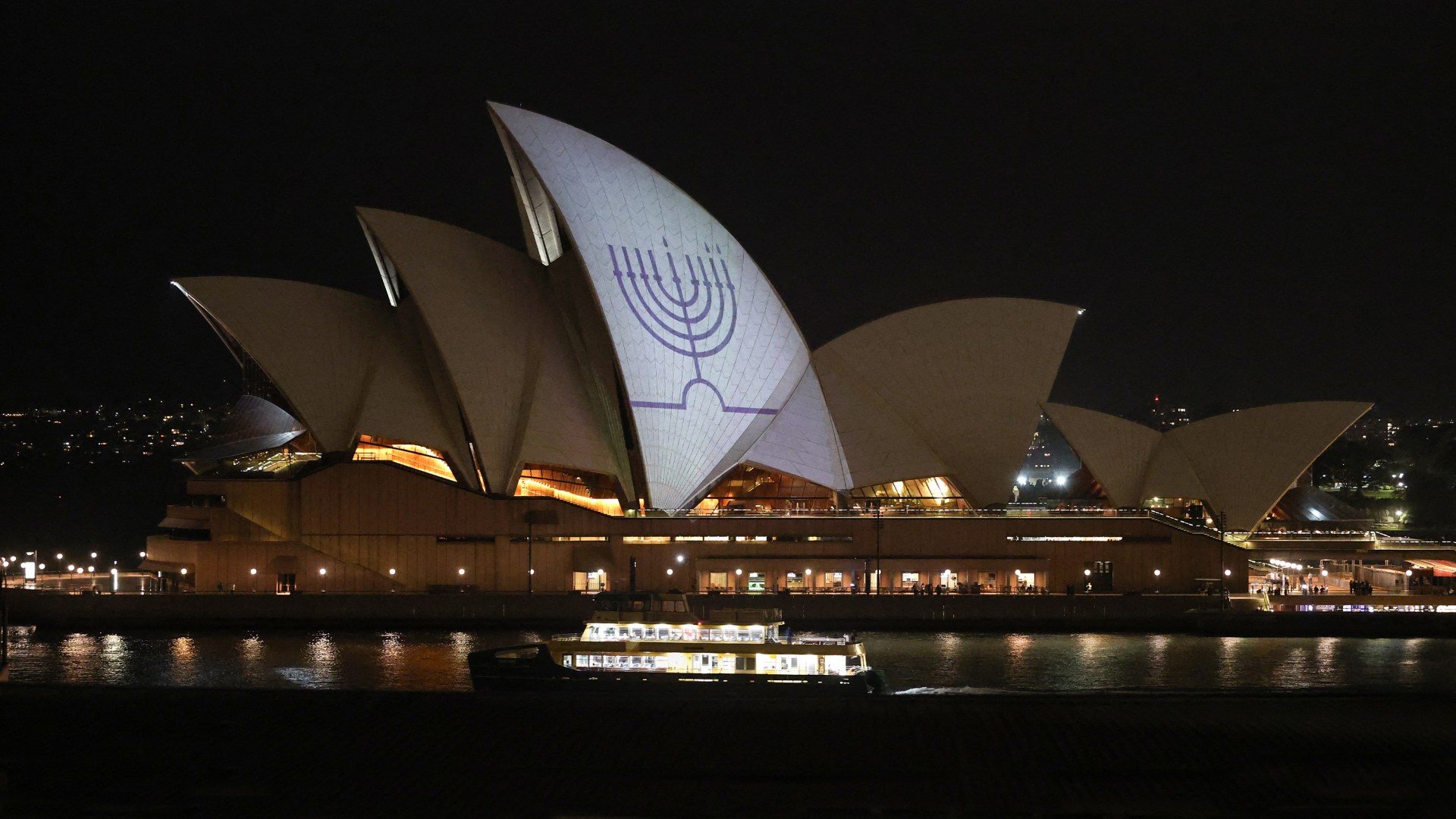
On Sunday, two gunmen killed more than 15 people on Bondi Beach in Sydney, Australia, where the local Jewish community had gathered for a Hanukkah celebration. As antisemitic violence rises around the world, rabbi Josh Stanton says it is imperative that Christians respond in solidarity with their Jewish neighbors. 

The Bulletin sat down with Stanton, associate vice president for interfaith and intergroup initiatives at Jewish Federations of North America, and bishop Robert Stearns, president of the Israel Christian Nexus in Los Angeles, to talk about the threat of hatred toward Jews and the actions Christians can take in response. Here are edited excerpts of their conversation from episode 176.

We’ve seen too many instances of antisemitism and violence over the past year. How is your community responding?

Robert Stearns: Jewish communities are filled with fear because when antisemites chant, “Globalize the intifada,” they mean “Kill Jews everywhere.” Lo and behold, words of hate led to actions of hate. Our fear is that the tirade of hate that we have been hearing is going to manifest in physical, real ways across the country. Rabbi Yehiel Poupko says the Jewish people were “a family that became a faith that stayed a family.” When any one of us is targeted, all of us feel it. 

Josh Stanton: Our community in New York is reaching out to our Jewish brothers and sisters to express our care, our solidarity. The Jewish people have been persecuted and hunted down more than any other people in history. In the past, Christian support for Israel has had a lot of baggage, sometimes connected to specific eschatology or theological presuppositions. I have a moral obligation to stand against racism, bigotry, hatred, and violence in any form. Our community is deeply strategizing how we develop a more holistic, transcendent outreach to our Jewish brothers and sisters that’s not encumbered by some of the baggage of the past in Christian circles but far less evangelical circles. 

For two millennia there’s been a teaching of contempt, meaning that Jews are supposed to suffer in exile forever because they refuse to accept Jesus as the Messiah. As a result, many Christians theologically struggle with the idea that Jews have returned in large numbers to their ancestral homelands. Christians need to grapple with that theological issue at this moment in order to be good friends and allies of the Jewish people. Many are doing that. It takes time and intention.

The other aspect is replacement theology: the idea that, though Jews were in covenant with God, because of their refusal to accept Jesus as Messiah, they are no longer in covenant. I’ve seen Bishop Stearns and other deep friends of the Jewish community make clear that they are drawing from the teachings of Romans that Christianity was grafted onto the tree of Judaism. This tree has deep roots that we can draw from together, but it means that Jews are still in living covenant with God. If Christians are able to grapple with the teaching of contempt and replacement theology, there is so much that we can do together in friendship.

These crimes seem to be a violent outgrowth of protest culture, where all Jews get lumped into one generic community. How important is it that people understand Judaism’s diversity?

Stearns: By random historical coincidence, by act of God, for whatever reason, the majority of Jews in the United States have ancestry from Eastern Europe. That is not true in Israel and for Jewish communities around the world. If you go into French synagogues, a large percentage of French Jews are from North Africa, and they do not look the same as Jews of Eastern European ancestry. Many of them speak Arabic and have different customs. 

For Americans who don’t know the difference, it’s easy to paint with a single brush a highly diverse people that has been shaped by every culture that has hosted them, usually for the good. It would be nice if people listen to Jews as they describe themselves, rather than telling Jews who they are or who they are supposed to be. When we’re told who we’re supposed to be, it reduces our humanity. It turns us into the types of people you can hate. When you strip our humanity from us, it’s easy to hate an idea of who we are. 

Political progressives are searching for something to be for right now. That is an important journey for them to be on, but they cannot coalesce around hatred of Jews in Israel. That is not a reasonable way to find your way out of the political wilderness. Hatred of Judaism is not progressive and is not an acceptable path in American political discourse. Very sadly, a lot of the most radical anti-Jewish and anti-Israel voices today are from the progressive camp. For many Jews who have voted left of center, it’s a disillusioning and painful experience. It is not okay to blame one group of people for all of the ills of the world. That is a story as old as Jewish-Christian relations, and it is a story that we need to tell differently today.

How has American Jewish life changed since October 7 and since the outbreak of antisemitic violence?

Stearns: If we put aside, for a moment, the emotional and physical toll of the violence and hatred directed against Jews, there’s also a financial toll. Synagogues are spending, in many places, 20 percent of their budgets on security.

It takes two or three lines of security to bring your kids to Hebrew school. You tell your five-year-old child that in order to practice Judaism, you have to be wanded twice and go through a mantrap at your synagogue door. When I go to Episcopalian churches, I walk right in the front door. No one’s there, no guard, no locked doors. It is a different reality for Christians right now than for Jews. Unfortunately, the murders have taught us that security is absolutely essential for our physical well-being. What it does to us emotionally, day in and day out, being reminded of the fact that there are a lot of people out there who wish us harm, it’s excruciatingly painful.

For mission-driven organizations who want to feed the hungry, who want to care for the vulnerable, these security costs are like a 20 percent tax by virtue of humanity’s hatred of Jews, the ambient hatred in our society. How are we supposed to follow through on our mission when we can’t keep our doors open? How are we supposed to motivate and excite people about Judaism when it’s harder to get into a synagogue worship service than it is to check in for a flight at JFK airport?

How have you seen Christians effectively show up and show solidarity following instances of antisemitic violence?

Stanton: An increasing number of pastors and credible leaders from a broad spectrum of Christianity are waking up to the moral, transcendent obligation to care for humanity and specifically for our Jewish brothers and sisters. Scripture is generally the story of the majority getting it wrong and a little remnant getting it right. Then God partners with the remnant; something salvific comes from it. My prayer is for an awakening and an education coming, because I don’t think just the future of American Jewry is at stake. The future of the Judeo-Christian worldview and Western civilization and basic human rights truly is on the line. 

Stearns: It all starts with one friendship. What is a concrete message to Christians everywhere? Reach out to your Jewish friends. Say, “Hey, I care about you. Can we get coffee?” It’s amazing what can come out of one simple conversation over coffee.

The first time I felt okay after the extraordinarily painful attacks of October 7 was in the presence of Christians, because it was the first time I felt held emotionally and realized that I was not alone, that Jews were not alone.

The good that you can do, pastorally and relationally, transcends words. This is an amazing opportunity for Christians everywhere to reach out in friendship, to start to see Jews as Jews see themselves, and to fight antisemitism and the virulent strains of anti-Zionism together. 

History
Excerpt

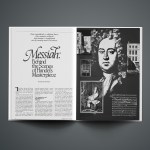
The Story Behind Handel’s ‘Messiah’

Meet the unlikely characters who defined this musical classic.

Image credit: Illustration by Rick Szuecs / Source Image: Sora

Christianity Today December 17, 2025

Handel’s Messiah is one of the most popular classical compositions played at the holidays. Filled with biblical passages and soaring vocal and orchestral arrangements, Messiah takes listeners through the story of Scripture with an eye for the timeless theme of hope.

Clarissa Moll of The Bulletin sat down with Charles King, author of Every Valley: The Desperate Lives and Troubled Times That Made Handel’s Messiah,to learn more about who formed this important work and why, almost 300 years later, it resonates with those holding on to faith when life seems darkest. Listen to the entire conversation with special musical selections from Calvin University in episode 130. Here are edited excerpts.


Paint the landscape of George Frideric Handel’s world. How was it similar to or different from our own?

Charles King: Handel was born in 1685 in what would become Germany in the long shadow of conflicts in the Holy Roman Empire in Central Europe. This was the Enlightenment, a time of rationality, reason, and advances in science, but anybody who lived through that period would not have thought of it in that way. Disease was rampant, and many families buried more children than they ever saw to adulthood. Handel’s father was a barber surgeon and the local official charged with managing epidemics like typhus or the plague. From boyhood, Handel knew intimately what it was like to live in a worried and anxious age.

Handel spent most of his career in London as court composer to the royal family. He was at the absolute center of the political system of his day, but there was great division and dissension over politics, religion, and the shape of society. A sizable portion of British society thought that King George I, the king whom Handel served, was illegitimate. He had taken the throne in a dynastic change in 1714, and many felt he was the wrong selection. Underpinning everything in the British Empire was human enslavement and its accompanying wealth, including that of the patrons on whom Handel depended. 

In many ways, Handel’s world looked much like the world we know today. This period of deep worry about the state of the world produced what is arguably our greatest musical monument to the possibility of hope. Those things go together for a reason. People were looking for some way to think, feel, and believe their way toward a more hopeful world. 


How did religion function within this setting? Was Handel himself a religious man? 

Handel was religious in the normal 18th-century way but not in a “wear your religion on your sleeve” sense. The king he served was also the head of the established English church, so Handel composed music for the church and religious and courtly ceremonies all the time. It wasn’t until later in his life that he started going to church regularly and evinced a real sense of personal belief and devotion.

Messiah is completely composed of sacred texts, and we want Handel to be aware that he is divinely inspired. We want an angel to be sitting on his shoulder. But when Handel composed it, there’s no real evidence that he thought of it in that way, for one simple reason: His work didn’t predispose him to that kind of reflection. In addition to being a courtly composer, Handel also composed for the stage—working quickly, churning through new ideas, using whatever he had at hand, and then moving on. 

The truest spiritual father of Messiah is probably Charles Jennens, the librettist who created the structure and assembled the text. Jennens was from one of the wealthiest families in Britain, and he wanted for nothing. He also suffered from what we would now call chronic depression or maybe bipolar disorder. His preserved letters show incredible periods of manic work followed by deep depression, where despair, doom, and hopelessness enshrouded him. 

In the late 1730s or early 1740s, Jennens began attempting a systematic way to climb out of this mental state. As a believing Christian, he turned to Scripture and books on theology and philosophy. From this, he assembled the text of what we now know as Handel’s Messiah. He was trying to create his own personal, lighted pathway through the Bible. In the library at Gopsall Hall, his estate house in Leicestershire, England, he had surrounded himself with beauty—art and sculpture and painting—to pull him out of this state. He looked at Scripture similarly and thought, I have to get out of the state I’m in. How can I use the words that are most meaningful to get me there?

A decade or so earlier, Jennens’s brother had died by suicide, a death that hit his family very hard. Not only had they lost a family member, but the reason they lost him struck very deep. The family believed he had died by suicide because he had essentially gone off to Oxford University, met free thinkers, and lost his faith in college. When Jennens sat down to write the text of Messiah, he was also thinking about this and the role of faith in a person’s life: Is religion a thing that you think your way to? Is God a presence that you reason toward? Or is there something deeply ineffable, mysterious, awesome, and wonderful here? That pursuit infuses Messiah entirely. 

The first words you hear, from 1742 to the present, are “Comfort ye.” The words come like a trumpet up above the violins in the way that Handel orchestrated it. Quoting the prophet Isaiah, it’s as though Jennens says, “How would you live your day, your week, your life differently if you knew from the outset that things are going to be okay? How would you look for evidence of that in the world?”

There’s also something even deeper. In Isaiah 40, Jennens sees not just that you need comfort but that you need to be the one who’s comforting. “Comfort ye, my people”—that’s directed at us. Considering Jennens’s story, that is so profound. It’s as though he’s telling himself, “In the middle of my despair, in the middle of how awful everything is, I need to be the one to comfort others.” It’s amazing to me that in the 18th century, someone found that truth and wrote it down as the first thing they wanted someone to hear in this piece of art.


After receiving Jennens’s libretto, Handel waited before sitting down to write what he called a sacred oratorio in preparation for a tour to Dublin. After composing Messiah in 24 days, he asked a rather-complicated social figure to come with him and sing. Tell us about her. 

Susannah Cibber had begun a career on the London stage 15 years earlier as an ingénue in tragic roles. At the time, everyone was trying to capitalize on the Italian opera craze, and Cibber’s tradesman father recognized her musical talent and insisted that a better way for her to get into show business was to marry into it. He married her off to a man named Theophilus, who turned out to be a nightmare: a tough guy, serially unfaithful, terribly abusive, often drunk. Even worse, Theophilus sold visits with Susannah—sexual and otherwise—to young men who would pay his bar tab or his gambling debts. 

To complicate matters, Susannah fell in love with one of these men that she met in this way, a man named William Sloper. Theophilus sued her for divorce and her lover for damages. When the court found the lover guilty, the most intimate details of Susannah’s private life were aired in that London courtroom, and her life was ruined. People took down the testimony, accompanying the content with pornographic cartoons. After this, Susannah disappeared, appearing for the first time in Dublin at exactly the time that Handel was there. He casts her in the premiere in April 1742. 

Handel must have been aware of Susannah’s story because, among other things, he wanted her to sing, “He was despised and rejected of men, a man of sorrows and acquainted with griefs”—that amazing aria about the depths of Jesus’ suffering—this moment from which the entirety of Christian theology springs.

In Neale’s Musick Hall on Fishamble Street in Dublin, with two cathedral choirs and the equivalent of a military band, she steps forward from the choir to sing this. You could have heard a pin drop. Everybody there knew her story, and they could do the gender switch themselves. She was despised, rejected, a person of sorrows, and deeply acquainted with grief. 

As the story goes, silence followed that performance until a reverend in the audience who had just buried his wife stood up and said, “Woman, for this be all thy sins forgiven.” Of course, it really wasn’t her sins that were at issue; it was other people’s sins. But this was a transformative moment. This work of art about the power of redemption became the vehicle of this individual’s redemption at the premiere.

Susannah Cibber became the most highly paid, most successful tragedian of her generation. 


After the Dublin performance, how did Messiah become associated with Christmas? 

Thomas Coram, an agent for philanthropists, was burdened for impoverished foundlings in London. A foundling was a child who still had one or more parents alive but, because of poverty, was largely abandoned to his or her own fate on the streets. Few people cared about these children; most thought leaving them alone would teach their parents a lesson.

For 20 years, Coram worked to create the Foundling Hospital, an institution that served as a foster-care system for them. Just as Handel was about to pack Messiah away in his filing cabinet, if you like, the Foundling Hospital opened with a chapel, and a group of patrons asked him to do a benefit concert, where he repurposed some of Messiah for the event. 

After that, Messiah became an annual fundraising concert for the Foundling Hospital. Not in a grand cathedral or music hall but in this institution for abandoned and unwell children, many more people first heard this piece of music. As they looked up to the balcony in the chapel and saw the foundlings, people were very moved to think that the music was somehow helping the kids who were there. “For unto us a child is born.” Messiah is arguably the greatest piece of participatory art ever created. 


Do we, like Susannah Cibber and Charles Jennens and those foundlings, need life to bring us to our knees so we can receive this piece of music in the way it was intended? Is there a desperation that is almost necessary to apprehend Messiah’s message? 

Every generation has felt that Messiah is somehow written for them, because Jennens focuses on biblical passages that highlight contemporary anxieties. “Why do the nations so furiously rage together, and why do the people imagine a vain thing?” a soloist asks. Or “death, where is thy sting? O grave, where is thy victory?” 

For Jennens, that was the essence of the Christian story. Every piece of evidence is going to tell you that life will not be okay. The mystery of faith is how you believe the first thing you sang and believe it all the way to the final amen. Eighteenth-century audiences could feel that, and we feel it today. 

What’s more amazing, and hopeful too: Despite being very good friends, Handel and Jennens were political enemies. Jennens’s family supported the old Stuart dynasty that had been exiled when King George I, Handel’s employer, had come to power. These two people stood on opposite sides of the greatest political divide of their moment yet came together to create this. The story of Messiah reminds me that it takes all of us together to craft something new and hopeful in a deeply troubled and despairing world.

News

The Christians Helping People Enslaved by Cybercrime Scam Centers

After Myanmar’s military raided a compound, a network of ministries helps trafficking victims return home.

The KK Park complex in Myanmar's eastern Myawaddy township.

The KK Park complex in Myanmar's eastern Myawaddy township.

Christianity Today December 17, 2025
Lillian Suwanrumpha / Contributor / Getty

On October 20, rumors spread among victims held captive in a massive 520-acre scam center in Myawaddy Township, Myanmar, across the border from Thailand. “The gates are open,” people whispered, according to later-recorded statements. “The guards have abandoned their posts.”

The foreign workers at KK Park, many of whom had been tricked into online scamming and held captive by Chinese criminal organizations, hurried to the front gates of the compound to confirm the rumors.

It was true. Myanmar’s military had raided the compound, and the guards had left their post. The workers ran.

An estimated 1,500 people from 28 countries made it out. Some took shelter in nearby villages controlled by Myanmar’s ethnic armed forces while others swam across the Moei River into the Thai border town of Mae Sot, where Thai immigration intercepted them.

“This is heaven,” one victim recalled thinking when he got out, according to his testimony to International Justice Mission (IJM) staff two weeks later. In Mae Sot, he was able to buy Thai food for on 40 Thai baht ($1.25 USD) compared to 400 baht ($12.50) in the compound. “We didn’t have money to eat anything in the compound. And when we got out here, we felt like it’s really a heaven outside.” 

Many of the victims were lured to Thailand by false job ads, then whisked away to scam compounds in Myanmar, where Chinese bosses forced them to work long hours scamming innocent people online.

As the victims flooded into Mae Sot, Thai authorities contacted Mechelle Moore of Global Alms Incorporated (GAI), a Christian nonprofit helping scam-compound escapees. She quickly gathered her team members—who are trained in crime typology, reports of victim testimonies, and emergency response—and they drove over to the Thai-Myanmar Friendship Bridge, where authorities brought victims from neighboring Myanmar communities.

They set up stations to process victims by gathering their information, including nationality, and recording their testimonies. If the survivors had names and descriptions of traffickers, along with any evidence, team members recorded it for Moore to investigate further. GAI often shares this information with national authorities and embassies to better understand the syndicate’s structure, according to Moore.

Over the next few weeks, GAI, IJM, and other antitrafficking organizations helped explain to the escapees their rights, provide emergency essentials, conduct detailed forensic interviews, and help with victim identification, a long process of screenings and interviews with immigration authorities to determine whether an individual entered into scam work by coercion or willingly.

Moore noted that the scale of the cyberscam industry can be extremely disheartening. Still, she focuses on the individual.

“Go for the person in front of you. They matter to God,” she explained. “There’s a certain vulnerability in being tricked. They have PTSD, issues with panic, and shame. They need a lot of grace for what they’ve been through.”

Since scam centers first came onto the world’s radar in 2020, a lot has changed. Governments are starting to take action against the organized crime syndicates responsible. They’re raiding or cutting power to compounds, leading to the release of thousands of victims. Media attention has increased global awareness of the issue, and churches in Asia are seeking to help traumatized victims after they return home.

Yet the criminal syndicates are also adapting—quickly moving to different locations and restarting operations as they make just under $40 billion a year running cybercrime centers in Southeast Asia, according to the UN Office on Drugs and Crime. In total, the UN estimates 220,000 people remain held in compounds in Myanmar and Cambodia.

Other challenges exist: The sheer number of released victims is overwhelming governments and nonprofits. Meanwhile, governments struggle to differentiate between true victims and complicit criminals.

“In my 15 years of working for IJM, I have never seen such systematic brutality employed against trafficked victims,” said Andrew Wasuwongse, director of IJM Thailand.

The difficulty of caring for victims was evident after the raid on KK Park, Moore said. GAI and the other organizations at the border have small staffs and limited funding to care for the traumatized people leaving the compound. With no place to put them, the victims slept outside or in temporary shelters, while local churches and nonprofits cooked to feed them. Before the escapees crossed into Thailand, ethnic armed forces found themselves responsible for the care of hundreds of victims in addition to their own displaced peoples.

The majority of IJM and GAI staff were busy interviewing victims, which can take hours for each person, especially if the staff members need translators or if they gather evidence on traffickers. Identifying victims is complicated, as many countries still see them as scammers rather than trafficking survivors, and proving they were unaware of what they had come to Thailand to do is difficult. Meanwhile, embassies are overwhelmed and need to raise money to fly their citizens home.

“The general trend is more awareness [about forced scamming globally], but there are still fundamental challenges, like governments deciding where the line is between a scammer and a victim,” Wasuwongse said. “The view of many governments and authorities is still focused on stopping the crime, scamming, and fraud. Meanwhile, there’s doubt [about] whether the victims are really victims.”

Sam Dunnet, a doctor from New Zealand, was also on hand to help the released victims.  Dunnet had been coming to Mae Sot since 2013, initially to train and serve Burmese refugees in the Mae La refugee camp.

In late October, leaders of Global Advance Projects, which also helps scam-compound victims, asked her to assist with medical evaluations for those crossing the border. The Philippine Embassy had requested medical intervention, as many of their citizens had tuberculosis and cholera from poor living conditions in the compound and from camping out in the villages and jungles after escaping.

Dunnet noted that many of the victims she’s seen have torture wounds and struggle with exhaustion and a litany of other illnesses. Victims have said they worked more than 16 hours a day and their handlers would torture them if they didn’t meet a money quota or if they resisted instructions.

More than anything, Dunnet believes her most important role is to treat the broken souls of people who had been enslaved for months or years. Dunnet listened to heartbreaking stories of torture, beatings, severe untreated illnesses, suicidal thoughts, and guilt in defrauding so many people. She prayed for victims’ healing after they were deprived of basic humanity for so long.

Many of the victims came from African countries. Dunnet had previously served in hospitals and clinics across the continent, which helped her relate to the African survivors whom she met and even greet some in their native language. “There were many shame-and-honor problems—I knew that and the heaviness of carrying that,” she said.

She recalled Amy Miller, the head of Acts of Mercy holding a worship service with the victims. “It was full of repentance and prayer. It was so powerful.”

Due to increasing international pressure, in November, Myanmar’s military junta shared videos of its army bulldozing and bombing 150 buildings at the KK Park compounds.

Yet many, including Moore, believe it was only for show. The buildings demolished were all noncritical buildings, including spas, karaoke bars, and villas of the crime bosses. Meanwhile, satellite images and photographs show that the offices, dorms, and massive generators remain untouched.

“The only way out of this is divine intervention; [forced criminality] perpetuates itself,” Moore said. “This is not something that will dry up. The numbers are overwhelming. We need coordinated global effort, but there’s so much corruption in the world, that will always stop it from being eradicated. I don’t think man is capable of it.”

Still, Wasuwongse sees some progress. Some countries have sanctioned the Chinese crime bosses behind the centers. Thailand arrested a Chinese national who laundered the cryptocurrency earned from scam centers and turned it into property. IJM helped the Thai government convict 15 perpetrators for roles in trafficking to scam compounds. Wasuwongse also pointed out that the Philippine government has nearly eradicated smaller scam compounds in the country that had been fronting as offshore gambling businesses.

Recently, the church in Asia has better cared for victims who have returned home. In August, the Christian Conference of Asia held a gathering focused on forced scamming with participants from about a dozen nations. The church leaders assessed their response to the crisis and discussed ways to make church members aware of recruiters’ tactics, provide aftercare for victims, and advocate to their governments to protect victims.

Meanwhile, Talitha Kum Indonesia, part of an international Catholic network that fights human trafficking, is responding with victim-led initiatives that pinpoint the needs of the rescued, like creating guidelines for churches to provide trauma care and informing communities of recruitment tactics.

The international group 1000 Intercessors was formed two years ago to pray specifically for scam-compound victims. In a recent newsletter, the organization’s leaders shared the testimony of South Africans trapped in the compound’s prison who had not been fed for four days. The victims gathered together to pray and repent. Later that day, they called a staff member of 1000 Intercessors on a smuggled mobile phone to share the news: “Everyone is leaving! The gates are open. Everyone is fleeing KK Park!”

“None of the recent releases [and escapes] would have happened without God,” Moore said. She recalled feeling overwhelmed with the heaviness of the scam centers a year ago. “But God gives me hope when dealing with the one in front of me. He’ll show [the victims] something, or they’ll share ways he walked with them, ways he helped them stay hopeful. I always ask God to show me the small things [so] that I can see the goodness in it.”

Ideas

Dreaming Against the Machine

Technologies like AI privilege “growth” and “effectiveness” over imagination and inefficiency. God operates differently.

Christianity Today December 17, 2025
Illustration by Elizabeth Kaye / Source Images: Unsplash, Getty

This piece was adapted from the Mosaic newsletter. Subscribe here.

Many years later, facing the machines, I remember that distant afternoon when I picked up the novel One Hundred Years of Solitude. From the fantastic mind of Colombian writer Gabriel García Márquez, it offers a cautionary tale for our time.

The enchanted city of Macondo, known for its alchemy, has created a candy that causes insomnia. At first, citizens are dismayed by their lack of rest. But eventually they realize that this pill allows them the capacity for endless work, and soon “no one worried any more about the useless habit of sleeping.”

Although the insomnia doesn’t produce tired bodies, it does produce tired minds, and the people have severe memory loss. They forget the names of household objects; they lose their ability to recognize faces and remember their pasts. In their quest for infinite achievement, the Macondians realize they’ve lost a major prerequisite for thriving—their ability to dream. (Without deep, dream-state sleep, according to some research studies, memories aren’t properly processed.)

The people also find sleeplessness strips them of their imaginations, essentially turning them into machines. Now their sole purpose is to work, producing more for the sake of more.

Here’s the cautionary tale: I think we’ve eaten the candy. We’ve stopped sleeping. We’ve lost our memory.

Today, as in the magical world of Márquez, our relentless focus on more abundance, more progress, and more efficiency at any cost leads us to a dehumanizing amnesia that forgets faces and ignores history.

Our conversion into machines might appear to be godly stewardship of our resources. But our devotion is really to another kingdom. Jesus proclaims in Matthew 6:24, “Ye cannot serve God and mammon” (KJV), an entity identified by scholars as money, wealth, or avarice. In his book The Life We’re Looking For, Christian thinker Andy Crouch describes Mammon as a force that wants to “separate power from relationship, abundance from dependence, and being from personhood.” We proclaim Mammon’s gospel of greed, admiring the naive influencers and billionaire feudal lords who offer it their loyalty.

These days, Mammon has a new guise in the form of artificial intelligence. Amazon, UPS, and Target are laying off tens of thousands of employees—at least in part because they’re seeking to automate more and more of their operations to make products and deliver packages faster. The billionaire Peter Thiel, a professing Christian, has toured the world warning people about a coming Antichrist who will arise to impede technological progress. In his thinking, growth alone is godly, and there’s no room for restraint.

Meanwhile, Christian organizations and preachers promote the use of AI-directed spiritual formation as a strategy for church growth. Some groups market AI that can help you read the Bible or pray. Recently an AI artist reached No. 1 on the Christian music charts. Is our worship an act that we can outsource for efficiency?

How we labor testifies to the type of God we believe in. In Kahlil Gibran’s The Prophet, villagers ask the prophet to teach them about the virtue of work. He responds, “Work is love made visible”—not simply a means of production, as “machinist” theory would have you believe, but a spiritual discipline that reflects the character of God.

Mechanization makes this “visible love” irrelevant. Love is for humans. Machines are for efficiency, profit, and progress. They are not relational. They are tools used as a means to achieve a calculated end. The human end is different—to know God and love others.

When we become machines, we lose the memory of a heavenly love that operates outside our cost-benefit analysis. Jesus became flesh, was born of a virgin, and died an agonizing death on the cross. This was hardly productive by our mechanistic reckoning.

Indeed, Jesus disrupts efficiency in many of his interactions. Casting demons into swine disrupted a business for a pig herder but liberated a neighbor. The wealthy young ruler is surprisingly told to forsake his “productive” life and give his riches to the poor. Despite Judas’s complaint that the anointing oil could have been sold to feed the poor, Jesus blesses the improvisation of his devoted follower. Philosopher Jacques Ellul would call these human acts of apparently wasteful benevolence “an introduction of the useless” into the world of efficiency. But machines have no positive vision other than utility. The language they speak is profit.

Woe to the church that loses its ability to dream of another kind of world, the church programmed to consider only growth and effectiveness. And blessed be the church that, unimpressed by Mammon’s magnetic force, corrects the greed of Acts 6 and practices the radical solidarity of Acts 4. In these churches, pastors and influencers might not conjure so much content or curriculum—but they will remember what it means to move at the speed of humanity, which allows for error and rest. 

Some predict the AI revolution will lead to fewer work hours or a significant depletion of the workforce altogether. But in the 19th century, as industrialism boomed, not many would have expected that they would exchange their agrarian pace not for more leisure but for more dangerous, dehumanizing hours in factories. The ramifications of technology aren’t as predictable as the machines we make. We’ve already forgotten that too.


The theologian Walter Brueggemann wrote that dreaming is deep spiritual work, “rooted in energizing memories and summoned by radical hopes.” When we dream, our minds take the raw materials of experience or history and imagine something new.

Enslaved people dreamed as a revolutionary act against being made machines. So did abolitionists. They called on the stories of Scripture and what God had already done to ground an eschatological hope that defied their current circumstances. The dreaming of Martin Luther King Jr. energized a movement that Mammon had codified into discriminatory laws. In every case, imagination allowed for defiant joy. The marginalized could sleep in the peace of knowing a new tomorrow was possible.

In the Old Testament, once Joseph receives his dream, neither distractions nor detractors can keep him from the pursuit of the prophetic imagination God has deposited within him. Climbing in social status, he still has the discipline to deny himself what belongs to others. Imprisoned, he finds time to serve. Possessing great power, he doesn’t return evil for evil. Dreams are borrowed visions from God given to us to bless others.

Not all dreams are so noble. Outside the church, contemporary sorcerers strive toward a singularity where the useless habit of sleep no longer holds us back and in which suffering and death will be no more. We battle the principalities of a modern Docetism that attempts to liberate the mind (and soul) from the body. Thiel has funded multiple startups practicing eugenics in the form of gene manipulation. It seems that when billionaires aren’t attempting to liberate themselves from flesh and blood, they’re developing technology that strives to create a superior race.  

But we’ve seen this before. Satan sold us the same goods in the garden. The plot unravels on humanity when we attempt to strip God of his authority. Creating a world of convenience in our own image, we actually produce suffering and exploitation.

I am mindful that machinery has created better conditions for much of humanity—transportation, medical services, the technology that allows me to type this very article. But moderation still matters. Abundance theories lead us to believe contentment is naive and regulation is archaic. It is the insatiable appetite of man that leads us to a greed where “desire outstrips need,” as pastor and historian Malcolm Foley candidly puts it. Rather than trusting God with the increase as we slumber, we stay up late with a scarcity mindset, telling ourselves that without more we will have nothing and will be nothing. 

God’s grace and love are without limit, but our earthly resources and human capacity are not. “Rest is the glad contemplation of work well done,” said thinker Andy Crouch in a recent talk. And rest is not only for the cultivator but also for the land (Lev. 25). Isaiah 5:8 offers a warning to those who “add house to house and join field to field till no space is left and you live alone in the land.” The machine’s program is a colonizing spirit—when there is undeveloped land and vacant time, there is only opportunity for occupation.

Jesus, by contrast, lived an unpredictable life that allowed for improvisation, rest, and disruption. He had time for the outcast and the afflicted. He had time for intentional leisure with his disciples.

The command to rest is closely related to Jesus’ warning: We can’t serve two masters. We must reject the false gods and toss the ideological spoils lest we become like Achan, hiding trinkets that will lead to our destruction.

Dreaming in our age of machines will alleviate the insomnia mixed up by the crafty sorcerers of our day—the tech tycoons, AI evangelists, and work-worshiping Christians. They promise a paradise. They blaze a trail toward more and more and more. But ultimately, all we’ll have is the unsatisfying taste of production on our tongues, muted memories, and a trail of faceless humans in our wake.

Sho Baraka is editorial director of Big Tent for Christianity Today.

News

Church Provides Shelter, Aid During Bondi Beach Attack

Australian Christians are finding ways to support the Jewish community after an ISIS-motivated shooting killed 15.

A Hanukkah menorah is projected onto the sails of the Sydney Opera House in memory of the victims of the shooting at Bondi Beach in Sydney on December 15, 2025.

A Hanukkah menorah is projected onto the sails of the Sydney Opera House in memory of the victims of the shooting at Bondi Beach in Sydney on December 15, 2025.

Christianity Today December 16, 2025
David Gray / AFP / Getty

It was just after 6:30 p.m. on Sunday when pastor Martin Morgan and about 20 volunteers returned to Bondi Beach Church, a block away from Sydney’s famed Bondi Beach. They had been delivering boxes of food to families going through difficulties. Once they arrived inside, they gathered to pray before chatting about the visits and that evening’s sermon.  

Suddenly, Morgan heard pops that sounded like firecrackers or fireworks. A few seconds later, they saw a woman in formalwear carrying her shoes as she ran past their door. She was the first of a wave of at least 50 people in a variety of beachwear running in the same direction, crying.

Most of them passed the Anglican church’s front door on Wairoa Avenue, but some yelled, “Get inside! Get inside! There’s someone with a gun!” before ducking into the building. Morgan and his team welcomed people into their church, locked the door, and began to pray for people who may have been hurt. The gunshots continued.

Then they heard helicopters and the sirens of emergency vehicles. The people sheltered in his church described seeing people bleeding and others lying face-down on the asphalt.

A hundred yards away from the church, Naveed Akram, 24, and his father, Sajid, 50, stood on a pedestrian bridge and opened fire on a Hanukkah celebration taking place at Bondi Beach, organized by the synagogue Chabad of Bondi to commemorate the first day of the Jewish holiday. Their social media post advertised jelly-filled donuts, a petting zoo, live entertainment, and the lighting of the first candle of a giant menorah.

The event’s location near a playground made the festival easy for hundreds of people to find. It also made them an easy target for Akram and his father, who had a recreational firearms license and owned six rifles. The pair used pump- and bolt-action rifles to shoot into the crowds of people on the half-mile crescent of beach.

One bystander, Ahmed al-Ahmed, snuck up behind Sajid Akram, tackled him, and disarmed him. Al-Ahmed held Akram at bay before leaning the gun against a tree to show police he wasn’t one of the attackers. He was among the nearly 40 people wounded.

The Akrams killed 15 people, including 41-year-old Chabad rabbi Eli Schlanger; a 10-year-old girl named Matilda; an 82-year-old Slovak citizen named Marika Pogány who delivered more than 12,000 Meals on Wheels over the course of a decade; and 87-year-old Holocaust survivor Alex Kleytman, who shielded his wife, Larisa, from the bullets.

Police shot and killed Sajid and wounded and detained Naveed. They found two rudimentary improvised explosive devices and two homemade Islamic State flags in the pair’s car at the scene. By 10 p.m., the prime minister declared the shooting an antisemitic terrorist attack. An Australian counterterrorism official believes the Akrams received training last month while visiting an island in the Philippines known for being a hotbed of extremism.

In the aftermath of Australia’s worst mass shooting since 1996, churches in the area are holding vigils and services while providing counseling and practical assistance to the Jewish community, bystanders, and neighbors. Christians are seeking to stand with the Jewish community as antisemitism rises in Australia.

Morgan, who mentioned his church also provided aid after a stabbing attack last year at the Bondi Junction Westfield mall, noted that caring for those affected by such an violent and traumatic event is a long-term commitment.

“In the end … the message of the gospel and the hope that Jesus offers is of great practical help,” Morgan said.

As those sheltering in Bondi Beach Church Sunday night scanned their social media feeds to stay updated on what was happening, Morgan and his church members also started praying for the dying and wounded. When they heard police had neutralized the shooters, they walked out to the street and began to direct traffic away from the beach and talk with neighbors.

Several of Morgan’s church members had joined the Hannukah celebration on the beach after the 5 p.m. church service. They were unharmed and comforted those who had been shot. The church building was open until midnight, serving coffee and tea and allowing people to gather, pray, cry, and process the attack. Morgan made sure the church remained open the next day as well.

On Monday evening, Morgan and assistant minister Matt Graham held their scheduled Nine Lessons and Carols service at St. Mary’s Anglican less than two miles away. They modified the service to include “a time of somber remembrance for the victims and prayers for those who’ve been affected, and that the Lord and the Prince of Peace would show how that peace works in the context of this sort of violence,” Morgan said. The service ended with a candlelit vigil.

For many in the Jewish community, the tragedy of the shooting is magnified by the fact that as antisemitism in Australia has grown since the Israel-Hamas War began, an attack felt inevitable. “Jewish friends of mine have been expecting something like this,” Morgan said. “They said, ‘It’s going to happen. It’s not a matter of if it happens, but when.’ They’ve been on tenterhooks.” 

The day after the shootings, Ben Pakula, a Messianic Jew and assistant minister at Grace Anglican church in Sydney, told Dominic Steele on The Pastor’s Heart podcast, “To be honest, I find it difficult to know how to respond. There’s an element of shock when you hear something like this, but I’m not surprised, I’m very sad to say.”

The country’s 117,000 Jews are concentrated in Sydney and Melbourne. Synagogues and organizers of Jewish events in Sydney’s eastern suburbs have expanded security since the October 7, 2023, Hamas attacks in Israel as antisemitic acts in Australia increased fourfold.

On October 9, 2023, government officials lit the sails of the iconic Sydney Opera House blue and white to mourn the victims in Israel. But when they learned of an unauthorized pro-Palestinian protest on the theater’s steps, they told Jews to stay home. Since then, graffiti targeting Jews has been sprayed on businesses and homes. Arsonists have burned a Melbourne synagogue, a Jewish childcare center, the cars of Jewish people, and their businesses.

“Once again since the Hamas pogrom of October 7, 2023, the Jewish people throughout the world are under violent attack,” rabbi Yehiel E. Poupko, rabbinic scholar at the Jewish Federation of Metropolitan Chicago, told CT. “This time darkness has come to the House of Israel in Australia during the celebration of Hanukkah, the Festival of Lights. When will it stop?”

In North Sydney on Sunday night, Jews for Jesus missionary Alexander Adelson had invited a few friends and families to his home to celebrate the beginning of Hanukkah. Adelson, who had moved to Australia from Israel, said his phone often buzzed with news notifications about attacks in the cities where his Israeli friends and family lived. Since moving to Australia, Adelson has turned off most of these, so that night it was one of his visitors who saw news of the Bondi Beach attack and told him.

“You think immediately of the people you should call to check on them, pray for them,” Adelson said, noting the similarity of his response to when he hears of bombing in Israel. Because the Jewish community is relatively small in Sydney, when a name comes up in the media, he thinks, Hey, I know that guy. What happened to him? What happened to his wife?

He admits that he sometimes feels helpless: “Because I cannot do much, it is much more powerful to pray for those people who potentially could be there and immediately to contact them.”

Morgan and Bondi Beach Church are looking for ways, no matter how small, they can help in the aftermath of the tragedy. The congregation is delivering boxes of food and toys to neighbors, many affected by their proximity to the attack.

One man who sheltered at the church was unable to reach his car as it was stuck in the crime scene, so a congregant drove him home to the other side of Sydney. Other church members also provided rides to bystanders. Meanwhile, Anglicare Australia, which is associated with the Anglican denomination, set up a counseling hotline.

“When a violent thing like this happens, which is so in-your-face violence and evil, that tension is going to take time and very special care,” Morgan said. “So we’re praying that God gives us wisdom to respond.”

This week, Morgan and leaders from different churches and denominations met to discuss the needs of the community in the aftermath of the Bondi Beach attack.

“The churches of the eastern suburbs are uniting rather than working in our own little separate silos,” Morgan said. “So we pray that we have the wisdom to take the next step in a way which actually increases that connectedness within the Christian community but also with the synagogues in the area.”

Adelson recommends Australian Christians reach out to the local Jewish community in tangible ways.

“Use your voice,” he said. “Bring them a flower. Bring them a postcard. Say something, that you are standing with them, because this is what makes the change in people’s mind and people’s understanding that we are not alone.”

Adelson has been inundated with phone calls and emails from people in Israel, the US, and Australia saying they are praying for the Jewish community.

“But it’s not only a small group of Jews for Jesus or a hundred Messianic Jews,” he said. “It’s thousands and dozens of thousands of believers around the globe who stand with them and are saying, ‘Never again. It shouldn’t happen, and we are here to support you.’”

Ultimately, Adelson says, there’s an opportunity to share the hope of Jesus at the right time. “We never forget about the comfort that we are hoping to share with them, and this comfort can come only through one source—through Yeshua, from him, from God.”

addApple PodcastsDown ArrowDown ArrowDown Arrowarrow_left_altLeft ArrowLeft ArrowRight ArrowRight ArrowRight Arrowarrow_up_altUp ArrowUp ArrowAvailable at Amazoncaret-downCloseCloseellipseEmailEmailExpandExpandExternalExternalFacebookfacebook-squarefolderGiftGiftGooglegoogleGoogle KeephamburgerInstagraminstagram-squareLinkLinklinkedin-squareListenListenListenChristianity TodayCT Creative Studio Logologo_orgMegaphoneMenuMenupausePinterestPlayPlayPocketPodcastprintremoveRSSRSSSaveSavesaveSearchSearchsearchSpotifyStitcherTelegramTable of ContentsTable of Contentstwitter-squareWhatsAppXYouTubeYouTube