Ideas

What’s the Point of Education in an Age of AI? 

Contributor

American teenagers are getting a crash course in nihilism, and we need answers more compelling than the hope of universal basic income.

A girl on her phone sitting at a desk with two computers open.
Christianity Today March 27, 2026
Maskot / Getty

American middle and high school teachers face challenges recognizable to educators of just about any era: overcrowded classrooms, disruptive students, plagiarism and other cheating, and parents who are more obstacle than partner.

But veteran teachers tell me they’ve seen a new challenge over the past few years: widespread disengagement. Heads on desks. Rampant apathy. Zoned-out students with low energy and even lower interest in learning. (I have to wonder: If living, breathing teachers struggle to motivate students, what can we expect from humanoid robots, promoted by First Lady Melania Trump this week as the future of American education?)

If we want something to blame for this disengagement, there are options aplenty. Many students are still dealing with learning loss and other challenges from pandemic-era school closures—and perhaps always will be. Compared with endless short-form videos and other techno-dopamine hits, even the most talented teacher at the whiteboard will seem dull. Glitchy learning platforms have moved classwork and homework online, frustrating students and teachers alike. Novel ways of teaching have students more focused on tests than mastery. Anxiety is upSocial connection is down. All around, it’s bleak.

But on top of all this is an increasingly inescapable new cultural messageArtificial intelligence will soon do everything you do, and it’ll do it faster and better than you ever could. That message is difficult enough to challenge if you’re an adult. Imagine hearing it when you’re 15 and bored in class, fully aware that you can answer any question your teacher asks in milliseconds using Google Gemini on your school-district-issued Chromebook. Why not outsource your thinking to a machine? It’s easy, frictionless, and—it seems—inevitable in this brave new world.

And also: Your classmates are doing it already. School counselors tell kids to take school seriously because good grades produce a bright future. But 75 to 80 percent of American high school students admit to cheating, and in many schools, funding systems reward keeping kids in seats over ensuring they’ve learned the content—so kids get passed along even if they fail. One Connecticut student graduated high school—with honors!—and is now suing her school district for negligence because she never learned to read. 

Students notice all this and understandably wonder why they should bother to be diligent and honest. Why trudge along, memorizing names and dates and vocab words, just to compete against AI cheating? Why aspire to a particular vocation if you’ve been told it’ll soon be done more efficiently and affordably by a computer named Claude or a humanoid named Plato? Just wait for the robots to come and give you a universal basic income. And what’s the point of education, anyway, in the face of an AI takeover? Why try if nothing matters?

American teenagers are getting a crash course in nihilism, and their apathy is a rational response to a demoralizing situation. 

No one knows better than educators how desperately young people need hopeful, realistic answers to these questions. The teachers I’ve interviewed describe grappling with these queries in their classrooms on a routine basis. 

One teacher said she tells her middle school science students that AI is only ever as smart as its user: You must be a clear thinker to prompt it effectively. You must be able to recognize reasonable answers from illogical and unhelpful ones to avoid being deceived. 

Another educator, a middle school reading and writing teacher, told me she reassures her students that she’d rather read their work—and will grade it more generously, even if it has errors—than the impersonal, inauthentic AI substitutes some students pass off as their own. The point of learning to write, she tries to communicate, is to learn how to think for yourself. “We don’t assign essays because there’s a national shortage of 9th grade interpretations of Macbeth,” in the words of writer Caitlin Flanagan. “We do it because the process of writing that paper teaches the student a lot of skills.”

Athletic and musical metaphors tend to resonate with some students, multiple teachers told me. Athletes know they cannot excel at their sports if they haven’t put in hours of training. Musicians will never be able to play beautiful music if they haven’t first practiced. These comparisons make sense for some students, who come to understand that they’ll lose out in the long term when they take the path of least mental resistance. 

But classroom education today rarely rewards disciplined students the way athletic and musical endeavors do. Cheat subtly enough, and you can still get good grades and a path to future success. Even when students know it isn’t in their own best interest to outsource their thinking to AI, they rightfully recognize that their immediate challenges—acceptance at competitive universities, desirable internships, and jobs—don’t depend on long-term intellectual development. They depend on grades and test scores now. 

And so, even when schools try to ban or limit AI use, students use it anyway. They know our educational system largely rewards those who do. If you’re skeptical, ask an ambitious high schooler at a public or tech-friendly private school if any classmates with better GPAs regularly cheat. I guarantee that some do—and that it’s an open secret among the students.

The tech involved is novel, of course, but we shouldn’t find any of this surprising. Our culture is geared for optimization and utility, profit and instant gratification. It’s failing to offer a compelling answer to these big questions. If we want students to value education in the age of AI, we must give them more meaningful metrics and better questions to ask. But what does that entail?

I took this question to Jeffrey Bilbro, a CT contributor who’s an English professor at Grove City College and author of a forthcoming book on AI, Creaturely Intelligence: Living as Creatures in a World Made for Machines. He’s eager to help his students want to pursue a life of intellectual and spiritual growth even in the midst of such uncertain and transformative technological shifts.

The way forward starts not with fighting against the inevitabilities of tech, Bilbro told me, but with a choice. It’s a question, first articulated by Wendell Berry in his essay Life Is a Miracle: An Essay Against Modern Superstition, that each of us must answer: Will we be “people who wish to live as creatures” or “people who wish to live as machines”?

“As information becomes easier than ever to access, it’s more important than ever to have intellectual virtues—like humility, attention, and patience—and numerical and verbal literacy to make sense of abundant information,” said Bilbro. It’s difficult to form these virtues “in this noisy environment,” he continued, but that makes them all the more necessary and likely evermore rare. We must help our youth understand that the point of education is the pursuit of wisdom. 

I recognize how lofty that sounds, and I don’t pretend to know how to reform an entire country’s worth of educational institutions to better meet this moment. But I can share what my husband and I are telling our own children, as often and in as many ways as we can: Education is about your formation, not merely about gathering information.

You read To Kill a Mockingbird not merely to check it off an assigned reading list but to think about what it means to be morally courageous when there’s great social pressure to conform. 

You study World War II not just to memorize facts and dates but to consider what virtues you must cultivate to be rightly prepared if history repeats itself.

You learn mathematics not just to get an A on a test but to think with clarity and order in a chaotic world. 

You build a model of the human brain out of clay not because it will be more scientifically accurate than one you could buy on Amazon but because exercising human creativity, however clumsily, builds a more beautiful world.

These reasons are true for everyone, but they are particularly and firmly rooted in the rich history and tradition of our Christian faith. Scripture frames our human frailty and limitations not as a problem to be overcome (2 Cor. 12:9) but as a means through which we can encounter God’s mercy, tenderness, presence, and love.

The point of education in the face of AI takeover is that it still shapes the kind of people we will be. That is why no program or robot, however “humanoid,” can be an acceptable substitute for human teachers—the very idea is dangerously inhumane and aimed directly at the most vulnerable and impressionable members of our society. And this truth about formation is what we must teach our children in our homes and in our classrooms, even in public schools where reasoning may not be tied to biblical chapter and verse.

God calls us to be people who love him with all our heart and all our soul and all our mind and who love our neighbors as ourselves (Matt. 22:37–39). This includes growth and development for the good of ourselves and the world around us, for “we are God’s handiwork, created in Christ Jesus to do good works, which God prepared in advance for us to do” (Eph. 2:10). In Christ, we have distinctly human callings that computers can never fulfill, and understanding education as formation frees us to answer those calls instead of submitting to the impossible tyranny of competing with machines. They will always be smarter, but they cannot be wise.

AI is impressive already and only getting better. For the rest of our lives, it will always be better than us at retrieving facts and spitting out endless words. But it will never be better at being human. A computer program can never love truth, grieve injustice, be courageous, or stare up in wide-eyed wonder at the Milky Way on a dark West Texas night, humbled by the immense mystery of it all. 

These are achievements of a soul, not a processor. This is the point of an education.

Carrie McKean is a West Texas–based writer whose work has appeared in The New York TimesThe Atlantic, and Texas Monthly magazine. Find her at carriemckean.com

News

As Antisemitism Rises, Members of Abrahamic Religions Fight Back

Christians, Muslims, and Jews lead tours, direct films, and speak to youth about the concerning trend.

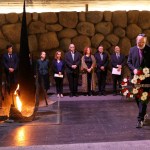
A memorial for victims of anti-semitism.

Stones, mementos and messages are left outside the Lillian and Albert Small Capital Jewish Museum on May 29, 2025 in Washington, DC.

Christianity Today March 27, 2026
Chip Somodevilla / Staff / Getty

For years, French politician Shannon Seban has encountered antisemitism from both the far left and the far right—an experience she said reflects a broader and growing trend.

Seban’s troubles began in July 2023 when she was about three years into her term as a city council member in a suburb of Paris. A neo-Nazi activist posted antisemitic comments on his website. “He targeted my Jewish nose, and he made some caricature that was crazy,” Seban told Christianity Today. Seban’s lawyer filed a complaint about the hate speech with the local court, but the man avoided prosecution after reportedly fleeing to Japan.

The attacks against her intensified after the October 7, 2023, Hamas attack. Seban campaigned for a seat in the French parliament, running against a far-left candidate from a party she described as “deeply antisemitic.”

One week into her political campaign, a crowd of around 300 people surrounded her during a public gathering and physically assaulted members of her team, she recalled. Some in the crowd shouted, “Move away from here, dirty Zionist!”

Seban feared for her safety and fled the scene, and France’s Ministry of the Interior put her under police protection. “That was maybe a turning point in my political life and my personal life,” Seban said at a religious freedom summit held in Malta in early March. She noted that the experience prompted her to write the book Française et juive, et alors? (French and Jewish—So What?). “We need to wake up before it’s too late.”

Shannon Seban signing her book.Image courtesy of Shannon Seban
Shannon Seban signing her book.

October 7 was also a turning point for Shirin Taber, an Iranian American Christian and the founder of Empower Women Media (EWM), which hosted the summit. When Taber saw images of campus protests and heard news about the growing number of attacks against Jews, she decided she could no longer be a bystander, and she added antisemitism to the list of challenges EWM addresses. EWM is a women’s leadership network that uses media, education, and leadership events to promote human rights and religious freedom across the Middle East, North Africa, Pakistan, and the West.

Taber and her team produced a 13-minute video titled“Who Moved the Jews?” with the goal of educating Christians and Muslims about Jewish history. “Even though [Jews] were dispersed and had to live in different countries, they actually brought a lot of value wherever they lived—whether it was Morocco or Jordan or Egypt or Iran,” Taber said.

Antisemitic incidents in the US spiked within weeks of the Hamas attacks—rising by nearly 400 percent. Rather than subsiding, the wave has continued at unprecedented levels and evolved into deadly acts of violence around the world, including attacks that killed 2 Israeli diplomats in Washington, DC; 2 worshipers at a synagogue in Manchester, UK; and 15 people at a Hanukkah celebration in Sydney.

In Australia, researchers reported more than a 300 percent increase in antisemitic incidents against Jews in 2024 compared to the previous year. In France, the number of incidents in 2024 was nearly three times higher than in 2022. Many Jews—including college students—are attempting to hide their Jewish identity by removing their traditional kippahs (skullcaps) and refraining from speaking Hebrew in public.

The war with Iran, which began February 28, may be adding fuel to the fire.

On March 5, Antisemitism Research Center reported a 34 percent increase in global incidents against Jewish communities compared to the week prior. Nearly half of the 154 recorded incidents were linked to the war and were motivated either by support for the Iranian regime or by hatred of Jews and Israel.

“Jews are being scapegoated today in a shocking and dangerous way,” said David Pileggi, rector of Christ Church in Jerusalem’s Old City. An American, Pileggi has lived among Christians, Muslims, and Jews in Israel for more than four decades and holds a master’s degree in Jewish studies.

Antisemitism operates like a parasite, he said, attaching itself to other movements, ideologies, and political parties. Pileggi noted that it is gaining traction among both the far right (“If the common good is lower taxes and more economic freedom, who’s holding that up? The Jews”) as well as the far left (“If the common good is for more state ownership and more government control and taxing the rich, who’s stopping that? The Jews.”)

He sees a historical pattern: After Germany lost World War I, it needed a scapegoat. Nazi propaganda claimed the Jews of Wall Street were cooperating with the Jews of the Soviet Union to control the world and to squeeze Germany. “If you repeat these charges over and over again, then people start to believe a lie,” Pileggi said. Now some in the US are once again blaming Jews for societal problems amid fear of the West’s decline.

For the past 20 years, Pileggi has led annual tours to Poland for Christians—including seminary professors and pastors—to learn about Jewish history, the Holocaust, and Jewish–Christian relations. Poland’s Jewish community was one of the largest in the world before the Nazis murdered 90 percent of the country’s Jewish inhabitants. 

He is concerned that the memory of the 6 million Jews who perished during the Holocaust has begun to fade.

“One of the most-often-repeated commandments in the Bible that God tells his people is to remember,” Pileggi said. For much of its history, Christendom fostered hostility toward Jews that included forced expulsions and periodic violence.

Pileggi encourages Christians to counter antisemitism by first addressing conspiracy theories and false narratives about Judaism circulating in the church—including those spread online by prominent conservative commentators like Candace Owens and Tucker Carlson.

Among the claims circulating online are that Judaism is inherently racist (despite the historic inclusion of converts such as Ruth and the multiethnic diversity of Jewish communities today); that the church is the new Israel, so God’s dealings with the Jewish people are no longer relevant (despite the ongoing significance of the Jewish people in Romans 9–11 as well as the inherent worth of all individuals); and that the Jewish people were responsible for the death of Jesus (a charge that most Christian traditions reject, pointing instead to the teaching in Acts 2:23 that Christ was crucified according to “God’s deliberate plan and foreknowledge” even as specific individuals bore responsibility).

“They are distorting the message of Scripture and distorting the character of God,” Pileggi said. “All of this is very dangerous for us as a community and for our spiritual health and the witness we want to present to the world.”

Pileggi said Christians play an important role amid rising antisemitism, including by learning from history so we don’t repeat mistakes and by not being bystanders. Taking a stand against antisemitism, he noted, does not require withdrawing support for Palestinians.

Seban—who is director of European affairs for CAM—shares a similar perspective. She has expressed support for an eventual Palestinian state but said she continues to face harassment. She added that Jewish university students across France frequently contact her to report antisemitic incidents. 

Seban, who has Algerian and Moroccan heritage, believes anti-Zionism is the latest form of antisemitism. “You can definitely criticize the political choices, the military choices, that are made by Bibi Netanyahu,” she said, referring to the Israeli prime minister’s nickname. “But when you deny the right of the people to have their own state, this is antisemitism.”

CAM’s researchers concluded that the far left and Islamists, often under the “free Palestine” movement, were responsible for more than 80 percent of global antisemitic incidents in 2025, with the far left accounting for the largest share—nearly 63 percent.

At the Malta summit, Seban shared her ideas for countering antisemitism in France. In addition to advocating politically for religious tolerance, she plans to launch boot camps for teens that break down stereotypes about Jews—as well as Muslims and Christians.

Meanwhile, Soraya Deen, an American Muslim attorney and member of the International Religious Freedom Roundtable in Washington, DC, has drafted a proposal to build a cohort of 20 Arab Israeli women willing to share their life experiences on social media and television platforms.

The idea emerged from a recent conversation Deen had with an Arab Israeli woman who expressed gratitude for her Israeli citizenship and the opportunities her country has provided for her community. Together, they hope to identify those among Israel’s 2 million Arab citizens—20 percent of the population—“who will really speak out, stand up for Israel, and call out antisemitism and speak specifically to the Arab world,” Deen told CT.

Taber said her Jewish friends have taught her the importance of working together to protect religious freedom. “We cannot have a religiously free society if you only defend your own rights to religious freedom,” she said. “You must also defend the rights of your neighbor, especially Jews, who have been persecuted historically.”

Culture

Jonathan McReynolds Fuses Gospel Music with ’80s Pop in ‘Closer’

A conversation with the Grammy-winning artist about fame, intimacy with God, and the music of the neon decade.

Jonathan McReynolds performs during 2025 Praise In The Park on October 4, 2025 in South Fulton, Georgia.

Jonathan McReynolds performs during 2025 Praise In The Park on October 4, 2025 in South Fulton, Georgia.

Christianity Today March 26, 2026
Paras Griffin / Contributor / Getty / Edits by CT

Jonathan McReynolds was born three months before the end of the 1980s. Nonetheless, that decade provides the sonic inspiration for his new album, Closer (Live in Chicago). The first track, “Echo,” sounds thoroughly contemporary, with a pulsing, guitar-driven groove that builds through added instrumental and vocal layers. Those sounds hint at what’s to come—electronic synthesizer interjections and guitar tones that are more Bon Jovi than modern gospel.

By the start of the second track, “About Your Love,” listeners are firmly in the era of Huey Lewis and the News. An infectious opening synth hook, punchy bass licks, and Phil Collins–esque crashing drums show that McReynolds wasn’t just looking for subtle nods to the ’80s. “About Your Love” is a synth-pop earworm that doesn’t feel like pastiche; it’s smart, fresh, and danceable. The title track, “Closer,” a duet featuring Tasha Cobbs Leonard, is an unmistakable homage to the ’80s power ballad, complete with soaring vocal harmonies, bombastic percussion, and lush textures.

The project (releasing on Friday) is a fun, experimental contemporary gospel album that showcases McReynolds’s creativity, instrumental abilities, and vocal power. McReynolds is a two-time Grammy-winning gospel artist who broke out in 2012 with the viral hit “No Gray,” which he recorded in his dorm room as a student at Columbia College in Chicago. He has also won 15 Stellar Awards, four Dove Awards, and in 2023 was named BMI’s gospel songwriter of the year along with Dante Bowe.

Last year, McReynolds published his second book, Before You Climb Any Higher: Valley Wisdom for Mountain Dreams. In it, the 36-year-old musician reflects on his own “mountaintop” experiences and struggles with success, fame, and the desire to live in humbler “valley” places, where identity and security can be separated from accomplishments. Closer explores similar themes; McReynolds sings, “Fly high but keep your feet on the ground, and don’t let the day keep you up at night, if only I took my own advice” on the song “Own Advice,” a low-key piano ballad.

The gospel singer has been thinking a lot about what it means to be a Christian singer in a quickly changing music industry. He recently spoke with CT about his new album, his recent book, and the challenges of being an artist in an era of social media, when fame and popularity feel fleeting, precarious, and unpredictable. The interview has been edited for clarity and length. 

You’re releasing this album after publishing a book about wrestling with your success as a performer and the demands of navigating public and private life. How did working through some of these big questions and inner conflicts shape the album?

I think the book was really about moving closer to God, toward intimacy with God. The book was about learning how to do whatever you do while staying connected to your identity as a son or daughter of God, down in the valley. I get to go up on these mountains, write songs, take some pictures, sign some autographs, do a great concert. But can I come down from that quickly? Can I get back down to that humble place where it doesn’t matter what I’ve accomplished and rest in being God’s workmanship, having that unearned title of “son”?

I started to wonder if I could stay in “son mode,” even if I’m doing all of these public things. I think there are better ways of doing this. There are better ways of centering and getting still. This whole season, the writing of the book and the creation of the album, is about getting closer to God and making that closeness part of my identity.

In your book, you’re uniquely frank about some of the absurdity of being a Christian performer or celebrity. You describe getting ready for a photo shoot and picking outfits to craft an image. Some Christian performers prefer not to talk about that at all or pretend they don’t have to do it. How do you navigate that tension now, as your profile in the music industry is growing and you’re on bigger stages?

I think we have to stop with the Christianizing of everything. American Christianity has become “show-me Christianity.” It’s like we have this idea that Christianity is something to be demonstrated. It has to be something that we can all see. It’s something that we’ll all feel because you’ll be wearing the same thing I’m wearing and I’ll be concerned about the same thing you’re concerned about and we’ll see this whole world the same way.

So when you become a leader or a spokesman or some heralded figure, you feel like you have to embody all of those codes of unity and uniformity and sameness. But there’s so much extra stuff that gets folded in that none of us really has the capacity to police all the time. For our souls’ sake, we have to cut down on some of the fakeness and disconnection it can encourage.

I don’t like the idea that I’m a celebrity, but there’s the marquee, and it’s got my name on it. There are parts of this that I absolutely don’t like. But I have to come to all of it with my authenticity. This is what we are doing, this is what comes with being an artist and being excellent in a particular industry. So I’ve just had to barrel roll through that tension. I can’t ignore it.

You mention in your book that, as you’ve worked with successful artists in the music industry, it’s been unsettling to see that so many people at the height of their careers are deeply unhappy. You also say that the number of people who are both successful and admirable in terms of character seem so small. What have you learned from the people who seem to be navigating the industry well?

You have to fight to keep finding yourself underneath the rubble of praise and criticism. You have to keep finding yourself under that mask. Because the truth is, I have to get on stage and I don’t always feel like it. It doesn’t matter how we feel. So we all learn to put on a mask and cope as performers. That’s why I talk so much about coming down off that mountain at the end of the day. I have to come down and ask, “Now where am I? Who am I? I performed, everybody’s happy, but where am I?”

I have to be chasing that person under there and making sure he’s okay. Paul told Timothy, “Watch your life and doctrine closely” (1 Tim. 4:16). Watch it. Don’t just watch the ministry part of it. Don’t watch your impact and the fruit that you seem to be bearing all over. No, look at you. Watch your life.

Your new album explores a lot of these big themes we’ve been talking about—closeness and intimacy with God, finding ways to bridge distance with God when you feel like you’re drifting—but tell me more about the musical influences. As I was listening, I was struck by the homage to ’80s pop and rock. What were you listening to and experimenting with as you put this music together?

I only caught a few months in the ’80s, but I woke up one day and just wanted to listen to the music of that decade. I didn’t grow up with this music; it’s not like I’ve always had a deep reverence for the ’80s prior to this, but I think that as musicians and artists, we’re allowed to just go off and study and listen.

So I’m listening to the music, looking at the outfits, seeing some of the energy and the risks they were taking back then. Looking at it from this moment, it seems like things were a little less formulaic. Like, they didn’t know exactly what worked. By the 2000s we had boy bands and some pop industry formulas down pat. But when I look at what was going on in the ’80s, it seems like they were just trying things: “Let’s just wear this, let’s try this instrument I just built in my garage, let’s start a song with a three-minute-long solo.”

I appreciate that freedom. I’ve always done records where some of my music is worship, some of it is more singer-songwriter, some of it is gospel or an homage to an old choir song. But the way I wanted to hold this album together was with the ’80s. The ’80s is the glue.

You also teach and get to talk about music with college students, which I imagine gives you a unique perspective as an artist. What do you think young people are looking for in new Christian music right now?

Christian music used to have a couple of feeders—we were all in church, there was TBN, Christian radio—if I could get on one of those outlets, I could make it. Now, we’re all everywhere. It’s scattered, and there are sincere, zealous Christians who will never come into contact with any of our old feeders. Everyone used to know Hillsong, but even that world is fading. There is a huge, diverse Christian music world out there that has nothing to do with TBN or BET.

Now, that rapper you’ve never heard of has 2 million followers who like how he talks about God. And somewhere on your block, there is probably a teenager who has way more influence than her parents would ever know. Gen Z’s watching and quietly putting out music from their cellphones. That’s the world we’re living in now.

What’s required now is to just be authentic and creative. That’s it. You’re going to resonate with who you’re going to resonate with.

Theology

Every Head Bowed, Every Eye Closed

Contributor

Is the way we talk to God for our comfort or for his glory?

A person praying in church.
Christianity Today March 26, 2026
Mats Silvan / Getty / Edits by CT

When I was in college, my grandparents showed me a room in their house they called their prayer room. It had a big Bible in it along with a padded kneeler so they could pray on their aging knees without too much discomfort. I remember thinking it odd that they chose to pray in such an inconvenient posture. Raised evangelical, I associated daily prayer with my big comfy chair and a cup of coffee.

I’ve since realized that all my years of praying in ways that suited me grew my faith in a therapeutic direction. My devotion to God was at least partially a devotion to myself and my comfort. I now believe that kneeling—and other less convenient approaches to prayer—are not only appropriate but also important. They teach us something essential about the one to whom we pray and the ways in which we are called to relate to him. Prayer is not only about intimacy. It is also about reverence.

In theological terms, the gospel shows us a God who is both transcendent and accessible: “In the beginning was the Word, and the Word was with God, and the Word was God. … The Word became flesh and made his dwelling among us” (John 1:1, 14). The Protestant tradition has always championed God’s accessibility.

The early Reformers and their forebears took great risks to translate the Bible and the church’s liturgy into familiar languages so people could hear and speak to God in words they understood. God has come near to us—so near that we can hear him in what missionaries call a person’s “heart language.” In his humility, we encounter a God who has become like us so we can know him.

However, God’s desire to be accessible does not change the fact that he is still God. He remains transcendent: holy and wholly other than creation. We “approach God’s throne of grace with confidence” (Heb. 4:16), but it remains a throne. In emphasizing God’s nearness, many Protestant evangelicals have lost sight of God’s transcendence. We have lost our sense of reverence.

Without reverence for God as one worthy of our worship—however inconvenient that worship may be—we also lose our sense of awe at his willingness to condescend and draw near. The gospel is a scandal precisely because a holy God has chosen to dwell among us. And our fellowship with him will never cancel our reverence for him. Even after he wipes every tear from our eyes, we’ll still be servants who worship around his throne (Rev. 21:4; 22:3).

Historically, an emphasis on God’s nearness and accessibility was a needed corrective in a time when Christian devotion was often characterized by fear and guilt (see, for example, A History of the Church in England by J.R.H. Moorman). Christians of all traditions have benefited from a greater appreciation for the intimacy on offer to us in the gospel of grace. But today, in a culture increasingly defined by casual, self-made meaning and therapeutic pragmatism, reverence for a transcendent God is a needed corrective.

As a millennial raised in the church, I know Jesus is my friend. What I sometimes forget is that he is also my Lord. Recovering some of the practices of historic Christian devotion like kneeling for prayer, sitting in silence, and even fasting have helped me with that.

Embracing reverence as a vital aspect of our faith forms us as disciples of a holy God. But it also has missional value. In many parts of the world, converts from other religions expect worship to look like deference and honor. I recently heard the head of a missions agency explain that his own spiritual life changed when Muslim-background believers told him they wanted to pray in ways that visibly acknowledged God’s holiness. “When they came to Christian faith,” the missions leader said, “I led them in worship the way I’d grown up doing it in my house church—slumped on a couch. They felt this fell short of reverence to an almighty God.”

Something similar is happening even in the West. Though the data isn’t statistically clear, the amount of conversation happening about younger generations’ interest in liturgical church traditions—where worshipers practice silence, confession, bowing, fasting, and other disciplines—indicates that people are growing hungry for transcendence. In a world saturated with celebrity and self-fulfillment, we want to kneel before the mystery.

This mystery, of course, does not belong to only one church tradition or denomination. All Christians worship the holy God who came near. And practicing reverence can take many forms, some of which are culturally conditioned and not biblically commanded. In the South where I grew up, even nonchurchgoing men would customarily remove their hats before a prayer. This take on 1 Corinthians 11 is somewhat antiquated, yet it taught a generation that prayer is special. How are we conveying that today? How can I teach my young children to feel comfortable talking to God but also to practice reverence in conversation with him? These are important questions because the way we pray both reflects and shapes what we believe.

But they are questions that families, congregations, and church leaders can explore with curiosity, not condemnation. The gospel affords us the opportunity to keep learning and growing in our devotion to the transcendent yet accessible God. Thankfully, we have centuries of Christian history to help us learn. What began for me as an oddity introduced by my grandfather—a Baptist layman who knelt to pray—continued as a journey of discovering the riches of ancient church practices that have deepened and strengthened my prayer life.

The intuition of our bodies can also help us. What many of these ancient prayer practices teach us is that body language matters and is intuitive. Even if someone doesn’t use a kneeler or recite liturgical prayers, he or she can imagine Jesus in the room and wonder which posture would befit his presence.

My 4-year-old could probably follow that imaginative exercise. At church, she sees the adults kneel and stand and raise their hands. Sometimes she joins us. She also comes forward for a blessing at Communion and often hugs the pastor (her dad) instead. For me, this is a picture of Christian devotion: bowing the knee and receiving a hug. We need both postures to understand the whole story.

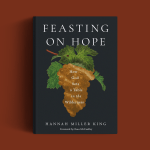
Hannah Miller King is the associate rector at The Vine Anglican Church in Western North Carolina and the author of Feasting on Hope: How God Sets a Table in the Wilderness.

Culture
Review

Martin Scorsese Presents ‘Mary’ for a Secular Age

The renowned filmmaker’s new episode of his Fox Nation series, The Saints, is timed for Easter and focuses on the mother of Jesus.

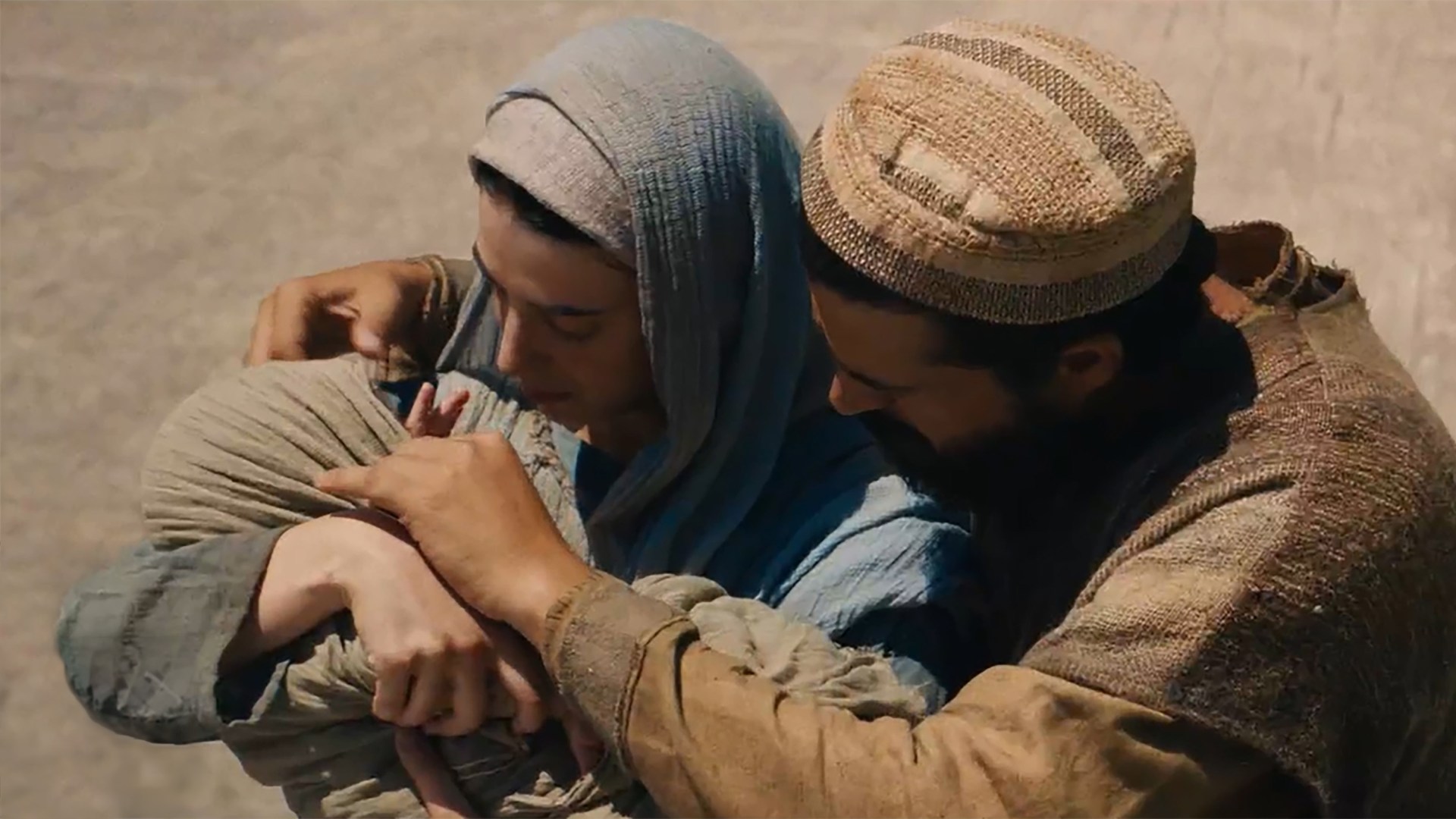
A still of Mary holding baby Jesus from the show.
Christianity Today March 26, 2026
Image courtesy of FOX Nation

Elizabeth Barrett Browning’s “The Virgin Mary to the Child Jesus” (1838), published at the beginning of her poetic career for a believing Victorian audience, is an attempt to imagine the difficulty of settling on nomenclature for the Son of the Most High when he currently lies in your lap, immobile and vulnerable. 

“Holy One,” “Lord,” “saving One,” “Incorruptible,” “Christ,” “Jesus,” “darling,” and “Son” all vie for primacy as Mary gazes at the sleeping infant. She must somehow play the roles of nurse, guardian, and teacher to her future Savior, navigating a tension between awe and protection of one who will depend on her for years to come. Though her height as an adult means she will look down on the child for roughly half his life, she positions herself as his lowly inferior. And when she remembers Isaiah’s prophecy that her son will one day be “despised and rejected” by society (Isa. 53:3), she anticipates falling dead on the spot: I “could not live—and see.”

With “Mary,” a new episode of Martin Scorsese Presents: The Saints that will air before Easter, the renowned filmmaker tackles the same subject toward the tail end of his own career, for a decidedly secular age.

The avuncular voice of Martin Scorsese opens the episode by explaining the immaculate conception, a key Marian dogma codified for Catholics by the papal encyclical “Ineffabilis Deus (1854) which declared Mary “ever absolutely free of all stain of sin, all fair and perfect.” The notion that Mary was free from all taint of original sin, language that recurs over ten times in the encyclical, means for many that Mary never sinned. This idea the Scorsese directly refutes, humanizing Mary through camerawork and dialogue that underscores her vulnerability and imperfection.

Midway through this latest entry, Joseph asks his son and apprentice carpenter, “How will you know that the angle is true?” Jesus throws the bob of a plumb line over his latest project to demonstrate, then the camera cuts from a close-up to a long shot that centers the two in their woodshop. This slightly low-angle shot “looks up” at Jesus from the same height as the seated Mary, whose hidden presence behind a corner Jesus will sense moments later.

Filmmakers customarily capture an actor from a lower angle to empower the subject, forcing the viewer to look up at someone who wields greater authority than the character whom a high-angle shot asks us to look down on. In this case, high-angle shots of Mary alternate with low-angle shots of Jesus, establishing a disequilibrium that may surprise those expecting hagiographic veneration of Mary from the famously Catholic executive producer, host, and narrator. In this series, the “true angle” in any scene containing Jesus is that which grants him more agency—more implicit power—than anyone else, even his mother.

Many a painter’s imagination has placed Gabriel at a similar or diminished height when rendering the Annunciation, that moment when the angel informs Mary about her impending, miraculous pregnancy (Luke 1:26–38). Such artists appear more intent on symbolic exaltation than realism, downplaying her recorded bewilderment and subservience to a will far greater than her own. The two figures’ waists and necks bend to similar degrees in paintings by Fra Angelicoand Sandro Botticelli, preventing either figure from rising above the other, while Simone Martini grants the future mother both elevation and an expression resembling skepticism more than fear. Leonardo da Vinci takes matters further, assigning Mary an upright posture and transcendent calm that receive the angel’s apparent deference as her just due.

When Gabriel visits Scorsese’s Mary, she falls to the floor and backs against the wall, wonder and exhilaration playing across her features as a pulsing light washes over her from above. In a scene that conflates the Annunciation with conception via the Holy Spirit—an extended shot likely informed by the rapturous tenor of Gian Lorenzo Bernini’s most famous sculpture, “Ecstasy of Saint Teresa”—the supine Mary appears at her most vulnerable and human.

Becoming a mother brings a host of additional vulnerabilities to the surface, some more expected than others. Gazing stolidly up at her crucified son as distress collapses the women about her, she appears to have silently accepted the destiny Jesus prophesied for himself. After cradling him in a shot that recalls Michaelangelo’s Pieta, however, her trust momentarily buckles. As two other women cast a shroud over his corpse in the tomb, she keens,  her words echoing the sentiment of Browning’s poem: “How can the sun set and rise another day on this earth without you? How can my heart keep beating?”

A similar reaction occurs two decades earlier in the narrative, when Mary and Joseph realize the 12-year-old Jesus has not accompanied them out of Jerusalem. Assurance of his divine nature does not preclude agony when Mary thinks him lost. Running back through the long caravan, each query prompting only blank looks, her desperation grows until she remembers the temple. The trauma of nearly losing Jesus to mass infanticide during Herod’s reign years earlier, she explains, returned with a vengeance when her son disappeared. In this instance, faith does little to quell fear.

Like Mary, the audience is repeatedly reminded that we occupy a different plane than the triune God: Jesus humbled himself to human form yet remains Savior of us all, including Mary. As a Catholic priest in the post-episode roundtable affirms, “She’s pointing always to her son.” In “Mary,” this gesture is always upward.

Paul Marchbanks is a professor of English at California Polytechnic State University. His YouTube channel is “Digging in the Dirt.”

Theology

Stop Being Anxious About Your Anxiety

Columnist

Jesus meets our worries with reassurance, not rebuke.

An image of lilies in a field.
Christianity Today March 25, 2026
Illustration by Christianity Today / Source Image: Unsplash

This piece was adapted from Russell Moore’s newsletter. Subscribe here.

The Bible tells me to be anxious for nothing, but I still worry,” she said. “What is wrong with me, and how can I ever fix it?”

A listener of my podcast sent this question, and I haven’t been able to get it out of my mind all week. The reason I keep mulling it over is not because it’s unusual but because it’s so normal. I get a similar question all the time, and I grapple with it myself. The irony is that the question isn’t really about anxiety: It’s about anxiety about anxiety. It’s not really about worry, but about worry about worrying. Why do we feel this way?

Part of the problem with a question like this is confusion with words. Anxiety is the term we use for a treatable, medical, physiological condition, in which case doctors and other experts can help. Imagine if we used the same word for clinical depression as for discouragement. This would be confusing. Anxiety can mean the medical condition or—as it seemed to mean for this listener and for most people who ask me—just general worry about what might happen next or unease about the future. This definition is more in line with what the Bible addresses and what many of us mean when we use the word for ourselves.

The reason anxiety about this kind of anxiety matters is because it shows us a misreading of the Bible that many of us have unwittingly absorbed.

And here’s why.

The listener is worried because she doesn’t want to disobey Jesus, and she knows that he said, “Do not be anxious about your life, what you will eat or what you will drink, nor about your body, what you will put on” (Matt. 6:25, ESV throughout). And she’s interpreting this the way she would if she were refusing a moral command from the Lord, like to forgive her enemies. The irony is that because of that, she can’t see that these passages are not warnings but reassurances.

It took me a long time to understand what people meant by “pillow talk” because I’ve never experienced it. I’ve never lain in the bed talking with my wife about anything, because within 30 seconds of stillness and quiet, she is asleep. Every time, sleep comes to her effortlessly and immediately. And I don’t understand that, because I’ve grappled with insomnia all my life. She doesn’t understand that. Early in my marriage, she realized that she actually wasn’t helping me when she would wake up to find me staring at the ceiling and say, “You need to go to sleep! Look, it’s 3 a.m. You only have three hours before you have to get up, and you have a big day tomorrow!”

Over time, she realized going to sleep is not a matter of motivation and willpower but just the opposite. The only way a person can sleep is to stop thinking about sleep. What actually worked for me is when she would say, “Well, it’s okay if you don’t get any sleep tonight. You normally get a burst of adrenaline that helps you through the day just fine, and then you can sleep tomorrow.” Hearing that would be almost like anesthesia; I would drift off within 15 minutes.

That’s why mishearing Jesus or his apostles as screaming Stop it! when you’re facing anxiety isn’t working. But let’s pay attention to what the New Testament actually says.

In talking about anxiety “about tomorrow” (v. 34), Jesus did not give us a new law to keep but freed us from an old one we had made up for ourselves. You need not be anxious about your life or about how you are going to make a living or about what your future will be, Jesus says—but not because those things are wrong or because worrying about them is morally offensive. In fact, Jesus says all these concerns are reasonable and “your heavenly Father knows that you need them all” (v. 32).

Jesus turns our attention to all the ways God cares for the birds of the air and the lilies of the field, teaching us that we can trust he knows our needs. That is not a one-time upload of information; we are to look continually to all those realities. That’s reassurance, not rebuke.

This teaching is similar to Jesus’ instruction about prayer. He warns about a genuine moral problem—prayer as theatrical performance, as the hypocrites pray (v. 5)—but he also takes on a problem that isn’t a deficiency of integrity as much as an ignorance of just how kind God is. We do not need to ramble off long prayers, Jesus says, like those who “think that they will be heard for their many words” (v. 7). What is the answer to freeing ourselves from thinking we must summon God and hold his attention? Jesus says it is to remind ourselves that he is our Father.

Similarly, when Paul writes to the church at Philippi, telling them not to “be anxious about anything, but in everything by prayer and supplication with thanksgiving let your requests be made known to God” (Phil. 4:6), he is not castigating them. He is telling them they do not need to bear the burden of anxiety about the future. And the solution he gives them is to redirect those concerns—again, continually—and articulate their needs to God.

Paul is saying what Jesus said: Worry feels like doing something, but it really doesn’t accomplish anything. Prayer actually does something. Worry requires more and more worry, but prayer can give you freedom—you can cast your concerns on him, and he will carry them.

That, too, though, we can turn into a new law. One person who was worried about worry pointed to Paul’s words—“And the peace of God, which surpasses all understanding, will guard your hearts and your minds in Christ Jesus” (v. 7)—as a sign of having displeased God, because the person didn’t feel tranquility. But this isn’t about feeling peace. This peace, Paul writes, “surpasses all understanding.” This isn’t a transaction: Stop worrying and God will give you peace. It’s a reassurance of an existing reality.

The peace of God “will guard your hearts and your minds” even when you don’t understand it. The peace of God guards you; you do not need to guard yourself.

Here’s the problem many of us have: We want to think of God as an employer giving a performance review. That’s not what’s happening. The Prodigal Son, even after he “came to himself” and headed home, planned to say, “I am no longer worthy to be called your son. Treat me as one of your hired servants” (Luke 15:17, 19). But this is not what happened. Instead, “while he was still a long way off, his father saw him and felt compassion, and ran and embraced him and kissed him” (v. 20).

That’s why we worry about our worry. We don’t realize that the Father loves and cares for us. Then he reminds us of that, and we worry that because he has to remind us means he’s mad at us, so the cycle starts again.

Our worry about our worry is because we still aren’t accustomed to grace. We think God is like a camp counselor yelling into our tents, “Go to sleep, or I’m going to take your merit badge away from you!” But that’s not what’s happening. It’s more like your dad saying, “I know you’re on edge about whether there are bears out there in the dark. But I’m going to stay up and watch for them, and I can deal with it. You can go to sleep.”

You don’t fall asleep because you’ve secured the perimeter. You fall asleep because someone who loves you is there. You can stay awake all night, but he’s still there. Once you know that, you have the freedom to rest.

That’s true whether or not you feel it. In fact, that’s why you’re free to feel it.

Anxiety tells you that you have to secure your future. Anxiety about anxiety tells you that you have to secure even your inner life. Anxiety about anxiety wants you to hear the voice of Jesus as irritated and angry: Stop it! But the voice of Jesus is really saying, You can rest. I’m here.

Russell Moore is editor at large and columnist at Christianity Today as well as host of the weekly podcast The Russell Moore Show from CT Media.

History

A Sign, Not a Weathervane

CT sought to point people to the Bible through the personal and public crises of 1978.

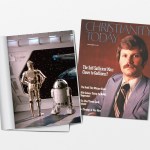
An image of Jimmy Carter and a magazine cover from the CT archives.
Christianity Today March 25, 2026
Illustration by Christianity Today / Source Images: Getty, CT Archives

Headlines in 2025 worry about loneliness, but Americans also seemed to be facing an epidemic of loneliness in 1978. One in four people told pollsters they had felt isolated and cut off from others in the previous week. Psychologists were taking note, and so was CT. 

The prevalence of loneliness in modern America suggests the need to look also at some social conditions that are a part of the backdrop of our life. …

The desire to increase production and profit has motivated the development of an impersonal technology and a commodity-orientation. The individual has become a means to an end, a production tool. Although this orientation is not new in our society, we have done something new with it: we have taken it into our personal lives. 

The technological emphasis on efficiency—on maximum output at minimum time and cost—has been extended to human interaction. When efficiency and the accompanying goals of convenience and comfort become internalized as guiding values, human relationships become more superficial. Deep, satisfying relationships take time, effort, and sometimes pain to develop; the process may at times be inconvenient, uncomfortable, inefficient. …

Television, too, enhances separation. … Urbanization is another heavy contributor to society-wide loneliness. …

The removal of God as the center of human relationship was the precursor of today’s secularization. In order to cope with sin without repenting, modern man has attempted to get rid of God by pronouncing him dead. But this attempt plunges man deeper into the depths of loneliness and despair without remedy. 

Instead of turning to God in repentance and having life’s most fundamental relationship restored, the secular person casts about for substitutes that will allow him to retain his narcissism but overcome his loneliness and alienation. Drugs, alcohol, sex, and marathon encounter experiences become part of the search, as do … countless other semireligious, semi-psychological trips.

The sound of some of that modern alienation, coming from urban clubs and teenage stereos, had a name: punk music. CT said punk could be traced back to “the darker side of rock,” specifically the Rolling Stones.

The Beatles were the fun-loving, mop-topped entertainers, but the Stones are everything parents least want their children to emulate. As the “bad boys of rock n’ roll” the Stones attracted the attention of millions of young people who identified with that image and that music and who felt that the group sang what they felt inside. A newspaper account reported that “The Stones are perverted, outrageous, violent, repulsive, ugly, tasteless, incoherent. A travesty. That’s what’s so good about them.” In a generation seeking to break with the past into an era of personal freedom the Stones provided the stance and the music to fuel the effort. … 

Stones concerts work the fans into a frenzied, ecstatic capitulation to the music. The driving beat and the stage antics of [Mick] Jagger result in a communal release of frustration and energy. As one of the songs says, “We gotta vent our frustration, before we blow a 50 amp fuse.”

Some popular music was growing curiously Christian in 1978. CT reviewed Bruce Cockburn’s music, caught up with Neal Paul Stookey of the chart-topping folk trio Peter, Paul, and Mary, and heard of his conversion.

A young man about ten years younger than Stookey, who was then thirty, asked if he could talk with him. Stookey, who thought he looked a little depressed, said sure, after the show. When the concert ended he looked for the boy and asked what he wanted to talk to him about. The boy replied, “I want to talk to you about the Lord.” 

As Stookey describes it, “An adrenalin change took place and my heart just started beating fast and I felt like this was it—whatever it was. I didn’t know where it was going to lead. But I don’t think I would have felt that way unless what he was saying was true. He told me how he had been converted. And he said that God had put a burden on his heart to talk with me.” …

The two of them went off to Stookey’s hotel room. Although they rode over in a pick-up truck driven by a third person, Stookey doesn’t remember seeing or talking to anyone else. He asked the boy if he believed in reincarnation. The boy replied that there were more important things to talk about. “That was the heaviest thing I had metaphysicked into, but something inside me said ‘he knows more than you do and what he knows you should know.’” 

When they reached the hotel, Stookey tried to be a good host, but the boy wanted to pray. As the young Christian prayed, Stookey learned that not only had he somehow avoided the guards to get backstage but he had had no ticket to the concert. After thanking God for his help, the boy said, “Now I think Paul wants to talk to you.” All Noel could say was, “I’m sorry.” “I started crying,” he says. “Later I realized what I was saying I was sorry for, which was for not thinking that God was alive, and for all those ways in which I had used things to get between me and people.”

Stookey believes that God loves a contrite spirit, and that night he had finally reached a state of contrition. He was sorry that he had abused other people and himself. He confessed things that he had done wrong, though he didn’t itemize them. “I was washed, cleansed—I couldn’t believe it. It was like I had this incredibly cantilevered balance. Or that I was two interwoven mobiles. Suddenly when I had admitted that I was sorry for the life I had led without God, everything collapsed and I was perfectly balanced. I had been given day one again.”

Other prominent figures in American life also spoke out about their Christian faith in 1978. CT interviewed a convicted Ku Klux Klan terrorist, whose conversion led him to denounce “the religion of Americanism,” and the chief surgeon of a children’s hospital, who spoke about medical ethics and the sanctity of life.

Q: What should you tell a woman who is contemplating abortion?
A: She should be shown photographs of exactly what she is aborting. She also needs some spiritual guidance. Many women early on in pregnancy go through a time of depression when they do not want the child. If they have only one kind of counseling available—to abort—women may live to regret it.

Q: What about an unmarried, pregnant Christian?
A: That’s where we Christians are reprehensible. I’ve been involved for a long time and was instrumental in founding the Evangelical Child and Family service in Philadelphia largely because of my concern for Christian unwed mothers. One would expect that evangelical Christians, having understood the grace of God, would be most gracious under these circumstances. They are not. They are judgmental and it’s to our detriment that this can be said of us.

Church attendance seemed to be growing. In the summer, CT reported that congregations in Texas, California, and Washington State set records for single-day offerings.

Armored trucks may one day replace the traditional offering plate if the string of record Sunday offerings continues.

Television pastor Robert H. Schuller of the 9,000-member Garden Grove Community Church in Anaheim, California, reported a record single-Sunday collection of $1,251,356 to help build his church’s Crystal Cathedral. … After checks in the next day’s mail from nonattenders were counted, the total reached $1,421,000.

One week later, on June 25, the 1,700-member independent Overlake Christian Church in the Seattle suburb of Kirkland received $1.65 million in cash and pledges toward a $1.8 million building project. The donations included seven diamond rings, several motor vehicles, and some newly borrowed money, according to pastor Bob Moore.

A new modern-language Bible translation dropped in 1978. CT asked a Wheaton College English professor to assess the literary merits of the New International Version. He liked some things and not others. 

The prime literary virtue of the NIV is clarity. For example, “Sheol” is translated as “the grave,” and the statement “he will not let your foot slip” conveys the realism of the journey to Jerusalem better than saying that God will not let one’s foot “be moved” (KJV, RSV). The sixth and ninth commandments of the Decalogue are rendered “you shall not murder” and “you shall not give false testimony.” “Dishonest scales” and “accurate weights” are an improvement over “false balance” and “just weight” (KJV, RSV). The lover in the Song of Solomon is “faint with love,” not “sick of love” (KJV) or “sick with love” (RSV). And I hope it will dispel some follies to read that “it is good for a man not to marry” instead of “not to touch a woman” (KJV).

The NIV fares less well in the area of diction. Given the time-honored scale of high, middle, and low styles, the NIV tends toward the low or ordinary. … With this inclination toward an everyday idiom, the NIV loses the exaltation and grandeur and eloquence that the King James possesses in such abundance. Gone from the NIV are the “behold” and “lo” and “yea” and “even” constructions that give the King James and Revised Standard such power. Psalm 27:14, which is enlivened in the KJV with “wait, I say, on the Lord” and in the RSV with “yea, wait for the Lord!” is tamed down in the NIV to “wait on the Lord.”

The biggest political issue dividing American evangelicals was peace in the Middle East. As President Jimmy Carter brought Israel and Egypt together for the Camp David Accords, CT invited a range of writers to weigh in on how Christians should view Israel and Palestine. The founder of the Institute of Holy Land Studies (now Jerusalem University College) argued Bible-believers should back Israel

Let me set down a double-barreled assertion: God still has a part for ethnic Israel to play in the drama of redemption, and the modern political state of Israel could be act one in the fulfillment of the ancient prophecies. Both of these assertions have been strongly challenged. 

Some people maintain that modern Israel cannot be the Israel that God predicted would return to the land, for, they claim, if God’s hand were in this return to the land and in the setting up of the present Israeli government, all the war and bloodshed we see and read about would not be taking place. The claim, however, that a warlike Israel cannot be the special focus of God’s purpose will not stand up in the light of God’s pronouncements during the immigration under Joshua. … 

Although it is for another time to judge the outcome, what may be seen in embryo in Israel today holds high promise. It is written: “For out of Zion shall go forth the law, and the word of the LORD from Jerusalem” (Isa. 2:3). The Lord will once again bless the world out of Zion.

Columnist Elisabeth Elliott, on the other side, expressed sympathy for Palestinians and said she had grave moral concerns about the new Jewish state.

I saw the joy of the Israelis in their victory in [the Six-Day War]. It was hysterical. Many, from rabbis to military men, spoke of it as a miracle. Others resented any suggestion that the miracle might have been divine. Israel had done it—why say it was God? … “We are gods!” a Jewish girl said to me. “We will work things out. We will fulfill prophecy.” …

An Arab woman, sitting in a chilly living room from which most of the rugs and furniture had been removed lest it be confiscated, said to me, “Of course there are some who see in this victory the hand of God, and there are many Christians who are sure he is responsible for it, but what am I, an Arab and a Christian, to make of it?”

This is a question not sufficiently considered by many Christians whose views on the Arab-Israeli situation are a farrago of superficially interpreted Old Testament prophecy, glibly accepted propaganda, and uncritically indulged sentimentality. 

Before we can conclude that the nation of Israel is a literal fulfillment of prophecy, that present-day tensions between Arabs and Jews are just another episode in an ancient history of unmitigated hostility to each other, before we conclude that there is no question about the morality of providing a homeland for a persecuted people by persecuting another people who are already there, we need to probe a little deeper.

CT’s outgoing editor in chief, Harold Lindsell, signed his name to a statement of “Evangelicals’ Concern for Israel,” published as a full-page ad in The New York Times and Washington Post. A follow-up editorial explained the magazine’s position:  

As we understand Scripture, God has an interest in all peoples, yet he has a distinguishable interest in the people of Israel. Moreover, the tragic history of the suffering of the children of Israel, most of it in recent centuries and inflicted by those who claim to be the followers of the Jewish Messiah, Jesus Christ, warrants our support of a homeland for the Israelis. There is no better place for such a state than on Palestinian soil. Obviously, if the Jews are to have a homeland it must be located somewhere. …

Even if the Arab nations cannot acknowledge biblical grounds for doing so, we think that they should recognize Israel as a sovereign state. … Recognition of the sovereignty of Israel and its borders ought not to depend on Israel’s acceptance of a [Palestinian Liberation Organization]-run neighboring state. Such a condition is not placed on other nations.

CT’s new editor in chief, Kenneth Kantzer, answered questions from more than a dozen religious leaders, setting out his vision for the future of the 22-year-old magazine. 

A weather vane is turned by every breath of wind, but a sign faithfully directing travelers to the next town does not. … All human beings and human institutions must stand under the judgment of Scripture. Christianity Today in faithfulness to God needs to critically evaluate the establishment, including what is sometimes called the evangelical establishment. At times, no doubt, it must rebuke and condemn. But whether it is the evangelical, liberal, or secular establishment, let us seek to understand before we rebuke, so that we shall rebuke in love, seeking one another’s mutual good.

News

War Drove Her Out. Now She’s Planting a Church.

Displaced from Ukraine, a young immigrant found safety—and mission—in small-town Minnesota.

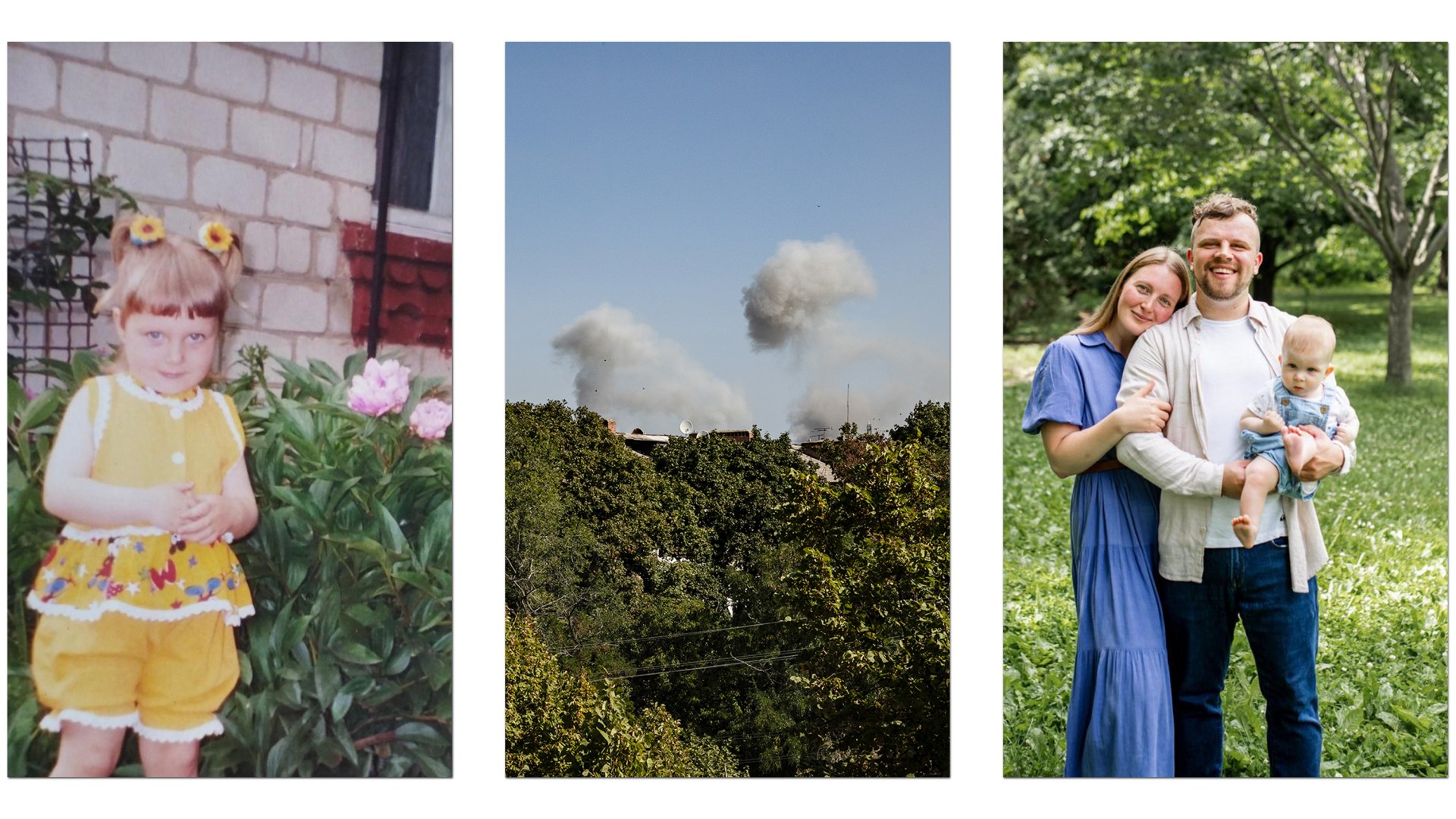
Images of the Gidenko family and war-torn Ukraine.
Christianity Today March 25, 2026
The Gidenko Family / Getty / Edits by CT

The window in Yevheniia Poliakova’s apartment in Vinnytsia, Ukraine, almost shattered when military aircraft rocketed through the city. Debris was falling in nearby fields—shredded remnants of drones and missiles.

“You can hear the booms,” Poliakova—who goes by Zhenya—recalled of that winter in Ukraine. “I can’t really see. I can just hear. It was very loud at night. I just remember it was sometime in the morning when a girl who lived in a different room came in and said, ‘The war started.’”

For weeks prior, Zhenya had seen the bustle of Vinnytsia morph into mild panic at the threat of Russian invasion. People hustled luggage to bus stops and train stations until, on February 24, 2022, “everything stopped,” she said. “Every store closed. Everything was alive, but not this day.”

Before long, endless sirens pierced her apartment complex. “And you just saw on social media, in some chats,” she told me: “It’s not a game. It’s real. You don’t know if the Russian soldiers are coming to your city. Maybe the next day they will come.”

Just 23 years old at the time, Zhenya traversed the globe in search of safe harbor, carpooling with other women and children to Western Ukraine, then France and Spain. When she finally arrived in America after a legal pathway for people fleeing Ukraine was cleared that April, she carried only what could fit in her backpack: a water bottle, a few pairs of socks, and a Bible.

Born in Zhmerynka, Ukraine, Zhenya  did not hail from a Christian family. Her mother was divorced three times and struggled with alcohol abuse. “I asked my mother, too, if she loves me,” Zhenya recalled, “and she would say, ‘Go somewhere else.’” Somehow still, “I always knew there is a God somewhere, and I had a trust that when I grow up, I will be happy—I will have a good marriage, a good husband, and everything will be good, so it’s okay to have a worse life right now.”

Zhenya found reason to believe while working for a coffee shop in Vinnytsia before the war. She didn’t realize it at first, but the shop doubled as a coworking space and covert church. Hooked on the shop’s uplifting—and noticeably alcohol-free—atmosphere, she was surprised when the owner, who was also the pastor, urged her to avoid calling the space a church. He did it, she said, “because we had a bad culture in Ukraine,” and some congregations outside the Orthodox church worried about being branded extremists.

Poliakova had dabbled in Buddhism, but she couldn’t stay away from the church after encountering its worship. “I never saw or heard singing about this very interesting love,” she recalled. “Like, someone loves you? And this really touched my heart. It was about God’s love. I realized God is really alive.” Zhenya became a Christian, was baptized, and dived deeper into the Word. She came to trust that God would provide her with a family of her own.

And a family showed up. They were missionaries, originally from Ukraine but more recently from Minnesota. They’d come to Vinnytsia to foster church growth, but after the war started, they shifted from cultivating Bible studies to helping Ukrainians escape bloodshed. Zhenya was among the Ukrainians they helped, and it was to their home in Minnesota—to work as a live-in nanny—that she went when she arrived in America with her backpack.

“There was only one family who cared about me when the war started,” she told me. “I didn’t know what I needed to do. I was in a panic. I called my mother to ask her, ‘Can I come home?’ And she just screamed at me. She was very angry. She wanted me to stay where I was. And she doesn’t remember this call, so I now understand that it was from God.”

Zhenya also credits God with the love story that followed. After her arrival in the States, Zhenya attended a program at Bible Mission International, a Minnesota school and ministry serving primarily Eastern European immigrants. She recruited volunteers to stuff Christmas envelopes at the ministry, and one of them happened to be Tim Gidenko, a young man who had previously spent two years working at Bible Mission. 

“When he came into the room,” Zhenya recalled, “I heard a voice from God say, ‘He is your husband.’ And I don’t even look at him! I was like, ‘Why God? No, please, I don’t understand.’ But I was sure that’s from God. I was really close to God, because I was broken with a lot of stuff.”

Tim was finishing college to become an engineer, and he was no stranger to God working across borders. His parents had left Ukraine for America in 1992, after the fall of the Soviet Union, and raised him in a Slavic Baptist church in Erie, Pennsylvania, where his father, uncle, and grandfather all held the pulpit. It wasn’t long before he too came to see marriage to Zhenya as God’s will for them. After just two months of dating, they were engaged, then married a few months after that, in March of 2023.

The Gidenkos—who now have a son, Yonathan, and a daughter on the way—could have sought an established church for their first years as a family. Instead, they decided to plant a church in Red Wing, a Minnesota river town of roughly 16,000, south of the Twin Cities. They partnered with a pastor named Willie Grimm to build a community of demanding discipleship.

“Here in Red Wing, a woman from our core group met some people from her neighborhood and was talking about Jesus, and they said, ‘We never heard about Jesus,’” she continued. “How is it possible?”

The new church is called Harbor Point, and so far, it’s staying small. That’s not a bad thing, Zhenya said, because it forces intentionality, deep relationships, and immediate gospel-sharing rather than the work of navigating the established infrastructure of larger congregations. 

This path is a natural extension of her own story, she said: “I want to share about Jesus. So yes, I have stories from my childhood—my alcoholic mother, bad relationships, immigration, a broken heart. But no matter what my experience, the only thing that matters is sharing the gospel. So what I want to talk about is Jesus, just like someone talked to me.”

This isn’t a glamorous push for more attention in an age of digitized influence. It’s a prioritization of neighborhood prayer walks, worship nights in quiet farmland chapels, opportunities to mow the unkempt lawn of a single mother on the “wrong side” of town. 

“Our hope,” Tim said, “is not to bring people to us but to bring people back to God.” 

Zhenya has moved across nations—or, rather, been moved, as she tells it—sometimes by blaring sirens, or the animosity of a distant mother, or the fear of oncoming soldiers, or the tugs of a missionary family. But above all, she’s been moved by a God who loves and pursues her. 

“I think maybe, in the beginning, it was what I was chosen for,” she said of the church plant. “I remember I once wanted to go to some village in Ukraine where nobody had heard about God. Maybe it was something God put in my mind for this experience, for what I have right now.”

Correction: An earlier version of this story gave the incorrect date for the Gidenkos’ wedding.

Ideas

Low-Tech Parenting Must Be a Big Tent

Contributor

If we want to parent wisely in a digital age, we must pair courage with grace—not judgmentalism.

A young child on a phone.
Christianity Today March 25, 2026
Unsplash / Edits by CT

Last year, I was sitting at a conference with folks I had “known” for a while online but had just met for the first time in person. In a sense, we were already acquainted—I read their writing, they read mine—and that’s what got me into trouble.

All in our 30s or 40s, as parents of teens down to babies, we were talking about digital technology. Everyone knew where I stand on tech in general and kids in particular: Keep the former away from the latter at all costs. Wherever I go, I’m the flag-waving Luddite. I want screen-free churches and youth ministries without social media and parents without phones in their hands and children with books in their hands—preferably outdoors.

Here was my misstep. On the topic of kids and tech, I volunteered a middle way on which my wife and I had ventured. Since we were unwilling to let our middle schoolers have smartphones, we had agreed to buy them an iPad. Before I’d even explained my reasoning, my newfound friends’ jaws were on the floor. 

Are you serious? they asked. Yes, I replied—but now uncertain of myself. They stared at me. I stared back. Suddenly I wondered whether I was in enemy territory.

Any parent is bound to feel inadequate from time to time, fearing judgment from peers. In this case, the judgment wasn’t hidden. These fellow believers had counted me an ally in the fight. Now they saw my true colors. I was a turncoat: I talk a big talk in my writing but, they learned, I fail to walk the walk. Scandal!

To be sure, once the dust settled from their shock, they heard me out and listened with kindness. I explained our circumstances and reasoning: Our kids go to public school. Most of their friends have smartphones, and they have homework assigned and submitted online. We figured a stripped-down tablet—with just a handful of apps and tons of restrictions, fitted for music, homework, and texting their friends—was a reasonable compromise.

In a perfect world, perhaps, they would attend a classical Christian academy without screens, worship at a church without screens, live in a neighborhood devoid of screens, and—well, you get the picture. That’s not their world, nor ours, so we drew some hard lines while meeting our teens in the middle. At their age I “texted” friends via AOL Instant Messenger on a desktop computer. That is more or less how it’s worked out in their case, and my wife and I have been pleasantly surprised by the results.

The point isn’t that this was the “right” decision. I’m not defensive about it (though I admit to some defensiveness when I was put on the spot!), nor do I consider it some abstract ideal for others to follow. I consider it instead the best decision we could come up with in our situation—an attempt at wisdom in the face of particular details unique to us. An attempt, in other words, at prudence: bringing principles to bear on concrete circumstances that require practical judgment. Others may differ; in fact, they do.

This experience taught me a lesson. In the face of the extraordinary challenges presented to parents and Christians by digital technology, it seems to me that we need two things above all. 

First, we need courage and boldness in confronting these challenges head on, especially on the part of institutions and leaders from the top down. 

Second, and just as important, we need grace. Grace for others, grace for our children, grace for ourselves. We need heaps of grace, grace upon grace, because we live in unprecedented times and most of us, most of the time, are sincerely trying to do what we think is best—or, failing that, what we feel capable of at any given moment.

To be clear, I don’t have in mind the weak tolerance of “live and let live.” We should be willing and eager to have hard conversations about these things. A policy of silence is no help to anyone. 

In a recent essay, the Catholic journalist Matthew Walther has written with eloquence and compassion about what he calls “technological poverty.” He means families, single parents, and young children whose every waking moment is utterly dominated by the reign of the screen and who in that sense have been robbed of reality: sunshine and birdsong, gardens and tree-climbing, scuffed knees, unmonitored walks, neighborhood bike rides, tinkering in a garage, getting lost in a novel. 

Those of us who have succeeded, at least to some extent, in resisting or escaping this poverty are often at a loss as to how to help others. But it’s arguably the greatest need of our time.

So no, let’s not merely live and let live. Instead, let’s extend generosity to friends, family, and neighbors who come to different decisions than we do. Let’s be tech fallibilists, allowing for the possibility that our own approach might be wrong or, at a minimum, not the universal answer for all people without exception. And even if we have good reason to believe that our policy is best—or better than another’s—that doesn’t release us from the obligation to continue seeing, treating, and speaking of others with charity, warmth, mercy, and grace.

Parental decisions about technology today are reminiscent of other thorny intra-Christian debates. Consider schooling. “Real” Christians, “serious” Christians, Christians who care about their children’s formation, avoid public school by opting for private school. Not to be outdone, other parents come to see that even private school is a half measure. It’s homeschool or bust.

The same kind of dynamic happens with entertainment. What do you let your children watch or listen to? At what age? Why? It turns out there’s always someone more restrictive than you and someone less restrictive than you. You cannot believe the one is so conservative, even as you cannot imagine being so liberal as the other. Thankfully, like Goldilocks, your position is just right.

My purpose in poking fun at these perspectives is not to expose the one final and correct answer. That would undermine everything I’m trying to say. On the contrary, I want us to see that there is no such thing. There are better and worse answers, there are wise and unwise answers, there are situation-specific answers—but there is no one-size-fits-all answer. And even if there were, the temptation to hypocrisy and self-righteousness is so pronounced that we would need a remedy for our inflated egos and parental insecurities irrespective of our objective rightness.

The same goes for technology. Call it “tech grace”—a refusal to sit on our digital high horse and look down our nose at anyone who differs from us. It doesn’t matter if the temptation is to sit in judgment on those who are less restrictive (“We let our middle schooler have a phone, but they let theirs download Instagram”) or more restrictive (“We don’t have video games, but can you believe the Joneses don’t even have a television in their house?”). 

The thing to avoid is judgmentalism, the kind of self-appointed judgement that presumes to sit in the Lord’s place and condemn with authority. To do this without sin is impossible, because it is both hypocritical and self-righteous. In the end, it’s little more than moralizing gossip. As Jesus taught in the Sermon on the Mount, “Judge not, that you be not judged. For with the judgment you pronounce you will be judged, and the measure you give will be the measure you get” (Matt. 7:1–2, RSV).

There are other kinds of judgment, though. When we exercise a considered judgment, we reach conclusions or form convictions carefully, based on reasons, arguments, and discernment. We may not and must not leave behind this kind of judgment, and I am nothing if not full of tech judgments in this sense: Social media is bad for teens. Smartphones are bad for literacy. Screens are bad for attention. 

I take these judgments not only to be true but to be demonstrably true. I regularly make them in print, and I am always happy to share them with people who are open to hearing about them. I’m an evangelist of sorts, and I’m not ashamed to make the case in public.

The trick, then, is to exercise considered judgment without judgmentalism. Happily, this is part and parcel of the Christian life more broadly. I believe, as all Christians do, that the gospel is true and urgent news for all people, whether or not they know it and whether or not they share my convictions. But I don’t believe this because of some merit or goodness in me. I believe it because I have come to see that I am a sinner in need. I therefore want all my fellow sinners to receive this same gift—to “taste and see that the Lord is good” (Ps. 34:8).

Individually, then, we can and should strike a balance with digital technology. The real burden falls on institutions and those in positions of authority and influence to exercise costly leadership. Their decisions end up defining shared norms and practices within our communities. More than ordinary individuals, leaders can and must take bold actions, defend strong stances, and set firm policies without hypocrisy or condemnation. Far from burdening the weak, this boldness is a gift that facilitates wise habits and offers freedom from compulsions that otherwise might feel undeniable.

Andy Crouch calls his approach to digital devices “tech-wise.” Jay Kim calls it “analog.” Clare Morell calls it “the tech exit.” Whatever we label it, the coalition has to be a big tent. It can’t just be the elite few, the tech-light elect. It has to include as many as will fit—which is to say as many as are seeking to live wisely in a digital age and are willing to sacrifice to do it. 

If we’re going to have any success, if we’re going to expand rather than shrink, we’re going to have to live with one another. And the only way to do that is with grace.

Brad East is an associate professor of theology at Abilene Christian University. He is the author of four books, including The Church: A Guide to the People of God and Letters to a Future Saint.

Ideas

Friction-Maxxing Higher Ed

Christian colleges can offer complexity and real challenges instead of pat answers and easy degrees.

Bethel University in Minnesota.

Bethel University in Minnesota.

Christianity Today March 25, 2026
WikiMedia Commons


Shortly after joining the faculty at Hope College, I (Kristin) received an email from a student’s parents requesting a meeting. Instead of meeting with the parents, I met with the student. The student shared that her application for an academic program had been rejected. She wanted her parents and me, her adviser, to appeal the decision on her behalf. I told her to contact the program director directly, but she believed that would cause her too much anxiety—she did not want to face the professor who had written the rejection. The student was 20 years old.

As professors at Christian institutions, both of us regularly encounter students’ habits of fear, anxiety, and lack of risk-taking. These moments illustrate a larger trend documented across college campuses and more generally among young people: increasing social unease accompanied by diminishing levels of resilience. Mental health continues to decline among adolescents, and young people report greater anxiety and depression. According to Greg Lukianoff and Jonathan Haidt’s book The Coddling of the American Mind, young people also tend to avoid difficult and frictional experiences that could help them work through this fear and anxiety.

We believe Christian colleges and universities are uniquely equipped to help students reduce anxiety and increase resilience as faculty and staff guide students through frictional experiences.

The term friction-maxxing gained popularity in early 2026. Rather than succumbing to the “life-annihilating suction of technologies of escape,” Kathryn Jezer-Morton wrote, friction-maxxing describes an alternative “orientation toward friction” and emphasizes frictional opportunities for growth. As author and founder of LEADx Kevin Kruse wrote in a recent article for Forbes, “Friction maxxing is the practice of intentionally choosing small, safe inconveniences that build your tolerance for discomfort and bring you joy.”

Applied to college life, friction-maxxing might include going to a professor’s office hours for the first time or taking an interesting class outside of your major that’s scheduled for 8 a.m. It could be sitting at a different table with new people in the dining hall or signing up for a study abroad experience. To be effective, friction-maxxing requires carefully designed curricular and communal experiences that build in so-called inconveniences and disruptions, thus encouraging students to embrace commitment and perseverance, even when encountering hard things.

Applied to a Christian college context, friction-maxxing must also include opportunities for students to negotiate faith and intellectual pursuits within a community accountable to the way of Jesus. For example, at Hope College, students can participate in the Emmaus Scholars program, which requires weekly prayer and spiritual learning over shared meals. Students also meet with professors to complete projects that apply a faith-based lens to class content. At Bethel University, students can take three-week, faculty-led study abroad courses during the month of January, pushing them to encounter the world in new ways. From travel writing in Belize to immersion in British primary and secondary schools, students learn in borderless classrooms and then apply that learning to their faith and academic studies. These experiences—and others that intentionally lean into friction—push students to engage deeply and in new ways, persisting despite friction.

The Coddling of the American Mind argues that students today were raised on three “great untruths”: They are fragile, emotions should guide reasoning, and life is a battle between two groups (us versus them). Lukianoff and Haidt explain that rather than prepare young adults for bumps in the road, parents and communities have instead prepared the road, reducing childhood frictions until young people learned to be anxious when encountering the new or unexpected or difficult. By doing so, we have unintentionally communicated to college students that they are fragile and in danger, a habit of the mind that becomes self-fulfilling.

Current college students also grew up in politically polarized environments, experiencing at least three contentious presidential elections in 2016, 2020, and 2024, and nearly continuous protests across the US around policing, racism, sexism, and xenophobia. These students were also children or early adolescents when the COVID-19 pandemic began, disrupting social and behavioral learning for both them and adult role models (who were generally more afraid and anxious during the pandemic). These experiences have increased a sense of precarity and either-or thinking.

We have experienced students’ resulting binary thinking at the colleges where we teach. In her office hours, Elisabeth (an education professor) had a student tell her that homeschooling is the only safe or Christian educational choice for children (though she prepares teachers to work in all types of schools and her own children attend their neighborhood public school). One of Kristin’s colleagues expressed concern about “triggering” a negative student response by bringing a controversial speaker to campus. In a recent seminar course, one of Kristin’s students wrote in a journal that he hoped the class could talk about “real issues” but he was wary that others would “be open to new ideas.” We see these experiences as illustrating a need for a new kind of frictional engagement, one steeped in faith.

New Testament letters to the early church recognize that faith grows only through intention and persistence—what Paul might have termed friction-maxxing if he were writing today. The author of Hebrews reminds his readers to “throw off everything that hinders” and to “run with perseverance” (12:1). In Galatians 6, Paul calls Christians to persevere in fulfilling the law of Christ, writing that the church must “not become weary in doing good” and that “we will reap a harvest if we do not give up” (v. 9). These verses, and others throughout the Bible, call attention to both the practice of faith—long obedience in the same direction, as Eugene Peterson described it—and the value of faith practiced in community.

These passages suggest something that Christian colleges should be uniquely prepared to teach: Faith doesn’t shy away from hard things but instead leans into friction, seeking growth through a long obedience in community. Now, as high school seniors choose which college to attend, we encourage them to consider Christian colleges as uniquely able to model thoughtful and engaged growth.

Christian college faculty are frequently trained in secular environments yet continue to affirm their commitment to historic Christian faith. Faculty have wrestled with the seeming discontinuities between their secular disciplines and their faith and have persevered in their commitment to faith as the primary way of understanding the world.

Faculty believe Christians must pursue lives modeled after Jesus, marked by orthopraxy—service and sacrifice. Carefully designed curricular experiences, such as the one Elisabeth teaches at Bethel University—a general education course focused on educational equity— integrates community-engaged learning with the pursuit of justice as a core expression of Christian faith.

At their best, Christian college communities commit to asking hard questions within theological parameters, collaboratively, and across disciplines. A student majoring in biology at Hope College said her professors regularly talked about frictions between science and faith. While her professors expressed that tension differently, for her their varying responses were the point. Faculty modeled and encouraged generous and robust conversation, even amid disagreements.

Ultimately, eliminating friction is antithetical to the point of education or to Christianity. Instead, as Lukianoff and Haidt write, college should be the “ultimate mental gymnasium, full of advanced equipment, skilled trainers, and therapists.” In the academy, intellectual struggle is how knowledge is forged. There are no new answers without hard questions. There is no progress without failure and persistence. There is no depth without challenge. Faculty at Christian institutions also model this frictional approach to faith: There is no vibrant faith without rigorous refinement, but a faith forged in the fire is a faith worth trusting.

Kristin VanEyk is assistant professor of English education at Hope College in Holland, Michigan, where she teaches writing and education courses. Elisabeth E. Lefebvre is associate professor of education at Bethel University in Minnesota. She writes about education, justice, and community for outlets such as Mockingbird and Reformed Journal. They are also coeditors of the book Purpose and Joy: Pursuing a Meaningful Career in Christian Higher Education (ACU Press, June 2026).

addApple PodcastsDown ArrowDown ArrowDown Arrowarrow_left_altLeft ArrowLeft ArrowRight ArrowRight ArrowRight Arrowarrow_up_altUp ArrowUp ArrowAvailable at Amazoncaret-downCloseCloseellipseEmailEmailExpandExpandExternalExternalFacebookfacebook-squarefolderGiftGiftGooglegoogleGoogle KeephamburgerInstagraminstagram-squareLinkLinklinkedin-squareListenListenListenChristianity TodayCT Creative Studio Logologo_orgMegaphoneMenuMenupausePinterestPlayPlayPocketPodcastprintremoveRSSRSSSaveSavesaveSearchSearchsearchSpotifyStitcherTelegramTable of ContentsTable of Contentstwitter-squareWhatsAppXYouTubeYouTube