Church Life

How Am I? Bad!

Church isn’t a place for forced smiles and pat assurances.

A smiling face with a skeleton face revealed underneath.
Christianity Today August 11, 2025
Illustration by Elizabeth Kaye / Source Images: Getty, Wikimedia Commons, Unsplash

I hate Pass It On billboards. You know the ones—each featuring a photo, often of a celebrity, and emblazoned with both a pithy cultural value, like kindness or persistence, and an order to pass it on. There’s a billboard with a photo of Jane Goodall, for example (Stewardship: Pass It On). There’s also one of Abraham Lincoln (Civility: Pass It On), William Shatner (Exploring: Pass It On), and Oprah Winfrey (Encouragement: Pass It On).

If being American was a religion, Pass It On billboards would be our creed. They signal who and what our culture considers inspirational—the people we communally believe in—and they command us to align our behaviors accordingly.

When it comes to secular creeds, we could do much worse. After all, many of the values this campaign promotes align with, or at least aren’t antithetical to, Christian ones: love, service, courage, confidence, charity, sacrifice. Even the more questionable values, like ambition and innovation, have redeemable aspects.

So why, then, do I hate these billboards so much? Because in the religion of Pass It On, I’d be among the damned.

Consider the Pass It On billboards that feature people with chronic illnesses or disabilities—the people whom I, a person disabled by chronic illness since the age of 27, am being told to emulate. There’s the one of a Harvard graduate with quadriplegia (Determination: Pass It On). Another of Michael J. Fox (Optimism: Pass It On). There’s one for resilience, and overcoming, and rising above, and inspiration—all qualities I lack. Where’s the billboard of a sick person ugly-crying while punching a pillow? Coping: Pass It On. Or a sick person waiting by their phone, desperately wishing that someone—anyone—would reach out to say hi? Desperation: Pass It On!

If Pass It On billboards are any indication, our society prefers sick people who are strong and inspirational, not angry and sad.

I used to think the church was just more of the same.

Consider, for example, the Christian concept of suffering well. According to Desiring God CEO Marshall Segal, to suffer well is to maintain persevering faith in the face of trials, all while “seeing the remarkable opportunity to encourage and inspire other believers” through your situation. When I think of suffering well, I think of people like Joni Eareckson Tada, an artist, prolific author, and woman with quadriplegia who founded a multifaceted ministry to people with disabilities all while being severely disabled herself. Early on in my illness, she published a collection of devotionals that encourage suffering Christians to get in the habit of singing praises to God. (It’s a wonderful collection, despite my heart not being in a place to receive it at the time.)

Suffering well is a good thing, and the church is right to honor those who endure hard times with unfaltering hope in God. Christ suffered well, after all, by submitting to the will of the Father and making “himself nothing by taking the very nature of a servant, being made in human likeness” and “by becoming obedient to death” (Phil. 2:7–8). Suffering well is at the heart of the Book of Job. Job refused to curse God even as he sat in dust and ashes, scraping his boil-ridden skin with a potsherd.

But I’m willing to bet that no one suffers well all the time. Job had his moment of despair: “I cry out to you, God, but you do not answer” (Job 30:20). On the less-inspiring end of the suffering-Christian spectrum, I stumble along from one inglorious freak-out to the next. My day-to-day experience of suffering involves none of Paul’s delight in weakness or Joni Eareckson Tada’s songs of praise.

Because Christ saved us by grace alone, “suffering well” is, luckily, not a requirement of the Christian life. It’s also okay to be sad, angry, or otherwise uninspiring when walking through the valley of the shadow of death.

So why do I, when in church, feel the need to force a smile? On Sunday mornings (in many US congregations, at least), we perceive “How are you?” as a multiple-choice question: You can be good, you can be fine, or you can be okay. And for those rare sticky situations in which someone does mention their suffering in church, there’s “God works everything for good” and “Those who hope in the Lord will renew their strength” and “God doesn’t give you more than you can handle” (the latter being an entirely unbiblical, often false statement).

It wasn’t until a few months ago that I realized how deeply rooted false positivity was in my own church and heart.

My church community is small—small enough for me to assume that I was the only disabled person. So when talking with someone before or after the service, I’ve been careful to tone down the more pitiful aspects of my experience with chronic pain. After all, I had no indication that my brothers and sisters would understand my lack of desire to pray, my aversion to worshiping God, my constant shame at not being tougher. They always seemed happy—joyful, even. And when I asked how they were doing, they’d usually respond with one of the customary answers.

But then, one Sunday, we had a special time of healing prayer. I was expecting to be one of the only people to go up to get prayed over. I knew of one or two other people dealing with physical ailments, but beyond that, I was under the impression that everyone else was all right.

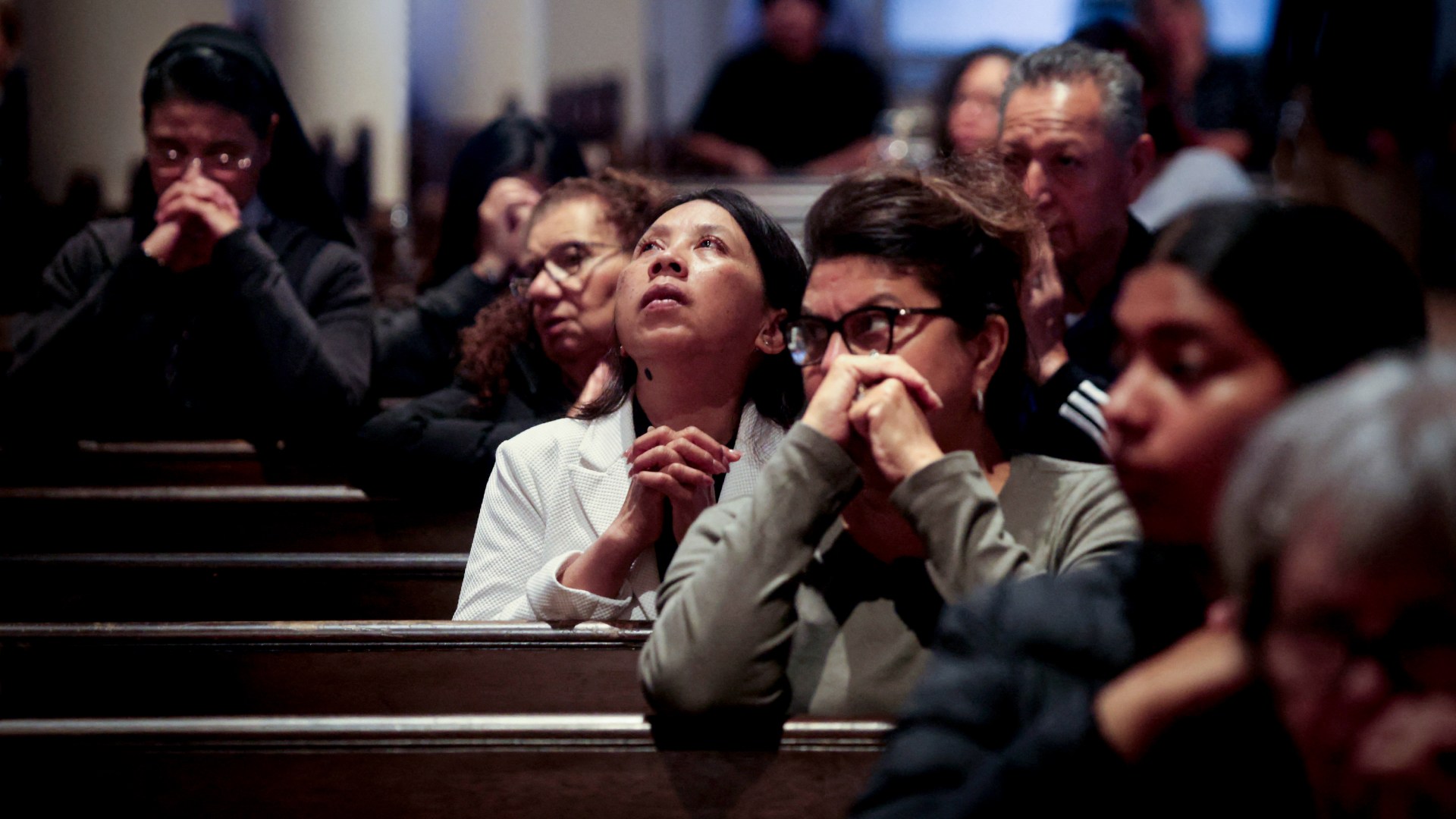
You can imagine my surprise when, after I returned to my seat, another person stood up to be prayed over. Then another. And another. One by one nearly half the congregation came before the church and asked God to heal them of something.

I was shocked. Could it be that half the people in my church were struggling as I was? And if they were, was I really alone in my inability to suffer well?

In the following weeks, some of the people in my church began to open up about their struggles. Others weren’t ready. But the experience was, for me, an eye-opening one. Compared to me, most everyone at my church had always seemed so put together, so faithful, so inspirational. But if the reality was that some of them were as desperate and faithless as I was, then perhaps I was less alone in my church community than I’d always thought. And perhaps if I stopped hiding my struggles from others, I could find companionship in my pain.

A few weeks later, when asked to lead a time of prayer on Sunday, I decided to drop the happy act once and for all. I opened the prayer time by sharing that I’d woken up that morning in tears, terrified by a pain flare I’d had the night before. It was scary to be that honest with others and to risk either rejection or—even worse—trite responses.

But neither of those things happened. Instead, people came forward that day with prayer requests that echoed my fears. I ended up in many conversations with my brothers and sisters about our shared inability to “suffer well” that left me feeling encouraged. God had made room for honesty.

This isn’t to say that we need to air all our dirty laundry when we come to worship on Sundays. In many situations, discretion is wise, and church is not a replacement for therapy.

What’s more, there are plenty of people in my community who are legitimately at peace with their suffering, and I am thankful for them. They’re a picture of the work that I hope God does in my own heart over time.

But for now, I’m content with being a Christian who doesn’t suffer well. Although you wouldn’t know it from the billboards, we live in an anxious age. If the church is to offer any hope to our world, we need to suffer honestly. In so doing, we’ll become a place not only for happy faces but also for the downcast, the fearful, and the brokenhearted.

Natalie Mead is currently pursuing an MFA while writing a memoir about chronic pain, relationships, and faith. Read more of her writing at nataliemead.com.

Theology

One Billion Hinduisms

On Krishna’s birthday, an introduction to the third-largest world religion.

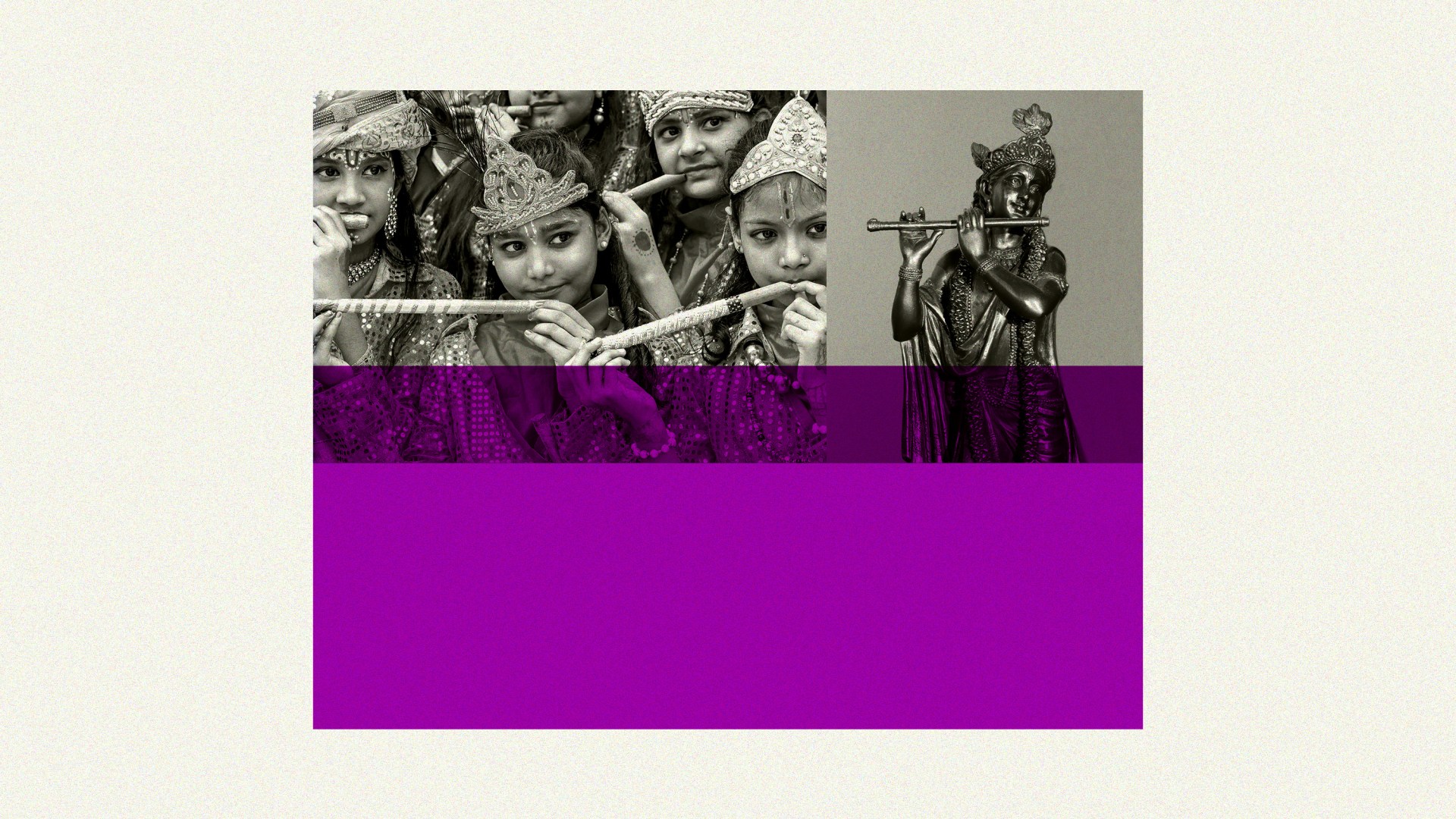
Children celebrating Krishna Janmashtami
Christianity Today August 11, 2025
Illustration by Christianity Today / Source Images: Unsplash, Getty

In this series

(This is the first in a series.)

Krishna Janmashtami, a two-day festival beginning this Friday, is a happy day for 1.2 billion Hindus, 95 percent of whom live in India. It’s the day they say a deity took on flesh 5,000 years ago as Krishna, often shown in his blue skin playing a flute and standing near a sacred cow.

Colorful customs surround the festival: “Devotees offer Lord Krishna banta bhog, or milk products, and then Lord Krishna is given a bath between 8 and 10 in the morning. After the bath, Lord Krishna is dressed in yellow colored clothes and ornaments made of flowers.” Worshipers dance around a Krishna idol—the Hindus I met in India don’t shy away from the i-word—and offer it sweets.

Swami Vivekananda’s explanation is classic: “For the quivering and unsteady mind, there should be a visible form or a symbol, the idol, so that it becomes a foundation for his adoration … a vessel which enables a man to drink the milk.” Every Hindu family can have its own shrine, its own worship, and its own choice of what to worship.

Relax, Hindus say, when a monotheist wonders about their penchant for worshiping numerous deities. Hindus say that when they worship those small deities, they are actually bowing to Brahman, the impersonal ultimate reality, the world soul. They say the idols merely represent various incarnations and manifestations of the supreme deity and function in a way analogous to clothes: People wear different ones in different situations.

Some Hindus also say their numerous names for deity signify not confusion but an intimate knowledge of divinity. One analogy: Not only the Inuit in Canada but also many others have dozens of names for snow because they know snow intimately in its variations but still understand that all of it is essentially the same. Hindus say the existence of multiple forms of deity manifests what they see as a variety of spiritual forces. 

The supreme being, they say, is a force without starting point or end that manifests itself in different ways. To meditate on the supreme, people use finite capabilities to absorb infinite manifestations, which is impossible. Therefore, that which is infinite appears in billions of ways to help humans visualize it. Think of billions of photos of the same person in different poses rather than billions of photos of different people.

Since Hindus worship multiple forms of deity, they can choose the form that works best in each specific instance. For example, Hindus looking for tenderness worship a motherly goddess figure and say that in doing so they can more easily attribute those sentiments to the deity they envision. Hindus say it’s important to give devotees a tangible object for worship.

Moreover, variety is the spice of Hinduism. Urban temples in India typically have many objects of worship. Loudspeaker-blared music, drums, food-and-merchandise sellers, and a variety of booths provide the backdrop for making fruit and vegetable sacrifices to major powers, popular local deities, and even dancing cobras.

Another way to understand Hinduism is that the name itself arose to describe a place, not a religion. The Indus River starts in Tibet, flows through India, and ends in Pakistan. Hindush became the easternmost Persian province in the sixth century BC. Sometime after AD 600, Arabic texts referred to Hind, the land beyond the Indus. A millennium later, English merchants used Hindoo to describe the people they met in the subcontinent. Confronted by numerous variants of polytheism, they started referring to all the strangeness as “Hindoo religion.”

It’s as if travelers referred to all the streams of Greek, Norse, and other European mythology as “Europeanoo.” Besides, as Mahatma Gandhi once said, any believer in anything can “still call himself a Hindu.” Bal Gangadhar Tilak, whom Gandhi called “the Maker of Modern India,” defined Hinduism in 1915 as “acceptance of the Vedas [the most ancient Hindu scriptures] with reverence; recognition of the fact that the means or ways to salvation are diverse; and realization of the truth that the number of gods to be worshipped is large.” India’s Supreme Court in 1966 and 1995 called this an “adequate and satisfactory definition.”

The Vedas (“knowledge”) are ancient Sanskrit poems written between 1500 and 500 BC, about the same time Moses and his successors composed the Old Testament. If the universe is one unitary, organic whole, with no creator-creation separation, the Vedas don’t explain why and how all creatures at some point separated. The Vedas do suggest that we will find no true, lasting happiness until we lose our individuality by becoming reabsorbed into the cosmic whole from which we came.

In the meantime, the idea is to perform rituals as “a bridge between the human realm and the spiritual plane.” The most popular potential helper is Vishnu, often depicted with multiple arms or heads that allow him more opportunity to protect people. Multiple arms indicate omnipotence, dominance in all directions. Multiple heads suggest omniscience.

Followers of Vishnu, “the preserver,” say he comes to earth in human form as different avatars to save his followers from tyranny or natural disasters. For instance, believers say he came in the form of a boar to destroy one demon; in a half-man, half-lion form to defeat another; and as a dwarf to beat a demon king. Krishna is the eighth avatar of Vishnu.

The other two more popular deities are Brahma (“the creator”) and Shiva (“the destroyer”). Hindus refer to the three not as a trinity but as the Trimurti and use the sound Om as a summary of them, as well as a tool for meditation. In 1970, when tear gas broke up an antiwar demonstration in New Haven, Connecticut, I sat by Beat poet Allen Ginsberg as he calmed himself by repeatedly chanting “Om.” 

Culture

‘Wouldn’t It Be Funny if We Tricked a Bunch of People into Going to Church?’

Michelle Stephens of Silicon Valley evangelism organization ACTS 17 talks caviar bumps, Peter Thiel, and Christianity.

Collage artwork of Peter Thiel and Michelle Stephens with caviar, diamonds, gold chains, and champagne
Christianity Today August 11, 2025
Illustration by Abigail Erickson / Source Images: Getty, Acts 17

Earlier this year, several news outlets reported on increasing openness to Christianity among Silicon Valley tech elites. The stories focused on the work of an organization called ACTS 17 Collective, whose name is both a Scriptural reference to Paul’s preaching in Athens and a backronym for Acknowledging Christ in Technology and Society.

CT spoke with Michelle Stephens, the cofounder and executive director of ACTS 17, about the organization’s mission and event strategy, as well as some of the pushback it has faced from inside and outside the church. The conversation also turned to Peter Thiel (Stephens’ husband, Trae, was an early employee at Thiel’s software company Palantir and is currently a partner at his venture capital fund) and the next steps she hopes Christ-curious people in the Bay Area will take.

This interview has been edited and condensed.

To start, Michelle, how long have you lived in the Bay Area? What’s been your experience of being a Christian in tech circles—and how has that experience changed over time?

I’ve been called to live out here for the last 11 and a half years; we moved here for my husband’s job. I had the opportunity to get my PhD at the University of California, San Francisco, but I left academia to build a company for parents to reduce stress—which in turn reduces child stress, which is the subject of my dissertation.

Through my relationships in academia and tech and my husband’s relationships with venture capital, we’ve come close to technologists and investors around deep questions about the meaning of life. Those questions have been enthralling, authentic, and vulnerable. We were bringing the Christian lens, and people were welcoming that, curious, and wanting to know more. We realized we had to get smart on this stuff. But we couldn’t stop what we were doing and go to seminary; we had two small children and were building companies.

We decided to start a faith-and-work group at our church, EPIC. We created our own curriculum, and people came from all over the Bay Area, 7:30 every Tuesday morning. We’d serve hard-boiled eggs and bananas and coffee and dive into the theology of Thomas Aquinas, Miroslav Volf, René Girard, and Martin Luther.

Let’s talk about your relatively new organization, ACTS 17.

By the end of 2023, my company was winding down and my husband’s 40th birthday was that November. I wanted to celebrate big. We invited over 220 of his closest friends to a three-day birthday party in New Mexico called “The Roast, The Toast, and The Holy Ghost.” On the Holy Ghost day, we thought we’d have a sort of remixed church service. Wouldn’t it be funny if we tricked a bunch of people into going to church?

We served caviar bumps, breakfast pizza, mimosas, and spiked coffee. DJ Canvas had come out with his crew to play a Saturday night set, remixing all of our beloved movie-themed songs into a trap beat. He also does this for Christian and worship music. He’s got the best dance moves. He’s got the best vibes. He performed while we were hanging out, having breakfast, communing together.

Then my husband Trae’s partner at Founders Fund, Peter Thiel, gave a 55-minute lecture on forgiveness and miracles—the meaning and significance of Jesus’ death and resurrection—and testifying to his belief as well. We were blown away. A lot of people were looking like he had 10 heads, like, “What are you talking about?”

But people were also coming up to us saying, “Whoa. I did not know Peter Thiel was a Christian. I didn’t know Christianity could sound like that. So thoughtful, intellectual, rigorous. What are you reading? Where are you going to church in San Francisco?”

Meanwhile, my Christian friends were like, “That was heretical. How dare you put a non-seminary-trained individual up on a platform, call it a sermon, and have him talk about Jesus?” That’s from my friends! I’m like, “Okay, my goodness, I messed up.” But then some of my Christian friends were like, “Did you just trick over 220 people into going to church?”

I thought, let’s test this in San Francisco, one of the most unchurched cities in America. We can party with a purpose the night before and then do a Sunday service the day after. We planned an event for May of 2024, a whole DJ set at a warehouse venue in the Dogpatch. The tickets for the event cost money, but it was free to come the next day. We wondered, Can we lure people in with a party and have them come to the Sunday service afterwards?

We did the Sunday service at Garry Tan’s home. He’s a famous tech investor, and his home is a converted mission church in Dolores Park. We had alcohol. We had really good local food. We had DJ Canvas again, remixing worship beats in the background—CC Winans with Jack Harlow. And then we had Peter Thiel come back to give a talk on political theology.

The Sunday service went low-key viral on Twitter. It had an over-400-person waitlist. We were getting death threats as well. From the non-Christian side, things like “Peter is the worst” and a lot of aggression and weaponizing. And then on the Christian side, accusations that we’re being heathens, essentially.

The event went off without a hitch. We had about 45 percent non-Christians for that initial event. People were saying, “You have to do this in my city.” People had flown in from all over the world for this event!

It was very clear at the end of the event that we needed to do something with this. And so DJ Canvas and his team, Joshua Raines and Jae-Lynn Owsley, and myself formed ACTS 17 Collective.

We’ve now put on five or six events, two in the UAE over Thanksgiving of last year. Of course, the press got word of all of this. We’re just riding the wave with open hands, open hearts. This is unlike anything I’ve ever done. I’ve never done anything outwardly Christian with my career, and so I’m very scared. But I think God is calling us into something. For me, God is doing a work in obedience, in listening to the Holy Spirit, letting go of control. It’s really fun.

What’s next for the organization?

I don’t know if you’ve been following anything in the press about Peter talking more about the Antichrist.

I just listened to the Ross Douthat interview.

Honestly, that is the tip of the iceberg. Peter’s been doing Bible studies about the Antichrist for years now. He feels ready to present what he’s prepared through ACTS 17 in a four-part lecture series, which we’ll host in the fall in San Francisco. And a South Bay event on a different subject has been percolating with the help of former Intel CEO Pat Gelsinger and others.

What else? We’ve got a funnel established with events. But how do we reach more people other than 200 in a single city in a single time frame? How do we let people know the voice and the feel and the sound of ACTS 17? How do we create an abundant amount of next steps for folks to take? That’s the whole purpose and mission of ACTS 17 at this point—you are on the faith journey, Christian, non-Christian, and everywhere in between. Take a next step. So we’re developing a content strategy.

And then the third focus that we’re pursuing in the next six months is going to other cities, places like New York and DC. LA has been pushing for us to come. These world-class speakers that we’ve been getting in tech: How do we get them in the entertainment industry? Boy oh boy, is it tough. The archetype is someone who is very successful in their field but not very well-known for being Christian. They’re using all of their money, fame, and power for the Lord, but they’re not public about it. That combination is actually very hard to find.

Reading about ACTS 17 reminded me of my campus ministry at Harvard—an organization that only operated on Ivy League campuses and at Stanford. An explicit goal of that ministry was to serve students who had the potential to eventually exercise some kind of influence in government or industry.

There was always a tension, I think, in that mission. On the one hand, it was certainly true that people at Harvard were spiritually impoverished: riddled with anxiety, obsessed with status and money and power. We needed Jesus! On the other hand, there was something strange about being deemed “worth the investment.” Some of us wondered, Is this coming into tension with Jesus’ call to serve the least of these?

One of the critiques that I’ve seen of this kind of Bay Area “revival” movement is that it’s focusing on people who already have access to the wealthy and powerful, that parties with access to influential speakers and craft cocktails aren’t really aligned with the teachings and life of Jesus.

I’m also thinking of Elizabeth Breunig’s critique in The Atlantic. She writes, “Christianity at its core is not a religion that can reliably deliver socially desirable outcomes, nor is it intended to be. … The formation of [the martyrs’] faith was contingent not on temporal success, but rather on another principle altogether: that Christianity is worth following not because it has the potential to improve one’s life, though it can, but rather because it is true.”

That tension is absolutely there, and I’m so glad that you brought this up. In doing this work, it doesn’t mean that the work for the poor, the marginalized, the least of these, if you will, is any less important. (I was a nurse in Honduras and in South Africa, serving folks who are very poor. The need is so great.) It’s just saying this work is important too. Jesus said it is harder for a rich man to pass through the eye of a needle then enter the kingdom of heaven. And we know that Jesus is for everyone, radically inclusive. So how can Jesus also be for the rich, the powerful, the wealthy?

God is using each and every one of us in our skills and talents and giftings to serve his kingdom; and in his kingdom, he wants everyone. Maybe we’ve been neglecting the rich and wealthy because we’ve thought that they’re gods, right? They can take care of themselves. That is such an illusion. If anything, they need God even more, because the pressure of being “gods” themselves is so great.

The other criticism I get from Christians is around opportunism, which is what you’re speaking to with the Atlantic quote. Some other Christian organizations are attacking ACTS 17, saying that we are delivering a sort of cultural, convenient Christianity: “Oh, now you’re just going to get more people to be Christian so that they can pitch Peter Thiel or be friends with him.” Good luck if you think it’s that easy to pitch Peter!

My not-so-popular take on this is that maybe this is going to create more of a cultural Christian movement. Maybe it’s opportunism. I’m not going to say that you’re wrong, because I literally don’t know, and it keeps me up at night.

This is where trust comes in: God, please do what you only can do. Please convert the hearts and minds of folks that may be very convinced around the cultural aspects of Christianity. Take those thoughts and convert them to be giving their lives to you. Use it all! Use the preacher with the microphones on the street corner. All of it can feel weird, abrasive, wrong, even, but can we trust God to do what only God can do? The war is already won. We don’t have anything left to prove. 

I like this “next steps” framework you’ve outlined above. What are some of those next steps? Put another way, what would be some signs of a movement of God in Silicon Valley? More people in local churches on Sundays? More Scripture reading groups? More money given away?

It’s what you said, Go to church. Start giving your money away. See what that’s like. You know, you don’t have to get generosity exactly right either. If you want to be generous and abundant, that’s what matters. Believe me, I’ve made all sorts of weird decisions around giving away my money, and it’s an opportunity to learn and grow.

Also, connection, community, going into the Word, reading a piece of theology, reading Scripture, going to church, coming together with other Christians to talk about these big questions you have, doing an Alpha Course. Like I said, we’re in really early stages with this, less than a year in—but it’s those things we are compelling people to do.

We’re unabashedly saying things like “Jesus changes everything.” And I think people love that directness, that confidence, that truth. People are seeking truth. They’re seeking discourse where you can talk about your unbelief in Jesus as much as your belief in Jesus. Everything is welcome here.

I also want to address the “movement of God” framing. It’s a bit triggering for me.

I’m a researcher, a scientist, so I’m hesitant about causation above correlation. And I’m really not okay with churches or Christian leaders saying that any one thing that we’re doing or not doing is all of the sudden a movement of God. I think it’s fine to present the data and make connections, but I really want us to hold it more loosely and also recognize God is God. God is always working. God is not working any more or any less. Why are we even trying to quantify that?

So let’s not try to be right about this; let’s just do our part and see what happens. I think what feels different than 11 years ago is that even though a city like San Francisco has been so open—so curious, so willing—what they’re doing now that’s different is taking action. I see people taking steps toward going to church and talking about their faith.

We’re living in a post-Christian place. People have not heard the gospel from their parents or grandparents. They do not know Jesus. What an incredible opportunity, where we’re situated, to deliver the message of the gospel in a fresh new way, meeting them exactly where they are and bringing them toward Jesus.

I’m sure people are coming to these events whose choices—around substance use, sex, wealth—look different than maybe what you believe is the Christian vision of flourishing. But you also know that those Christian ethics aren’t going to make sense to people who have never heard the gospel.

For starters, we’re very unattached to whether or not we have alcohol at our events. It feels culturally appropriate to offer it; but we’ve also had purely nonalcoholic events. We can have alcohol or not, and it wouldn’t change much.

We call out that some of our attendees are tracking every health metric in their bodies, meditating every day to help with sleep and stress, low-dosing on mushrooms in the morning to help with productivity and focus, joining a YPO group or a conscious leadership group. And then hiring an executive coach to be a better leader. And then going on an ayahuasca ceremony or an MDMA journey to dissociate their egos.

You do all of these things, and you find yourself still with this God-shaped hole. We name it—we know what you’re up to. Some of us are doing some of those things ourselves; we’re right here alongside of you, in the tension as well.

But is what you’re doing now leaving you with the answers that you want? Is it leaving you with the feeling that you are full? Are you still on this search for wholeness, for aliveness, for love? I think that is the recipe—not saying that we are judging it but we are challenging it, and we’re also being vulnerable. We’re figuring this out too.

And so then we can say, “Jesus, try Jesus.” That gives them another option to explore, just like they’re exploring all of these other things. And if we trust and know that Jesus is the Way, the Truth, and the Life, then we can trust that it’ll somehow stick—we don’t know when or how, but we trust that inserting “Jesus is the answer” will put them on a journey.

Ideas

Parched for Political Wisdom

Contributor

So many of our leaders are foolish—and not just in Washington. As the school year begins, we deeply need wisdom in my Texas town.

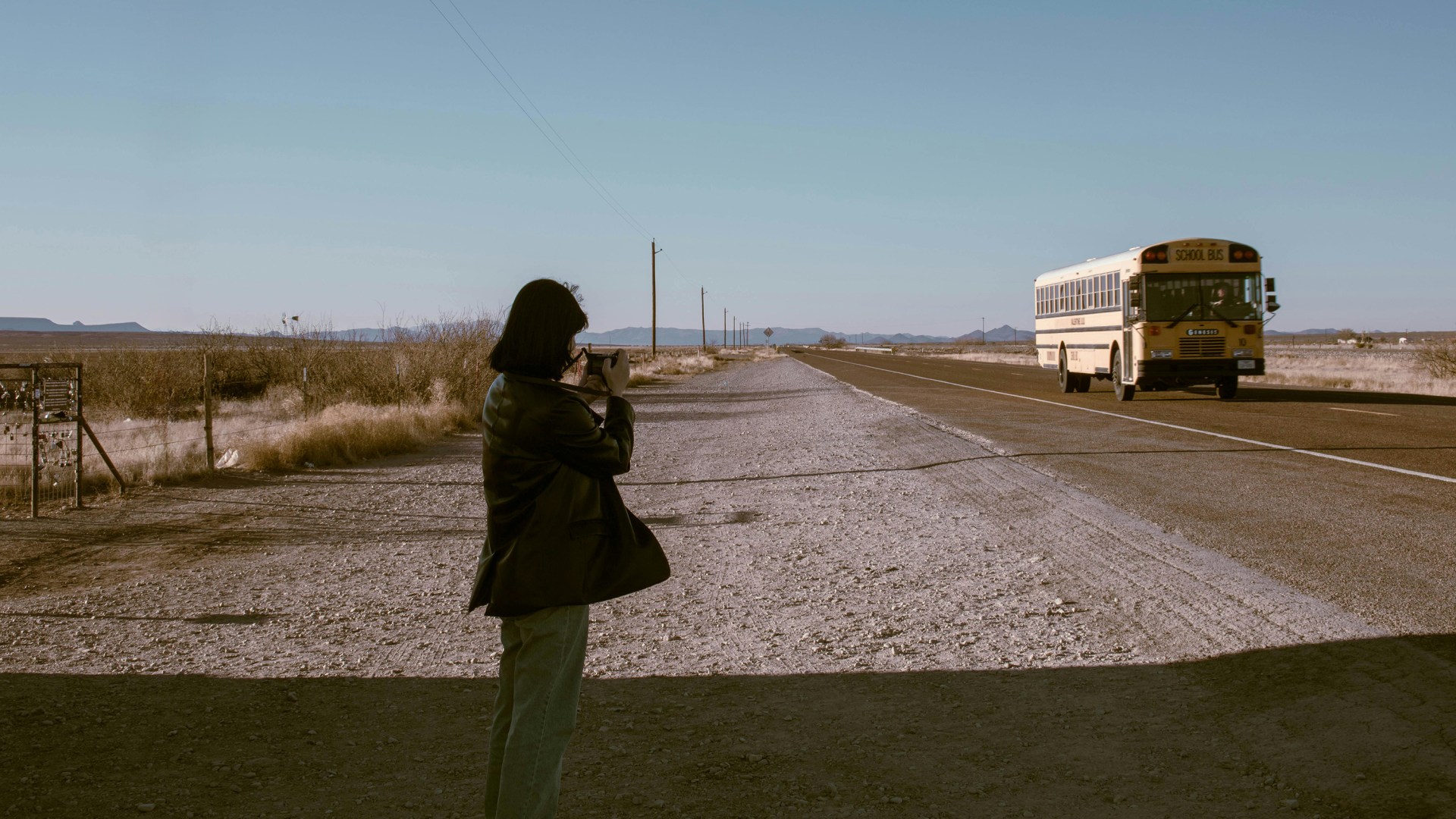
A girl standing in a desert as a bus drives by in Texas.
Christianity Today August 11, 2025
Mizzu Cho / Pexels

America has a problem far deeper than partisan polarization or divergent policy preferences or dissatisfaction with the last election’s results. We’re living in a culture increasingly bereft of wise leadership, guided instead by people thrown to and fro by the ever-changing whims of their own hearts and those of their donors and constituents. 

Too many of our leaders have swapped public service for attention seeking, issuing policies and pronouncements—each seemingly more extreme than the last—geared more toward growing follower counts and approval ratings than toward building a good and functional society. Ordinary people in the middle are left scrambling to meet our families’ needs: driving stakes into sand dunes, laying foundations on shifting tectonic plates.

Wisdom is an old-fashioned word, and I’m often unsure we even know what it means anymore. But I know what it’s not. Charisma and bombastic one-liners on X, Bluesky, or Truth Social might win elections and attract a crowd, but they are almost never wise. Publicly claiming moral authority while privately taking a different path might be fun for a while, but it’s undeniably foolish. Intelligence and good business acumen, decisiveness and steely resolve might propel someone to the highest levels of power, but it’s no proof of wisdom. “Better a poor but wise youth,” Ecclesiastes says, “than an old but foolish king who no longer knows how to heed a warning” (4:13). Pandering to the base by offering the most extreme version of your views might get your campaign bumper sticker on more cars, but this too is not wisdom’s path. 

It wasn’t all that long ago that our problem with foolish leaders seemed concentrated in Washington. Back home in our local communities, we could roll our eyes at distant excesses and ineffectiveness and get on with our lives—maybe not always agreeing on everything, but wise enough to know that we have to be able to live with each other. But the bombastic playbook that has ruled Washington for years is being used more and more frequently on Main Street, destabilizing our local institutions and disrupting our communities.

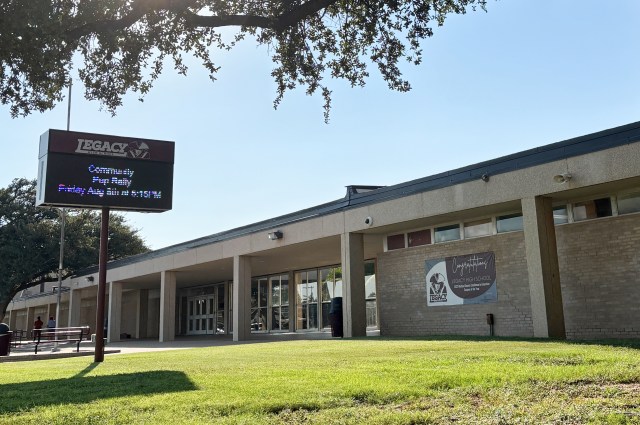
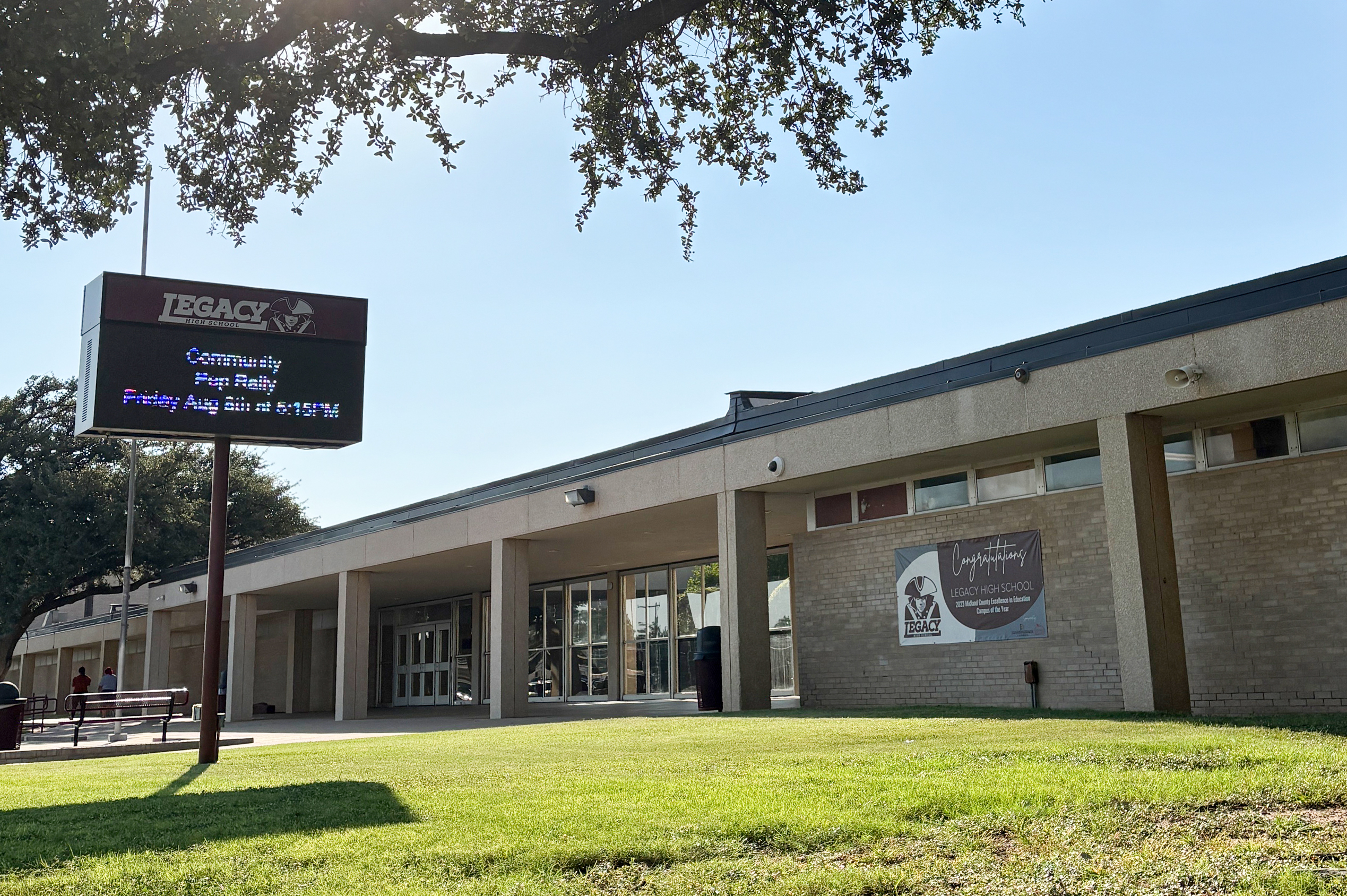
Take the situation in my own town right now. Some members of our school board are trying to undo a 2020 decision that changed Robert E. Lee High School to Legacy High. The swap back then was contentious and complicated—I wrote about it at the time for Texas Monthly—but what strikes me now is the utter disconnect between this renewed debate and what we actually should be discussing as a new school year begins: how to improve student outcomes. Insofar as the school board spends time on this instead of more practical and pressing concerns, it’s making our children collateral damage in yet another skirmish of a never-ending culture war.

I understand how we got here, of course. On the national scale, President Donald Trump has revived naming debates by talking about calling the Washington Commanders the Redskins again and committing to “restoring names that honor American greatness,” like changing the Gulf of Mexico to the Gulf of America and returning Mount Denali to McKinley. That makes it politically expedient for politicians in a deep-red community like mine to talk about names too, as one board member did when announcing his proposal via a patriotic Fourth of July post

It’s all political fun and games—except they’re playing with my children’s education. Rather than wisely leading our community to solve real but boring public education problems, like improving secondary math scores and early childhood literacy, these politicians are busy airing their opinions and bringing strife (Prov. 18:2, 6).

“Where there is no vision, the people perish,” Proverbs 29:18 says (KJV). And I think that’s it. That’s the thing so many of us are feeling. Though I know Christ’s kingdom is eternal, this political moment feels like cultural perishing. 

I live in the West Texas desert, and when the summer heat sets in—heavy and dangerous and oppressive—we long for relief. So it’s no surprise to me that throughout Proverbs, wisdom is described as bubbling, life-giving, refreshing water. When we’re parched, finding water is all we can think about. And on a societal level, we’re parched for wisdom. 

We need more leaders who pursue what is “right and just and fair.” We need leaders who are slow to speak but quick to “listen and add to their learning,” prudent leaders who care less about momentary political wins than about humble acts of care for the future (1:1–7).

The school renaming story is just one example from my community, yet it’s illustrative of something happening much more widely—in red and blue states, liberal and conservative communities, religious and secular spaces alike. While on the right we’re occupied with manufactured arguments about renaming schools for Confederate war heroes, politicians on the left are out pandering about pipedreams like city-owned grocery stores and free childcare. This is the same illness, just different symptoms. It’s leadership built around virality and vote totals instead of wisdom, insight, humility, and discernment. It’s foolishness.

And though our need for wisdom seems particularly desperate right now, it’s not really new. Even our local fight about the high school name started decades ago.

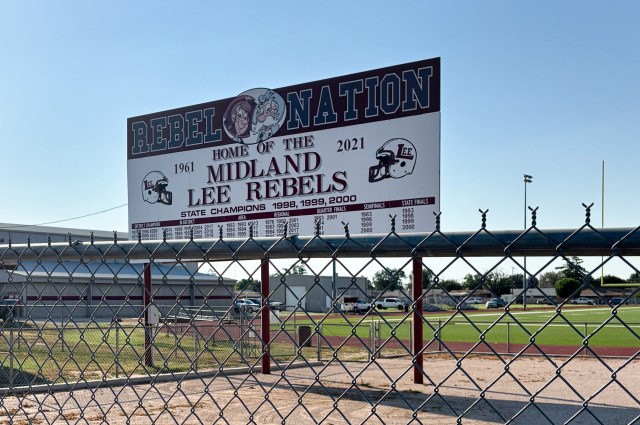
Back in 1954, the Supreme Court ruled in Brown v. Board of Education that segregated public schools are unconstitutional. But in southern cities across the United States, including here in Midland, Texas, nothing really changed. Our high schools didn’t integrate until 1968, and our elementary schools failed to integrate until a federal ruling intervened in the ’70s. And in 1961, Midland opened a new segregated high school: Robert E. Lee. 

Today that naming decision is largely recognized, even among many of its present-day defenders, as an act of resistance to federal integration orders. The Midland school board wasn’t alone in this kind of folly. “In the 84 years between Lee’s death and Brown, a Texas school adopted his name on average once every 10.5 years,” Daniel Harris, a local theologian and historian recently wrote. But in “the 21 years between Brown and the last Texas school to adopt his name in 1974, that rate more than quadrupled: one every 28 months.”

By 2020, there had been rumblings for years about changing the name, but it took the events of that summer—George Floyd’s death and subsequent unrest nationwide—to ignite the local debate. The initial idea was that Robert E. Lee would become Legacy of Equality and Excellence, or LEE for short. But the 2020 board (a different slate of leaders than the ones now in office) rejected that suggestion, settling on Legacy instead. 

“Board President Rick Davis said at the time that he was initially open to a LEE acronym,” the local news reported, but “after continuing to listen to people’s reaction to the acronym and praying about it,” he said, he became convinced that the acronym would “not go far enough in disassociating ourselves from having a public school named to honor a Confederate general who fought for the southern states’ ability to continue the abominable institution of slavery.”

I know many in my community disagree, but to me this reflects genuine biblical wisdom. He listened (Prov. 12:15). He prayed (Col. 1:9). And he changed his mind (Prov. 19:20), taking the more difficult political path to stay true to his convictions. 

Legacy High School in TexasPhotography by Carrie McKean
Legacy High School in Midland, Texas.
Legacy High School Sports TeamPhotography by Carrie McKean
Legacy High School’s football team, Midland Lee Rebels.

Many of Davis’s loudest critics, including current board members, frame the 2020 LEE rejection as evidence of a woke, power-hungry school board that refused to listen to locals and defied Proverbs 11:14: “For lack of guidance a nation falls, but victory is won through many advisers.” But this critique is a shallow reading of that verse. The promise of victory depends on the presence of wise counselors, not frenzied crowds airing their opinions. 

One reason we elect leaders is that our founding fathers knew we needed to constrain ourselves, to base our laws on something more measured and substantive than the whims of the public. Public servants in a republic like ours are supposed to be level-headed, circumspect people who feel the weight of their responsibility to the whole of the community, considering all the generational and social ripples of their decisions. And given the weightiness of that position, we need them to humbly discern what is best. 

In a 2004 sermon, pastor Tim Keller defined wisdom as “knowing how things really happen, knowing how things really are, and knowing what to do about it.” The wise have moral character of mind and heart, he said, so that they do the right things even when there’s no rule about it, even when they have the right to choose otherwise, even if they have every excuse to take the easier, less-controversial path. 

Wisdom is not a synonym for intelligence or even knowledge. As Gordon T. Smith says in Called to be Saints, “Knowledge in itself easily ‘puffs up’ and also leads to dogmatism. True wisdom is evident in humility” and constant willingness to learn. The wise “know something of what they know while also recognizing what they do not know,” Smith adds, and wisdom is “marked by humility and charity toward all, most notably those with whom we differ.” 

In Philippians 1:9–10, Paul drew a direct connection between wisdom and overflowing love: It is through love, he wrote, that we are able to discern what is best. 

None of this sounds like your average American politician, not even the ones who thump their Bibles. Sure, there are exceptions. But more often, people of character, humility, and love are deemed weak and unsuitable for American politics from Washington on down.

Where does that leave us? Here in Midland, it means that a few weeks before the next school year, our community is once again bickering about the name on the building instead of addressing what’s happening inside. We’re mistaking bluster for bravery and letting ourselves be provoked to rancor rather than doing what it takes to work together and educate our children well. In some twisted way, we’ve managed to make both too little and too much of what this school is called—and meanwhile, we still have vulnerable children missing out on the exceptional public education they need.

I don’t discount the real concerns about history, wokeness, and justice that are drawing us into this name battle. But wisdom takes all that in and holds it in tension. In Proverbs 8:11, wisdom is compared to rubies. As with most precious stones, a ruby’s beauty is revealed in its multiple facets; its value increases if it is cut skillfully, ensuring every glimmering angle is revealed. This is the way of wisdom: not a zero-sum political game but careful consideration of multiple perspectives in pursuit of goodness, beauty, and truth. 

True wisdom may be costly. It may not seem useful in the moment, and for many politicians, there’s little incentive to be wise. But God offers to generously give wisdom to those who seek it in faith (James 1:5–8). Leaders—in offices from local school board to statehouse to Congress or even the White House—only have to humble themselves and ask. We the people are parched for it.

Carrie McKean is a West Texas–based writer whose work has appeared in The New York TimesThe Atlantic, and Texas Monthly magazine. Find her at carriemckean.com.

News

World Vision Shielded from Bias Suit, Ninth Circuit Rules

The clash between nondiscrimination law and religious beliefs on sexuality drew the attention of many Christian organizations.

The San Francisco headquarters of the US Circuit Court of Appeals for the Ninth Circuit.

The San Francisco headquarters of the US Circuit Court of Appeals for the Ninth Circuit.

Christianity Today August 8, 2025
Justin Sullivan / Getty Images

A customer service representative can be central to carrying out a religious organization’s mission in the same way a pastor is, a federal appeals court ruled, shielding the employer from federal nondiscrimination statutes.

World Vision had rescinded a customer service job offer to a woman, Aubry McMahon, after learning she was in a same-sex marriage, and she sued over discrimination.

The US Court of Appeals for the Ninth Circuit ruled that World Vision was exempt from the woman’s bias suit, reversing a district judge’s ruling in 2023.

Customer service reps “are World Vision’s ‘voice,’” the court ruled. The three-judge panel, all appointed by Democratic presidents, was unanimous.

The case has implications for how courts handle the tensions between nondiscrimination protections for sexual orientation and religious organizations enforcing certain sexual ethics among their employees.

Many Christian organizations were following the outcome of the World Vision case, with denominations like The Foursquare Church, the Southern Baptist Convention (via the Ethics and Religious Liberty Commission), and the Seventh-day Adventists filing briefs in support of World Vision.

The appeals court ruled that the “ministerial exception,” which shields religious organizations from lawsuits over their hiring and firing of faith leaders, applied to McMahon, the prospective employee. But it said nondiscrimination laws still applied to all “non-ministerial” positions at World Vision.

The court cited World Vision’s belief that “corporate and individual behavior witnesses, reflects, and testifies about what we believe as a ministry and as individual believers” and that staff should “[f]ollow the living Christ, individually and corporately in faith and conduct, publicly and privately, in accord with the teaching in His Word (the Bible).”

The organization has written standards of conduct that say biblical sexuality is expressed “solely within a faithful marriage between a man and a woman,” though in 2014 it briefly said it would hire employees in same-sex marriages before reversing its position.

In the ruling the court cited recordings of calls between World Vision customer service reps and donors to show how the reps “perform key religious functions central to World Vision’s mission.”

In one call, a donor talked to a rep about how a Zimbabwean teenager the donor had sponsored for nine years was doing during the COVID-19 pandemic, and then the donor and the rep prayed together for the donor’s family.

“What’s important is that the court really grasped the key role that donor relations in particular plays in connection to advancing the mission of organizations like World Vision,” said John Melcon, an attorney with Taft law firm who handles religious employment cases and worked on one of the amicus briefs in this case. “I think the decision will have positive implications in terms of the application of the ministerial exception to donor- and supporter-facing roles in the ministry context.”

McMahon’s attorney Michael Subit called the ruling “a small tear in the fabric of anti-discrimination law” but said that religious organizations could “try to expand it to a giant hole,” according to the San Francisco Chronicle.

Last year another appeals court, the Fourth Circuit, ruled that a Catholic school was shielded under the ministerial exception from a discrimination lawsuit over the firing of a teacher.

These cases are bubbling up in higher courts now because in 2020, the US Supreme Court ruled in Bostock v. Clayton County that Title VII, the nondiscrimination section of the federal Civil Rights Act of 1964, applies to gender identity and sexual orientation.

Title VII has an exemption for religious employers to hire based on beliefs, but courts have so far dodged the question of whether that exemption applies to all employees or just the ones that fit the “ministerial” role.

“Courts haven’t really come to a consensus on that,” said Melcon. “But [this ruling] is still a great ministerial-exception ruling.”

But the court put limits on who counts under the ministerial exception.

“A religious employer’s universal requirement that its employees help carry out the organization’s religious mission or live consistently with the organization’s religious values cannot be enough to qualify for the ministerial exception,” Ninth Circuit judge Richard Tallman wrote for the court.

He got more specific: “Secretaries, accountants, and custodians at World Vision … would not qualify for the ministerial exception because, unlike [customer service representatives], they are not charged with conveying the organization’s message to its donors.”

Religious freedom attorneys had been optimistic about the Ninth Circuit taking up the case because the court has a recent track record of rulings in favor of religious organizations, like a major 2023 ruling siding with the Fellowship of Christian Athletes. Attorneys from the Becket Fund for Religious Liberty argued the case for World Vision.

The ministerial exception has been applied to non-Christian faiths as well, like a Zen-center staffer and an inspector for Jewish dietary laws.

The list of religious organizations that filed amicus briefs on the side of World Vision was long: Billy Graham Evangelistic Association, Samaritan’s Purse, Colson Center for Christian Worldview, Moody Bible Institute, Summit Ministries, Christian Legal Society, Accord Network, Cru, Christian Medical & Dental Associations, InterVarsity Christian Fellowship/USA, Islam and Religious Freedom Action Team of the Religious Freedom Institute, Jewish Coalition for Religious Liberty, The Navigators, National Religious Broadcasters, the Council for Christian Colleges & Universities, Evangelical Council for Financial Accountability, Focus on the Family, The Master’s University and Seminary, Tyndale House Ministries, and Young Life, among others.

Church Life

How a Reluctant Kenyan Student Became a Full-Time Christian Journalist

At first Moses Wasamu saw writing as a burden. Then it became a calling.

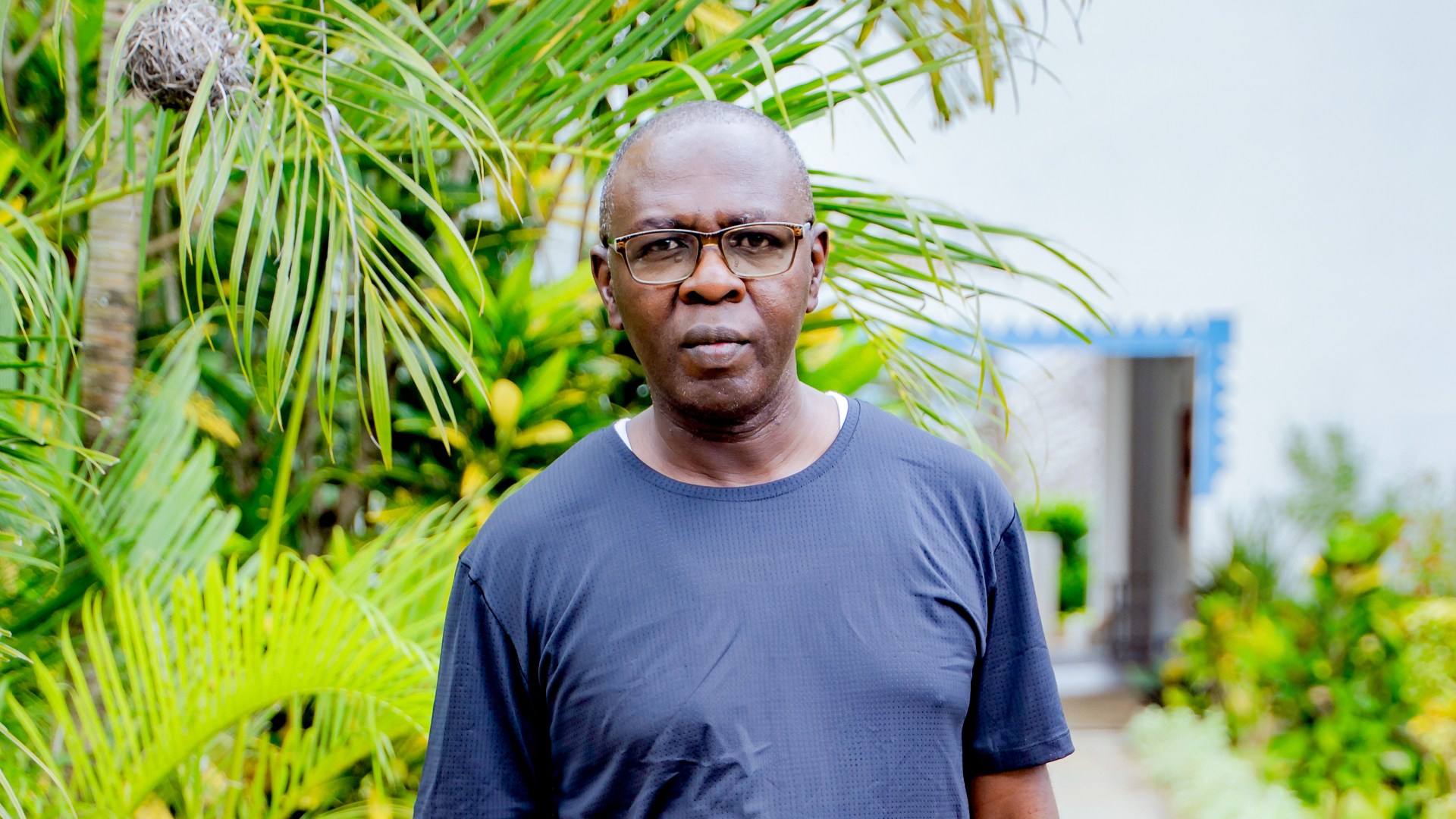
Moses Wasamu

Moses Wasamu

Christianity Today August 8, 2025
Courtesy of Moses Wasamu

How does the youngest child from a family with seven boys and three girls in Africa become a full-time Christian writer? I asked Moses Wasamu, 55, a new CT correspondent from Kenya.

Moses grew up in Kenya’s Great Rift Valley, from which many champion runners come. Three things shaped his life: an early introduction of God, a young introduction to politics, and lots of reading and writing.

Moses said, “The Anglican Church Kenya introduced me to God. My siblings and I went to church religiously every Sunday. This was because of the influence of my mother, Julia Onienga, a born-again Christian.” He remembers confirmation as a member of the Anglican Communion, a major event for parents and their children, under the teaching of a fiery bishop, Alexander Muge. “I went through this ritual more as a religious duty than as a personal commitment to God. Yet that is what God used to draw me to himself.”

Muge’s criticism of former Kenya president Daniel arap Moi also drew Moses into politics. “His preaching made the high and mighty uncomfortable. My political consciousness came from listening to his fiery preaching at an early age.”

Kenya was then in political turmoil following an attempted coup in 1982. Moses remembers that his older brothers brought home daily newspapers—Daily Nation, the government-owned Kenya Times, and The Weekly Review, a publication run by US-trained nuclear physicist Hilary Ng’weno—that deepened his political consciousness.

“I also remember reading the US-published Reader’s Digest voraciously. I liked it for its inspiring stories, hilarious jokes, and advice on health issues,” Moses said. “Exposure to different publications at a young age gave me the desire for reading and writing.”

In elementary school, Moses’ English teacher Rachel Lamenya made it mandatory for all students in fifth grade to enroll in the Kenya National Library Service. Every week, students had to borrow a book from the library, read it, then write a summary of the story.

“At the time, it looked like a punishment, but when I look back, I realize it laid a strong foundation for me as a writer and a student in later life,” Moses told me. “At 11 or 12 years of age, I was clear in my mind that I wanted to be a writer.”

Moses had a crisis when he finished high school and didn’t qualify to enter a public university as expected. He questioned how he would fulfill his desire to become a writer: “I felt like my life had come to an end. I started drinking as a way of forgetting my misery.”

In 1994, though, “I got saved,” he said. “The miracle happened one night while I was on bed reflecting on my life. The fear of people and the unknown, which had kept me from making that decision, came to an end that night.”

That change led to his enrollment at Daystar University, a Christian school. There, for the first time, he saw the leader of an institution—vice chancellor and professor Stephen Talitwala—lining up with students and staff for meals at the cafeteria. He learned humility from this example and honed journalism skills during a course, Writing and Editing, where “you earned extra marks for publishing an article in any of the local dailies.”

At Daystar, Moses reported on school events for the university’s publication and also published articles in local newspapers. In his last year, he applied for an internship at a big Kenyan organization, Nation Media Group, and was the only Daystar student picked. “This was big for me,” he said. “What I had dreamed about over the years was coming to pass!”

But Moses did not get the “thrill and satisfaction” he anticipated: “I sensed that I wanted to write, but in a way that honors God and which brings eternal significance.”

In 2004 Moses began to volunteer with Scripture Union Kenya, a nondenominational organization that evangelizes and disciples children. That year he also helped to found The New Sudan Christian, the first Christian newspaper in South Sudan, a quarterly that became a monthly in 2010. (It went online in 2016 and is now called The Christian Times.) Moses became head of communication with Scripture Union, but his job there ended in 201l.

The next two years, he recalled, “were my night of the dark soul. I fell sick and was diagnosed with muscle spasm. … I was so scared because I was not sure I would sit down again and work on a computer, which was my main tool of trade. Yet during that time, God revealed himself to me as Jehovah Jireh, my provider, and Jehovah Rapha, my healer. As a family, we never lacked food or drink. God covered all our bills.”

Moses found one highlight among two years of lowlights—he became one of more than 350 writers from 50 countries who contributed to the Africa Study Bible printed by Oasis International Publishing.

In 2013 Moses traveled to South Africa for a three-month international leadership-development program. As he came into contact with Christians from different countries and denominations, Moses said Galatians 3:28 became a reality for him: “There is neither Jew nor Gentile, neither slave nor free, nor is there male and female, for you are all one in Christ Jesus.” He said he became aware of his own biases and now counts as friends Christians from all over the world.

Moses reported that God also “used different events and people to lead and guide me into my calling.” The Anglican priest from South Sudan who led development of The New Sudan Christian, John Daau, urged Moses to “go to Bible school and become an Anglican priest.” Moses did go to Bible school but eventually had ordination not as an Anglican but as a Kenya Assemblies of God minister. 

He also used email to make contacts that led to writing internationally: 3 stories in Christianity Today from 2011 to 2013 and 19 in World magazine from 2014 to 2016. Moses joined CT as a correspondent earlier this year. He quoted to me the summary attributed to Karl Barth: “Christians should approach the world with the Bible in one hand and the newspaper in the other.”

Moses now sees telling stories of God’s creation as a calling: “As Christians, we cannot close our eyes to what is happening around us, because God reveals himself in all things, the good and the bad. As a Christian journalist, my first calling is to God and to the truth as revealed by God.”

Moses’ bottom line: “I want to be found worthy when Jesus comes back, telling stories of God’s creation in this world.”

News

El Salvador’s Crackdown Sweeps Up Pastor and Legal Advocate

José Ángel Pérez and Ruth López are imprisoned without visitors; Christian non-profit Cristosal suspended activities in the country after receiving threats.

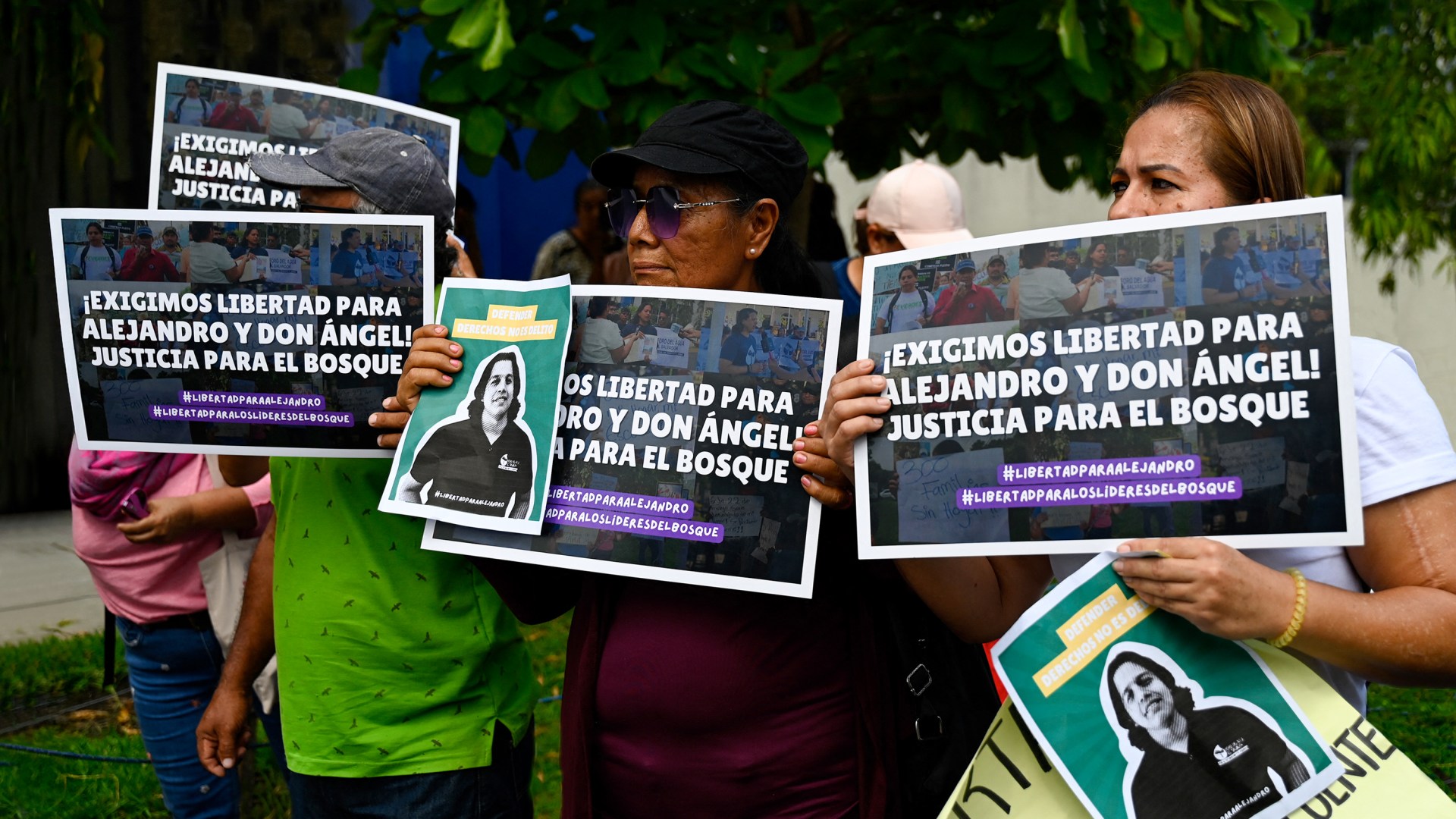
People hold signs to show their support for Salvadorian environmental lawyer activist, Alejandro Henríquez, and Pastor Jose Angel Perez who were imprisoned.

People hold signs to show their support for Salvadorian environmental lawyer activist, Alejandro Henríquez, and Pastor Jose Angel Perez who were imprisoned.

Christianity Today August 8, 2025
Daniela Rodriguez / Contributor / Getty

Pastor José Ángel Pérez removed his blue cap and began to pray. He stood under a tree, surrounded by members of his congregation, Misión Cristiana Elim in El Triunfo, a rural community 15 miles southwest of San Salvador.

On the morning of May 13, Pérez took part in a demonstration at the capital, just half a mile from the presidential palace. He joined participants from an agricultural cooperative for small-scale coffee growers called El Bosque, which Pérez chairs.

The cooperative took a series of financial hits; members used land as collateral for defaulted loans, and 300 families in El Triunfo faced eviction from their homes.

“We know that no one can help us,” Pérez said in his prayer. “All our companions, our brothers, our neighbors are going to be evicted from their homes, and only you, God, can touch the hearts of those who have the power and authority to help us.”

“We want to ask that it be you who goes to that place where the president of this republic is, so that he may lend us a hand, so that we may be able to live in our own homes, which we have built over the years.”

Hours later, the pastor was arrested. Authorities also detained the cooperative’s lawyer, Alejandro Henríquez, along with Pérez.

Under the régimen de excepción—an emergency decree in force since 2022—police held Pérez and Henríquez in prison without a formal indictment for weeks. By May 30, both were charged with public disorder and resisting arrest. They’ve been in prison without visitors ever since.

Pérez’s congregation, a small church of around 60 people, has continued holding services for the past three months with the help of pastors from nearby San Salvador and Santa Tecla and fellow leaders from its denomination, Misión Cristiana Elim.

Elim hired legal counsel for Pérez, provided assistance to his family, and arranged for food and hygiene kits to be delivered to him at the detention center Centro Penal La Esperanza, according to Mario Vega, the denomination’s founder and leader.

Since the arrest, authorities have allowed Pérez and Henriquez to have just one conversation with their lawyers. Their families were not permitted to visit. “There is no way to know the quality of the treatment they receive,” said Vega.

Ruth López Alfaro, a Salvadoran lawyer specializing in anti-corruption, is in a similar situation.

López served as the chief legal officer for Cristosal, the country’s top human rights nonprofit. Police arrested her at her home on May 18, initially accusing her of embezzlement.

“It’s an impossible crime for her,” said Noah Bullock, executive director of Cristosal. “Under Salvadoran law, only public servants could be charged, and she’s not a public servant.”

Fifteen days after López’s arrest, the attorney general’s office changed the charge to illicit enrichment, another offense that applies only to public officials.

Founded in 2000 by Anglican bishops Richard Bower and Martin Barahona, Cristosal defended Salvadorans during the country’s civil war and amid the record-high rate of homicides in the gang war. Its recent reports called out the CECOT megaprison receiving Venezuelan prisoners deported from the US as illegal. Their analysis states that both the US and El Salvador “facilitated the transfer of illegally deported individuals into a prison system stripped of legal protections and judicial oversight” and therefore are “acting in coordination to commit grave human rights violations, showing disregard for human dignity.”

The use of the Salvadoran prison system to receive people deported from the US has been useful for Donald Trump’s strategy over immigration and made him a key ally in the region. In January, Trump praised Bukele’s leadership and called him an example for other nations in the Western Hemisphere. The Salvadoran leader—who once called himself the “world’s coolest dictator”—took the opportunity to approve a bill in Congress increasing the term of office from four to six years and abolishing the limit on reelections. Last week, the US Department of State backed the decision.

At Cristosal, López worked to enforce transparency and fair treatment of Salvadoran citizens, filing over a dozen petitions against the government, including petitions around unconstitutional mining and alleged negotiations between former legislator Osiris Luna Meza and gang leaders. (Now as the deputy minister of justice, Luna directs penitentiary centers and has legal custody of López.)

Cristosal suspended activities in El Salvador in July and moved its headquarters to Guatemala City due to threats. “Cristosal became a direct target for the government. We would have no way to defend ourselves in a neutral trial against this type of persecution, so we decided to move,” Bullock said.

“The arrest of our colleague Ruth López, lawyer and human rights defender, is not an isolated case but part of a broader strategy of exemplary punishment meant to intimidate,” he stated in a press release.

On the day Pérez and Henríquez were arrested, Salvadoran president Nayib Bukele accused his opposition of being behind the protests. “We were witnesses of how humble people were manipulated by self-styled groups of globalists and NGOs, whose only real objective was to attack the government,” he wrote in X.

In response, at the end of May, Bukele signed a new foreign agents law, which authorizes a 30 percent tax on donations to nonprofits, including religious groups, that receive support from outside the country. The Inter-American Commission on Human Rights said in a statement that the law “may limit the legitimate operation of civil society organizations and civic space in the country.”

Last month, Amnesty International declared López, Henríquez, and Pérez prisoners of conscience—the first since the end of El Salvador’s civil war in 1992.

For Vega, Pérez should be labeled a prisoner of faith. Last week Vega preached in a pastors’ meeting in San Salvador about Matthew 5:10–12:

Blessed are those who are persecuted because of righteousness, for theirs is the kingdom of heaven. Blessed are you when people insult you, persecute you and falsely say all kinds of evil against you because of me. Rejoice and be glad, because great is your reward in heaven, for in the same way they persecuted the prophets who were before you.

“I underlined ‘falsely,’” he said. “That’s what is happening with pastor José Ángel.”

“His vision of what it means to be a pastor is not someone who preaches once or twice a week,” Vega said. “A pastor must be side by side with his congregation in its sufferings and its longings. Being there for those who suffer is what led him to prison.”

News

Kenya Battles Teen Pregnancy Crisis

How a Christian nurse stepped in to save a mother and her baby.

19 year old Kenyan mother is seen holding her 7 month old baby bump.

A 19 year old Kenyan mother is seen holding her 7 month old baby bump.

Christianity Today August 7, 2025
SOPA Images / Contributor / Getty

One evening, Naomi Cherotich, 17, headed home from her school on the slopes of Mount Elgon in Bungoma County, western Kenya. A man from her village gave her a ride on his motorcycle. Then he gave her sweets, bananas, sugarcane, and some money. Then he slept with her. Soon Naomi was pregnant.

Naomi’s mother, Milka Chepchor, cried when she learned her daughter was pregnant. “I am a single mother, and my hope was that [Naomi] will complete her education and join college or university so that she can change my life,” she said. “I gave birth to my daughter when I was 16. The boy who caused all [this] denied the baby and never gave me support. He married another girl. My father chased me away from home and I stayed with my grandmother. Now history is repeating itself.”

The motorcycle rider hid when he realized that Naomi was pregnant, fearing arrest for having sex with a student. Naomi ran away from home to stay with her grandmother to hide from friends and neighbors who might mock her as a “loose girl.”

She complained to her grandmother of stomach pain, asking her to fetch local herbs from the forest to treat “stomach snakes” (worms), not revealing she was pregnant. After drinking one cup of the brewed herbs, Naomi started bleeding heavily. Her grandmother ran to the local administrator for help. Two men carried Naomi on a wheelbarrow for several miles until they found a motorbike. On it, sandwiched between the driver in front of her and a helper behind, she made it to Kopsiro Health Center.

Teenage pregnancy in Kenya remains a serious public health issue; the government estimates 15 percent of women age 15–19 are or have been pregnant. Poverty, lack of education, and breakdowns in family environment are main contributors. Although the age of consent in Kenya is 18, and laws are supposed to protect students still in secondary school, some men still coax impoverished girls to exchange sexual favors for small gifts.

In November 2023, Ministry of Health officials reported that 54 girls out of roughly 250 from a single Mount Elgon school became pregnant over the course of the year. Bungoma County—along with Nairobi, Kakamega, and Narok counties—has the highest teen pregnancy rate in Kenya. One of Kenya’s national newspapers attributed high pregnancy rates to parental neglect, poverty, and cultural practices. Girls as young as 10 drop out of school due to pregnancy. Bungoma County is predominantly Christian.

Kenya (at 18%), along with Uganda and Tanzania (25%), have higher teenage pregnancy rates than the global average of 15%.

At Kopsiro Health Center, Naomi received help from nurse Hesborn Sambo, who for ten years has been on a mission to save teenage mothers. During his internship at Bungoma Referral Hospital, Sambo witnessed many deaths from pregnancy complications. “Many of these girls were from my home area on the slopes of Mount Elgon,” he said. “I started reaching out to these teenage mothers.”

At first, administrators didn’t support his outreach to local teens, Sambo said. “I had nobody to help me. I used my own salary to travel around schools and villages talking to the pregnant girls and parents.”

Many health workers in Kenya sign in at their clinics then sneak away to work side gigs, such as treating patients at home, working at a private clinic, or going to meetings that offer “sitting allowances” for attending. Sambo recalled, “My bosses thought I was one of these kinds of people and were reluctant to support me.”

After several years of struggle, Sambo received support from administrators: a motorcycle. He started training school administrators, local government officials, and community health promoters.

Now, he asks pregnant teens to visit health facilities for prenatal care then shows them why it’s important to check their nutrition and blood pressure, give birth at a health facility, and put their babies on vaccine schedules. He also teaches them how to identify any complications that would be risky to both the mother and the baby.

“I thank God to have given me the energy to make this a success. I feel happy to see these girls [willing] to come out and ask questions at the facility and some even encouraging others to come out.”

Sambo grew up in a Christian family. Years ago, he had asked God to place him in the best position to help poor families. “I am a born again Christian, and everything I do, I put God first.”

The toughest task for Sambo is counseling the traumatized girls and their depressed parents: “I receive calls from parents who feel they have been ashamed by their daughters. So I visit the family and talk to them not to chase away their daughters for getting pregnant. I also talk to girls who are tempted to commit suicide because the society and the family has rejected them.”

David Kirui Kondo, a community health promoter from Chepich rural village, said many of the teens come from poor families with single parents who can’t afford basic needs. “You find that many of them get pregnant in December during long school holidays and during funerals where the community comes together dancing to music all night,” he said.

Another community health promoter, Violet Chebet Kipkirech from Ruarus village in Kopsiro, noted the lack of parental care and health services in villages: “You find that many families live next to the forest where they earn a living from. A father or mother who spends the whole day in the forest has no time for the children. They don’t talk to them. These young children have nowhere to seek help when they are faced with sexual challenges.”

Sambo said, “We used to register over 100 deaths of young mothers dying from pregnancy related complications, but that has reduced drastically to around 40, with more health facilities across the mountain. Lives are being saved.” Nevertheless, he said many deaths of pregnant teens are never documented, because they don’t visit health facilities. Many die silently in their villages, trying to procure abortions or committing suicide. No one reports the incidents for fear of arrests.

On July 28, Naomi Cherotich gave birth to a baby boy. Sambo’s lifesaving care became a turning point for Naomi. Sambo counseled her against suicide and abortion, offering prenatal care. Now, while her mother watches the baby, Naomi hopes to catch up with her classmates at school then study to become a teacher: “I am now a happy person. I can’t wait to go back to school and complete my education.” 

News

Pakistan Seminary Leader Vindicated

Police change the locks after a government commission reviews evidence brought by rival boards.

Majid Abel reviews construction at Gujranwala Theological Seminary

Majid Abel, foreground, reviews the new construction at Gujranwala Theological Seminary.

Christianity Today August 7, 2025
Gujranwala Theological Seminary

Pakistani authorities have settled a dispute between rival boards at a 148-year-old Protestant seminary, restoring the leadership of Presbyterian pastor Majid Abel. 

A four-person commission of the Registrar of Joint Stock Companies found that the Gujranwala Theological Seminary board meeting that ousted Abel and made allegations of financial fraud was unconstitutional. Principal Nosheen Khan did not have the standing to call a special meeting, the commission said, and the board that met with her on January 2 had no legitimate authority. 

Decisions made in that meeting—including the decision to eject Abel, the seminary board’s chair—were not legal, according to the government commission.

The board that met two days later on January 4 “to address growing concerns about the credibility of the institution” and fired Khan was the legitimate board, the commission found. That board’s decisions are binding.

“I have the right to call a meeting,” Abel told Christianity Today. “Nosheen is an employee and, being an employee, she has no power to call a board meeting.”

Gujranwala Theological Seminary, located about 100 kilometers north of Lahore, is one of the premier Protestant schools in Pakistan. Founded by American Presbyterians, the seminary maintains a close relationship with the Presbyterian Church of Pakistan, the second largest Protestant denomination in the country. It also serves the largest denomination—the Church of Pakistan—and trains evangelical ministers from other churches. 

The seminary currently has about 90 students and has trained more than 12,000 ministers since 1877. Conflict at the school has the potential to divide Protestants across Pakistan. Earlier this year, police in Gujranwala warned provincial authorities that the quarrel could “breach the sectarian peace and harmony.”

The government commission met three times to review the evidence. Khan missed two of those meetings, according to government records. But officials looked at documents submitted by both parties, including the seminary’s constitution and the most recent registration paperwork

The commission ruled in Abel’s favor at the end of May. Khan told CT that she does not accept the decision.

“I am exposing [Abel] and will keep exposing him,” she said. “I have taken oath that I would fight till the last … and I will fight till the last breath.”

Khan said she has acted in accordance with the constitution but the commission “sold itself.” Government corruption is an ongoing issue in Pakistan. According to the World Justice Project’s Rule of Law Index, Pakistan has a serious problem with police officers and judges taking bribes. However, Khan has not offered any evidence of corruption.

Without additional evidence, the legal battle for control of the seminary appears to be over. The May ruling was decisive and was followed up with action. The chief of the city police and about 20 officers changed the seminary locks in June. They gave the new keys to Abel. 

Abel told CT that he believes that settles it and the seminary is safe now.

“There is nothing left in litigation, expect a waste of time,” he said. “We have given Nosheen an opportunity for a graceful exit. … She agreed and went home but then changed her mind.”

The origins of the dispute between Khan and Abel are unclear. Abel recommended Khan for the role of principal back in 2015. Khan, the first woman ordained in a Presbyterian church in Pakistan, ran day-to-day operations of the seminary while Abel acted as chief fundraiser. 

By 2024, however, the two seemed locked in irreconcilable differences. Three different mediation efforts—one led by a Presbyterian Church (USA) minister, one by a friendly city official, and one by a Christian leader in the Pakistani army—all failed.

Maqsood Kamil, a former professor at Gujranwala Theological Seminary who has had conflict with both Abel and Khan, said the controversy reflects larger problems with Presbyterianism in Pakistan. 

“The Presbyterian Church in Pakistan is mired in power struggles,” Kamil told CT. “Some leaders remain in office for decades, while others are pushed out through conspiracies.”

Gujranwala Theological Seminary’s annual board meeting in March 2024 was very contentious. Administrators raised questions about Khan’s leadership, seminary officials say. Khan said she also raised questions about Abel’s leadership. The seminary’s accountant resigned, was fired, or both. 

After the meeting, Khan brought in an outside firm to investigate possible financial misconduct in ongoing construction work, even though the board had signed off on an annual audit and asked no questions about the spending.

At the same time, the school did not submit meeting minutes and the other paperwork to the government and the seminary’s registration lapsed. Abel accused Khan of doing this deliberately as part of a scheme to “grab control of the institution,” according to an official complaint filed with the government commission. Khan said Abel realized she was uncovering fraud and became her “sworn enemy.”

New construction work stopped at the seminary that summer. The company doing the work—headed by Abel’s older brother, Ashraf—complained that Khan was delaying payments and making it impossible for him to keep laborers working. 

Khan said she had concerns about the financial arrangement. 

“Large sums of money had flown into the accounts of his two brothers and there were not receipts of it,” she told CT. “These are very clear things.”

Khan publicized the investigation of financial fraud at the end of the year. As CT and others reported, Abel was accused of sloppy recordkeeping and possible fraud. The financial firm that wrote the report, however, noted that its investigation was not done according to the best practices of the International Standards of Auditing. Investigators only had access to the information that Khan gave them, according to seminary officials. 

The legitimate board does not believe there is any merit to the allegations of financial misconduct. Seminary officials say the construction spending appeared proper, and the work was done for a reasonable amount of money. 

An internal review of financial records also showed that Abel didn’t handle payments—Khan did. She told CT it’s true that she signed off on construction spending.

“The accountant would bring the final financial report for me to sign, which I would sign,” she said. “Now I realize I made a serious mistake.”

Khan’s replacement at Gujranwala Theological Seminary told CT that the construction work is finished and everything looks good. 

“The building is amazing,” said Jack Haberer, a minister in the mainline Presbyterian Church (USA). “[We have a] very large lecture hall, four large classrooms, and administrative offices. About 6,000 square feet. In round numbers, it would cost at least $600,000 in the US. It was built there for about $120,000 US.”

Haberer said the school is ready for a new semester and officials hope to turn a new page. Gujranwala Theological Seminary will start classes in September. 

Additional reporting by Asif Angelo Aqeel.

addApple PodcastsDown ArrowDown ArrowDown Arrowarrow_left_altLeft ArrowLeft ArrowRight ArrowRight ArrowRight Arrowarrow_up_altUp ArrowUp ArrowAvailable at Amazoncaret-downCloseCloseellipseEmailEmailExpandExpandExternalExternalFacebookfacebook-squarefolderGiftGiftGooglegoogleGoogle KeephamburgerInstagraminstagram-squareLinkLinklinkedin-squareListenListenListenChristianity TodayCT Creative Studio Logologo_orgMegaphoneMenuMenupausePinterestPlayPlayPocketPodcastprintremoveRSSRSSSaveSavesaveSearchSearchsearchSpotifyStitcherTelegramTable of ContentsTable of Contentstwitter-squareWhatsAppXYouTubeYouTube