News

Nigerian Authorities Rescue Christian Children Abducted in Mass Kidnapping

“I just wish someone can help me get my child back home soon.”

A ransacked student dormitory at St. Mary's Catholic School in Nigeria.

A ransacked student dormitory at St. Mary's Catholic School in Nigeria.

Christianity Today Updated December 24, 2025
Ifeanyi Immanuel Bakwenye / Getty

Key Updates

December 24, 2025

Nigerian authorities rescued the 130 remaining abducted students and teachers on Sunday, according to PBS News. Authorities said Monday all captives have now been released and children would be reunited with their families by Christmas. Niger state governor Mohammed Bago indicated kidnappers had only taken a total of 230 people, rather than the 315 originally reported by the government.

December 8, 2025

Nigerian authorities rescued 100 abducted students over the weekend, according to the Christian Association of Nigeria. No information is available about how the children were freed, who is responsible for the kidnapping, or if any arrests have been made.

December 8, 2025

Emmanuel Laigan’s buzzing phone woke him up at 5 a.m. on November 21.

“Your son’s school has just been attacked,” his brother said. Laigan jumped out of bed and drove his motorcycle seven miles to St. Mary’s Catholic Primary and Secondary School in Papiri, a community in Niger State in north central Nigeria.

When he reached the gates an hour later, the school was in chaos. Attackers had ransacked the student hostels and flung their beds into the courtyard. Students’ clothes, shoes, and books lay in the dust. Panicking families crowded the entrance. A mother wept as she called her daughter’s name over and over. One father stood frozen. Other parents collapsed on their knees.

Laigan discovered that armed bandits had taken his first-grade son Habila in the overnight school raid.

“I became weak,” Laigan told CT through a translator. “My son is a quiet boy. I do not know why anyone would do this to children.”

Laigan, a member of the United Missionary Church of Africa, said his family relies on the steady stream of visits and prayers of his church as they wait for news of Habila.

In total, kidnappers seized 315 Christian victims from St. Mary’s, including 303 students ages 5 to 18 years old and 12 staff members—Nigeria’s largest mass school abduction to date. Fifty students had escaped as of November 23. At least 250 captives, including Habila, remain missing.

Paulina Ishaya, a volunteer health worker at the school, said gunshots woke her up at about 1:30 a.m. “One of the nurses told us there were bandits in the school,” she told CT. “We immediately ran, jumped the fence, and hid in the bus until daybreak.”

Authorities have not yet identified who kidnapped the students, and the kidnappers have not contacted families, according to Daniel Atori, spokesperson for the Christian Association of Nigeria (CAN) in Niger State. Meanwhile, families are shattered and living in constant fear, Ishaya said: “Many parents cry from morning till evening because of their children. Some can’t even eat.”

Atori said the association has declared a three-day fast and prayer vigil beginning December 5 to pray for the captives’ safe return.

The attack occurred within a week of two other mass kidnappings. Armed men stormed a public school for girls about 116 miles north of Papiri on November 17 and abducted 25 Muslim schoolgirls. Two days later, bandits raided Christ Apostolic Church in the neighboring Kwara State, killing two worshipers and abducting 38 others during a livestreamed service. The kidnappers demanded ransoms but released their victims after the government threatened to attack.

The school kidnappings and church attack came weeks after US president Donald Trump designated Nigeria a “country of particular concern” (CPC). Trump suggested withholding subsidies to Nigeria over the government’s inaction to stop anti-Christian violence.

The Nigerian government has rejected Trump’s claims and denied that Christians are targeted more than other groups. Jere Gana, Nigeria’s former information minister, told local media that Trump’s threats may have triggered the latest wave of school abductions, since terrorist groups use children as “human shields.”

Gana said the location of the attacks suggested the kidnappers deliberately retreated into forests in anticipation of aerial strikes.

St. Mary’s proprietor, Bulus Dauwa Yohanna, criticized the Nigerian government for making “no meaningful effort” to rescue the victims still in captivity.

“I’m not aware of any effort made by government beyond collecting the names of the students from us,” he told the BBC.

Yohanna, who is also bishop of the Roman Catholic diocese of Kontagora, disputed the Niger State government’s claims that the church defied orders to close the school after threat of attacks, saying that they had not received any orders.

Later, on November 22, the day after the St. Mary’s raid, the Niger State government shut down schools across the state.

Atori, the CAN spokesperson, decried the plight of families caught up Nigeria’s spiralling violence and insecurity.

“It came as a shock,” he told CT. “Now schools are closed. Only God knows what … these people want to carry out [next].”

Atori said prayers and unity in churches are reassuring distraught parents. “Our prayers are working. God is answering,”

Mass school kidnappings in Nigeria date back to 2014, when Boko Haram militants abducted 276 teenage girls, mostly Christians, from a government secondary school in Chibok, a town in northeast state of Borno. While about 160 escaped or were released, around 100 remain missing or in captivity.

In 2018, the Islamist jihadist group raided another government girls’ school in Dapchi in Yobe State and abducted 110 students. Boko Haram means “Western education is forbidden.”

Since Nigerian president Bola Tinubu took office in May 2023, there have been at least five mass school abductions. Bandits have also snatched more than 100 Christian clergy amid the country’s growing kidnapping crisis. Nigerian pastor Audu Issa James died this fall while in captivity.

For Laigan and his family, desperation fuels every passing day since his son’s kidnapping. His wife, Lydia, refuses to eat. They have not received any word from government security agents.

“They told us since the governor is aware that they would handle it,” Laigan said. “But this is our fear: We do not know if they will rescue our children.”

Laigan said each time he hears rumours of released victims, he rushes to the place where they’ve been seen, but his son remains missing.

“I just wish someone can help me get my child back home soon.”

Church Life

Lord Over LinkedIn

As layoffs mount amid economic uncertainty, lots of us are looking for work. Here’s how to approach the process.

Jesus and the LinkedIn logo.
Christianity Today December 5, 2025
Illustration by Elizabeth Kaye / Source Images: WikiMedia Commons

God may clothe the birds and the lilies, but he doesn’t seem that interested in our careers.

At least, that’s how I’ve felt at times. Perhaps you’ve felt this way too. Maybe unemployment found you through no fault of your own, the outcome of a medical issue, family circumstances, a new administration, or a company layoff. (In October of this year, over 150,000 men and women lost their jobs from layoffs alone.)

Even if you’re still employed, you may be miserable in your current job, doing some “vocational scrambling” and looking for new work. In either case, the longer the search drags on, the more isolated and bitter you feel, and the harder it is to believe God is paying attention.

This nagging suspicion can get us stuck in one of two places. Either we lack urgency—lackadaisically applying to new roles here and there, trying to be content in all things, praying that the Lord will provide “in his time”—or else we find ourselves wracked with anxiety, spending hours submitting applications online.

Even the mature Christian (who might not fall into either of these traps) has to ask, “How do I navigate a job search effectively?” Professional career coaches and social media influencers can give tips on résumés, LinkedIn profiles, and interview strategies, but they don’t often address our inner motivations or underlying unease.

Meanwhile, well-meaning faith-and-work literature can feel tone-deaf and out-of-touch for the desperate applicant. Yes, all work is sacred, and our vocations are a means of participating in God’s redemptive purposes, as best articulated by Tim Keller in Every Good Endeavor. But it’s hard to engage with that larger framework if you just need to pay the bills.

What I think Christian (and secular) job seekers need first and foremost is a practical recommendation—an encouragement to the means by which over half of job seekers report finding work. I’m talking about networking.

Networking sounds like a buzzword, a recommendation those career coaches and social media types would make. It evokes a “You scratch my back, I’ll scratch yours” mentality. It conjures an image of another perfunctory meeting over coffee and an awkward request for any “available opportunities.” It smacks of using subtle sales tactics to pressure a stranger to make a referral or a connection on your behalf.

Certainly, networking can be schmoozy and cynical. But we can approach it differently—not as a practice of fake flattery and underhanded manipulation but simply as a habit of intentional conversation with friends, family, and strangers. Yes, you’re still hoping for a job offer to arrive as soon as possible. But in the meantime, you receive opportunities to listen to others’ stories and advice and, as a happy side effect, to form lasting relationships.

If networking is the process by which most jobs are found, I’d like to suggest that all applicants should start there rather than wiling time away or frantically submitting cover letters to online portals. And for the Christian, networking can look different: more relational than transactional, more intentional than haphazard.

If this is unfamiliar territory, here are a few guiding principles.

Be clear and forthright in your initial outreach. The more straightforward the ask, the easier it will be for the recipient to say yes. Avoid the ambiguous “Could I have 15 minutes to pick your brain?” Introduce yourself and describe precisely why you’re interested in a conversation. If you received the same email, would you say yes? As a test run, send your message to a friend or two first and get their reactions.

Approach conversations as relational, not transactional, with humility rather than selfish ambition or vain conceit (Phil. 2:3). Fight the urge to focus on “What can I get out of this?” or “Do you have a job for me?” That’s the kind of networking we’re trying to avoid. Is there an element of self-interest in your initial outreach? Almost inevitably. Don’t let that discourage you.

Come prepared with thoughtful questions. One proverb goes, “The heart of the discerning acquires knowledge, for the ears of the wise seek it out”(Prov. 18:15). You initiated the conversation, so you should be prepared to lead. What could you learn that might help you discern whether a role or company is a fit? Which aspect of this person’s vocational trajectory might apply to your own?

Be a good listener; be genuinely curious (James 1:19). Don’t get sidetracked by your preconceptions of what a conversation should look like. Pay attention to what’s actually being said.

Recalibrate your definition of a successful conversation. What if this person can’t help you find a job tomorrow? It’s no problem. Remember, that’s not the only reason you reached out in the first place.

Stay in touch. This is easy to say but hard to do. As a first step, send a thank-you email or handwritten note. Follow the LinkedIn pages of your contact and her company. She gets a promotion, publishes an article, or speaks at a conference— send a congratulatory note! You stumble across an article or podcast that relates to her work—forward it. Real relationship consists of periodic touchpoints like these.

Become a connector. Seek the good of your job-searching neighbor (1 Cor. 10:24). In a conversation with a recruiter, you may realize that a position isn’t right for you but might be a good fit for a friend. Send an email to link the two of them. Schedule a Zoom call with someone who’s earlier in a career. The more you do this, the more it becomes part of your professional DNA even after the job search is over.

Don’t struggle alone (Gal. 6:2). Your search may last weeks, months, or longer. Each passing day may lead to increasing loneliness and resentment. Even those closest to you likely won’t understand what you’re going through unless you tell them explicitly. For men, sharing your insecurities with a spouse or friend can be particularly vulnerable. Know that it’s okay to admit you’re struggling.

Don’t count out the local church. Here are two examples.

After I graduated from law school, I was deferring student loan payments, was engaged to be married, and was unemployed. I frantically applied to job after job with not much to show for it. To say I was discouraged would be an understatement. My pastor at the time heard about my struggle and asked a simple, life-altering question: “Have you met the church’s attorney?”

With a brief email, he introduced the two of us. That attorney just happened to need some part-time help. After dozens and dozens of applications and six-plus months of searching, my pastor’s three-sentence email was the final piece of the puzzle. Unknowingly, my pastor had been part of my networking journey.

In a different context, at my parents’ church in rural Appalachian Ohio, men and women walk through the sanctuary doors looking for answers to life’s hardest questions and for help finding a job—many of them with criminal records or struggles with addiction. For as long as I can remember, my parents (and many of their church friends) have written letters to judges, given rides to and from work, and made connections with local business owners. Networking looks different in a rural setting—in part because everyone knows everyone and cold emails typically aren’t necessary. But an introduction by a church member with an exemplary reputation goes a long way for someone trying to get back on his feet.

If you’re reading this article as someone who’s comfortably retired or stably employed, what does this networking conversation have to do with you? You are in a fortunate position. Like my pastor many years ago, you might go out of your way to facilitate connections for people struggling with career transitions. You undoubtedly have more influence than you realize. An introduction from you could be the difference between an application floating into the digital abyss and getting pulled from the bottom of the pile. Let this be a gentle reminder that the only reason you’re comfortably retired or stably employed is because of God’s extravagant grace in your life. Now you have the opportunity to extend that grace to your neighbor.

Proverbs 21:31 proclaims, “The horse is made ready for the day of battle, but victory rests with the Lord.” The verse holds tension. Despite our skilled preparation, the Lord is responsible for each win. At the same time, God is interested in our effort, and his interest allows for both our labor (don’t just sit on your hands and pray for a new role to fall into your lap) and his sovereign provision (take the pressure off, reach out to strangers for coffee, and submit applications knowing that God loves you and will care for you).

Let’s be job seekers who skillfully prepare with the boldness and assurance that comes from knowing that the Lord provides for the birds and the lilies. “So won’t you teach me how I mean more to you than them?” goes the lyric to a Jon Guerra song. “In times of trouble, be my help again.”

Jacob Zerkle is a husband, father of three, and attorney in the Chicago area. 

History

‘Saint Nicholas Is Our Guy’

A conversation with printmaker Ned Bustard on what traditions teach about the joy of generosity.

A Saint Nicholas icon with a Santa hat on.
Christianity Today December 5, 2025
Illustration by Elizabeth Kaye / Source Images: Unsplash, WikiMedia Commons


Many Christians wrestle with whether to include Santa Claus legends in their holiday traditions. Printmaker Ned Bustard offers the church tradition and history of Saint Nicholas as a winsome middle ground, pointing believers to the beautiful truths of God’s greatest gift in the Incarnation.

Bustard, author of Saint Nicholas the Giftgiver, sat down with Clarissa Moll of The Bulletin to share what Nicholas teaches us about giving and generosity. Here are edited excerpts from the conversation.

Why do Christians need the ecclesial tradition and story of Saint Nicholas?

There is a gravitas when you realize this is not just a made-up story. One of my favorite reviews of my book Saint Nicholas The Giftgiver is the complaint that there was too much Jesus and too much Santa. How could I dare bring magic and Jesus together? I like that the story of Saint Nicholas presents such a tension.

Twenty years ago, I wanted my children to enjoy the magic of Christmas and enjoy Saint Nicholas but not miss out on Jesus. We tend to do one or the other. I wanted to take back Saint Nicholas and claim him as mine because I’m a believer and part of the church. He was a real person, had dark skin, and was from Turkey. These are all real things. I’m investing in this person because he really existed. 

I’m happy to write stories about imaginary creatures and people, but when it comes to church history and the faith that I’m a part of, I want it to be real and I want others to experience the weight and glory of being part of the church of Christ. We’re part of this church; we’re part of this tradition that goes back. We are moored, in the best possible way, across time with the cloud of witnesses, and we are connected to them. 

What is the real story of Nicholas?

Nicholas was born in Turkey on March 17, 270, as far as we know. His story was written down after his death. He was born to a wealthy Christian couple who died soon after due to a plague. He was then given to his uncle to raise. 

Nicholas’s uncle was an abbot in a monastery, and when Nicholas grew up he was made a bishop in his 20s or 30s. Folks were trying to decide who the next bishop should be, and they decided the next person to walk through the door would be him. Nicholas walked through the door, and he was made a bishop. 

Some stories say that he went to Jerusalem and spent time as a hermit in a cave near there praying. Records show that he was at the Council of Nicaea. He was persecuted and imprisoned during the great persecution under Emperor Diocletian, and he died an old man.

There’s a story of Nicholas battling Artemis, the goddess of the city in which he served as bishop. He prayed against the goddess, and her statue fell over, kind of like Dagon in 1 Samuel 5. How much of these stories are true? We don’t know, but we do know that he really did exist and has this reputation for being generous.

That reputation for generosity is perhaps what we know best of Nicholas. 

In the classic story, a family doesn’t have enough for the wedding dowries of their three daughters. Nicholas deposits three bags of gold in their home while they’re sleeping to give them the capacity to be married. 

Why do you think that we need that particular perspective of Nicholas, as the public-facing bishop who gives in secret?

Secret giving is great and sometimes underrated. In our house, we had Saint Nicholas stockings, and I never said who filled those stockings. Other presents we’d put names on, but stocking gifts just appeared. My wife and I always had a long-running argument of whether or not these gifts should be practical. She would say, “Let’s put a toothbrush in the stocking.” I said, “No toothbrushes on Christmas. That’s too ordinary.” 

We need joyful, raucous, superfluous gifts because Christmas is an extravagant gift. Even though prophets foretold this for hundreds of years, when you get the real gift of Christ in the Incarnation, it’s beyond what you can imagine. James says that all good gifts come from our Father above. All of the things that we receive are generous gifts from God. 

What is the greatest gift you’ve ever given, and what’s the greatest gift you’ve ever received?

One of my happiest Christmases was in the ’70s. There was an action figure of a pirate and his first mate. The pirate had a peg leg, and you could open it to find a little treasure map inside. You could push on the characters’ backs, and they would swing their swords. On top of all that, it came with a fold-out ship for the figures to ride in.

Besides life and being chosen and loved by God, my greatest earthly present would be the day my wife said “Yes” and “I do.” That was the best gift I have ever received, such a glorious thing. However, in our family’s culture, we love to give gifts. I’m always searching for the best present because it is the way that I show love. Like Nicholas, I’d always rather participate in the joy of giving.

Books
Review

Looking Back 100 Years

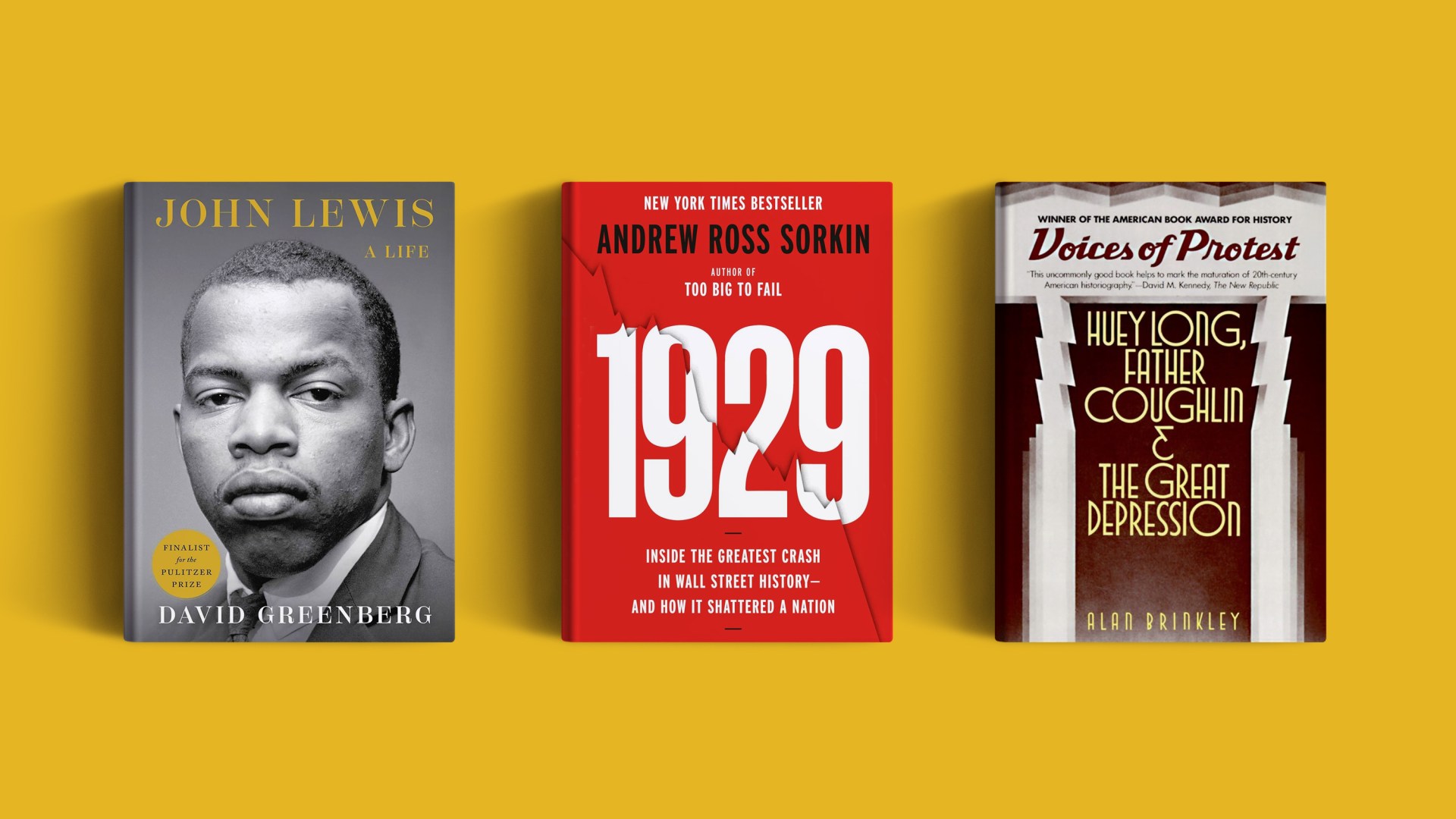
Three history books to read this month.

Three books.
Christianity Today December 5, 2025
Illustration by Christianity Today.

This piece was adapted from CT’s books newsletter. Subscribe here.

Andrew Ross Sorkin, 1929: Inside the Greatest Crash in Wall Street History—and How It Shattered a Nation (Viking, 2025)

In his 1933 inaugural address, Franklin Roosevelt explained why saving the economy required a heavy dose of federal intervention:

The money changers have fled from their high seats in the temple of our civilization. We may now restore that temple to the ancient truths. The measure of the restoration lies in the extent to which we apply social values more noble than mere monetary profit.

Andrew Sorkin, the author of 1929, agrees with Roosevelt. The crash could have been avoided if only humility and a sense of limits were able to overcome the darker sides of human nature: greed, ambition, and an addiction to optimistic thinking.

At the center of Sorkin’s story are the speculators: Charles Mitchell, Thomas Lamont, William Durant, J. P. Morgan, Jr., Jesse Livermore, and others. They spread the “gospel of economic opportunity” and tried to stop all efforts from the Federal Reserve to cool down the markets. By 1930, 8 million people were out of work. One thousand three hundred banks had failed. President Herbert Hoover called it a depression.

Sorkin rejects the idea, still bandied about in high school classes today, that Hoover caused the Great Depression. He argues that such an interpretation is the legacy of a well-orchestrated Democratic smear campaign in the years leading up to the 1932 presidential election.

Sorkin is such a compelling storyteller that readers with little knowledge of economic or financial history will enjoy and learn from this book.

David Greenberg, John Lewis: A Life (Simon & Schuster, 2024)

John Lewis loved to preach. As an eight-year-old boy growing up in rural Alabama, he preached to chickens. In his definitive biography of Lewis, historian David Greenberg chronicles how Lewis fulfilled his spiritual calling not in churches but at Nashville lunch counters, Greyhound bus stations, the Edmund Pettus Bridge, and ultimately the House of Representatives. “Race was closely tied to my decision to become a minister,” Lewis once said. “I wanted to use the emotional energy of the Black church to end segregation and gain freedom for Black people.”

Lewis’s life, as Greenberg tells it, is a story of dogged persistence in the fulfillment of this calling. Lewis was put on this earth to do one thing—end racial injustice through nonviolent protest. He never wavered from that task, even when this vocation led to physical beatings that brought him to the brink of death.

The story of Lewis’s early years will be familiar to those who have studied the Civil Rights Movement. Greenberg covers it well. But his biography also takes us beyond Selma and the March on Washington. He tells the story of Lewis’s career in politics, his relationship with American presidents, and his marriage to Lillian Lewis.

John Lewis lived a life defined by hope, justice, peace, and love. His story reminds us that amid all of today’s polarization and political strife, there is a better way. Greenberg’s biography is a good starting point for those interested in walking this path.

Alan Brinkley, Voices of Protest: Huey Long, Father Coughlin & the Great Depression (Vintage Books, 1983)

Populism rules today in American politics. Democratic socialists like Bernie Sanders gain political traction by reminding people that most of the nation’s wealth is concentrated in 1 percent of the population. Donald Trump has captured a significant portion of the white working class with promises of manufacturing jobs and nostalgic longings for a Christian nation.

For those who want to think historically about 21st-century American populism, Alan Brinkley’s 1983 book Voices of Protest is worth revisiting. Brinkley focuses on Louisiana governor and US senator Huey Long and popular Catholic radio preacher Charles Coughlin. Both men gained national attention in the 1930s as critics—from the left—of Franklin Delano Roosevelt’s New Deal.

Long was known for his bombastic personality, mesmerizing speeches, attacks on big businessmen like John D. Rockefeller, and proposal to redistribute the nation’s wealth to benefit ordinary working people. Coughlin believed that Catholic social teaching required him to use his radio platform to promote the expansion of American currency through the monetization of silver.

Long and Coughlin were both showmen with large audiences. Brinkley argues that their activism was informed by a distinct populist ideology. They appealed to middle-class Americans reeling from sudden economic change and concerned about the concentration of wealth and power in fewer hands. Brinkley’s book offers a window into the appeal, weaknesses, and danger of American populism and, in the process, provides insight into our current moment.

John Fea is visiting fellow in history at The Lumen Center in Madison, Wisconsin, and distinguished professor of history at Messiah University in Mechanicsburg, Pennsylvania.

History

‘A Shot Came Out of Nowhere’

CT reported on the assassination of a president, a Supreme Court ban on Bible-reading in schools, and Martin Luther King Jr.’s “I Have a Dream” speech.

An image of President Kennedy.
Christianity Today December 5, 2025
Illustration by Christianity Today / Source Images: Getty

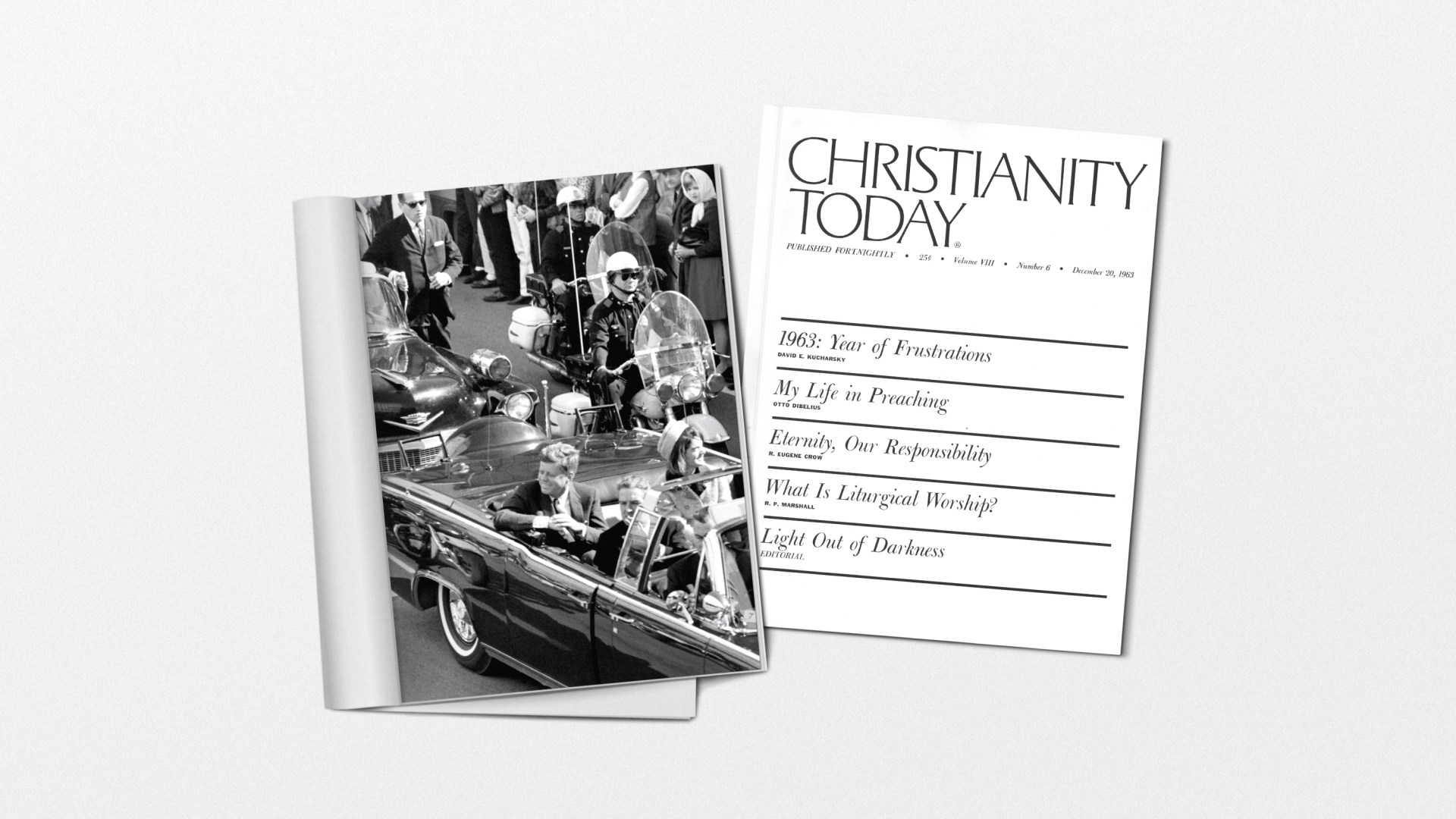
CT in 1963 covered one of American history’s tumultuous years. When President John F. Kennedy was assassinated in Dallas, editors in the magazine’s Washington, DC, office collected religious leaders’ comments on “The Death of the President” and tried to capture the feeling of the moment:

A shot came out of nowhere and changed a thousand things around the world. An unknown assassin brought sudden and tragic end to the life of a world-renowned figure; John F. Kennedy was dead by the hand of an evil man whom nobody knew, and who will be known only as long as his infamy is remembered. …

In one tragic moment, an unexpected event changed the plans and hopes of many people and of a nation. Strategies devised with an eye to next year’s presidential elections were suddenly obsolete. The whole civil rights issue at once took on new but unknown dimensions. … So little, one shot, by one unknown man, changed so much. …

During the 35 minutes that the fallen President lay dying in a Dallas hospital, three men gathered dead leaves and leisurely loaded them into a truck that stood on the circular drive that fronts the White House. The whirring blades of a helicopter could be seen above the grass in the back of what was the Kennedy home. Here of all places everything looked normal on this warm, gray, November day.

But suddenly a flag was quietly lowered to half mast above the white mansion. Others on surrounding public buildings were similarly lowered, and the eye received the message that the mind found impossible to believe. The President was dead.

Authorities identified the assassin as Lee Harvey Oswald—a lone gunman, they said, but one whose sketchy past, shadowy meetings with underworld figures, and sudden death in police custody would fuel decades of conspiracy theories. CT sent a correspondent to interview the accused killer’s mother.

Mrs. Marguerite Oswald … tried under difficult circumstances to provide religious training for her three sons. … The infant Lee was baptized in a Missouri Synod Lutheran church in New Orleans. He was never confirmed.

Mrs. Oswald attempted to stay at home and rear her family but eventually was forced to go to work. She paid a maid to care for the children for a time, but when World War II came, she had to make other arrangements. The older two sons she placed in a Lutheran institution which accepted children having only one parent. She said she was expected to pay whatever circumstances would permit.

But Lee was too young to enter the church home. Mrs. Oswald said she had no choice but to leave him to the care of a sister, who also lived in New Orleans, and to hire other attendants for him whenever possible. … 

“I know that my son was not an atheist,” Mrs. Oswald declared.

Before that fateful day, the biggest political story of the year was the Supreme Court decision in Abington School District v. Schempp. The court decided that teachers reading Scripture to students was a violation of the First Amendment. CT reported from the court: 

Justice Tom C. Clark had been drawling over a zig-zag sewing machine patent when, with scarcely a pause, he shifted to cases 119 and 142. Clark talked for another 25 minutes. His voice trailed off as he finally announced the court’s decision against a 150-year-old American tradition of prayer and Bible reading in the public schoolroom. The decision was regarded in some quarters as imposing a restriction upon the religious practices of more Americans than any prior government action.

The court’s decision on June 17 was 8 to 1, with Justice Potter Stewart, an Episcopalian, voicing the lone dissent, just as he did in 1962 when the court struck down the 22-word interfaith prayer approved by the New York Board of Regents for use in the public schools of that state. … The justices differ sharply on why required public school devotions are unconstitutional. Clark’s majority opinion was shared only by Chief Justice Earl Warren, Justice Hugo L. Black, and Justice Byron White.

Clark’s argument against devotional exercises in the public schools rested largely on the contention that the government must maintain an attitude of neutrality in religious matters. He said the test may be stated as follows: “What are the purpose and the primary effect of the enactment? If either is the advancement or inhibition of religion then the enactment exceeds the scope of legislative power as circumscribed by the Constitution.”

CT followed developments in the Civil Rights Movement in 1963, with an eye toward shifting religious positions and the impact on churches

Anti-segregation campaign in Birmingham, Alabama, included a series of attempts by Negroes to worship in all-white churches. Several of the churches welcomed the demonstrators, while others turned them away. … Mercer University (Southern Baptist) trustees voted 13 to 5—with 3 abstentions—to enroll Negroes on the Macon, Georgia, campus.

Martin Luther King Jr. led the March on Washington in August. Four CT editors joined the throngs gathering on the National Mall to see if the “religious element” of the movement offered a “genuine spiritual under-girding” or if it was “a mere form of godliness.” They reported back

The day was mostly bright, with temperatures in the eighties. Washington’s notorious humidity was somewhat offset by a fresh breeze and scattered clouds in the afternoon. 

Highlighting the afternoon ceremony was the great oratory of King, who cried again and again, “I have a dream.” But as if to prove that people doze despite the best of preachers, hundreds stretched out on the grass and slept most of the afternoon away. Another temptation was the cool water of the Reflecting Pool, and other hundreds kicked off their shoes and stockings to dangle their feet over the edge. At least two persons fell into the shallow pool.

A. Philip Randolph, 74-year-old elder statesman of civil rights in America and the son of a clergyman, was among several speakers who appealed to religious precedent. Randolph, program emcee and chairman of the national march committee, reminded the vast throng of more than 200,000 that “We are leading the multitudes in the streets just as … Jesus Christ led the multitudes in the streets.”

NAACP leader Roy Wilkins, seeking to perpetuate the fervor of the day, said:

“You got religion here today. Don’t back-slide tomorrow.”

[Dr. Eugene Carson Blake, stated clerk of the United Presbyterian Church in the USA] declared that Negroes “have mirrored the suffering of Jesus Christ.” He quoted Romans 12:1 as a helicopter whirred high overhead.

CT founding editor L. Nelson Bell continued to oppose civil rights laws. He said there was no biblical justification for segregation, but his main concern was that “voices of moderation on both sides of the issue are being drowned out by the louder voices of ‘rights’ without reference to the realities of the situation.” Other evangelicals called for white Christians to join the Civil Rights Movement—or forfeit any claim to moral authority in America.  

Evangelical leadership completely missed the point of the March on Washington and was not represented. … The evangelicals should do some soul-searching to discover how they got themselves into such a predicament. A biblical sense of the importance of men’s souls should have brought them close to the Negro. Also, the Negro churches are very conservative in their theology. Evangelicals pride themselves on affirming the oneness of man in their support of foreign missions. But conservative American churches and churchmen have done little in meeting the Negro problem. The little that has been done has been rather patronizing, and this the Negro considers an insult. 

Evangelicals have often allied themselves with the conservative social and political forces in the United States, especially in the South. … Christianity at its inception and at certain great points in its history has been extremely radical. The usual conservative exaltation of property rights as the basic right sounds strange from those who profess to uphold the spiritual and downgrade the material. … 

The members of evangelical churches need to learn the disciplines of the love of Christ.

CT also called readers to action on another current issue: cigarettes. The magazine urged Christians to read a recent report on tobacco and to stop smoking.  

The Consumers Union Report on Smoking and the Public Interest approaches the problem on a medical and social basis without direct reference to its moral aspect, although ethical implications inevitably shine through its discussion of the industry’s deliberate blindness to evidence and the mendacity of its advertising. But the Christian community is in a different position. It can no more look at the cigarette-lung cancer problem from a morally neutral point of view than it can be oblivious of the moral implications of the daily slaughter on the highways and the human wreckage through alcoholism. … 

Habitual cigarette smoking is no longer for the Christian a mere take-it-or-leave-it matter. It has moved from an optional indulgence to a question of the stewardship of the body. … On the scriptural ground that the God who gives us our bodies requires accountability for their use, none of us has the right to contract any habit that has been shown to lead to grave illness and premature death.

Amid the year’s crises and conflict, CT redesigned the magazine, hiring the artist who would go on to develop the iconic ad campaign, “I’d like to buy the world a Coke.” The redesign was announced with a note: 

Christianity Today’s contemporary, clean look reflects tradition and at the same time maintains dignity and respect for the subject matter of conservative religious publication. To achieve it, New York artist Harvey Gabor made use of areas of white space, contrasting with text areas. … “There is always the same seeming paradox: to be contemporary and simple, but not sterile; to be modern, but with a touch of classicism. … Perhaps the most intangible quality I sought for Christianity Today was a style and momentum all its own.”

An English professor argued that Christians could read contemporary literature—even if the literature is itself immoral

Salinger’s Catcher in the Rye may be taken to illustrate these distinctions. Because it contains offensive language, instances of censurable behavior, and a number of reprehensible ideas, many readers would label it an immoral book. But in doing that they may have overlooked the most significant scene in the novel, the one which provided its title, in which Holden explains to Phoebe his vision of standing in a rye field full of small children to guard them from plunging over a cliff. This is his way of making sense out of the terrifyingly chaotic world which envelops him, a world empty of values but full of phonies, and if we accept the idea that literature has some basic part to play in the human search for order, then the worth of this one scene ought to outweigh what we may regard as the worthlessness of the other elements. Catcher in the Rye is thus seen to be a mixed product, one requiring careful thought if it is to be evaluated sensibly. … 

At the end of the year, CT reported a widespread sense of failure and helplessness in American culture and American churches.

Ministers and laymen alike felt a sense of defeat.

For clergymen, a chief source of frustration was what to do with the latest variety in a historic strain of hearers-only Christians. The 1963 crop of professing believers whose lives reflect so little of New Testament teaching drew many a pastor into the lonely garden of perplexity.

One candid young minister came out of an experiment aimed at more meaningful Christianity with these words: “It’s been a flop. So far I’ve managed to reduce the congregation from 400 to about 50.”

He had tried modern music, jazz, dialogues, discussions, and plays. Next on the list was a plan to convert the church into an apartment house with the lobby as a chapel.

The heresy of universalism, implicit or overt, may be held responsible for lay indifference in some quarters. But what about lethargy in evangelical ranks?

The growth rate of most evangelical enterprises has leveled off markedly in recent years, and in 1963 many such efforts were pushing to maintain the status quo. …

“It’s like trying to climb Niagara Falls to meet these needs,” one evangelical leader said publicly.

Culture

The 12 Neglected Movies of Christmas

The quest for a perfect fruitcake, a petty larcenist, and a sly Scottish dramedy should all grace your small screen this season.

An old TV covered in Christmas decorations.
Christianity Today December 4, 2025
Illustration by Elizabeth Kaye / Source Images: Unsplash, Pexels

Christmas movies are hard to define yet easy to recognize. If you were to draw a Venn diagram of the genre, with one circle labeled “takes place during the holidays” and the other “themes of hope and redemption,” you might find Miracle on 34th Street at the very center. It’s a Wonderful Life would also live in the overlapping area, along with A Christmas Story—which still plays for 24 consecutive hours on TBS and TNT every year—and perhaps a Dickens adaptation or two.

Discovering a new classic is a tall order. (If it’s already a classic, why would it need to be discovered?) But if you’re willing to stretch the definition of “Christmas movie” just a little bit, possibilities begin to unfold. Keep the holiday milieu and the redemptive theme, but allow for a little melancholy amid the magic, and you’ve got plenty of alternatives to the familiar, comforting formula of a Hallmark special or a Christmas pageant.

To that end, here are 12 movies just outside the canon that beg for inclusion in this year’s holiday watch list. They vary enough in tone and subject to appeal to almost every mood and whim. Though none of them directly dramatize the birth of Christ, they are yoked together by a common yearning for salvation.

Remember the Night (1939)

When her trial is postponed until after the holidays, a petty larcenist (Barbara Stanwyck) spends Christmas with the lawyer (Fred MacMurray) assigned to prosecute her. The setup sounds perfectly contrived, but screenwriter Preston Sturges spins it into a scenario with surprising emotional punch. The movie’s beating heart is an extended visit to a family farm in which the woman confronts everything that’s been missing from her life. The irresistible warmth of this passage, which includes a rendition of a parlor song crooned by Sterling Holloway (the voice of Winnie the Pooh), could melt the hardest ice. | Watch on Prime Video.

The Man Who Came to Dinner (1941)

Hospitality is a key theme among Christmas movies for its connection to the Nativity story. If the innkeeper hadn’t offered Mary and Joseph the stable, where would our Savior have been born? This virtue is put to the test in this spirited farce, in which a self-centered, razor-tongued radio celebrity (memorably played by Monty Woolley, repeating his Broadway role) is forced to spend Christmas in the home of a Midwestern family after sustaining a hip injury. Hilarity ensues, romance blossoms, and justice prevails in an ironic ending that forces everybody to learn their lesson. | Watch on Tubi.

Christmas in Connecticut (1945)

A lifestyle columnist (Barbara Stanwyck again) who has constructed a persona as the ideal housewife despite knowing next to nothing about keeping house must fake her way through a Christmas dinner when a GI (Dennis Morgan) visits her house. (The premise could easily work today if you swapped columnist for influencer.) What makes the film rise above its cute conceit is its poignant but understated glimpse into American life during World War II, with its unspoken longing for comfort and connection. | Watch on Prime Video.

Come to the Stable (1949)

Though it may be a stretch to label this one a Christmas movie, this postwar drama about two French nuns who enlist the residents of a small New England town to build a children’s hospital deserves closer consideration. The film begins magically with the two sisters (Loretta Young and Celeste Holm) emerging from the snowy plains on a moonlit night and contains enough peace and good will toward men to fill a dozen pictures. Also, the New England town is called Bethlehem. | Watch on Prime Video.

The Holly and the Ivy (1952)

Family reunions are an unavoidable motif of the holiday genre, but few movies capture the complex feelings that can attend such gatherings. This finely wrought British drama, in which an aging clergyman (Ralph Richardson) contends with a series of revelations concerning his three grown children during a Christmas visit, demonstrates the need for repentance as well as forgiveness. It uses the titular folk carol to demonstrate the power of the holiday to cut as well as to heal: “The holly bears a prickle, as sharp as any thorn …” | Watch on Prime Video.

Shower of Stars: “A Christmas Carol” (1954)

No Dickens adaptation can hold a candle to the 1951 Scrooge starring Alastair Sim (sorry, Kermit!) but here’s one worth rescuing from obscurity: an hourlong episode of the variety series Shower of Stars starring Fredric March as Scrooge and Basil Rathbone as Marley’s ghost. Those unfamiliar with the glory of live television may balk at the black-and-white kinescope presentation, but the drama survives intact. Its greatest strength is its music: a score by the great Bernard Herrmann and lyrics by Maxwell Anderson, who also wrote the teleplay. The result is a production whose soundtrack can be enjoyed independently of the visuals. | Watch on Prime Video.

Pocketful of Miracles (1961)

While it doesn’t match the emotional wonder of the original Lady for a Day, Frank Capra’s color remake is far more Christmasy. An elderly fruit peddler (Bette Davis) enlists the help of a local gangster (Glenn Ford) to transform her into an elegant society lady so her daughter won’t be ashamed of her when she visits with her rich fiancé. It’s a rare Hollywood film in which duplicity is presented as a virtue, and while it falls short of the magisterial It’s a Wonderful Life (Capra’s masterpiece), it has gained a small cult following. | Watch on Prime Video and Pluto.

ABC Stage 67: “A Christmas Memory” (1966)

Truman Capote narrates this adaptation of his own novella, a nostalgic, autobiographical account of his childhood relationship with a distant and eccentric relative. Most of the narrative revolves around the quest to make the perfect fruitcake, but there are emotional depths to the deceptively simple story. There is a remake in the 1990s starring Patty Duke, but the one with Geraldine Page, who won an Emmy, is the true classic. | Watch on YouTube.

Comfort and Joy (1984)

This sly Scottish dramedy, written and directed by the inimitable Bill Forsyth, is an offbeat holiday treat that connoisseurs seem to be keeping to themselves. Set in the days leading up to Christmas, the story involves a Glasgow radio deejay (Bill Paterson) who finds himself caught in the middle of a turf war between competing ice cream franchises. The themes here are reconciliation and renewal; the comedy is understated but richly quirky. | Watch on Hoopla.

The Dead (1987)

A Christmas party in Dublin at the turn of the 20th century is the backdrop for John Huston’s final film, a brilliant adaptation of James Joyce’s celebrated short story. The dinner gathering is rendered in warm, dusky tones and garlanded with a variety of sharply etched characterizations by some of Ireland’s finest actors. The film gracefully transitions into a profound meditation on the transience of life and the precious gift of memory. It may prove a bit melancholy for some tastes, but the rewards are ample. | Watch on Prime Video and Tubi.

Joyeux Noel (2005)

The 1914 Christmas truce is the subject of this Oscar-nominated French drama in which French, British, and German soldiers spontaneously lay down their arms to exchange carols instead of artillery shells. The fact-based story is a moving reminder that Christmas is about the promise of peace on earth, inaugurated by the arrival of Jesus. When Diane Kruger sings to her lover in the trenches, the voice belongs to French soprano Natalie Dessay, and the result is transcendent. | Watch on Netflix, Prime Video, and Tubi.

Christmas, Again (2014)

This low-key, low-budget, low-stakes indie drama captures the isolation that many people feel during the holidays. The center of attention is a lonely 30-something (Kentucker Audley) in New York City whose seasonal job as a Christmas tree retailer keeps him teetering on the edge of a breakdown. Modest and observational, the film unfolds with a series of encounters with a variety of colorful shoppers, one of which becomes a catalyst for renewal. The pleasure of this virtually plotless character study is in waiting to see the needle move—ever so slightly—away from despair and toward hope. | Watch on Prime Video.

Nathaniel Bell manages the internship program and teaches film history for the Snyder School of Cinema & Media Arts at Biola University. He lives in Whittier, California, with his wife and three sons.

News

Amid Peace Talks, Russian Drone Damages Christian School in Kyiv

Ukrainians are wary of any plan that gives Moscow its “Christmas wish list.”

Damages to Kyiv Christian Academy from a Russian drone strike.

Damages to Kyiv Christian Academy from a Russian drone strike.

Christianity Today December 4, 2025
Image courtesy of Eric Moore

Eric Moore’s windows rattled as Ukraine’s air defense systems intercepted hundreds of incoming drones and missiles early Saturday. The South Dakota native and director of Kyiv Christian Academy spent three hours huddled in the stairwell of his townhouse with his wife and two sons, ages 7 and 9, during the most intense period of the attack.

Around 6 a.m., near the end of the nearly 10-hour bombardment, the school’s night security guard called. A drone had struck the grounds, blowing out 75 windows and leaving a crater 6 feet wide and 4 feet deep in the front lawn. The guard was patrolling the back of the property and escaped injury.

The K-12 school serves 47 students and shares its building with a private elementary school of 140 children. Moore surveyed the damage when it was safe to leave his home a few hours later.

“People were standing around, taking in the scene,” he told Christianity Today. “A dodgeball tournament had been scheduled for that morning by [the Christian group] Athletes in Action.”

The attack on the capital city left 3 dead and 29 injured while cutting power to the western half of the city. It calls into question the Kremlin’s commitment to ongoing peace talks.

“While everyone is discussing points of peace plans, Russia continues to pursue its ‘war plan’ of two points: to kill and destroy,” Ukraine’s foreign minister, Andrii Sybiha, wrote on X.

After months of failed negotiations, Washington launched a new wave of diplomacy that began with a controversial 28-point peace plan, leaked by Axios in mid-November. The proposal made major concessions to Russia, including requiring Ukraine to cede land beyond the roughly 20 percent Russia currently occupies; shrink its army from around 800,000 to 600,000; and abandon all efforts to join NATO.

Ukraine and its European allies sharply criticized the plan, warning that insufficient security guarantees will invite the Kremlin to rearm and launch another invasion in the near future.

On Sunday, Ukrainian officials met in Florida to revise the plan with Secretary of State Marco Rubio and White House special envoys Steve Witkoff and Jared Kushner. The next day, Witkoff and Kushner flew to Moscow for talks with Russian president Vladimir Putin.

Ukrainian president Volodymyr Zelensky said the revised plan “looks better,” though Putin signaled his displeasure and blamed Europe for amendments he called “absolutely unacceptable.” He warned that Russia is ready to go to war with European states if attacked. 

According to a Wall Street Journal report, the revised draft increases the cap on Ukraine’s military personnel to its current strength, defers land negotiations to “discussion between the leaders of the US and Ukraine,” and softens the language on NATO membership.

“Being tired doesn’t mean we’re ready to give up,” said Maia Mikhaluk, a pastor’s wife who lives in Kyiv and has helped plant churches across Ukraine for the past 18 years. She believes the original plan handed the Kremlin its “Christmas wish list” and provided “nothing that is good for Ukraine.”

If Moscow’s land grabs are legitimized or expanded, many of the Mikhaluks’ 27 church plants across the country will be in danger, she noted. “We have pastors in our network who would have to flee from the areas occupied by Russians, because if they stay, they’ll be slaughtered,” she said.

According to a Mission Eurasia report, Russian soldiers have killed more than a dozen priests and pastors in Ukraine since the war began. The organization’s president, Sergey Rakhuba, told CT that the Kremlin’s seizure of churches and detention of pastors in Russia-occupied regions should serve as a warning for what could happen nationwide if Ukraine’s security guarantees are sidelined in negotiations.

“This will happen with all of Ukraine if you give Putin a chance,” Rakhuba said. “He’s not going to stop with this so-called peace deal.”

Other unresolved issues in the framework include the future of Ukrainian elections and the fate of nearly 20,000 Ukrainian children that Russia abducted and subjected to indoctrination.

Despite the uncertainty and near-daily attacks on civilians, churches remain full and Christians continue serving with resilience, Rakhuba said. “I have not seen such a powerful movement of God in the countries of the former Soviet Union in my missional memory,” he added.

Last month, Mission Eurasia hosted its third annual volunteer forum, bringing together hundreds of Christians to share best practices and resources. The organization also provided wood-burning stoves for volunteers to deliver to Ukrainians whose homes were damaged by the ongoing war.

Ministries face new obstacles as well. Mikhaluk said Russian drones have become more accurate and deadly in recent months and are targeting humanitarian aid vans. Her church halted its aid deliveries to Kherson and Donetsk due to the increased risk. Some Ukrainian cities have even draped large fishing nets over their streets to trap drones aimed at vehicles and pedestrians.

Still, ministry work continues. Moore spent the weekend with more than 100 volunteers cleaning up glass and installing temporary windows at Kyiv Christian Academy. Classes resumed on Tuesday, and the school launched a campaign to raise money for new windows.

Mission Eurasia volunteers continue delivering food parcels to families in need and sharing messages of hope to marginalized communities. The group has delivered more than 300,000 food packages this year.

Mikhaluk’s church, a member of the Association of Missionary 

Evangelical Churches of Ukraine, has redirected its frontline aid efforts to internally displaced people around Kyiv who need firewood, blankets, and other necessities as temperatures drop. She said Moscow has intensified its attacks on the country’s energy infrastructure, and many fear this winter could be the most difficult since Moscow’s full-scale invasion began nearly four years ago.

The outcome of this week’s peace talks remains uncertain, but Mikhaluk said she knows where her hope lies. “God has always been very close and very real in those dark times,” Mikhaluk said. “When you’re completely stripped of whatever false securities you had—that, I think, is when we’re closest with God.”

Pastors

Make Faith Plausible Again

A peculiar hospitality can awaken faith in our secular contexts.

CT Pastors December 3, 2025
Maskot / Getty

“The sons of Issachar … understood the times and knew what Israel should do.”
—1 Chronicles 12:32 (NASB)

The church today faces a profound interpretive challenge. Nearly every denomination is shrinking, and in the past 25 years about 40 million American adults have left the church. The impulse is to react—to panic, to fix, to do something—but first we must understand the nature of the problem. Everyone knows we live in a secular age; far fewer understand what that actually means.

Understanding Our Moment

Philosopher Charles Taylor helps us name what has changed. He distinguishes three ways the word secular can be used. Secular1 names the distinction between sacred and secular spheres. Clergy attend to sacred vocations, while butchers, bakers, and candlestick makers pursue secular, or ordinary, work. Secular2 describes a society in which fewer people participate in religious practices such as reading Scripture or attending worship. Secular3, however, marks a deeper shift: a world where the assumptions that once made belief seem natural have changed so profoundly that faith in God has become difficult even to imagine.

We now live in that secular3 world—what Taylor calls an “immanent frame,” where belief and unbelief alike are lived as contested possibilities. The church makes a serious mistake when it assumes a secular2 context and responds to declines with marketing campaigns or engagement strategies. In a secular3 world, such efforts can make things worse, reinforcing the sense that Christianity is just another consumer option. The church no longer operates within a shared “background of belief,” where evangelism means reawakening lapsed faith. The challenge now is deeper; the plausibility of Christian faith itself has eroded.

From Argument to Presence

In a world where faith feels implausible, persuasion and presence must work together. This doesn’t mean abandoning proclamation, but it takes recognizing that words require a lived context that makes them believable. The gospel becomes most compelling when its truth is joined to a community that makes it visible and credible.

This requires a kind of faithful imagination—the ability to inhabit spaces where the presence of God can again be sensed and not merely asserted. We need practices that help the church move from anxiety about decline to confidence in patient, visible faithfulness within public life.

The Forecourt: A Biblical Image of Hospitality

One such practice comes from Jim Davis and Michael Graham’s recent book The Great Dechurching. Drawing on the imagery of the Old Testament temple in Jerusalem, Davis and Graham note that while God’s presence dwelt in the temple where Israel gathered for worship, the temple also had a forecourt—an outer area where anyone could draw near, listen, and experience something of God’s reality. The forecourt was a place where cynics and saints mingled—where the curious could explore and the convinced were called to embody the patient welcome of God.

Davis and Graham suggests that the church today should create analogous spaces of hospitality— “forecourt events.” These are gatherings that welcome neighbors to come near without demanding premature belief: moments where friendship, beauty, and joy embody the reality of God’s kingdom in the midst of ordinary life.

Forecourt Events in Practice

At my church in San Luis Obispo, California, we are learning to use forecourt events as a way of making faith imaginable again in a secular3 world. Our Christmas party at a downtown brewery, our children’s Easter egg hunt, the Cinema for Cynics and Saints film series, and the annual SLO Forum on Faith and Culture create porous boundaries between church and city. These are not events for the sake of merely our congregation, nor are they stunts to get unbelievers in the door. They are signs of transcendence within an immanent world—simple rehearsals of the kingdom that is already breaking into our midst.

When framed this way, the measure of success changes. The goal is not attendance or conversion statistics but presence. Our congregation is learning that presence is the crucial first step. When we show up, and when we invite friends to join us, we make the gospel visible. Our warmth, curiosity, and conversation make it believable.

Presence is the first act of witness. Faithful witness joins clear words with a faithful presence that gives those words weight and credibility. The church’s task in a secular3 world is to become the kind of community whose very life gives credibility to its message.

Ordinary Acts, Eschatological Echoes

Every act of hospitality is, in this sense, an eschatological rehearsal—a glimpse of the day when God will dwell with his people and make all things new. Forecourt events invite both believers and skeptics to inhabit, if only for a moment, that coming reality already breaking into our midst.

This kind of presence will not reverse statistical decline overnight, but it does something more significant: It trains the church to live truthfully within its time. It teaches us to resist panic and to rediscover confidence in the slow, embodied work of grace.

For Pastors and Ministry Leaders

As you approach the holiday season, consider how your church’s rhythms might serve as forecourt spaces in your own community.

  • Can events already on your calendar—concerts, festivals, neighborhood gatherings—be intentionally shaped to invite nearness without pressure?
  • Could your Christmas Eve service move away from performance and toward public invitation, designed with outsiders in mind?
  • Might a church Christmas party become not only a celebration for your congregation but a shared feast for neighbors who rarely experience Christian joy?
  • In your personal and family life, might hospitality—meals, open houses, or informal gatherings—help build a local plausibility structure around the gospel?

To understand the times and know what to do is to recognize that mission today begins not with argument but with presence—with forecourt spaces where God’s welcome can again be seen, heard, and felt.

Bryce Hales is the pastor at Trinity Presbyterian Church, San Luis Obispo. He is the author of A Fruitful Life and cohost of The Cartographers podcast.

Theology

Russell Moore’s Favorite Books of 2025

Columnist

CT’s editor at-large recommends a handful of biographies—from Augustine to Robert Frost—along with sci-fi, Stephen King, social media, and more.

An image of books.
Christianity Today December 3, 2025
Illustration by Christianity Today / Source Images: Unsplash

This piece was adapted from Russell Moore’s newsletter. Subscribe here.

As soon as I hear the sound system play Mariah Carey’s “All I Want for Christmas Is You,” I know it’s time to start compiling my list of my favorite books of the year. That happens, as you know, the day after Halloween. Below are books that resonated with me in some way or another in this crazy year. Here they are in alphabetical order by author.

Leslie Baynes, Between Interpretation and Imagination: C. S. Lewis and the Bible (Eerdmans)

“Even as a child who knew almost nothing about the Bible, I recognized the major biblical references right away, and as I studied Scripture and reread the Chronicles [of Narnia], I delighted in finding richer meaning in the books every time I picked them up,” the author of this book writes. “Like Edmund’s sister Lucy in Prince Caspian, I saw Aslan get bigger every time I returned to Narnia.”

Leslie Baynes, a former scholar in residence at The Kilns in Oxford, England, explores how C. S. Lewis interacted with current biblical scholarship and how he related his biblical depiction to his literary imagination. Even at points where I differed with the author, this was an invigorating read. That’s particularly true of the last half, where she explores how the Bible—especially the Gospel of John—shows up in the Chronicles of Narnia. She notes that biblical references become more explicit when Aslan is present.

Wendell Berry, Marce Catlett: The Force of a Story (Counterpoint)

Since I’ve written a full-length review essay of this book for Christianity Today—and since regular readers know how much Berry has shaped my imagination and thought—I will not replow that field. This is a beautiful book, a fitting endpoint, if it is, for the Port William community. The book ends with these words:

As he has come to know, Andy’s grief for the things that are lost affirms his love for them, as even the loss of them affirms the bounty by which they once existed, for in this world grief goes hand in hand with gratitude.

“Better than any argument is to rise at dawn / and pick dew-wet red berries in a cup,” Berry once wrote. This book is like that cup—sweet, with just the right amount of bitter mixed in, which makes the sweetness even better. This book is not an argument. It’s a standing ground—and a good one.

Nicholas Carr, Superbloom: How Technologies of Connection Tear Us Apart (Norton)

Nicholas Carr warned us, years before it was an everyday topic of conversation, what digital life would do to our attention spans. This book looks at what social media technologies in particular have done to us, why, and what we can do about it. This is not abstract tech sociology. There are some clearly identified villains: The tech bros about whom Carr writes care more for statistics than people.

Carr identifies why social media led us to this crisis of rage, resentment, and unseriousness. Social media technologies function based on the fact that human beings need to be seen and acknowledged. We can do that quietly in person, but on social media, we must be loud. Plus, he shows, our familiarity with one another leads not to more connection but to less. Envy and anger, he notes, are fueled by proximity. The “technologies of connection” give us these dark aspects of nearness without communion.

The book explains why most people look at their own images repeatedly when on a Zoom call, and it’s not, as I would have thought, narcissism. It’s that human beings are constantly alert to how others view us. The person looking at that image is wondering how he or she appears before the judgment seat of everybody else. In an always-online world, that has implications.

And once again, Carr warns about what’s coming next, or rather, what’s already here but mostly unnoticed: the attempt to replace reality itself with an algorithm-created world that lets a person think he or she created it. That much of the church is not even thinking about this is itself a crisis—and one for which we’ll pay for generations.

Carr writes,

Maybe salvation, if that’s not too strong a word, lies in personal, willful acts of excommunication—the taking up of positions, first as individuals and then, perhaps, together, not outside of society but at society’s margin, not beyond the reach of the informational flow but beyond the reach of its liquefying force. … If you don’t live by your own code, you’ll live by another’s.

You can listen to Carr and me talk about these topics—and many more—here.

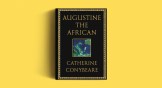
Catherine Conybeare, Augustine the African (Norton)

Augustine is kind of like John F. Kennedy in one way (and one way only): People love to write about his life, even as we might ask ourselves, “What else is there to say?” I’ve read almost all these books about Augustine and usually conclude that it’s impossible to improve on Peter Brown’s epic biography, Augustine of Hippo. But this book is different.

Conybeare, a respected classicist, concentrates on one aspect of Augustine that is usually left out of any consideration of his life or work: He was African. She then shows why this matters. It’s not a matter of 21st-century identity politics but a matter of understanding the world that shaped one who would shape the centuries to come. She traces the uniquely African context of languages, of relationship to Rome, of the particular crises and fragmentations of the church.

She does all this without turning Augustine into a mere receptacle of the political or cultural or theological forces around him. There is only one Augustine, and she reminds readers of this in the quotations she chooses from him. Here’s one, about his education: “People were more displeased if one pronounced ‘human’ without the ‘h’ than if one felt hatred for a human being.”

Stephen King and Maurice Sendak, Hansel and Gretel (HarperCollins)

This is, I’m quite sure, the only Stephen King story you will ever read that ends with these words: “They lived happily ever after.” King was asked to reimagine the Brothers Grimm story, using artwork done long ago by the now-deceased author and illustrator of Where the Wild Things Are. The result is a beautifully illustrated book that keeps intact the horror of a story about really horrible things: abandonment, lostness, poverty, predatory adults.

But as Sendak knew, the way to overcome the “wild things” is not to pretend they’re not there; it’s to stare them straight in the eyes until they make you their king.

In introducing the book, King writes, “Reader, I hope you will enjoy this poor effort at breathing a bit of life into an old story, and I know you will enjoy Maurice Sendak’s art, which is sunny on top and dark inside. Or vice versa.”

Ian McEwan, What We Can Know: A Novel (Knopf)

When I started reading this novel, I thought I knew what it was. McEwan writes a kind of science fiction—a couple of researchers working a hundred years from now, after nuclear wars and artificial intelligence and climate disaster have wiped away civilization almost to the nub, with the possible exception of the one remaining superpower, Nigeria. Two researchers in that future archipelago, which is what remains of the United Kingdom, are looking for a long-lost document rumored to be the pinnacle of 21st-century genius—“A Corona for Vivien,” written by a poet for his wife on her 54th birthday.

The story flashes back and forth between our recent past (2014) and 22nd-century Oxford. The narrative turns out to be a hand guiding the reader into a haunted house; all the while, the reader barely notices how the lights are dimming. At one point, the book seemed to have shifted from a sophisticated literary take on Blade Runner into the world of insufferably condescending and morally repulsive characters from a John Updike novel (Rabbit Runner?). And then I found that this too was misdirection.

I hardly know how to describe the story line without spoiling it for those of you who will want to read it, except to say the book is ultimately about time, memory, guilt, shame, and the question of whether there is something more than the judgment of history. The characters seem to seek all kinds of things—pleasure, fame, stability, a missing poem—but they are really looking for atonement, to resurrect the title of a previous McEwan book.

Daniel Nayeri, The Teacher of Nomad Land: A World War II Story (Levine Querido)

A couple years ago, something sad came untrue. I missed out on one of the most enjoyable books I’d read in a decade from this list. Beth Moore recommended that I read Daniel Nayeri’s Everything Sad Is Untrue, saying, “You’re just going to have to trust [me]; this book is amazing.” She kept on me, asking, “Have you read it yet?” until I did. I realized very quickly that she was right. But I read it the year after its publishing date, so I didn’t get to include it here. I wasn’t going to make that mistake again.

The Teacher of Nomad Land tells the story of an orphaned brother and sister in Iran during the Second World War. I suppose you could say it’s kind of Hansel and Gretel, except with Nazis instead of witches. The boy, Babak, aspires to teach nomadic children to read and to watch out for his little sister, Sana. They encounter a Jewish boy on the run from a German who seeks to kill him. I don’t think I’m spoiling this fast-paced story by telling you the last words of it: “Babak is a teacher, and a teacher is one who gives. Sana is a kid sister. Everybody has good work to do.”

This time I was the one texting Beth: “You have got to read this. It’s amazing.” Think of this newsletter as a text from a friend saying the same thing: Read this. It’s amazing.

Adam Plunkett, Love and Need: The Life of Robert Frost’s Poetry (Farrar, Straus and Giroux)

Robert Frost might not be at the very top of a list of “Writers I Like but Would Not Want to Live Next Door To,” but he’s definitely on the first page or two. I’ve always found Frost brilliant but thought of him as a “You kids get off my lawn on a snowy evening” kind of grouch. This book surprised me by making me see a more human, more complicated, and more likable Frost. While changing the reader’s perspective of the poet himself, this book takes the reader into a deeper look at the work that came out of his complex psychology.

There’s a reason many people misremember the name of one of the most famous American poems as “The Road Less Traveled,” and this book tells us why. But Frost did not write the “The Road Not Taken” as a “You can do it” sign in a human resources department or a “Be yourself” lyric for a Disney film. The actual elegiac force of the poem is wrapped up with the life and work this book describes and analyzes.

Plunkett shows us the changes in Frost’s political views, his conflicted relationship with Christianity and the Bible, his insight into the meaning of metaphor, and his lifelong attempts to balance loyalty and ideals, justice and mercy (he preferred justice and called himself an “Old Testament Christian”). Plunkett quotes Frost in a letter: “Everyone is marked by his own craziness that he does not give way to.” The rest of the book shows us how that worked itself out in one life—and the art that called out from it.

Jonathan Rauch, Cross Purposes: Christianity’s Broken Bargain with Democracy (Yale University Press)

I try not to include books by friends on this list, but as you can see from some past years’ lists, sometimes that’s asking too much. This is one of those exceptions. In 2003—long before I knew him—Jon wrote an essay in The Atlantic celebrating the decline of religion and the coming Scandinavian-ish secular paradise. As I mentioned in our podcast conversation on the book, I recently found a piece of mine blasting him for it. Now we seem to be in a whole new world from that innocent time—and Jon says he’s changed his mind.

As you’ll see, he hasn’t changed his mind as much as I (and his many other Christian friends) would like. He’s still an atheist. But as this book lays out, he now recognizes that a healthy American democracy needs Christianity to be, well, Christian.

Rauch diagnoses with precision what he calls “sharp Christianity”—the fear-based, siege-driven posture that defines identity by enemies and politics by apocalypse. “Be not afraid” became “be very afraid,” he told me, and the pews started catechizing the pulpits.

He makes the case for what he calls “thick Christianity,” a faith that asks much, forms deeply, and binds people together in the slow ways of affection and belonging. That’s quite different from the post-Christian secularism some progressives wanted. It’s also quite different from those on the purportedly Christian right who think the New Jerusalem is replicating Hungary on I-65 in Tennessee.

The book is a plea from a sympathetic outsider to those of us who are Christians, asking no more from us than that we be ourselves.

You can listen to the conversation we had about the book here

Graham Tomlin, Blaise Pascal: The Man Who Made the Modern World (Hodder & Stoughton)

Earlier this year, going through my journals from when I was a teenager, I saw how much of my prayer life had to do with math. I was constantly in fear of Algebra … and Algebra II … and Geometry I … and so on. I was surprised, then, when in young adulthood one of the major influences on my spiritual development was a dead mathematician.

Blaise Pascal’s Pensées shaped me—and it keeps doing so every time I go back to it, which is all the time. Having read Graham Tomlin before, I knew this would be a clear and careful analysis, so I read it thinking its main value would be to help introduce other people to Pascal. I was surprised. This book is much more than that.

Tomlin helps us not just see Pascal and his thought but also see with him such important things as the reason that faith is not, in fact, algebra. The book guides the reader to see the difference between the authority of testimony and the authority of reason. It shows why Pascal understood the natural world to neither confirm nor deny God’s existence since it provides hints that are “too much to deny and not enough to affirm.”

Tomlin also brilliantly and accurately deconstructs the caricature many people make of Pascal’s wager. He puts Pascal in conversation with important modern thinkers like Iain McGilchrist. And he puts the reader in touch with the testimony of a man who met and experienced not the God of the philosophers but the God of Abraham, Isaac, and Jacob.

“Pascal is an enigma, who recognized the enigmatic nature of this life that we have to live and the motivations that swirl around our minds and hearts,” Tomlin writes. “Like his great hero St. Augustine, he knew himself, and so he knew us, even us moderns, sometimes better than we know ourselves. Which is why, whether we follow his Christian faith or not, he remains an insightful, if sometimes uncomfortable, companion along the journey, illuminating our path with a strange light from another world, a world he yearned for and on which he wagered his life.”

Russell Moore is editor at-large and columnist at Christianity Today and leads its Public Theology Project.

Church Life

Celebrating Christmas with Hot Chai and Crispy Murukku

Amid rising persecution, Indian Christians share Jesus’ love with friends and neighbors through delectable dishes.

A layout of several holiday Indian dishes.
Christianity Today December 3, 2025
Illustration by Elizabeth Kaye / Source Images: Getty, Pexels

Abhishek Singh, 46, fondly remembers going caroling from door to door as a child in Jabalpur, a city in the central Indian state of Madhya Pradesh. As he sang Christmas carols in English and Hindi with his friends, appreciative families would hand him cashews, almonds, and sometimes even kebabs—a coveted delicacy of grilled minced-meat skewers flavored with aromatic spices.

Now, his home welcomes a steady stream of visitors, including eager young carolers, at Christmastime. “Our kettle would never be off the stove,” Singh, who’s an office manager, said. “Chai was constantly on the boil to serve to the guests.”

Across India’s bustling cities, Christmas hospitality takes on a uniquely communal dimension as homes become gathering places for people across different faiths, even as Christian hosts continue to face persecution amid rising Hindu nationalism.

Hindu extremists have forced Christians living in Madhya Pradesh to flee their homes. Last year, the state’s district court sentenced 42-year-old pastor Ramesh Ahirwar and his wife, Sakshi, to two years in prison and fined them 25,000 rupees (about $300 USD) each for breaking an anticonversion law.

The Ahirwars paid the fine while submitting an appeal to the High Court, and the state court granted them bail last May. They are now waiting for the court to announce the date of their appeal hearing, all the while feeling like a sword is hanging over their heads.

This has not dampened their resolve to open their home to visitors at Christmastime. “We cannot live in constant fear, so we chose to trust the Lord and continue to live our lives one day at a time,” Ramesh Ahirwar said.

After he leads the December 25 service, his church holds lunch in a big space to accommodate congregants and visitors. Both events have an “open invitation” that he extends to everyone he knows. “A few of my Hindu neighbors and Muslim friends attend the Christmas play and join us for lunch,” he said.  

These gestures of hospitality in Christian homes across India reflect other interfaith celebrations throughout the year, like Diwali with Hindu friends and Eid al-Fitr with Muslims.

In Hyderabad, the capital of the south-central state of Telangana, 65-year-old retired English professor Grace Sudhir spends several weeks preparing her annual Christmas feast. In one corner of her kitchen sits buttery dough that she will fry into crispy murukku (Tamil for “twisted”), a festive snack prepared with rice-and-lentil dough and added spices.

In another corner, candied fruit and nuts soak in spirits, their sweet, boozy aroma mixing with the cardamom and cinnamon that perfumes the air. A plum cake, stuffed with a variety of nuts, cherries, orange and lemon peels and seasoned with cloves, cumin, and nutmeg, bakes in the oven.

When she’s done, Sudhir will share these creations with her neighbors of various faiths to demonstrate “Christ’s love for all humanity,” she said. She does this even as Telangana is experiencing a spike in violence against Christians this year, with mobs assaulting pastors and church leaders, burning Bibles, and vandalizing church buildings.

“As Christians, we are supposed to pray for those who persecute us and spread the good news about Christ, and that is what I try to do,” she said.

Christmas cuisine in India differs from state to state. But it has deeply Christian roots, dating back to the arrival of the apostle Thomas to southwestern India’s Malabar Coast in what is traditionally believed to be AD 52.

The region, now known as Kerala, is home to one of the oldest Christian communities in the world. Christians in Kerala—better known as Syrian Christians—make a special Christmas treat every year called appams. These lacy-edged pancakes, shaped from rice batter, contain soft, pillowy centers and are perfect for soaking up coconut-rich stews fragrant with black pepper and curry leaves. The traditional duck roast that follows is a study in patience; it takes about three hours of cooking time to prepare the tender meat, its skin crackling with spices.

Christians in Tamil Nadu, a state on the southeast coast, often prepare a popular regional dish, Dindigul biryani, which comprises distinctive dark grains and tender meat like chicken, lamb, or seafood marinated overnight in yogurt and spices.

In Goa, a state on India’s western coast, the most impressive part of a Christmas feast may be the bebinca, a multilayered dessert that requires days of preparation. Each of its 7–16 layers is individually cooked until the coconut-egg dessert achieves its distinctive striped appearance.

Prior to pulling this sweet out, hosts may serve dukra maas, in which pork belly becomes butter-soft after hours of slow cooking with spices, the fat melting into a sauce eaten with sannas, pillowy rice cakes that smell of toddy (a coconut wine).

Meanwhile, Christmas celebrations in Christian-majority states like Nagaland and Mizoram often feature nga atoiba thongba, a mashed fish curry made with vegetables and spices.

Over in the western Indian state of Gujarat, Sunday school teacher Jyotsana Lall, 49, hosts five different groups of non-Christian guests every Christmas, from her children’s friends and their parents to marathon-running companions and colleagues.

Since a majority of people in Gujarat are vegetarian, Lall mainly prepares dishes like bajre ka vada (pearl millet fritters), bajre ki bhakri (pearl millet flatbread), and totha ki sabji (pigeon-pea bean curry).

In a state with an anticonversion law in effect, it is difficult to have an open conversation with someone about Christ and his redemptive power, Lall says.

“But a decorated house, the aroma of goodies, and above all the love with which we share food with others send the message of the sacredness of Christmas,” she said.

Welcoming non-Christian friends for Christmas celebrations in her home often piques her guests’ curiosity about the holiday and compels them to ask her about her reasons for doing so, Lall said. Last year, a Hindu friend likened Lall’s Christmas busyness to her experience of Diwali fatigue and asked Lall how she could host so many different groups for meals and do everything “with a smile.”

Her friend’s question was a “great opportunity to share with her the source of my joy that does not vanish under stress or pressure,” Lall said.

Meanwhile, Singh welcomes close to 25 non-Christian families into his home in Madhya Pradesh, starting the week before Christmas up to the first week of the new year. His mother often prepares presents for close friends too, giving them new saris and shirts for their children along with Christmas cake and home-cooked goodies.

Jesus’ boldness in crossing religious and social boundaries by dining with tax collectors, healing a Roman centurion’s servant, and conversing with Samaritan women has been instrumental in guiding Singh’s Christmas hosting tradition.

“[Christ’s] hospitality wasn’t conditional on conversion but flowed from love,” Singh said. “He demonstrated that God’s welcome extends beyond faith boundaries, inviting us to do the same.”  

Apple PodcastsDown ArrowDown ArrowDown Arrowarrow_left_altLeft ArrowLeft ArrowRight ArrowRight ArrowRight Arrowarrow_up_altUp ArrowUp ArrowAvailable at Amazoncaret-downCloseCloseEmailEmailExpandExpandExternalExternalFacebookfacebook-squareGiftGiftGooglegoogleGoogle KeephamburgerInstagraminstagram-squareLinkLinklinkedin-squareListenListenListenChristianity TodayCT Creative Studio Logologo_orgMegaphoneMenuMenupausePinterestPlayPlayPocketPodcastRSSRSSSaveSaveSaveSearchSearchsearchSpotifyStitcherTelegramTable of ContentsTable of Contentstwitter-squareWhatsAppXYouTubeYouTube