News

Church Attendance Drops Among Single Moms

Women raising kids alone say worship can be a lifeline or a logistical burden.

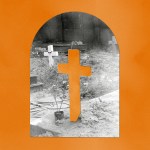
A mom and child shape cut out of a photo of a church.
Christianity Today November 19, 2025
Illustration by Elizabeth Kaye / Source Images: Getty, Unsplash

Scripture repeatedly calls believers to care for the widow and the orphan. Yet as pews refill post-pandemic, one group remains strikingly absent: single mothers.

Recent Barna research reveals that only one in four single moms attends church weekly, the steepest drop among women in recent years. The finding raises an uncomfortable question: Are churches truly heeding the biblical command to care for the vulnerable in their midst?

When Joie Van Holstyn became a single mom of two boys through foster care and adoption in 2019, her church attendance quickly spiraled. 

“It was really hard at first,” she said. “We had pretty rough attendance the first two years—it was so much work to get out of the house. And I just felt out of place as a single mom.”
For women like Van Holstyn, the barriers start with logistics—juggling work hours, transportation, and the chaos of getting kids ready alone. But the emotional weight can be heavier still. Many feel judged, pitied, or simply invisible in congregations that assume families include a husband.

A friend eventually confronted Van Holstyn about her sporadic attendance. Convicted, she committed to going every week, even when her children squirmed through the small rural church’s service.

“I just committed to going, and I hated it at first,” she said. “I didn’t learn anything because my kids were so busy and naughty. But I just kept going, and slowly I realized I enjoyed it more.”

Now six years into single motherhood, Van Holstyn says she’s found her rhythm—but wishes churches would be more proactive about providing childcare rather than waiting for participants to ask.

“I hate when they say, ‘If you need childcare, let us know,’” she said. “That makes me feel like a burden, so I don’t say anything.”

Her persistence makes her something of an exception among single moms, though. 

In the US, 23 million kids grow up in single-parent homes, mostly with single moms who don’t attend church. Even well-intentioned congregations, experts say, often miss the mark in reaching them.

“Many of these women have experienced significant trauma,” said Michelle Donnelly, founder of Uncommon Valor, a ministry for relational healing after trauma. “They may resist asking for or receiving help, and that means even if you offer the best programming, they may not want to participate.”

Indeed, the programmatic mindset—offering a special event or class, then assuming participants will assimilate into existing ministries—often leaves women feeling unseen.

“There’s been a rise in one-time events for single moms,” said Jennifer Maggio, founder of the ministry The Life of a Single Mom, which partners with over 2,000 churches nationwide. “But churches assume those mothers are joining other ministries afterward. Most aren’t.”

Maggio knows this firsthand. Once a 19-year-old single mom of two on food stamps, she started her ministry in 2011 to fill a gap she herself had felt.

“When we began, I had to reassure pastors we weren’t advocating for creating more single-mother-led families,” she said. “That was the mindset back then.”

While she’s encouraged by growing interest, Maggio says the deeper challenge is consistency.

“Churches that establish long-term efforts—like a weekly Bible study or mentorship program—are the ones that see women discipled and connected,” Maggio said.

The category of single moms is not a monolith and includes divorced mothers, widows, teen moms, grandparents raising grandchildren, and single foster or adoptive parents like Van Holstyn.

Yet for many churches, “family ministry” still means nuclear family ministry. Sermons often center on the dynamics of marriage and parenting as a couple. Small groups are organized by life stage—young families, empty nesters, singles—leaving single moms feeling as if they belong nowhere.

“Grouping people by life circumstance can be isolating and disempowering,” Donnelly said.

Esther Vazquez, a mom of four from Ocala, Florida, put it plainly: “My children love going to church, and I go for God, not for people, but it’s hard to find community as a single mom.”

Churches often organize annual outreach events like clothing drives, guest speakers, or Mother’s Day brunches for single parents, but these gestures rarely lead to genuine belonging.

“The best groups I’ve been in have been multigenerational,” Donnelly said. “Different ages, stages, and life experiences together—that’s where healing happens.”

Barna’s data suggest why such environments are rare: Only 19 percent of Christians say their churches provide “opportunities for cross-generational interaction.” The rest remain siloed by age, marital status, or life stage.

Without intentional church structures to include nontraditional homes, single moms can feel subtly sidelined. And when divorce or separation is the reason for their singlehood, stigma can deepen that isolation.

Christine Moriarty Field, a divorced Christian writer, says many divorced women feel like “second-class members of the congregation” due to “unspoken judgment” that makes them feel “alienated and rejected, rather than loved and accepted.”

Sarah Cleveringa, a former single mom of four in Oregon who has since remarried, has felt both the sting and the grace.

“One thing that always feels constant,” she told me, “is needing to give the disclaimer that I didn’t destroy my previous marriage. People kind of expect to know: ‘Are you the homewrecker?’”

Even casual gossip can wound deeply, she added. “People feel entitled to know your story.”

Not every story ends in exclusion. When Kaeley Triller Harms became a single mom at 19, her church “basically saved me,” she said.

“They loved my babies, surrounded me with prayer, and two women adopted me—meeting with me weekly for intercessory prayer,” she recalled. “The men from my life group volunteered to go with me to custody exchanges with my abusive ex. Honestly, I’ve never felt so loved or supported in my life.”

These examples, though less common, reveal what’s possible when churches approach single mothers not as a category to manage but as relationships to nurture.

Donnelly noted that many single mothers fear judgment, but she said that often “there are wonderful people nearby who genuinely care—they just don’t always know what to do.”

Van Holstyn has felt that support. 

“Once I stopped assuming that married moms and couples didn’t welcome me, I found great community,” she said. “I started making friends and got over myself. It does get easier.”

She’s learned that church, at its best, is less about sitting among people in the same life stage and more about fellowship across difference—being seen as a sister in Christ, not a project.

Families headed by single mothers will remain a large and growing part of American life. For churches, that reality is not a distraction from the gospel mission but an invitation to live it out.

As Donnelly put it, “Helping women find safe spaces to give and receive in the context of community is very healing and restorative.”

The biblical charge to care for the widow and the fatherless has never been theoretical. It’s practical, relational, and sometimes inconvenient. For churches, this kind of love looks like offering childcare, sharing meals, or simply sitting beside a woman who feels alone, again and again.

Churches that see single mothers not as a problem to solve but as a people to serve will embody what James called “pure religion.” In doing so, they’ll not only bring single moms back to church but also reveal the heart of Christ to the whole congregation.

Culture

How Grief Can Heal America

Abraham Lincoln’s words to a divided nation still ring true today.

The statue of Abraham Lincoln in the Lincoln Memorial.
Christianity Today November 19, 2025
Westend61 / Getty

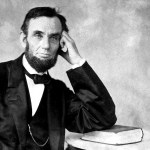
On March 4, 1865, President Abraham Lincoln stood on the east portico of the US Capitol in Washington, DC, to offer his second inaugural address. Wearied by four years of bloody conflict, Mr. Lincoln held in his hand only 700 words, cut and pasted onto a single piece of paper. 

That day, Lincoln named the evil of slavery, acknowledged the war’s deep divisions, and called the nation to work toward repair. The final words of his speech, carved in Indiana limestone on the national memorial that bears his name, still echo 160 years later. 

With malice toward none, with charity for all, with firmness in the right, as God gives us to see the right, let us strive on to finish the work we are in, to bind up the nation’s wound, to care for him who shall have borne the battle, and for his widow and orphans; to do all which may achieve and cherish a just and a lasting peace among ourselves and with all nations.

As he stood before the crowd that day, Lincoln knew just how far-fetched his exhortation might seem. Bitter strife and loss had torn the country apart not only in Washington’s halls of power but also in clapboard homes across the North and small farms laid out like patchwork across the South. In the face of such deep and expansive division and loss, what healing could a country reasonably expect?

On a smaller scale, Lincoln was no stranger to this kind of tension and sorrow. Only three years prior, grief had burst the president’s heart open when his 11-year-old son, Willie, died in a bedroom of the White House from typhoid fever. Willie’s death carved a giant chasm in Lincoln’s marriage, an isolating division that touched every aspect of his life and work. In this microcosm of sorrow, the president knew what arduous work lay ahead.

The truth was, to bind a country’s wounds would require more than reparative compromise in Congress and the surrender of arms in communities still bound up in conflict. To achieve a lasting peace, Americans would need to gather not only at the podium but also in the funeral parlor, not only with the gavel but also at the graveside. True healing would begin only when the nation acknowledged and engaged with grief.

When people ask me in curiosity, discouragement, or frustration how to heal our country from polarization, I’m often drawn to Lincoln’s second inaugural address and these words from the heart of a grieving man to his grieving country. More than a century apart, Lincoln and I both long for a lasting peace. Partisan divides still threaten the fabric of our nation and the voice of our democracy around the world. What would Lincoln prescribe for a country such as ours? I suspect his answer would be the same. 

The work to which Lincoln called his country in 1865 remains relevant and necessary for Americans because it is rooted in the timeless truth of the Judeo-Christian tradition. To heal our country’s deep divisions, we do not need a new plan or policy. Instead, we must grasp Holy Scripture’s exhortation to weep with those who weep (Rom. 12:15). It is only in the work of grief that true healing begins, and our greatest growth as a nation can follow.

Although contemporary Americans have lost much of a cultural vocabulary for grief and death, bereavement research confirms that we can reacquire the skills we need for grief that leads to healing. Like all wounds, the divisions we have suffered because of politics may carry tenderness for years to come, but they need not remain raw and open. Instead, we can answer Lincoln’s call to integrate these griefs into productive discourse and action.

In his address, Lincoln relied on Holy Scripture to model the honest and hopeful grieving that repairs individuals, communities, and nations. Echoing the words of Jesus in his address, Lincoln lamented, “Woe unto the world because of offences. … Woe to that man by whom the offence cometh” (Matt. 18:7, KJV). In a modern psalm of lament, the president guided the nation into what psychologist J. William Worden would years later identify as the first “task” of bereavement, accepting the reality of pain and loss. Rather than avoiding conversation about conflict, Lincoln identified the pain of polarization. He named the cause of the division that had brought so much pain. In doing so, he invited the nation to grieve with him.

To break free from our cultural, religious, and political echo chambers, we too need this invitation to vulnerable lament. Rather than avoiding conflict or running headlong into it, we must thoughtfully give language to the hard feelings that come with lost elections, failed endeavors, and shifting cultural changes. We must mourn together in community spaces where we share our stories of loss—lost jobs, lost local economies, lost loved ones to addiction—with the goal of not fixing but forging. We forge new brotherhoods in the valley of the shadow that so often feels like the loneliest place to exist. We must acknowledge that polarization has left us not winners but walking wounded. We must turn to our pain together and “care for him who shall have borne the battle.”

Lincoln knew that talking about grief was only the first step toward repairing national division. Thus, he suggested concrete acts of mercy to make material the solidarity articulated in vulnerable sharing. Without qualification he instructed the people: Care for the soldier with post-traumatic stress, employ and empower the widow, raise up the generation birthed in trauma and marked by loss. Lincoln called the people to work out their nation’s salvation with fear and trembling. Those once considered enemies could be made friends through grief and, arm in arm, chart a new course in the face of loss.

As we seek to heal polarization, this dimension of grief expression is vital too. Our losses, while unique, are woven together with universal threads. Our desire for agency is one of the strongest threads. While polarization might encourage us to circle the wagons and care for our own, Lincoln leaned into scriptural allusion in the story of the Good Samaritan: “He went to him and bandaged his wounds, pouring on oil and wine” (Luke 10:34). Men once enemies could find intimate friendship at the intersection of sorrow and action. Naming grief can break down barriers, but loving neighbor in word and deed might be the most powerful healing balm of all.

What would this mean for our local communities suffering from division? For those who experienced various COVID-19 losses, informal community groups could encourage listening and receiving others’ stories of grief. For communities strangled by economic decline, physical actions of repair could help unlikely partners channel anger and disappointment into fruitful endeavors. While we may always mourn for what is past, healthy engagement with grief reminds us that we are not prisoners of fate. Together, we can heal a country’s wounds slowly, patiently, and intentionally. We can shape a new tomorrow with the wisdom and clarity that only sorrow can bring. 

Lincoln understood that the responsibilities of life pull us forward, that we rarely have discreet space in which to grieve. Yet if we wish to diminish polarization, we must commit to the long, relational work of walking side by side toward that goal. The spirit of our politics is not an angry or divisive one. It is a grieving one. When we face and embrace this brokenness, good things can begin.

After Lincoln’s death and the end of the Civil War, communities across the United States erected memorials on town greens in memory of the soldiers they’d lost. In the South, granite sculptures of Confederate generals and soldiers expressed a distinct interpretation of grief—the “War of Northern Aggression.” In the North, statues of Yankee soldiers rose honoring losses in the “Great Rebellion.” It would seem that even in our nation’s grief, it could not do as Lincoln had hoped. Its citizens could not bind themselves to their warring brothers or sisters in sorrow and reconciling love.

But in a little town buried in Kentucky, just an hour’s drive from Lincoln’s humble birthplace in a neighboring county, one community longed for more. Acknowledging their shared and unique griefs, honestly naming the division that had severed relationships in their town, the citizens of Morgantown, Kentucky, offered a different path forward. To heal their country’s wounds, they build a single monument to both Union and Confederate soldiers. Seeing the grief of the other brought humanity that dismantled polarization. Working together to remember offered space for opposing sides to lay down their swords in favor of plowshares. 

Lincoln never lived to see that monument erected, but his vision still calls us toward that great goal. “It is for us the living, rather, to be dedicated here to the unfinished work which they who fought here have thus far so nobly advanced,” Lincoln said at Gettysburg. As we seek to bind our country’s wounds, may we take up the task and invite grief to heal our nation.


This piece originally appeared in the Journal of Ideas for the Center for Christianity and Public Life. Clarissa Moll is a 2025 public life fellow and the executive editor of news at Christianity Today.

Pastors
Excerpt

Timothy Keller: Sin Is the Strongest Argument for Faith

Scripture’s take on human nature helps us cope with evil. It also gives us reason to believe.

CT Pastors November 18, 2025
manusapon kasosod / Getty

Adapted excerpt from What Is Wrong with the World?
by Timothy Keller

Questions arise in our minds and hearts every day. Some are easy to answer: “What should I wear today?” or “What should I make for dinner?” Some are weightier and harder to determine: “Should I move to a different city?” or “Should I marry this person?” But one question rises above all others, the supreme question that each of us asks ourselves time and time again: What is wrong with the world? What is wrong with the human race? 

Years ago I read a book on the subject of evil in modern life and how we view it. In his introduction, the author noted that it was rare for a week to pass without him seeing news reports detailing horrific events. He noted an account of teenagers performing contract killings for just a few dollars, a story of a man shot in the head over the keys to a car, and—the week he finished the book—reports of atrocities in concentration camps where ethnic cleansing was happening. 

What’s wrong with us? What could lead human beings to do things like this? The truth of the matter is that we will never be able to answer these questions unless we come to understand sin. We will never be able to resolve our personal problems, let alone the rest of the world’s problems, unless we possess a full comprehension of sin. I’ll give you two reasons. The first reason is that the biblical teaching about sin is one of the strongest arguments for the truth of Christianity. The second is that it equips you to best handle life as it is. 

To take the first reason, I can show you person after who abandoned Christianity but were pushed back to embrace it because nothing other than the idea of sin could account for the darkest depths of human behavior. These individuals saw human evil up close. The Bible was the only way they could find to explain what they saw. 

In The Death of Satan: How Americans Have Lost the Sense of Evil, Andrew Delbanco, a professor of American studies at Columbia University and a self-described secular liberal, argues that if you get rid of the ideas of religion along with the moral, spiritual idea of sin, you are forced to conclude that the reason we do the terrible things to each other as described earlier is due to either biology, psychology, or sociology. That creates all sorts of problems. As Delbanco writes, “A gulf has opened up in our culture between the visibility of evil and the intellectual resources available for coping with it.” 

If the terrible acts humans commit are a result of biology, they’re part of our evolutionary makeup, where aggression is bound up with the idea of the survival of the fittest. Or the reasons are found in psychology: We do these terrible things because of repressed emotions. Or in sociology, we do them because of economic deprivation. But when you get a close-up view of the horrors of evil, all those theories fall apart. If those theories are true, then we really can’t help doing what we do and therefore we’re not really evil. But anyone who witnesses a parent killing their child knows that makes no sense. These acts can’t be so easily explained away, no matter how hard we try. 

As the serial killer Hannibal Lecter says to the FBI agent trying to analyze him in The Silence of the Lambs, “Nothing happened to me, Officer Starling. I happened. You can’t reduce me to a set of influences. You’ve given up good and evil for behaviorism . . . You’ve got everybody in moral-dignity pants—nothing is ever anybody’s fault. Look at me, Officer Starling. Can you stand to say I’m evil?” 

In his book The Brothers Karamazov, Russian novelist Fyodor Dostoevsky addresses the idea of seeing biology as the culprit: “People talk sometimes of a bestial cruelty, but that’s a great injustice and insult to the beasts; a beast can never be so cruel as a man, so artistically cruel. The tiger only tears and gnaws, that’s all he can do. He would never think of nailing people by the ears, even if he were able to do it.”  

As Dostoevsky knew, something else is going on here, something beyond biology or sociology or psychology. That something is sin. 

The second reason it’s all-important to understand sin is that if you don’t take up the old-fashioned, traditional understanding of it, you will be led into countless personal and social miscalculations. You will not be able to deal with life as it is. Not only that, but you won’t be able to understand the glory of God’s love and grace. You’ll never be stunned or amazed by it. 

Here is what I mean. If someone came up to you and said, “I was at your house the other day and you weren’t there. Then a man came with a bill for you, and I paid it,” how would you react? Well, it depends on the size of the bill, doesn’t it? 

What if it was postage due for seventy-five cents? That’s one thing. What if it was the landlord demanding rent? That’s another thing. What if it was an auditor from the IRS saying, “You owe ten years of back taxes, and we’re repossessing your property unless you pay up”? That’s something else entirely.  

How does this relate to the idea of sin? Here’s how. If there is a lack of joy in your life today, if the thought of Jesus dying for you does not transfix and transform you, if you’re not able to draw power out of the thought of what he has done for you on the cross, then you don’t understand the enormity and power of your sin.  

Put another way, if you don’t understand sin, you are neither pessimistic enough nor optimistic enough to deal with life. If you believe the reason people do the terrible things they do is because of poor social conditioning or evolution or repressed psychology, you’ll never be able to deal with life as it is. You’ll be like Agent Starling, speechless before Hannibal Lecter.  

In her book Creed or Chaos?, English author Dorothy L. Sayers observes that Christianity, far from its caricature as an escape from reality, is a supremely clear-eyed way of viewing the world. She writes, “It seems to me quite disastrous that the idea should have got about that Christianity is an other-worldly, unreal, idealistic kind of religion that suggests that if we are good we shall be happy. On the contrary, it is fiercely and even harshly realistic, insisting that there are certain eternal achievements that make even happiness look like trash.”  

In other words, one of the things that precludes an “unreal, idealistic” view of life is Christianity’s clear-eyed view of sin. 

If we stand any chance of answering the question of what is wrong with the world—much less of being saved from the answer to that question—we must begin with understanding the complexity and multifaceted nature of sin and end with understanding the unfailing love of a God who chooses to save us from it.  

Taken from “What Is Wrong with the World?” by Timothy Keller. Copyright © October 2025 by Zondervan. Used by permission of Zondervan, www.zondervan.com. 

Books

More Than a City On a Hill

Religion in the Lands that Became America moves readers away from religious exceptionalism.

The book cover on a green background.
Christianity Today November 18, 2025
Illustration by Christianity Today / Source Images: Getty, Yale University Press

Thomas Tweed is one of the most distinguished figures in the world of religious studies. His wide-ranging writings include key contributions in diasporic and immigrant religion, Catholic history, American Buddhism, and “lived” or everyday religion. Even that diversity does little to prepare us for the sheer scope of his triumphant new book, Religion in the Lands That Became America: A New History, which is destined to become a standard work for anyone interested in American religious history. It will be for this generation what Sydney Ahlstrom’s A Religious History of the American People (1972) was for the scholars, students, seminarians, and general readers of half a century ago and what Mark Noll’s A History of Christianity in the United States and Canada (1992) was for the next generation.

Grounded in contemporary concerns, Tweed’s book differs from many traditional models, so it requires a little explanation. At first sight, it offers a straightforward chronological structure. For example, a chapter on the period 1792–1848 addresses the broad theme of “Expansionist Religion: Expanding and Contracting Worlds in the Agrarian ‘Empire of Liberty.’” This is followed by the “Industrial Religion” era of 1848–1920, and so on.

This sort of presentation might appear in any general history, with a more or less familiar periodization. With a couple of arguable exceptions, Tweed’s account of religious development is exemplary. I am unconvinced that the “Countercultural Religion” he locates between 1964 and 1974 demands as much attention as he gives it, and I personally would attach just as much significance to the post-1975 decade. But generally, the structure makes wonderful sense.

Throughout, Tweed’s points are convincing and his writing accessible. His strength lies in describing religious places and sites and interpreting sensitively what they might have meant to the communities that created and used them. I cannot resist quoting his description of the New England meetinghouse as “a sort of Congregationalist kiva or Puritan council house.”

But if much of the book’s format seems conventional, it departs massively from older precedents in two crucial ways. One is the geographic scope indicated by the title Religion in the Lands That Became America, and second is the cultural and religious consequences of that perspective. That means paying full and respectful attention to Native societies, as well as to the Catholic imperial systems, chiefly the French and Spanish, that preceded the British and the Americans. The book also seeks to understand religion through the lens of sustainability, through how societies cope with the technological and climatic pressures that can prove so ruinous if not handled wisely. In both these innovative approaches, Tweed presents provocative and rewarding ideas.

Tweed is deliberately seeking to escape a once-familiar model by which histories of American religion began by describing conditions in the British seaboard colonies (Puritan New England, Quaker Pennsylvania, the Anglican Chesapeake and South) and then traced the expansion of that religious order through progressive stages of conquest and settlement. His book is a history of religion, not just of American Christianity and assuredly not of American expressions of Protestantism as they originated in Northern and Western Europe.

To offer an admittedly crude gauge of just how radically Tweed’s book differs from its predecessors, it has no reference to Massachusetts until page 119 in a work of 370 pages of text! Plymouth and the Puritans make their entrance around the same point, roughly a third of the way through the story as he recounts it. He devotes considerably less space to the Protestant Great Awakening of the 18th century than to the Indigenous worlds of the Ancestral Puebloans (whom we used to call the “Anasazi”).

We might illustrate older models of telling that story—the versions he wishes to challenge—if we imagine the kind of continental map we might see in a television documentary, which begins with the scene in impenetrable darkness. Light then rises in the east, spreading gradually to bring new regions into view. In that vision, Ohio, for example, really did not exist until the arrival of the first British and Irish Protestants in the mid- and late-18th century, and certainly it had no separate religious history to speak of. On our imagined documentary map, it lies deep in the heart of darkness. The Rockies and the Pacific Northwest flash briefly into authentic existence as Lewis and Clark visit them, then the regions resume spiritual night.

If we take the whole subcontinental landscape that would ultimately become part of the Lower 48 states, such visions are absurd. In reality, Ohio was densely settled by Indigenous peoples for perhaps 400 generations by the time the first White settlers arrived. From approximately the first century AD, the region became home to sophisticated cultures who built cities and fortresses and whose rich spiritual life manifested abundantly in sacred art and architecture. The same was true of the ancient Puebloans.

Allowing for local circumstances and variations, we could make a similar statement for virtually every part of the subcontinent, which in spiritual terms was in no sense a wasteland awaiting the arrival of new truths from Boston and Philadelphia. Moreover, a generation of scholarship has established just how slow the Euro-American settlers were to dispossess these older spiritual and social orders, usually long after official maps claimed a territory for the emerging United States.

In retrospect, those maps should be seen as aspirational if not delusional. Often, the European presence in such communities was marginal and transitory, and matters went on much as they always had. Whatever the nation’s leaders might have desired, the United States remained a floridly diverse religious landscape through much of the 19th century, with active Indigenous practices operating in far more of the territory than anyone cared to admit. And that comment takes no account of the extensive survival of African spiritual traditions.

Older books might have included a token introductory chapter on Native American spiritualities before reaching the coming of Protestantism. Tweed, in contrast, devotes two of his ten chapters to detailed accounts of Native worlds, beginning with the foraging societies we first see in the archaeological record. He symbolizes this era through the remains of (presumably) a shaman who lived some 11,000 years ago in central Texas, where he was buried in Horn Shelter. Chapter 2 offers a loving portrait of the “Farming Religion” of the sedentary and (often) urban worlds during what Europeans might call the Middle Ages, the years between AD 1100 and 1492. We don’t conventionally talk about “medieval America,” but perhaps we should. Looking at the settlements of the Southwest and the Mississippi Valley, the language of cities and castles—and maybe also of cathedrals and pilgrim shrines—is hard to avoid.

To differing degrees, each of the following chapters pays full attention to the Indigenous backdrop to the religious and cultural thought of the rising European societies. At every stage, Anglo-Native relations revolved around religious issues and competing spiritual views. Native societies were dominated by spiritual leaders, and no effective distinctions demarcated the world of religion from that of diplomacy or warfare. Similar remarks apply to the Virginian Christians, whose attitudes to their new lands were shaped by ideas of providential guidance and the struggle against pagan evils. Repeatedly, the Native leaders who most effectively challenged white expansion claimed special prophetic or charismatic guidance. “Indian wars” were commonly religious wars in all but name.

From the 17th century through the 19th, white Americans formed their ideologies of empire through their successive encounters with Native peoples, whether peaceful or military, and religious themes dominated throughout. Visions of divinely sponsored conquest gave rise to theories of manifest destiny, while missionary rhetoric justified the imposition of Christianity upon subject peoples.

If Tweed’s focus on Native realities requires little justification, his guiding motif of sustainability requires some exposition. He describes how, through the centuries, the societies in “the lands that became America” all faced intense challenges that threatened to destroy them. In some cases, religion encouraged people to confront these dangers and to survive, while in others, that same force subverted societies and contributed to ruin.

In successive eras, those challenges included dangers from climate change, as well as the issues arising from African slavery and the subsequent legacy of injustice and exploitation. In more modern times, an industrial crisis led to mass urbanization, with its consequences of social conflict and gaping inequality, together with grave damage to the environment. For Tweed, these cumulative crises remain unresolved and in need of urgent action. Each, he suggests, should properly form the agendas of religious institutions in the modern world.

We do not have to accept every aspect of that structure to find it useful as an interpretive tool. Nor, of course, do we have to agree precisely with the space Tweed allocates to different religious and ethnic traditions. No one book can begin to cover every part of the vast story the author addresses here. I will put this volume on my bookshelf alongside those by Sydney Ahlstrom and Mark Noll but will assuredly not displace those classics. Even with those mild caveats, I really cannot recommend too strongly Religion in the Lands That Became America. It is a splendid achievement.

Philip Jenkins is a distinguished professor in Baylor University’s Institute for Studies of Religion. His most recent book is Kingdoms of This World: How Empires Have Made and Remade Religions.


News

The World’s Largest Displacement Crisis

A pastor in North Darfur recounts the Sudanese paramilitary group’s attack on his church.

Displaced Sudanese Christians meeting for prayer.

Displaced Sudanese Christians meeting for prayer.

Christianity Today November 18, 2025
Illustration by Christianity Today / Source Images: Getty, Pastor Darmali Ismail

From July to September, Darmali Ismail and the 80 other people sheltering at his church—Episcopal Church El Fasher in North Darfur, Sudan—survived on one meal a day. Some days they didn’t eat anything.

The group, made up of the church’s congregants and members of the local community, included 30 children between the ages of 3 months and 12 years. When they heard the approach of the raiding paramilitary group, Rapid Support Forces (RSF), they would hide under the church’s plastic chairs.

“We were feeling stuck and sad,” Ismail said. “Each day was a battle for survival.”

Intensified fighting between RSF and the government-backed Sudanese Armed Forces (SAF) in El Fasher has displaced Ismail, his congregation, and at least 80,000 people in North Darfur’s capital in recent months.

Around noon on September 14, Ismail heard distant gunshots. As he listened, the crack of gunfire drew nearer.

Three trucks carrying dozens of RSF members arrived, along with more armed forces on foot. They shot at the church building as Ismail and his members fled. “We didn’t even know where we were running to,” he said. RSF kidnapped two male members of the church. They killed one, a 25-year-old. The other escaped.

“The church was usually a safe place,” Ismail said. “But not anymore. No one is safe.”

Churches have served as makeshift shelters for many of the country’s displaced residents since the RSF and the SAF began fighting for control of the country in April 2023. Soon RSF began attacking churches and eventually hospitals.

After seizing full control of El Fasher in late October, RSF used drones to bomb Saudi Maternity Hospital, the only functional hospital in the city, killing more than 460 patients and health workers.

RSF has used drone strikes against hospitals, displacement shelters, power plants, and marketplaces to gain an edge in its bid to drive the government’s army out of its last stronghold in Darfur. After the takeover, Al Jazeera reported widespread atrocities, some filmed by RSF fighters and posted on social media.

“The RSF have thrown away every proper way of conduct,” said Tom Catena, a physician at Mother of Mercy, a Catholic hospital in the Nuba Mountains. “We are certainly a target. I don’t think that there’s any doubt that we are liable to be hit. We are not protected.”

The World Health Organization condemned the killings and said the RSF’s attacks on civilian care centers in El Fasher have left more than 260,000 people trapped with “almost no access to food, clean water, or medical care.”

In October alone, the RSF killed an estimated 2,000 unarmed civilians, with reports of mass executions, sexual violence, and widespread looting. Since the war began, the fighting has killed an estimated 40,000 people and displaced 12 million, making it the largest displacement crisis in the world, according to the UN refugee agency.

President Omar al-Bashir originally formed the RSF in 2013 to combat Sudanese rebels. He later extended its service to border control and deployed the group for foreign conflicts in Yemen. Then, under the leadership of Mohamed Hamdan Dagalo (also known as Hemedti), a military officer and politician, the RSF evolved into a formidable militia with ties to Russia.

Bashir saw Hemedti as his protector, but then the warlord turned on him. In April 2023, the now-powerful RSF seized parts of the country, including El Fasher and the capital of Khartoum. The RSF’s clash with the Sudanese army sparked a civil war.

Earlier this year, the army forced the RSF’s retreat from Khartoum. But Hemedti vowed a “stronger, more powerful and victorious” return, rejecting negotiations with the government in favor of “the language of arms.”

The RSF’s attacks aren’t just about power—they tie into ethnic and religious motivations as well. The RSF, predominantly Arab and Muslim, often targets non-Arab and Christian communities to commit acts of violence or seize property.

Nonprofits reported the RSF has vandalized 165 churches and turned others into military bases.

Saman Farjalla, the Episcopal bishop of Wad Medani Diocese, told CT the RSF has occupied several of his churches, storing cars and weapons on the premises and living in the buildings.

Farjalla said the RSF has looted churches, including St. Paul’s Cathedral in Wad Medani: “Only the building is still standing. Everything inside is gone.”

He added that church members now meet in temporary locations for prayer and worship. The region’s instability makes it difficult to reach scattered church members.

“Destruction is happening everywhere,” he said.

Mohamed Ismail (no relation to Darmail Ismail), pastor of Baptist Church Mayo in southern Khartoum, was forced to abandon his three-year-old church after militants looted the building.

“We lost everything,” he said. “But the worst is that we have no means to get in touch with our members. It has been so painful.”

After fleeing the RSF in September, Darmali Ismail and the group sheltering at his church headed to Abu Shouk camp, about four miles away from El Fasher. They slept under trees and in empty houses while continuing to dodge bombs and bullets, Ismail said.

“I was not feeling that I would be alive until now,” Ismail said. “I was thinking, They will shoot me now. I will fall soon.”

As the bombing increased, Ismail’s group walked 18 hours to Tawila, a town west of El Fasher that is now controlled by the Sudan Liberation Army, a neutral force in the conflict. Thousands of displaced Sudanese occupy the town, including 117 Christian families who sometimes join Ismail in his daily prayers under a desert date tree. Sometimes they eat together too—still just one meal a day.

The winter nights are cold, and Ismail said they don’t have blankets. Most people sleep under the trees. They spend most days waiting, with no jobs or schoolwork to break up the grinding boredom. If people get sick, they can’t get to the nearest hospital, which is 55 miles away.

“We are suffering here,” Ismail said.

Books

A Political Scientist Contemplates God

Charles Murray is ready to take religion seriously. He thinks we should too.

The book cover on a red background.
Christianity Today November 18, 2025
Illustration by Christianity Today / Source Images: Getty, Encounter Books

What does the search for faith look like through the eyes of an agnostic? Christians can sometimes make assumptions from the outside about what that process looks like, but a new book by libertarian political scientist Charles Murray offers personal insight. His book, Taking Religion Seriously, is a part of a trend of public intellectuals such as former New Atheist Ayaan Hirsi Ali and journalist Molly Worthen, embracing personal faith.

Although Murray’s work has publicly recognized the importance of religion to society, he previously identified as agnostic. His latest contribution is a departure both in its personal dimension (the only book remotely similar is his little advice volume The Curmudgeon’s Guide to Getting Ahead) and in its length, readable over a weekend at 158 pages.

He documents his arrival at faith, which was sparked by his wife Catherine’s interest in religion and grew to a personal intellectual pilgrimage. Murray draws on the apologetic and testimony genres, although he frustrates the expectations of both. His goal is to convince the reader that asking questions about faith, rather than advancing a specific set of conclusions, is a crucial task in life. The book challenges the assumption that we can separate the public good of religion from personal faith. If religious practice is necessary for a thriving society, then it’s necessary for a thriving soul as well.

Though Murray explores classic arguments for the existence of God, such as the unmoved mover and fine-tuning, he approaches them with a refreshing intellectual humility. For example, he considers C. S. Lewis’s moral argument for God’s existence in Mere Christianity, an argument which contends that the consistency of moral teaching across cultures provides evidence for an eternal moral source.

This argument was crucial for Murray in the jump between belief in the existence of God and belief in an active God who requires something of each person. Perhaps, he admits, he was already predisposed to accept this argument since he had been moving toward this perspective. Nonetheless, he has come to see God as the best explanation for the phenomenon of universal moral knowledge. The moral argument has persuaded generations of seekers and Christians, and the glimpse into Murray’s own thought process is valuable. The future reading lists he provides in each chapter on their own are worth the price of the book.

Murray examines several areas that are controversial even to some very pious Christians, such as terminal lucidity, where someone close to death experiences remarkable clarity. Referencing documented examples, he argues this challenges a strictly materialist vision of consciousness:

One of the tribes to which I belong is the tribe of smart people. For me to accept the evidence regarding terminal lucidity and near-death experiences (and to publish!) will lower other members’ opinions of me, including the opinions of many people whom I admire and whose good opinion I value. I don’t want to be thought credulous and foolish and get kicked out of the tribe.

But he continues to poke at this impulse: “If you find yourself reluctant to give up strict materialism for similar reasons, try to get over it.” The topic is simply too important to gloss over. Humility paradoxically makes many of his arguments more persuasive because he honestly grapples with whether nonmaterialism is defensible.

Murray’s personal journey sheds light on questions he raised in previous books. In Coming Apart, Murray chronicles the way in which the US is divided between two social classes—the wealthy elite, who have strong family formation, church attendance, and community health, and the disillusioned poor, who have weakening community, church, and family ties. Data consistently shows that religious participation is necessary to thriving communities, so the trend of lower participation among the poor is especially concerning. His proposed solution at that point was what he called a “civic Great Awakening,” by which he meant a nonreligious awakening of civic engagement.

Murray’s story implicitly rejects the narrative of self-proclaimed cultural Christians, such as Tom Holland or Jordan Peterson, to whom Christianity carries a certain poetic truth that drives civilization whether or not it is literally true. If we have a high view of truth, can we tolerate a noble lie on a societal level? Won’t that approach erode truth in other aspects of life? The societal quest for meaning must have as its source the individual’s search for truth and ultimately, faith. The trend of young people, particularly young men, attending church at higher rates than older generations, could be a large scale move toward faith. Are we at the cusp of a major societal shift? 

That solution seemed inadequate when I first encountered the book, and I recall challenging Murray on it when I met him while I was a student at Grove City College. How can you have an awakening without the source of that awakening, the quickening of hearts toward God? I suspect that solution is now less convincing to Murray.

Whether this book can be read as a testimony is a complex question. Murray does indeed have the classic “before, change, after” formula of a testimony. As a strict materialist, he had rejected things of faith simply because people told him that was the only intellectually honest position.

Then, “as a series of nudges spread over many years,” he questioned his own presuppositions and eventually acknowledged the existence of God, the historical accuracy of the Christian Scripture, and the moral claims of Jesus. Afterward, he documented the changes in his life, including, most notably, his accepting the forgiveness of sins, saying, “God’s grace has become real to me.” Even invoking the word sin, he acknowledges, is a significant departure.

Still, the experiential aspect of faith is an enigma to Murray. He ends the book with a striking analogy that could be right at home in a Lewis volume:

I have yet to experience the joys of faith. When I’m around Catherine and others who have, I sometimes feel like a little boy whose nose is pressed against the window, watching a party he can’t attend. I’m not done trying to join the party. Perhaps the door will open eventually.

Intentionally or not, the picture draws to mind two famous passages of Scripture. First, “Let the little children come to me, and do not hinder them, for the kingdom of heaven belongs to such as these” (Matt. 19:14). Here Jesus strongly affirms the simple faith of a child, one who may be gazing longingly into that brightly lit room but asks earnest questions. Given Murray’s tenure and status as a think tank leader, this metaphor is somewhat surprising and beautiful.

Earlier in the Gospel, Jesus says, “Ask and it will be given to you; seek and you will find; knock and the door will be opened to you. For everyone who asks receives; the one who seeks finds; and to the one who knocks, the door will be opened” (Matt. 7:7–8). This is a powerful promise to those who are genuinely seeking answers to life’s most vital spiritual questions.

In Confessions, Augustine discusses his conversion at two or three different moments. Centuries of readers have asked, “Which one is the real conversion?” Given the persistence of faith, the answer must be that both are genuine and that the true pattern of a Christian’s life is a continual movement toward the divine.

I would somewhat temper Murray’s feeling of being outside the room of faith. While he claims to have had no emotional experience, he has experienced remarkable changes. Before discovering faith, he considered suicide at the end of life as the best option. Now he is “untroubled by the prospect of death.” Is not that change itself an experience?

Murray has found a type of faith, if not a road to Damascus. And while he is no orthodox Christian by the end of his book, the process of weighing the evidence and searching for truth has led him in a new direction. That open approach to questioning is representative of the Quaker meetings where he and Catherine have attended for decades. His approach is similar to the entrepreneurial “build in public” model that lets the readers into an ongoing process.

Søren Kierkegaard addresses those who are stuck in the purely objective search for truth in Concluding Unscientific Postscript. He sends up the philosopher who “just two weeks before his death … is looking forward to a new publication” to see if it might prove or disprove his beliefs. Murray in several ways typifies Kierkegaard’s objective philosopher who is paralyzed by the need to rationally prove every point and subpoint.

The leap of faith is Kierkegaard’s answer to this paralysis—an acceptance of that which we do not fully understand. He views this not as a rejection of reason but as a proper ordering of reason within the infinite paradox of faith. In the tradition of Augustine, Anselm of Canterbury states, “Credo ut intelligam” (“I believe in order to understand”). The leap (or more properly translated “spring”) of faith enlightens the rest of life.

In a refreshing way, Murray’s addition to the conversation connects the theoretical discussion around the importance of religion in society, which he was already a part of, with the personal journey of faith. Perhaps this book will inspire more people to knock at the door of that brightly lit room of faith.

Noah C. Gould is the alumni and student programs manager at the Acton Institute and a contributor at Young Voices. 

Ideas

6-7 in the Bible

A scriptural nod to Gen Alpha’s favorite not-so-inside joke.‌

The numbers 6 and 7 with a Bible.
Christianity Today November 18, 2025
Illustration by Elizabeth Kaye / Source Images: Unsplash, Wikimedia Commons


What’s the best chapter in the Bible? Six-sevennnnn. If you’ve spent even 6 or 7 seconds around kids or teens lately, you probably saw that one coming. News outlets from The New York Times to The Indian Express have covered the global phenomenon that delights children, puzzles grownups, and leaves school teachers 67 percent sure they should retire early.

One of my CT colleagues from Raleigh, North Carolina, told me her 16-year-old daughter and her friend dressed up as the numbers 6 and 7 on Halloween (“cheapest costume ever!”).

A coworker from Miami said his children stirred up a Spanish-language 6-7 wave that swept through the kids’ club on their recent cruise (“seis-siete!”).

And a church in Charlotte, North Carolina, created an entire outreach event around the infamous numbers. Jonathan White is a pastor and director of children’s programming at Mecklenburg Community Church. When he determined that the 6-7 trend wasn’t harmful and wasn’t going away, he wrote it into the church’s November family night.

A high school kid donning a 6-7 shirt showed up onstage every time the numbers were mentioned—which happened a lot, as the focus of the evening was Psalm 28:6–7. Hundreds of kids went wild. “Every single time it happened, we had about 30 seconds of ramp-down time for the kids,” Jonathan said. “And we were glad we did, because by the end they were anticipating it. They were looking for it. It was fun because they were so engaged.”

As the mom of a 9-year-old, I’ve been asked to calculate 134 divided by 2, among other tactics I’ve walked right into. I won’t attempt to explain the meaning behind the trend, but I can point young 6-7 enthusiasts to a few places where their favorite numbers appear in Scripture.

There’s only one chapter 67 within the Bible’s 66 books, and it’s a psalm. Psalm 67 begins,

May God be gracious to us and bless us
                  and make his face shine on us—
so that your ways may be known on earth,
                  your salvation among all nations.
May the peoples praise you, God;
                  may all the peoples praise you.

There are 42 instances of chapter 6 verse 7 in the Bible. Here’s a sampling of passages that could make good memory verses for children:

  • “I will take you as my own people, and I will be your God. Then you will know that I am the Lord your God, who brought you out from under the yoke of the Egyptians” (Ex. 6:7).
  • “Calling the Twelve to him, he began to send them out two by two and gave them authority over impure spirits” (Mark 6:7).
  • “Because anyone who has died has been set free from sin” (Rom. 6:7).
  • “For we brought nothing into the world, and we can take nothing out of it” (1 Tim. 6:7).

An older child or teen who’s looking for a more challenging passage to memorize could take a stab at Proverbs 6:16–19, which contains a subtle nod to those ubiquitous numbers:

There are six things the Lord hates,
                  seven that are detestable to him:
                                    haughty eyes,
                                    a lying tongue,
                                    hands that shed innocent blood,
                                    a heart that devises wicked schemes,
                                    feet that are quick to rush into evil,
                                    a false witness who pours out lies
                                    and a person who stirs up conflict in the
community.

Beyond memorizing Bible verses with a convenient 6 or 7 in them, we can also note the symbolic meaning of numbers in the Bible. The individual numbers 6 and 7 each hold meaning in Scripture. Six often carries negative connotations, representing incompletion and even evil (as in the mark of the Beast in Rev. 13:18).

The number 7, on the other hand, represents completion and perfection. It appears throughout Scripture, beginning in Genesis when the Lord rested on the seventh day after creating the earth. Tim Mackie at the BibleProject discusses the importance of the number: “Seven represents both a whole completed creation and a journey to that completeness.”

But the number 7 is perhaps most prominent in the book of Revelation, where it appears more than 50 times (including the 7 churches, 7 spirits, 7 golden lampstands, 7 stars, and more).

We won’t fully understand the significance of these numbers until Jesus returns (and as the 6-7 trend stretches into yet another month, some of us may be praying more fervently for the beginning of the end). Until then, we can ride the 6-7 wave and maybe even use it to soak up some biblical truth.

These commandments that I give you today are to be on your hearts. Impress them on your children. Talk about them when you sit at home and when you walk along the road, when you lie down and when you get up.

That’s from Deuteronomy chapter 6, verses—wait for it—six-sevennnnn.

Kristy Etheridge is a features editor at Christianity Today.

Culture

How He Leaves

After his final tour, independent musician John Mark McMillan is backing out of the algorithm rat race but still chasing transcendence.

Side profile of John Mark McMillan playing guitar on stage in a red jacket and black cap.

John Mark McMillan

Christianity Today November 17, 2025
Courtesy of John Mark McMillan

John Mark McMillan regularly hears from fans asking when he’ll play in their cities. 

“Someone will message me and say, ‘I love your music! How come you never come to Chicago?’ or whatever town they’re in,” said McMillan. “And I message back, ‘I was in Chicago last week.’” 

McMillan, a Christian musician widely known for the song “How He Loves,” has been making a living as an artist since the mid-2000s, touring and releasing music independently. Over the past couple of years, he’s noticed that it’s become harder to reach and connect with his audience, and making a modest living as an artist—at least, the kind of artist he wants to be—seems almost impossible.

McMillan’s latest release, Cosmic Supreme, has been his most successful to date in terms of streaming. It’s a reflective album with a vast emotional scope. McMillan’s warm, low baritone register gently draws in listeners on “All My Life” before catapulting them into the throes of a bombastic, ecstatic chorus. The song manages to be both raw and anthemic without morphing into a glossy, saccharine hype refrain.

Cosmic Supreme is inspirational without wandering into sentimentality, and the language of faith feels fresh in McMillan’s voice rather than worn-out and overused. Despite the album’s numerical success, McMillan looked at the escalating cost of touring, his meager streaming income, and the demanding social media landscape and decided it was time for a change. 

In September, he announced that he is retiring from his full-time music career. “This will be my last tour,” he wrote on Instagram. “Money has never been my primary motivation, but the financial burden of living in a world where music has little or no monetary value has made it hard to find a sustainable model.”

In his post, McMillan shared that he wants to write books, support up-and-coming artists, and focus on local projects. 

Over his career, the 45-year-old singer-songwriter has seen significant shifts in the Christian music world—the dominance of contemporary worship music has evolved from the guitar-driven rock of the 2000s to the arena-rock anthems of groups like Elevation Worship, and the number of people involved in the production of most popular worship music has shrunk to a small, interconnected cohort

Based in North Carolina, McMillan has always been somewhat of an outsider in the contemporary-worship-music industry. His song “How He Loves” was controversial—the lyrics “heaven meets earth like a sloppy, wet kiss” sparked debates about poetic language in worship music, and McMillan eventually granted fellow artist David Crowder permission to change the lyrics to produce his own cover of the song. After Crowder’s revision of the lyrics to “heaven meets earth like an unforeseen kiss,” the song’s popularity grew. 

McMillan’s 2020 album, Peopled With Dreams, was all about “re-enchantment.” He has described Cosmic Supreme as a “charismatic worship album,” emphasizing mystery, wonder, and personal encounter. He foresees a future in which he continues to make music but doesn’t rely on it for his livelihood. 

McMillan says he’s working on a book about reenchantment and developing a series of graphic novels. He’s thought about starting a podcast. He also wants to start a local singing club with two rules: “You have to sing, and it’s phoneless.” 

McMillan talked with CT about closing the book on his full-time music career and about his persistent belief that music has the power to connect us to the divine.

You announced your decision to step away from touring and full-time music. Was there a last straw or moment that made you decide it was time for a change? 

It was a combination of a lot of factors, but the final nail in the coffin was having to advertise through algorithmic content. It’s so hard to reach people. There are so many artists on the road, and the cost of touring is rising. It’s become so much more work for less money. 

At 45, I have a handful of options if I want to make it work: I can go back to grinding it out in a van or fire some of the guys in my band and play acoustic all of the time. Or I need to sort of dig into the worship industrial complex. I say that in an endearing way—I have so many good friends in that world. I would have to make what I do a little more conventional. 

I love touring so much. I would tour for free. If it was just rehearsing and traveling and setting up and playing the shows, I’d be happy to do that a month out of the year. But I don’t get to do as much of the other things I love when I’m beating my head against the wall with the algorithms to try to sell tickets for shows when the margins are so small. 

When you’re doing this and trying to make content, you wake up every day and think, If I can’t think of something to post, am I going to lose money? I feel like I have to think of something snarky or funny to say so that people stop scrolling and listen, and all of a sudden you realize that you’re dumping 80 percent of your creativity into marketing. 

While touring this summer, I would have these sleepless nights, waking up thinking, Why isn’t this tour stop selling? It feels like you have to trick the algorithm into showing people that you’re going to be there. 

After those sleepless nights, I thought, What if I didn’t do this anymore? It was the first time in 20 years I actually considered not doing it. I have never considered it before because it’s what I loved, my identity was tied up in it. Now I think it’s okay to reimagine my place in the world. 

And if I wake up in a year or two and think, This was dumb, I can always come back to it. 

Some Christian artists have been able to supplement their touring income by performing at churches. You’ve mentioned that pivoting to worship music doesn’t interest you, but is there space for artists like you to tour churches? Has the church tour circuit changed over the course of your career? 

Churches are great because they don’t usually have a profit motive and sometimes they have bigger budgets. Usually their goal is just to get people in the doors. If they break even, they’re excited. 

I love playing churches where I have a relationship, but when I don’t have one, things can get a little awkward. The pastor wants to come out and talk in the middle of your set, and you want to be respectful, but it’s also like, “I don’t know you, and I don’t know what you’re going to say.” 

And oddly enough, we get more participation in non-church venues. When we play clubs, people are more engaged. People are more respectful and reserved in churches. Between songs at the club, the audience will talk, and I encourage my band guys to talk to each other and other people in the audience. In churches, it can just feel awkward. You don’t always feel that energy.

The other thing is that, these days, churches really want big worship songs, or they want you to come in and do Sunday mornings. And now every city has a megachurch that has something as good as a concert five times a weekend. 

What parts of touring and performing still make you want to make it work? Are there things that you’ll miss that make you second-guess stepping away? 

There’s nothing like the way it feels to play music for people. And I don’t mean that it feels good when an audience applauds my work; I mean the connection you feel to other human beings is so great. 

I could get really weird about this—maybe you’ll have to Christianize it a little for me—but you know how some cultures have these shaman figures? They aren’t in charge, but they are a conduit. They’re just there to help you connect with God. Performing is like being that conduit. The best nights, I totally disappear in it, and I hope the audience doesn’t even know I’m there. They’re just connected to this higher thing, to the Holy Spirit. 

It’s easy to forget how that feels in a world where we’re all just stuck in our headphones all the time. It feels like church and sporting events are the only places you can feel that any more. For me, seeing people and hearing them sing, it’s that feeling.

I wish I had a more righteous answer. But I think in those moments we are accomplishing something good. Those moments are why I’m here. I like to say that I don’t do anything that keeps you alive, but I want to remind you why being alive is a thing worth doing to begin with.

Culture
Review

Review: ‘House of David’ Season 2

The swordfights and staring lovers start to feel like padding. Then, all at once, the show speeds up.‌

Michael Iskander in House of David Season 2.

Michael Iskander in House of David Season 2.

Christianity Today November 17, 2025
Jonathan Prime / Prime / Copyright: © Amazon Content Services LLC

David grows up, and the series grows with him, in House of David season 2. (Note: This review contains spoilers.)

When we last saw David (Michael Iskander), he had just slain the giant Goliath (Martyn Ford) and was standing on a plain between two armies about to clash. David had no military experience. He was wearing no uniform.

But in season 2—after surviving the big battle that dominates the first episode—he is trained in the art of war by prince Jonathan (Ethan Kai) and put in charge of other soldiers.

He also takes bolder positions in his dealings with King Saul (Ali Suliman) and Adriel (Stewart Scudamore), a leader in the tribe of Judah. Saul tries to get David to marry the princess he doesn’t love, Mirab (Yali Topol Margalith), instead of the princess he does, Mychal (Indy Lewis). Meanwhile, Adriel knows David was secretly anointed to replace Saul and tries to blackmail David with this knowledge. Showing a newfound maturity, David ultimately stands up to both men.

The series ramps up the action bigtime, from the opening battle to a series of raids—Edomites against Israelites, Israelites against Philistines—and dramatic sword fights. A lot of it is fairly exciting. But it also begins to feel like padding. So do the constant scenes of David and Mychal staring into each other’s eyes. The first season of this series covered just three chapters from the Bible (1 Sam. 15–17), and the second season seems to take forever to get through just one (chapter 18).

And then, suddenly, things accelerate. In the season finale, Saul attacks David, and David runs away. Jonathan, newly married with a pregnant wife, worries for his son’s future and makes David promise not to harm the child (2 Sam. 21:7). Saul pursues David as far as the tabernacle and his Edomite henchman Doeg (Ashraf Barhom) murders all the priests. And just like that, this one episode covers four entire Bible chapters (1 Sam. 19–22).

Along the way, characters get interesting in a way they weren’t before, most notably Mychal, newly married to David. She learns that David kept his anointing secret from her and suddenly feels betrayed. This presumably sets the stage for her to “despise” David in the future as the biblical Mychal did (2 Sam. 6:16).

And Eshbaal (Sam Otto), whose attempt to take the throne from Saul comes out of nowhere at the end of season 1, is revealed to be working for the Edomites, which adds a whole new layer of complication to what used to be a simple Israelite-versus-Philistine story.

It’s striking, given how fantasy infused the first season was, to see such a grounded season 2. The giants appear briefly in the aftermath of Goliath’s defeat. But apart from that, this season is all about human relationships and political conspiracies. The Philistines even make a point of switching tactics, from an alliance with the giants to better swords! (Characters talk about the dawn of “the age of iron,” though most historians date the beginning of the Iron Age to a couple centuries earlier.)

Yes, the prophet Samuel (Stephen Lang) gets into a few people’s heads, and we experience their tormented states of mind from the inside. And the witch of Endor pops up to make an eerie prediction or two. But that’s about as fantastical as this season gets.

Stretching the story at times forces the writers to add plot elements that appear to contradict the biblical narrative. Saul meets Samuel repeatedly and even arrests him at one point, but the Bible seems pretty clear that they didn’t speak again during Samuel’s lifetime. It’s also not obvious why Samuel would let himself be captured, given how easily he escapes afterward and given the power he flexes over Saul and his men in other scenes—especially in the finale, which makes spectacular use of 1 Sam. 19:18–24, the only passage in the Bible in which Saul even came close to confronting Samuel again.

There are other nits one could pick. Samuel seems to serve as high priest on the Day of Atonement, but he would have been a mere Levite at best (1 Chron. 6:31–38). It’s hinted that Bathsheba is the daughter of a blacksmith from the dark, disreputable city of Endor. That’s not impossible, but the biblical Bathsheba appears to have been the daughter of one of David’s top soldiers and the granddaughter of Ahithophel, an adviser of David’s who turned against him during Absalom’s rebellion (2 Sam. 11:3; 15:12; 23:34).

The series also remains pretty coy around the marriage customs of that period. Saul, furious with his wife Ahinoam (Ayelet Zurer) for undermining his authority, begins sleeping with a servant named Kazia (Inbar Saban). When Abner (Oded Fehr) objects, Saul says kings are allowed to have concubines, and Abner says no, not Israelite kings. But polygamy was a constant throughout Israelite history, going back to Israel himself (i.e., Jacob), and it was an option for any man who could afford it, such as Samuel’s father, Elkanah (1 Sam. 1:2). Saul’s friends may have expressed concern over how he was treating his family, but not for that reason.

Also, it’s curious that the series invents a fictitious concubine for Saul when the Bible not only mentions Saul’s “wives,” plural (2 Sam. 12:8), but also tells us about a concubine named Rizpah who bore him two sons (3:7; 21:8–10).

Where does the series go from here?

The pace. As noted, the season 2 finale covered as many chapters from the Bible as the previous 15 episodes combined. Can season 3 keep up? Series creator Jon Erwin has said the third season will end with David becoming king, maybe even taking Jerusalem. That would mean getting through another 14 chapters (1 Sam. 23–31; 2 Sam. 1–5) in just 8 episodes. Can the series accelerate that much, that quickly?

The fate of Ahinoam. Saul banished his wife from the palace at the end of episode 6. I assume we’ll see more of her, but in what context? The Bible says nothing definite about her besides her name (1 Sam. 14:50), but there is a theory that she might be identical to a wife of David’s named Ahinoam who bore his firstborn son (1 Sam. 27:3; 2 Sam. 3:2). I don’t expect this series to go that route—marriage to her own son-in-law? ew!—but there would be a basis for it if it did.

The fate of Saul’s daughters. Eshbaal says he has a plan for unity with the tribe of Judah that involves his sisters. The biblical Merab (Mirab) was married off to Adriel (Stuart Scudamore) —and they had five sons who were executed under David (1 Sam. 18:19; 2 Sam. 21:1–14). Saul gave Mychal to a man named Paltiel (1 Sam. 25:44). Eshbaal eventually returned her to David (2 Sam. 3:14–16). 

David’s relationship with the Philistines. There is friction between the Philistine kings this season, and Achish (Alexander Uloom) seems to recognize that God is with David. I assume the series is laying the groundwork for David and his men to find sanctuary with the Philistines while hiding from Saul (1 Sam. 27:1–28:2; 29:1–11).

It bears mentioning that the series skips the part of the story where the biblical David tricked Achish into thinking he was insane (21:10–14). How will it depict David’s relationship with Achish in season 3? Will David continue to testify truthfully to his faith? Or will he do what the biblical David did and pretend to raid the Israelites on Achish’s behalf while actually slaughtering entire pagan villages (27:8–12)?

And what’s up with the Edomites? It turns out the Edomites were behind Eshbaal’s brief attempt to take the throne in season 1, and their scheme is still unfolding when season 2 ends. The Bible says nothing about them during Saul’s reign, except that they were one of the many nations he fought (14:47) and Doeg was one of them, so it’s anyone’s guess where this plot thread is going.

We’ll have to wait a little longer for season 3 than we did for season 2. The first two seasons were produced back-to-back and came out mere months apart, but Erwin is currently busy editing Young Washington, a movie about George Washington due next summer. Even so, given the series’ popularity, I assume there won’t be too much delay.   

Peter T. Chattaway is a film critic with a special interest in Bible movies.

News

Republicans and Democrats Clash on Epstein File Release

The newest documents remind Christians to support sexual abuse victims.

Illustration by Rick Szuecs / Source images: Midjourney / Firefly

Christianity Today November 14, 2025


On Wednesday, Democrats released emails from the late Jeffrey Epstein that seem to indicate President Donald Trump may have been aware that Epstein sexually abused trafficked women and girls. Republicans followed suit hours later with their own release of approximately 23,000 pages of documents. Some critics have called the Republican release a flooding of the zone, an attempt to draw attention away from the emails. Others have pointed to the massive document release as fulfillment of the administration’s promise to be transparent and cooperative in the investigation.

Russell Moore, Mike Cosper, and Nicole Martin on The Bulletin discuss these new documents and a Christian response to sexual abuse. Here are edited excerpts from the conversation (Episode 225).


What did the documents released by Democrats and Republicans say?

Mike Cosper: Democrats released emails that show Jeffrey Epstein talking about Donald Trump. In the emails, he seems to be well aware of how Trump is implicated by the things that Epstein was doing. Epstein talks about Trump being at his house with one of Epstein’s victims. The name is redacted. 

It’s important for us to say that these are allegations. However, Trump said that once he knew Epstein was a criminal, he distanced himself. That doesn’t necessarily seem to be true, based on what Epstein is saying in the emails that the Democrats released.

As for the documents released by Republicans, you have to wonder how many were read in advance of their release, because some of them are between Steve Bannon and Epstein and implicate Trump in very ugly ways.


What was your response to the document release?

Russell Moore: I am angry for a number of reasons. First, even without these emails, which are damning, the White House is pressuring members of Congress. Meetings in the Situation Room, stopping members of Congress from using parliamentary maneuvers, delaying the swearing in of a new Congress member who would offer the deciding vote on this, keeping the House out of session for seven weeks—all of that to keep these emails from being released.

Second, Ghislaine Maxwell, who is a fundamental part of these documents, has been moved to a minimum-security “Club Fed” and is reportedly seeking commutation of her sentence. Meanwhile, the Epstein emails allege that he was with President Trump in 2019 in London with Prince Andrew, who has since been stripped of all of his titles and privileges. That may or may not be true, but that must be answered. 

This is operating exactly the way that I have seen church sexual abuse work: protecting predators over and over again. They hope that the normies just get tired of it and say, “What are you going to do?” That’s the key, and usually that ultimately works.

Cosper: The Justice Department interviewed Ghislaine Maxwell a few months ago, and that interview got her moved to this minimum-security prison. This is a woman who is convicted of sex trafficking, taking young girls and farming them out to rich and powerful men through Epstein. Why was she moved? Because she did this interview where she told the Justice Department that she had no reason to suspect that Trump was aware of any of this. In these emails we see that is not true. 

As far as I’m concerned, lock her up: send her back. That’s the just thing to do, not simply because she lied but because she trafficked girls. That is a horrific crime that all Americans should want to see punished to the fullest extent of the law. 


Often, sexual abuse stories center around men who are the perpetrators. Here a woman is also complicit. What does that mean to you?

Nicole Martin: I’m not at all surprised. There is typically a woman involved in sexual abuse and trafficking situations. Often a woman benefits from the system—acting as the trusted person who helps to cover up molestation or speaking out as the first denier about what happened to you. This revelation should ignite anger and frustration.

When I hear this as a woman, it is also very triggering. This is where you have to guard your heart and mind to ensure that you know what you need to do as a result of the news. It’s very emotional, and sometimes when you get emotionally involved, you shut down because it’s too much. You can also get so deeply involved in a story like this that you feel like it’s personal. You have to lean on the Holy Spirit for wisdom, discernment, and direction here.

Many of us can’t help but think of the women we know. One in three women have been sexually abused or assaulted. We also must contend with the statistics on sex trafficking and the impact on young women who have to hear over and over about these issues. They put themselves in these stories, or they see their sisters there. 


The documents revealed that Jeffrey Epstein seemed willing to throw President Trump under the bus for political or financial advantage. What might be the implications of that for the president?

Cosper: The bits that we’ve seen so far indicate why the president and his administration are working so hard to keep these documents from going public. Are we really surprised that a sex trafficker is not a loyal friend? Because that’s what Epstein was. Epstein was a sex trafficker; Ghislaine Maxwell is a sex trafficker who allegedly sexually abused some of these girls. The extent of depravity here is hard to grasp. 

Representative Nancy Mace is one of the Republicans who have broken with Trump over this issue. Mace is controversial figure, but she’s also shared publicly that she is a survivor of sexual assault. You can understand why a woman in her position is saying, “I’m not going there. I’m not doing this.” The willingness of Republicans to break with President Trump may be because he is a lame duck, but many of those who are breaking with Trump over this are women. That matters as well.

Moore: The blackmail language being used in those emails shouldn’t surprise us either. President Trump’s secretary of commerce, Howard Lutnick, talked months ago about how this worked with Epstein. The trafficking allowed Epstein to have something on powerful people. There was a whole network and web of very powerful people across every part of the spectrum. 

I talked to a researcher the other day about a similar situation happening in a church context where a group of powerful predators were protecting one another within the ecclesial network because they all knew where the bodies were buried—You can’t say anything about me, or I’m going to talk about you—that kind of depraved thinking, in the way Epstein’s talking in these files.

Martin: If we think this is an issue out there, we are sorely mistaken about what’s happening in our churches—I would dare say, even in some families. We have to pay attention, because this is happening. It’s not just young women; it’s young men. We saw years ago with the Eddie Long story that a power dynamic creates spaces for vulnerable people who either want to be in ministry or just want to be close to the pastor. They can be so easily taken advantage of, and networks of power create systems that protect predators.

This is not just a political problem; this is a church problem. There’s a reason for signs in airport bathrooms “If you see something, say something.” There’s a reason for hotlines and signs that help you discern whether or not someone is being trafficked. We cannot afford to be complicit. 

Paying attention means I refuse to close my eyes when it feels painful. It means I will be interceding for this. It is not a hard thing to pray for victims of sexual abuse, sex trafficking, sexual assault. It is not a hard thing to pray that God would bring predators, wherever they sit, at any point of government, to account and bring justice. We have a biblical mandate to pray for justice.

Moore: We can easily think, Oh, that’s just news. There are likely people around you, whoever you are, who are in danger and who are being preyed upon. One of the things they’re looking for is Can I trust you? If I tell you this, are you going to care? Are you going to help me? Are you going to blame me? 

When they see you respond to something that may seem very distant with “That’s just the news right now. What difference does it make?,” you’re not just responding to the news. You’re responding to the person, and that has implications that are eternal.

Apple PodcastsDown ArrowDown ArrowDown Arrowarrow_left_altLeft ArrowLeft ArrowRight ArrowRight ArrowRight Arrowarrow_up_altUp ArrowUp ArrowAvailable at Amazoncaret-downCloseCloseEmailEmailExpandExpandExternalExternalFacebookfacebook-squareGiftGiftGooglegoogleGoogle KeephamburgerInstagraminstagram-squareLinkLinklinkedin-squareListenListenListenChristianity TodayCT Creative Studio Logologo_orgMegaphoneMenuMenupausePinterestPlayPlayPocketPodcastRSSRSSSaveSaveSaveSearchSearchsearchSpotifyStitcherTelegramTable of ContentsTable of Contentstwitter-squareWhatsAppXYouTubeYouTube