Theology

Spiritual Gifts with Strings Attached?

Contributor

How the concept of reciprocity can build up the church.

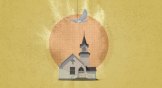
Several gifts set in a row with their ribbons connected.
Christianity Today January 16, 2025
Illustration by Elizabeth Kaye / Source Images: Pexels

I can still remember sitting at the desk, shading the tiny white bubbles gray as I made my way down the page, No. 2 pencil in hand. I was about 13 years old, and I had never taken a multiple-choice test quite like this. What would the results say about me, and what would that mean for my future?

The answers wouldn’t showcase my math or social studies skills but my spiritual gifts. The test was the culmination of a class I had been taking at my church. Over the course of several weeks, we sat inside a sparse, utilitarian classroom to learn about how the Holy Spirit gives each of us special abilities to use in ministry. I was eager to know how God would use me to build his kingdom. 

When all the bubbles were tallied, I stared at the results with a mixture of pride and trembling. The gift of teaching came out strong. Giving scored high, too. The gift of mercy barely registered, which felt a bit embarrassing. Some other gifts I could scarcely define. What did the gift of prophecy mean? Would I be able to peer into the future?

Thirty years later, I can say the results were spot-on in some ways, especially when it comes to teaching. But I’ve also realized the test may not get a passing grade. Its individualistic approach to spiritual gifts misses the mark.

The apostle Paul focuses more on spiritual gifts than any other biblical writers do. And yet I can’t picture him poring over a self-guided spiritual-gifts assessment or proudly identifying as an Enneagram Type One. Paul wasn’t interested in personal empowerment or self-discovery. 

The word gift is part of what confuses the matter. In English, a gift can be something we give to another or a strength possessed by an individual. We might say, “She has a real gift with words.” That’s not what Paul had in mind.

Paul used the word charisma to refer to various ministries to which God calls believers. Charisma, or “gift,”  has its source in the Greek word for “grace” (charis). Spiritual gifts, as we call them, are grace with flesh on. We are gifts to one another.

To find out why Paul speaks of spiritual gifts in this way, we must consider how he understood grace. We usually associate grace with God’s unmerited favor in saving us—as we should. But first-century believers wouldn’t have been belting out “Amazing Grace,” because grace wasn’t a religious word back then. It signaled the social glue that bonded humans to one another in a mutually supportive relationship. 

A little art history can help us understand what grace would have meant to Paul and the early Christians. The Three Graces from Greek mythology illustrate how people thought about grace in Paul’s world. A painting of the Graces features a trio of young women dancing, each joining hands with the others to form a circle. In this detail from Sandro Botticelli’s painting “Primavera” from the 1400s, the women’s clothing is nearly transparent; like the generosity of a gift, nothing is held back. Together, they represent the three dimensions of grace: the generosity of the giver, the gift itself, and the gratitude the gift evokes.
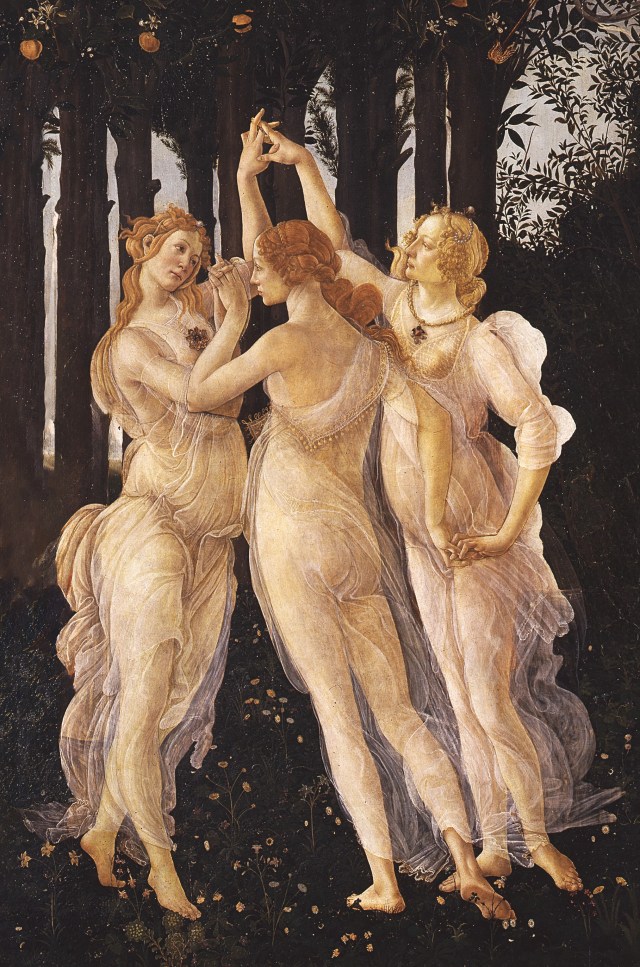
A painting by Sandro Botticelli showing the Three Graces.Wikimedia Commons
Primavera by Sandro Botticelli

Grace, it turns out, always needs another. One grace by itself would be incomplete—a gift received without gratitude, for example. The women in the painting stand on tiptoes, suggesting motion. Their graceful dance of reciprocity illustrates their bond of friendship. That’s grace, first-century style.

In the modern West, we value a gift with no strings attached because it preserves our autonomy—we aren’t beholden to anyone. In Paul’s collectivist context, gift giving was never an isolated act but part of a perpetual dance between giver and receiver which created interdependency and ongoing delight.

A gift of grace was an invitation to enter into community, as well as the privileges and obligations that came with it. To accept a gift meant to accept all it entailed, including the duty to return grace to the giver by using the gift in an honorable way. In other words, gifts came with strings attached—in the best way.

Whenever Paul speaks of “grace” that is “given”—and he does so at least 12 times in his letters—he is referring to specific ministry assignments. He says, “To each one of us grace has been given as Christ apportioned it” (Eph. 4:7). He’s not talking about salvific grace; neither is he focused on individual superpowers. He’s about to list ministry roles. His language here matches what he says about his own ministry earlier, in chapter 3, when he claims, “This grace was given me: to preach to the Gentiles the boundless riches of Christ” (3:8). 

The circular dance of grace is evident in Paul’s writing. For him, the grace God gives is more of a ministry assignment than a particular ability. And Paul is explicit about the purpose of these ministry assignments: 

So Christ himself gave the apostles, the prophets, the evangelists, the pastors and teachers, to equip his people for works of service, so that the body of Christ may be built up until we all reach unity in the faith and in the knowledge of the Son of God and become mature, attaining to the whole measure of the fullness of Christ. (4:11–13)

Paul doesn’t speak of spiritual gifts as divine packages that arrive on individual doorsteps but as people sent to build up the church. As we offer our service to our church communities, we give the gifts of those ministries to others. We become the gifts. 

The gifts, or graces, God has given his church are people who cultivate collective maturity by doing what God called them to do. These gifts don’t work in isolation, and they aren’t ours to withhold. As we learned in Sunday school, our little lights weren’t meant to be hidden under bushel baskets. They were meant to shine.

Paul calls all of us to use our God-given gifts on behalf of others. We don’t activate our gifts by focusing on ourselves but by collectively stewarding God’s graces. The pressures of life or the dynamics of our congregations can make us into wallflowers, but we were made for the dance floor.

To withhold our spiritual gifts—our ministries of service and our very selves—is to impoverish our communities. Paul writes that “to each one the manifestation of the Spirit is given for the common good” (1 Cor. 12:7). We don’t just receive the gifts of the Spirit; we are the Spirit’s gifts for one another. 

And these gifts have strings attached. If the church refuses to receive someone working to fulfill their ministry assignment from God, the dance of grace comes to a screeching halt.

Paul’s grace—his calling from God—was to bring the gospel to the Gentiles. Grace compelled Paul to deliver the gift by serving a church that did not always know what to do with him. 

Paul announced himself to the Galatians as “Paul, an apostle—sent not from men nor by a man, but by Jesus Christ and God the Father, who raised him from the dead” (Gal. 1:1). Paul understood his calling as divinely directed. He had been sent. He was a gift. He knew he had no choice but to respond to God’s grace by serving others, even when his service came with great suffering and personal sacrifice. 

I wonder if our spiritual-gifts assessments and personality tests might limit us to our comfort zones when we could be meant for more. Graces don’t always align with our natural gifts and abilities; sometimes God calls us to serve the church in ways that are uncomfortable. The point is not self-fulfillment but service.


Mercy was my lowest score on the spiritual-gifts test I took in the ’90s. Based on that test, it was fitting for me to become a Bible professor rather than a hospice nurse. A caregiving role is not a natural fit for me. However, God recently gave me a new assignment supporting a family member with dementia. To my surprise, the journey has been sweet so far. I can sense the Spirit’s empowerment as I collaborate with fellow believers who are also there to help. I would have missed so much by saying no to this assignment.

That spiritual gifts assessment didn’t get it quite right. It assumed I needed to look within myself to discover a hidden spiritual superpower that would help me decide how to spend my life. A better approach is to prayerfully ask God, together with our community, where he wants each of us to serve and then seek to steward those opportunities faithfully. Callings are often discerned communally. 

We need each other to become the kind of Christian community through which God’s presence is made manifest to the world. That’s the only way we can experience the fullness of God’s grace in every sense of the word. 

Carmen Joy Imes is associate professor of Old Testament at Biola University and author of Bearing God’s Name and Being God’s Image. She’s currently writing her next book, Becoming God’s Family: Why the Church Still Matters.

Books
Review

Would You Rather Be Free from Sin or from State Regulation?

For Christians, the answer is clear. But that shouldn’t entail a light regard for religious, economic, and political liberty.

A snake with pieces made of a column
Christianity Today January 16, 2025
Illustration by Mallory Rentsch Tlapek / Source Images: WikiMedia Commons

We use the words freedom and liberty frequently but often loosely and inconsistently. In his new book, Called to Freedom: Retrieving Christian Liberty in an Age of License, Brad Littlejohn clarifies the uses and abuses of these terms and constructs a Christian account of liberty to incorporate its various dimensions. Well-written, clear, and concise, the book should not fail to illuminate and stimulate.

Littlejohn, founder of the Davenant Institute, begins by identifying some paradoxes that provoke the need for such a book. Unlimited freedom is impossible for humans. We’re inevitably in bondage to something. Yet some sorts of bondage are liberating, while others are dehumanizing. Our present culture seeks ever-increasing freedom yet has fallen into some of the worst kinds of bondage. The first chapter thus surveys various conceptions of freedom. Littlejohn aspires to “present an alternative account of freedom that navigates among the various poles.”

The second and third chapters discuss freedom as it pertains specifically to salvation in Christ. Littlejohn first discusses “spiritual freedom,” which Christians receive in justification. He describes justification as a once-for-all freedom from the burden of doing good works to earn everlasting life. He distinguishes such spiritual freedom from the absence of political and moral restraints. Littlejohn then turns to “moral freedom,” the Spirit’s gradual liberation of Christians from bondage to indwelling sin. Here, he gives extended attention to ancient pagan virtue theory, acknowledging both its useful insights and the ultimate vanity of non-Christian virtue.

The remaining four chapters address freedom in various dimensions of broader social life. Chapter 4 focuses on “political freedom.” Here, Littlejohn compares two competing philosophical theories: liberty of political right and liberty of political rights. The former characterized traditional societies that used constraints and incentives to steer their people toward making good choices that furthered the common good. The latter characterizes modern liberal societies dedicated to limited government and individual freedom.

Littlejohn notes strengths and weaknesses of each conception. He also compares the tolerance of early liberals, which still presumed the existence of objective right and wrong, from more recent libertine versions of liberalism that glorify lifestyle diversity for its own sake. Littlejohn advocates a third way of thinking about political liberty: the “liberty of law” or “freedom as self-government.” From this perspective, the real danger isn’t authority itself but arbitrary authority unconstrained by law.

Chapter 5 reflects on freedom in light of modern technology. Littlejohn recognizes the goodness of technology insofar as it brings “the original hidden glories of creation to full expression” and mitigates the curse against sin described in Genesis 3. But we’re prone to seek a false freedom through technology, a liberation from the limits of creaturehood. Littlejohn thinks the digital realm is especially dangerous in this regard. Perhaps worse, biotechnology threatens to transform the purpose of health care from restoring an ailing body to overcoming human nature. Just because we can do something doesn’t mean we should.

Chapter 6 turns to freedom in the marketplace. Littlejohn identifies two competing visions of economic freedom: One focuses on individual liberty (especially for consumers), and another pursues collective liberty for the nation as a whole. He believes most American Christians think of a “free market” as maximizing consumer choices, but he argues that consumerism proves to be a false freedom. He also discusses the enslaving vices of both greed and prodigality, claiming that the “right relation of the Christian to wealth is one of grateful detachment.”

The final chapter considers religious liberty. Littlejohn suspects that our modern intuitions about freedom are most likely to mislead us here. He says Christians have “strong grounds both theological and prudential” to support “generous protections and exemptions for individual conscience claims.” But he warns against turning religious liberty into libertinism or allowing it to weaken the church’s public witness.

To this end, he first describes Martin Luther’s conception of religious liberty, which resembles modern ideas. He then outlines the “classical Protestant theory of religious liberty,” with which he sympathizes. The latter held that civil leaders can’t coerce the conscience but have authority to promote Christianity, support the church, and prohibit false teaching and worship that harm the community—although it’s often wise for leaders not to wield this authority. Littlejohn urges his readers to “get real” about religious liberty and recognize that every society embodies some vision about what is right and wrong.

Littlejohn’s work has a great many strengths. One of its overarching themes might be framed as a choice: Would you rather be inwardly free from bondage to sin while remaining outwardly unfree, or enjoy maximal outward freedom while remaining inwardly enslaved? Consider the virtuous Christian locked in prison for his faith and the “free” American addicted to alcohol, pornography, or shopping. Littlejohn deserves commendation for clearly explaining why the first scenario is preferable to the second.

A related and equally helpful theme running through the book is that a society with many outward freedoms will function well only if its citizens are virtuous, or inwardly free. As Littlejohn puts it, “a free government … depends on a virtuous people.” He notes that citizens capable of governing themselves won’t need draconian laws or ubiquitous policing (chapter 4), that people who are honest in business won’t require numerous economic regulations (chapter 6), and that a community marked by the virtue of tolerance can exist peacefully amid differences when granted religious liberty (chapter 7). Only morally mature people will use outward freedoms well. Outwardly free societies with morally immature people face many troubles. Littlejohn also deserves credit for highlighting these important truths.

Because Littlejohn deals with so many issues that intersect with competing claims about liberty, most readers will probably find themselves arguing with him at one point or another. For my part, I wonder if, in his understandable zeal to expose dangerous false promises in what we typically call the “free market” and “religious liberty,” he has understated the genuine goodness of these freedoms and granted too much authority to civil leaders to constrain them for a nebulous “common good.”

To be fair, Littlejohn seems to assume a readership prone to be naively enthusiastic about free markets and religious liberty, and he wishes to challenge them. Had he envisioned theocratic socialists as his primary audience, his emphases undoubtedly would have differed. Littlejohn also isn’t overly political, in the sense of prescribing specific public-policy positions, and when he does venture into this territory, he ordinarily identifies both strengths and weaknesses of various opinions. Moreover, he states that prudence often advises civil officials not to exercise all the power they have in principle.

That said, it’s worth raising a few issues. On a general level, Littlejohn at times seems to jump from the observation that without certain virtues, people won’t use their outward freedoms well the conclusion that civil officials may therefore legitimately restrict these freedoms. But although the observation is valid, the conclusion doesn’t necessarily follow. On what basis do civil officials have authority, for example, to restrict market transactions or prohibit non-Christian religions for the “common good” when no force or fraud is involved?

Perhaps instructive is Littlejohn’s understanding of civil authorities as “fathers of their people” who ought to “exercise paternal care” for them. There is some similarity between fathers and civil magistrates, but there are also so many differences that it seems dangerous to invoke this analogy as grounds for specific government regulations. For one thing, fathers have extensive authority over even minute details of their children’s lives. On that analogy, civil officials could regulate almost anything. Perhaps even worse, the analogy presumes that citizens are children. This seems to work at cross-purposes to Littlejohn’s oft-stated ideal that citizens be morally mature and self-governing.

We see another reason for Littlejohn’s openness to extensive government authority in his support for the “classical Protestant theory of religious liberty.” He explains this theory as follows: In Romans 13 and 1 Peter 2, God calls civil authorities to punish evil and praise the good (although not, contra Littlejohn, to “reward” or “promote” the good). The natural moral law defines what is evil and good. The Ten Commandments summarize the natural moral law. This means, in Littlejohn’s telling, that civil officials have authority to enforce the “full scope” of the Ten Commandments.

But there’s a problem with this reasoning. The fact that civil officials punish evil and praise the good doesn’t entail giving them jurisdiction over all that is evil and good. What’s more, the natural moral law—what we know about right and wrong from the testimony of nature—doesn’t provide nearly enough guidance for civil authorities on which religion to promote or restrain. The testimony of nature itself doesn’t reveal truths about the Trinity, atonement for sin, the church, and other core matters.

At best, Littlejohn’s belief that civil magistrates may restrain non-Christian worship and proselytizing needs more extensive argument. Could Scripture provide it? One might appeal to the precedent of Old Testament kings under the Mosaic theocracy, which is exactly what many pre-modern Christian theologians did. But since contemporary political communities are not God’s holy people, in redemptive covenant with God, such appeals are highly problematic. Littlejohn briefly glances at these issues but doesn’t really discuss them.

At one point, Littlejohn states that Christians can disregard ungodly rulers when they issue clear commands to transgress Scripture. Yet in other cases, he argues, we can cheerfully tolerate them. Are there really no other instances when Christians might justly disregard such rulers? When rulers act contrary to the laws of their own community, for example, shouldn’t citizens commit to following the law instead?

Littlejohn himself, when discussing political freedom as liberty under law, appeals to the classical notion that law should be consensual. In other words, it ought to emerge from “time-tested customs and communal practices, unwritten laws that written laws should respect.” This is indeed a noble idea. But if we take it seriously, it requires the people to have a great deal of independence to forge their own ways of life, which entails corresponding limitations on civil authority. It would have been interesting to see Littlejohn develop this theme and reflect more on its implications.

Even if Littlejohn’s conception of the extent of civil authority needs further defense, his larger perspective on Christian liberty is solid, insightful, and sometimes eloquent. Called to Freedom usefully clarifies the issues at stake, even if it doesn’t settle all of them. It should stimulate, but not end, important discussions on what it means to be free.

David VanDrunen is a professor of systematic theology and Christian ethics at Westminster Seminary California. He is the author of Politics after Christendom: Political Theology in a Fractured World.

News

How Pepperdine University Is Helping Fight the LA Fires

When water was in short supply, the Christian school’s reservoirs helped out.

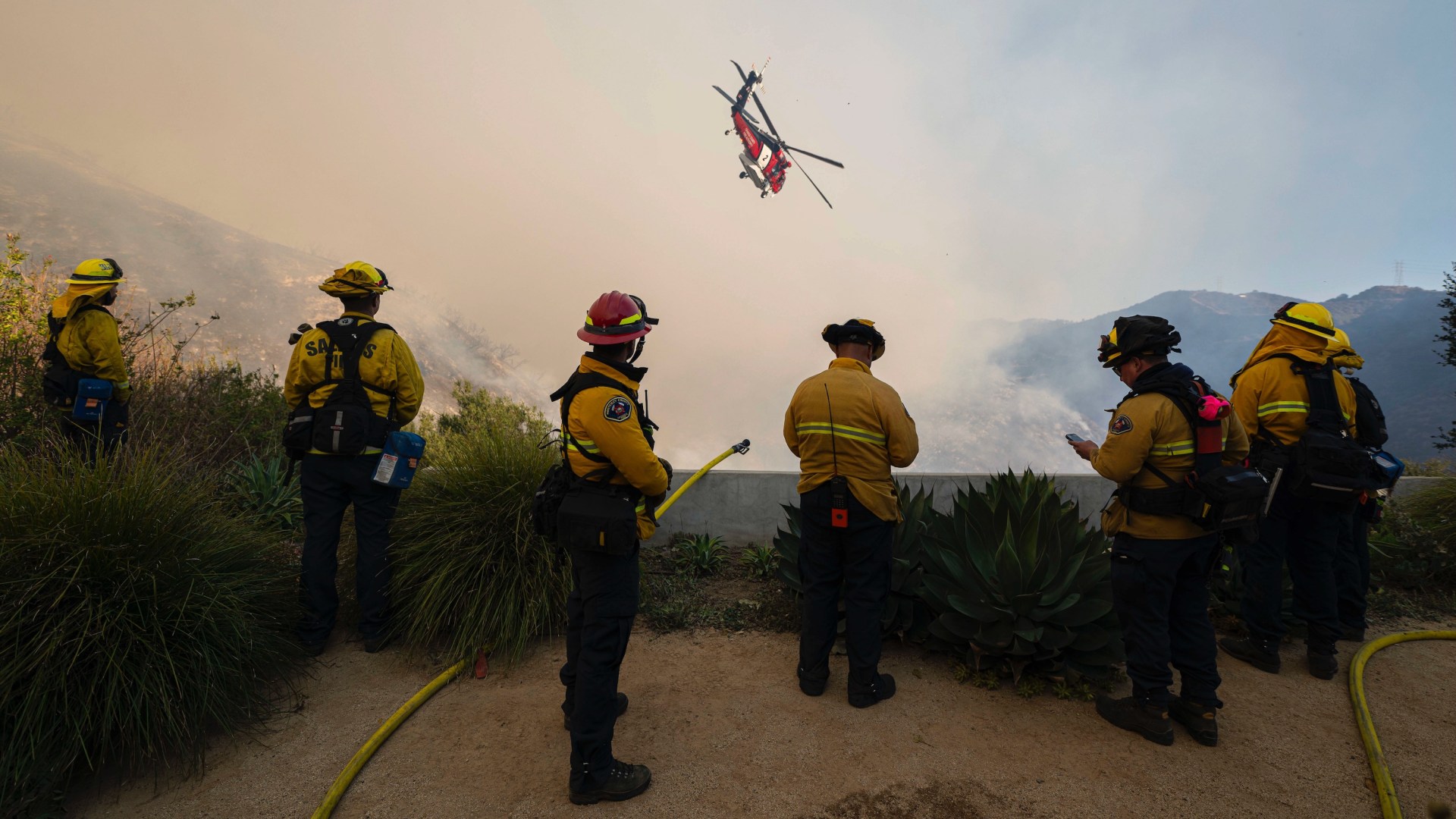
An LA County helicopter does a water drop on the Palisade Fire in Los Angeles.

An LA County helicopter comes in to make a water drop on the Palisade Fire on January 11, 2025.

Christianity Today January 15, 2025
Photo by Jon Putman / NurPhoto

Even as wildfires burn neighborhoods nearby, destroying the homes of some faculty and students, Pepperdine University is starting its spring semester by helping local firefighters in Los Angeles. 

With firefighters in the area facing water shortages, the Christian university in Malibu has provided essential help by giving them access to the university’s two water reservoirs, which hold the school’s recycled and treated water. Helicopters suck up the water and can transfer it to firefighters on the ground or make water drops over the fires. 

California governor Gavin Newsom shared a video of an LA County Fire Department helicopter pulling water from one of Pepperdine’s lakes, saying, “Multiple water refills in just a matter of minutes.”

“Pepperdine has a close, long-lasting relationship with the Los Angeles County Fire Department,” said Ricky Eldridge, associate vice president at Pepperdine University and leader of the Center for Sustainability, in a statement to CT. The school ensures “its lakes are available for them, along with any other jurisdictions fighting fires in the region (e.g., Cal Fire).”

The two lakes exist because Pepperdine designed its Malibu campus in the early 1970s with both fire safety and water conservation in mind. The school reports it has saved 4 billion gallons of water since 1972—enough to fill over 6,000 Olympic-sized swimming pools. 

“This duty arises out of our belief that we are called to respect and care for the awesome gifts that God has bestowed upon us,” the university said in its sustainability policy

Due to the tens of thousands of acres burning in the Los Angeles area, water supplies available to Los Angeles firefighters started to run short during the initial wildfire attack last week. The water shortages produced dramatic scenes, like a man begging a firefighter to turn the little remaining water on his home, according to The New York Times

The problem was like putting too many straws in a cup of water, said Cal Fire public information officer Colin Noyes. 

If you put one straw in a cup of water, “it’s going to take a while to empty it,” he said in an interview with CT. “But if you put too many [in] all at once trying to do all these different things—and you use the same water supply—you’re going to have issues, no matter where you are around the state.”

Santa Ana wind gusts of up to 70 miles per hour have continued to threaten Los Angeles this week, which could lead to “explosive fire growth,” according to the National Weather Service. As of early Wednesday, the Palisades Fire was 18 percent contained, and the Eaton Fire was 35 percent contained. The fires have killed at least 25 people, and over a dozen are missing.

Pepperdine just survived the Franklin Fire in December, with students sheltering in place in the campus’s fireproof buildings. The school reported that the Franklin Fire in December burned brush that helped keep the Palisades Fire from spreading to Pepperdine.

Since the construction of the campus in 1972, Pepperdine has used recycled water as its main water source for irrigation and fire fighting. Drinking water, which becomes wastewater, is sent to one of two treatment facilities: the Tapia Water Reclamation Facility or the Malibu Mesa Water Reclamation Plant (a facility that Pepperdine helped pay to build). The water is then recycled back into the lakes. 

Eldridge said Pepperdine is unique in that approximately 97 percent of campus irrigation comes from recycled water. 

Additionally, the material collected from the bottom of the lakes during routine maintenance becomes a natural fertilizer around campus.

Water conservation has been a top priority at Pepperdine to try to combat the historically water-scarce region.

“Water supplies may only last another 20 years,” Pepperdine’s website states. “Many consider water availability the most considerable environmental concern facing California.” 

The university is also helping firefighting by allowing helicopters to land in Alumni Park, a large green space on campus. Additionally, the campus is being used by the city of Malibu’s Emergency Operations Committee as a temporary headquarters and by SoCalGas as an incident command center. 

Pepperdine has been no stranger to wildfires since the construction of its Malibu campus in 1972. The university has helped firefighters with several past fires, like the 2018 Woolsey Fire.  

The fire resistance of campus structures, combined with a shelter-in-place policy that was developed with the LA Fire Department, is why the Pepperdine community can remain rather than evacuate like its neighbors when fires approach. The policy has been implemented several times, including during the Woolsey Fire in 2018 and the Franklin Fire early last month.

When LA firefighters use the Pepperdine lakes, the school takes extra maintenance measures. 

“At certain times,” Eldridge said, “including when the region is experiencing ‘Red Flag’ conditions or the fire department is indicating they may wish to use the lakes, the university proactively increases the amount of water available in its lakes for fire suppression purposes. It also has the ability to efficiently and effectively raise and replenish its lakes as necessary to support fire resources at a rate consistent with fire department operations and demand.”

Pepperdine’s ability to control the water level in its lakes ensures that the increased use will not diminish the school’s water supply for the spring semester. 

Due to the fires, the school delayed in-person classes. It has started the spring classes online and is preparing to return to in-person classes on January 21. 

In a Monday briefing, president Jim Gash emphasized Pepperdine’s commitment to the local community and stressed the importance of praying and drawing near to God as the process of rebuilding continues into the coming weeks.

“I am confident, too, in the steadfast hope we have, even in the midst of ongoing trials,” he told the school last week. “As Paul reminds us in 2 Corinthians 4, ‘We are hard pressed on every side, but not crushed; perplexed, but not in despair; persecuted, but not abandoned; struck down, but not destroyed.’ And as the Psalmist assures us in Psalm 46, ‘God is our refuge and strength, an ever-present help in trouble.’”

Correction: An earlier version of this story misstated that Pepperdine’s recycled water can be used for everyday tasks like laundry. It is used solely for irrigation and fire suppression.

News

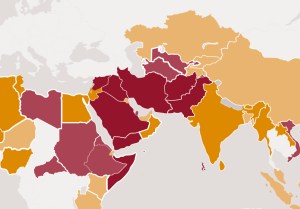
The 50 Most Dangerous Countries for Christians Get More Violent in 2025

Around the world, believers increasingly confront the threat of murder, unlawful detentions, abductions, and property destruction.

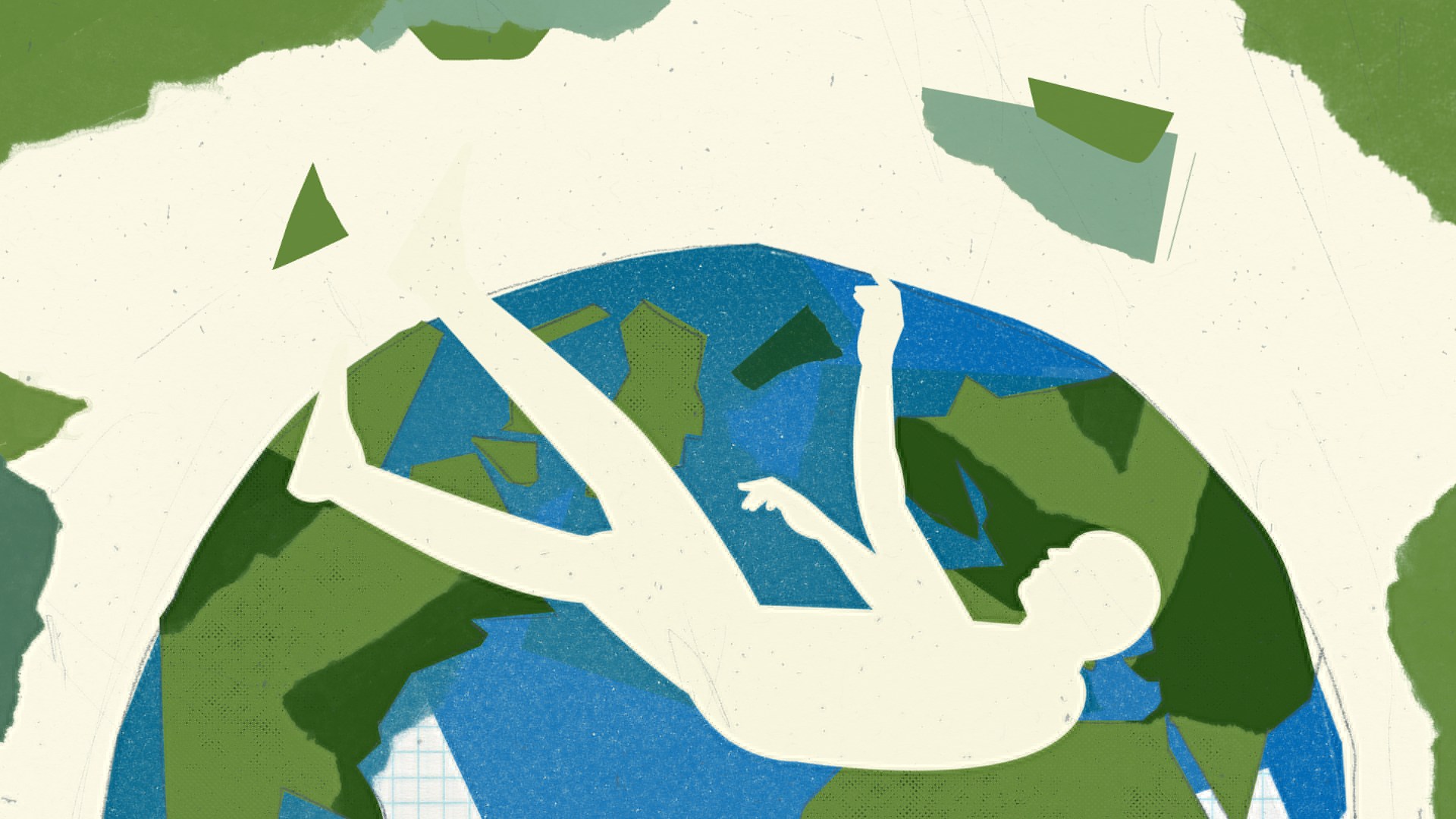
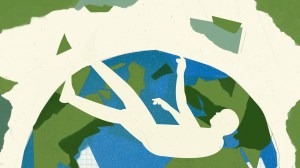
The silhouette of a person falling in the earth
Christianity Today January 15, 2025
Illustration by Kumé Pather

Sometime in the past year, Daniel stopped meeting his Christian friends at cafés for tea and long talks about their faith. 

Daily life had grown too dangerous in the country of Yemen, a poor country in the Arabian Peninsula, currently in its tenth year of civil war. Daniel (his pseudonym for security reasons) has felt the discouraging effects of this isolation, which felt necessary to his community because of increasing violence against Christians in the country. 

“I am really afraid that these people are on their way of not having a strong faith,” he said. But the current geopolitical climate means his loneliness is likely to persist. 

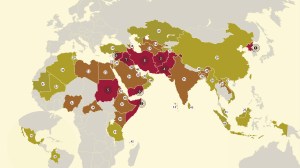
The relentless bloodshed of civil wars and other deadly conflicts in Yemen, as well as in Sudan, Somalia, and Myanmar, has traumatized many and left them homeless or bereft of loved ones. Increasingly, these hostilities have crippled the local church, according to the 2025 edition of the World Watch List (WWL), released today by Open Doors. The number of Christians subjected to violence worldwide increased in 2024, researchers said, and among the 50 countries where persecution is most severe, 29 reported an increase in violence.

Yemen ranks No. 3 on this year’s WWL, thanks to the decade-long conflict ostensibly between the Houthi ethnic rebel group and the central government, but one where Saudi Arabia, the United Arab Emirates, and Iran have all sought control. A weak national government and the Houthis’ rise has left minorities like Christians exposed in the nation of 34 million and shut down their house churches.

In areas controlled by the internationally recognized government, the church hardly fares better. Some Christians have been arrested for leaving Islam and “blaspheming” the religion. In its last reporting period, Open Doors learned of authorities detaining Christians solely because of their faith or because of the false accusations of family members or others as a way to harass them. 

Beyond the threat of violence, Christians suffer from hunger, often cut off from social circles, food, medical attention, financial help, or other resources because they don’t show up to the mosque on Fridays. Houthis have blocked the country’s harbors, limiting what enters the country and forcing people to rely on their connections in the black market. 

“I would love to see people on their Facebook pages or whatever social media saying, ‘Hey, we are praying for you, Yemen!’” Daniel said. 

In Somalia, the Islamist militant group and al-Qaeda affiliate al-Shabab has killed Christians merchants on the spot. But community and family members may also betray loved ones who have converted from Islam, and those accused may face death threats.

Myanmar, a country where Christians make up 8 percent of the population, now sits at No. 13, rising four places from 2024. Most Christians hail from half a dozen ethnic-minority parties. In the Kachin region, Christians have been subjected to what has been described by one activist as a “slow genocide,” particularly after the military coup in 2021. 

Though neither country ranked in the top 50, Russia and Ukraine now sit at No. 56 and No. 69 respectively on WWL’s 2025 list. In Ukraine, much of this persecution pertains to war and an ongoing power struggle within the Orthodox Church. After the government banned the Russian Orthodox Church in 2024, it closed numerous congregations.

In Russian-occupied areas of Ukraine, Russian forces and affiliated groups have targeted churches outside the Russian Orthodox Church. In one incident, Russian militants, or “cossacks,” have seized Ukrainian Greek Catholic churches in Ukraine’s Donetsk region and barred would-be attenders. Russian forces sentenced a priest to 14 years in prison when he opposed the integration of his Ukrainian Orthodox Church diocese into the Russian Orthodox Church.

Meanwhile, in Russia last year on Pentecost Sunday, gunmen in Dagestan, a predominantly Muslim part of the country, attacked two Orthodox churches and a synagogue and killed a priest and more than half a dozen security officers. The government also punished Christians for allegedly discrediting the Russian Armed Forces, distributing religious literature, and conducting unspecified missionary activities.

Violence is one of six categories Open Doors uses to judge the danger a Christian faces in any given country, and it includes killings, detentions without a proper trial, abductions, and property destruction. Christians most at risk for this type of terror include Nigeria and Pakistan, which both earned 16.7 points, the maximum score and the highest of any country. The 20 countries with the highest violence scores include 15 countries in Africa, 3 in South Asia, 1 in Southeast Asia, and 1 in Latin America.

Overall, more than 380 million Christians live in nations with high levels of persecution or discrimination. That’s 1 in 7 Christians worldwide, including 1 in 5 believers in Africa, 2 in 5 in Asia, and 1 in 16 in Latin America.


The violence index for sub-Saharan African countries listed among the 50 most dangerous in the world for Christians has risen by an average of one point since the WWL’s 2023 list. The region is subject to an “incessant flow of attacks on Christians and Christian communities by Islamic terror groups,” Open Doors said.

Sudan’s civil war, fought between its army and an alliance of regional militias, has had devastating consequences for its population, including Christians. WWL’s most recent research period reported 44 Christians killed, 100 Christians sexually assaulted, and 100 Christian homes and businesses attacked. Sudan includes people from both Arab and Indigenous African backgrounds. Christians, who make up the majority of the latter, can face persecution for both their faith and their ethnic identity. Currently, the civil war has displaced more than 11 million out of Sudan’s 49 million people. 

The number of Christians killed for faith-related reasons from October 2023 to September 2024, the period Open Doors analyzed, dropped from 4,998 to 4,476. Researchers attributed the drop to a reduction in violence against Christians in Nigeria, with 3,100 deaths recorded in the 2025 WWL compared to 4,118 in the 2024 WWL. Yet they cautioned that this data should not be interpreted as evidence that attacks on Christians by Boko Haram, Fulani herdsman, Lakurawa, and other groups have decreased. Instead, the violence no longer concentrates in Nigeria’s North Central region but now exists along the borders between Burkina Faso and Mali and Chad and Cameroon. 

Outside Nigeria, the number of Christians killed for their faith increased compared to last year (1,376 in WWL 2025 versus 880 in WWL 2024), largely due to increasing violence in places like the Democratic Republic of the Congo (355 in WWL 2025 versus 261 in WWL 2024) and Burkina Faso (201 in WWL in 2025 versus 31 in WWL 2024, as a result of the action of jihadist groups affiliated with the al-Qaeda network). 

Nearly 5,000 (4,744) Christians around the world were detained without trial, the highest number since 2020. India (No. 11) had 1,629 detentions recorded during the period covered by the report.

The number of attacks on churches or other public properties linked to Christians (which includes the closure of churches), fell from 14,766 cases reported in 2024 to 7,679 in 2025. Much of this comes from Open Doors changing their estimates in China, where researchers cannot confirm reports and data. Where numbers cannot be verified, estimates are given in round numbers of 10, 100, 1,000, or 10,000, assumed to be higher in reality. In the 2024 WWL, they reported 10,000 attacks, compared to 1,000 this year.

In Rwanda, Open Doors said the government closed 4,000 churches, citing unmet building-code issues and pastoral and theological requirements. 

The number of Christians raped or sexually harassed for faith-related reasons rose from 2,622 in WWL 2024 to 3,123 in the WWL 2025 reporting period. The 2025 report acknowledged the challenge of gathering these numbers, given victims’ trauma and cultural taboos. Another sensitive data point: the number of forced marriages of Christians to non-Christians. Open Doors reported that the number increased from 609 cases in WWL 2024 to 821 in the WWL 2025 reporting period.

Acts of violence often force Christians to leave their homes in search of safety elsewhere. Open Doors recorded 183,709 Christians seeking safety in their own countries in WWL 2025, a reduction in comparison with the 278,716 cases in WWL 2024. The number of people leaving their own countries rose from 16,404 in the WWL 2024 to 26,062 in this year’s report.

In most cases, this forced migration cannot be measured precisely, so once again researchers estimated by order of magnitude, emphasizing that estimates are conservative and represent the “absolute minimum” of attacks and atrocities, meaning the actual figures are likely much higher.Open Doors approximated that Azerbaijan forced out 10,000 Christians for faith-related reasons during the reporting period. CT’s 2023 report noted that 100,000 ethnic Armenians had left the Nagorno-Karabakh region after Azerbaijani forces entered. Open Doors said that there are ethnic and political reasons present in this conflict and that the faith component is present but not acute.

In some countries, persecution has driven the church underground, making it hard for researchers to track information on its well-being. This year’s list ranked China as No. 15, up from No. 19 in 2024, noting that “the era of the church’s relatively open presence fades deeper into memory.”

Afghan Christians have responded to the Taliban by marginalizing themselves further, limiting the government’s scope of repression. The Taliban is reportedly working to erase Christian presence in the territory, so most believers have gone underground to avoid being judged by the Taliban’s Islamic courts. Tiny communities meet in homes, trying to share the gospel in a hostile environment.

However, this isolation also makes it challenging to verify potential attacks on Christians. As a result, though Open Doors ranked Afghanistan No. 10 this year, down from No. 1 in 2022, they scored it a 5 for violence, the lowest among the top 10 countries overall.

Algeria went from the 15th to the 19th position, with its overall score dropping by two points since Open Doors reported no new attacks on churches. While this appears to be an encouraging sign, the government’s closure of all Protestant churches in the country has left no room for new attacks. Without violent incidents—and without churches—Algeria’s overall score decreased.

The Christian community in Gaza has shrunk from around 1,000 to barely 700 since the Israel-Hamas War began in October 2023. At least 300 Christians have left the region, with at least 43 reported deaths in Gaza. Open Doors ranks the Palestinian Territories (which includes the West Bank) as No. 62.

Though the Middle East and Africa continue to be dangerous places for Christians, some countries in Southeast Asia and Latin America have improved. 

In Indonesia, the number of attacks on churches and the number of deaths decreased significantly in a time when the country was focused on electing a new president. Efforts to combat terrorism helped the violence score of the fourth-largest nation in the world drop from 11.5 points to 5.7 points, and the nation now ranks No. 59 compared to No. 42 in 2024. In September, Pope Francis visited Jakarta, Indonesia’s capital, as part of an effort to promote interfaith dialogue, especially significant given Indonesia’s status as the largest Muslim-majority country. 

In Colombia, the presence of guerrilla groups and drug cartels with significant territorial control had created a situation where anyone opposing their objectives, including churches, could become a target of violence. In February 2024, a ceasefire reduced violence against Christians, and the country’s total score dropped by two points, placing it at No. 46.

Open Doors also included Nicaragua as a hopeful case, arguing the situation could have been worse without the sanctions imposed by the European Union in 2022 and by the United States and Canada in 2024. These sanctions target 21 individuals, including President Daniel Ortega and his wife, Vice President Rosario Murillo, and involve asset freezes and travel bans. 

During the 12-month World Watch List reporting period, 94 Christians—mostly Roman Catholic priests, but also pastors and missionaries—were expelled from the country. Nicaragua ranked 30 in WWL 2025, the same position as the previous year.

CT previously reported the WWL rankings for 2024, 2023, 2022, 2021, 2020, 2019, 2018, 2017, 2016, 2015, 2014, 2013, and 2012, as well as a spotlight in 2010 on where it’s hardest to believe. CT also asked experts in 2017 whether the United States belongs on persecution lists and compiled the most-read stories of the persecuted church in 2019, 2018, 2017, 2016, and 2015.

Read Open Doors’ full report on the 2024 World Watch List here.

Methodology

Open Doors scores each nation on six components and each category can receive a maximum score of 16.7 for a maximum total score of 100. Researchers consider a score of  more than 40 points as high.

Their methodology takes into account violence, as well the pressure to reject their faith that believers experience from neighbors, friends, extended family, and society as a whole. The total score is determined based on answers from an extensive questionnaire.

  • Private life: the inner life of a Christian and his or her freedom of thought and conscience.
    “How free has a Christian been to relate to God one-on-one in his/her own private space?”

  • Family life: pertaining to the nuclear and extended family of a Christian.
    “How free has a Christian been to live his/her Christian convictions within the circle of the family, and how free have Christian families been to conduct their family life in a Christian way?”

  • Community life: the interactions Christians have with their respective local communities outside their families.
    “How free have Christians been individually and collectively to live their Christian convictions within the local community? How much pressure has the community put on Christians by acts of discrimination, harassment or any other form of persecution?”.

  • National life: the interaction between Christians and the nations they live in. This includes rights and laws, the justice system, the state, and other institutions.
    “How free have Christians been individually and collectively to live their Christian convictions beyond their local community? How much pressure has the legal system put on Christians? How much pressure have agents of supra-local life put on Christians by acts of misinformation, discrimination, harassment or any other form of persecution?”

  • Church life: the collective exercise of freedom of thought and conscience, particularly as regards uniting with fellow Christians in worship, service, and the public expression of their faith without undue interference.
    “How have restrictions, discrimination, harassment or other forms of persecution infringed upon these rights and this collective life of Christian churches, organizations and institutions?”

  • Violence: deprivation of physical freedom, serious physical or mental harm to Christians, or serious damage to their property. This is a category which can affect or inhibit relationships in all other areas of life.
    “How many cases of such violence have there been?”
Inkwell

Chalk Songs

Inkwell January 15, 2025
Photography by Luke Stackpoole

1. Cutting Enough

A time cutting enough to reawaken
some original instinct of prayer.
When the turn to words is a form of sloth.

2. Little Inscription for the Family Bible

The liars and the testifiers and the martyrs of water.

Thaddeus, Theta, bonecancered Carla,
who went out screaming being like an inverted birth.

Let us say a word for all those who died of God,
their hearts, we hope, a little lighter now without us in them.


3. Little Flames

We blinked out.

One by one,
grief by grief,

we who had kept you
you

blinked out.
You grew

into the spaces
between us

until you were as everywhere
as a gas leak.

One real prayer
would set the sky on fire.


4. Somewhere This Side of Sanity

Somewhere this side of sanity
let me have one glimpse of you God.

I have grown tired of gazing at the seams in things,
believing that there are seams in things,

that all reality is ventilated with an absence
that both is and annihilates vision.

If prayer then prayer to be free of the need for it.
If renunciation then of the need to renounce.

To stand neither bored nor alarmed
looking out on your life

like a child’s chalk-drawing a child watches
washed away by a storm.

Christian Wiman is a poet, the former editor of Poetry Magazine, and Author of Zero at the Bone: Fifty Entries Against Despair, along with many other books.

News
Wire Story

Supreme Court Upholds Porn Age-Verification Laws Against First Amendment Challenge

Christians and child safety advocates defend state regulations designed to keep kids from accessing inappropriate material online.

US Supreme Court

Christianity Today Updated June 27, 2025
P_Wei / Getty Images

Key Updates

June 27, 2025

Ruling against the online porn industry and those who object on free speech grounds, the Supreme Court has affirmed a Texas law requiring age verification on explicit websites.

In a decision issued Friday, Justice Clarence Thomas wrote that “the power to require age verification is within a State’s authority to prevent children from accessing sexually explicit content.”

The ruling represents the first legal challenge to age-verification restrictions, which have gone into effect in 24 states as measures to protect children from exposure to porn.

This decision delivers a blow to an industry that profits by bypassing parental oversight and flooding the internet with unfiltered, explicit content,” Colorado Christian University’s think tank, the Centennial Institute, wrote in response. “The notion that any adult content provider can make their material available to anyone, at any time, without restraint is incompatible with the constitutional rights of parents to protect the upbringing of their children.”

Family Policy Alliance, the lobbying partner of the Christian ministry Focus on the Family, celebrated the decision as “the beginning of the end of Big Porn companies corrupting our kids’ views of romance and sexual intimacy.”

Update by CT’s Kate Shellnutt.

January 15, 2025

Laws in 20 states aimed at shielding minors from online pornography are under fire as the US Supreme Court hears a legal challenge Wednesday with the Southern Baptist Ethics & Religious Liberty Commission (ERLC) among many interceding for the Texas law at the center of the case.

At issue is Texas House Bill 1181, one of a string of 20 such laws passed since Louisiana began the charge in 2022 to require websites containing at least 33 percent pornographic materials to verify that a user is at least 18 years old.

The Free Speech Coalition, an adult entertainment industry trade association, is challenging the laws and has a hearing before the High Court, arguing that the regulations endanger free speech and privacy rights of site users. The Texas case is appealed from the US Fifth Circuit, which upheld for Texas.

The ERLC, in a brief filed November 22, said the US Constitution does not prohibit states from regulating materials that are obscene to minors, and presented historical evidence dating to the 17th century.

“The Fifth Circuit’s decision aligns with the history of State regulation of obscenity and this Court’s tradition of respecting the broad police powers enjoyed by the States to protect minors from obscene entertainment,” the ERLC said in the brief. “While Texas might have done more, it legislated only as much as was necessary to protect children from exposure to harmful, obscene sexual materials. H.B. 1181 accords with the history of State regulation of material that is obscene for minors, and so it is plainly constitutional.”

As Christianity Today previously reported, Texas’ age-verification bill was sponsored by state senator Angela Paxton, a member of Prestwood Baptist Church, and drafted in consultation with Prestonwood pastor Mike Buster and Christian child safety advocate Chris McKenna.

Tennessee’s law, originally scheduled to take effect January 1, 2025, was only allowed to take effect late Tuesday when the US Court of Appeals for the Sixth Circuitstayed an injunction the Free Speech Coalition had secured in December to block the law’s implementation. In Georgia, a law passed in 2024 is set to take effect in July.

In response, the most-visited adult website Pornhub has blocked access to its site in most of the states where age verification laws have been passed, leaving access available in Georgia, Louisiana and Tennessee, CNN reported.

Nearly 60 lawmakers from 15 of the states where laws are in effect jointly filed an amicus brief in support of the Texas law—and by extension their own.

“In sum, speech regulations are scrutinized more leniently, and First Amendment protections are at their weakest when children are at risk; where no criminal prosecution or total ban or prior restraint or viewpoint discrimination is present; where the law regulates conduct; and where the content is sexually graphic and is broadly disseminated in a manner that may expose children,” reads the brief submitted by lawmakers. “H. B. 1181 is just such a law. Its sole purpose is to restrict children’s access to sexually graphic material.”

Legislators signing the brief, filed November 15, 2024, represented Alabama, Arkansas, Florida, Idaho, Indiana, Kansas, Kentucky, Louisiana, Mississippi, Montana, Nebraska, North and South Carolina, Tennessee, and Utah. In addition to the aforenamed states and Texas, similar laws are in effect in Virginia, South Dakota, and Oklahoma.

The ERLC also supports the state laws on moral grounds in concert with Southern Baptist beliefs.

“As articulated in their statement of faith, Southern Baptists believe that God gave all of humanity free choice when it comes to questions of morality,” the ERLC wrote, referencing the Baptist Faith & Message 2000. “But minors often lack the developmental capacity or moral maturity to know how to exercise that free choice responsibly.

“Thus, Southern Baptists believe it is important to structure society and society’s rules to maximize the ability to educate and train minors on their social and moral responsibilities. And while it is primarily the role of families to provide this education and training, the States certainly have an important role to play in this process—most significantly by protecting the ability of families to perform their role.”

Laura Schlegel, a Republican Louisiana representative who authored the first successful online age verification law in the nation, is also a licensed professional counselor and certified sex addiction therapist. Exposure to porn harms children and adolescents, she said in her brief.

Girls who view pornography are more likely to see themselves as objects of male pleasure, struggle with self-esteem issues, have higher rates of self-harm and suffer more vulnerability to sexual exploitation; while boys develop unrealistic and harmful attitudes toward sex and relationships that lead to increased aggression and difficulties in forming genuine intimate connections, Schlegel said. Anxiety, depression and engagement in risky sexual behavior are pronounced.

“Protecting minors from obscene content isn’t just a compelling interest legally,” Schlegel said, “it is a compelling, bipartisan issue at every kitchen table in this country.”

McKenna, founder of Protect Young Eyes, told CT in 2023, “I believe that church leaders should be showing up in flocks to support legislation that works toward creating safer digital spaces for children. Families need more help.”

Theology

God Redeems Even as Wildfires Spread

Contributor

I’m drawn to Isaiah’s words of comfort during a time of disruption and instability.

A fire in California
Christianity Today January 14, 2025
Daniel Lincoln / Unsplash

A few days ago, the world around me exploded into flames. Sparked by an unprecedented wind event with 100-mile-per-hour gusts, six wildfires engulfed huge swaths of the greater Los Angeles region. I live just south of where the Eaton fire erupted, which has damaged or destroyed more than 7,000 buildings and left at least 16 people dead. Even now, the fires continue to rage, with the forecast predicting a new round of wind events that threaten to expand and extend the unprecedented destruction.

For the past 14 years, I have taught at Fuller Theological Seminary, located in Pasadena near the epicenter of the catastrophe. Although my family’s home remains intact with only minor damage, the same cannot be said for so many others connected to Fuller or in my broader community. I know of at least eight faculty, staff, and students at Fuller whose homes went up in flames.

But we’re not alone. Fuller is but a microcosm of all that has been lost in our area. Entire neighborhoods—homes, businesses, churches, schools, parks, and libraries—now sit in smoldering ash.

It’s as overwhelming as it is surreal. Some have said that these once-quaint residential areas now look like the set of a postapocalyptic movie. But the images I’ve seen of my daughters’ burned schools remind me less of postapocalyptic Earth than of an alien landscape.

Of course, given that we live in Southern California, this isn’t the first time our community has been affected by raging wildfires. In the fall of 2020, my family and I had to evacuate from our home in Monrovia along with thousands of others, much like many residents there had to do again this past week. In fact, for many members of our local community, their entire life has been defined by this exact kind of instability and disruption.

But this event has been something altogether different. We’ve had windstorms before. We’ve had fires before. But the pace, scale, and extent of this particular trauma is something new—some even have called it the “new normal.”

Many of these same dynamics were in play for the people of Israel during the time God spoke through the prophet as recorded in Isaiah 43. The Exile was a catastrophic disruption. Some were forcibly removed from the land, and some were privileged enough to remain. Any sense of togetherness or commonality or unity that might have grown from this shared experience was threatened by their separate traumas. It is into this conflicted space and to this traumatized people that God speaks:

Now, this is what the Lord says,

the one who created you, O Jacob,

and formed you, O Israel:

“Don’t be afraid, for I will protect you.

I call you by name, you are mine.

When you pass through the waters, I am with you;

when you pass through the streams, they will not overwhelm you.

When you walk through the fire, you will not be burned;

the flames will not harm you. (Isa. 43:1–2, NET)

In a time of instability and uncertainty, what does God say to his people? I created you (bara), formed you (yatsar), and called you (qara). This is the very same language we read in Genesis when, in the beginning, God creates (bara) the heavens and the earth (1:1), forms (yatsar) the human from the dust of the ground (2:7), and calls (qara) the light “day” and the darkness “night” (1:5). In other words, God reminds Israel that they have quite literally been made for such a time as this.

And what kind of time is this exactly? According to Isaiah 43, it’s a time in which the people of Israel will be passing through flood waters and traversing rising rivers and navigating uncontrolled fires—each of which threatens to overwhelm them at every turn. One would think that the prophet would bring a more reassuring message, especially to a people who longed for nothing more than to go back to the stability and security they knew prior to the Exile.

But that’s not what they get. Instead, God speaks through the prophet Isaiah with this message: There is no going back to a time of stability or security or certainty. There are only cataclysmic waters and catastrophic fires ahead. In fact, for Israel, it is not a matter of if they will encounter these scenarios. It is only a matter of when.

It is therefore all the more significant that, having painted this harrowing picture of what’s to come, God still has the audacity to say, “Don’t be afraid.” And the rationale for why the people need not fear is pretty much the same as the one God always gives: I have redeemed you, and I will be with you. As the waters rise. As the fires bear down upon you. As the land beneath your feet begins to crumble. You are mine. And I am here.

Even though that kind of message pulls on all my evangelical heartstrings, in my more transparent moments, I have to admit that God’s presence sure doesn’t seem like enough to justify all the chaos and uncertainty and loss that are now permanent fixtures in our lives. I will be the first to confess that, more times than not, if given the choice between a stable existence without God or an unstable existence with God, I’d choose stability.

But that is a false binary. The actual, concrete choice we have before us is not returning to a more stable past or suffering through an increasingly unstable present. The real choice is whether we commit ourselves to a paralyzing nostalgia for a past that never was or dare to leap into the unstable and unpredictable future that is to come—diving headlong into a world that does not yet exist.

God makes it clear to Israel that they have been redeemed not from something but for something. God has created them and formed them and called them by name not to save them from instability but to prepare them for it.

Look, I am about to do something new.

Now it begins to happen! Do you not recognize it?

Yes, I will make a road in the wilderness

and paths in the wastelands.

The wild animals honor me,

the jackals and ostriches,

because I put water in the wilderness

and streams in the wastelands,

to quench the thirst of my chosen people,

the people whom I formed for myself,

so they might praise me. (Isa. 43:19–21, NET)

I am about to do a new thing, says God. Rivers in the desert. Water in the wilderness. Drinks for my thirsty people. It all sounds so lovely and refreshing and peaceful, unless you have ever experienced what actually happens to a desert or fire-scorched earth when water suddenly appears: flash floods, toxic runoff, and reshaping of the land on a fundamental level.

Rivers in the desert present an opportunity for much-needed refreshment, but they are also radically destabilizing. New things are always destabilizing. That’s what makes them new. The old is upended, transformed, reconstituted.

When God moves in the world, nothing is ever the same. And when we participate in that newness, not only is there no going back to normal, but also none of us are left unscathed. Just ask Jacob, whose reward for encountering God was a lifetime of instability in the form of a chronic injury—a limp that would forever remind him of how God had created, shaped, and called him (Gen. 32:28).

So as we reflect theologically about wildfires in Los Angeles (or earthquakes in China, or brutal wars in Ukraine and Israel), the question Christians today must ask is this: If we too are being redeemed—not from instability but for instability—what does it look like to participate in God’s ongoing work of destabilizing newness? Especially when we ourselves are constantly in a state of disruption?

It’s surely not the only answer, but as I think about the ways in which God not only shaped Jacob’s life and formed the people of Israel but also calls us today, it strikes me that one way of participating with God’s work in a time of permanent instability is to disrupt the disruption. And given the cascade of overlapping crises we are all facing, I cannot think of anything more disruptive, more scandalous, or maybe even more offensive to contemporary sensibilities than joy.

I’m not talking about some kind of Pollyannish version of happiness that ignores or overlooks the various traumas we have all endured and continue to endure. I’m talking about something deeper and far more hard-won—a wide-eyed acknowledgment that the only thing of which we can be certain is that all of life’s joys are “in spite of” something. Or as Proverbs reminds us, “Even in laughter the heart may ache, and rejoicing may end in grief” (14:13).

In the midst of chaos and loss and disorientation, joy is a rebellious act. It is defiant. It is a willful protest against the world as it has been handed to us. It is neither to pretend as if the rampant fires that surround us don’t exist nor to accept that they will have the final say. Joy, if it is in any sense Christian, is both a fierce commitment to disrupting those destabilizing forces and, at the very same time, a declaration of praise to the God who is always and forever about to do something new.

I would never dare to suggest that this most recent natural disaster should be seen as good because it is somehow preparing us for more chaos. God can and does exchange beauty for ashes for those who are grieving (Isa. 61:3). But it’s still too soon to skip to this part of the story—personally or theologically. The wounds are still too fresh.

At the present moment, all we can do is mourn with those who mourn, open our homes to those who have lost everything, and hold on to the hope that God will be with us as we walk through these fires and prepare for whatever uncertainties are still to come.

As the next few days, weeks, and months unfold here in Southern California, there is no going back to whatever came before. There is no “normalcy” on the horizon. But that’s just as it should be. Fear not, the prophet reminds us. We have been created to witness and collaborate with the work of a God who is always doing something new. And at least in my mind, that’s reason enough to embrace a defiant joy.

Kutter Callaway is the William K. Brehm chair of worship, theology, and the arts; associate dean of the Center for Advanced Theological Studies; and associate professor of theology and culture at Fuller Theological Seminary.

Inkwell

Discordia Concors

Inkwell January 14, 2025
Photography by Daniel Casson

After Emily Dickinson

So, spin the polyphonic song,
thrush after thrush, in one cord bound –
the feathered frays held by this centre
are gathered in a single sound.

Then lose your way, but leave small traces –
thread after thread entwined in blue.
Celestial crash! These rivers braided –
One harmony requires two.

Maya Venters is a Canadian writer, editor, and visual artist. She is currently an MFA candidate at the University of St. Thomas (TX). Her poems have recently appeared in Rattle, The Literary Review of Canada, and Modern Age, among others.

News

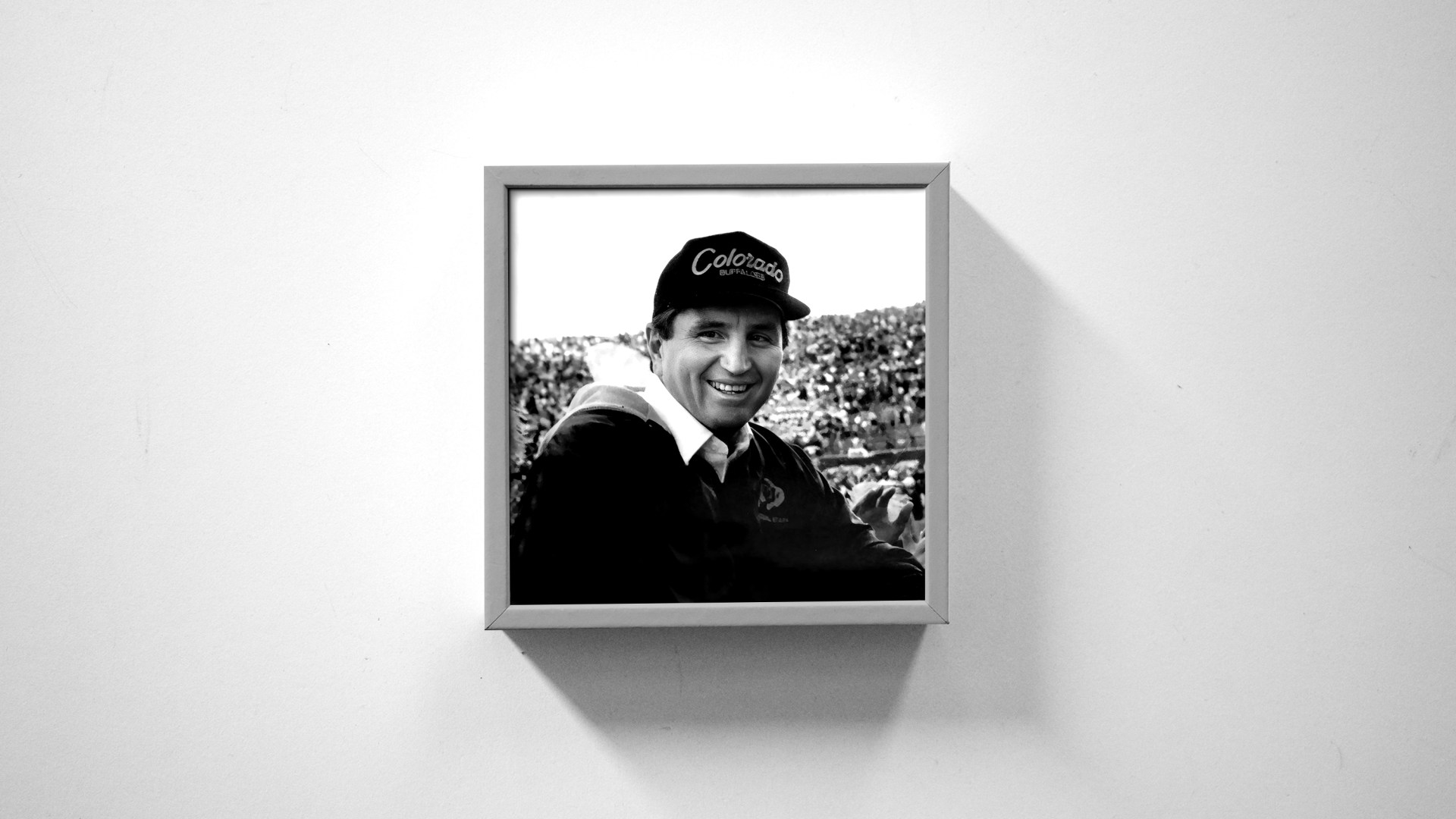
Died: Bill McCartney, Football Coach Who Founded Promise Keepers

He led the Colorado Buffaloes to a national title and started a movement urging men to take responsibility for their faith, families, and communities.

Bill McCartney
Christianity Today January 14, 2025
Illustration by Christianity Today / Source Images: Getty

Bill McCartney filled stadiums as a college football coach. He led the Colorado Buffaloes for 13 seasons, winning three conference championships and one national title. Then, he filled stadiums again with Promise Keepers, the men’s movement that spurred millions to reaffirm commitments to Jesus, their wives and children, and their civic and social responsibilities.

McCartney said Promise Keepers grew out of tension in his own life. His zeal for success as a football coach came into conflict with his desire to be the husband and father he felt God wanted him to be. His struggle to reconcile those tensions led him to launch the ministry that fused evangelical spirituality, big-tent revivalism, sports celebrity, and therapeutic masculinity—and to eventually walk away from coaching while he was still at the top of his game.

He was inducted into the College Football Hall of Fame in 2013. But his greatest legacy was as a Christian. While many Christian football coaches came before him and many after, few burned as bright as McCartney or extended their influence as wide.

“Bill McCartney’s absolute commitment to Jesus Christ was and is a beacon for all of us,” Bill Curry, a coaching contemporary, told Christianity Today. “We will always remember and do our best to honor his memory.”

McCartney died on Friday, January 10, at the age of 84.

McCartney was born on August 22, 1940, and grew up in a working-class neighborhood in Detroit. His mother was a homemaker who raised him and his two brothers. His father, an Irish Catholic who served in the Marines before going to work in an auto factory and rising to leadership in his local union, was a fanatic about three things: the Democratic party, the Catholic church, and Notre Dame football.

At an early age, McCartney learned to love football, too. Friends from that time remembered him as a natural leader, someone who would call the plays in their neighborhood football games even though he was younger than the other kids. Around 8 years old, he decided he wanted to be a coach.

“The idea, the concept, the preparation—all the intangible things associated with football,” he later wrote, “excited me perhaps more than the mere playing of the game.”

Pursuing his dream, he went to the University of Missouri, where he played linebacker and center for hall-of-fame coach Dan Devine. McCartney had average ability but unusual tenacity and an intuitive feel for the game, helping to lead the Tigers to three straight winning seasons.

While at Missouri, McCartney also met his wife, Lyndi Taussig. Raised Methodist, Lyndi converted to Catholicism after marrying McCartney. In the span of eight years, they had four children: Mike, Tom, Kristy, and Marc. In between the births of Mike and Tom, the family moved to Michigan, where McCartney began his climb up the coaching ladder.

The move, like much of McCartney’s life, was shaped by his faith. McCartney had just attended a Cursillo Weekend, a Catholic retreat designed for spiritual renewal. At the retreat he was told that within 72 hours, something would happen that would change his life. When his brother Tom called from Michigan offering him a coaching job, McCartney saw it as the promised event. He and his family packed within a day and headed north.

McCartney ascended quickly in the sports world. At 30, he was head coach for the basketball and football teams at Dearborn Divine Child High School. At 33, he led both teams to state titles. The next year, 1974, legendary coach Bo Schembechler did something he had never done before and hired a high school coach directly to his staff at the University of Michigan.

In the midst of his professional success, though, McCartney began to feel a tinge of concern about his faith. 

“I thought I was a really good Christian!” McCartney later reflected. “After all, I went to mass every day, I said my prayers, and I tried to live by the Golden Rule.”

But deep down, he felt something was missing. He struggled with alcohol consumption, unable to stop at just one drink, and felt his professional ambition dominating his life. 

“Nothing would stand in my way. Not Lyndi. Not my children. Not anything,” he recalled.

When he met Chuck Heater in 1974, a running back for the Michigan team, McCartney became intrigued with the young man’s poise, maturity, and sense of peace. He asked Heater what made him different, and the athlete invited him to a weekend with Athletes in Action, a sports ministry under the umbrella of Campus Crusade for Christ (now known as Cru).

McCartney was stirred by the Christian athletes talking about their intimate relationship with Jesus. He committed his life to Christ and immediately began encouraging others to do the same. 

“I thought he was downright obnoxious about it,” recalled Lyndi, who later had an evangelical experience of her own. “Every time he turned around, he was praising the Lord for everything.”

McCartney’s born-again faith brought him into the orbit of an emerging evangelical sports subculture. Yet he continued attending Mass and identified as a “born-again Catholic.” His spiritual life was shaped by Word of God, a charismatic Catholic group in Ann Arbor, Michigan. It was not until 1988 that McCartney stopped regularly attending Mass and joined a Protestant church. He became a member of a Vineyard congregation in Boulder, Colorado, a church where McCartney’s charismatic spirituality could be nurtured. 

By that time, McCartney had turned around a moribund Colorado football program, becoming one of college football’s most intriguing and controversial coaches.

His outspoken faith and infusion of religion into the athletic program at a public university brought him frequent critics, and he clashed regularly with the American Civil Liberties Union. 

McCartney agreed to temper some excesses within the program, but he turned up the dial on his public activism, lending his voice to socially conservative causes. He spoke at pro-life rallies and threw his support behind a proposed amendment to the Colorado state constitution that would bar cities from enacting laws to protect LGBTQ people from discrimination. These public stances brought him new waves of supporters in America’s culture wars, but also additional critics. 

His family’s personal life was another source of controversy. Before the 1989 football season, news broke that McCartney’s 19-year-old daughter, Kristy, was pregnant—and that Colorado football player Sal Aunese, who tragically died of cancer that fall, was the father. McCartney was accused of not taking care of his own family while trying to impose his morality on the public.

On the football field, the Buffaloes proceeded to win 11 straight games, finishing the year ranked fourth in the country. The next year they won the national championship. 

In between, McCartney and his friend, Dave Wardell—on their way to an event with the Fellowship of Christian Athletes (FCA)—dreamed up the idea for a movement of Christian men who would gather together in football stadiums for renewal and revival; men would then return home empowered to be spiritual leaders.

It started with a small group of 70 men, growing to 4,200 in 1991 and more than 1 million in 1996. Promise Keepers hit its cultural peak in 1997 with a rally in Washington, DC. According to sociologist James Mathisen, it was “the decade’s most unexpected and immediately successful movement within the American church.” 

It was also a flashpoint for controversy and, as historians including Seth Dowland and Kristin Kobes Du Mez have noted, a complex movement that is difficult to categorize.

Some liberal and progressive groups warned that Promise Keepers was designed to impose a right-wing Christian agenda on America. They saw efforts to mobilize Christian men to assert their authority as leaders as an attempt to secure patriarchy, turning back the clock to more oppressive notions of marriage and family.  

Some conservative Christians, meanwhile, criticized Promise Keepers for being too ecumenical, charismatic, and emotional. Advocates of a more aggressive, masculine Christianity, such as Seattle megachurch pastor Mark Driscoll, denounced Promise Keepers for not being manly enough. 

Some evangelicals also resisted the movement’s focus on racial reconciliation, a priority born out of McCartney’s experience as a football coach and established early on as one of Promise Keepers’ core commitments. Rallies featured a racially diverse group of speakers, and McCartney and others urged white Christians to “seek forgiveness for the sins of our fathers and for the same racial oppression that continues to this day.” 

In 1996, nearly 40 percent of the attendees said they disliked the emphasis on racial reconciliation. Even as Promise Keepers’ numbers declined, though, McCartney continued to emphasize the issue. Some observers said the focus on race was responsible for the decline of the men’s movement at the end of the decade. 

McCartney was willing to forge ahead when he believed he was right, regardless of the consequences. That same commitment led him to leave his coaching days behind. 

As he traveled around the country in the early 1990s, calling on Christian men to be better husbands and fathers, his wife, Lyndi, felt neglected. McCartney came to see he was not practicing what he preached. Coaching, he realized, had moved from a “stirring passion” to a “suffocating obsession”—an idol.

So he gave it up.

“A man’s job is to serve his wife and enable her to be everything that God created her to be,” he told journalist Michael Weinreb. “I enjoyed coaching too much. And that’s what pulled me out of it.”

McCartney’s national profile declined significantly in the 21st century, though Promise Keepers continue to stir the fascination of scholars and his coaching career was discussed in sports media. In 2015, ESPN released a documentary on McCartney’s time at Colorado, The Gospel According to Mac.

For his part, he spent little energy focusing on his legacy. Really, he once told the FCA’s magazine, there was only one thing in his life that was important. 

“Nothing compares to the glory of knowing God,” McCartney said. “I’d let everyone know that Jesus Christ is Lord.”

McCartney’s wife, Lyndi, died in 2013. He is survived by the couple’s four children—Michael, Thomas, Kristy, and Marc—and ten grandchildren. One of his grandchildren, T. C. McCartney, is the quarterbacks coach for the New England Patriots. 

“While we mourn his loss, we also celebrate the extraordinary life he lived and the love he shared with everyone around him,” the family said in a statement. “Coach Mac touched countless lives with his unwavering faith, boundless compassion, and enduring legacy as a leader, mentor, and advocate for family, community, and faith.”

A memorial service is being planned. The family asked that donations be made to a local church in his name.

Church Life

Sign Language Bible Translations Have Something to Say to Hearing Christians

You don’t need to know the language to be moved by the translation.

A man doing sign language for the book of Matthew
Christianity Today January 14, 2025
Illustration by Mallory Rentsch Tlapek / Source Images: Biblialsm

A visitor coming to Bible Gateway to look up John 3:16 has 63 options of English translations. For Christians, reading the same verse with an unfamiliar word or changed-up syntax—or in a more contemporary or lyrical version—can illuminate a biblical principle in a fresh way or strengthen the resonance of the passage.

Jost Zetzsche noticed this effect—but to an even stronger degree—when he began watching sign language translations. Zetzsche, a linguist, is the curator of United Bible Societies’ free Translation Insights & Perspectives (TIPs), an online tool that gathers insights from Bible translations in nearly 1,000 languages, including many sign languages. Zetzsche initially believed that adding these languages was just another part of his TIPs assignment.

“But as I began studying the recorded sign language translations,” he said, “I was astonished at how much I as a hearing person could learn from those languages that I had never experienced in others.”

He recently spoke with Ruth Anna Spooner, who is Deaf, and is the lead translator on the American Sign Language Chronological Bible Translation team since 2019 and a trainer for Deaf-translation teams worldwide, to discuss the power of watching these sign language translations as a hearing person. 

This conversation has been edited for length and clarity.

Zetzsche: Let’s start our conversation with one obvious difference between written and sign language translations. The more-than-400 officially recognized sign languages from around the world have several different strategies for dealing with proper names. Some sign languages fingerspell most names and translate some semantically or based on their meaning; others, like Libras (Brazilian Sign Language) translate all names with a meaning-based translation.

In the context of Bible translation, we recognize that names and their meanings are important in the original texts, but they typically lose their meaning in translation into written languages. When they are semantically translated into sign languages, though, they are often rendered not according to the names’ original meaning but by other meaning-based markers, and then often differently from one sign language community to another.

Can you help me understand this?

Spooner: Names are fascinating across languages. We are all familiar with how the same name might be pronounced and spelled differently from one language to another—John (English), Juan (Spanish), Giovanni (Italian), Jean (French), Johan (Dutch), Ivan (Russian), and so forth.

Deaf people give each person what is called a name sign—an invented sign that is uniquely identified with that person. When signing, instead of using the spoken language version of that person’s name (for example, John), the name sign is used to identify and talk about that person. Instead of fingerspelling “RUTH ANNA,” people will use my name sign, which is much more efficient and quicker.

In the Deaf community, a name sign is uniquely assigned to an individual by a Deaf person. Signs may be based on the individual’s appearance, personality, a favorite hobby, or related to the meaning of that individual’s name.

In American Sign Language (ASL) culture, people only get name signs if they are immersed in the Deaf community or if they are frequently discussed historical or contemporary figures (for example, William Shakespeare). Most biblical characters do not already have name signs, so Deaf translation teams often have to invent name signs based on scant data.

But let’s talk about David, whom we know a lot about. We know he was handsome, a man after God’s heart, a shepherd, a giant-slayer, a musician, a poet, a renowned warrior, a king, an adulterer, the father of Solomon. I have seen name signs for David based on the sign for king. Some name signs I’ve seen are based on his music and poetry skills. Other name signs reflect the young shepherd he was when we first meet him, or the giant-slayer he became. There is a lot of variation, and it all depends on what each team decides is the most memorable or most identifiable feature associated with David. What is most memorable or most identifiable might vary from culture to culture as well, depending on what traits are more valued in each country. 

Sometimes when the verses explicitly mention what a name means—for example, Isaac means “laughter”—a sign language translation team might use that as a cue that their name sign should show some association with their sign for that meaning. 

In our ASL translation, Jacob, who was hairless and smooth-skinned, has a name sign that can be back-translated literally to English as “smooth arm skin,” whereas his twin, Esau, who was notoriously hairy, has a name sign that indicates wooly arms. These name signs communicate more meaning to the audience than just the name of the person.  

Zetzsche: The signed names of biblical characters are a way to learn more about them, but sign language seems to communicate even more deeply than that. Like most Christians, I want to understand the feelings of the biblical characters deeply and grasp what they were truly like even from this historical distance. While I realize that any translation is also an interpretation, I have been moved to see how Jesus emotes via the body of the signer.

One example of this is in the story of the Canaanite woman in Matthew 15 in Mexican Sign Language (Lengua de Señas Mexicana, or LSM). Unlike anything I’ve ever read in the written text, the LSM signer shows the depth of Jesus’ conviction, delight, and compassion in the face of the Canaanite woman’s reasoning. I can’t imagine reading that passage now without recalling that intense visualization.

(Watch the video with an English translation.)

Spooner: Anyone who sees a Deaf person signing will quickly notice that they are usually very expressive with their face and body, much more so than the average hearing person using a spoken language. 

In fact, hearing people often feel that Deaf people are too expressive or excessively emotional. But what they don’t realize is how much grammatical work facial expressions are doing in sign languages. So much of sign language grammar is communicated in the face. Contrary to common belief, sign language is not just in the hands. It’s in the hands, and the body posture, and the face—all at once.

If you focus only on the hands, you will miss a ton of important grammatical information that’s happening via facial expressions. Eyebrows up or down (and how far up and how far down they go) can change a sentence into a question, or a question into a challenge, or a statement into a command, for example. The shape of the mouth and the cheek, lip movements, and even tongue movements all are an important part of sign language grammar, too. The position of the head and shifts in the shoulders from one side to the other also communicate a lot of important grammar and linguistic information.

Zetzsche: I had no idea! Yet when I look at the signer in the videos, it feels as if I’m also seeing a lot of emotion. Am I misinterpreting what I see? 

Spooner: You are seeing emotion. That’s another layer of complexity. A lot of the facial expressions are serving grammatical functions, but on top of that, the signer is also manipulating the facial expressions to show emotions and, in the case of storytelling, to perform the personalities of various characters within the story. 

In ASL, for example, a skilled signer can move their eyebrows and incline their head to form a question while at the same time using the eyebrows (as well as the rest of the face) to communicate the emotion behind the question. Is it an annoyed question? An angry question? An innocuous question? A desperate question? Thus, the eyebrows and the rest of the face are simultaneously communicating grammatical and emotional information.  

In the videos on TIPs with their back-translations into written English, you are seeing the signers using their facial expressions to communicate grammar and emotion simultaneously. Facial expressions for emotion and for grammar are often intertwined in ways that make it difficult—even impossible—to separate out when signing. When asking a question, for example, the signer needs to know whether it’s an angry question or a genuinely curious question to sign it correctly. As you, Jost, don’t know a sign language, I imagine that to your eyes, what you see in the videos all looks emotive, which isn’t surprising. It’s wonderful to see that you feel the impact so deeply. But there is a whole other layer (the grammar) going on that you probably are not able to pick up on.

Now let’s discuss why the Matthew 15 story of Jesus with the Canaanite woman presents a lot of challenges for sign language translations. We can translate the words and sentences, but in sign language, because we must embody dialogues and perform them, it is quite impossible to do dialogue neutrally without showing the character’s tone and feelings in that moment.

So when Jesus said, “I was sent only to the lost sheep of Israel,” what was his tone? Was he regretful? Was he firm? Was he kind of playful or teasing? Whatever his tone was, the woman felt she could still come and kneel in front of him, so what does that tell us about his tone? Not unlike stage actors, we translators must figure out, as best we can, what his feelings and tone were. (And then to make it more complicated, maybe Jesus used a different tone compared to what he was really feeling in that moment; if so, we need to show that.) There can be several different views on how a verse—especially with dialogue—ought to be performed.

And then Jesus says, “It is not right to take the children’s bread and toss it to the dogs.” That is such a strange remark—and again, what was his tone? Was he being playful? Was he teasing, or testing, the woman? At what point did Jesus decide he would help her? Before he spoke about the lost sheep of Israel? Or after she knelt before him? Was Jesus initially reluctant to help but then touched by her faith and moved to help her based on that? Or did he know all along that he would help, and he was just doing the conversation for the benefit of the people around him? 

Zetzsche: All of these are considerations when translating a text—or more precisely, the meaning of a text—into a written language, but it’s striking to see how much more urgent these questions of emotions are when translating into sign languages.  

Spooner: Yes, you’re right—for translators, meaning is everything. Deaf translators know that because of the nuanced, performative nature of sign language, the signer showing too little or too much of an emotion can greatly change the meaning of a passage. So we need to make sure our facial expressions and body movements are showing not only the correct grammatical information but also the appropriate level of emotion that fits the situation. 

Matthew doesn’t give us much of an indication of what Jesus’ tone or emotion was when he said these things. This is something we must infer based on scant clues in the passage. In most written translations I’ve seen, they can get away with keeping things at a pretty neutral tone and leave it up to the readers to make their own inferences and interpretations. Such neutrality is often not possible in sign language translations.

Zetzsche: I was also moved by the Russian Sign Language (RSL) version of the paralytic man who was lowered through the roof in Mark 2. In this signed translation, Jesus observes the efforts of the man’s friends from the moment they start digging through the roof. This makes a lot of sense, but it’s only implicitly present in the written text. As Jesus watches the paralyzed man being lowered in front of him, the signer shows that Jesus’ heart—and my heart in response—is overflowing with compassion. The eventual joy of the healed man and the crowd is portrayed in an infectious way that is hard to imagine in written language.


(Watch the video with an English translation.)

Spooner: Yes, seeing something in sign language is often much more poignant than reading words on a page. While I do love reading in English, there is something about seeing the verses in ASL that just makes it hit you in a whole different way.

Maybe it is partly because of the decisions that the signer must make related to conveying attitude and emotion. We are able to see the signer become the characters, which makes them living and breathing in a more tangible and three-dimensional way than merely reading the words on a page. The performance of the signer becomes almost like a movie. We are seeing it before our eyes, not just visualizing it in our heads. So it makes us notice things that we might ordinarily not think about or skim over when we read in a written language. 

My team and I are all Deaf and bilingual in written English and ASL. Several months ago, we worked on some Old Testament passages related to the fall of Judah and the destruction of the Jerusalem temple. We’d read and analyzed these verses before and talked about how to translate them.

But when we filmed it and had the person signing it, we were all taken aback by how truly disgusting the Israelites’ behavior was towards God. No wonder he was so angry with them. Just seeing the Israelites’ actions come to life in the signer’s performance made it more repulsive and heartbreaking. When we got to the part with the actual destruction of the temple, it was like a punch in the gut for us. We felt the grief of that loss and exile more than we had ever felt when reading English translations.

(Watch the video with an English translation)

Sign language translation, even though it communicates the same content and the same meaning as written language translation, brings out layers of the verses that are not usually as noticeable in written language translations. New and different things jump out at you and hit you differently.

Seeing how sign language translations impacted you surprised me. Sometimes I have in my head that people who don’t know sign languages won’t really understand what they’re seeing. But your observations have made me realize that if a hearing non-signer takes the time to study a sign language translation—not merely glance over the videos but study them like you have—then they, too, can see the verses in a new, deeper way and gain fresh insights. You don’t need to know a sign language to be moved by the translation.

addApple PodcastsDown ArrowDown ArrowDown Arrowarrow_left_altLeft ArrowLeft ArrowRight ArrowRight ArrowRight Arrowarrow_up_altUp ArrowUp ArrowAvailable at Amazoncaret-downCloseCloseellipseEmailEmailExpandExpandExternalExternalFacebookfacebook-squarefolderGiftGiftGooglegoogleGoogle KeephamburgerInstagraminstagram-squareLinkLinklinkedin-squareListenListenListenChristianity TodayCT Creative Studio Logologo_orgMegaphoneMenuMenupausePinterestPlayPlayPocketPodcastprintremoveRSSRSSSaveSavesaveSearchSearchsearchSpotifyStitcherTelegramTable of ContentsTable of Contentstwitter-squareWhatsAppXYouTubeYouTube