Signs and stickers still show up around college campuses. Digital ads appear online, and the occasional billboard brazenly advertises a way to help women become “un-pregnant.”
Dobbs v. Jackson Women’s Health Organization created a path to end almost all surgical abortions in Texas and other states with abortion restrictions, but stopping out-of-state advertisements and shipments of abortion pills hasn’t been as easy.
In 2023, the abortion pill (typically a two-pill regimen consisting of mifepristone and misoprostol) was already responsible for approximately 63 percent of abortions in America. Since the Food and Drug Association (FDA) loosened restrictions in 2021, a doctor can prescribe the pill from another state and ship it across the border into states that otherwise forbid it.
“We hear that there are staggering numbers of chemical abortion drugs coming into the state,” said Amy O’Donnell, executive director of Texas Alliance for Life.
Although exact numbers are hard to estimate, she said, from the conversations her organization has had with health providers, abortion drugs are clearly prevalent in Texas.
“These drugs are circumventing our laws and harming women and, sadly, taking the lives of unborn babies in our state,” O’Donnell said.
Mailed abortion pills have changed have changed the landscape of the abortion battle nationwide.
“Unfortunately—especially in pro-life states where there aren’t brick-and-mortar abortion facilities—anyone at any time can purchase abortion pills online,” said Sarah Zagorski, senior director of public relations and communication for Americans United for Life.
Particularly troubling is the fact that there’s no verification that the pills are going to the person they were prescribed for.
“She could be buying them for someone else. She could be stocking them, or a predator or an abuser in her life could be buying them,” Zagorski said.
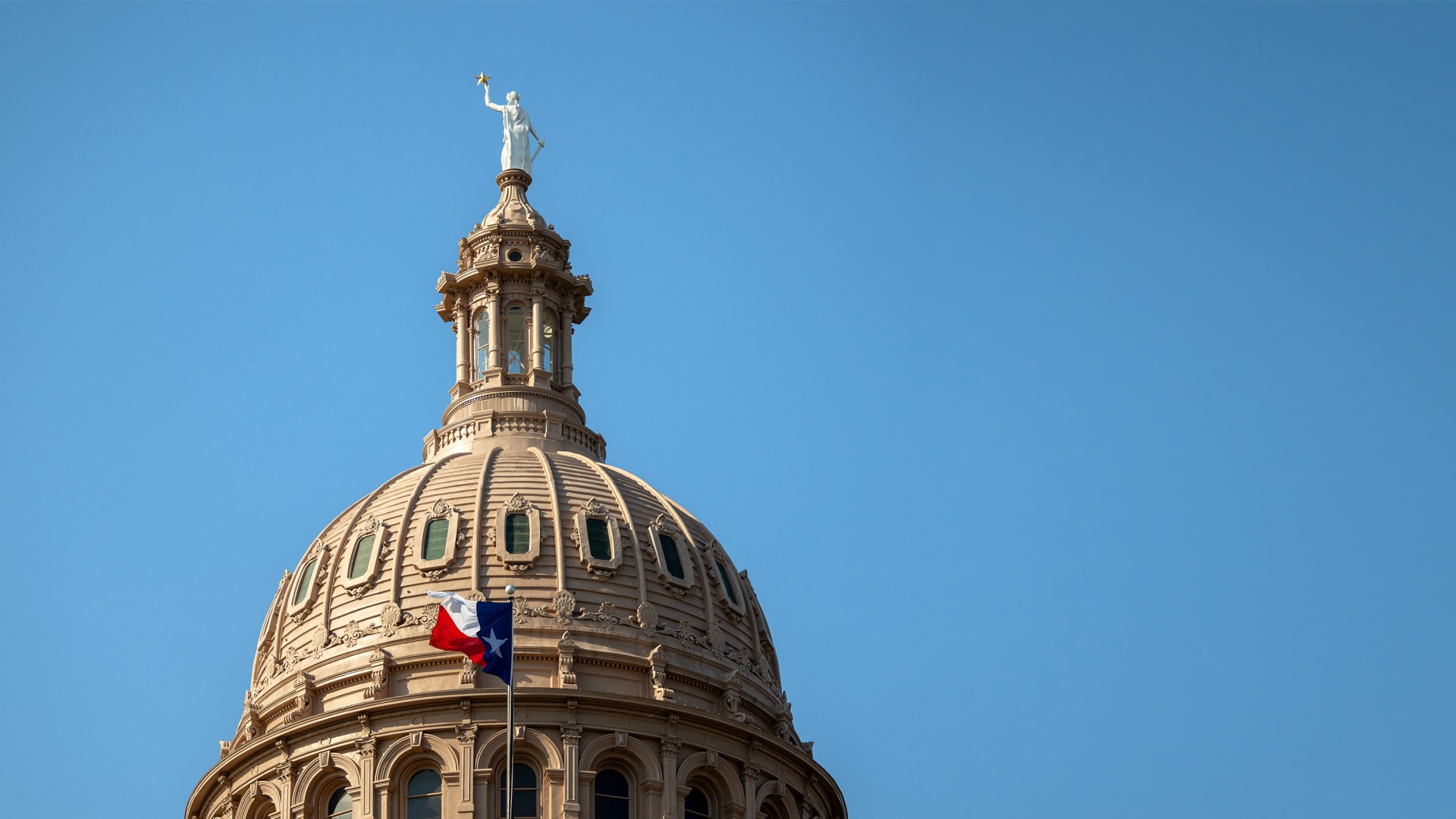
A new law in Texas aims to slow the flow into the Lone Star State. House Bill 7 (HB7), which went into effect on December 4, allows Texans to sue anyone who makes, distributes, mails, or provides abortion pills to people in the state.
John Seago, president of Texas Right to Life, was a vocal supporter of the bill, which he hopes can become a blueprint for other states.
“Plenty of states have banned abortion, but there have not been strong responses to the new kind of trend after Dobbs of mailing abortion pills directly in the pro-life state, so we are very proud to kind of lead the movement in that direction,” Seago said.
By opening the potential for lawsuits by citizens, the goal is to stop companies from taking the risk of shipping into pro-life states and doctors from prescribing them to patients there.
The law is unique in that its approach relies on citizens bringing legal action. A lawsuit could be brought by a woman who is harmed by taking the pill, a family member, or simply someone who becomes aware of the pill being mailed into the state.
For instance, Seago said if a woman finds out her partner has purchased abortion pills to try to get her to end a pregnancy, she could file under this law. Or if a woman sends a screenshot to her friend of a website she ordered pills from, that friend could then sue the company that hosts the website.
Critics of the bill, including the Center for Reproductive Rights, have said it encourages Texans to spy on each other.
“It encourages a culture of surveillance, where the things people do in their own homes are fair game for public oversight,” the center wrote.
Seago believes that isn’t a reasonable argument.
“We’re talking about murder,” he said. “That argument only works if you don’t view abortion as a morally significant action. If I were to report my neighbor for abusing his children, nobody would say I’m being a nosy neighbor. They would say I’m being a good citizen, that I’m trying to protect innocent people in my community.”
He said the same should be true for those who report people involved with illegally shipping abortion drugs.
Seago said it’s important to recognize that this new legislation does not apply to women ordering the pills or licensed physicians in Texas who may be prescribing the drugs for use in miscarriage or other medical emergencies.
“Any Texas physician that’s trying to care for women has nothing to fear from House Bill 7,” Seago said. “This is not targeting them. This is really just targeting those out-of-state doctors and activists that are openly breaking our law and just hoping that they won’t be held accountable for it.”
O’Donnell said her organization had some concerns about an earlier draft of HB7, concerns such as women’s privacy and the potential to create “bounty hunters” by incentivizing non-injured parties to sue, but Texas Alliance for Life supported the amended version, which ultimately passed.
“The new amended language explicitly prohibits disclosure of their personal and medical information in court filings, and that’s critical,” O’Donnell said. “We want to do everything we can to ensure that women feel comfortable walking into the doors of a pregnancy center.”
In the version that passed, she said women are fully protected, which is why Texas Alliance for Life was able to lend its support.
“Our goal is always to hold the illegal abortion providers accountable but not to in any way put women under that enforcement,” O’Donnell said.
She said an amendment to deter bad actors was also key. In the final version, financial incentives are restricted. Non-injured parties can receive only $10,000, which O’Donnell said should prevent people from simply spying on women or neighbors, but maintain the rights of women and those close to them to seek compensation from the harmful effects of the abortion pill.
Seago said it remains to be seen how HB7 will fare in courts against shield laws in pro-choice states—laws that protect abortion providers who are acting legally in their states from being prosecuted under another state’s laws.
Prior to this bill’s passage, an attempt by Texas to sue a New York doctor was dismissed by a judge who cited shield laws.
“Shield laws themselves are a new invention that didn’t exist three years ago,” Seago said. “This is a complete legal fiction that they created: that laws that some activists in blue states created can sabotage the law enforcement of the pro-life state.”
He recognizes the response with legislation like HB7 is also new, but is confident that it will be a strong challenge to shield laws.
Some are not so confident in the strength of HB7. Thomas Jipping, who is a senior legal fellow at the Edwin Meese III Institute for the Rule of Law, said it is an unusual approach.
“To use this to effectively enforce criminal laws is very unusual, and we really don’t have any examples of it to know whether it will be effective,” Jipping said.
HB7 also includes 13 exceptions, including that people can’t use the bill to sue hospitals or physician groups.
“It won’t take much for the other side to reorganize their abortion-pill efforts to make sure that they’re done mostly by these groups, which you can’t use this law against,” Jipping said.
HB7 attempts to address shield laws by saying they cannot be used to defend against a suit under this law. Jipping said this may not hold up though as one state can’t tell another state how to use or enforce its own laws.
“I don’t think that—at least that provision of HB7—is even constitutional.”
But he said that’s true as well of shield laws, which undermine other states’ enforcement of pro-life laws.
He believes the best approach would be for pro-life states to enforce their own criminal laws and charge doctors from other states who are prescribing drugs illegally. This would likely lead to an eventual court case over the constitutionality of shield laws.
“That, I think, is a more credible kind of realistic approach, because otherwise what we’re left with is all sorts of miscellaneous lawsuits by individuals in one state against individual doctors in another state and with all sorts of complications as to how those cases would be litigated,” Jipping said.
Jipping said it’s hard to predict what the Supreme Court might consider if a case made it to that level, but a legal battle over abortion shield laws would likely consider the full faith and credit clause of the Constitution, which requires that states give full faith and credit to the judicial decisions of other states.
“If, for example, the Supreme Court would say State B refusing to cooperate or refusing to honor an indictment from State A violates the full faith and credit clause, then that state shield law would be rendered unconstitutional,” he said.
While the full faith and credit clause has always been part of the Constitution, it hasn’t been the subject of a lot of litigation or Supreme Court decisions, Jipping noted, adding that it’s hard to speculate on how the Supreme Court might rule.
Jipping believes, overall, the Texas HB7 has a low probability of being effective.
“I certainly believe that the cause of life requires creativity and innovation, and some of these approaches might appear to be attractive on the surface but in the long run can be more problematic,” he said.
For instance, if pro-life states use citizens filing suits as a tool to enforce laws, he said Democrat-led states could enact similar legislation to go after issues Republicans care about.
“We do need to find new ways to defend life in the womb, but they have to be credible and potentially effective,” Jipping said. “That’s a challenge, but I’m glad there are a lot of folks out there who are working on that.”
Sue Liebel, Susan B. Anthony Pro Life America’s director of state affairs, is more optimistic the new legislation in Texas might help.
“I don’t think it’ll stop it, but I think it’s one more thing to add some caution for those bad actors,” Liebel said.
She said a key factor is whether the cost of the lawsuits will be enough to counter the amount companies and individuals are profiting off the abortion pill: “There’s so much money to be made that the question is, you know, is the risk worth the reward?”
If the bill is successful, Liebel believes it could serve as a model for other states, and she’s heard some are looking at introducing a bill like that in their states’ next sessions.
Louisiana already has a similar law in place. On August 1, 2025, House Bill 575 (HB575) went into effect in the state. Known as the Justice for Victims of Abortion Drug Dealers Act, it allows women who take abortion pills to sue providers from other states who prescribed them.
Zagorski said an important element of this type of bill is that it empowers women.
“Realizing that the victim is able to make these claims and make these lawsuits is an important step of empowerment for women, that they do have a recourse in an unjust situation that they experience,” she said.
As state-level strategies expand, many pro-life leaders believe lasting change must also come at the federal level. Liebel said the best long-term solution would be if the FDA would reverse the 2021 decision that permitted mailing and prescribing abortion pills virtually.
The FDA had promised in September 2025 to look at the safety of mifepristone after new research, including a study of insurance data by the Ethics and Public Policy Center (EPPC), indicated that the harmful side effects of mifepristone were higher than previously reported. The EPPC study found nearly 11 percent of the patients they studied experienced a harmful side effect, including infection, sepsis, and hemorrhaging.
“With the stroke of a pen, they could at a minimum halt the drugs from being mailed immediately while they’re doing their research review,” Liebel said.
Instead, the FDA has opted to delay the review until after the midterm elections.
That decision did not sit well with pro-life advocates.
“It is glaringly obvious that flawed political calculations are superseding the health and safety of women for those in the White House advising President Trump to stall the FDA’s review of mifepristone,” John Mize, CEO of Americans United for Life, stated in a release. “To avoid political backlash in the upcoming midterm elections, advisors within the Administration are acting on a false premise, that emphasizing the importance of women’s safety and direct in-person consultation with her clinician is a political liability.”
Marjorie Dannenfelser, president of Susan B. Anthony Pro-Life America, called for FDA commissioner Marty Makary to be fired for his handling of the matter.
“The FDA is doing nothing while every single day abortion drugs take the lives of children, put women and girls at serious risk, empower abusers and trample state pro-life laws,” she stated. “The FDA needs a new commissioner who will immediately reinstate in-person dispensing as it existed under President Trump’s first term and immediately conduct a comprehensive study.”
In the absence of FDA action, pro-life advocates will continue to search for ways to address the issue.
In addition to passing HB575, Liebel said, Louisiana has added mifepristone to its list of scheduled drugs.
“That gives doctors and prescribers a strong warning that the drug has potential downfalls for people with preexisting conditions like ectopic pregnancy or other things that they need to rule out before they get the drug, but it also adds an enforcement mechanism,” Liebel said. “If we catch you trafficking in this drug, now that it’s on the schedule, we have additional penalties that we can add.”
She said several states are also looking at ways to block online sales of the drug.
“It’s actually taken the pro-life movement, the pro-life community, and elected officials who want to enforce this into new directions that we have typically been in in the past,” she said.
As much as Seago hopes legislation will cut back access to medical abortions, he knows personal relationships will remain key.
In a way, he said, it’s more challenging to combat chemical abortions than it was in the past with surgical abortions, because instead of going to one central location like an abortion clinic, you’re trying to meet individuals where they are, whether it’s the college dorm room or a family home.
College campuses in particular have become a key battleground where pro-choice activists are advertising places to get abortion pills and pro-life advocates are trying to deter them.
“That’s why we have doubled our efforts on college campuses, because we now need pro-life college students,” Seago said, “not just to be there to engage in conversation and to change hearts and minds but actually to save lives.”