News

How Abortion Pills Change the Fight for Life

Texas pregnancy centers adjust their services as women increasingly access mifepristone by mail.

A woman holds a pill bottle in a manila envelope in a mail room.
Christianity Today October 17, 2025
iStock / Getty Images Plus

The closest US abortion clinic to Corpus Christi, Texas, is at least an 8-hour car ride away in New Mexico.

It’s a drive that fewer southern Texas women are taking due to the popularity of abortion pills, despite pro-life legislation attempting to restrict access in the state.

Out-of-state travel for abortions dropped 8 percent in the first half of the year compared to the same period in 2024, according to the Guttmacher Institute, a research organization that supports abortion rights. In states without bans, abortions provided through clinics and via telehealth have fallen 5 percent so far in 2025, down from highs in 2023 and 2024.

Guttmacher’s researchers wrote that the declines “are likely driven in part by the availability of medication abortion.” 

Jana Pinson, executive director of Pregnancy Center of the Coastal Bend, knows that while fewer abortions may be happening in clinics, they’re taking place in homes and college dorms. In the Corpus Christi area, Pinson sees women arrive at centers for pregnancy tests with pills already in their pockets—prescriptions they’ve received by mail or purchased across the border in Mexico.

“It really makes me angry when some pro-life groups in Texas say there’s no abortion in Texas,” she said. “There’s just as much as there ever was, but it’s chemical. It’s dark. It’s alone.”

When the Texas Heartbeat Act was passed in 2021, the pregnancy center, like others across the state, saw a surge in women testing earlier to get abortions before the legal cutoff. Then, the Dobbs ruling spurred a rise in out-of-state travel. But those trends have shifted again.

“We’ve seen a huge decline in surgical abortions and the huge, unbelievable rise of the pill,” Pinson said.

As medication become the most common method for abortion, pro-life advocates and centers across the country have had to adjust their strategies, aiming to reach women earlier in what has become a quicker and lonelier process.

Marjorie Dannenfelser, president of Susan B. Anthony Pro-Life America, said that 63 percent of abortions in America come through medication.

“The Biden-era, COVID-era decision to allow abortion drugs to be sent through the mail without in-person doctor visits has been a disaster for women,” Dannenfelser said. “It’s been a disaster for state sovereignty on the part of pro-life states and a disaster for babies.”

While Health and Human Services Secretary Robert F. Kennedy Jr. has promised to investigate concerns about the safety of the abortion drug mifepristone and the risk for complications when taken outside of clinical supervision, the Food and Drug Administration (FDA) recently approved another generic brand of the drug.

Ingrid Skop, a practicing ob-gyn in Texas and director of medical affairs at the Charlotte Lozier Institute, has cared for women suffering from complications from the abortion pill and studied what she calls the FDA’s “regulatory malpractice” in allowing women to take the medication without seeing a doctor.

“Women are ordering these drugs without an ultrasound to rule out a potentially deadly ectopic pregnancy or to confirm gestational age,” said Skop.

Some women she’s encountered have been encouraged to keep abortion pills on hand so they can access them quickly if they become pregnant.

“I cared for a woman who took the drugs immediately upon discovering she was pregnant just because they were in her medicine cabinet, only to decide within hours that she really did desire her child,” Skop said. “She desperately sought me out to provide progesterone to reverse the mifepristone effect.”

Save the Storks, a pro-life organization that supports women with unexpected pregnancies, has also seen the effects of widespread access to the abortion pill.

“With a chemical abortion, especially if they receive the pills in the mail, there is a shorter period of time for them to second-guess their decision,” said CEO Diane Ferraro by email. “Oftentimes, the women view chemical abortion as an easier option, as they are not fully informed of the process.”

Ferraro added that women are also less likely to visit pregnancy health centers, since online searches prioritize links to mail-order abortion pill providers.

In southern Texas, Pinson said the Pregnancy Center of the Coastal Bend has adapted to help women who either have taken or are considering the abortion pill: “We say that, really, our mission statement should be one word: pivot.”

Though the organization is pro-life, it offers pre-abortion screening for women who are planning to take abortion pills. The screening allows women to confirm their pregnancy test results and gives the pregnancy center staff an opportunity to share options besides abortion.

Staff also inform the women that if they change their mind after taking the pill, they can contact the center for help procuring medication to try to reverse it. (The treatment involves an off-label dose of progesterone to counteract the mifepristone. In contrast to some pro-life ob-gyns, several medical organizations say abortion pill reversal lacks adequate scientific backing.)

Coastal Bend also offers post-abortive pill scans. By its own count, of the first 40 women to get scans after taking abortion pills, staff still detected heartbeats in 10. Medication abortion is most effective early in pregnancy and can require repeated dosages for later gestation.

While some pro-lifers disapprove of pregnancy centers offering post-abortive scans, Pinson believes it is similar to their screenings for expectant moms. “If we see a baby, we send them to an ob-gyn. If we see a demise, we send them to the ER,” Pinson said.

Out of the 10 women who discovered in utero heartbeats at their screenings, two mothers chose to go out of state for a surgical abortion, while eight chose to keep the baby. All were born healthy.

Pinson wants the chance to talk to expectant moms before they take the pills, which is why Coastal Bend offers screenings for women who plan to abort. Her organization targeted its advertising so that when someone searches for abortion pills, its resources show up in the results.

Despite pro-life efforts, many women who undergo medication abortion—including hundreds of thousands of women who procure pills via telehealth each year—may never talk to anyone in the process.

“Getting them in is the challenge because they can get the pills so freely,” Pinson said.

While a medication abortion can seem simpler to women because it doesn’t require travel or involve other people, it also leaves women to go through the loss alone, bleeding heavily and sometimes seeing the remains of their aborted fetus.

When doing post-abortive counseling with women who regret their choice to take abortion pills, Pinson takes a similar approach as with those who had a surgical abortion. “At the end of the day … the loss of the baby is the same.”

History

How ‘Christianity Today’ Reported News and Offered Views, 1956–2026

A new series: Walking Through 70 Years.

The first editors and staff of Christianity Today reading the first issue.

The first editors and staff of Christianity Today reading the first issue.

Christianity Today October 17, 2025
Illustration by Elizabeth Kaye / Source Images: Christianity Today

Sam Cooke once recorded a song with a first line that’s become famous: “Don’t know much about history.” Later, teachers published some student essays about the American Revolution that provided supporting evidence for that critique. Students wrote numerous groaners, such as “Delegates from the original 13 states formed the Contented Congress.” Maybe the teachers made up this one for fun: “Benjamin Franklin declared, ‘A horse divided against itself cannot stand.’”

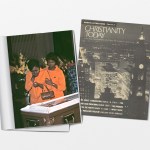
In October 1956, Billy Graham and a group of his supporters thought a religion divided against itself would have a hard time standing. In “Why ‘Christianity Today’?” they launched CT “with sincere Christian love for those who may differ with us.” They declared, “Theological Liberalism has failed to meet the moral and spiritual needs of the people” and has instead left us “adrift in speculation that neither solves the problem of the individual nor of the society of which he is a part.” They said CT “dedicates itself to the presentation of the reasonableness and effectiveness of the Christian evangel.” 

The editors—Carl F. H. Henry was CT’s first editor in chief—said, “Christianity Today will apply the biblical revelation to the contemporary social crisis, by presenting the implications of the total Gospel message for every area of life.” And “every” meant “every”: Senior news editor Daniel Silliman and I are going through the CT archives and seeing the wide variety of issues that editors and writers addressed. 

Starting today, once each week, we’ll make available some highlights of our research. For example, you can read below about the 1956 presidential election, the brutal Russian reaction to a Hungarian revolt, and discussions of whether there is a Christian America, how to confront China, and what to do about Christmas excess. Next Friday you’ll be able to read about Christian reactions to the news of 1957: the Cold War, civil rights debates, the advent of artificial insemination, and Sputnik.

If you’re young and don’t know what Sputnik was, that’s exactly why we’ll offer a history lesson about both America and American evangelicalism. All this leads to Thursday, October 15, 2026, when we’ll celebrate this series on the 70th anniversary of CT’s founding. 

The newsgathering process has changed: In 1956, CT bragged that “telegrams are received direct at Christianity Today editorial headquarters through the Desk-Fax service of Western Union. Christianity Today also uses the Bell System national teletype service.” But as you’ll see, many issues are similar.
We begin with a CT-commissioned survey of Protestant ministers that showed 85 percent favored the reelection of Dwight D. Eisenhower, who eventually won with 57 percent of the popular vote: 

A poll by Christianity Today of representative Protestant clergymen from all sections of the United States revealed a strong preference for Eisenhower over Stevenson in the November election for the Presidency. 

Tabulation of 1,474 postcards from ministers, selected at random among all denominations, showed the following results: 

► Eisenhower—85 per cent. 

► Stevenson—11 per cent. …

[The leading reason was] personal stature of the candidates. Eisenhower, 1,017; Stevenson, 75. [Other reasons were] “clean government … lifting of the moral and spiritual life of the American people as a whole … less centralized national government … foreign and domestic policies consistent with Christian principles … more emphasis on spiritual things … much stronger stand against Communism at home and abroad … back to sane, sensible, Constitutional government.” 

Looking at the results of the survey, CT’s editors reflected on where the country was going—and what the results of the election said about the effectiveness of Christian leadership in America. 

Protestant ministers of all denominations throughout the United States responded with candor and directness to Christianity Today’s inquiry: “What change for the better in American affairs do you desire for your candidate if elected?” More than 2,000 clergymen … expressed deep conviction that the future of America depends more upon the application of spiritual concepts in national and international life and less upon a specific political party or candidate. …

The stark fact of disagreement on leading social issues is a reminder that official church agencies only at great risk constitute themselves pressure lobbies for specific politico-economic objectives. … In doing so, they run the peril of violating democratic rights within their churches, in the presumed course of contributing stability to democracy in the nation. …

More liberal churchmen, whose theology has not undergone a full conservative revision, today acknowledge the fallacy of socialism, and appear ready to combine the theological left with the economic right. In the welter of confusion, it is understandable that men with a concern for the Protestant witness to a culture near chaos should promote the idea of unity in social reconstruction. But to compensate for a disunity which grows out of a basic departure from biblical norms by a unity which is manmade is to jump out of confusion into caprice.

After Eisenhower gained a majority in the popular vote in all but seven states, CT asked the president’s Washington, DC, pastor whether America should be thought of as a “Christian nation”:

In the absolute sense and on the perfectionist basis there is no such thing as a “Christian nation.” In terms of the higher order of the Kingdom of God, no political entity, in this imperfect world, is thoroughly Christian. But some nations embody more Christian principles than other nations. … When America is most faithful to its origin, to its truest self and to its God, it is that kind of nation. …

Much is being said these days in religious circles about the “exploitation” of religion as a weapon of ideological conflict. In the highest sense, pure religion is not to be “exploited” for anything except God’s purposes. God is to be worshipped and served for God’s sake. Righteousness is to be sought for righteousness’ sake. Nothing in Jesus’ teaching is more emphatic than that. …

In the decade since World War II, American life has been characterized on the one hand by a moral sag and cultural deterioration, and on the other hand by a moral resurgence and a spiritual awakening. … The presence of the former does not invalidate the latter. That we are living in a period of great religious revival of continental proportions is too clear to need documentation. The evidence is all about us. It is too cumulative and too impressive to be ignored or minimized. 

Hungary was in the news in the fall of 1956 as protest against the Soviet Union’s control of the country welled and then died. Evangelicals worried the rumble of tanks in Budapest signaled a dark new chapter of the Cold War

The rebellious people of Hungary, fighting to rid themselves of communist domination, took their cue from the inscription on the war memorial in Budapest University: 

“Endure everything: sorrow, pain, suffering and death; but do not tolerate one thing—the dishonor of the Hungarian people.”

A Hungarian seminary professor wrote a detailed report of what was happening: 

The recent tragedy of Hungary unfolded before our eyes. … The students, the workers and the intellectuals started their peaceful demonstrations. Their demands could be summed up in three short words: bread and freedom. They wanted for themselves things which we in America simply take for granted: national independence and full sovereignty, free elections and a representative government, free press and free communication with all the countries of the world, a readjustment of wages and the assurance of the possibility of a decent human living; finally, the withdrawal of Soviet troops from Hungary. … 

In the last days of October they used the short period of freedom at their disposal to effect far-reaching changes in their very lives. … The newly established National Christian Youth Federation appealed to the Christians of the world on November 3. Some of their dramatic words read as follows: “May God, who is the God of history, bless the efforts of our nation to build up an independent, free and neutral Hungary and may He enable us all to serve for reconciliation, peace and friendship among the nations.”

Two days later, choosing a Sunday morning for their attack, the Russian tanks crushed the insurgence of the whole Hungarian nation. At least 20,000 men, women and children were reported to have been killed in Budapest itself. … Those who survived are facing starvation, the freezing cold of winter and, perhaps worst of all, the possibility of deportation to Siberia. … 

The NBC television newsreel has recently shown some very moving pictures of the way in which Hungarian refugees managed to reach the Austrian border. …

The refugees came up against a deep, water-filled canal. There was no bridge any more. The Russians had long before dynamited it. With a swift and desperate ingenuity, the Hungarians pieced some treetrunks together so that they could serve as an improvised gangplank. But all this was good only to prop their feet against it; they could never have walked on it. Something more had to be done. Finally they stretched a wire over the “bridge,” and the breathtaking crossing began. Feeble old women and playfully agile children, while using the wobbling treetrunks as a foothold, grasped the wire with both hands and slowly but surely all reached the other side.

The editors of CT were especially worried about what increased Communist oppression would mean for Hungarian Protestants. A professor from Western Theological Seminary in Holland, Michigan, offered a historical perspective:

The tragic developments in Hungary have involved a large and flourishing Protestant community there. Twenty-eight percent of the population is Protestant; of these, twenty percent are Reformed and six percent Lutheran. They have been suffering with their compatriots in the recent attempt to throw off Soviet domination and gain freedom. …

Suffering is not a new experience for Hungarian Protestantism. … The historian d’Aubigne writes that “it was by a kind of thunderclap that the Reformation began in Hungary.” … Raped and looted by the vast armies of two powerful countries, Germany and Russia, during World War II, Hungary’s condition became tragic. … Dr. Stewart W. Herman, in an address to the Lutheran World Action conference, stated that Hungary was “experiencing the greatest religious revival to be found in all Europe.” … Much of the leadership of the Small-landholders Party, overthrown in the revolution of 1948, hated by the victorious Communists, and active in the most recent revolt, came from the Protestant Church.

In 1956 another Communist dictatorship was transforming China. CT editors warned readers not to be naive about “reforms”:

Communism is intrinsically atheistic. Since an atheist recognizes no fixed principles of morality, one cannot have confidence in his word, integrity or intentions. Promises and pledges, however solemnly stated in international treaties, are suspended on something other than unchanging moral principles.

How reads the record of Red China? It has flagrantly violated the basic rights of humanity and flaunted the standards of international law and comity. It has denied the legitimate rights of American citizens—business men, educators, missionaries—and has caused them to leave property and posts of duty, or has imprisoned them on charges palpably false. Contrary to the provisions of international law, it has held prisoners of war (both Japanese and American) for indefinite periods. … the communists recognize no law nor organization superior to their own nefarious program.

CT worried about more than the cultural revolutions wrought by communism. Closer to home, the magazine raised concerns about the commercialization of Christmas:

The public celebration of Christmas raises deep concern in the Christian Church. Although instituted to commemorate the birth of Christ, Christmas has become an occasion for inexcusable excesses. Blatant commercialism has captured the season for unholy gains. Drunken orgies at office and home ascribe the day more fittingly to Bacchus, the god of wine. Santa Claus takes prominence over Christ as the process of secularization captures the day once dedicated to worship of the King of kings.

History vividly reveals the only adequate course by which the Church can restore true significance to Christmas. She must become engrossed with the nature of Christ and the Incarnation with the same passion evident in the life of fourth-century Christianity. 

History

What Billy Graham Wanted in ‘Christianity Today’

The talk that launched over 1,000 magazine issues.

An image of Billy Graham.
Christianity Today October 16, 2025
Spencer Grant / Contributor / Getty

October 15, 1956, was the date of Christianity Today’s first issue. Tomorrow we’ll begin a weekly feature of highlights from each year. Planning for that issue, though, began a year earlier, when Billy Graham gathered a small group to discuss the need for a new Christian magazine. Here’s an abridged version of what he said:

For nearly three years I have been deeply concerned about the situation of evangelicals in the United States. We seem to be confused, bewildered, divided, and almost defeated in the face of the greatest opportunity and responsibility possibly in the history of the church. This burden and concern has been growing month by month. I have found this same burden exists among many evangelical leaders.

It has come to me with ever increasing conviction that one of the great needs is a religious magazine on the order of The Christian Century that will reach the clergy and the lay leaders of every denomination presenting truth from the evangelical viewpoint. This vacuum in the United States and Britain must be filled. There are many other areas that we can attack, but this must be our first concern.

For a long time The Christian Century has been the voice of liberalism in this country. While its circulation is small, its influence is tremendous. It is constantly quoted in Time, Newsweek, and other secular magazines and newspapers. Its intellectual popular journalism is a must for thousands of ministers each week. It influences religious thought more than any single factor in Protestantism today, in my opinion. At the moment there is no evangelical paper that has the respect that can challenge it.

Therefore, I have called you men together for prayer, for consultation, advice, to seek the will of God in this matter and to present some concrete proposals for our discussion, prayers, and thought.

I propose that this magazine consist of hard-hitting editorial on current subjects—that these editorials be popular, well-thought-out journalism very much like The Christian Century—that we discuss current subjects very much as The Christian Century does from the evangelical viewpoint.

[Editorial policy should be:]

  1. Pro-church—this magazine should not take sides in fights on various councils in the United States, such as “The American Council,” etc. We should be constructive, positive, and not anti-church.
  2. This magazine should be thoroughly biblical, evangelical, and evangelistic. However, I would suggest that we not use the term fundamentalist or even conservative. I think the word evangelical is far better and far more disarming.
  3. This magazine should be nondispensational.
  4. We should not be either amillenial or premillennial.
  5. Certainly this magazine should be anti-Communist, giving the intellectual reasons why the Christian church is anti-Communist. There are thousands of Americans, including thousands of ministers, who are against communism, but they have no genuine intellectual reasons as to why. In a debate with a Communist, they would lose nine times out of ten.
  6. This magazine must be for social improvement. We must take the great social issues of our day, such as the starving people of India, the racial problem, and others, and take a positive viewpoint. We must be for the underdog and the downtrodden, as we all believe Christ was, without being socialistic in our tendencies.
  7. While we do not want to get into politics yet, we will take a mildly conservative political position in our interpretation of current events. (In other words, the editorial policy should be “down the middle of the road.”)

I suggest the name of the magazine be Christianity Today. I suggest this magazine have a maximum of 30 to 50 pages that would be on the same type of paper as The Christian Century. That it be intellectual yet popular journalism—that the articles be brief.

Culture

Naomi Raine Isn’t Playing Games

The founding member of Maverick City Music is releasing new songs as a solo artist with an impressive roster of guests.

Naomi Raine performing during Woman Evolve 2024 in Arlington, Texas.

Naomi Raine performing during Woman Evolve 2024 in Arlington, Texas.

Christianity Today October 16, 2025
Eugenia R. Washington / Contributor / Getty

Naomi Raine started to understand worship as a ten-year-old, listening to her parents’ church choir rehearse the song “Breathe” in their living room.

“I remember sneaking downstairs and hiding in the bathroom,” Raine told CT. “I grew up hearing my parents sing all the time, but something shifted for me that night as I heard them sing, ‘This is the air I breathe.’”

Around that time, Raine’s parents bought her a keyboard, and she started writing songs in the privacy of her cramped bedroom closet. Her music career also started out as a solitary one. Now, she’s writing and performing with some of the most popular artists in Christian music.

Raine’s performance-and-songwriting style was deeply formed by the charismatic practices of the church where her parents served as worship leaders. She grew up immersed in the Black gospel tradition and contemporary Christian music (CCM), a confluence that’s evident in the music she helped create as a founding member of Maverick City Music.

The popular worship collective, known for hits like “Jireh” and “Promises,” became one of the most influential producers of contemporary worship music in the US with its breakout album Old Church Basement (2021), a collaboration with Elevation Worship. It blends the anthemic style of groups like Elevation and Bethel Music with elements of Black gospel.

Maverick City’s success and fusion of different traditions have drawn praise and criticism in the industry. Recently, internal divisions and a pending lawsuit have gained public attention. As controversy continues to plague the group’s profile, Raine has moved into a new phase of her career. “I think the ministry is getting overshadowed by the opinions,” she told CT. Raine recently announced her departure from Maverick City Music, along with collaborator Chandler Moore, and is releasing new music as a solo artist.

Her new album, Jesus Over Everything, features an impressive roster of guests, including rapper Anike, Tasha Cobbs Leonard, and Christine D’Clario. Raine also serves as a pastor at Fresh Start Christian Center in Mount Vernon, New York.

Raine spoke with CT about her journey with Maverick City Music, the significance of the songs the group created together, and the need for multiple sounds and styles in the world of worship.

This interview has been edited for clarity and length.

Maverick City Music has become such an influential force in the contemporary worship music world, but unlike some of these other collectives like Bethel and Elevation, it didn’t grow out of a local church. How did the group start collaborating?

So I got Lyme disease. [Laughs] Okay, I want to tell you everything, but I’m going to answer the question. I got Lyme disease in 2018, and I think that was the Lord forcing me to rest. At the time, I was saying yes to everything. I had written a song called “Pour Me Out” that was starting to get some traction. I performed in a showcase at the Dove Awards. Todd Dulaney covered the song and asked me to sing on his album. I was getting my first introduction into the industry. But then I get sick, and I have to start saying no.

In 2019, I’m recovering, and I feel like the Lord is healing me. I see online that Bethel is doing a Black History Month worship set. Chandler Moore was going to be there, and Dante Bowe. I messaged the organizer and told him, “Hey, you need a woman there. How about my friend Casey J?” He responded, “How about you?”

So I said yes. They couldn’t pay me, but they did give me a place to stay. That’s where I met Chandler and Jonathan Jay and Brandon Lake for the first time. We wrote some songs and recorded them. These sessions ended up creating the album that became Maverick City, Vol. 1.

If you watch those first videos, you can see me reading from my phone because we had just written the songs a few hours before.

The beginning of Maverick City Music coincided so closely with the start of the 2020 pandemic. How do you think that timing impacted the reception?

I remember the week we recorded “Promises” in Atlanta, fall of 2019. When we finished recording the song, I felt terrible about it—like it was a hodgepodge, the song put together like a quilt. The room we recorded in was hot. We were packed in there like sardines. I couldn’t see the members of the band I needed to see.

But Tony [Brown] decided that was the song we were going to release. He sent the final version out, but I don’t think I even listened. We were all just trying to get through the pandemic—feeding kids and holding it together.

But when I finally listened to the whole thing and saw the response, I realized that song was what people needed at that time. We didn’t know we were going to need a song about the faithfulness of God, a God who keeps his promises.

“Promises” wasn’t the only song we had for that moment; we also had “The Blessing.” We survived on those songs.

The response to Maverick City Music was so enthusiastic. You almost immediately started collaborating with some of the biggest names in worship music. But there was also a lot of scrutiny directed at the group and the music you created. How did you experience the response?

It felt confusing.  I think that’s the best word. We were just making the music that we loved. It was prayerful music. At our writing camps, we prayed, “Before we do this, Lord, what do you want to do?”

We were in our Scripture, trying to write music that was biblically sound. I’m a pastor as well. I’m not playing games with the songs that I release. There’s creativity, of course, but I do believe that the Lord breathed on us. So it was confusing when it seemed like just because there was success and because the music was gaining traction, people assumed something was wrong.

Now when I look back, I realize that we were just so different, and people don’t always appreciate different. Change is difficult for people.

I was never the person to be like, “It’s race.” But what I have experienced has helped me to recognize that some of the backlash was racially related. It is what it is, right?

We got too big too fast, and most of us were people of color. I think that was threatening to some people in the CCM world. I don’t think it was intentional. I think it was just “Wait, where did this come from?” and also “That’s not how we would do this.”

There was some backlash from the gospel industry as well, right?

 Yeah, on the gospel side, people were happy for us but also like, “Okay, that’s cute.” It felt like there was more talk behind our backs, but to our faces it was all, “We love what you’re doing.”

In CCM spaces, it felt more like everyone was looking at us and asking, “Who do you think you are?” And not just because of race but because of age. A lot of our members were relatively young and experiencing success really quickly.

On your new record and in your work with Maverick City, you showcase your vocal skill and power. You can hit runs and improvise. How do you navigate the tension between musical showmanship and accessibility in worship music?

 There are some things that keep me up at night, and there are some things that don’t. I am okay with talent. I think the people that need to navigate that tension are the people that don’t have talent. [Laughs]

I’m being a little ridiculous, because I do know there are some people with talent and skill that actually feel guilty because people have put guilt on them for being good at something. But pride has nothing to do with how good you are at something; it comes from thinking that your skill started with you. But my skills and my ability to hone and refine my skills come from God.

 I’m not trying to come for people, but I think sometimes we decide to raise the bar by completely removing it and saying, “The musicians don’t really need to know how to play. Four chords is enough.”

Of course, if you have a song in your heart and all you have is four chords, you play those four chords and give the four chords to Jesus.

Yes, Chris Tomlin doesn’t do riffs and runs. But don’t hate on my riffs and runs.

Maverick City Music infused new style elements into the prevailing sound of contemporary worship music—gospel characteristics, choir, improvisatory vocals. It seemed like people were excited to hear something that sounded different. Do you think that’s still the case?

We don’t need just one kind of music. We are one body with many parts. I look at the state of worship music right now, and I see different movements bringing different things.

 Upperroom is about “Come, Jesus, come,” calling us to wait upon the return of Jesus Christ. Then there’s Bethel, focused on the Holy Spirit moving and flowing through us. There’s Transformation Worship, which is all about blessing God and lifting up his name. I was just talking with someone from Planetshakers the other day, and they feel like their mission is high praise songs. Elevation is focused on faith. And Maverick City is about resilient praise, praise in the midst of dark times. “Christ is my firm foundation.”

All of these are valid and good. We could look at them in isolation and say, “Oh, this is unbalanced.” And sure, a balanced praise culture doesn’t sound like Planetshakers or Maverick City all the time. We need all of it.

News

Shrinking Palestinian Christian Population Wary of Cease-Fire

“As people, we can live together … because this is what Jesus asked us to do.”

One of the Palestinian prisoners released in the ceasefire deal between Israel and Hamas.

One of the Palestinian prisoners released in the ceasefire deal between Israel and Hamas.

Christianity Today October 16, 2025
Zain Jaafar / Contributor / Getty

To get from her home in Bethlehem to her college and workplace in Abu Dis, east of Jerusalem, Christine Awad had to pass through the only Israeli checkpoint connecting the northern and southern parts of the West Bank. Without this barrier and the traffic it forms, the drive would take 20 minutes. With it and the increased restrictions after the October 7, 2023, attack on Israel by Hamas-led militants, Awad’s commute every morning and evening until the end of her employment in June could stretch into a two-hour journey.

Every time she reached the checkpoint—one of the West Bank’s 849 checkpoints, road gates, and obstacles—Israeli soldiers climbed onto the bus. Sometimes they checked passenger IDs. Other times they demanded riders hand over unlocked phones and searched their contacts, messages, and photos. Sometimes they ordered commuters to get off the bus to undergo further inspection. Once a female friend of Awad’s was taken inside a booth and strip searched.

“You have no agency,” Awad, a Palestinian Christian, said of these interactions. “You can’t say no. You can’t refuse.”

Awad, now a graduate student at Bethlehem University, described passing through checkpoints as both scary and normal. The daughter of a Presbyterian pastor, Awad has lived her whole life under Israeli occupation—a term used to describe Israel’s military control of the West Bank, East Jerusalem, and Gaza, areas that would constitute a future Palestinian state.

The reality of the occupation colors Awad’s view of last week’s cease-fire between Israel and Hamas. Like millions in the region, she felt relief. On Monday, Hamas returned the remaining 20 living Israeli hostages, whom the terrorist organization had held captive for 738 days. Later, Israel released around 2,000 Palestinians from prison—250 convicted of terrorism and murder and the rest detained without charges during the war.

As the Israeli hostages returned home, US president Donald Trump delivered a triumphant speech in Israel’s Parliament, the Knesset, declaring the deal would usher in “the historic dawn of a new Middle East.” Trump then went to Sharm el-Sheikh, Egypt, where he and Egyptian president Abdel Fattah el-Sisi co-led a peace summit that more than 20 other world leaders attended. Alongside the US and Egypt, fellow mediators Qatar and Türkiye signed a document backing the cease-fire agreement and committing to an “enduring peace” in the region.

Yet Awad expressed skepticism about whether this agreement will result in lasting peace. Both the four-day truce in November 2023 and the cease-fire that began January 19, 2025, devolved into further bombing and bloodshed.

And though often overshadowed by the Gaza war, the situation in the West Bank has worsened drastically the last two years, with Human Rights Watch reporting increased movement restrictions for Palestinians, settler violence, Palestinian-home demolitions, and an uptick in settlement building. Historically Christian areas like al-Makhrour and Taybeh have been targets of settler violence and attempts to dispossess Palestinians of their land.

“I think now justice is more the concern before peace can happen,” Awad said.

From Beit Hanina, a Palestinian neighborhood in East Jerusalem, Simon Azazian shared similar feelings. He is grateful the cease-fire will bring relief to Gazans’ suffering—some of which he has observed firsthand as assistant pastor of Alliance Church in the Holy Land, nestled within the walls of Jerusalem’s Old City.

Since October 7, 2023, church members have visited Muslim Gazan cancer patients stuck in Jerusalem and have built friendships with 100 orphans transported to Bethlehem from a Gaza-based SOS village that supported children lacking parental care.

Twice in 2024, the congregation funded street kitchens inside Gaza where hungry families could receive a hot meal. After these events, Azazian said, around 30 individuals contacted the church through its Facebook page, expressing interest in following Christ.

Though he’s glad Gazans will get some respite in the coming days, Azazian is also concerned about the cease-fire deal. “We’ll have a few years … of peace, but things will happen again, and wars will erupt because the issue isn’t solved from its roots,” he said. “And the root here is the end of the Israeli occupation. That has to happen one way or another. We must give the Palestinians justice.”

Awad’s daily life in Bethlehem illustrates some of the justice issues created by Israel’s military control of Palestinian territories. The more than 3 million residents of West Bank—including Awad’s family—face water scarcity as Israel diverts more water to Jerusalem and Jewish settlements than to the homes of Palestinian residents. On average, Israelis consume around 300 liters of water daily, while Palestinians consume only 73 liters, according to a 2017 Amnesty International report.

Though Palestinian ID cards are granted by the Palestinian Authority, Israel must approve them first, which sometimes results in yearslong delays. For more than 20 years, Awad’s mother, a Filipino native, had to leave the West Bank and Israel regularly to renew her visa, incurring travel expenses and the emotional burden of separation from her husband and three daughters. Awad’s parents met in the Philippines when her father studied theology there. She finally received an official ID in early 2022.

According to Azazian, the failing economy and lack of job opportunities in the West Bank have already caused 160 Christian families to leave the Bethlehem area in the last two years. He said that 400 more families have applied for visas to emigrate. These losses make life even more difficult for the believers who remain, he said, with Christians now composing less than 2 percent of the West Bank’s total population.  

Though she regularly faces discriminatory policies and movement restrictions, Awad said she doesn’t hold bitterness toward Israeli security personnel. Azazian agrees.

“I carry no sort of hatred or animosity to any of my brothers or sisters in humanity,” he said. “And this is the message we are trying to spread today: that as people, we can live together. We can overcome the obstacles, because this is what Jesus asked us to do.”

But Azazian does not believe the Christian responsibility to love excludes the church’s prophetic role to speak out against societal injustices that prevent lasting peace in the Holy Land. On the second anniversary of the October 7 massacre, he wrote on Facebook that Israelis and Palestinians face not a single enemy but three—“the Corrupt Palestinian Authority, the Brutal Israeli Occupation, and the Extreme Fanatic Islamic Regime led by Hamas”—that together “strangled any hope for justice, peace, or dignity.” He envisions the church—believers of all backgrounds, inside and outside the Holy Land—bridging the gap between Israel and Palestine.  

“The church has an important role: to raise the voice that is calling to love and to forgiveness and to better days ahead, but also to a complete change in the different regimes and this triangle of evil,” he said.

But to play a prophetic role, Azazian believes those in the Western church must act. Instead of giving Israel unilateral support, they must also get to know Palestinian Christians, love them, and advocate for them.

After two years of war, Azazian said that “the forgotten faithful,” as he calls Palestinian believers, feel abandoned by many of their Western brothers and sisters, who have been influenced by Christian Zionism. Followers of the theology believe they must bless Israel, which often results in uncritical support of Israeli political and military actions.

About half of US evangelicals view Jews as God’s chosen people, according to a recent report from Infinity Concepts and Grey Matter Research. This percentage has remained unchanged from 2021, although only 29 percent of respondents under the age of 35 believe Jews are God’s chosen people. Younger evangelicals are also less engaged with and less supportive of Israel, the report found.

Azazian has met Western Christians willing to listen to and stand with both peoples, as the Alliance Church in Jerusalem practices. Every Sunday, church leaders pray for both Israelis and Palestinians from the pulpit, and they advocate for equal rights and opportunities for both groups. Three years ago, Azazian sat with a group of Christian tourists from California in their hotel room. He said he won’t forget the look in their eyes that night as he told them about his identity and experience as a Palestinian Christian.

“They came with repentance, saying, ‘We are sorry. We didn’t know you existed. We feel ashamed. We want to know more,’” Azazian recalled.

When Awad was young, her parents hosted groups of American Christians visiting Bethlehem. Her mom would prepare huge trays of rice and chicken to feed groups of 15 or more. After lunch, the family would answer the visitors’ questions about life in Bethlehem.

After the war began, some of these same visitors commented on Awad’s father’s social media posts about the conflict and regional politics. They sent Bible verses about loving one’s enemies and being peacemakers.

It was difficult to receive these comments from Christians so far removed from the daily experiences of the occupation, Awad said. Her father replied that believers must also stand against injustice and oppression.

“Come and sit and just drink coffee and try to understand what our life is like, what our history is like as Palestinian Christians,” Awad said. “Try to understand the challenges without judging or giving advice that seems so easy on paper but difficult to actually do.”

Inkwell

The Pedestrian Lore of City Life

The daily apocalypse of my London commute began to dazzle me with moments of deep humanity.

Inkwell October 16, 2025
Image by Inkwell. City of London, March 2025.

I’m no small-town girl, but I’d never lived in a big city before London. 

Well, except for Los Angeles. But Los Angeles is a car city. You can cruise through it in the safety of your climate-controlled two-ton metal box, with background music that you choose. 

Once, late at night, I stopped at a gas station off an unfamiliar exit to fill up my car. As I stepped out to open the latch to my gas tank, I was met by a gas station attendant looking at me incredulously. “What are you doing?” he demanded. “Get back in your car and drive.” This was not the place for me—at least not tonight. I hopped back in my car and drove straight out of there.

But that’s the thing about car cities. You can always retreat to a place where there is a barrier between you and the world. You may encounter thousands of people on Interstate 5, but it’s with a buffer between you of steel and rubber. 

There is no such buffer in a walking city. In a pedestrian city, you see the world face-to-face.

For the first few months after we moved to London, I felt tired all the time. Maybe it was the move, I thought. It is exhausting to pack and unpack all your possessions, and for every ordinary part of your day to be new. 

Or perhaps it was the gloom of London weather. We moved to London in December, and after the lights and red ribbons of Christmastime came down, the city plunged into months of the biting, deep cold of winter. Or perhaps my tiredness was a symptom of something more psychological.

As the months wore on, I realized that my tiredness had a simpler cause: I was exhausted by the sheer number of human beings I encountered on an average day. To travel to the university where I work, I take two trains. If I travel at peak hour, I sometimes find myself standing chest to back with dozens of strangers. 

As we poured out of the Central line at Holborn, I thought about how we must look from above. A great snaking river of people, rushing in the same direction, finding our way through the twists and turns of the underground station like a stream of water finds its way down a hill. Sometimes it felt like I was a part of one giant organism, with hundreds of wills and destinies momentarily aligned with the common goal of breaking out of the station and pouring onto the Kingsway.

It was not merely the volume of people I encountered that exhausted me but the volatility. You never know what you’ll encounter in a city. Once, I saw a man standing bewildered with a bowler hat full of vomit. Was it his own or someone else’s? No one stopped to investigate. Instead, as if a force field with a radius of five feet surrounded him, people simply avoided him with one accord and without comment. 

I’ve also found myself in the middle of a rave on the tube, between people shouting at each other or wearing costumes. I often see people on their way to protests with handmade signs. Very often, there will be people with opposing signs in the same carriage.

My tiredness in those first months did not always come from the volatility or danger. Sometimes it came from my heart being touched by sweetness or sadness. 

There was the woman who appeared to be having a schizophrenic episode. She was dressed well, professionally even, and was harmlessly chattering away to an invisible companion. No one reacted to or even avoided her. They had seen someone like her before, and they will again. She reached her stop, stood, and gestured to no one beside her to exit as well. I wondered if her family worried about her. I was glad people were patient with her.

I was wearied by encountering human beings every day, face to face, no buffer.

The German sociologist Max Weber famously describes the modern world as being characterized by Entzauberung der Welt—the disenchantment of the world. Medieval people, says Weber, experienced the world as a place charged with spiritual potency, with meaning engraved in every flower and turn of the seasons. Modern people are more pragmatic and circumspect, viewing a flower as just a flower.

Philosopher Charles Taylor describes the average person walking around in the modern world as the “buffered individual,” someone who sees themselves as sealed off—separate from the world and the people outside of them. Alison Milbank adds that this is a “turning away from the supernatural toward the psychological.” We struggle with “inner demons,” not real ones.

The buffered modern self contrasts with the medieval “porous” person who is like a sponge, their moods and personalities influenced by the movement of the stars and the spiritual world believed to be humming around them. Modern people are, by contrast, sealed off, unmoved. Taylor’s description of the buffered self resonates with many people, who lament the resulting lack of meaning.

But breaking out of this disenchantment is not easy, not only because it is the default outlook of the modern person, as automatic as brushing our teeth in the morning. No, it is difficult because it is frightening. 

To believe that the world is subject to the influences of benevolent and malevolent spiritual forces would mean we’re not as in control as we think we are. Taylor writes that the person who “no longer fears demons, spiritus, magic forces, who is disembodied from the social world … enjoys a kind of mental invulnerability in his or her private castle.”

To carry  forward, we stay buffered because we feel safer in our self-chosen fortress than in openness to the world. I’d written about Taylor’s idea of the buffered self, but moving to London helped me understand what it meant in a more visceral, experiential way. 

It was funny. If you’d asked me whether I’d rather live in a place that didn’t require me to own a car, I would have agreed wholeheartedly. It’s better for the environment, for exercise, for community, I would say. And if you’d asked me whether I’d rather be a buffered or a porous individual, à la Taylor, I’d probably answer “porous, of course.” 

But for all this, I found the transition to London much more uncomfortable than I expected—like getting doused in cold water. And like a dry, hardened sponge, I began to soften.

As I did, I realized something: The buffer of a car does not actually ensure my protection. The steel and rubber may give me an illusion of safety, but it is just that, an illusion. 

I am, in fact, far more likely to die in a car crash than I am walking to or from work or taking the tube. I am far safer in my constant exposure to people, however unsettling my fellow human beings may sometimes be, than I am in the invulnerability of the private castle that is my car. 

I can’t help but think this is true on a broad societal level too. As we become increasingly buffered from each other, with layers of newsfeeds, opposing identities, and tribalistic defenses, our society becomes more volatile, more violent. While we might find each other confusing, upsetting, and annoying sometimes, when face to face, we find ourselves softened like sponges, more open to each other.

As I became used to my porous, pedestrian life, I also began to be dazzled by moments of deep humanity. One springs to mind: a grandfather with his grandchild, his soft brown face framed in soft white hair and a beard. He wore a long grey tunic and rested a protective hand on the shoulder of his grandson.

When I was a little girl, I read a book that included illustrations of monks with tonsured heads and Jewish men wearing kippahs. Strengthened by the baldness of my father, I concluded that all seriously religious father-figures either covered or shaved their heads. The man’s delicately embroidered Muslim cap reminded me of my childhood conviction: Here stands a pious and paternal figure. His grandchild sat calmly beside him, at peace because he was with a peaceful guardian. We exited at the same stop, the grandfather guiding the child with a gentle hand on his shoulder, the short gait of the child matching the slow gait of the old man.

How can I describe the effect this simple scene of love had on me? In his book Man Is Not Alone, the rabbi and civil rights activist Abraham Heschel writes:

In every man’s life there are moments when there is a lifting of the veil at the horizon of the known, opening a sight of the eternal. Each of us has at least once in his life experienced the momentous reality of God. Each of us has once caught a glimpse of the beauty, peace and power that flow through the souls of those who are devoted to Him.

I’ve come to think of the London tube as my daily apocalypse, a place where I may sometimes encounter the lifting of the veil. In all the world, I think we are most likely to see God in the face of other people, beings who bear God’s image.

One of the great conversion stories of the 19th century is A Christmas Carol by Charles Dickens. It takes place in the old City of London, which I pass through on my way to work each week. After a harrowing night where he is visited by three spirits who show him the error of his enclosed and selfish life, Ebenezer Scrooge awakes with a profound relief that his life is not over yet, that he can repent and live better. What he does next has always struck me as simple but profound:

He walked about the streets, and watched the people hurrying to and fro, and patted children on the head, and questioned beggars, and looked down into the kitchens and houses, and up to the windows, and found that everything could yield him pleasure. He had never dreamed that any walk—that anything—could give him so much happiness.

The evidence of Scrooge’s salvation is portrayed in a walk through the city, in his openness and curiosity toward his fellow human beings, and in the joy he feels in their varied lives, even those that do not concern him. 

Living in London has given me a taste of this. It has made me realize that I am perhaps more like Ebenezer Scrooge than I’d care to admit, how enclosed and buffered much of my life has been. This new outlook constitutes, if not a re-enchantment, a breaking of the spell that keeps me buffered and disconnected.

Like Scrooge, I find myself astonished that a walk—or even a ride on the tube—can give me so much happiness.

Joy Marie Clarkson is the author of You are a Tree and Aggressively Happy. She is a research associate in theology and literature at King’s College London and the books and culture editor at Plough Quarterly. She writes weekly on her Substack.

News

‘Is That the Same Charlie?’

Awarding Kirk the Medal of Freedom, President Trump questioned his widow’s emphasis on his willingness to forgive and love his enemies.

President Trump Awards Charlie Kirk the Presidential Medal of Freedom

Erika Kirk accepts the Presidential Medal of Freedom on behalf of Charlie Kirk

Christianity Today October 15, 2025
Kevin Dietsch / Getty Images

President Donald Trump posthumously awarded the Presidential Medal of Freedom to Charlie Kirk in a ceremony on what would have been his 32nd birthday Tuesday. 

The medal, bestowed at the president’s behest, represents the highest honor the US government grants a civilian. Kirk was a staunch Trump ally who inspired many young Americans to get involved in conservative politics.

“We’re entering his name forever into the eternal roster of true American heroes,” Trump said to the audience of politicians, conservative activists, and Kirk’s family and friends gathered at the White House Rose Garden.

In his remarks, the president once again characterized the Turning Point USA founder differently than his widow, Erika Kirk, did. She received the award on her husband’s behalf. Trump described Kirk as a tough political fighter who “didn’t like losing.”

“I heard he loved his enemies. And I said, ‘Wait a minute, is that the same Charlie that I know?’ I’m not sure. But I didn’t want to get into it,” Trump said, referring to Kirk’s memorial service last month. 

In her eulogy last month, Erika Kirk forgave her husband’s killer and said that Charlie wanted the best for those who opposed him. At the time, Trump said he didn’t have the same attitude.

On Tuesday, she once again reiterated Kirk’s posture toward political adversaries. “Surprisingly enough, he did pray for his enemies, which is very hard, but he did,” Erika Kirk said at the ceremony. “I saw him do it. He never did it in front of anyone else, but I can attest to that.”

John Fea, a historian at Messiah University, said Erika Kirk’s “willingness to forgive her husband’s killer is what the gospel is all about. … She beautifully displayed the heart of Jesus Christ at the memorial service.”

Fea said he’s seen from other political figures an impulse to “give lip service to ending political violence while continuing to play the blame game.” He called the president’s comments saying he personally hated his opponents a striking example: “In Trump’s fusion of evangelical Christianity, nationalism, and MAGA politics, the latter two win out over the gospel.”

Kirk’s fatal shooting last month at a Utah college intensified concerns around divisive political rhetoric and retaliatory violence. The tragedy galvanized Republicans, who said they wouldn’t let Kirk’s efforts to mass-mobilize younger generations go to waste. Turning Point USA has doubled since Kirk’s assassination, with TPUSA chapters on college campuses going from 900 to 1,690, according to TPUSA spokesman Andrew Kolvet.

While some evangelicals have lauded Kirk’s public witness and attributed a recent bump in church attendance to his legacy, others (including Black clergy) have denounced his killing while critiquing certain inflammatory statements.

Fea noticed in the wake of the event that Kirk’s Christian fans have seemed “torn” by his widow’s stance: “They praise her for offering forgiveness to the shooter, but their social media feeds are filled with anger against the ‘left,’ who they believe is responsible for his murder.”

Michael Wear, president and CEO of the Center for Christianity and Public Life, said he hopes the grief and sadness many Christians feel doesn’t get lost amid public figures’ attempts to utilize the tragedy for political ends.

“Just because there’s disagreement on exactly how positive Kirk’s influence was doesn’t mean that there isn’t broad Christian agreement in rejection of his murder and in basic appreciation for him as a brother in Christ,” Wear said. He hopes this consensus won’t be compromised by “a whole political machinery that sees that common ground and wants to take advantage of it by expanding the parameters of what honoring Charlie Kirk has to look like.”

Last month, the US Senate approved a resolution marking October 14 as a national day of remembrance for Kirk. The resolution does not make the day a national holiday but encourages “programs, activities, prayers, and ceremonies that promote civic engagement and the principles of faith, liberty, and democracy that Charlie Kirk championed.”

A similar bill introduced in the House remains stuck in committee. The Congressional Black Caucus opposed the recognition as “an attempt to legitimize Kirk’s worldview—a worldview that includes ideas many Americans find racist, harmful, and fundamentally un-American.”

Attendees Tuesday included Vice President JD Vance, several cabinet members, and conservative media personalities including Sean Hannity and Tucker Carlson, Jack Posobiec, and Benny Johnson. Several pastors also attended, including Greg Laurie of Harvest Christian Fellowship and James Kaddis of Calvary Chapel Signal Hill.

Laurie said on social media that a cross engraved on the back of the medal is “in recognition of Charlie Kirk’s strong faith in Christ.”

During the award ceremony Trump discussed Middle East geopolitics, the US–Mexico border, the 2024 presidential election, and the assassination attempt. Erika Kirk thanked him for recognizing “a life lived for defending freedom…. That’s what Charlie fought for until his last breath.”

Theology

Gaza Has More to Do with Your Life Than You Think

Columnist

Biblical references to Gaza show that once-hostile frontiers are a pathway of grace.

A view of the Al-Rashid road toward Gaza City on October 10, 2025.

A view of the Al-Rashid road toward Gaza City on October 10, 2025.

Christianity Today October 15, 2025
Illustration by Christianity Today / Source Images: Getty

This piece was adapted from Russell Moore’s newsletter. Subscribe here.

After two years of bloodshed since Hamas attacked Israel on October 7, 2023, the war in Gaza seems to be over. The living hostages are back home, as President Donald Trump and Hamas and Israel hammered out in a cease-fire agreement. In that, all of us can rejoice, even if the peace will be fragile—and even though wounds from the loss of so many innocent lives, both Gazans and Israelis, will take decades if not centuries to heal. Christians around the world might be tempted to think this matter is now over, at least for us. Gaza, though, has more to do with our own gospel story than we might think.

It’s natural for people to pay more attention to a place when it’s somewhere they’ve lived. A missionary I know who worked in Africa for many years is especially attuned to news headlines about the continent in a way many others might miss. Even though I live in Nashville now, my ears perk up every time I hear any news from my hometown on the Mississippi Gulf Coast. For Christians, Israel and Gaza are places we have “been”—since, by union with Christ, we are part of his story and thus the story of his ancestors (1 Cor. 10:1–6).

Gaza is first referenced in the Bible as a border, the edge of Canaanite territory, the far southern boundary of what the Israelites would later call the land of promise (Gen. 10:19). Gaza comes up in the Book of Joshua, again as a kind of liminal space between the people and the world outside. It’s also the setting for the final scene of Samson’s story, in which the defeated and blinded man pulls down the pillars of a building. The account is unsettling in that it is a meeting place of deliverance and tragedy. Violence and redemption somehow cling to each other in the wreckage of a collapsing house.

By the time we get to the prophets, the word for Gaza seems, at first read, to be only judgment. Amos denounces Gaza for cruelty and injustice in selling an entire community into slavery (1:6–7). Zephaniah seems to be just as harsh, but that’s not the whole story. He also envisions a day when a place of violence is instead a place of pasture (2:4–7). Even in judgment, we see that tragedy is not the end of the story.

Reading such passages without the full context of Scripture could lead to distortion. We could start to identify present-day Gaza as the one-to-one equivalent of where the ancient Philistines lived. But that would be to ignore how judgment and mercy function in redemptive history. Judah, too, is judged—the northern kingdom as well. All of us in Christ are those who were once “far off” and have been “brought near” (Eph. 2:13, ESV throughout). In fact, the one explicit mention of Gaza in the New Testament makes this clear.

In the Book of Acts, Luke writes that God directs the disciple Philip to take the road that goes south from Jerusalem to Gaza. There he meets an official of the Ethiopian royal court, reading the Book of Isaiah (Acts 8:26–39). There on the road, the gospel crosses one of its first borders. The Gentiles are enfolded into the people of God. The once-hostile frontier becomes a pathway of grace. What was thought of as the edge of the map becomes the entry point to the kingdom.

That doesn’t give us a blueprint for what should come next geopolitically, nor does it tell us how to draw borders or maintain cease-fires. But it does remind us what kind of God we pray to for peace and justice. The Gaza on the maps at the back of our Bibles is a kind of liminal space—a threshold. But again and again, that’s where God is at work. Over and over, God redeems the very places where the world seems to have come apart.

Justice and mercy are often clearly marked out by a border in our minds. And yet the gospel we believe binds both of them together in the Cross. Justice without mercy is vengeance; mercy without justice is sentimentality. The gospel is altogether different. Since we have experienced that reality, we ought to be aware that what often seem to be the borderlands of history—the Gazas, literal and metaphorical—are not outside the reach of grace. Often, they are precisely where grace starts to make itself known.

Many of us have frequently recounted the time the Old Testament patriarch Jacob wrestled with God in the night, leaving him with a new name (Israel), a blessing, and a limp (Gen. 32:22–32). What we often forget is that Jacob was in that in-between space because he was scared of his approaching brother, Esau, who had been in many ways rightfully angered by Jacob’s deceptions. And yet when the brothers met, there was no vengeance or violence. Jacob said that seeing Esau’s face was “like seeing the face of God, and you have accepted me” (33:10).

Only the most naive would think Middle Eastern peace can be accomplished in one fell swoop. That wasn’t the case even in Scripture. The lines of Jacob and Esau continued to erupt in conflict toward one another. But their meeting foreshadowed a greater peace to come. We, like our Middle Eastern ancestors (most of us by adoption), are still in the borderlands. We can see from afar the shalom on the other side of this world of blood and death (Heb. 11:13). But we can see it, if only by faith.

The road from Jerusalem to Gaza is still there. It is still desert. But on such roads the Spirit of God still bears witness to hope. In the borderlands—not just on our maps but in our lives—we might see no road out of where we are. But surely back there, on the road we cannot see, goodness and mercy are following us still. We should pray that way.

Russell Moore is editor at-large and columnist at Christianity Today and leads its Public Theology Project.

Church Life

Happy 76th Birthday, Joni Eareckson Tada!

First in a series called Long Obedience in the Same Direction.

An image of Joni Eareckson Tada.
Christianity Today October 15, 2025
Image courtesy of Joni and Friends.

From 2007 to 2019 I interviewed 200 prominent Christians in front of student audiences. My favorite all-time guest was Joni Eareckson Tada in 2012. Today CT is beginning a profile series named after Eugene Peterson’s classic book about discipleship. No one I know has a more wonderful record of “long obedience in the same direction” than Joni.

The bare facts of her life are well-known. At age 17 she misjudged the shallowness of the water and dove into the Chesapeake Bay. She has had quadriplegia for almost six decades. She has also written more than 48 books (mostly relying on voice-recognition software), painted beautifully with a brush between her teeth, and led Joni and Friends, an organization that among other things has provided more than 227,000 wheelchairs to those in need around the world.

For me, the most stunning part of the interview came when I asked Joni what she thought her life would have been like had she not broken her neck. Here’s what she said:

I believe what happened to me was an example of Hebrews 12 discipline. I do. I’ve had Christians ask, “How can you say that of God? That’s awful for you to say he would discipline you by making you a quadriplegic.” No, no, no. Read Hebrews 12: God disciplines those he loves. Had I not broken my neck, I’d probably be on my second divorce, maxing out my husband’s credit cards, planning my next ski vacation. I wouldn’t be here extolling the glories of the gospel and the power of God to help a person smile, not in spite of the problems but because of them.

But please read on. Her words are so lovely.

Do you still have flashbacks of the accident?

Absolutely. Some background for the people here: This was the dreadful moment when I took a dive and my head hit the bottom of the sandbar. That snapped my head back, crushing my spinal cord, leaving me face-down in the water. It’s a horrific image. Just think about it: if you were paralyzed totally, face-down in the water, and you hadn’t taken a deep breath. It’s so shockingly unthinkable. When I was first injured, I couldn’t even think about it because it was so overwhelming.

Peroxide in your hair saved your life?

Yes. The day before I had gone to the drugstore and picked up a bottle of Nice’n Easy midnight summer blond, and I peroxided my hair as 17-year-olds did back then. Had my hair not been shockingly blond, my sister Kathy would never have seen me face-down in the water. She told me later on, “Joni, you were a mousy blond, and that water was dark and murky. Only because of the peroxided hair did I even see you.” God sometimes uses the incidental choices we make to change our lives.

As you were lying in the hospital bed, did you have faith in God?

As a 14-year-old I had embraced Jesus as my Savior but had confused the abundant Christian life with the great American dream: I was a Christian and would lose weight, get good grades, get voted captain of the hockey team, go to college, marry a wonderful man who made $250,000 a year, and we’d have 2.5 children. It was me-focused: What can God do for me? I almost thought I had done God a great big favor by accepting Jesus. And to be frank, I had made some immoral choices. I finally got that boyfriend I was hoping would show up, but we were doing some things together that were wrong.

Did you feel that way at the time?

In April 1967, I came home from a sordid Friday-night date, threw myself onto my pillow, and cried, “Oh, God, I’m embarrassing you. I’m staining your reputation by saying I’m Christian yet doing one thing Friday night and another Sunday morning. I’m a hypocrite. I don’t want to live like this. I want you to change my life. I’m powerless to do it myself. Please do something in my life that will jerk it right-side up, because I’m making a mess of the Christian faith in my life, and I don’t want that. I want to glorify you.”

Then I had the diving accident about three months later. In the hospital I was thinking, Wait a minute. You took that prayer that seriously? God, I was disobedient, but I’m one of your children. How can you deal with your children so roughly? This is the way you answer prayer for a closer walk with you? You’ll never be trusted with another of my prayers.

As you lay in that hospital bed, did you have suicidal thoughts?

When first injured, I was overwhelmed with the prospect of being paralyzed for the rest of my life. I used to lie in bed and wrench my head back and forth violently on the pillow, hoping to break my neck up at some higher level and pass out. I was hoping that when I was strong enough to sit up in a wheelchair, they’d give me a power wheelchair so I could careen off a high curb and kill myself that way. But a person can only live with that kind of despair for so long. And thankfully, Christian friends of mine were praying.

Eventually God used those prayers to turn my despair Godward. It’s in the Psalms: Why are you downcast, O my soul? Put your trust in God (42:11). God began to bring back to my mind and memory those verses of Scripture that I had memorized.

When were you able to pray again with faith?

Finally, under the power of other people’s prayers and hints and whispers of the Word of God, I prayed one short prayer that changed my life: “Oh, God, if I can’t die, show me how to live.” That was probably the most powerful prayer I had ever prayed. My depression began to lift and the despair to dissipate.

That took time. If at that time there had been an assisted-suicide law, would you have asked someone to kill you?

Oh my goodness, yes. When I was depressed in the early part of my hospitalization, I begged my girlfriends to bring in their mothers’ sleeping pills, their fathers’ razors, anything. I’m grateful there was no physician-assisted-suicide law around back then. I would have tried very hard to mount some court challenge to change the definition of terminal illness so that it might include spinal cord injury. I would have done anything to put me out of my misery. I was so miserable.

What a different world we live in now, because there really are people with disabilities trying to change the court definitions of terminal illness in states like Oregon and Washington. At our ministry we’re working hard to prevent that from happening and to give hope in Christ so these people, like me, will find a way out of depression.

Does depression still ensnare you at times?

Are you happy? I make myself be happy. I make myself sing, because I have to. The alternative is too frightening. My girlfriends will tell you: In the morning when I wake up, I know they’ll be coming into my bedroom to give me a bed bath, do my toileting routines, pull up my pants, put me in the wheelchair, feed me breakfast, and push me out the front door.

I lie there thinking, Oh God, I cannot face this. I’m so tired of this routine. My hip is killing me. I’m so weary. I don’t know how I’m going to make it to lunchtime. I have no energy for this day. God, I can’t do quadriplegia. But I can do all things through you as you strengthen me. So, God, I have no smile for these girlfriends of mine who are going to come in here with a happy face. Can I please borrow your smile? I need it desperately. I need you.

I hate the prospect of having to face the day with paralysis. I choose the Holy Spirit’s help because I don’t want to go down that grim, dark path to depression anymore.

That’s the biblical way to wake up in the morning, the only way to wake up in the morning. No wonder the apostle Paul said, Boast in your afflictions. Don’t be ashamed of them. Don’t think you have to hide them and gussy yourself up before God in the morning so that he’ll be happy with you and see that you’re really believing in him. No, no, no. Admit you can’t do this thing called life. Then cast yourself at the mercy of God and let him show up through your weakness because that’s what he promises—2 Corinthians 12:9.

Who are the people with handicaps?

Maybe the really handicapped people are the ones who wake up in the morning, hit the alarm, take a quick shower, scarf down breakfast, give God a speedy tip-of-a-hat of a quiet time, and then zoom out the door on automatic cruise control. Like, “I accepted you as my Savior, Jesus, way back when. I put my sins on the counter in exchange for an asbestos-lined soul. I got this Christian thing figured out. I’ll check in with you now and then, but I can pretty much do it on my own.” God says if you live this way he’s against you. James 4:6—he’s against the proud, those who’ve got it all figured out, but he gives grace to the humble.

The humble are …

People who wake up in the morning knowing they can’t do this thing called life without the divine help of the Savior. That makes my disability such an advantage. I’m so blessed to have it force me into the arms of Christ every morning, because I know my human inclination is not to go to the Cross every morning. It’s to turn my head on the pillow and pull the covers up and not face the day.

What you’re saying about hard mercy makes a lot of sense to Christians—but what about non-Christians who ask you to put together a good God with terrible occurrences? How do you talk with them about God’s sovereignty in your personal situation?

Always with what the Bible calls reasonable sweetness, savoring my conversation with salt. I get into an elevator with a bunch of people who see the lady in the wheelchair smiling and humming “Amazing Grace.” They can connect the dots: lady in wheelchair singing “Amazing Grace.” It’s a compelling support for the gospel. If people want to get into discussion with me about the sovereignty of God, I will tell them front and center that God doesn’t like spinal cord injury. He takes no pleasure in multiple sclerosis or children born with spina bifida.

John Piper talks about how God looks at suffering through two lenses. He looks at the isolated incident of suffering through a narrow lens and loathes it. His heart loathes it when you go through a divorce. His heart aches when you give birth to that child with multiple disabilities. He hates the isolated lens of suffering. But he delights in the wide-angle lens. He sees the mosaic. He sees how it all fits together into this incredible pattern for not only our good but the good of all those around us, and for his glory.

I’m grateful that God is sovereign. His fingers hold back a deluge of evil in this world. I’m grateful that he only allows to slip through his sovereign fingers that which he’s convinced will help our souls and fit us better for eternity.

What about those who are suddenly murdered and don’t have the opportunity to learn as you learned?

It’s impossible to conjecture what is in God’s heart. The Bible calls suffering a mystery for good reason. Our thoughts are not God’s thoughts. We can’t see the big picture. Why doesn’t God just eradicate suffering all together? If he were to eradicate suffering, he’d have to eradicate sin, in which suffering has its roots. And if he were to eradicate sin, he’d have to eradicate sinners.

Jesus could have not only established the kingdom at the cross, but he could have fulfilled it right then and there. He could have ushered in the completion of the kingdom of God. Bang. Close the curtain on sin and suffering and Satan. Send them all to the lake of fire with his hordes, and that’s it.

Had God done that, you and I would never have the chance to hear the gospel. So God gives the Devil a stay of execution. It means there’ll be holocausts and genocides and wars and rape, things that God hates. But out of it all, the core of his plan is to rescue people, to draw them to his side, to win those who by his favor will be granted an eternity of joy and peace and service to God.

Have you come across Christians who said that if you only had great faith, God would heal you?

Yes. I would read those passages of Scripture which seemed to guarantee that God would heal. When I was released from the hospital, I remember going to crusades of Kathryn Kuhlman, a famous faith healer, a Benny Hinn sort. I hoped that somehow God’s healing spirit would visit the wheelchair section, that those of us who were the tough cases would suddenly jump up out of our wheelchairs—but the spotlight was always on the other side of the stadium.

How did you feel when the ushers came at the end to escort you away, unhealed?

I remember sitting there looking up and down this line of people on crutches, walkers, and wheelchairs and thinking to myself, Something’s wrong with this picture. I must not be looking deep enough into God’s Word, because I know these people believed. I certainly believed. I was calling up my girlfriends, saying, “Next time you see me I’m going to be running up your sidewalk. God’s going to heal me.”

So I went back into God’s Word and began to see things I never saw before—such as in the Gospel of Matthew where Jesus says, If your eye causes you sin, pluck it out. If your hand sins, cut it off. Better that you go into life maimed than enter hellfire (5:29–30). That little portion of Scripture clued me in to God’s priorities. God would have us go through life maimed if that means spiritual health and well-being. That is the deeper healing that he’s looking for. So I quit banging on heaven’s doors to get me healed. I began submitting to his Word.

When you were in the hospital room, in despair about having, were some comments people made—with good intentions—hugely irritating?

I had many well-meaning friends my age who said well-meaning things, but they were uninformed, because the Bible says, “Weep with those who weep” (Rom. 12:15, ESV). Many friends would say to me, from Romans 8:28, “Joni, all things fit together to a pattern for good.” Or from James 1:3, “Welcome this trial as a friend.” Or from Romans 5, “Rejoice in suffering.”

These are good and right and true biblical mandates, but when your heart is being wrung out like a sponge, sometimes the 16 good biblical reasons as to why all this has happened to you sting like salt in the wound. When people are going through great trauma, great grief, they don’t want answers. Because answers don’t reach the problems where it hurts in the gut, in the heart.

What does help?

When I was a little girl, I remember riding my bike down a steep hill. I made a right-hand turn. My wheels skidded out on gravel, and I crashed to the ground. My knee was a bloody mess. My dad comes running out. I’m screaming and crying. Although I didn’t ask why [I had fallen], if I had, how cruel it would have been for my father to stand over me and say, “Well, sweetheart, let me answer that question. The next time you’re going down the hill, watch the steepness. Be careful about the trajectory of your turn. Be observant of gravel.”

Those would all have been good answers to the question “Why did this happen?” But when people are going through great trauma and great grief, they don’t want to know why. They want Daddy to pick them up, press them against his chest, pat them on the back, and say, “There, there, sweetheart, Daddy’s here. It’s okay.” When we are hurting, that’s what we want. We want God to be Daddy: warm, compassionate, real, in the middle of our suffering. We want fatherly assurance that our world is not spinning out of control.

When you were in the hospital, what from your friends did sink in?

One night my high school friend Jackie, with whom I shared boyfriends, milkshakes, and hockey sticks, came into the hospital late one night, like 2 in the morning, past visiting hours. The nurses were on break. No one was in the hallway. She crept up the steps of the hospital, snuck in the back way, came into my six-bed ward. I was with five other spinal-cord-injured girls who were all asleep. My friend came sneaking into the room, crawling on her hands and knees. She came over to my bed, stood up slowly, and lowered the guardrail of the hospital bed. Just like high schoolers will do on pajama sleepovers, she climbed into bed next to me, snuggled real close, and softly began to sing: “Man of sorrows, what a name, for the Son of God who came, ruined sinners to reclaim. Hallelujah, what a Savior!”

I get choked up thinking about it. She gave me something that night that was priceless. She helped me encounter Jesus Christ in a warm and personal way. That’s how precious the body of Christ is to healing the hearts of those who are hurting, to come up close to them, to infuse into their spiritual veins life, hope, healing, health. That’s what Jackie gave me that night. She gave me Jesus in a real and personal way. That’s really what I needed. So don’t you dare be caught rejoicing with those who weep. Weep with those who weep.

Church Life

Does Oman’s Ban on Evangelism Increase Its Religious Liberty?

An interfaith center challenges persecution group Open Doors’ designation.

A view of Sultan Qaboos Grand Mosque in Muscat, Oman on August 30, 2025.

A view of Sultan Qaboos Grand Mosque in Muscat, Oman on August 30, 2025.

Christianity Today October 15, 2025
Anadolu / Contributor / Getty

In 2018, authorities in Oman escorted two American college students off a local university campus as they alleged the students were sharing their faith with Muslims. Omani law prohibits proselytism, and its constitution defines Islam as the state religion and declares sharia law as the basis of legislation.

Depending on the nature of their offense, the students could have faced up to 10 years in prison. Alternatively, they could have been found in violation of the law forbidding religious teaching without a government permit—as they were in the country on a tourist visa—and deported. Instead, they were let go with a warning.

Michael Bosch, a persecution analyst with Open Doors, said many foreign Christians who work with Omani converts from Islam have had to leave the country. For security reasons, Open Doors does not give numbers or details of these cases, yet it believes the Omani law hinders religious freedom.

However, Justin Meyers, director of Oman’s al-Amana Center (AAC), an interfaith ministry partnering with the Reformed Church in America, believes the law actually protects the religious freedom of its diverse population. (Part 1 of this series explained AAC’s background.)

After the students’ arrest, the Ministry of Religious Affairs called Meyers, asking him to talk with the students. Realizing they were from his home state of Michigan, Meyers first called local pastors he knew. One contact identified one of the students but had no idea he was in Oman. The sending organization had instructed him not to name the nation of his visit, the student told Meyers, lest he be inadvertently exposed—and possibly killed.

Open Doors ranks Oman No. 32 in its annual World Watch List (WWL) of countries where it is hardest to be a Christian. Its most recent report included an article about a female Omani convert to Christianity living in the US who stated on social media that if she were in her home nation, she would be killed or imprisoned for her faith.

Yet Oman is not on any lists of religious liberty offenders created by the US State Department or the Commission on International Religious Freedom. The State Department’s annual report cites Open Doors’ complaint about the treatment of converts and the monitoring of churches, but also that Christian groups had not reported any incidents of abuse or surveillance.

Meyers counseled one of the students, whom he was able to connect with, to respect the laws of Oman. Both students finished their six-month stays without further incident. Several years later, with the publishing of the 2025 WWL, the Omani government called Meyers again. Would he invite Open Doors for a visit so that officials could address their complaints?

The Open Doors report praised AAC for creating a more tolerant attitude among Omanis toward Christians while citing the Oman government’s support for AAC as an example of the country’s efforts to improve diplomatic relations with the West. Meyers has resided in Oman since 2013, serving as AAC executive director since 2021.

Open Doors had not consulted him and did not immediately respond to the Omani government’s invitation to visit—but Open Doors and AAC have since begun discussions about how to work together.

Since the death of former sultan Qaboos bin Said in 2020, Bosch explained, the new government has intensified its efforts to discover Christians who secretly share their faith. Previously, the authorities only identified those working directly with Omani converts. Now, the interrogation is broader, as authorities try to find networks and funding sources, Bosch said.

According to Open Doors criteria, “dictatorial paranoia” and “Islamic oppression” are two key drivers of local persecution. Although apostacy is not a criminal offense, converts could lose custody of their children under sharia-influenced personal status codes. But another driver is “clan oppression.” Within Oman’s tribal society, converts face shunning from society. And although the report recognizes that violence is not encouraged by the culture, some have been attacked for their faith.

Persecution, Bosch emphasized, is any act of hostility toward faith.

Mohammed al-Shuaili, associate director of AAC, said that Oman’s laws against proselytizing are expressly meant to prevent religious hostility. Two-fifths of the population are migrant workers, including many Christians and Hindus from the Indian subcontinent. The constitution prohibits religious discrimination, and these vulnerable communities are protected from Muslims who might pressure them to convert to Islam.

Oman designates four official groupings of Christian worship, including Catholic, Orthodox, Protestant, and recently approved Mormon churches, all of which must register with the government. The nation additionally hosts four Hindu temples, a Buddhist temple, and a Sikh house of worship. Open Doors agrees that believers from these religions—as well as non-Omani converts from Islam—are generally left alone unless they evangelize.

But another factor behind the anti-proselytization law is the diverse nature of Islam in Oman, Shuaili said. While the government does not publish statistics on religious demography, the US State Department estimates the Muslim population is evenly divided between Sunnis and the local historic Ibadi sect, alongside a sizeable Shiite community. While sectarian violence plagues countries like Iraq and Pakistan, all mosques are open to all Muslims in Oman.

Before the government began monitoring mosques in the 1980s, Shuaili remembers hearing anti-Christian sermons. These have since ceased, he said. The US State Department stated that religious content must be approved and fit within “politically and socially acceptable” parameters.

“My two best friends are Sunni and Shiite,” said Shuaili, an Ibadi Muslim. “Our history of pluralism is hundreds of years old.”

The Omani respect for religious diversity stems from the Ibadi faith, he believes. The sect originated in the late seventh century during the Islamic civil war between followers of Muhammad’s nephew Ali, who became known as Shiites, and those of Mu’awiya, the governor of Syria who usurped Ali’s power as the community-chosen caliph. This party eventually became known as Sunnis.

A third group, who supported Ali until he agreed to arbitration with Mu’awiya, led to the creation of Ibadi Islam. Known as Kharijites, they believed Ali compromised Islam by negotiating with Mu’awiya, an apostate leader who rebelled against Allah’s caliph and relied on tribe over faith. Often associated with extremists today, the Kharijites fought both parties fiercely. But a moderating faction within the Kharijite movement, led by Abdullah bin Ibadh, became disturbed at the violence and schism within Islam.

Named after this leader, the Ibadis recognized Ali’s right to rule and Mu’awiya’s sin. But they refused to label a fellow Muslim an apostate over political or theological differences of opinion. As others counseled either revolt or retreat into isolated communities, Ibadis urged living together and permitted intermarriage between the sects. In similar spirit, Shuaili said he would prefer that a doubting Muslim adopt Christianity, rather than abandon faith in Allah altogether.

He attributes much of the Omani rejection of conversion to its traditional conservative tribal culture. His own mother, he said, struggled to accept his marriage to a woman from a different clan.

Meyers said that if any Sunnis or Shiites tried to convert fellow Muslims on a college campus to their sect, the law would have applied to them as it did the Michigan students. He knows of Omani converts to Christianity who live quietly without persecution, and officials have repeatedly assured him of the government commitment to uphold religious freedom.

But no one, they tell him, can force a father to accept a child who rejects the family faith. Meyers noted that’s the same conflict some families in western Michigan face too.

Back in Oman, some foreign evangelicals come on false pretenses, Meyers said, seeking legitimate residency to enable their propagation of Christianity. Others, in their zeal for Scripture, have left Bibles on the doorsteps of Omani homes. Muslim residents are offended, he said, not just at the impersonal imposition of another religion but by the sacrilegious treatment of a holy text.

Meyers said he has come to “deeply appreciate” the prohibition of proselytism that, he believes, does not curtail religious freedom but rather enhances it.

One Pakistani Christian told him he feels safer in Oman than he would in his own country. At AAC, Meyers explains the Christian faith and its differences from Islam without opposition. Al-Amana also hosts the Arabia-wide ecumenical Gulf Christian Fellowship, and local clergy thank the sultan for interfaith harmony.

Bosch believes these Christian leaders are in a delicate position. While he believes it’s important that the government ensures the freedom of worship for its many communities, the International Covenant on Civil and Political Rights—which Oman has not signedestablishes the right to “impart information and ideas of all kinds.” This includes all residents in Oman who wish to share their faith.

“Practicing your religious rites is only a part of freedom of religion,” Bosch said. “Interfaith dialogue is important, but there are two stories to tell.”

Despite their different priorities, AAC and Open Doors are discussing how best to engage the government about Oman’s entry in the next World Watch List. A detailed understanding, however, has yet to be finalized.

Apple PodcastsDown ArrowDown ArrowDown Arrowarrow_left_altLeft ArrowLeft ArrowRight ArrowRight ArrowRight Arrowarrow_up_altUp ArrowUp ArrowAvailable at Amazoncaret-downCloseCloseEmailEmailExpandExpandExternalExternalFacebookfacebook-squareGiftGiftGooglegoogleGoogle KeephamburgerInstagraminstagram-squareLinkLinklinkedin-squareListenListenListenChristianity TodayCT Creative Studio Logologo_orgMegaphoneMenuMenupausePinterestPlayPlayPocketPodcastRSSRSSSaveSaveSaveSearchSearchsearchSpotifyStitcherTelegramTable of ContentsTable of Contentstwitter-squareWhatsAppXYouTubeYouTube