Church Life

Should We Sing About Drowning Our Enemies?

Elevation’s recent hit has stirred a broader discussion on how to incorporate imprecatory language in worship without being triumphalist.

Christianity Today November 21, 2023
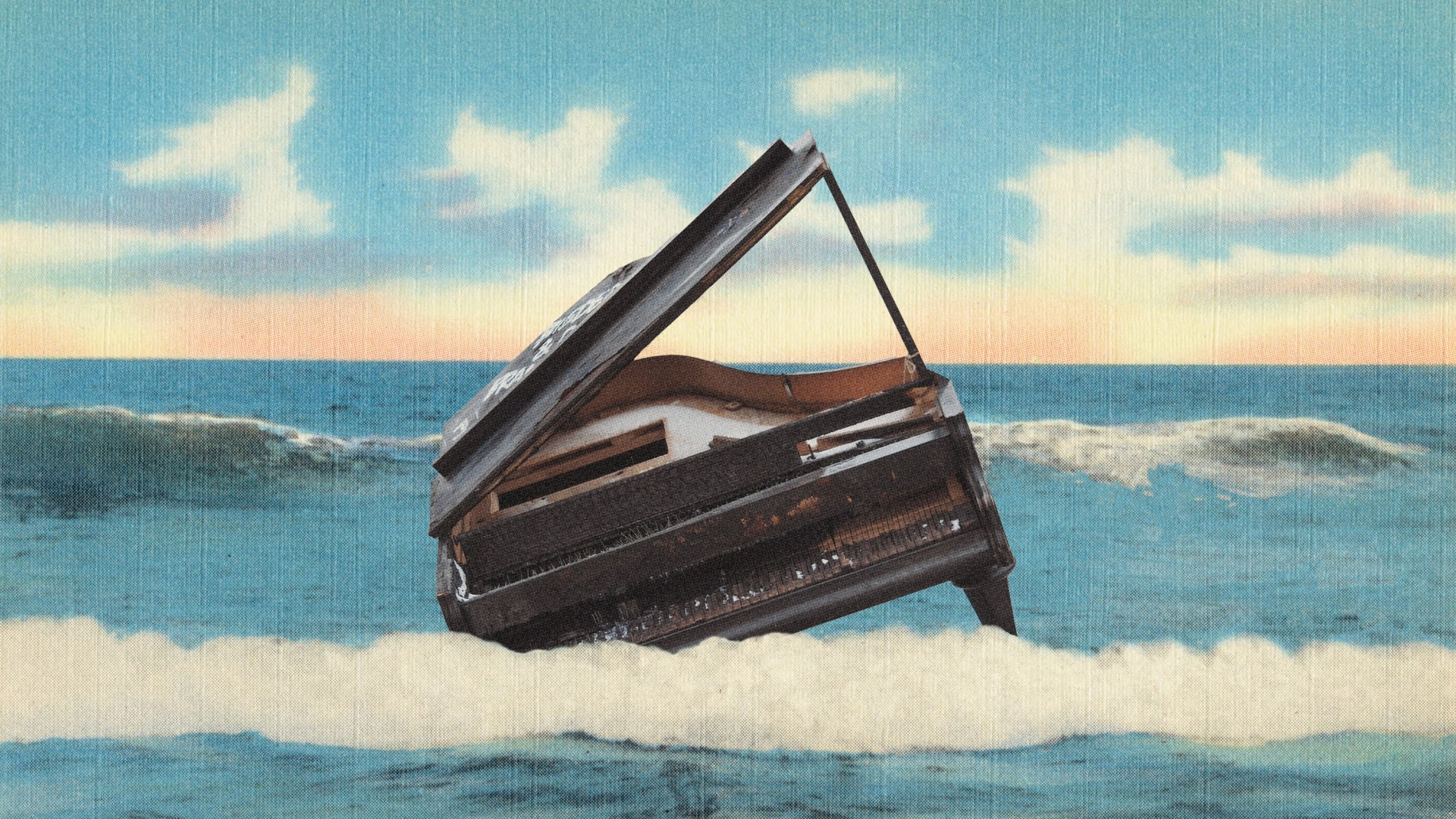
Illustration by CT / Source Images: Unsplash, Wikimedia Commons

“Spiritual Enemies to be Encountered,” one of the lesser-known texts written by Charles Wesley, urges the believer to persevere in the battle against “legions of dire malicious fiends” and “secret, sworn, eternal foes.”

There’s talk of spiritual enemies coupled with militarism that places Christ as captain and angels as the infantry in a cosmic war against “all hell’s host.” The figure of Christ is center, as conqueror and commander, but also as lamb and lion:

Jesus’ tremendous name, puts all our foes to flight:
Jesus, the meek, the angry Lamb, a Lion is in fight.
By all hell’s host withstood, we all hell’s host o’erthrow;
And conquering them, through Jesus’ blood, we still to conquer go.

There is a long history of militarism in Christian sacred song. From Martin Luther’s “A Mighty Fortress” to Elevation’s recent hit, “Praise,” it’s easy to find examples of lyricists using violent language and imagery to convey the weight of Christ’s victory over sin and death.

But when it comes to songs that describe death and destruction, what framework should worshipers and worship leaders use to determine the difference between rejoicing in Jesus’ triumph and careless triumphalism?

Elevation’s “Praise” is an energetic anthem with an infectious chorus hook that has made it popular as a congregational song and as a sound clip on apps like TikTok and Instagram.

https://www.youtube.com/watch?v=f2oxGYpuLkw&t=25s

The song begins with the well-known line from Psalm 150, “Let everything that has breath praise the Lord.” The song’s first verse confidently expresses a commitment to praise God in all things, in all circumstances:

I’ll praise in the valley
Praise on the mountain
I’ll praise when I’m sure
Praise when I’m doubting

The second verse is similarly focused on the individual, but places the worshiper in the middle of a battle:

I’ll praise when outnumbered
Praise when surrounded
’Cause praise is the waters
My enemies drown in

The line “praise is the waters / My enemies drown in” describes a scene of mass death. It most likely refers to the collapse of the Red Sea on the Egyptian army in Exodus 14, metaphorically placing the worshiper in the position of the Israelites on the other side, watching as God allows the waters to consume their enemies.

Mike O’Brien, a worship leadership consultant and trainer in the Atlanta area, sees a danger, particularly for American Christians, in foregrounding depictions of violence and death without careful consideration of tone and context.

“A lot of the time, the battle language is just triumphalism run amok,” O’Brien said. “It feels like celebrating our own personal narratives, or the power of us.”

In recent songs like “Praise” or Phil Wickham’s “Battle Belongs,” language of warfare seems to apply to personal battles and inner struggles rather than external enemies.

“It’s not always quite clear who we are thinking of as ‘enemy,’” said Jeremy Perigo, professor of theology and worship at Dordt University. “That makes a song weaker, theologically. Who are we fighting against? Who is drowning?”

Elevation’s line “praise is the waters / My enemies drown in” could land differently if it were “praise is the waters / Your enemies drown in.”

The church shouldn’t shy away from talk of enemies, argues Andrew Wilson: “The Scriptures talk about enemies with robust clarity and remarkable frequency, including in ways we are explicitly urged to imitate.”

“Confusion about who exactly God’s enemies are, and how the church should respond to them, makes Christians more likely to attack one another, not less.”

Perigo suggests that more precise language to define “enemies” and a clearer focus on the power of God will help guard against triumphalism. Otherwise, said Perigo, “my praise is what’s going to bring the breakthrough, which ignores Christ’s victory.”

A hymn like “A Mighty Fortress” foregrounds the strength and omnipotence of God against “the prince of darkness grim,” “our ancient foe.” It also points to human weakness and dependence on God, the protector:

Did we in our own strength confide,
our striving would be losing,
were not the right Man on our side,
the Man of God’s own choosing.
You ask who that may be?

Christ Jesus, it is he;
Lord Sabaoth his name,
from age to age the same;
and he must win the battle.

The text places no weapon in the hands of the worshiper but in the person of Christ. The believer is still in a battle, but Christ will win it.

Framing praise as a weapon against one’s enemies can encourage worshipers to focus on the power of their own words and voices. It can also allow individuals to craft their own inner vision of a battle against whoever or whatever they perceive as an adversary. “Are we talking about our own efforts to bring down our personal enemies?” Perigo wondered. “That’s one question I would ask when using one of these songs.”

However, said Perigo, it would be counterproductive to avoid all language of battle and struggle in our congregational worship. In the face of gross injustice, singing about the fight against oppression and evil is a valuable practice.

For the American church, how do songs like “Praise” and “Battle Belongs” fit into a model of congregational worship that sings about victory and warfare in solidarity with the oppressed?

O’Brien encourages pastors and worship leaders to think about how each song’s use of militant language forms the congregation’s understanding of God and his work in the world.

“Ask some questions,” said O’Brien. “Who are we singing to? In what way is the lyric forming your congregation and their beliefs and actions? Could we leave out a verse? Would it be best to just pick a different song?”

“This is where pastoral discernment needs to come in,” said Perigo. “Praying and singing imprecatory songs can put authentic words to a practice of nonviolence.”

However, Perigo cautions, those words need to be framed thoughtfully. Songs that celebrate acts of violence and destruction seem to fly in the face of Jesus’ admonition to “love your enemies and pray for those who persecute you.” How does praying for or singing about the death of an enemy align with those words?

“Tone can help order our emotions,” said Perigo, suggesting that the overall effect of a song should be considered when implementing a song or prayer that uses imprecatory language. “Is this really about triumph and excitement? Or is this a righteous response to injustice?”

“We don’t want to silence the grieving and their calls for justice,” said Perigo. “But we also don’t want the language of struggle to be weaponized.”

Singing congregational songs that reflect and affirm the pain of the oppressed and abused is a necessary practice for a church that seeks to be a refuge and sanctuary for the broken. Singing songs that acknowledge injustice and violence is also a way to stand in solidarity with the suffering.

“Singing in solidarity with those who suffer is one way to keep the needs of the world before us so that our prayers reach beyond those who are near and dear and extend to all of humanity,” wrote C. Michael Hawn in his essay, “The Truth Shall Set You Free.”

Hawn’s essay describes the spread of “freedom songs” throughout the global church during the struggle against apartheid in South Africa in the late 20th century. “The dynamic between local and global challenges the norm of worship as a place where individual comfort is the first and foremost criterion,” wrote Hawn.

There is “individual comfort” found in singing songs about a God who fights our battles. There is also comfort in believing that praise is a powerful weapon against one’s enemies.

Some might find it encouraging to sing about drowning foes in a time of geopolitical strife—“Praise” peaked in popularity on the church music resource sites Christian Copyright Licensing International (CCLI) and PraiseCharts two weeks ago, as the world witnessed horrifying violence in Israel and Palestine (it is still the most popular multitrack purchase on CCLI’s platform).

A vision of the global church and a cosmic battle against evil can lend a perspective that helps resist the celebration of death and lifts up the oppressed and suffering.

Hawn suggests, “Rather than being paralyzed by silence in the face of injustice, let us sing in solidarity with those whose burdens are heavy and, in doing so, discover that our own worship finds a more authentic voice to praise the Creator of all song.”


Ideas

My Unlikely, Cross-Cultural Friendsgiving

Contributor

A tea date with a Middle Eastern stranger led to friendship with women from nearly 20 countries—and changed my perspective on the world.

Christianity Today November 21, 2023
Sergey / Unsplash

It’s 5 a.m. and my house is quiet, but the world is loud. Here in the US, we’re preparing for Thanksgiving, and against the glistening backdrop of what we think the holiday ought to be—happy families gathered around abundant tables—is the sometime shabbiness of our ordinary lives: burned gravy, bickering siblings, and empty chairs. Fox News or MSNBC drones on and on in the background at grandma’s house, and anxiety simmers on the back burner of the stove.

We prepare our tables and imagine where everyone will sit. Can Uncle Bill, who loves to talk about Trump 2024, sit beside Sara from Seattle? Can they make it till the pumpkin pie? We check to see how much last-minute tickets to Honolulu cost and pause to ponder bears, mildly jealous of how hibernation helps them survive long, hard winters.

We want to gather, to welcome, to bless—but we are afraid. “Often, we Christians have no idea how to open our hearts and our homes to include people who need to be there,” Rosaria Butterfield says in her book The Gospel Comes with a House Key. “We love the miraculous stories of Jesus, his feeding of the five thousand, his divine healing, his contagious grace. And we miss the most obvious things about these stories: that we are meant to replicate them in ordinary, non-miraculous ways.”

Ten years ago, an Egyptian Muslim woman named Heba helped me (a white American Christian) rediscover how to practice the spiritual discipline of hospitality, especially when our differences make it difficult.

I met Heba at a park. She was with her two daughters, and she was looking for a friend. I was there with my two girls as well, but I was merely looking to pass the hours between naptime and bedtime with as little disturbance as possible.

She thought I looked kind, a perception that strikes me as the first miracle of our friendship, given the beleaguered state of my heart and mind in that season of my life. It took her three attempts at striking up a conversation before I finally reciprocated, and within a few minutes, she’d invited me to her home for tea. That I said yes to a stranger’s invitation is the second miracle of our friendship.

Heba and I live in Midland, Texas, in the heart of America’s oil and gas industry, which brings a lot of multinational companies to a relatively isolated region of our country. These companies move global employees in and out of our community. Five hours from cities like Dallas or San Antonio or Austin, the Permian Basin can be a hard and lonely assignment for expatriates, the foreign nationals temporarily working outside of their home countries.

It’s especially hard on the spouses—usually women—who often are stuck in a small apartment in a strange city with little to do and no friends. For example, when Heba and I met, she had to drive at least five hours to get to a good Arab grocery store with halal meat, and the local international food scene was dominated by taco trucks and Chinese takeout.

Like Heba, I’d moved to Midland from overseas—from Beijing, China, where my husband and I had lived for nearly four years. I remembered from my time abroad how lonely it could be to wake up on December 25 in a country where Christmas was just another day, and I knew the “trailing spouses” in Midland were more isolated than I’d ever been. So Heba and I started hosting dinners in our homes, inviting native-born American women interested in making friends from other places and expat women whom Heba had gathered into her fold.

Our dinners quickly expanded from two people to three to ten, and when we outgrew our homes, we formed an international women’s group called Basin Bridges and started meeting in a church fellowship hall. Open to all, our group has grown over the years to include over 500 women representing at least five different faith traditions, close to 20 countries, and even more languages.

Our monthly gatherings have always centered around a shared table and conversation. Most months, it’s simply coffee and grocery store snacks, but once a year, we host a global potluck Friendsgiving, where we each bring our families and a traditional food from our home culture to share, pulling up as many chairs to the table as necessary. Last year, our group was nearly 70.

Ask anyone who comes regularly to our gatherings, and she’ll tell you that being a part of a group with the sole purpose of fostering friendship between people of different cultural and religious backgrounds has profoundly shifted the lens through which she views the world. There are no faceless conflicts now. This group has scrambled my natural proclivity—egged on by so many headlines and pundits—to sort everyone and everything into tidy categories of “us” and “them.” Everything is simultaneously more complicated and much simpler.

When Hamas terrorists attacked Israeli civilians last month, our group discussed what we each knew of the regional history. We learned from one another how incomplete our perspectives were, shaped by childhood history classes in Cairo and Carrollton. Together, we grieved the violence inflicted on ordinary Israeli families by Hamas, and when the war in Gaza began, I held my breath alongside Heba as she waited more than three weeks for word from some of her friends trapped in the region.

When Russia bombed a Ukrainian nuclear power plant last year, our group listened to a Ukrainian woman, homesick for a place she could never again revisit. She told us what Zaporizhzhia had been like before the war, about the summertime walks along leafy tree-lined streets to cafés tucked into old European buildings.

Friends from Myanmar share news from aunts and uncles who’ve fled to the jungle to escape government-led bombings. Friends from Venezuela tell us how their families back home manage to stretch a salary to cover food for a month. Last month, an Iranian Christian told our group about her escape from Iran because of religious persecution, and a hijab-wearing Malaysian Muslim woman was among the first to express her furious grief over those who use religion—in this case, her own religion—to coerce and control and consolidate power.

These conversations aren’t always easy, but after sharing many tables together, our talks are rooted in curiosity rather than contempt. Each time we gather, we come away remembering afresh that what we have in common is so much greater than that which separates us. After all, you can’t see someone as entirely “other” when they’re teaching you to make their grandma’s dumplings.

And in a global context of algorithms and click bait and outrage porn that pushes each of us further into our respective echo chambers, relationships that cross cultural and religious lines provide a helpful path back to temperance. My friendship with Heba and Basin Bridges more broadly have become an organic deradicalization program, a life jacket in turbulent seas.

Gather, break, bless, go out: This is the sacramental life. As Christians, it is what we do when we take Communion. We gather together; we break bread, remembering Christ’s sacrifice; we take it, receiving the blessing of his promise to be our ever-present help in times of trouble; and we go out to love and serve the world.

It is the same pattern echoed in Jesus’ miracle of feeding the five thousand (Matt. 14:13–21). He gathered what the people had to offer, broke the bread, blessed the meal of five loaves and two fishes so that it was abundantly more than any could ask or imagine (Eph. 3:20), then sent out the people with lives transformed.

Though our international women’s group meetings are not centered around a shared faith tradition, they still follow this same sacramental pattern. We gather, break bread, ask questions and listen to each other (which is, of course, a way to bless one another), then go out into our ordinary, non-miraculous lives better equipped to live as ordinary, non-miraculous peacemakers.

The truth is, sometimes it’s easier to love a culturally distant stranger than it is to love those we’ve been around our whole lives. Occasionally, our families include dangerous people for whom the rules of engagement must necessarily differ. But most people are merely difficult, and our very familiarity, as the saying goes, makes it all the more tempting to slide into contempt.

This week as we gather at our Thanksgiving tables, may we accept the holy invitation to practice a more determined hospitality. May we ask questions rather than make assumptions and seek to listen more than we seek to be heard. May we see each person around our table as a holy image-bearer who longs, to borrow writer David Brooks’s words, “to have another person look into their faces with love and acceptance.” May we recall, as Butterfield says, that “we belong to each other, and even though we may have just realized it, we always have.”

Even when it’s hard to gather and break bread together, practicing hospitality is a habit the Bible elevates as a spiritual discipline (Romans 12:13). It is a two-way transformation, rewiring the hearts and minds of both giver and receiver. It is the makings of an ordinary miracle.

Carrie McKean is a West Texas–based writer whose work has appeared in The New York Times, The Atlantic, and Texas Monthly Magazine.

Theology

I’ve Been a Prosperity Gospel Parent

As a young mom, I tried to do everything right. The longer I parent, the less I seek “success” and the more I rely on God’s grace.

Christianity Today November 20, 2023
Illustration by Mallory Rentsch / Source Images: Getty / Unsplash

We did everything right. As Christian parents, we scan the checklists of steps to bring up a child in the Lord. We teach them right from wrong. We tell them about Jesus. We bring them to Sunday School. We make it to church.

Of course, none of us parent perfectly. But watching a child go through deep spiritual struggles can be disorienting when we’ve done everything in our power to prevent it—often with a fervor fueled by our own humbling spiritual history. We’ve learned painful lessons with God, and we want to keep our children from having to learn them too.

Except that’s not how it works. We can’t keep our children from struggling—and if we try, we risk instead keeping them from the full truth and beauty of the gospel.

I grew up in what’s often dubbed a “broken home”—though I would also call it happy. My mom worked hard, and my grandparents lived with us for some of those years. Still, with that background, when my husband and I first started having kids, we set out to do it perfectly, as many new parents do.

With a confidence on the scale of first-year seminary students, we proof-texted all the verses in the Bible about parenting, order, and discipline, and we plugged it into an equation for perfect parenting. Our kids were going to be awesome because we were going to be awesome parents. We were parenting by the Book.

There’s nothing like the arrogance of the young and inexperienced—though, in hindsight, our problem was more than youth and pride. We had taken a prosperity gospel view of family life, moving principles of “health and wealth” into the process of parenting. More than money or physical wellness, family was where we most deeply desired success, so that’s where the false “gospel of success” took root in our lives.

At the time, we wouldn’t have called this legalistic or prosperity gospel teaching. We would have called it “biblical.” We thought if we could just do this Christian life well, we wouldn’t have to depend on God’s grace all that much. Grace would just be our backup for unusual days—for the curveballs.

We didn’t realize then that when we take principles from the Bible and strip them of Christ and his redemption and forgiveness, they become something else entirely. We took the posture of Adam and Eve holding the fruit of the knowledge of good and evil, thinking that if we could just know what to do and not do, then we wouldn’t be quite so reliant on God’s grace.

This was especially evident in how we approached the Book of Proverbs. “Start children off on the way they should go, and even when they are old they will not turn from it” (Prov. 22:6). We treated verses like this as fortune-cookie guarantees rather than descriptions of the good that God wants for us. We looked for salvation through our own hands—as we humans are apt to do.

And that made sense, because the Proverbs are good. But we were too apt to judge goodness by whether something got us the results we wanted in the timeframe we preferred.

God judges what is good differently. Old Testament scholar Chad Bird says that using the Proverbs as guarantees is acting like Job’s friends, examining someone who is suffering and trying to figure out which Proverb he didn’t follow quite correctly: If we just do all the right things, we should be fine! Let’s problem-solve your failures. Perhaps there’s a nugget of wisdom in here that can fix your situation.

Job was a righteous man, and yet the Proverbs didn’t “work” for him. He did everything right, but God still allowed suffering, seemingly with no explanation, and showed up in the final chapters of the book to tell Job and his friends how incorrectly they’d judged the situation.

We often don’t want to acknowledge that Jesus not only said suffering could happen to us but promised it would (John 16:33). That is what the prosperity gospel ignores, and understandably: It feels so much more positive and productive to focus on the parts of the Bible that give us a feeling of control.

We don’t want to take heart that Christ has overcome the world. We want to take heart that, well, at least we did everything we could. We don’t want redemption so much as redemption on our own terms, by our own hands.

As our culture moves on from helicopter parenting to lawnmower parenting (where parents go beyond hovering to mowing down all obstacles for their kids), the temptation of prosperity gospel parenting only becomes stronger.

It feels like we’ve somehow failed if our kids are dealing with hard things. It feels like failure if they are struggling with their faith or wrestling with God. We start to think it’s our job to mow down all that struggle, forgetting it’s actually our task to be with and pray for our children in struggle and joy alike.

And parents are not the only ones with this sense of failure. I was speaking with a young adult not long ago who said she felt pressure to be happy all the time. Her parents kept saying that they just wanted their kids to be happy, so when she wasn’t happy, she felt like she was failing them.

“I just want it to be okay to have a day where I’m sad,” she told me. She wanted the freedom to feel the whole range of human emotions without disappointing her parents—without making them feel like they didn’t do everything right.

Of course, a central tenet of the gospel is that we can’t do everything right, and this is why we so deeply need God’s redemption. I remember once pouring my heart out to God when one of my kids was struggling. I cried out because I could not fix that pain. But God showed me then that if I had the capacity to remove all of my children’s struggles, they would never need him. They would never have reason to cry out to him for themselves.

My limitations help my children seek and see God. His power is displayed in my weakness (2 Cor. 12:9), not in mechanistic promises of family prosperity, and this is a power my kids must come to know for themselves. Learning to rely on salvation by Christ alone is often a daily battle. Our kids must wrestle through it—and past all their versions of self-justification—just as we did.

The longer I parent, the more I realize that God is more willing for my kids to struggle than I am. I always want to skip the struggle, ignore the struggle, fast forward to overcoming the struggle. I am often impatient and unwilling to walk through the pain.

But if we can let go of prosperity gospel parenting, we can embrace the true gospel of a God who is with us and for us.

We can introduce this God to our children—not a God who is counting up our parenting failures or demanding constant happiness, but a compassionate God who meets us in our struggle. Who allows us to wrestle with him. Who doesn’t ask us to pretend things are fine when they’re not fine. Who permits us, as Martin Luther put it, to “[call] the thing what it actually is,” even if it is uncomfortable or unhappy.

As much as we hate the fact that in this world we will have struggles—and our kids will have struggles—we can take comfort in God’s honesty, patience, and love. And we can show our children that this is what God is like, so much better than the prosperity gospel’s petty and often inept idol could ever be.

What if starting children off on the way they should go isn’t just teaching them right and wrong and making sure they go to Sunday School? What if it’s teaching them to fall on God’s grace, every single day?

Gretchen Ronnevik is the author of Ragged: Spiritual Disciplines for the Spiritually Exhausted and co-host of the Freely Given podcast.

News

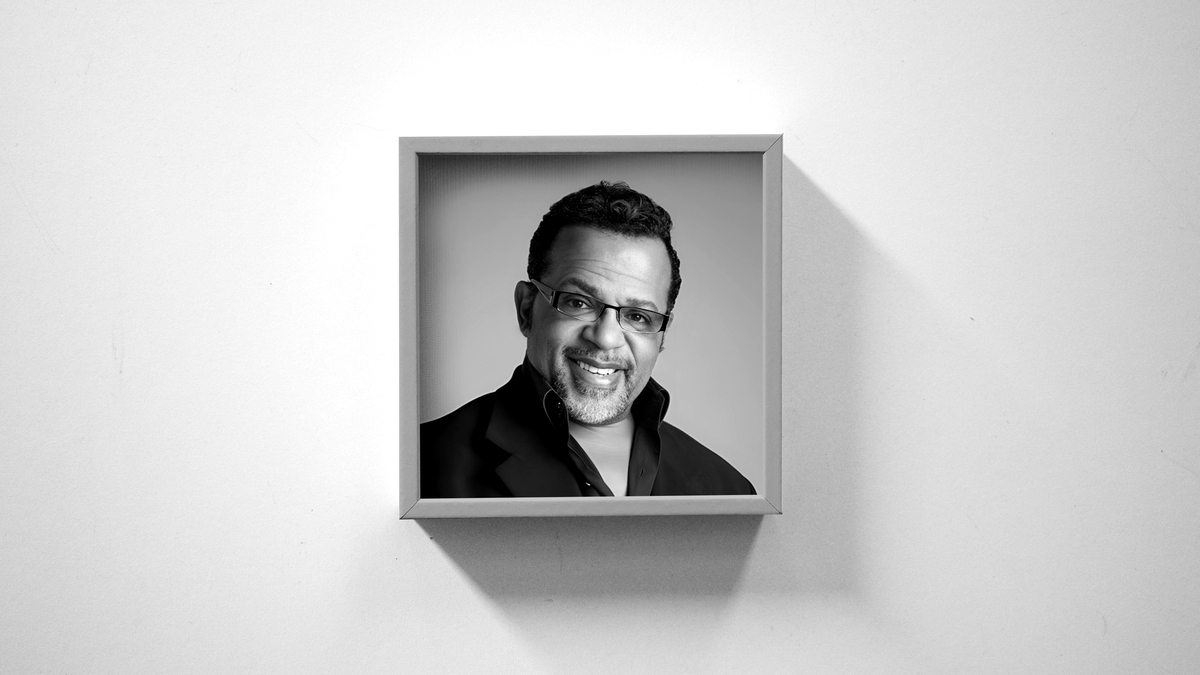
Died: Carlton Pearson, Pentecostal Preacher Who Rejected Hell

The former COGIC leader and Oral Roberts mentee said he wore his “heretic” label “like a badge.”

Christianity Today November 20, 2023
Courtesy of Carlton Pearson / edits by Rick Szuecs

When Carlton Pearson was a teenager, he cast out a demon in church. He was the son and grandson of Church of God in Christ (COGIC) ministers and knew what to do. He looked at the girl in front of him—his girlfriend at the time—and started rebuking the Devil in her and claiming the power of the blood of Jesus.

“The blood, the blood, the blood, the blood—come out!” he said. “You lying wonder, in the name of Jesus, I command you to cease and desist. Loose her.”

She seemed, to Pearson and the Black Pentecostals around him, to be loosed. She screamed and fell on the ground possessed, and then there was a release, like something let go. The church gathered around the girl, rejoicing, and they praised Pearson for his spiritual gifting and the way he had used it with such authority.

When Pearson was in his late 40s, he tried to cast hell out of church. That time, it didn’t go so well. He lost nearly everything he had and became a pariah among Pentecostals. He watched his megachurch collapse almost overnight, lost his relationship with his mentor, lost his respected status, lost his community, and ended up almost completely alone.

Whether there was peace or not—whether he was loosed from something—was, in the end, a matter of debate.

Pearson died Sunday, November 19 at the age of 70.

It was “a strange thing to go from a very popular, sort-of loved person that everybody seems to like, and everybody wants you, and then overnight, your name is a scandal,” he told the popular public radio show This American Life in 2005.

Yet he insisted he had made the right choice.

“I can handle my stuff, okay?” he said. “I know what God spoke to me. So I’m cool.”

Pearson was born in San Diego on March 19, 1953, the fifth of Adam Louis Pearson and Lillie Ruth Johnson Pearson’s seven kids. It was a religious family, with Pentecostal preachers going back generations. Pearson’s great grandfather on his mother’s side, Lon Evans, was an early Pentecostal preacher in Texas. His father’s father, Elector Pearson, founded St. Luke Church of God in Christ in San Diego, the second COGIC congregation in the city. The third was founded by Pearson’s uncle. His father was a pastor, too, serving St. John Church of God in Christ in La Jolla, California.

The women in the family could not get ordained, but many of them were ministers as well. His father’s mother was a traveling revivalist who would go out for weeks at a time. A great-aunt was known as a great preacher. His mother could “sing like Ella Fitzgerald or somebody” and directed a choir.

The family was, as Pearson would later recall, “Tongue talkin’, pew jumpin’, holiness, hellfire and brimstone.”

They also lived with a lot of fear.

“They were suppressed racially, educationally,” Pearson said, “and they were afraid of God, afraid of the white man, afraid of the Devil, afraid of the other members of the church.”

Most of that didn’t feel safe to talk about. But they could discuss demons. The power of Satan loomed large in their conversations, their services, and their daily lives.

“The Devil was as present and as large as God,” Pearson later said. “He had most of the people. He was ultimately going to get most of the people.”

Even those ensconced in the Spirit-filled church, who devoted their lives to ministry, could not be sure they were safe. When he was a young man, Pearson watched both his father’s parents backslide. His grandfather committed adultery. His grandmother spent the end of her life drinking, smoking, and gambling.

When they died, the church, Pearson’s parents, and Pearson were convinced they had gone to hell. The Devil had won. Pearson said he remembered his grandmother preaching so powerfully and praying so fiercely that she seemed to levitate off the ground, and yet Satan triumphed in the end.

Pearson left Southern California at 18 and went to Oral Roberts University (ORU) in Tulsa. At college, he joined the World Action Singers, the popular musical group led by Oral Robert’s son Richard. He traveled with the group, appeared on television, and developed a close relationship with Oral Roberts himself. The Pentecostal evangelist and faith healer took Pearson under his wing, even referring to the young man as his “Black son.”

Roberts became his mentor, and Pearson joined Oral Roberts Evangelistic Association as an associate evangelist. Then, in 1977, he formed his own ministry, which he called Higher Dimensions, Inc. He was ordained by COGIC and, in ’81, started his own church in Tulsa, which he named Higher Dimensions Evangelistic Center. It quickly grew to a megachurch.

“I used to worry that it would ever be filled,” he would later recall. “We could seat about 1,200, and it was full. Then we put the balconies in, another 800 seats. We’re running about 2,200 per service, 5,000 on a Sunday. … One day, it dawned on me. And I said, ‘I guess this is the way it’s going to be. We are there.’”

As the church grew, Pearson rose in national prominence as well. He preached alongside the most famous Pentecostals in the country, hosted a show with good ratings on Trinity Broadcasting Network, took a seat on the board of ORU, established an annual conference he called Azusa, after the birthplace of Pentecostalism, and became a mentor and patron to up-and-coming preachers including T. D. Jakes.

The conference grew into an interdenominational network of churches. Pearson was consecrated a bishop in 1997.

And in the middle of all this, he decided he didn’t believe in hell.

As he recounted later, he was watching a program on the history of the Rwandan genocide, how Hutu militias raped and killed thousands upon thousands of Tutsi people. Pearson was holding his daughter on his lap and started to talk to God.

I don’t know how you’re gonna call yourself a loving God and allow those people to suffer so much and then just suck them into hell, he said in his mind.

And then in his mind, he heard God speak back.

Is that what you think we’re doing?

God … I can’t save the whole world.

Precisely. That’s what we did.

It came as a revelation. From that moment, he believed that God had saved everyone through the work of Christ on the cross and it didn’t matter if they accepted him as their Savior, professed faith, or believed. It didn’t matter if they were Christians. There was, he thought, no hell.

“God is not angry with humanity,” Pearson said. “He sees them all through the blood.”

He went on to preach this in church in a series on evangelism and then to speak about it publicly in 2000. He does not seem to have been aware of the historic Christian controversies over the issue or have read any Christian universalists. Pearson had his revelation and then figured out the theology on his own.

When someone asked him if he really believed Adolf Hitler was in heaven, he decided he did. Even Satan could be forgiven, Pearson said.

The reaction from other leading Pentecostals and charismatics was swift and sharp.

“He’s crazy,” said Clifford L. Frazier, bishop and pastor of The City of Life Christian Church in St. Louis.

T. D. Jakes said Pearson was still his friend but his theology was “wrong, false, and misleading.”

Ted Haggard, who was then pastor of New Life Church in Colorado Springs, said, “He’s made a horrible mistake, a grievous mistake.”

Oral Roberts tried to dissuade Pearson privately and then wrote him a stern warning.

“This doctrine is as dangerous as any I’ve come in contact with in 66 years of ministry,” he said. “Give it up, I pray, I beseech, I plead.”

Pearson wouldn’t give it up, though, and soon saw attendance at Higher Dimensions evaporate. Thousands stopped coming. Some immediately left when they heard he abandoned the doctrine of hell. Others listened to his arguments and were appalled at how he seemed to disregard the Bible.

“I can’t remember the particular Scripture, but I remember the Scripture said ‘faith in Christ,’” one told This American Life. “And he looked at the congregation. And he said, ‘That does not mean faith in Christ.’ It was written in ink in black and white. And he looks us in the eye and says that’s not what it means. I felt insulted by that.”

When people pushed Pearson on his views about the authority of Scripture, he was dismissive. At one point he said the Bible was “a graven image.”

The Joint College of African-American Pentecostal Bishops declared Pearson a heretic in 2004. The church lost its building to foreclosure in 2006.

Pearson received some national attention when his story was told by This American Life and turned into a Netflix film called Come Sunday in 2018. Pearson was played by Chitwetel Ejiofor. The film also starred Danny Glover, Lakeith Stanfield, Condola Rashad, Jason Segel, and Martin Sheen as Oral Roberts. Reviews were generally positive, with The Hollywood Reporter calling it “a mesmerizing contemplation of the clash between rigid dogma and considered reinterpretation” that “comes down on the side of mind-opening inclusion.”

Pearson struggled to find a home in liberal religious communities. He tried to minister under the auspices of the Episcopal Church and the United Church of Christ before taking a New Thought congregation in Chicago. He launched a capital campaign and a TV program for Christ Universal Temple, but found himself at odds with a congregation that wanted someone trained in their metaphysical mind-cure theology.

He left in 2011, returned to Oklahoma, and became an affiliate minister at a Unitarian Universalist congregation in Tulsa, where he continued to preach and teach for the rest of his life.

Pearson told a historian a few years before his death that he hoped he’d be remembered as someone who “had questions” and was willing to rethink things, which he argued was the true meaning of repentance. He expected, though, that most would think of him as a heretic.

“I’m the heretic,” he said, “and I enjoy that, wear that like a badge these days. … It’s like a tattoo that I can’t wash off.”

Person is survived by his ex-wife Gina Pearson and their two children, Julian D’Metrius and Majestè Amour Pearson.

News

First Woman Steps into Leadership of Evangelical Theological Society

Wheaton professor Karen Jobes becomes president a decade after a study found “hostile and unwelcoming” atmosphere.

Karen Jobes

Karen Jobes

Christianity Today November 20, 2023
Zondervan / YouTube screen grab

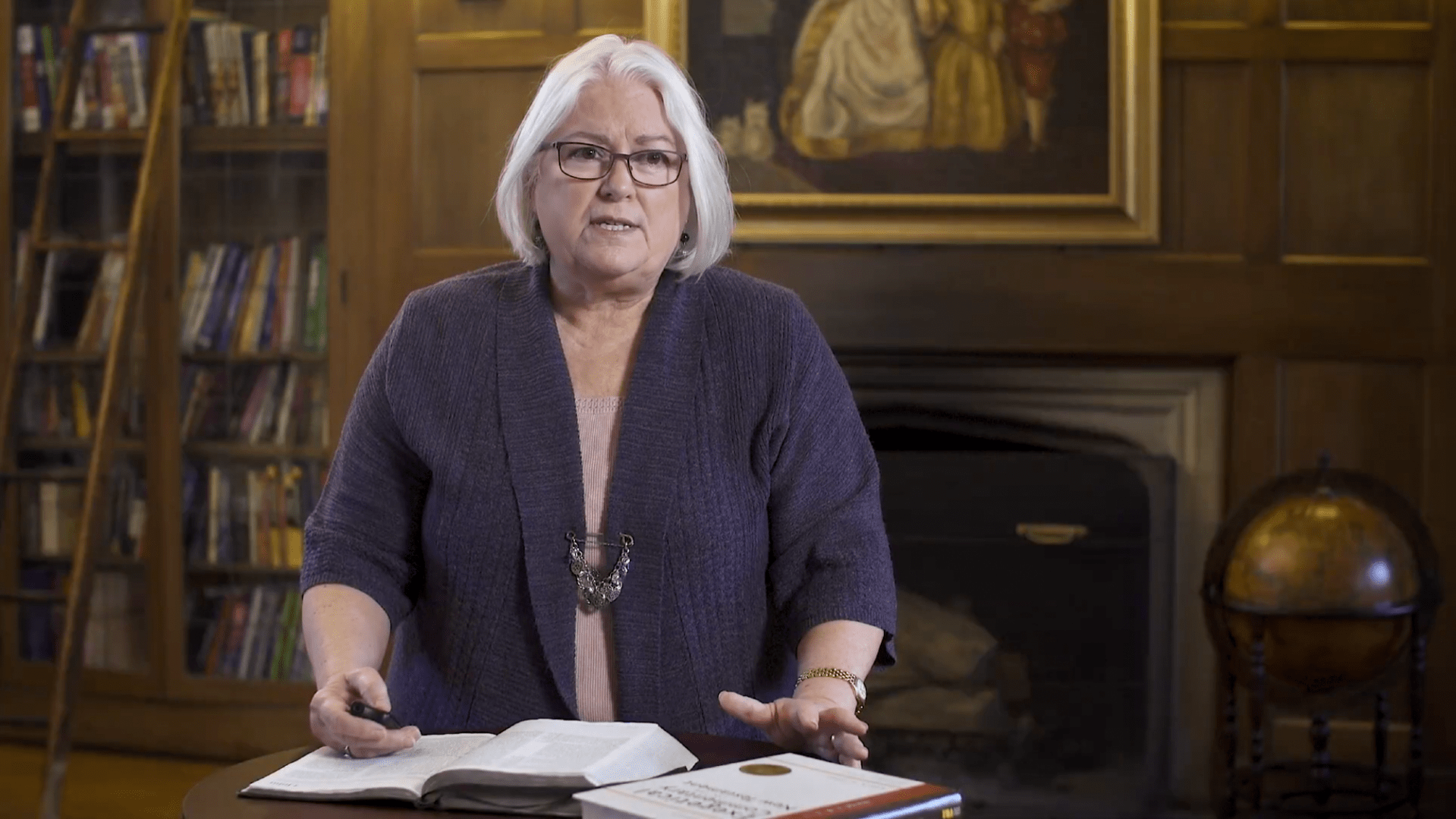
The Evangelical Theological Society (ETS) has instated its first female president in 75 years. Karen Jobes, emeritus professor of New Testament and exegesis at Wheaton College, will lead the professional society of evangelical Bible scholars and theologians in 2024.

Her election marks a significant step for an association that has faced criticism over the years for the marginalization of women. A 2014 Christians for Biblical Equality study of women’s experiences at ETS gatherings, authored by Emily Zimbrick-Rogers, who is now an Episcopal priest in Philadelphia, found “an atmosphere that feels hostile and unwelcoming.”

Jobes, who joined in 1989, recalled uncomfortable experiences of her own at ETS.

“My earliest recollections of coming to ETS is that there were very, very few women. And most of the men who attended would ask, ‘Well, whose wife are you?’” Jobes told CT at ETS’s annual gathering, held this year in San Antonio. “A lot has happened in the church and in our world since the 1980s.”

Other women share similar stories.

“In some sessions, I was the only woman attending. Very few women presented papers,” said Carmen Joy Imes, an Old Testament professor at Biola University. “Men would ask me, ‘Where does your husband teach?’ assuming that I was there as a spouse rather than as a scholar.”

This year’s conference, held in San Antonio in conjunction with the annual meeting of the American Academy of Religion and the Society of Biblical Literature, saw some of the highest levels of women’s participation in the society’s history.

Two of the three plenary speakers were female, which has happened only once before at ETS. University of Notre Dame professor Abigale Favale’s plenary on “Gender Identity Theory and Christian Anthropology” was full, attended by both women and men. A session on Wheaton College New Testament professor Amy Peeler’s new book, Women and the Gender of God, was packed.

Seventy-five women presented papers, including Nancy Reyes Frazier from Dallas Theological Seminary, Holly Mulherin Farrow from Southwestern Baptist Theological Seminary, Kaitlyn Schiess from Duke University, and Heather Joy Zimmerman from Wheaton.

An additional 22 women served as panelists or moderators during the two-day meeting.

By contrast, in the 2014 study, researcher Emily Zimbrick-Rogers, who is now an Episcopal priest in Philadelphia, , found “an atmosphere that feels hostile and unwelcoming.”

About 100 scholars attended a women’s networking event, which is about six years old.

“I’ve seen many women come to ETS during seminary or graduate school and decide that it’s not worth it to attend because of the repeated subtle and not-so-subtle messages that they don’t belong,” Imes told CT. “I was considering leaving ETS myself … but I realized I’d never turned my full attention to making it a more hospitable place for women.”

The event started as a Facebook group to help women find roommates to cut hotel costs at ETS gatherings and stay connected afterward. But, Imes said, there was also a larger goal: to “give women a reason to stay” and “slow the female exit.”

The group, which is currently run by Carey Baptist College theology professor Christa McKirland and a leadership team, now has nearly 600 members. It has also actively organized to elect people to the presidential nominating committee. This year, the group supported Imes, Trinity Evangelical Divinity School New Testament chair Dana Harris, and Midwestern Baptist Theological Seminary biblical studies professor Andrew King.

“Whereas at one time we were isolated scholars, today we support each other, share tips, cheer for book deals, give away power to the next generation, and share opportunities. Gone are the days when male scholars ask where my husband teaches,” said Sandra Glahn, professor at Dallas Theological Seminary professor and author of Nobody’s Mother: Artemis of the Ephesians in Antiquity and the New Testament. “And we invite women to the business meeting.”

The effort to include more women in ETS has not only been led by women, those involved are quick to point out. They say many men, including some who are complementarians, have worked to make the association more hospitable for women.

Jobes in particular names two past presidents who paved the way for her election: Asbury Theological Seminary professor Craig Keener and Dallas Theological Seminary professor Daniel B. Wallace.

Wallace, who was president-elect when the study of women’s experiences at ETS annual meetings was published, met with ETS women to address issues of sexism and work toward change. Jobes called him a consistent ally.

“I recognize and appreciate my male colleagues who supported this, to make it happen,” she said. “It’s not as if all this just suddenly happened this year or last year.”

Many women at ETS say they’ve noticed a significant shift in the last five years. But they also say more change is needed.

Women currently make up only 6 percent of ETS members, according to Mimi Haddad, president and CEO of Christians for Biblical Equality. That has not increased in the last decade. And though involvement in this year’s conference was up, women made up less than 10 percent of speakers. Jobes remains the only woman on the executive committee.

“I feel far more hopeful about where ETS is heading. However, it is a cautious hope,” said McKirland, author of God’s Provision, Humanity’s Need. “I am so grateful for the women and men who have spent 75 years investing in those green shoots. My hope is that it doesn't take 75 more for the garden to be in full bloom.”

Jobes, newly instated as president, said she’d been looking at the long list of male names before her. She replaces Timothy George from Beeson Divinity School at Samford University. Other past presidents include Gospel Coalition co-founder D. A. Carson, Southern Baptist Theological Seminary president Albert Mohler, theologians such as Bruce Ware and Norman Geisler, Council on Biblical Manhood and Womanhood co-founder Wayne Grudem, and past CT editors Kenneth Kantzer, Carl F. H. Henry, and Harold Lindsell.

“I don’t want to be the first, last, and only female president in ETS,” Jobes said. “Ever since God called me to seminary back in 1987, my vision for women in theology and biblical studies is that we would become normalized.”

News
Wire Story

What Dallas Pastors Preached After JFK’s Assassination

Sixty years later, their sermons calling for change and greater civility still resonate.

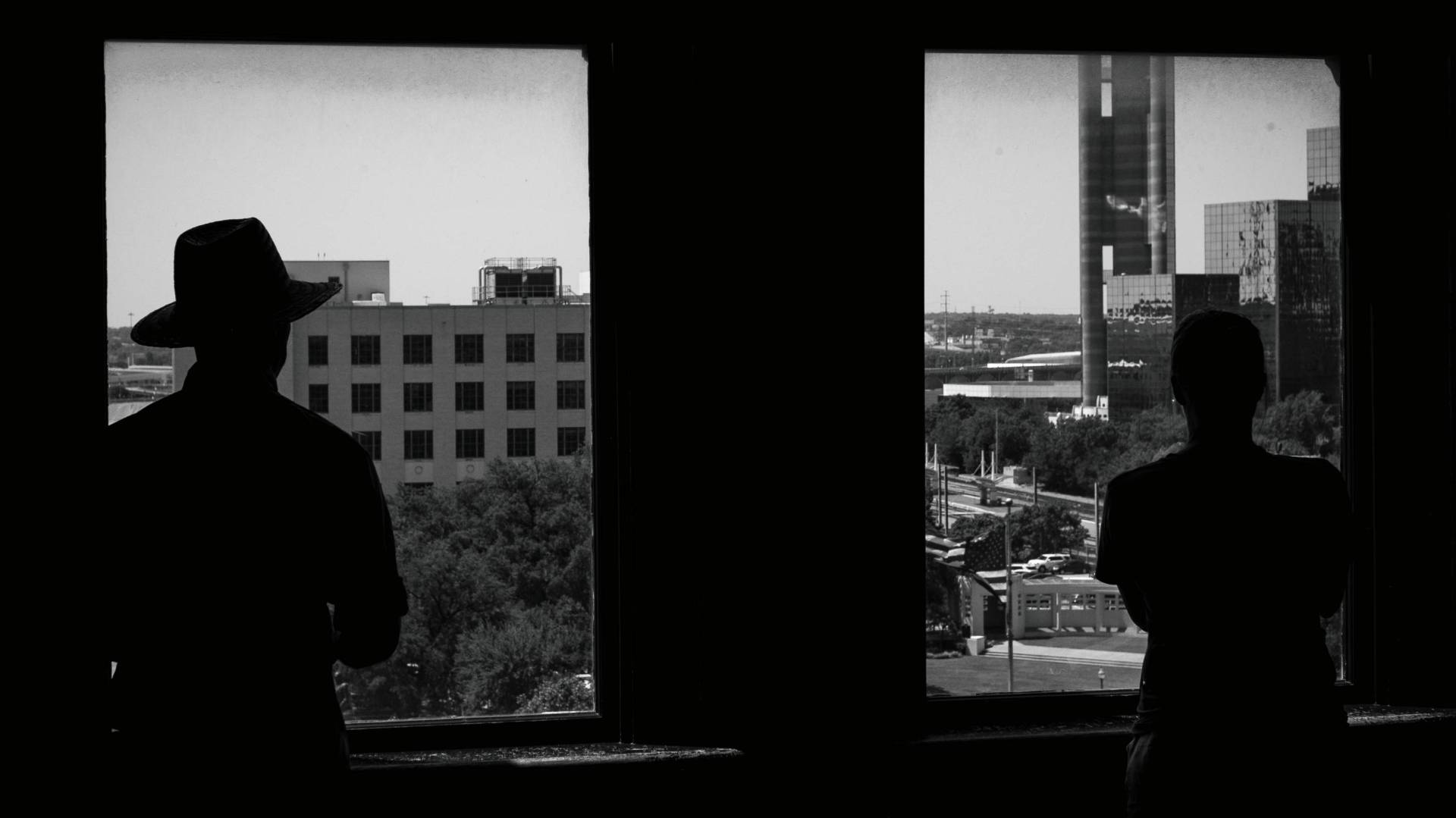
The former Texas School Book Depository building in Dallas now contains museum chronicling the assassination and legacy of John F. Kennedy.

The former Texas School Book Depository building in Dallas now contains museum chronicling the assassination and legacy of John F. Kennedy.

Christianity Today November 20, 2023
George Wilson / NurPhoto via AP

Less than a year before the US presidential election, pastors took to their pulpits to decry a culture of hate, extremism, and vile politics.

“Much of the hate and discord that has been poisoning our nation has been preached in the name of Christ and the church,” Charles V. Denman declared.

In a different sanctuary, William Dickinson proclaimed, “Hate knows no political loyalty and is as deadly and as vicious in the heart and mind of liberals and those to the far right as to the far left alike.”

Those sermons were delivered not during the current race for the White House—but in the aftermath of the November 22, 1963, assassination of President John F. Kennedy.

To mark the 60th anniversary of Kennedy’s death, a leading scholar on faith and politics sees lessons in the decades-old messages for Americans today.

“One overarching theme emerges again and again: a call for civility, a call for condemnation of extremism and a call to end the divisions and polarizations … that they think provided the climate in which this assassination could occur,” said Matthew Wilson, director of Southern Methodist University’s Center for Faith and Learning. “That is really striking because so much of what they say seems to apply to our current moment.”

Library archives at SMU’s Perkins School of Theology include sermons preached to overflowing crowds on November 24, 1963—the Sunday after the shooting.

The transcripts, mostly from Methodist churches, are in the papers of the late William C. Martin, a Methodist bishop and president of the National Council of Churches.

“He reached out to Dallas clergy … asking for copies of the sermons preached after the assassination,” SMU spokeswoman Nancy George said.

In a few cases, the pastors finished their remarks only to be handed notes informing them of alleged assassin Lee Harvey Oswald’s shooting death. Nightclub owner Jack Ruby gunned down Oswald during his transfer from one jail to another that Sunday morning.

At the time of Kennedy’s killing, Dallas had a reputation as an ultraconservative city that didn’t treat liberals kindly. The day before the assassination, handbills distributed in Dallas featured convict-style photographs of Kennedy and the caption “Wanted for Treason.”

The next day, a full-page ad appeared in the Dallas Morning News:The “American Fact-Finding Committee” demanded to know why the president had “ordered the Attorney General to go soft on communism.”

So when Kennedy—a liberal Democrat and the first Catholic elected to the nation’s highest office—was killed, the backlash against Dallas was immediate.

“One of the interesting ironies here is that the tendency to blame Dallas, or to criticize Dallas politics in the 1960s, was to focus on right-wing extremism and groups like the John Birch Society and some of the very strident anti-communists who had been very critical of John Kennedy,” Wilson said.

“But it turned out that those weren’t the people who killed Kennedy,” the political science professor added. “It turned out to be a left-wing extremist, a Marxist sympathizer in Lee Harvey Oswald, who killed Kennedy, and some of the pastors wrestle with that.”

Oswald’s role “served as a reminder that this blind ideological hatred is not confined to one corner of the political universe,” Wilson said. “It occurs in the service of multiple causes, multiple ideologies. And I think that’s instructive for our day as well. That is, we see a lot of contempt for and dehumanization of political adversaries coming from across the spectrum.”

For city leaders in 1963, the first priority was to “create distance between Dallas collectively or corporately and this horrible event,” Wilson noted.

But pastors who shared their sermons with Martin called for self-examination and change, the transcripts reveal.

At Northaven Methodist Church, William A. Holmes asked, “In the name of God, what kind of city have we become?”

He titled his message “One Thing Worse Than This.”

Worse than Kennedy’s death, Holmes preached, would be the citizens of Dallas refusing to take any responsibility.

“Yet that already seems to be the slogan of our city and some of its officials: ‘Dallas is a friendly city—this was the work of one madman and extremist.’ ‘Our hearts are saddened—but our hands are clean.’ How neat and simple this solution,” Holmes said. “How desperately that we wish it were true.”

Holmes stressed that he was aware of the left-wing nature of Oswald’s ideologies.

“But my friends,” the pastor added, “whether extremism wears the hat of left wing or right wing, its by-products are the same. It announces death and condemnation to all who hold a different point of view.

“And here is the hardest thing to say: There is no city in the United States which in recent months and years has been more acquiescent toward its extremists than Dallas, Texas. We, the majority of citizens, have gone quietly about our work and leisure, forfeiting the city’s image to the hate-mongers and reactionaries in our midst. The spirit of assassination has been with us for some time. Not manifest in bullets but in spitting mouths and political invectives.”

CBS broadcast a portion of Holmes’ sermon, prompting death threats and New York Times coverage of police guarding him, as the United Methodist News Service recounted in 2013.

At Highland Park Methodist Church, pastor Dickinson told congregants they’d be shocked by what a respectable Christian couple of fine education said at a dinner party two nights before the president’s visit.

The couple, he said, “told friends they hated the president of the United States and that they wouldn’t care one bit if somebody did take a potshot at him.”

“There are among us today,” Dickinson preached, “too many purveyors of hate, people who call intelligent, sincere holders of public office traitors. People who fill our cars with leaflets bearing printed lies and calling our public officials disloyal. People who fill our mail with emotional, bitter harangues and accusations and who make harassing telephone calls to our honest and sincere citizens at all hours of the night. And then there are those who give subtler approval to such extremists and breeders of hate through either indifference or through financial support.

“Hate not only in our city but throughout our nation has become big business and is supported by large contributions and exceedingly competent leadership,” he added. “But we in Dallas, it seems to me, have more than our share of these extremists. It is not a pretty picture into which stepped an assassin.”

At Wesley Methodist Church, pastor Denman recounted that he and his two boys witnessed the president’s motorcade up close (“so closely we could have almost reached out and touched it”) before later hearing sirens and learning of the shooting.

“Did he have to die to get Christians to quit hating?” Denman said he asked his weeping wife after arriving home.

“In Dallas, entire sermons have been devoted to damning the Kennedy administration and the United Nations, and they have been delivered from Methodist pulpits,” he told the congregation. “In the name of the church, men and women have sown seeds of discord, distrust and hate and have called it witnessing for Christ.

“As a church, we are sick,” he continued. “God have mercy on us.”

Less than a week after Kennedy’s assassination, Jimmy Allen, secretary of the Baptist General Convention of Texas’ Christian Life Commission, spoke at a community Thanksgiving service.

Allen agreed with those concerned about Dallas’s image that “it could have happened anywhere … in any city.”

However, he stressed, “Something far deeper and more disconcerting is the fact that so many in our nation were not surprised that it happened here!”

“A climate of character assassination, carping criticism toward national leaders and constant complaint about the processes of law has developed in our nation,” Allen said. “Dallas is not the only city where this has been present. But it has been present.

“Disrespect for persons and democratic processes,” he added, “has grown to alarming proportions in our community and encourages the venting of hatred both by young and old.”

In a January 1964 radio address included in the SMU papers, Rabbi Levi A. Olan of Temple Emanu-El addressed the question of Dallas’s “guilt” in Kennedy’s death.

“In the beginning … many people felt that there was something frightfully wrong with the city, and some wanted to face the truth,” Olan said. “This mood is passing, and now there is a growing resentment of all criticism from without and within the gates.

“The present tone is that of rejecting all responsibility and disclaiming all guilt,” he suggested. “Dallas, it is said, is no different than other cities and better than many. The assassin was not one of our citizens. The people want desperately to forget the tragedy and go on with the business of living as though nothing had happened here.”

Six decades later, Wilson—the SMU political scientist—points to striking similarities between then and now.

“We talk a lot about the polarization, the ideological extremism, the hatred, the rhetoric of violence in our contemporary politics,” he said. “And it is instructive to see that that is not a new phenomenon, that there was a lot of concern about those very things in what a lot of us kind of think of as the good old days of American politics.”

Bobby Ross Jr. is a columnist for

Religion Unplugged

and editor in chief of

The Christian Chronicle

. In 2003 he produced an in-depth package for AP on the 40th anniversary of the JFK assassination. This article first appeared on

Religion Unplugged

.

News

Loaves and Casserole Dishes: Will Church Cookbooks Survive?

The spiral-bound tomes guarding the secrets of the best sugar cookies, sheet cake, and seven-layer salad are disappearing—but not completely.

Modesto Covenant Church members prepared their annual Christmas breakfast where they serve cookies from their church cookbook every year.

Modesto Covenant Church members prepared their annual Christmas breakfast where they serve cookies from their church cookbook every year.

Christianity Today November 20, 2023
Courtesy Modesto Covenant Church

Did someone say Jell-O salad?

This is the time of year when families pull out their stained recipes to make crowd-pleasing casseroles, cakes, and cookies. Some of those favorite recipes come from church cookbooks, compiled by women over the decades since the 19th century.

These spiral-bound collections of recipes have been a staple in church culture, documenting the tastes and traditions of their communities over the years. But now, as cookbook enthusiasts age, the victual volumes are disappearing.

Tallowood Baptist Church in Houston used to print cookbooks filled with recipes for sheet cakes and soups, and members would make the dishes in a potluck to share. But it’s been eight or nine years since their last edition.

“The people who were dedicated to the project are no longer with us, and no one has thought of doing another cookbook,” said Joy Cryer, a church librarian at Tallowood.

It only takes one enthusiastic person in a church to compile recipes from members, but the internet has changed the way people cook and gather recipes. And Americans of all socioeconomic statuses generally cook less than they used to.

Though the church cookbook tradition has declined, it might be too early to declare it over. CT surveyed 22 church librarians, and more than a third said they knew of churches that were still printing cookbooks.

In Oshkosh, Wisconsin, 84-year-old Mona Schultz attends Plymouth Church, a nondenominational church of about 250. She wasn’t sure if anyone cooked much anymore, or if there would be interest in doing a church cookbook. She asked a young women’s Bible study at her church what they thought of the idea.

“I’m 84, I’m out of touch,” said Schultz, who has been going to the church since 1948 and has sung in the choir for 60 years. “They were very interested! They wanted recipes from us old timers that were tried and true.”

Now she is putting together a cookbook for her church’s 175th anniversary next year, titled A Demisemiseptcentennial Treasury of Recipes. One woman in their church always made an appetizer at Christmas, but she passed away recently, and so her appetizer recipe will be included. There are more contemporary dishes, too, like pulled pork BBQ. Schultz is putting photos of the recipe contributors with each recipe and stories throughout.

“Enjoy good eating, not only from your kitchens, but choice spiritual food, daily, from His Word,” Schultz wrote in her draft introduction.

Church cookbooks began in the Civil War primarily as fundraisers, where women were raising money for the families of fallen Union soldiers. They were mostly popular among white churches in smaller towns, historian Megan Elias told MinnPost.

Church cookbooks started declining as early as the 1970s, as women were spending more time outside the home, according to Kendall Vanderslice, a baker and scholar who has written books on food and theology. Prior to that, the cookbooks might be “the only place [women] were ever going to see their name in print,” she said, and so a recipe was a legacy for many church women. Vanderslice also attributes the decline to the growth of megachurches, which are less likely to produce cookbooks.

Carlisle Printing in Sugarcreek, Ohio, has historically printed cookbooks for churches, and said they still print thousands a year for churches around the country.

“I would say, if anything, it has increased in the last ten years,” said Rachel Wengerd at the printing company. Most of their customers now are Amish or Mennonite, customers who cook every day and might not have easy or ready internet access. But Carlisle prints cookbooks for other denominations too. The books now tend to be full color with photos instead of black-and-white, she added.

Vanderslice, 33, began a project on Instagram this fall where she is cooking through more than 100 church cookbooks from every state to document regional and denominational similarities and differences.

The project came about because Vanderslice’s grandfather spent most of his career as an interim pastor at various churches. As he bounced from state to state, his wife amassed a large collection of church cookbooks, which she eventually gave to Vanderslice.

Vanderslice began the project by making her grandmother’s cinnamon roll recipe from Richardson Heights Baptist Church’s 1991 cookbook titled Justified Temptations. Her grandmother would serve the cinnamon rolls at Thanksgiving and Christmas. The recipe was delicious, she said, and transported her to Christmas memories.

So far, Vanderslice’s other favorites are a crab casserole from a church in South Carolina and an apple cake from a church in West Virginia. She’s dreading making tomato aspic, a gelatin molded vegetable dish, but feels a sense of obligation because it appears in so many church cookbooks.

Though people think of church cookbooks as personal recipes, many post–World War II church cookbooks have recipes that originated from food companies like Campbell’s or Jell-O or Betty Crocker’s radio show, Vanderslice said. Casseroles and “salad” recipes tend to be the same across cookbooks, she said, which is usually an indication that Campbell’s or Jell-O developed the recipes.

But contributors still put their own mark on a recipe, which can be seen when a church prints multiple versions of the same recipes with only slight deviations. One cookbook Vanderslice found had two recipes for Watergate salad—a whipped cream and pistachio pudding dish with pineapple and marshmallows. The recipes were identical, except one called for crushed pineapple with the juice, and the other called for crushed pineapple and in all caps said, “DRAIN THE JUICE.”

“It’s fun to see that church lady drama play out in the book itself,” said Vanderslice.

The cookbooks also say something about the “assumed rhythms of church life,” Vanderslice said, by including recipes like punch for bridal showers. Since most cookbooks were fundraisers, the book usually says what they’re raising money for, like a church steeple or mission trip.

Schultz in Oshkosh used the cookbook space to tell stories and church history. Plymouth Church began as a Welsh-speaking church, so Schultz plans to include its Welsh history and a Welsh tea cake recipe. And on one page, she shares a “helpful hint” for preparing canned ham, recounting her mother’s experience putting a canned ham in the oven when visitors came over and the ham exploding.

“The oven door never shut properly after that event,” Schultz writes in the cookbook about her mother, recommending removing the ham from its can before baking it. “She was not known as a great cook, but her singing ‘His Eye is on the Sparrow’ lives on in many people’s memories.”

Plymouth Church is hoping to have a potluck supper next year to celebrate the 175th anniversary, with people contributing the dishes of their various recipes from the book.

Norton Baptist Church’s 1997 cookbook, titled Seasoned with Love, has a recipe for peanut butter balls where the ingredients are measured in pounds and serve 130. Church recipes are “expected to feed a crowd,” said Vanderslice.

Some cookbooks have recipes written in verse (Norton Baptist’s doughnuts: “Watch with care the time for turning / Fry them brown, just short from burning.”), or a version of “Scripture cake” where the ingredients are listed as Bible verses (“four Jeremiah 17:11” means four eggs).

Most cookbooks were local to a church, but the Mennonite More-with-Less Cookbook, first published in 1976, became a bestseller. The cookbook incorporated Mennonite frugality—like how to make your own soap—as well as commentary on how eating habits affected the rest of the world.

Several church librarians told CT that they have church cookbooks archived in their church libraries. Even before the decline in cookbooks, churches produced cookbooks sporadically, they said. Churches now might find other ways to share personal recipes, like having a chili cook-off.

Vanderslice is curious if the pandemic brought a renewed interest in church cookbooks. Emmanuel Lutheran Church in Venice, Florida, created a cookbook during the pandemic, since they couldn’t meet and were at home cooking more.

Modesto Covenant Church in California hasn’t made a cookbook in a several years, but it still has copies of its last cookbook that it sells and gives out to newly engaged couples. One butter cookie recipe is famous at the church, and the church members make it every year for their annual Christmas breakfast.

“It’s my favorite cookbook!” said Beth Gundlach, associate pastor at the church. “You’ll often be talking to someone at a potluck and you’ll say, ‘This is so good!’ And they’ll say, ‘It’s in the church cookbook!’ So it’s still a thing.”

Modesto Covenant Church’s Frosted Butter Cookie
by Nancy Switzer


3 cups flour
1 teaspoon baking powder
1 teaspoon salt
1 cup butter
3/4 cup sugar
1 egg
2 tablespoons milk
2 teaspoons vanilla

Mix flour, baking powder, and salt. Blend remaining ingredients and add to flour mixture. Chill 1 hour. Roll out on floured surface to 1/4 inch. (Look at a ruler—this is thicker than you think.) Cut in desired shapes. Bake on an ungreased cookie sheet at 350° for 10–12 minutes—look for the edges to BEGIN to turn brown.

Frosting: Mix 1 box powdered sugar, 1/2–1 tsp. vanilla, and water to make spreadable consistency. (If it runs off the cookie, it’s too thin. You should be able to push it to the edges easily, or it’s too thick.) Use food coloring in small bowls. Given to me my first year of teaching from one of the parents of my 4th grade class in 1970.

Theology

Flashes of Glory—and Brutality

A conversation with artist Kieran Dodds and academic Christian Gonzalez Ho on their new exhibit, ancient pilgrimage sites, and the church of the future.

Christianity Today November 20, 2023
Photo by Kieran Dodds

This interview is a special collaboration with Ekstasis, CT’s imaginative NextGen project, and originally appeared in the Ecstatic Newsletter, an extension of Ekstasis on Substack. Together, we’re building a digital cathedral that offers space to ponder and lift our eyes to Christ in wonder.

How five women leaders are reinventing the pro-life movement.Many Americans did not grasp the severity of the Vietnam War until television news brought it into their living rooms. Flaming village huts and countless stretchers of broken young men: such images distilled the war for the masses.Around the time the U.S. pulled out of Vietnam, another war erupted. The 1973 Roe v. Wade Supreme Court decision sparked a civil war over abortion that has been escalating ever since. Like Vietnam, it is a struggle often reduced to pictures on the nightly news: scuffles at abortion-clinic doors, grim placards, handcuffed protesters loaded into police vans.Last year the murder of abortion doctor David Gunn intensified the conflict. The broadcast media put angry pro-life extremists on everything from network news broadcasts to Donahue. To the casual observer, it might have appeared that these defenders of violence spoke for the pro-life movement.Not only are defenders of the preborn said to promote violence, they are also accused of being anti-women. “Four, six, eight, ten,” the pro-choicers at the barricades shout at pro-life activists, “why are all your leaders men?”But the media caricatures have missed the beating heart of the pro-life movement. Most of its mainstream leaders are women, such as the five depicted here. And for these pro-life leaders, it was their experience as women that led them to their positions.Their profiles do not match the parodies. They are articulate, passionate, eccentric, witty, refreshing. They are Black, White, Hispanic. They are Catholic, Protestant, Orthodox. They include mothers, attorneys, home schoolers, and executives.Their diversity accentuates what they have in common. They decry violence. Rather than advocating the politicized feminism of the militant women’s movement, they argue for a classical feminism rooted in the God-given dignity and equality of human beings created in God’s image. They head organizations that plead the cause of the unborn while working with creative, practical compassion for the born.HINDU FLOWER CHILD“I would have been proud of having an abortion. I didn’t happen to get pregnant, but if I had, I would have had an abortion in a minute. I would have seen it as a revolutionary act in which I declared my independence.”With those words, Frederica Mathewes-Green sums up her views on abortion during her days as a campus flower child in the early 1970s.Crowned by a cascading tide of long, curly hair that was usually decked with flowers, she wore muslin, Indian-print dresses. She stopped shaving her legs. After sampling a salad bar of Eastern religions, she settled on Hinduism. She affirmed gay rights, women’s rights, abortion rights.During a semester in Washington, D.C., Frederica wrote for off our backs, the underground women’s newspaper filled with angry, rambling poetry and dubiously helpful articles about how to make recyclable sanitary products from natural fibers. When Roe v. Wade came down in 1973, she and the rest of the staff cheered wildly.Then something odd happened. Frederica’s boyfriend, Gary, had to read one of the Gospels for a philosophy of religion class. He chose Mark—it was the shortest. An atheist, Gary was nonetheless intrigued by Mark’s portrait of Christ.“There’s something about Jesus,” Gary would tell Frederica, looking up from the Gospel he was now reading over and over. “He speaks with authority.”Frederica, furious, hoped this fascination was just a phase.In May 1974, Frederica and Gary married, offering a Hindu prayer to bless their union, and then donned backpacks for a trip through Europe. In Dublin, as they toured yet another looming cathedral, Frederica stood before a statue of Jesus. “Behold the heart that so loved mankind,” read the emblem beneath it.Suddenly she was on her knees on the cold, stone floor, weeping before the Christ. “I am your life,” she sensed Jesus saying to her. “You think your life is in your personality, your intellect, in your very breath itself. But these are not your life. I am your life.”“I stood up,” says Frederica, “and I was a Christian. I read the Bible. There were parts of it I didn’t like. But I was now submitted to an authority greater than myself.”Still pro-abortion for a year or two following her conversion, Frederica picked up the January 1976 issue of Esquire magazine. There Yale University surgeon and essayist Richard Selzer described his observation of a second-trimester abortion. To his surprise, the fetus jerked and writhed: evasive actions against the doctor’s needle. Wrote Selzer, “In the flick of that needle … I saw life avulsed—swept by flood, blackening—then out.… It is a persona carried here as well as a person … it is a signed piece, engraved with a hieroglyph of human genes. I did not think this until I saw. The flick. The fending off.”“At that point I wouldn’t have yet been reading magazines like CHRISTIANITY TODAY,” says Frederica. “But this article in Esquire, of all places, upset my grid for the world. I had never thought about there being a real life in the womb. The article changed my mind.”Today Frederica is director of Real Choices, a research project of the National Women’s Coalition for Life, a coalition of 15 organizations whose combined membership includes more than 1.8 million women.Frederica’s research on postabortive women shows that most women facing a crisis pregnancy do not truly want to get an abortion. A woman “wants an abortion as an animal, caught in a trap, wants to gnaw off its own leg,” she says. So Real Choices aims to identify the factors that make an unplanned pregnancy feel so desperate—and then to develop networks of people who can help women over these hurdles so their desperation will not result in the deaths of unborn children.Former flower-child Frederica’s Nefertiti tresses are now cropped short; her “women’s power” jeans patches and earth shoes have been replaced with a briefcase with a Bible in it and navy-blue high heels. Gary, whose conversion began with Mark’s Gospel, is now an Orthodox priest. Their home in Baltimore is a haven of happy, holy confusion, populated by three cats, one Dalmatian, and three children.“My heart,” she says, “is broken for my sisters in the pro-choice movement.” Frederica works hard to build relationships and share her research findings with those who are pro-choice. “I was there once, and I want to throw them a lifeline. My heart yearns for the women who are damaged, deceived, duped; the women whose arms will always be empty. Abortion leaves only the broken body of the child, and the broken heart of the woman.”SINGING THE BLUES AT MOTEL 6She holds “one of the most visible—and controversial—positions in American Catholicism,” the St. Petersburg Times reported about Helen Alvaré. As spokesperson for the National Council of Catholic Bishops, Helen heads the Catholic church’s public-relations campaign to present persuasively its pro-life position, and she does so with passion and panache, traveling the nation a hundred days a year.But on any one of those hundred nights, look in that room with the light on in a Motel 6 in Muskegee or a Hyatt in Helena, and you’ll see another side of Helen Alvaré: barefoot, sitting on the side of the bed, playing the guitar, and singing the blues for all she is worth.Helen has discovered that the torrent of words she expends on debate during the day does not abate when she gets to her room at night. So she had a miniature guitar built, and she packs it on every trip. During those evenings, she belts out the blues, clearing her mind for the next day’s debates, which she relishes.A summa cum laude graduate of Villanova University, she received her law degree from Cornell University when she was 23, has a master’s degree in systematic theology from Catholic University, and is working on her doctorate. She has worked as a trial lawyer and has written friend-of-the-court briefs for the U.S. Catholic Conference on a variety of cases.From a Catholic Cuban family, Helen attended her first pro-life rally in Washington when she was 13. She realized she was outspoken, “even a little pushy,” and that that pushiness could be used for others, particularly those who could not speak for themselves.“Arguing on behalf of the underdog is its own reward,” says Helen, “but I am also compelled by the incredible cogency of the pro-life arguments. Then as I read abortion literature I am struck by the absolute inadequacy of their arguments.”Opponents do not let that stop them. Helen cannot count the number of times pro-choice advocates have dismissed the Catholic church’s position on abortion because, after all, the church did not acknowledge that Galileo was right.Helen frames the issue in terms of human rights. “We are confronted with human life. We can do no less than afford that life the dignity and respect that all human lives deserve. We can’t discriminate on things like size, development, lack of legal protection, lack of physical abilities. All must be treated with dignity, simply because they are human.”The same arguments support true feminism, she says. Women are equal because they are human. Founding feminists Susan B. Anthony and Elizabeth Cady Stanton were staunchly pro-life; the abortion ethic utterly violates the feminist ideals of nonviolence and inclusiveness.Helen’s articulate, persuasive point of view often surprises those who expect from the Catholic church dusty theological statements emanating from a graying cleric. She also has experienced the media’s preference for pro-lifers who fit their caricature. Several times she has prepared for national television interviews, only to be replaced at the last minute by others who espouse violence for the sake of the pro-life cause—a position that Helen unequivocally condemns.In spite of such frustrations of life on the road, however, Helen’s travels have led her to believe that people are weary of the mindset of absolute license birthed by the abortion ethic. “People are looking for real freedom,” she says. “Freedom involves giving yourself over to God and being enabled to do what you ought to do, not whatever you want to do.” It entails discipline.That discipline is not unlike the disciplines of art and music. It demands daily repetitions of the fundamentals. And that is why Helen Alvaré continues to practice the guitar, doing all those finger exercises in the Motel 6, so she can sing the blues with glorious abandon.SAVING BLACK BABIESJean thompson lay on the examining table, her heart beating fast. She and her husband, James, had waited long and prayerfully for a child. But now, 11 weeks into her pregnancy, she was bleeding heavily. The doctor was telling her she needed a D and C.“Doctor,” said Jean, “if you scrape out the womb, what will that do to the baby?”“Baby?” the doctor responded brusquely. “What baby?” “You know I’m pregnant,” Jean said softly.“You’ve passed tissue,” the doctor said. “You’ll have to have a D and C.”Jean paused. “But the nurse said my cervix is closed,” she said hesitantly.“Then we’ll just have to open it,” he said.“You don’t understand,” she said. “My husband and I have been waiting 12 years for this baby. Isn’t there some other kind of test I could take to make sure.…”“No, you don’t understand,” said the doctor angrily. “You are bleeding, your life is at stake, you need to have a D and C immediately.”Jean said she would have to see another doctor. She signed papers absolving the doctor of responsibility. Her husband helped her walk to the car, and they saw another doctor.After a physical examination, he did a sonogram—and there was her baby, alive and well. The doctor looked up from the flickering screen. “If you had let them do a D and C,” he said, “they would have scraped out a live baby.”Today Jean Thompson relates that story with a mixture of tears and tenacity from her office at the Harvest Church International in Mount Ranier, Maryland. Jean and James copastor the 2,000-member church, and Jean is president of the International Black Women’s Network, an association that equips African-American women with job skills, community opportunities, and other resources. It is also a member organization of the National Women’s Coalition for Life. A large, framed portrait on the wall behind her shows Jean, James, and Sherah, a small, grinning girl in a white dress: their only child.Narrowly avoiding an unwanted abortion has sensitized Jean to the insidious targeting of African Americans by abortion providers.“Abortion is deadly in the Black community,” she says. “It’s not a friend.” Though Blacks make up only about 12 percent of the U.S. population, they account for 43 percent of abortions performed in this country. Seventy percent of Planned Parenthood’s clinics are in Black and Hispanic neighborhoods. This presence has not brought about a decrease in the number of pregnancies, but it has brought an increase in the number of abortions; for every three Black babies born, two are aborted.Jean hears from the teenagers who attend her church how Planned Parenthood pressures them. Representatives regularly visit their schools, extolling a trinity of condoms, contraception, and abortion. “Pastor Jean,” one young girl told her, “they talk to us like we’re cats and dogs, like we just gotta go out there and do it, and if we don’t, we’ll go crazy.”“The pressure comes not so much from other young people,” says Jean, “but from these organizations. They are encouraging promiscuity, which leads to pregnancy, which leads to abortion.”Jean’s gentle speaking voice and attractive composure—she is a former Miss Black Virginia—do not soften her message about abortion. Invited in 1992 to appear on a Linda Ellerbee television debate on the issue, she carried a large handbag onto the set. When her turn came to speak, she reached into her bag, pulled out a thick, white noose, and placed it around her own neck. “Would you call this freedom of choice?” she asked the astonished panel. “This is what abortion does. It is a new means of Black lynching.”Jean is careful to say that Christians must love and pray for those on the other side of the issue, but she minces no words in speaking up for the unborn. “Sometimes Christians say, ‘You can’t come on religiously.’ But I believe that Christians have not been articulating the Word of God enough. God says that the unborn person is a life. We must choose life.”ADDING JUSTICE TO COMPASSIONIt is july 23, 1993. the unblinking eye of C-SPAN focuses on the long, narrow table before the massive pulpit of the Senate Judiciary Committee. Witnesses are preparing to testify in opposition to President Clinton’s nomination of Judge Ruth Bader Ginsburg to the U.S. Supreme Court.Leading the testimony is a tall young woman who speaks with surety. “My name is Paige Comstock Cunningham,” she begins. “I am an attorney, a graduate of Northwestern University Law School, a wife, and a proud mother of three children. It is likely that I have reaped, in my own professional career, from the seeds sown by Judge Ginsburg in her efforts to abolish sex discrimination.“I am also the president of Americans United for Life [AUL], the legal arm of the pro-life movement.… [We are deeply disturbed by] Judge Ginsburg’s attempt to justify the decision in Roe v. Wade on the ground that abortion is somehow necessary for women’s equality.…“Judge Ginsburg has testified before you that abortion is ‘central to a woman’s dignity.’ … I believe it has actually set the clock back on women’s dignity.… Abortion goes against the core values of feminism: equality, care, nurturing, compassion, inclusion, and nonviolence. If we women, who have only recently gained electoral and political voice, do not stand up for the voiceless and powerless, who will?”The pleas of Paige Cunningham and others who testified that day did not stop Judge Ginsburg’s evolution into Justice Ginsburg. But for Paige, they represented an ongoing, dual appeal: first, a call to justice, to concern for the human rights of the voiceless unborn; and second, a call to compassion for the millions of women for whom abortion has not been a means of achieving dignity, but a degrading wound.On C-SPAN, Paige looked like a coolly competent attorney, a woman whose life is a grid of flight schedules, interviews, and debates, yet who can emerge from an 18-hour day with her composure still intact. Yet Paige’s journey to her appearance before the Judiciary Committee was shaped most profoundly not by professional forces, but by intense personal suffering that has caused her to identify deeply with women who have been wounded by abortion.Born in Brazil of missionary parents, Paige excelled at excelling. Academics, music, and maturity seemed to come easily. Yet through her stint at Taylor University, then law school at Northwestern, she often felt like an outsider.That feeling extended to her faith: though she had committed her life to Christ as a young girl, she sensed she was missing an abundant life. She felt a subtle dissonance between the outwardly confident young woman who eventually married, had children, practiced law, and did it all, and the inner person who fought back tides of depression.Paige maintained the veneer as she practiced law with two Chicago firms, then became associated with AUL, serving in various general-counsel capacities and later as a member of its board of directors. But eventually the multiple stresses burned her out.Paige attended a three-day Episcopal church retreat; the unconditional love expressed by the laypeople there began to incarnate Christ’s love for her personally. She had known the truth of his love intellectually, but its power had been suppressed by the dark secret she had long hidden: a traumatic violation as a child by someone she trusted.Some time after the retreat, while on an extended visit with her brother and his family, Paige immersed herself in the nurture of his Dallas-area church. During a small-group meeting, she asked for special prayer.And then, Paige Cunningham saw in her mind’s eye all her sins upon an altar, with a mighty fire burning them away. She saw herself, a small girl again, timidly looking up at Christ on the cross. Then Jesus came down, flung his strong arms wide, and held her close. And then she knew that he would never let her go.“For me,” Paige says today, “that was the beginning of deep, real healing.” And she began to feel, welling up from the pool of her own suffering, an intense compassion for women who had been violated, exploited, and hurt, women who had felt not the “empowerment” of “choice,” but chains binding them to make just one choice. And she found, with this new empathy and vulnerability, a paradoxical sense of confidence that propelled her to speak out with passion before the Senate Judiciary Committee.Paige sees her journey to compassion mirrored in the wider pro-life movement. “God is doing a new thing among us,” she says. “The first 20 years since Roe v. Wade have been characterized by justice. We’ve gone to court again and again, seeking to limit abortion. And these efforts must continue.“But now we must set a pattern of mercy. Women facing crisis pregnancies have seen themselves as a kind of political football. Many have felt that to pro-lifers, they are merely a means to an end. Abortion hurts them, and they must know that we’re on their side. We must love the wrongdoer, without embracing the wrong. With compassion and mercy, we must touch women’s lives, saving not only women, but their babies as well.”EXECUTIVE FOR THE UNBORNIt begins with her voice. never mind the Phi Beta Kappa key from Wellesley College, the Harvard MBA, the classically trained, logical mind that fueled high-level corporate planning and a controversial rise to the executive suites of the Chase Manhattan Bank, the Bendix Corporation, Joseph E. Seagrams & Sons—all by the time she was 32 years old. Never mind the humanitarian awards, the board of directors positions, the citation as one of the “most influential women in America.” Never mind her New York Times bestseller Powerplay.No, Mary Cunningham Agee’s voice is the key to her persuasive power, for in it is the perfect merger of style and content: a modulated, seamless method of speech and a compassionate message of Christian love.That message was shaped long before Mary came to the ivory towers of the Ivy League and the glass towers of corporate boardrooms. It began in a mossy rock garden, when Mary was seven years old, the morning of her First Communion. Decked in a white cotton dress, she sat on a small rock while Father William Nolan—her Uncle Bill—sat on a larger one.It was a special day, but even happy days had a hole in them for Mary, whose father had abandoned their family a year and a half earlier. Uncle Bill had stood in the gap, but even he could not take her dad’s place. Now he was talking to her quietly about the Lord’s Prayer.“As he did,” Mary says today, “I suddenly realized that as I prayed, ‘Our Father who art in heaven,’ God was a father to me. I had lost something very precious to me, but that loss made room for grace in my life. I learned that only in suffering and loss can we be prepared to be filled by grace.”That childhood epiphany stayed with Mary, carried her through professional storms in the early 1980s, and comforted her when she experienced the most painful loss of her life. After marrying William Agee, former CEO of Bendix, now CEO of Morrison Knudsen Corporation, they joyfully anticipated the birth of their first child.But after seeing her tiny daughter dance on the sonogram screen, Mary suffered a second-trimester miscarriage in January 1984. For months afterward, she stared at the empty nursery, aching within.As she prayed, she began to think about other women who had lost children, but who were not surrounded by loving support, as Mary was, who had seen no way out of their predicament other than an abortion.Feeling called to act on such women’s behalf, Mary called ten abortion clinics around the country. In each call, she asked the clinic to give her phone number to ten women who might be willing to discuss their experience with abortion.Over the following weeks, 91 of those 100 women told Mary that if they had had any sort of reasonable alternative, they would have chosen to give birth. Abortion, for them, had not been a matter of making a choice, but of feeling they had no other choice to make.Mary’s response was to found in 1986 the Nurturing Network, a nationwide resource providing women in crisis pregnancies practical support. Today, after serving more than 4,500 clients, Mary knows of only one who, faced with the helps the Network offers, chose abortion.Pregnant women who contact the Nurturing Network through its 800 number (1-800-TNN-4MOM) are asked to do just one thing: fill out an extensive questionnaire about themselves, their dreams and goals, and the obstacles their pregnancy presents.Some need a leave of absence from their current job and a similar short-term position in another company. Others need free medical care, or a transfer to a different university. Some need a safe place to live, or adoption counseling, or parenting training.The Network, which now includes over 18,000 contacts, prides itself on creatively meeting those needs. Each client receives counseling. Seven hundred Nurturing Homes are on call. An informal coalition of doctors provides services for free or reduced rates. A network of employers and colleges accept short-term, pregnant employees and students.Last summer, a CBS48 Hours crew filmed the Nurturing Network in action and talked with one young client. Tall, with curly brown hair spiraling over her shoulders, she held a relaxed, smiling baby in her arms. She confessed, “I wouldn’t have had an abortion; I would have just killed myself. Without the Network, I wouldn’t even be here. I would have been just another statistic.” Woven into the philosophy of the Nurturing Network is the truth Mary learned herself years ago: suffering and loss provide an avenue for grace.In her calm, kind way, Mary counsels clients, “The pattern you choose in response to this pregnancy will be played out again and again in your life. Rather than flee the pain, embrace it, and you will see grace poured out. In sacrificing short-term ease for a long-term benefit for someone else, you have an opportunity for lasting personal growth.”In her multiple roles as counselor, mother, home schooler, volunteer, and executive, Mary has an unlikely time each day to replenish the well of her energies. At precisely five minutes to three—every morning—she awakens. The house is quiet. She reads her Bible, prays, writes in her journal.During one of these middle-of-the-night interludes some years ago, a phrase recurred in Mary’s mind: “The violence that is committed against women by society today.…” Reflecting on those words fuels her efforts to help women who have been led to believe that abortion is the only solution to their crisis pregnancies. “Abortion is really the ultimate form of violence, disguised in a slogan called freedom,” says Mary. “The Nurturing Network is just one little voice that is calling out to say it doesn’t have to be that way.”Paul Brand is a world-renowned hand surgeon and leprosy specialist. Now in semiretirement, he serves as clinical professor emeritus, Department of Orthopedics, at the University of Washington and consults for the World Health Organization. His years of pioneering work among leprosy patients earned him many awards and honors.

As you scroll through this story, you are embarking on a form of pilgrimage.

We tap incessantly at our phones for the same reason our forebears traveled repeatedly to the Holy Land, says art historian Christian Gonzalez Ho: to commune with something greater than ourselves, to express a “longing to go to another place, or to have another place reach [us].”

Gonzalez Ho and photographer Kieran Dodds are the creators of a new exhibit, “Heading Home: Glimpses of New Jerusalem.” The show is curated by John Silvis and is running this fall and winter at the Ahmanson Gallery in Irvine, California. Featuring Dodds’s photographs of pilgrimage sites on the route between London and Jerusalem, placed in an interactive gallery space designed by Gonzalez Ho, “Heading Home” asks us to revisit the ancient practice of pilgrimage and consider its relationship with contemporary Christianity.

Images of stops along the pilgrimage route—the Florence Duomo, the Church of the Holy Sepulchre—are paired with sound installations and physical structures that reinterpret the experience of interacting with each site. Christianity Today spoke with Dodds and Gonzalez Ho about the possibilities and challenges of interpreting these sites for modern believers.

This interview has been edited and condensed.

Let’s start with the origins of this exhibit. Why did you two choose to focus on this topic for this moment?

Kieran Dodds: I was invited on this pilgrimage trip by Roberta and Howard Ahmanson, curated along the theme of the New Jerusalem—the Eternal City, you know, at the end of Revelation.

We were looking toward the breaking through of this city as a place where there is no more crying or pain, because God is with his people. What we saw was how the church had really been focused on that vision through the centuries, and this shaped how it displayed itself in different times and cultures.

After ruminating on the experience for about a year, I had the real pleasure to work with Christian and create a show in two gallery spaces. Gallery One is centered around classic framed works. I employed tilt shift lenses, which are usually used in architecture, to give us a perspective shift in each image. People [at various pilgrimage sites] then appear to be miniaturized, making the images look like architectural models—models of this New Jerusalem.

Then I’ve got some grids, which are large pictures but split into grids like a mosaic, referencing the idea of mosaic as all these fragments you need to make one image. In a sense, the [pilgrimage] was us picking up these different fragments and visions of a New Jerusalem to bring them together.

Gallery Two was an installation with a structure and projection space, which Christian was really focused on, so Christian had better talk about that.

Kieran Dodds next to his work in the exhibit, “Heading Home: Glimpses of New Jerusalem".
Kieran Dodds next to his work in the exhibit, “Heading Home: Glimpses of New Jerusalem”.

Christian Gonzalez Ho: One of the first things that I thought about when designing the gallery space was how people generally interact with photography in a consumeristic way. We are flooded with images all the time, and we forget that the act of looking at media or engaging with any type of film, photography, music, etc., is a longing for pilgrimage—it’s an engagement we undertake while desiring to go to another place.

So the whole theme of pilgrimage struck me as very contemporary. Now, you know, our technologies are so closely fit to our bodies and our consciousness that we don’t realize they’re taking us on journeys. Another aspect of this exhibition was to cause people to become aware that they were moving their bodies as they were looking at images and entering these spaces. For example, in order to view some of these images you have to bend under a pavilion that is only five feet tall.

I mean, bending down to look at your iPhone or pulling it out of your pocket is a devotional act. We’ve lost the understanding that our repeated actions are fill-ins for ritual and devotion. We wanted people to notice that what they do with their body in this gallery space is a devotional act.

Part of the exhibit, “Heading Home: Glimpses of New Jerusalem".
Part of the exhibit, “Heading Home: Glimpses of New Jerusalem”.

It’s interesting to think about these daily routines as contemporary forms of pilgrimage, especially as people have varying degrees of familiarity with the concept of Christian pilgrimage and of what the practice consists of.

Considering how diverse the present-day church is, and how much or how little people may know about historic pilgrimage sites, how do you want audiences to respond to what you’re presenting?

KD: I mean, I wrestled with this after the trip—how can you even try and compare an exhibition space with these sites, which are some of the best examples of human creativity ever made? We cannot recreate them, of course, but what we can do is to try and give a glimpse of the beauty of the experience of being in these places.

The idea was to create a new sense of place. When you arrive in the gallery you have to look around because there are different projectors that create images to be gazed up at. Inside the “octacube,” an eight-sided plywood structure that brings audiences to stand in a linen cube at its center, you crane your neck upward to the screen. The structure simultaneously references Renaissance-era baptistries, which are octagonal, and the New Jerusalem, which Scripture describes as having the dimensions of a cube (Rev. 21:16).

One of the central themes of this exhibit comes from a photo of sunlight beaming through the oculus of the Church of the Holy Sepulchre, and how it appears to show light resolving on an empty tomb.

I want to reverse that idea: Is light coming in to illuminate the tomb, or is the empty tomb releasing light into the world to make sense of what lies beyond? The gallery provides an opportunity to have a physical interaction with these images, and to see the ambiguities that arise when you study them together.

In the past few years, the notion of pilgrimage sites and what they represent may have become even more foreign to large swaths of the church. I’m thinking about the ways in which people who were accustomed to, say, one service a week, had this basic practice disrupted by the pandemic. Options like commuter churches, Zoom services, and sermon podcasts give us the option of a disembodied relationship with our communities.

Within this context, the historical church seems like an afterthought. How can Christians in our cultural moment find significance in these images?

CGH: That’s a really interesting question. Although people talk about disembodiment as something that occurred during the pandemic, I believe it was already happening. This is why pilgrimages were created in the first place: because alienation is fundamental to the Fall.

We are fundamentally separated from ourselves, our bodies, God, others, and the cosmos. So when pilgrimages emerged, they were a way of removing us from the mechanisms of enslavement. Think back to Moses and the children of Israel. The request to go into the wilderness was a request for a pilgrimage, because there needed to be a removal from the environment of enslavement into a sacred place where they could worship. And so I think it’s interesting because people have not only experienced disembodiment in our time but in every time, so pilgrimage has always served as this way of becoming embodied once again.

So this show is not an attempt to reproduce pilgrimage sites as if you’re there—its structures are created with two by fours. They’re very crude material. For people who are beginning to explore the history of pilgrimage, I think of this show as an invitation. The gallery, the images, the act of building are urging us on pilgrimages toward Christ. They are crude attempts to approximate the glory.

Baptistry of St. John

KD: We also wanted to strip back the elements of each image to show the aspects of our faith tradition that unite us with the believers who preceded us. For example, there’s an octagon shape in a photo of the Baptistery of St. John. It represents the eighth day, which is the day after the resurrection. When people are baptized, they go through the eighth side into the new life.

We just loved that. The building wasn’t a puzzle to be solved, a “da Vinci code” with a puzzle we had to unfurl. It was there, speaking to people something that the church once understood and that we’ve forgotten. These images are attempts to show all these incredible things that have been given to us through the centuries to weigh and understand.


Our society is turning stay-at-home moms into invisible women. Psychologist Brenda Hunter is not amused.

The Utne Reader, a kind of Reader’s Digest of the countercultural, “alternative” press, is not known for championing typically conservative causes. But a recent cover declared, “Mom and Dad are working, day care’s on the skids, our tots are strapped to latchkeys—Who Cares About the Kids?”“If the Zoë Baird brouhaha showed us one thing,” one editor remarked, “it was how conflicted Americans still are about work and child rearing.”That is especially true when it comes to moms. But Brenda Hunter, psychologist and specialist in infant attachment, believes that American society may encourage mothers who work, but it devalues mothers who don’t. Her book Home by Choice (Multnomah) has led to appearances on the Today show, Larry King Live, and Sally Jessy Raphaël. Her most recent book, What Every Mother Needs to Know (Multnomah), came out late last year. Here she discusses what fuels her convictions.You argue in Home by Choice that our current cultural climate is hostile to “mother love.” What do you mean?Our culture tells mothers they are not that important in their children’s lives. For three decades, mothering has been devalued in America. It has even become a status symbol for the modern woman to take as little time as possible away from work for full-time mothering.I believe it started in the 1960s. We can’t blame everything on radical feminists, but some of them suggested that work in the office would take care of women’s angst. In the 1980s, we saw the emergence of the myth that anyone could care for a mother’s children as well as Mother herself. And in the 1990s, we hear that fathers are unnecessary, that children thrive in any family setting, whether it be homosexual or single-parent.“Dan Quayle Was Right,” the much-discussed article in the Atlantic by Barbara Dafoe Whitehead, stated that children do better in intact, two-parent families. Unfortunately, we’ve made it too costly psychologically for many women to take time out from careers and stay home with their child.What kind of cost do you see?The mother at home is either forgotten in the secular media or she is denigrated. This past Mother’s Day weekend, I read the Washington Post and USA Weekend, and most of the articles in one way or another put down the mother at home. On that day, at least one national daily chose to say that the mental health of housewives was poorer than the mental health of employed mothers. It’s not a happy image for mothers who are struggling with little kids.Then why are more mothers staying home, as you point out in Home by Choice?In 1990, for the first time since 1948, the number of women in the work force dropped. Also in 1990, the birth rate rose 10.5 percent from 1980. In 1990 the Roper Organization found that for the first time since 1980, the majority of women polled—51 percent—said they preferred to stay home. Poll after poll indicates that about two-thirds of mothers would prefer to spend more time home with their children if money were not a problem.I’ve heard from mothers across America whose hearts are home even if their bodies are at the office. Some say, “I’m not home now but I will be in six months,” or “after my second child is born.” After I was on the Today show on a Saturday, over 100 mothers called, inquiring about working from home.Don’t mothers find support in the church?I hear younger women saying all the time, “Where are the older mothers? Grandma’s on a career track or on a cruise. Where is the kind of woman mentioned in Titus 2 who can help me with my life?”Fortunately, some churches are starting mentoring programs. As a psychologist, I know that women are better wives and mothers if they have sufficient emotional support.You argue that the issue is more than one of modeling or getting training in parenting techniques, but of healthy patterns of intimacy established in infancy. What do you mean?The eminent British pyschiatrist John Bowlby believes that a baby’s emotional bond or attachment to his mother is the foundation stone of personality. If my parents are emotionally accessible and they love me, I feel loved and worthy. If not, I feel unloved and unworthy. That in turn affects my ability to be emotionally accessible to my children in adulthood.But is maternal deprivation more damaging than paternal neglect?That’s hard to answer. And I believe that mothers and fathers are equally important. I do not believe they are interchangeable. But I believe that mothers and fathers do different things for children. Children learn to be intimate primarily from their mothers in that early maternal relationship. Freud emphasized the singular importance of the mother or mother figure in the child’s early life as “unique, without parallel … as the prototype of all later love relationships for both sexes.” I believe that Mother is very much the architect of intimacy. Cross-culturally, infancy seems to belong to mothers.What about the mother who feels emotionally unequipped for parenting? Is it better for the child for her to be home?Women who stay home need to keep the intellectual life alive. I’m not trying to put people on a guilt trip. But I suggest that there are many things a mother who stays at home can do to thrive. If a mother is depressed at home, she may need to recognize that there is an absence of nurture in her past and work through this pain through psychotherapy or nurturing relationships with older women. Some in the mental health profession have discovered that older women can provide an invaluable resource to younger, struggling mothers. Why the church doesn’t do more with this is a mystery to me.If children need accessible parents, when does that need stop?Obviously children of school age need less time with their mothers than babies and children. That’s why I encourage women to develop their gifts at home. Lots of women go back to work. If they can have a full-time job that lets them off after school, great. I’m big on at-home careers; what I am against is the empty house. Children do not flourish in the empty house. I once heard an authority on teen pregnancy say that usually a girl has her first sexual experience in her or her boyfriend’s empty house.Newsweek said there are some 10 million latchkey children in this country. I was a latchkey child. I know what it feels like. I know about the fear of the burglar. I used to look under the beds and check the closets every day when I came home. And I felt lonely. Having my mother telephone and say, “How are you?” helped, but a phone call is no substitute for a mother’s presence.My girls were in high school when I went back to school for my doctorate. I had an experimental psychology lab late in the afternoon twice a week. I didn’t think my girls would notice. But I remember Holly—a high-school senior—commenting several times that she missed me. It was important for me to be there to talk to and have a cup of tea with my teens after school.What’s at stake in all this?We have to put it into a larger, cultural perspective. I recently reread Brave New World, and it was frightening. When we weaken attachments between parents and children, all kinds of anomalies occur, as Huxley showed. We’re headed there. In the book Generations, William Strauss and Neil Howe argue that the twentysomething generation has the highest incidence of maternal employment and parental divorce of any American generation. It’s also the most aborted generation. It has the highest rate of incarceration and the second-highest suicide rate. Moreover, I believe we already have a daycare generation among us, and we’re working on another.So I appeal to parents and churches and ask, What about the children? In our career pursuits—mothers and fathers—let’s not forget them. Our lifestyles as mothers may have changed, but our children’s needs are the same.By Jill Zook-Jones, a homemaker and freelance writer in Carol Stream, Illinois.

The idea that these sites continue to speak to the church is so gorgeous. I love that, and I also struggle to reconcile the beauty of the pilgrimage route with its history. As the two of you prepared this show, did you wrestle with how Christian pilgrimage informed the Crusades?

KD: Yeah. Well, I mean, the buildings themselves are this kind of strange mix of extraordinary wealth and gold and stand in contrast to the pilgrims, who were probably covered in rags and struggling. But along the path, there are other structures representing this sort of rich legacy of pilgrimage, which I didn’t realize were there. Hospitals, hostels, all these Western institutions [developed in part] to help pilgrims as they journeyed along the way. So there’s that aspect of it: Do disparate elements of the church go together?

It’s not something you can resolve lightly because it’s history, and history is problematic because humans are problematic. Yet even in the fractured brutality of human history, there are these flashes of glory which endure, which all nations are drawn toward, literally. They come from across the world to see these sites today. And that is the bit we are trying to pick up on, to give a framework for people to make their own minds up as they look into these things.

I appreciate how you want people to see the ambiguities. Interestingly, while some portions of the church may be deeply suspicious of pilgrimage and its history, there are other portions that idealize it. For example, there is a complicated relationship between evangelicalism and the idea of returning to a divinely appointed city, or a divinely ordained government.

When Christians are coming from that angle, how do you want this exhibit to contribute to their thinking?

A corporate mission statement is a professional necessity in today’s high-stakes marketplace, and we invest countless hours drafting one. Knowing where you are going as a company, and the part each employee plays in getting there, is a key to business success.Our families, too, need a vision. Moms and Dads sometimes act as if it is enough simply to feed, clothe, shelter, and educate their children. They hope their kids will automatically become men and women of purpose, integrity, and compassion. But how?Even the “good kids”—those who don’t get involved with drugs, sex, or violence—are often at loose ends. Every family needs a vision statement of its own to keep the household focused and enthusiastic.We found that by putting our family vision in writing, we greatly reduced lying, stealing, fighting, gossiping, and self-centeredness. Parents and children cease to be adversaries when they share a common vision. We discovered for ourselves the biblical truth that “a house divided against itself … cannot stand.”But how does a family go about drafting a vision statement? Here are a few suggestions:• Call a family meeting. To take ownership, everyone must have input.• Ask the key questions: Why were we given to each other? Why this particular mix of personalities and temperaments? What special gifts, talents, and insights does each family member bring to the table? What are the biblical standards for our success as a family? How can we maximize our effectiveness as a family team?• Create a draft statement based on the common goals stated in that meeting. Bring it back to the family to edit.• Post your family vision in a high-traffic location where everyone can read and affirm what you stand for.• Broach the vision at dinner periodically and ask how the family thinks it is measuring up.Here is what our family of six agreed would be the Kelly family vision statement: “We have been given to each other in order to spur one another on to personal excellence. We will pray, encourage, cheer, and weep with one another until and beyond the point each is able to stand life’s gale without falling. We will give love unconditionally, forgiveness without measure, comfort at a moment’s notice, and a good report always. We will create a family life sorely missed when we are absent, one to be mirrored should any child of this family one day be favored with a home, spouse, and children of his or her own. We will seek and support ways in which each of us can express our faith in God to the world at large. We will, with God’s help, make a difference.”The biblical standard for personal excellence is exceedingly high. It is a stretch, and in our humanity, the Kellys fail often. If we want high results, we must set high goals.We saw some dramatic outcomes: Arguments lost their steam when we met in the living room to pray aloud for the family member immediately to each person’s left.And we experienced some emotionally charged times. When one of our children was caught shoplifting, we called a family meeting. What affects one, affects all. We prayed, wept together, forgave, and encouraged the fallen one to repent, make restoration, and move on in victory. Our support said, “We’re with you through thick and thin.” The shoplifting stopped.Be open and honest when someone’s actions fly in the face of your carefully crafted vision. When our son took the family van without permission in the middle of the night, we discovered it was not the first time he had clandestinely gone to visit a girlfriend.I told him I was surprised by what he had done and was at a loss to know what to do. I asked what he would do if he were me. To my surprise, he chose a punishment more severe than the grounding I would have given him.Maybe one day your grown daughter will come to you, as mine did to me, and say, “Thanks, Dad. You know, I never wanted to do anything wrong for fear it would come to a family meeting.”By Clint Kelly, author of Me Parent, You Kid! Taming the Family Zoo.Speaking Out does not necessarily reflect the views of CHRISTIANITY TODAY.

KD: I can’t believe I’ve not mentioned it before, but Augustine’s City of Godwas really fundamental to this. We thought about the two cities—the city of man and the city of God, and how we were seeing glimpses of the city of God in the city of man. Augustine calls the city of man the “pilgrim city,” in which we can see the city of God beginning to descend.

City of Godwas written in a time where Rome was being destroyed. The city was being razed. So you look at these pilgrimage sites and think, well, this is a reminder to Christians of the temporary nature of the earth. We are trying to build cities and empires and political allegiances. We should be reminded that it is a pilgrim city we are traveling through.

Kingdoms rise and fall, and that, I suppose, would speak to Christians who try and pin their hope on some political empire that will solve all things. And there are political solutions to some things, of course, but I think it is very interesting that the Christian faith arose and was scattered across the world. Through this scattering is one way we see the New Jerusalem, intentionally moving across the earth.

CGH: Alexander Nemerov, my adviser, was sharing something in class this week, and I think it might be a helpful way to understand this. [Rogier van der] Weyden’s The Descent from the Cross is a pretty well-known piece, and Alex was explaining how this portrait was commissioned by the Great Crossbowmen’s Guild, which had been involved in the Crusades.

If you look at Jesus, he’s positioned in the shape of a crossbow ready to fire. But Jesus’ body is completely slack. There is no arrow. His body is a broken weapon.

Some people will look at this image and say: Look at this. This was commissioned by the Crossbowmen’s Guild and advocated for the violence that accompanied Christian pilgrimage via the Crusades. And I think that our history of violence is something that we have to reckon with.

Yet the person of Christ can undermine our bent toward destruction. That is why he is so fundamental to this conversation. He is the endpoint of the pilgrimage. No matter what side of the conversation you come from, you are ultimately unstrung by this weaponless weapon that’s so beautiful.

A corporate mission statement is a professional necessity in today’s high-stakes marketplace, and we invest countless hours drafting one. Knowing where you are going as a company, and the part each employee plays in getting there, is a key to business success.Our families, too, need a vision. Moms and Dads sometimes act as if it is enough simply to feed, clothe, shelter, and educate their children. They hope their kids will automatically become men and women of purpose, integrity, and compassion. But how?Even the “good kids”—those who don’t get involved with drugs, sex, or violence—are often at loose ends. Every family needs a vision statement of its own to keep the household focused and enthusiastic.We found that by putting our family vision in writing, we greatly reduced lying, stealing, fighting, gossiping, and self-centeredness. Parents and children cease to be adversaries when they share a common vision. We discovered for ourselves the biblical truth that “a house divided against itself … cannot stand.”But how does a family go about drafting a vision statement? Here are a few suggestions:• Call a family meeting. To take ownership, everyone must have input.• Ask the key questions: Why were we given to each other? Why this particular mix of personalities and temperaments? What special gifts, talents, and insights does each family member bring to the table? What are the biblical standards for our success as a family? How can we maximize our effectiveness as a family team?• Create a draft statement based on the common goals stated in that meeting. Bring it back to the family to edit.• Post your family vision in a high-traffic location where everyone can read and affirm what you stand for.• Broach the vision at dinner periodically and ask how the family thinks it is measuring up.Here is what our family of six agreed would be the Kelly family vision statement: “We have been given to each other in order to spur one another on to personal excellence. We will pray, encourage, cheer, and weep with one another until and beyond the point each is able to stand life’s gale without falling. We will give love unconditionally, forgiveness without measure, comfort at a moment’s notice, and a good report always. We will create a family life sorely missed when we are absent, one to be mirrored should any child of this family one day be favored with a home, spouse, and children of his or her own. We will seek and support ways in which each of us can express our faith in God to the world at large. We will, with God’s help, make a difference.”The biblical standard for personal excellence is exceedingly high. It is a stretch, and in our humanity, the Kellys fail often. If we want high results, we must set high goals.We saw some dramatic outcomes: Arguments lost their steam when we met in the living room to pray aloud for the family member immediately to each person’s left.And we experienced some emotionally charged times. When one of our children was caught shoplifting, we called a family meeting. What affects one, affects all. We prayed, wept together, forgave, and encouraged the fallen one to repent, make restoration, and move on in victory. Our support said, “We’re with you through thick and thin.” The shoplifting stopped.Be open and honest when someone’s actions fly in the face of your carefully crafted vision. When our son took the family van without permission in the middle of the night, we discovered it was not the first time he had clandestinely gone to visit a girlfriend.I told him I was surprised by what he had done and was at a loss to know what to do. I asked what he would do if he were me. To my surprise, he chose a punishment more severe than the grounding I would have given him.Maybe one day your grown daughter will come to you, as mine did to me, and say, “Thanks, Dad. You know, I never wanted to do anything wrong for fear it would come to a family meeting.”By Clint Kelly, author of Me Parent, You Kid! Taming the Family Zoo.Speaking Out does not necessarily reflect the views of CHRISTIANITY TODAY.

The body of Jesus as a “weaponless weapon” is incredibly moving. It’s striking that this painting is conceptualized and funded as a direct result of the Crusades, but also subverts the absolute worst human impulses that the Crusades often represented.

Now that we’re considering the end goals of pilgrimage, I want to ask—how do you want this exhibit, which largely focuses on the past, to shape how people imagine the church of tomorrow?

CGH: The philosopher Maurice Merleau-Ponty says when he sees an object, he always feels that there’s still some meaning beyond what he currently sees. There’s always a horizon of unseen or even invisible things around my present vision. I think this exhibit is not about telling people to build another church, but it’s about Christians seeing these sites and recognizing what we believe.

We are not here to create derivative images of what’s popular or beautiful in a particular moment. It’s about the knowledge of this real place, this New Jerusalem, and building frameworks that invite people to experience that reality.

KD: I think for me, the theme that keeps surfacing is the image of an empty tomb echoing out across the world. The shock waves of that event are still being felt today, and the way it shapes society is so diverse. The sites we visited are all products of their own time and place but reference the others. All are environments built to emphasize the negative space of the empty tomb.

I just love the fact that we saw culturally interpreted views of the Resurrection. If you get all these different fragments of Christian structures and societies gathered together, they will give you a unified picture, a glimpse of what the heavenly city will be like.

At the gallery opening, I thought, in Rome you do as the Romans do. In Florence, you do as the Florentines do. But when you’re in Christ, you do as the Christians do, and you build the New Jerusalem by living as you are called to do in your own space and time.

Yi Ning Chiu is a contributing writer to Christianity Today and a columnist for Ekstasis.

Books
Excerpt

Keep Complaining to God. Just Don’t Ignore Him.

Even our angriest accusations are preferable to indifference.

Illustration by Mallory Rentsch / Source Images: Getty

If you’re a Christian for long enough, you’ll notice that something sad starts to happen. A lot of the people who started the journey with you end up walking away.

Just Show Up: How Small Acts of Faithfulness Change Everything (A Guide for Exhausted Christians)

They leave for various reasons and go out different doors. Some leave loudly, announcing that they no longer believe in God. Others drift away without so much as a whisper.

I wrote my first book on 20-somethings who shed their Christian identity. They had lots of reasons for leaving. Many were hurt by other Christians. Some were drawn to behaviors that were incompatible with Christian beliefs. Others were plagued by doubt. The interesting thing to me is that some of the most faithful Christians I know have experienced identical challenges.

What explains why some leave while others stay? Sometimes the only difference I could see is what they did with their trials. The first group ran away from God while the second ran toward him. Instead of letting doubt and disappointment fester in darkness, they dragged it into the light. They joined the great biblical tradition of prophets who expressed their grievances to God, often in harsh and accusatory language.

In the landmark book On the Varieties of Religious Experience, 19th-century American psychologist William James described two kinds of Christians. One he called “healthy-minded” believers. These folks are natural optimists. They rarely, if ever, struggle with doubt. James describes their souls as “sky-blue” and observes that their “affinities are rather with flowers and birds … than with dark human passions … and they think no ill of man or God.”

I know a lot of “healthy-minded” believers. They’re not simpletons. They just take God’s promises at face value and walk out their faith unencumbered by doubt.

I envy them, probably because I fall into James’s second category, which he calls the “sick soul.” For these believers, faith doesn’t come easily. They’re besieged by doubts. As James writes, they “cannot so swiftly throw off the burden of the consciousness of evil, but are congenitally fated to suffer from its presence.”

But for James, the “sick soul” label was not a pejorative. And I’m convinced his definition fits many authors of Scripture. Who can read Paul’s anguished accounts of battling sin without hearing the cry of a sick soul? “What a wretched man I am! Who will rescue me from this body that is subject to death?” (Rom. 7:24). Or consider David, who railed against the unfairness of life and aired his feelings of abandonment. “How long, Lord? Will you forget me forever?” (Ps. 13:1).

These biblical writers went toe to toe with the reality of evil and suffering. They asked hard questions. They even accused God of being silent or indifferent to their plight. But they didn’t give up on God. They saw the darkness but placed their trust in the only one who could ultimately dispel it. Even when they didn’t understand what was going on, they kept coming back to God, if only to complain.

I’ve always been drawn to the story of Jacob wrestling with God. If you’ve read the Book of Genesis, you’re familiar with Jacob’s antics. He famously conned his older brother, Esau, out of his birthright, bribing his brother with a bowl of soup. Later, he dressed up in animal furs to fool his dying father into giving him the blessing. Then he fled his childhood home before Esau could kill him.

After years on the lam, Jacob receives a scary message. Esau “is coming to meet you, and four hundred men are with him” (Gen. 32:6). The night before the meeting, Jacob is all alone. That’s when the divine wrestling match happens. A stranger appears. Initially, we’re told nothing of the man’s identity, just that a fight ensues. They wrestle all night. Jacob realizes there’s something special about the stranger because he begs the man to bless him (v. 26).

Then the man does something odd. He renames Jacob. “Your name will no longer be Jacob, but Israel, because you have struggled with God and with humans and have overcome” (v. 28). Then he grants Jacob’s request and blesses him. Jacob limps toward the sunrise a different man. The dreaded encounter with Esau turns out to be a reunion. The brothers embrace and weep.

Jacob was far from perfect, but he got one thing right. He hung on to God. He was flawed, but he had faith. And tenacity. He knew the only thing more dangerous than wrestling with God is letting God go.

Parenting gives you a glimpse of God’s perspective on why we wrestle with God. Your children are made in your image, and you love them so desperately you can hardly stand it. Yet half the time they’re convinced you’re trying to make them miserable!

My youngest once threw a massive fit because I demanded she hold my hand in a busy parking lot. From her perspective, I was a monster ruining her fun by imposing arbitrary restrictions.

Such moments help me realize that our doubts don’t usually arise in a vacuum. They tend to come during seasons of suffering. And when we suffer, it’s easy to assume God is indifferent or inflicting pain arbitrarily. Like a strong-willed toddler, we thrash about, failing to see the bigger picture.

The timing of Jacob’s wrestling match with God was no coincidence. It happened on the hardest night of his life, when he was scared to death that he was going to die. If Jacob could wrestle with God when he hit rock bottom, we can too. In coming to God, even if we’re uncertain or angry, we show that we trust him, that we haven’t given up.

As my children grow, I’ve noticed that they trust me more. Sure, they still argue and complain. But they no longer assume I’m a sadistic monster bent on destroying their lives. Why? Because they know I love them. They’re starting to understand that even when they can’t comprehend my actions, I still have their best interest in mind.

That’s a good theology lesson. If we have a bedrock trust in God’s goodness, we don’t need to know everything. We don’t need to solve every riddle. We can keep walking through the storm, confident that we’re led by a good God.

Adapted from Just Show Up: How Small Acts of Faithfulness Change Everything (Moody, 2023) by Drew Dyck. Used by permission.

Books

5 Books to Read Before Becoming a Missionary

Chosen by Emily Bennett, editor of “Before You Go: Wisdom from 10 Women Who Served Internationally.”

Illustration by Mallory Rentsch / Source Images: Getty

Suffering Is Never for Nothing

Elisabeth Elliot

Prospective missionaries need to prepare themselves for disappointments. As one well acquainted with sorrow and loss, Elliot writes a personal, practical, and elegant reminder that not an ounce of suffering in a believer’s life is wasted. Her sage words encourage us to remember that no matter what happens, we are not adrift in chaos but are held by the everlasting arms of a father in complete control of all things.

Gospel: Recovering the Power that Made Christianity Revolutionary

J. D. Greear

Missionaries are often tempted to base their identity in what they do for the kingdom. This can turn loving God and others into something like a chore. Greear assures readers that the gospel turns drudgery into delight, and it alone produces love for God in our hearts. I read this book yearly while on the field for its reminder that without love, even the most radical devotion to God lacks value.

Lottie Moon: Giving Her All for China

Janet & Geoff Benge

I find myself continually recommending missionary biographies to future missionaries. For parents, I always urge teaching kids about saints who sacrificed much to get the gospel to the ends of the earth. One good source for books in this vein is the YWAM publishing series Christian Heroes: Then & Now. I especially love this volume on Lottie Moon, whose persistent gospel witness in China is a testament to God’s faithfulness.

No Shortcut to Success: A Manifesto for Modern Missions

Matt Rhodes

In an endeavor as urgent as missions, it is tempting to seek speedier ways to accomplish the task at hand. But Rhodes emphasizes the reality that there are no easy pathways through the long, hard work of learning languages, planting churches, and making disciples. His book provides a needed reminder that the missionary’s call is worth every moment we invest.

A Light to the Nations: The Missional Church and the Biblical Story

Michael W. Goheen

When confronted with rejection or slow progress, missionaries might wonder whether their work is truly effective. During these times, it’s important to recall that God’s mission to make himself known began with Creation and stretches into eternity. A Light to the Nations provides a helpful biblical theology of missions that nests our own efforts in the grand story that God has been telling throughout time.

Apple PodcastsDown ArrowDown ArrowDown Arrowarrow_left_altLeft ArrowLeft ArrowRight ArrowRight ArrowRight Arrowarrow_up_altUp ArrowUp ArrowAvailable at Amazoncaret-downCloseCloseEmailEmailExpandExpandExternalExternalFacebookfacebook-squareGiftGiftGooglegoogleGoogle KeephamburgerInstagraminstagram-squareLinkLinklinkedin-squareListenListenListenChristianity TodayCT Creative Studio Logologo_orgMegaphoneMenuMenupausePinterestPlayPlayPocketPodcastRSSRSSSaveSaveSaveSearchSearchsearchSpotifyStitcherTelegramTable of ContentsTable of Contentstwitter-squareWhatsAppXYouTubeYouTube