News

After New Hampshire, Evangelicals Brace for Another Trump Nomination

Is the church ready for a repeat?

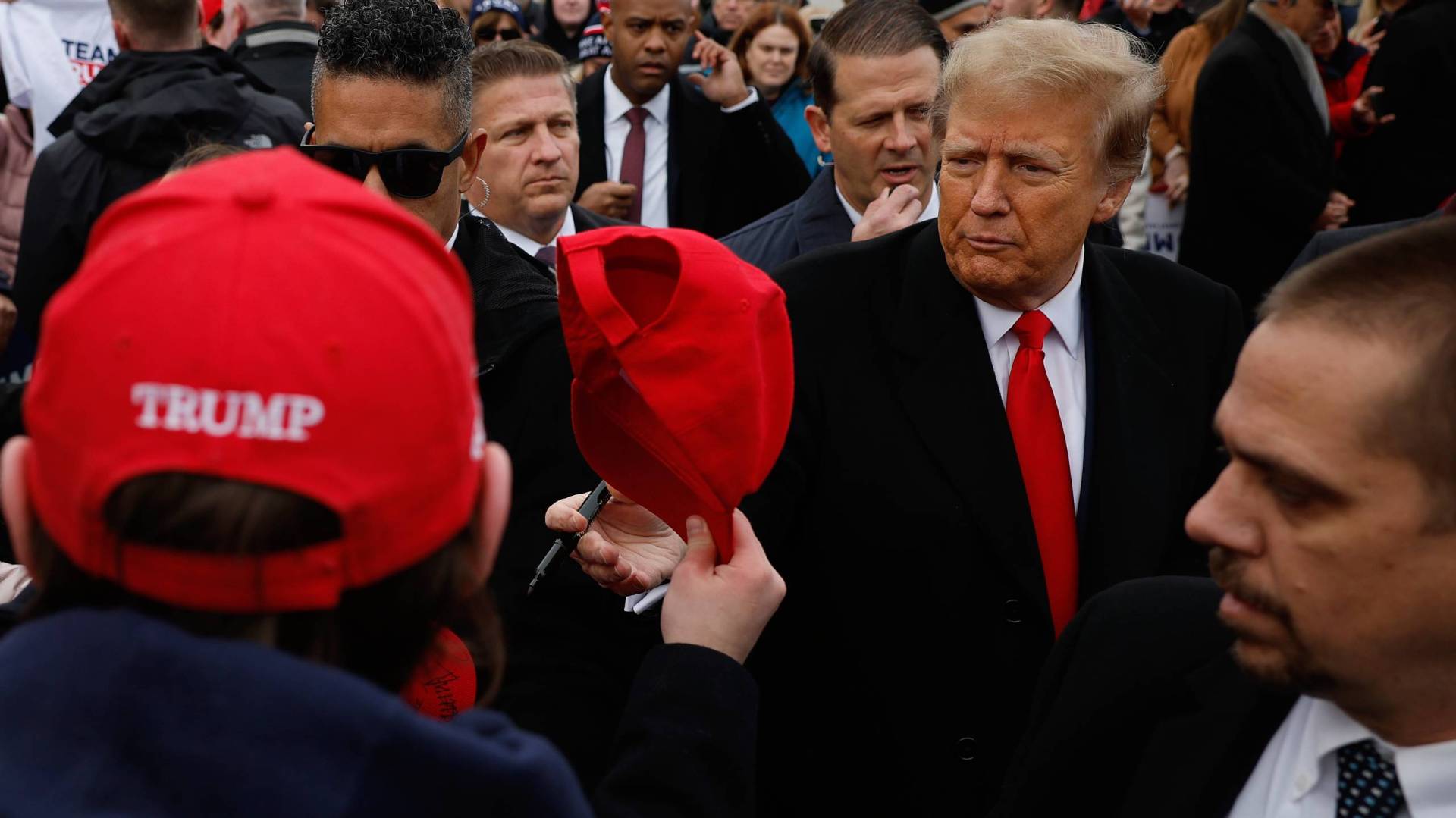
Donald Trump on the campaign trail in New Hampshire.

Donald Trump on the campaign trail in New Hampshire.

Christianity Today January 24, 2024
Chip Somodevilla / Getty Images

After former president Donald Trump bested former South Carolina governor Nikki Haley in New Hampshire on Tuesday, the GOP primary outcome that many have expected all along may soon be here.

“This race consolidated faster than any race I can remember,” Dan Darling, director of the Southwestern Baptist Theological Seminary’s Land Center for Cultural Engagement, told Christianity Today. “It’s feeling a little bit like an incumbent candidacy.”

Haley outlasted a large field of presidential hopefuls, but after a second-place finish in the Granite State, her underdog campaign may soon run out of road, political analysts say.

“New Hampshire has a much more moderate and much less religious electorate than South Carolina, and she still could not win,” said Kyle Kondik, an elections analyst with the University of Virginia Center for Politics. “The bottom line is that I think she needed to do better in New Hampshire to demonstrate wider appeal among the base Republican electorate.”

In New Hampshire, she also performed well with college graduates and self-identifying moderate and independent voters. But nearly 9 in 10 of New Hampshire voters who considered themselves “very conservative” supported Trump, The Washington Post’s exit polling found. And white evangelical Christians—about 20 percent of voters in the contest—went for Trump by 70 percent.

Trump won support from a strong majority of white evangelical voters in the 2016 and 2020 presidential elections, but his popularity also heightened ideological divisions within churches.

“Christians should be preparing now for a really divisive and contentious campaign season,” Daniel Bennett, a political science professor at John Brown University, told CT.

Darling sees more fatigue among the faithful when it comes to politics. In the year ahead, he anticipates that there will be less back-and-forth from Christians arguing over support for Trump, and more conversations “about how to conduct ourselves and do this well and love our fellow Christians, even if we disagree on how to go forward and the election.”

After 2020, a solid minority of evangelicals (43%) said they believed evangelicals’ embrace of Trump had hurt the church’s credibility and a third said it made it harder to witness to others.

“I am deeply concerned about what the re-election of Trump would appear to some to vindicate and justify,” Michael Wear, a former faith adviser to the Obama administration and president of the Center for Christianity and Public Life, told CT. “He is running for the highest office in the land, and if he wins, it will have significant consequences for our nation and for the world.”

Bennett also thinks that most evangelicals have made up their mind about Trump: “At this point, you’re either with him or you’re not. I doubt we’ll see a lot of faith leaders ‘fall in line’ if he wraps up the nomination; they may vote for him, but I wouldn’t expect there to be a deluge of enthusiasm from currently quiet corners of American evangelicalism.”

Even with their appeals to faith, the rest of the Republican field struggled to outperform the former president. Former vice president Mike Pence and South Carolina Sen. Tim Scott quoted Bible verses and adopted a pastoral tone—both failed to gain steam. Florida Gov. Ron DeSantis sought to run to Trump’s right—he fizzled after his narrow second place in Iowa. Former New Jersey governor Chris Christie made a moral case against Trump—he didn’t make it till Iowa.

The Methodist Haley, meanwhile, often remained tepid in her criticism of Trump, in hopes of not alienating supporters of her rival. So far, the strategy has kept her in the race, but not enough to threaten Trump’s front-runner status.

“This race is far from over,” Haley said Tuesday night, pledging to focus on South Carolina’s upcoming primary in February. “There are dozens of states left to go. And the next one is my sweet state of South Carolina.”

But Trump is projected to win there too. “Just a little note to Nikki,” he said Tuesday, “she’s not going to win.”

High name recognition and a loyal GOP base are qualities that have helped him in the primary, though some see Trump’s weakness with moderates and independent-leaning voters as a problem for his campaign in the general election.

“If you think of him as an incumbent, you have to be a little bit worried,” Darling said, noting that Trump polled only around 50 percent in Iowa. “In a general election, Republicans are going to need every Republican and then some. You're going to need all the Republican votes from all sides of the party. Plus, you’re gonna need some independents.”

Still, with Joe Biden’s approval ratings lagging, several recent polls put Trump ahead of him in the general election.

Wear hopes Christians can engage in this political cycle in ways that are countercultural. His latest book, The Spirit of Our Politics, urges Christians to prioritize spiritual growth over political gains.

“We must address the choices immediately in front of us, but we also need to say things and act in ways that are true and lasting beyond a presidential election cycle,” he said. “We can actively refuse to follow the logic of our toxic politics, which runs on fear, anger and insecurity, but instead contribute what we have to offer with joyful confidence.”

News
Wire Story

Paul Pressler’s Case Haunts Southern Baptist Abuse Reform

The downfall of a prominent leader of the Conservative Resurgence—a “dangerous predator” whose behavior was hidden for decades—symbolizes a wider failure to deal with sex abuse and coverup.

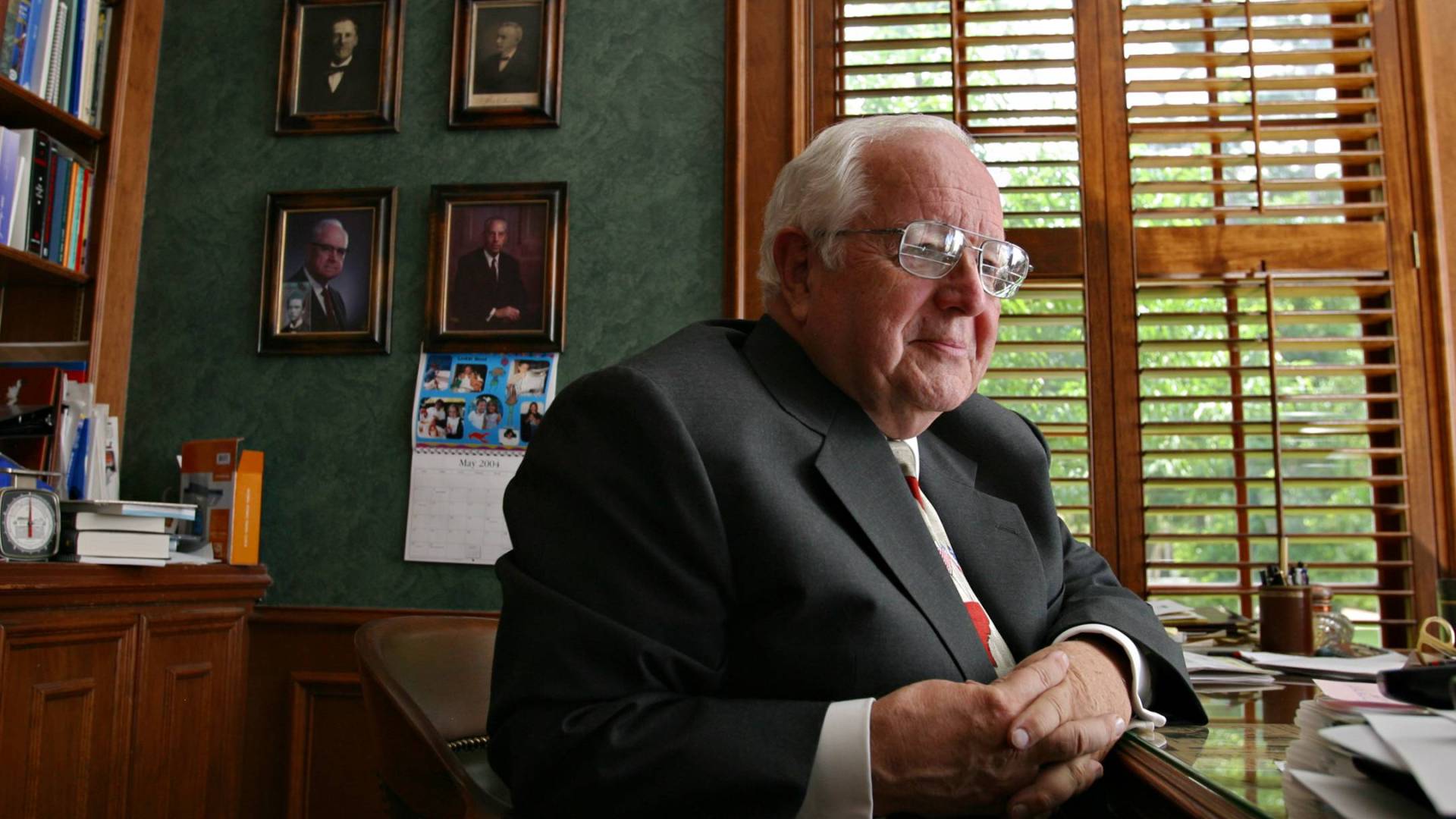
Paul Pressler in 2004

Paul Pressler in 2004

Christianity Today January 23, 2024
Michael Stravato / AP

Paul Pressler has long been an eminent Texas Republican, having served as a state representative and judge in Houston. He also once served as the first vice president of the Southern Baptist Convention, but the title doesn’t capture his true place in the firmament of the SBC.

As one of the architects of the Conservative Resurgence that reshaped the largest US Protestant denomination beginning in the 1970s, he has been hailed for decades as a hero who helped rid SBC churches of a creeping liberalism.

But recently, Gene Besen, a lawyer for the SBC, called Pressler, 93, a “monster” and “a dangerous predator” who leveraged his “power and false piety” to sexually abuse young men even as he was building his reputation as a conservative reformer.

“The man’s actions are of the devil,” Besen said, clarifying that he spoke in his personal capacity and not as a representative of the denomination. “That is clear.”

What makes Pressler’s case so enraging to many Southern Baptists, however, is that his abuse has been detailed for years. A lawsuit, filed by a former Pressler assistant named Gareld Duane Rollins Jr. claiming the older man abused him for decades, has been making its way through the courts since 2017. (The suit, which named Pressler, the SBC, and other Baptist entities, was settled in December.)

In 2004, the year Pressler was first elected vice president, his home church warned in a letter about his habit of naked hot-tubbing with young men after a college student complained that Pressler had allegedly groped him, according to the Texas Tribune. That same year, Pressler agreed to pay $450,000 to settle Rollins’ earlier claim that Pressler had assaulted him in a hotel room. When Pressler stopped making the agreed payments, Rollins sued again, this time alleging sexual abuse.

Pressler’s downfall also symbolizes a wider failure to deal with sex abuse in the SBC.

In recent years, leaks from the denomination’s headquarters in Nashville and legal filings have shown leaders stonewalling survivors and attempting to force the denomination to face the scope of abuse happening in member churches. The thousands of local church representatives, known as messengers, who make up the SBC’s governing body, meeting once a year at an annual meeting, have voted for measures to identify abusers and keep them from being employed as pastors.

They did so after learning the SBC’s Executive Committee, which runs the organization day to day, had long acted to shield the SBC—and particularly its assets—from liability, a strategy that led the leaders and their attorneys to defend things that were “indefensible,” said Marshall Blalock, a South Carolina pastor and former chair of a task force appointed to address the scandal.

The leaders in Nashville have relied in part on the decentralized structure of the SBC, which they have repeatedly claimed makes reforms impossible to implement. The 47,000 churches of the denomination are independent entities held together by a statement of their beliefs—the Baptist Faith and Message—and their contributions to the Cooperative Fund, established in the 1920s.

The SBC’s more than 13 million members donate nearly $10 billion dollars annually to their churches, nearly half a billion of which goes each year to fund cooperative ministries in the United States and abroad, including six major seminaries and a world missionary force.

While the SBC has no top-down authority, its churches and ministries are deeply interwoven, tied together by a network of state conventions, local associations, and “weak ties”— friendships between pastors, leaders, and lay people. Its institutions are overseen by volunteer trustees and a handful of staffers in the national office.

The only authority the SBC holds over its constituent churches, according to its leaders, is to kick out those considered no longer in “friendly cooperation” with its doctrine.

As a result, Southern Baptist leaders boast of their power to spread the gospel but take little responsibility when things go wrong. And local congregations have little power to fix things that are broken on a national level.

“The beauty of SBC is that we’re local and autonomous,” said Adam Wyatt, a Mississippi pastor and member of the SBC Executive Committee, recently. “The challenge is, we’re local and autonomous.”

The lawsuits against Pressler have provided a window into just how SBC leaders have evaded accountability. In a 2012 email revealed in court documents, an SBC attorney crowed over a 2008 decision not to create a database of abusive pastors that the SBC’s annual meeting had asked for. The lack of action on abuse enabled the leadership to avoid being sued after a church hired a music minister who was also a two-time abuser.

“This defendant was convicted and is serving a 10-year sentence in one case involving a very young girl,” the email read. “He was the music minister and had molested before, twice. The church knew and hired him anyway.”

In another email, an SBC vice president complained that the denomination’s insurance company had made a small payment in another abuse case. “Our insurer agreed to pay $5000 of a $67,500 settlement figure,” wrote the vice president. “Made me mad that ANYTHING was paid on our account, but we are not in control of that decision, the insurance company is, and for them it is not about principle, it is about cutting their expenses.”

In 2021, delegates to the annual meeting, known as messengers, commissioned an investigation—which leaders made concerted efforts to derail—by the third-party firm Guidepost Solutions. Its 2022 report showed the lengths SBC leaders had gone to mistreat abuse survivors and stonewall any possibility of taking national action to address abuse. In response, the SBC annual meeting called for a series of reforms.

Josh Wester, chair of the SBC’s abuse reform implementation task force, said that real reform is coming. Work continues on the long-anticipated database of abusers, known as Ministry Check, even though no names have been added to it yet. Wester said the task force is also looking for permanent funding to make the reforms stick—something that remains uncertain.

“We are trying to find a system that would work in accordance with Southern Baptist polity,” he said. Wester said that he has seen change at the local level and in state conventions but that changing the SBC on a national level remains a difficult task.

“We are working aggressively on all of the … things necessary to help our churches be safer places and to help keep dangerous people away from the vulnerable,” he said.

But Christa Brown, an abuse survivor and longtime advocate for reform, said that she sees no path to real reform. Brown recently called on members of the SBC task force charged with implementing reforms to resign, saying that while they have good intentions, the institution itself is untrustworthy.

“I believe they’re simply lending credibility to a process that is wholly polluted,” said Brown, author of a forthcoming book titled Baptistland.

Brown tracks the problem back to the conservative takeover of the SBC Pressler set in motion, to which all of the current leaders owe their rise. It explains why few have criticized him publicly, she said, even after details of his abuse became known, and why few have empathized with Pressler’s victims, including Rollins.

“None of them seem to have an ounce of respect for Duane, who brought truth to the table,” she said.

Attorney and abuse advocate Rachael Denhollander, an abuse survivor whose testimony helped convict former USA Gymnastics doctor and serial abuser Larry Nasser, said that documents from Pressler’s trial show that the SBC’s lawyers knew all along the abuse allegations were true and that SBC leaders should have known as well.

“Scripture tells us that when a leader falls, you are to rebuke him in the face of all so that he will become a warning,” she said. “The principle behind that is, as far as his reach has gone, that’s as far as the rebuke goes. If you have helped spread his platform, you have a responsibility to undo what you did.”

After the Rollins lawsuit was settled in December, Danny Akin, the longtime president of Southeastern Baptist Theological Seminary, told RNS, “We can’t deny the reality of the accusations. You’ve got too many people stacked up that were ready to testify.”

But Akin said he still believes in the ideals of the resurgence. He said that Southern Baptists will need to acknowledge their sins and abuse when teaching about the Conservative Resurgence.

Some younger Southern Baptist leaders have also denounced Pressler, including Wyatt, who said Southern Baptists can appreciate the accomplishments of the Conservative Resurgence and still repudiate the wrongdoing of its leaders.

Wyatt, who declined to comment on the committee’s settlement in the Rollins lawsuit, said he has been more concerned about what SBC leaders knew about Pressler’s past misconduct. “How could you know and not say something?” he said.

He hopes that Southern Baptists will be more concerned about the character of their leaders than they have been in the past. “I just hope that we’ve learned enough to know that we don’t need to platform people we don’t trust. It seems like a no-brainer to me.”

One Southern Baptist voice that has been notably silent about Pressler is Albert Mohler, the longtime president of Southern Baptist Theological Seminary and perhaps the most prominent theologian in SBC circles. A spokesman for Mohler did not respond to requests for comment.

Karen Swallow Prior, a professor of English who has taught in evangelical Christian schools for decades, said the SBC can’t escape the failings of the Conservative Resurgence. She said she became a Southern Baptist because she believed the resurgence was about the Bible. Now she suspects that it was about power.

“It’s the convenient myth that the SBC has told us for the past several decades,” she said.

Prior said that those who raised questions about abusive leaders in the SBC were eventually told they were not welcome—while figures like Paige Patterson and Pressler were allowed to remain.

She worries the abuse reforms will fail, and that that failure will break the SBC.

“My best guess is that this is the hill they will die on. And how long that will take, only God knows.”

Culture

Evil Is as Evil Does

The Zone of Interest, nominated for Oscars including best picture, is a Holocaust horror movie about the corruption of the human heart.

The Zone of Interest starring Sandra Hüller in theaters February 2.

The Zone of Interest starring Sandra Hüller in theaters February 2.

Christianity Today January 23, 2024
Courtesy of A24

The verdant and blooming garden outside the family home in The Zone of Interest, nominated for 2024 Academy Awards including best picture and best director, could appear in some celebrity’s home tour on YouTube. In the yard, the mother swoops her baby down close to sniff various flowers. “This one is phlox,” she says.

But all is not lovely here. Audiences might have a hint from the two minutes of complete darkness that begin this razor-sharp film that something is wrong in this Eden. The family dog sprints anxiously through most of the immaculate shots, grabbing food off the sumptuously set tables and knocking things over. Just over the garden hedge, you can see the puffs of smoke from a train going by. At night, there is a strange red glow on the bedroom walls, and no one seems to be able to sleep.

This is 1944, and the Höss family live in their beautiful home next to the gate of Auschwitz concentration camp, of which Rudolf Höss is the commandant. This part of the story is historical fact: Höss was the real commandant of Auschwitz, responsible for creating an efficient machine for destroying human lives. He later confessed he’d overseen the killing of 3 million people.

But The Zone of Interest, an antiseptic term Nazis used to describe the area around Auschwitz, doesn’t include that kind of historical detail about World War II or the Holocaust. Director Jonathan Glazer, who spent ten years on this project and shot it on location at Auschwitz, knows audiences have seen many such movies and may, by now, be numb to their presentation of those horrors. Instead, he drops the audience straight into the Höss family life as they swim and eat birthday cake. Only slowly do we absorb the darkness behind the “life we’ve always dreamed of,” as Höss’s wife, Hedwig, describes it.

This is a horror movie, not a historical epic. The film shows no violence, which makes it all the more disturbing and unforgettable. It’s important to watch with a high-fidelity audio setup because the family’s picnics and play are peppered with distant gunshots and screams. Like many films about the Holocaust, Zone is an examination of evil and the corruption of human hearts—but in an unusual way for our cultural moment.

The last few years have seen an explosion of stories exploring how a villain became evil—think Cruella, Joker, or the Star Wars prequels. The true crime genre, too, is often more fascinated with the backstory of serial killers than with the stories of their victims. We have become accustomed to watching evil deeds explained, contextualized, maybe even justified.

Zone is radical in its total disinterest in Höss’s backstory. It doesn’t explain his evil with a difficult childhood or a life-changing trauma. Evil deeds themselves seem to turn this family evil—and it is the entire family that’s corrupted, even the children. As Ecclesiastes 7:7 (ESV) notes, “Surely oppression drives the wise into madness, and a bribe corrupts the heart.”

As the story progresses, we start to see the many ways the family’s wrongdoing has deranged them, down to the way the children play together. The murders in the camp are unseen but wreaking havoc everywhere. I was reminded of a passage from Frederick Douglass’s autobiography, Narrative of the Life of Frederick Douglass, in which the former slave, abolitionist icon, and preacher was not preoccupied with the psychology or backstory of slaveholders. Instead, he examines how slavery not only brought evil into his life but corrupted the hearts of his masters too.

When Douglass is sold to a new mistress who had never owned a slave before, he recalls that when he met her, she was “a woman of the kindest heart and finest feelings.” “But alas!” he continued:

This kind heart had but a short time to remain such. The fatal poison of irresponsible power was already in her hands, and soon commenced its infernal work. That cheerful eye, under the influence of slavery, soon became red with rage; that voice, made all of sweet accord, changed to one of harsh and horrid discord; and that angelic face gave place to that of a demon.

The inverse of this heavy tale is Terrence Malick’s A Hidden Life, which tells the true story of an Austrian farmer who refused to fight for Nazi Germany. A Hidden Life also begins with a family in a kind of Eden. But where the family in Zone gains the world and loses their souls, the family of A Hidden Life sees their world fall apart, while their souls remain free. “Darkness is not dark to you,” the Christian farmer prays as he is beaten in a jail cell.

Zone’s darkness is very dark. It is an accurate depiction of its moment, when most Germans did not resist Adolf Hitler, but it also offers a glimpse of an alternative virtuous life via two night-vision sequences that are based on the true story of a 12-year-old who was part of the Polish resistance. These portions of the horror film are fleeting and too short—can’t we see more of that?

But that is not what the characters themselves seek: “They have all turned aside; together they have become corrupt” (Psalm 14:3, ESV). In The Zone of Interest, virtue is as rare as those glimpses in the night.

Emily Belz is a staff writer at Christianity Today.

Culture

‘Past Lives’ Is the Anti-‘Notebook’

We’ve romanticized stories of destiny-driven love—even at the expense of fidelity. This Oscar-nominated drama shows the beauty of limits.

Past Lives starring Teo Yoo, Greta Lee, and John Magaro.

Past Lives starring Teo Yoo, Greta Lee, and John Magaro.

Christianity Today January 23, 2024
Courtesy of A24

Last year, I watched The Notebook for the first time. For nearly 25 years, it has epitomized Hollywood romance, with stills of Allie (Rachel McAdams) cupping Noah’s (Ryan Gosling) face as they passionately kiss in the rain serving as a pop culture shorthand for love and destiny.

The Notebook is also a story of infidelity. The story toggles between the present, where an elderly Noah comforts an Alzheimer’s-afflicted Allie, and the 1940s, where Allie cheats on and ultimately leaves her fiancé to reunite with Noah after years apart. In the modern scenes, Noah models faithfulness despite its difficulty, but in the earlier part of their timeline, Allie’s unfaithfulness is presented as the peak of romance.

The 2023 film Past Lives, which was nominated for five Golden Globes and Academy Awards including best picture, subversively shows the extent to which that impermanent perspective has permeated our thinking about life and love. Nora (Greta Lee) lies in bed with her husband Arthur (John Magaro), who is processing his feelings about an upcoming visit from his wife’s former love interest, Hae Sung (Teo Yoo):

Arthur: I was just thinking a lot about what a good story this is.

Nora: The story of Hae Sung and me?

Arthur: Yeah, I just can’t compete.

Nora: What do you mean?

Arthur: Childhood sweethearts who reconnect 20 years later only to realize they were meant for each other.

Nora: We’re not meant for each other.

Arthur: In the story I would be the evil white American husband standing in the way of destiny.

“I’m the guy you’re leaving,” Arthur reiterates later, “when your ex-lover comes to take you away.”

Arthur’s confession surely echoes the inner narrative of many of the film’s viewers: We’ve been conditioned to expect the rejection of limits modeled in The Notebook. We meet characters with settled lives, then watch approvingly as they break commitments to expand their own possibilities and find peace, enlightenment, or even personal destiny. When our heroes’ relationships become collateral damage along their journeys, we might find it painful but accept it as necessary.

Past Lives doesn’t accept that damage. It asks if a more meaningful and beautiful life might be made by accepting our finitude, keeping commitments, and paring down possibilities. For Christians, of course, the answer is yes.

Like all of us, Nora lives a life shaped by a combination of choices made by others and those she has made herself. As a middle-schooler growing up in Seoul, she shared a sweet, mutual crush on her classmate Hae Sung. But when her family immigrated to Canada, the relationship came to an abrupt halt.

Nora first reconnects with Hae Sung as a young adult pursuing her lifelong dream of making it as a writer in New York. While aspects of their dynamic seemingly delight Nora, she eventually calls for a break. She wants to pursue her New York life, and it’s evident that this phone and video call relationship is a distraction. Though she assures Hae Sung the pause won’t last forever, Nora soon moves on, falling for and marrying Arthur.

Years later, when Hae Sung announces his visit to New York, Nora has built a successful career as a playwright and remains happily married. But as Arthur unravels—and Past Lives portrays Hae Sung sympathetically enough that we may begin to expect the pattern of The Notebook to repeat—Nora doesn’t waver.

“This is my life,” she assures Arthur, “and I’m living it with you.” She seems to intuitively understand what behavioral scientists have documented: that limiting your choices can give you a more satisfying life.

Nora’s countercultural embrace of limits and self-denial is also reminiscent of a biblical motif that begins in the creation account with God’s instructions to Adam and Eve about the tree of the knowledge of good and evil (Gen. 2–3). Immediately after violating God’s one mandate for them, we see the first humans begin to struggle with their own identities, losing their intimacy with God. They gained options, yes, but at far too high a cost.

That pattern of bucking God’s limits—and coming to regret it—repeats throughout the Old Testament, from the Israelites’ pleading with God for a king (1 Sam. 8) to Israelite men taking foreign wives (Ezra 10). Those who don’t follow this pattern flourish, like when Daniel, Shadrach, Meshach, and Abednego set themselves apart by foregoing the rich royal diet of Babylon (Dan. 1).

Refusal to stray beyond good limits in our lives is not something that happens by chance. “If you’re not gonna get taken in to the ways of Babylon, you have to have resolve not to do it,” Beth Moore has taught. She goes on to say:

Resolve means a decision that is made in advance, that you’ve already answered it, that you don’t make that decision … at the moment of decision. That decision was already made. That’s resolved. I already know in advance I’m not going to do it. … There are so many things, so many temptations, that come to us that are in the heat of that moment, and we cry out to God, and he says he’s promised to always give us a way of escape. But resolve is when we go, “There are certain things, I’ve just already made my mind up in advance.”

“This is where we ended up. This is where I’m supposed to be,” Nora tells her spiraling husband. She has already resolved to be faithful, to abide by the limits of the marriage she has chosen. Perhaps for Nora, her marriage to Arthur is never in question. But those of us raised on mottoes like What If and Follow Your Heart tend to question our loyalty to the choices we’ve made.

One of Past Lives’ most significant elements, then, is how it gives viewers a word for resolve cloaked in destiny. In Nora’s first meeting with Arthur, she tells him about the Korean concept of inyeon. It’s like providence or fate, she explains, which comes from supposed connections in past lives.

At that point, Nora jokes that the concept is just a Korean seduction device and goes on to kiss Arthur. But she later uses it to gently rebuff Hae Sung. As they banter in animated Korean at a bar, shortly before he leaves New York, the camera’s close shot on their profiles, the dim lighting, and the way they lean toward each other suggest they may yet follow The Notebook’s infidelity.

But Nora is not leaving her husband here; she is rejecting her childhood crush. She uses inyeon, appropriating and inverting the language of destiny, to say that though Hae Sung may feel a beautiful connection, pursuing the relationship is not for her.

Past Lives describes inyeon as a Buddhist concept, which may limit its application for Christians. Yet there is something worthwhile in Nora’s use of it to acknowledge that her connection to Hae Sung doesn’t abrogate her commitment to Arthur. For Christians, it can be a reminder that our resolve to reject faithlessness is part of a bigger story—not of destiny but of God, the author of our lives.

Morgan Lee is the global managing editor at Christianity Today.

Theology

Wrestling with Awkward Stories in the Old Testament

Cringeworthy passages can derail our yearly Bible reading plans. How do we interpret them?

Jacob Wrestling with the Angel by Giulio Benso

Jacob Wrestling with the Angel by Giulio Benso

Christianity Today January 22, 2024
Wikimedia Commons

On a recent trip to Egypt, the chefs at our hotel put out a remarkable buffet of culinary delights presented with both excellent taste and exquisite aesthetics.

One of our group members served onto his plate a beautiful spread: a cucumber disc topped with a triangle of cheese, a baby tomato, and a swirl of what looked like a dessert mousse. Sitting back at our table, he took a bite, and his eyes went wide as he grimaced. “What is this?!” he cried. That sweet mousse turned out to be liver pâté—not at all what he was expecting!

It’s the time of the year when many Christians embark on a new Bible reading plan. Reading through the Bible from cover to cover is a wonderful practice that exposes us to its less-familiar passages. We may discover new treasures along the way, tucked between the stories we know.

But we may also encounter passages we’d rather spit out of our mouths, like my friend’s liver pâté. Expecting inspiration, we may instead find hard words, troubling scenes, or confusing episodes. Especially if we hoped for an endorphin-generating Bible study—a “feel-good” devotional to carry us through our day—we can often find ourselves disillusioned.

As a Bible scholar, I’ve devoted my life to reading and understanding the Scriptures. I’ve watched the pages of the Bible come alive over and over again. Even so, I still encounter passages that trouble me. But I keep in mind something another Bible scholar and friend of mine, Esau McCaulley, once said—which is that we should engage with such difficult passages in the same way Jacob interacted with the angel in Genesis 32.

After a lengthy absence, Jacob was heading home to Canaan. He was nervous about running into his brother, Esau. When he left, things had been tense, and Jacob wasn’t sure how Esau would receive him when he returned. The night before their encounter, an angel surprised Jacob, and the two of them wrestled until daybreak—at which time the angel asked Jacob to let go of him. That’s when Jacob replied, “I will not let you go until you bless me” (v. 26).

Jacob knew he was encountering a heavenly being from the divine realm, and he didn’t want to miss an opportunity to receive a blessing from the Lord. And at that particular moment, he knew he would need it to have the courage to face his brother the very next day.

What if we treated the Bible like this? What if, whenever we wrestled with a troubling biblical passage, we adopted the same approach as Jacob? Understanding that the Scripture is divinely inspired and God-breathed, what if we said, I will not let go of this until it blesses me?

It’s far easier to throw up our hands and walk away from the text, but if we persist, we may find richer inspiration than we ever expected.

Three Keys to Wrestling with the Old Testament

In my experience, even the most difficult passages (maybe especially those passages) can be a source of blessing when we persist in trying to understand them. The problem is that many people struggle to understand the Bible because they were never really taught how to engage with it. So, with that, I’d like to share three keys to go about interpreting these tricky passages:

1. Consider the historical and cultural context. Like it or not, the Bible was not written to us or about us. Yes, it is God’s word for us, but the events it describes took place far from the time and place most of us call home. Even for those living in “Bible lands” today, thousands of years stand between us and the Bible.

That means reading the Bible is not only a cross-cultural experience; it also involves time travel. That’s why it helps when we know something about the history of this region. If we take the time to consider the daily lives of ordinary men and women—their concerns and challenges, their hopes and values—then we can enter into their stories more easily. Some modern readers are concerned that if they focus on history, the Bible will become less devotionally inspiring. Yet, time and again, I’ve found the opposite to be true. When I better understand the gritty realities of ancient times, I can see how much we have in common with ancient people. God still meets us in our mess today, just like he met them in theirs.

One way to learn the historical and cultural contexts of the Bible is through resources like the NIV Cultural Backgrounds Study Bible or the Zondervan Illustrated Bible Backgrounds Commentary series. Both contain rich, full-color images and are loaded with information to help you make sense of what is happening in the world behind the text.

2. Pay attention to the literary design of the passage. To focus on the scripture as literature does not mean we dismiss its historicity—it simply means we recognize that the Bible is an expertly crafted literary text. Scripture presents an inspired interpretation of history in a deliberate format designed to highlight its key themes.

As you read, take note of how the author describes people and places. Notice whether the narrative unfolds chronologically, and which scenes are placed side-by-side. Resources like videos from the Bible Project, freely available online, can help alert you to how a book is crafted.

In other words, read not just for the facts, but also to appreciate the artistry of the biblical authors. Carried along by the Holy Spirit, these writers are creating a stunning work of art that has stood the test of time.

3. Read with a diverse community. Some passages may strike us as odd, or even objectionable, because of our cultural context or life experience. When we read with others, we can pool our knowledge, our ideas, and even our questions to help us tackle difficult texts. Over the years, I have learned from other teachers and pastors and even from student questions and observations when I’m teaching a class.

In recent years, I’ve made a concerted effort to read the insights of the global church. It’s a gift to learn alongside men and women from different contexts, because their cultural vantage points allow them to see things that I miss and to explain matters that are unfamiliar to me.

A few resources I’m grateful for are Langham Global Library, the searchable database at Every Voice, and the Translation Insights and Perspectives website. These have significantly broadened my perspective by helping me read the Bible with others from around the world.

Why Would God Try to Kill Moses?

One passage that has baffled me is tucked away in Exodus 4. It’s not the sort of passage that comes up in sermons or Sunday school lessons, and I doubt you’ve read a devotional on it. In fact, it’s such a short story that if your mind wanders a bit while you’re reading, you might even miss it. But if you’re paying attention, this one is a bit shocking.

To set the stage, God has already met Moses at Mount Sinai in the burning bush and commissioned him to go to Egypt to bring his people out of slavery. Moses takes leave of his wife’s Midianite family and begins the journey back to Egypt with his wife and sons. That’s when the unexpected happens:

At a lodging place on the way, the Lord met Moses and was about to kill him. But Zipporah took a flint knife, cut off her son’s foreskin and touched Moses’ feet with it. “Surely you are a bridegroom of blood to me,” she said. So the Lord let him alone. (At that time she said “bridegroom of blood,” referring to circumcision.) (v. 24–26)

Why did God try to kill Moses while he’s in the middle of obeying? How did Zipporah know exactly what to do? Why did this circumcision change God’s mind? Why isn’t Moses’ son already circumcised? Why is this strange story important enough to include in this Book?

These were only some my questions. Based on past experience, I expected to find inspiration—if I dug deeply and wrestled with the text like Jacob with the angel—and indeed, I did!

Applying the Three Keys to the Zipporah Story

First, I considered the historical and cultural background of the story. Zipporah is the daughter of a Midianite priest. She has grown up around rituals. Circumcision was practiced by the Hebrews as well as by the Egyptians—but not in the same way or at the same time, and certainly not with the same meaning.

While God instructed the Hebrews to circumcise infants when they were just eight days old (Gen. 17:12), the Egyptians circumcised at puberty—and the rite did not appear to have a religious significance to them. For reasons unknown to us, it appears Moses had neglected to circumcise his own sons, which put his family on the outside of God’s covenant with Abraham.

Second, I learned the phrase “bridegroom of blood” may have a broader meaning. The Hebrew word hatan (“bridegroom” in NIV) can refer to any male relative by marriage, not just the groom.

Although the NIV specifies the pronouns, the Hebrew text is more ambiguous. When it says that she touched “Moses’” feet with the foreskin, the Hebrew is unclear as to whose feet it refers: her son’s feet, Moses’, or the Lord’s? But since her son was her relative by birth, rather than marriage, she was most likely speaking either to Moses or to his God, Yahweh, with whom she had entered into a relationship by marriage.

Not only that, but Zipporah’s statement, “Surely you are a bridegroom of blood to me,” had ritual significance, like the one wedding officiants today use when saying, “I now pronounce you husband and wife!” Likewise, Zipporah was declaring that her family belonged to Yahweh.

Third, and most importantly, as I spent time in the literary context of this odd passage, I found many connections that helped me make sense of it.

Before this scene, God had just told Moses to tell Pharaoh, “This is what the Lord says: ‘Israel is my firstborn son, and I told you, “Let my son go, so he may worship me.” But you refused to let him go; so I will kill your firstborn son’” (Ex. 4:22–23).

Moses was born a Hebrew but adopted by the daughter of Pharaoh. We don’t know whether she had other children, but if not, Moses may have occupied the role of her firstborn son. As Moses grew into adulthood, he seemed uncertain about his identity. He was not accepted by the Hebrews or by the Egyptians—and when he arrived in Midian, he did not introduce himself. It was only in his encounter with Yahweh at the burning bush that his identity was clarified.

However, if Moses did not circumcise his sons, then he had failed to take the only necessary step to identify himself and his family as Hebrews. Moses could not afford to return to Egypt with an uncertain identity—and so he would not be exempt from God’s ultimatum to Pharaoh.

Later, Moses would instruct the Hebrews regarding the Passover ceremony that would protect their firstborn sons when the angel of the Lord struck. Recall that to participate in the Passover, all the males in the family had to be circumcised (Ex. 12:48). So, Moses was about to command others to do what he had not done himself.

So back in the desert, Yahweh confronted Moses to ensure his full identification with the Hebrews. Zipporah, like the midwives and the other women in Moses’ infancy narrative, stepped in to rescue him from danger (Ex. 1:17; 2:1–10). As a woman who saved Moses, Zipporah is the bookend to the Moses saga. After this, the narrative then pivots to Yahweh’s rescue of Israel.

Learning to Eat Liver

Liver is an acquired taste with certain health benefits. If my friend on my study tour to Egypt had been adequately prepared, he may have been able to appreciate it. The Bible is an acquired taste too. Reading it well requires certain skills, experience, and commitment. My best advice whenever you come to a difficult passage is this: Determine not to let it go until it blesses you.

Carmen Joy Imes is associate professor of Old Testament at Biola University and author of Bearing God’s Name and Being God’s Image. She releases weekly “Torah Tuesday” videos on YouTube.

Nicaragua’s Relentless Crackdown on the Church Continues

Even with the recent release of imprisoned priests, Ortega’s regime continues to target Christian organizations with an “absolute intolerance for dissent.”

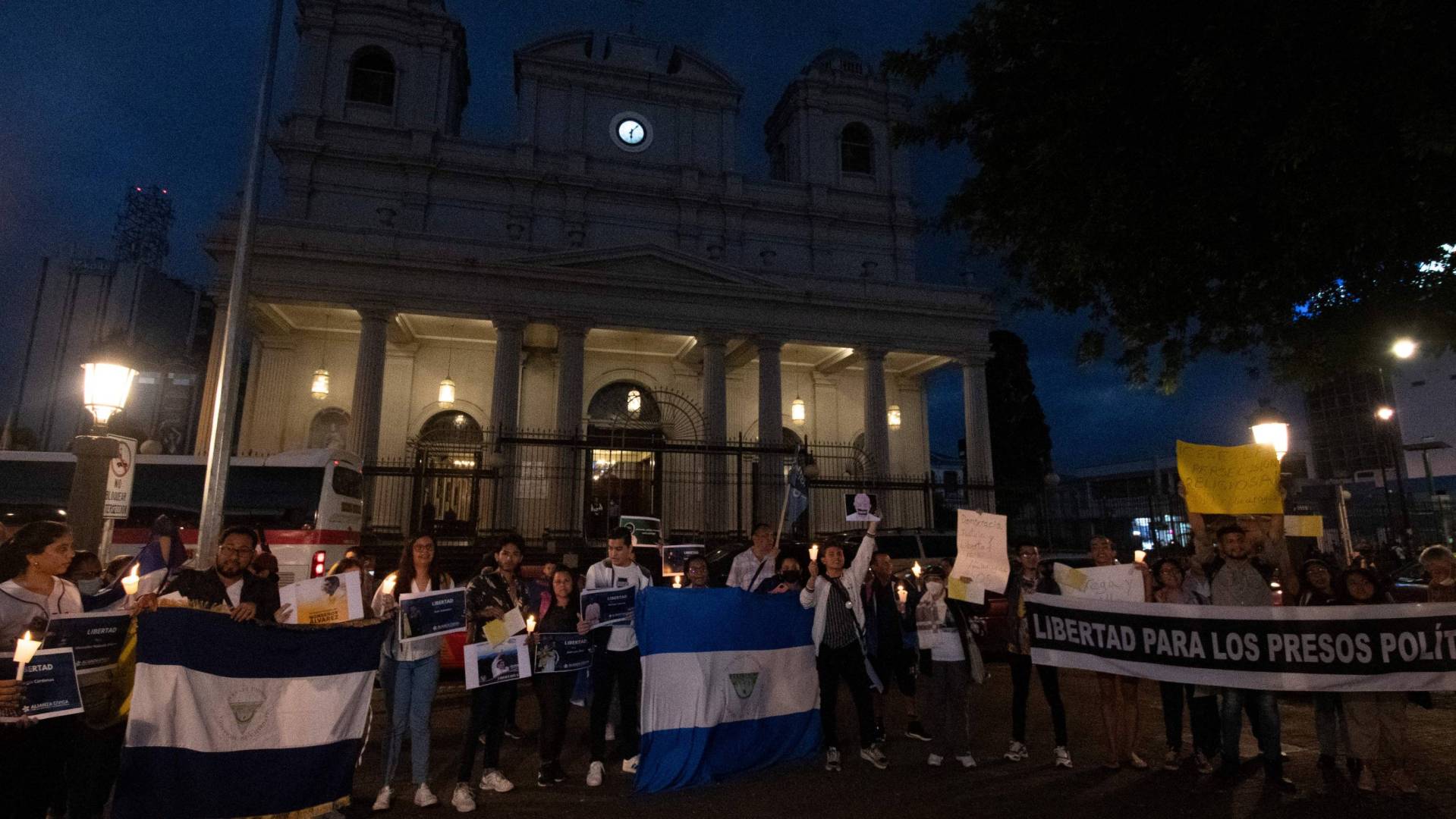
Nicaraguans hold a demonstration in front of San Jose’s Cathedral in Costa Rica to protest the detention of Nicaraguan bishop Rolando Alvarez in 2022.

Nicaraguans hold a demonstration in front of San Jose’s Cathedral in Costa Rica to protest the detention of Nicaraguan bishop Rolando Alvarez in 2022.

Christianity Today January 22, 2024
Ezequiel Becerra / Getty Images

Bad news has been the norm for Catholics in Nicaragua, where clergy and church groups have been frequent targets of a wide-ranging crackdown for years. But on January 14, 2024, they received a happy surprise: The government unexpectedly released two bishops, 15 priests and two seminary students from prison and expelled them to the Vatican.

Those released included Bishop Rolando Álvarez, a high-profile political prisoner who was detained in 2022 for criticizing the government and then sentenced to 26 years in prison for alleged treason.

They also included priests detained by President Daniel Ortega’s government in late December 2023 for expressing solidarity with Álvarez and other political prisoners. Days later, Pope Francis criticized the regime in his New Year’s message and then called for “respectful diplomatic dialogue.”

Nearly six years after mass protests erupted against Ortega and then were brutally repressed, these prisoner releases offer some hope to Nicaragua’s opposition. As my research has shown, however, the Ortega regime is unrelenting in trying to retain power, which suggests this is not necessarily a turning point. In fact, the government reportedly took yet another priest into custody on January 16.

Why target the church?

Ortega first led Nicaragua from 1979 to 1990, after his left-wing revolutionary organization, the Sandinista National Liberation Front, or FSLN, spearheaded the overthrow of dictator Anastasio Somoza Debayle. In the 1980s, the FSLN clashed with the Vatican and church hierarchy over the group’s socialist politics, even as many poorer Nicaraguan Catholics embraced them.

When Ortega took office again in 2007, however, he did so with the blessing of Christian leaders. During the 2006 elections, he had turned to alliances with Catholic and Protestant elites to return to power in exchange for adopting conservative social policies like banning abortion.

Over the next decade, Ortega remained popular, presiding over economic growth in collaboration with business leaders and developing new public infrastructure and services.

Yet he and the FSLN party he controlled were also consolidating power and governing in an increasingly authoritarian manner. Ortega won reelection in 2011 and then retained power in fraudulent elections in 2016. Opposition candidates were disqualified, and Ortega’s running mate was his wife, Rosario Murillo.

Unexpectedly, Ortega’s popularity and his relationship with the church came crashing down in April 2018, when the government announced cutbacks in social security benefits for retirees. Nicaraguans from all backgrounds took to the streets, and Ortega and Murillo responded with a furious crackdown, unleashing police and pro-government paramilitaries armed with military-grade weapons.

Cathedrals and churches tried to offer refuge to protesters, but over 300 people were killed. Church leaders facilitated a national dialogue between the government and an opposition coalition, but withdrew as repression continued.

When popular Catholic leaders criticized violence against protesters, the regime began viewing the church as a rival threatening Ortega’s waning legitimacy. Police, paramilitaries and FSLN supporters started harassing and attacking clergy and Catholic institutions.

In 2019, the pope recalled Silvio Báez, the auxiliary bishop of Managua and a prominent critic of Ortega, from Nicaragua. Yet other bishops and priests still found themselves in the regime’s crosshairs.

Some fled into exile or were blocked from entering Nicaragua if they traveled abroad. Others who stayed were kept under surveillance. Priests who expressed support for political prisoners or continued to criticize the regime, even in vague terms, could be arrested or beaten.

The government expelled 12 formerly detained priests to the Vatican in October 2023 after what the regime called “fruitful conversations.” But Álvarez, the highest-profile political prisoner, was still held by the government and was stripped of his citizenship after refusing to go into exile in February 2023.

Broader patterns of repression

Attacks on the church are a symptom of the Ortega regime’s absolute intolerance for dissent.

With over 3,000 nongovernmental organizations shut down since 2018, the church has become Nicaragua’s only major nonstate institution with nationwide reach.

[Editor’s note from CT: This year, Nicaragua saw the sharpest rise on Open Doors’ World Watch List due to restrictions on religious freedom, seizure of church and ministry properties, and the arrest or exile of Christian leaders.

The Nicaraguan government has shut down at least 256 evangelical organizations in the past two years. While over a third of Nicaraguans identify as evangelical, experts say the persecution of evangelicals has been “more silent” because some of their leaders still support Ortega’s government and critics don’t speak out for fear of retribution.]

In a country where over 40 percent of the people identify as Catholic, many normally turn to the church in times of need. Suppressing Catholic institutions means Nicaraguans must turn to the state for aid, which monitors citizens and has been accused of denying services for perceived disloyalty.

At least 27 Catholic and secular universities have also been closed or seized by the government, as have more than 50 media outlets.

The government’s decision to expel clergy on January 14 is also in line with its tendency to either block opponents’ reentry into Nicaragua or force them into exile. In many cases, Nicaragua has then revoked critics’ citizenship, as when it expelled 222 political prisoners in February 2023 to the United States.

When imprisonment or threats have not shaken critics’ resolve, Ortega and Murillo appear to have decided that keeping them abroad is best. Not only does this reduce the risks of anti-regime action in Nicaragua, but it may diminish international scrutiny of political prisoners’ mistreatment.

Cautious criticism

Since 2018, repression in Nicaragua has come in waves, with the brutal violence that repressed the protests shifting toward an environment of constant surveillance, legal actions against independent institutions and opponents, and periodic arrests. Moments of seeming calm, however, have often been followed by harsh crackdowns, such as a slew of arrests ahead of the 2021 elections.

Even as repression has mounted, the Vatican has been cautious about criticizing Ortega and Murillo, and some Nicaraguans and Catholics abroad have urged the pope to do more. Yet the Vatican’s restraint has not appeared to decrease threats against clergy or limits on activities like religious processions.

In January 2024, however, Francis pointedly called attention to the crisis during two speeches, days after a dozen priests were arrested. One week later came the release of Álvarez and his colleagues – free to leave Nicaragua, but not to come back.

Catholic leaders remain Nicaragua’s most popular figures, according to independent polling. This makes them a continued threat to Ortega and Murillo’s quest for total control. Ezequiel Buenfil Batún, the priest detained January 16, belonged to a religious order whose legal status was revoked that same day, along with several other nongovernment organizations.

As many Nicaraguans lose hope of conditions improving and dozens of political prisoners remain jailed, any positive news like the priests’ release is welcome. But it holds no guarantees of broader change ahead.

Kai M. Thaler is assistant professor of global studies at the University of California, Santa Barbara. This article originally appeared at The Conversation.

News

Indonesian Christians Divided Over Choosing Country’s Next Leader

As a once-beloved president ends his term in controversy, church leaders don’t see a clear front-runner in February’s elections.

Billboard of two pairs of candidates and other legislative candidates running in Indonesia's upcoming general election. 

Billboard of two pairs of candidates and other legislative candidates running in Indonesia's upcoming general election. 

Christianity Today January 19, 2024
Juni Kriswanto / Contributor / Getty

Last October, the reputation of Indonesia’s widely respected president took a fateful hit.

Led by President Joko “Jokowi” Widodo’s brother-in-law, the Constitutional Court of Indonesia dropped the age limit for presidential and vice-presidential candidates if they previously held elected regional office. Conveniently, this paved the way for Jokowi’s son, Gibran Rakabuming Raka, 36, to run as vice president for front-runner Prabowo Subianto in the February 14 presidential elections.

“That is the worst thing to happen to our democracy,” said Yonky Karman, a lecturer at Jakarta Theological Seminary. “This [upcoming] election is orchestrated by the incumbent to offer his preferred candidate, and the worst thing is that he made a way for his eldest son to run as vice president by changing the election law.”

Five years ago, 97 percent of non-Muslims voted for Jokowi. This time, Christians are divided in their support.

In the world’s third-largest democracy, Muslims make up 87 percent of the population while Christians make up 10 percent. For Christians, the most important issue when voting in an election is maintaining their rights as a minority religion. Because of this, they largely supported Jokowi in the past two elections.

Yet this time, the decision is trickier. Ex-general Prabowo is a former longtime rival of Jokowi, who later joined the president’s coalition and served as defense minister. Christians worry that, in the past two elections, he had the backing of radical Muslim groups.

Prabowo is running against Anies Baswedan and Ganjar Pranowo, both former governors. Anies is no stranger to the headlines either, after accepting support from radical Muslims who strongly opposed his rival, ethnic Chinese Christian Basuki “Ahok” Tjahaja Purnama, in the 2017 Jakarta gubernatorial election. Meanwhile, some are concerned about how much Ganjar, who has the support of moderate Muslims, will be influenced by former president Megawati Sukarnoputri.

Currently, Prabowo commands a large lead in the polls with 47 percent of the vote, compared to Ganjar at 25 percent and Anies at 21 percent, according to a December poll.

However, if none of the candidates receive more than 50 percent of the votes and wins at least 20 percent of the votes in half of Indonesia’s provinces, a second runoff election will be scheduled in June.

Respondents mentioned that, while the Christian vote is split, Jokowi’s push for “dynasty politics” is dominating conversations among Christians.

Franz Magnis-Suseno, a Jesuit priest and professor who has authored several books on political philosophy, noted that Indonesia is in a “really dangerous situation.”

“For many of us, it is the question of how will Indonesian democracy go on?” Magnis-Suseno said. “Under Jokowi, democracy is going down … the drain.”

A ‘humble, down-to-earth president’

Five years ago, it seemed unthinkable that such a popular figure like Jokowi would cause so much controversy .

“[Jokowi] was known to be very democratic and he … exhorted the plurality of culture and religion in Indonesia,” said Andrew Kristanto, pastor of an Indonesian church in New Zealand. Kristanto is one of more than 1.7 million overseas voters in the 2024 election, and while he has lived abroad for the last eight years, he said he follows Indonesian politics closely.

He described Jokowi as a “humble, down-to-earth president [whom] everyone loved.” Kristanto believed Indonesia became “a rising power in Asia, if not the world” while Jokowi was president and pointed to his achievements, such as recognition from world leaders, infrastructure growth, and the minimization of Islamic radicalism.

“He truly cares for the minority, for the lowly,” he said.

Andreas Hauw, a lecturer at Southeast Asia Bible Seminary and the founder of a political education nonprofit in Malang, Indonesia, agreed. He noted that Christians and the wider community approved of Jokowi’s performance in the last nine years.

During his administration, the government improved health care and education and standardized fuel prices in various regions, he said.

“Although there are still acts of radicalism such as the banning of churches, they occur sporadically,” said Hauw. “In general, Christians enjoy great freedom of worship.”

Jokowi catapulted into the country’s top post in the 2014 elections, which saw conservative Muslims squaring off against moderate Muslims and minority groups. Polls found that moderate Muslims and 97 percent of non-Muslim voters backed Jokowi and his running mate Ma’ruf Amin in the 2019 elections. Meanwhile, his rival Prabowo won the hearts of conservative Muslims.

To Kristanto, the decision between Prabowo and Jokowi in those two elections was “black and white.”

When asked about Jokowi’s actions at the end of his tenure, Kristanto paused before answering. “I’m a bit conflicted on this issue because, yes … I’m disappointed in how Jokowi toys with the constitution and he seems to [be using] any means to accomplish his goal,” he said.

“What Jokowi has done with the constitution leaves a bad legacy.”

Prabowo a ‘problematic’ figure

Does this mean the popular president has alienated his Christian supporters in just five years?

“Some are happy with Jokowi’s policies,” said Karman. “But people like me are concerned with the future of democracy and the future of good governance.”

He pointed to the Corruption Perceptions Index, which saw Indonesia’s score drop to the same level as the score in 2014, when Jokowi first came into power.

Others question whether they would vote for Prabowo, even if he has Jokowi’s support in this election.

“For some Christians, the figure of Prabowo is problematic, especially when you see 2014 and 2019, he was supported by radical Islamic groups,” said Kristanto. “If Prabowo really becomes president, will he still listen to Jokowi? Will Jokowi’s son be a powerful envoy?”

So far in this campaign, radical Muslim groups have stayed silent about who they will be throwing their weight behind, and Prabowo himself has tried to appear moderate, said Magnis-Suseno, who is German-born but has lived in Indonesia since the ’60s. Unlike in Prabowo’s previous campaigns, religion has not played a big role because the candidate wants the support of pro-Jokowi Indonesians, he said.

“Prabowo wants to avoid the questions of religious camps. … It would make it more difficult for him if he appeared as the champion of hard-line Muslim groups,” said Magnis-Suseno.

Moderate Muslim leaders agree that the current presidential election has focused less on voters’ religious identities. “People have even started to feel ashamed if they use issues related to ethnicity, religion, race, or intergroup relations in political campaigns because the public has become more discerning," said Inayah Rohmaniyah, an Islamic studies scholar.

But history is not easily forgotten. In the past two elections, Muslim hard-liners like Amien Rais (co-founder of the conservative National Mandate Party) were embedded in Prabowo’s camp. In 2014, Rais viewed the election in stark terms: “the party of Allah” against “the devil’s party.”

Magnis-Suseno believes that referring to political parties in this way is “evil” in a democracy. “Prabowo accepted this, and in 2019 he also accepted support from the 212 group.”

The rally called Alumni 212 emerged during the 2016 campaign for the Jakarta gubernatorial election in opposition against Ahok. Ahok was accused of blasphemy after referring to the Quran and sentenced to two years in prison. In the wave of that backlash, Ahok lost the bid in 2017 to Anies Baswedan, who is also running for president this time around.

But Magnis-Suseno said one of the biggest threats to democracy posed by Prabowo was his allegations of “widespread cheating” after Jokowi declared victory in the last election. Mass protests against Jokowi’s win turned violent and left eight people dead and hundreds injured. Prabowo was also a military leader during the May 1998 riots leading up to former leader Suharto’s downfall, during which 1,200 people burned to death and more than 90 ethnic Chinese women were raped.

“I do not believe in his democratic convictions at all,” Magnis-Suseno said of Prabowo. “I am afraid that democracy will be in big danger if he becomes president.”

Similarly, Martin Lukito Sinaga, founder of the Society of Interreligious Dialogue and a lecturer at Jakarta Theological Seminary, suggested that because of the way the law was changed for Gibran to run in the election, if Prabowo won, Indonesia would face “a setback in democracy,” and an “autocratic government” would likely develop.

A divided Christian vote

All of this has left Indonesian Christians without an obvious choice.

Magnis-Suseno recalled an encounter with a parish priest in East Jakarta. “He told me, ‘Our churches could be built after Anies gave permission, so part of my community will vote for Anies,’” Magnis-Suseno said. “Then in his parish, [there is] a good Catholic activist who is one of the close co-workers of Prabowo; thus, many of his community will vote for Prabowo, and the rest will vote for Ganjar.”

Karman also noted that Protestants were divided as well. He said he’d be happy with either Anies or Ganjar as the country’s next president.

“Ganjar does have another positive point, which is that his vice president candidate is Mahfud MD,” Karman said. “Mahfud is a professor in law and the former head of Mahkamah Konstitusi (the Constitutional Court). He knows many things about laws and is consistently against corruption.”

Sinaga believed the church would have more of a chance to minister effectively under Ganjar’s leadership because he appeared more open to plurality. He said that Ganjar also seemed focused on addressing the gap between the rich and poor, which worsened in 2022.

On the other hand, he believed democracy would flourish under Anies but may potentially lean more toward Islamic interests because he would need the support of more hard-line Muslim groups to garner the votes needed for the presidency. “Churches may need more energy to deal with religious legislations proposed by Islamic political power,” he said.

Hauw believes most Christians would not vote for Anies because he benefited from the strong opposition to Ahok in the 2017 election.

As for Ganjar and Prabowo, Hauw is wary about who is pulling the strings behind them. Former president Sukarnoputri, who chairs the Indonesian Democratic Party of Struggle, selected Ganjar as the party’s candidate. (Jokowi also rose to power through the same party, but in recent years his relationship with Megawati had grown increasingly estranged.) On the other hand, Prabowo is seemingly controlled by Jokowi through his son as a proxy.

“My main concern in this presidential election is that there is not one qualified candidate to vote for,” he said. Looking at the top two candidates, “One side likes the puppet but not the puppeteer. On the other side, the puppeteer is liked but not the puppet. Practically speaking, Ganjar is liked but the puppeteer isn’t, while on Prabowo’s side the puppeteer is liked.”

Kristanto also raised concerns about whether Ganjar would be an independent president, as it was uncertain how much influence Megawati had on Ganjar: “That has been a concern for some people as well because they’re afraid that Ganjar and Megawati don’t really get the visions of the great Indonesia Jokowi has been imagining.”

Kristanto said he would be voting for a candidate based on whether they have been aligned with radical Muslim groups in the past, how far they have tried to distance themselves with those groups, and whether they use them for their own political popularity.

While he didn’t share who he plans to vote for next month, he noted, “I would choose the candidate with the cleanest track record in terms of how he exhorts plurality.”

News

Report: Support for Religious Freedom Rebounds in America

The fifth annual index by a leading law firm finds that friendship is key to maintaining gains amid polarization and the shifting emphasis of Gen Z.

Christianity Today January 19, 2024
azulox / Getty / Edits by CT

American support for religious freedom is trending in the right direction.

Rebounding from COVID-19 lows in 2020, the Becket Religious Freedom Index registered a new high in 2023 in its annual monitoring of “first freedom” resilience in the United States. Amid widespread political polarization, core support for the right of individuals to live according to their faith remains strong.

“Despite some efforts to turn religion into a scapegoat for our nation’s problems, most Americans believe that religion—and religious freedom—are key to solving them,” said Mark Rienzi, president and CEO of Becket. “As we celebrate Religious Freedom Day, we should remember that religious liberty remains the cornerstone of our effort to form a more perfect union.”

Results were released on January 16, marking Virginia’s 1786 passage of the statute for religious freedom which became the basis for the establishment clause of the First Amendment. Initially led by Thomas Jefferson and James Madison, the day has been commemorated in the United States ever since a presidential proclamation in 1993.

Either three centuries or 30 years later, there should be no “sky-is-falling narratives about American culture,” summarized the report.

Featuring 21 questions across six categories, the annual index measures perspectives on the First Amendment. Now in the report’s fifth year, Becket polled a nationwide sample of 1,000 Americans in October, scoring their opinions from 0 (complete opposition) to 100 (robust support).

The composite score is 69, one point higher than last year and up three points from 2019.

Becket’s report asserts the religious impulse is natural to human beings, and therefore, religious expression is natural to human culture. Through its law firm, the group defends religious rights. Through its index, Becket discovers if Americans agree.

Questions are repeated each year to measure consistency across detailed application:

  • Support for “religious pluralism” measured 84 on a 100-point scale. Experiencing a 7-point increase since 2020, this category gauges popular support for holding beliefs about God, adhering to a religion, and living out the basic tenets of religion in daily life.
  • Support for “religious sharing” measured 72. This second-highest category explores the extent to which people should be free to share their religious beliefs with others, but shows sharp divides between the religious and non-religious.
  • Support for “religion in action” measured 68. With statistically significant half-point gains since 2019, this category studies the freedom to practice beliefs beyond the walls of the home or place of worship.
  • Support for “religion and policy” measured 66. The only category not to score an all-time high, it probes the proper place of religion in crafting law and public policy.
  • Support for “religion and society” measured 65. Up 3 points from last year, this category reviews the contributions of religion and people of faith to the creation of healthy communities.
  • Support for “church and state” measured 59. Also up 3 points from last year, this most controversial category examines the boundaries of interactions between government and religion.

Beyond the questions that populate these categories, the index also gauged religious liberty opinions on three additional topics that test the levels of overall support. Two suggest pushback against a liberal ethos.

First, the Religious Freedom Restoration Act, 30 years after its passage in 1993, still commands respect. About two-thirds of Americans agree that its level of protections are “just about right” (63%). Amid some claims that state-level versions of the law are used to undermine LGBT rights, this community is even more likely (65%) to agree. Only 12 percent of survey respondents believe the act goes too far, while 26 percent believe it does not protect religious freedom rights enough.

Second, Americans support faith-driven parental rights to opt-out children from curriculum on gender and sexuality. Nearly three-quarters (74%) agree, with strong agreement (42%) four times higher than strong disagreement. Meanwhile, 58 percent of Americans oppose school policies mandating preferred pronoun usage in schools, a 12-point increase from 2021.

“The American people sent a clear message in this year’s Index: Parents don’t take a back seat to anyone when it comes to raising their children,” said Renzi. “Parents want schools to teach their children math and science, not force them to embrace controversial gender ideology.”

Third, Americans support religious freedom over economic interests. In light of last year’s findings of 90 percent support for Native American sacred land rights, Becket asked specifically about a pending Supreme Court case over a disputed copper mine. Though told that excavation would create jobs and power electric vehicles, 73 percent still sided with the protection of indigenous sanctities.

Furthermore, 59 percent of Americans believe that religion is “part of the solution” to national problems, up 9 points from last year.

But even though support for religious freedom is widespread, many Americans decreasingly feel it. People of faith registered only 50 percent agreement that they are accepted in society, a 5-point drop from last year—largely driven by non-Catholic Christians. Non-Christians feel even less acceptance at 38 percent.

Polarization may drive the perception. Democrats scored 57 in the religion and policy section, while Republicans scored 76. Racial breakdowns, however, do not accord with conventional political associations. White Americans score 66, in line with the national average. But Black Americans display even stronger support for religious liberty at 72.

Not all of the survey results are encouraging to people of faith. Respondents supporting the “absolutely essential” right to preach one’s religious doctrine dropped 5 points to 35 percent. And the right of religious sharing in general drops precipitously among the nonreligious, with a 12-point gap at age 65+ increasing to a 22-point gap for ages 35–44.

This comes as religious attachment is also declining. Two-thirds of Americans (67%) describe themselves as at least somewhat religious, down 3 points since 2019. Two-in-five (41%) describe themselves as very religious, down 6 points since 2021.

And Gen Z is less protective of religious freedom than anyone else.

Its index score of 59 compares unfavorably to all other generations, at or above the national average of 66. But rather than expressing a dismissal of religiosity, Gen Z’s focus is simply shifting, Becket suggests.

While only 36 percent support the right to preach, 48 percent support the right to share one’s religion. And while 66 percent of Gen Z support the right to choose a religion—8 points less than the national average—63 percent support the right to religious practices different than the majority, 12 points higher than the national average.

Becket said Gen Z shows the least support for businesses to employ and craft policies according to the religious values of the owner. But they outpace all generations in support of religious clothing at work (58%) and of opting out of work participation when it violates religious belief (49%).

Yet even if society continues moving away from a consensus of faith, 87 percent of the nonreligious accept tolerance and respect of a broad array of ideas and beliefs about God.

How should Christians steward these positive numbers? Friendship.

While 53 percent of society expresses a high appreciation for people of faith, nonbelievers drop 39 points if they have no believers within their social circle. For those who do, the percentage bounces back 21 points. And while nonbelievers with religious friends equal the overall religious pluralism score of 84, it falls 11 points for those without.

Overall, Becket is optimistic.

“Americans have a better appreciation of what religious people need when they are taken together as a nation, instead of split apart,” states the report’s conclusion. “Our nation values religion and people of faith, approves of strong protections for religious liberty, and supports a healthy, diverse, and pluralistic society where Americans of all faiths (or none at all) can live together in harmony.”

Heather Thompson Day Made a Podcast for the ‘Loneliest Generation’

The communications professor’s heart for reaching young people starts in the classroom and continues through the airwaves.

Heather Thompson Day Made a Podcast for the ‘Loneliest Generation’
Alfield Reeves

Heather Thompson Day had heard it before: Someone thought she should start a podcast. In fact, people kept reaching out to the communications professor. An article she had written, a tweet she had posted—it resonated with them and they wanted to hear more.

The thing was, she just didn’t have the time.

“I said to the Lord,” she recalled, “‘If you want me to have a podcast, you will send me somebody who will do all of the back-end work, the ads, the editing.’”

A year went by. And then Ed Gilbreath, Christianity Today’s vice president of strategic partnerships, reached out. Gilbreath had read a recent article by Heather in Newsweek and messaged her.

“Ed said, ‘If you were to have the support of CT, what would you do?’” she recounted. “I knew it was God saying, ‘This is the time and this is the place and Ed is your person.’ And he has just been such a wonderful mentor to me.”

Heather already had the name of her show picked out: Viral Jesus. Now, with nearly 100 episodes since it launched in 2021, the podcast features long-form interviews with a diverse array of evangelical thought leaders, theologians, and journalists, as well as a more recent “Monday Mediation” series where Heather riffs on spiritual topics close to her heart. Enthusiastic Apple Podcast reviews suggest it has deeply resonated with her audience.

“She is exactly the kind of Christian I want to be when I grow up and she meets wherever I am spiritually in her books and her podcast,” one reviewer wrote in a blurb titled “Spiritually Seen.”

“This is the podcast you need when you [are] trying to get to the root of how you feel and what you think…These are the Christian friends I wish I had growing up,” said another reviewer.

Creating these types of spaces, whether in her classroom, on her social media accounts, or during Viral Jesus, has long been important to Heather, whose childhood was defined by her expulsion from her Christian junior high school.

“My principal said, ‘Heather, sometimes one bad peach will spoil the whole crate. So we have to remove the bad peach,’” she said. “That was me.”

“Because I was a part of Christian education, it didn’t just feel like my school didn’t want me—it felt like God didn’t want me,” she said. “[That was] probably the core wound that also became the core motivator for my entire life.”

Heather has a strong affinity for Gen Z, a community that she has characterized as having a sense of hopelessness.

“When I first got into college ministry, 12 years ago or so, what I loved about it is it was like this imaginary land of pixie dust, and ‘You can be anything’ and ‘I can change the world’ and ‘Who’s going to stop us?’” she said. “It’s not like that anymore.”

The antidote to this sense of despair, Heather believes, is mentors.

“I don’t think the church is struggling in its theology,” she said. “I really think it’s struggling with relationships. I am committed to creating space, even if it’s just in my classroom, where somebody has an experience—I hope with the Holy Spirit—where they feel like they belong.”

This was the opposite of what Heather herself felt from the classrooms she sat in as she worked her way through the education system, all the way up to her PhD.

“This is the loneliest generation in history. Studies show they score, I think, 10 points lonelier than even senior citizens,” she said.

Given these challenging realities, Heather says she is “genuinely encouraged” that CT is trying to build bridges with the next generation.

“I see our podcast as part of that effort,” she said. “Not a week goes by that I don’t receive an email or a DM [direct message] from a college student who has been encouraged by the podcast.”

One recent listener reached out to Heather after she shared a story of one of her best friends praying about finding a husband.

“A woman reached out who was under 35, which is not part of CT’s typical audience, and she was sharing how much that testimony on the podcast meant to her as a single Christian woman,” she said. “She said she often feels ignored in church conversations and was grateful that Viral Jesus took the time to encourage women like her.”

Last season, Heather interviewed two of her students about struggles they had had in their faith and what they had learned from a recent mentorship course.

“CT has given me a space to challenge, encourage, and also promote voices of people who are often left unheard in Christian spaces,” she said. “I received letters from parents saying they played that episode with their kids. It was a moment for parents to better understand the frustrations of their children, and Gen Z to feel heard and be given a seat at the table. I am very grateful to CT for supporting this ministry.”

For Thompson Day, training and equipping the next generation is about making sure the entire body of Christ is functioning correctly.

“The biggest thing CT has done for me personally is allowed me to be aligned with such a credible and impactful organization. I feel good about my partnership with CT because I think their reputation is one marked by sincere discipleship,” she said. “I am also personally grateful for their Big Tent Initiative. Young people don’t care about denominational lines like older generations did. I am more interested in what people have in common than in where they differ. So that forward-thinking aspect of CT is one that I hope is also visible in how I do ministry.”

Books

Grace in the Age of Guilt

Rules and moral codes won’t save us in an era of judgment, hate, and superego. What will save us is mercy.

Christianity Today January 19, 2024
Illustration by Mallory Rentsch Tlapek / Source Images: Unsplash

This piece was adapted from Russell Moore’s newsletter. Subscribe here.

Years ago, I talked with someone who told me how hard it was to keep a moral grounding in the sex-fueled drinking atmosphere of his college. That’s not unusual, but then he told me more about his college.

Turns out it wasn’t a party school but a fundamentalist separatist Christian college, where holding the hand of a date would get a student suspended and dancing would get a student a ticket back home. It’s the kind of place where the student conduct manual is longer than the federal code for maintaining nuclear reactors.

I said, “So in spite of all that strictness, the people there were wild?” He said, “The people there were wild because of all the strictness.”

He went on to talk about getting in trouble for listening to a contemporary Christian music artist (the beat is too worldly) or for his hair being too long or for breaking some other regulation.

“After a while, you start to lose the sense of what’s really bad and what’s not,” he said. “Your conscience gets broken when you know you’re going to be a rule breaker no matter what you do. Once that happens, it’s—well, it’s party time.”

I thought of that man as I read Mark Edmundson’s book The Age of Guilt: The Super-Ego in the Online World. Like in that conversation, my first thought when seeing this book was, What age of guilt? This is an age of shamelessness. His argument, though, was different than what I expected, and it’s one that those of us who are Christians should take seriously.

Politico’s Michael Schaffer sums up the fractured nature of American life right now this way: Conservative elites are scared of their audience, and liberal elites are scared of their employees. Even beyond the political circus, we see some people with resentment and rage breaking through any previous norms, and, with others, skyrocketing rates of anxiety and depression. Why?

Like many others, Edmundson, a professor at the University of Virginia, sees a big part of the problem as our online lives. He builds his argument around Sigmund Freud’s concepts of the ego (what most of us think of first when we think of the word I), the id (the wild and “wanting” self of our unruly desires), and the superego (that aspect that judges the other parts with moral evaluation). He doesn’t accept Freud’s theories on their own literal terms, necessarily, but suggests that—whatever their deficiencies—they are a mythology, one with lots of problems but that does tell a story that’s at least partly true.

Edmondson simplifies Freud’s framework by saying the superego’s moral code, left on its own, is “the code a tyrannical father might inflict on a dependent child” getting unrelenting punishment. On the other hand, our ego, he argues, is made “out of love, out of being loved.” When that judging faculty in a person is implacable, “the ego becomes anxious and depressed; it loses confidence.” Such a person is weighed down by guilt, anxiety, and self-hatred, and so is fighting a battle all the time just to survive.
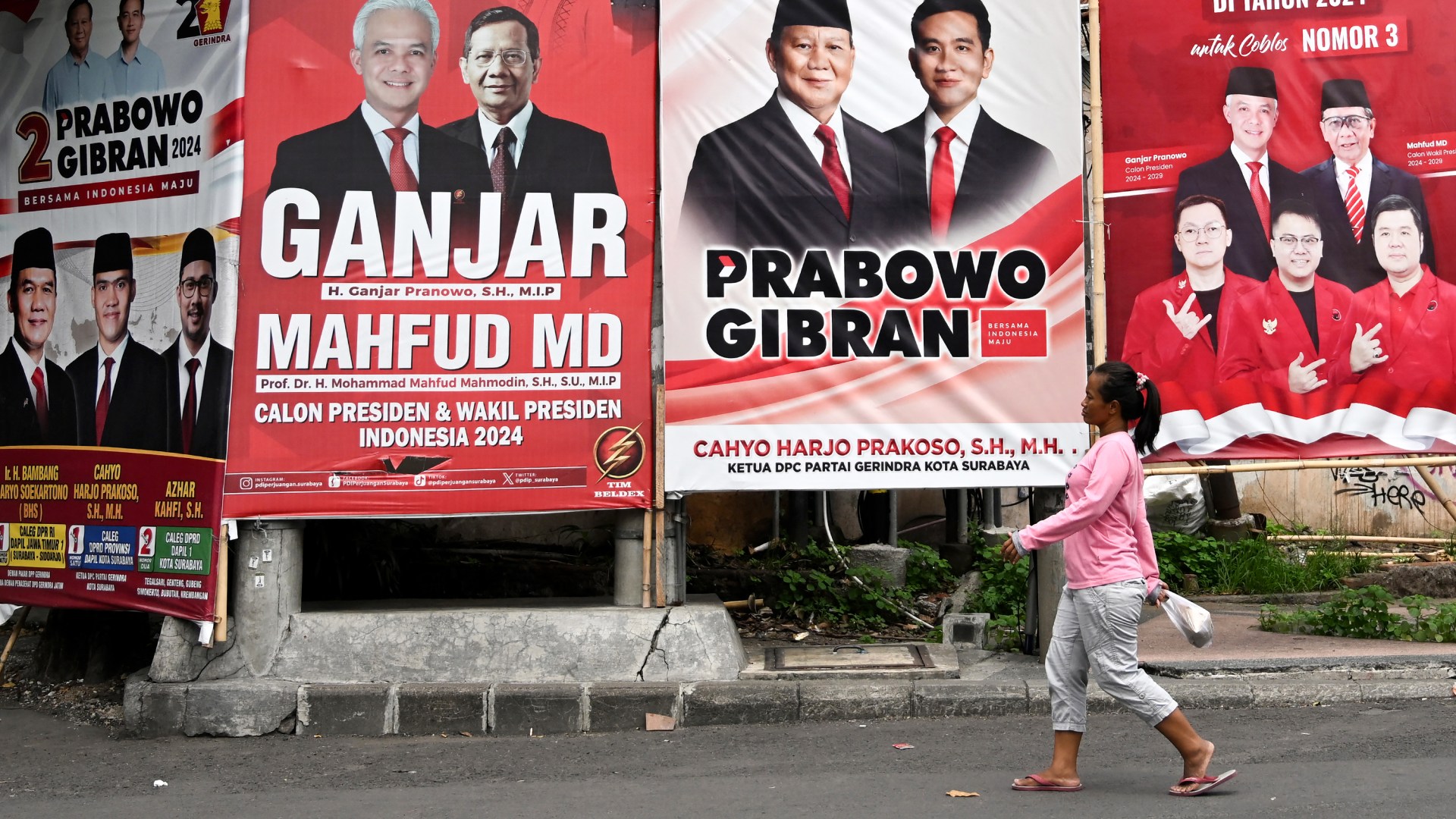
Sometimes a person “projects” that judgment onto some other person or group—just to get some relief. Other people—like the fundamentalist student with whom I talked—try to shut the “judging” faculty off altogether. Giving up, they surrender themselves to the unleashing of their id—often in cruelty or chaos.

Edmundson argues that, like many other things, the superego is a kind of “corrupted ghost” of something that was seen as necessary in a previous—more religious—age. Without some form of cultural or religious authority, we lose stability. “When legitimate forms of authority disappear, the way is open for rogue authority to assert itself,” he writes. “When there is nothing reliable outside you to help you organize your life, internal forces enter the empty space, and those forces may be anything but benevolent. In the outside world, on comes the dictator; on comes the religious huckster.”

And internally, there often comes a kind of authority—a really judgmental inner authority—that tends to “expand and expand and never be cultivated or displaced.” Sometimes this inner self-judgmentalism, which, no matter how many times projected, always boomerangs, leads a person to try to shut it off with alcohol or opioids.

In a culture such as ours, Edmundson concludes, the internet has become our collective superego. We then end up with hate—either of the “hot” kind or the “cold” kind. Both are frequently self-hatred turned outward.

Often, Edmundson notes, the idea between online mobs is to join the collective superego with institutional power in order to fire, discipline, or humiliate whoever is the target. If the boss or the HR department won’t do that, he writes, the fury is directed toward them. This doesn’t assuage the anger; it just moves on elsewhere.

By no means do I agree with all of Edmundson’s diagnoses or recommendations, but his metaphor of the superego is onto something true. If we don’t pay attention to this as Christians, we have no way to bear witness to the gospel. What Edmundson means by the superego metaphor is a moralism without mercy, a law without gospel, a judgment seat without a John 3:16.

This is significant because for so long, so many have assumed that sin and guilt are outdated categories, suited for a medieval era but not for this one. The prophets and apostles, though, told us that sin and guilt—along with the search for a meaning to life, the fear of death, and an answer to shame—might be culturally amplified realities, but they are not culturally created.

Guilt and shame are fallen human conditions, not ancient or premodern or modern or postmodern ones. The question is not whether the world around is grappling with guilty consciences but how.

We could also caricature the Old Testament Scriptures as “superego”—the intimidating judgment-filled God of Sinai over and against the merciful God of Jesus—but we could only maintain that with a willful ignorance of both Testaments.

Even in the giving of the Law itself, with God on the mountain with Moses, there is the communication that the Law itself is not enough. The tablets from Sinai were not all that God delivered to the prophet. Most of the rest of Exodus includes the details of God’s showing Moses the specifications for constructing a tent in which God would meet with his people over the mercy seat (Ex. 25:22).

The people could see the priests as they went behind the veil to the Most Holy Place, to atone for their own sins and for the sins of the people. They could then hear the word of forgiveness; they could start over again. The Book of Hebrews argues that the blueprint of the tabernacle itself and the directions for the sacrifices make clear that this movable tent was temporary—pointing to the sacrificial offering of the one High Priest who need not be replaced because he’s human like us. But unlike the priests of Levi, the resurrected Jesus wasn’t a sinner and he won’t die.

The Israelites listened to the bells of their priests moving into the mysterious place behind the veil, approaching the ark of the covenant before the face of a holy God, hoping that they wouldn’t be struck dead, that their sacrifice would be accepted. They also knew that this could never totally purify the conscience, because they would have to be here, again, doing the same thing all over again.

“We have this hope as an anchor for the soul, firm and secure. It enters the inner sanctuary behind the curtain, where our forerunner, Jesus, has entered on our behalf,” the writer of Hebrews tells us (6:19–20). The mixed metaphors here are mind-bending if we actually pay attention to them.

The imagery is of a pioneer—a “forerunner”—going before us to where we will follow him—and it’s to the place we could never before approach: behind that curtain. The imagery is also, though, of an anchor. This “new and living way” (Heb. 10:20) into mercy and forgiveness and the cleansing of conscience is stable and steadfast, unmoving and immoveable.

That’s why we often—when confronted with our own sin—do the exact opposite of what we should. We get ashamed and withdraw from God. Prayer gets harder. We assume that we should get our failures under control and then come into the presence of God. We want to rely on the superego to fix us until we’re good enough to face the God who loves us.

The presence of God with us in Christ, though, isn’t a reward for good performance; it’s the way that we are transformed.

We don’t give up, then. We don’t wallow in self-loathing or project that loathing onto other people. You might not feel okay. You might not be okay. But behind the veil of what you can see, the anchor holds.

That frees us to pursue righteousness and holiness in the only way that can actually give it, not by achieving it for fear of God rejecting us but by receiving it—because we know that, no matter what our conscience tells us, there’s an offering of blood. There’s a mercy seat. There’s a God who is actively moving toward us, not with condemnation but with mercy.

In a time of diminished expectations—and of an eclipsed gospel witness—what would really make the church countercultural is if the people around us were to have a very different conversation. One might say, “These are people of moral integrity, even though they think that God is merciful to them for their sin.” And another might say, “Yes, but they say their morality isn’t in spite of the mercy; it’s because of it.”

If this is, in fact, “the age of guilt,” if it’s true that the collective superego and the collective id are destroying what it means for us to live as people, then surely there ought to be a people who remember what it is to be amazed by grace.

Russell Moore is the editor in chief at Christianity Today and leads its Public Theology Project.

addApple PodcastsDown ArrowDown ArrowDown Arrowarrow_left_altLeft ArrowLeft ArrowRight ArrowRight ArrowRight Arrowarrow_up_altUp ArrowUp ArrowAvailable at Amazoncaret-downCloseCloseellipseEmailEmailExpandExpandExternalExternalFacebookfacebook-squarefolderGiftGiftGooglegoogleGoogle KeephamburgerInstagraminstagram-squareLinkLinklinkedin-squareListenListenListenChristianity TodayCT Creative Studio Logologo_orgMegaphoneMenuMenupausePinterestPlayPlayPocketPodcastprintremoveRSSRSSSaveSavesaveSearchSearchsearchSpotifyStitcherTelegramTable of ContentsTable of Contentstwitter-squareWhatsAppXYouTubeYouTube